Before white settlement, Lakota and Ho-Chunk Indians controlled the area that would become Eleva, but Ojibwe territory lay only ten miles north, across the Chippewa River.
- CountyTrempealeau County
- Population685 (2020 U.S. Census)
Before white settlement, Lakota and Ho-Chunk Indians controlled the area that would become Eleva, but Ojibwe territory lay only ten miles north, across the Chippewa River.
Eleva, Wisconsin gifts and souvenirs: 21 designs made from Eleva's own map, landmarks and history, from $16 to $95. Printed to order and shipped free in the USA.
| Popular | Price |
|---|---|
| Eleva Hometown Ornament | $23 |
| Eleva Vintage Travel Poster | from $40 |
| Eleva Varsity Crewneck | from $57 |
| Eleva Est. Tee | from $33 |
| Eleva Town Line Mug | from $26 |
| Eleva Market Tote | $37 |
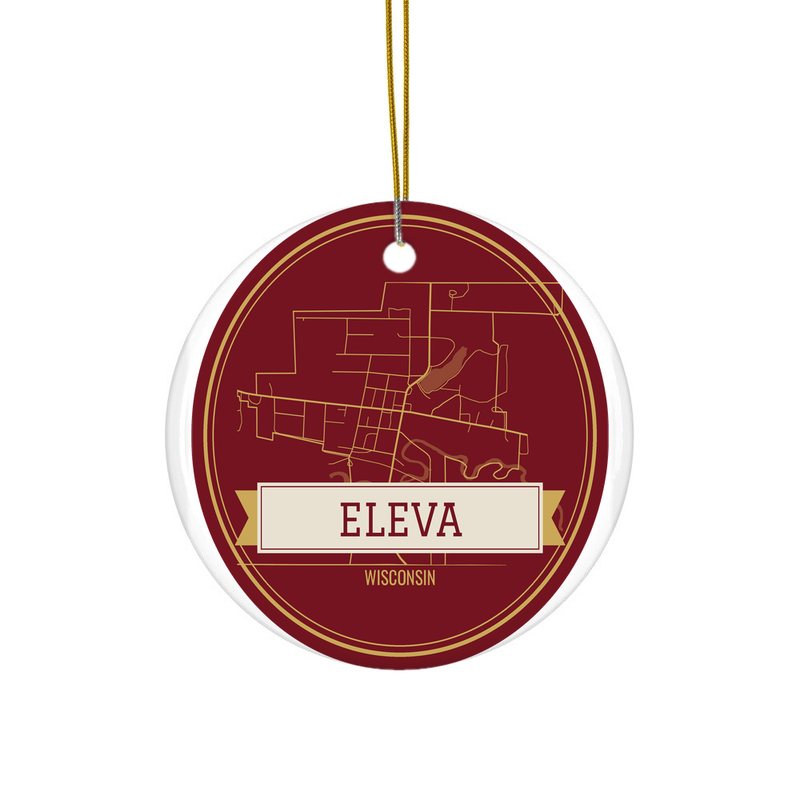
Ceramic keepsake, gold ribbon, in 3 styles
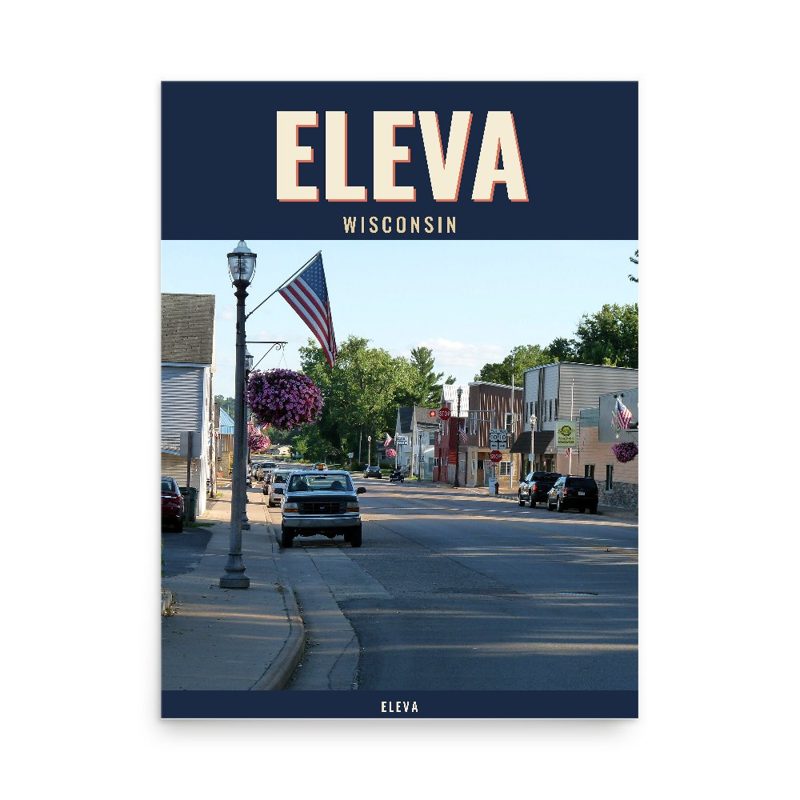
Its landmark photo in a classic travel-poster layout
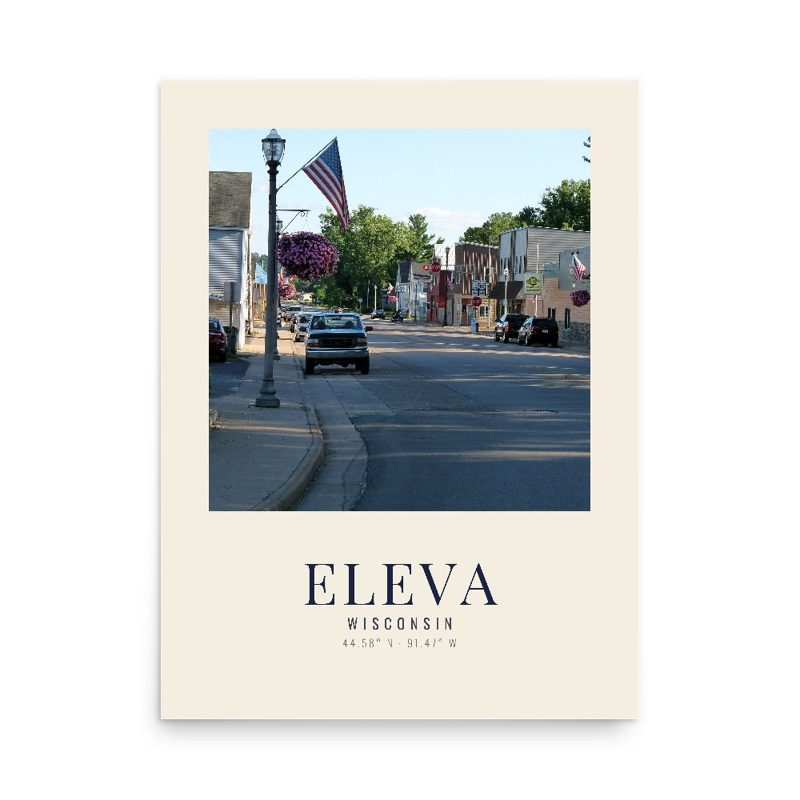
A local landmark photo as a gallery print
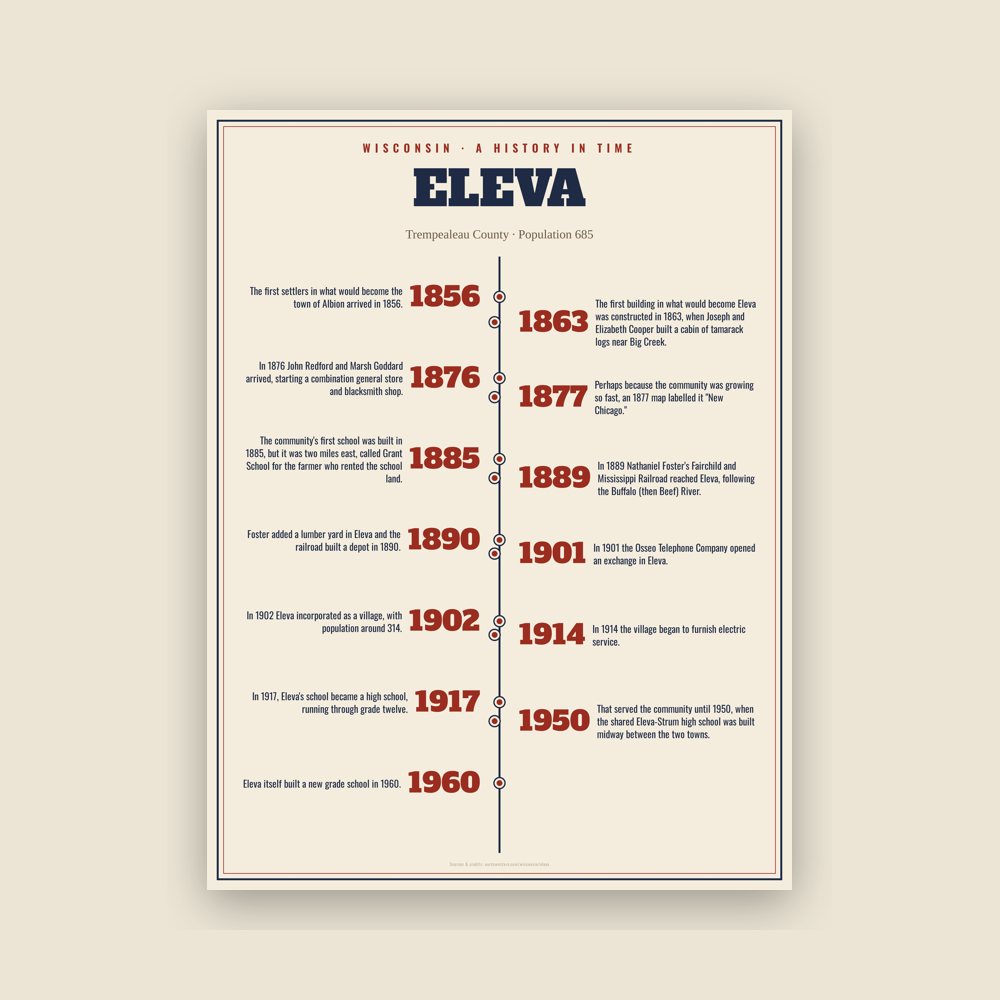
The town's story in dates, from its own records, for home or classroom
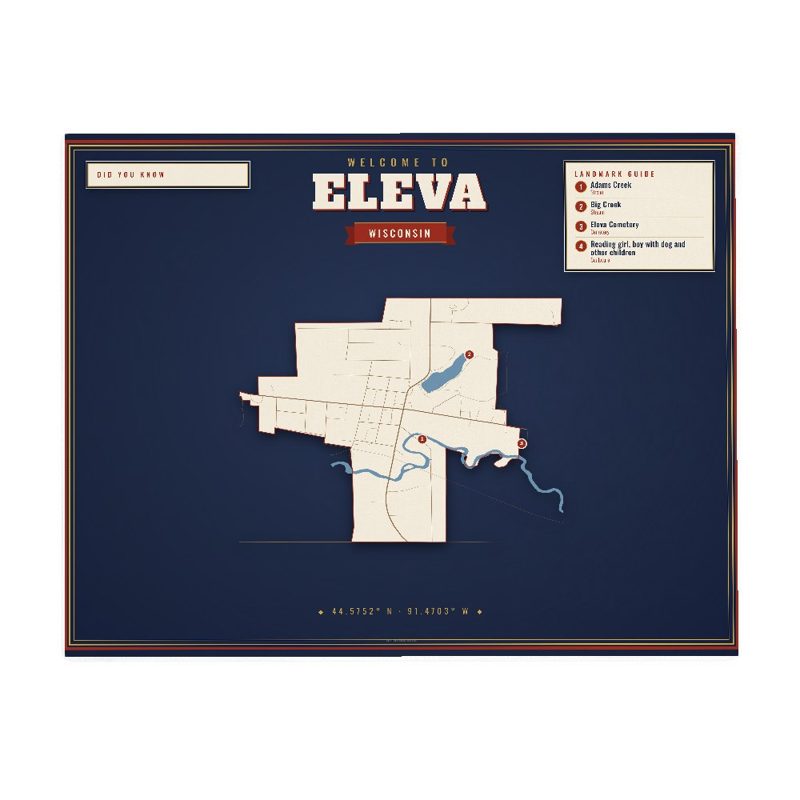
Map of local landmarks, washable fabric

Heavy-blend fleece, street map printed on the back
Red heavy-blend crewneck, knit-stitch town print
Soft Bella+Canvas jersey
Kids' Bella+Canvas jersey, youth sizes

Bella+Canvas toddler jersey
Bella+Canvas baby bodysuit
Glossy ceramic, dishwasher safe
Weatherproof, for the front walk
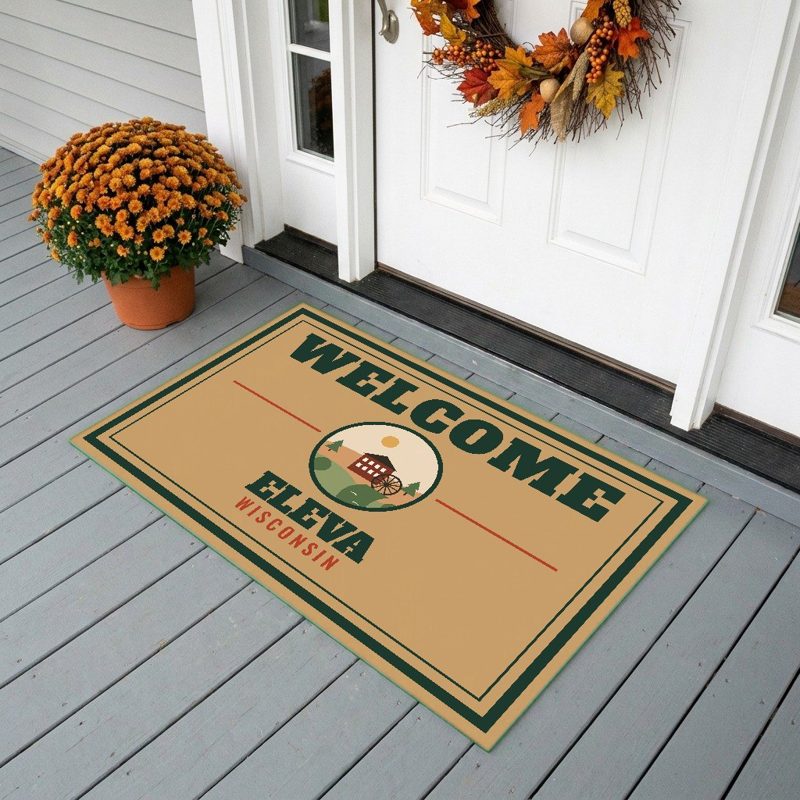
24″×16″, printed coir-look fibers, rubber back
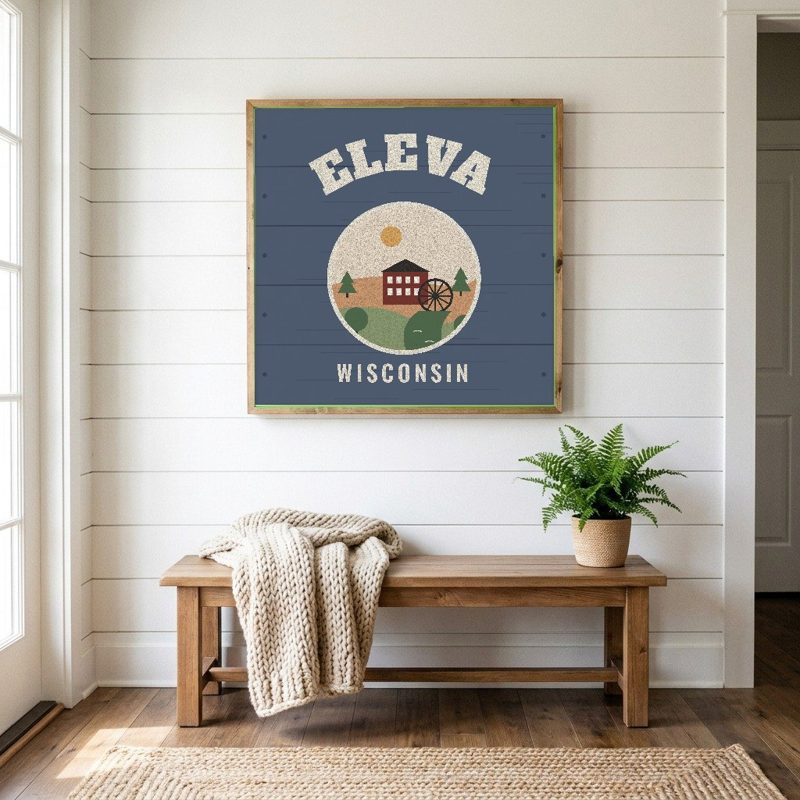
12″×12″ printed wood, ready to hang
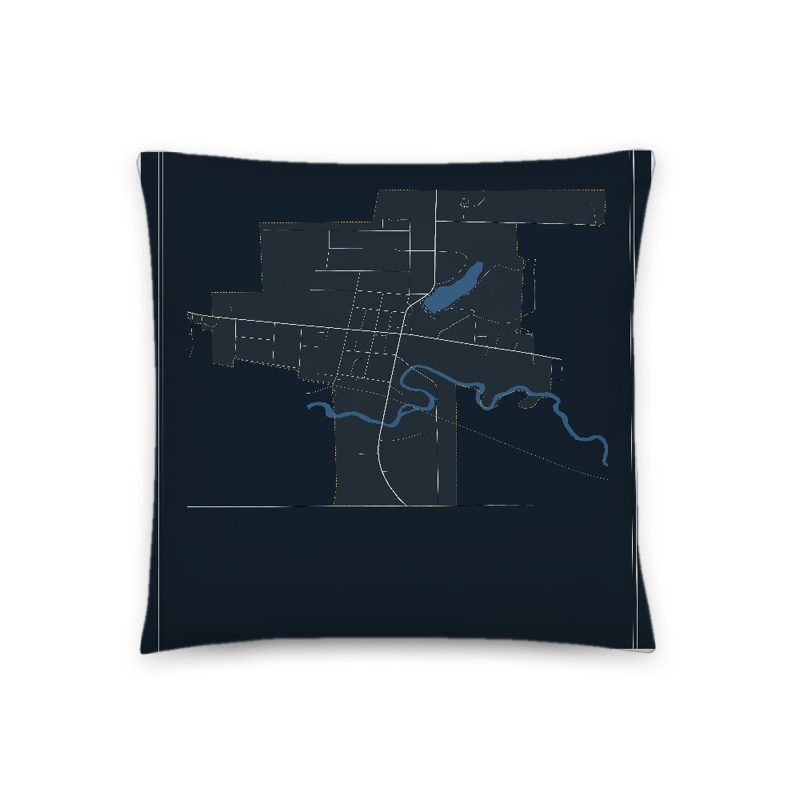
Soft-touch, zip cover
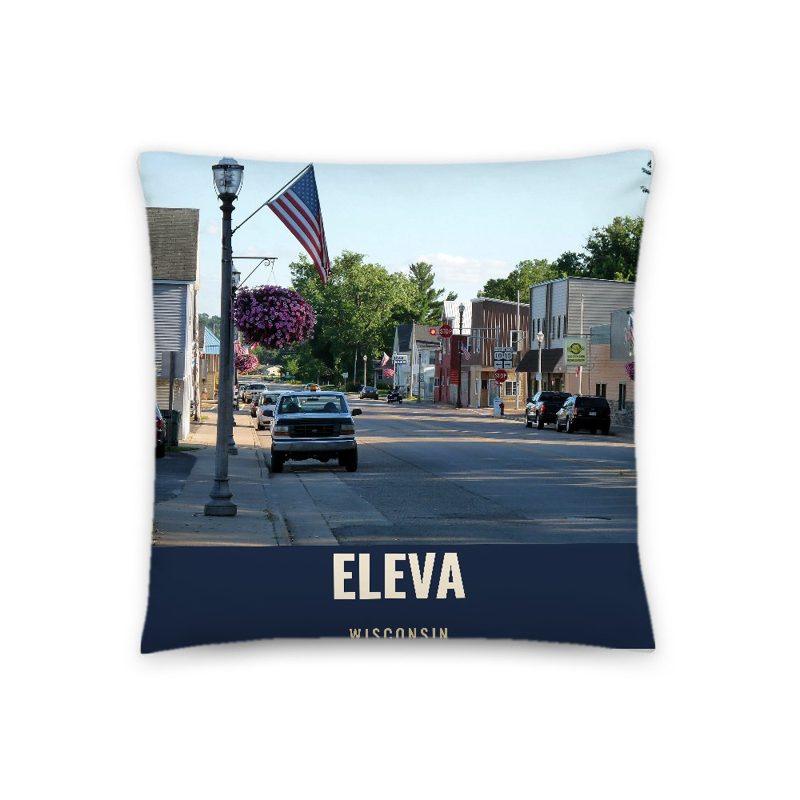
A local landmark photo with the town name, 18″×18″
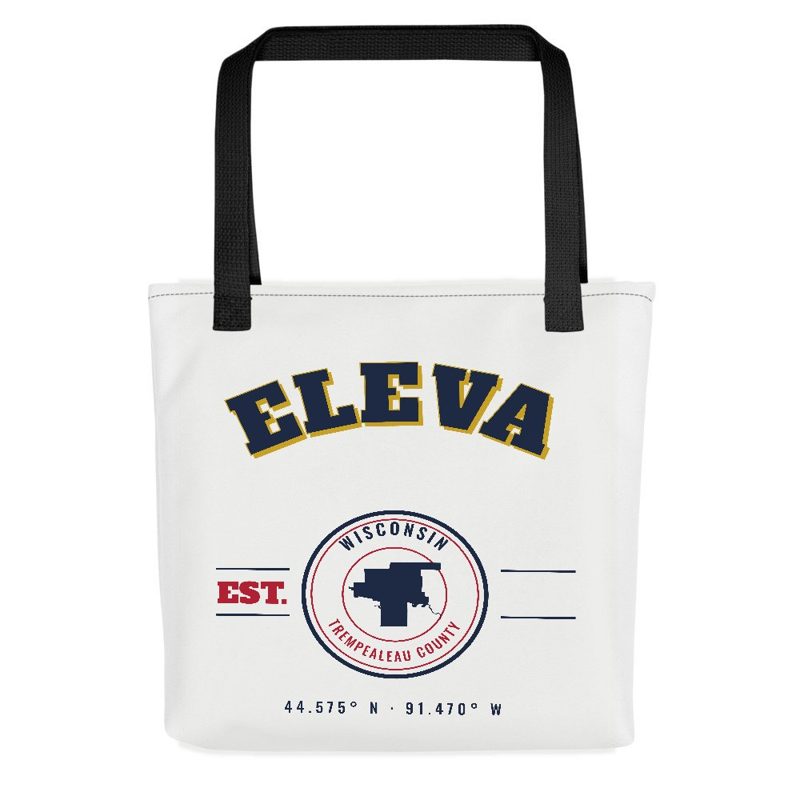
Sturdy all-over-print tote
Glossy top, cork back
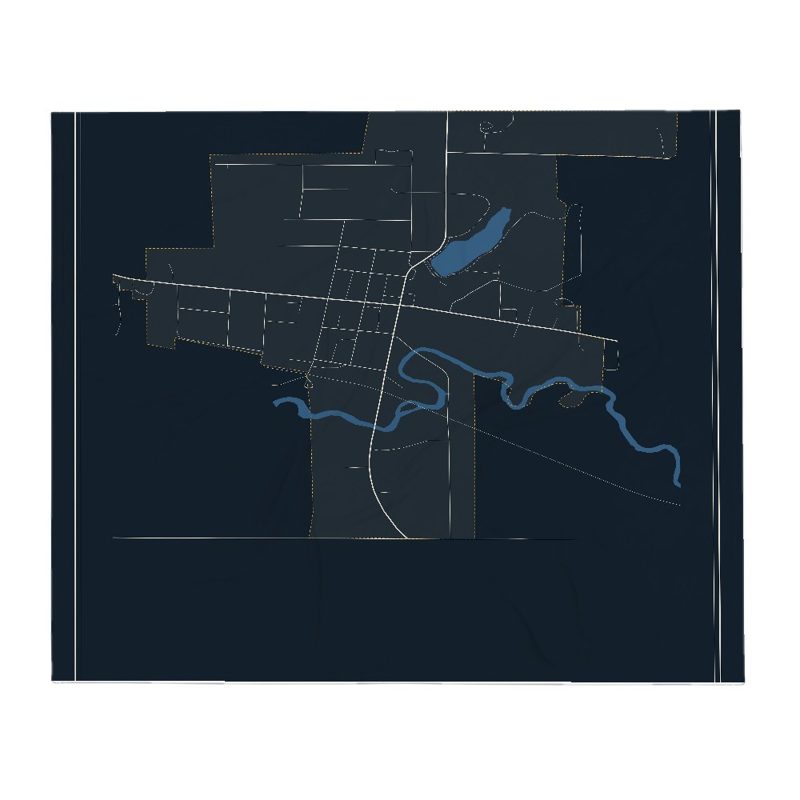
Soft fleece, 50″×60″
20 oz, double-wall stainless
Before white settlement, Lakota and Ho-Chunk Indians controlled the area that would become Eleva, but Ojibwe territory lay only ten miles north, across the Chippewa River. The first settlers in what would become the town of Albion arrived in 1856. Most settled east of the future Eleva, around what would be called Hamlin, on the stage road from Whitehall to Eau Claire. In these early days some Indians still migrated through in the spring and fall, camping just west of where Eleva would grow. William Moon, one of the first settlers, harvested potatoes that first fall of 1856 - the first harvest in Albion. In following years more settlers arrived, and began growing wheat and corn.
The first building in what would become Eleva was constructed in 1863, when Joseph and Elizabeth Cooper built a cabin of tamarack logs near Big Creek. They left when Joseph volunteered in the Union Army, but returned to their cabin after the war. David J. O'dell settled nearby in 1867.
In 1876 John Redford and Marsh Goddard arrived, starting a combination general store and blacksmith shop. Goddard hauled most of his goods by horse and wagon from the train station in Augusta. That same year, Philo Englesby built a hotel. The following year E.J. Carpenter started a grist mill on Big Creek which ground wheat between two big flat stones. That year the community added a second general store, a hardware store, a drug store, a confectionery, a meat shop, and a boarding house. Perhaps because the community was growing so fast, an 1877 map labelled it "New Chicago."
Some say that "ELEVA" was painted on a grain elevator, and then winter struck before the painter could finish "TOR". Newcomers assumed the letters were the name of the village.
The community's first school was built in 1885, but it was two miles east, called Grant School for the farmer who rented the school land. This Grant was also the chairman of the school district, and a second cousin of President Ulysses S. Grant. A post office called Eleva started operation in one of the town's stores the same year.
In 1889 Nathaniel Foster's Fairchild and Mississippi Railroad reached Eleva, following the Buffalo (then Beef) River. Foster added a lumber yard in Eleva and the railroad built a depot in 1890. A few years later Foster's railroad was acquired by the Chicago, St. Paul, Minneapolis and Omaha Railway.
In 1890 Henry Ruseling replaced his old stone grist mill with the modern-for-the-time Eleva Roller Mills, powered by water or coal, producing 50 barrels of wheat per day. That year, the town built its own school in town, serving grades one through eight. The town was booming, with two elevators, a cheese factory, a flour and feed mill, a hardware store, a drug store, a printer, a photographer, a tailor, a shoemaker, two plumbers, two blacksmiths, a doctor, an implement dealer, two hay buyers, and two livestock dealers. The town had no saloons. With all these services in Eleva and the railroad bypassing Hamlin two miles to the east, Hamlin gradually dried up.
In 1901 the Osseo Telephone Company opened an exchange in Eleva. In 1902 Eleva incorporated as a village, with population around 314. That same year, Eleva replaced its 1890 school with a new brick school that taught grades one through ten, making it a state-graded school. The following year the Bank of Eleva was organized.
In 1914 the village began to furnish electric service. At first the electricity was on only in the evenings, with extended hours on Tuesdays so the women could do their ironing.
In 1917, Eleva's school became a high school, running through grade twelve. That served the community until 1950, when the shared Eleva-Strum high school was built midway between the two towns. Eleva itself built a new grade school in 1960.
Adapted (trimmed) from the Wikipedia article Eleva, Wisconsin, revision 1377187294 by its contributors, licensed CC BY-SA 4.0.
We share a part of every Eleva sale with local partners, and we'd love to print from your collection. Old photographs, maps and postcards make the best keepsakes.
Partner with usA favorite landmark, your street, a school or team, an anniversary gift, a different product. Tell us and we'll get back to you by email.
2 free coloring pages of Eleva, each traced from a photo of a local landmark. Print them at home, at school or for story hour.
Eleva's population was 685 in the 2020 U.S. Census, up from 670 in 2010.
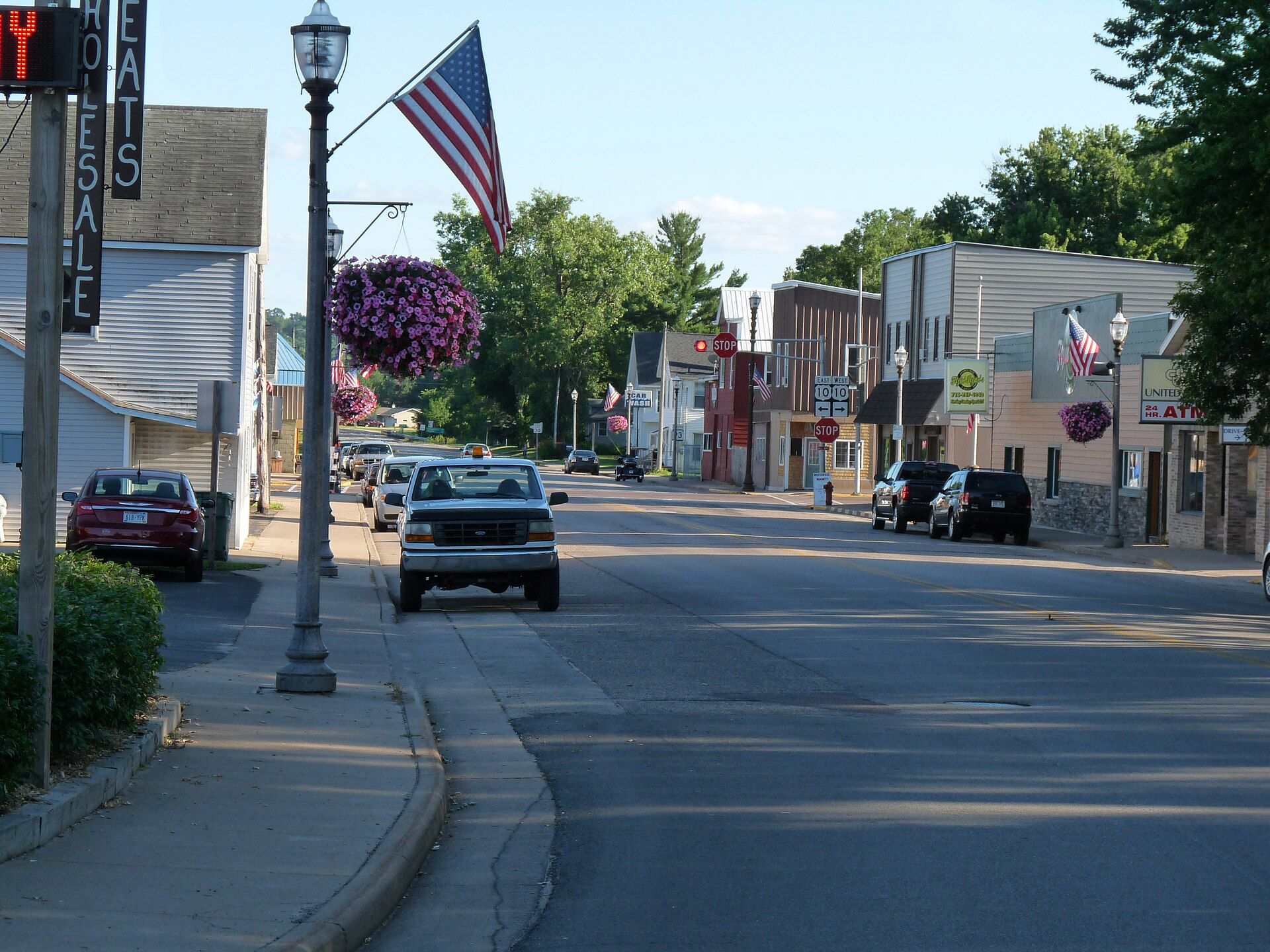
 A view of Eleva
 A view of Eleva