Warden is a city in Grant County, Washington, United States. Warden is the birthplace of Jorge Reyes, baseball player.
- CountyGrant County
- Population2,449 (2020 U.S. Census)
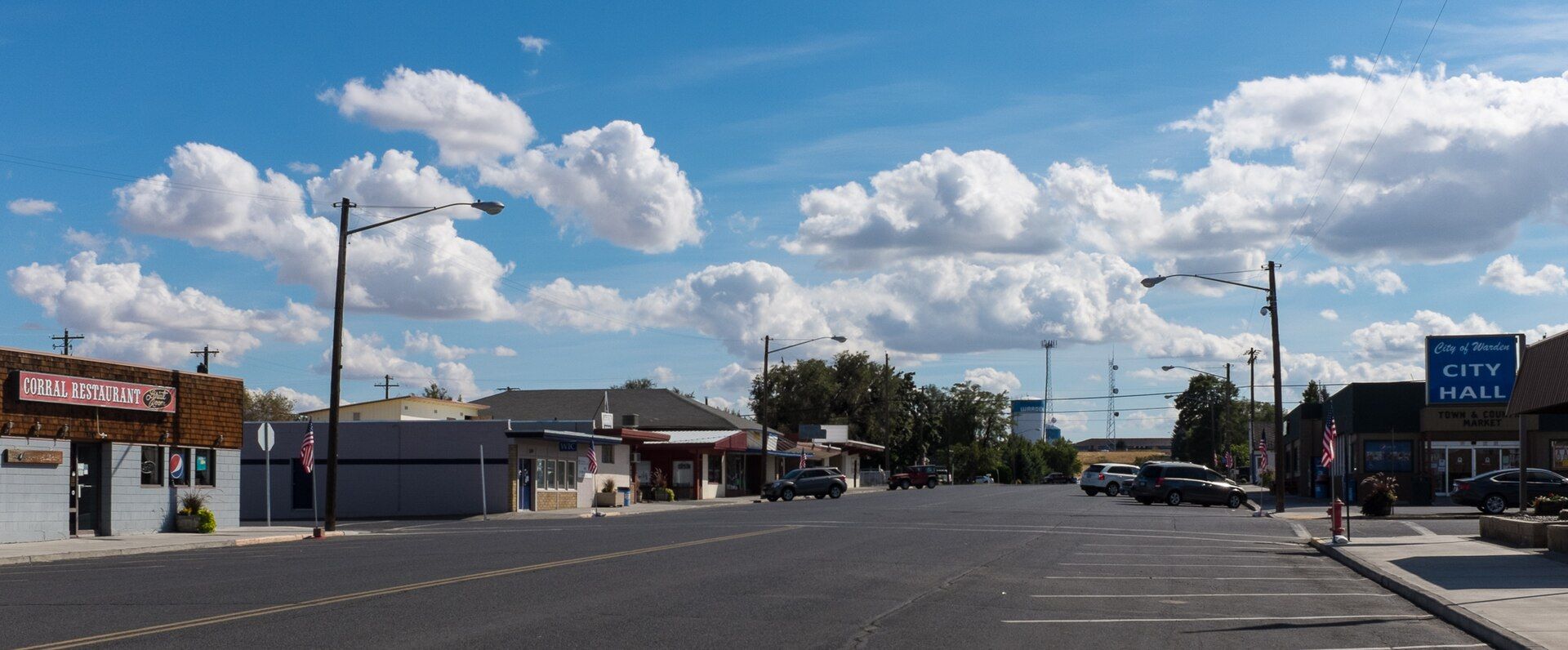
Warden is a city in Grant County, Washington, United States. Warden is the birthplace of Jorge Reyes, baseball player.
Warden, Washington gifts and souvenirs: 21 designs made from Warden's own map, landmarks and history, from $16 to $95. Printed to order and shipped free in the USA.
| Popular | Price |
|---|---|
| Warden Hometown Ornament | $23 |
| Warden Vintage Travel Poster | from $40 |
| Warden Varsity Crewneck | from $57 |
| Warden Est. Tee | from $33 |
| Warden Town Line Mug | from $26 |
| Warden Market Tote | $37 |
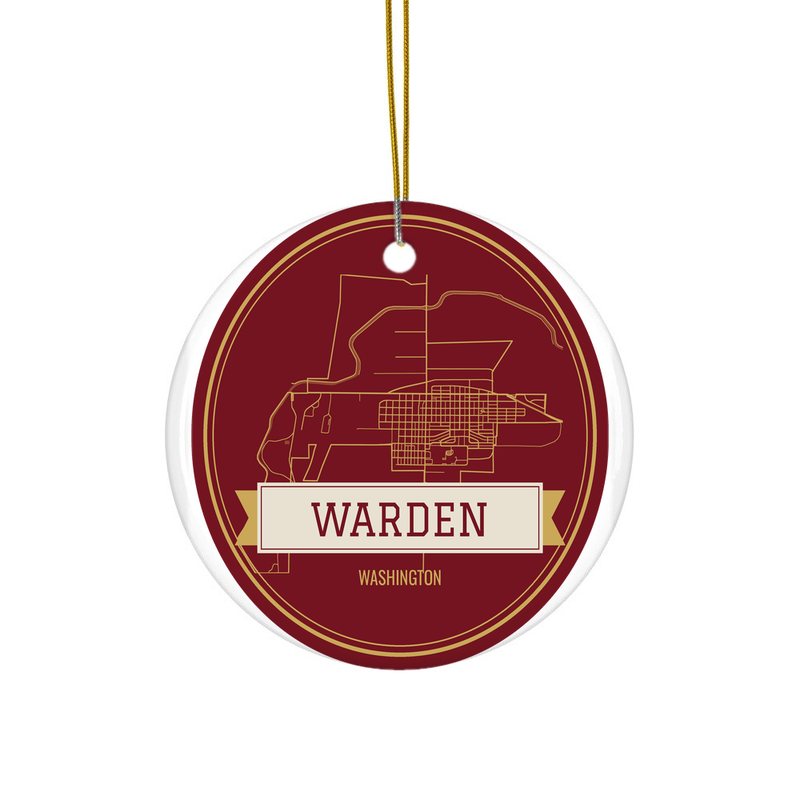
Ceramic keepsake, gold ribbon, in 3 styles
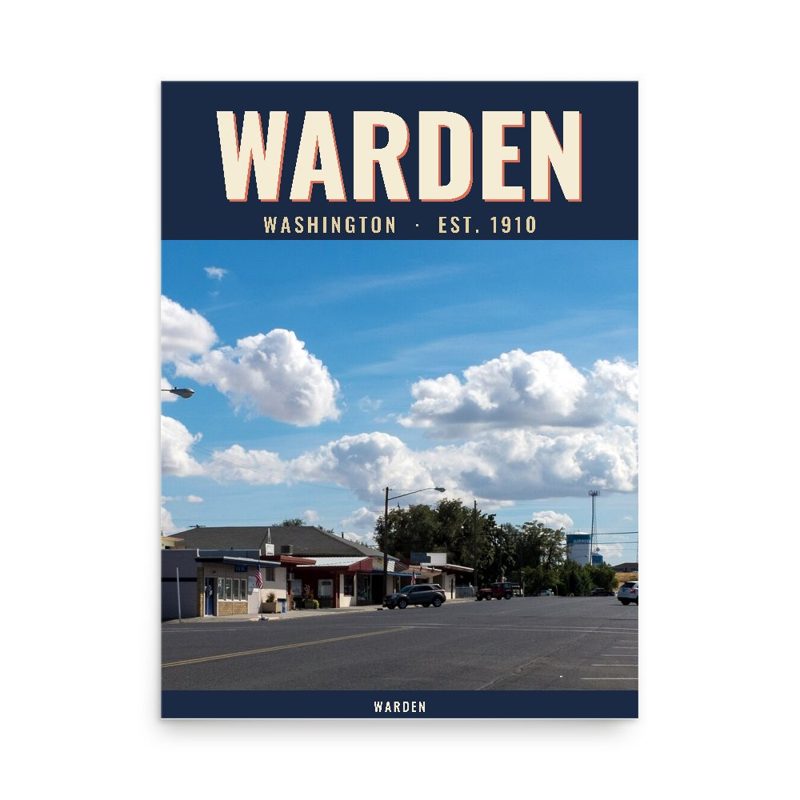
Its landmark photo in a classic travel-poster layout
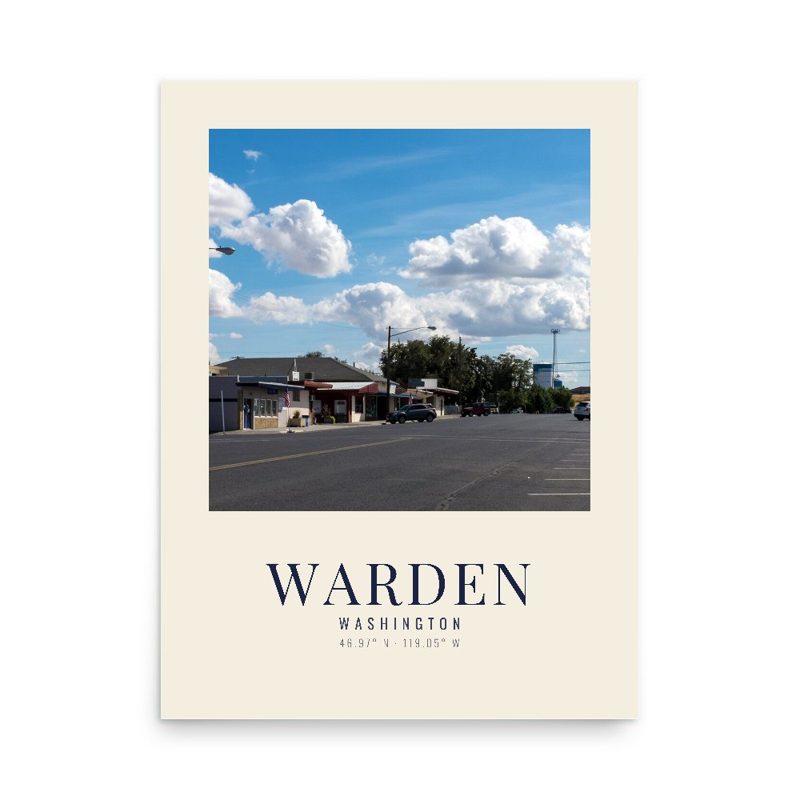
A local landmark photo as a gallery print
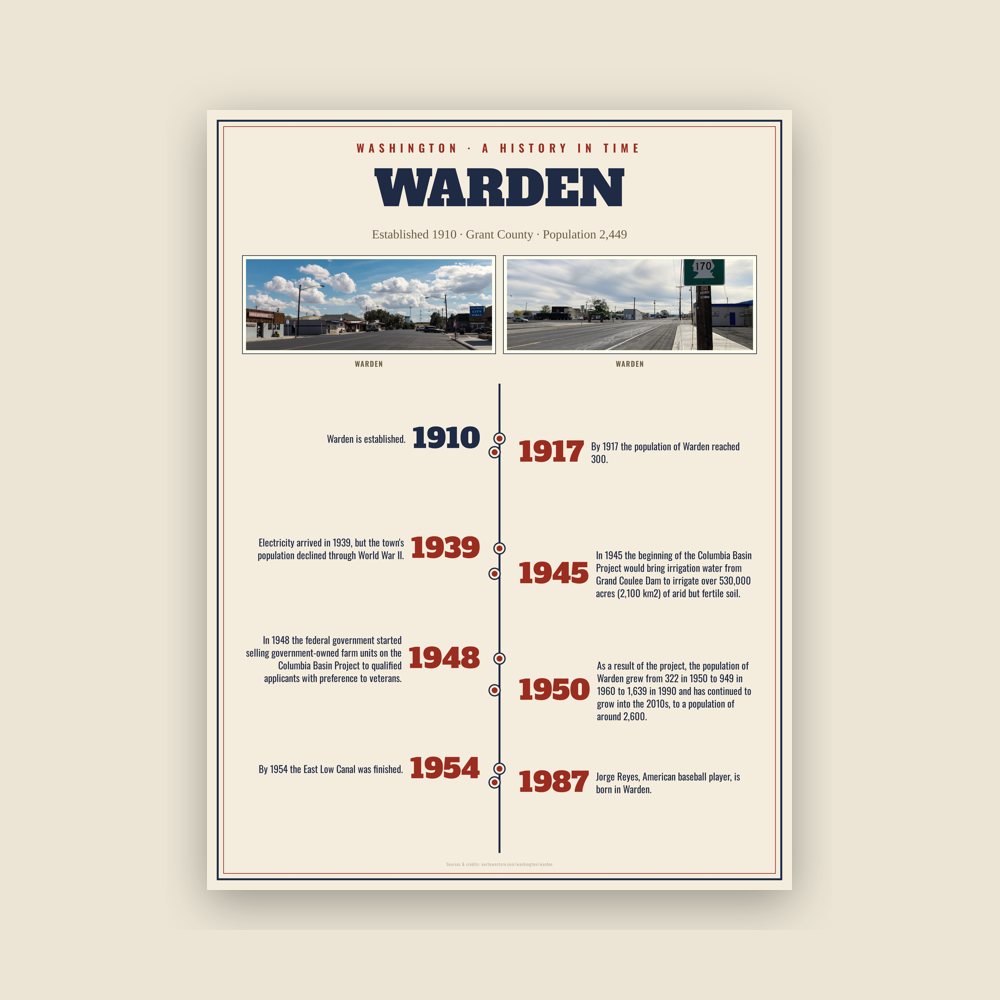
The town's story in dates, from its own records, for home or classroom
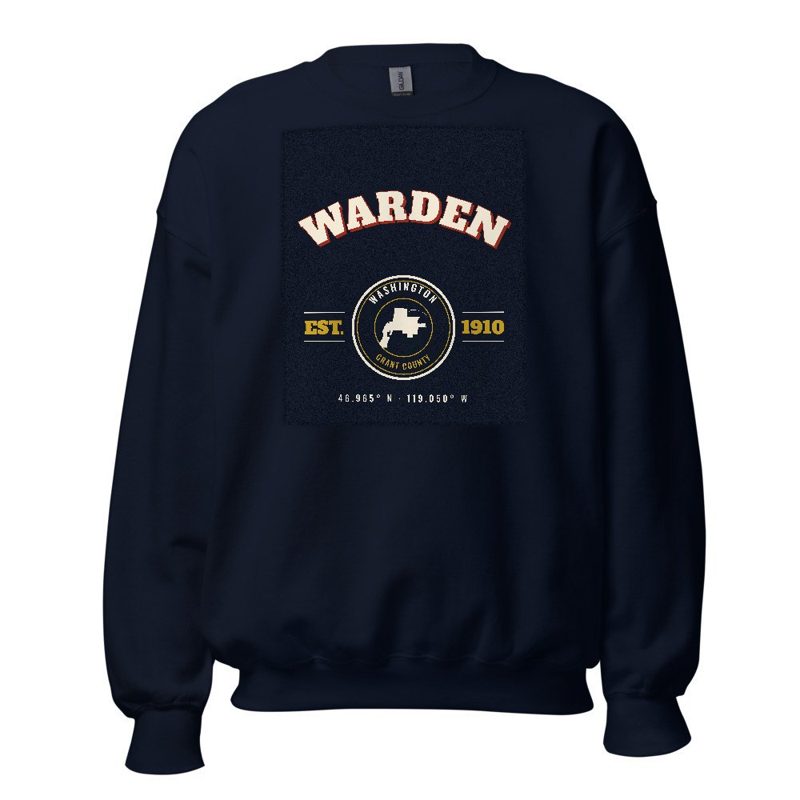
Heavy-blend fleece, street map printed on the back
Red heavy-blend crewneck, knit-stitch town print
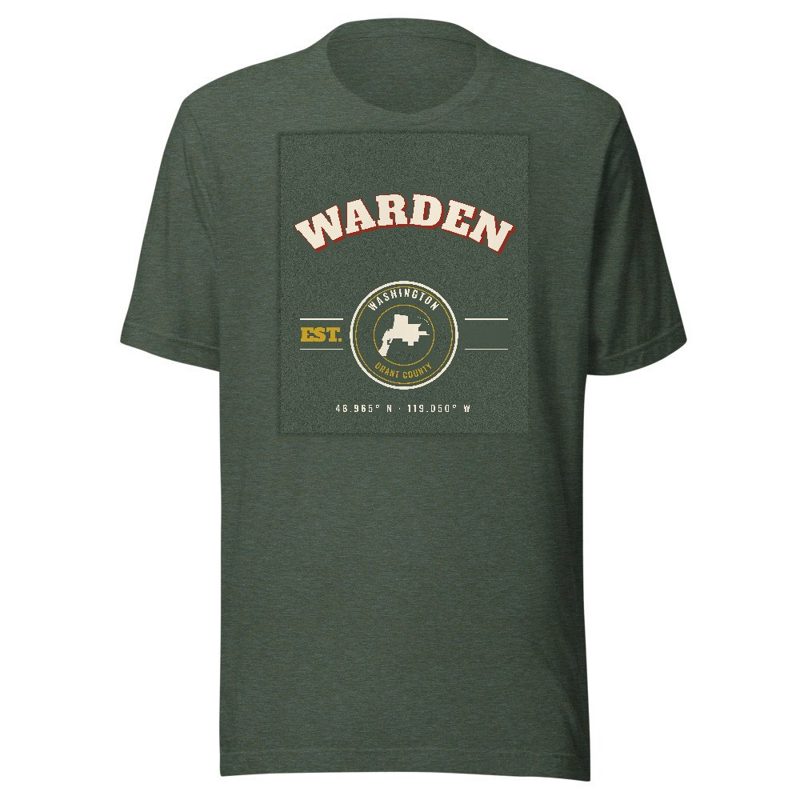
Soft Bella+Canvas jersey
Kids' Bella+Canvas jersey, youth sizes
Bella+Canvas toddler jersey
Bella+Canvas baby bodysuit
Glossy ceramic, dishwasher safe
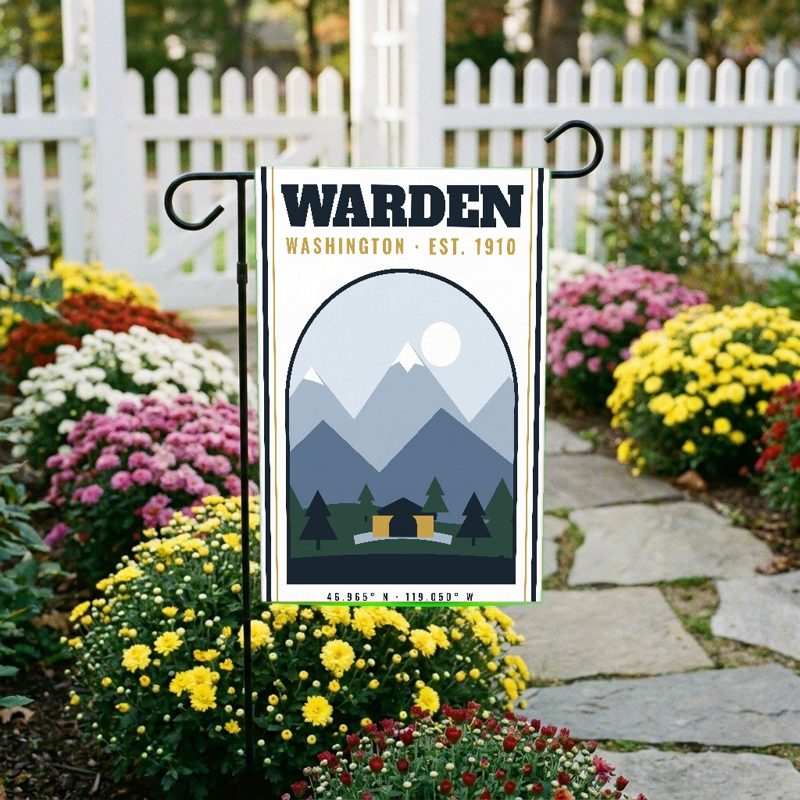
Weatherproof, for the front walk
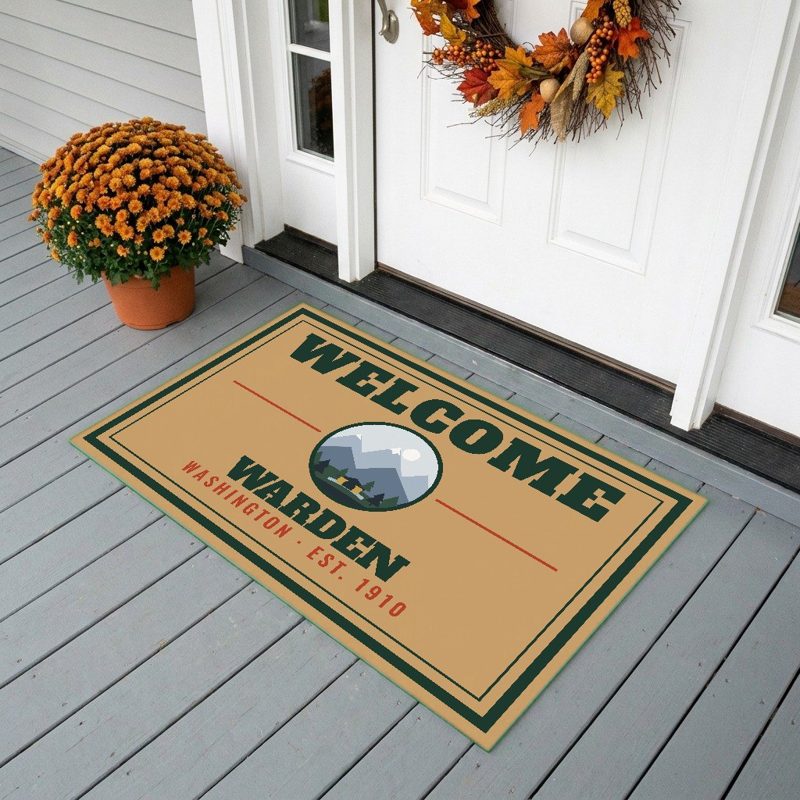
24″×16″, printed coir-look fibers, rubber back
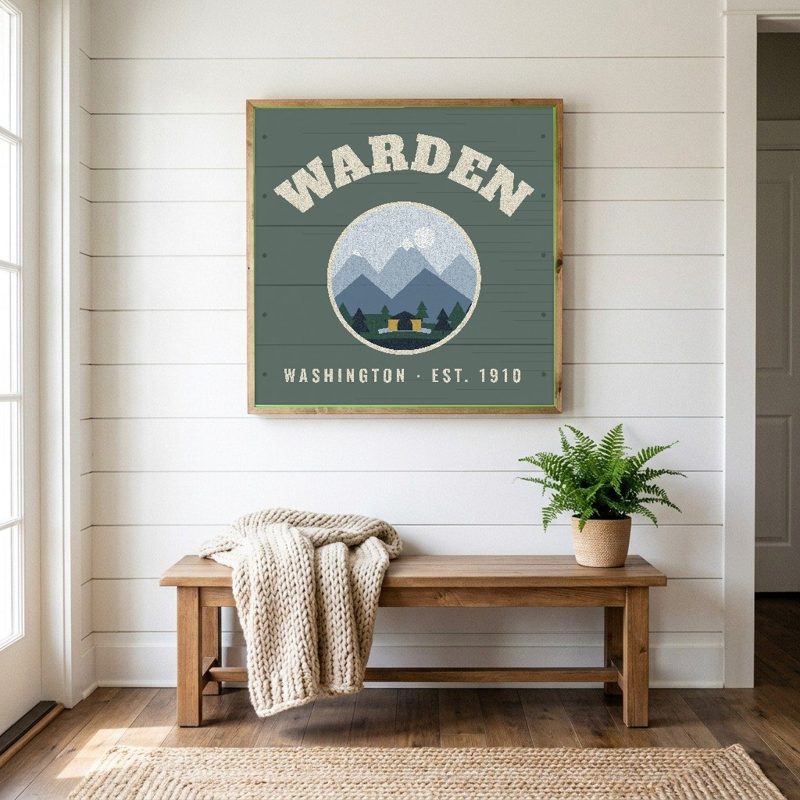
12″×12″ printed wood, ready to hang
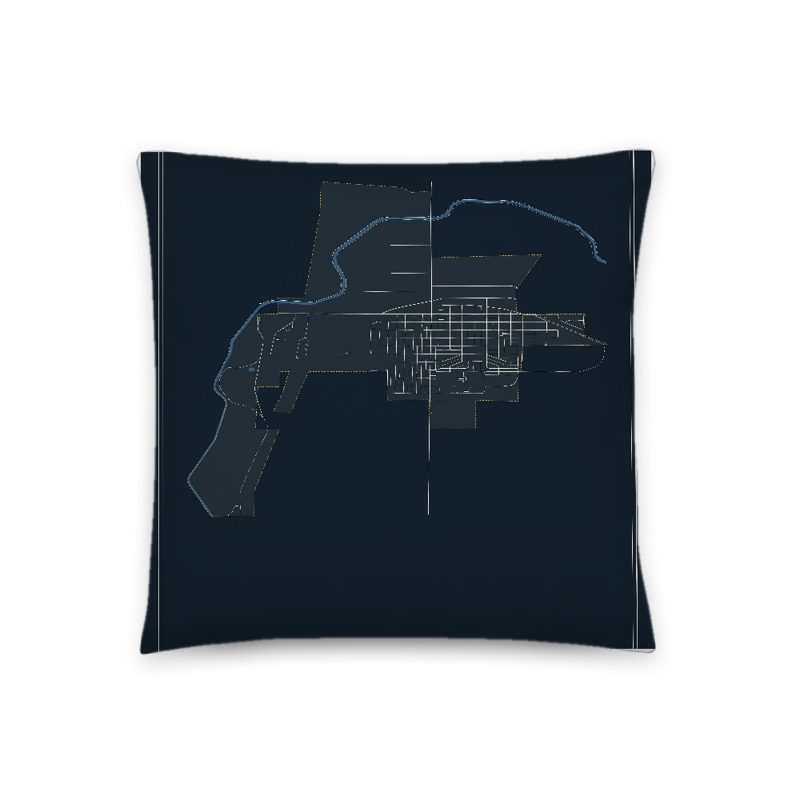
Soft-touch, zip cover
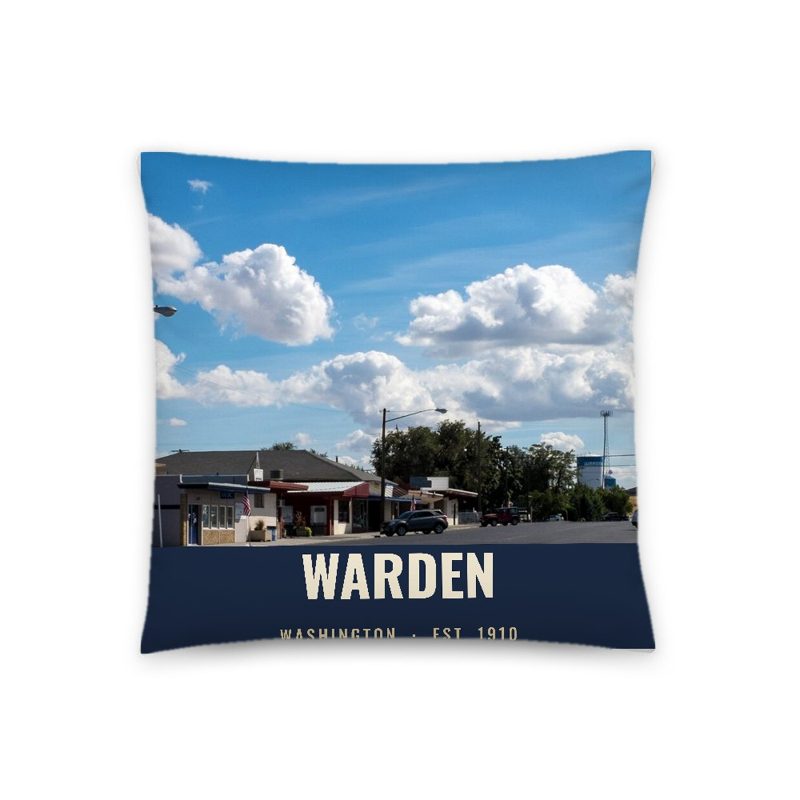
A local landmark photo with the town name, 18″×18″
Sturdy all-over-print tote
Glossy top, cork back
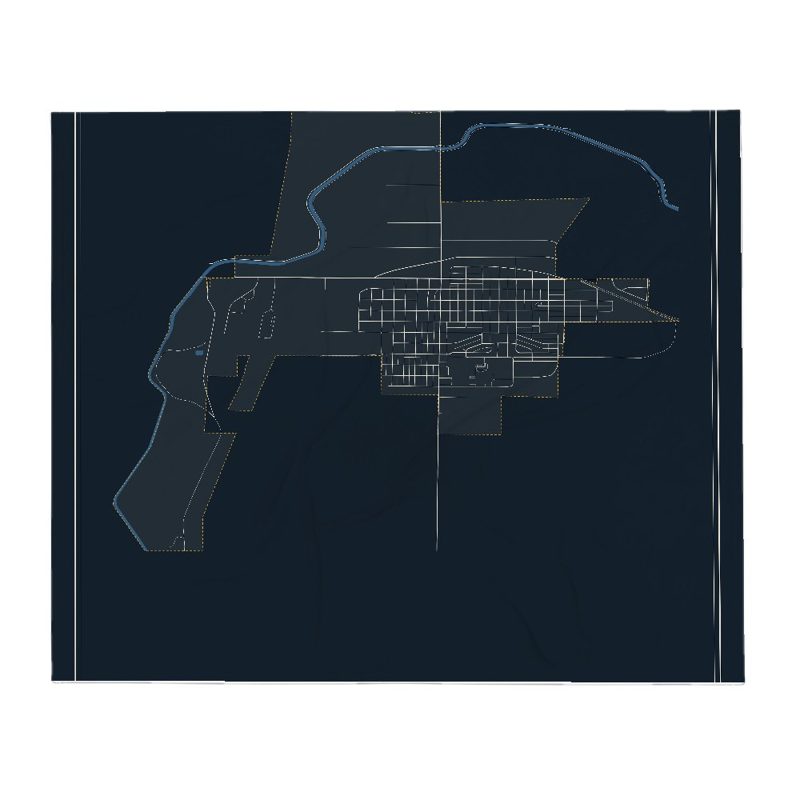
Soft fleece, 50″×60″
20 oz, double-wall stainless
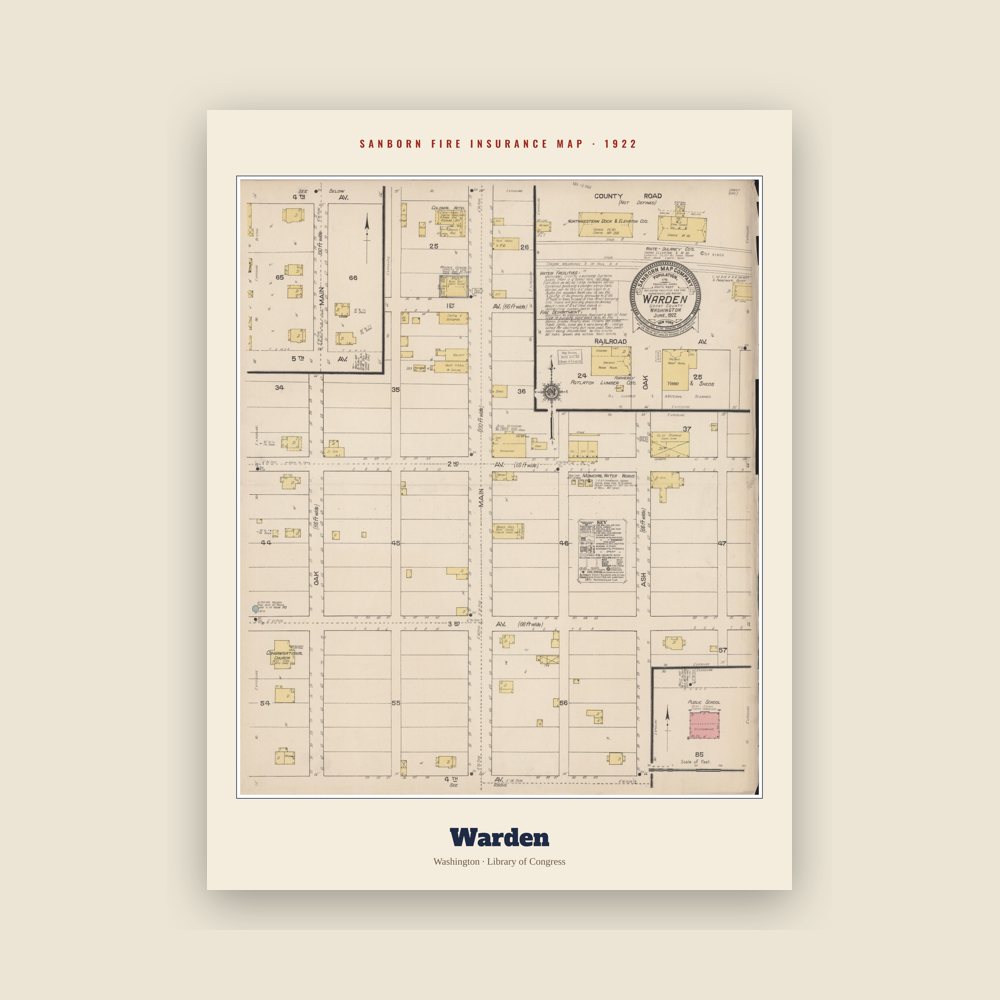
The town's earliest Sanborn fire-insurance map, drawn building by building and hand-coloured, from the Library of Congress
The Central Basin plateau was settled in the late 1800s by immigrants of Russian-German (Bessarabian) ancestry who homesteaded in the area and farmed dryland wheat. Prior to this the area had been inhabited by local Native American Salish tribes that had contact with the early Spanish and British traders. The Milwaukee Railroad arrived in the early 1900s and attracted additional settlers, including Doc Harris who established a drug and sundries store with physician services in Warden about 1905. The town's name of "Warden" comes from its Bessarabian German heritage and means "worthy" or "treasured" as may be noted in the Das Deutsche Woerterbuch von Jacob und Wilhelm Grimm. A local tradition attributes the name of the town to Doc Harris's son Ward. However, the area of the town was being referred to as "Warden" by its German settlers long before Doc Harris arrived, as may be noted in the Protokol, official church records in German of the original church which is today the Warden Community Church. Other nearby towns also carry Bessarabian German names such as Lind, Ruff, and Odessa. The Bessarabian German tradition of the town has long since vanished and has been mostly replaced with a mixed Anglo/Hispanic culture with a current population that is of roughly 72% Hispanic heritage.
In regards to the history of the present-day Hispanic populace, some of the families can trace their heritage back to the days of the earliest Spanish contact in the area. This first group predates the influx of Bessarabian German settlers by decades. A large number of Hispanics came to work in the fields that opened to more diverse agriculture after the federal Columbia Basin Project brought irrigation to the area. This second group of Hispanics came up from Texas, but they had roots in the villages around the city of Monterey, Mexico. They claim a distinct Tejano culture and have been in the US for generations already. The third group are the most recent arrivals that seem to come mostly from the West Mexican States of Jalisco, Sinaloa, and Sonora. They have a culture that is distinct from the Tejanos in many regards, including language, music, and food. Many in this third group still may speak only Spanish; whereas the other groups may be bilingual or speak only English already.
The Town of Warden was officially incorporated June 28, 1910. By 1917 the population of Warden reached 300. Electricity arrived in 1939, but the town's population declined through World War II.
In 1945 the beginning of the Columbia Basin Project would bring irrigation water from Grand Coulee Dam to irrigate over 530,000 acres (2,100 km2) of arid but fertile soil. In 1948 the federal government started selling government-owned farm units on the Columbia Basin Project to qualified applicants with preference to veterans. By 1954 the East Low Canal was finished. As a result of the project, the population of Warden grew from 322 in 1950 to 949 in 1960 to 1,639 in 1990 and has continued to grow into the 2010s, to a population of around 2,600.
Adapted (trimmed) from the Wikipedia article Warden, Washington, revision 1374956929 by its contributors, licensed CC BY-SA 4.0.
We share a part of every Warden sale with local partners, and we'd love to print from your collection. Old photographs, maps and postcards make the best keepsakes.
Partner with usA favorite landmark, your street, a school or team, an anniversary gift, a different product. Tell us and we'll get back to you by email.
2 free coloring pages of Warden, each traced from a photo of a local landmark. Print them at home, at school or for story hour.
Warden's population was 2,449 in the 2020 U.S. Census, down from 2,692 in 2010.
 A view of Warden
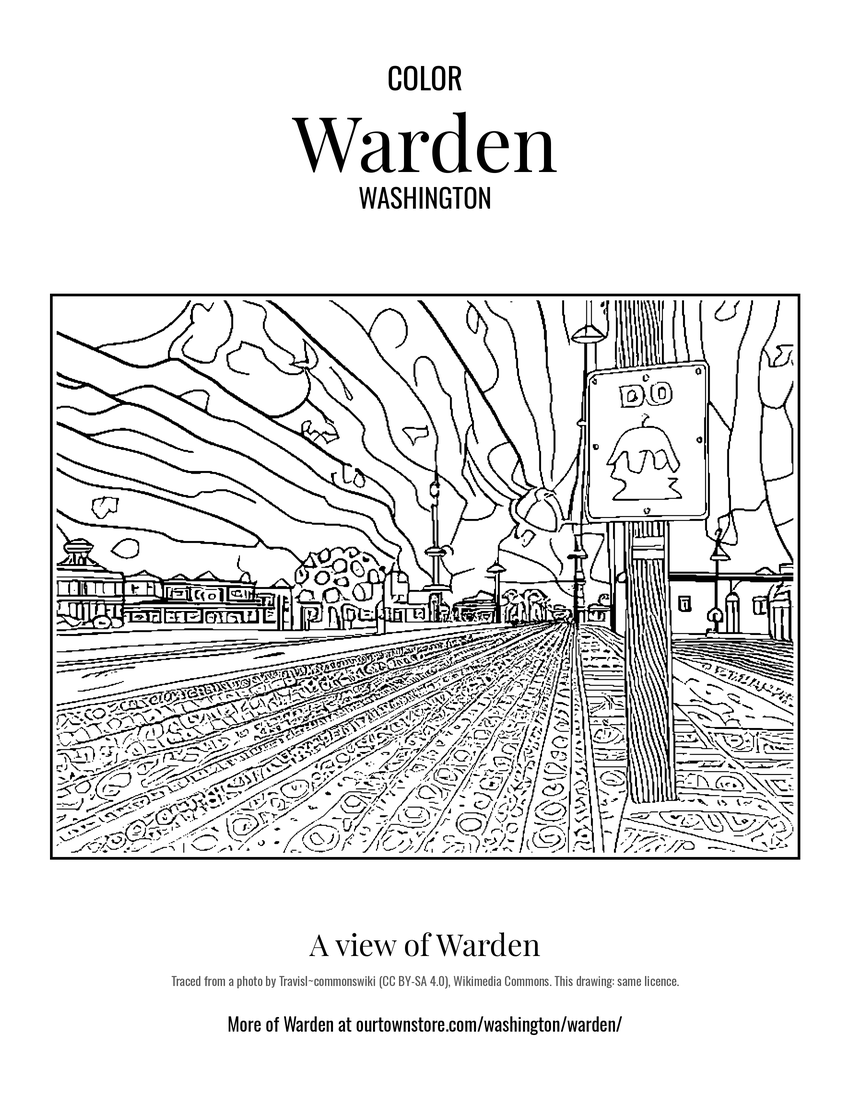 A view of Warden