A short history of Oakville
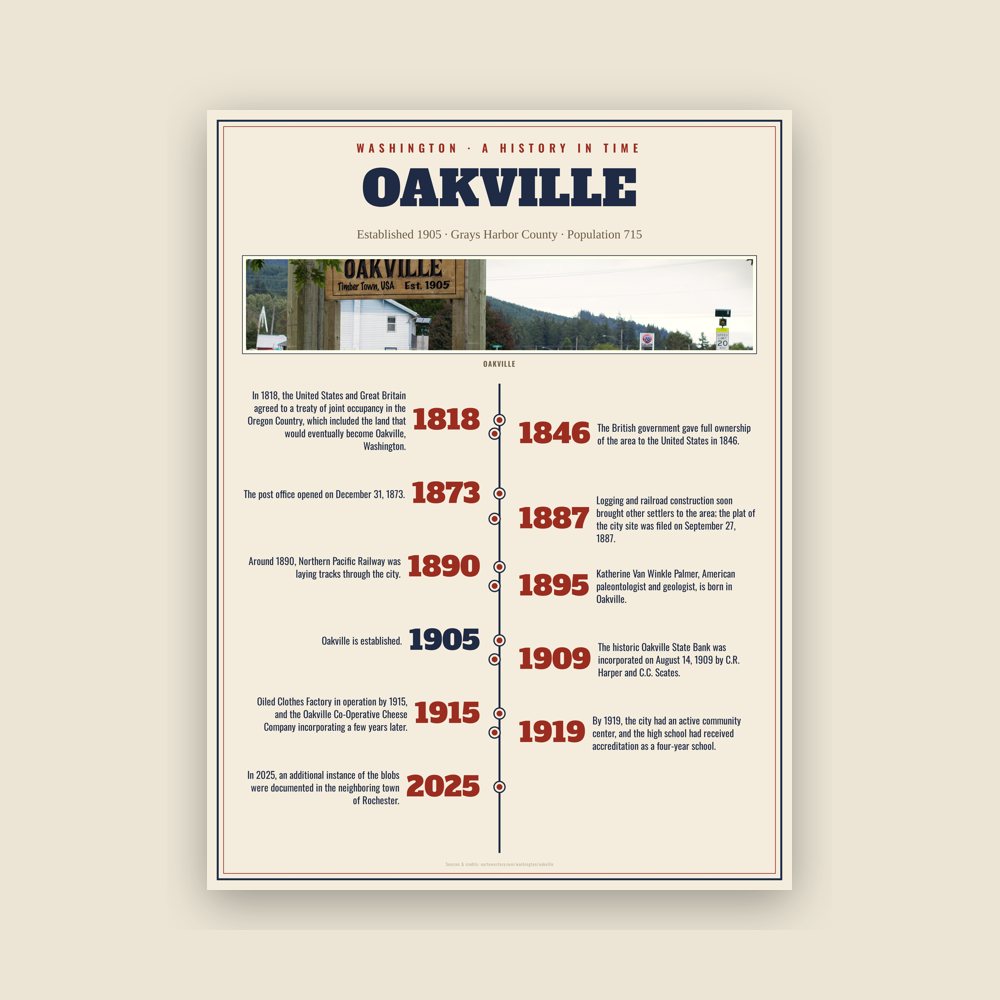
In 1818, the United States and Great Britain agreed to a treaty of joint occupancy in the Oregon Country, which included the land that would eventually become Oakville, Washington. Over the next several decades, citizens of the United States began to settle in the area. As traveling by boat was easier than moving through the dense forests, many used the river system, entering from the port of Grays Harbor and canoeing inland via the Chehalis River. The British government gave full ownership of the area to the United States in 1846.
In 1850, the land in the area was mainly open prairie, maintained by yearly fires started deliberately by local tribes, which kept the forest from encroaching and which encouraged the bloom of camas, a staple food, and other plants. The prairie lands were attractive to settlers arriving in the area, helped by the indigenous people, and towns began to be platted up and down the Chehalis River.
In the 1870s, a party of several families relocated to the area from Crawford County, Illinois. The leader of the party, James Reed Harris, had purchased the donation claim for the area from John Hole for $1200. He applied for a post office, and after some discussion, it was decided to use the name "Oakville," inspired by the Garry oak trees in the area. The post office opened on December 31, 1873.
Logging and railroad construction soon brought other settlers to the area; the plat of the city site was filed on September 27, 1887. Around 1890, Northern Pacific Railway was laying tracks through the city. By the turn of the century, a Northern Pacific train station had been established in the city, and the area had several general stores, a new school, and a couple of hotels. Oakville was officially incorporated on December 18, 1905.
"Oakville is a town of about 400 inhabitants, located on the line of the Northern Pacific trailer in the center of an important lumbering and taking district. The timber resources of this section are of immense value and the bottom lands are well adapted to general farming. Oakville is a growing town and will develop more rapidly as the resources of the surrounding district are more thoroughly exploited."
Lumber was a major industry in the early days of the city; in 1916, Oakville Lumber Company, Big Fir Lumber Company, Vance Lumber Company, and others were in operation, along with the Callow Mill. The city was "noted for large shipments of cascara bark." Factories were also part of the city's economy, with the E.H. Hilton & Co. Oiled Clothes Factory in operation by 1915, and the Oakville Co-Operative Cheese Company incorporating a few years later.
The historic Oakville State Bank was incorporated on August 14, 1909 by C.R. Harper and C.C. Scates. The bank changed names and ownership several times over the next century. It is said to be the last bank in Washington to be robbed by a rider on horseback. Other businesses in the early days of the city included a jewelry store, a shoe company, and a hardware store.
The city's librarian Clara Trudgeon had been appointed by the State Traveling Library by 1908, making Oakville eligible to be a recipient of one of the 150 cases of books the state had in rotation. The weekly newspaper was The Oakville Cruiser. By 1919, the city had an active community center, and the high school had received accreditation as a four-year school.
Read the full history
Oakville blobs
On August 7, 1994, a resident reported that a translucent, gelatinous substance had rained down in the night; she expressed concern that it might have caused her and her mother to become ill, and speculated that it might have been the reason her kitten died. According to the resident, a hospital lab technician tested the substance, colloquially known as "Oakville blobs", and said that it contained human blood cells. However tests made by the Department of Ecology refuted these results, as tests showed that there were no nuclei present. Several theories were given by residents, including wondering whether the substance might have been waste from a commercial plane toilet or whether it may have been particles of deceased jellyfish that had evaporated and been incorporated into a rain cloud. The blobs were also found to contain two species of bacteria. There are no remaining testing samples of the blobs.
The incident received coverage in several media outlets, including The New York Times, and a segment was produced about the event for an episode of Unsolved Mysteries and Monsters and Mysteries in America.
In 2025, an additional instance of the blobs were documented in the neighboring town of Rochester. It was apparently identified as Polyacrylamide.
Adapted (trimmed) from the Wikipedia article Oakville, Washington, revision 1379975836 by its contributors, licensed CC BY-SA 4.0.
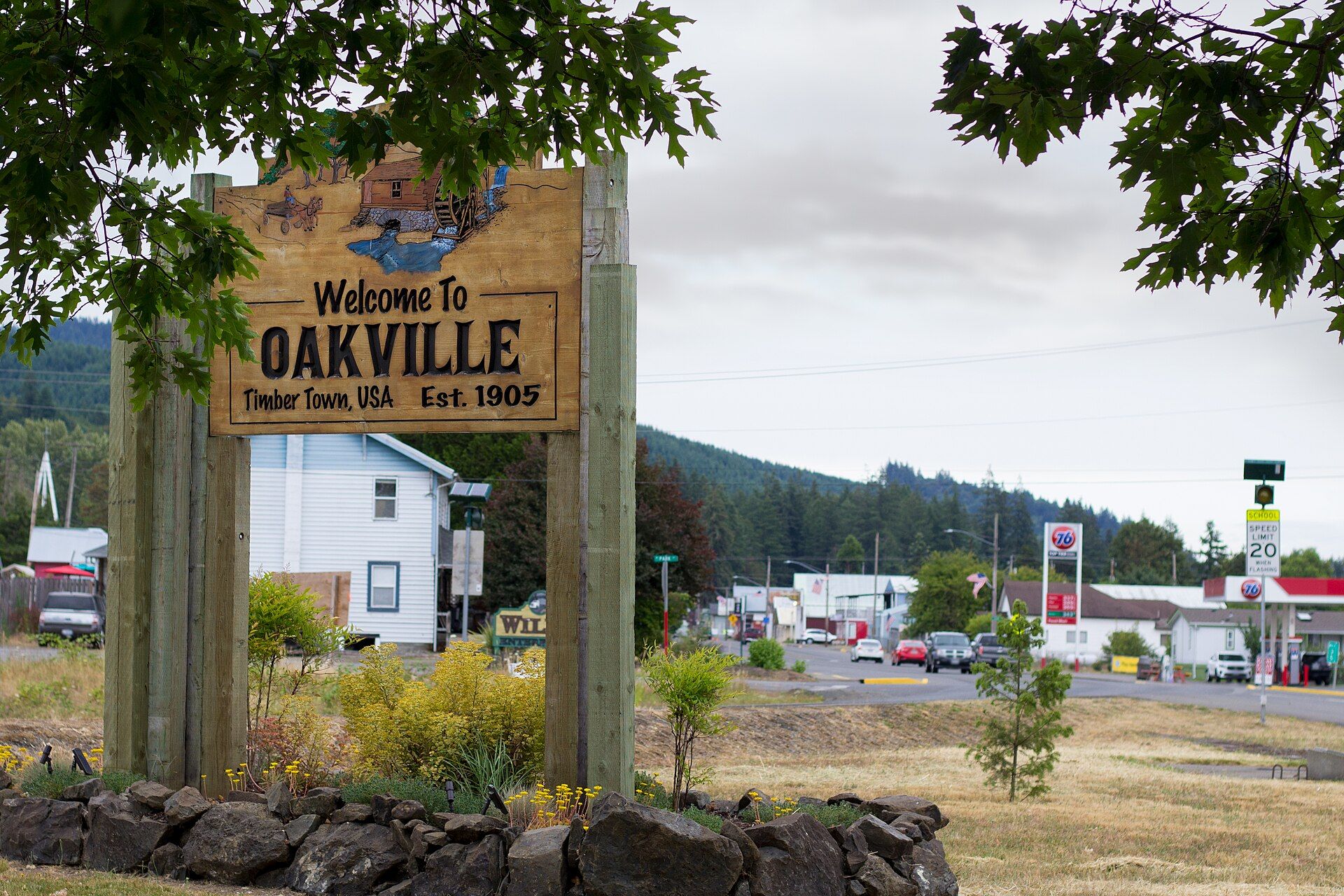
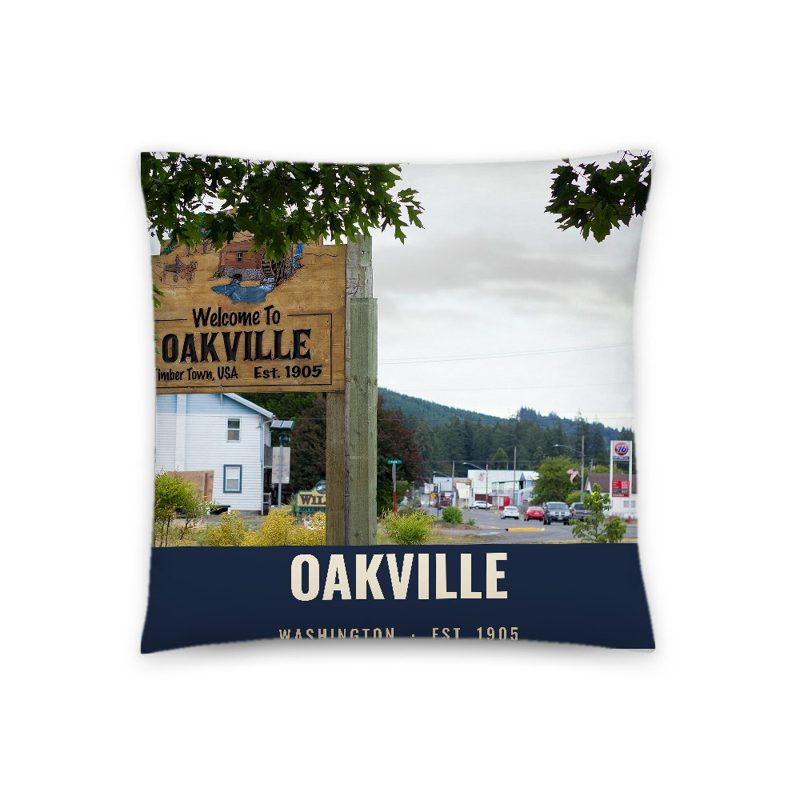
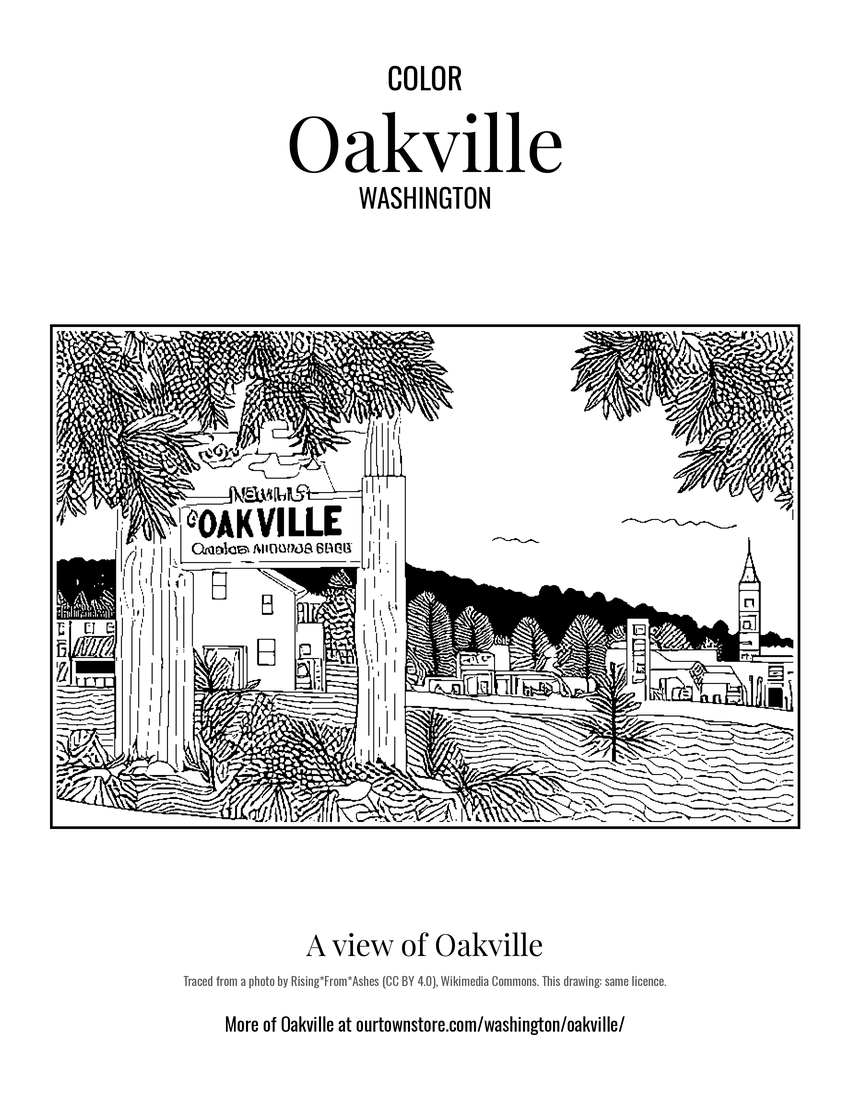 A view of Oakville