Cart 0
Auburn, Auburn, Washington

AUBURN

Washington
Shop the collection

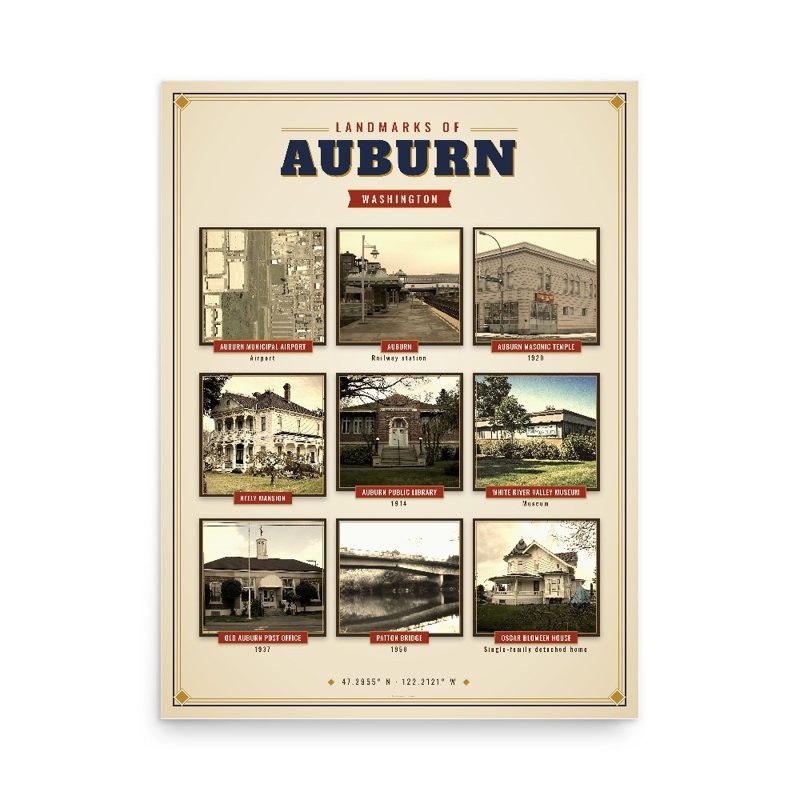
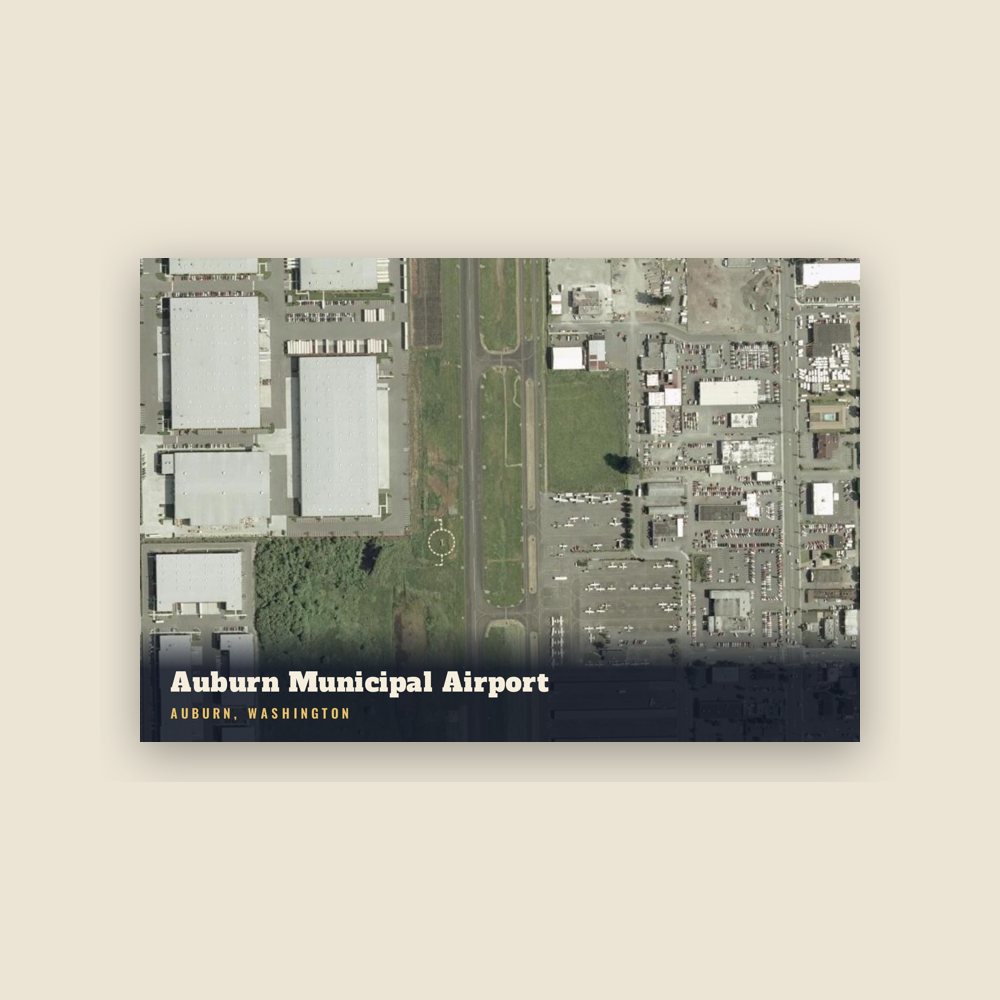
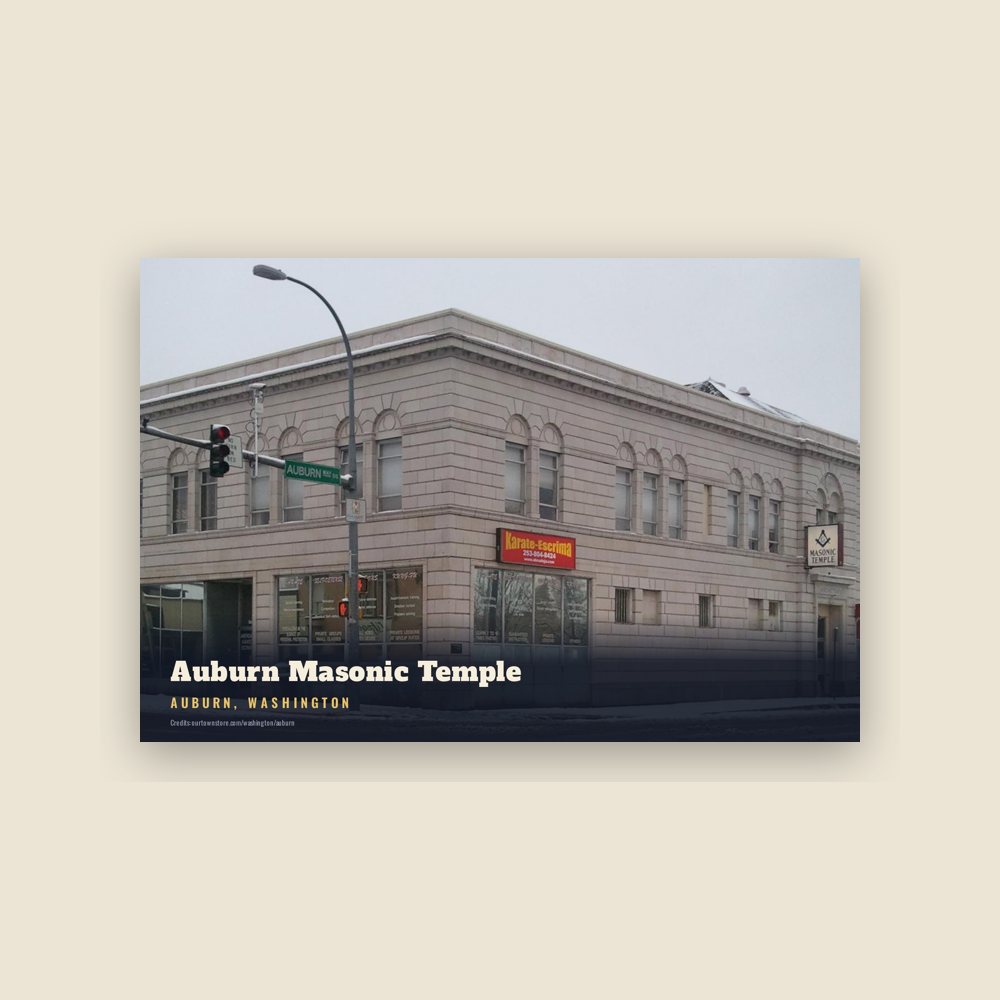
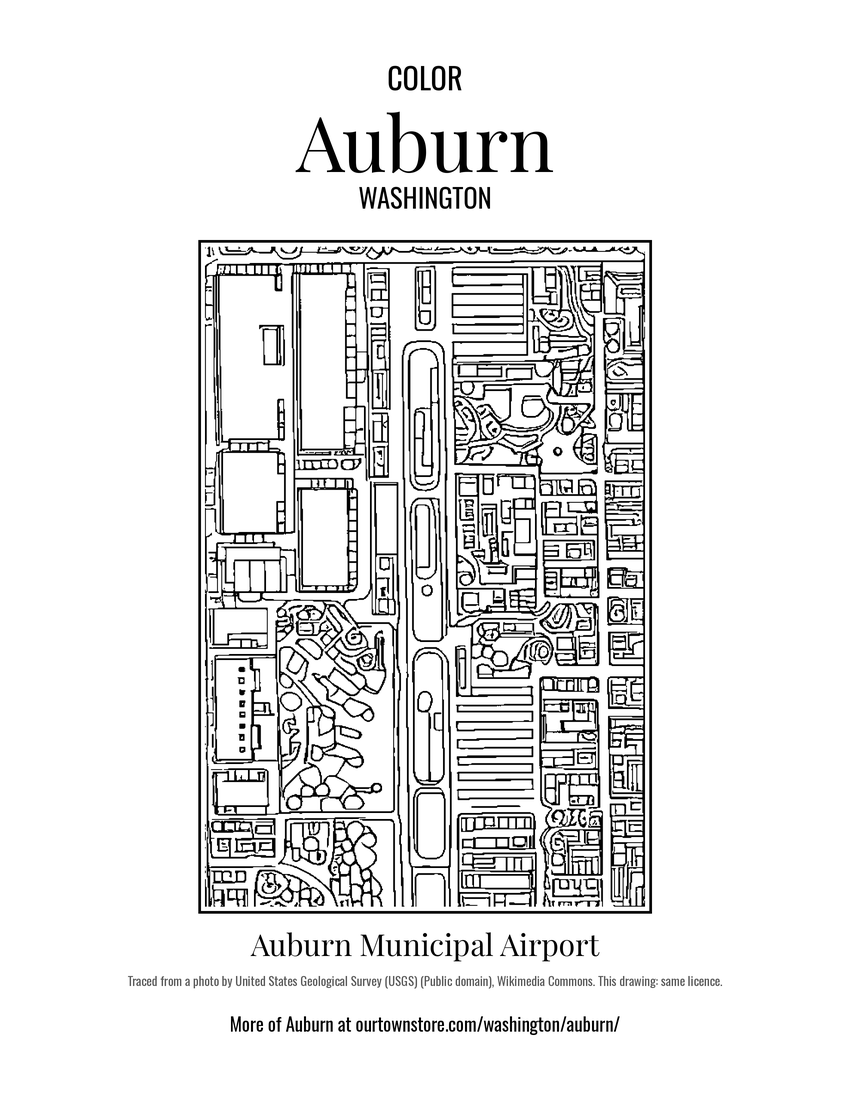
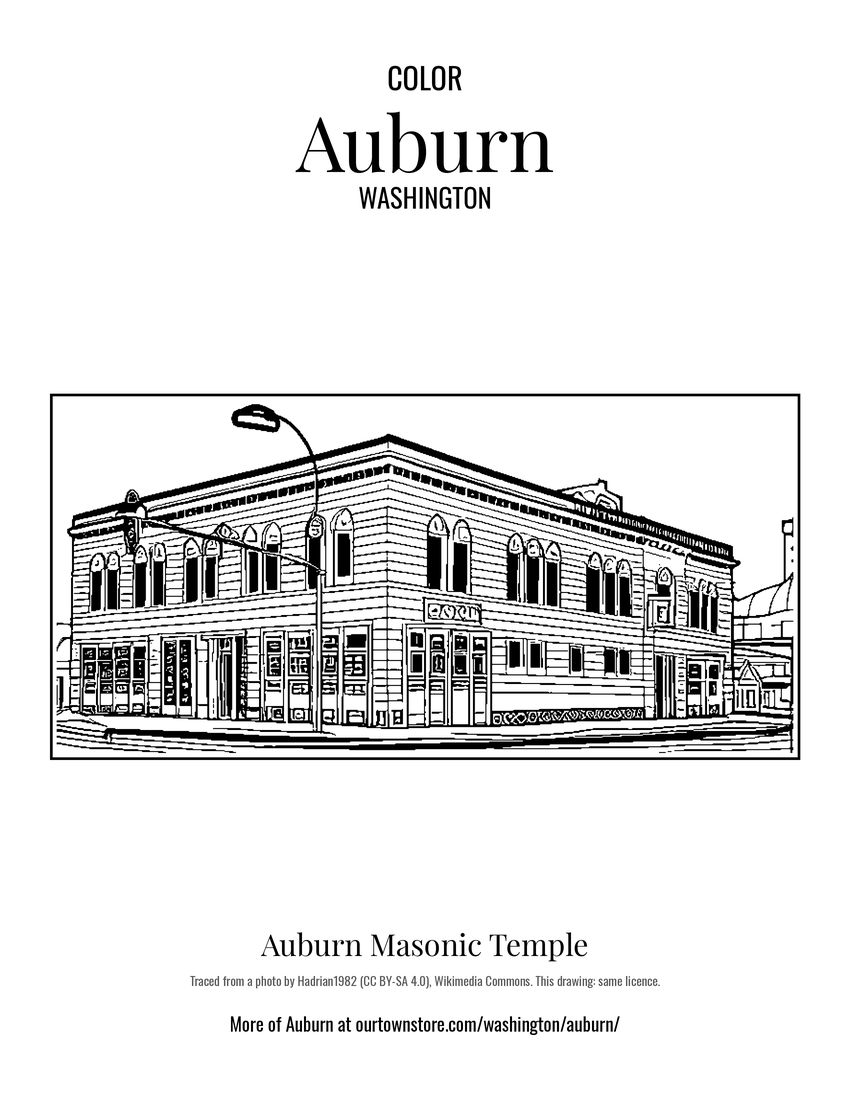
Slaughter was incorporated on June 13, 1891, but its name was changed two years later to Auburn on February 21, 1893, by an action of the state legislature. Landmarks include Auburn Municipal Airport, Auburn and Auburn Masonic Temple. Auburn is the birthplace of Tobi Vail, musician.

The Auburn Collection

Made for Auburn. Printed to order.

Auburn, Washington gifts and souvenirs: 41 designs made from Auburn's own map, landmarks and history, from $10 to $99. Printed to order and shipped free in the USA.

PopularPrice
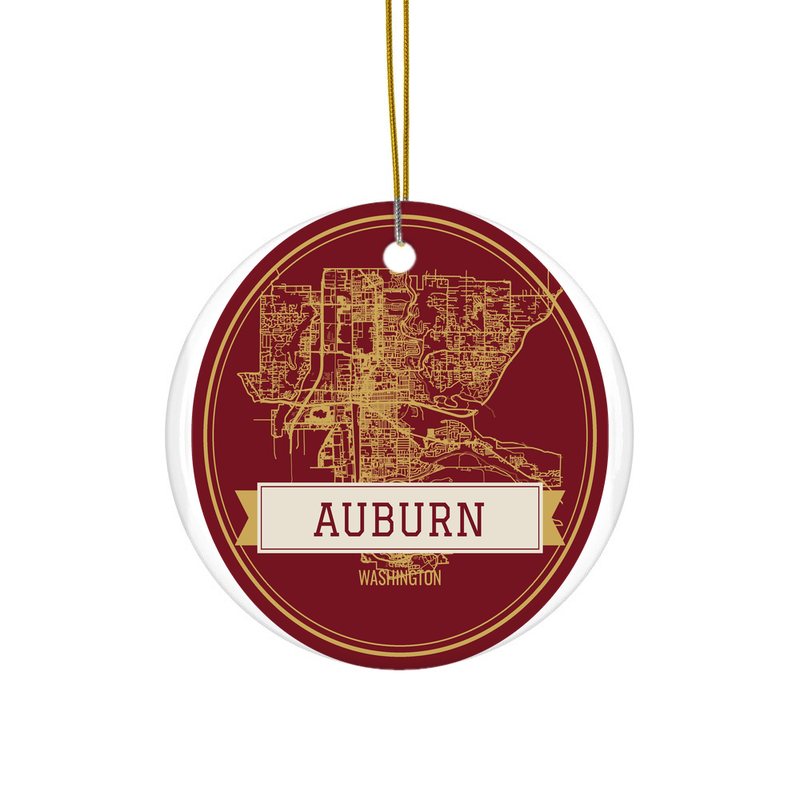
Auburn Hometown Ornament$23
Auburn Landmarks Photo Posterfrom $40
Auburn Vintage Travel Posterfrom $40
Auburn Varsity Crewneckfrom $57
Auburn Est. Teefrom $33
Auburn Town Line Mugfrom $26
Auburn Hometown Ornament

Auburn Hometown Ornament

Ceramic keepsake, gold ribbon, in 4 styles

$23
Auburn Landmarks Photo Poster

Auburn Landmarks Photo Poster

Nine local landmarks, archival matte

from $40
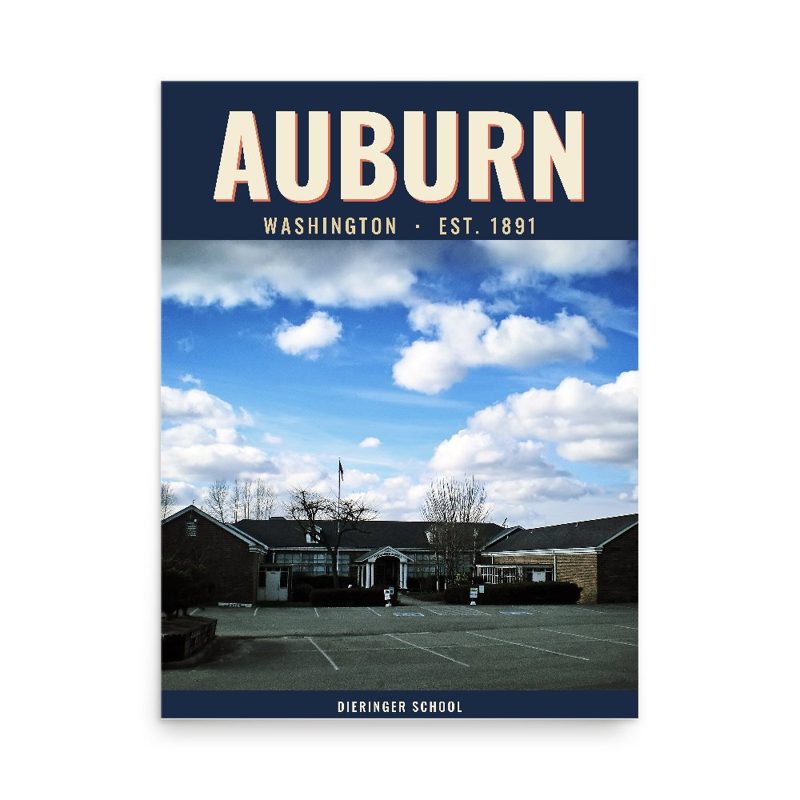
Auburn Vintage Travel Poster

Auburn Vintage Travel Poster

Its landmark photo in a classic travel-poster layout

from $40
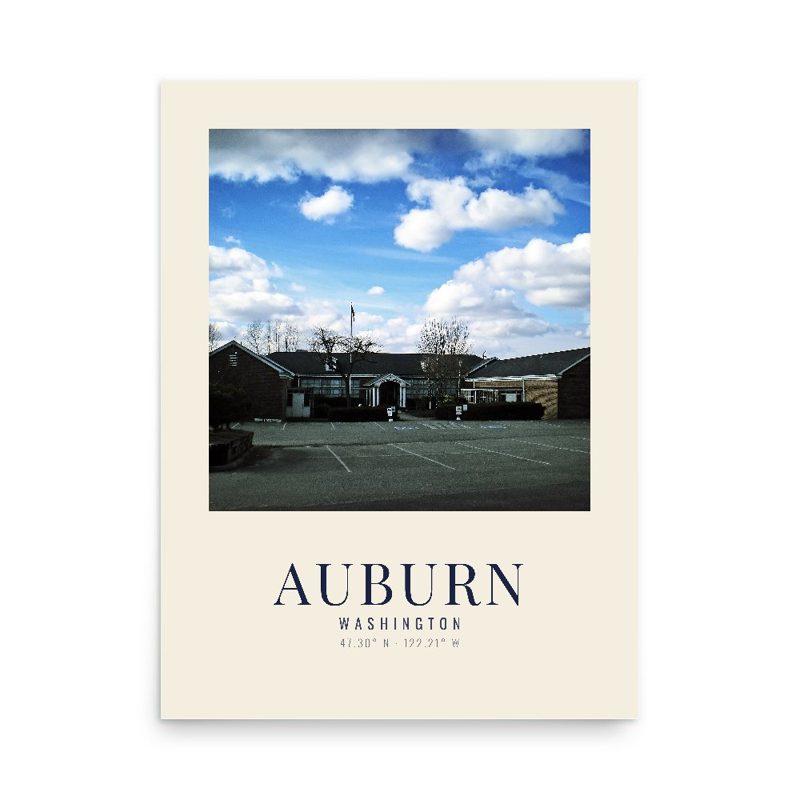
Auburn Photo Art Print

Auburn Photo Art Print

A local landmark photo as a gallery print

from $40
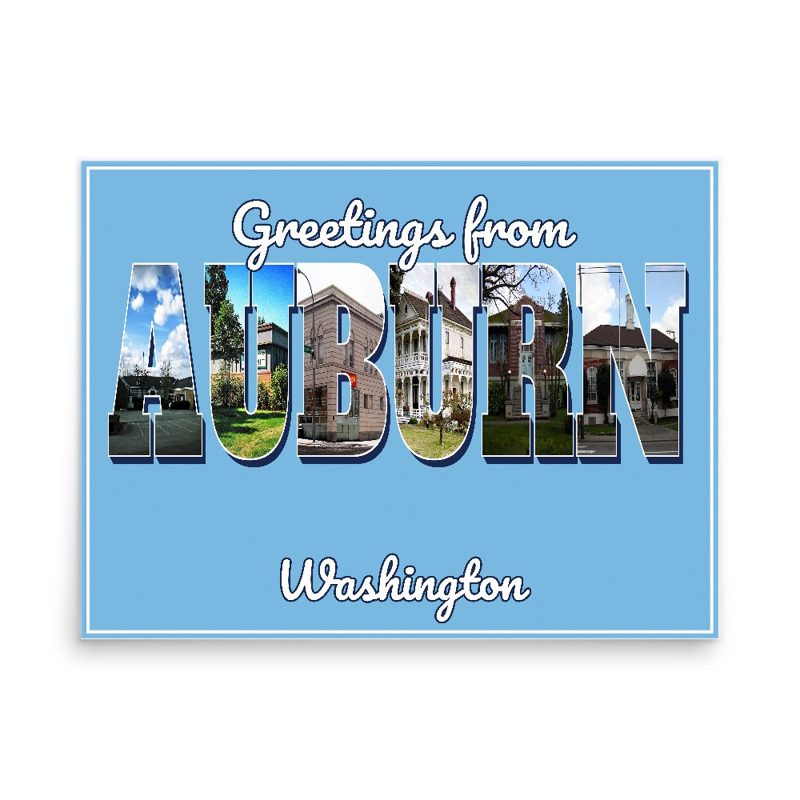
Auburn “Greetings From” Poster

Auburn “Greetings From” Poster

Classic large-letter postcard art, filled with local photos

from $40
Auburn Snapshot Collage Poster

Auburn Snapshot Collage Poster

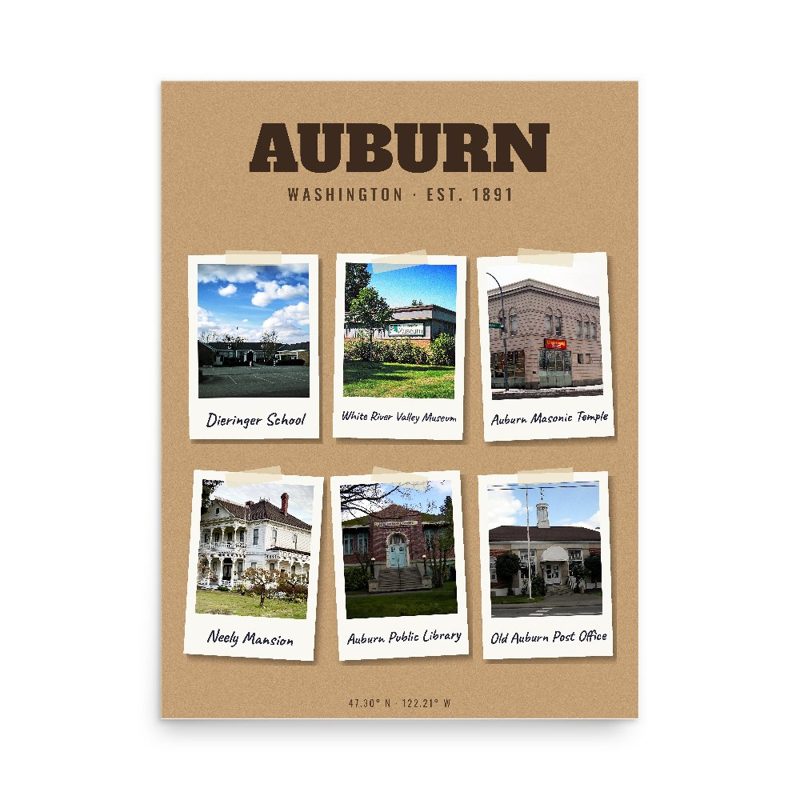
Six local landmarks as instant photos on kraft paper

from $40
Auburn History Timeline Poster

Auburn History Timeline Poster

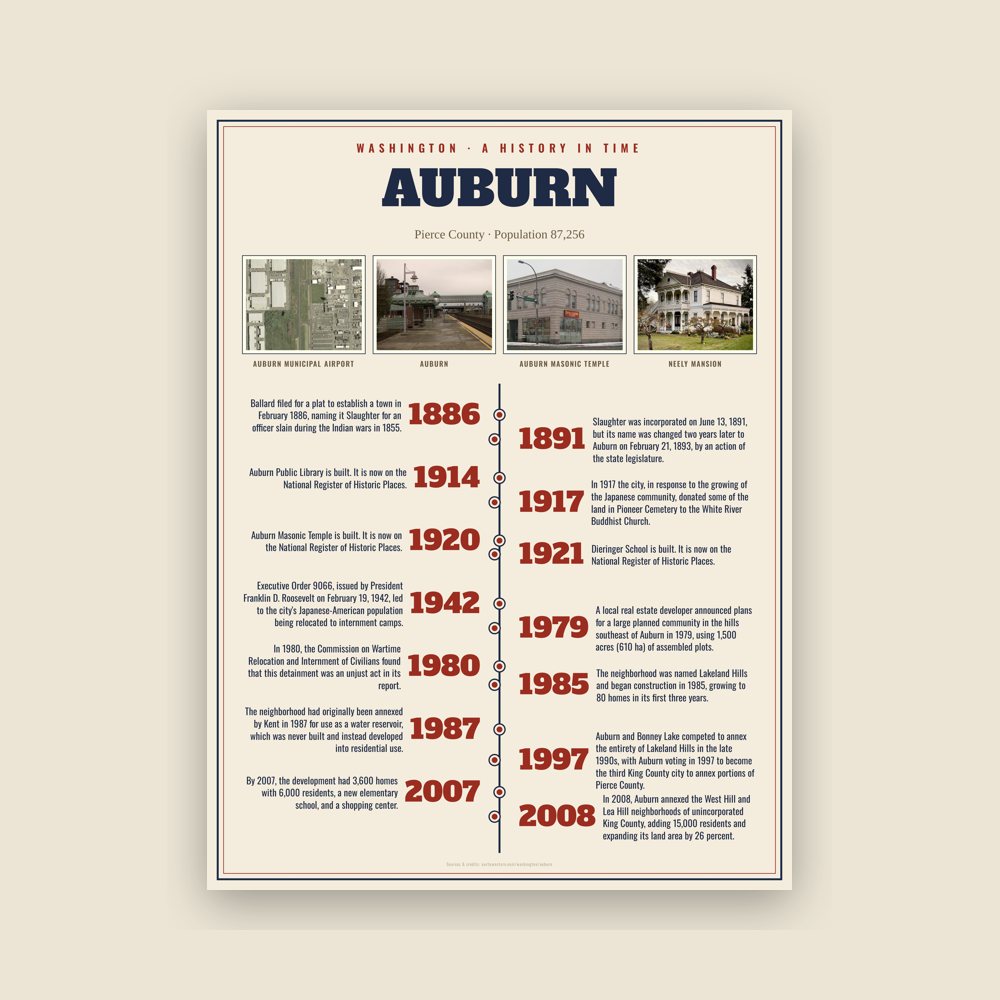
The town's story in dates, from its own records, for home or classroom

from $44
Auburn Map Placemat

Auburn Map Placemat

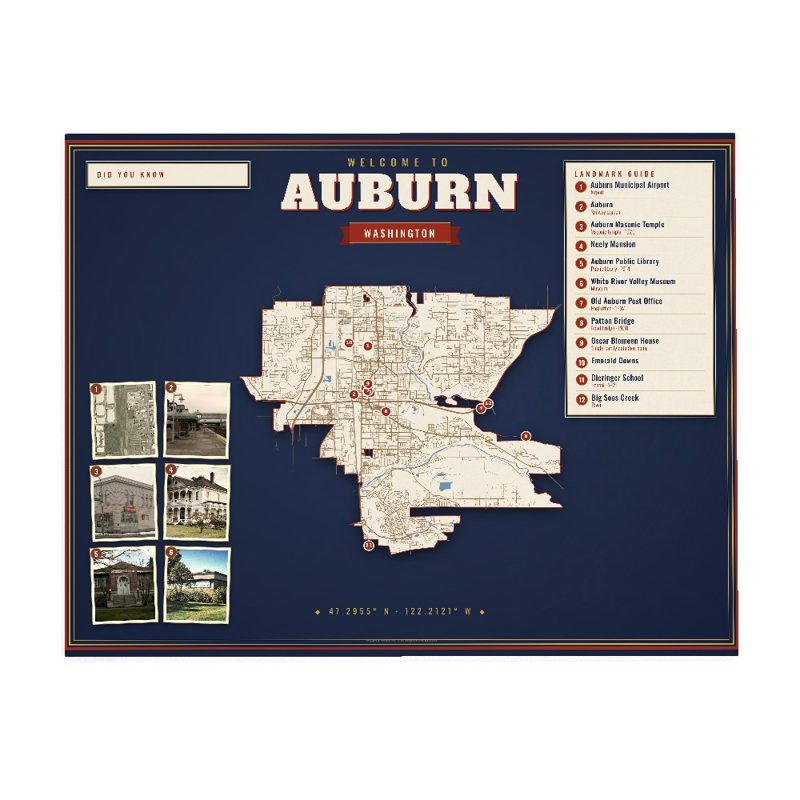
Map of local landmarks, washable fabric

$31
Auburn Varsity Crewneck

Auburn Varsity Crewneck

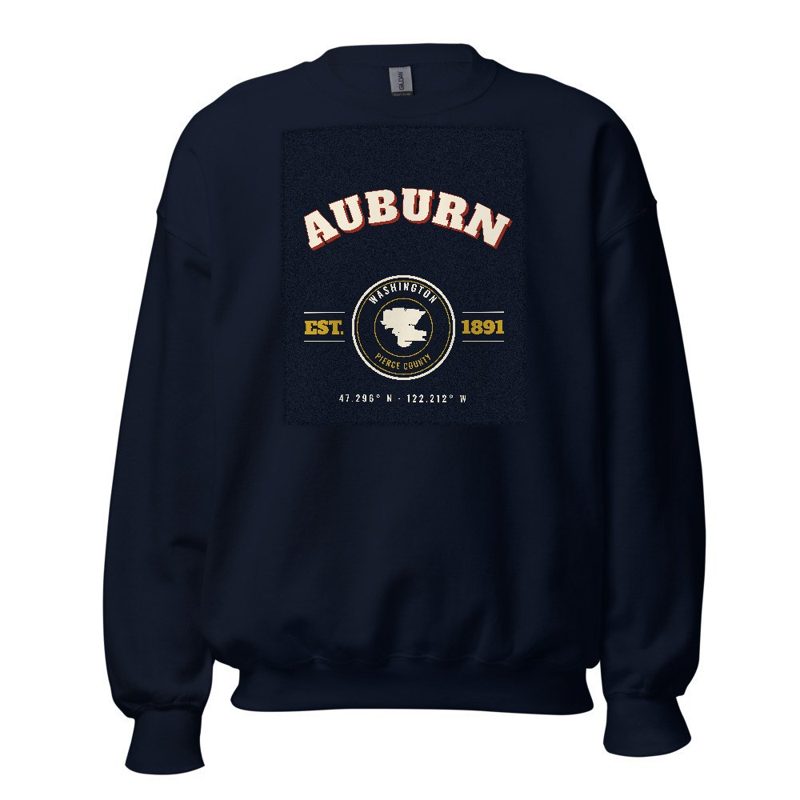
Heavy-blend fleece, street map printed on the back

from $57
Auburn Hometown Knit Sweater

Auburn Hometown Knit Sweater

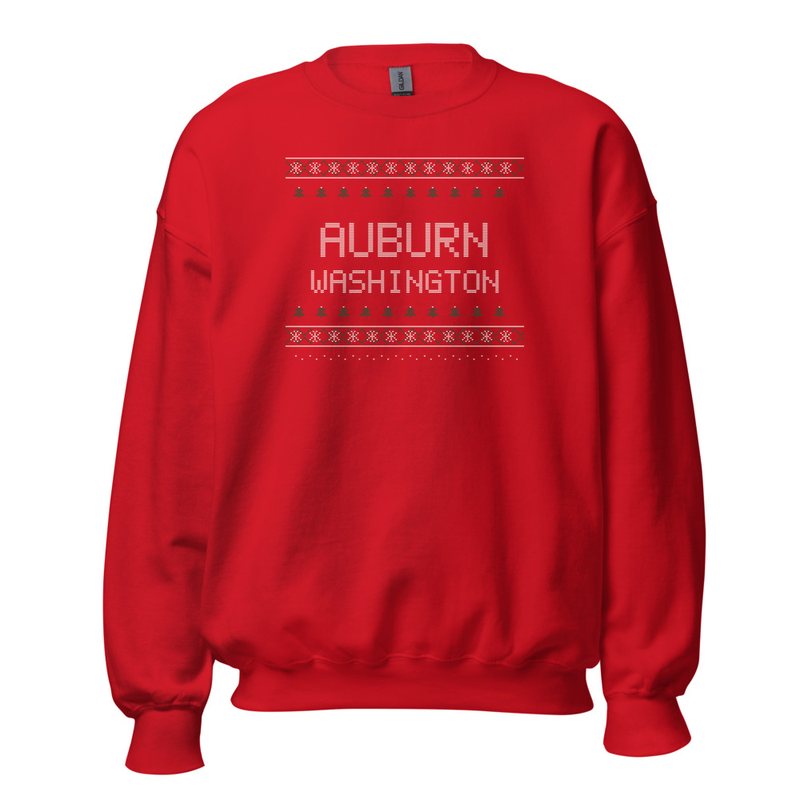
Red heavy-blend crewneck, knit-stitch town print

from $57
Auburn Est. Tee

Auburn Est. Tee

Soft Bella+Canvas jersey

from $33
Auburn Est. Youth Tee

Auburn Est. Youth Tee

Kids' Bella+Canvas jersey, youth sizes

$30
Auburn Est. Toddler Tee

Auburn Est. Toddler Tee

Bella+Canvas toddler jersey

$29
Auburn Est. Baby One Piece

Auburn Est. Baby One Piece

Bella+Canvas baby bodysuit

$30
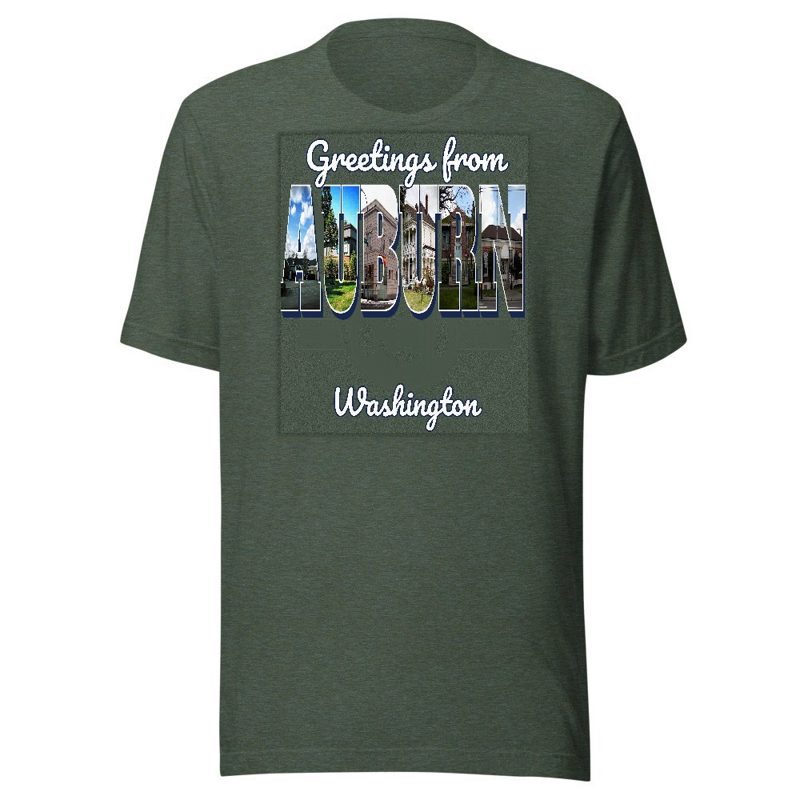
Auburn “Greetings From” Tee

Auburn “Greetings From” Tee

Large-letter postcard art filled with local photos

from $35
Auburn Town Line Mug

Auburn Town Line Mug

Glossy ceramic, dishwasher safe

from $26
Auburn “Greetings From” Mug

Auburn “Greetings From” Mug

Large-letter postcard art filled with local photos, 11 oz ceramic

from $29
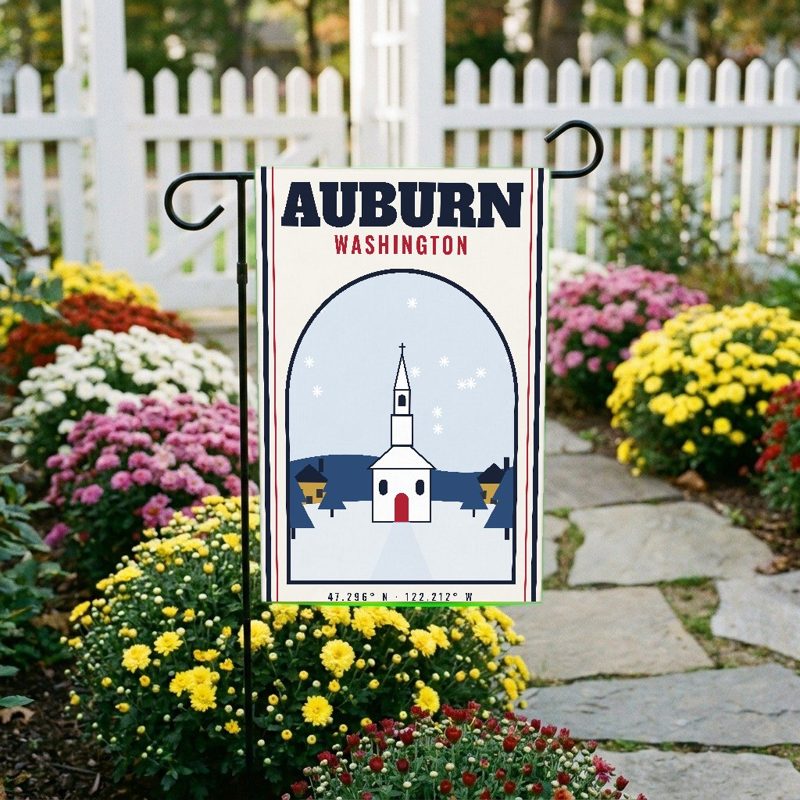
Auburn Garden Flag

Auburn Garden Flag

Weatherproof, for the front walk

$31
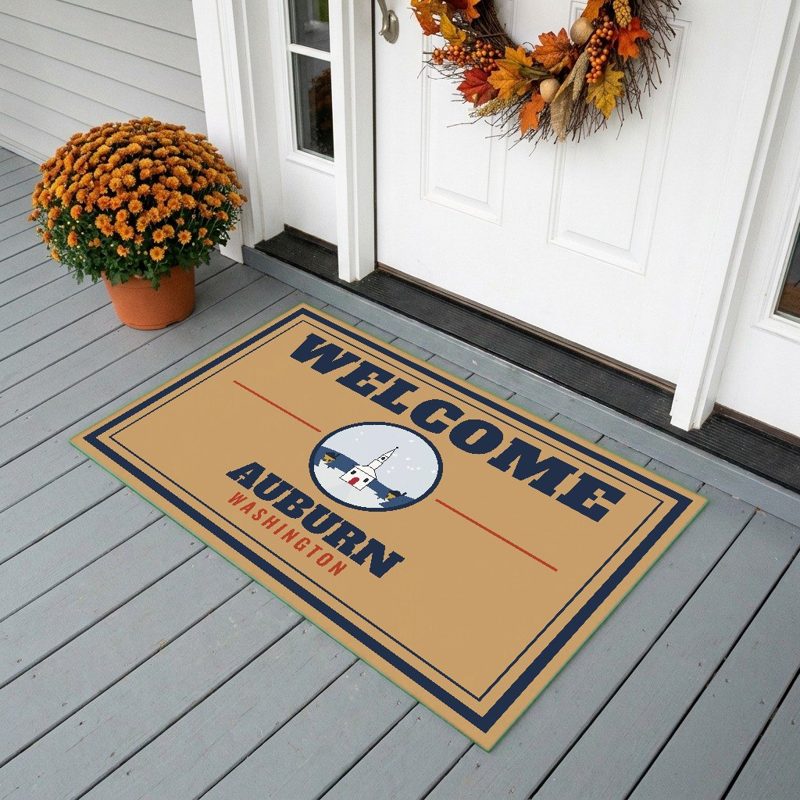
Auburn Welcome Doormat

Auburn Welcome Doormat

24″×16″, printed coir-look fibers, rubber back

$66
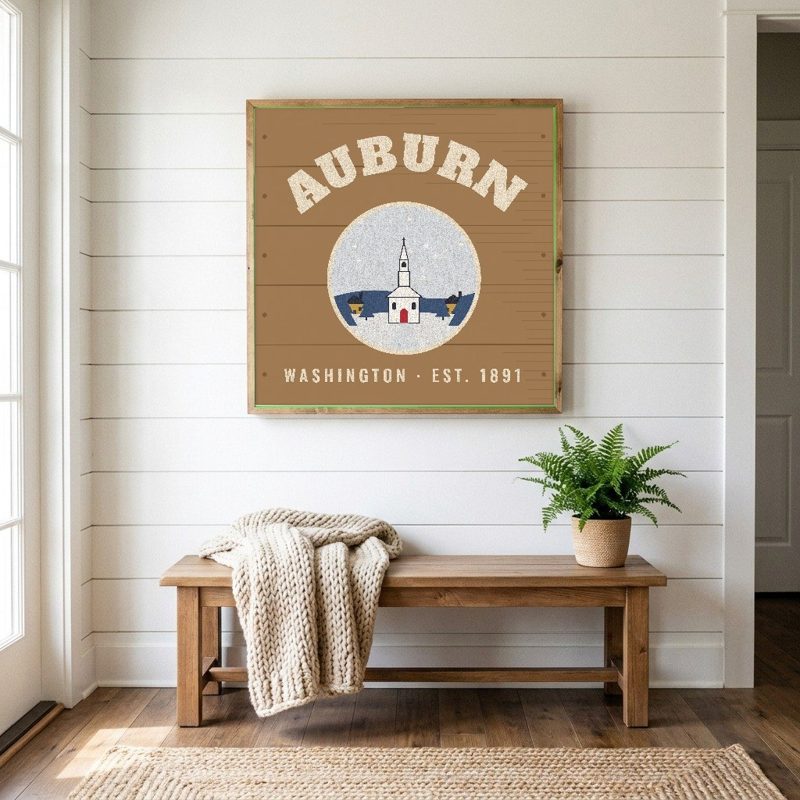
Auburn Hometown Wood Sign

Auburn Hometown Wood Sign

12″×12″ printed wood, ready to hang

$48
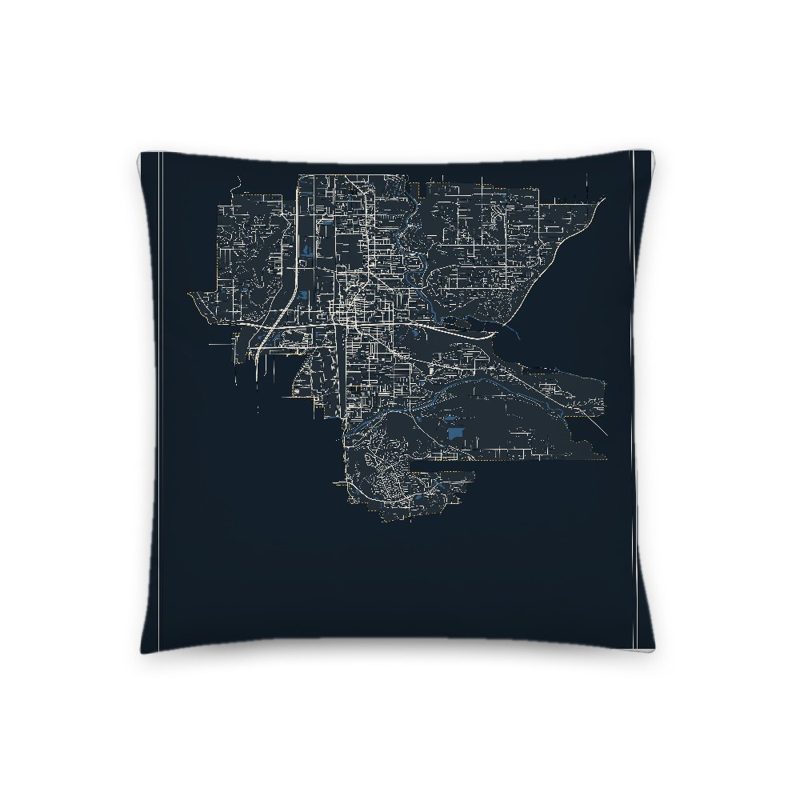
Auburn Map Throw Pillow

Auburn Map Throw Pillow

Soft-touch, zip cover

$47
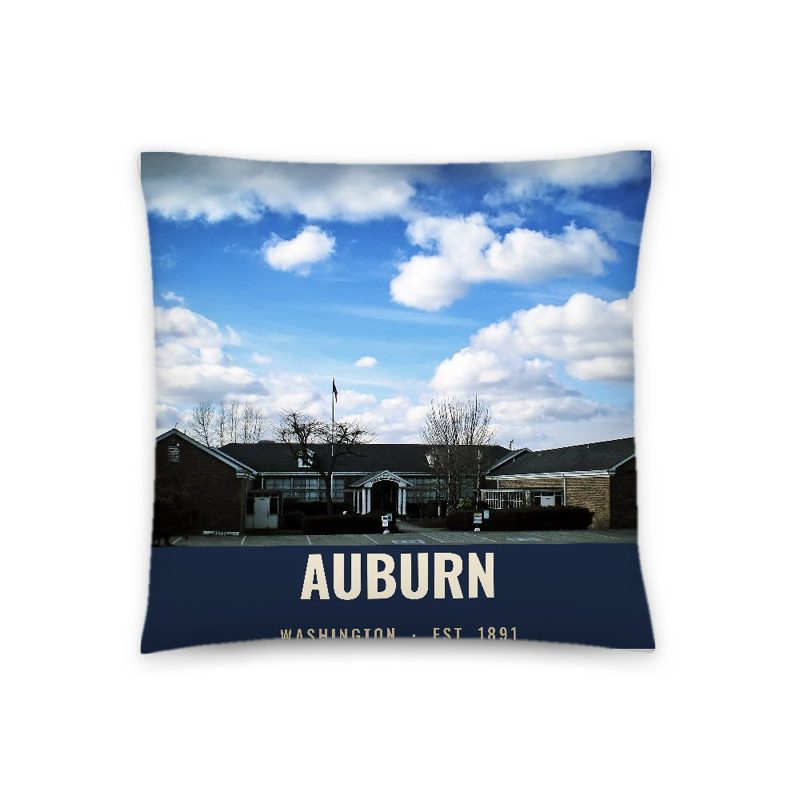
Auburn Landmark Photo Pillow

Auburn Landmark Photo Pillow

A local landmark photo with the town name, 18″×18″

$49
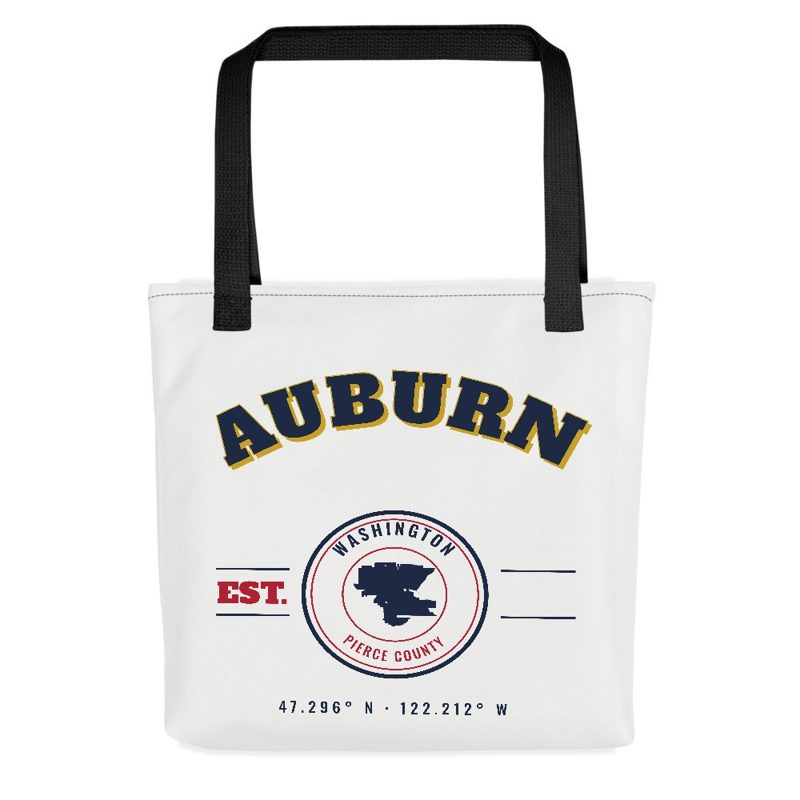
Auburn Market Tote

Auburn Market Tote

Sturdy all-over-print tote

$37
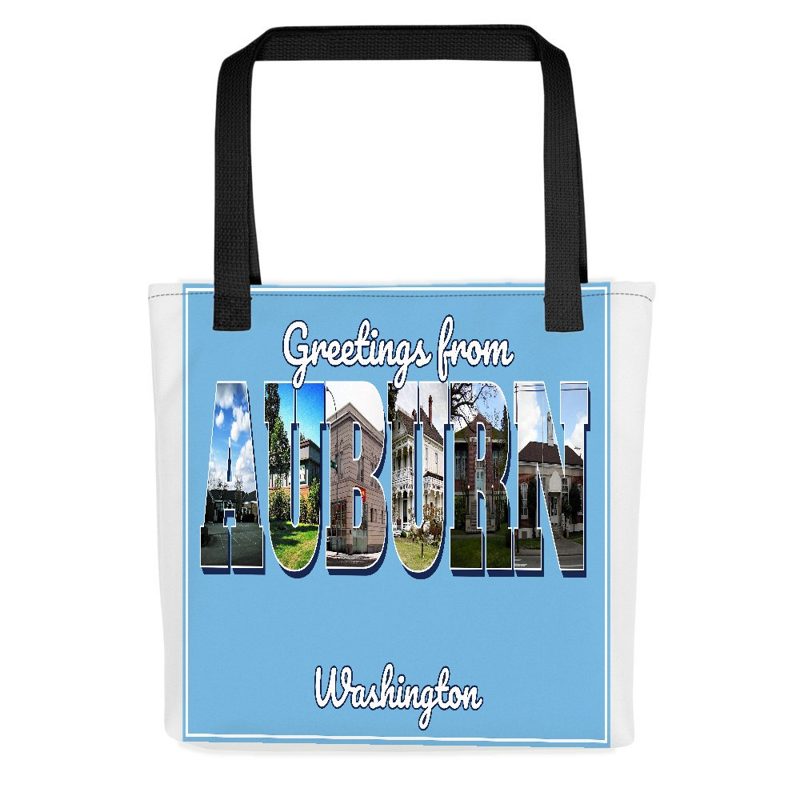
Auburn “Greetings From” Tote

Auburn “Greetings From” Tote

Large-letter postcard art on a sturdy tote

$37
Auburn “Greetings From” Trucker Cap

Auburn “Greetings From” Trucker Cap

Foam-front trucker, printed (not embroidered) with local photos

$33
Auburn Cork Coaster

Auburn Cork Coaster

Glossy top, cork back

$16
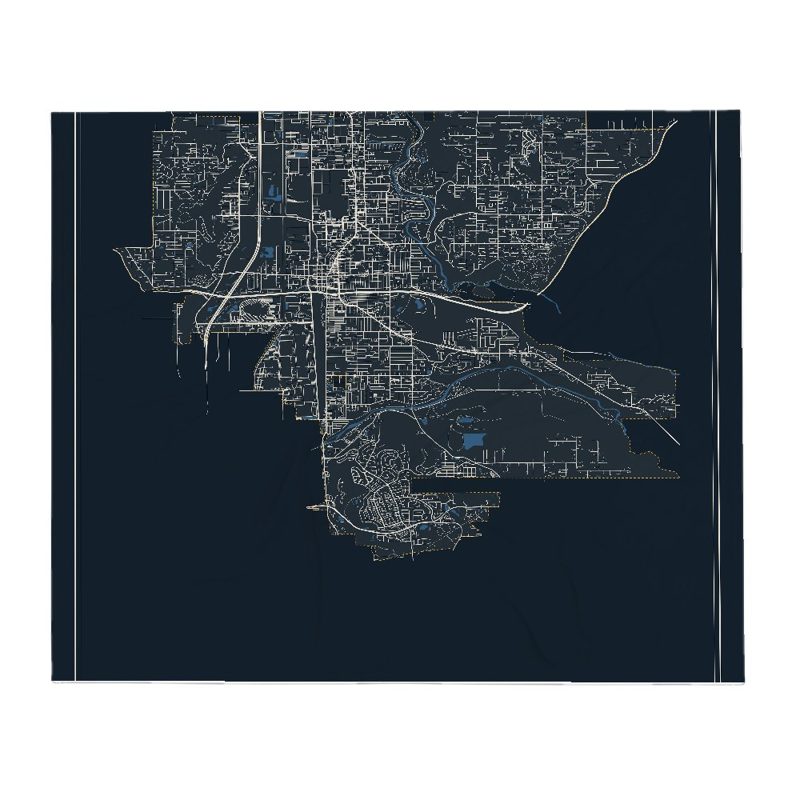
Auburn Street Map Throw Blanket

Auburn Street Map Throw Blanket

Soft fleece, 50″×60″

from $72
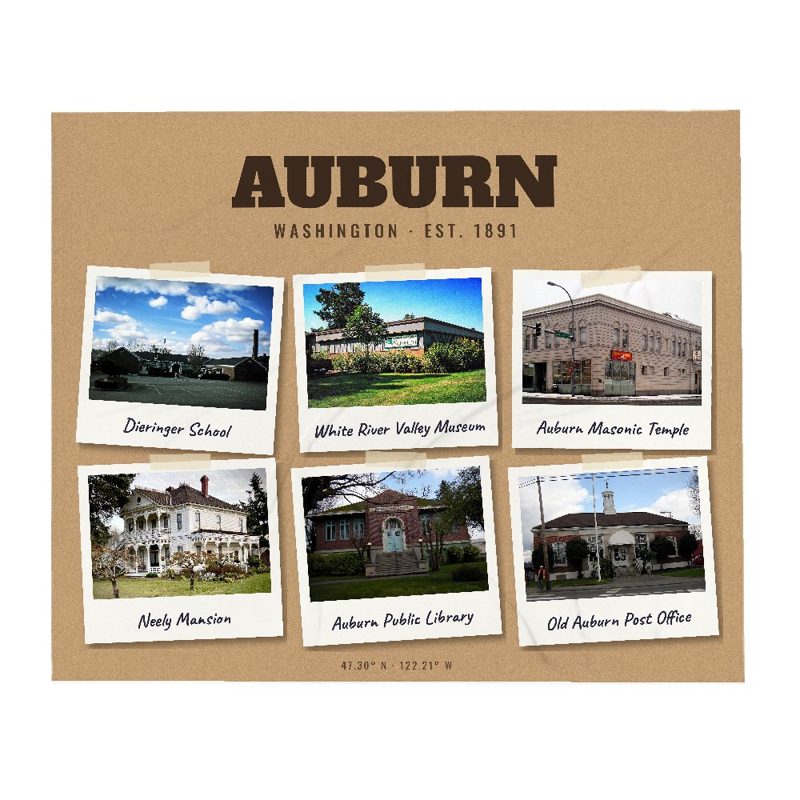
Auburn Snapshot Collage Blanket

Auburn Snapshot Collage Blanket

Six local landmarks as instant photos, soft fleece 50″×60″

from $76
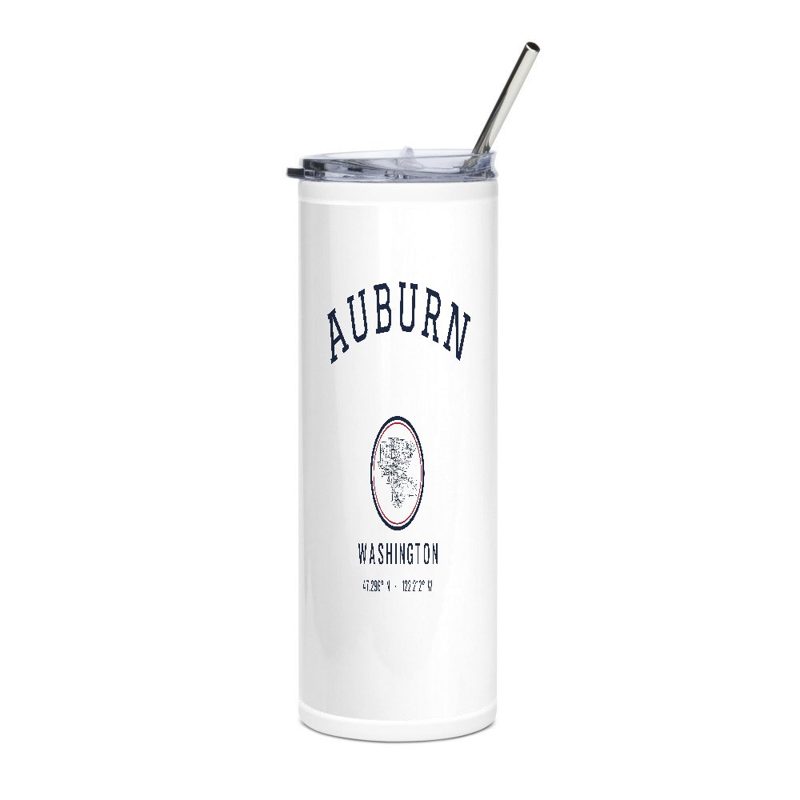
Auburn Est. Tumbler

Auburn Est. Tumbler

20 oz, double-wall stainless

$51
Auburn Auburn Municipal Airport Postcard

Auburn Auburn Municipal Airport Postcard

6″×4″ postcard, glossy front

$10
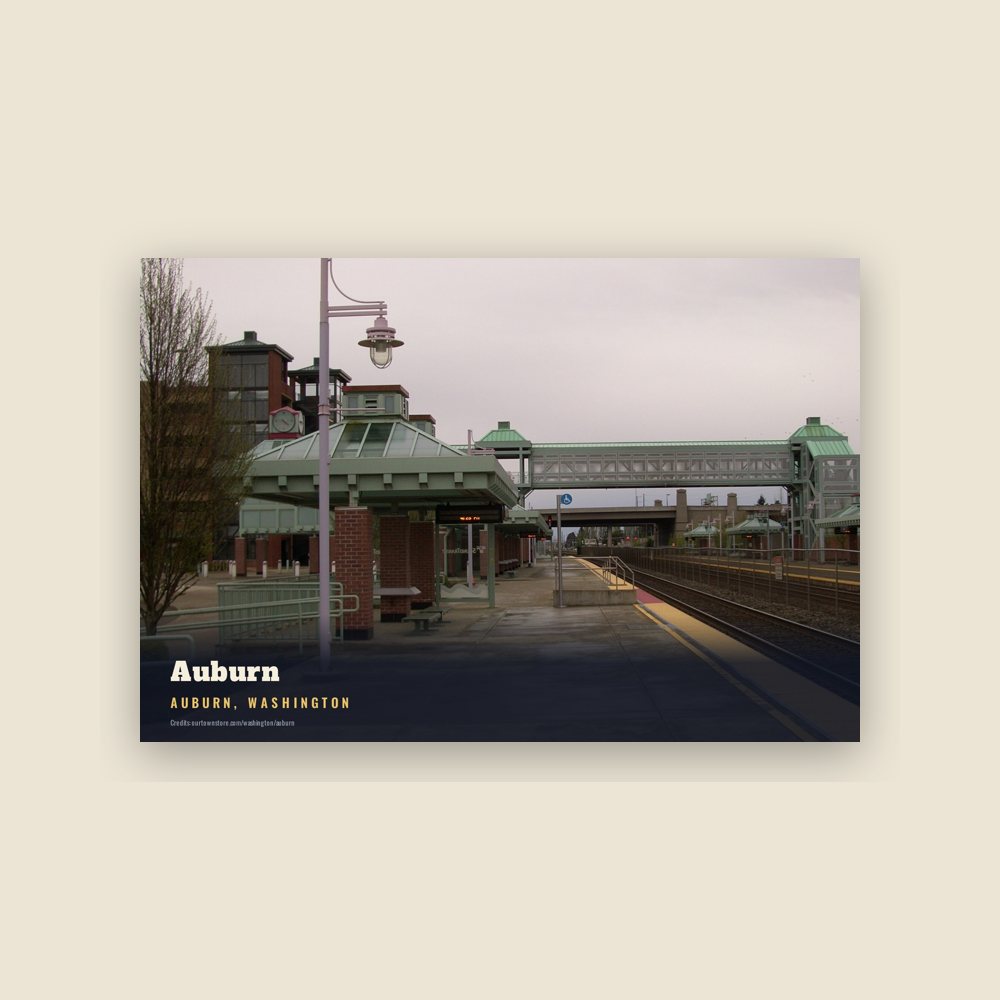
Auburn Auburn Postcard

Auburn Auburn Postcard

6″×4″ postcard, glossy front

$10
Auburn Auburn Masonic Temple Postcard

Auburn Auburn Masonic Temple Postcard

6″×4″ postcard, glossy front

$10
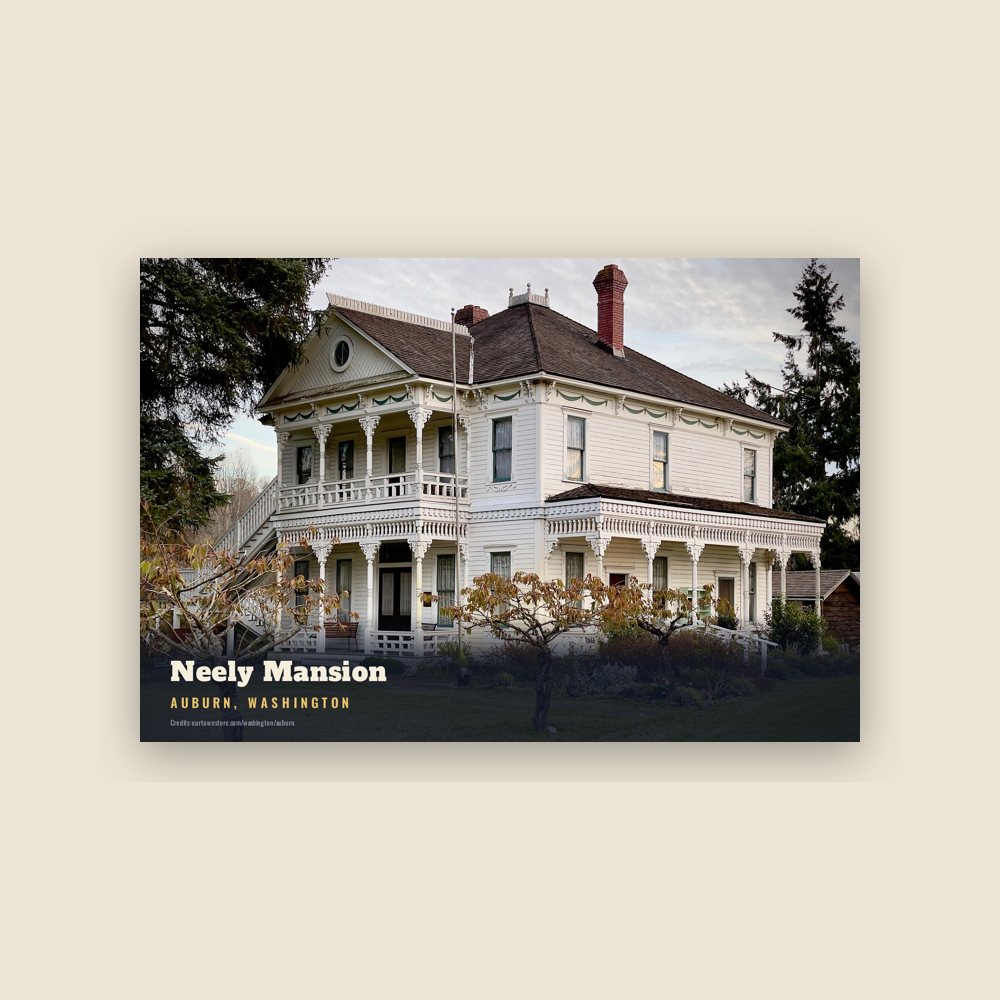
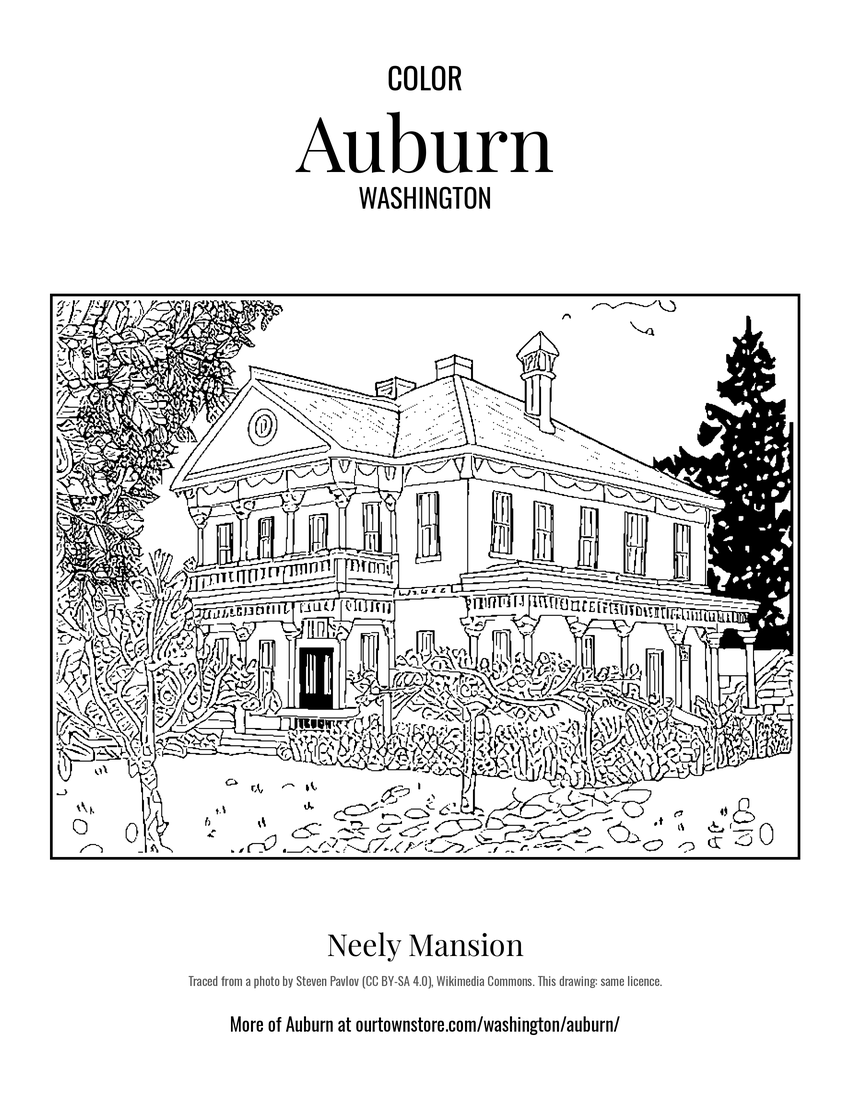
Auburn Neely Mansion Postcard

Auburn Neely Mansion Postcard

6″×4″ postcard, glossy front

$10
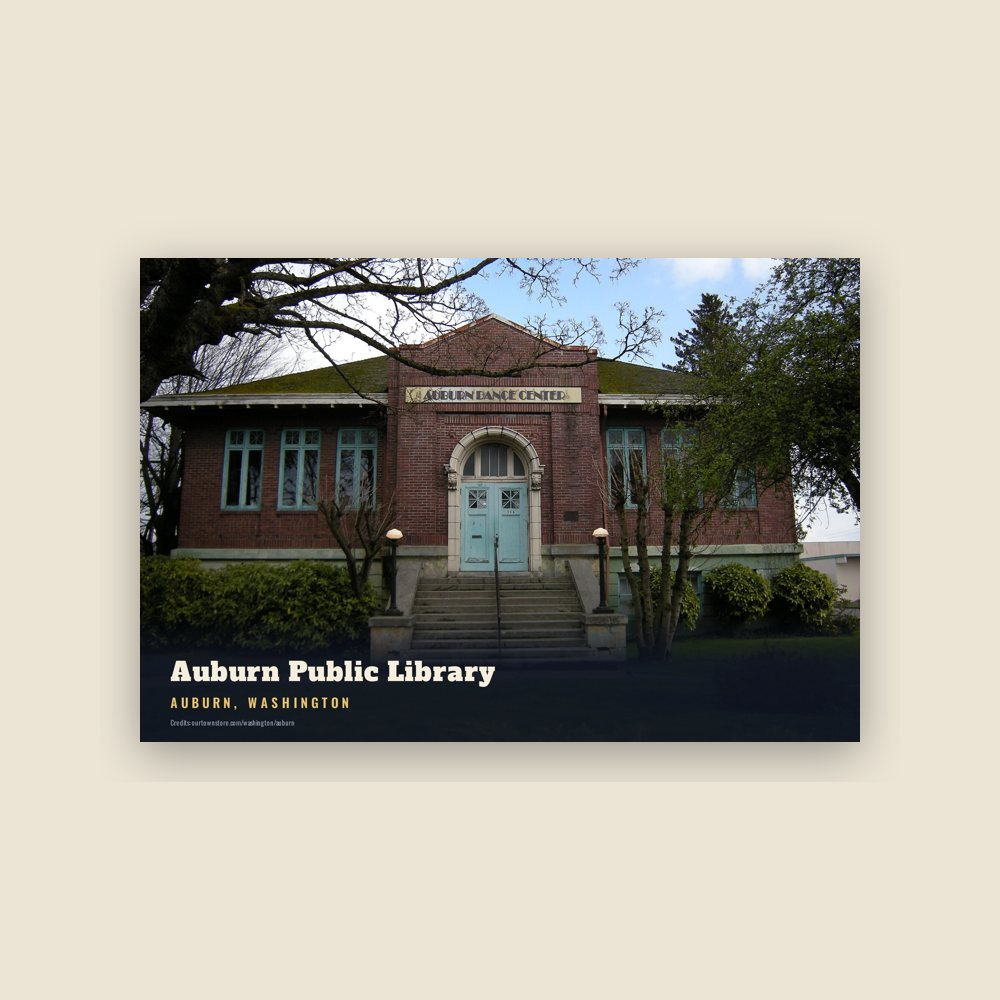
Auburn Auburn Public Library Postcard

Auburn Auburn Public Library Postcard

6″×4″ postcard, glossy front

$10
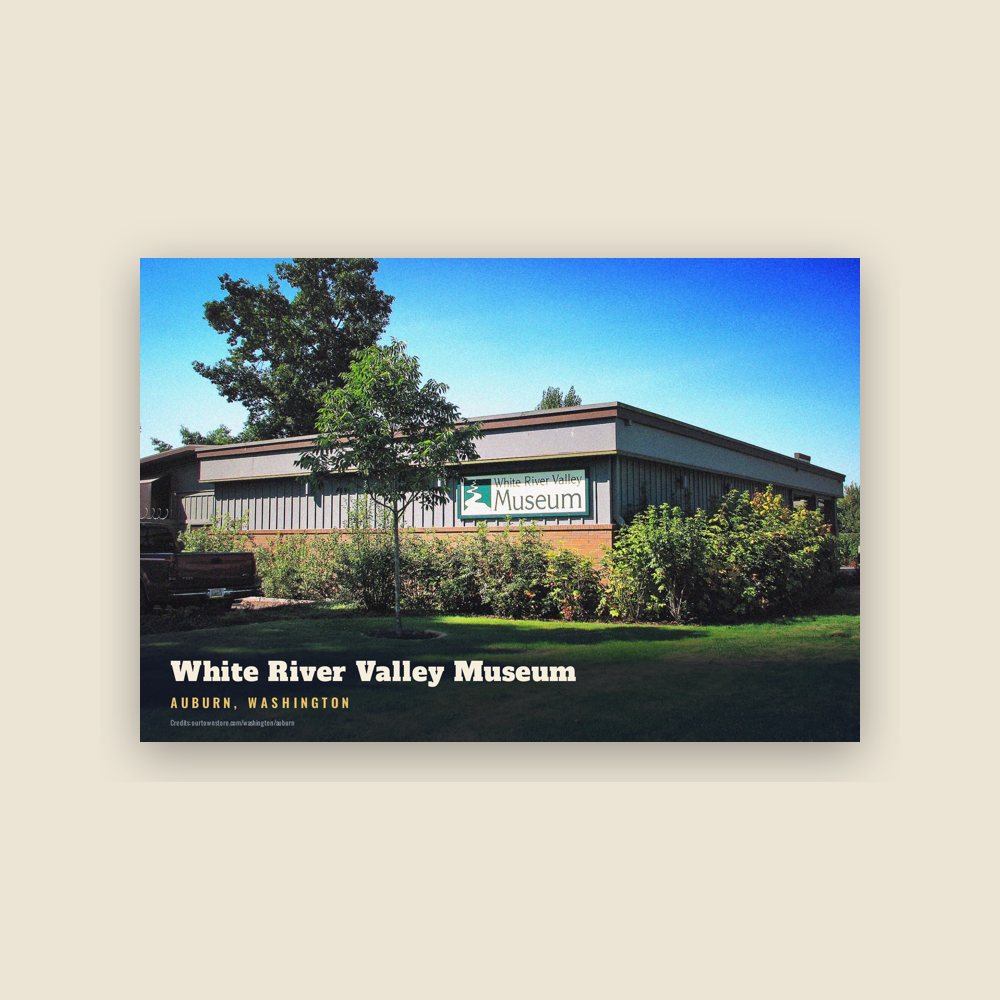
Auburn White River Valley Museum Postcard

Auburn White River Valley Museum Postcard

6″×4″ postcard, glossy front

$10
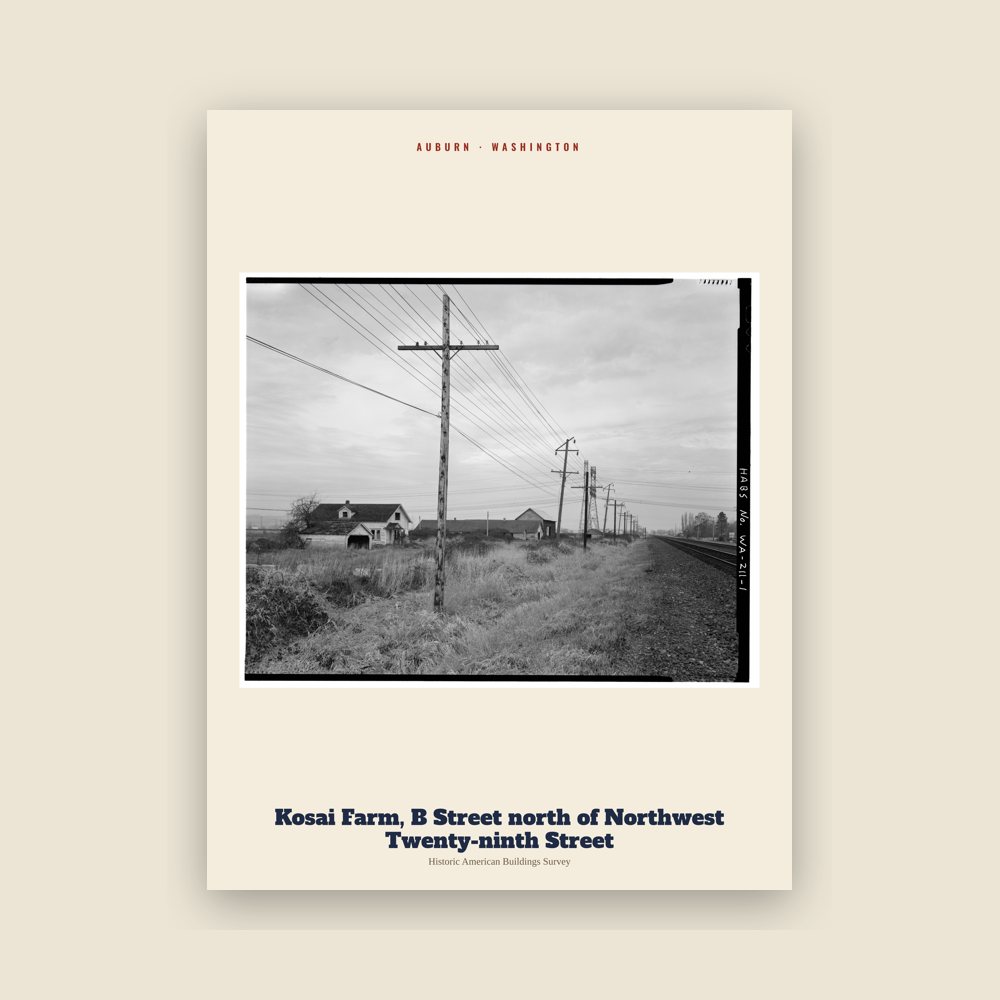
Auburn Kosai Farm, B Street north of Northwest Twenty-ninth Street Archive Print

Auburn Kosai Farm, B Street north of Northwest Twenty-ninth Street Archive Print

From the Library of Congress collections: a historic survey drawing or photograph of the town

from $44
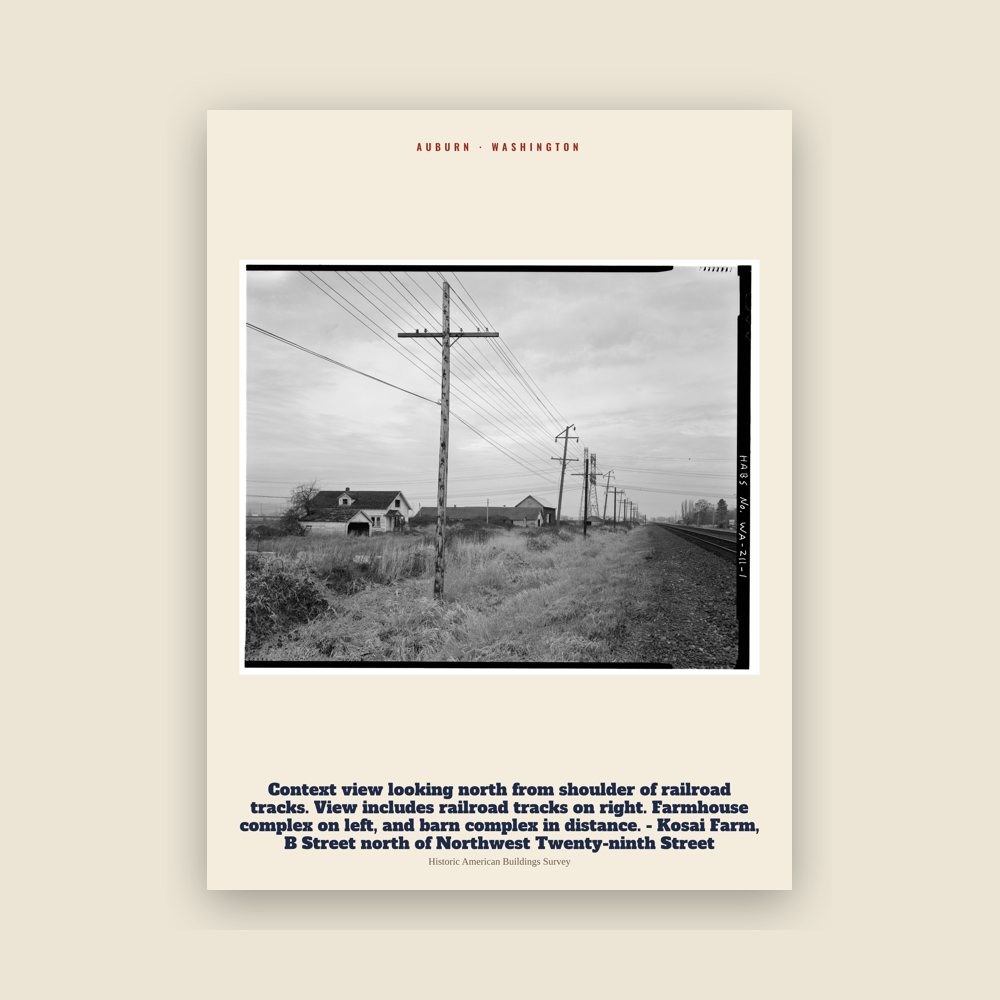
Auburn Context view looking north from shoulder of railroad tracks.  View includes railroad tracks on right.  Farmhouse complex on left, and barn complex in distance. - Kosai Farm, B Street north of Northwest Twenty-ninth Street Archive Print

Auburn Context view looking north from shoulder of railroad tracks. View includes railroad tracks on right. Farmhouse complex on left, and barn complex in distance. - Kosai Farm, B Street north of Northwest Twenty-ninth Street Archive Print

From the Library of Congress collections: a historic survey drawing or photograph of the town

from $44
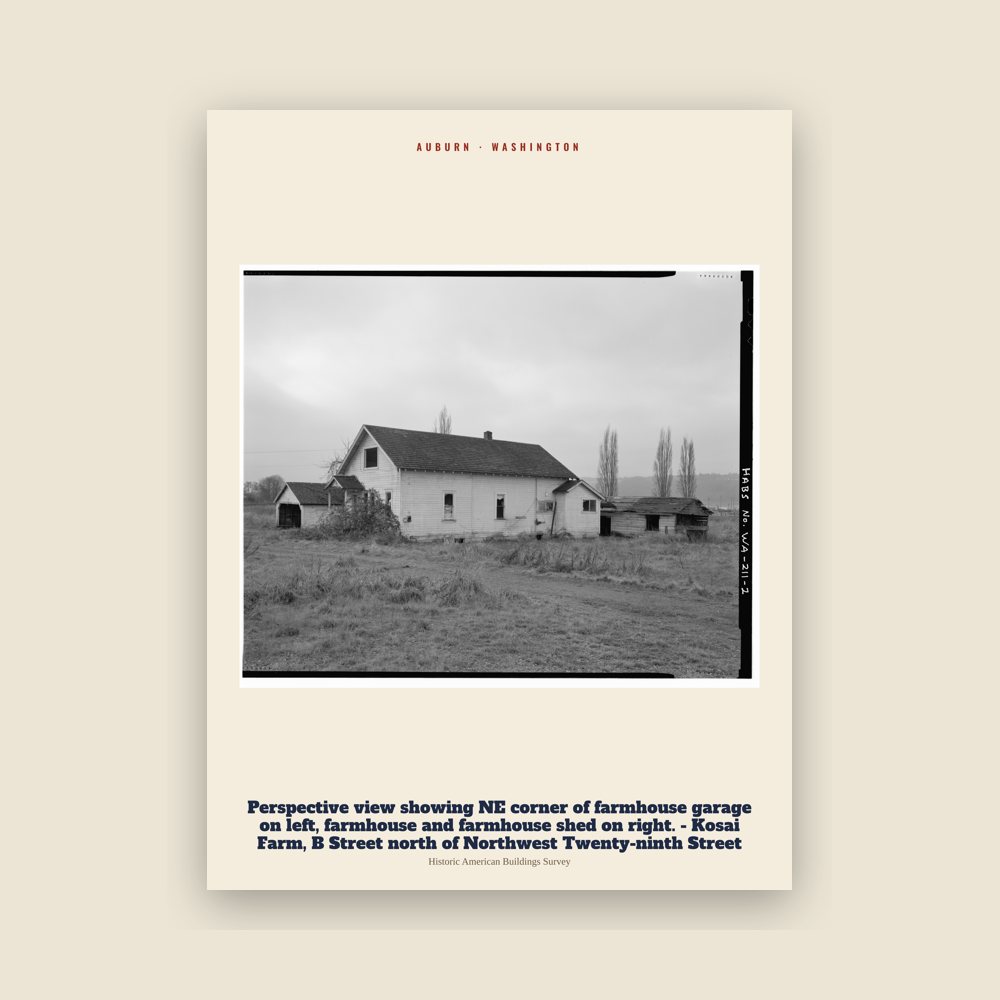
Auburn Perspective view showing NE corner of farmhouse garage on left, farmhouse and farmhouse shed on right. - Kosai Farm, B Street north of Northwest Twenty-ninth Street Archive Print

Auburn Perspective view showing NE corner of farmhouse garage on left, farmhouse and farmhouse shed on right. - Kosai Farm, B Street north of Northwest Twenty-ninth Street Archive Print

From the Library of Congress collections: a historic survey drawing or photograph of the town

from $44
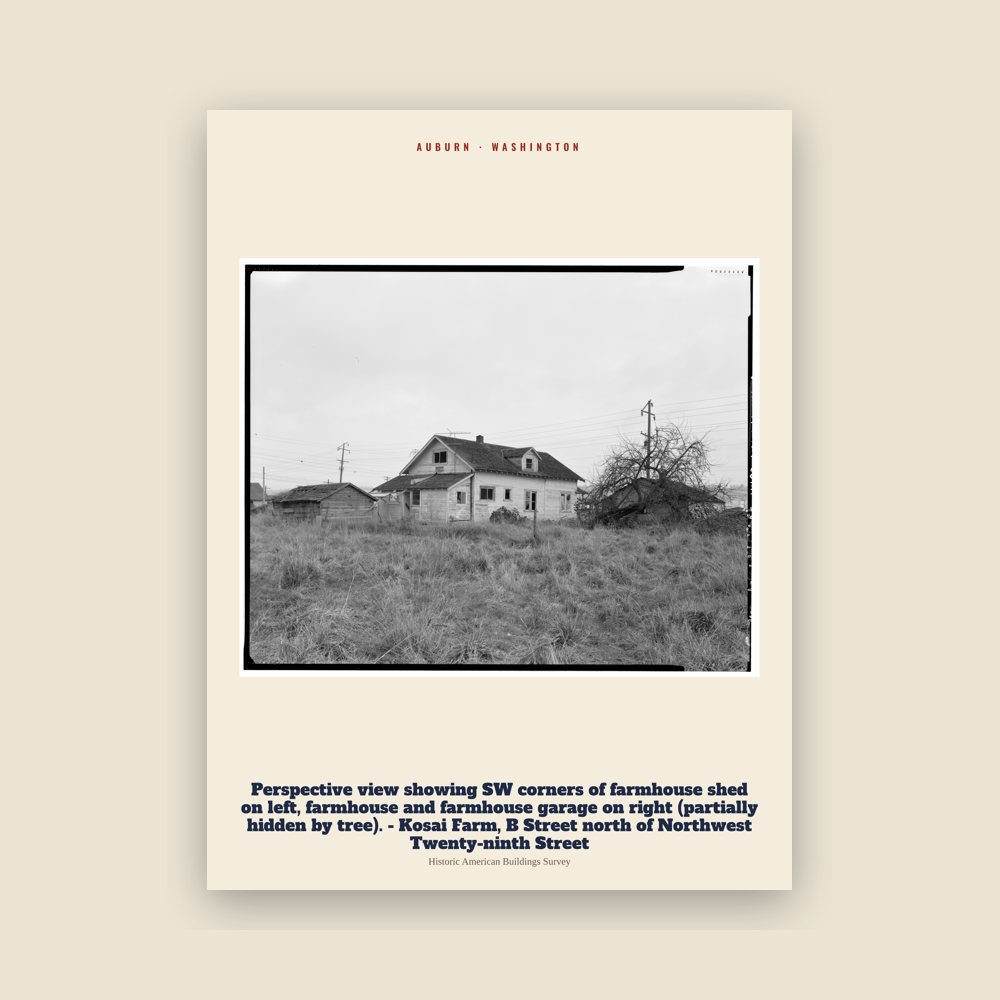
Auburn Perspective view showing SW corners of farmhouse shed on left, farmhouse and farmhouse garage on right (partially hidden by tree). - Kosai Farm, B Street north of Northwest Twenty-ninth Street Archive Print

Auburn Perspective view showing SW corners of farmhouse shed on left, farmhouse and farmhouse garage on right (partially hidden by tree). - Kosai Farm, B Street north of Northwest Twenty-ninth Street Archive Print

From the Library of Congress collections: a historic survey drawing or photograph of the town

from $44
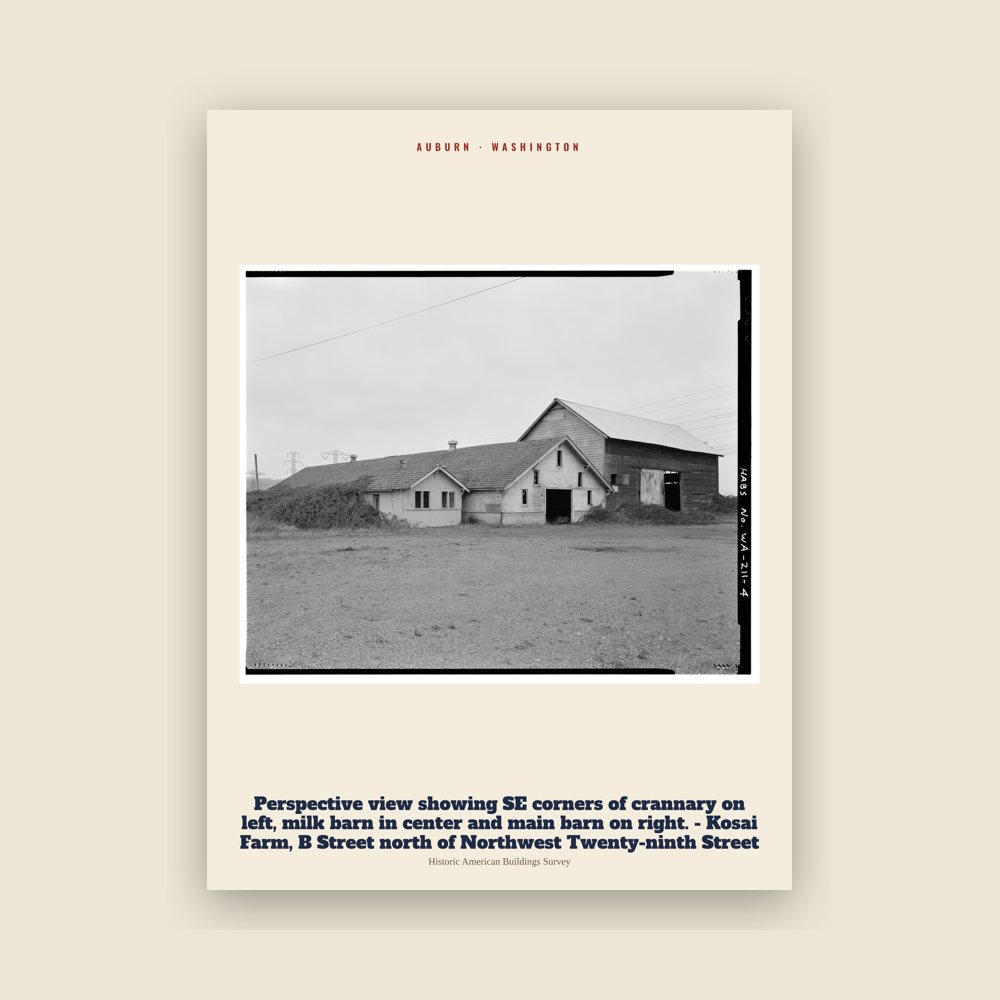
Auburn Perspective view showing SE corners of crannary on left, milk barn in center and main barn on right. - Kosai Farm, B Street north of Northwest Twenty-ninth Street Archive Print

Auburn Perspective view showing SE corners of crannary on left, milk barn in center and main barn on right. - Kosai Farm, B Street north of Northwest Twenty-ninth Street Archive Print

From the Library of Congress collections: a historic survey drawing or photograph of the town

from $44
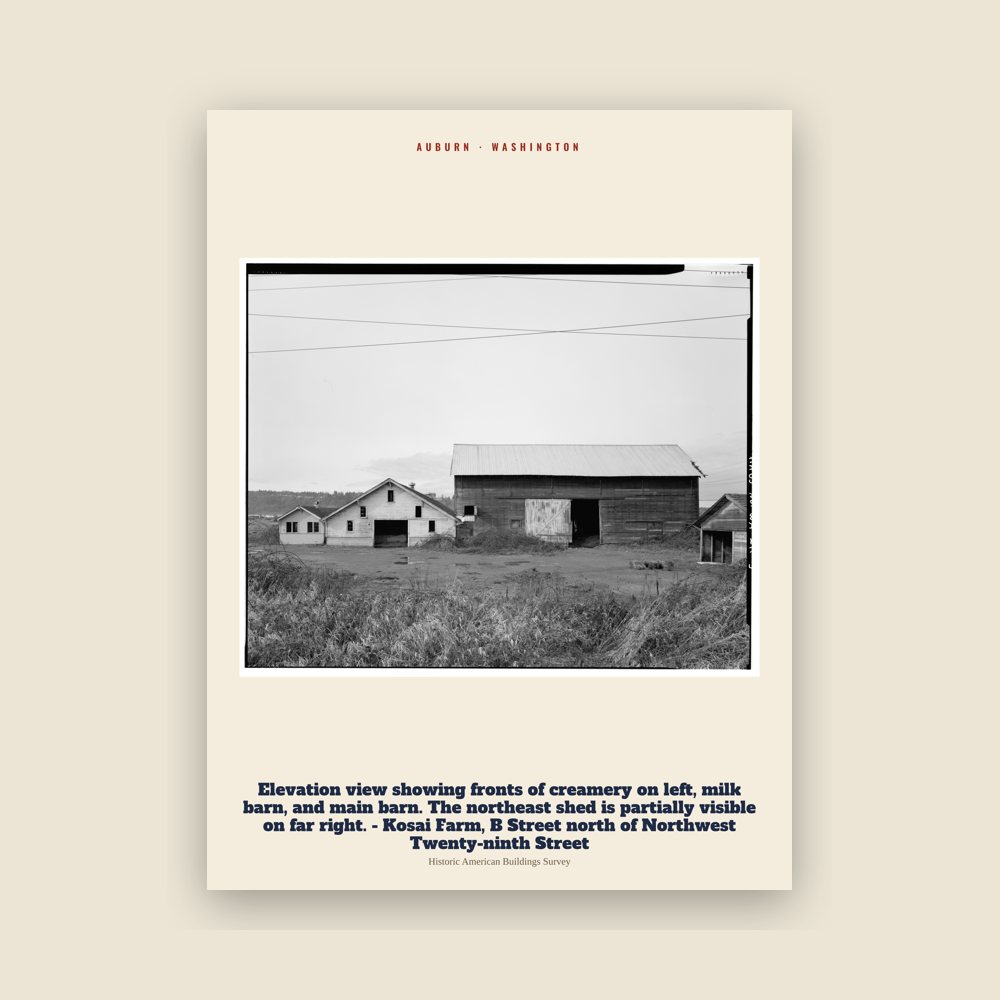
Auburn Elevation view showing fronts of creamery on left, milk barn, and main barn.  The northeast shed is partially visible on far right. - Kosai Farm, B Street north of Northwest Twenty-ninth Street Archive Print

Auburn Elevation view showing fronts of creamery on left, milk barn, and main barn. The northeast shed is partially visible on far right. - Kosai Farm, B Street north of Northwest Twenty-ninth Street Archive Print

From the Library of Congress collections: a historic survey drawing or photograph of the town

from $44
Hometown roll

Born in Auburn

On the National Register

Historic places

Population 2010: 70,180 → 2020: 87,256

From Wikidata (CC0).

A short history of Auburn

Before the first European arrived in the Green River Valley in the 1850s, the area was home to the Muckleshoot people, who were temporarily driven out by Indian wars later that decade. Several settler families arrived in the 1860s, including Levi Ballard, who set up a homestead between the Green River and White River. Ballard filed for a plat to establish a town in February 1886, naming it Slaughter for an officer slain during the Indian wars in 1855.

Slaughter was incorporated on June 13, 1891, but its name was changed two years later to Auburn on February 21, 1893, by an action of the state legislature. Newer residents had disliked the name and its connection to the word "slaughter", especially after the town's hotel was named the Slaughter House. The name Auburn was chosen in honor of Auburn, New York, for the areas' shared reliance on hops farming.

The White and Green Rivers have been a major part of the history and culture of Auburn since the area was settled with multiple locations in the city being named after either of the two rivers. Frequent flooding from the rivers caused numerous problems for the people living in the community with one outcome being the creation of Mountain View Cemetery over on one of the hills overlooking the valley. It was not until the completion of the Mud Mountain Dam and the Howard A. Hanson Dam, along the White River and Green River respectively, that the flooding would cease and allow the city to grow without the aforementioned hurdle impeding the growth.

In 1917 the city, in response to the growing of the Japanese community, donated some of the land in Pioneer Cemetery to the White River Buddhist Church. A little over ten years later, Rev. Giryo Takemura, minister of the church at the time, and his future son-in-law, Chiyokichi Natsuhara, raised money to replace the old wooden sticks and columns that had been in use as gravestones at the cemetery with more durable concrete markers. The interwar period saw several Japanese-American baseball teams from the area compete in the courier league with the White River All-Stars enjoying particularly large success winning four of the July 4th tournaments.

With the Attack on Pearl Harbor during the Second World War, Japanese immigrants and the Japanese-American community as a whole were largely seen with unwarranted distrust by the majority white population, including in Auburn. Executive Order 9066, issued by President Franklin D. Roosevelt on February 19, 1942, led to the city's Japanese-American population being relocated to internment camps. After the war, of about 300 Japanese families living in Auburn only around 25 returned. In 1980, the Commission on Wartime Relocation and Internment of Civilians found that this detainment was an unjust act in its report.

A local real estate developer announced plans for a large planned community in the hills southeast of Auburn in 1979, using 1,500 acres (610 ha) of assembled plots. The neighborhood was named Lakeland Hills and began construction in 1985, growing to 80 homes in its first three years. Auburn and Bonney Lake competed to annex the entirety of Lakeland Hills in the late 1990s, with Auburn voting in 1997 to become the third King County city to annex portions of Pierce County. The two cities reached a compromise on water utility rights in the Pierce County portion of the neighborhood that allowed Auburn to complete its annexation of Lakeland Hills by the end of the decade. By 2007, the development had 3,600 homes with 6,000 residents, a new elementary school, and a shopping center.

In 2008, Auburn annexed the West Hill and Lea Hill neighborhoods of unincorporated King County, adding 15,000 residents and expanding its land area by 26 percent. A 155-acre (63 ha) exclave of Kent, the Bridges neighborhood, was annexed by Auburn on January 1, 2024, after the two cities agreed to the transfer to simplify municipal services in the area. The neighborhood had originally been annexed by Kent in 1987 for use as a water reservoir, which was never built and instead developed into residential use. It was then surrounded by Lea Hill, later annexed into Auburn.

Adapted (trimmed) from the Wikipedia article Auburn, Washington, revision 1374756589 by its contributors, licensed CC BY-SA 4.0.
For local organizations

Are you with a Auburn historical society?

We share a part of every Auburn sale with local partners, and we'd love to print from your collection. Old photographs, maps and postcards make the best keepsakes.
Partner with us
Custom orders

Want something Auburn we don't make yet?

A favorite landmark, your street, a school or team, an anniversary gift, a different product. Tell us and we'll get back to you by email.

Free printables

Color Auburn

11 free coloring pages of Auburn, each traced from a photo of a local landmark. Print them at home, at school or for story hour.

Nearby

Neighboring towns

Sources

Auburn's population was 87,256 in the 2020 U.S. Census, up from 70,180 in 2010.