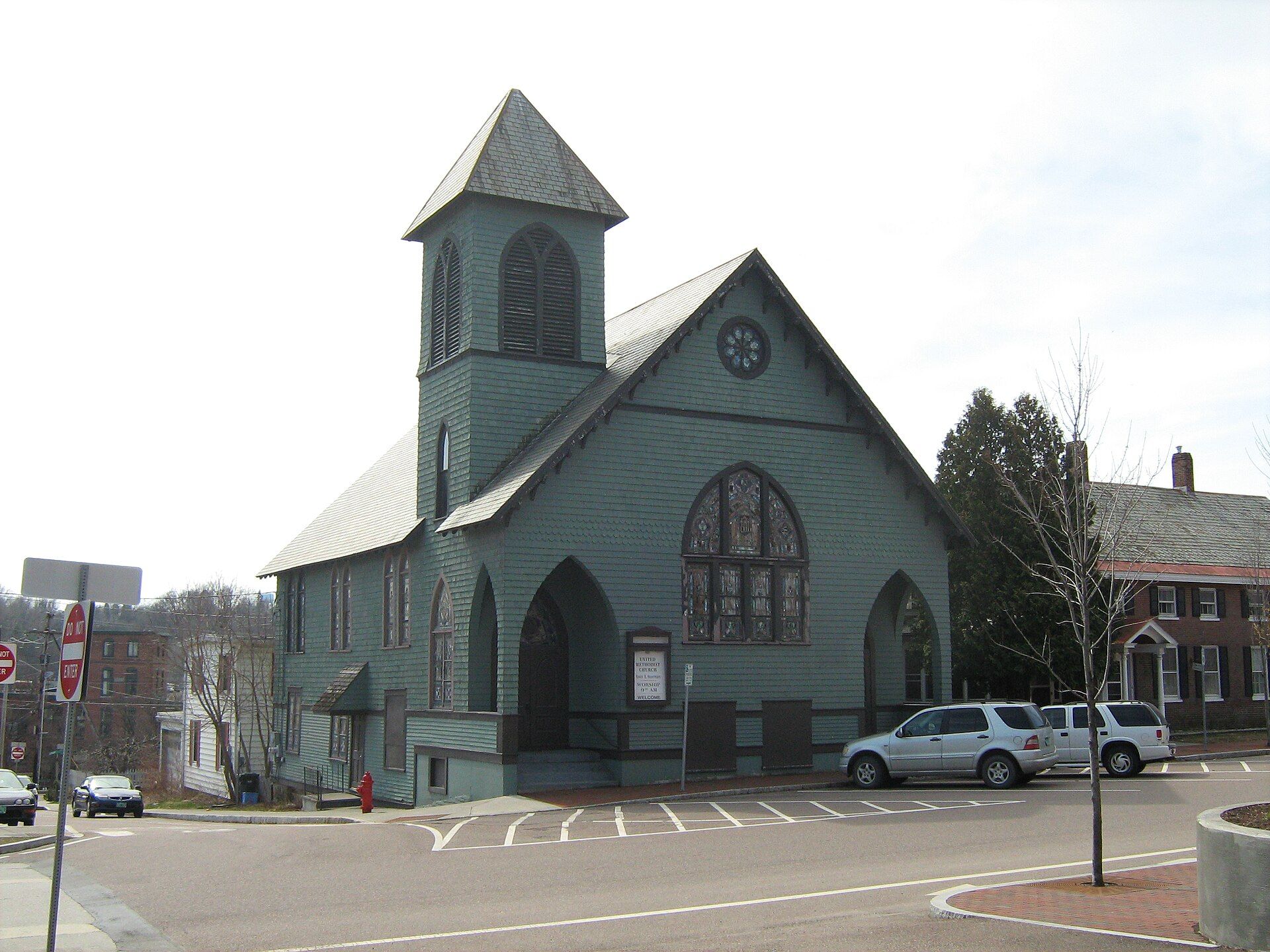
Situated on a main road, Winooski most likely started as a rest stop for travelers. Landmarks include Methodist Episcopal Church of Winooski, St. Francis Xavier Church and Winooski Falls Mill District. Winooski is the birthplace of Peter Clavelle, politician.
Every piece is drawn from Winooski's own map data and historic archives, then printed and shipped from the USA when you order. No two towns look alike.
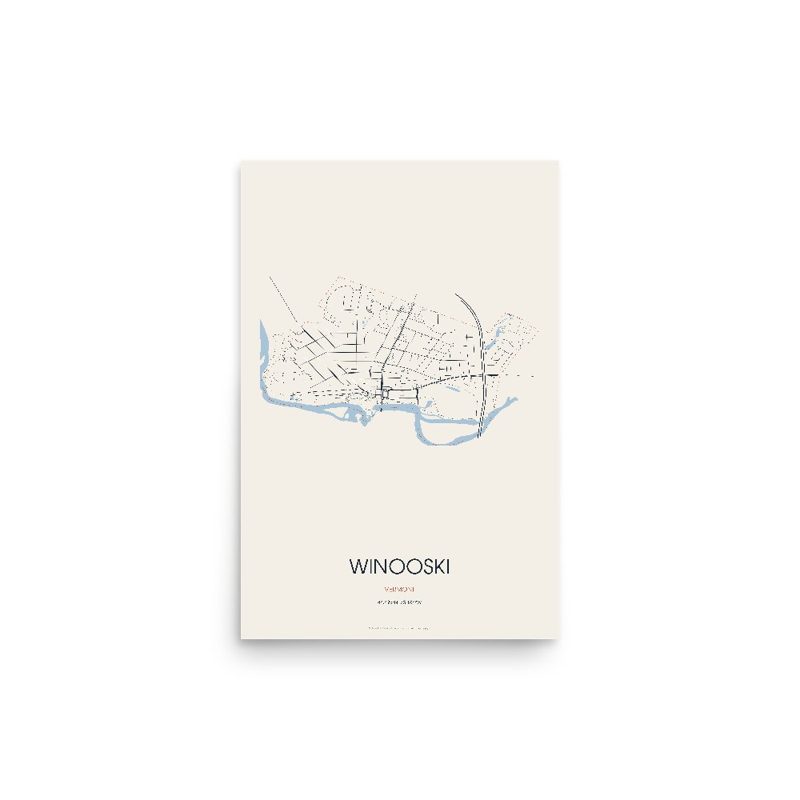
Every road in town, on archival matte paper
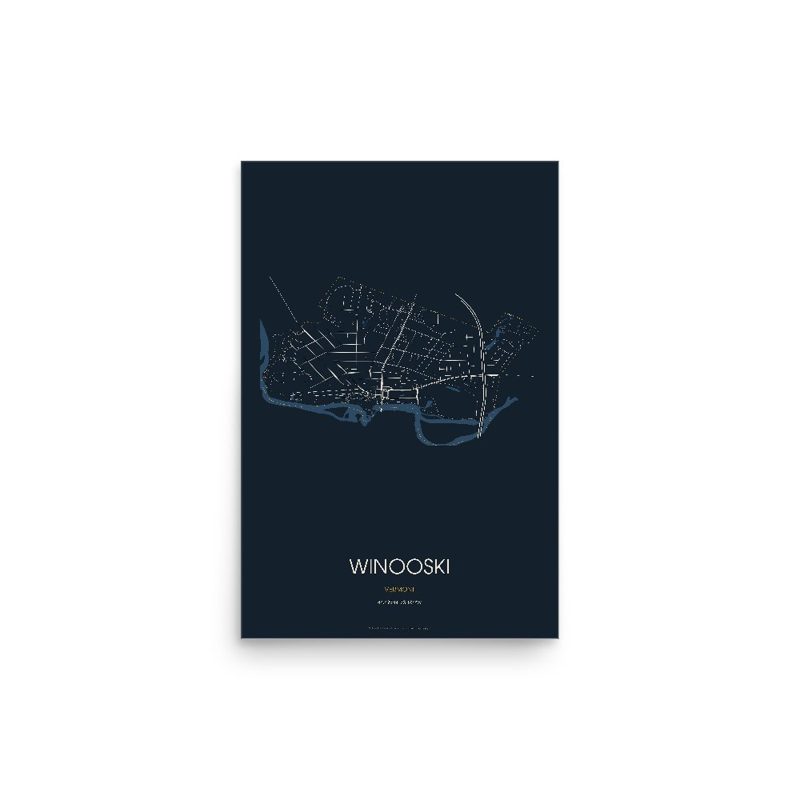
The same map, in navy and silver
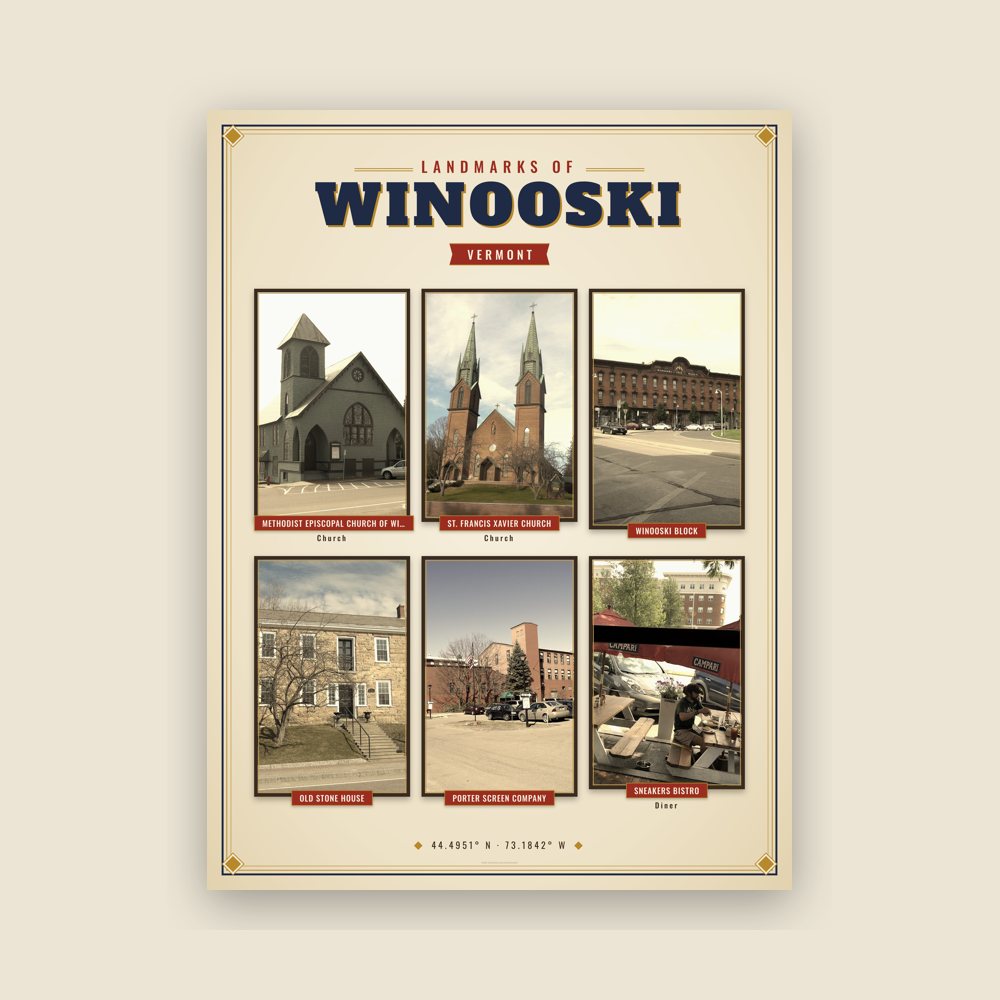
Nine local landmarks, archival matte
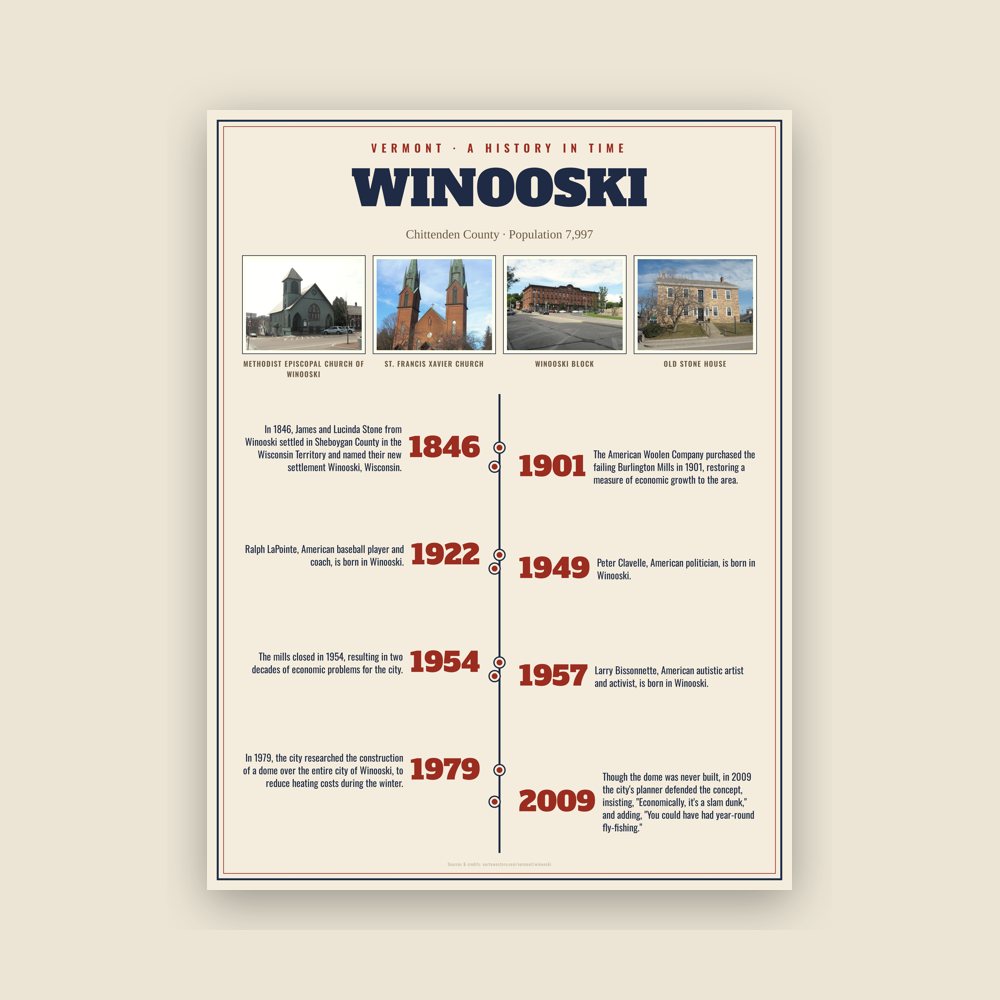
The town's story in dates, from its own records, for home or classroom
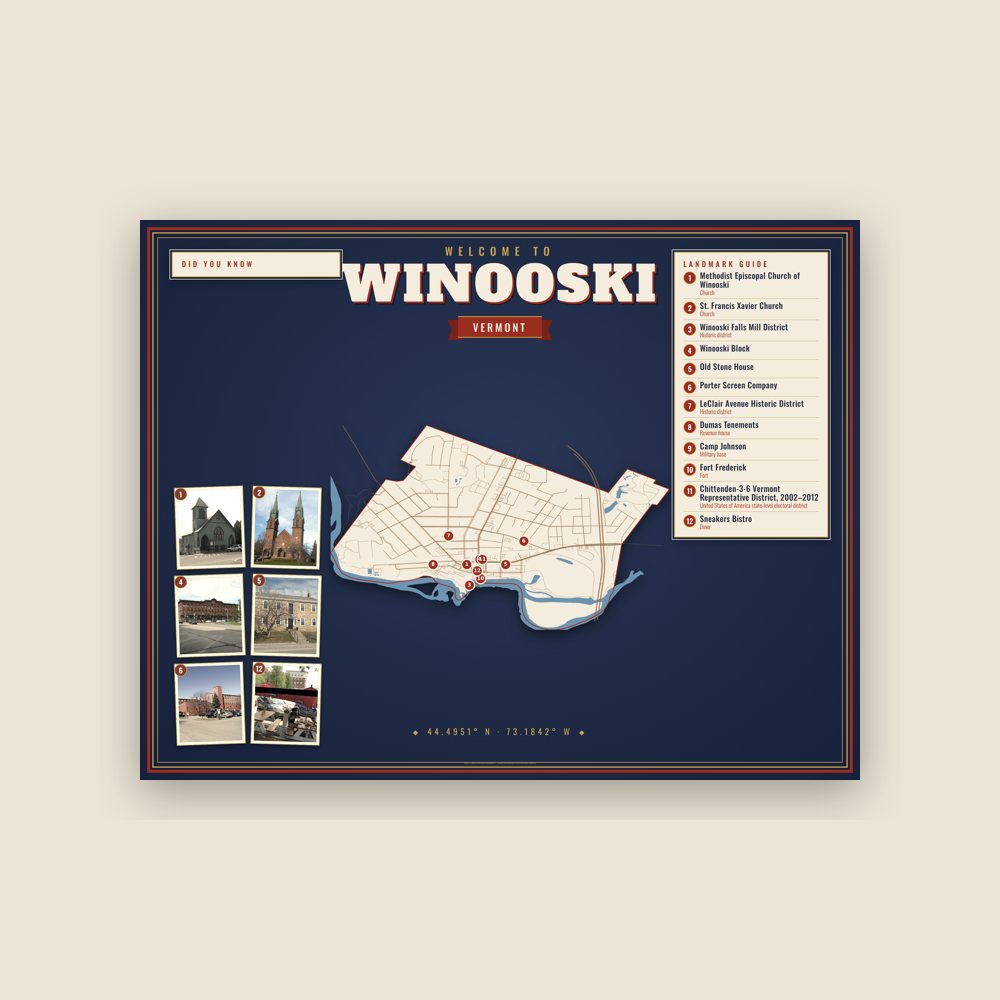
Map of local landmarks, washable fabric
Heavy-blend fleece, street map printed on the back
Soft Bella+Canvas jersey
Glossy ceramic, dishwasher safe
Ceramic keepsake, gold ribbon
Weatherproof, for the front walk
24″×16″, printed coir-look fibers, rubber back
12″×12″ printed wood, ready to hang
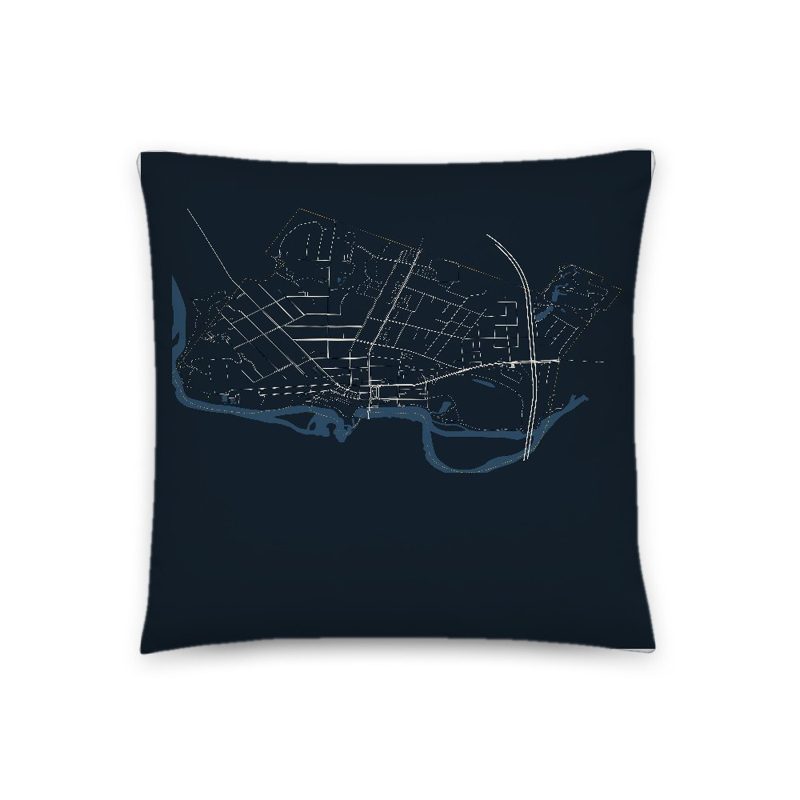
Soft-touch, zip cover
Sturdy all-over-print tote
Glossy top, cork back
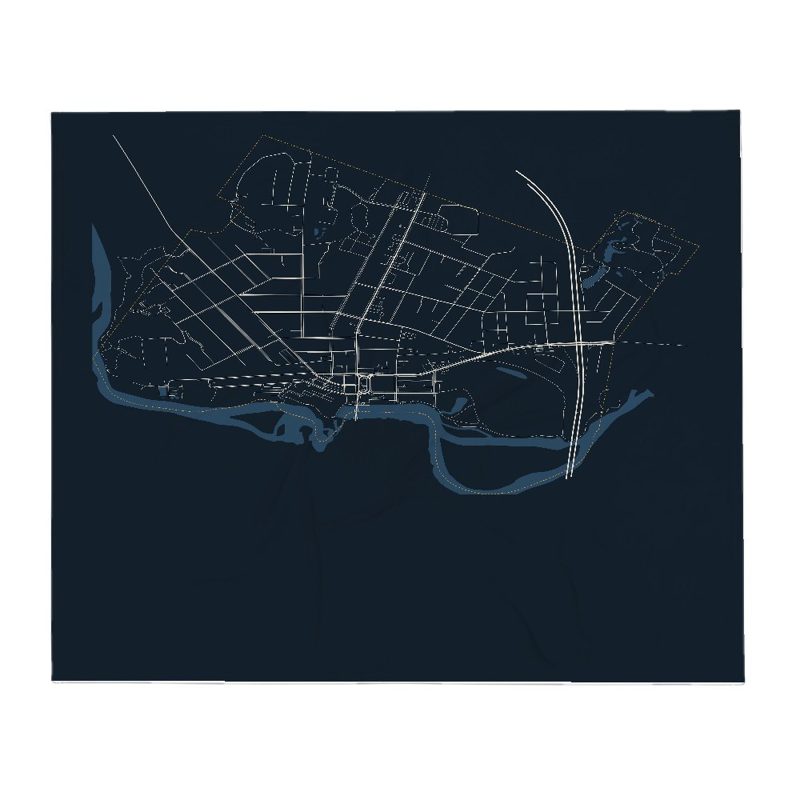
Soft fleece, 50″×60″
20 oz, double-wall stainless
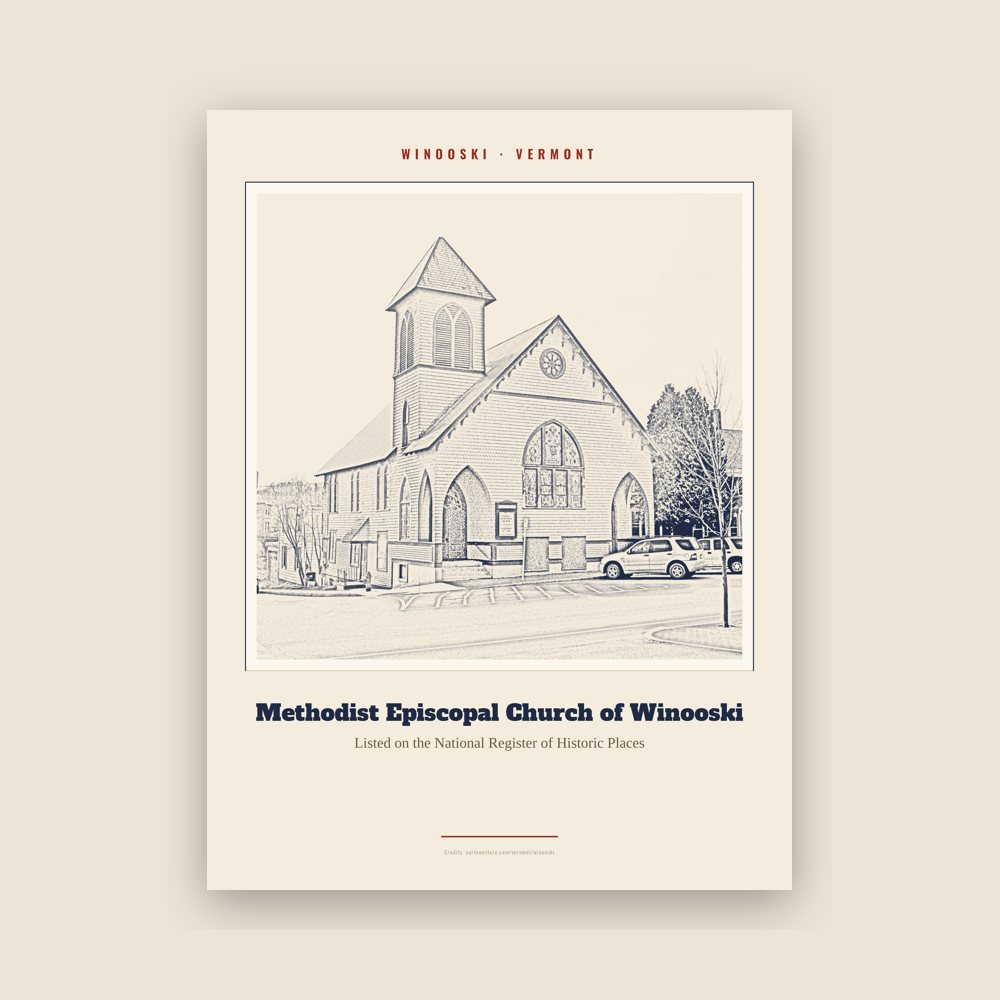
Archival matte print of a local landmark, credited to its photographer
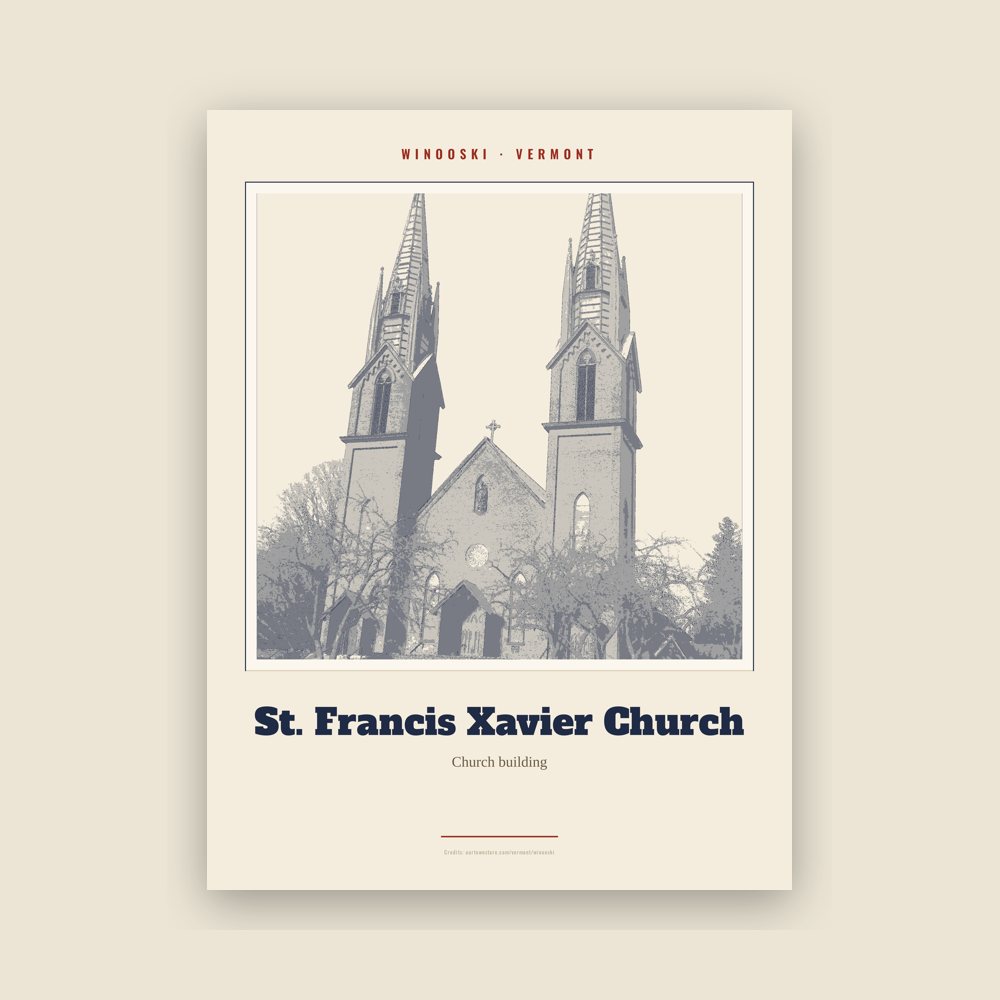
Archival matte print of a local landmark, credited to its photographer
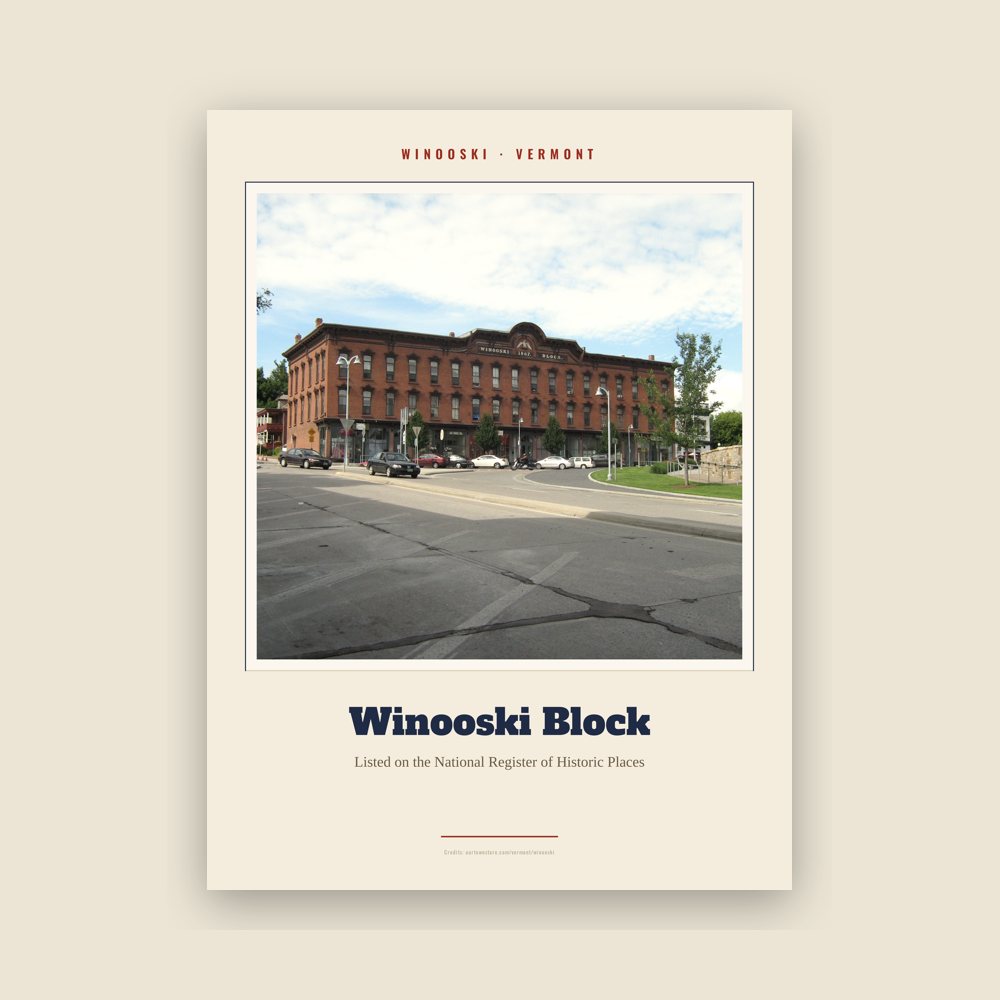
Archival matte print of a local landmark, credited to its photographer
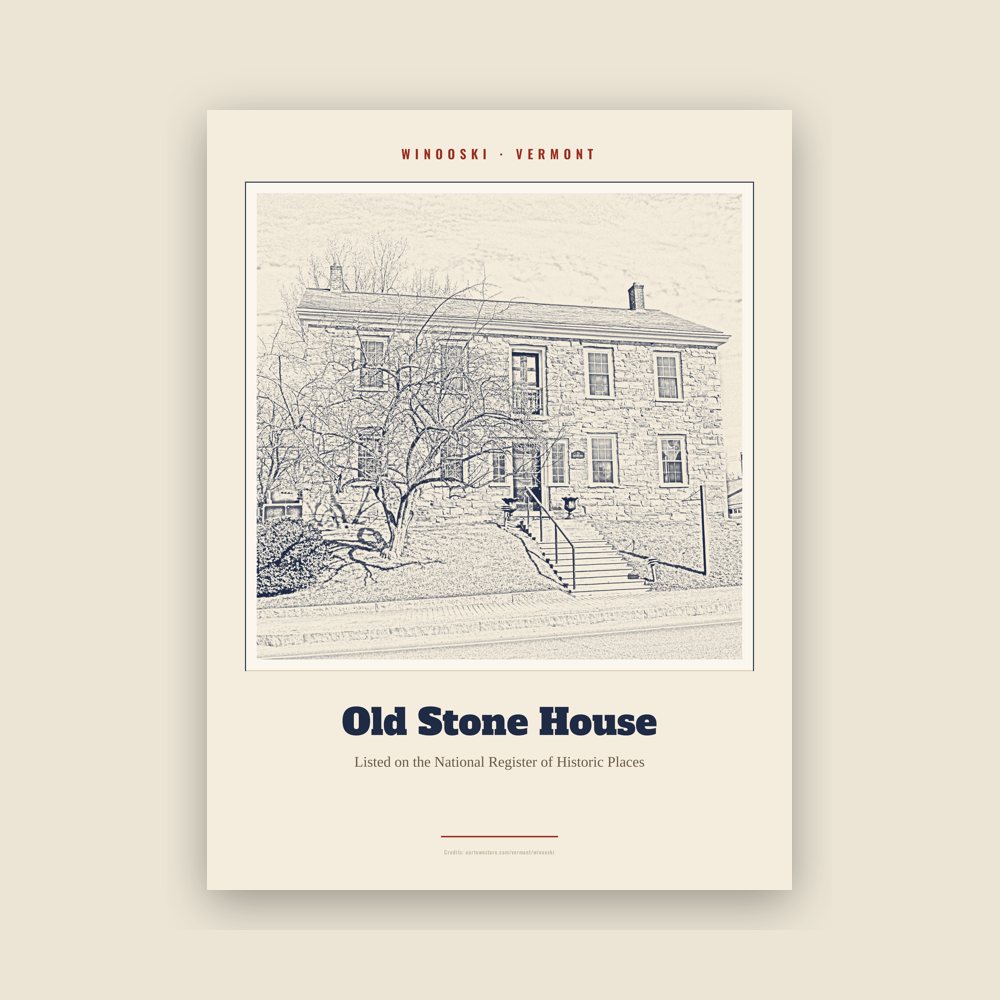
Archival matte print of a local landmark, credited to its photographer

Archival matte print of a local landmark, credited to its photographer
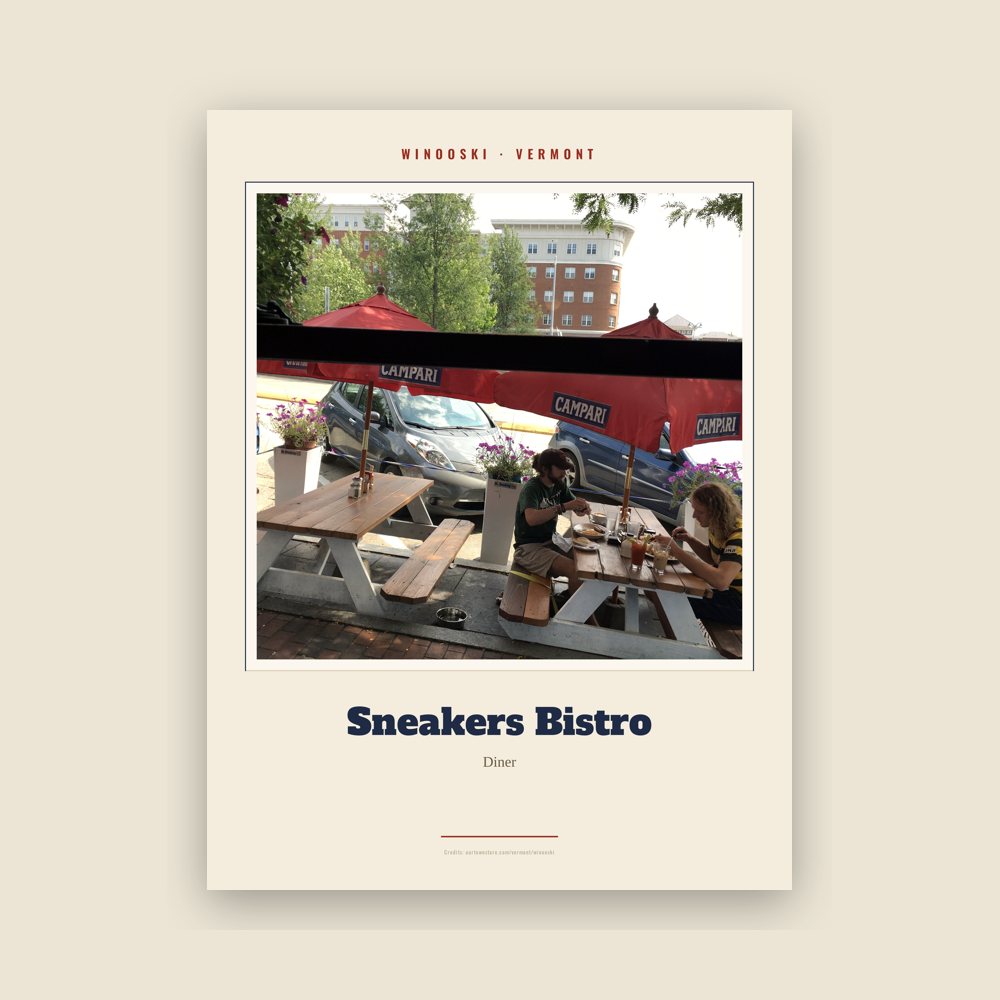
Archival matte print of a local landmark, credited to its photographer
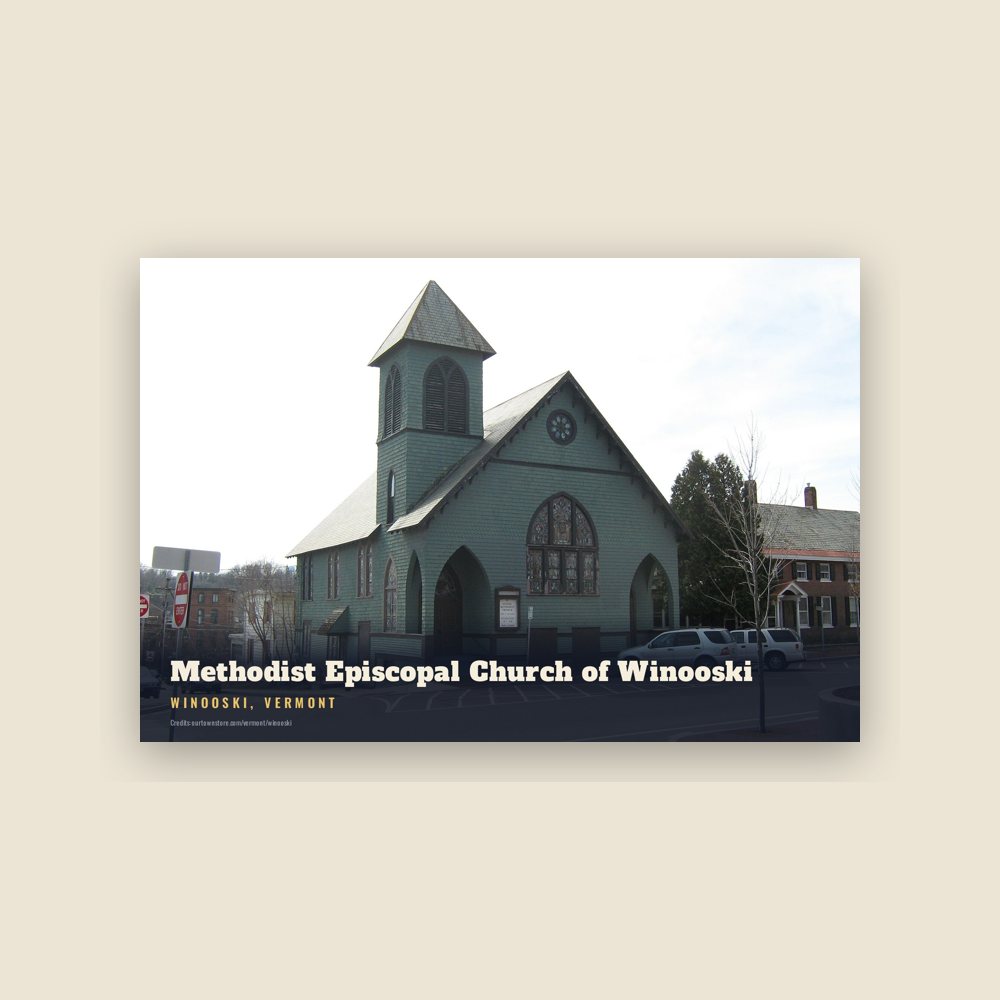
6″×4″ postcard, glossy front
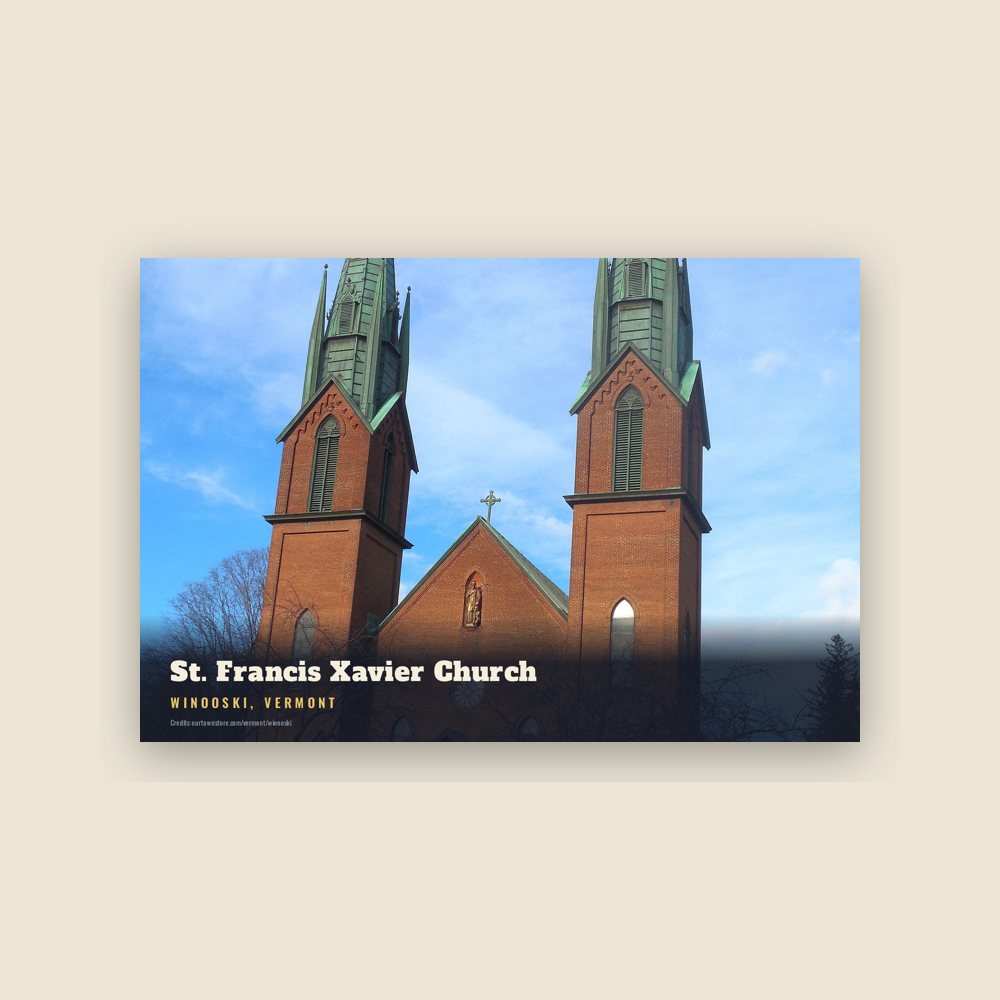
6″×4″ postcard, glossy front
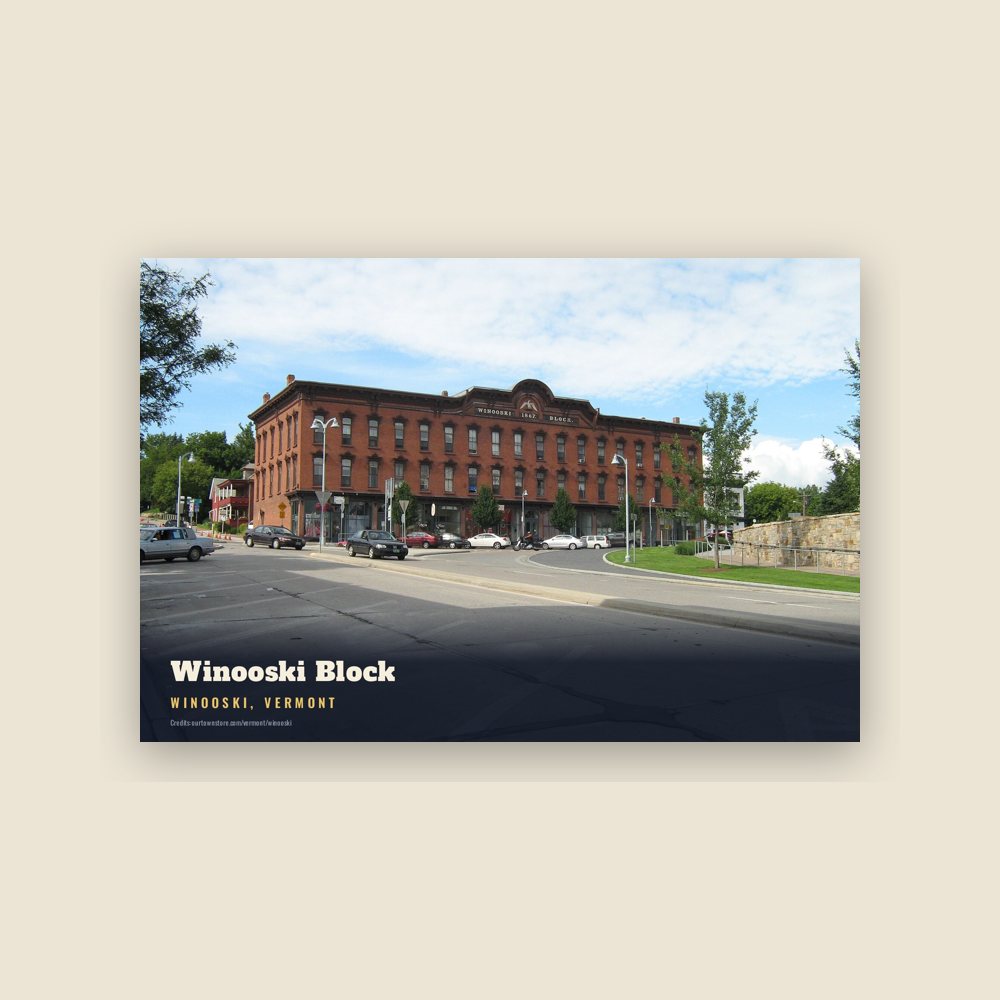
6″×4″ postcard, glossy front
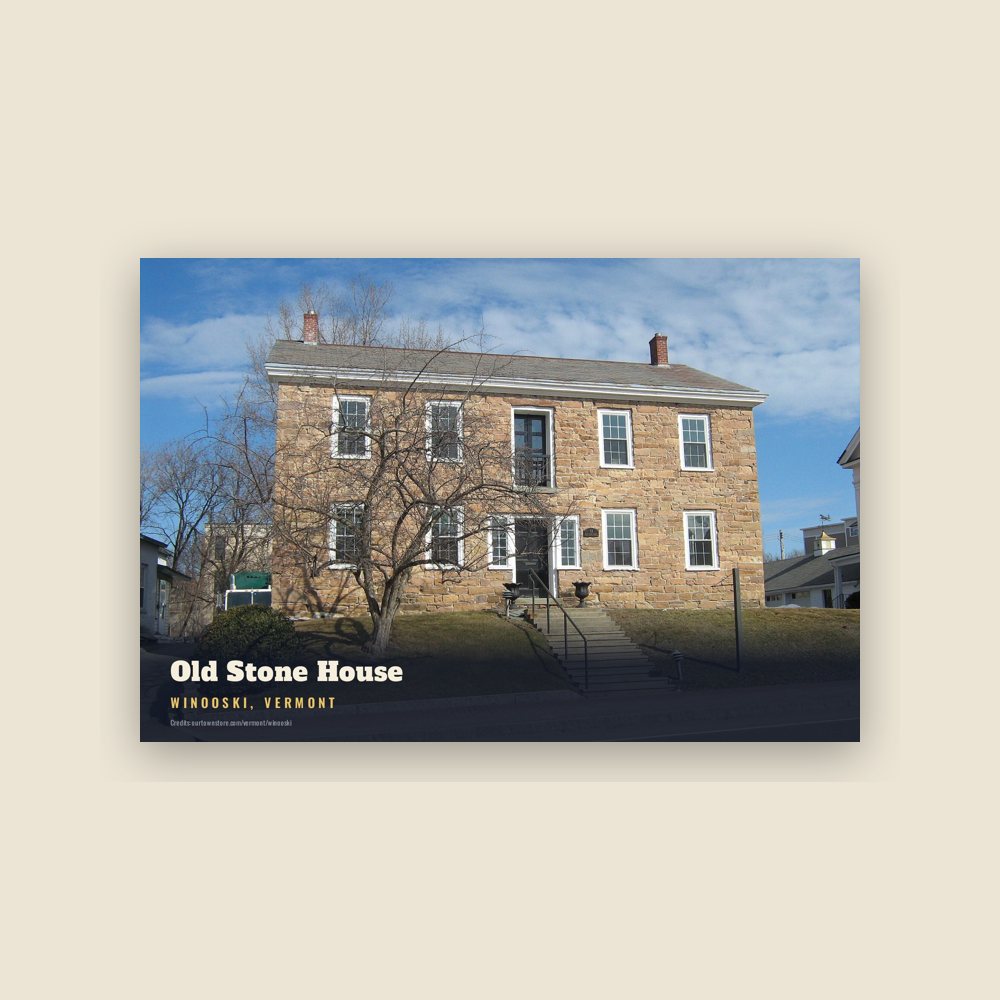
6″×4″ postcard, glossy front
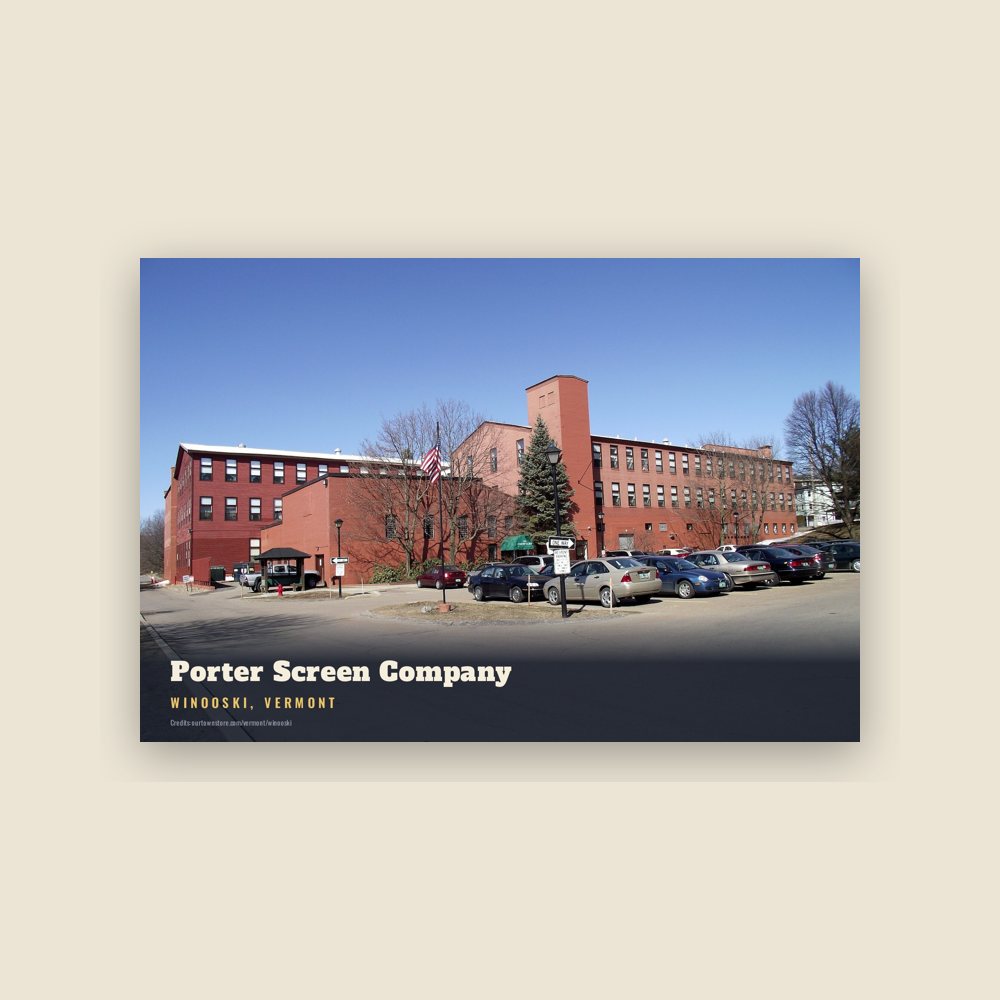
6″×4″ postcard, glossy front
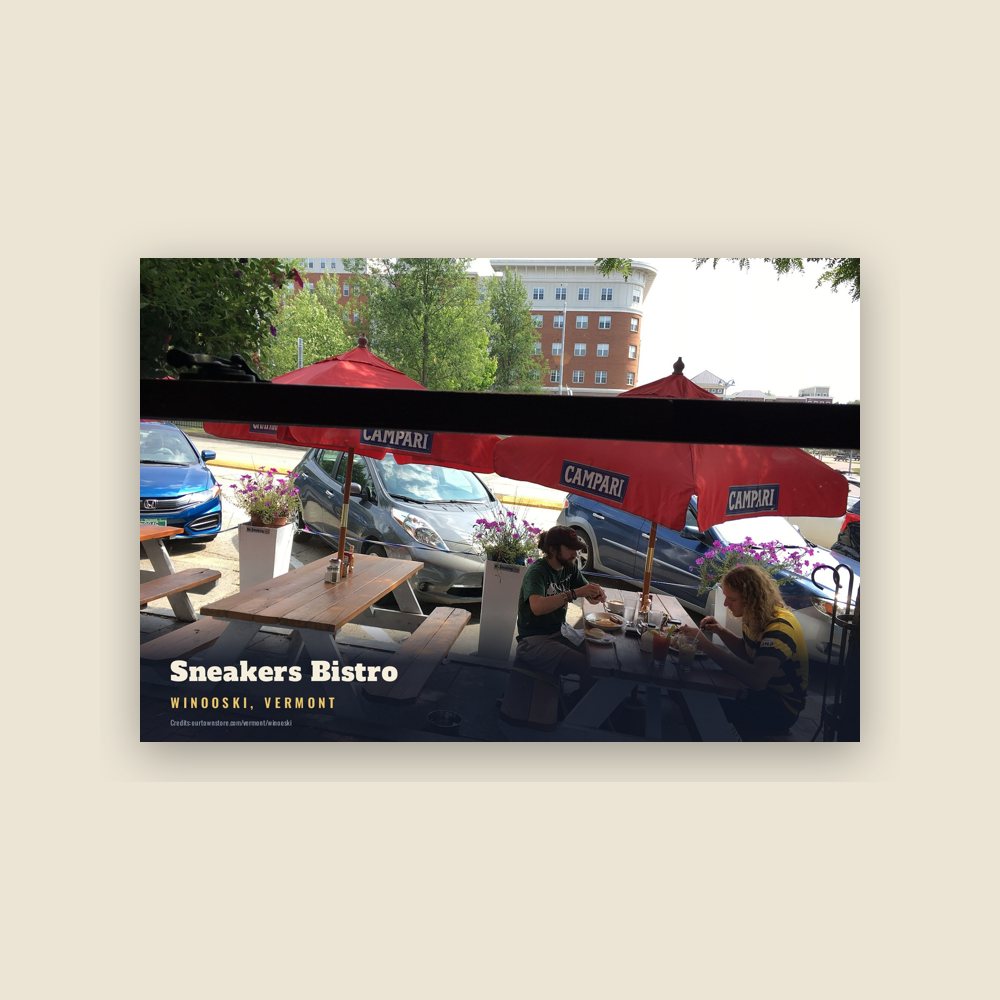
6″×4″ postcard, glossy front
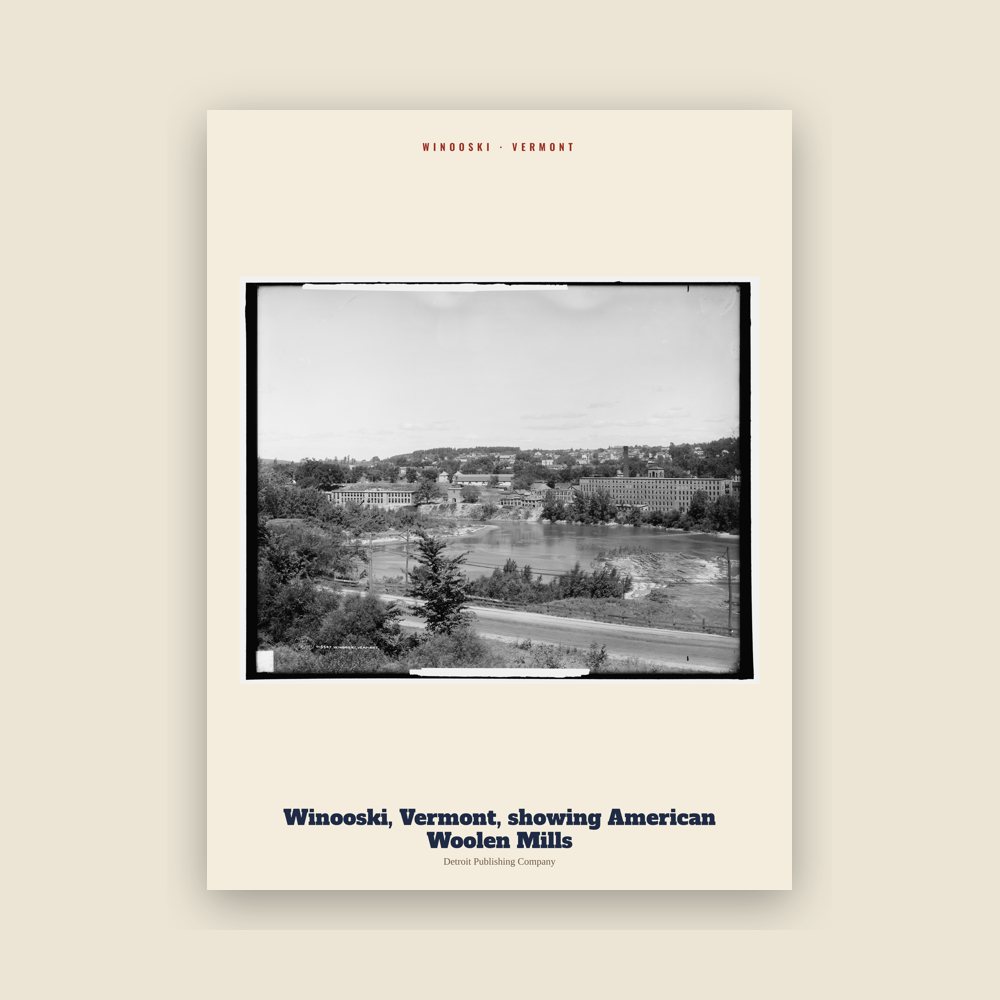
From the Library of Congress collections: a historic survey drawing or photograph of the town
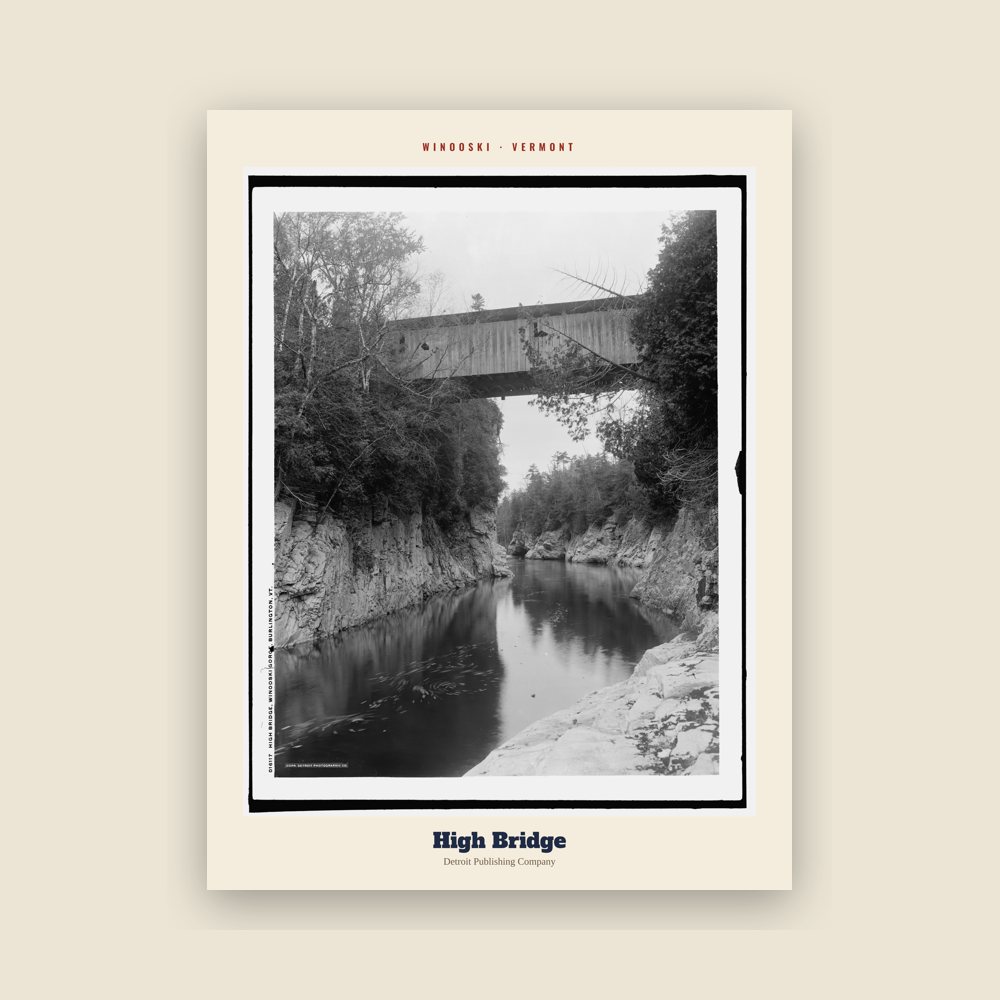
From the Library of Congress collections: a historic survey drawing or photograph of the town
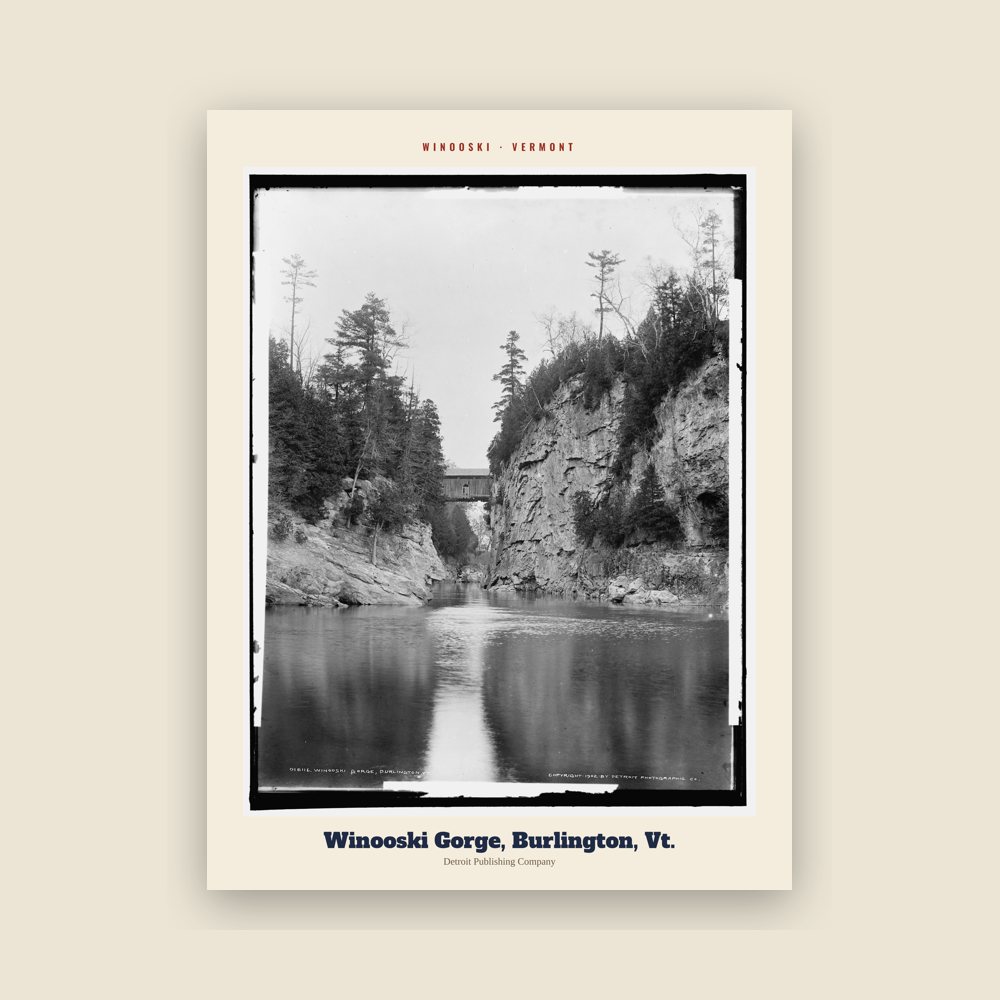
From the Library of Congress collections: a historic survey drawing or photograph of the town
![Winooski [Winooski Gorge High Bridge, Burlington, Vt.] Archive Print](img/archive-04.jpg)
From the Library of Congress collections: a historic survey drawing or photograph of the town
![Winooski Valley of the Winooski and Camels Hump Mt. [i.e. Mountain], Burlington, Vt. Archive Print](img/archive-05.jpg)
From the Library of Congress collections: a historic survey drawing or photograph of the town
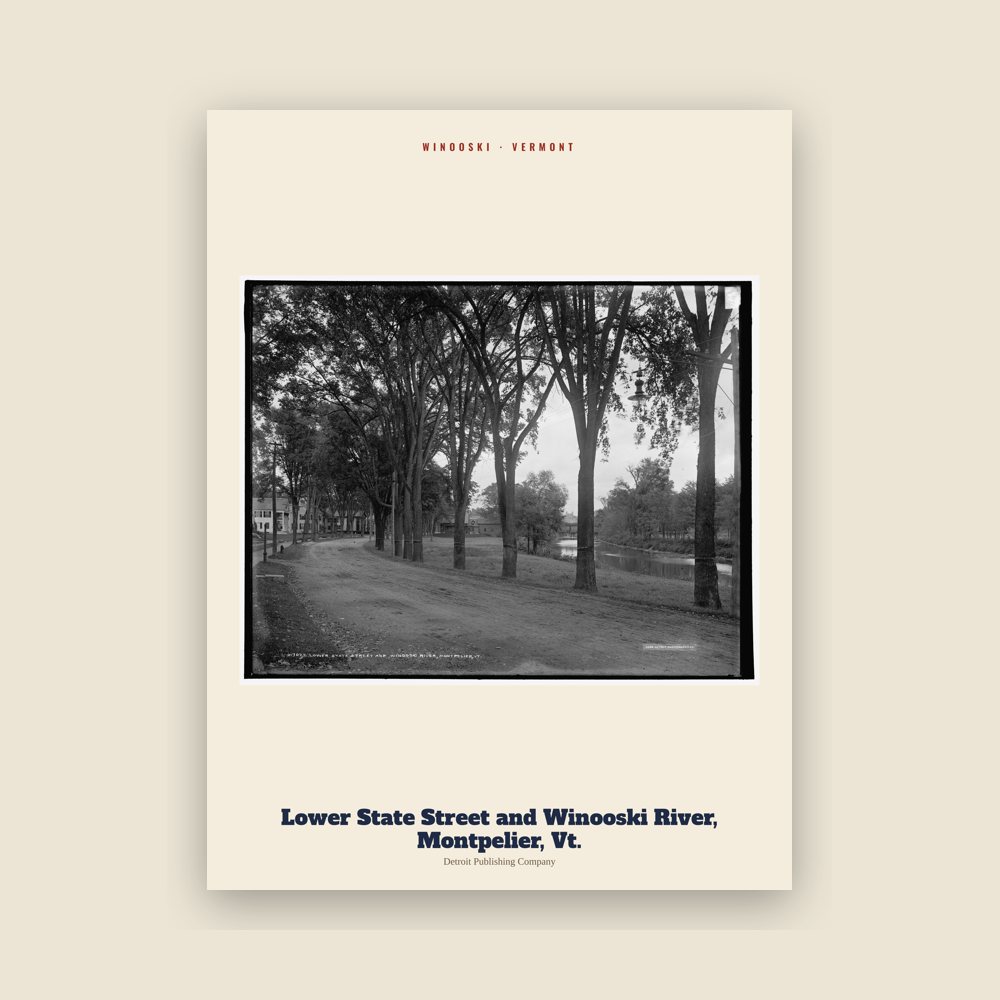
From the Library of Congress collections: a historic survey drawing or photograph of the town
Population 2010: 7,267 → 2020: 7,997
From Wikidata (CC0).
About 5000 years ago, a single family of Paleolithic Native Americans came to what is now the city. The prehistoric campground for this transient group is one of Vermont's significant archaeological sites. Other native people came to Winooski in the years that followed.
Situated on a main road, Winooski most likely started as a rest stop for travelers. With a set of waterfalls to assist the growth of industry, however, it soon also became a center for wool processing.
In the early 1770s, Ira Allen constructed a blockhouse on the Winooski (then "Onion") River, which served both as a fort and as general store and office for the land-speculating Onion River Company. Fort Frederick was never used for defense, but its presence increased the value of Onion River property and promoted settlement.
In 1846, James and Lucinda Stone from Winooski settled in Sheboygan County in the Wisconsin Territory and named their new settlement Winooski, Wisconsin.
The American Woolen Company purchased the failing Burlington Mills in 1901, restoring a measure of economic growth to the area. This success eventually led Winooski to incorporate as a city in 1922, breaking away from the town of Colchester.
The mills closed in 1954, resulting in two decades of economic problems for the city. In the 1980s, two old mills were converted into commercial, office, and apartment space, helping to revitalize the area.
In 1979, the city researched the construction of a dome over the entire city of Winooski, to reduce heating costs during the winter. The proposed dome would have been 200 feet (61 m) at the center, and internal combustion engines would have been banned. Though the dome was never built, in 2009 the city's planner defended the concept, insisting, "Economically, it's a slam dunk," and adding, "You could have had year-round fly-fishing."
In 2008, the city dismissed their city manager of 11 months, while he was still an at-will employee. His contract had been scheduled for three years.
Adapted (trimmed) from the Wikipedia article Winooski, Vermont, revision 1379810734 by its contributors, licensed CC BY-SA 4.0.
We share a part of every Winooski sale with local partners, and we'd love to print from your collection. Old photographs, maps and postcards make the best keepsakes.
Partner with us