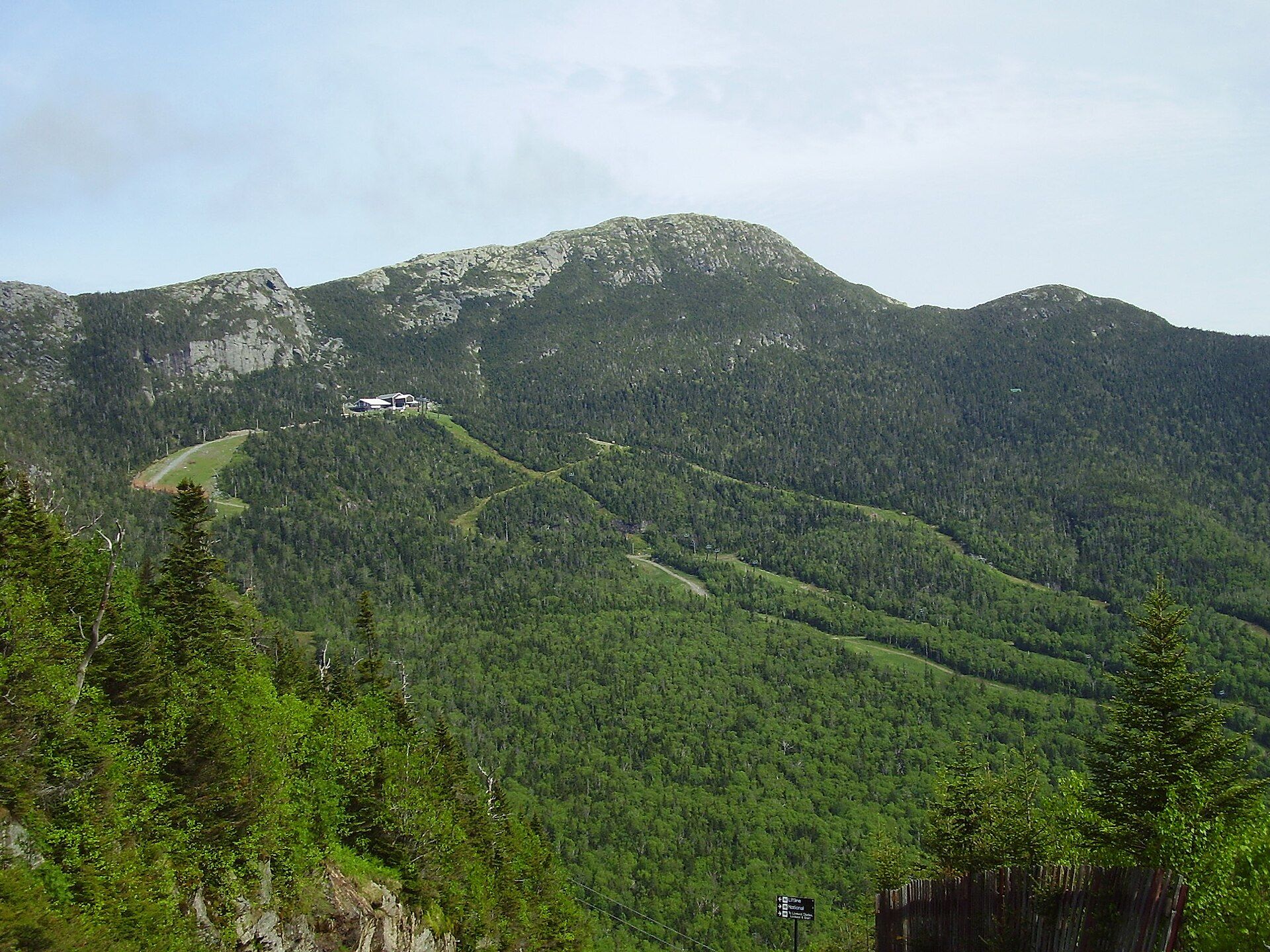
It is nicknamed "The Ski Capital of the East" and is home to Stowe Mountain Resort, a ski facility with terrain on Mount Mansfield, the highest peak in Vermont, and Spruce Peak. Landmarks include Vermont Ski and Snowboard Museum, Stowe Village Historic District and Stowe Community Church. Stowe is the birthplace of Maxine Bahns, triathlete and actor.
Every piece is drawn from Stowe's own map data and historic archives, then printed and shipped from the USA when you order. No two towns look alike.
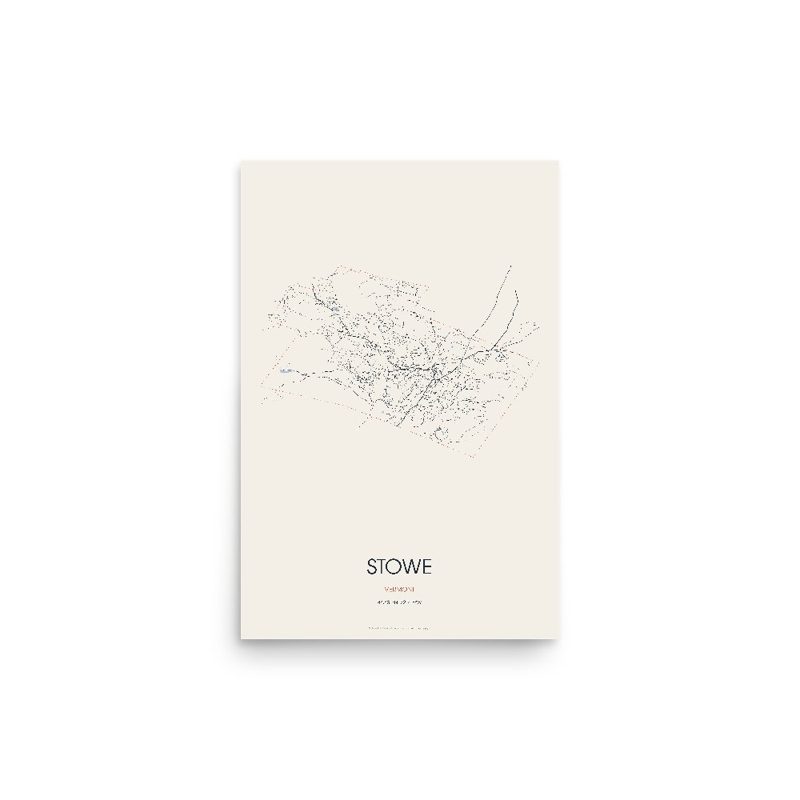
Every road in town, on archival matte paper
The same map, in navy and silver
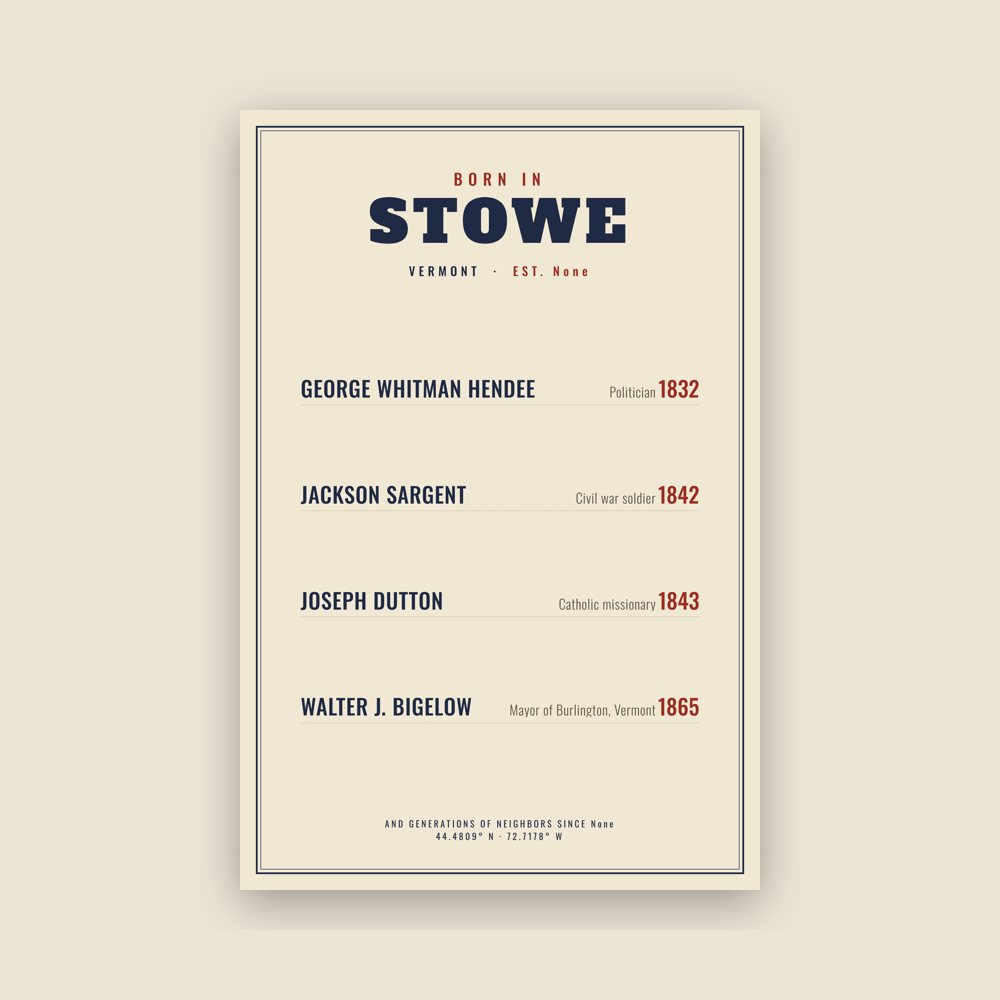
Famous natives, by birth year
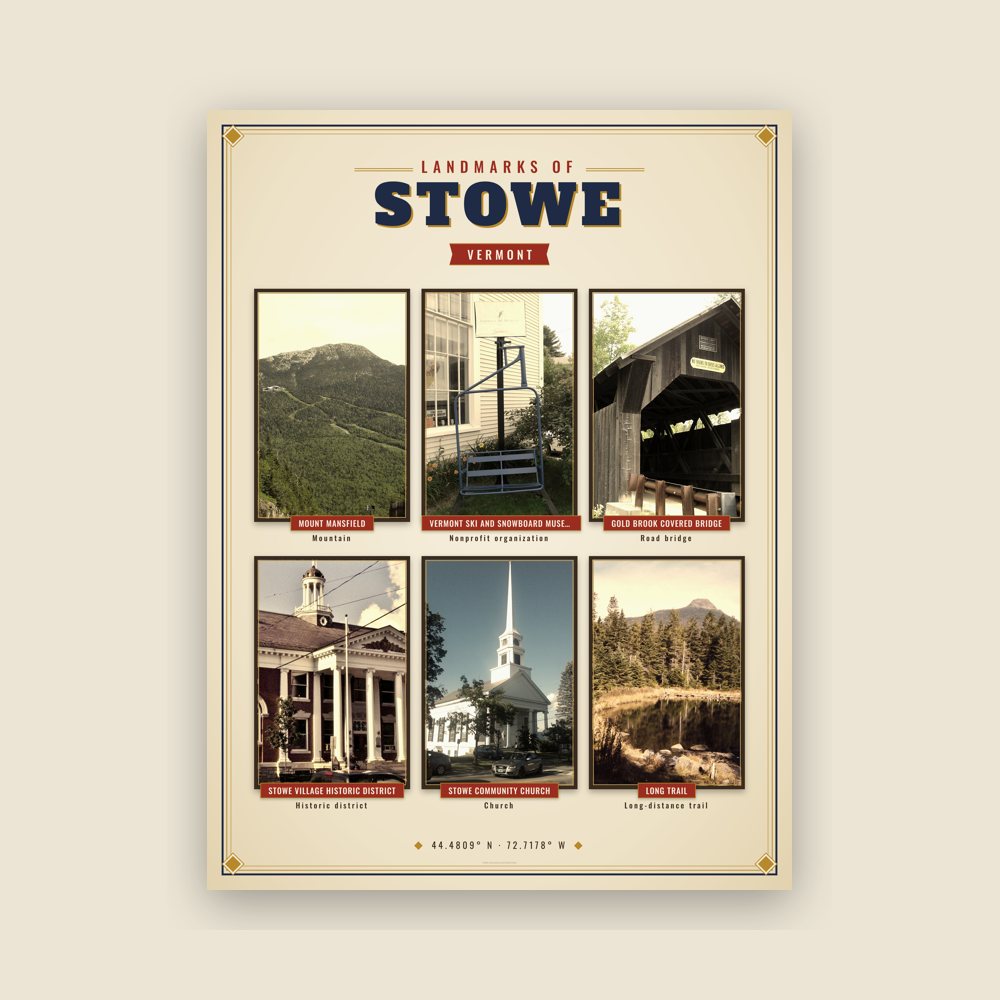
Nine local landmarks, archival matte
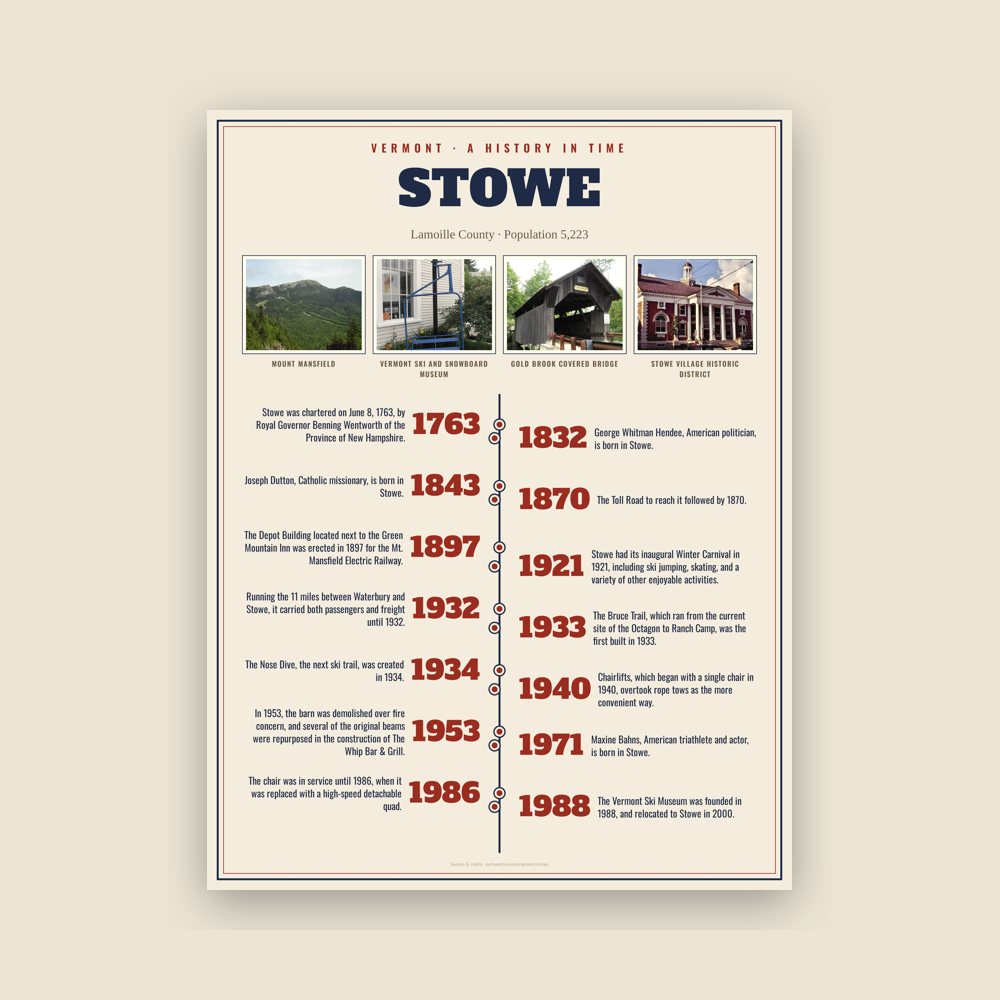
The town's story in dates, from its own records, for home or classroom
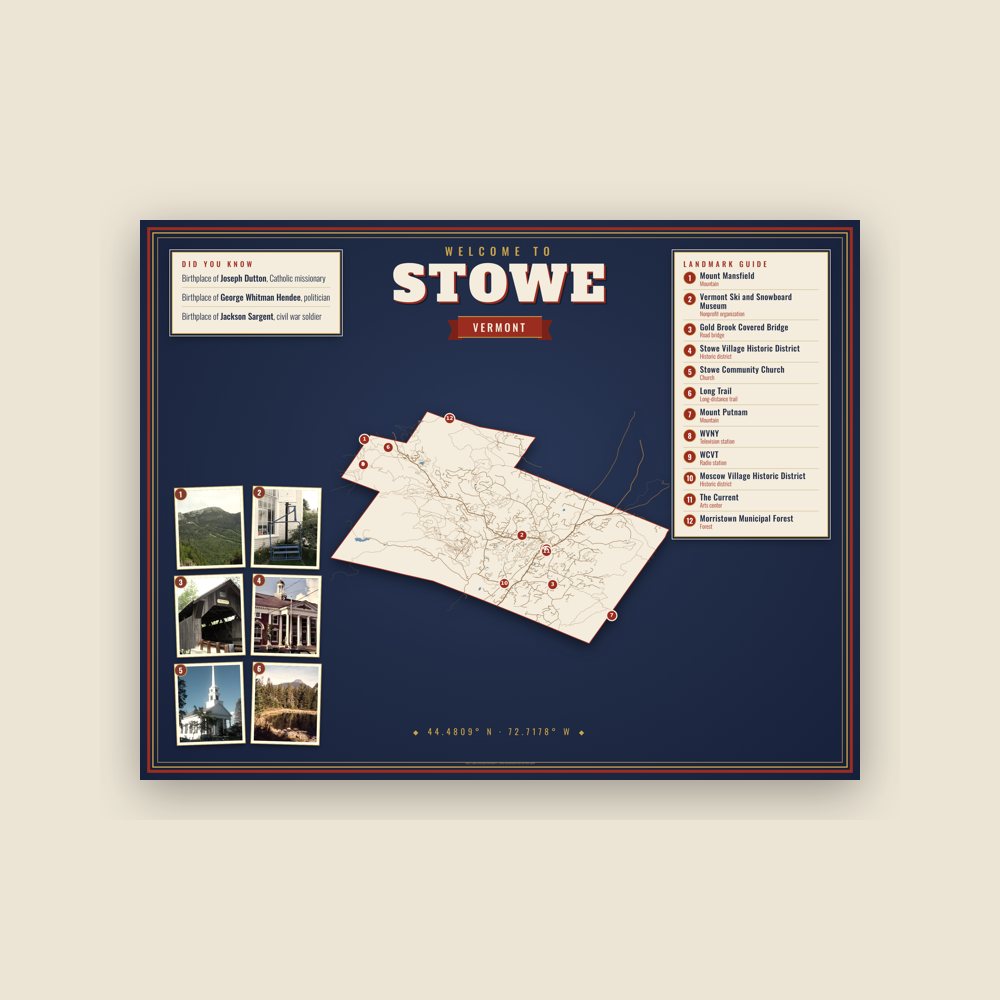
Map of local landmarks, washable fabric
Heavy-blend fleece, street map printed on the back
Soft Bella+Canvas jersey
Glossy ceramic, dishwasher safe
Ceramic keepsake, gold ribbon
Weatherproof, for the front walk
24″×16″, printed coir-look fibers, rubber back
12″×12″ printed wood, ready to hang
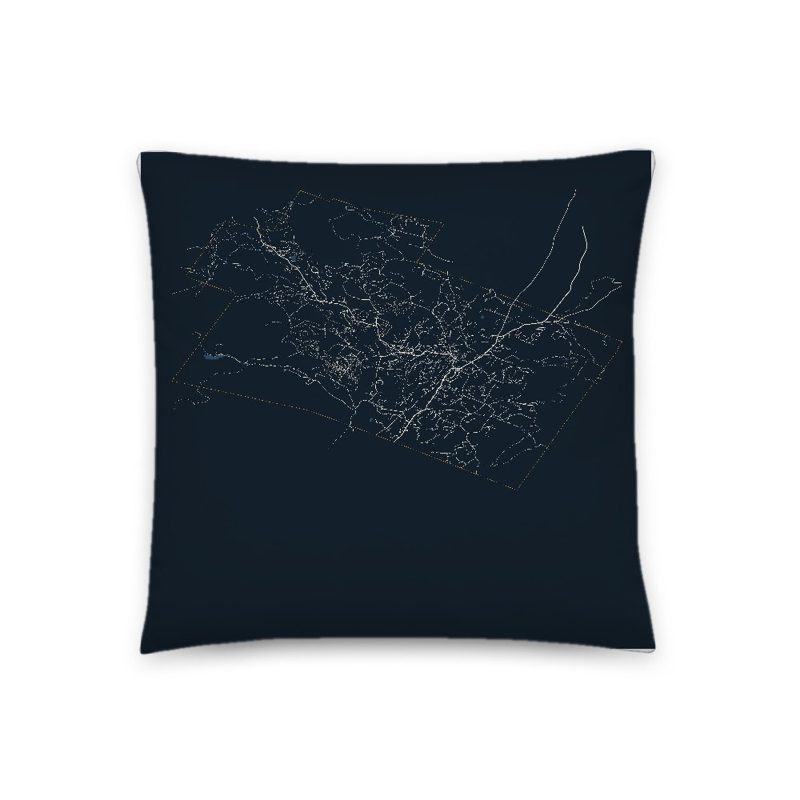
Soft-touch, zip cover
Sturdy all-over-print tote
Glossy top, cork back
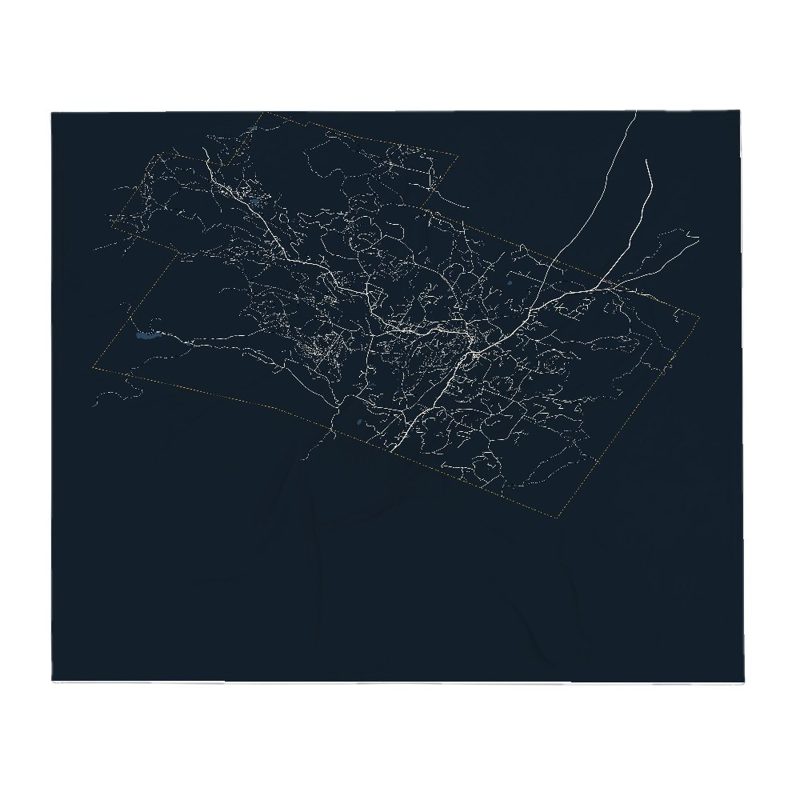
Soft fleece, 50″×60″
20 oz, double-wall stainless
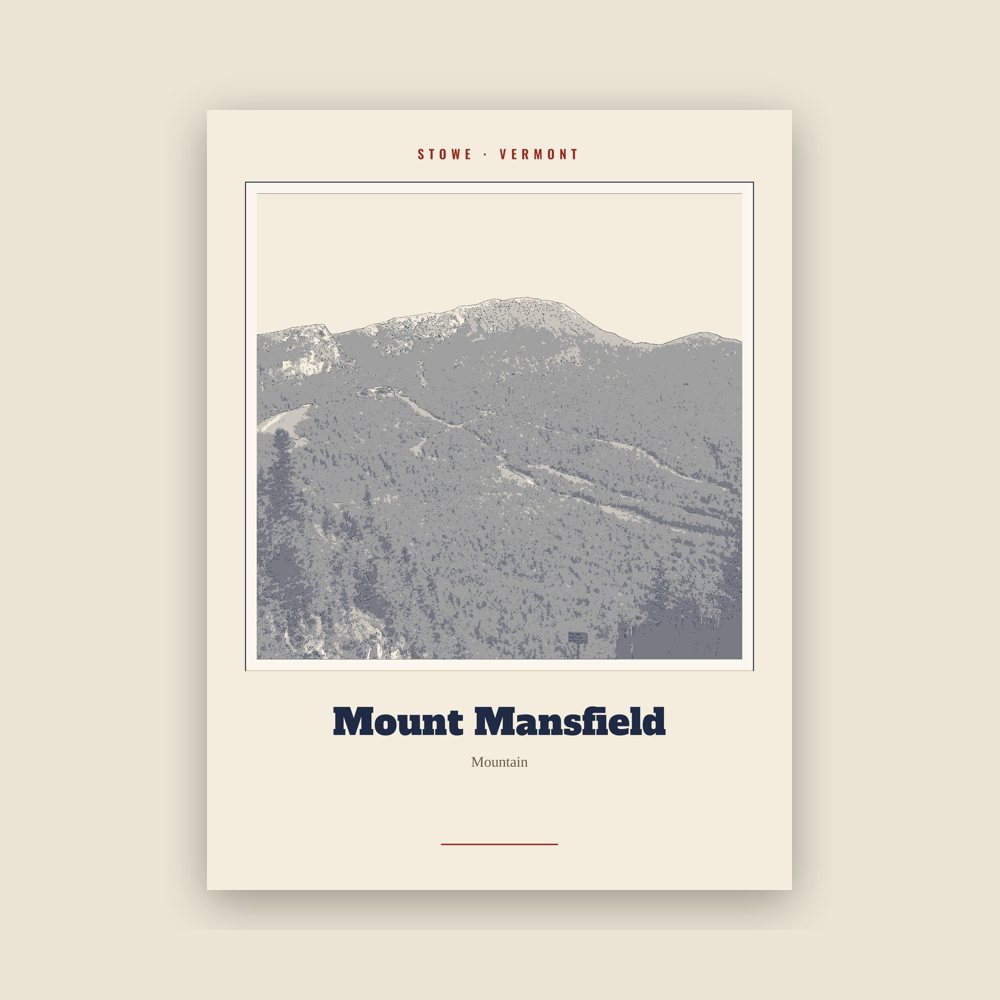
Archival matte print of a local landmark, credited to its photographer
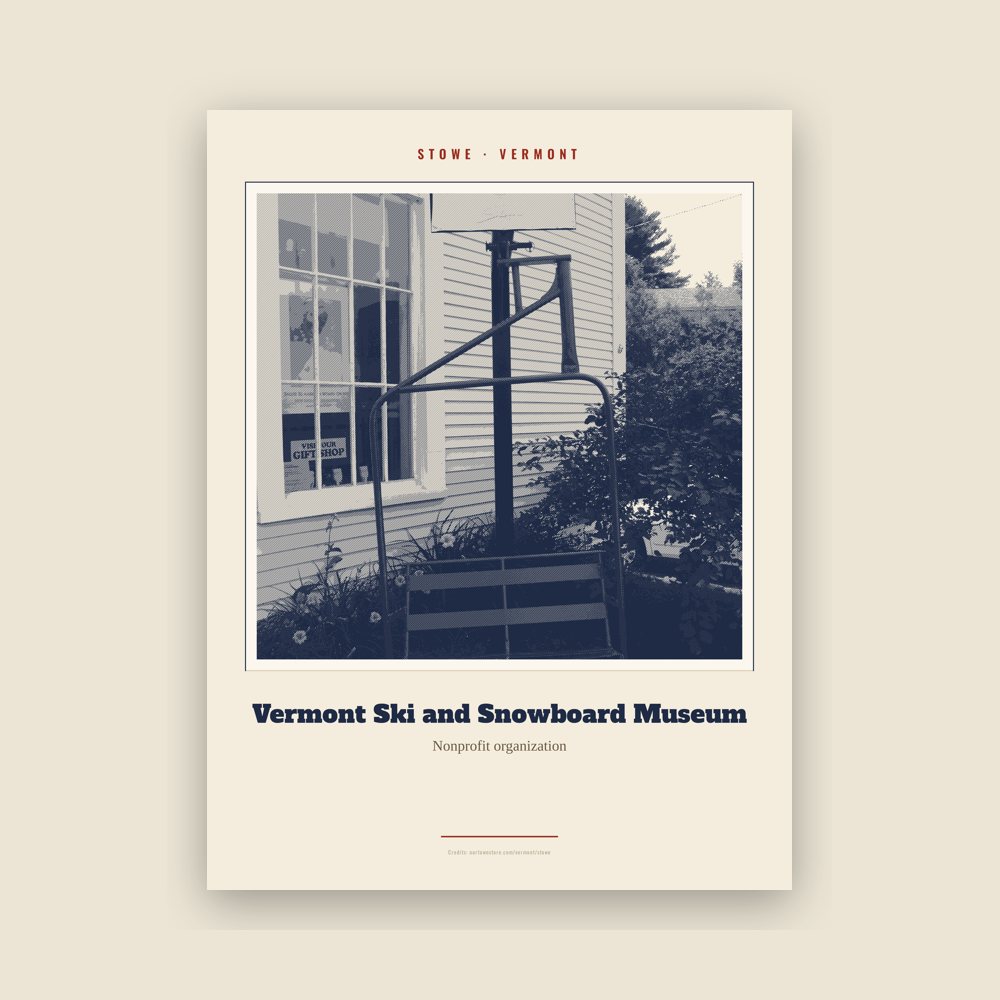
Archival matte print of a local landmark, credited to its photographer
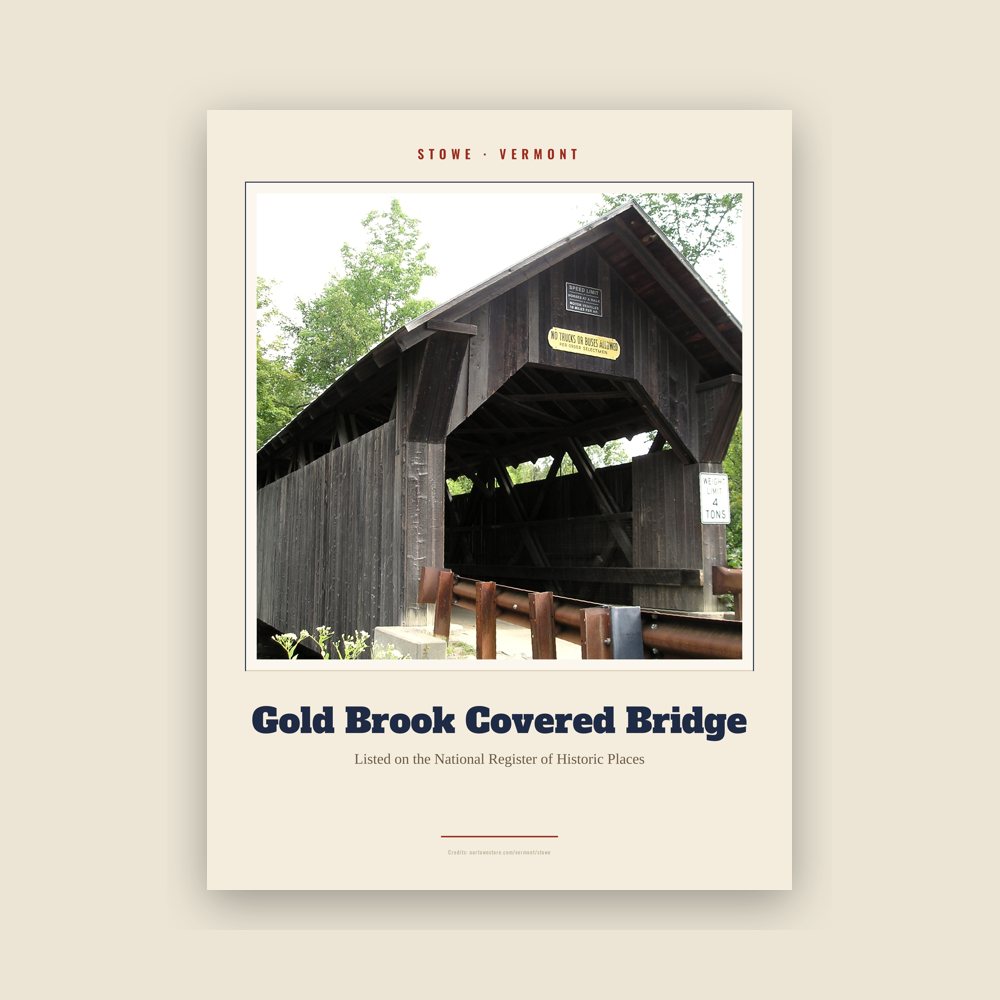
Archival matte print of a local landmark, credited to its photographer
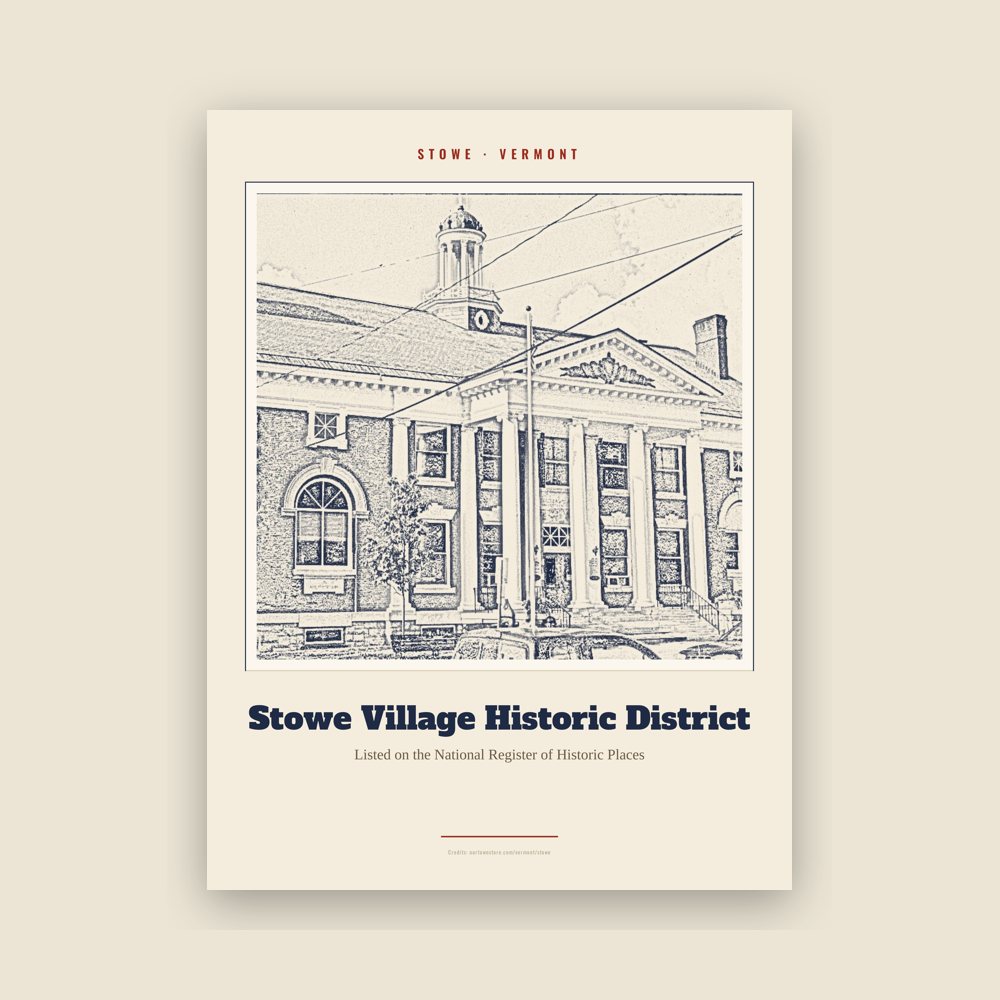
Archival matte print of a local landmark, credited to its photographer
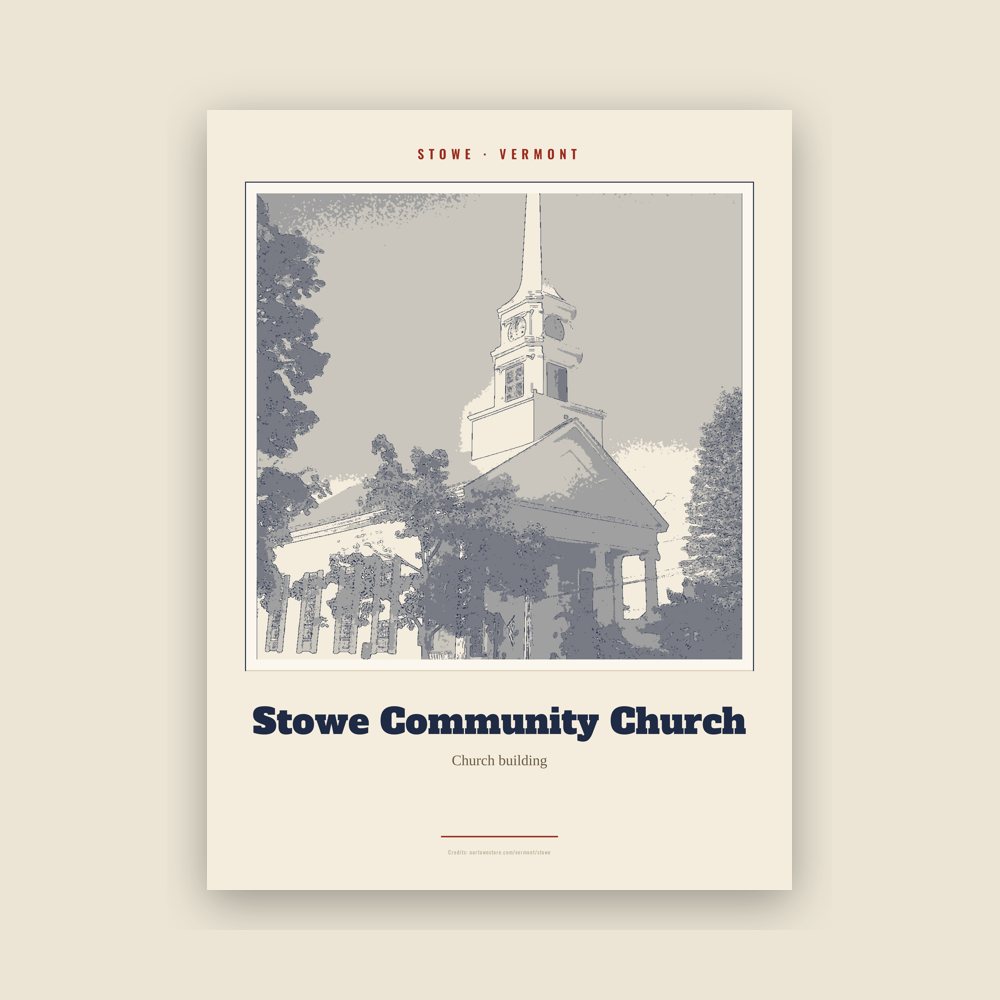
Archival matte print of a local landmark, credited to its photographer
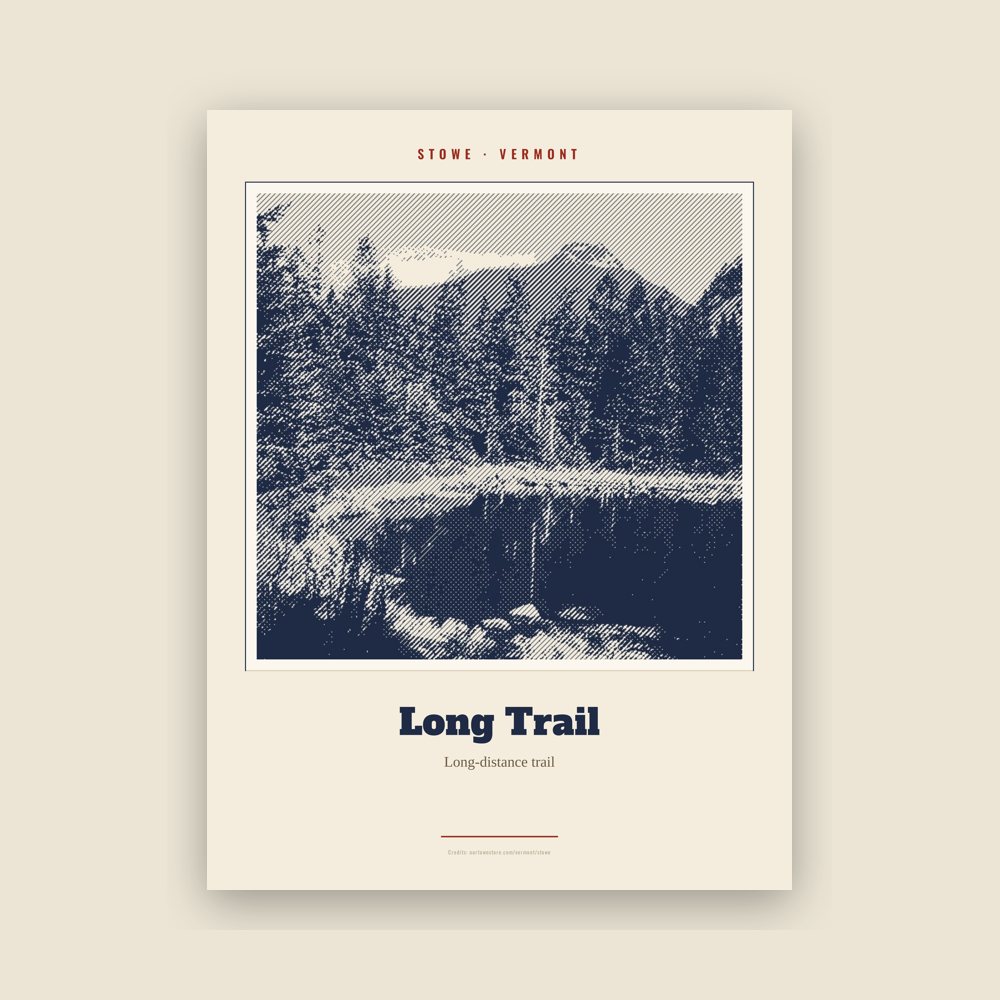
Archival matte print of a local landmark, credited to its photographer
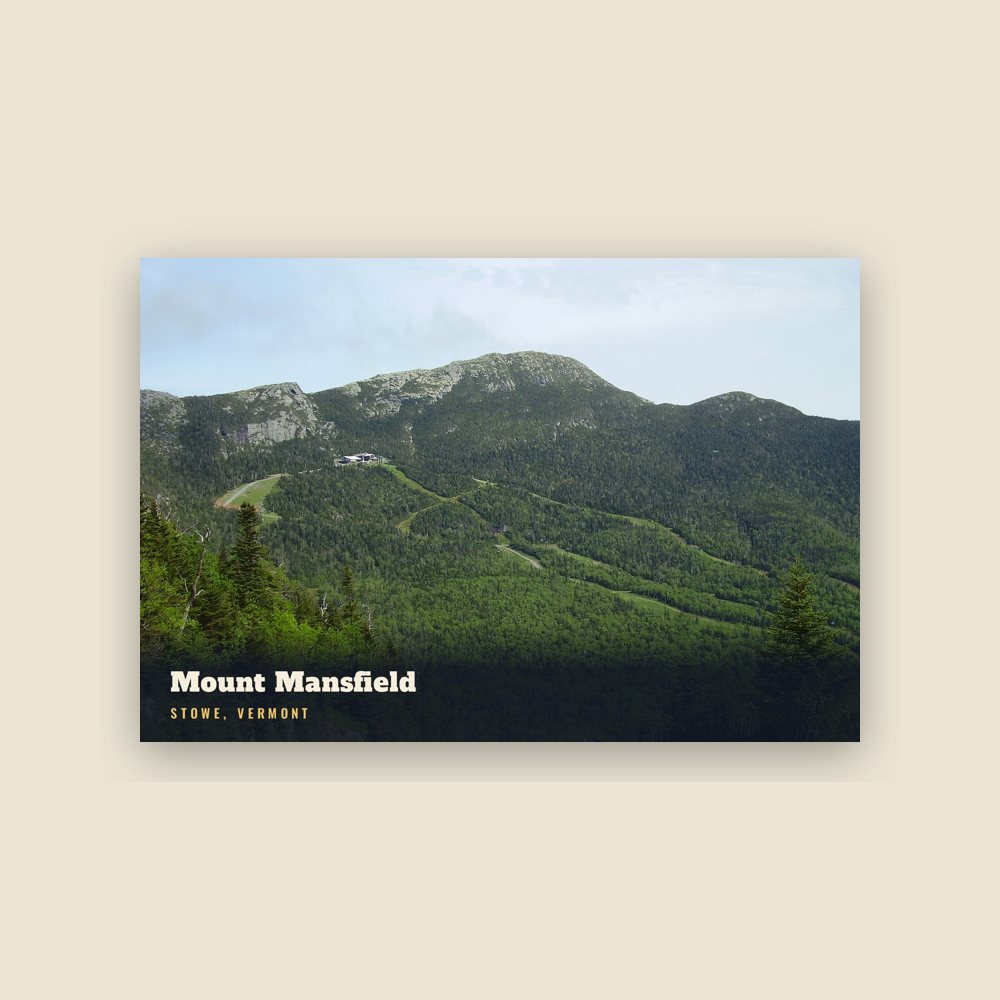
6″×4″ postcard, glossy front
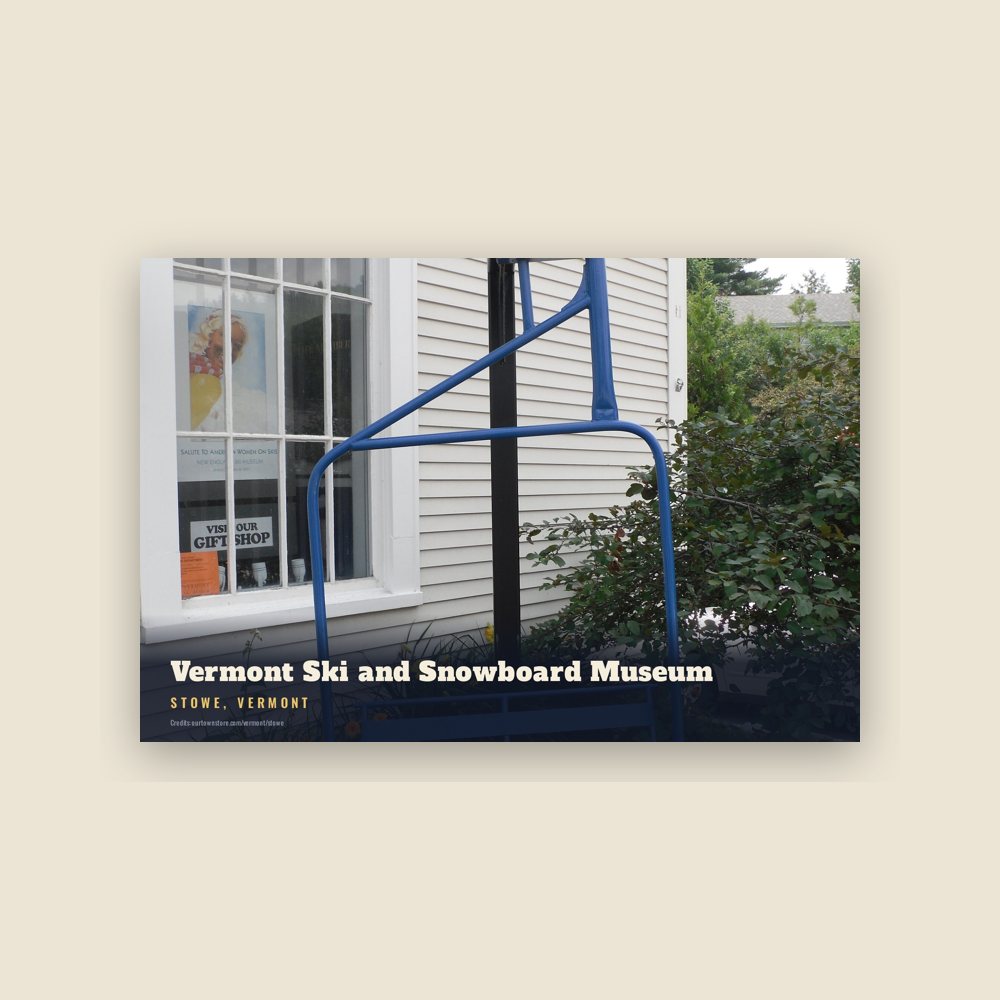
6″×4″ postcard, glossy front
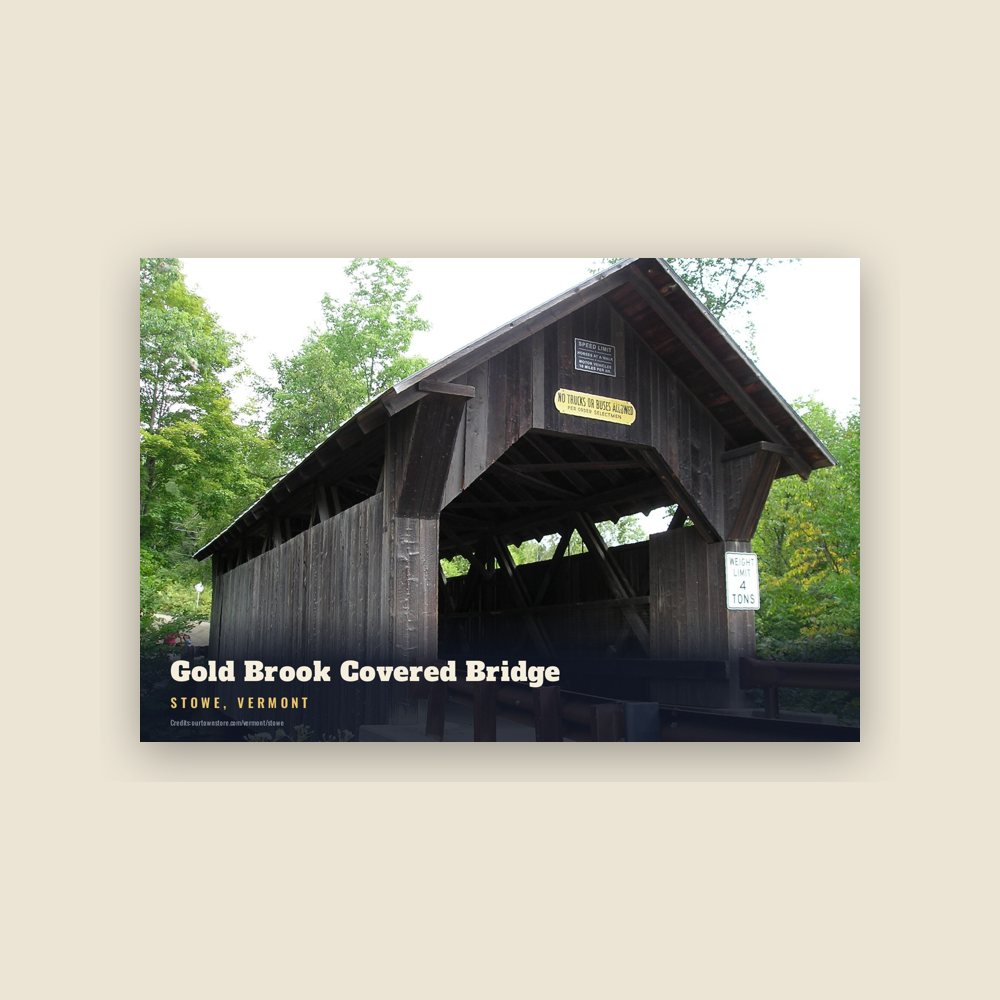
6″×4″ postcard, glossy front
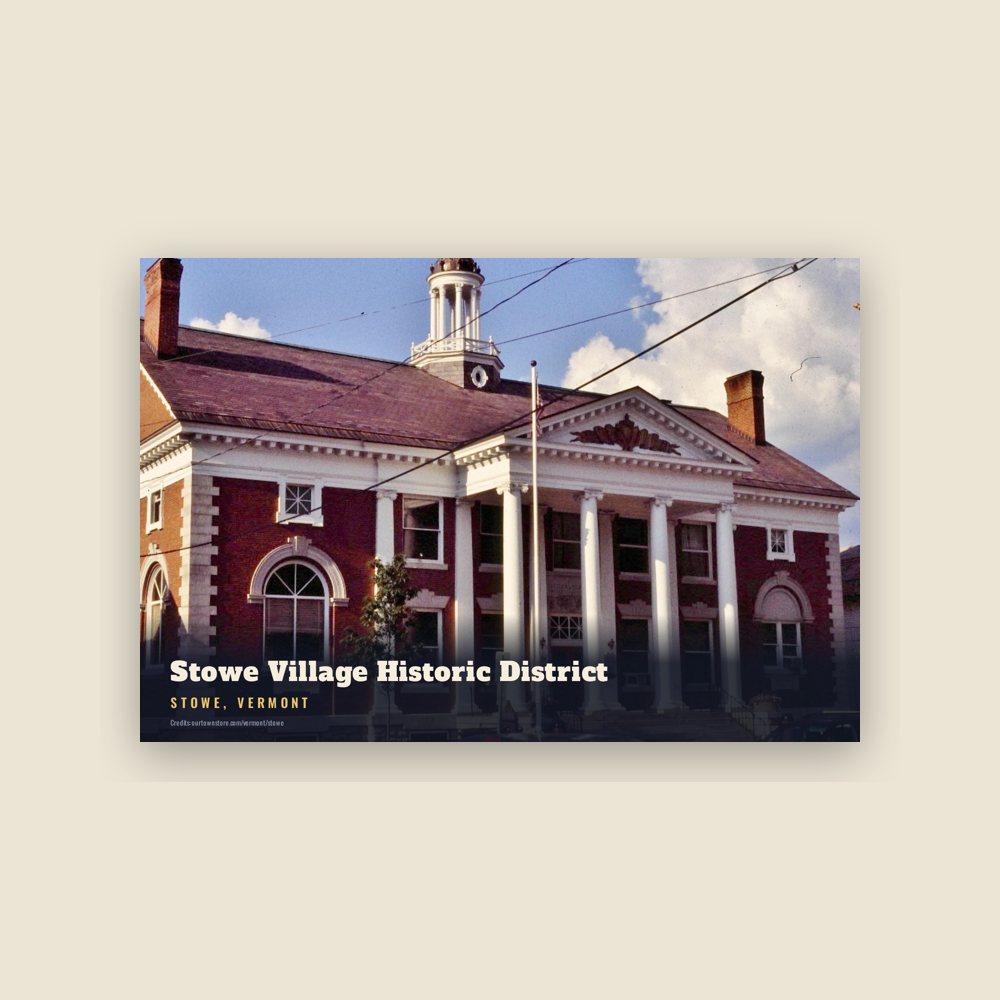
6″×4″ postcard, glossy front
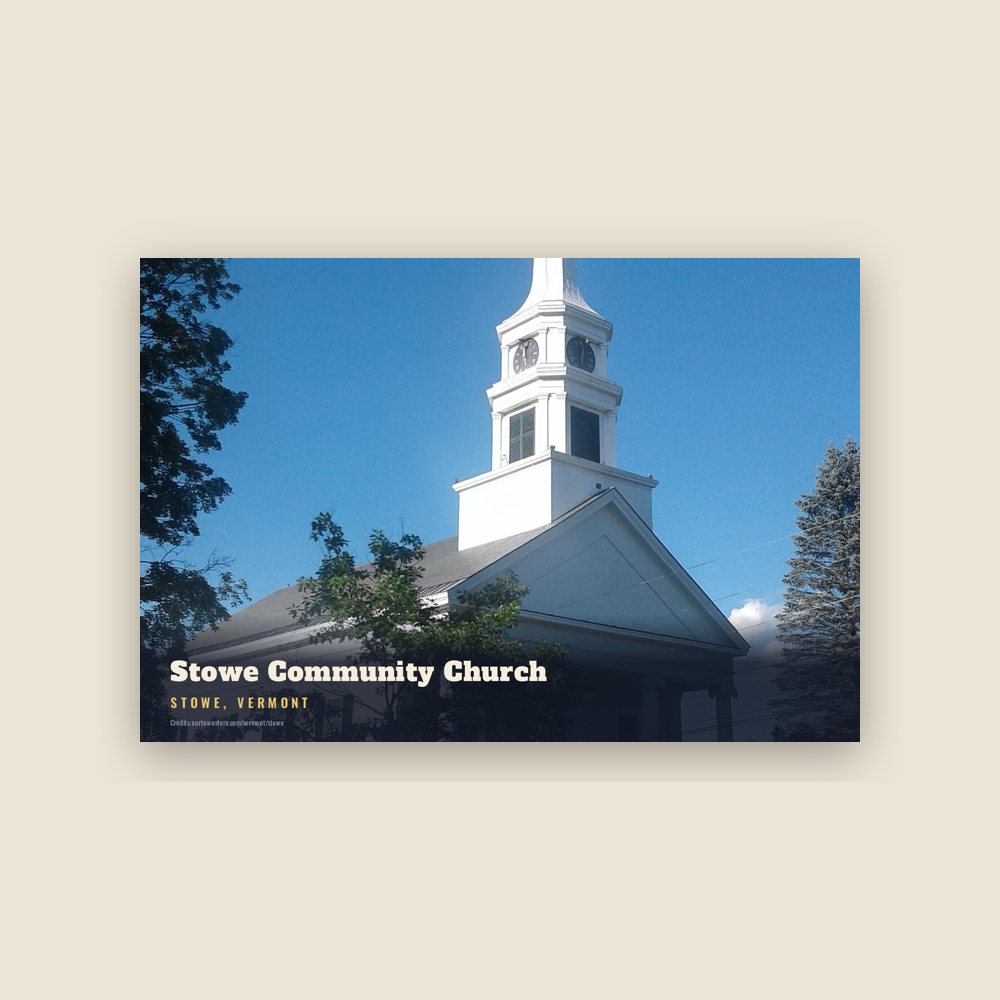
6″×4″ postcard, glossy front
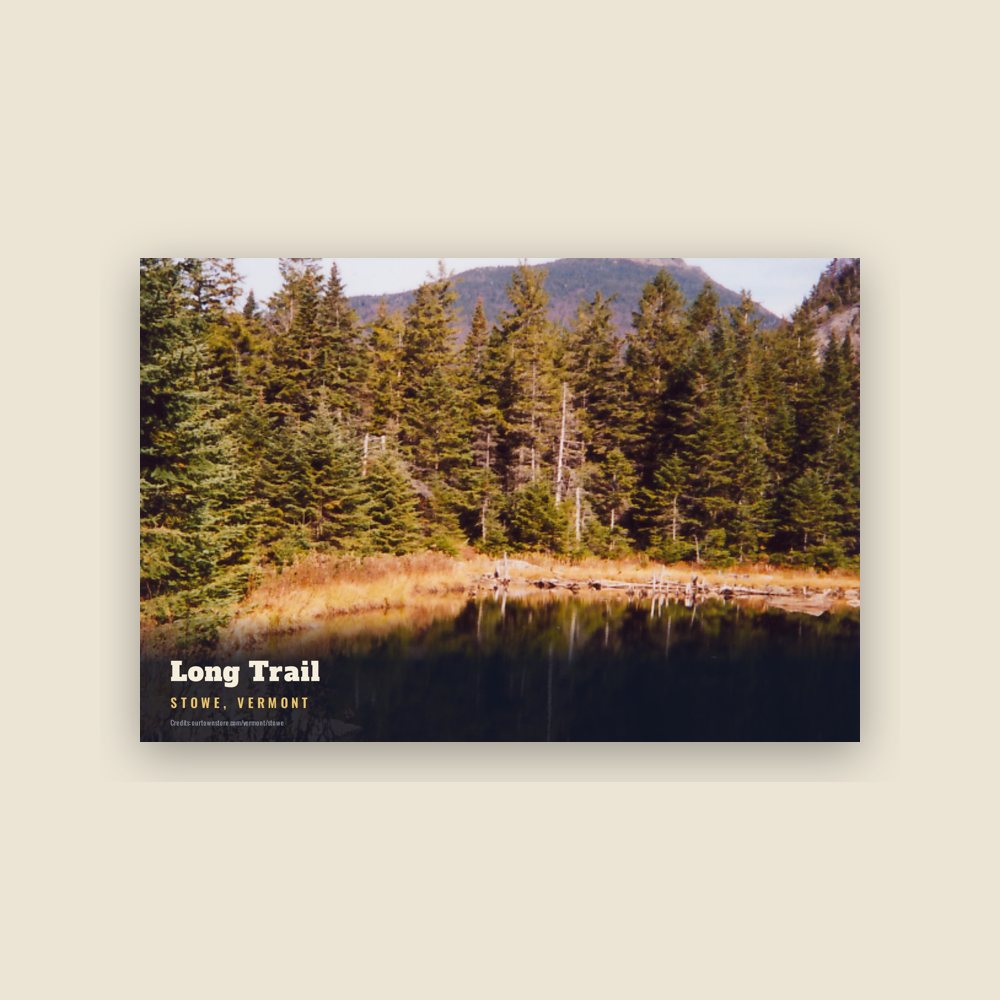
6″×4″ postcard, glossy front
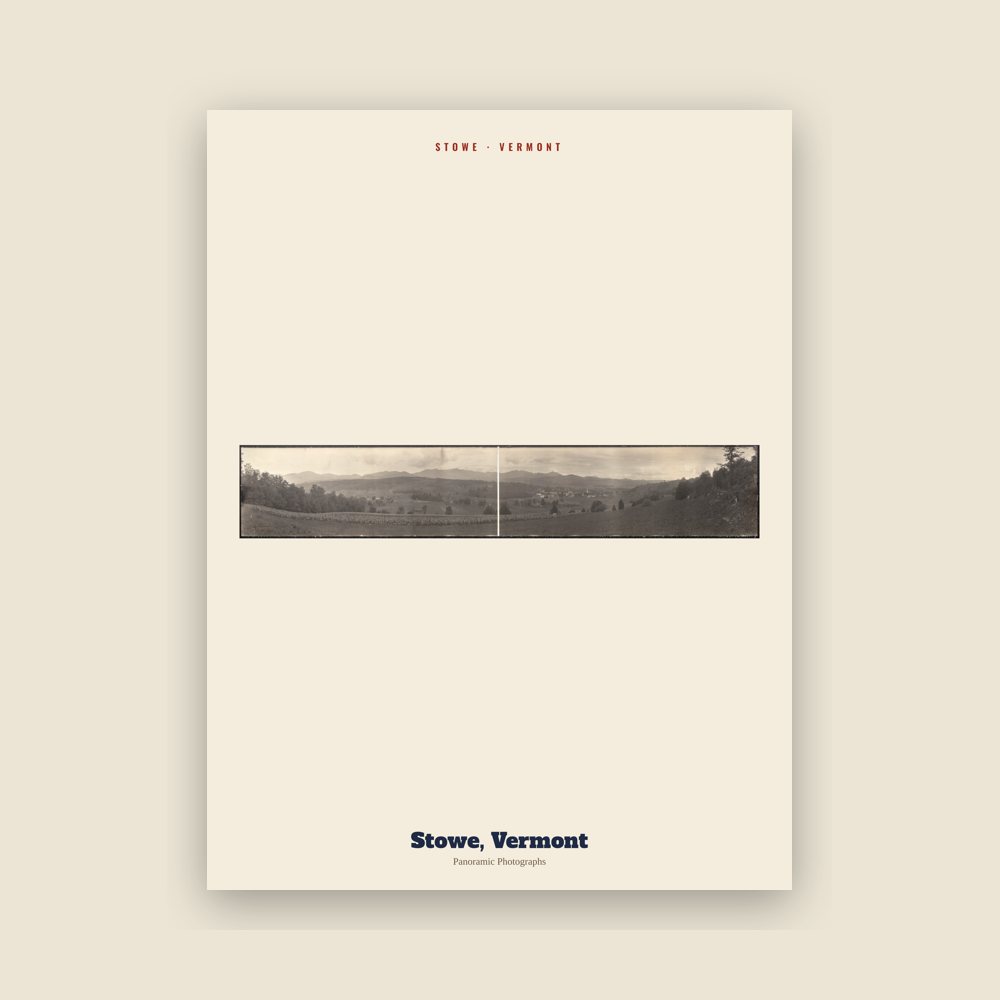
From the Library of Congress collections: a historic survey drawing or photograph of the town
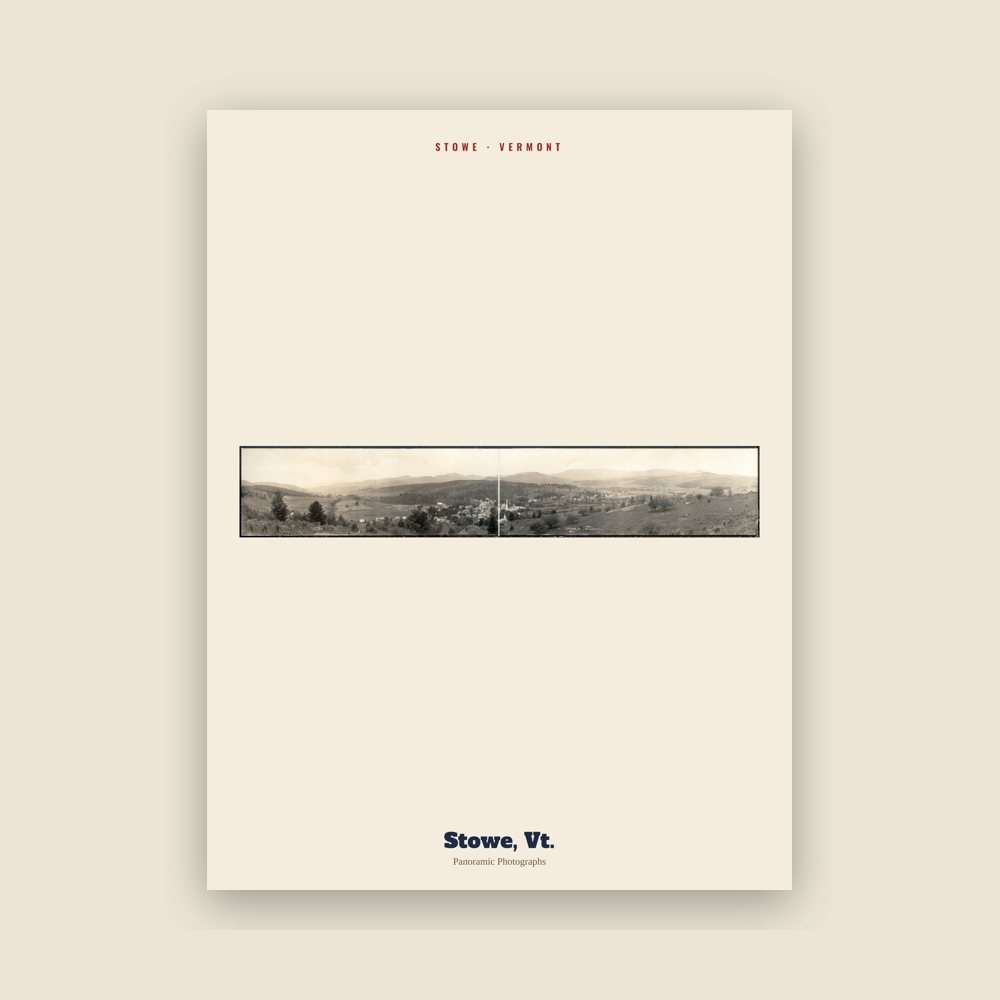
From the Library of Congress collections: a historic survey drawing or photograph of the town
Population 1990: 3,433 → 2000: 4,339 → 2010: 4,314 → 2020: 5,223
From Wikidata (CC0).
The indigenous people who lived in the area now called Vermont were primarily Abenaki, who spoke Algonquian. They were forced aside by strategies of displacement after primarily British settlers flooded into the area after the French and Indian War. There are no surviving names from the original language, which was most likely Mahican, an Algonquian dialect akin to Abenaki.
Stowe was chartered on June 8, 1763, by Royal Governor Benning Wentworth of the Province of New Hampshire. Vermont became a U.S. state in 1791. Two years later more settlers arrived in Stowe. By the turn of the nineteenth century, the majority of the town's property had been sold, and its population had risen to 316.
Stowe's early years were dominated by the farm and lumber industries. Over 75 percent of the land in Stowe and most of Vermont used to be open terrain cleared by lumber production and used for agriculture, particularly sheep farming. In those days, up to 8000 sheep grazed the Stowe hills and valleys.
Stowe's agricultural fortunes changed alongside those of the rest of New England. Most of Vermont eventually switched from sheep to dairy farms, with more than 100 farms in Stowe alone. This move allowed 75 percent of the cleared area to reforest over time.
Unlike much of the rest of Vermont, Stowe's past was not centered solely on agriculture. It had become a well-known summer resort by the mid-nineteenth century, thanks to its mountain scenery.
Mt. Mansfield was constructed just before the American Civil War broke out. The Toll Road to reach it followed by 1870. At that time the 300-room Mansfield House occupied the majority of the settlement. The latter, often known as the "Big Hotel," burned down in 1889. Behind it lay a vast stable with over 100 horses, equipment, carriages, and stable hands. In 1953, the barn was demolished over fire concern, and several of the original beams were repurposed in the construction of The Whip Bar & Grill. The Depot Building located next to the Green Mountain Inn was erected in 1897 for the Mt. Mansfield Electric Railway. Running the 11 miles between Waterbury and Stowe, it carried both passengers and freight until 1932.
Through the First World War, summer tourism remained crucial to Stowe's economy. Stowe had its inaugural Winter Carnival in 1921, including ski jumping, skating, and a variety of other enjoyable activities. The Civilian Conservation Corps erected camps and began clearing ski tracks on Mt. Mansfield during the Great Depression, leading to Stowe becoming an early mecca for downhill skiing in the United States. The Bruce Trail, which ran from the current site of the Octagon to Ranch Camp, was the first built in 1933. The Mt. Mansfield Ski Touring trail system now includes this trail as well. The Nose Dive, the next ski trail, was created in 1934. Skiers used to trek the 2.5 miles to the summit in the early days. Chairlifts, which began with a single chair in 1940, overtook rope tows as the more convenient way. The chair was in service until 1986, when it was replaced with a high-speed detachable quad.
The Vermont Ski Museum was founded in 1988, and relocated to Stowe in 2000. It contains information and artifacts on the history of skiing and snowboarding in Vermont.
Adapted (trimmed) from the Wikipedia article Stowe, Vermont, revision 1374938399 by its contributors, licensed CC BY-SA 4.0.
We share a part of every Stowe sale with local partners, and we'd love to print from your collection. Old photographs, maps and postcards make the best keepsakes.
Partner with us