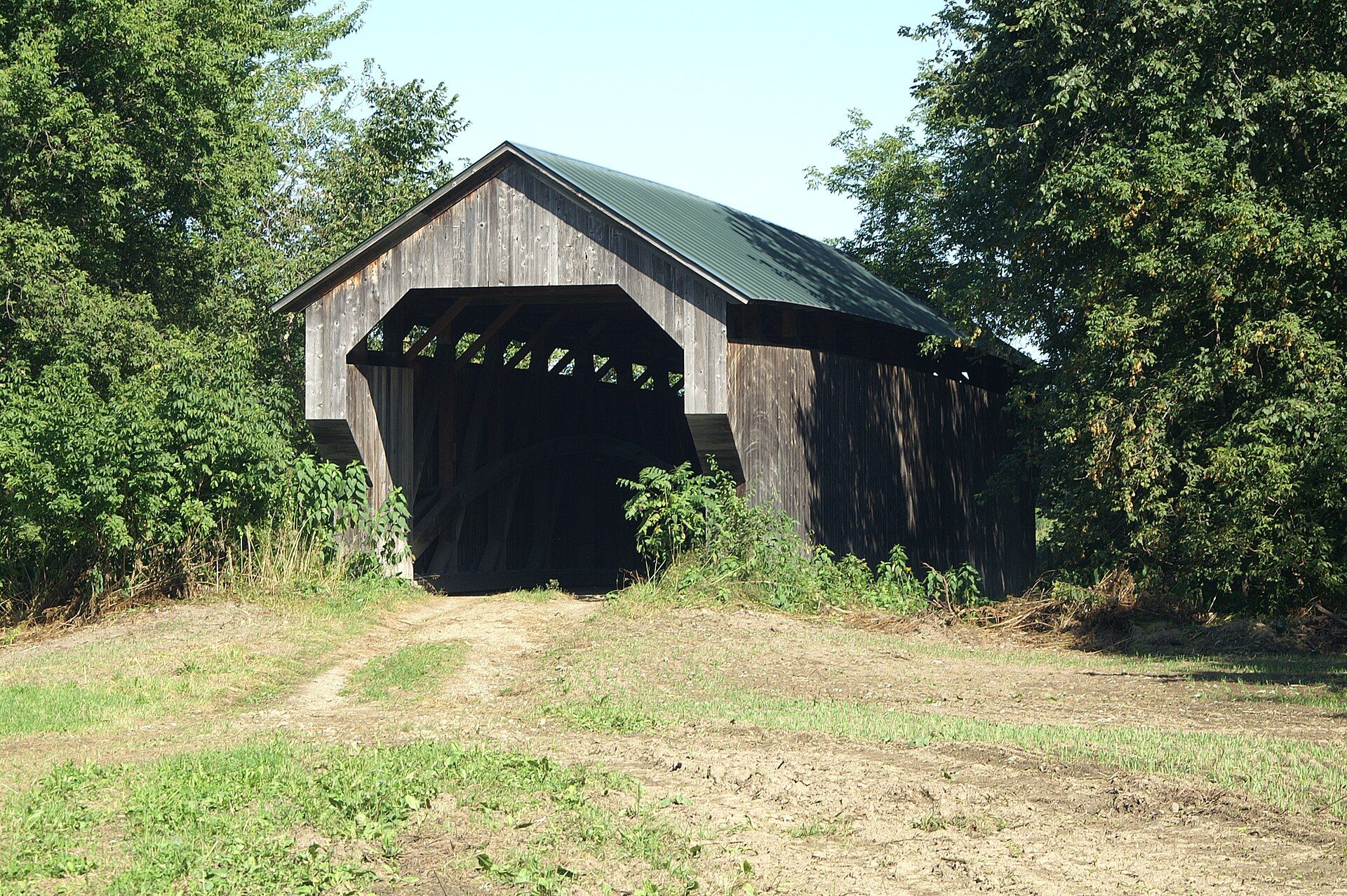
Cambridge includes the villages of Jeffersonville and Cambridge. Landmarks include Gates Farm Covered Bridge, Grist Mill Covered Bridge and Poland Covered Bridge. Cambridge is the birthplace of Harmon Northrop Morse, chemist.
Every piece is drawn from Cambridge's own map data and historic archives, then printed and shipped from the USA when you order. No two towns look alike.
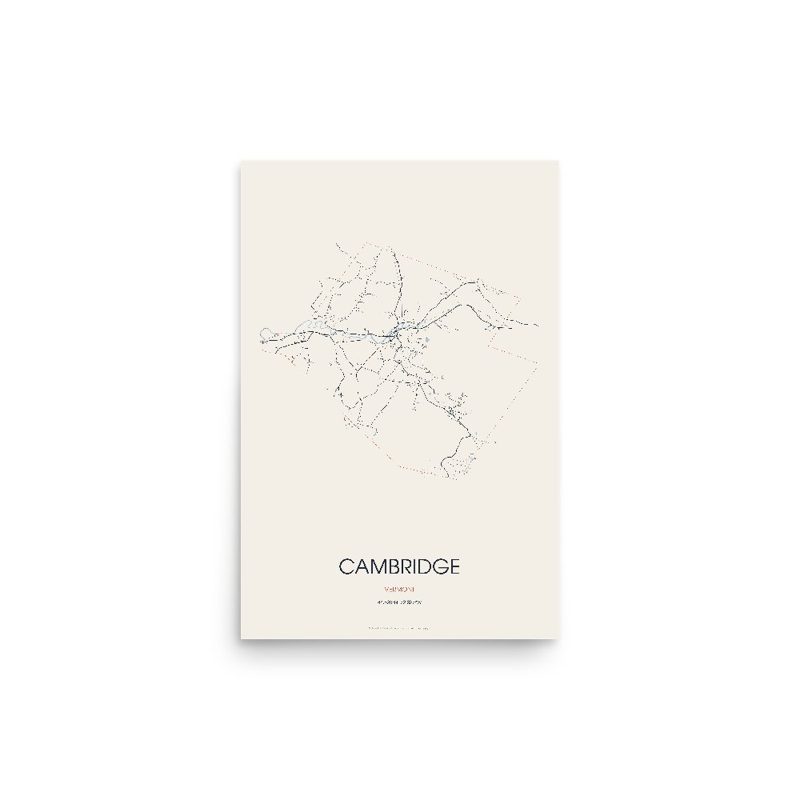
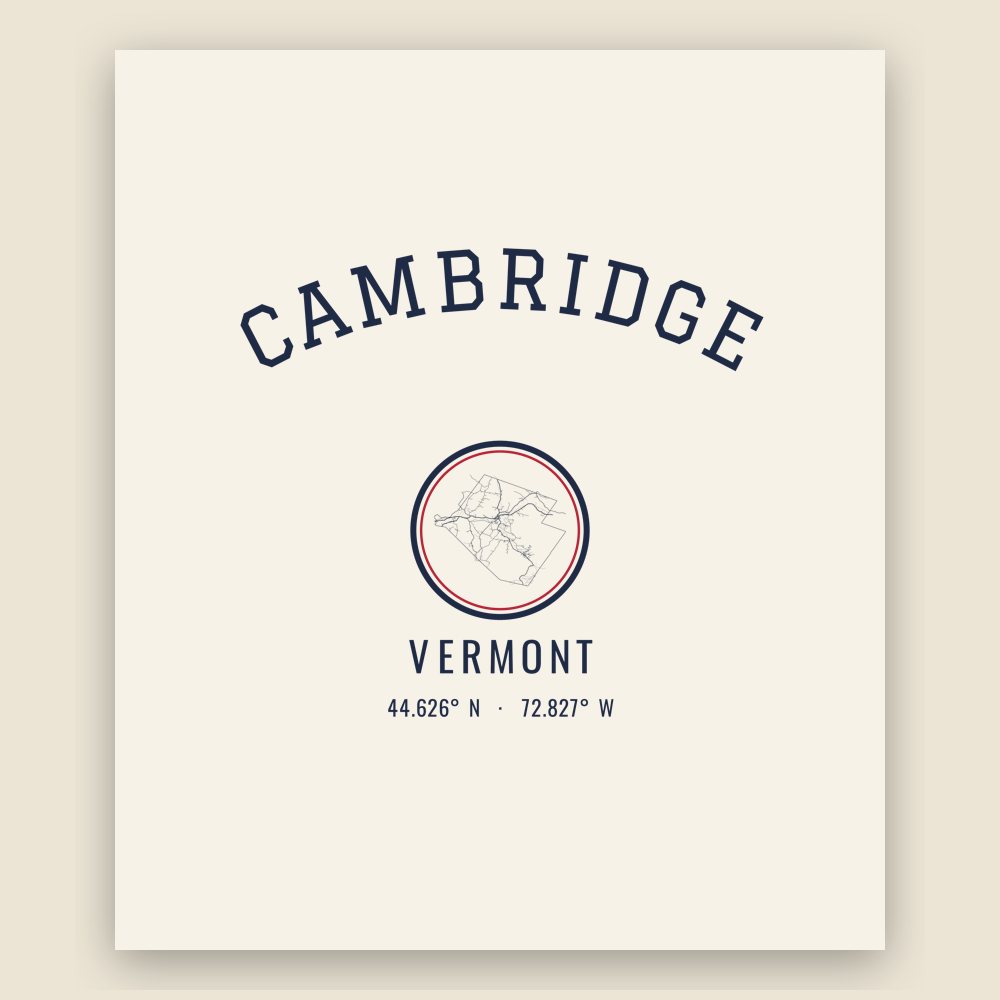
Every road in town, on archival matte paper
The same map, in navy and silver
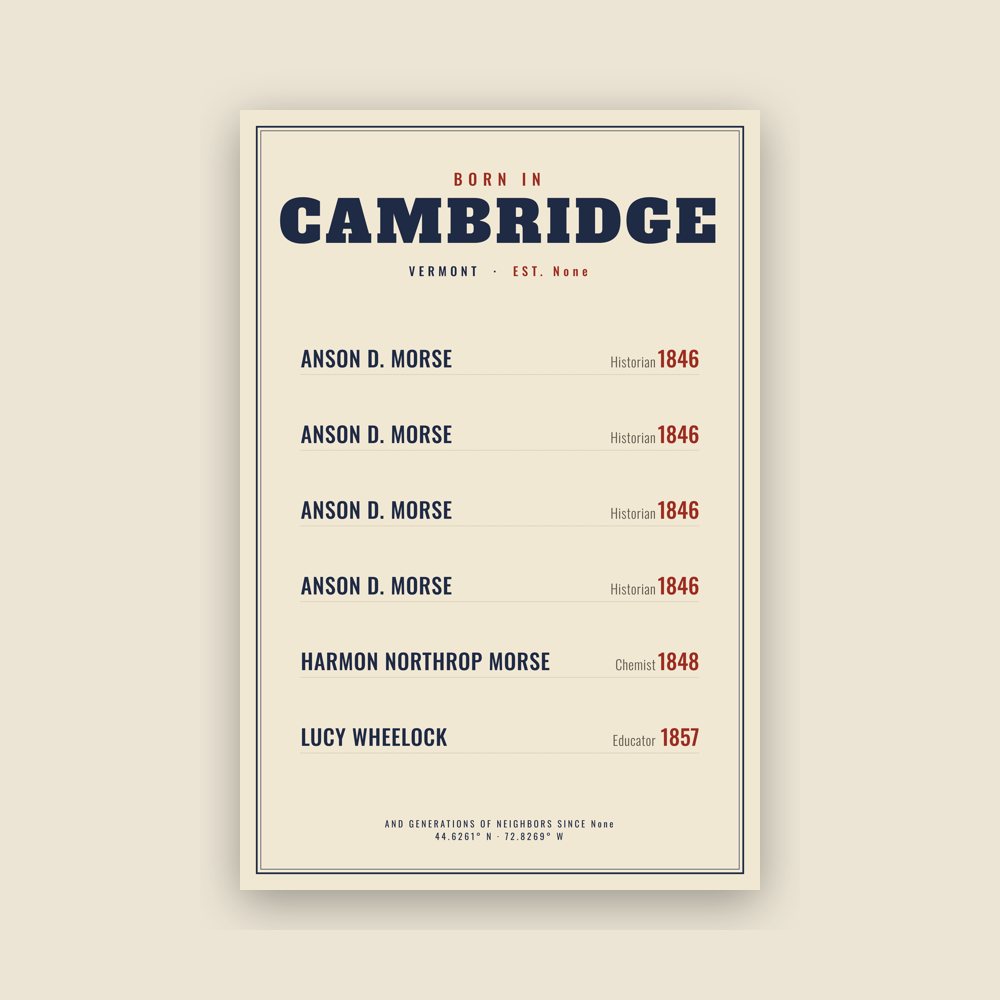
Famous natives, by birth year
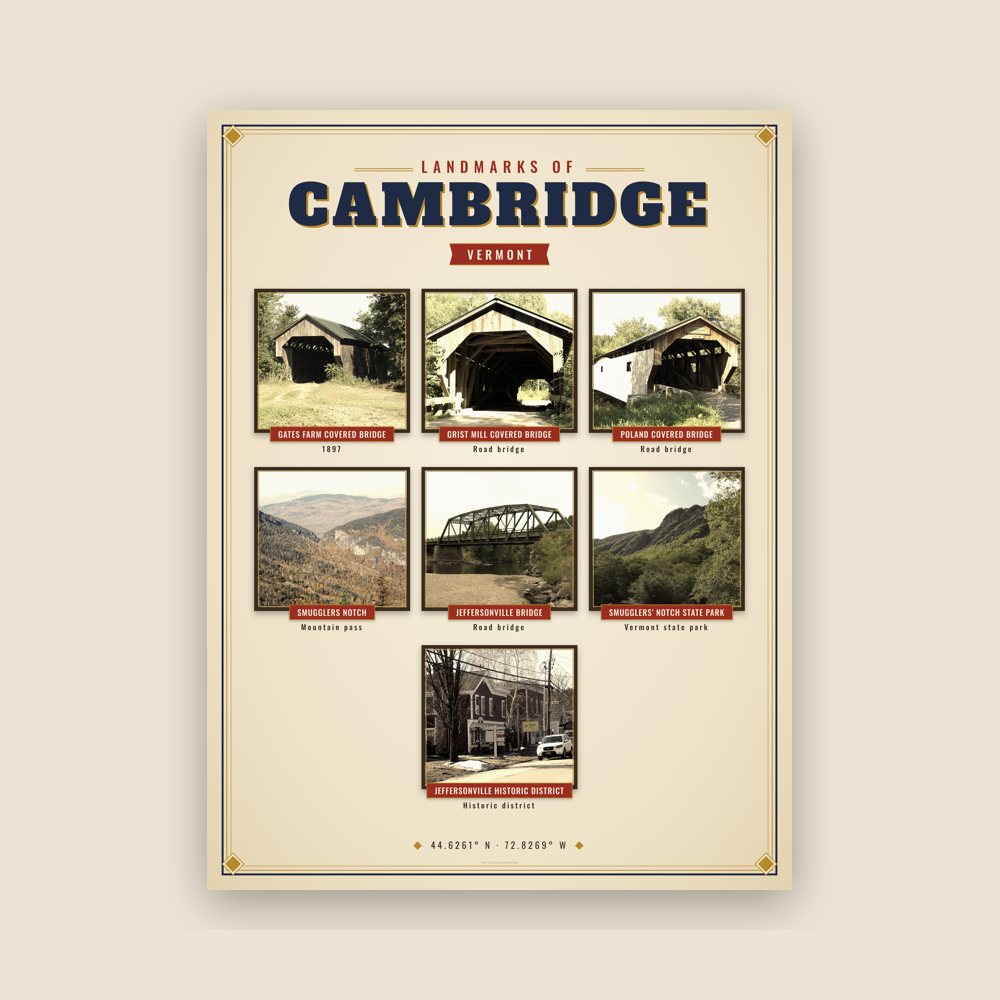
Nine local landmarks, archival matte
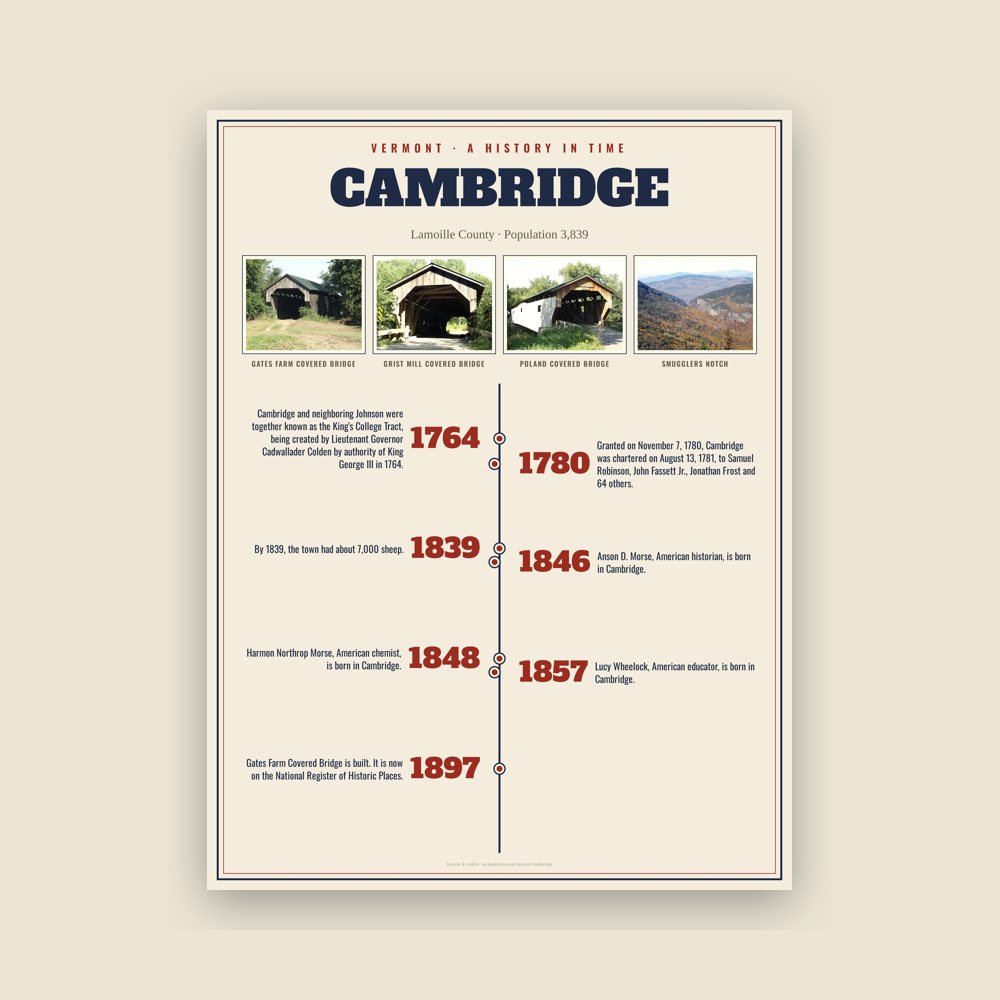
The town's story in dates, from its own records, for home or classroom
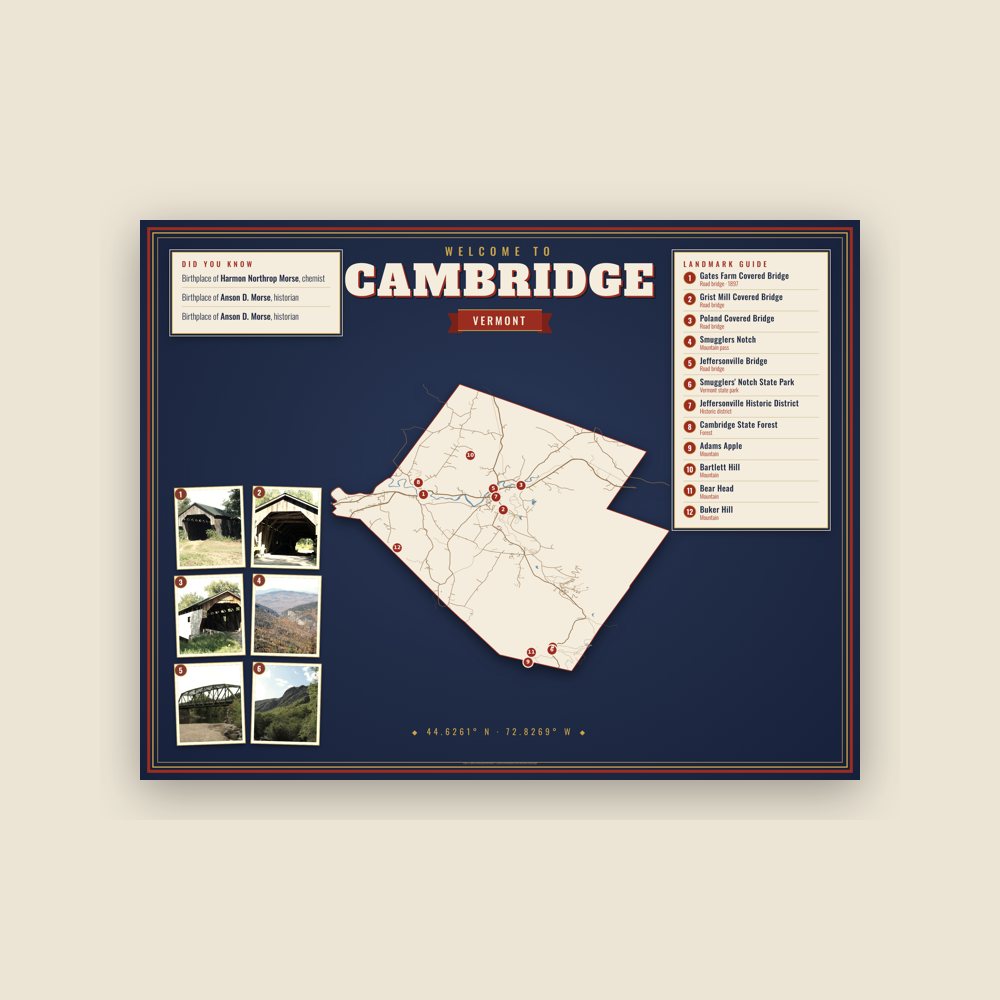
Map of local landmarks, washable fabric
Heavy-blend fleece, street map printed on the back
Soft Bella+Canvas jersey
Glossy ceramic, dishwasher safe
Ceramic keepsake, gold ribbon
Weatherproof, for the front walk
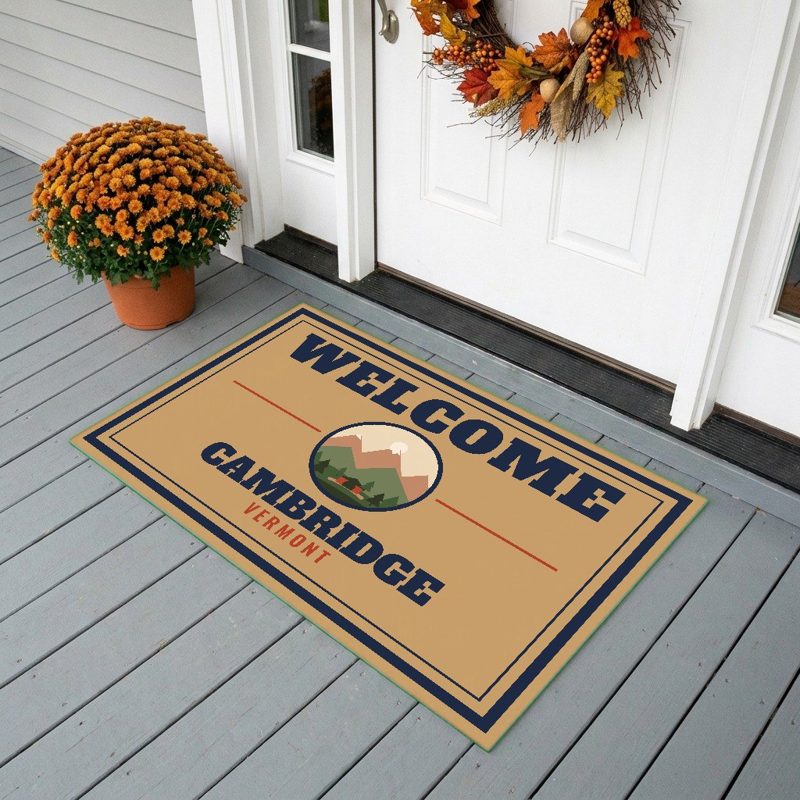
24″×16″, printed coir-look fibers, rubber back
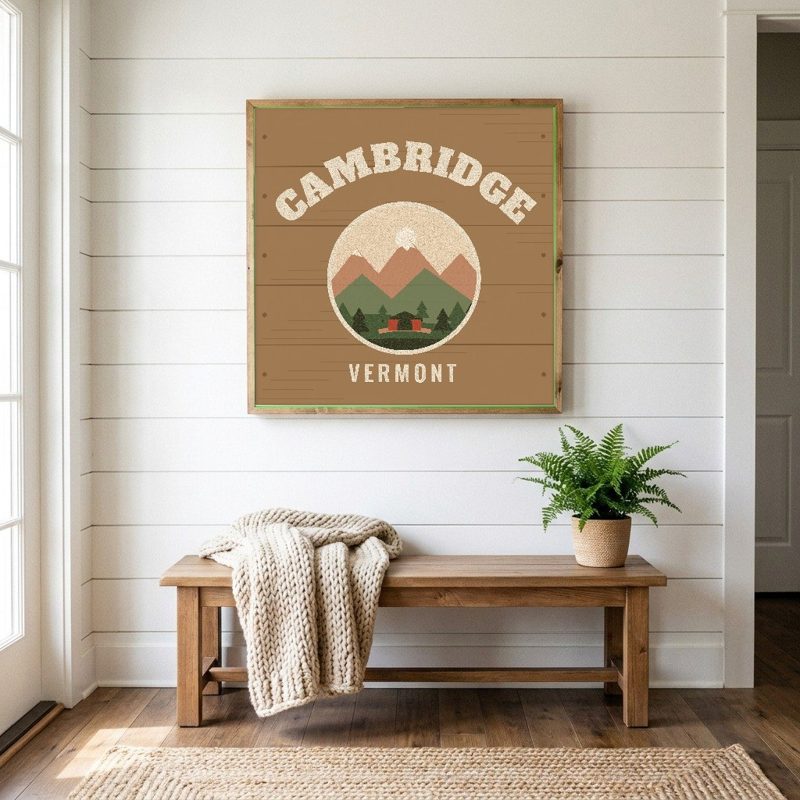
12″×12″ printed wood, ready to hang
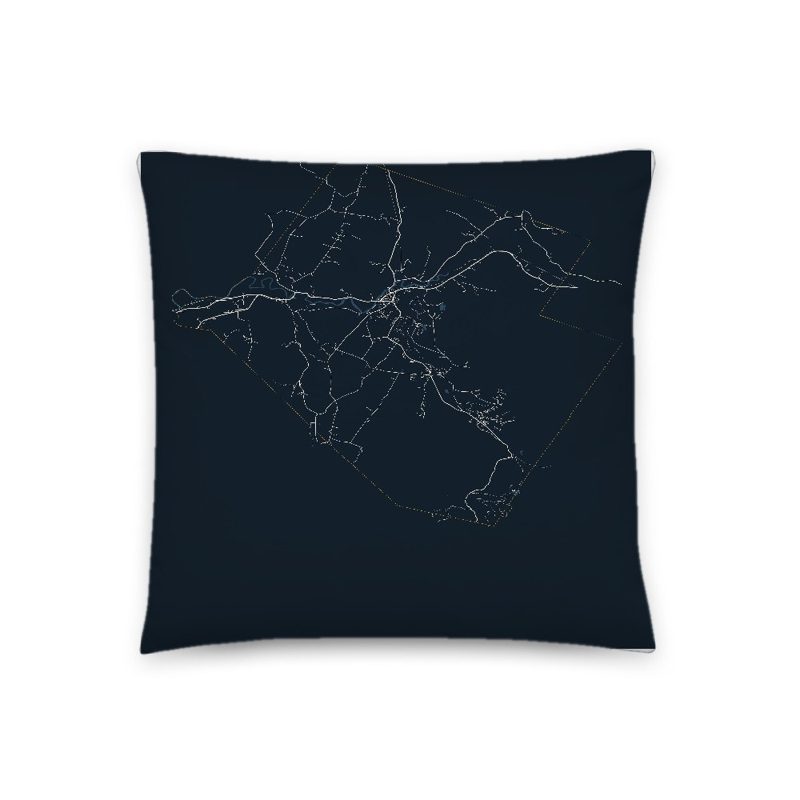
Soft-touch, zip cover

Sturdy all-over-print tote
Glossy top, cork back
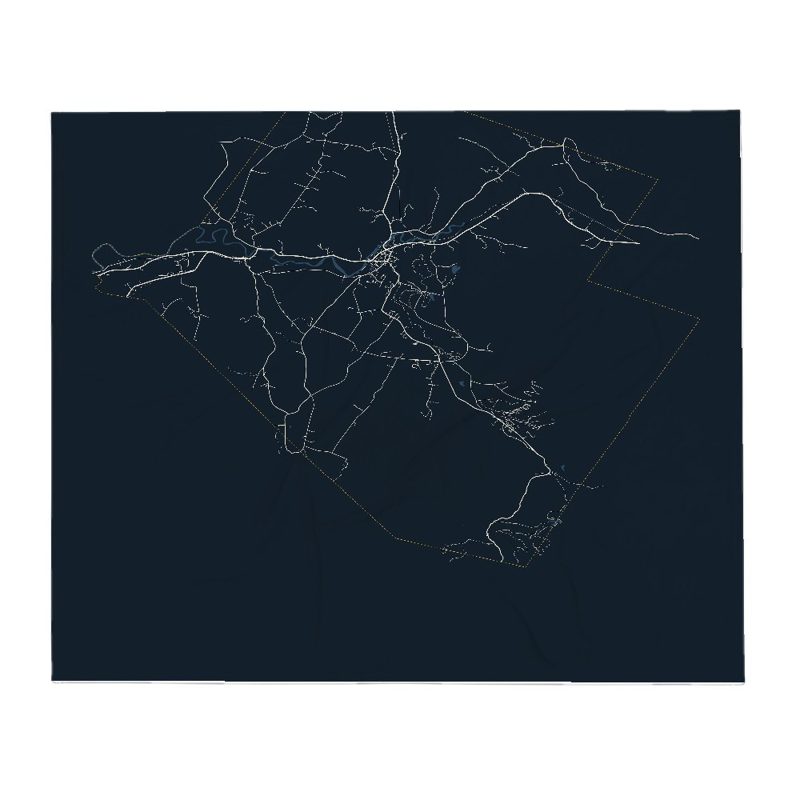
Soft fleece, 50″×60″
20 oz, double-wall stainless
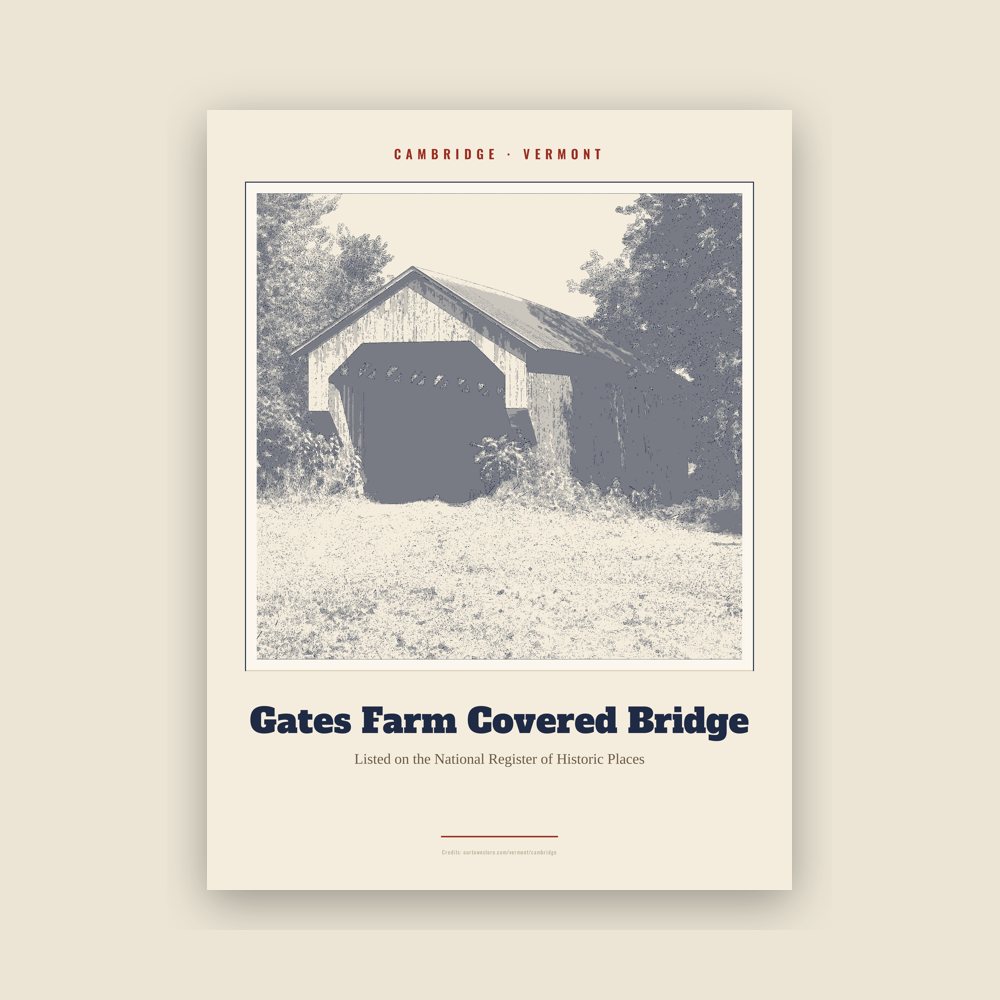
Archival matte print of a local landmark, credited to its photographer
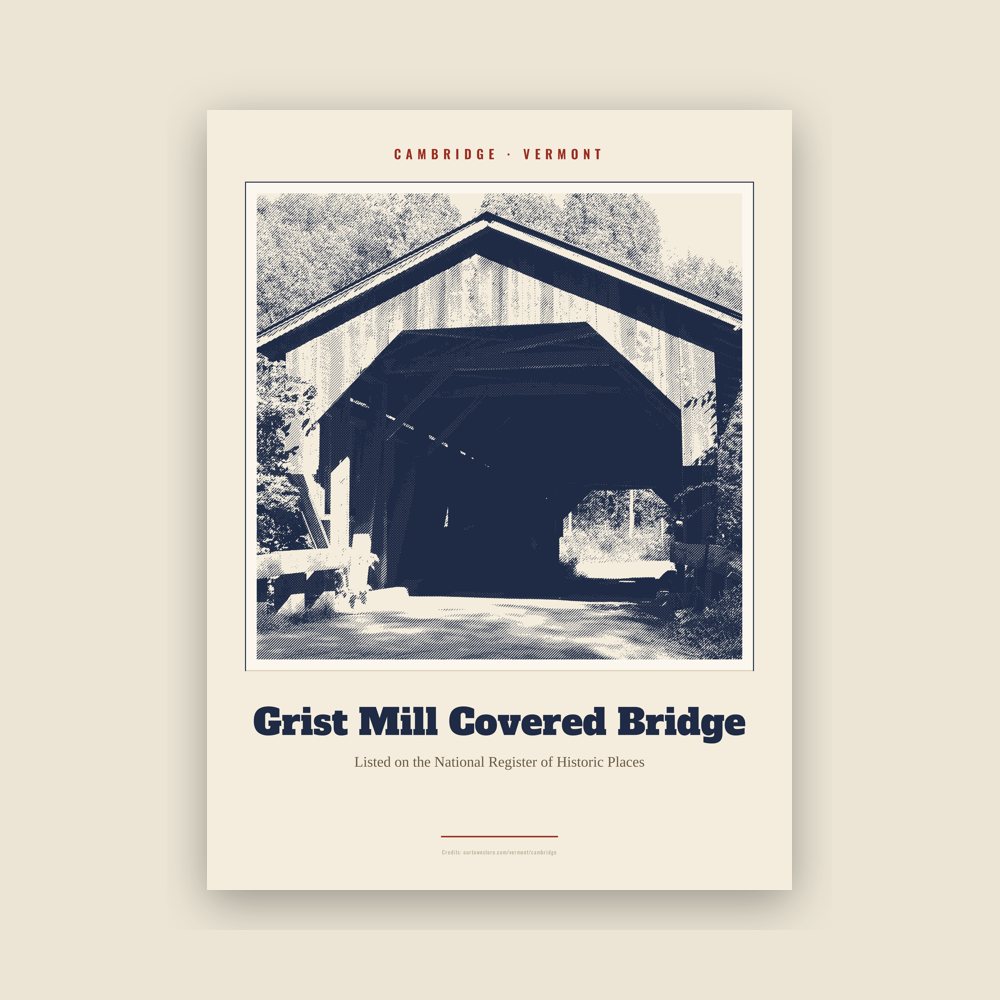
Archival matte print of a local landmark, credited to its photographer
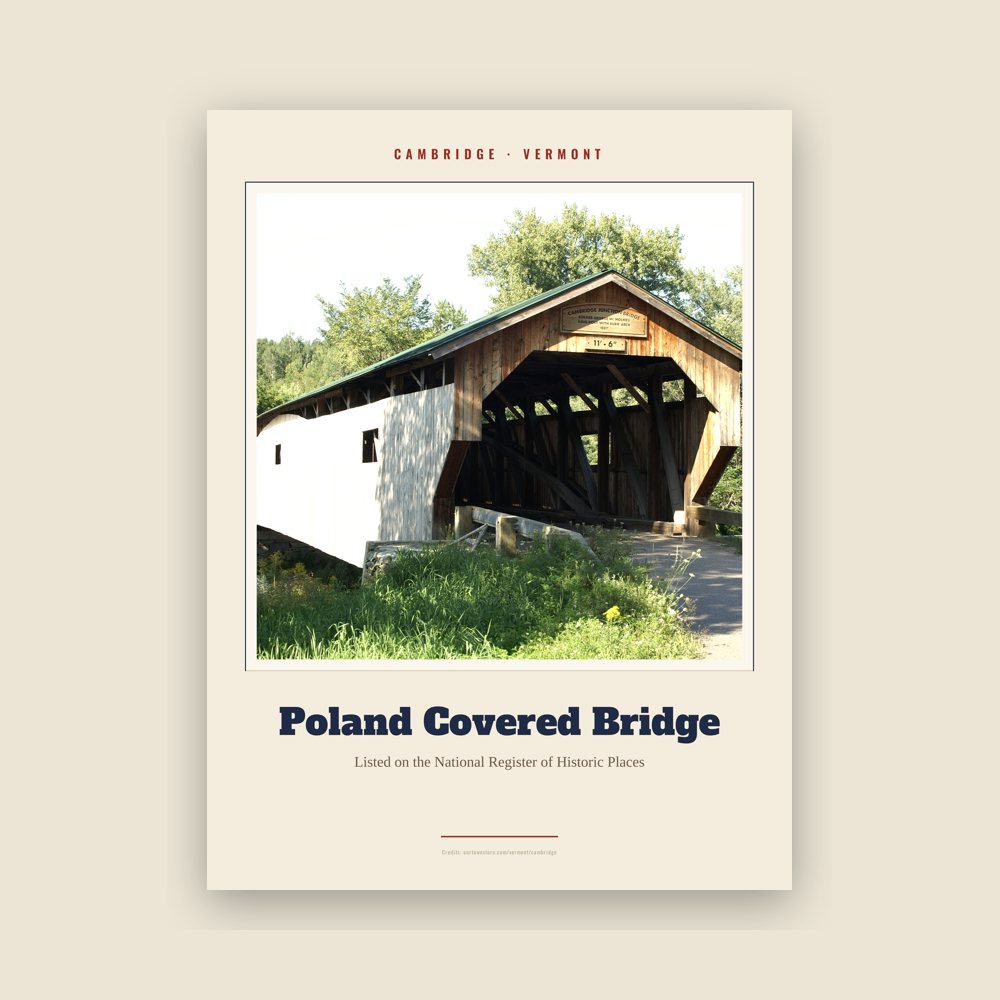
Archival matte print of a local landmark, credited to its photographer
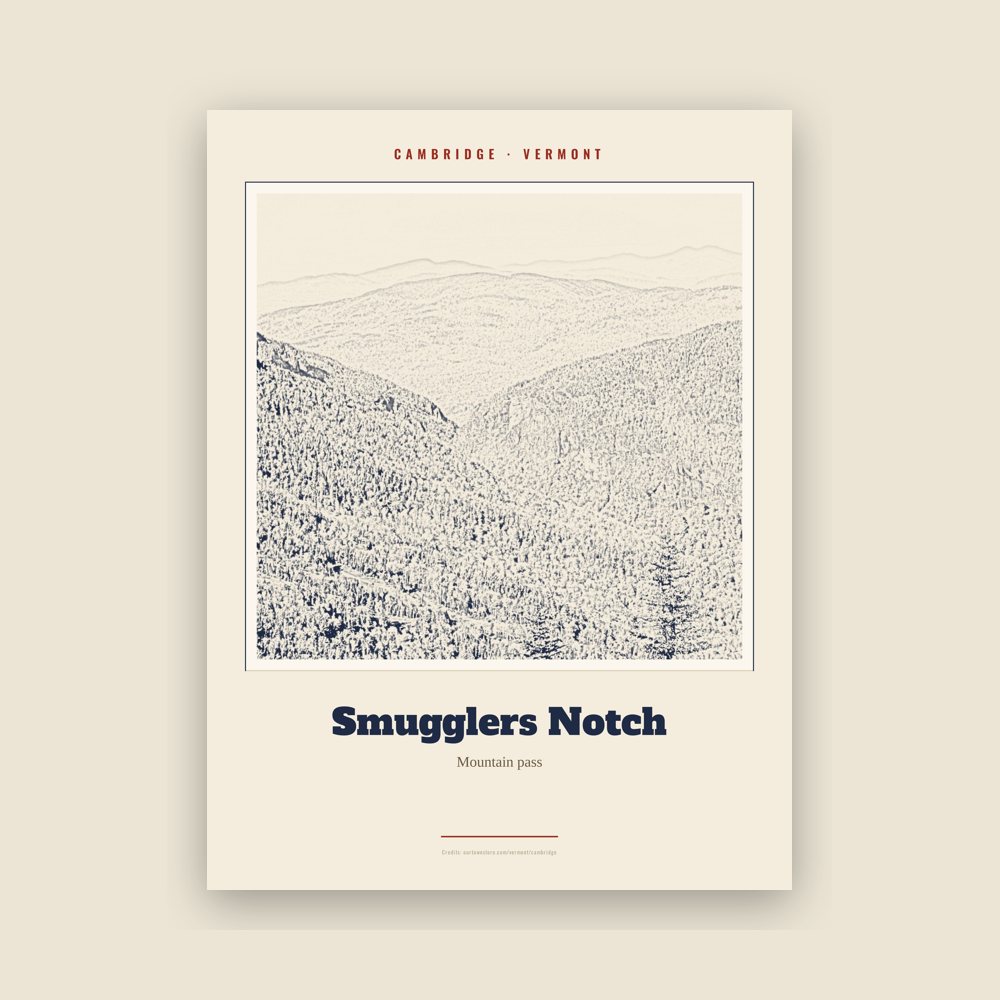
Archival matte print of a local landmark, credited to its photographer
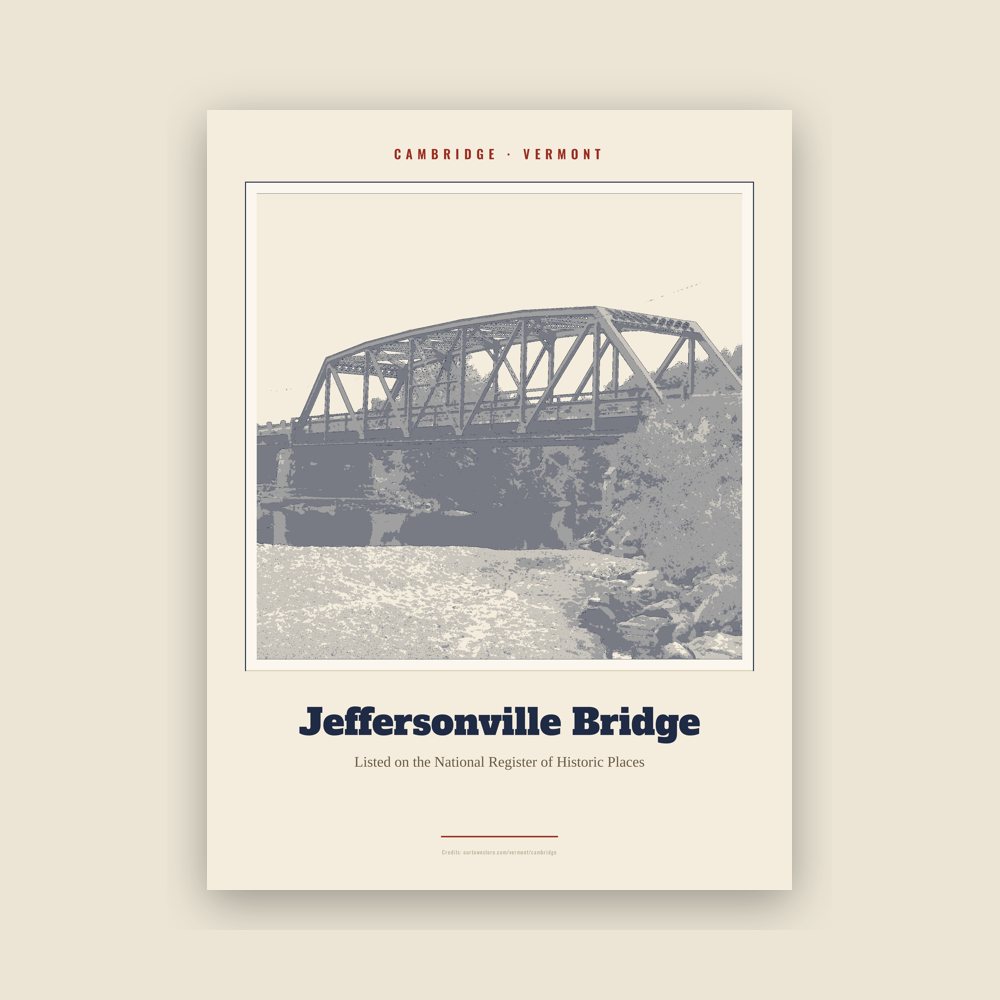
Archival matte print of a local landmark, credited to its photographer
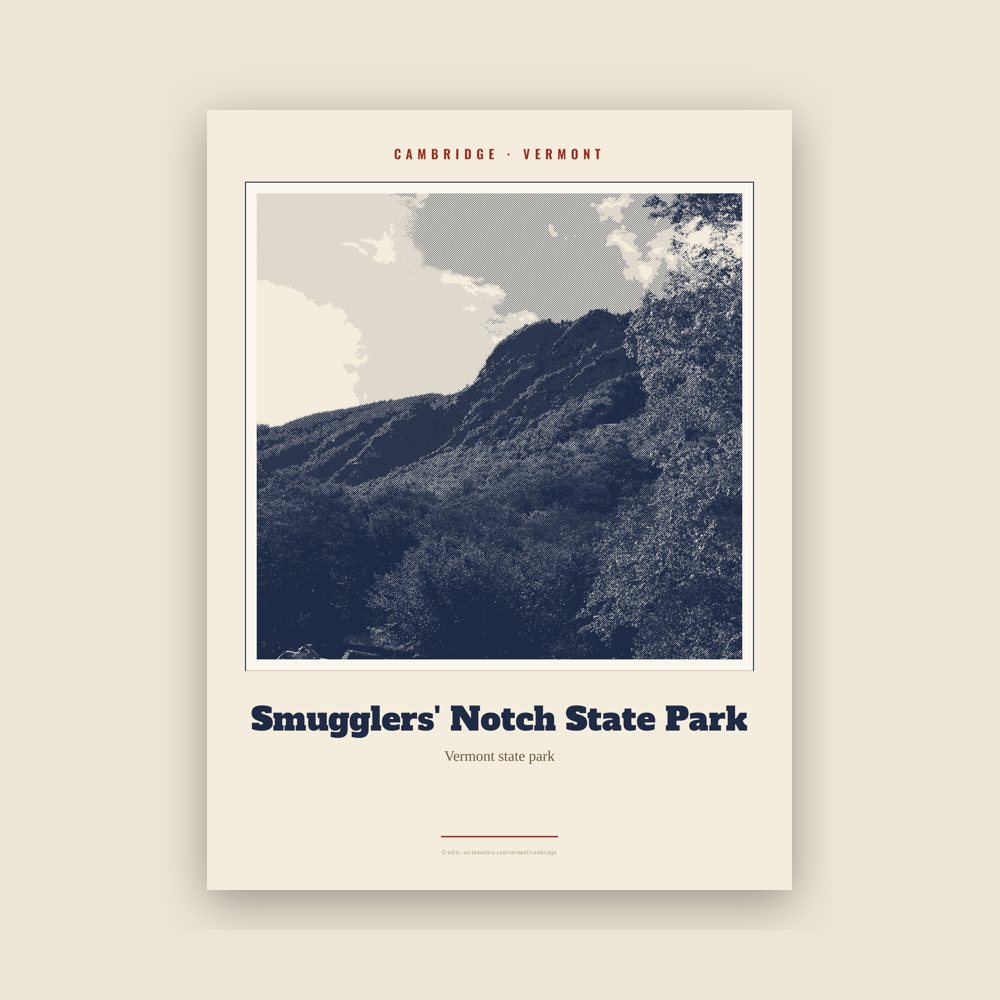
Archival matte print of a local landmark, credited to its photographer
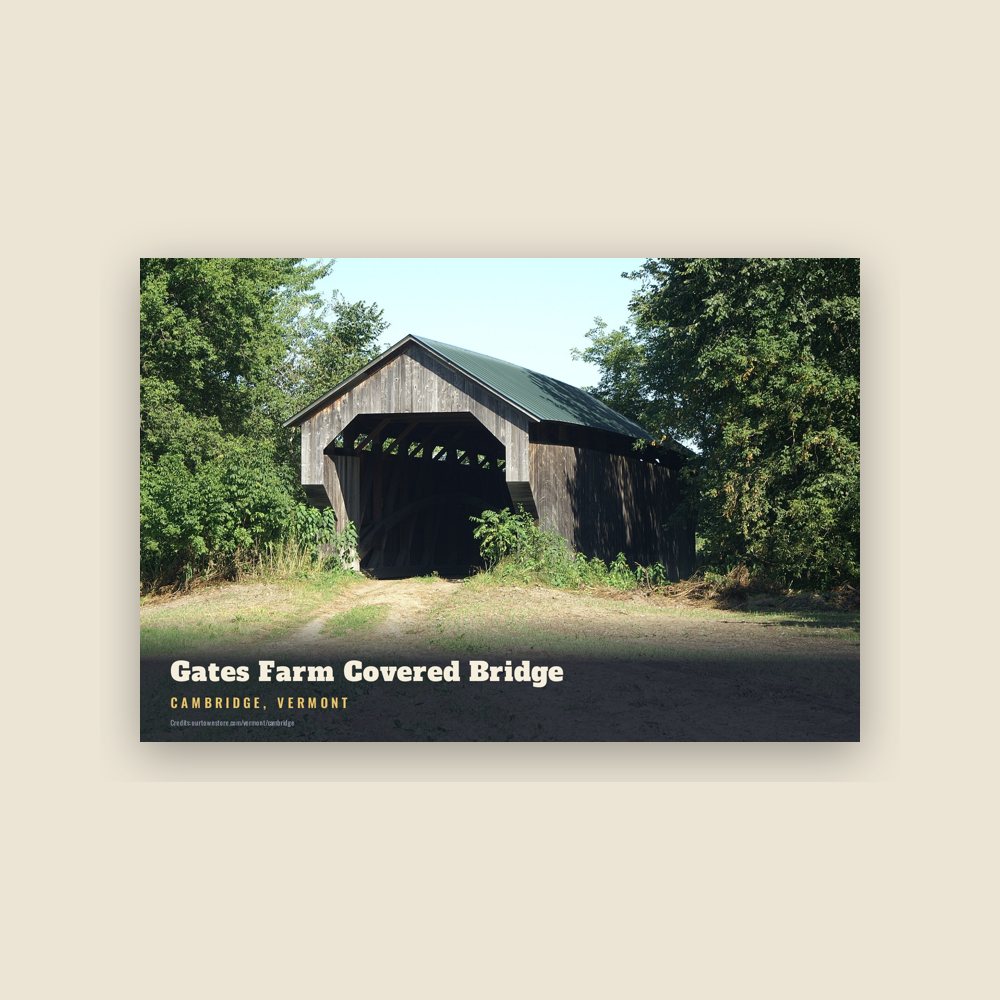
6″×4″ postcard, glossy front
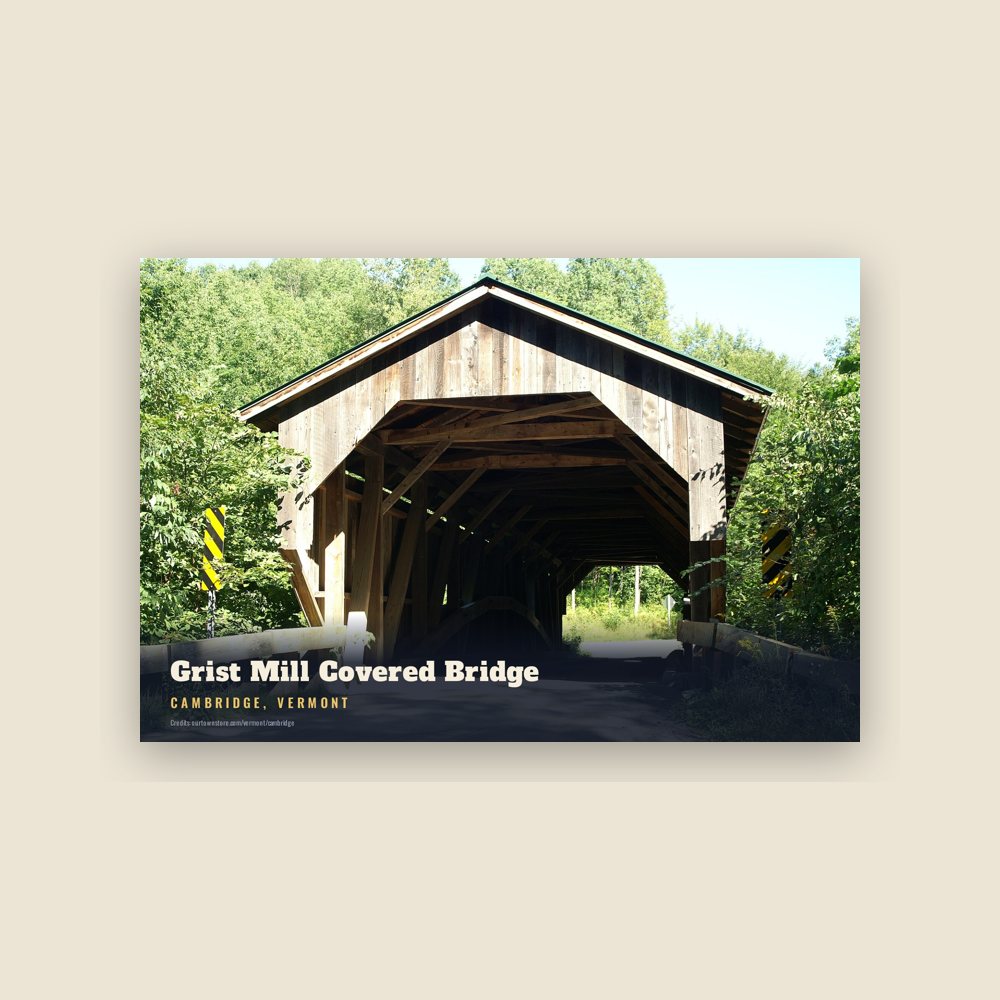
6″×4″ postcard, glossy front
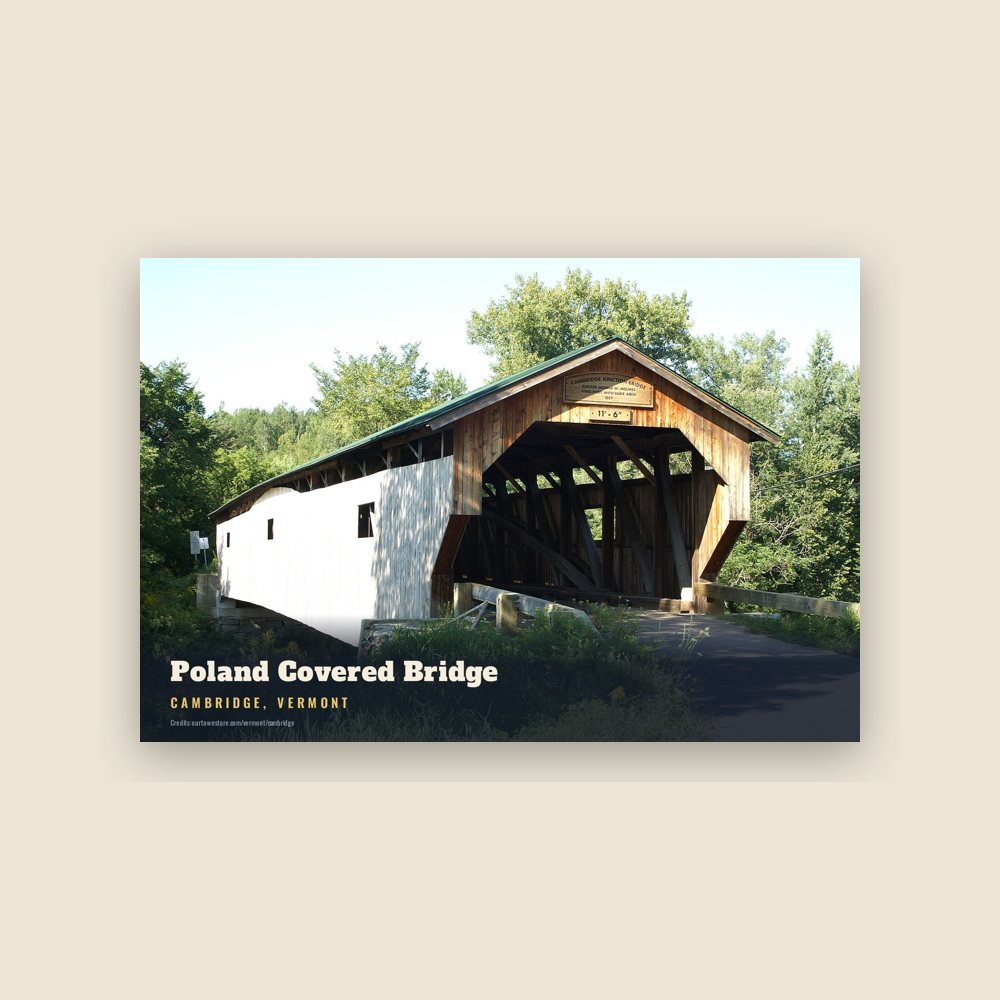
6″×4″ postcard, glossy front
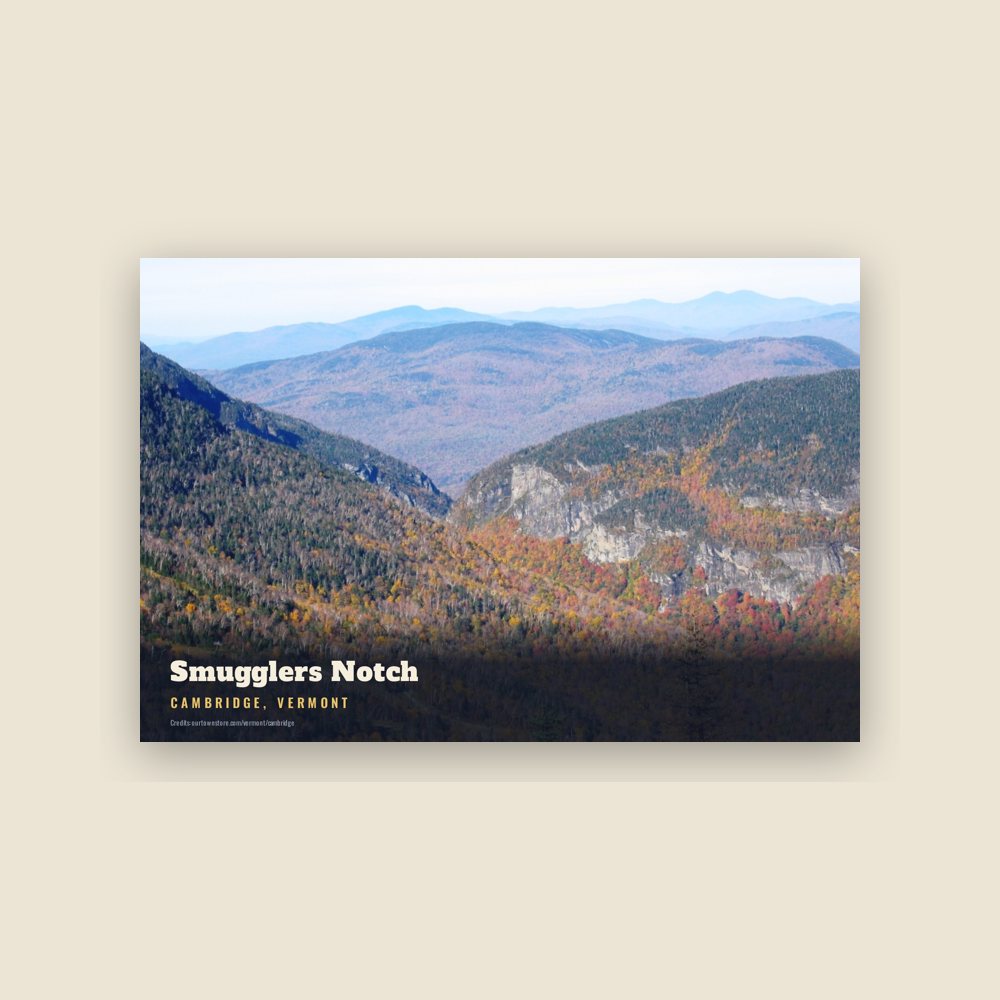
6″×4″ postcard, glossy front
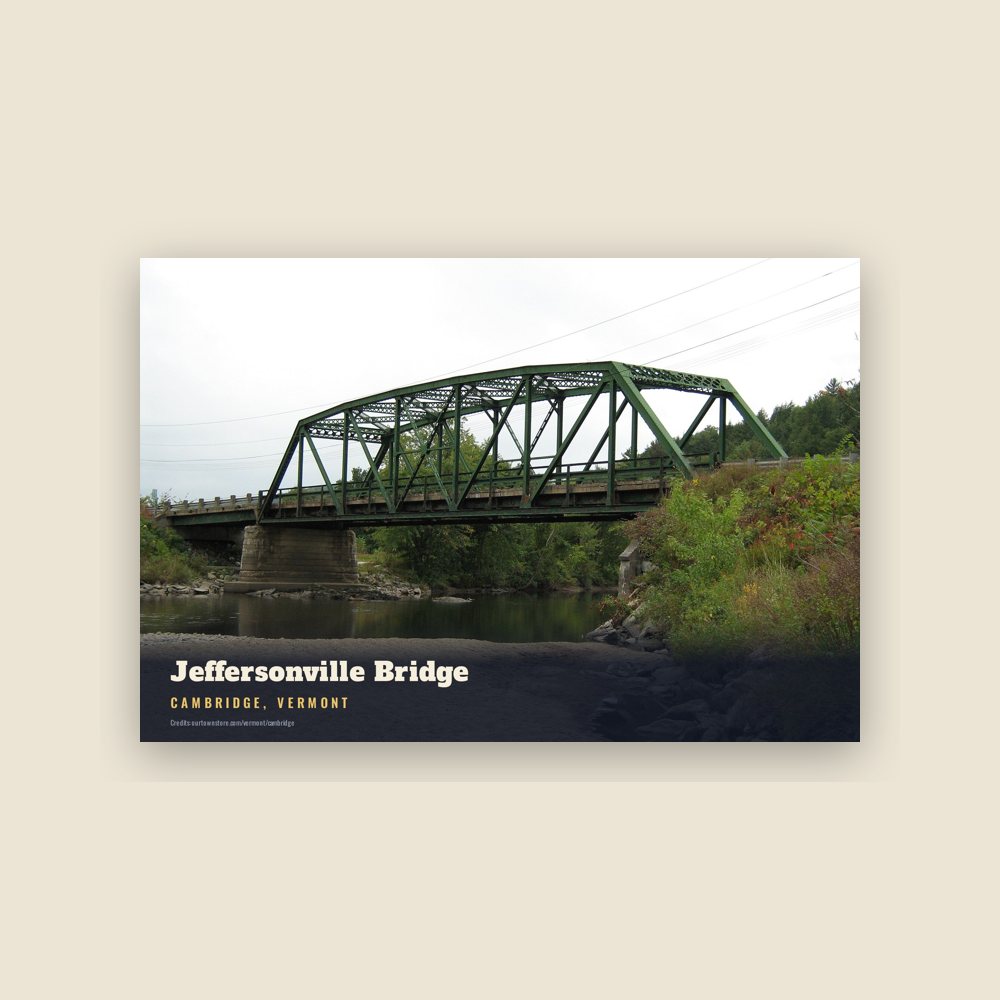
6″×4″ postcard, glossy front
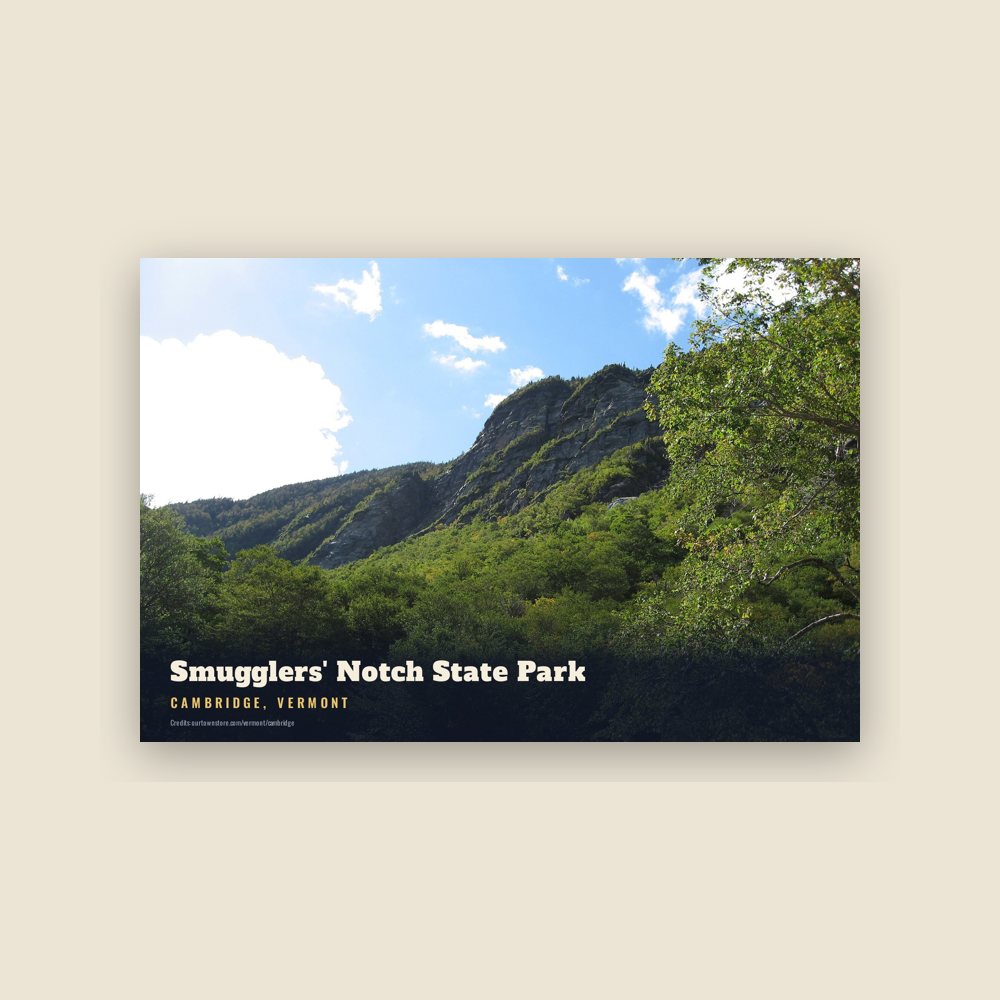
6″×4″ postcard, glossy front
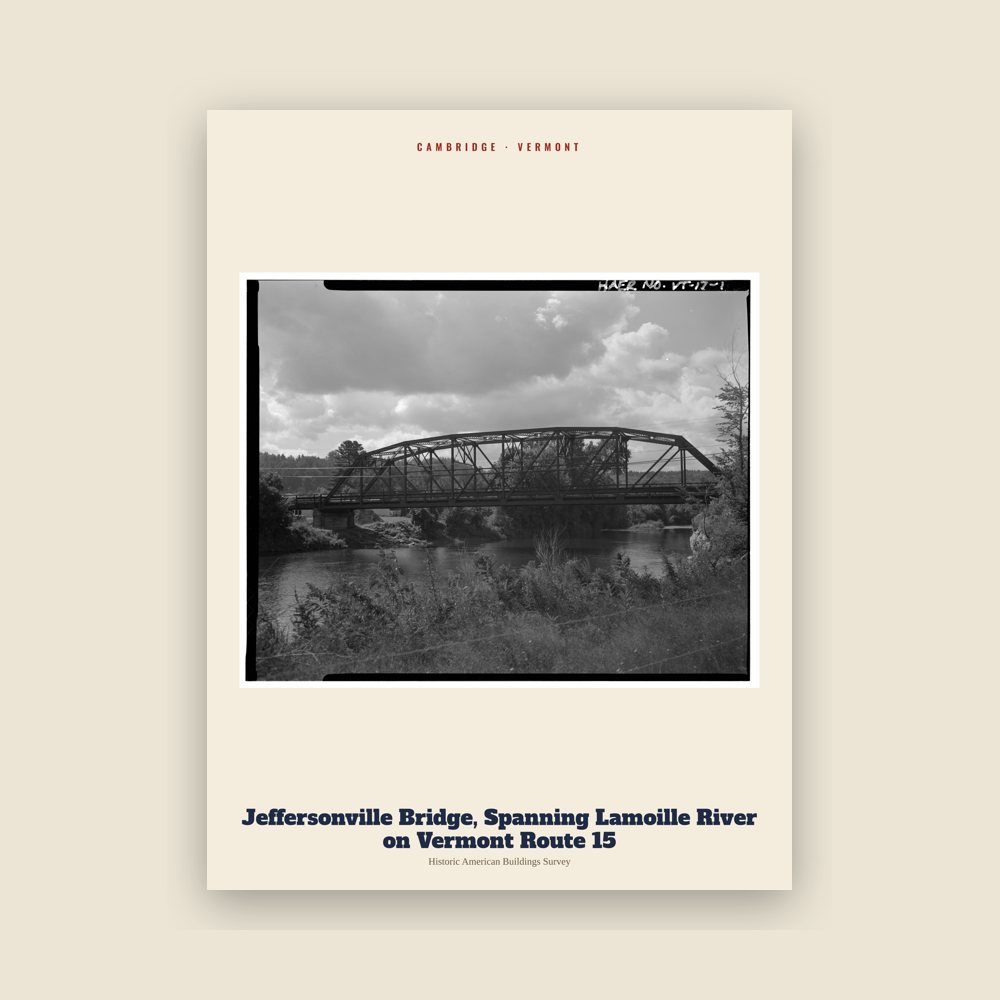
From the Library of Congress collections: a historic survey drawing or photograph of the town
Population 2010: 3,659 → 2020: 3,839
From Wikidata (CC0).
Granted on November 7, 1780, Cambridge was chartered on August 13, 1781, to Samuel Robinson, John Fassett Jr., Jonathan Frost and 64 others. It was first settled in 1783 by John Safford from Piermont, New Hampshire. The valleys proved good but rough, best for grazing livestock. By 1839, the town had about 7,000 sheep. The Lamoille River offered water power for watermills. Industries included one woolen factory, one tannery, and one gristmill, plus several sawmills and cabinet shops.
Cambridge and neighboring Johnson were together known as the King's College Tract, being created by Lieutenant Governor Cadwallader Colden by authority of King George III in 1764. The King's College Tract was reserved for the eventual establishment of a university on the site. The place name "Cambridge" suggests the University of Cambridge in England. Johnson, the other town in the King's College Grant, was named for William Samuel Johnson.
Both the St. Johnsbury & Lake Champlain Railroad and the Burlington & Lamoille Railroad passed through the town. The former is now the Lamoille Valley Rail Trail.
Adapted (trimmed) from the Wikipedia article Cambridge, Vermont, revision 1374161589 by its contributors, licensed CC BY-SA 4.0.
We share a part of every Cambridge sale with local partners, and we'd love to print from your collection. Old photographs, maps and postcards make the best keepsakes.
Partner with us