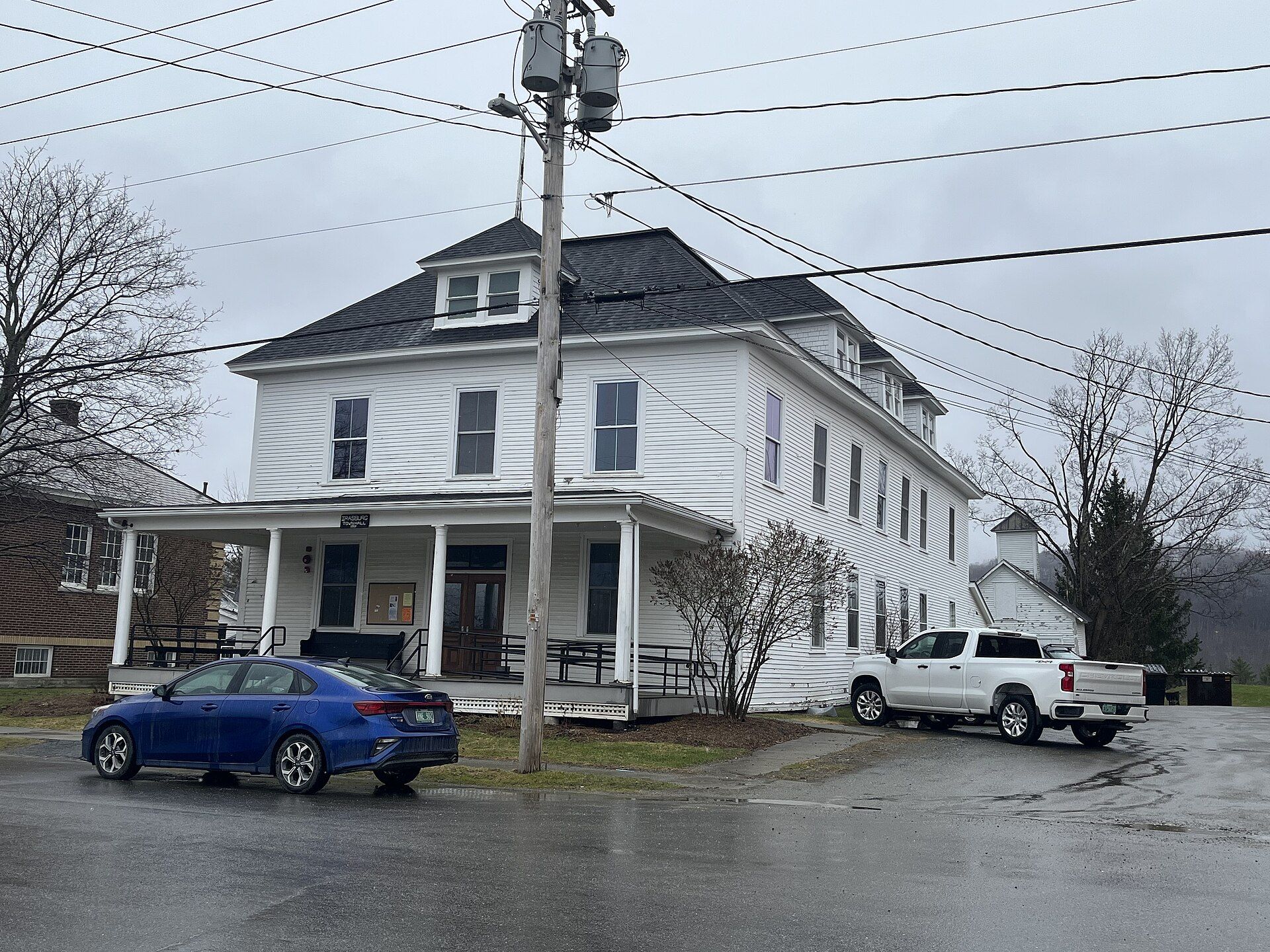
Irasburg was established in 1781 when the land was granted to Ira Allen, Roger Enos, Jerusha Enos, Jerusha Enos, Jr., Roger Enos, Jr. and others by the Vermont General Assembly. Landmarks include Orleans County, Orne Covered Bridge and Irasburg Town Hall. Irasburg is the birthplace of Theodore Robinson, artist.
Every piece is drawn from Irasburg's own map data and historic archives, then printed and shipped from the USA when you order. No two towns look alike.
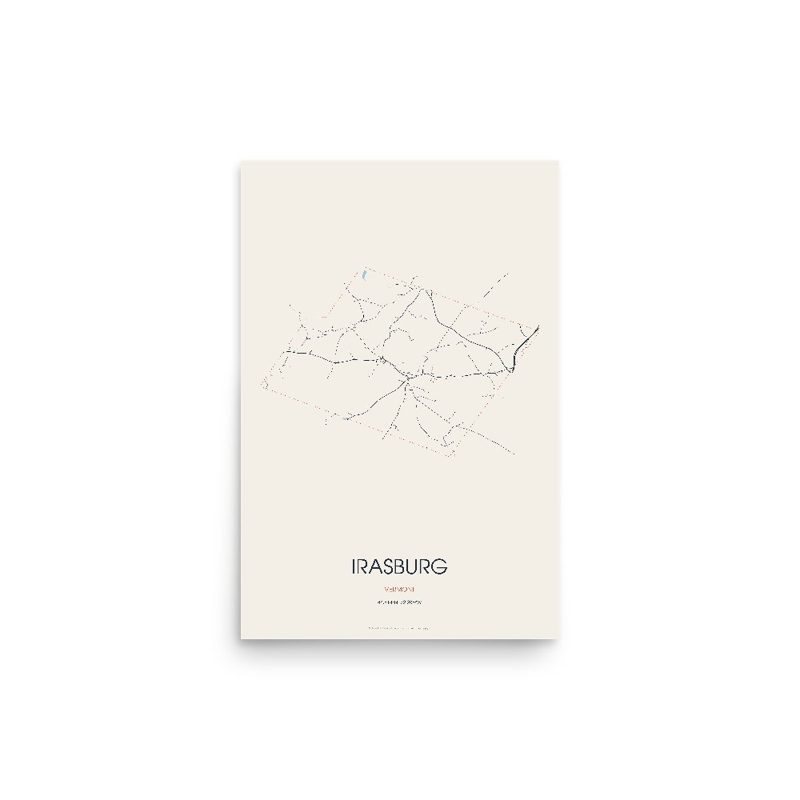
Every road in town, on archival matte paper
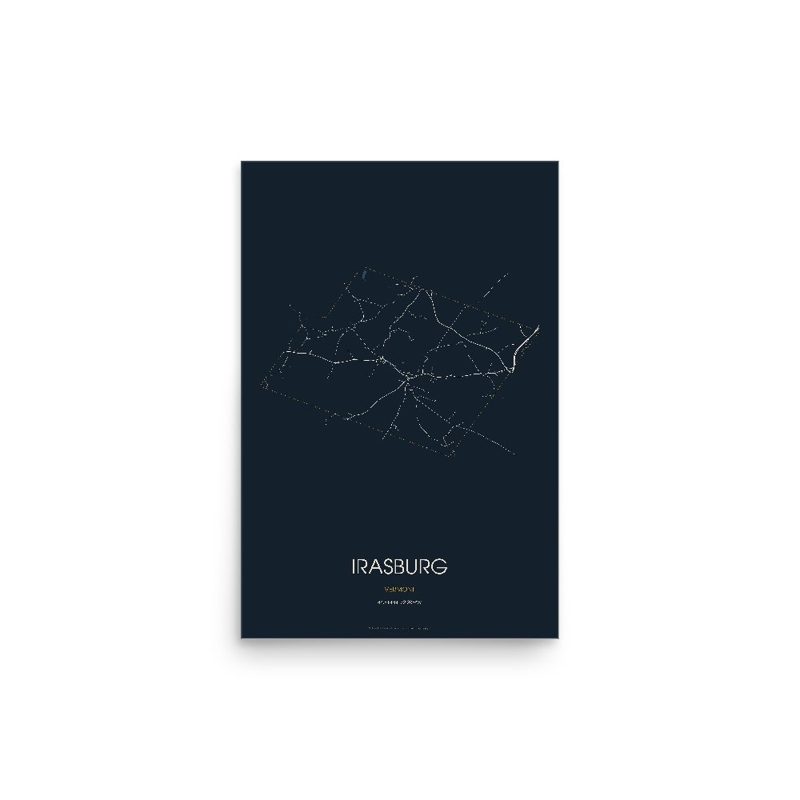
The same map, in navy and silver
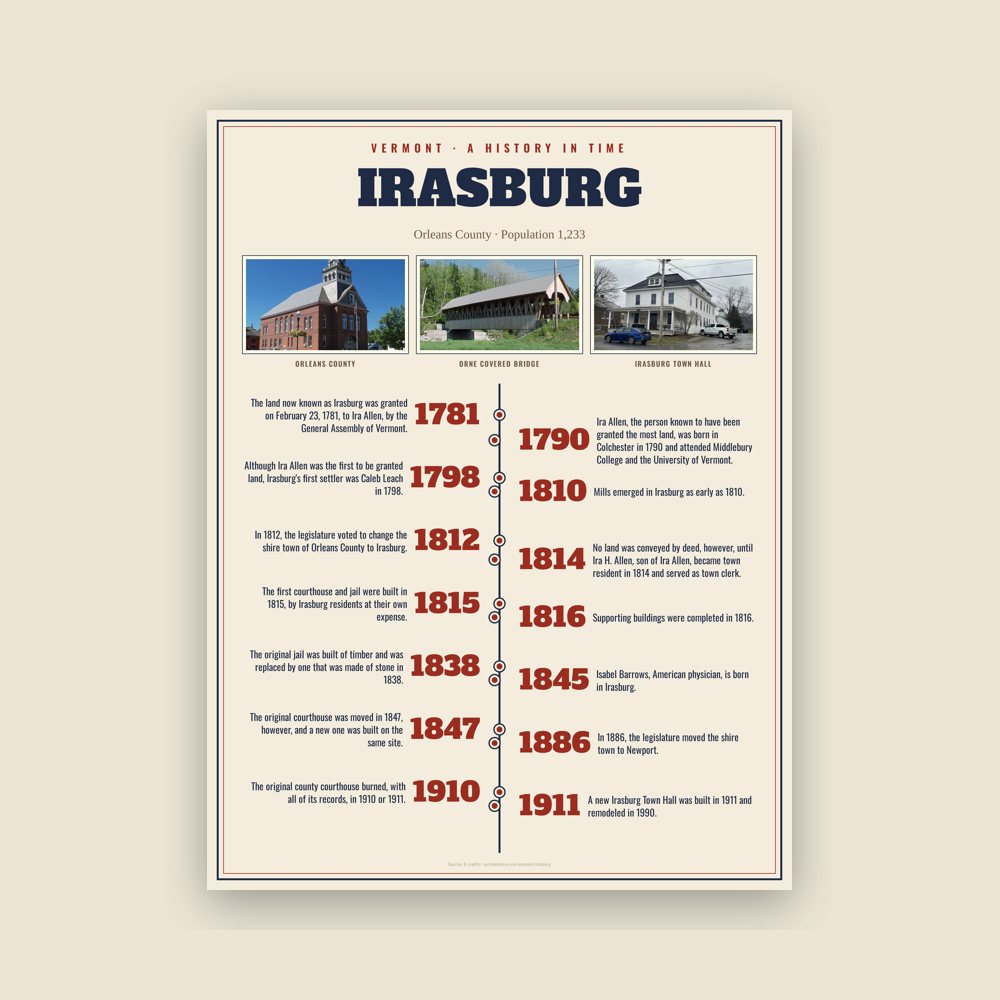
The town's story in dates, from its own records, for home or classroom
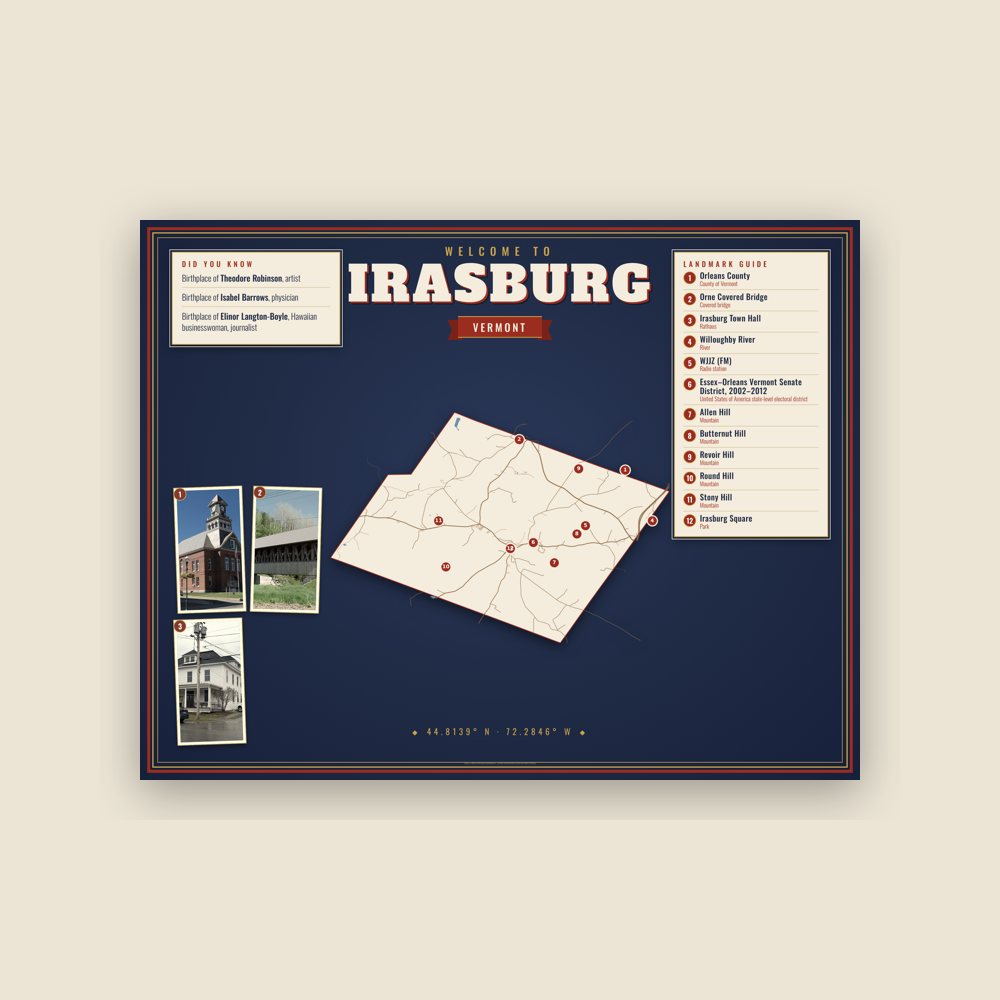
Map of local landmarks, washable fabric
Heavy-blend fleece, street map printed on the back
Soft Bella+Canvas jersey
Glossy ceramic, dishwasher safe
Ceramic keepsake, gold ribbon
Weatherproof, for the front walk
24″×16″, printed coir-look fibers, rubber back
12″×12″ printed wood, ready to hang
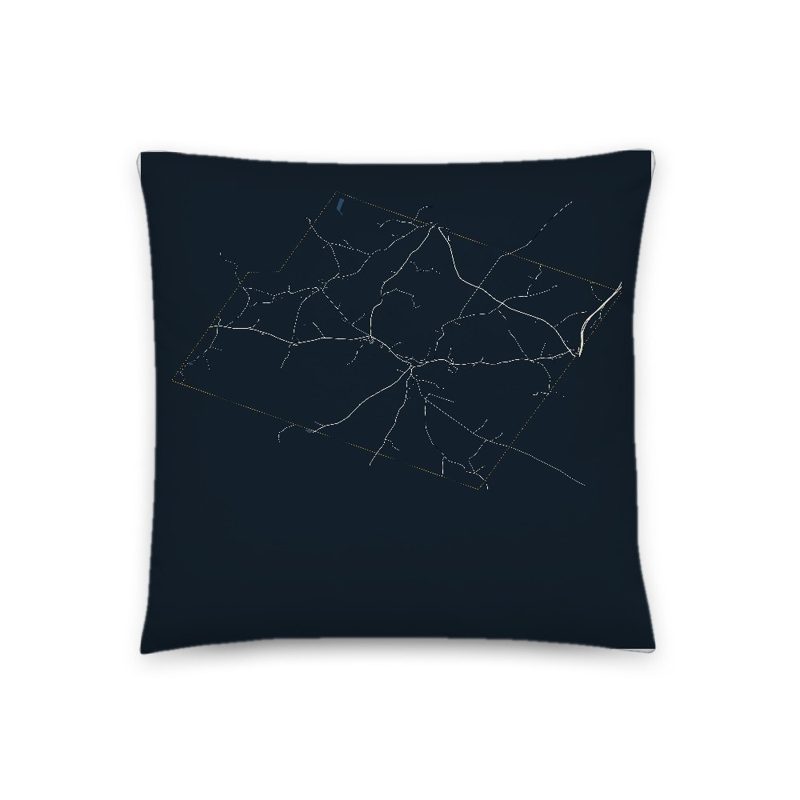
Soft-touch, zip cover
Sturdy all-over-print tote
Glossy top, cork back
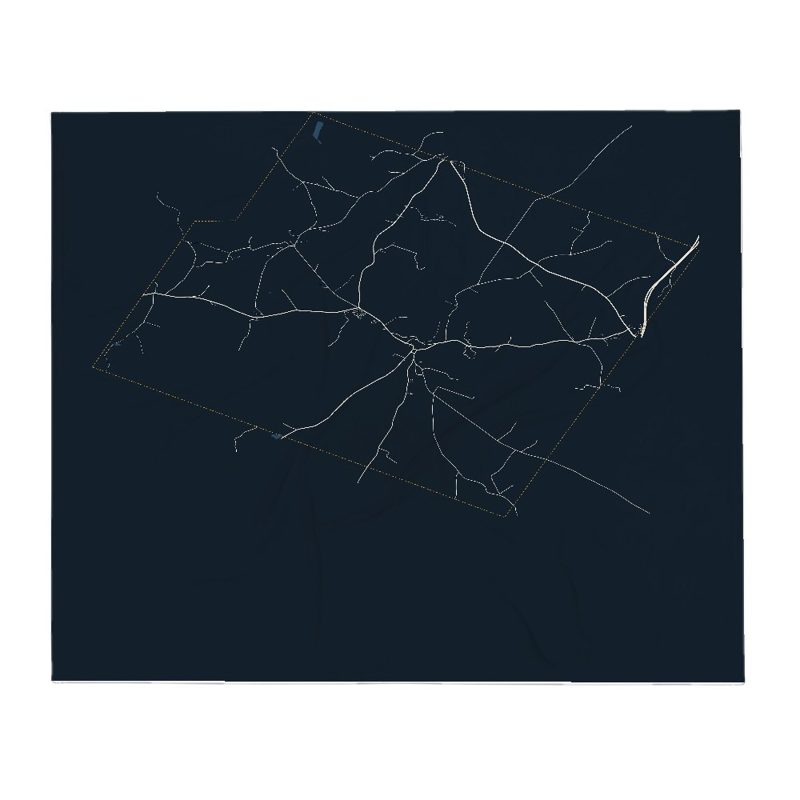
Soft fleece, 50″×60″
20 oz, double-wall stainless
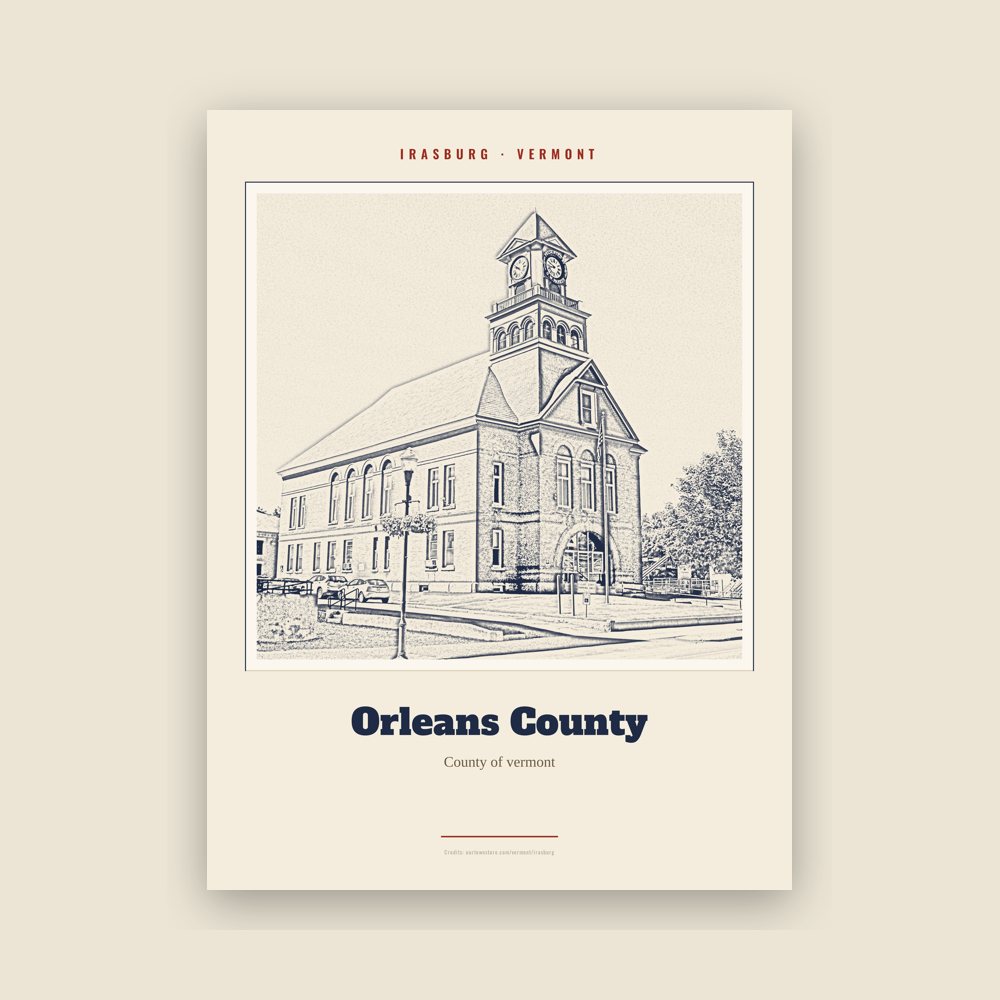
Archival matte print of a local landmark, credited to its photographer
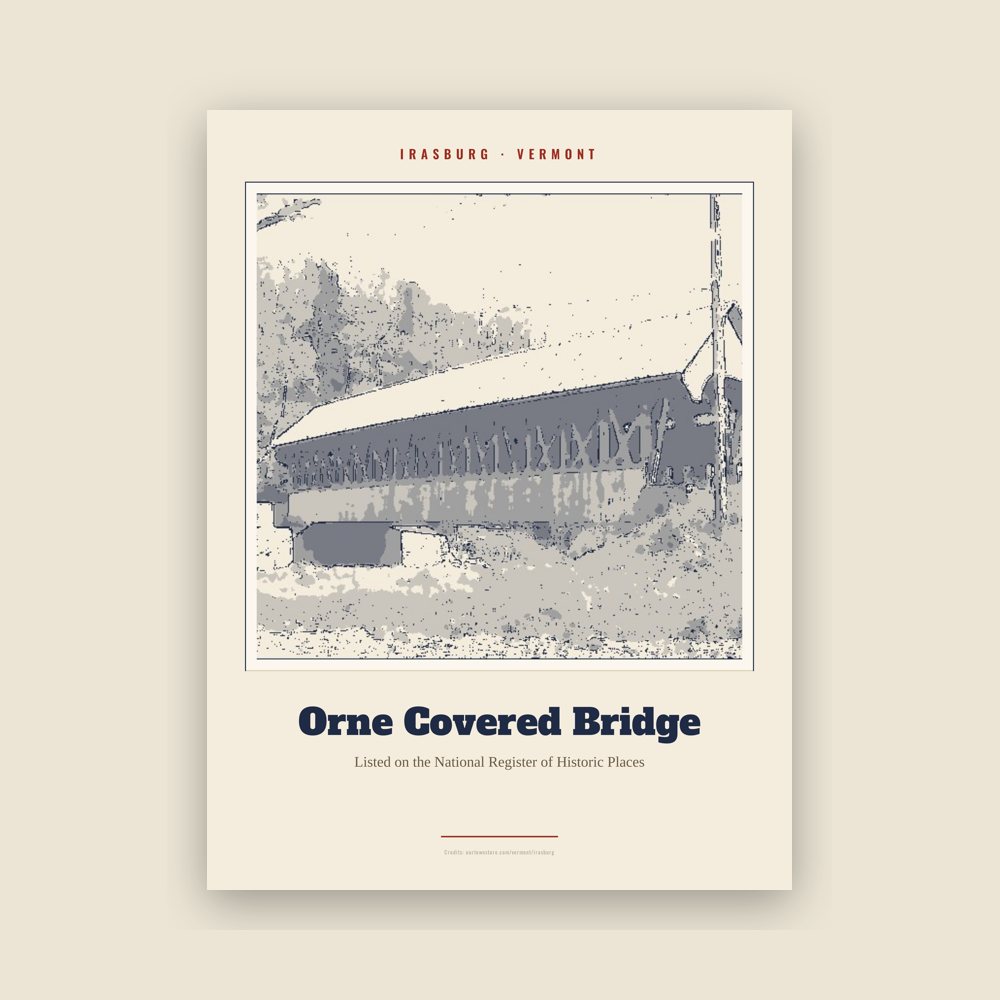
Archival matte print of a local landmark, credited to its photographer
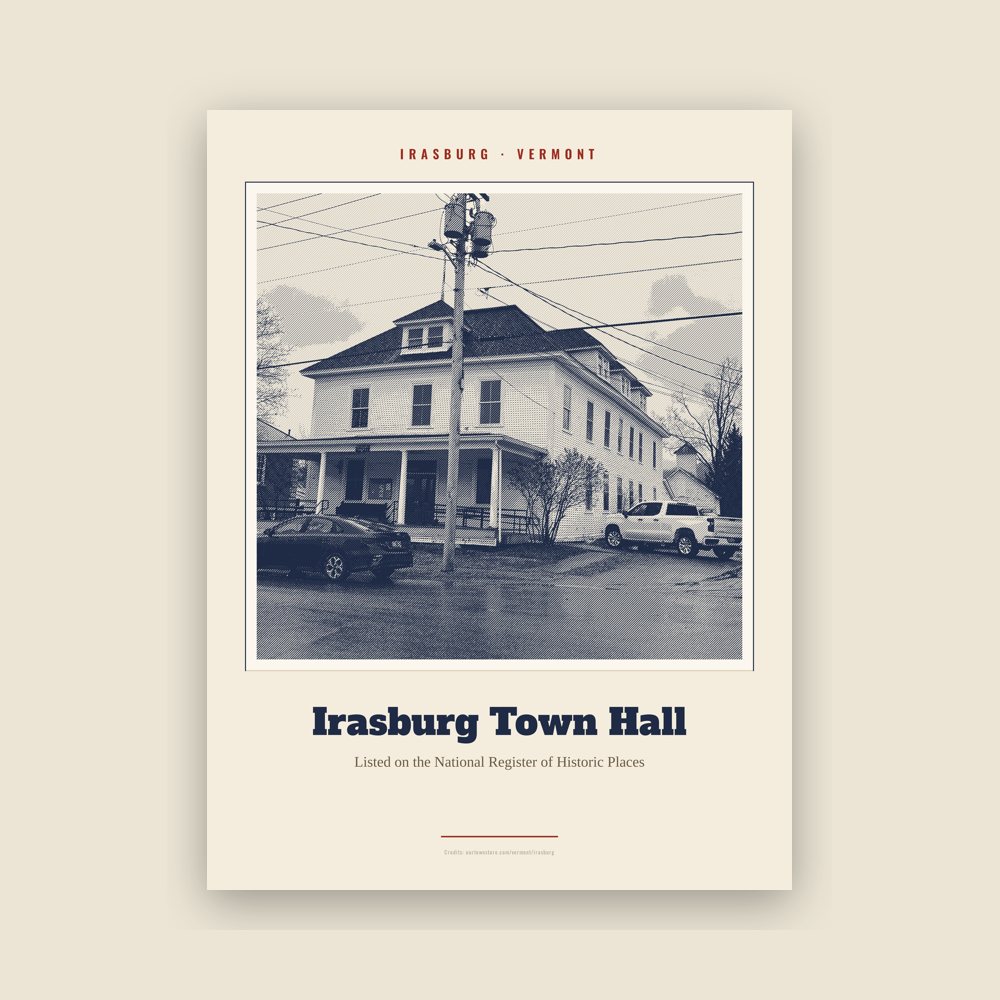
Archival matte print of a local landmark, credited to its photographer
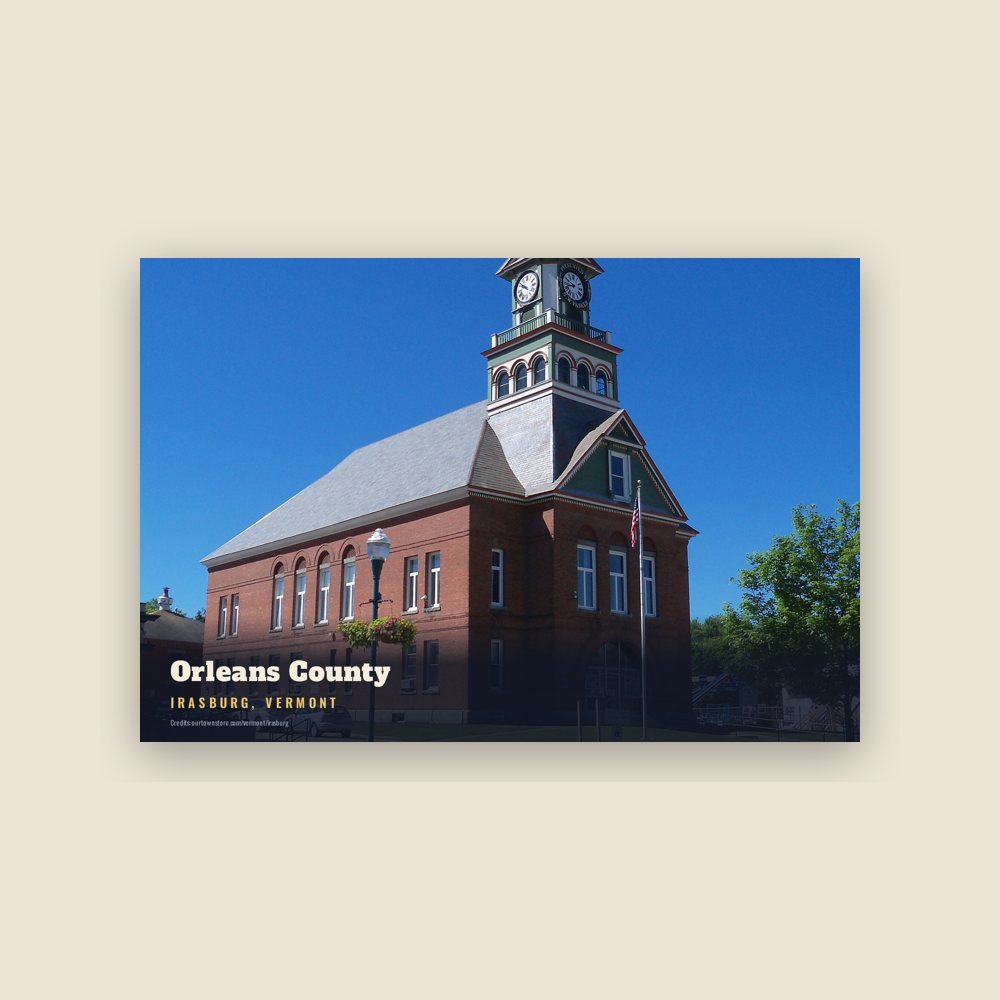
6″×4″ postcard, glossy front
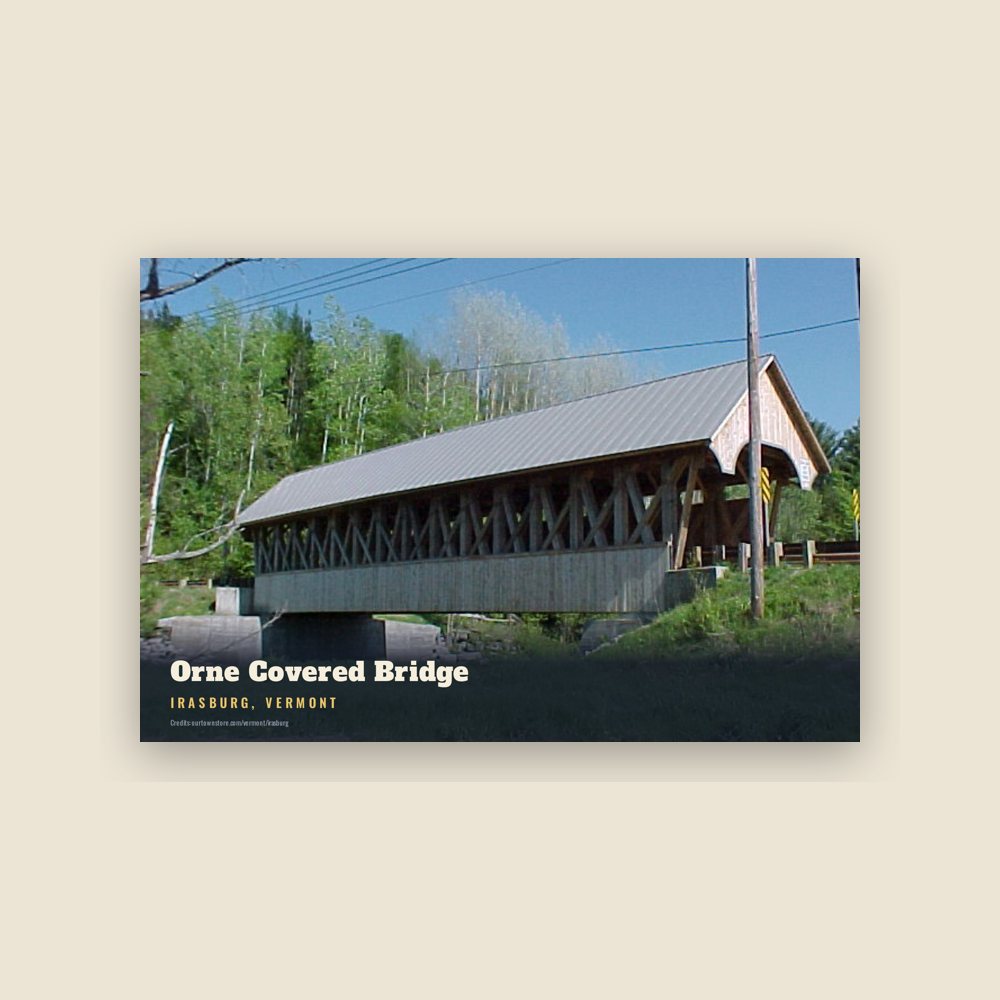
6″×4″ postcard, glossy front
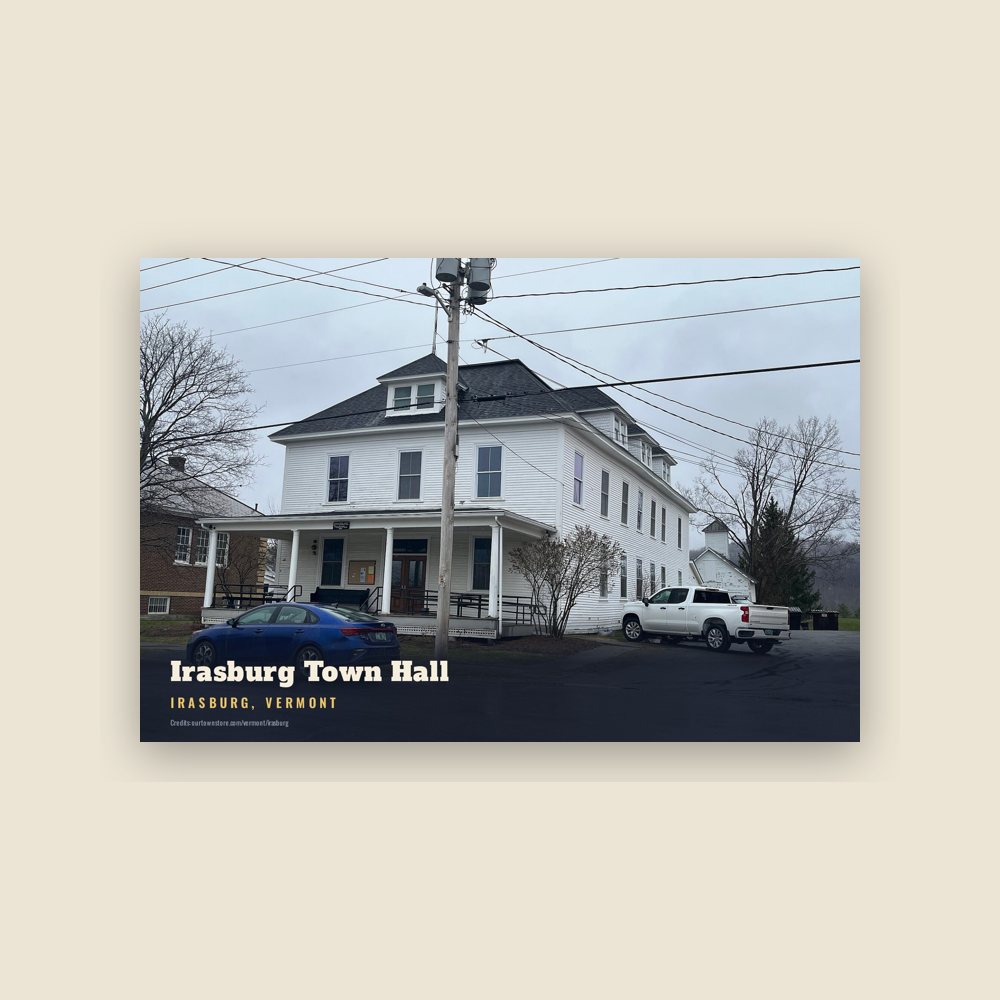
6″×4″ postcard, glossy front
Population 2010: 1,163 → 2020: 1,233
From Wikidata (CC0).
The land now known as Irasburg was granted on February 23, 1781, to Ira Allen, by the General Assembly of Vermont. The lands of Vermont were then claimed by both New Hampshire and New York. The Continental Congress ordered that the land would not be distributed until the inhabitants of New York, New Hampshire, and the land known as "Vermont" had resolved the conflict of who truly owned the land. The General assembly of Vermont ignored this order, however, and Vermont was granted to 40–70 individuals. Ira Allen, the person known to have been granted the most land, was born in Colchester in 1790 and attended Middlebury College and the University of Vermont. The Allens leased the land that they had received to settlers. Although Ira Allen was the first to be granted land, Irasburg's first settler was Caleb Leach in 1798. No land was conveyed by deed, however, until Ira H. Allen, son of Ira Allen, became town resident in 1814 and served as town clerk.
The production of salts and pearl-ashes was the primary industry in Irasburg for the early 19th century. Although there was an embargo, those goods were transported to Canada. There was a large amount of smuggling of the salts and pearl-ashes by the town's residents.
Mills emerged in Irasburg as early as 1810. By the 1820s, the town had begun to prosper as industrial sites began to emerge, which included a woolen mill, tannery, and factory production of stoves and plows.
In 1812, the legislature voted to change the shire town of Orleans County to Irasburg. Supporting buildings were completed in 1816.
In 1812, Irasburg became an Orleans County shire town, as it remained until 1886. In 1886, the legislature moved the shire town to Newport.
The first courthouse and jail were built in 1815, by Irasburg residents at their own expense. The original courthouse was moved in 1847, however, and a new one was built on the same site. The original jail was built of timber and was replaced by one that was made of stone in 1838. It was eventually made of granite in 1862.
The original county courthouse burned, with all of its records, in 1910 or 1911. A new Irasburg Town Hall was built in 1911 and remodeled in 1990.
The town was in the national news in 2010 when it appeared that a moose was going to be destroyed for theoretically carrying disease but mostly because "tamed" wildlife is not allowed in Vermont. The Vermont Legislature crafted a law that spared the moose's life.
Adapted (trimmed) from the Wikipedia article Irasburg, Vermont, revision 1374443013 by its contributors, licensed CC BY-SA 4.0.
We share a part of every Irasburg sale with local partners, and we'd love to print from your collection. Old photographs, maps and postcards make the best keepsakes.
Partner with us