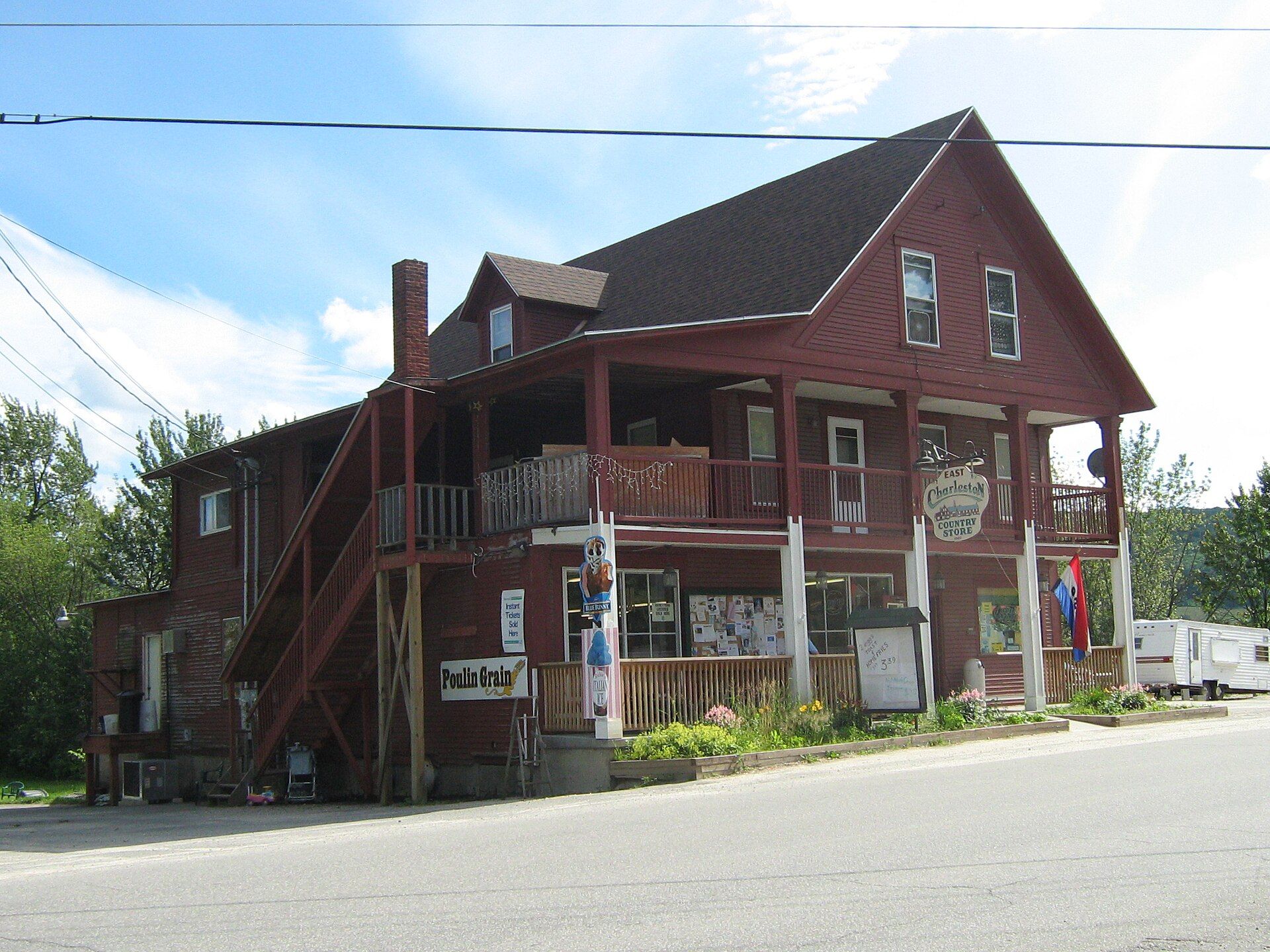
The town contains two unincorporated villages: East Charleston and West Charleston. Landmarks include J. S. Sweeney Store, Barn, Livery and Hall.
Every piece is drawn from Charleston's own map data and historic archives, then printed and shipped from the USA when you order. No two towns look alike.
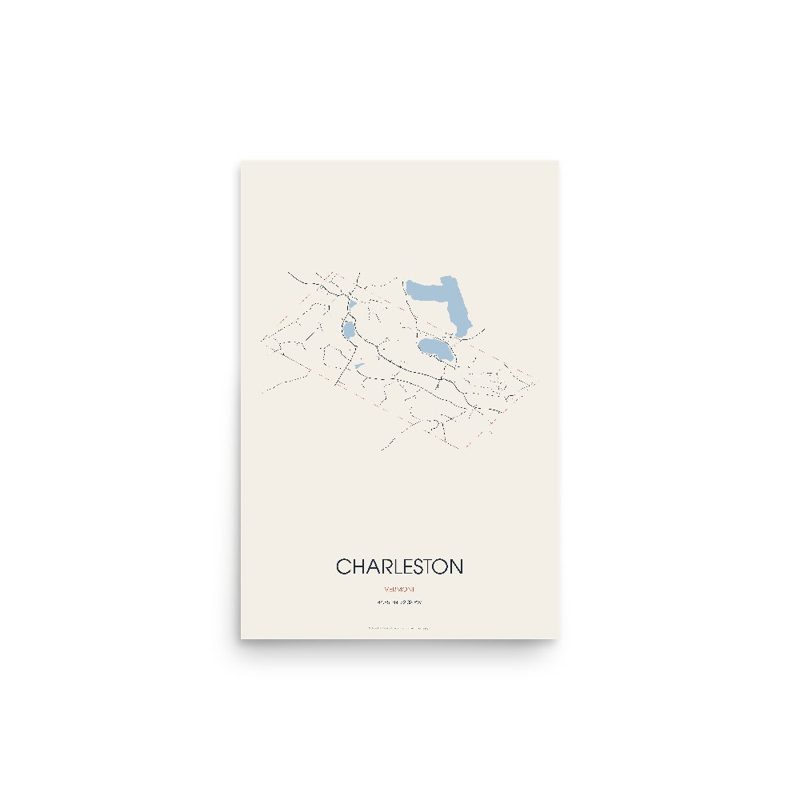
Every road in town, on archival matte paper
The same map, in navy and silver
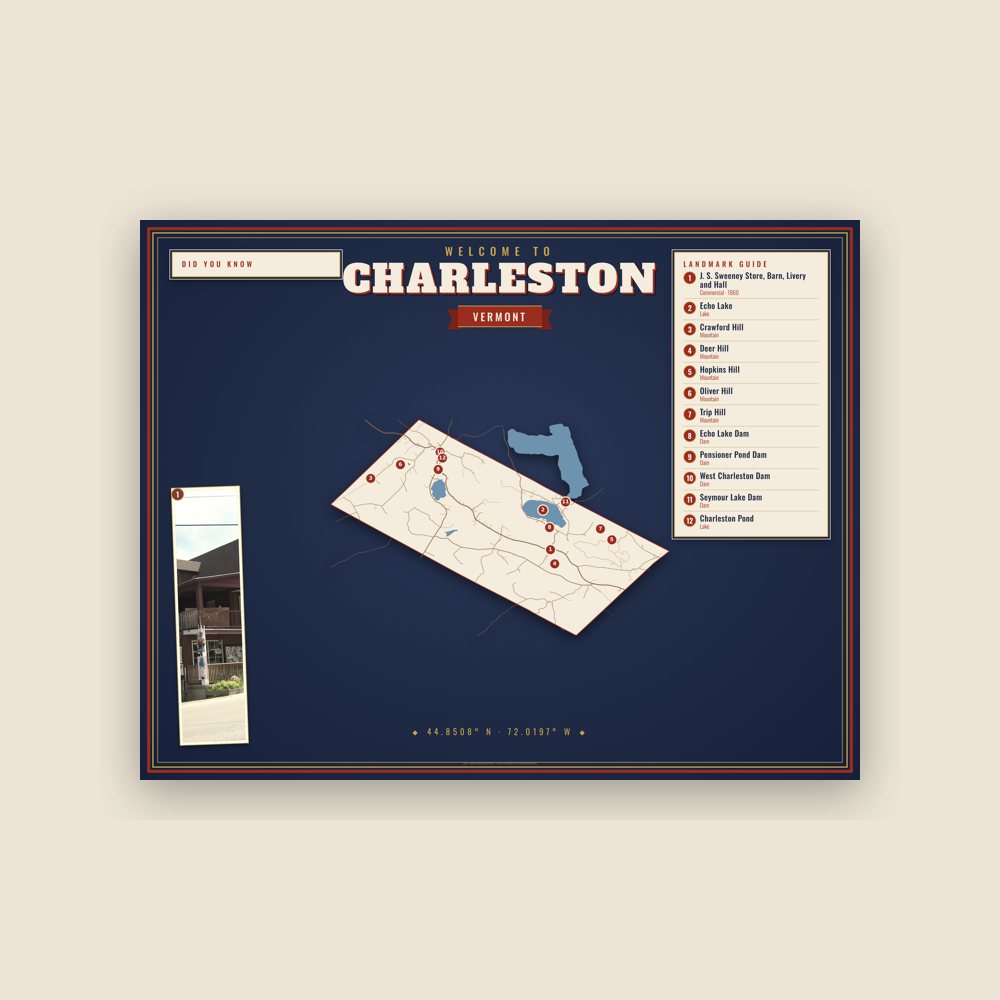
Map of local landmarks, washable fabric
Heavy-blend fleece, street map printed on the back
Soft Bella+Canvas jersey
Glossy ceramic, dishwasher safe
Ceramic keepsake, gold ribbon
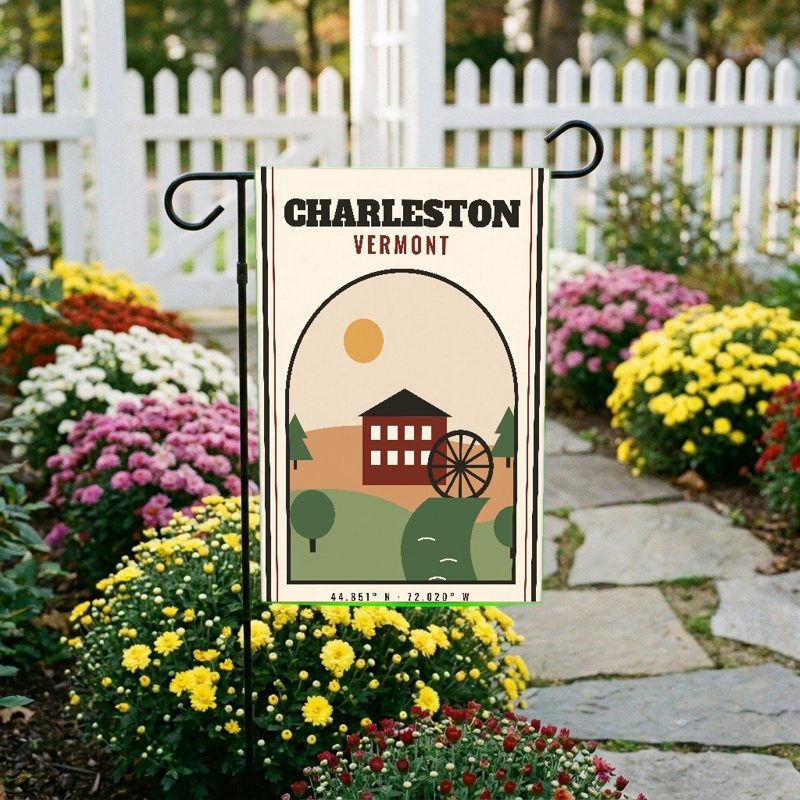
Weatherproof, for the front walk
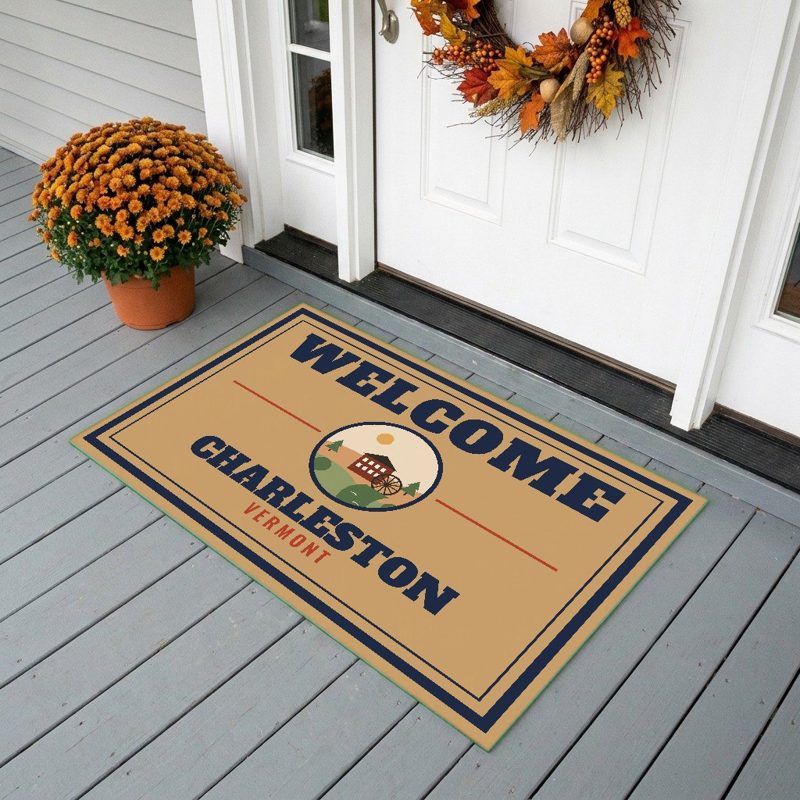
24″×16″, printed coir-look fibers, rubber back
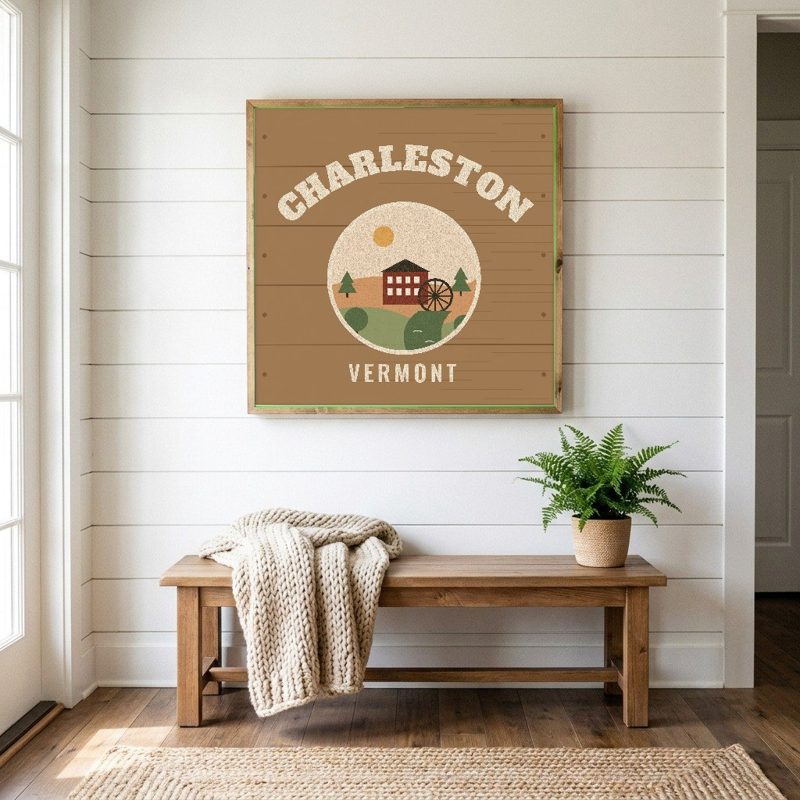
12″×12″ printed wood, ready to hang
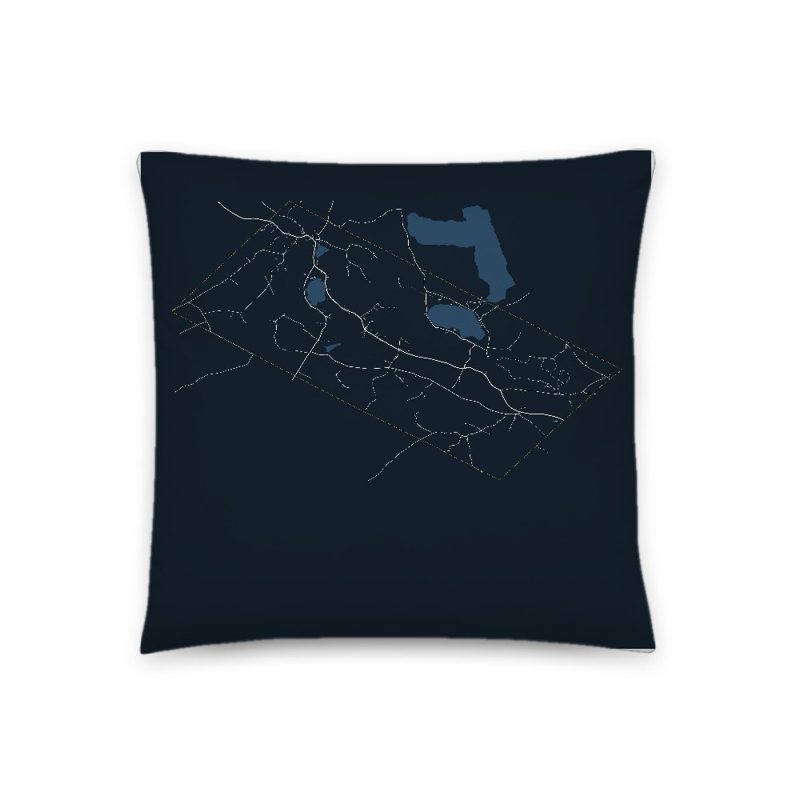
Soft-touch, zip cover
Sturdy all-over-print tote
Glossy top, cork back
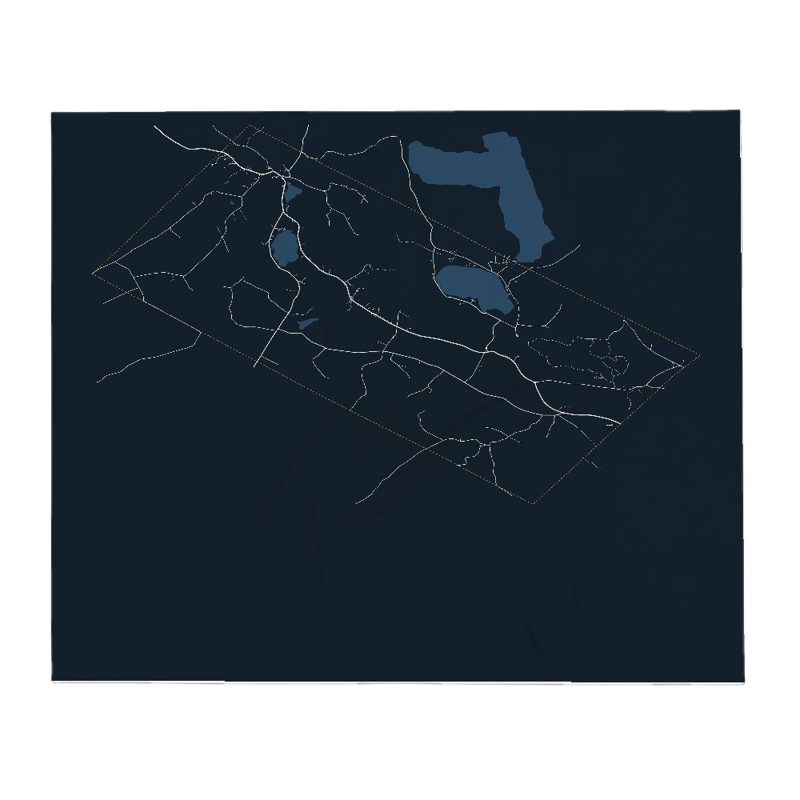
Soft fleece, 50″×60″
20 oz, double-wall stainless
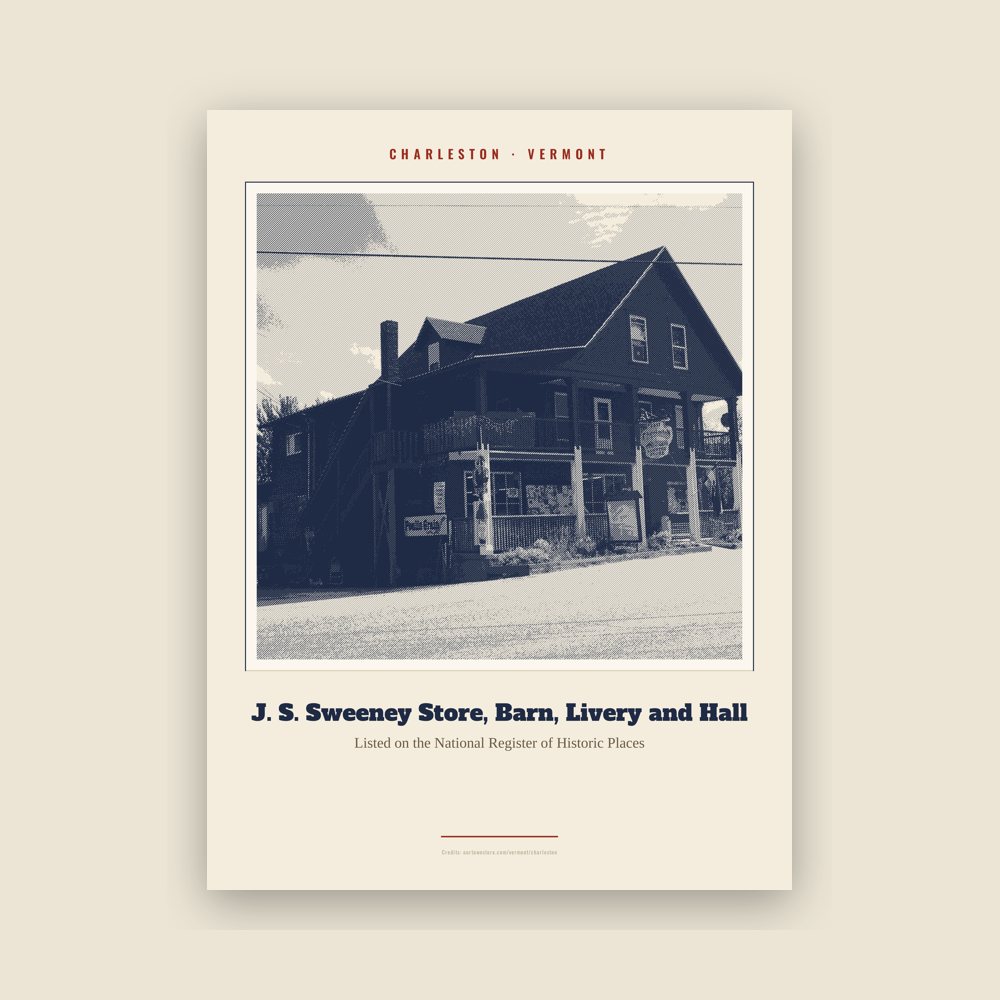
Archival matte print of a local landmark, credited to its photographer
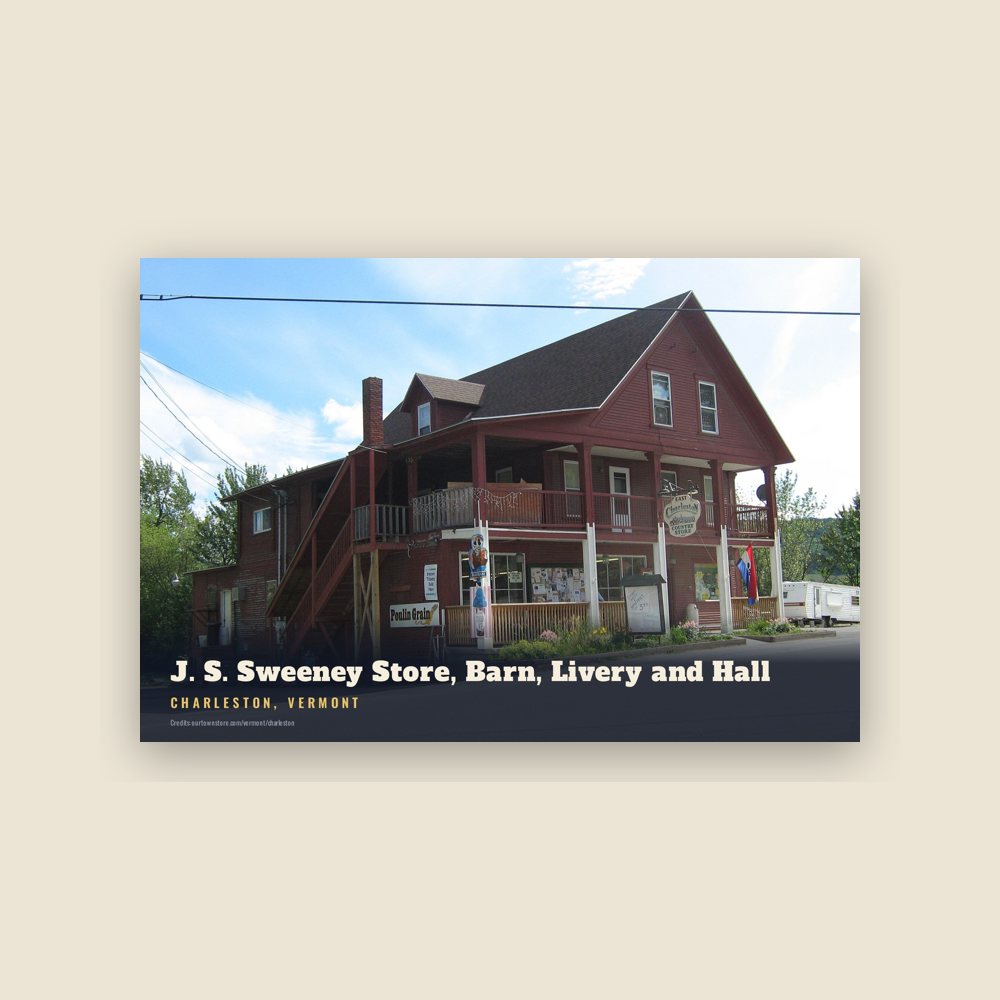
6″×4″ postcard, glossy front
Population 2010: 1,023 → 2020: 1,021
From Wikidata (CC0).
Native Abenakis told of how a large pond "ran away" similar to Runaway Pond in the 1780s before the area was explored by the descendants of Europeans.
Commodore Abraham Whipple was given a grant to the town, along with 50–60 of his shipmates. He called it "Navy". Abner Allen, from Barton, Vermont, was the first settler in 1803.
In 1825, the town of Navy changed its name to Charleston, presumably after a naval battle that had occurred off Charleston, South Carolina.
During the Civil War, Charleston furnished 121 enlisted men, 35 of whom were killed in action or died from the effects of wounds or disease contracted while in the service.
A round barn (not uncommon for the time and place) was erected in Charleston in 1908. It was possibly the largest such structure in New England. The barn burned to the ground in 1918, though the large stone foundation can still be seen along the Ten Mile Square Road.
Adapted (trimmed) from the Wikipedia article Charleston, Vermont, revision 1374267653 by its contributors, licensed CC BY-SA 4.0.
We share a part of every Charleston sale with local partners, and we'd love to print from your collection. Old photographs, maps and postcards make the best keepsakes.
Partner with us