Since 1870
A short history of Willard
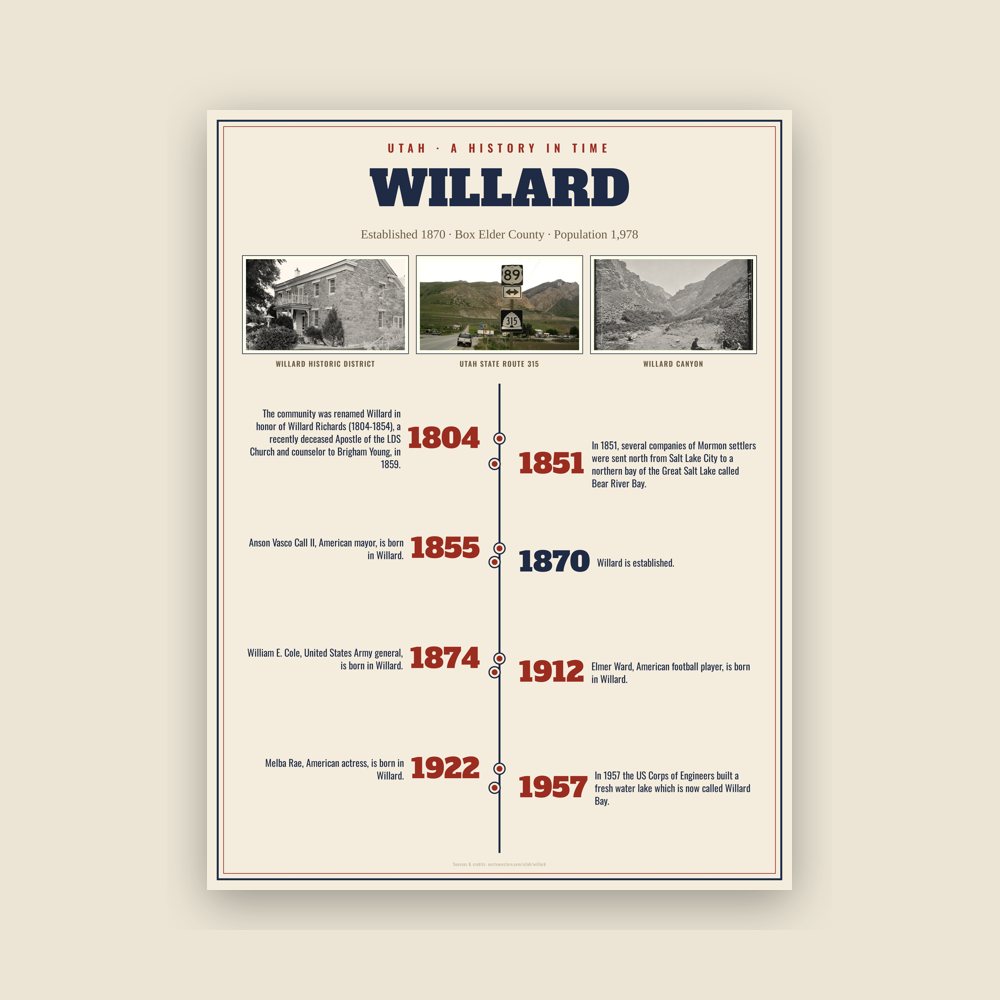
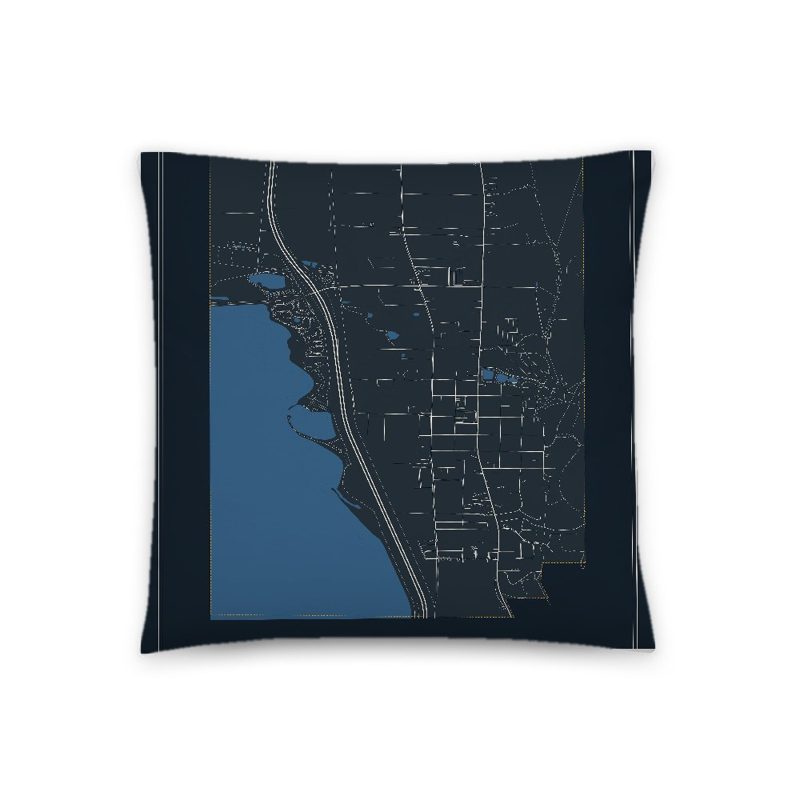
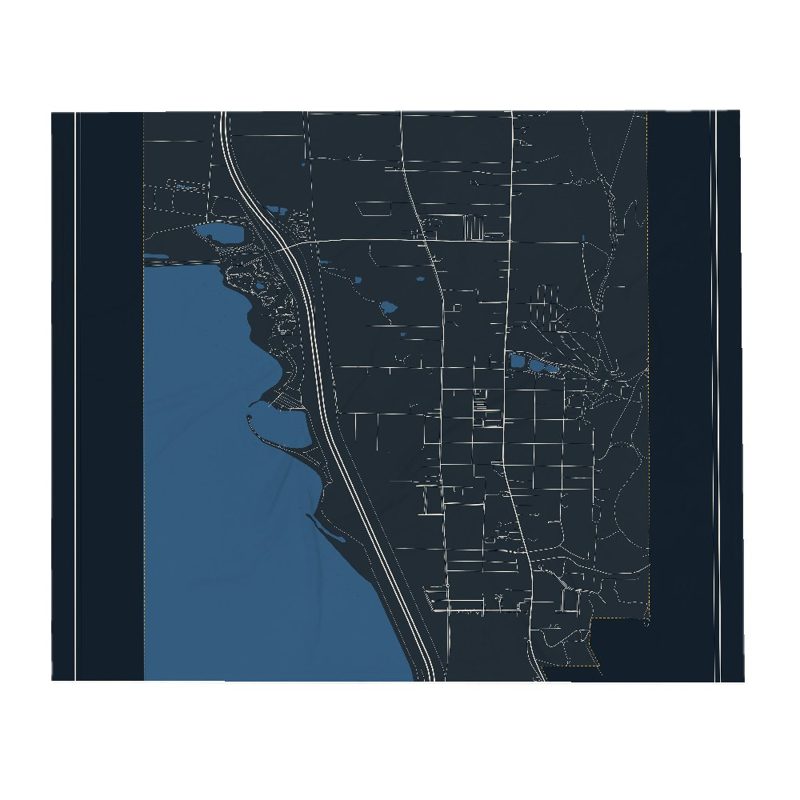
In 1851, several companies of Mormon settlers were sent north from Salt Lake City to a northern bay of the Great Salt Lake called Bear River Bay. In 1957 the US Corps of Engineers built a fresh water lake which is now called Willard Bay. A company of nineteen located on North Willow Creek, 7 miles (11 km) south of the site where Brigham City would be established. Two years later, the infant community relocated two miles further south, and a fort wall was built due to the possibility of attacks by the Shohone and their allies. Willard's first settlers were mostly of Welsh, English, Scottish and Dutch descent. Most were farmers, but some were merchants, carpenters, blacksmiths and school teachers. Historically, the economy of Willard centered on agriculture, with fruit crops being the major product. Gravel excavation and worked stone have also been a significant source of income.
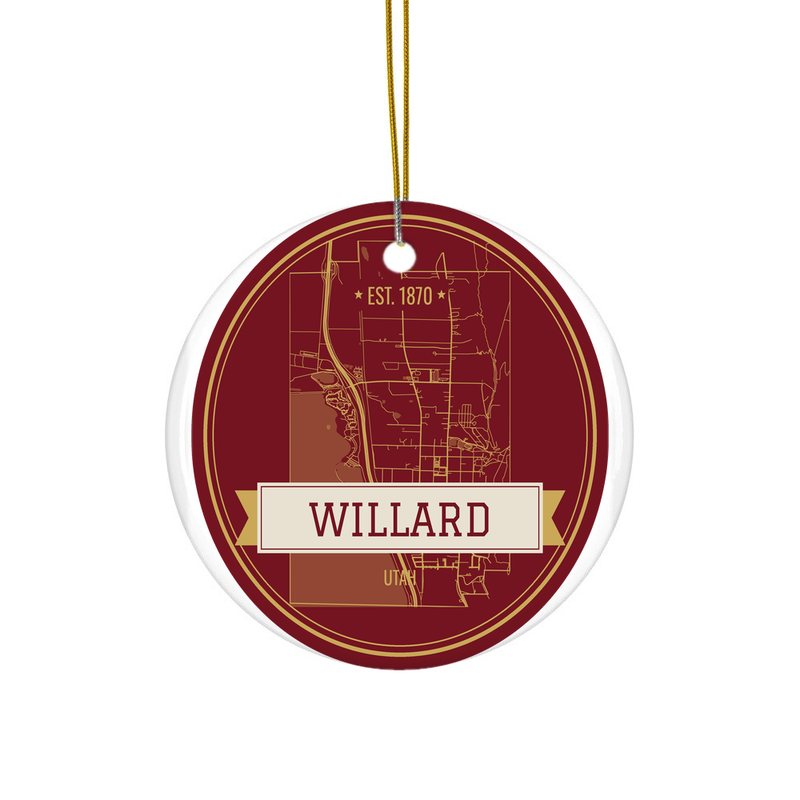
Henry G. Sherwood surveyed North Willow Creek in 1851. The community was renamed Willard in honor of Willard Richards (1804-1854), a recently deceased Apostle of the LDS Church and counselor to Brigham Young, in 1859. Willard received its charter as a city in 1870.
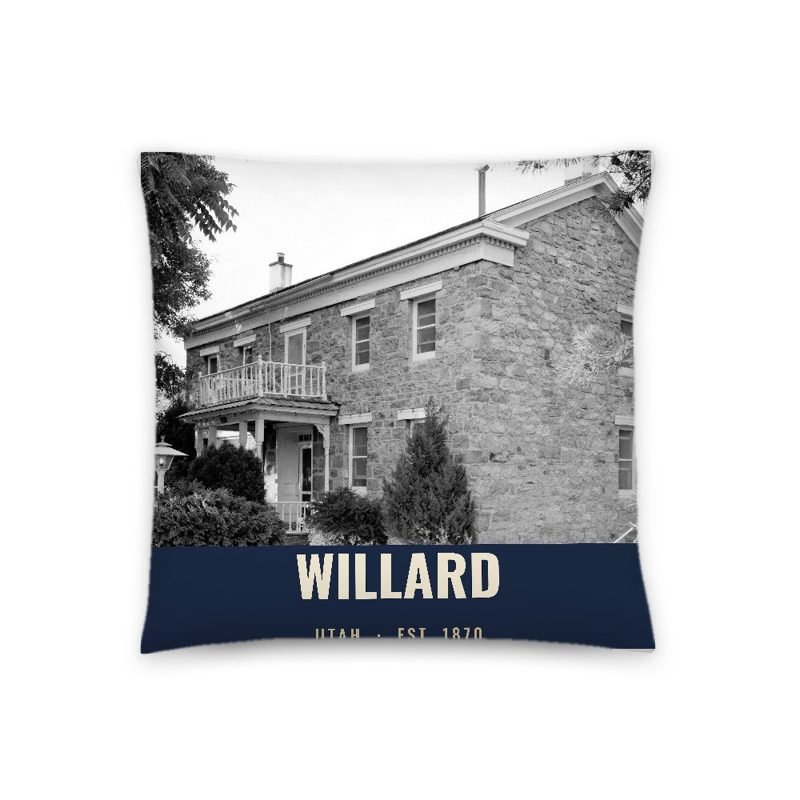
Gifted stonemason Shadrack Jones took advantage of local rock cliffs and the alluvial fan exposed as ancient Lake Bonneville receded. Between 1862 and 1883, he mined the local stone and built single-family homes. Over thirty still stand and many are listed on the National Register of Historic Places as contributing buildings in the Willard Historic District. Other early structures included a brick yard, the first grist mill in Box Elder County, and a number of molasses mills.
Adapted (trimmed) from the Wikipedia article Willard, Utah, revision 1379647971 by its contributors, licensed CC BY-SA 4.0.
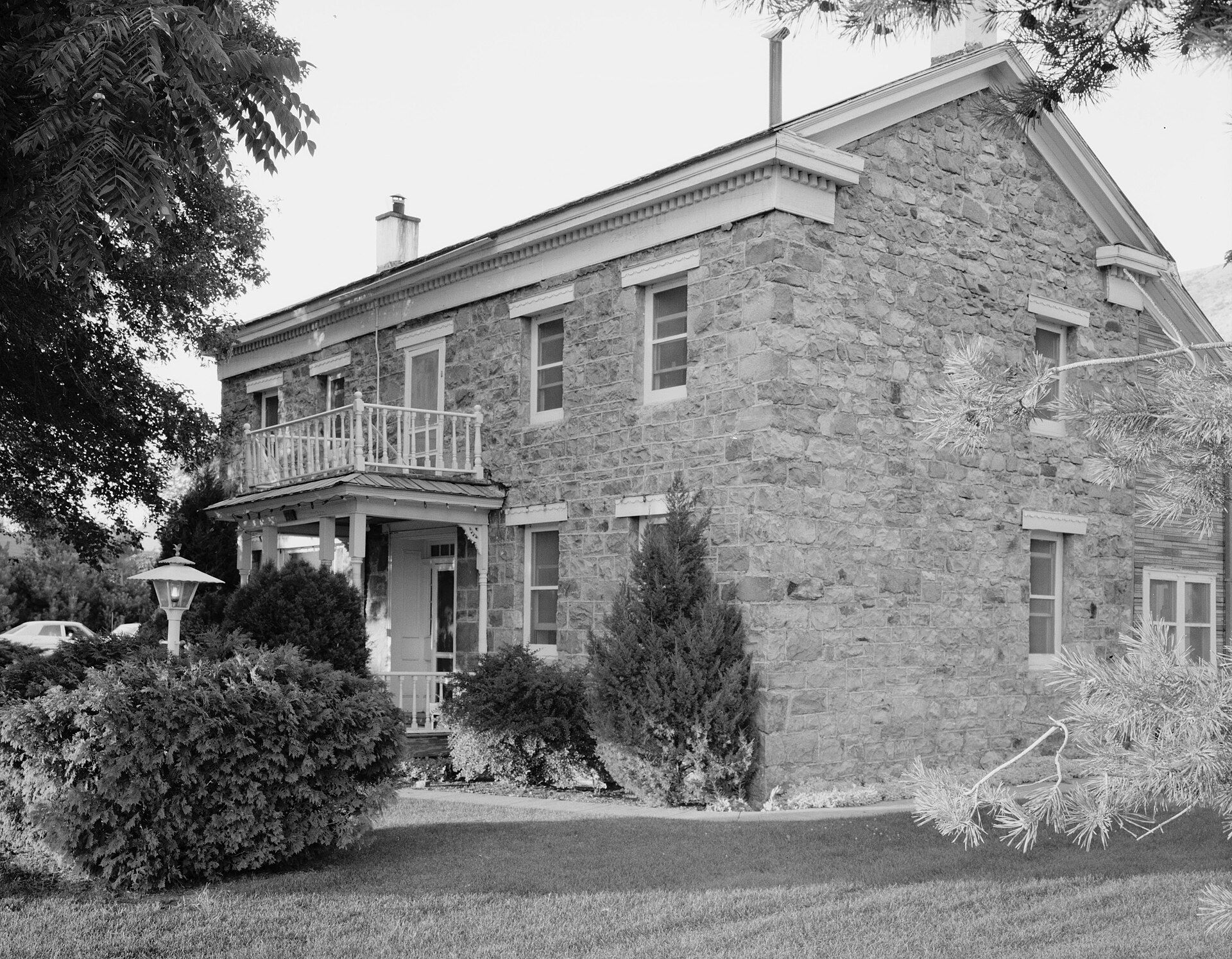
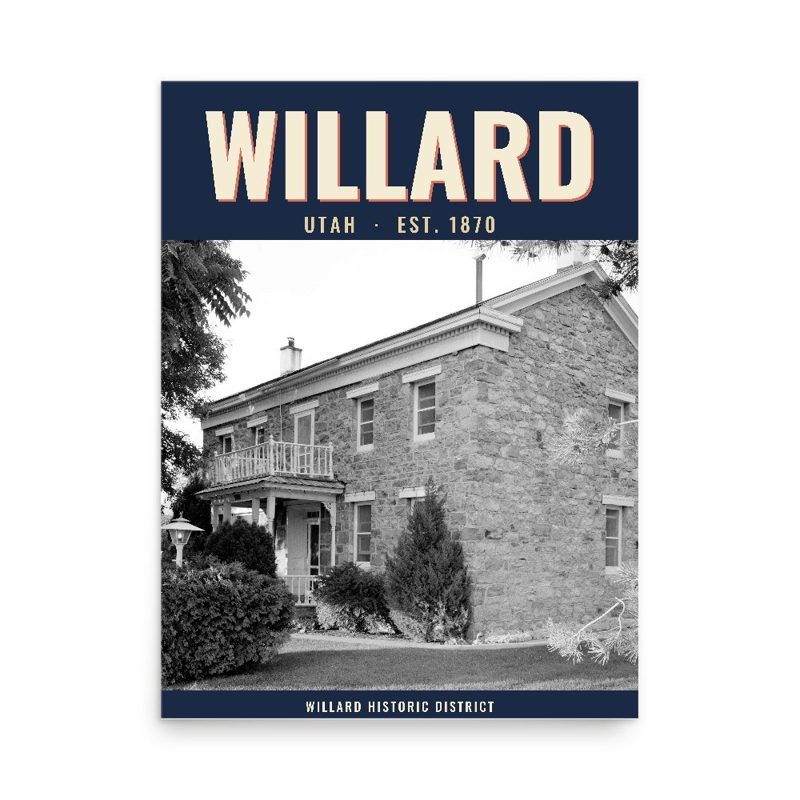
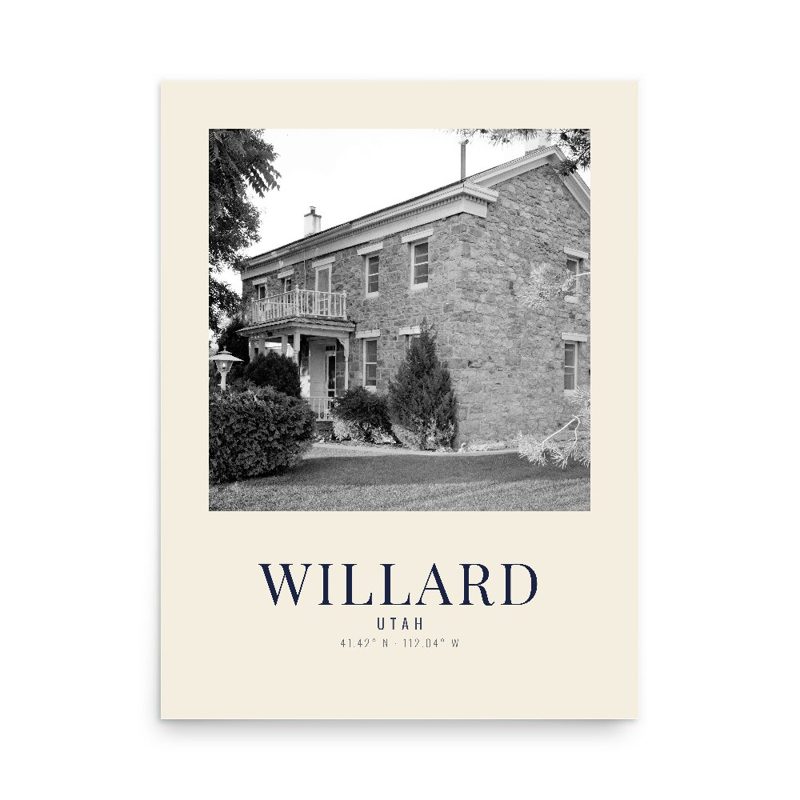
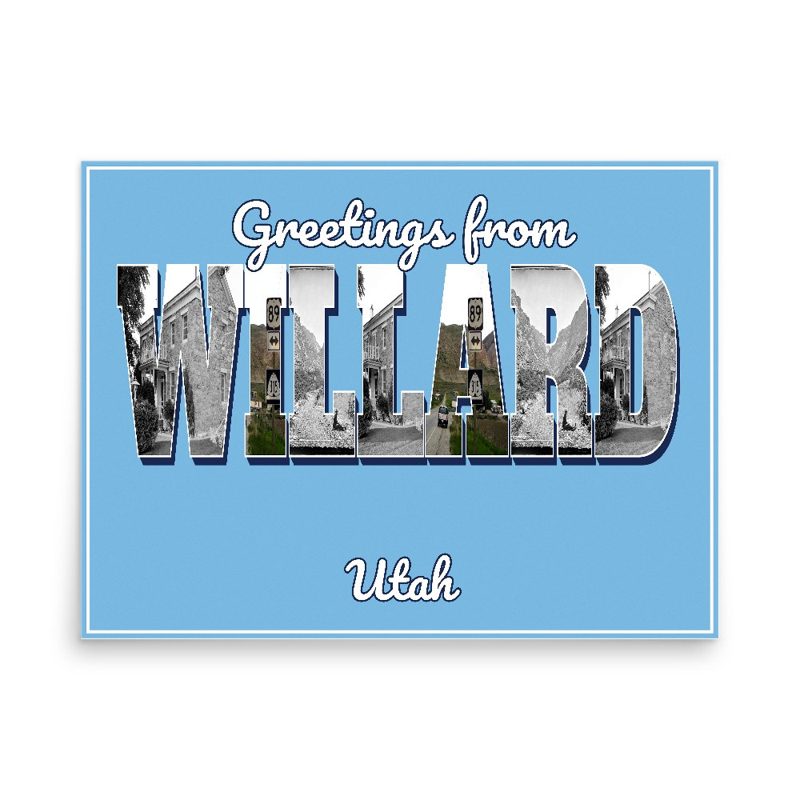
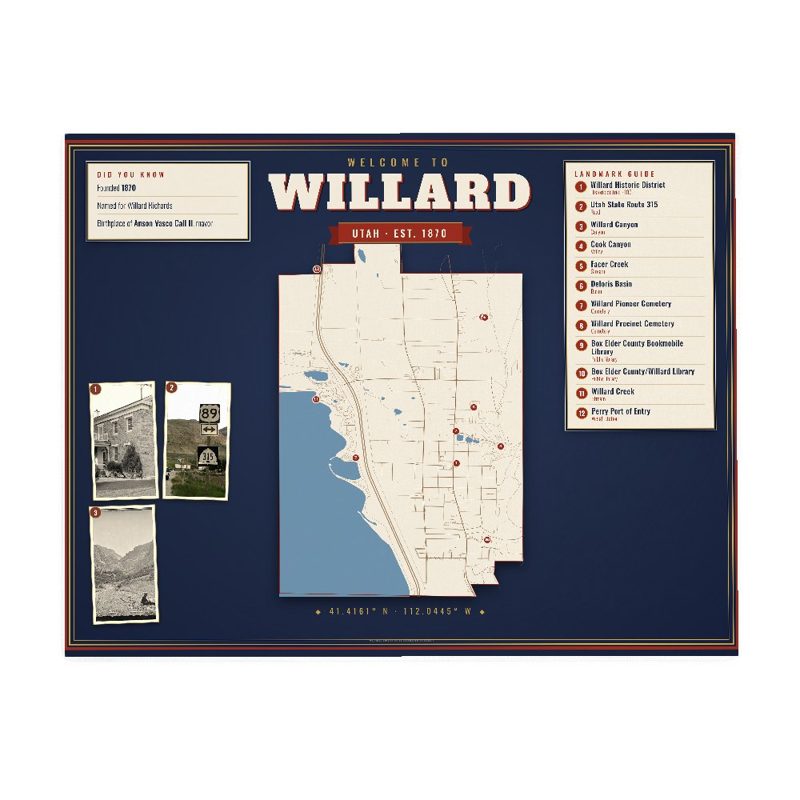


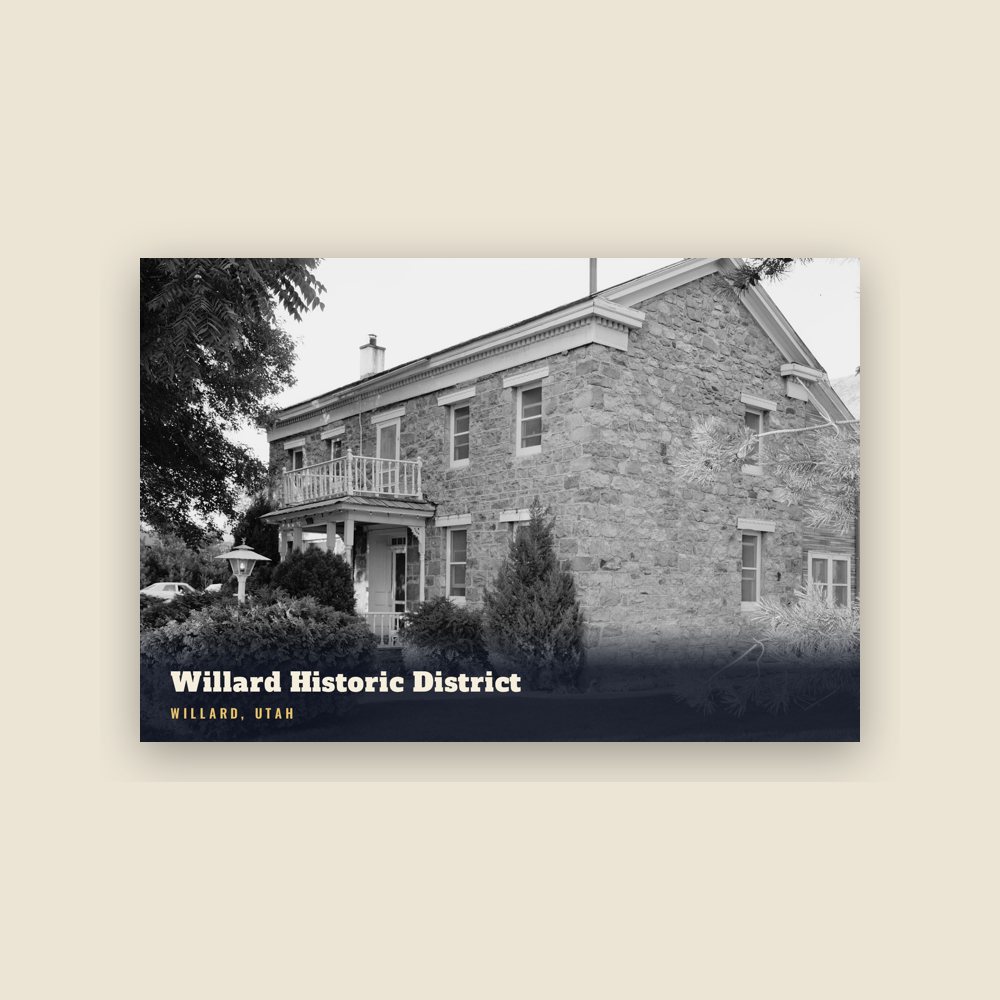
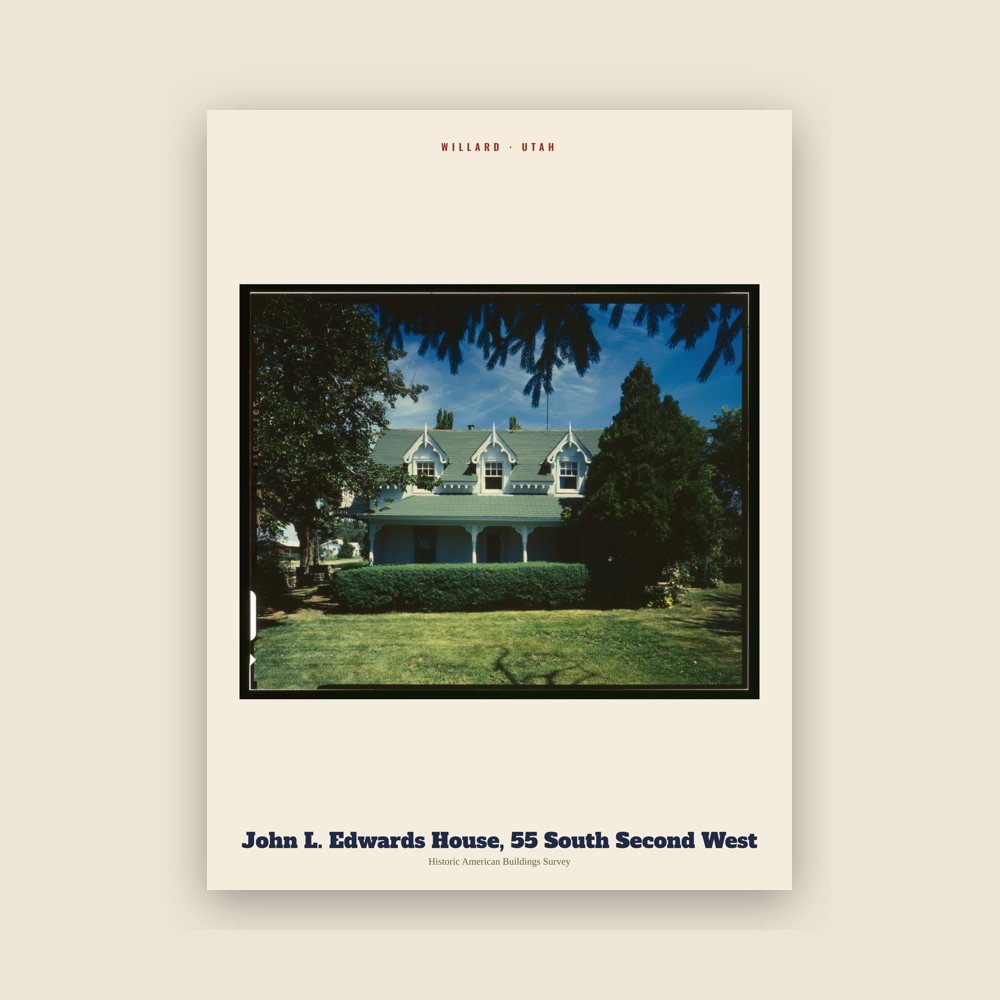
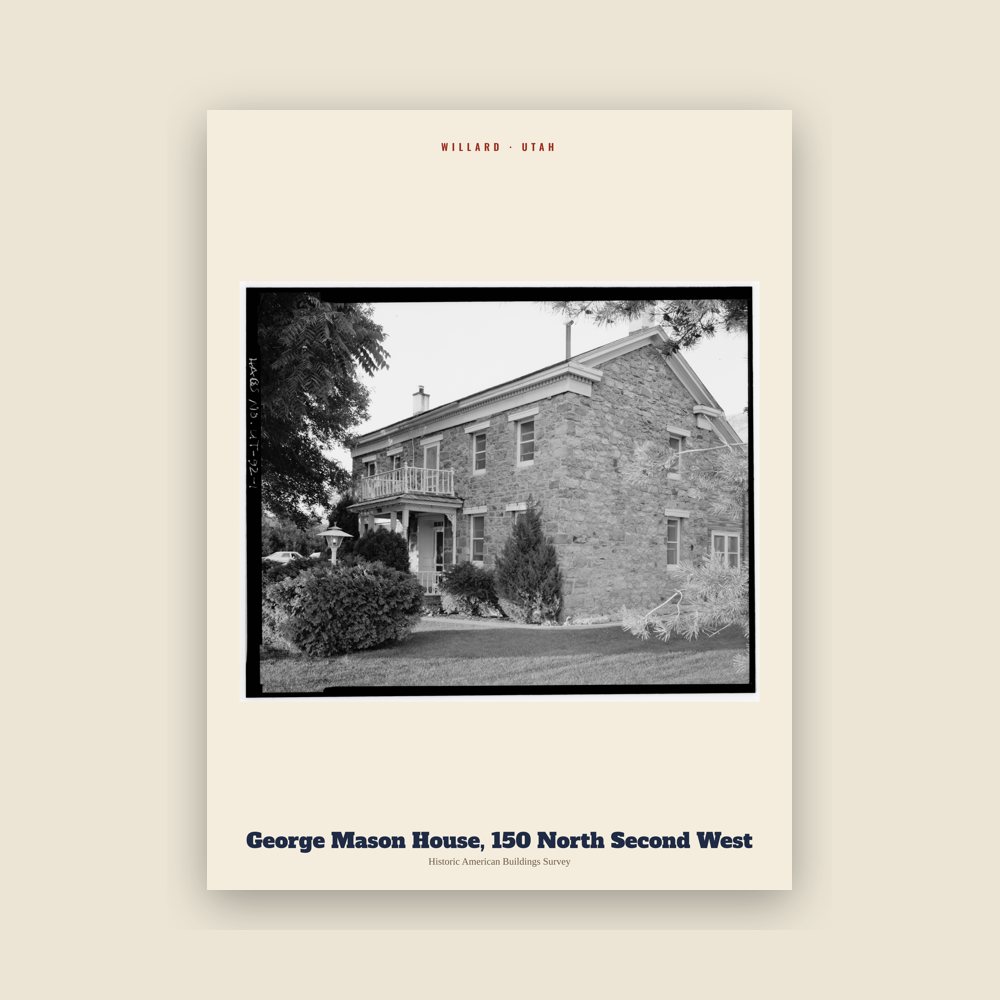
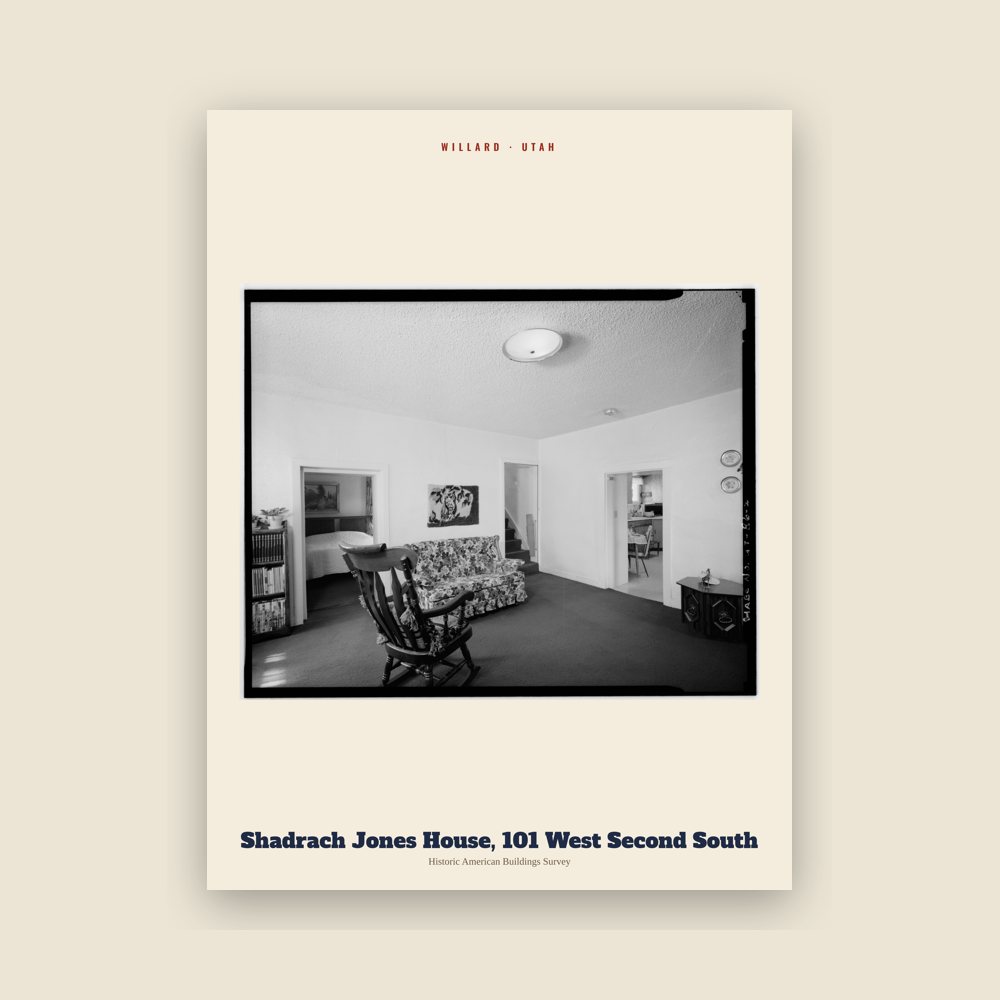
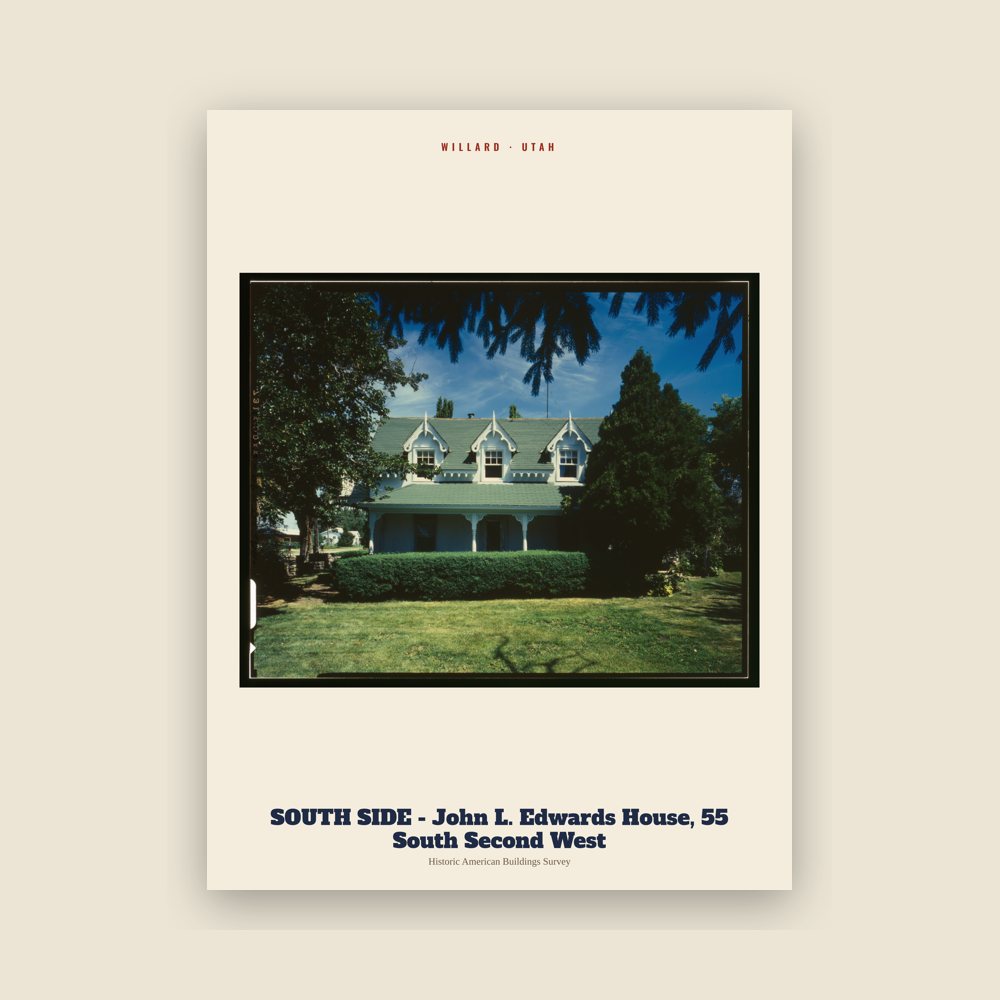
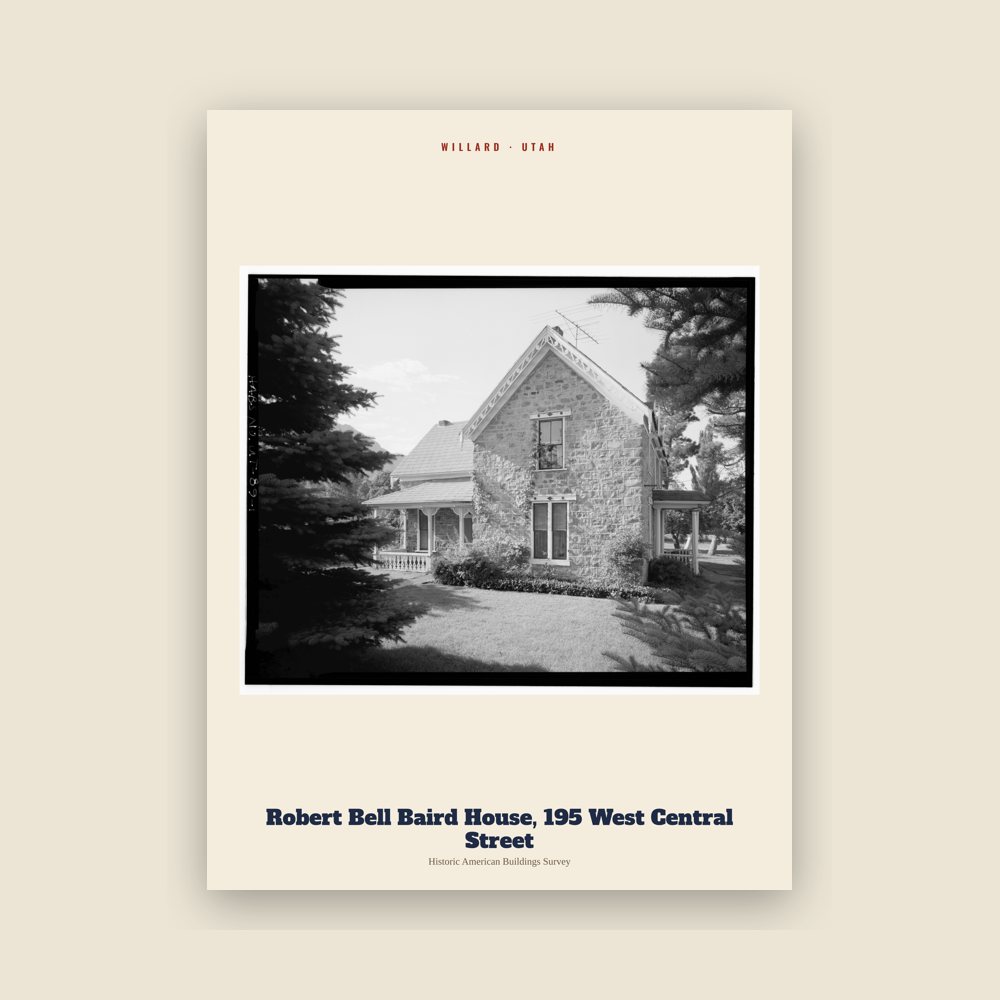
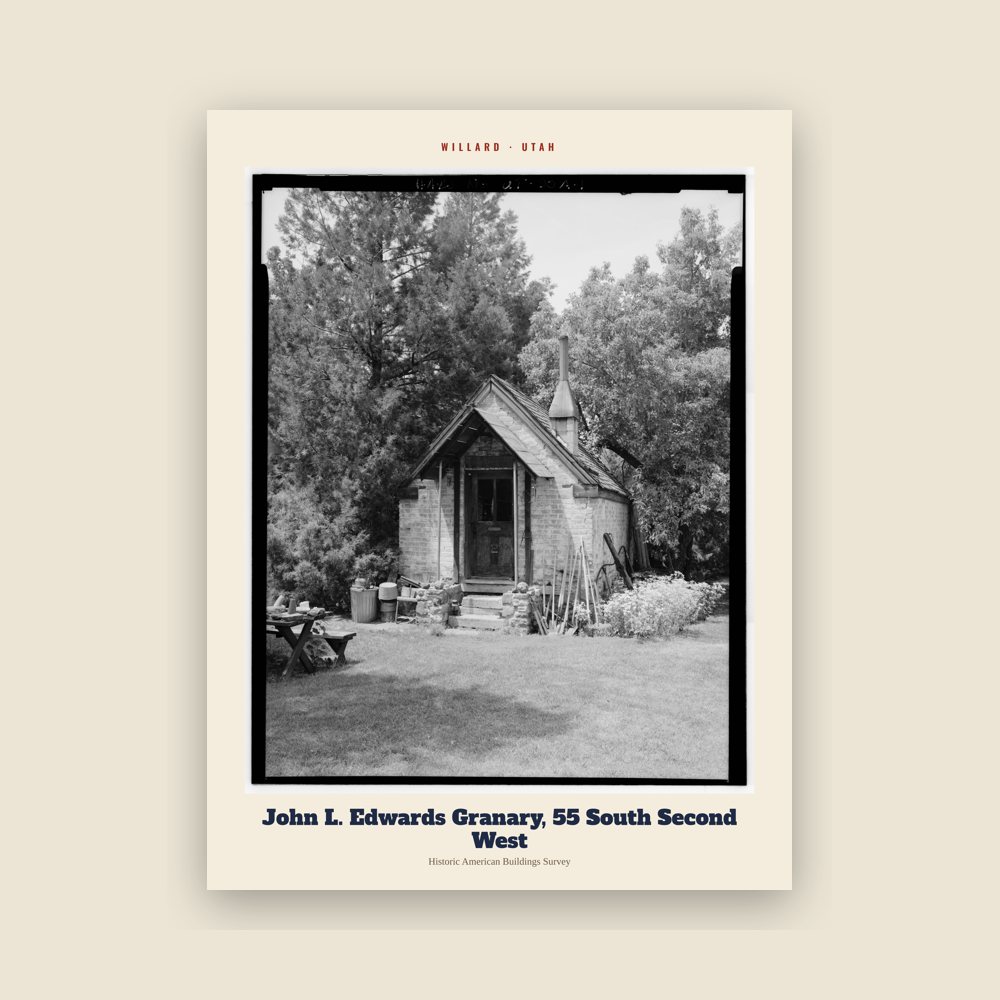
 Willard Historic District
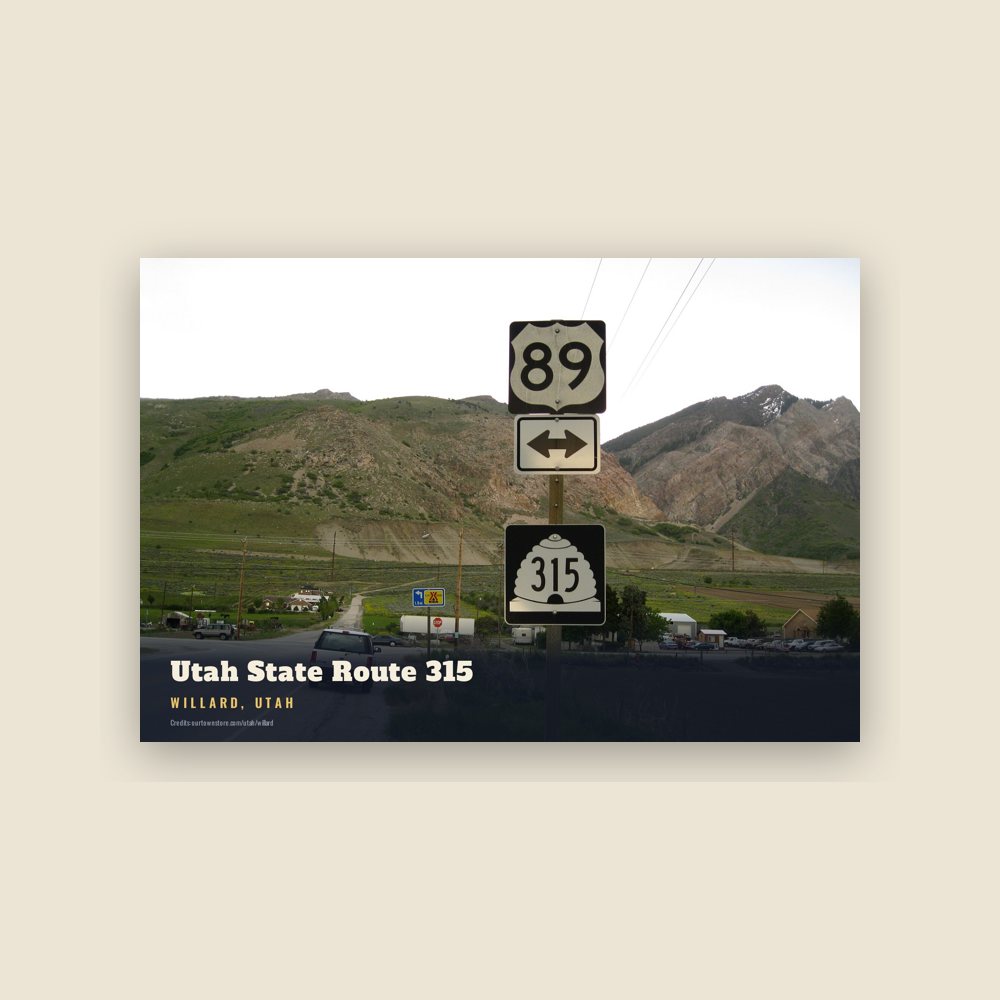
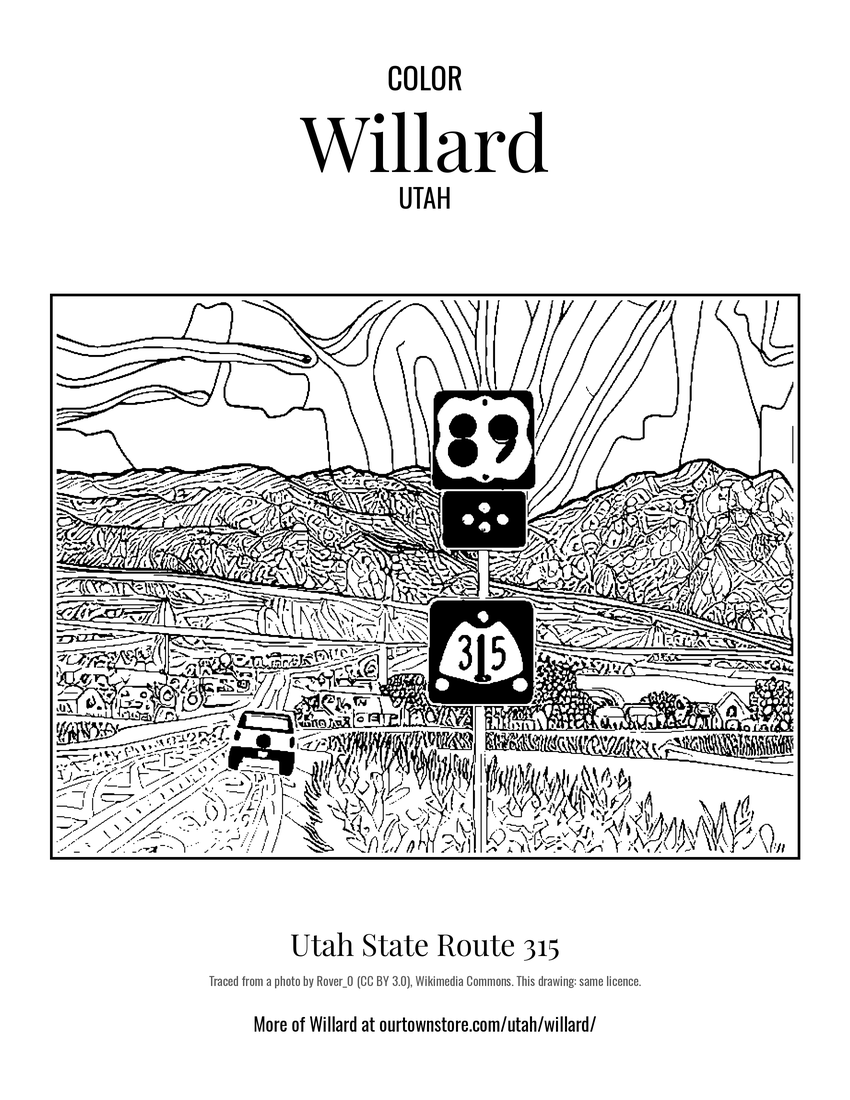 Utah State Route 315
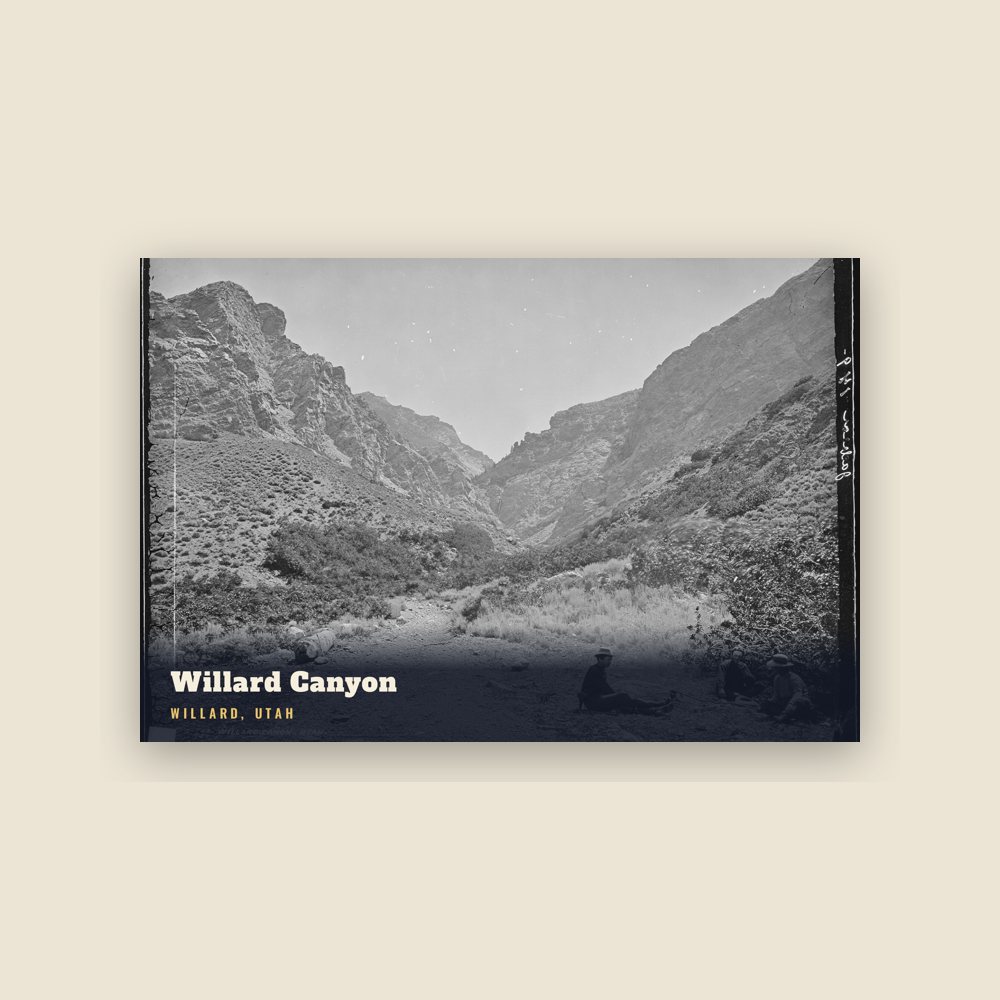
 Willard Canyon