A short history of Roosevelt
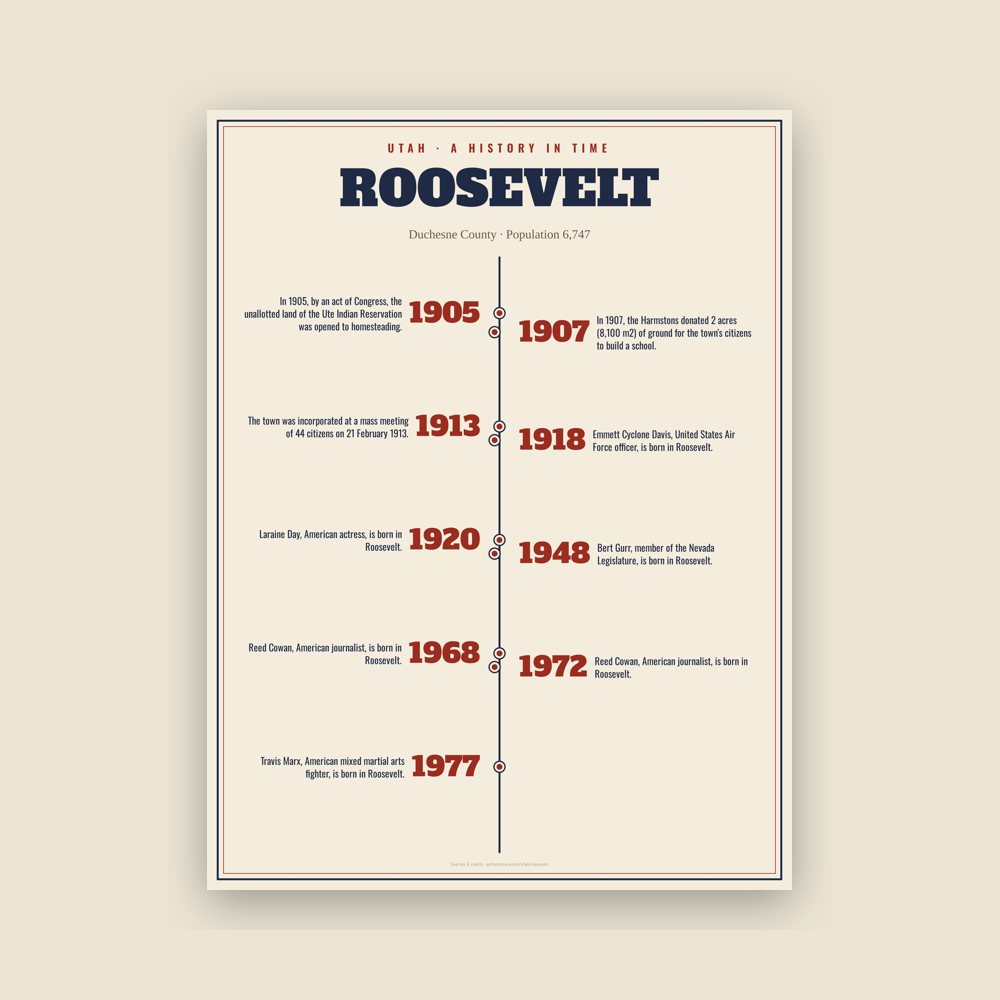
In 1905, by an act of Congress, the unallotted land of the Ute Indian Reservation was opened to homesteading. Several thousand hopeful 20th-century pioneers congregated in Provo and Grand Junction with the hope of successfully drawing lots for a homestead in a fertile region of the soon-to-be-opened lands. Throughout the fall and winter of 1905–06, the settlers came to the Uinta Basin.
The town of Roosevelt was founded in early 1906 when Ed Harmston turned his homestead claim into a townsite and laid out plots. His wife named the prospective town in honor of the president of the United States, Theodore Roosevelt. Roosevelt was originally called Dry Gulch City, taking its name from a nearby gulch that only carries water during the early spring runoff season. Within a short time a store, a post office, and the Dry Gulch Irrigation Company were in business in the new town. In 1907, the Harmstons donated 2 acres (8,100 m2) of ground for the town's citizens to build a school. The first class had about fifteen pupils, who had to provide books from their homes. Roosevelt soon became the economic center for the area, eclipsing Myton and Duchesne.
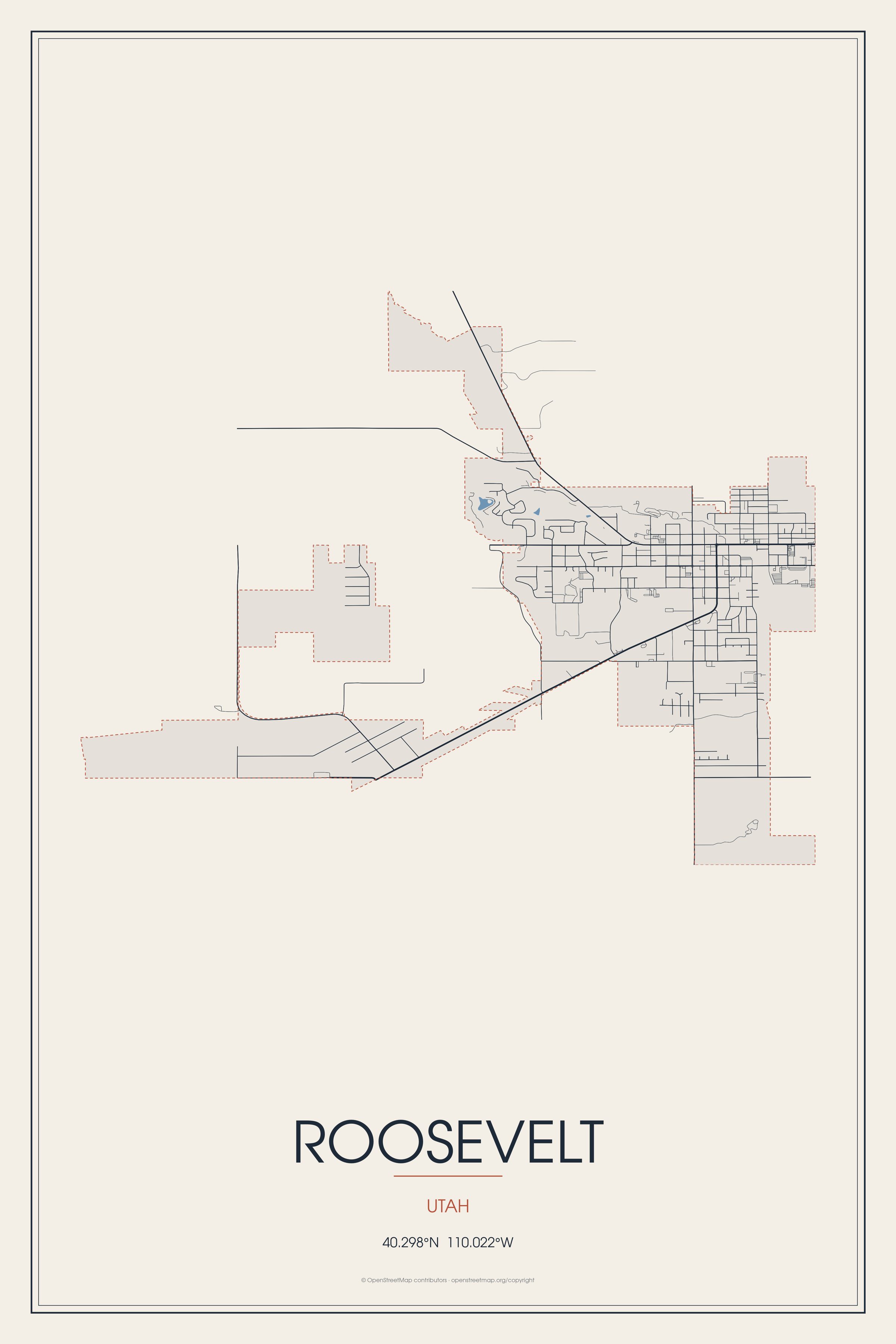
Roosevelt is situated on U.S. Route 40 in the northeast corner of the state, south of the Uinta Mountains, at an elevation of 5,250 feet (1,600 m). The town was incorporated at a mass meeting of 44 citizens on 21 February 1913. From 1906 to 1914 Roosevelt was in Wasatch County, but in 1914 Duchesne County was formed from part of Wasatch County, and, as the largest town in the county, Roosevelt anticipated becoming the county seat. However, when the total county-wide vote came in, the seat went to Duchesne.
Adapted (trimmed) from the Wikipedia article Roosevelt, Utah, revision 1377400173 by its contributors, licensed CC BY-SA 4.0.