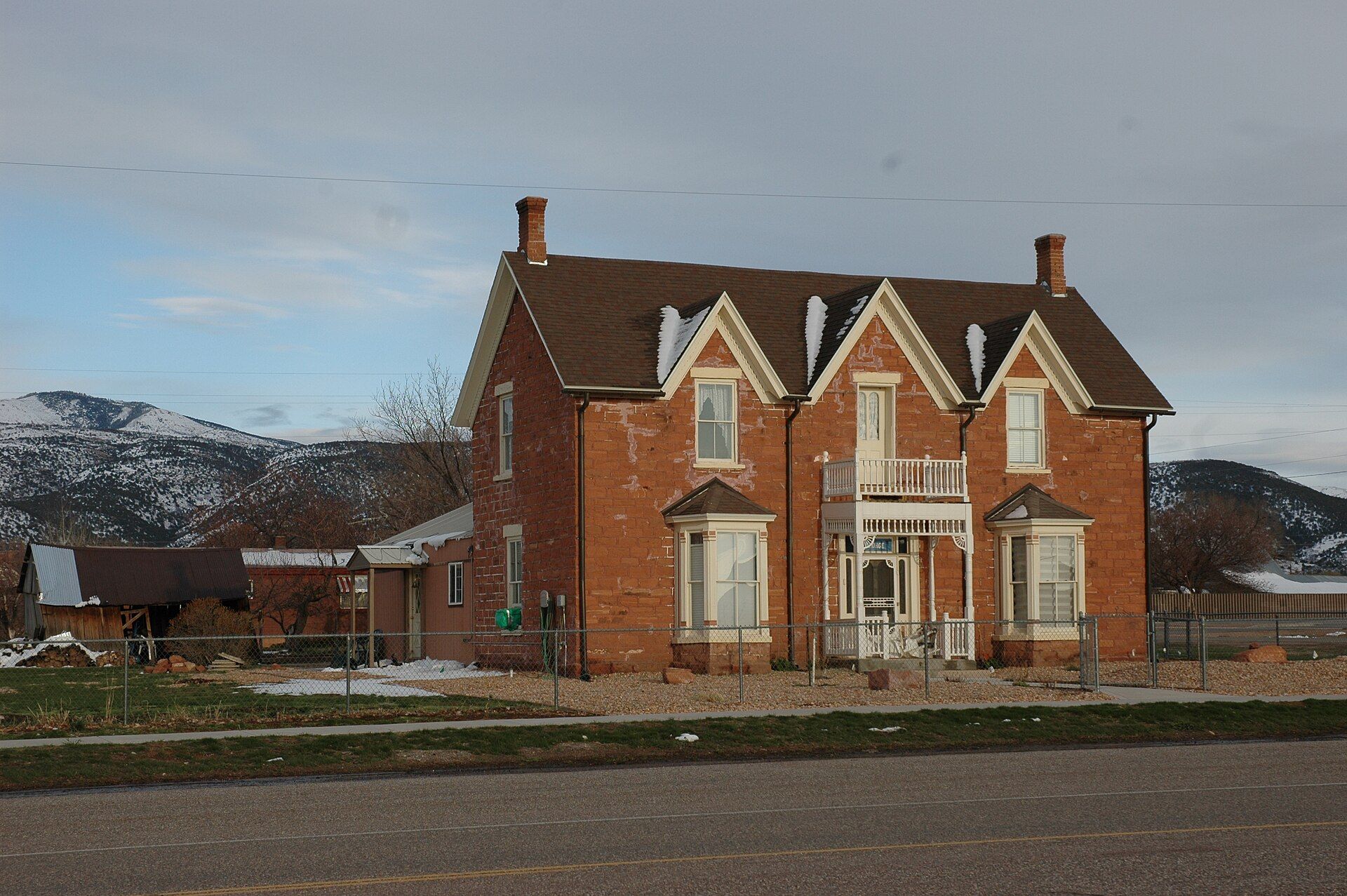
Kanosh is a town in Millard County, Utah, United States. Landmarks include George Hotel and Kanosh Tithing Office.
- CountyMillard County
- Population508 (2020 U.S. Census)
- Historic places2 on the National Register
Kanosh Town, Utah gifts and souvenirs: 26 designs made from Kanosh Town's own map, landmarks and history, from $10 to $95. Printed to order and shipped free in the USA.
| Popular | Price |
|---|---|
| Kanosh Town Hometown Ornament | $23 |
| Kanosh Town Vintage Travel Poster | from $40 |
| Kanosh Town Varsity Crewneck | from $57 |
| Kanosh Town Est. Tee | from $33 |
| Kanosh Town Town Line Mug | from $26 |
| Kanosh Town Market Tote | $37 |

Ceramic keepsake, gold ribbon

Its landmark photo in a classic travel-poster layout
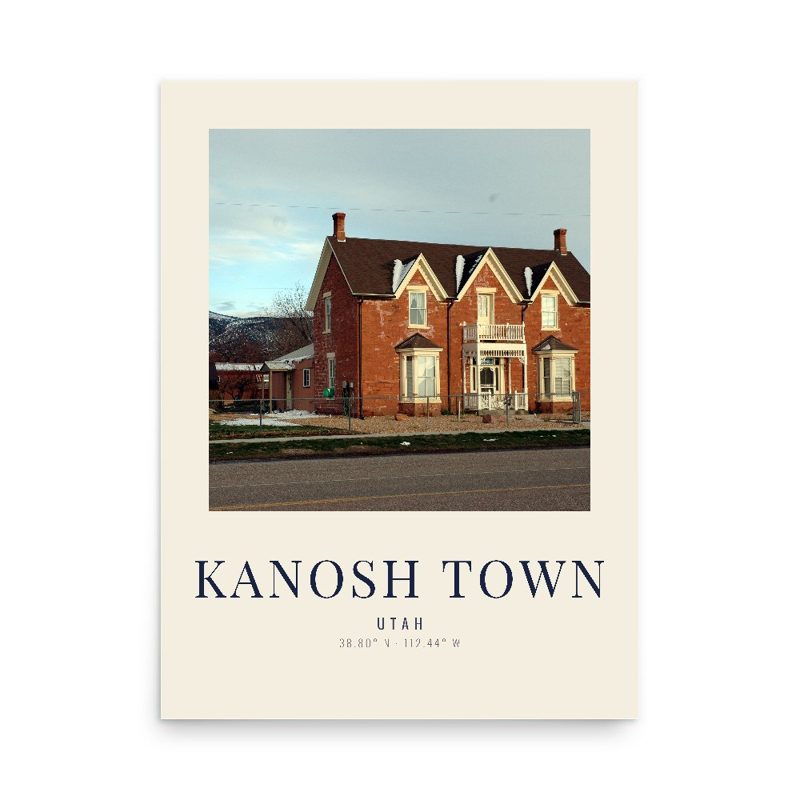
A local landmark photo as a gallery print
Classic large-letter postcard art, filled with local photos
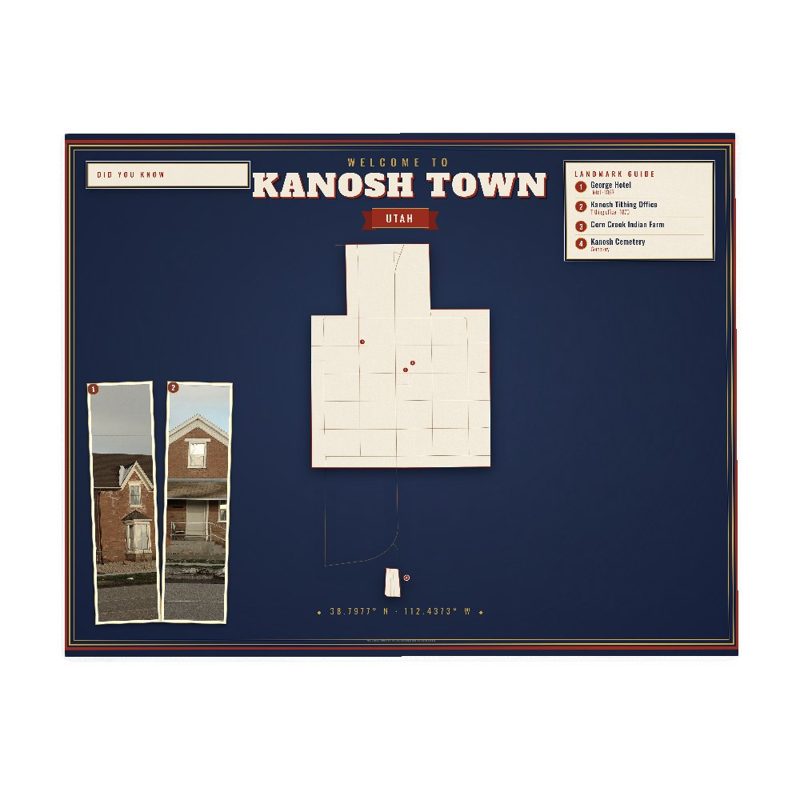
Map of local landmarks, washable fabric
Heavy-blend fleece, street map printed on the back
Soft Bella+Canvas jersey
Kids' Bella+Canvas jersey, youth sizes
Bella+Canvas toddler jersey
Bella+Canvas baby bodysuit

Large-letter postcard art filled with local photos
Glossy ceramic, dishwasher safe

Large-letter postcard art filled with local photos, 11 oz ceramic
Weatherproof, for the front walk
24″×16″, printed coir-look fibers, rubber back
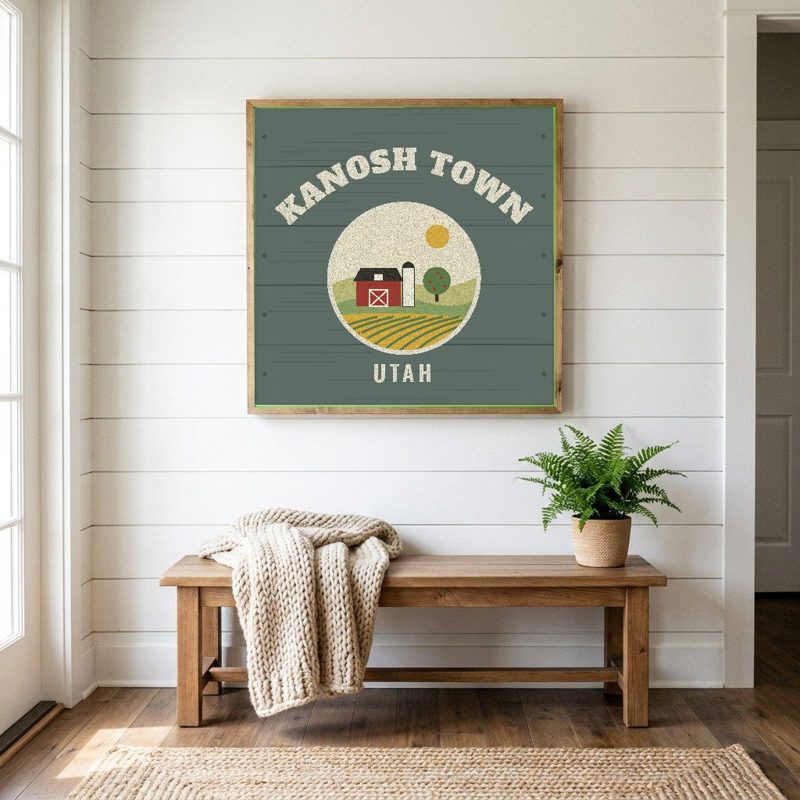
12″×12″ printed wood, ready to hang
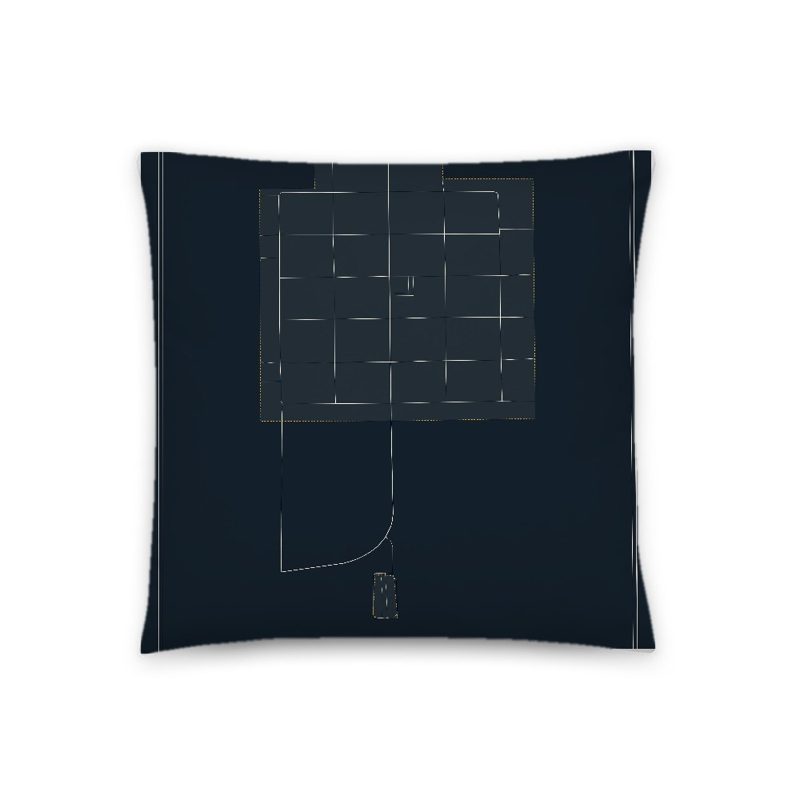
Soft-touch, zip cover

A local landmark photo with the town name, 18″×18″

Sturdy all-over-print tote

Large-letter postcard art on a sturdy tote

Foam-front trucker, printed (not embroidered) with local photos

Glossy top, cork back
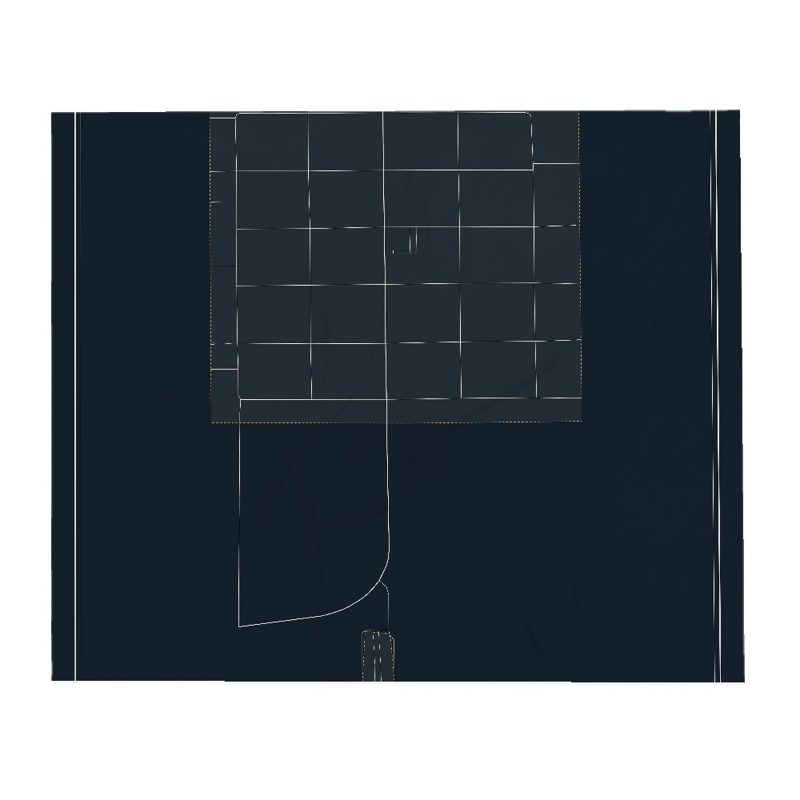
Soft fleece, 50″×60″

20 oz, double-wall stainless
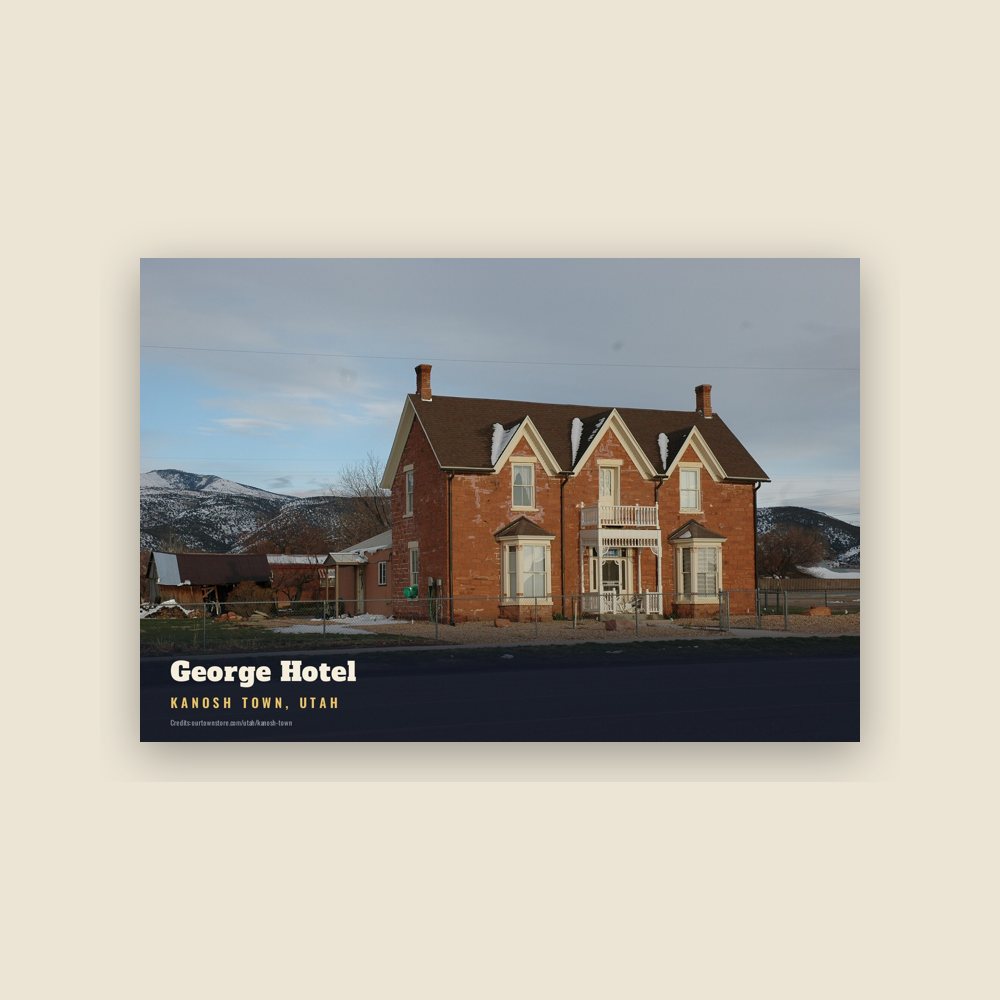
6″×4″ postcard, glossy front
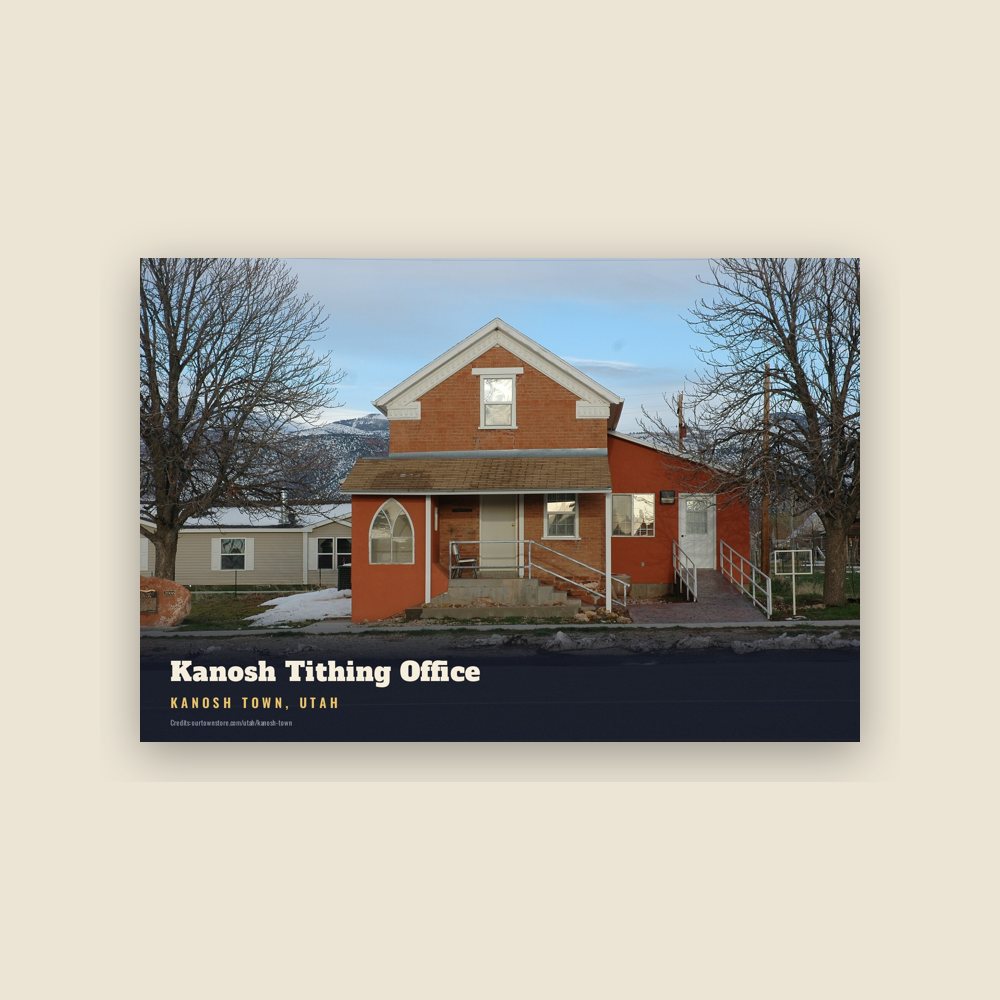
6″×4″ postcard, glossy front
Kanosh is a town in Millard County, Utah, United States. Landmarks include George Hotel and Kanosh Tithing Office.
Population 2010: 474 → 2012: 472 → 2020: 508
From Wikidata (CC0).
Chief Kanosh began a small farm in this area before the arrival of the Mormons in Utah. His band of the Pahvants were based in this vicinity.
In 1859, Peter Robison and Peter Boyce began the aptly named settlement of Petersburg. This was not far from the current site of Kanosh.
The town of Kanosh dates back to April 28, 1867, when Brigham Young, with the approval of Chief Kanosh, advised the pioneers to move from Petersburg (later Hatton, Utah) to the area then known as the campground of the Pahvant band of the Ute Tribe. When this move took place (1867–68) there were approximately 100 pioneers and 500 Native Americans living here.
At that time the Chief Kanosh and many of his tribe were baptized members of the Church of Jesus Christ of Latter-day Saints. Mortimer Wilson Warner, a local pioneer, is credited with having suggested that the town be named Kanosh in honor of the wise tribal chief.
Chief Kanosh (1812?–1884), was the leader of the Pahvant Utes from the 1850s until the time of his death. According to Mormon records, he was the son of Kashe Bats and Wah Goots. The Pahvant band ranged the deserts surrounding Sevier Lake. With the intrusion of whites into this area, Kanosh struggled to insure the hegemony and survival of his people through negotiation rather than conflict.
Kanosh was settled by Mormon pioneers and Chief Kanosh himself became an early convert to the faith. It is thought that Kanosh's willingness to work with non-Utes came out of his experiences working in the Spanish missions in California. Whether that work was voluntary or part of the long-standing slave trade of Indians into the Spanish settlements is not known. Certainly, the physical characteristics of Kanosh and others of the "Bearded Utes", as Silvestre Vélez de Escalante had called the Pahvants in the 1770s, suggest generations of contact with the Spaniards. Kanosh spoke Spanish and seems to have had a facility for languages, as he also easily picked up English.
Over time, the Kanosh tribe dwindled both due to difficulty in adapting to a farming culture from a hunter-gathering culture and in intermarriage with the local settlers. Even though many of the natives were deeded farmland, most chose to abandon the lifestyle and accept a government offer to move into the Uinta reservation where they would receive economic assistance.
However, the Pahvants at Corn Creek, a settlement established near Kanosh, continued to farm. Surrounding Mormon settlers gave them some assistance. And although Kanosh was involved in the negotiations of the 1865 Spanish Fork treaty in which Utes agreed to move to the Uinta Basin, Kanosh and his group continued at Corn Creek until a grasshopper invasion in 1868 destroyed most of their crops. Even then, Kanosh and his people did not always remain in the Uinta Basin; they returned often to Corn Creek to farm, forage, and beg from Mormon settlers.
Though Chief Kanosh still has a headstone in an honored location of the city cemetery, it was not until 1929 that the U.S. Government granted official recognition of the tribe and deeded them a small reserve near their ancestral lands at Corn Creek. (The actual location of Kanosh's remains is still unknown but is rumored to be in the foothills surrounding Kanosh.) Those few tribal members that remain today have now been almost fully assimilated into the local culture shaped by agriculture, ranching and the Mormon faith. The Kanosh surname is quite common in the area, including among female descendants who retain it as a middle name. Some of Kanosh's descendants have earned university degrees and returned from successful careers elsewhere to contribute to a comeback in the local economy.
Kanosh was adversely affected by atomic testing in the Nevada desert in the late 1950s and early 1960s, with many residents and former residents developing cancerous symptoms years later. In response and after years of effort by Utah's congressional delegation, the U.S. Congress passed amendments to the Radiation Exposure Compensation Act in 2000 to provide minimal compensation for those thus affected.
The government has taken positive steps to clean up the area so that many former residents have begun to return, adding or refurbishing businesses such as a motel, service station and eating places which were once closed or barely surviving. New homes have been or are being constructed on the north side of town. The south side of town has a stone "Welcome to Kanosh" monument at the junction of the new state highway which connects to I-15 southbound and the old highway which leads to the town cemetery. Thus, the once new interstate which once hastened the town's exodus has breathed new life into the town since the new state road connects to either the northbound or southbound I-15 interchanges within a few miles in either direction and also greatly reduces the driving time to Fillmore, Utah, county seat and one-time territorial capitol.
On the evening of July 25, 2021, a sandstorm led to a series of crashes near here on Interstate 15 involving 20 vehicles, that killed 8 people, including four children, and injured at least ten others, three critically.
Adapted (trimmed) from the Wikipedia article Kanosh Town, Utah, revision 1383034283 by its contributors, licensed CC BY-SA 4.0.
We share a part of every Kanosh Town sale with local partners, and we'd love to print from your collection. Old photographs, maps and postcards make the best keepsakes.
Partner with usA favorite landmark, your street, a school or team, an anniversary gift, a different product. Tell us and we'll get back to you by email.
3 free coloring pages of Kanosh Town, each traced from a photo of a local landmark. Print them at home, at school or for story hour.
Kanosh Town's population was 508 in the 2020 U.S. Census, up from 474 in 2010.
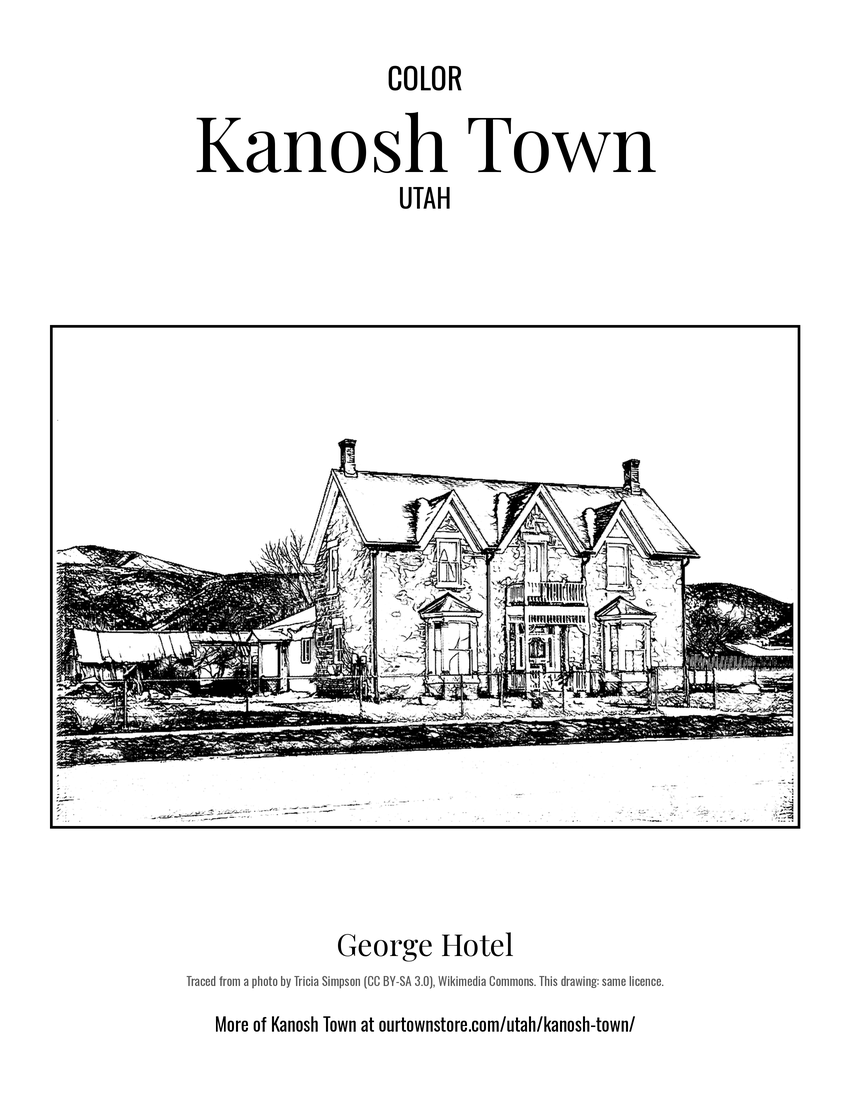 George Hotel
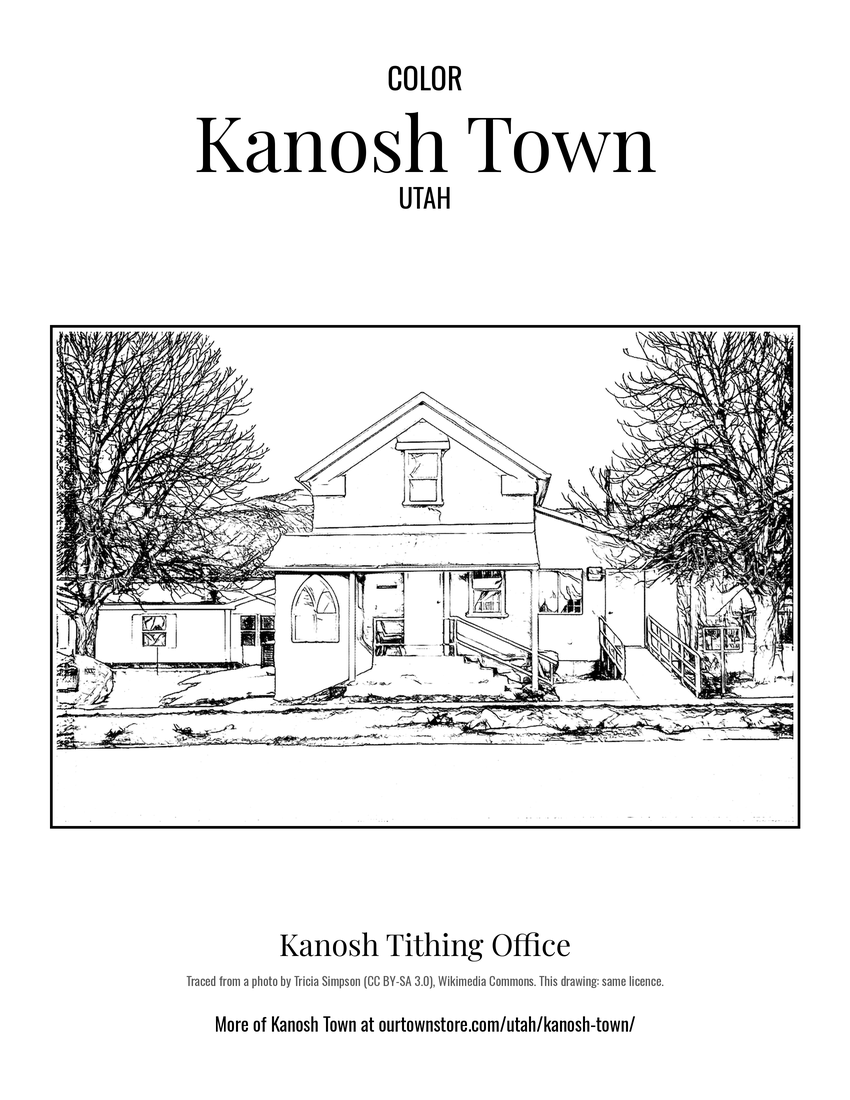 Kanosh Tithing Office
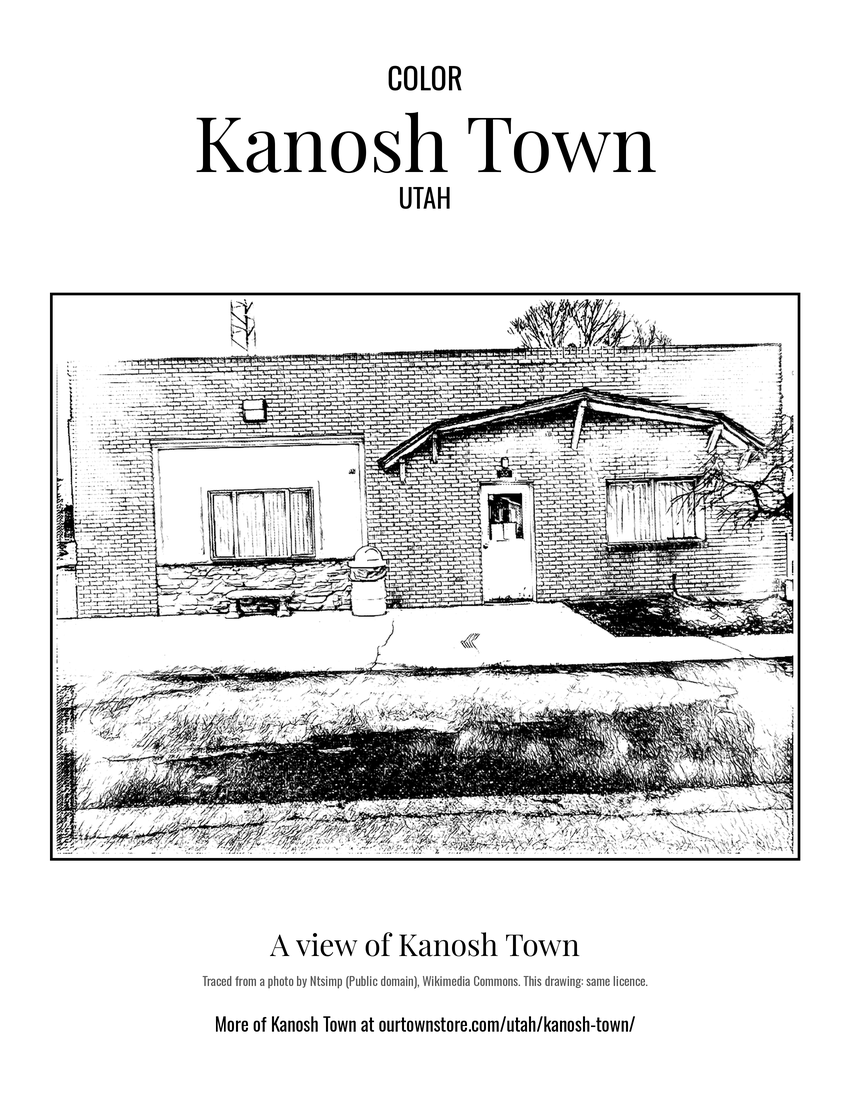 A view of Kanosh Town