A short history of West
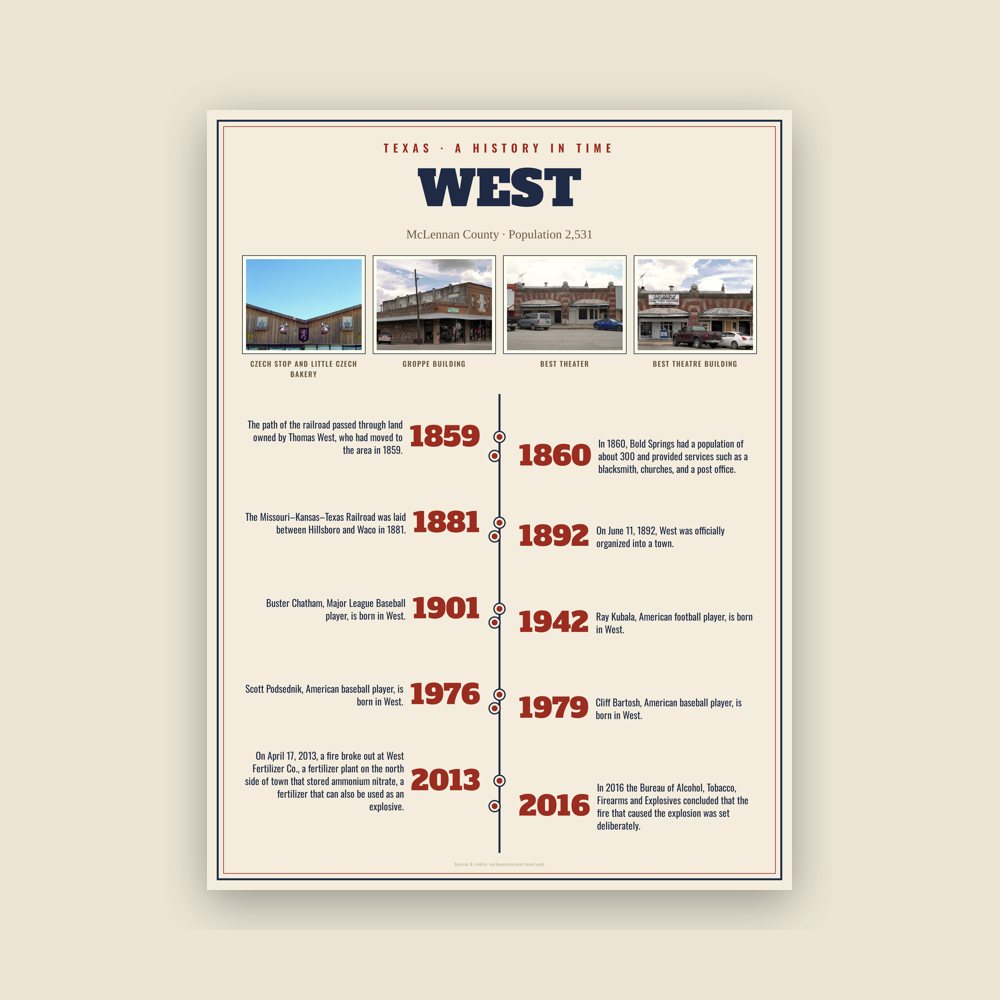
The first settlers of northern McLennan County arrived in the 1840s. They were farm and ranch families drawn from the east by the rich lands made available by the government sale of land to build schools in Texas. The area farmers cultivated the land and grew cotton, wheat, and grain sorghum, and raised cattle. The farming community centered on a freshwater spring that became known as Bold Springs. In 1860, Bold Springs had a population of about 300 and provided services such as a blacksmith, churches, and a post office.
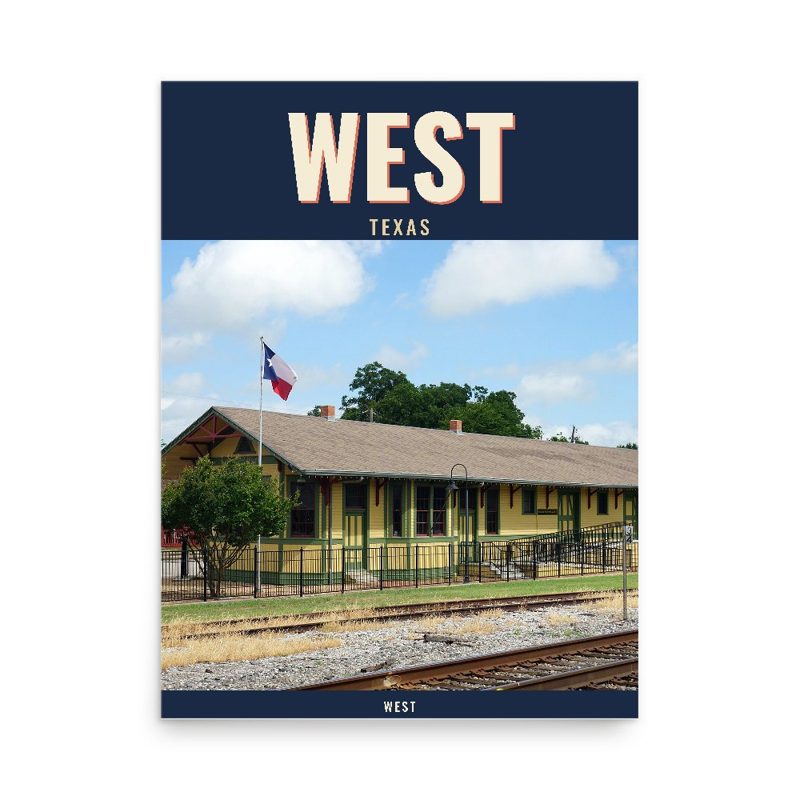
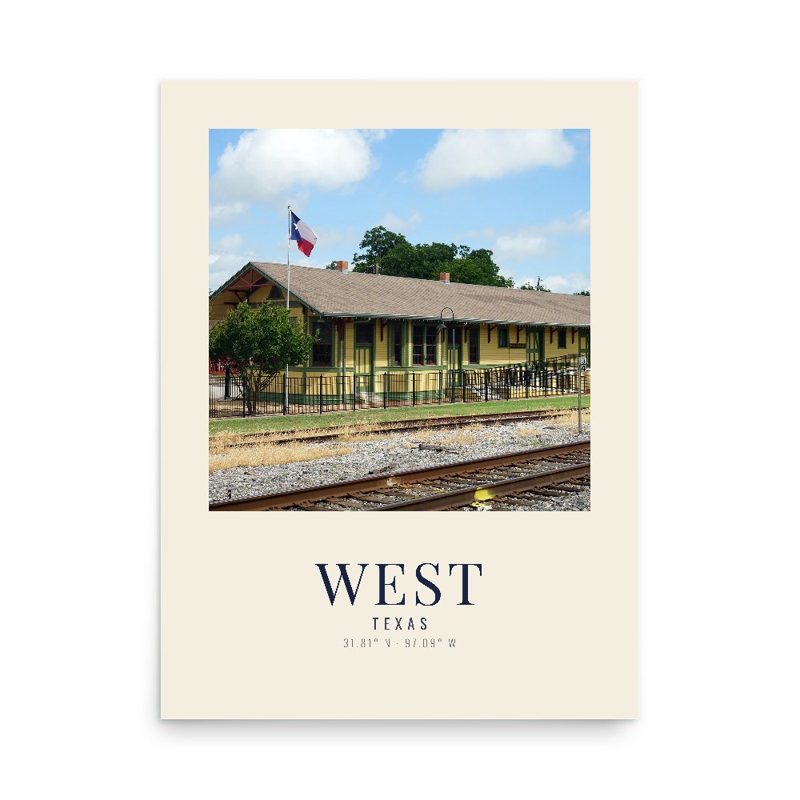
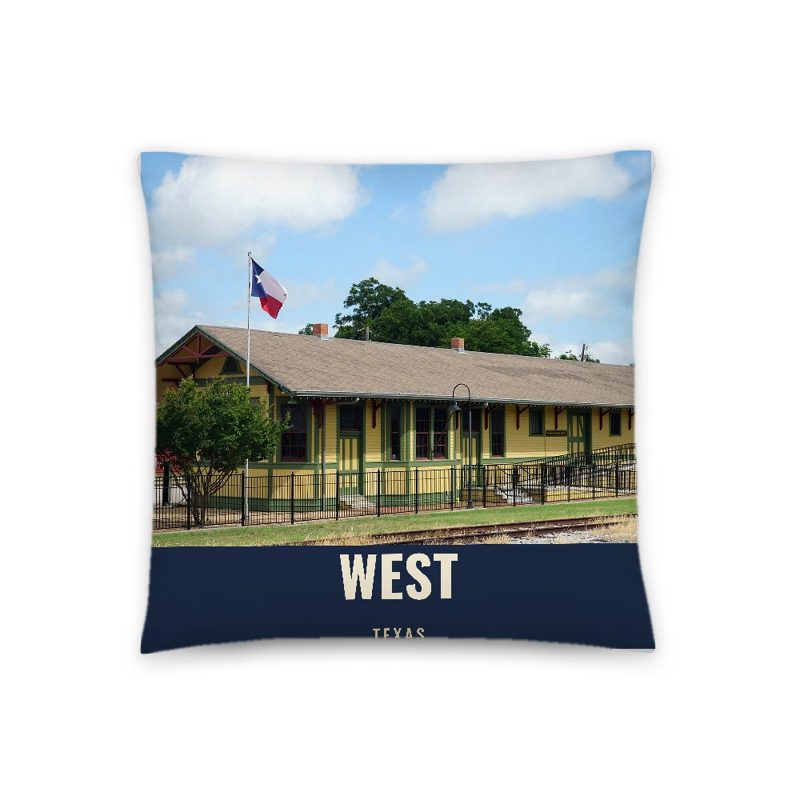
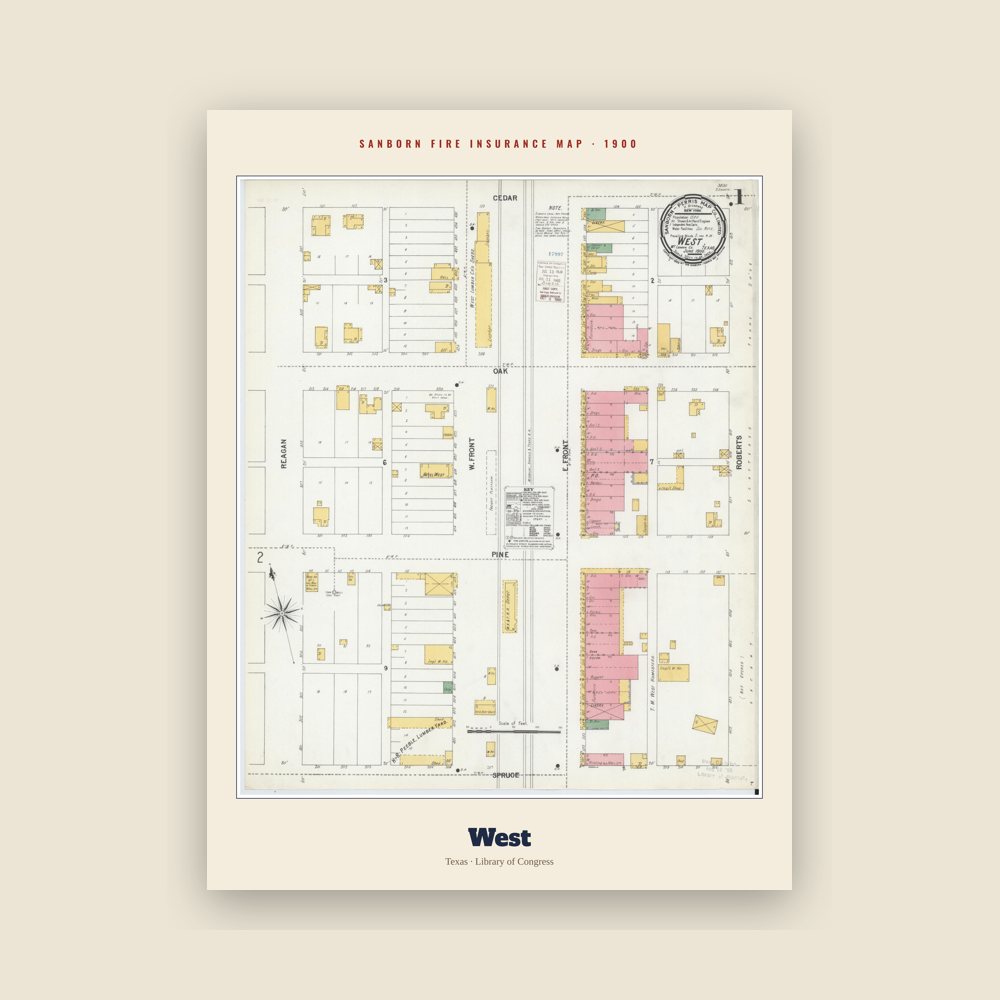
The Missouri–Kansas–Texas Railroad was laid between Hillsboro and Waco in 1881. The path of the railroad passed through land owned by Thomas West, who had moved to the area in 1859. He farmed land that he had purchased and served as postmaster of Bold Springs. A train depot and station was built on the land he sold to the railroad company and the land running beside the tracks was divided into small sections and sold to people wanting to start businesses. The new depot and station included a post office, and since West served as postmaster, the settlement became known as West's Station, then West Station, and finally West. Mr. West opened the first general store and became a successful businessman as he later owned a hotel, a furniture store, and a bank.
The railroad brought prosperity to the area during the 1880s. More businesses opened and more surrounding land was purchased. Czech immigrants came to the area, purchasing the rich lands to farm and start a fresh life in the new world. They also opened businesses and shared their culture. By the 1890s, the Czech businesses flourished in West. On June 11, 1892, West was officially organized into a town. It had become the center of commerce for the area. There were cotton gins, grocery stores, churches, schools, and doctors' offices.
The temporary city Crush, three miles (5 km) south of West, was the location of The Crash at Crush, a head-on collision between two locomotives that was staged on September 15, 1896, as a publicity stunt for the Missouri–Kansas–Texas Railroad. Over 30,000 spectators gathered at the crash site, named "crush" for MKT passenger agent William Crush, who conceived the idea. About 4 p.m. the trains were sent speeding toward each other. Contrary to mechanics' predictions, the steam boilers exploded on impact, propelling pieces of metal into the crowd. Two people were killed and many others injured, including Jarvis Deane of Waco, who was photographing the event and lost an eye. Texas Historical Marker 5315, on Interstate 35 northbound frontage road, between Mangrum and Wiggins Road, commemorates the event.
The turn of the century brought electricity, running water, and natural gas. The population of West and surrounding area grew. Many of the original settlers' descendants continue to farm the lands and run the businesses. Czech is still spoken by some of the older residents.
Adapted (trimmed) from the Wikipedia article West, Texas, revision 1379025115 by its contributors, licensed CC BY-SA 4.0.
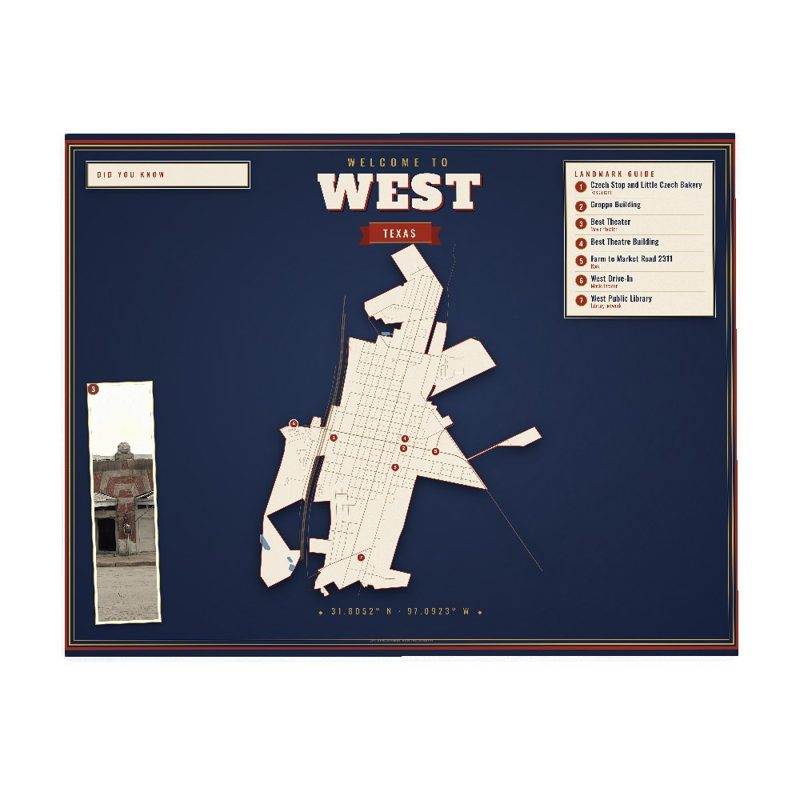



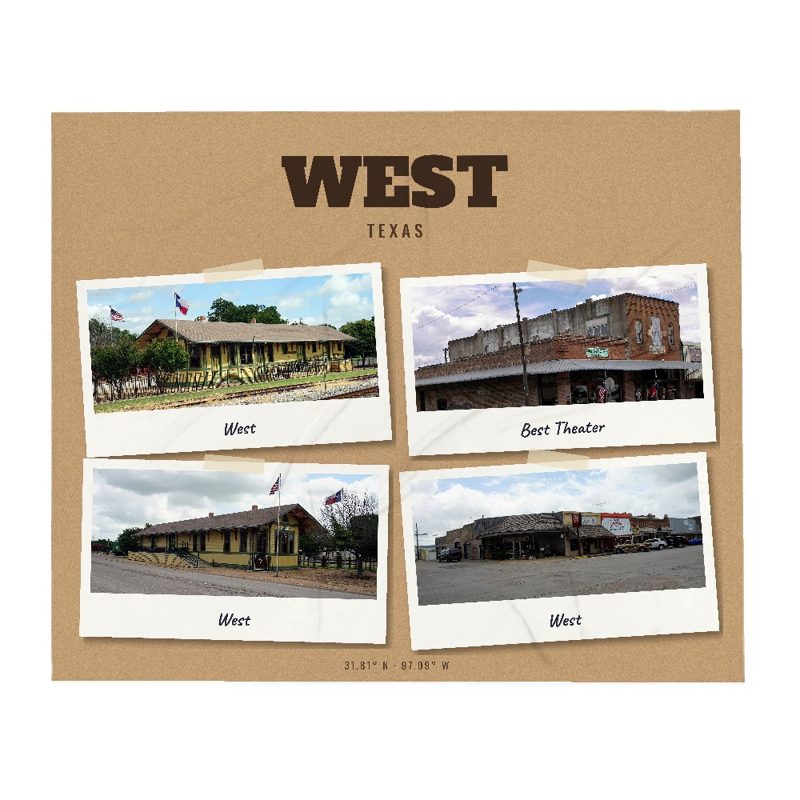
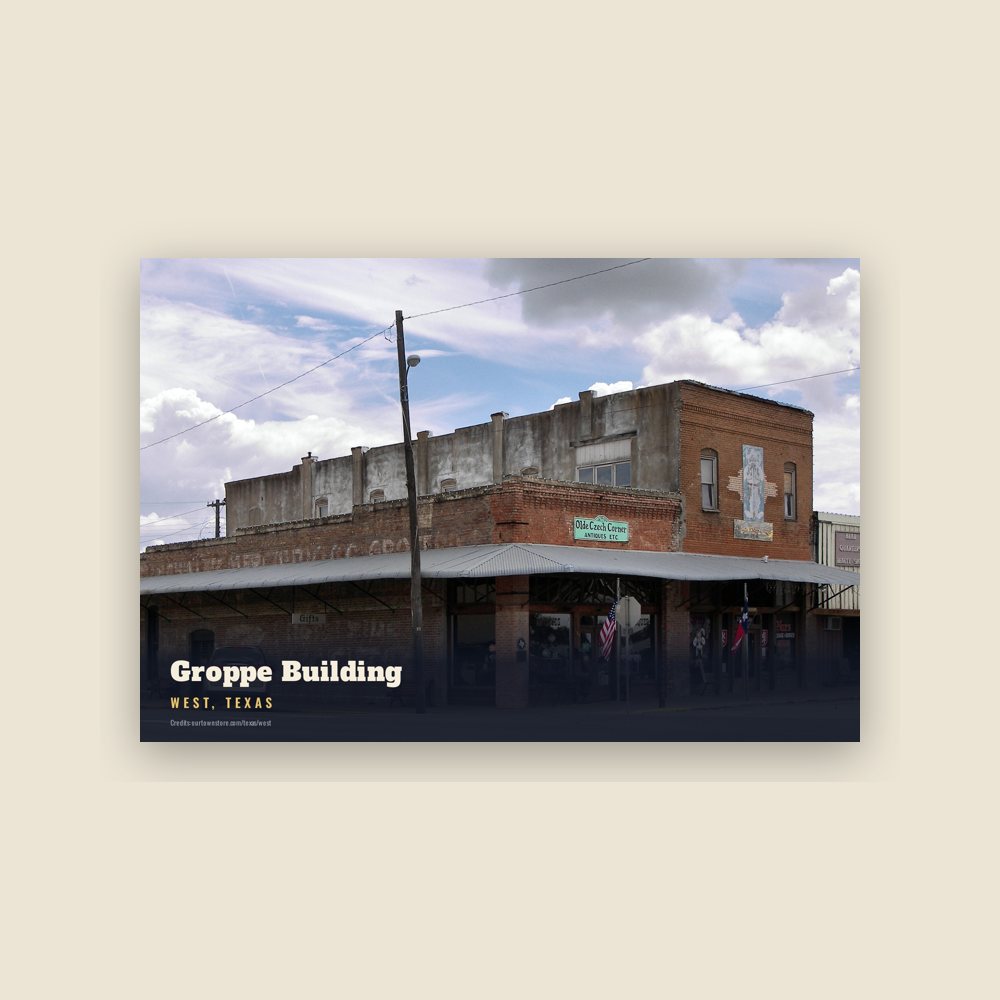
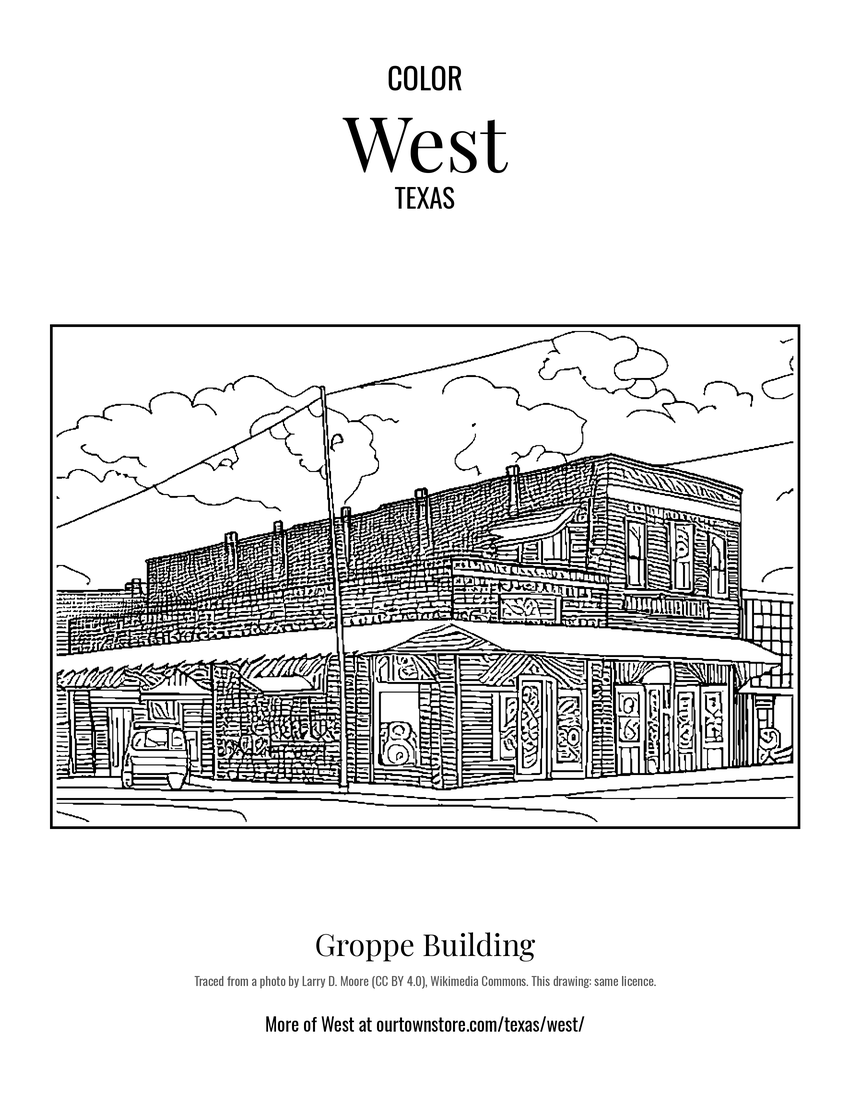 Groppe Building
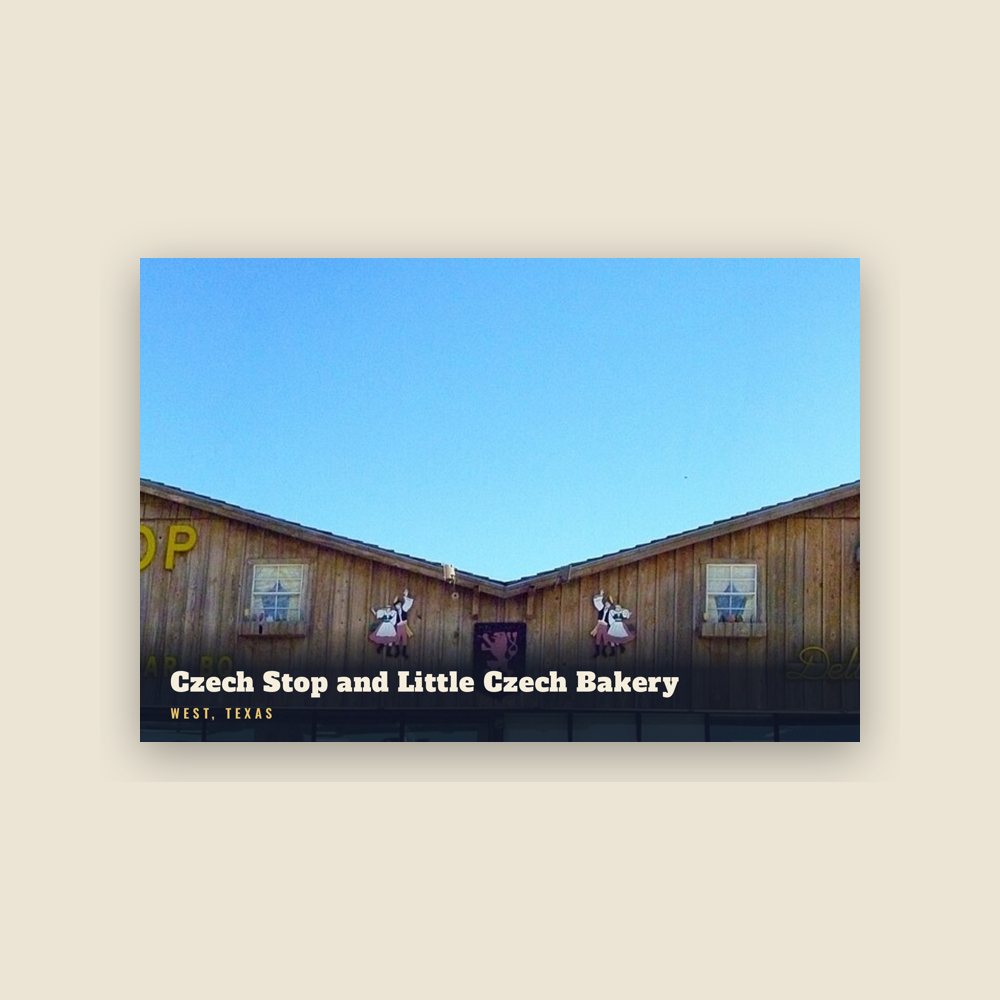
 Czech Stop and Little Czech Bakery
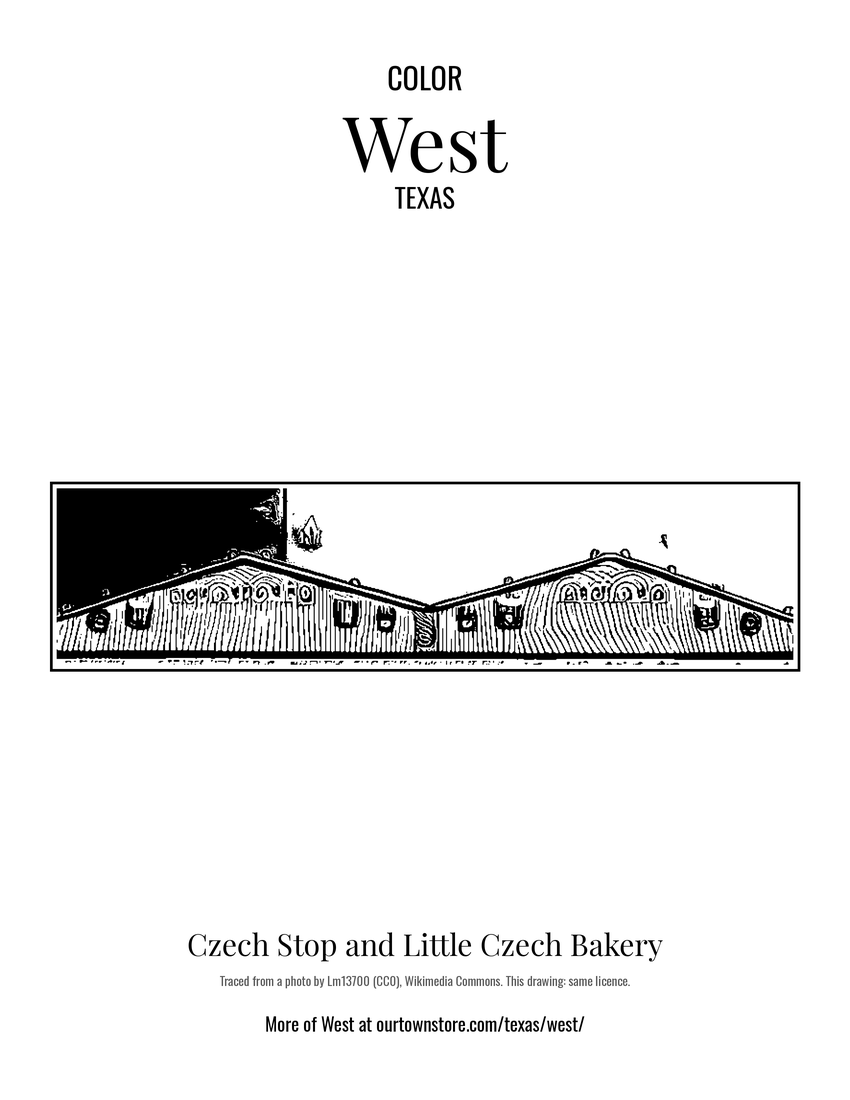 Czech Stop and Little Czech Bakery
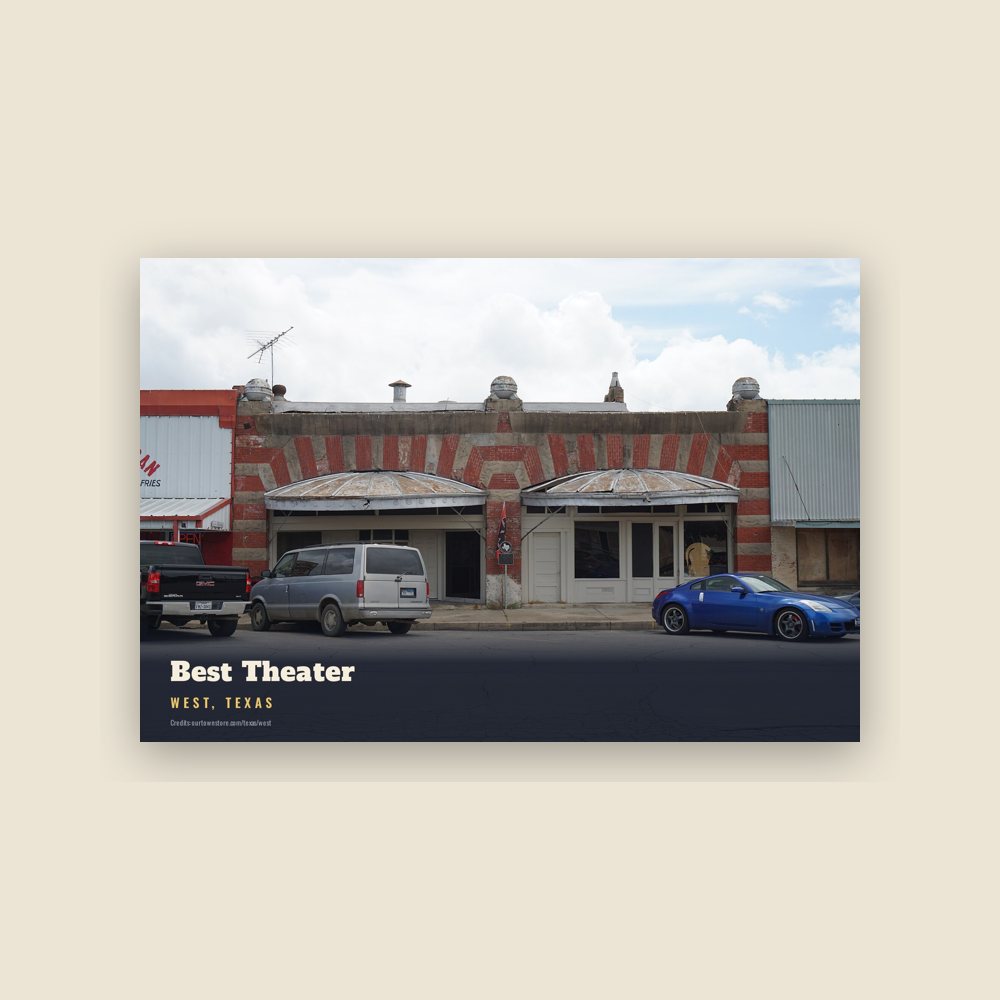
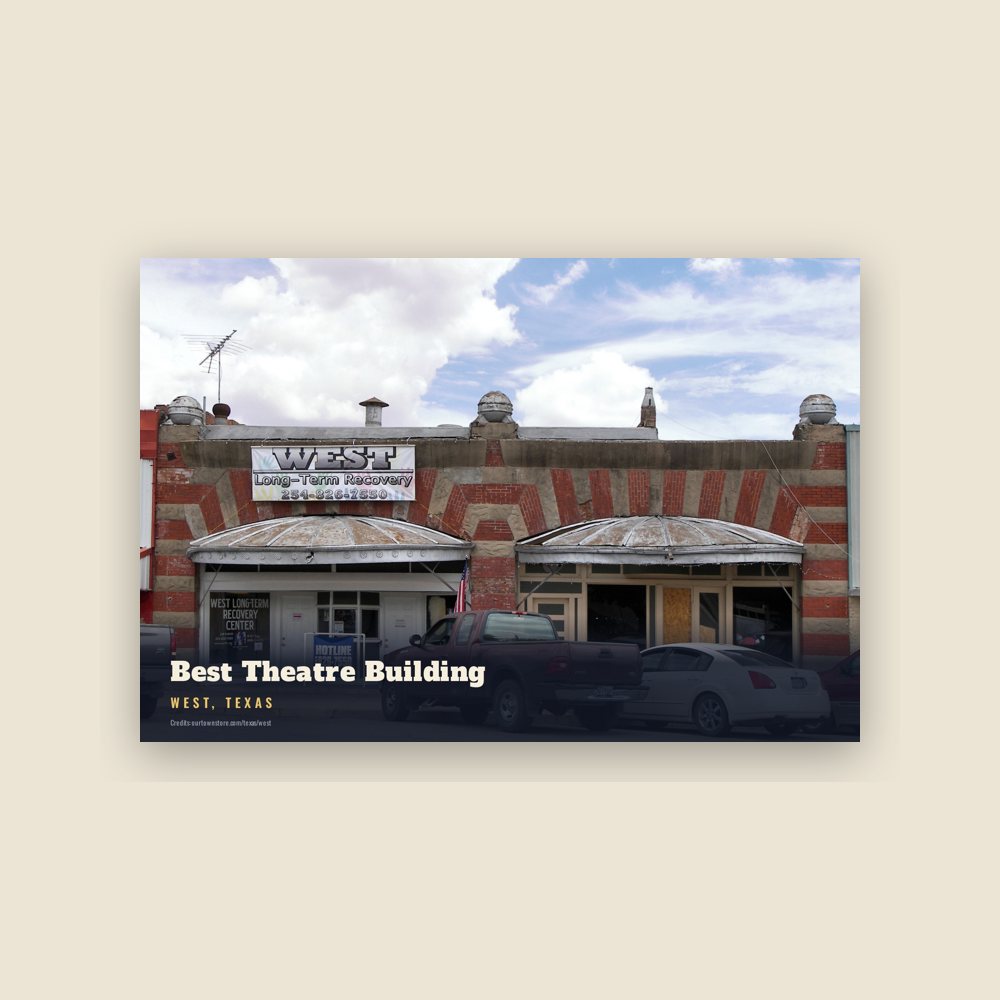
 Best Theater