A short history of Vidor
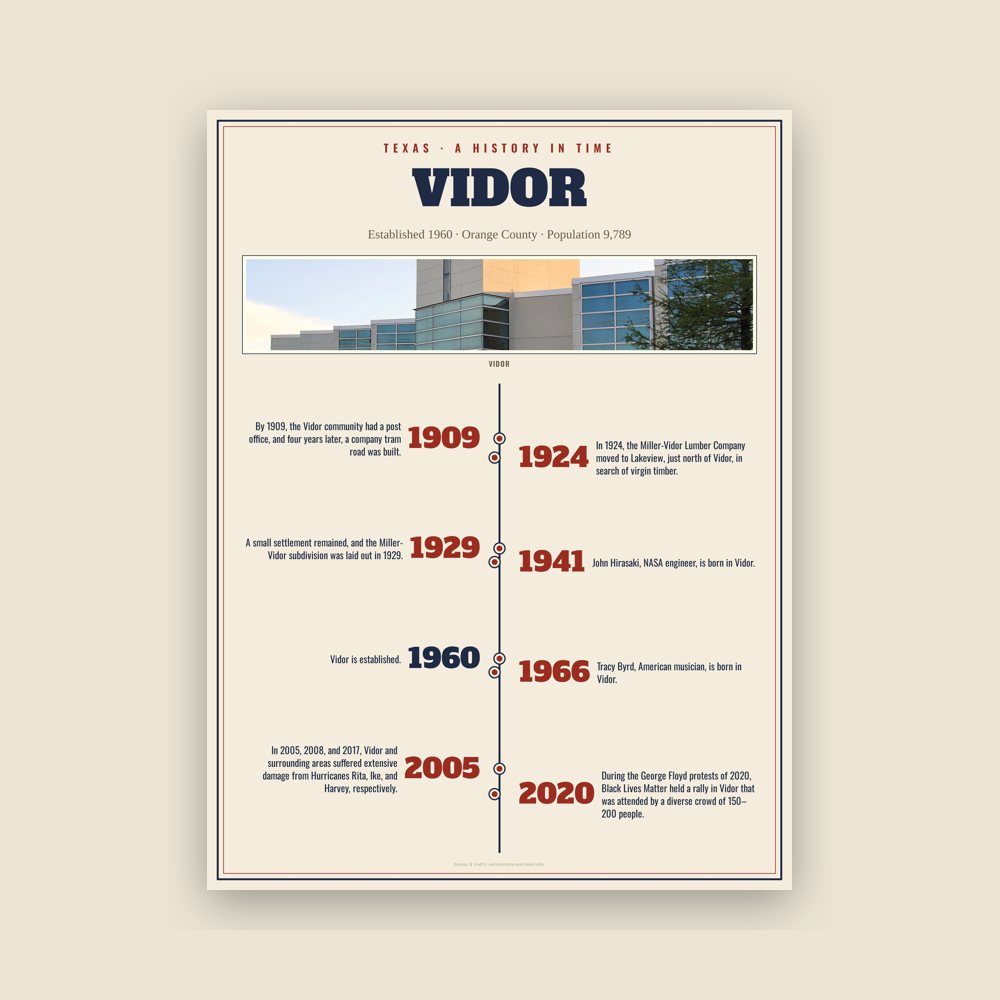
The area was heavily logged after the construction of the Texarkana and Fort Smith Railway that was later part of a line that ran from Kansas City to Port Arthur, Texas. The city was named after lumberman Charles Shelton Vidor, owner of the Miller-Vidor Lumber Company and father of director King Vidor. By 1909, the Vidor community had a post office, and four years later, a company tram road was built. Almost all Vidor residents worked for the company. In 1924, the Miller-Vidor Lumber Company moved to Lakeview, just north of Vidor, in search of virgin timber. A small settlement remained, and the Miller-Vidor subdivision was laid out in 1929. Vidor was incorporated in 1960.
Historically, Vidor has been described as a sundown town, a term used to describe racially homogeneous communities, specifically all-white towns, that have shown hostility to people of other races after sunset. Vidor's segregated public-housing practices were formally abolished in 1993 after U.S. District Judge William Wayne Justice issued an order to desegregate 36 counties in Texas, which included public housing in Vidor. The Ku Klux Klan (KKK) responded by hosting rallies in support of an all-white Vidor, though some citizens protested the anti-black coalition; church leaders held a well-attended prayer rally in opposition to the KKK hatred. After four black families moved into the complex, the residents suffered racial threats, including a bomb threat to the complex. All nine black residents eventually moved out under this pressure. One of the residents, Bill Simpson, was interviewed about his negative experiences while living there. "I've had people who drive by and tell me they're going home to get a rope and come back and hang me. . . ."
In 2005, 2008, and 2017, Vidor and surrounding areas suffered extensive damage from Hurricanes Rita, Ike, and Harvey, respectively. A mandatory evacuation was imposed upon its residents for about two weeks.
During the George Floyd protests of 2020, Black Lives Matter held a rally in Vidor that was attended by a diverse crowd of 150–200 people.
Adapted (trimmed) from the Wikipedia article Vidor, Texas, revision 1380428449 by its contributors, licensed CC BY-SA 4.0.
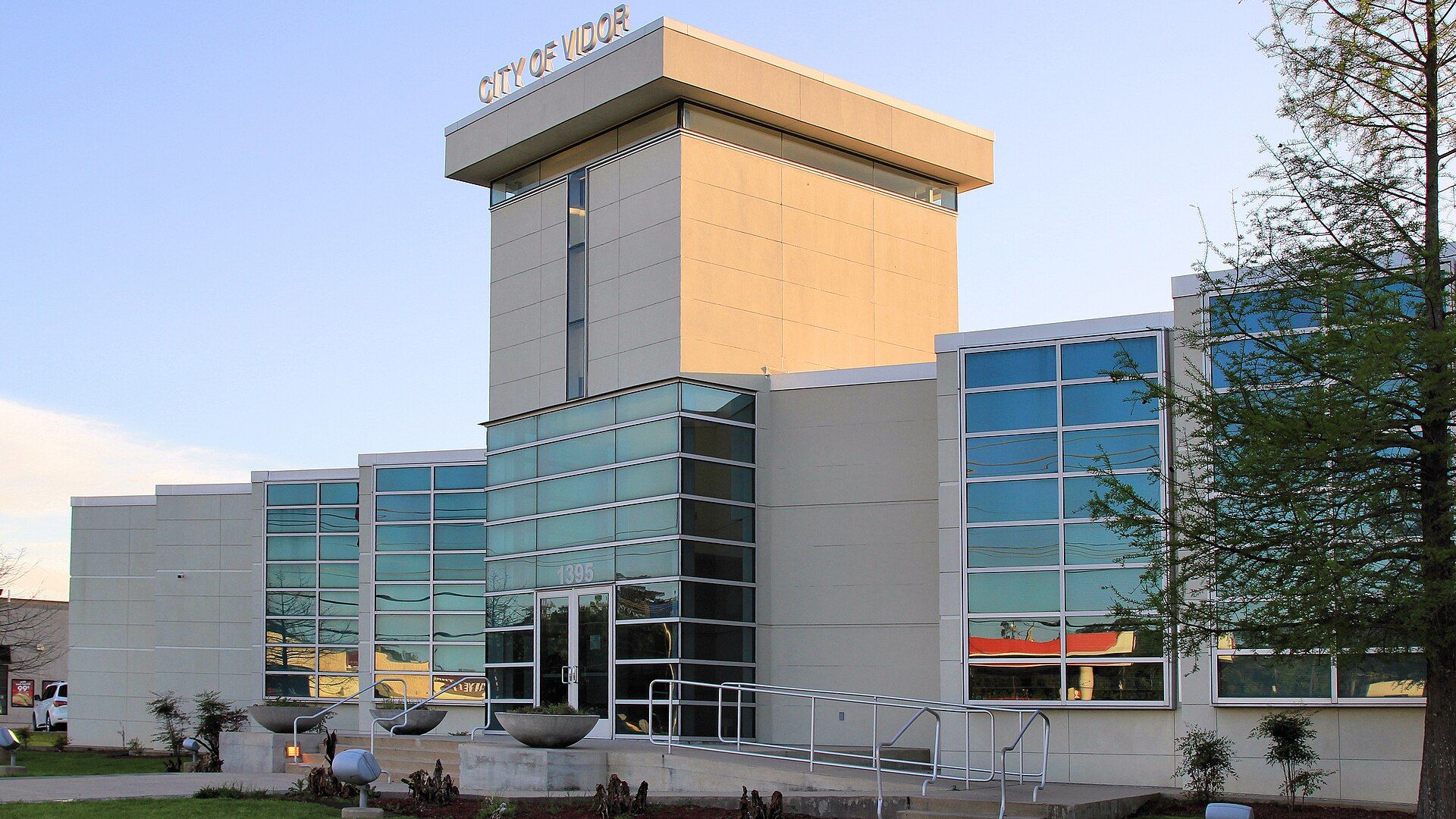
















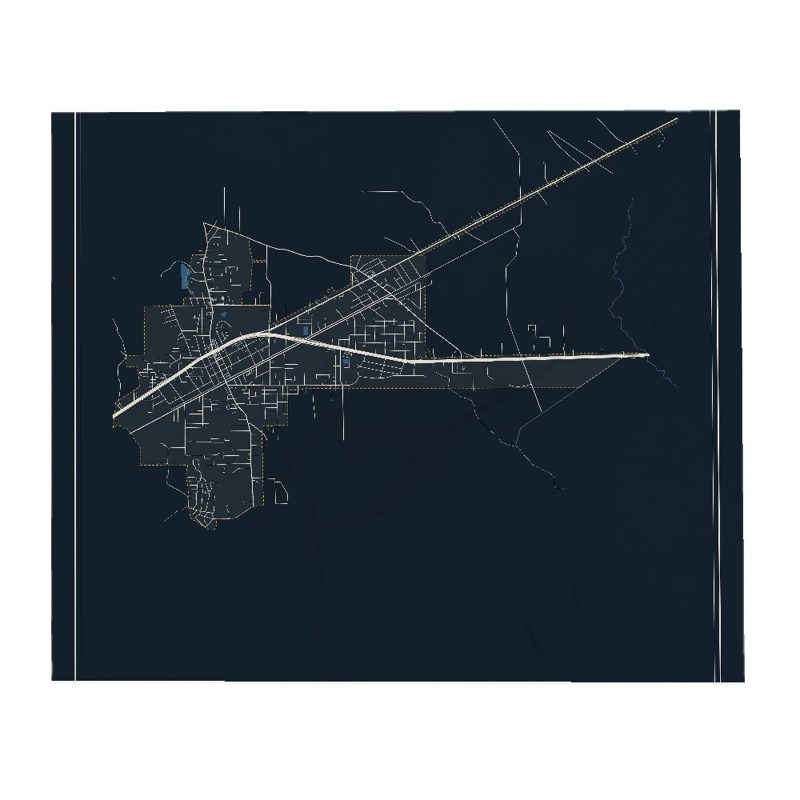

 A view of Vidor