A short history of Vega
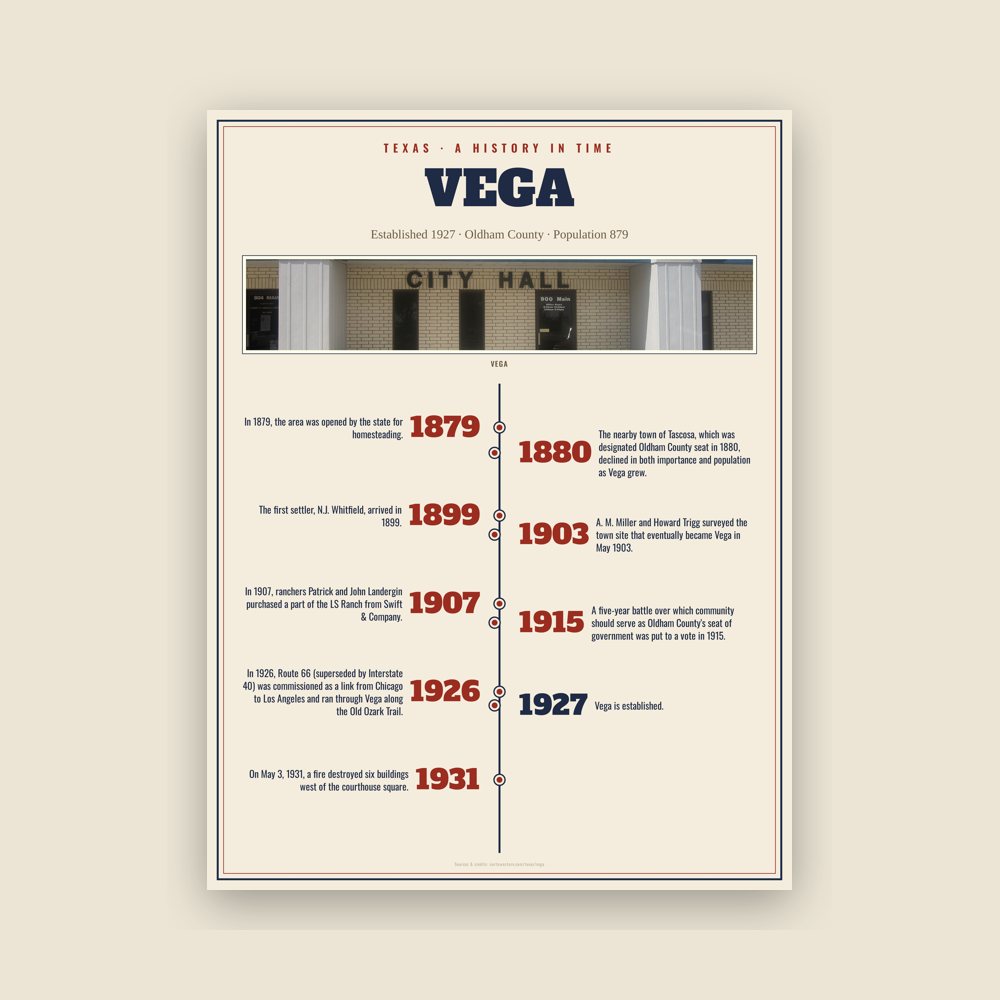
In 1879, the area was opened by the state for homesteading. The first settler, N.J. Whitfield, arrived in 1899. On October 17, 1899, he purchased part of Oldham County known as Section 90 at a per-acre rate of US$1 (equivalent to $38.7 in 2025). In 1903, Whitfield sold a 100-foot (30 m) strip of land that extended across the southern part of Oldham County to the Choctaw, Oklahoma, and Texas (later Rock Island) Railroad as a right-of-way. He then sold portions of land on the south side of the right-of-way to other settlers. A. M. Miller and Howard Trigg surveyed the town site that eventually became Vega in May 1903. The name Vega, which is Spanish for "meadow", was chosen because it reflected the vast prairie and surrounding countryside of the area. Soon after, Miller opened a store, and a post office, saloon, and a school that doubled as a Masonic Lodge were built in the community. In 1907, ranchers Patrick and John Landergin purchased a part of the LS Ranch from Swift & Company. Working in association with the Amarillo, Texas-based Pool Land Company, the Landergin brothers brought more prospective settlers to the community.
The nearby town of Tascosa, which was designated Oldham County seat in 1880, declined in both importance and population as Vega grew. A five-year battle over which community should serve as Oldham County's seat of government was put to a vote in 1915. In the special election, citizens chose to move the county seat from Tascosa to Vega. Until a permanent courthouse was built, county business was conducted in Vega's Oldham Hotel.
Modern amenities, such as telephone service, were introduced during the 1920s. In 1926, Route 66 (superseded by Interstate 40) was commissioned as a link from Chicago to Los Angeles and ran through Vega along the Old Ozark Trail.
Vega was officially incorporated in 1927, and the population was 519 in the 1930 census. On May 3, 1931, a fire destroyed six buildings west of the courthouse square. Two months later, a second fire burned two buildings on the north side of the square. These fires prompted the town to establish a municipal water system.
Adapted (trimmed) from the Wikipedia article Vega, Texas, revision 1380421732 by its contributors, licensed CC BY-SA 4.0.
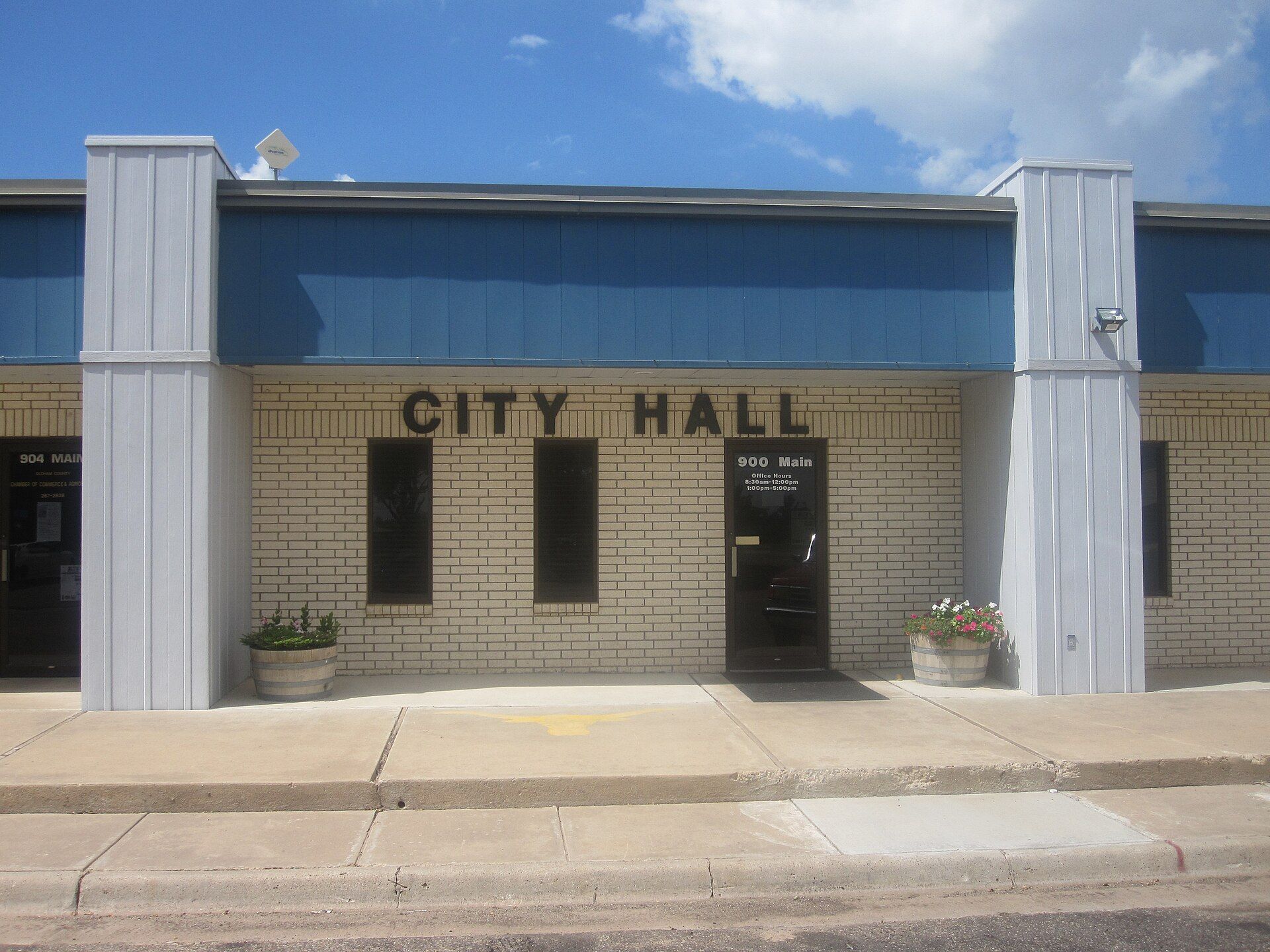
















 A view of Vega