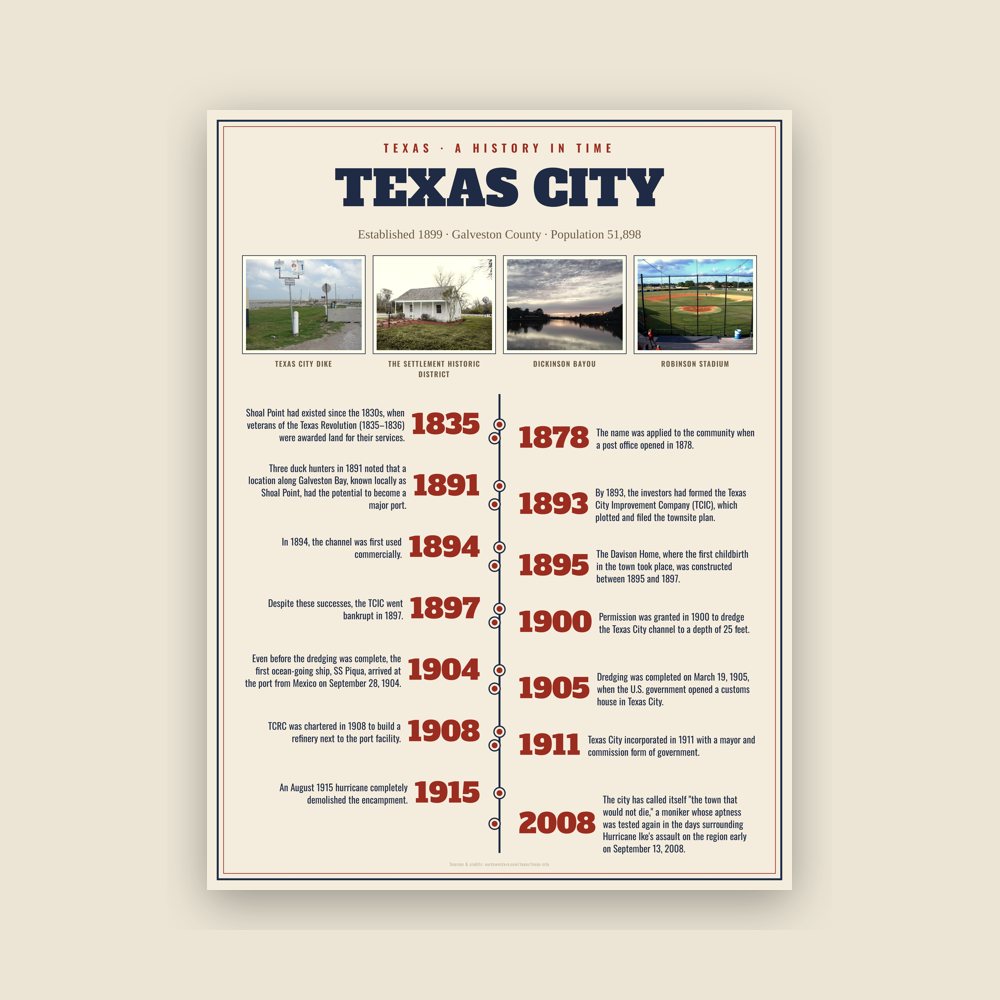
Three duck hunters in 1891 noted that a location along Galveston Bay, known locally as Shoal Point, had the potential to become a major port. Shoal Point had existed since the 1830s, when veterans of the Texas Revolution (1835–1836) were awarded land for their services. The name was applied to the community when a post office opened in 1878. The duck hunters were Benjamin, Henry, and Jacob Myers, three brothers from Duluth, Minnesota. After they returned to Duluth, they formed the Myers Brothers syndicate and convinced other investors to put up money to buy 10,000 acres (4,000 hectares) of Galveston Bay frontage, including Shoal Point. They renamed the area Texas City.
Read the full history
Founding
By 1893, the investors had formed the Texas City Improvement Company (TCIC), which plotted and filed the townsite plan. A post office opened in 1893 with Frank B. Davison as the town's first postmaster, to serve about 250 people who had moved there from Minnesota and Michigan. TCIC also received the federal government's permission to dredge an eight-foot channel in the bay from Bolivar Roads (at the east end of Galveston Island) to serve Texas City. In 1894, the channel was first used commercially. TCIC eventually dredged the channel to a 40-foot depth and extended the length of the port to 1.5 mi. TCIC also built a four-mile railroad to the Texas City Junction south of town, where it connected to two other rail lines: Galveston, Houston and San Antonio and Galveston-Houston and Henderson.
Despite these successes, the TCIC went bankrupt in 1897. Its assets were reorganized and then split into two new companies: Texas City Company (TCC) and Texas City Railway Terminal Company (TCRTC). TCC acquired 3,000 city lots and provided water, natural gas, and electricity to the town. TCRTC operated the railroad. These companies were chartered on February 4, 1899.
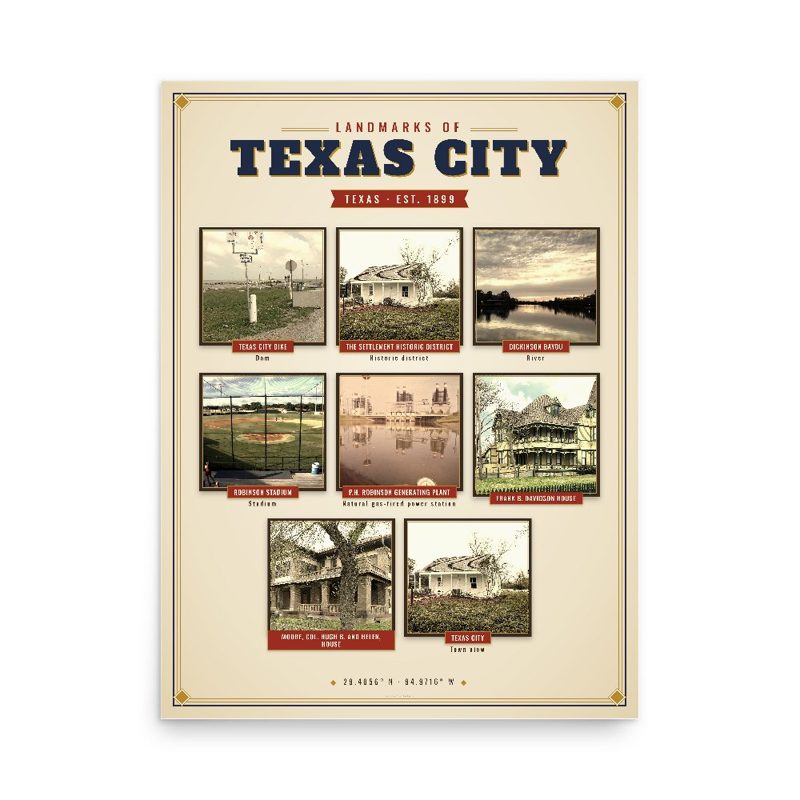
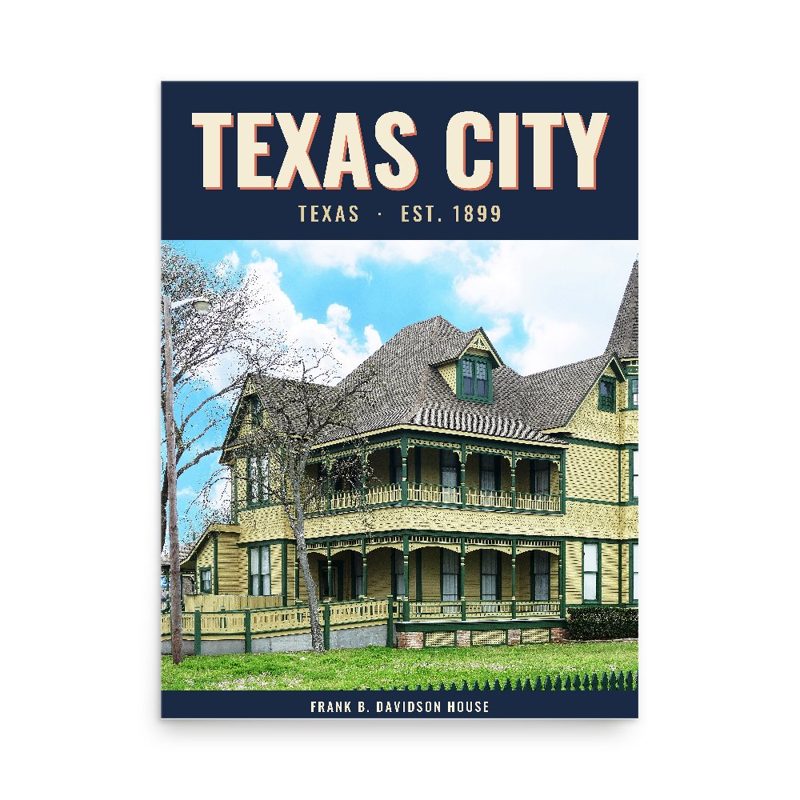
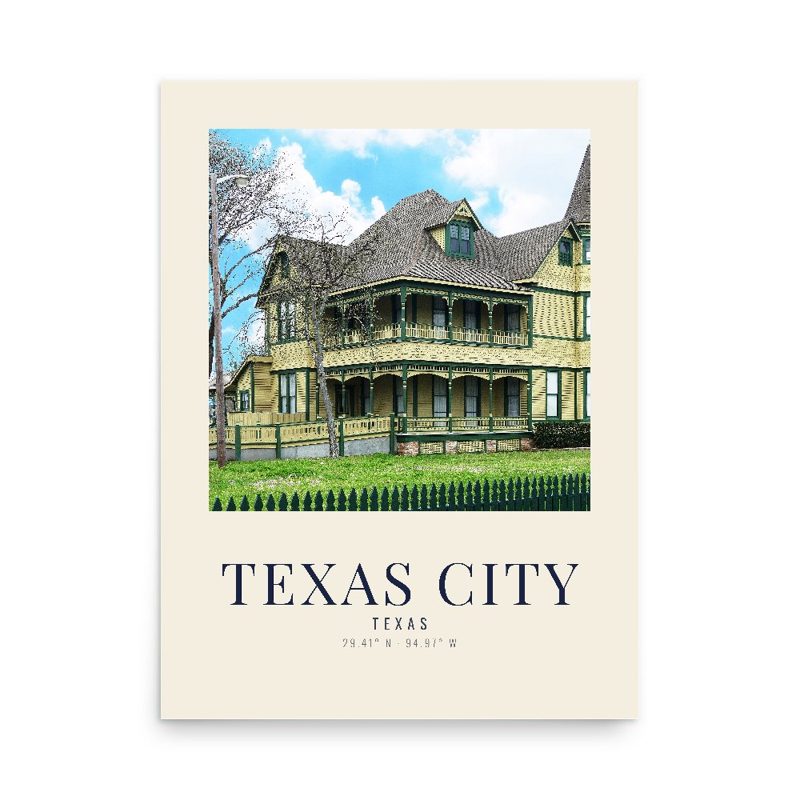
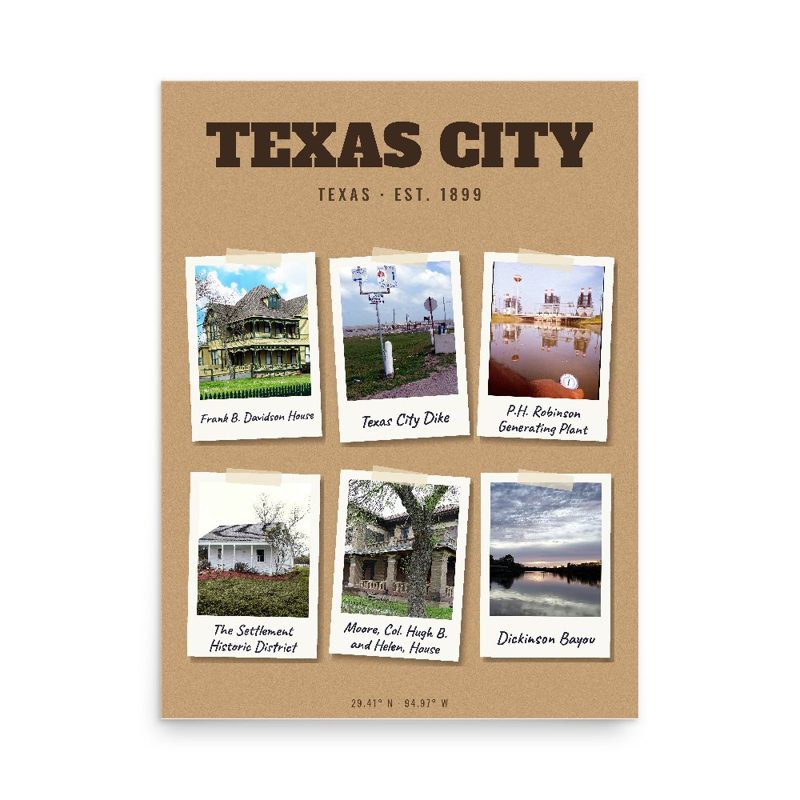
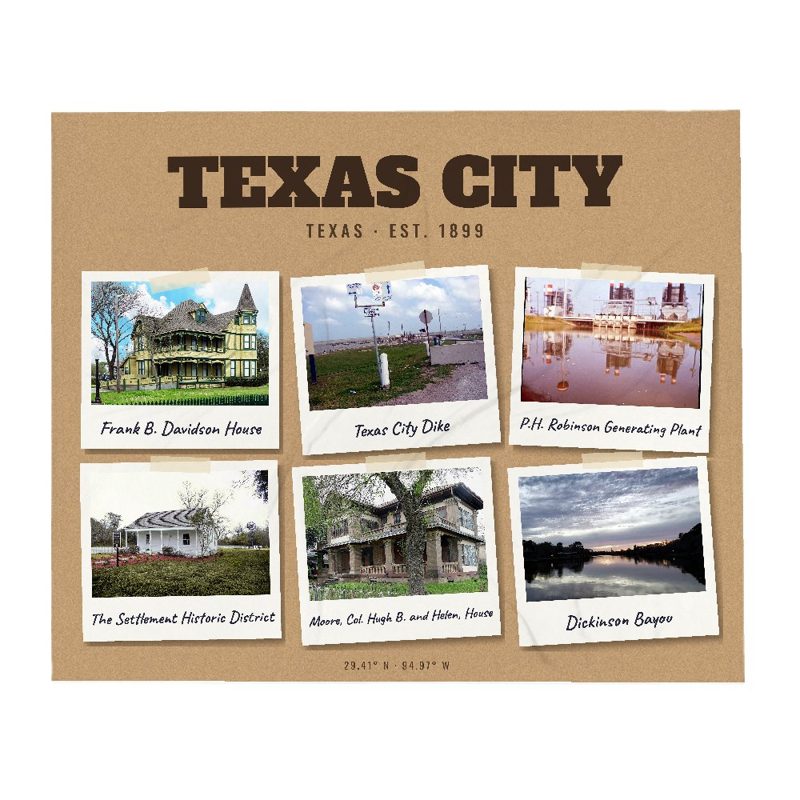
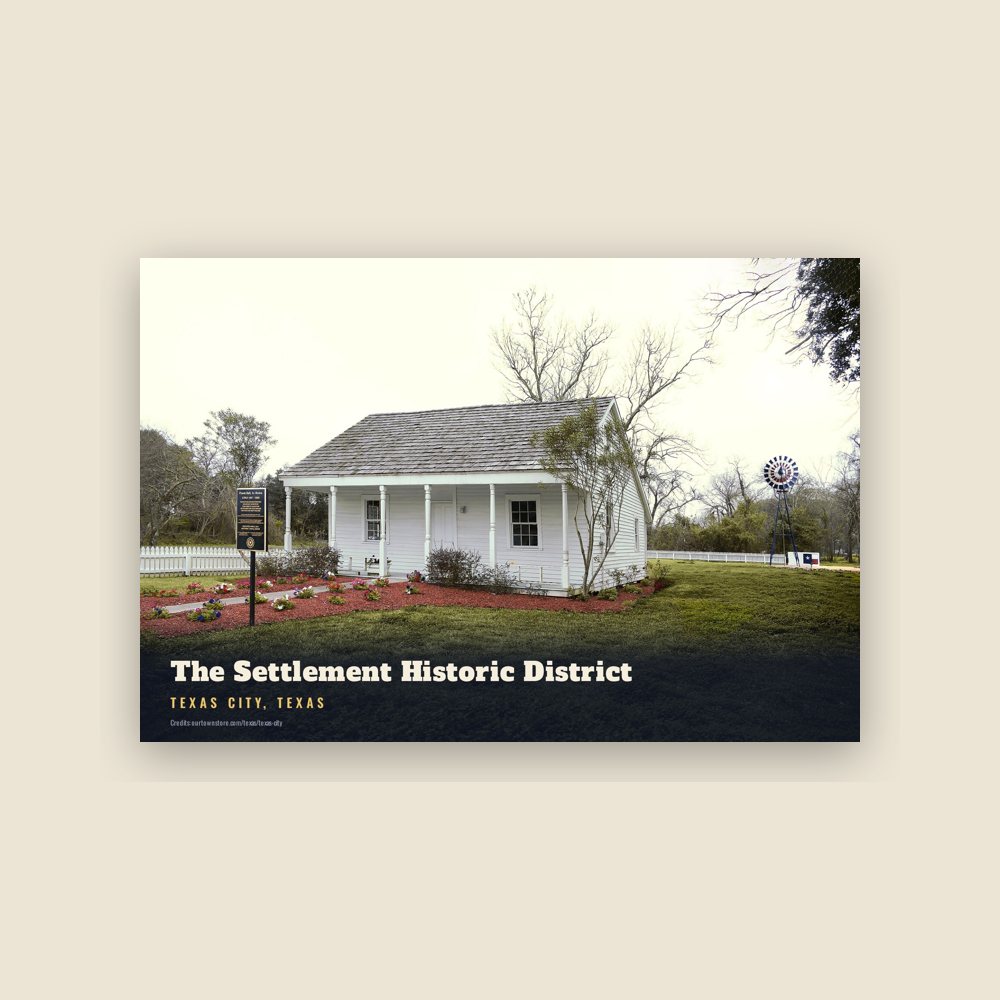
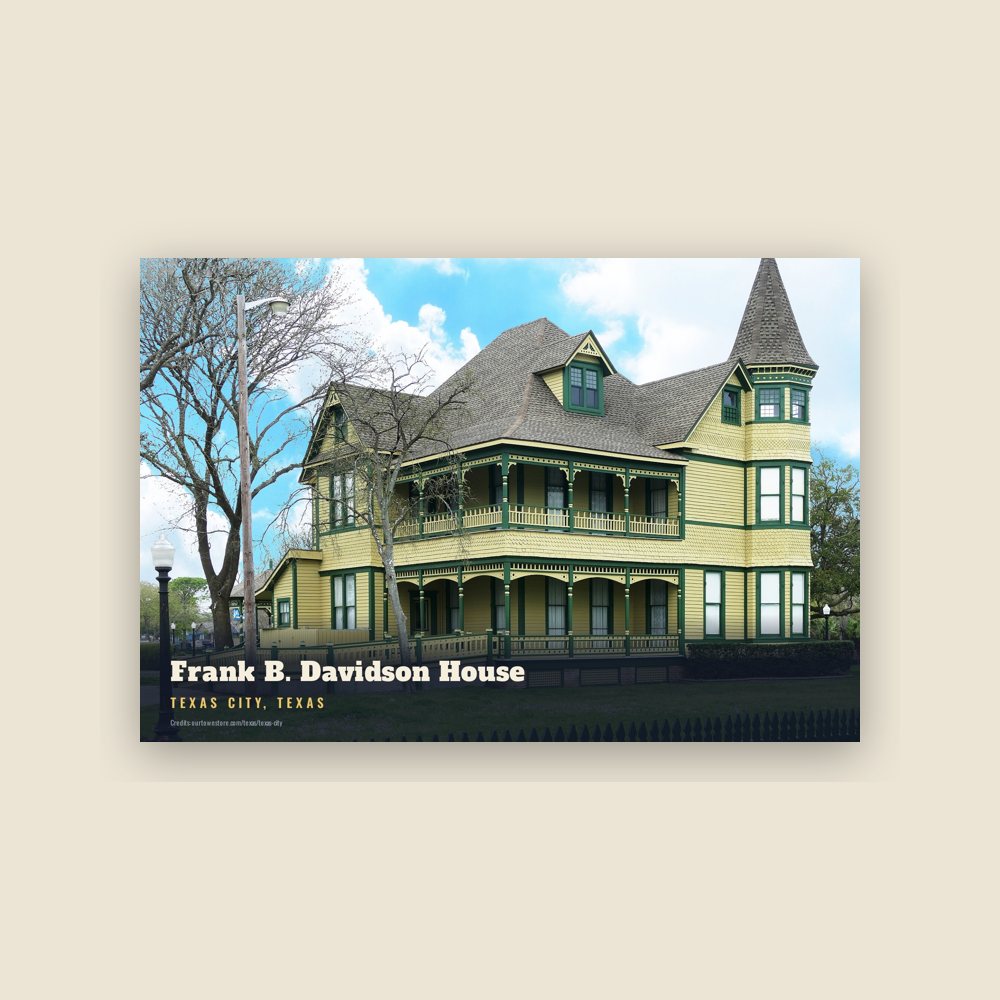
A grid of streets and avenues was laid out during the 1890s, and houses and other structures began to appear. The Davison Home, where the first childbirth in the town took place, was constructed between 1895 and 1897. As the TCIC, TCC, and TCRTC grew, urbanization expanded.
Permission was granted in 1900 to dredge the Texas City channel to a depth of 25 feet. The disastrous Galveston Hurricane of 1900 interrupted the project, washing the dredge ashore, but the Texas City port remained open after the storm passed. Even before the dredging was complete, the first ocean-going ship, SS Piqua, arrived at the port from Mexico on September 28, 1904. Dredging was completed on March 19, 1905, when the U.S. government opened a customs house in Texas City. Port growth progressed rapidly from 12 ships in 1904 to 239 in 1910.
TCRC was chartered in 1908 to build a refinery next to the port facility. For several years, it was the only Texas refinery capable of producing the byproducts wax and lubricating oil. It was later acquired and expanded by Texas oilman Sid Richardson. Three more refineries followed, making Texas City a major port for deepwater shipping of Texas petroleum products to the Atlantic Coast.
Texas City incorporated in 1911 with a mayor and commission form of government. It held its first mayoral election on September 16, which William P. Tarpey won.
The 2nd Division of the United States Army deployed to Texas City in 1913 to guard the Gulf Coast from incursions during the Mexican Revolution, essentially encamping nearly half the nation's land military personnel there due to the perceived double threat that the Mexican Revolution might spill over across the border or that Mexico might become a German ally in the incipient World War.
The military deployment also included the 1st Aero Division, and the Wright brothers trained over a dozen soldiers as military pilots, essentially turning Texas City into the birthplace of what became the United States Air Force, as the city claims at its monument of the birthplace of the Air Force at Bay Street City Park. Speed and distance records were set by pilots trained and planes flying out of Texas City's impromptu military air base.
An August 1915 hurricane completely demolished the encampment. Nine soldiers were killed. Military leaders promptly moved the camp to San Antonio.
In 1921, the TCRTC took over operations of the port facilities. Hugh B. Moore was named president of the company and began an ambitious program of expansions. He was credited with attracting a sugar refinery, a fig processing plant, a gasoline cracking plant, and a grain elevator. More warehouses and tank farms were built to support this growth. By 1925, Texas City had a population of about 3,500 and was a thriving community with two refineries producing gasoline, the Texas City Sugar Refinery, two cotton compressing facilities, and passenger bus service.
The Great Depression and competition caused the sugar refinery to fail in 1930. Economic hard times afflicted the city for a few years until the oil business returned to expansion. Republic Oil Refinery opened a gasoline refinery in 1931. In 1934, Pan American Refinery (a subsidiary of Standard Oil Company of Indiana) began operating. Moore was able to win this refinery from the Houston Ship Channel because of Texas City's location nearer the Gulf of Mexico. By the end of the 1930s, Texas City's population had grown to 5,200.
Seatrain Lines constructed a terminal at the Texas City port during 1939–1940. This was a specialized company that owned ships designed to carry railroad cars from Texas City to New York City on a weekly schedule. By 1940, Texas City was the fourth-ranked Texas port, exceeded only by Houston, Beaumont, and Port Arthur.
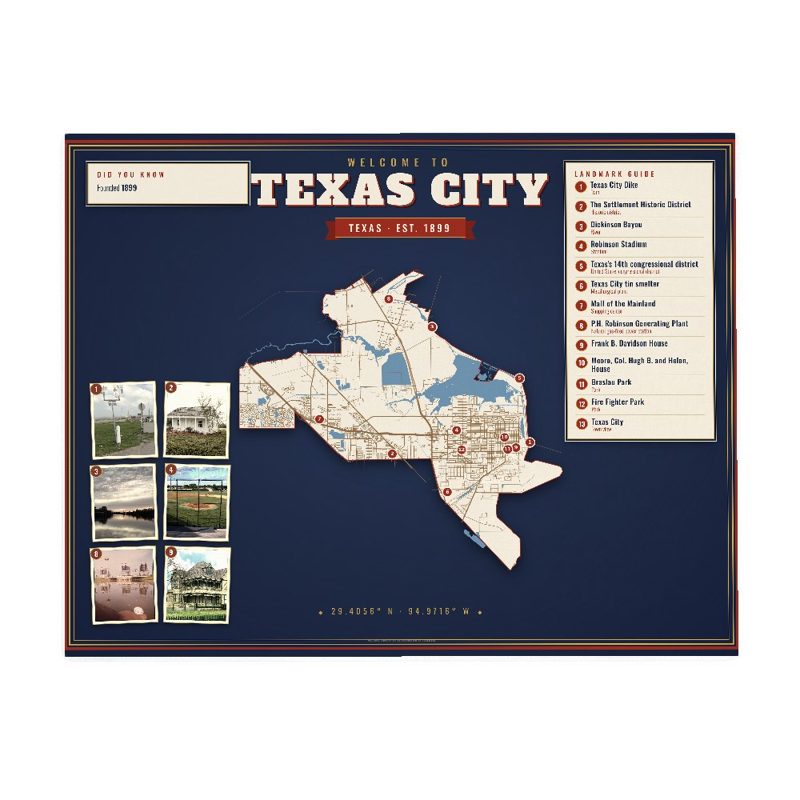
Texas City Dike
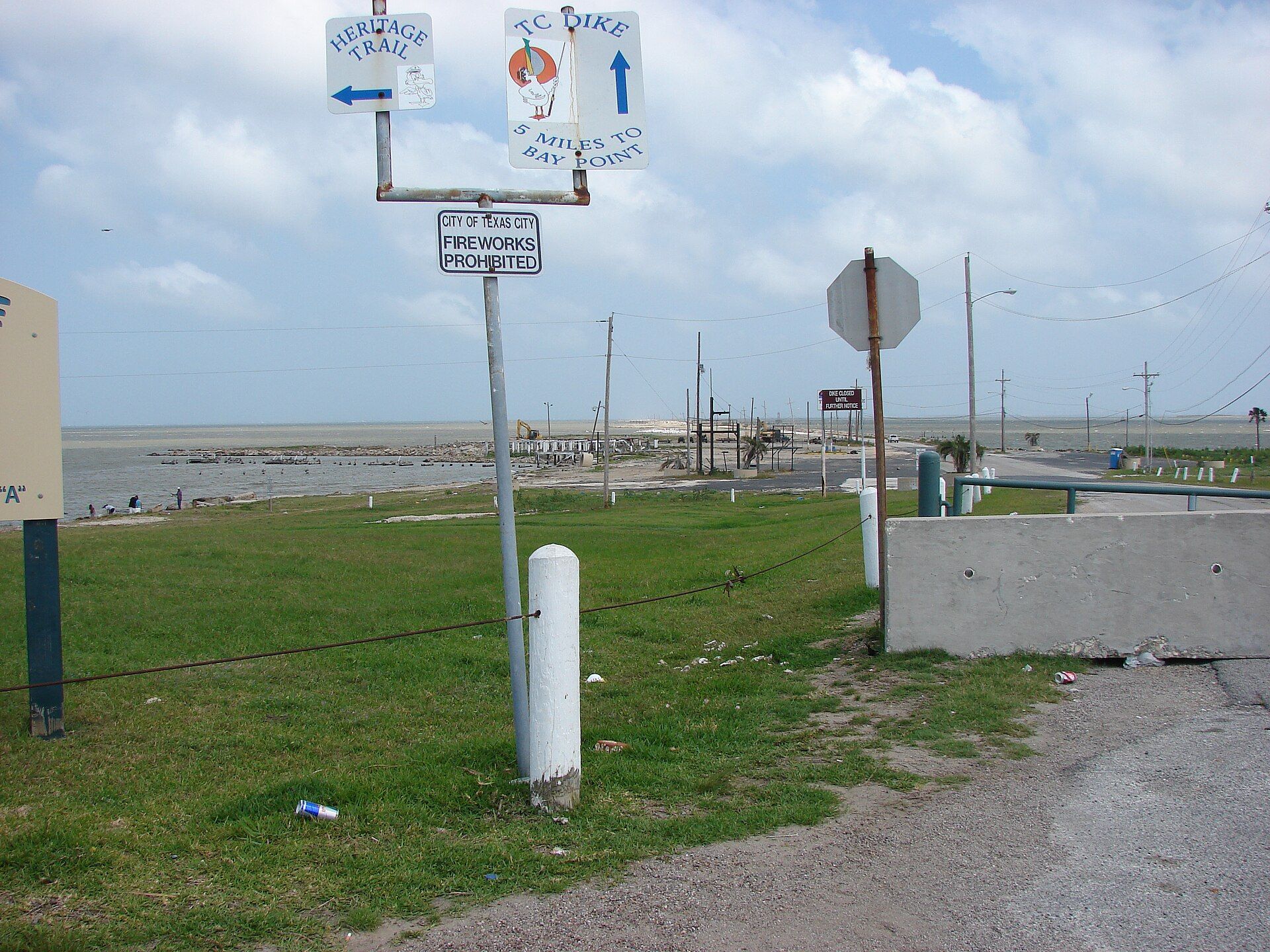
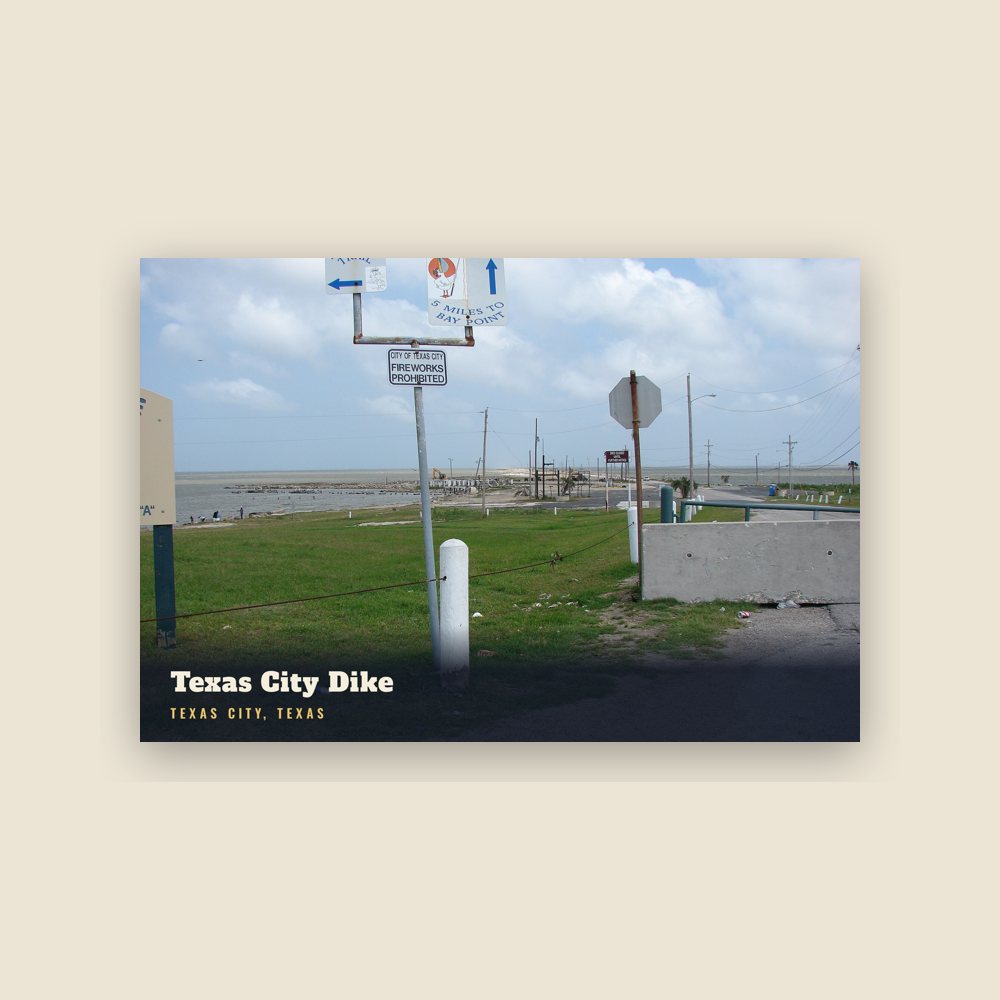
Texas City is home to the Texas City Dike, a man-made breakwater built of tumbled granite blocks in the 1930s to protect the lower Houston Ship Channel from silting. The dike, famous among locals as "the world's longest man-made fishing pier", extends roughly 5.2 mi (8 km) southeast into Galveston Bay.
World War II impact
Prosperity and industrial expansion returned as the United States became more involved in World War II. Enemy submarines had almost completely stopped the shipment of petroleum products to friendly countries from the Middle East, South America, and Southeast Asia. Texas City refineries and chemical plants worked around the clock at full capacity to supply the war effort. Realizing that all the world's tin smelters could no longer supply the U.S. demand, Defense Plant Corporation head Jesse H. Jones built the Texas City tin smelter. The government also funded construction of a petrochemical plant to make styrene monomer, a vital raw material for synthetic rubber. Monsanto Chemical Company contracted to operate the facility, which became the nucleus of an even larger petrochemical complex after the war. By 1950, the local population had reached 16,620.
1987 Marathon Oil refinery hydrogen fluoride gas release
On October 30, 1987, a crane at the Marathon Oil refinery accidentally dropped its load on a tank of liquid hydrogen fluoride, causing the release of 36,000 pounds (16,000 kg) of hydrogen fluoride gas and requiring 3,000 residents to be evacuated.