Since 1890
A short history of Seymour
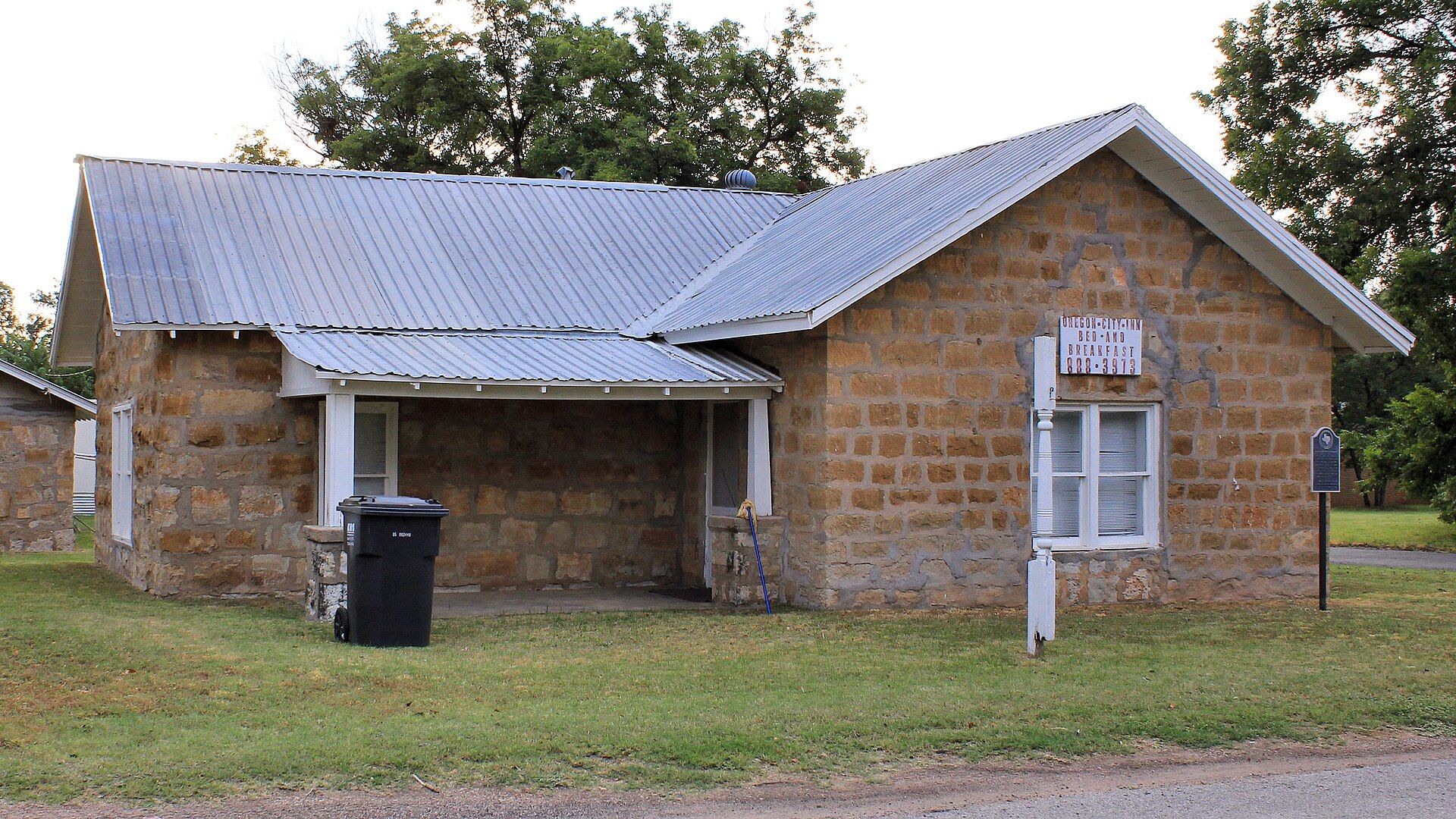
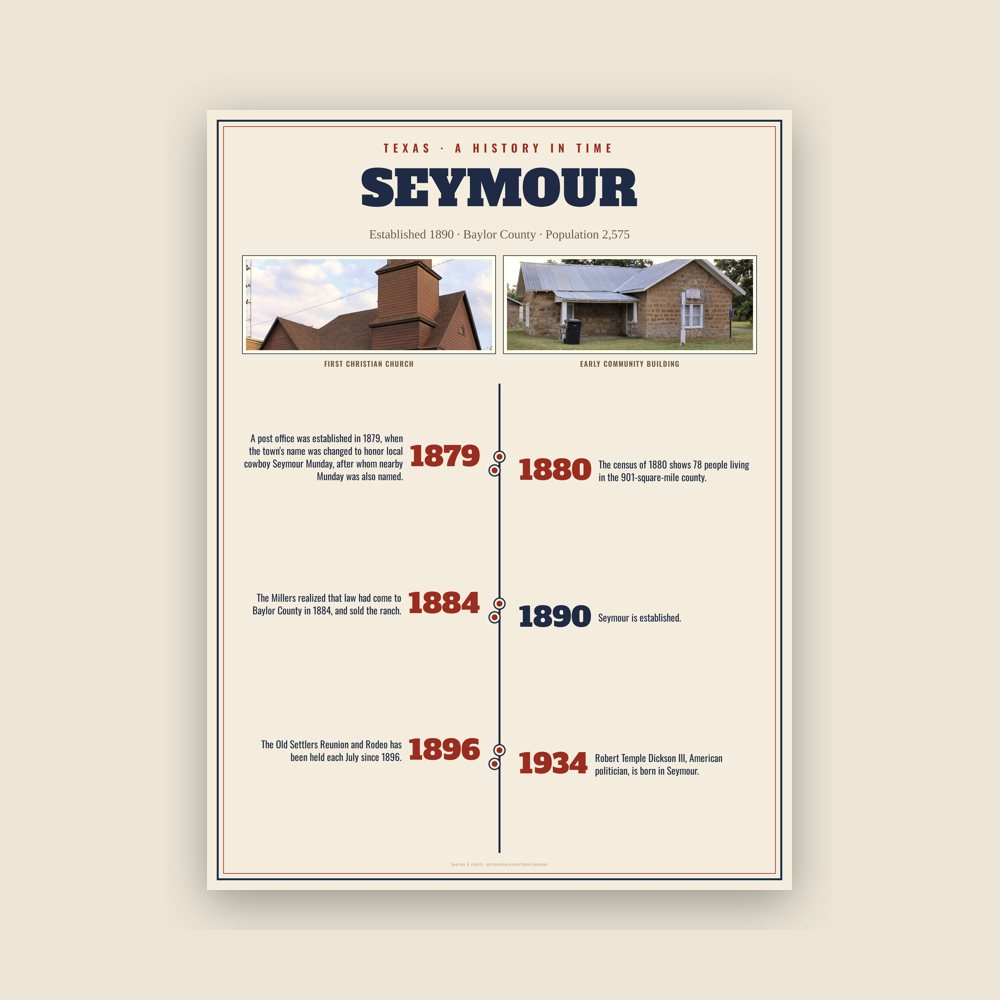
Seymour was founded by settlers from Oregon, who called the town Oregon City; it was originally located where the Western Trail crossed the Brazos River, which flows just south of the townsite. A post office was established in 1879, when the town's name was changed to honor local cowboy Seymour Munday, after whom nearby Munday was also named. The census of 1880 shows 78 people living in the 901-square-mile county. The first settlers were ranchers. During those years, the Miller brothers established a large ranch with the headquarters some 10 miles south of Seymour on Miller Creek. About 50 men were in the Miller outfit, and some of these were reportedly outlaws. Not unusually, some of the cowboys rode into town and proceeded to "shoot it up". The Millers realized that law had come to Baylor County in 1884, and sold the ranch. It was the largest transaction ever made in northwest Texas at that time. The purchasers used the Hashknife Ranch brand, which is still in use in the county.
Commerce, a newspaper, a hotel, and the county courthouse all followed soon after, as did violence between cowboys and settlers. The town experienced two distinct economic booms; the first, short-lived, was with the construction of the Wichita Valley rail line in 1880, and the second was due to the discovery of oil in 1906. The population grew from 500 in 1884 to almost 3800 in 1950; it remained around that level for more than 30 years, but has declined since to 2,575 in the 2020 census. Agribusiness, as well as some tourism from nearby Lake Kemp, has overtaken oil as the driving factor of the local economy. The Old Settlers Reunion and Rodeo has been held each July since 1896.
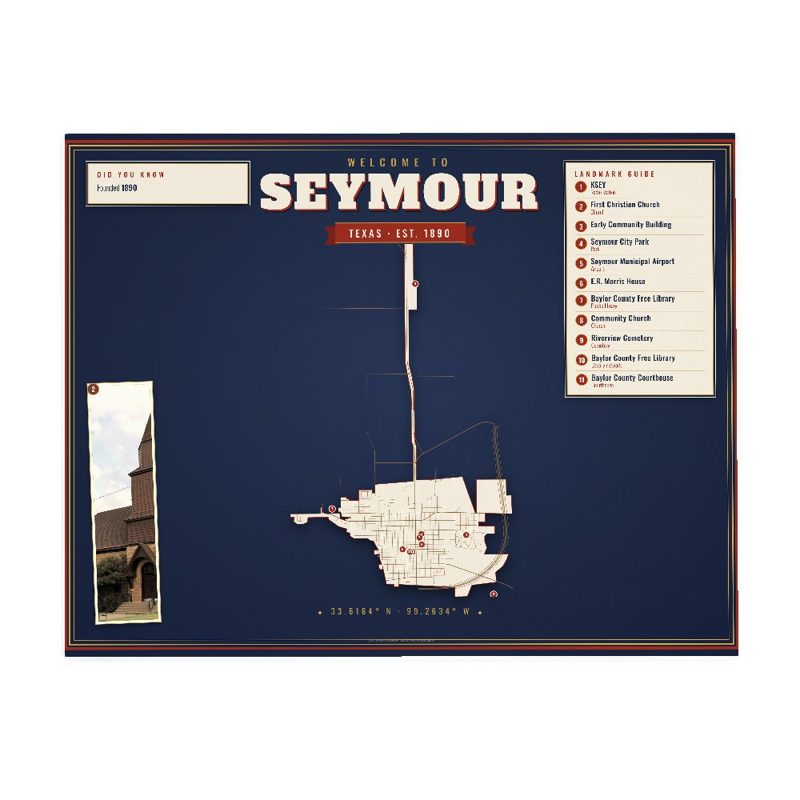
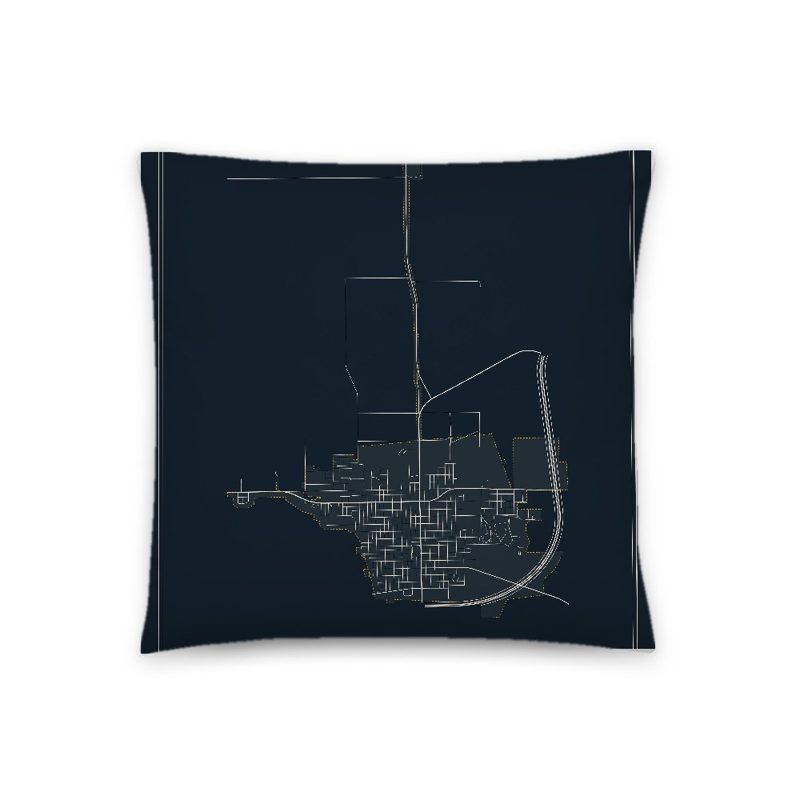
The town calls itself "the crossroads of North Texas" because it is located at the junction of five highways: U.S. highways 82, 277, 183, and 283, and State Highway 114.
Adapted (trimmed) from the Wikipedia article Seymour, Texas, revision 1379121168 by its contributors, licensed CC BY-SA 4.0.
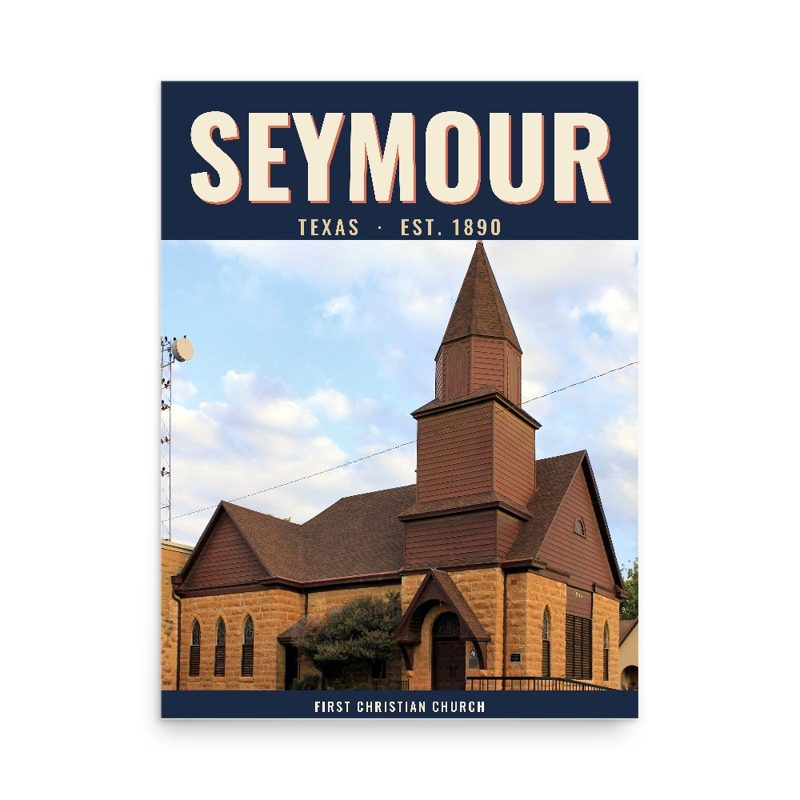
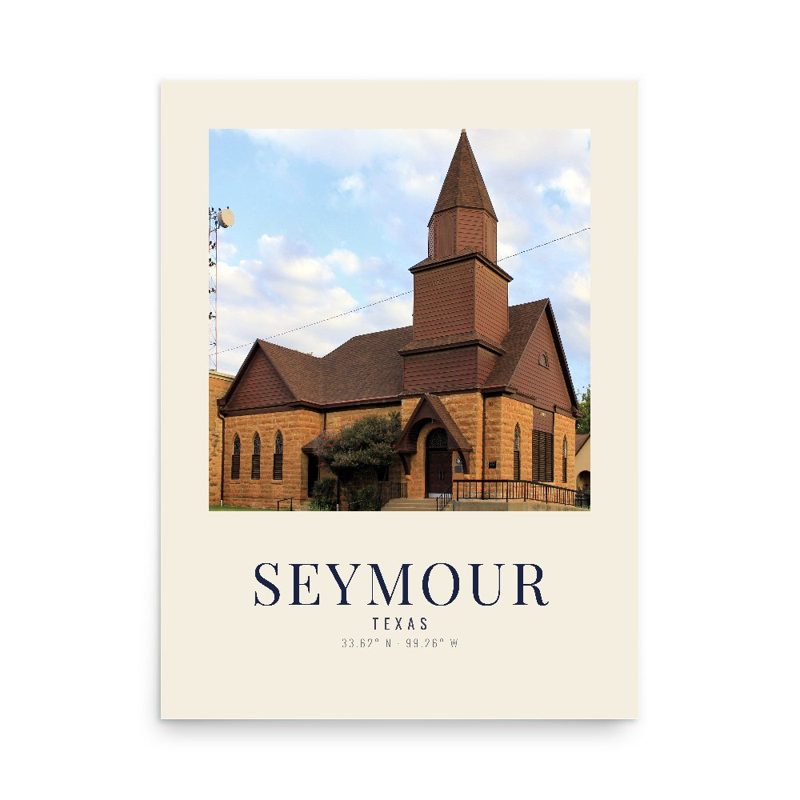

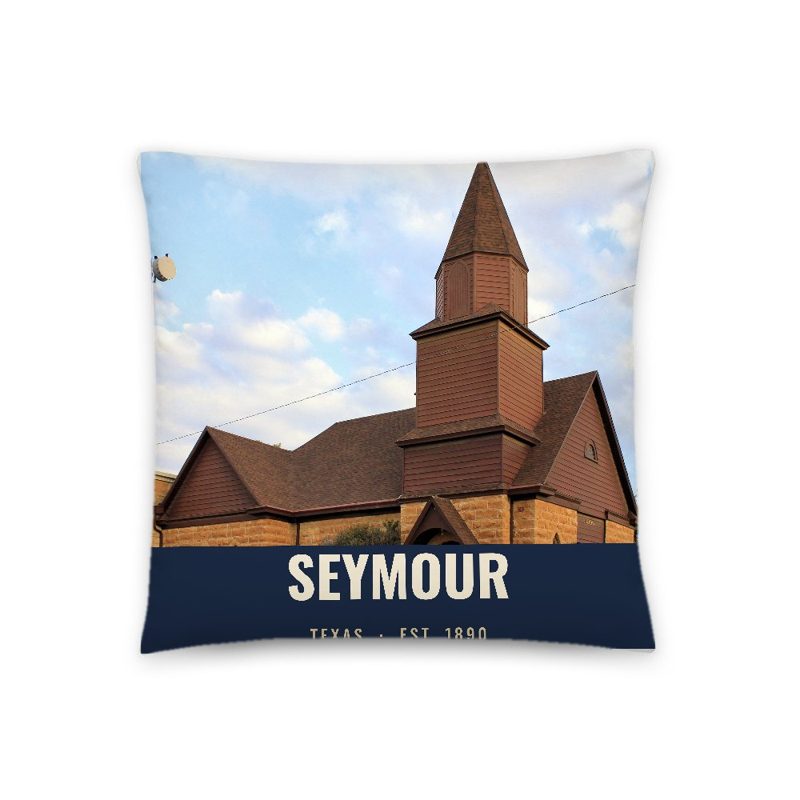


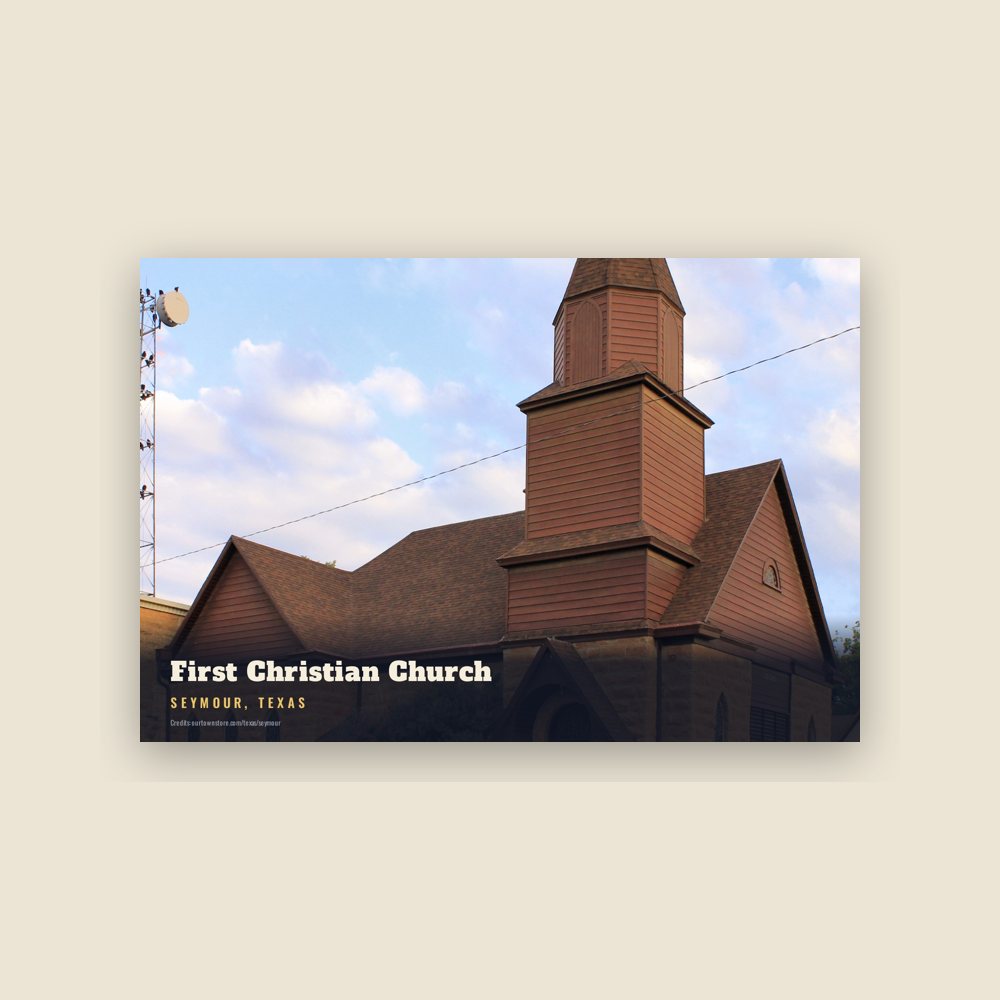
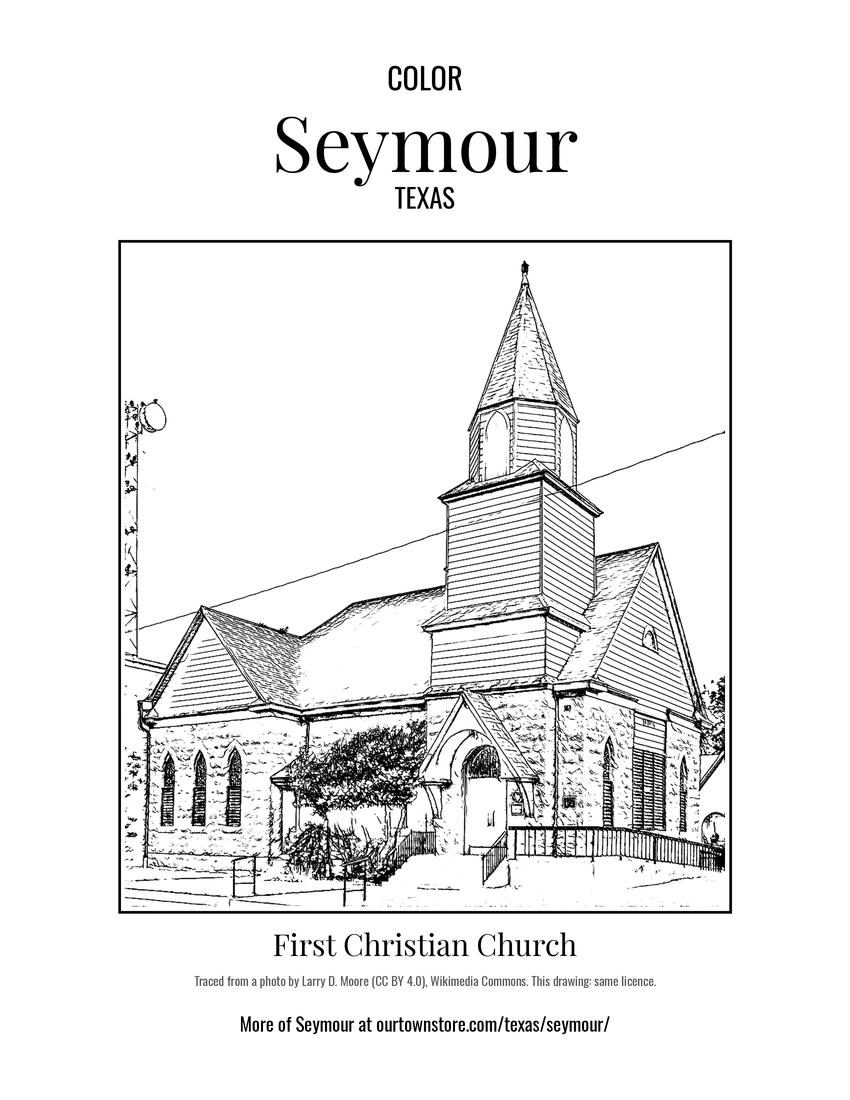 First Christian Church
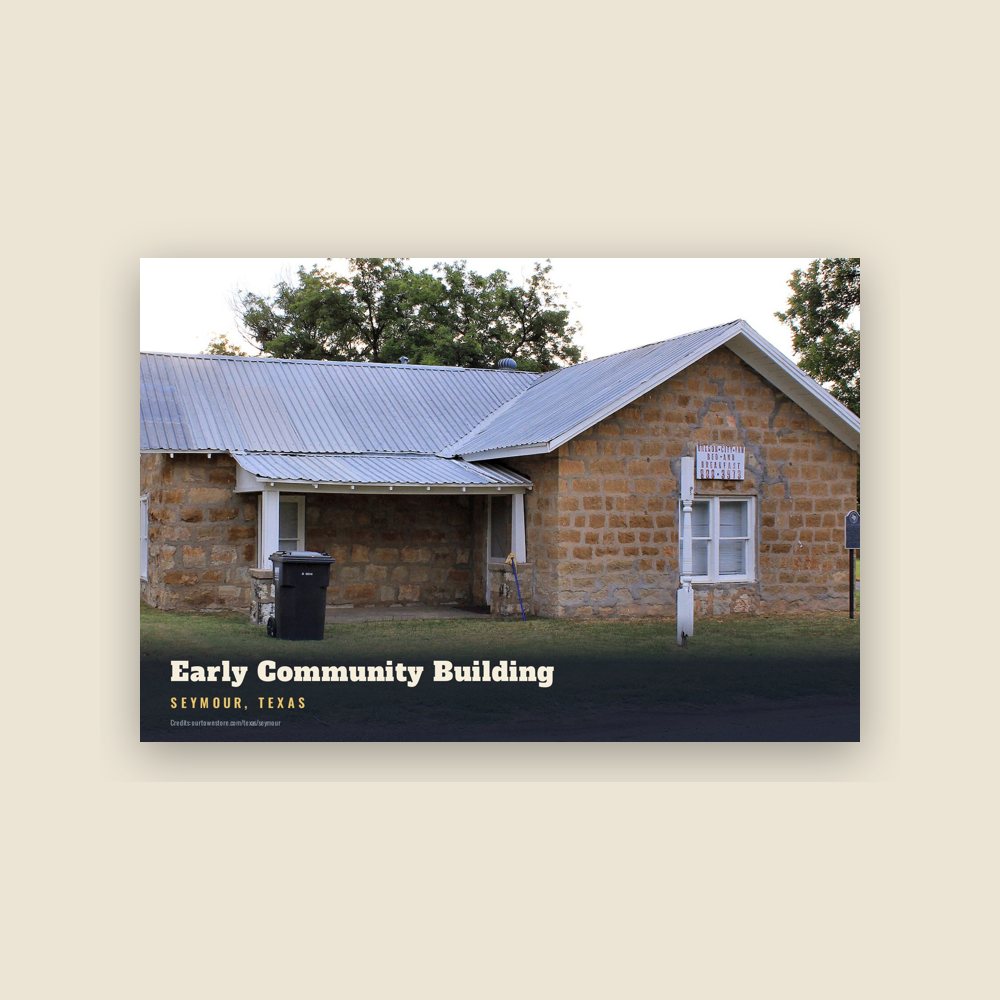
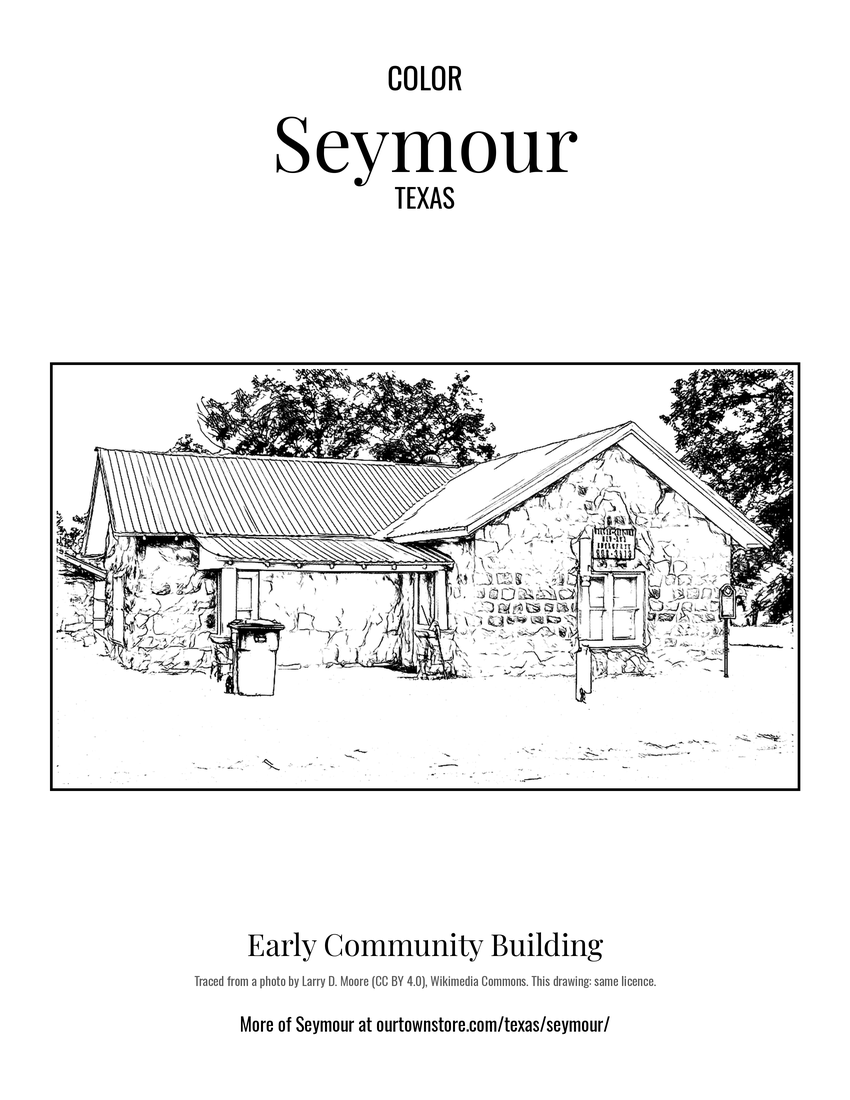 Early Community Building
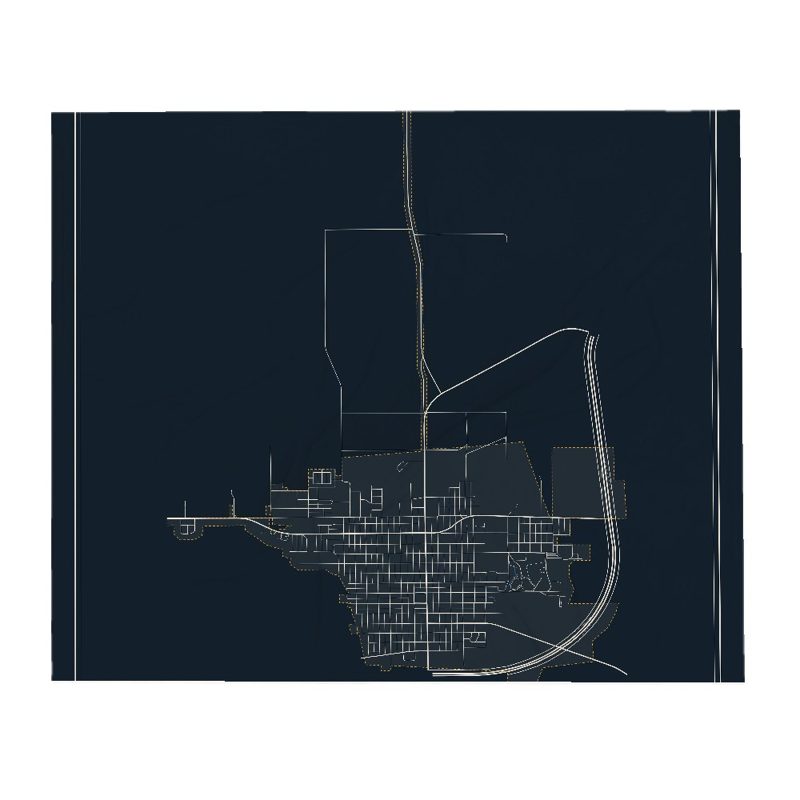
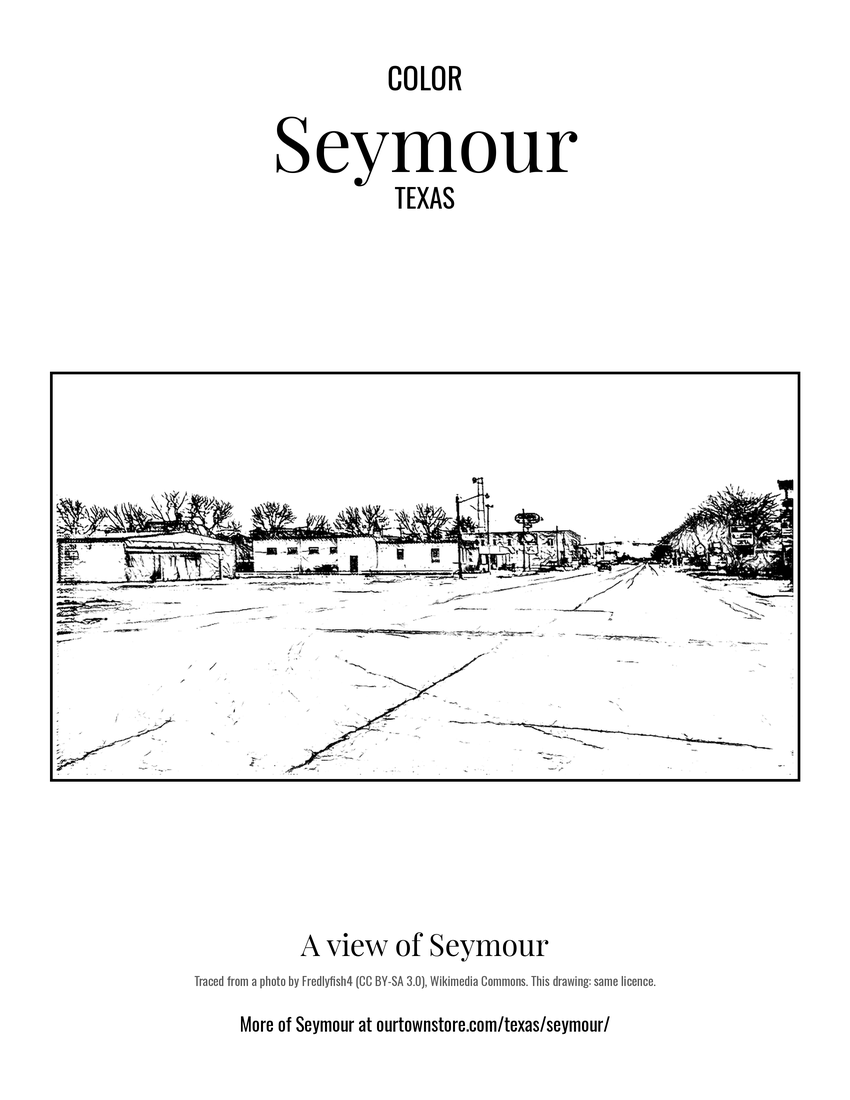 A view of Seymour