Richland Springs developed in the 19th century as a supply and processing center for local cotton growers and cattlemen. Richland Springs is the birthplace of J. D. Smith, football player.
- CountySan Saba County
- Population244 (2020 U.S. Census)
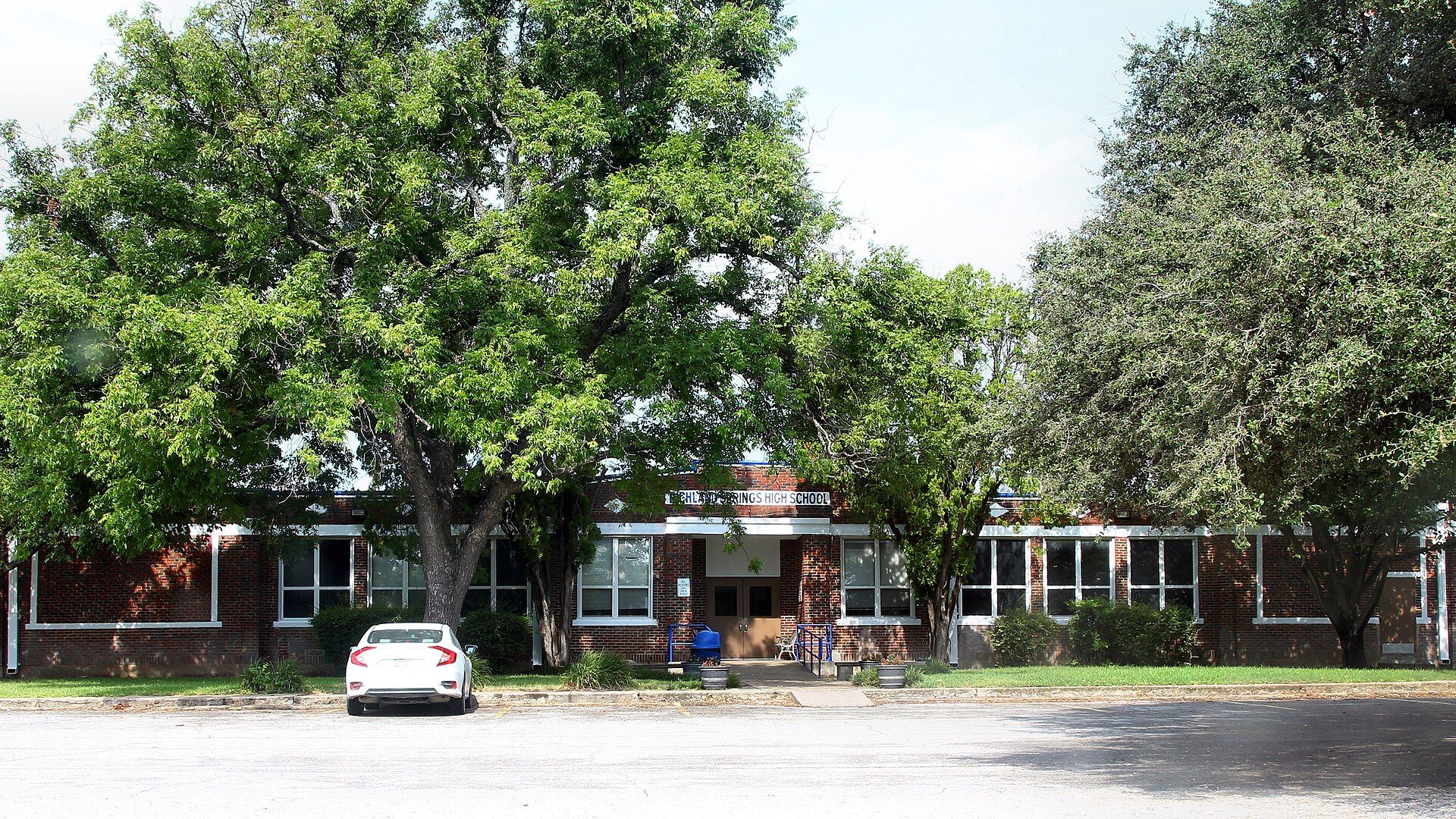
Richland Springs, Texas gifts and souvenirs: 19 designs made from Richland Springs's own map, landmarks and history, from $16 to $95. Printed to order and shipped free in the USA.
| Popular | Price |
|---|---|
| Richland Springs Hometown Ornament | $23 |
| Richland Springs Vintage Travel Poster | from $40 |
| Richland Springs Varsity Crewneck | from $57 |
| Richland Springs Est. Tee | from $33 |
| Richland Springs Town Line Mug | from $26 |
| Richland Springs Market Tote | $37 |
Ceramic keepsake, gold ribbon
Its landmark photo in a classic travel-poster layout
A local landmark photo as a gallery print
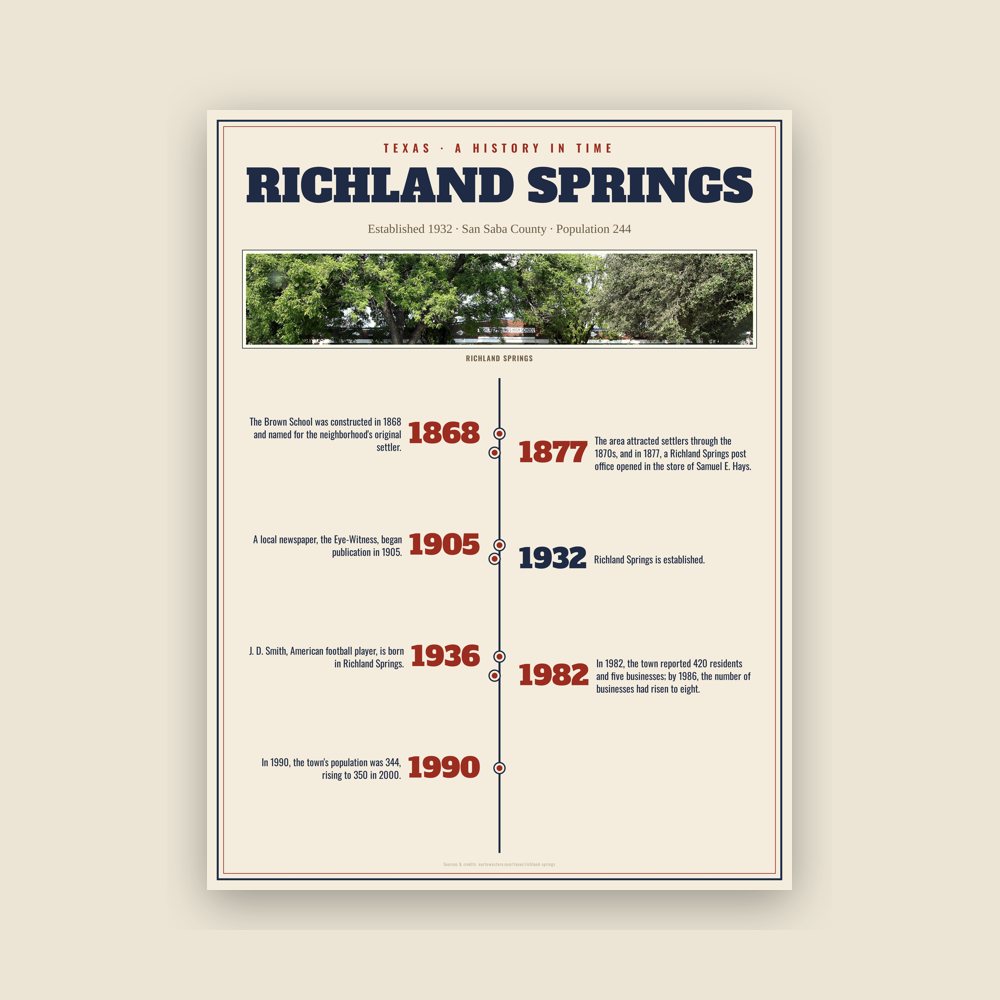
The town's story in dates, from its own records, for home or classroom
Heavy-blend fleece, street map printed on the back
Soft Bella+Canvas jersey
Kids' Bella+Canvas jersey, youth sizes
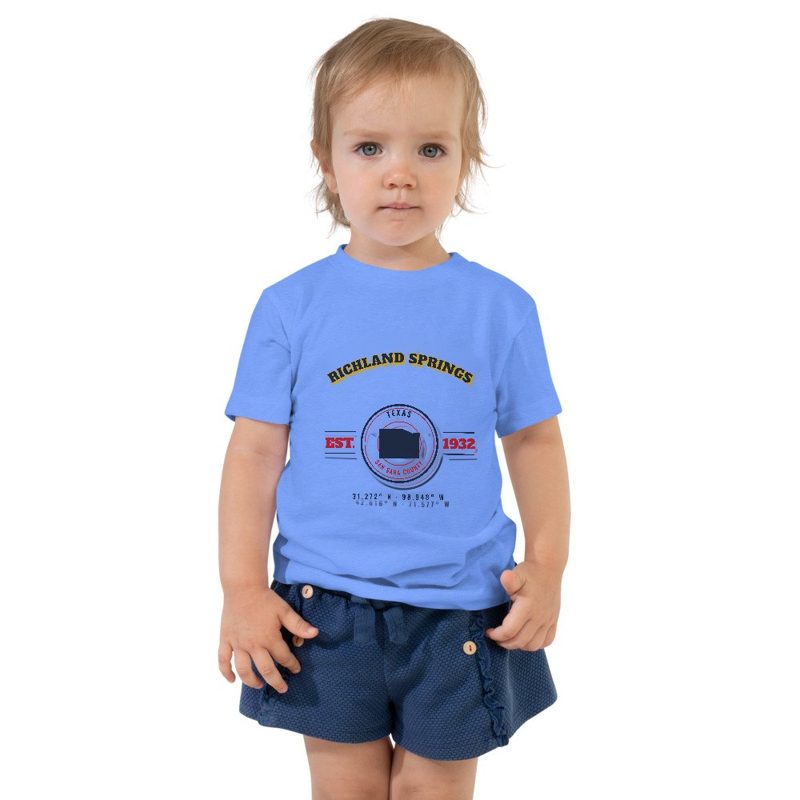
Bella+Canvas toddler jersey
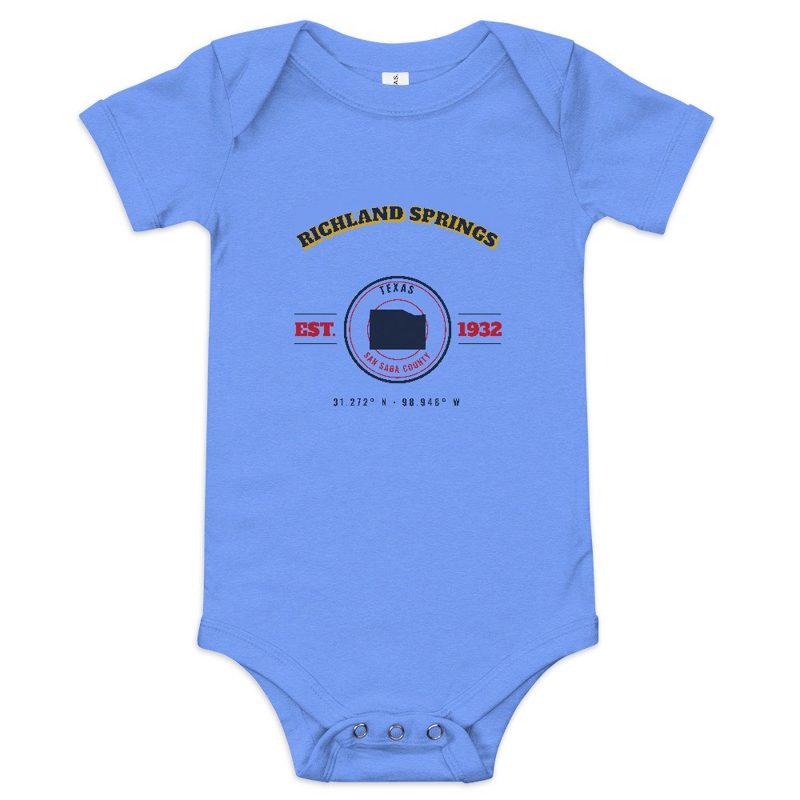
Bella+Canvas baby bodysuit
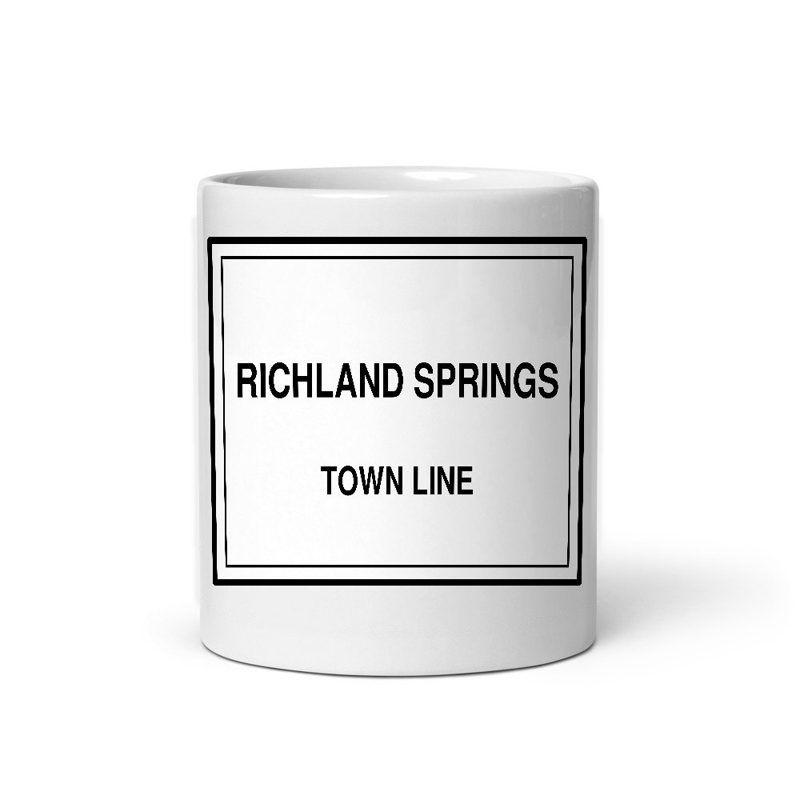
Glossy ceramic, dishwasher safe
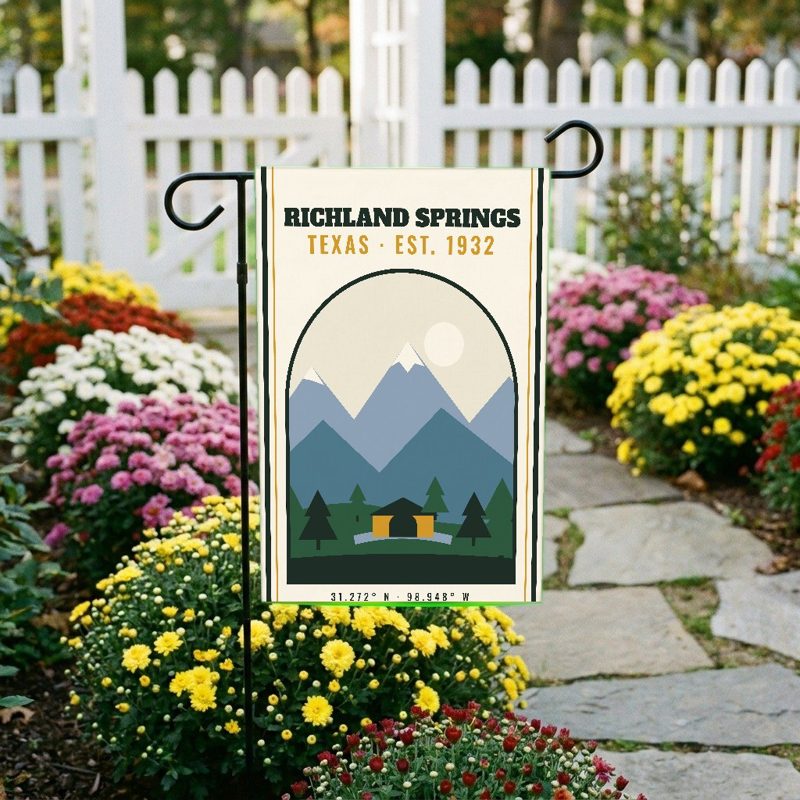
Weatherproof, for the front walk
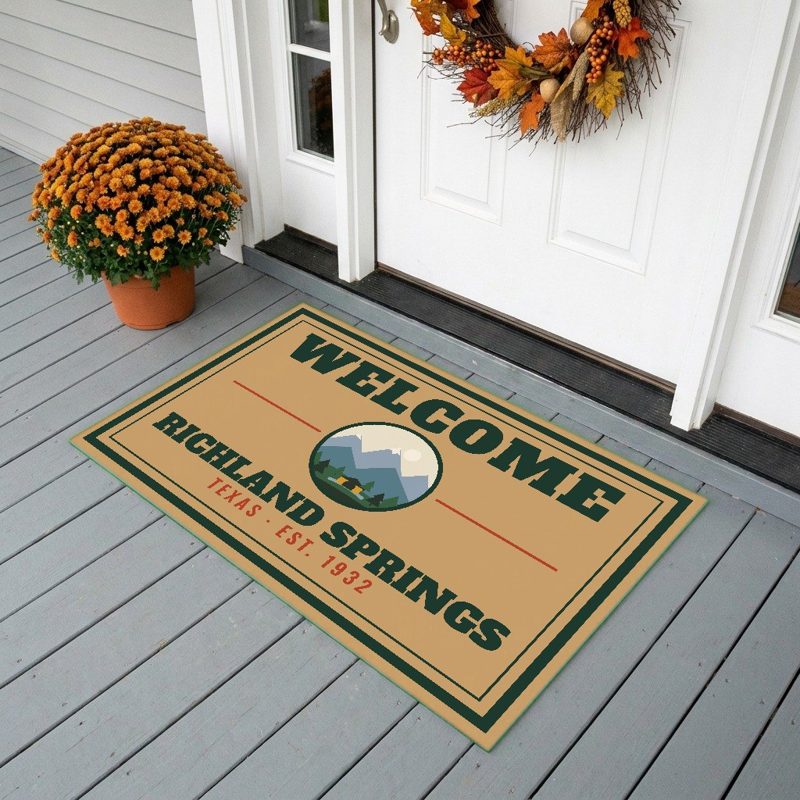
24″×16″, printed coir-look fibers, rubber back
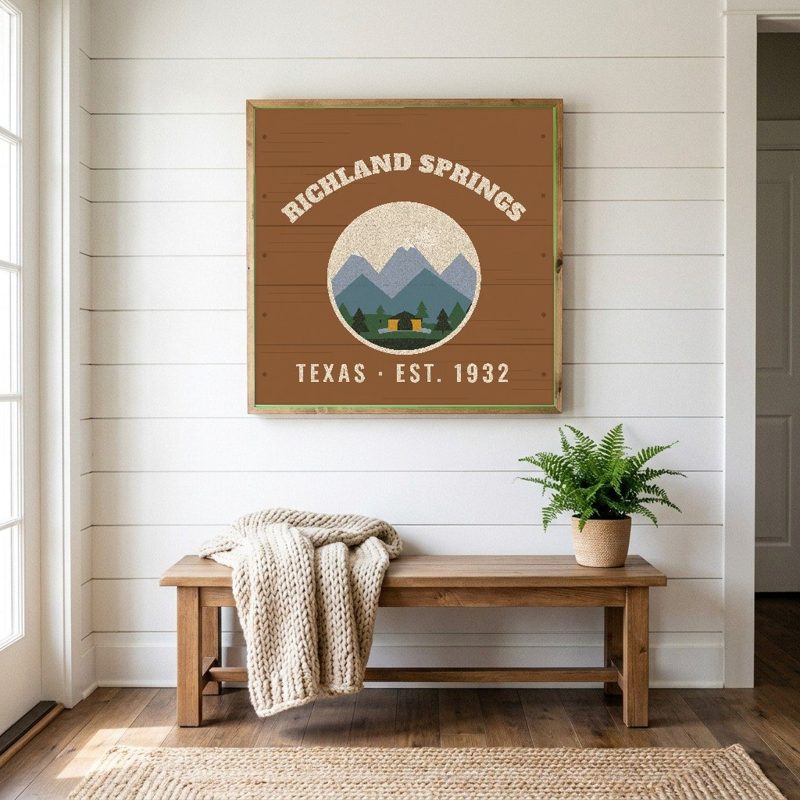
12″×12″ printed wood, ready to hang
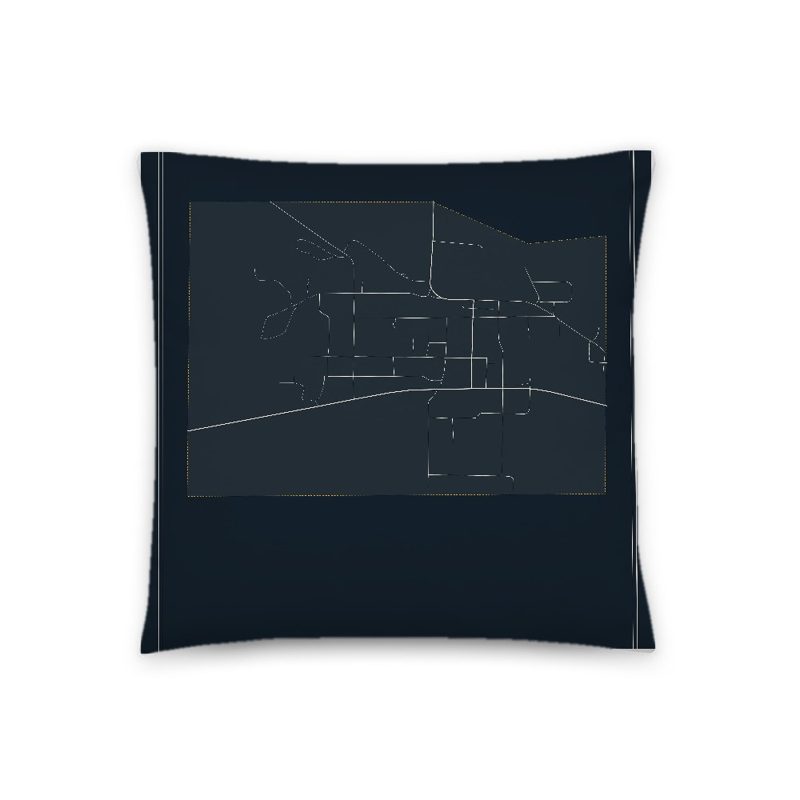
Soft-touch, zip cover
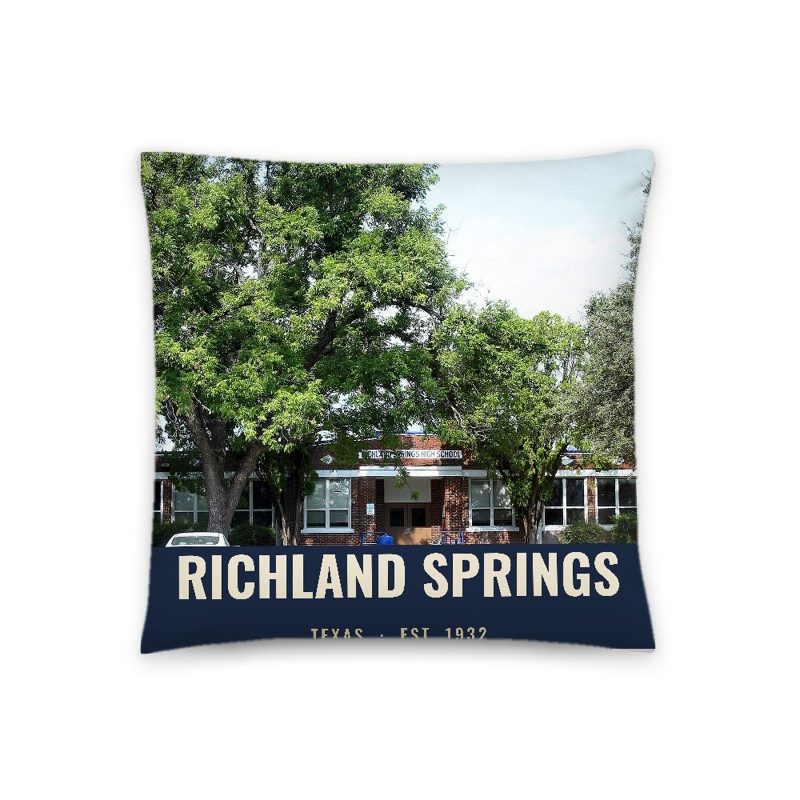
A local landmark photo with the town name, 18″×18″
Sturdy all-over-print tote
Glossy top, cork back
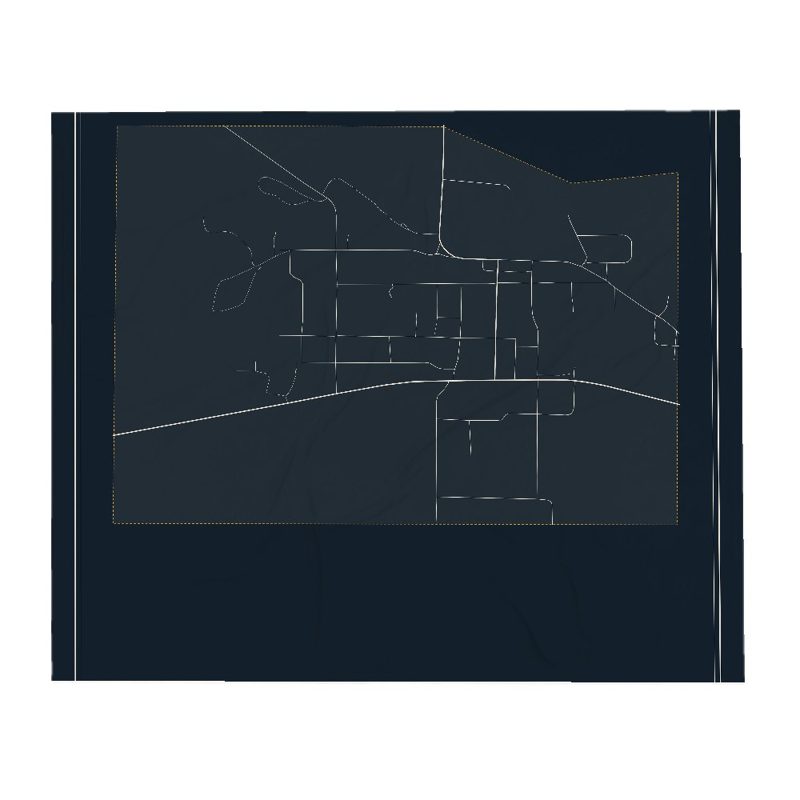
Soft fleece, 50″×60″
20 oz, double-wall stainless
Richland Springs developed in the 19th century as a supply and processing center for local cotton growers and cattlemen. Richland Springs is the birthplace of J. D. Smith, football player.
Richland Springs developed in the 19th century as a supply and processing center for local cotton growers and cattlemen. Jackson J. Brown and his family settled near the springs on Richland Springs Creek (then known as Richland Creek) in December 1854 and were soon followed by the Tankersley and Duncan families. A private fort, Fort Duncan, was established near the springs in the late 1850s when trouble arose with Indians on the frontier, but it apparently fell into disuse shortly thereafter. The Brown School was constructed in 1868 and named for the neighborhood's original settler. The area attracted settlers through the 1870s, and in 1877, a Richland Springs post office opened in the store of Samuel E. Hays.
The community took its name from the nearby springs and from local enthusiasm for the agricultural promise of the region. By 1890, local production of cotton, grains, and livestock supported a settlement of 150 residents, including a justice of the peace precinct, a constabulary, and several commercial and craft businesses. A local newspaper, the Eye-Witness, began publication in 1905. Not long after, the First State Bank was organized, and in 1911, completion of a trunk line for the Gulf, Colorado and Santa Fe Railway linked the town with the main line between Galveston and Amarillo.
Richland Springs incorporated in 1932 and adopted a mayor-council form of city government. With a population nearing 500 and as many as 40 businesses, the town prospered until the onset of the Great Depression. World War II reversed the decline of the 1930s, and by the early 1950s, residents numbered 600. The number of businesses still had not returned to predepression levels when a three-year drought in the mid-1950s crippled the local economy again. The town's only bank failed, and within a decade, its residential and business populations had fallen by nearly half. An uneven recovery from the nadir of the 1960s was based on the production of local fruit and nut growers. In 1982, the town reported 420 residents and five businesses; by 1986, the number of businesses had risen to eight. In 1990, the town's population was 344, rising to 350 in 2000.
Adapted (trimmed) from the Wikipedia article Richland Springs, Texas, revision 1380622268 by its contributors, licensed CC BY-SA 4.0.
We share a part of every Richland Springs sale with local partners, and we'd love to print from your collection. Old photographs, maps and postcards make the best keepsakes.
Partner with usA favorite landmark, your street, a school or team, an anniversary gift, a different product. Tell us and we'll get back to you by email.
1 free coloring page of Richland Springs, each traced from a photo of a local landmark. Print them at home, at school or for story hour.
Richland Springs's population was 244 in the 2020 U.S. Census, down from 333 in 2000.
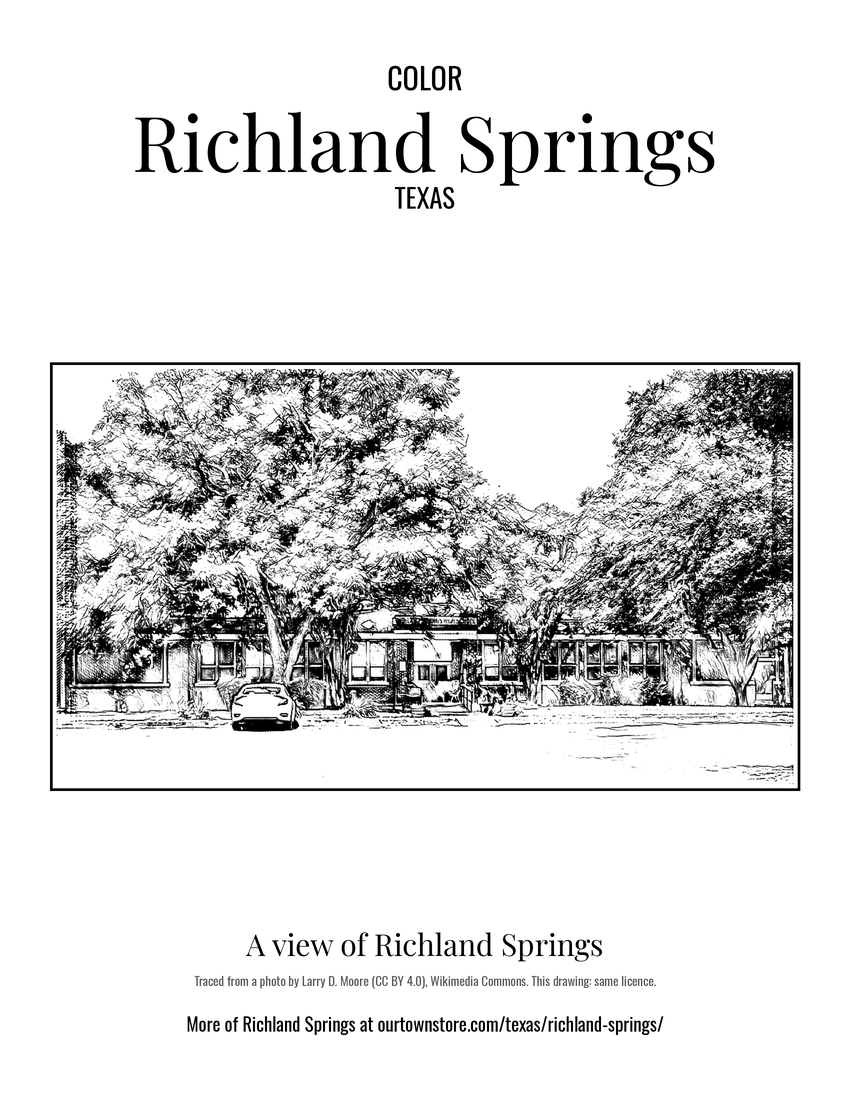 A view of Richland Springs