Since 1842
A short history of Refugio
Before Spanish colonization, the site of present-day Refugio was a seasonal camp of the Karankawa people, particularly the Copane band. Spanish authorities knew the area by the mid-18th century, and José de Escandón considered it for a settlement and presidio.
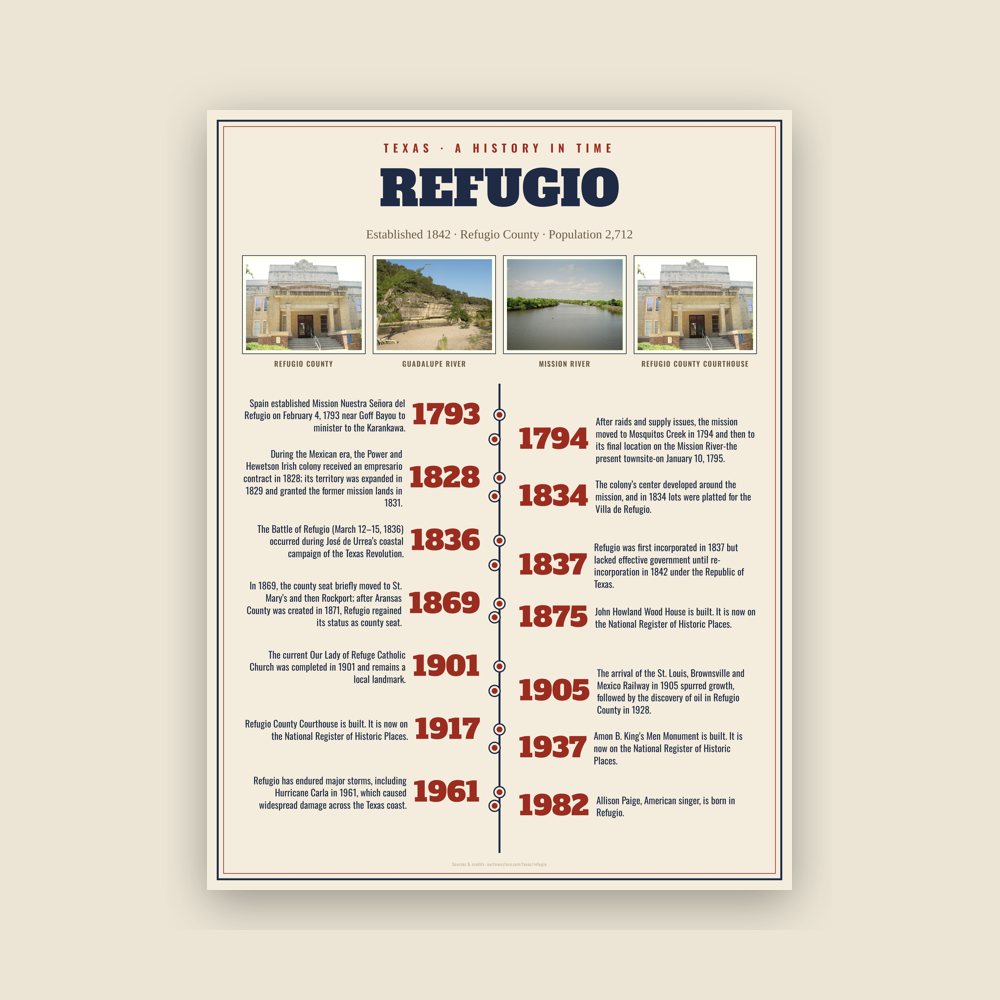
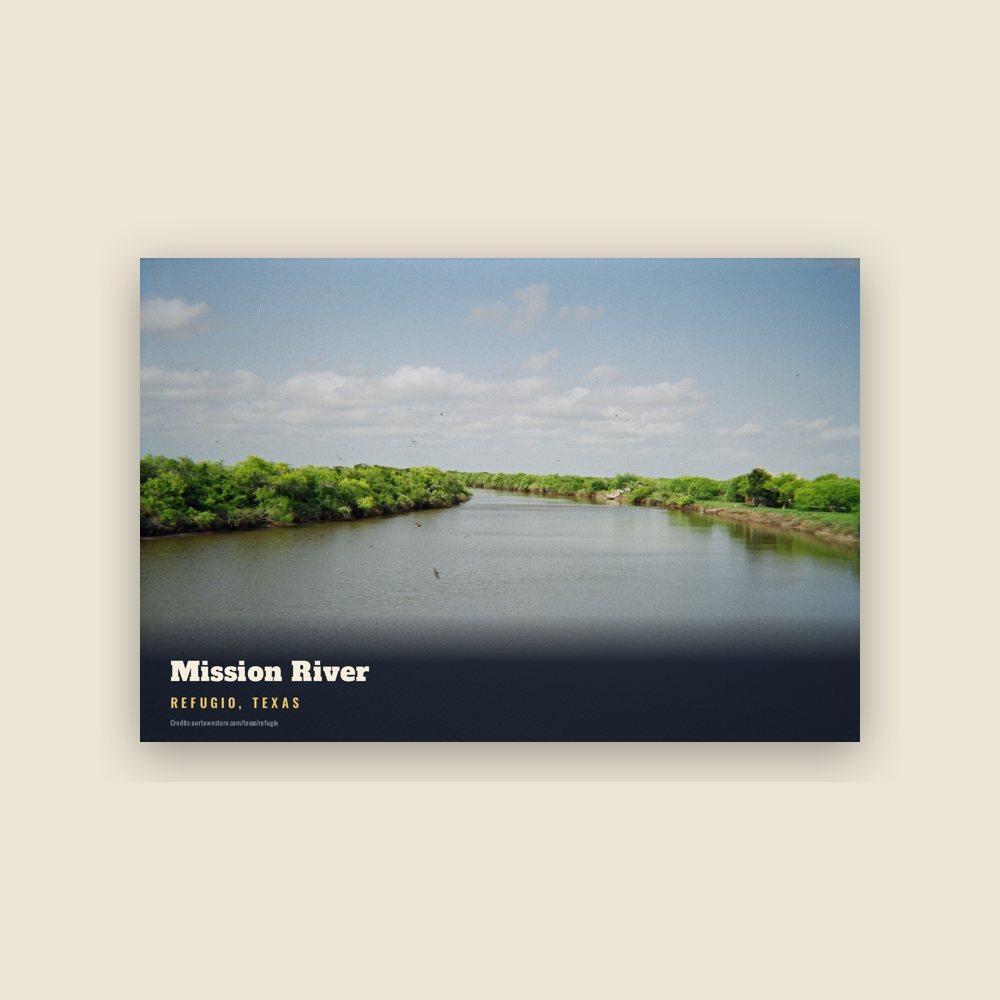
Spain established Mission Nuestra Señora del Refugio on February 4, 1793 near Goff Bayou to minister to the Karankawa. After raids and supply issues, the mission moved to Mosquitos Creek in 1794 and then to its final location on the Mission River-the present townsite-on January 10, 1795. It was the last mission founded in Texas and was secularized in 1830.
During the Mexican era, the Power and Hewetson Irish colony received an empresario contract in 1828; its territory was expanded in 1829 and granted the former mission lands in 1831. The colony’s center developed around the mission, and in 1834 lots were platted for the Villa de Refugio. Many Irish families from County Wexford arrived that year, joining Mexican settlers.
The Battle of Refugio (March 12–15, 1836) occurred during José de Urrea’s coastal campaign of the Texas Revolution. Texian detachments under Amon B. King and William Ward fought Urrea’s forces near the mission, resulting in a Mexican victory. Many Texians captured at Refugio were executed later in the Goliad massacre.
Refugio was first incorporated in 1837 but lacked effective government until re-incorporation in 1842 under the Republic of Texas. In 1869, the county seat briefly moved to St. Mary’s and then Rockport; after Aransas County was created in 1871, Refugio regained its status as county seat.
The arrival of the St. Louis, Brownsville and Mexico Railway in 1905 spurred growth, followed by the discovery of oil in Refugio County in 1928. Major fields such as the Tom O'Connor Field made the area a significant petroleum producer. Ranching also shaped the region, led by Irish immigrant Thomas O’Connor, whose family holdings became among the largest in Texas.
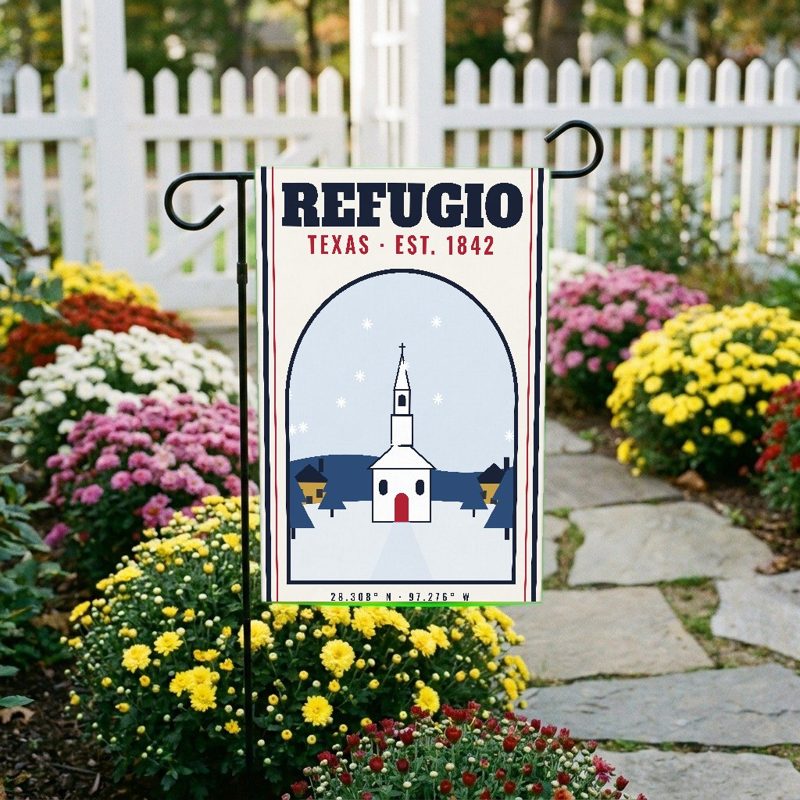
Religious continuity persisted at the mission site. The current Our Lady of Refuge Catholic Church was completed in 1901 and remains a local landmark.
Refugio has endured major storms, including Hurricane Carla in 1961, which caused widespread damage across the Texas coast.
Adapted (trimmed) from the Wikipedia article Refugio, Texas, revision 1378580192 by its contributors, licensed CC BY-SA 4.0.
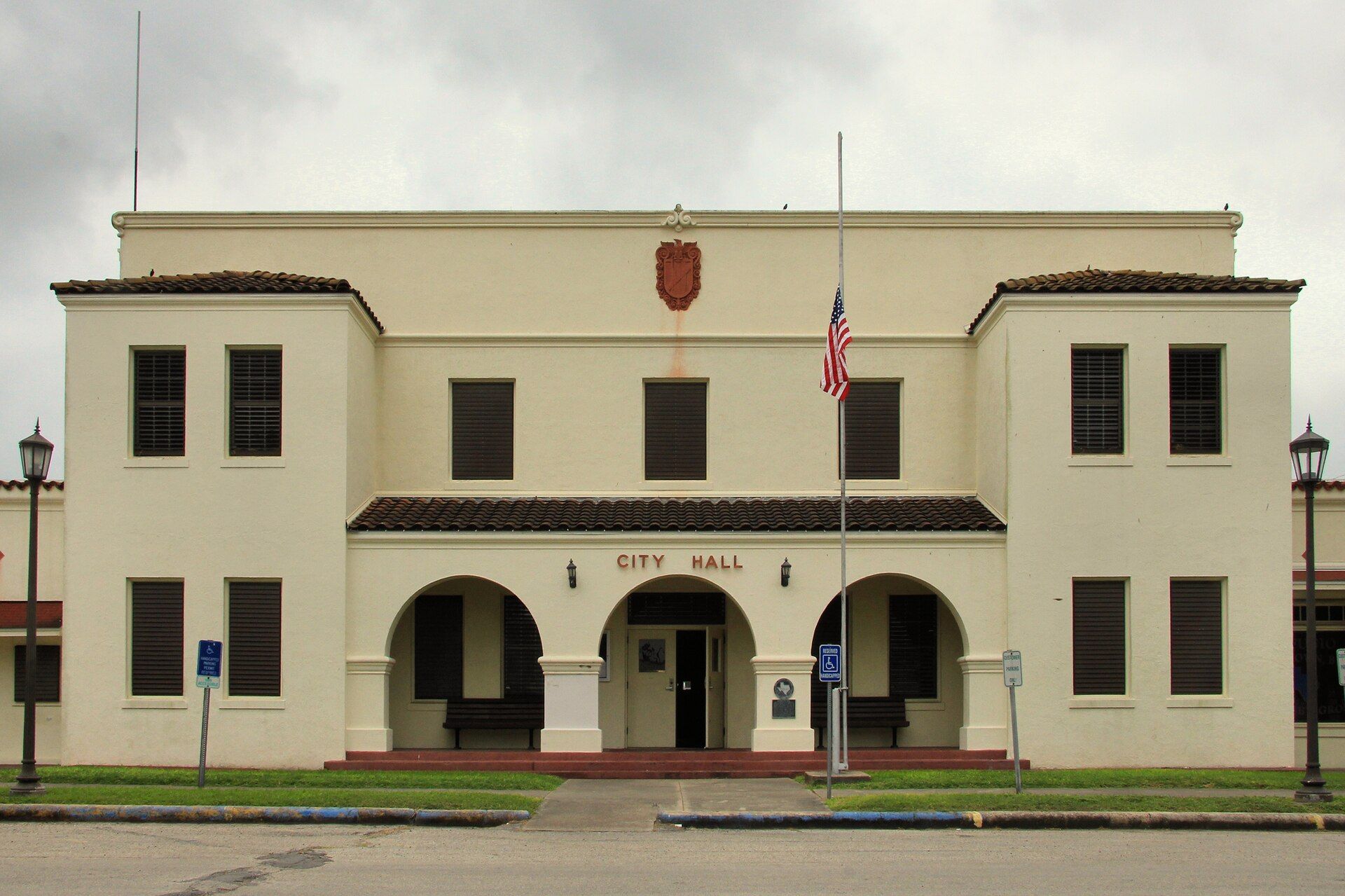
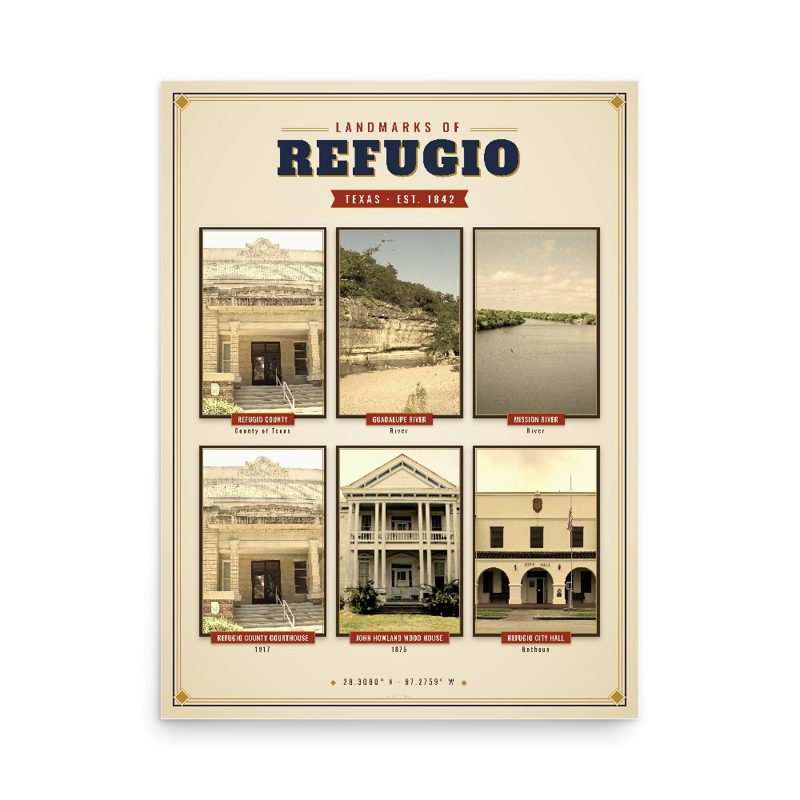

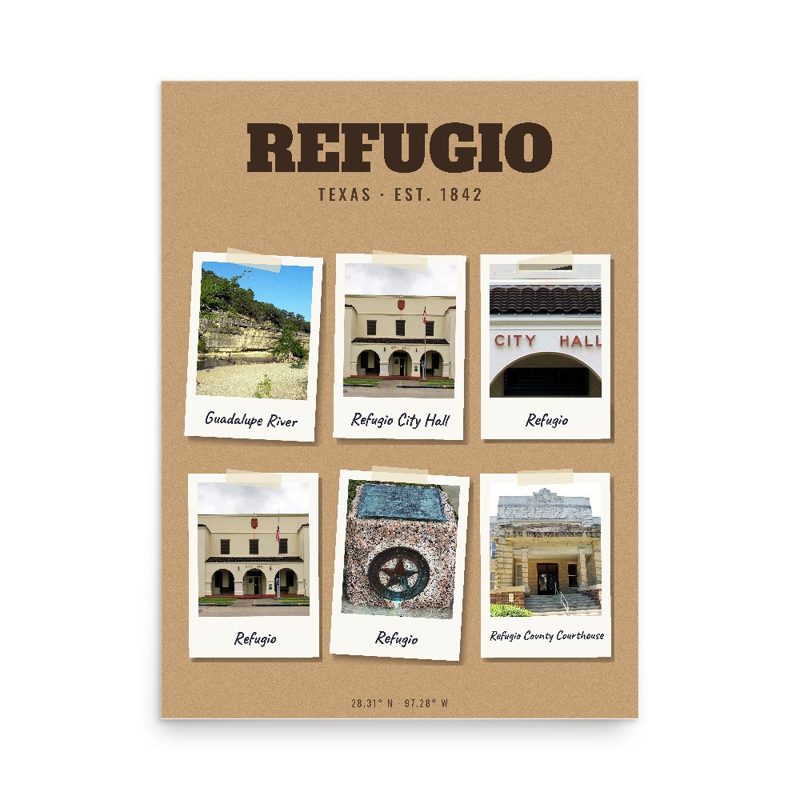
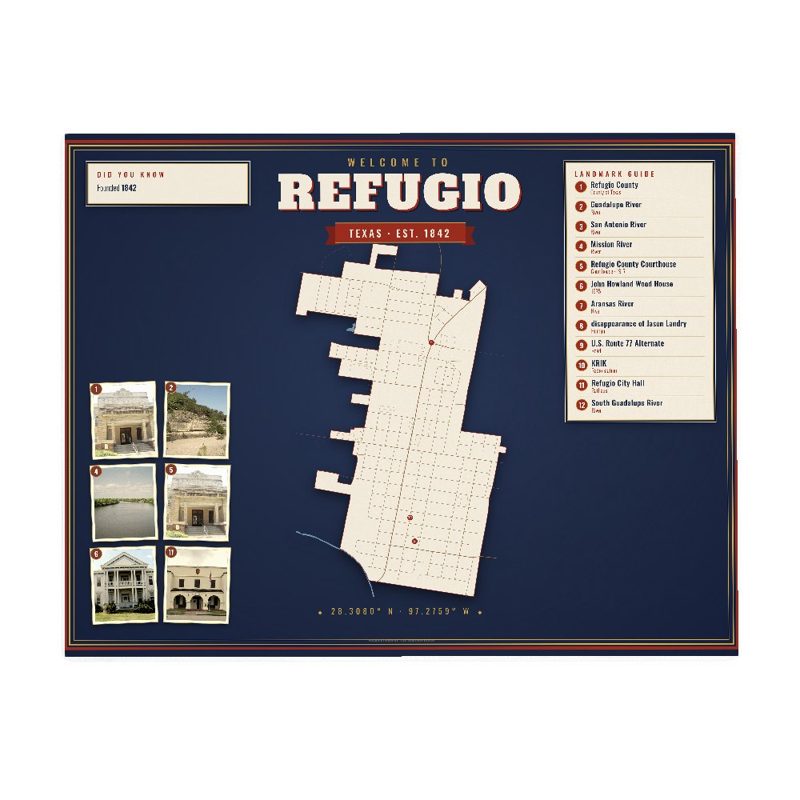













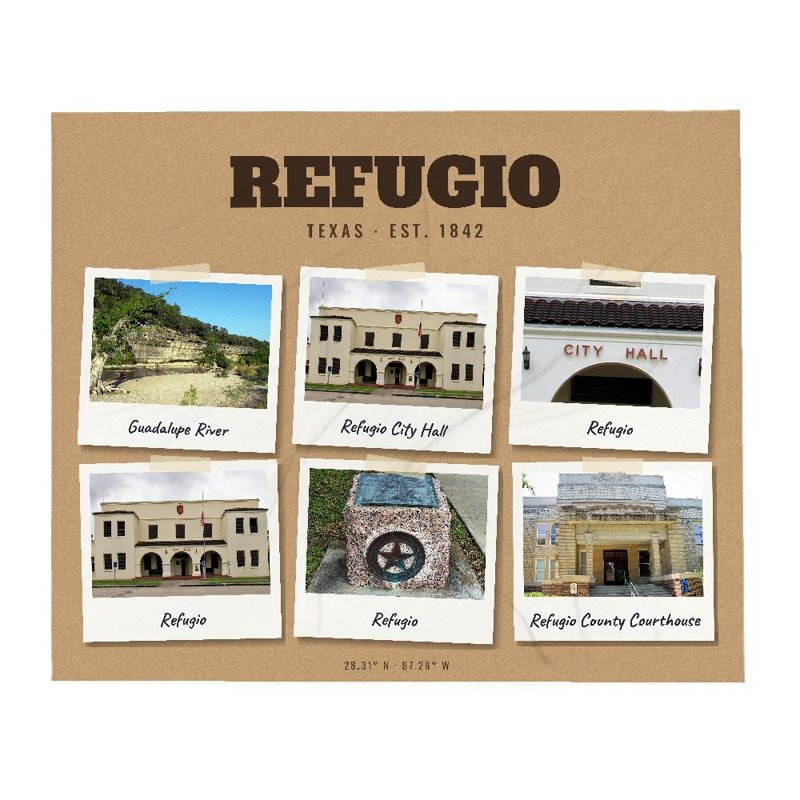
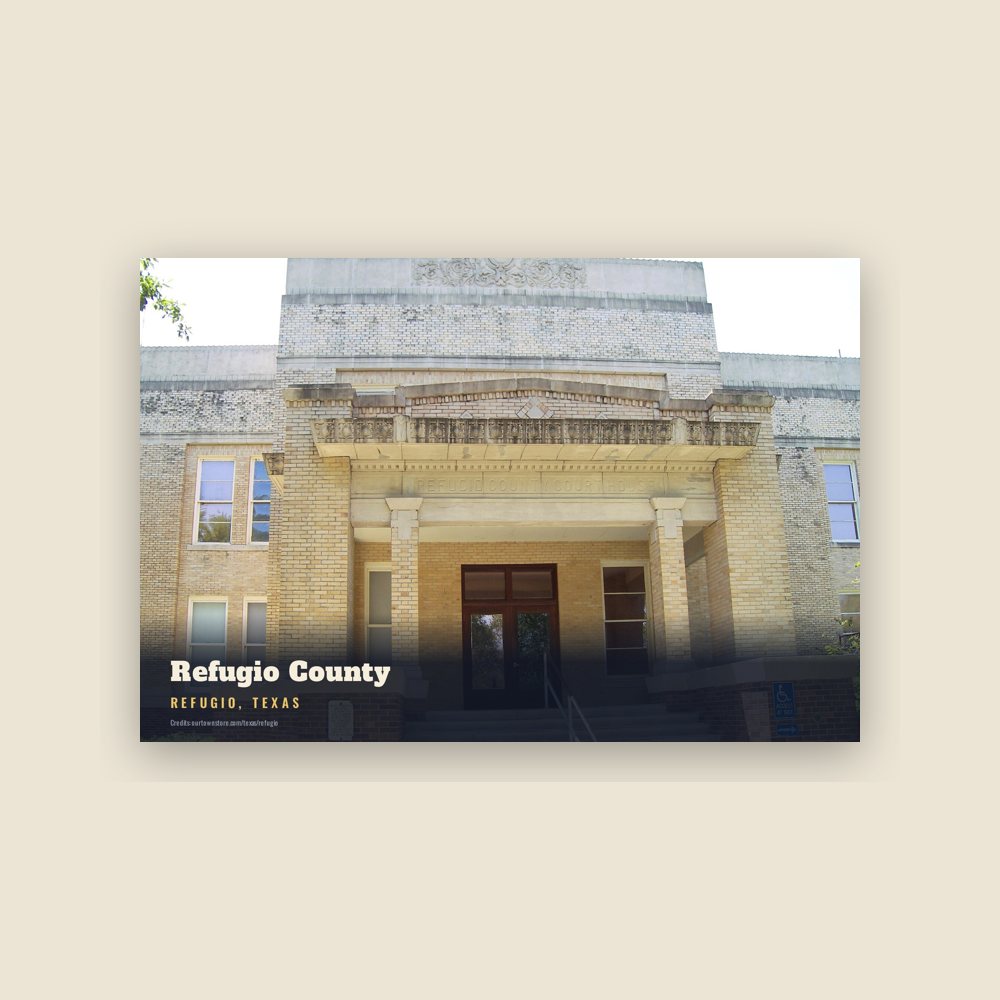
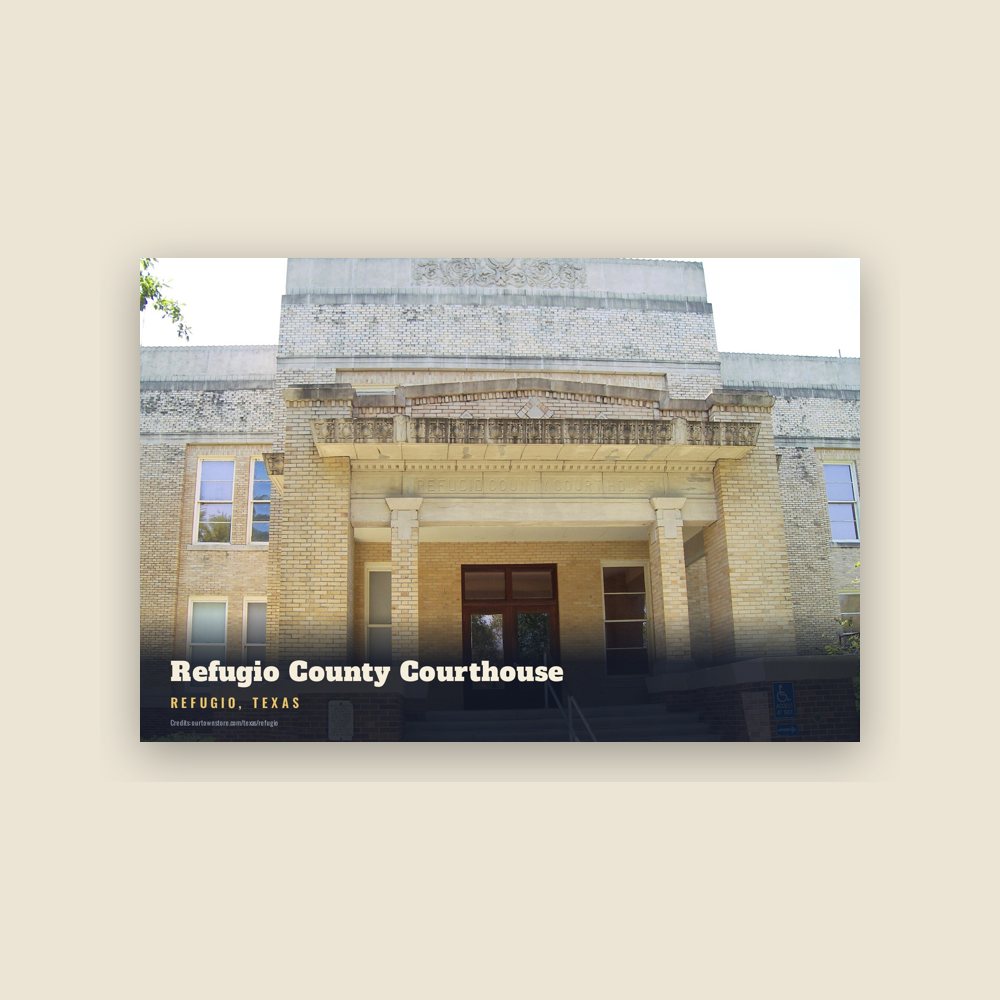

 Refugio County Courthouse
 Refugio County
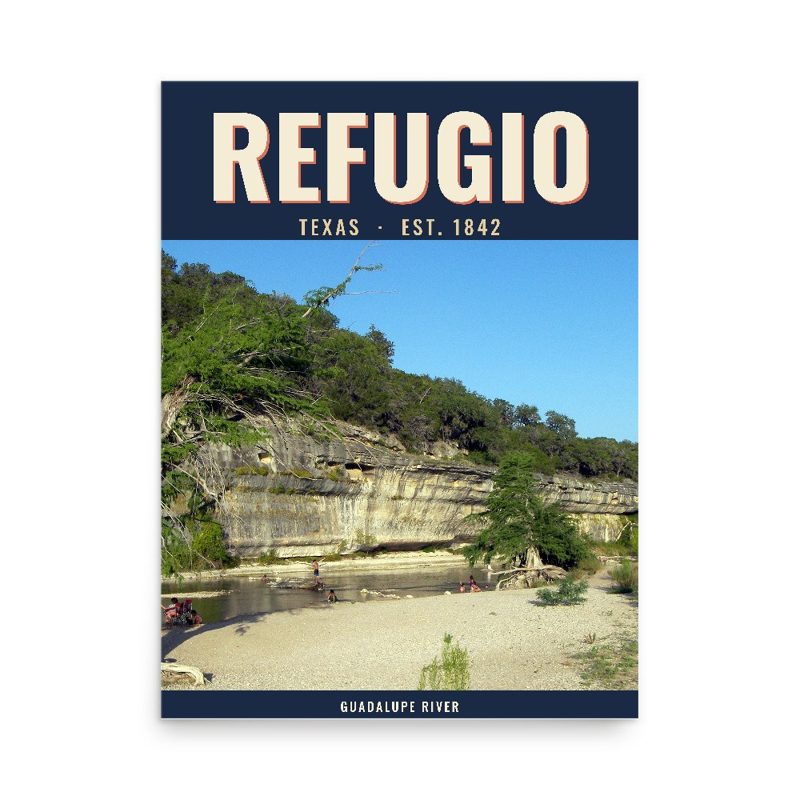
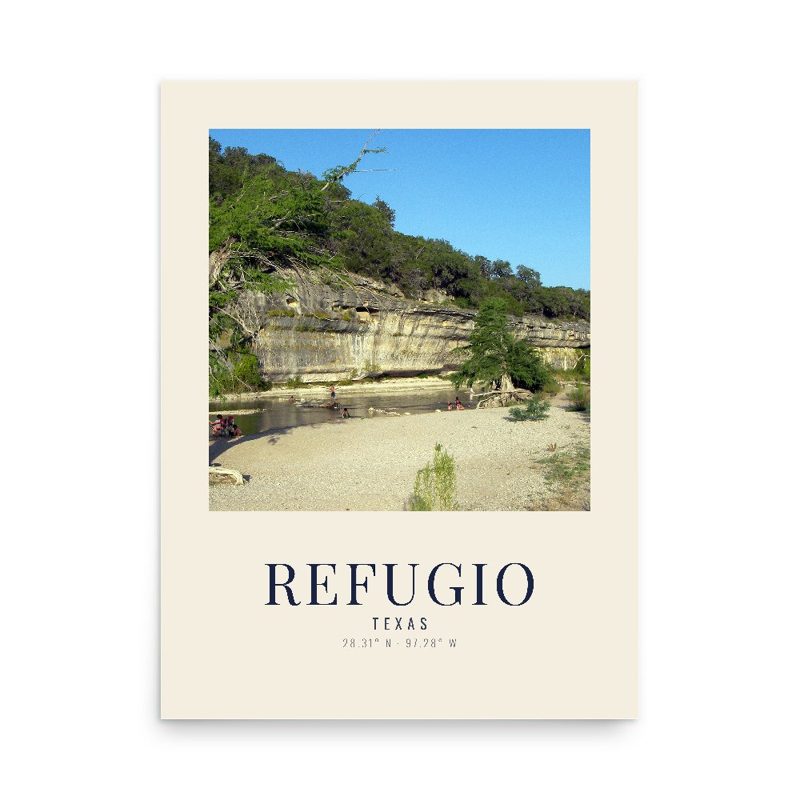
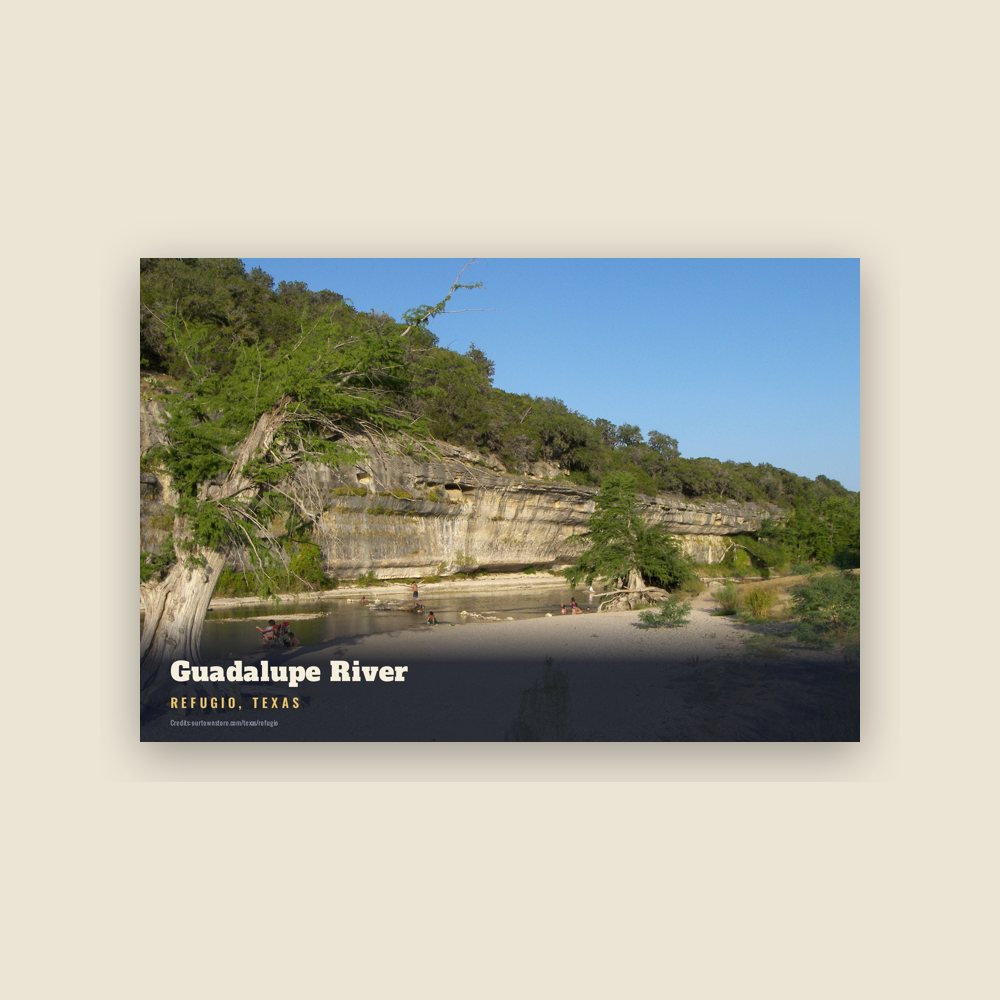
 Guadalupe River
 Mission River