A short history of Mercedes
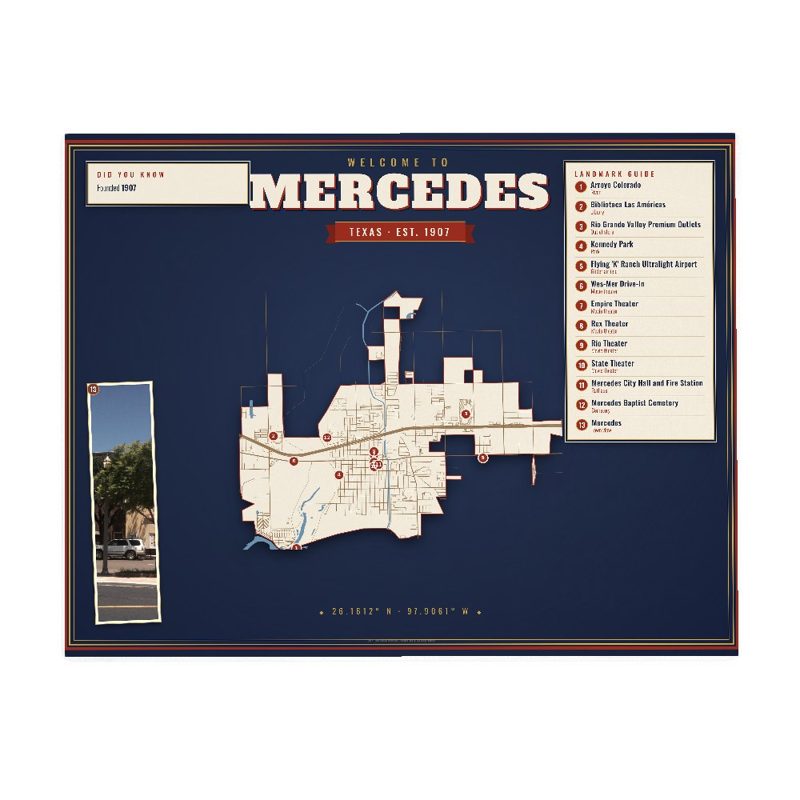
Mercedes is known as "The Queen City of the Valley" or "La Reina del Valle". Mercedes was founded September 15, 1907, by the American Rio Grande Land & Irrigation Company, and was incorporated March 8, 1909. It is one of the oldest towns in the Rio Grande Valley, and the city celebrated its centennial in 2007.
The city was located in Capisallo Pasture, part of Capisallo Ranch owned by Jim Welles. This location was known as the Pear Orchard because of the vast numbers of prickly pear cactus growing there at that time.
The origin of the city name - Mercedes - is not clear. A common claim is that the first name given to the city was "Diaz" in honor of Porfirio Diaz, then president of Mexico. Later it was supposedly renamed "Mercedes Diaz" in honor of the president's wife, and from that, Mercedes became the Queen City. This story, however, is historically inaccurate, given that neither of Diaz's two wives were named Mercedes.
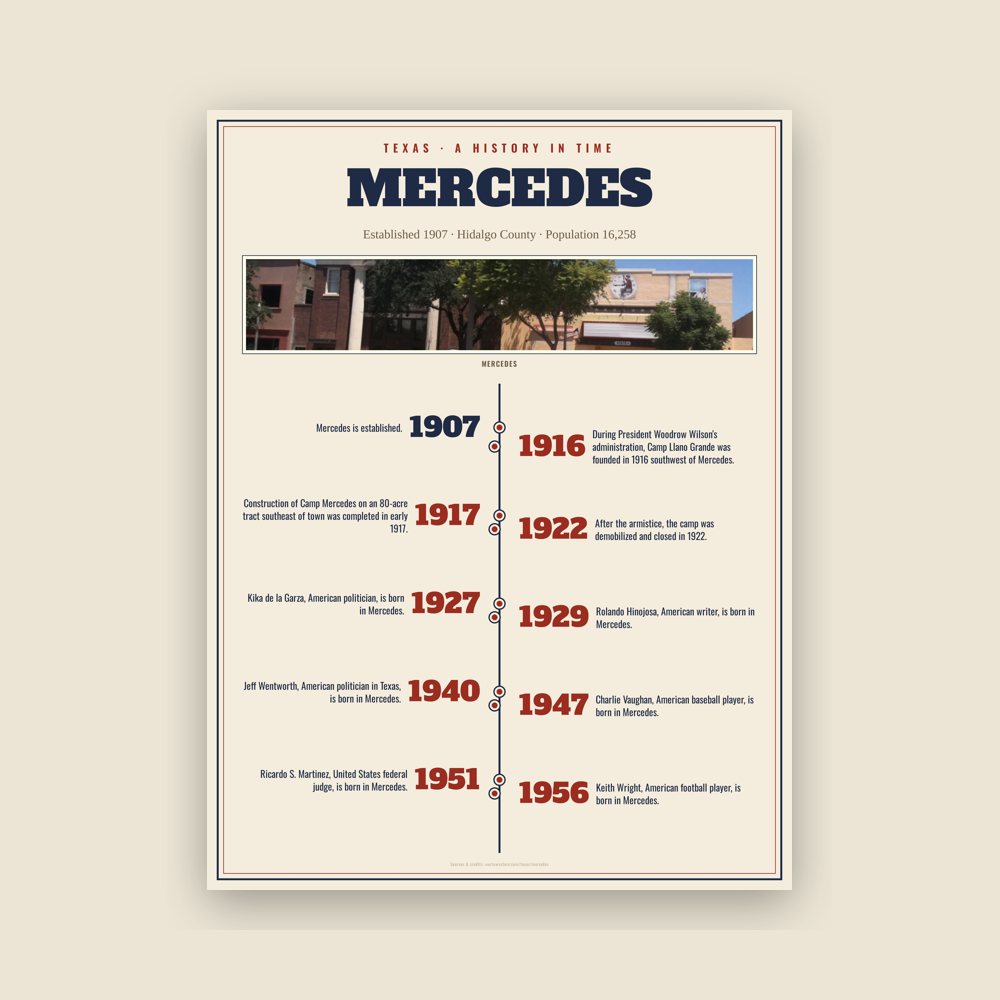
During President Woodrow Wilson's administration, Camp Llano Grande was founded in 1916 southwest of Mercedes. Today, its location is in Weslaco, Texas, a town that didn't exist in 1916 and Mercedes was the nearest town. The National Defense Act called for the establishment of several National Guard camps, including Camp Llano Grande, to counter cross-border attacks led by Pancho Villa.
Soldiers from Indiana, Minnesota and North Dakota were stationed at the camp from 1916 - 1917. Upon the onset or World War I, the camp merged with Camp Mercedes to train soldiers for service in France.
General John J. Pershing chose Mercedes as the site for a permanent training camp when the United States entered WW1 in 1916. Construction of Camp Mercedes on an 80-acre tract southeast of town was completed in early 1917. Until the WWI recruits arrived, a 16th Cavalry training cadre occupied the camp. The soldiers who later arrived for WWI training specialized in the management of horses for service in France. At its peak, Camp Mercedes hosted 16 officers, 700 enlisted men and 600 horses. After the armistice, the camp was demobilized and closed in 1922.
The old Toluca Ranch still stands east of the International Bridge at Progreso, the sister city to the south. This ranch was close to the river and a prized target for the bandidos during the days of Pancho Villa. It was built with many secret rooms and passages, and had heavy wooden shutters on the windows to protect its residents.
Adapted (trimmed) from the Wikipedia article Mercedes, Texas, revision 1378869850 by its contributors, licensed CC BY-SA 4.0.
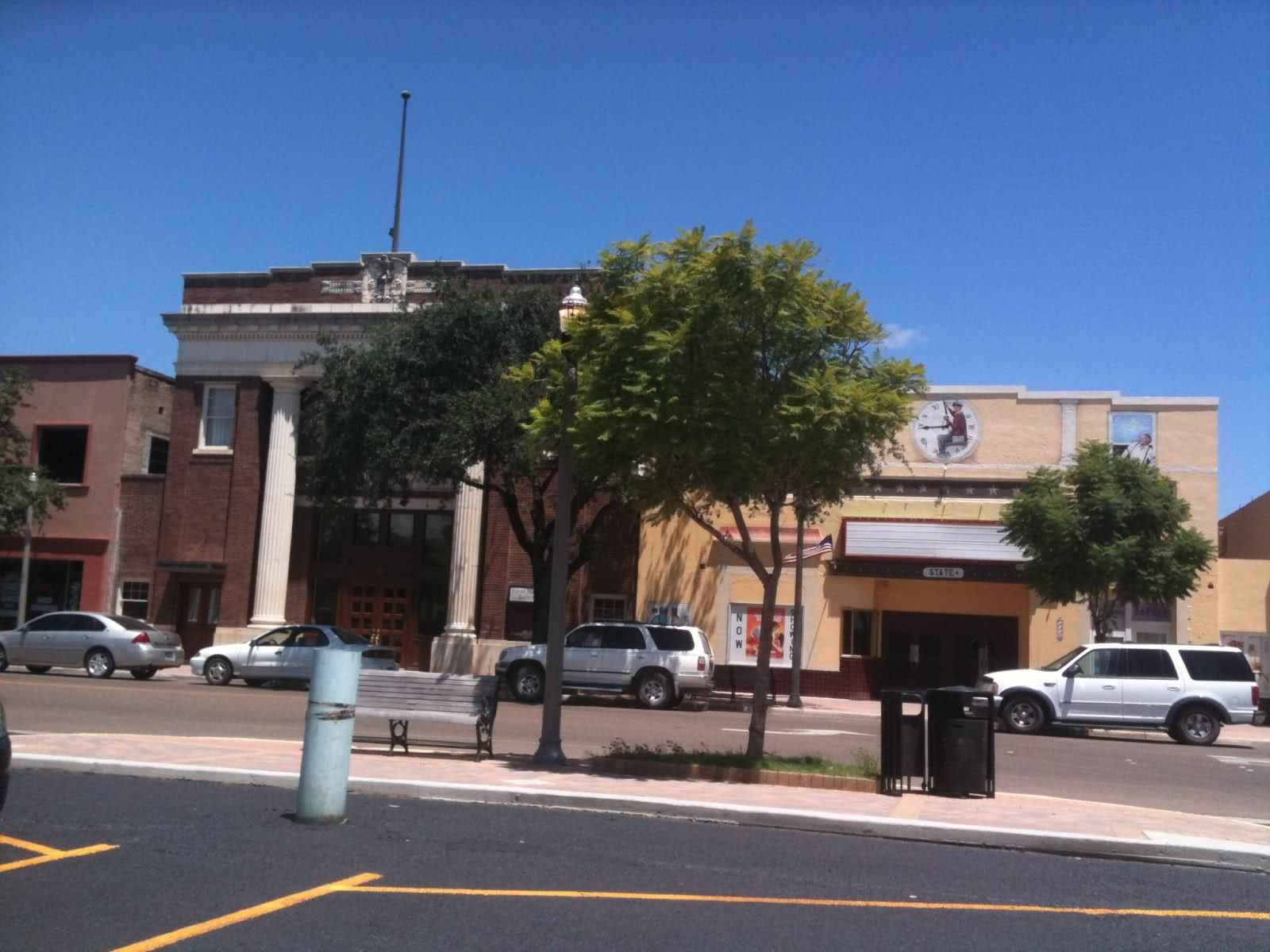

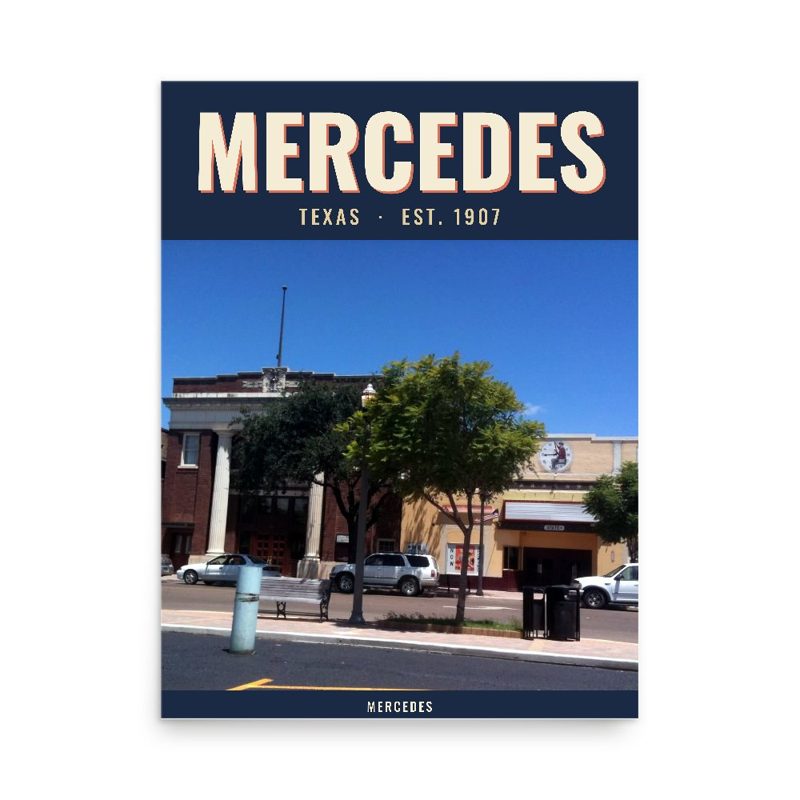
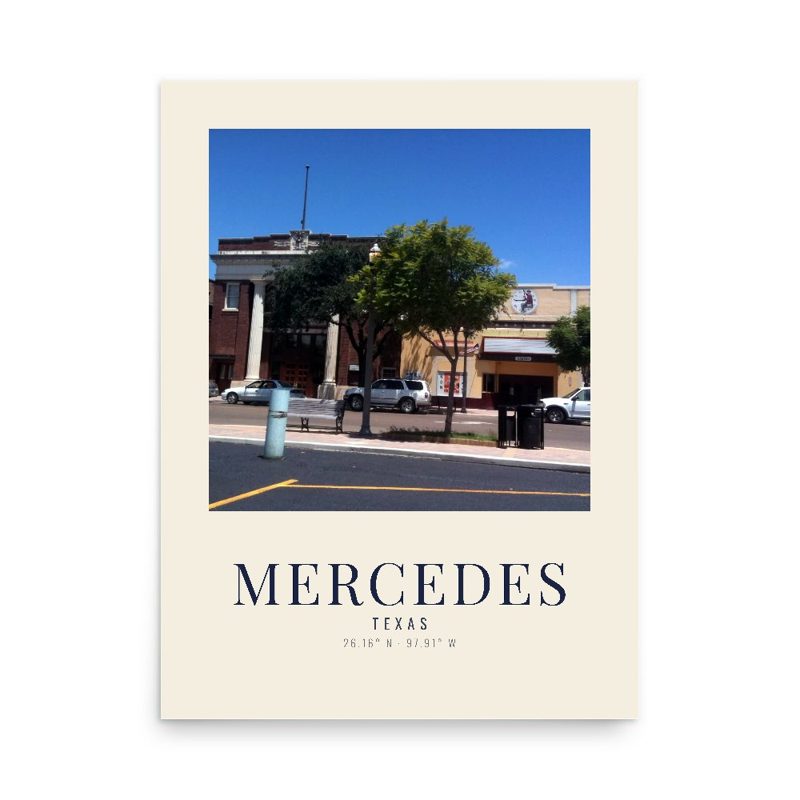











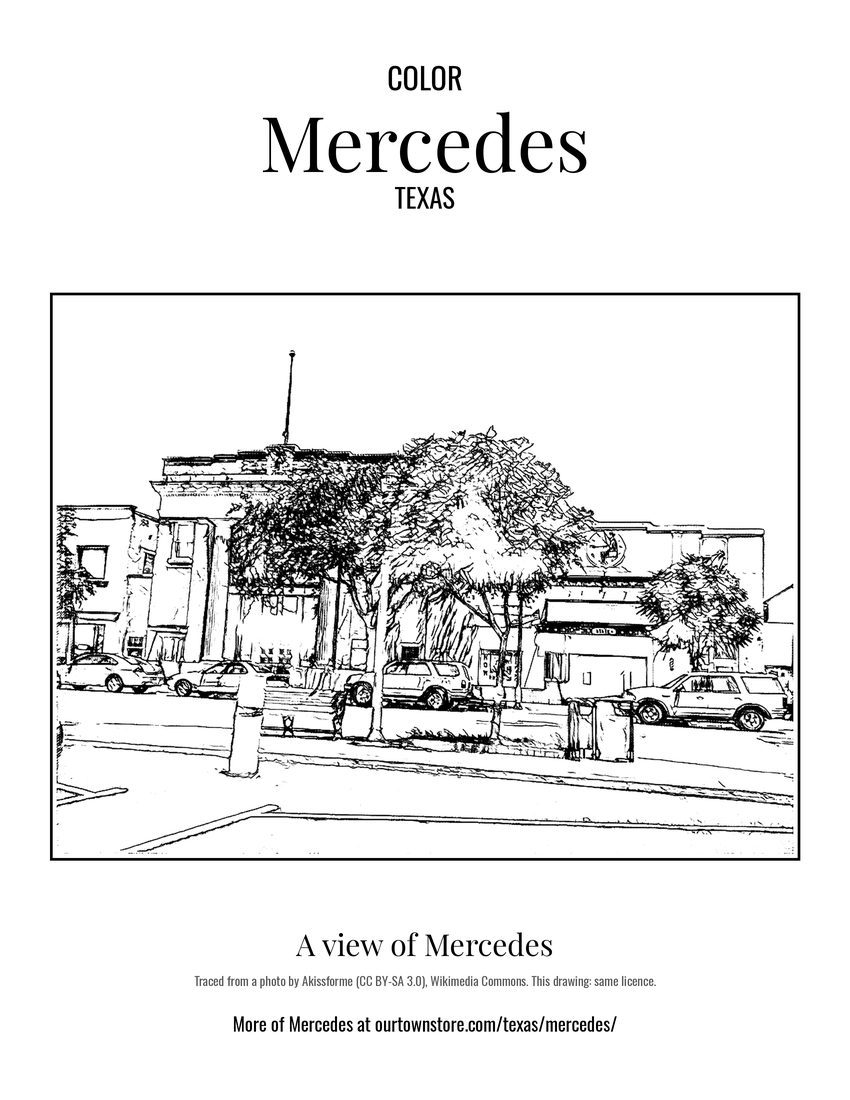 A view of Mercedes