A short history of McLean
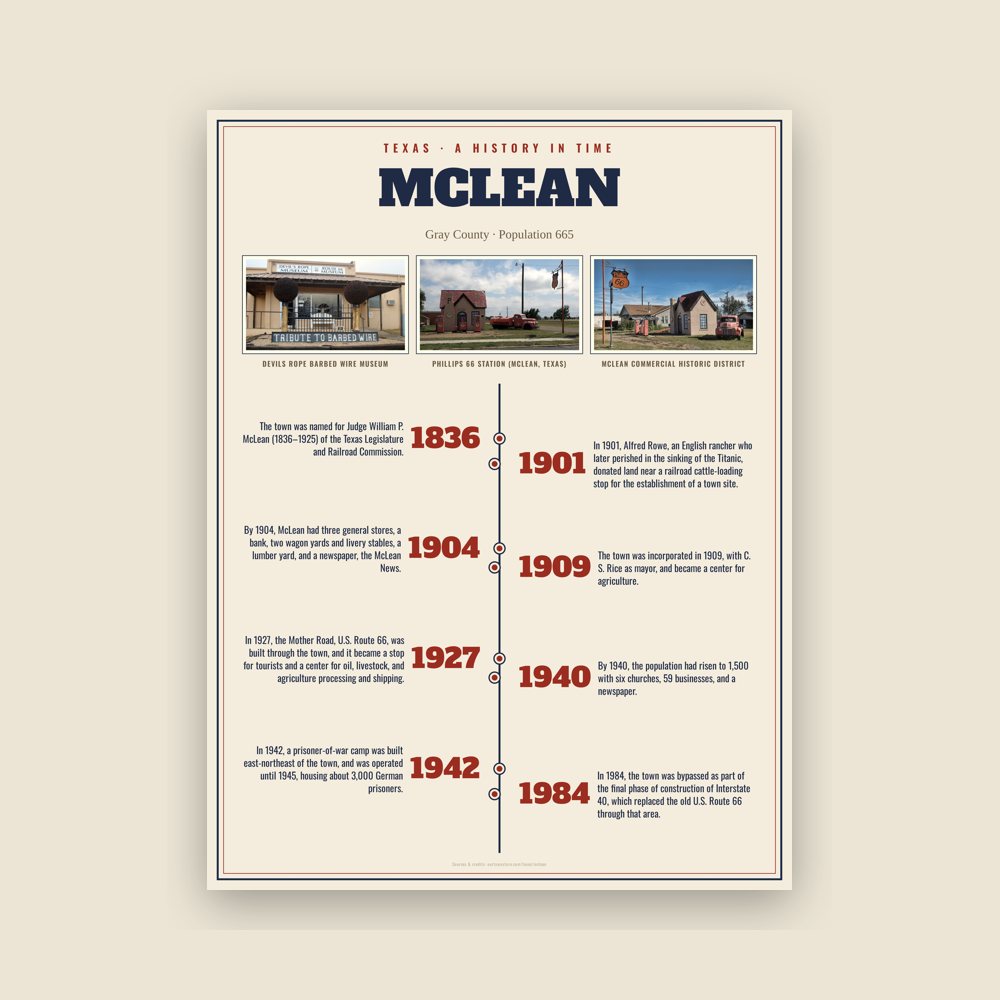
In 1901, Alfred Rowe, an English rancher who later perished in the sinking of the Titanic, donated land near a railroad cattle-loading stop for the establishment of a town site. The Choctaw, Oklahoma and Texas Railroad Company constructed a water well and a switch and section house there. The town was named for Judge William P. McLean (1836–1925) of the Texas Legislature and Railroad Commission. The town grew rapidly. By 1904, McLean had three general stores, a bank, two wagon yards and livery stables, a lumber yard, and a newspaper, the McLean News. A windmill pumped water from a well drilled in the middle of Main Street, and citizens hauled the water in barrels and buckets. The town was incorporated in 1909, with C. S. Rice as mayor, and became a center for agriculture.
In 1927, the Mother Road, U.S. Route 66, was built through the town, and it became a stop for tourists and a center for oil, livestock, and agriculture processing and shipping. By 1940, the population had risen to 1,500 with six churches, 59 businesses, and a newspaper. In 1942, a prisoner-of-war camp was built east-northeast of the town, and was operated until 1945, housing about 3,000 German prisoners.
As the prominence of other Texas Panhandle cities, especially Amarillo and Pampa, surpassed McLean, the town began to decrease slowly in size. In 1984, the town was bypassed as part of the final phase of construction of Interstate 40, which replaced the old U.S. Route 66 through that area.
Adapted (trimmed) from the Wikipedia article McLean, Texas, revision 1382946840 by its contributors, licensed CC BY-SA 4.0.
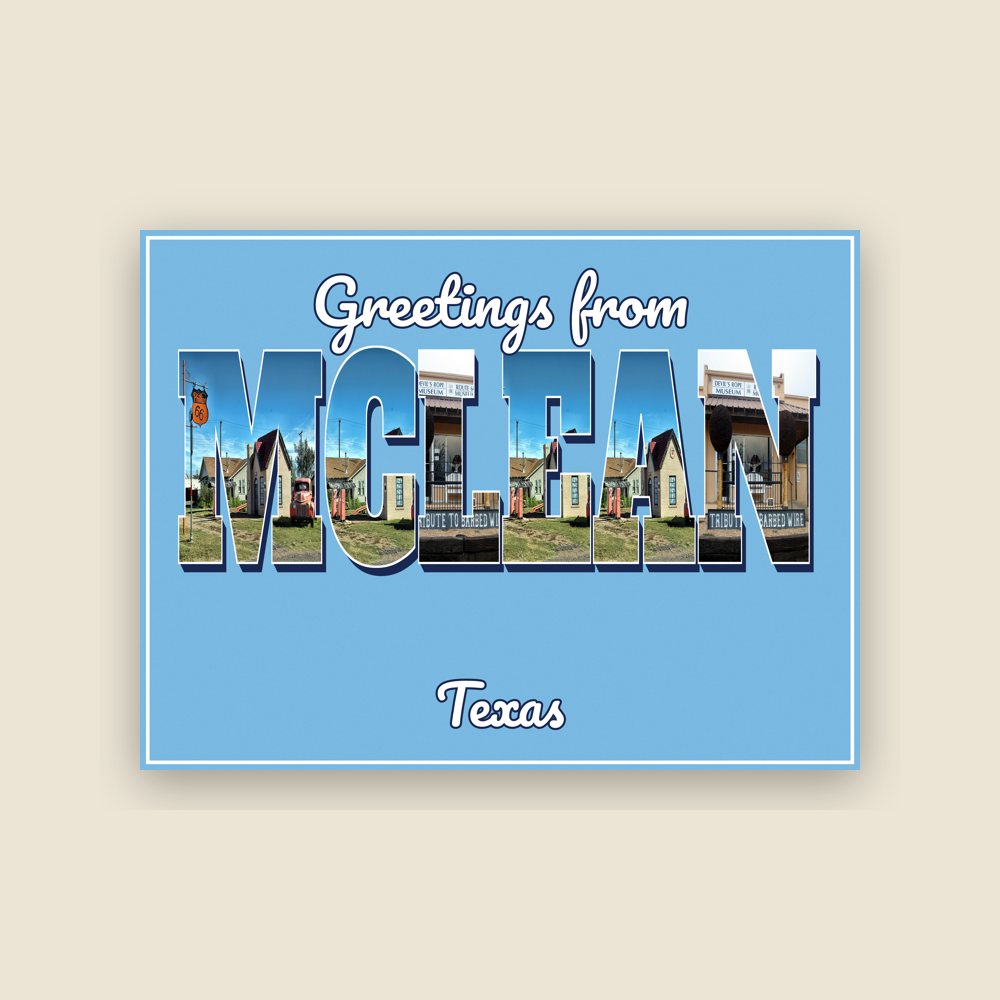


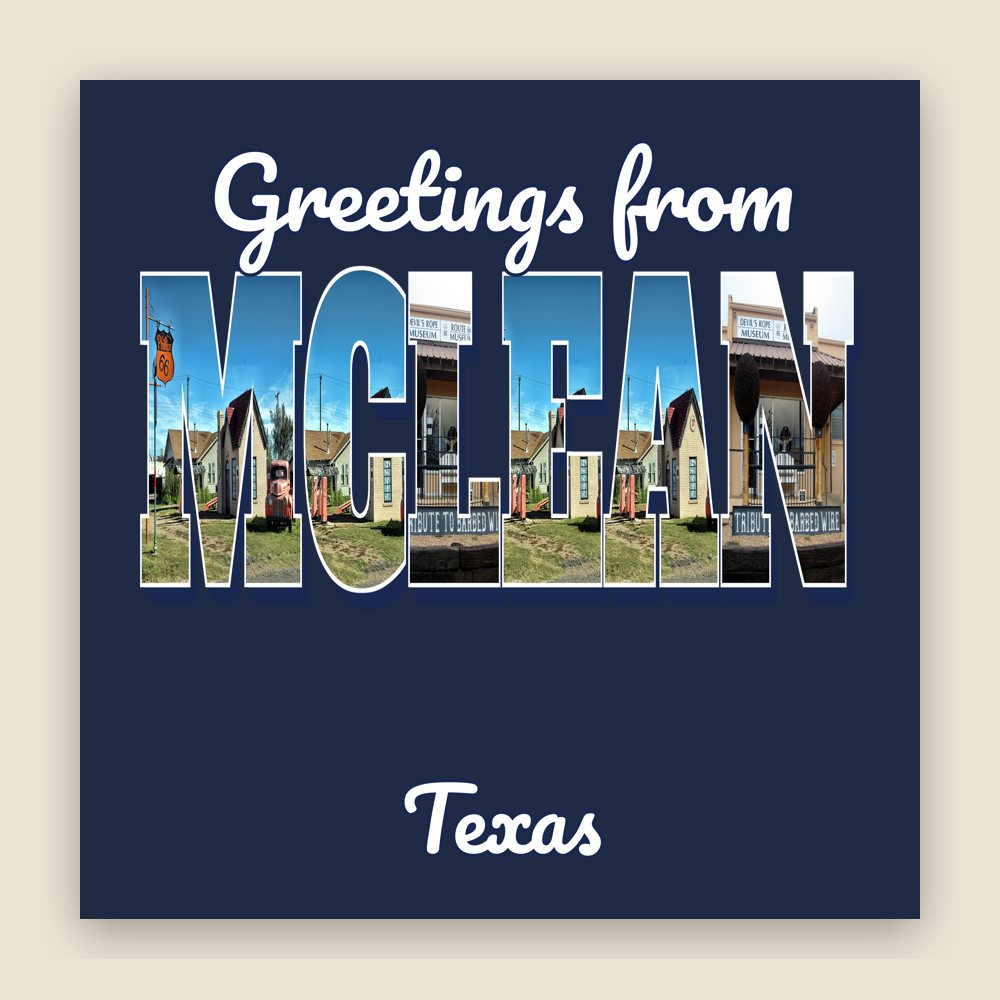
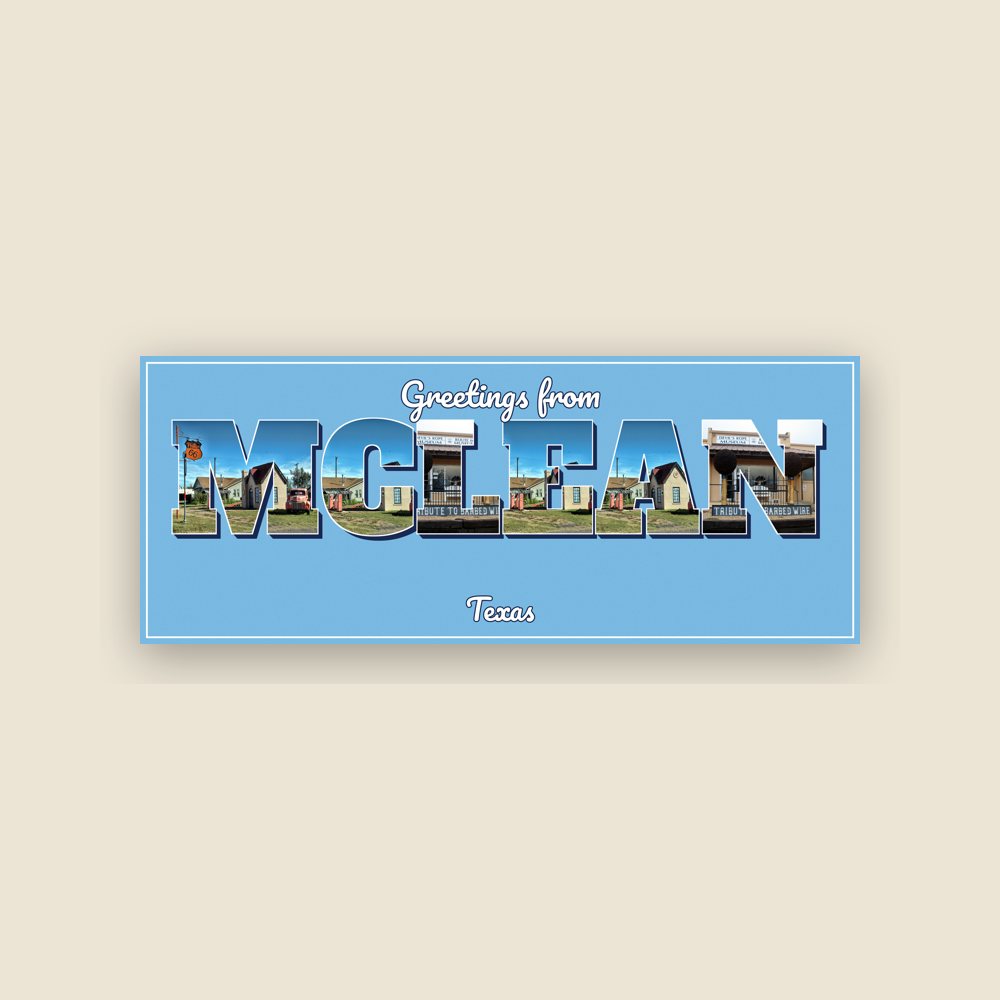


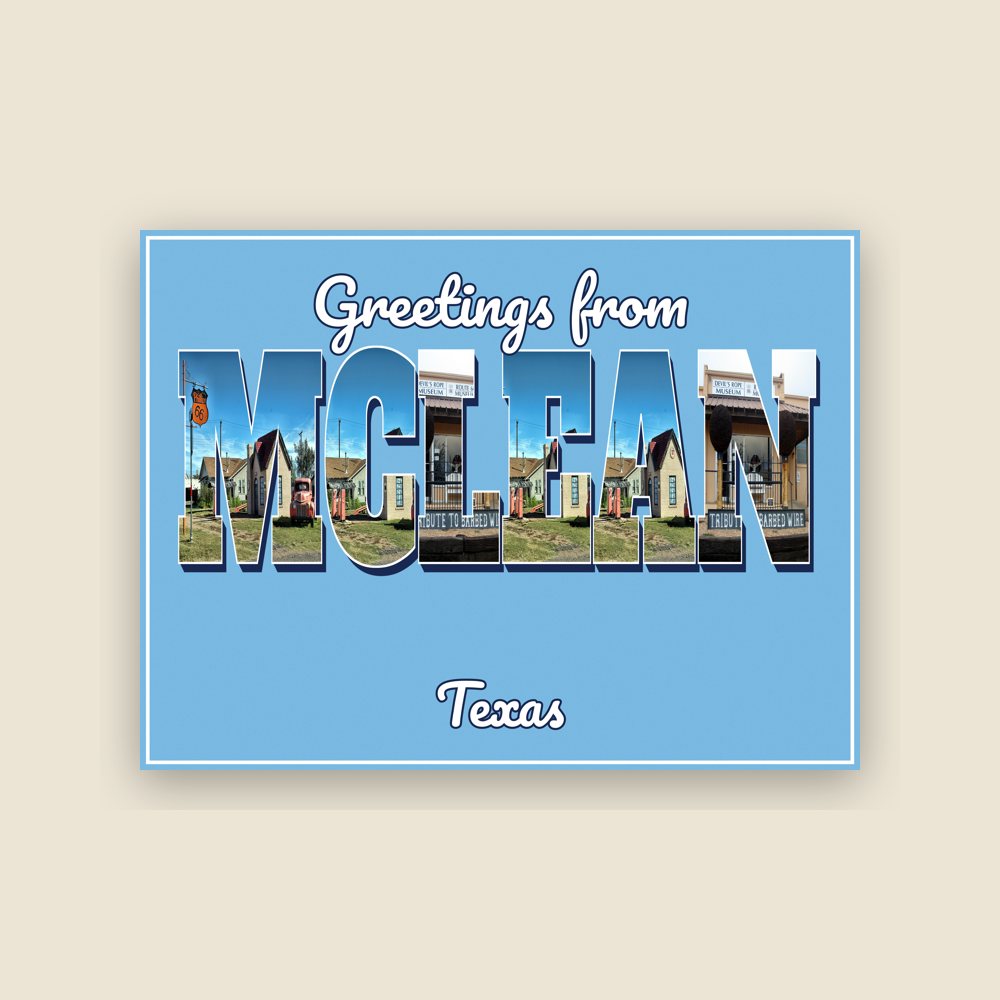
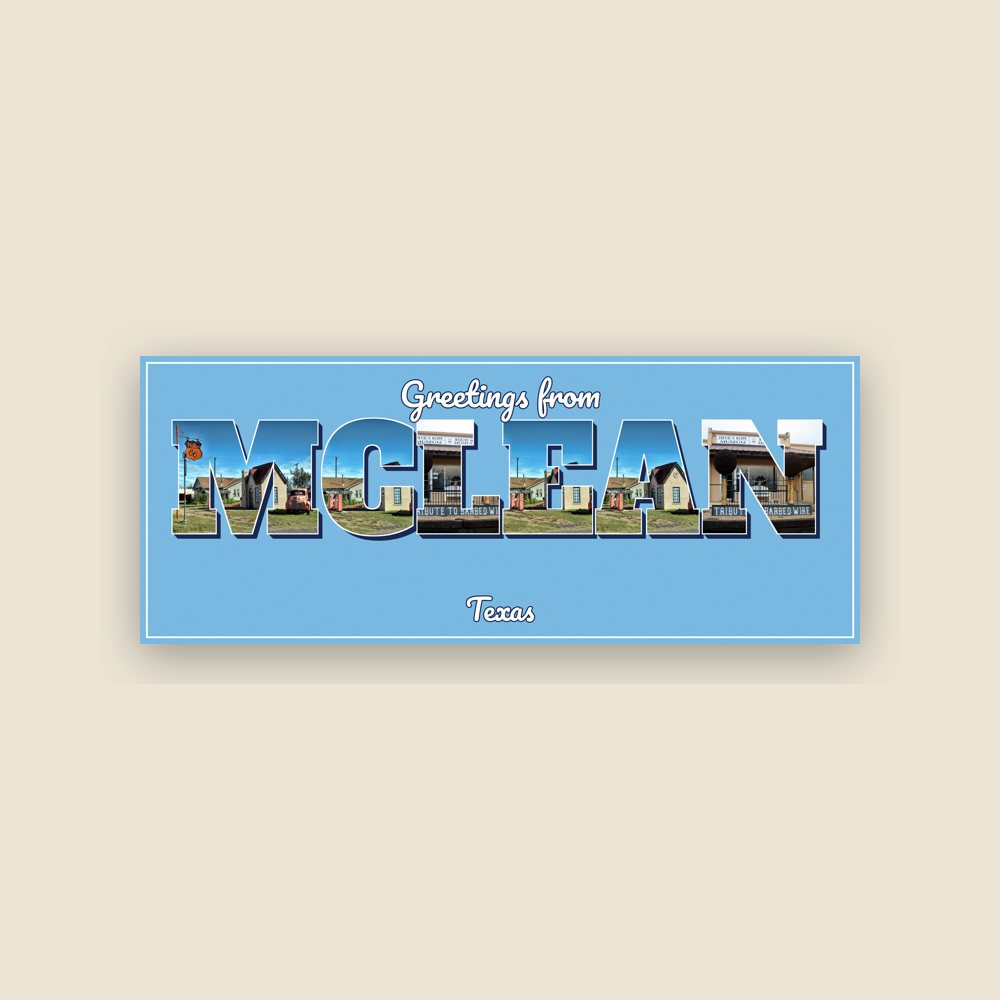
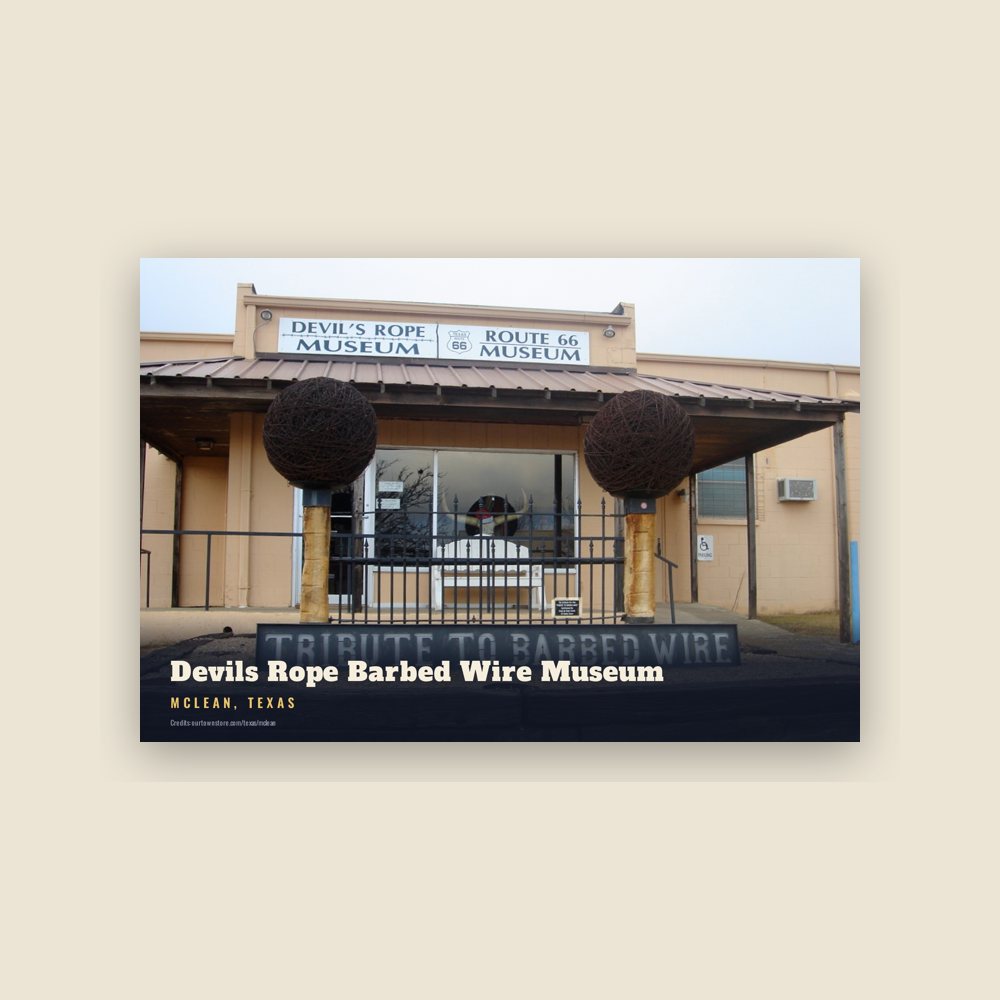
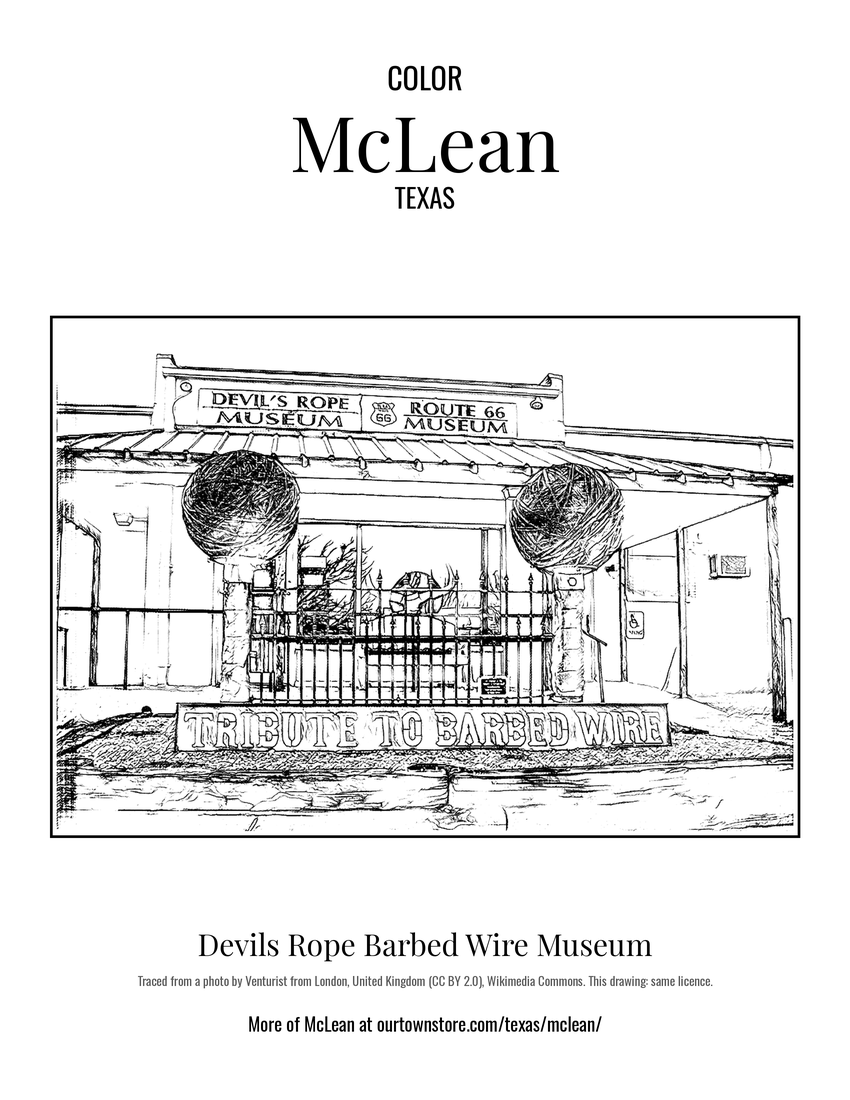 Devils Rope Barbed Wire Museum
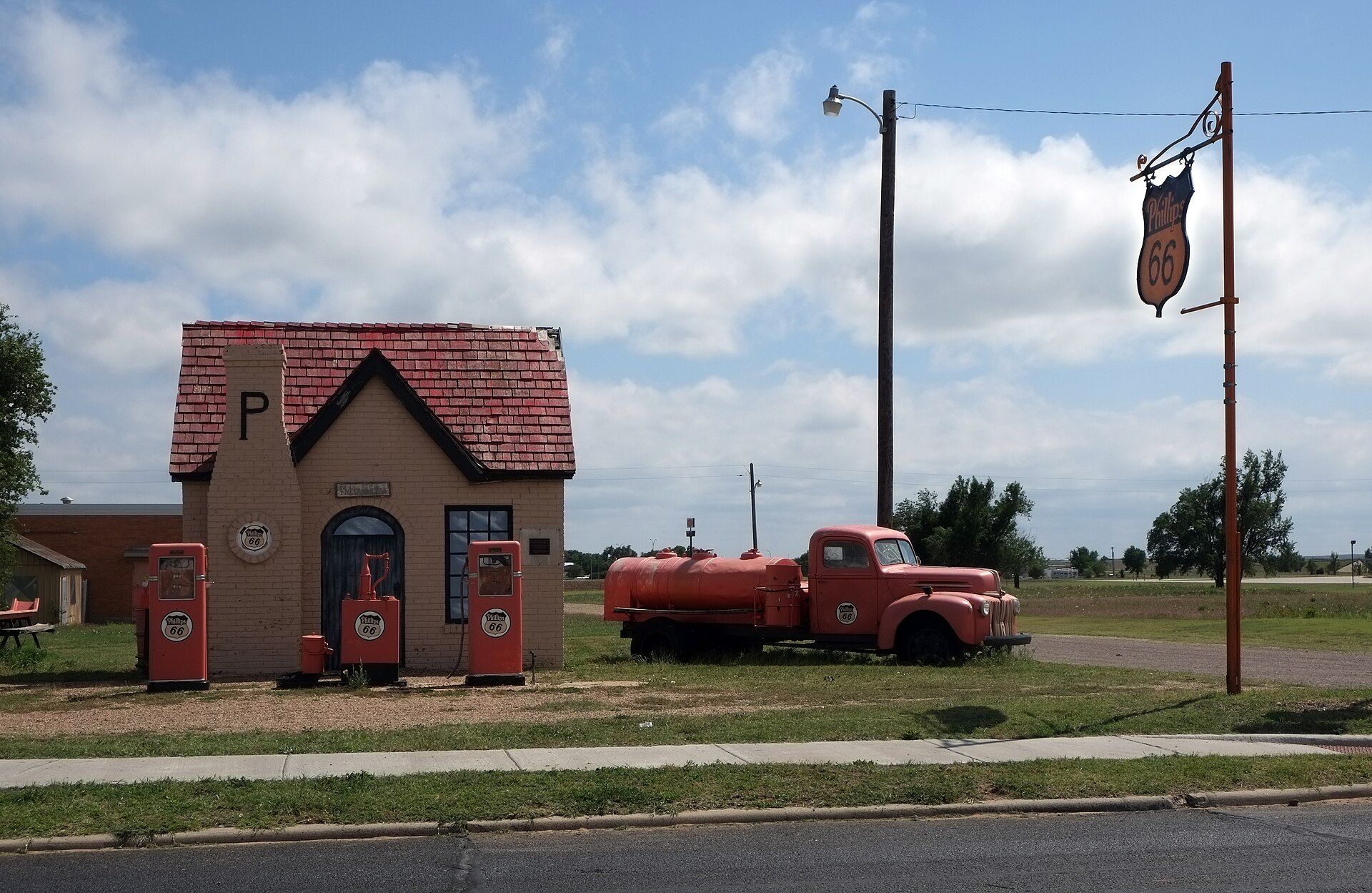
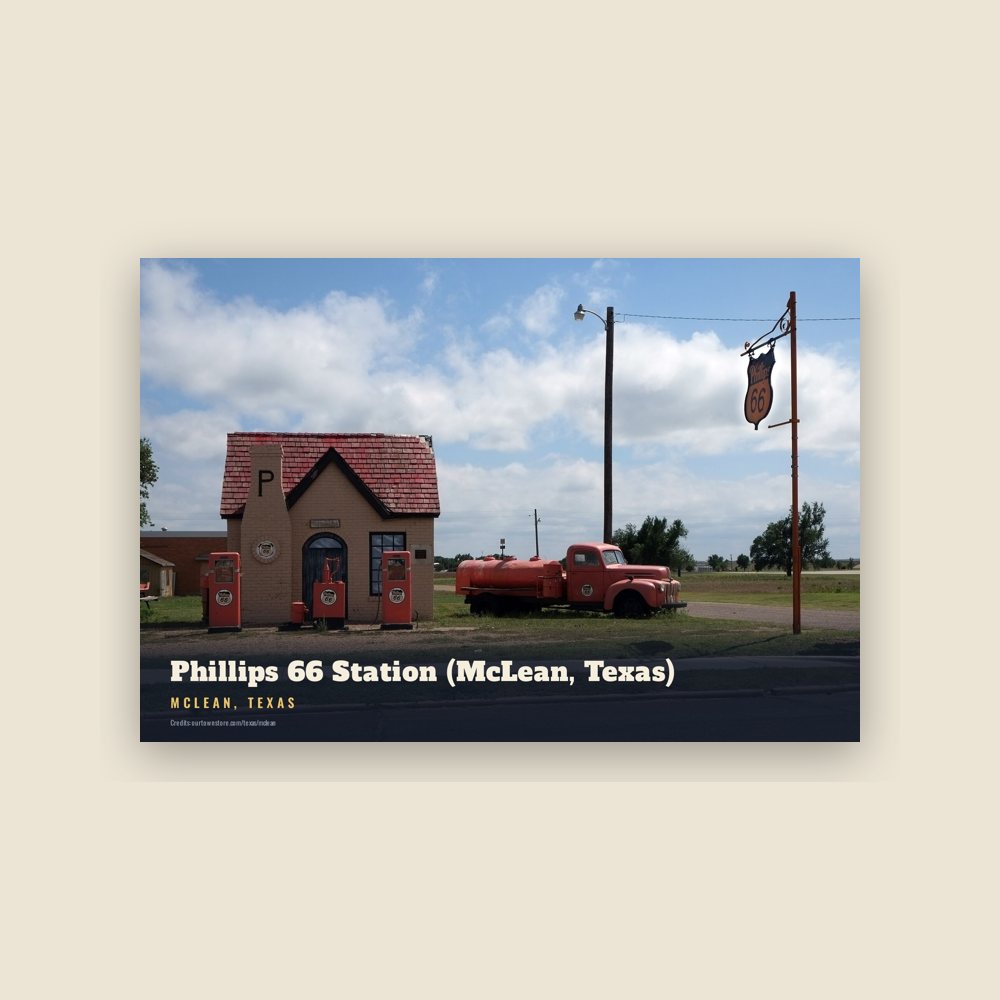
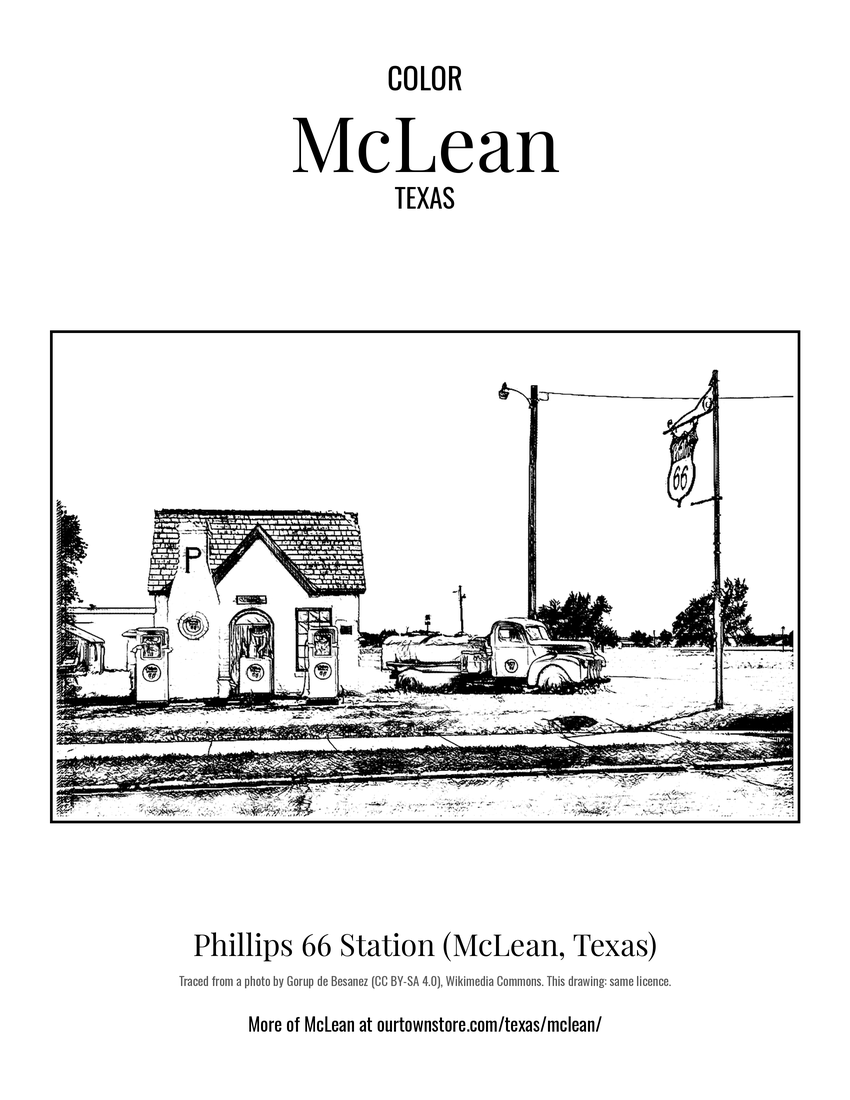 Phillips 66 Station (McLean, Texas)
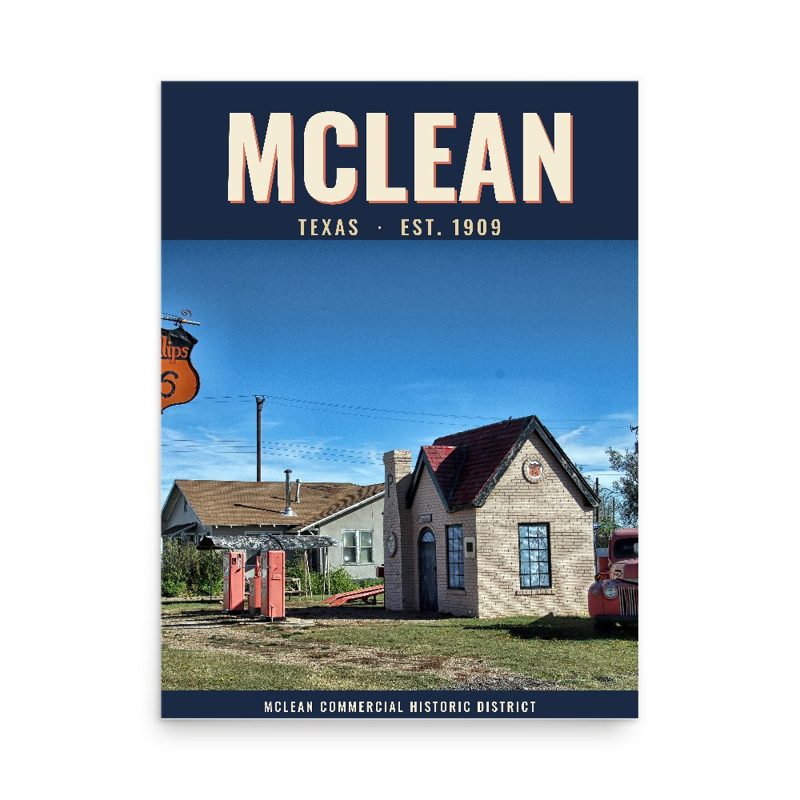
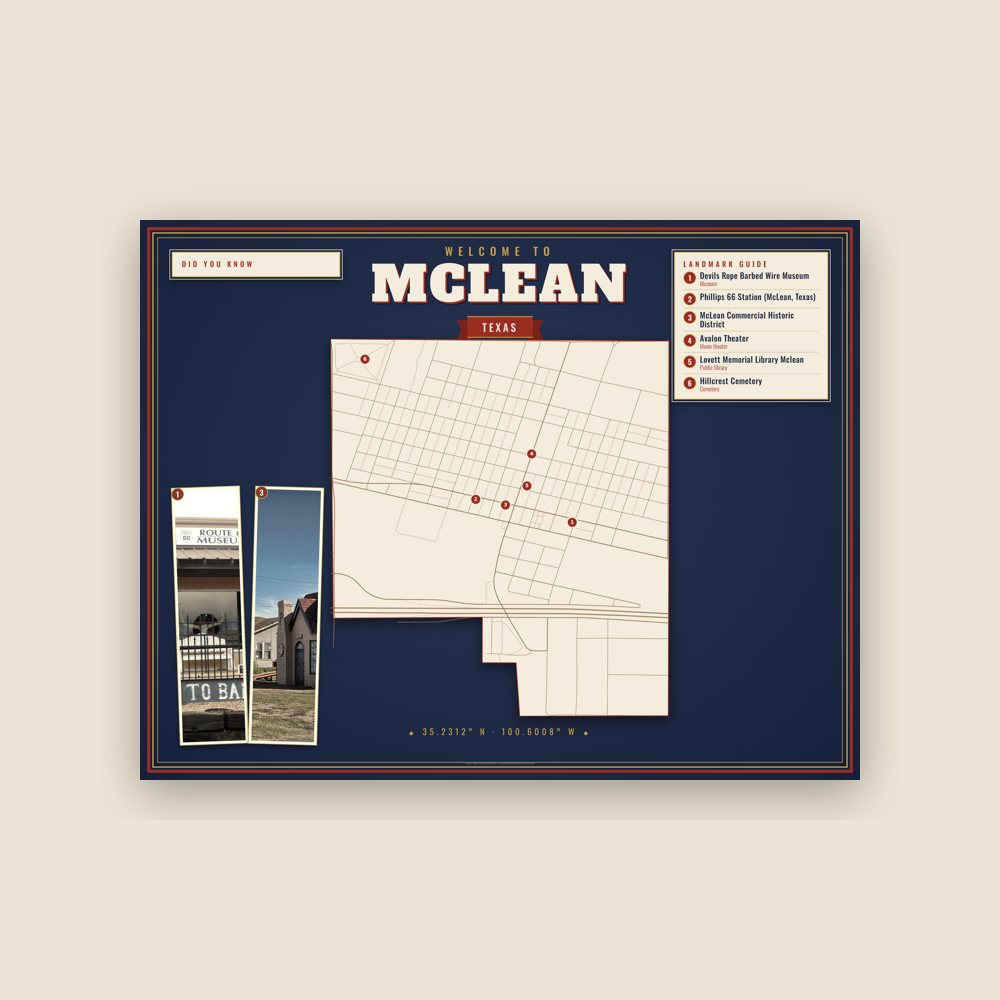
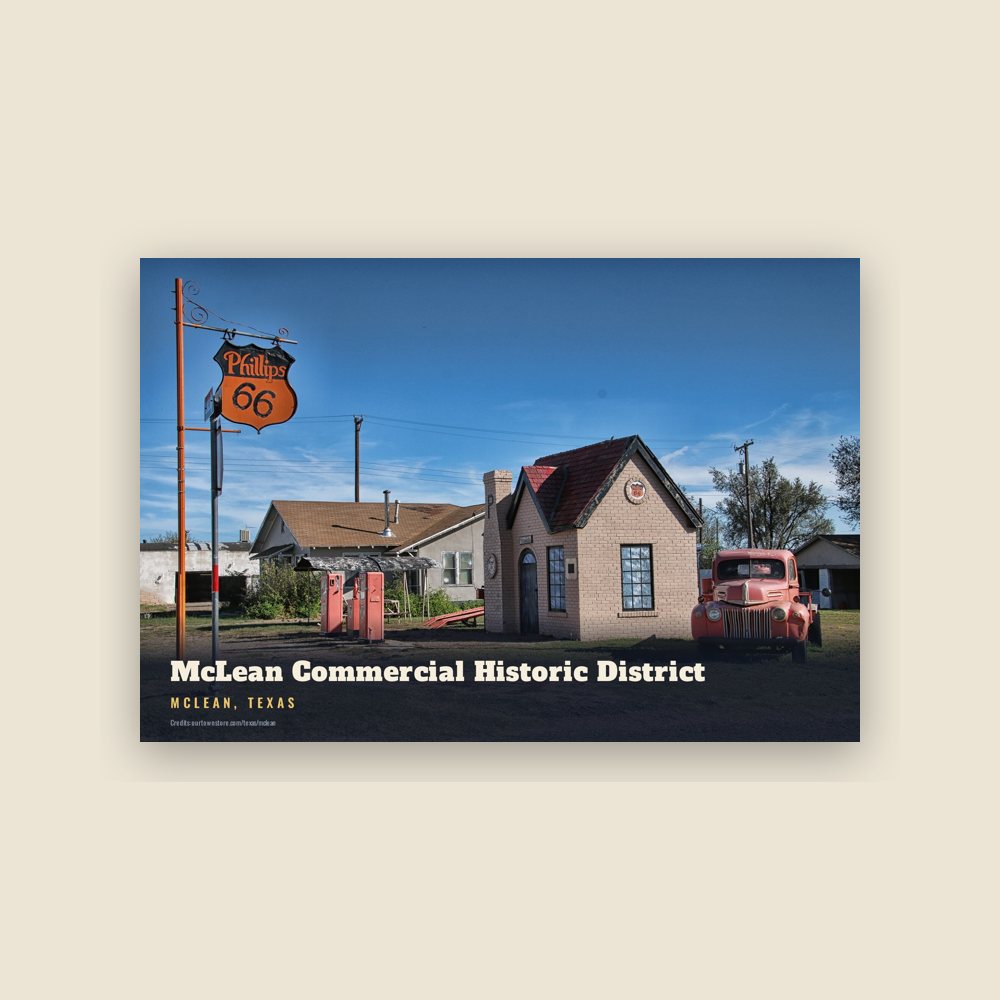
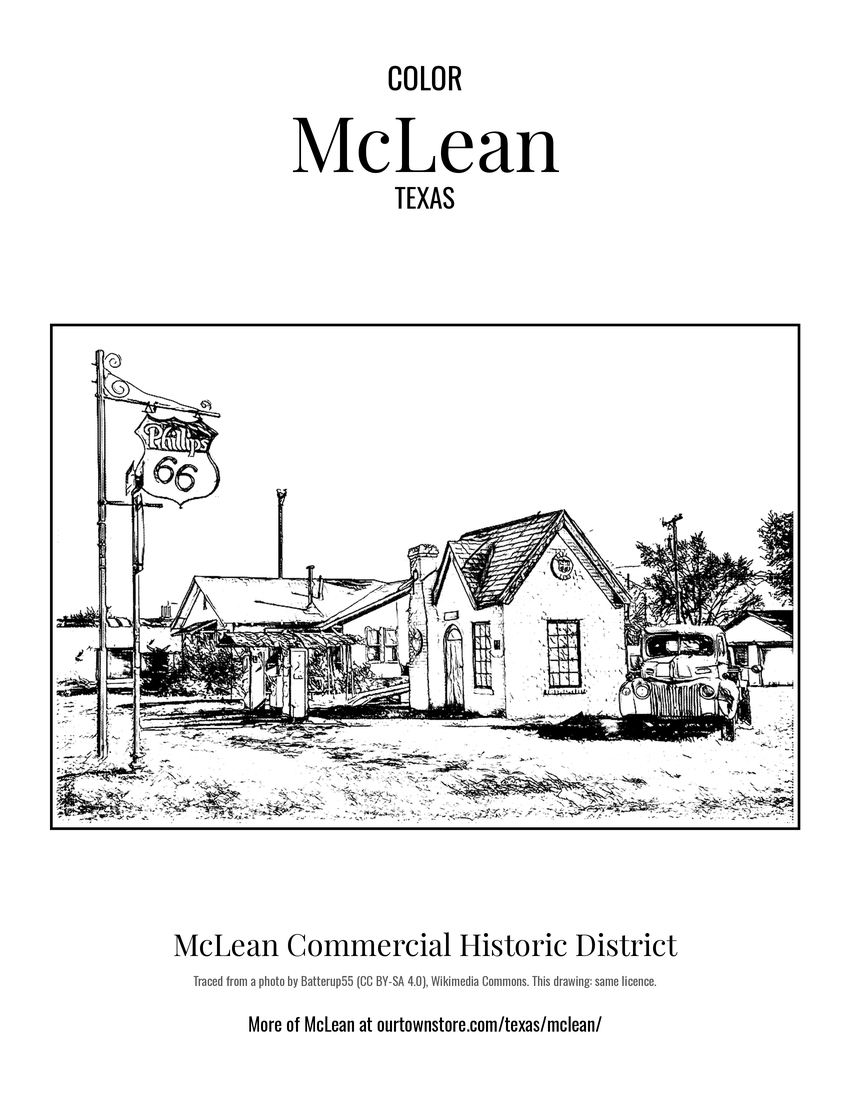 McLean Commercial Historic District
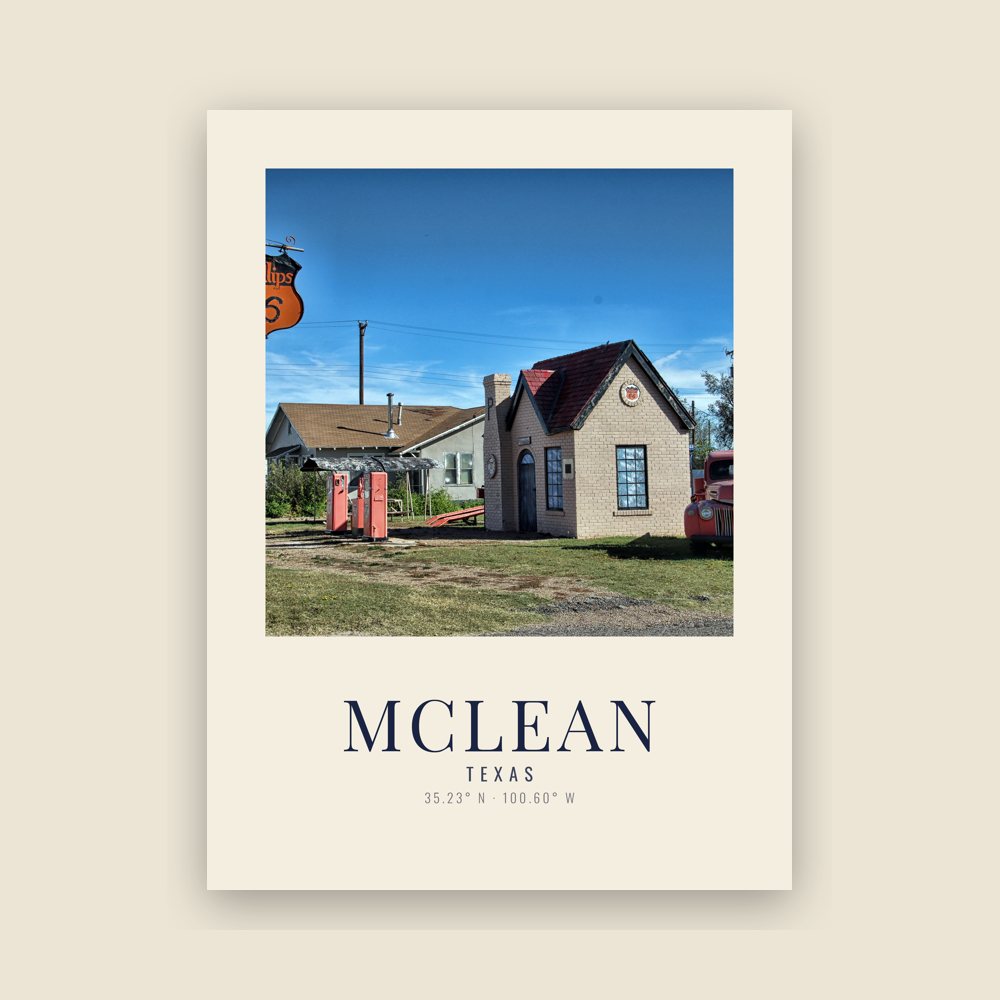
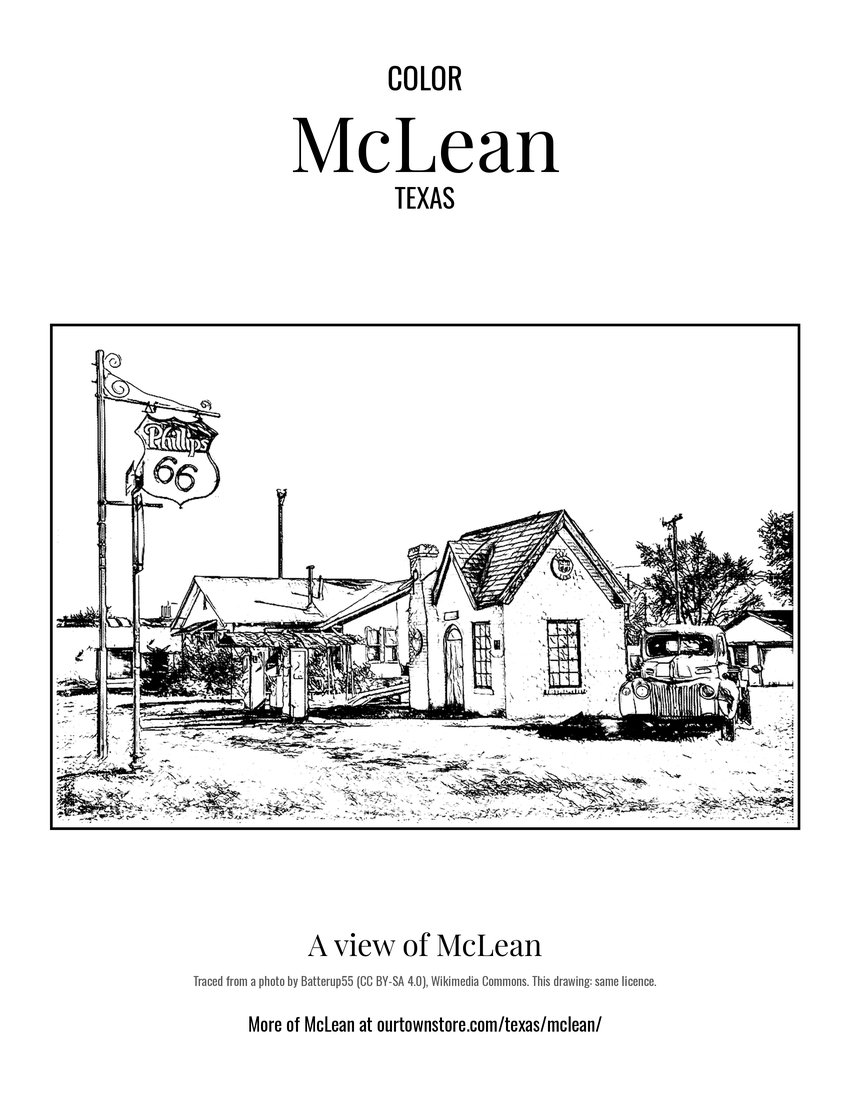 A view of McLean