A short history of Longview
The modern-day city of Longview was founded in 1869. In 1870, O.H. Methvin, Sr. sold 100 acres (40 ha) to the Southern Pacific Railroad (later the Texas and Pacific Railway) for one dollar to persuade them to build their line in the direction of land he owned. Later that year, he sold another 100 acres (40 ha) for $500 in gold. He hoped the coming of the railroad would increase the value of the rest of his land.
Two railroad surveyors coined the name of the town when they stated, "What a long view!" from the porch of Methvin's home. In June 1871, Longview was incorporated as the first town in Gregg County.
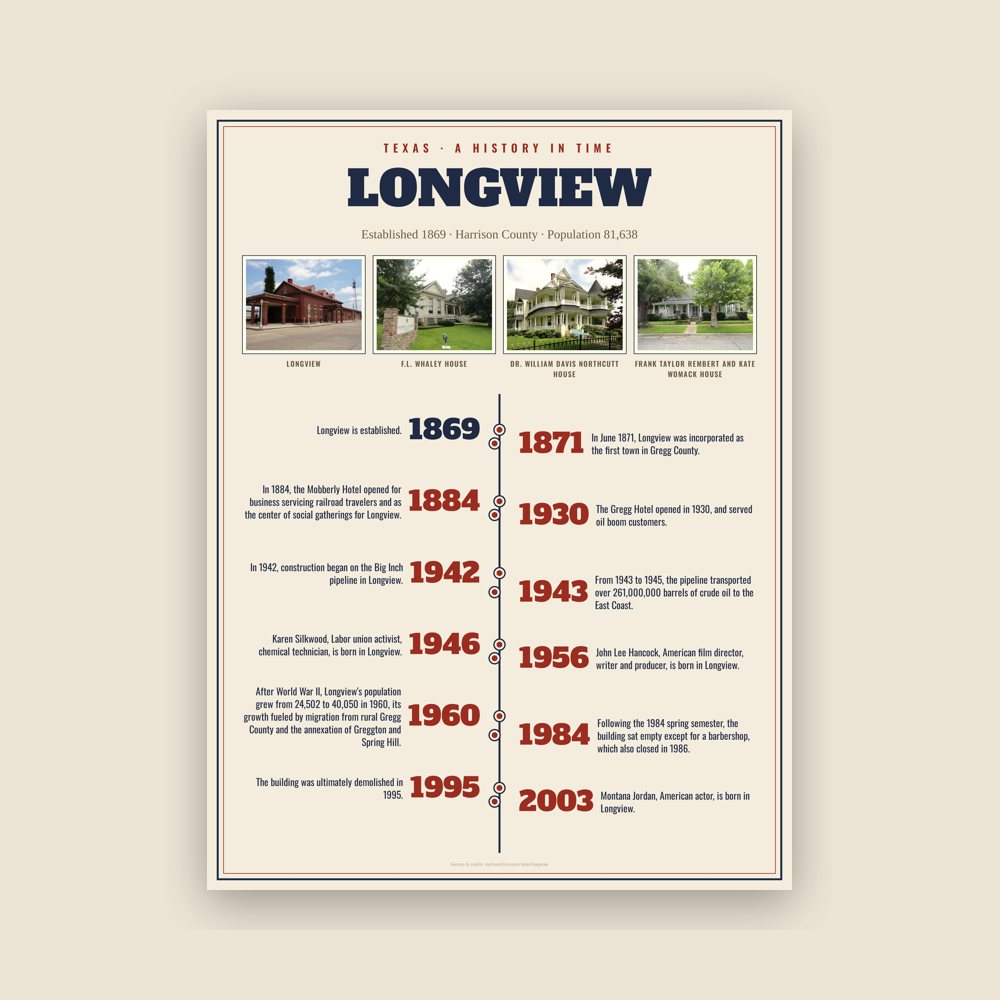
In 1884, the Mobberly Hotel opened for business servicing railroad travelers and as the center of social gatherings for Longview. The hotel featured cherrywood furniture with carved bed posts, marble-top washstands, linen tablecloths, electric crystal chandeliers, and a fireplace in every room. Mobberly was located in the junction part of town near the train depot. The hotel was destroyed by fire on June 13, 1965.
On May 23, 1894, Bill Dalton and three members of his posse robbed the First National Bank of Longview. Several men died in the resulting gunfight, bandit Jim Wallace along with citizens J. W. McQueen, Charles Learn, and George Buckingham. The robbers escaped with $2,000 in cash and some unsigned bank notes. The Gregg County Historical Museum holds its exhibit on the event within the bank vault which was robbed, and holds a yearly event to mark the anniversary of the occasion.
In the Longview race riot in July 1919, a reporter for The Chicago Defender was in Longview looking into the mysterious death of a black man named Lemuel Walters. An armed white mob attacked a home where the reporter, S.L. Jones, was staying, and attempted to batter their way in. A gunfight began between the attackers and the men in the house. Eventually, Jones made a getaway. The white men then began to burn buildings in the black section of the town.
The Gregg Hotel opened in 1930, and served oil boom customers. It had various operators as a hotel until 1978, when it was converted to dormitories for use by male students of LeTourneau College. Following the 1984 spring semester, the building sat empty except for a barbershop, which also closed in 1986. The building was ultimately demolished in 1995.
In 1942, construction began on the Big Inch pipeline in Longview. From 1943 to 1945, the pipeline transported over 261,000,000 barrels of crude oil to the East Coast. At the time of construction, Big Inch and its smaller twin, Little Inch, comprised the longest petroleum pipeline ever built in the world. Both were integral in supplying the United States' war effort in World War II.
After World War II, Longview's population grew from 24,502 to 40,050 in 1960, its growth fueled by migration from rural Gregg County and the annexation of Greggton and Spring Hill.
Adapted (trimmed) from the Wikipedia article Longview, Texas, revision 1378737686 by its contributors, licensed CC BY-SA 4.0.
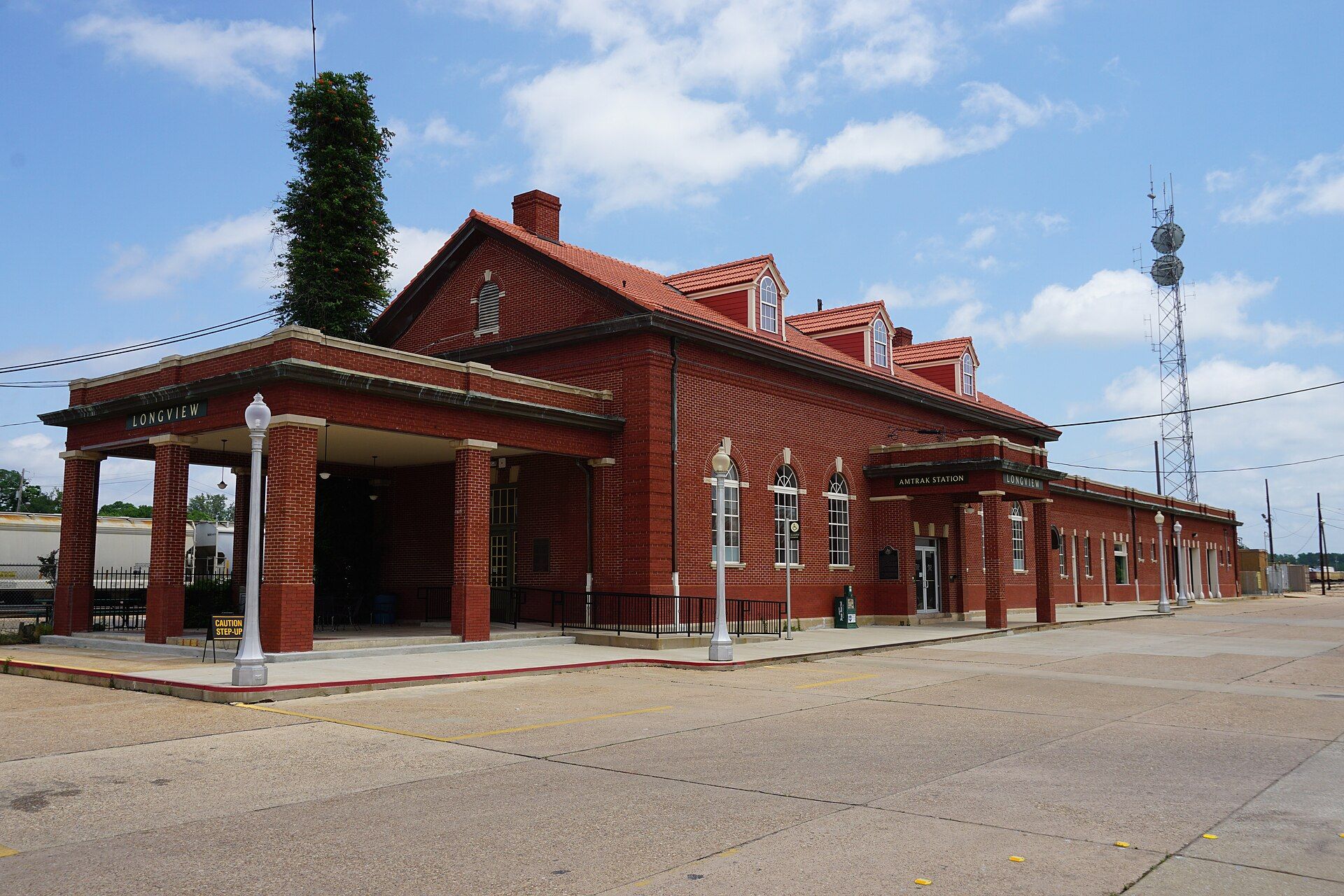
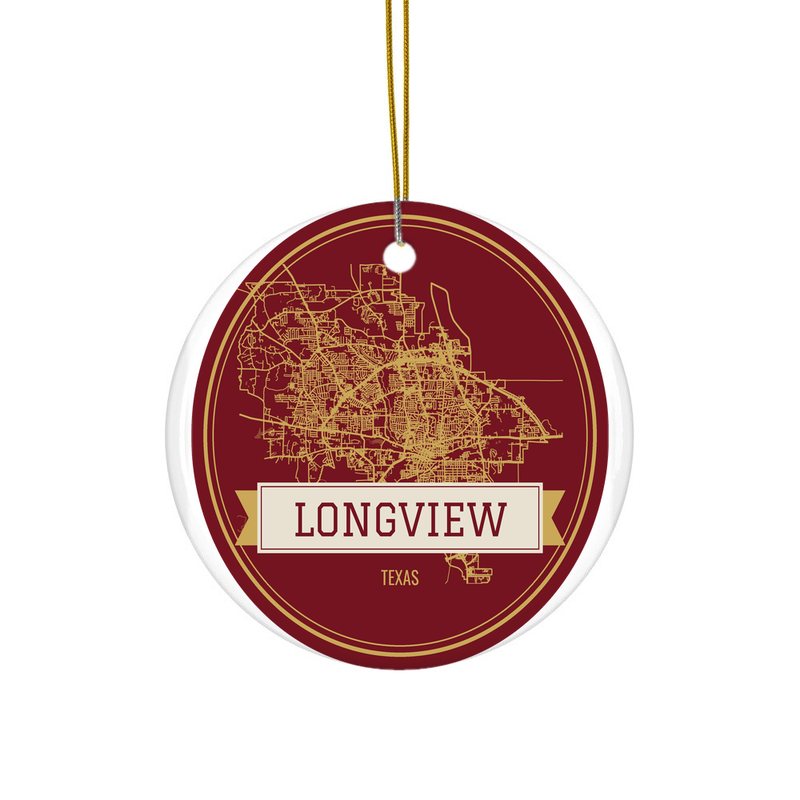
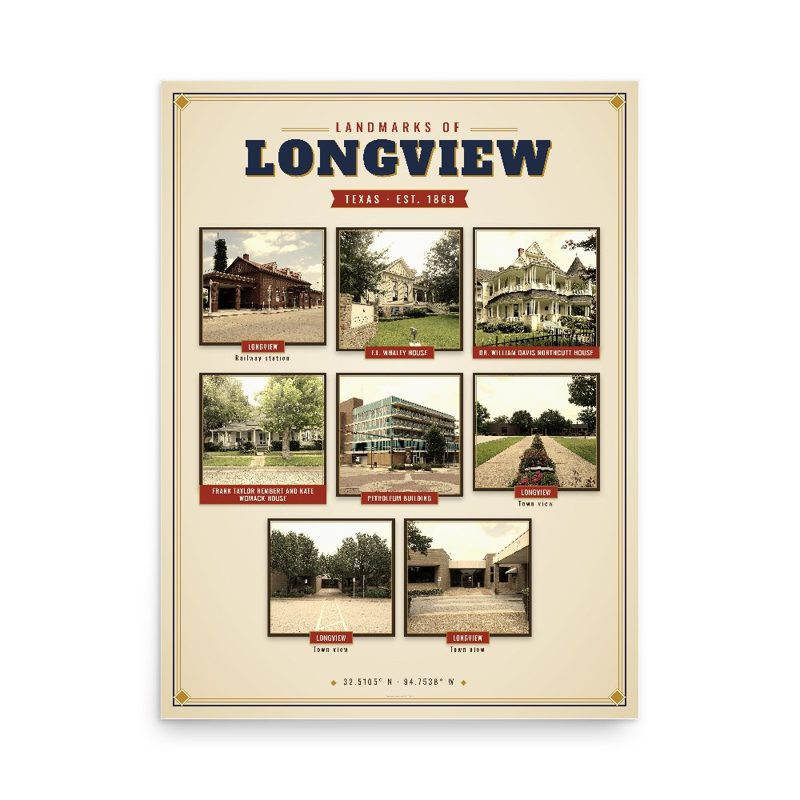
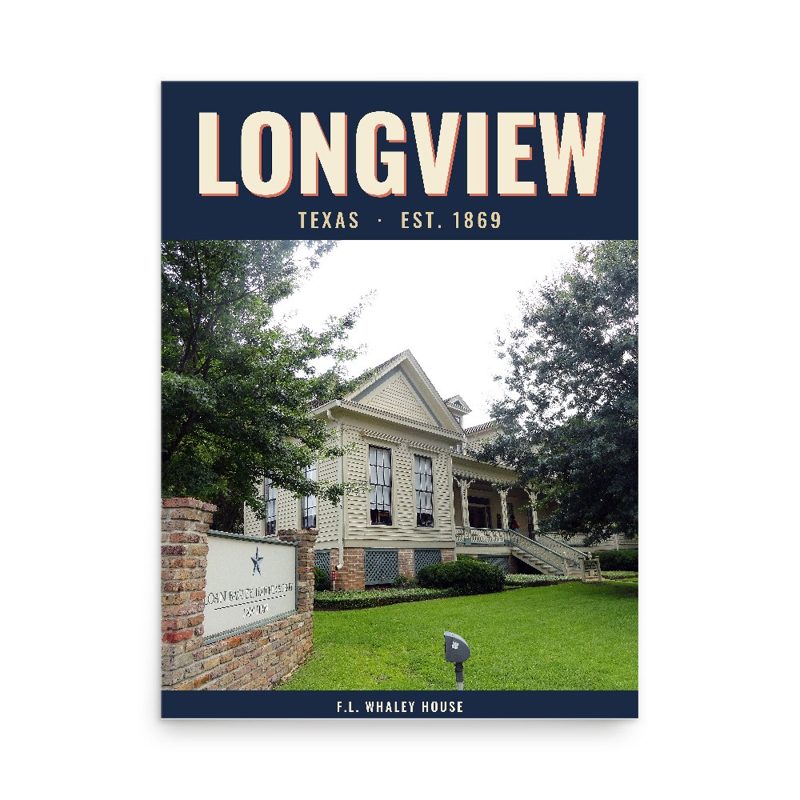
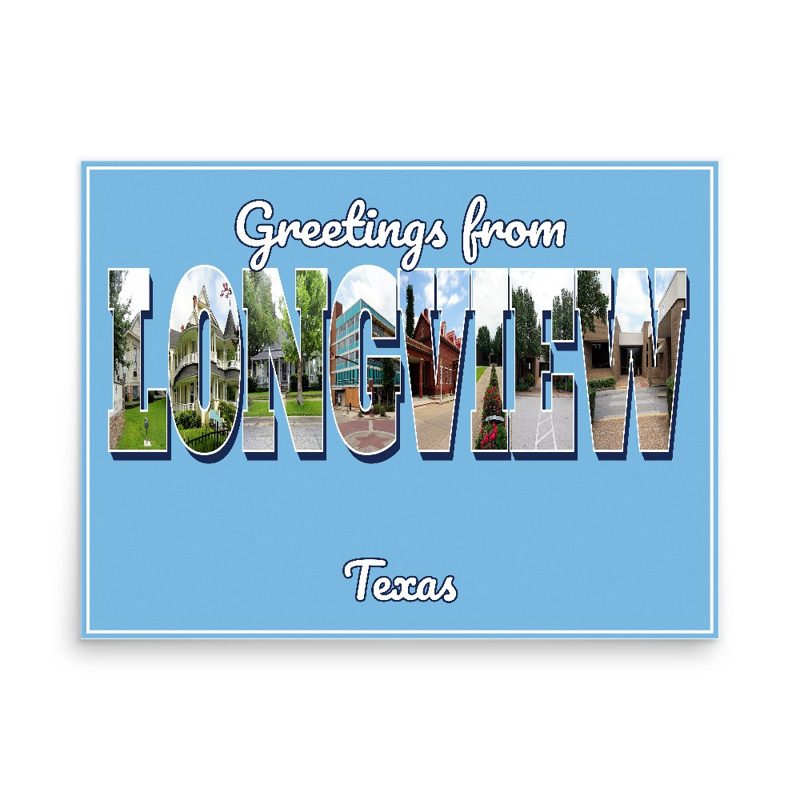
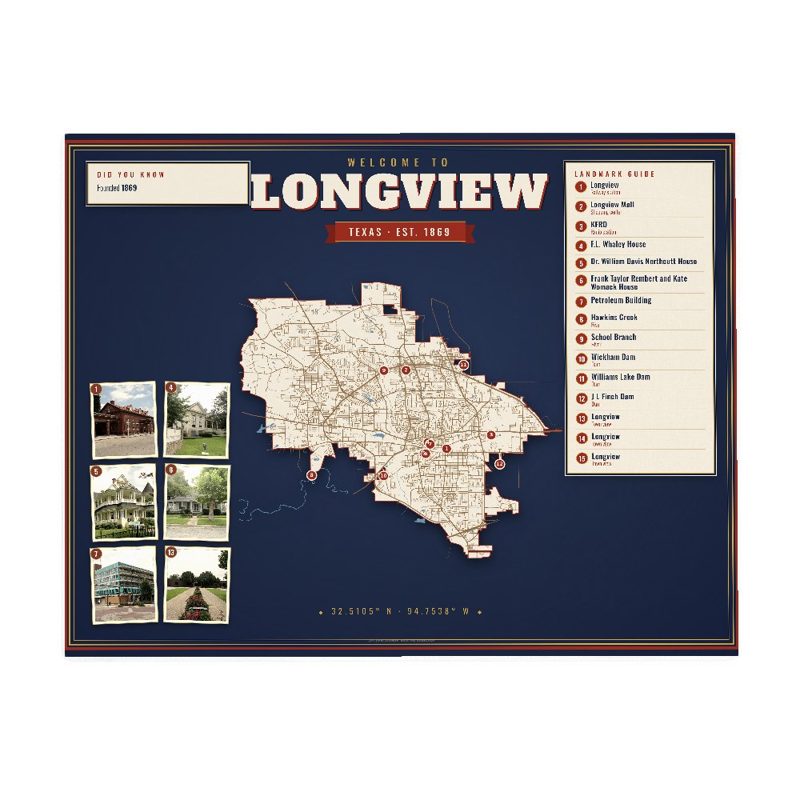









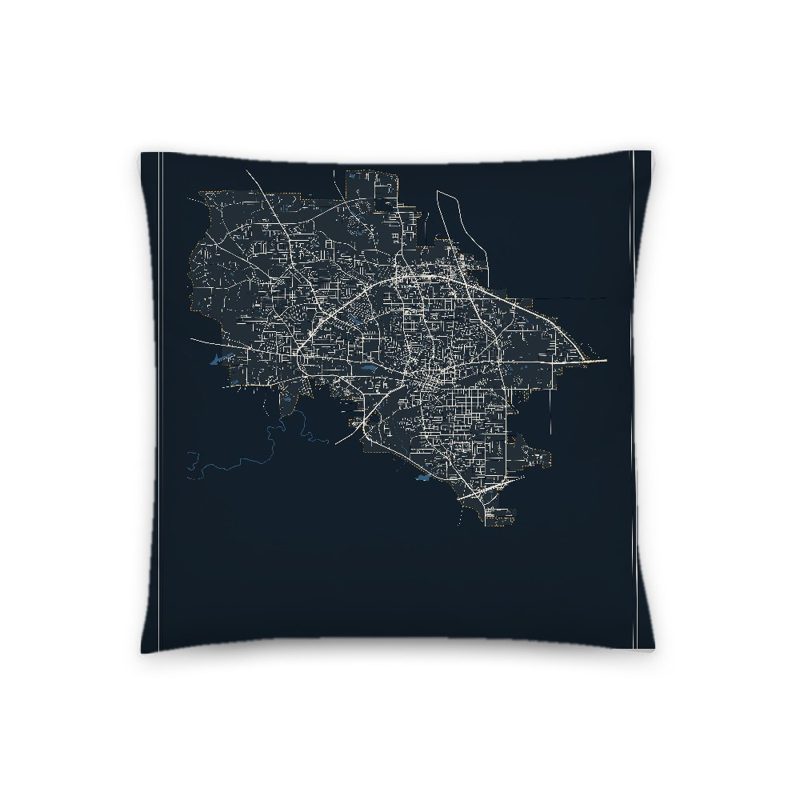





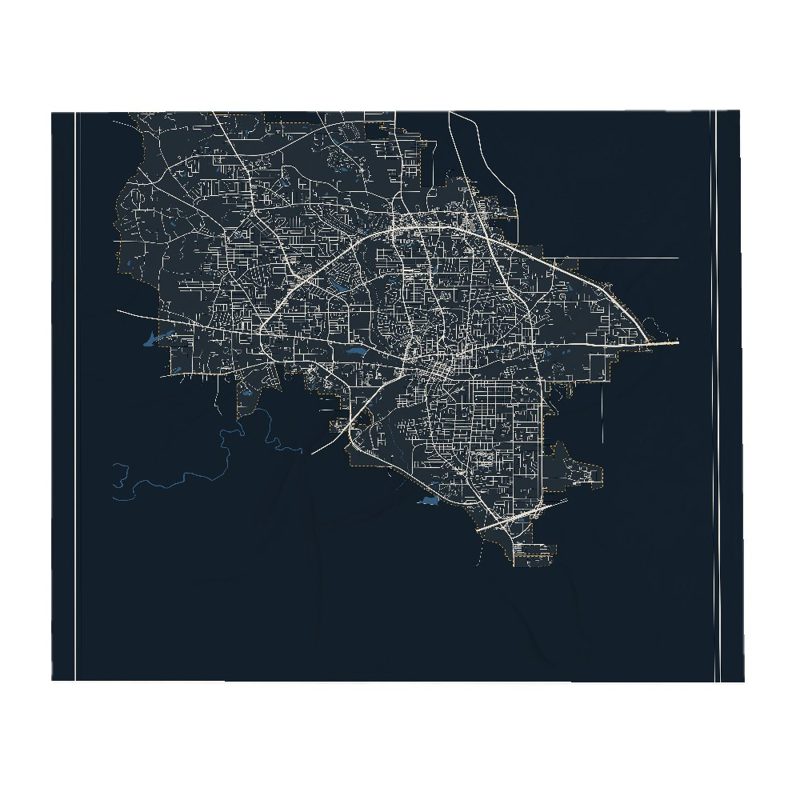
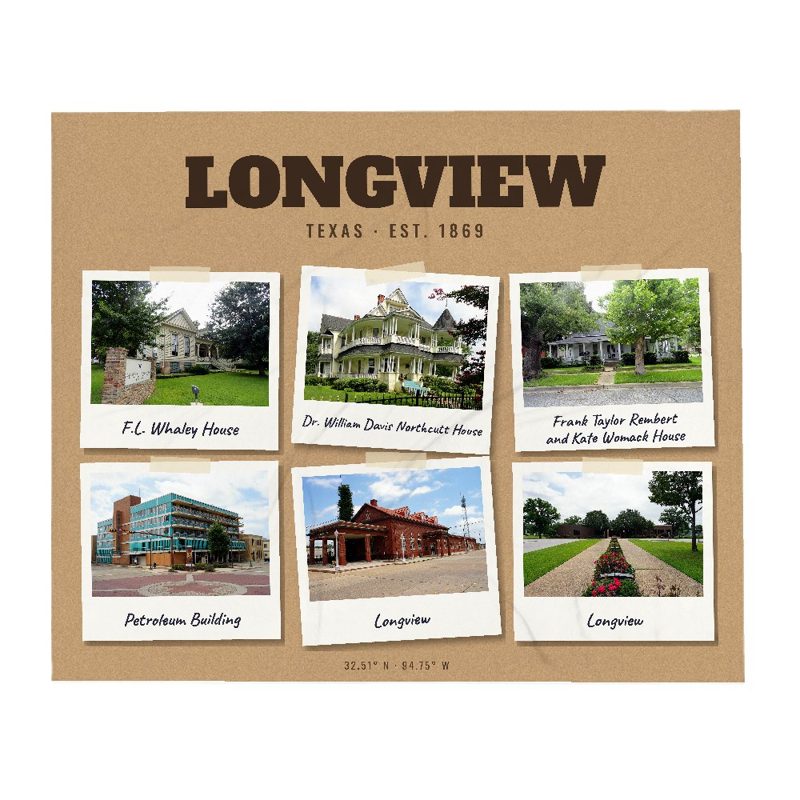
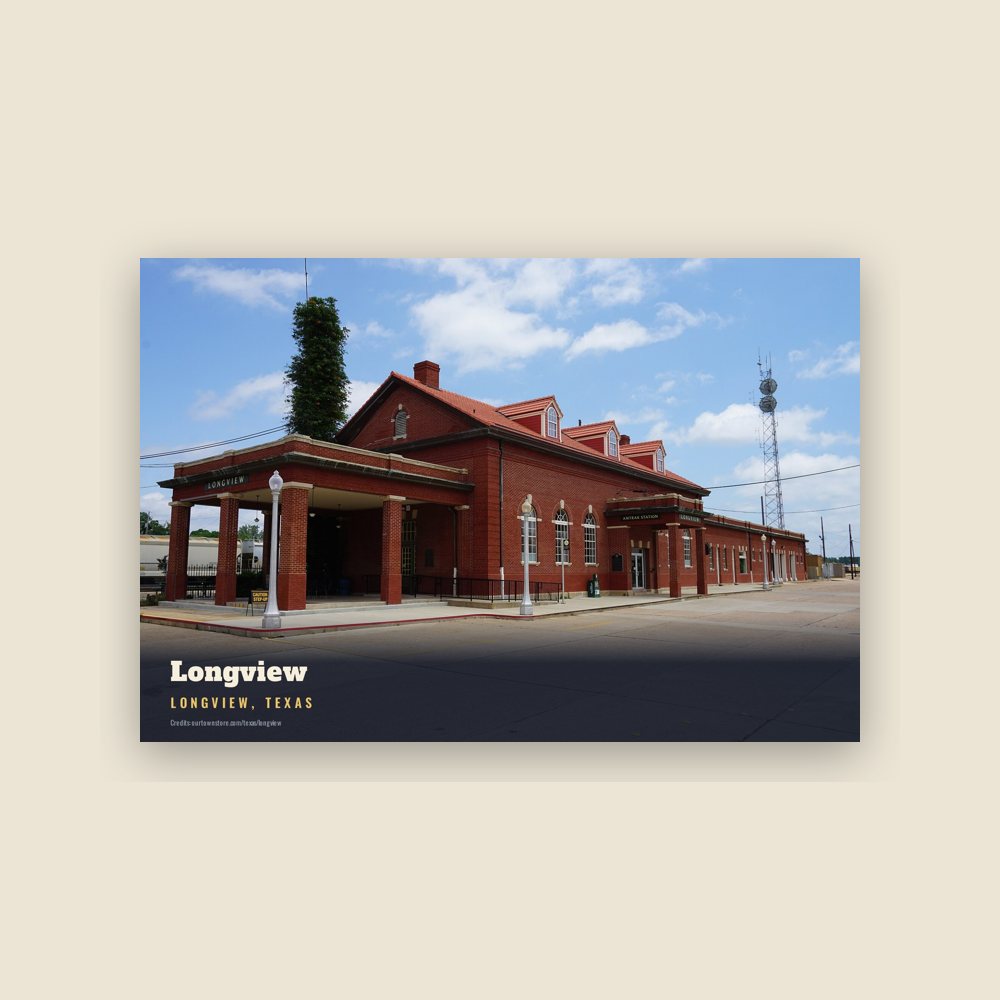
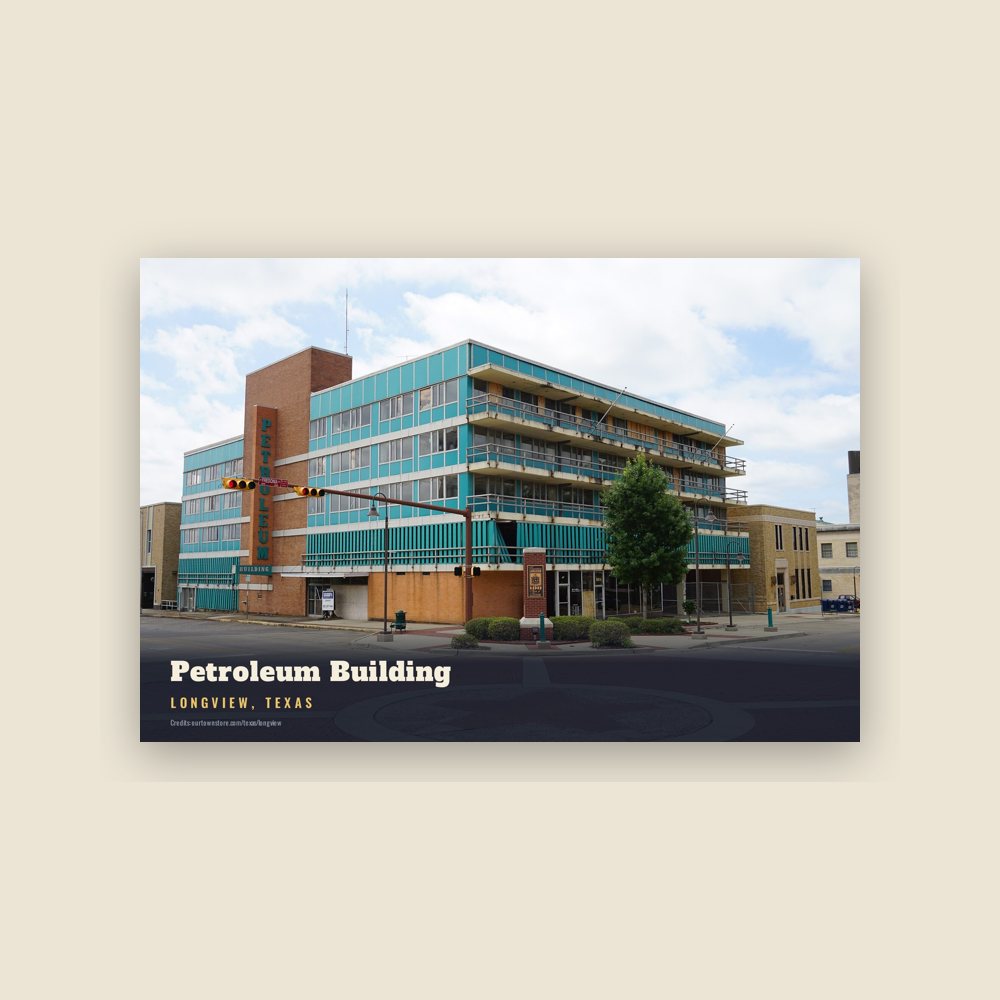
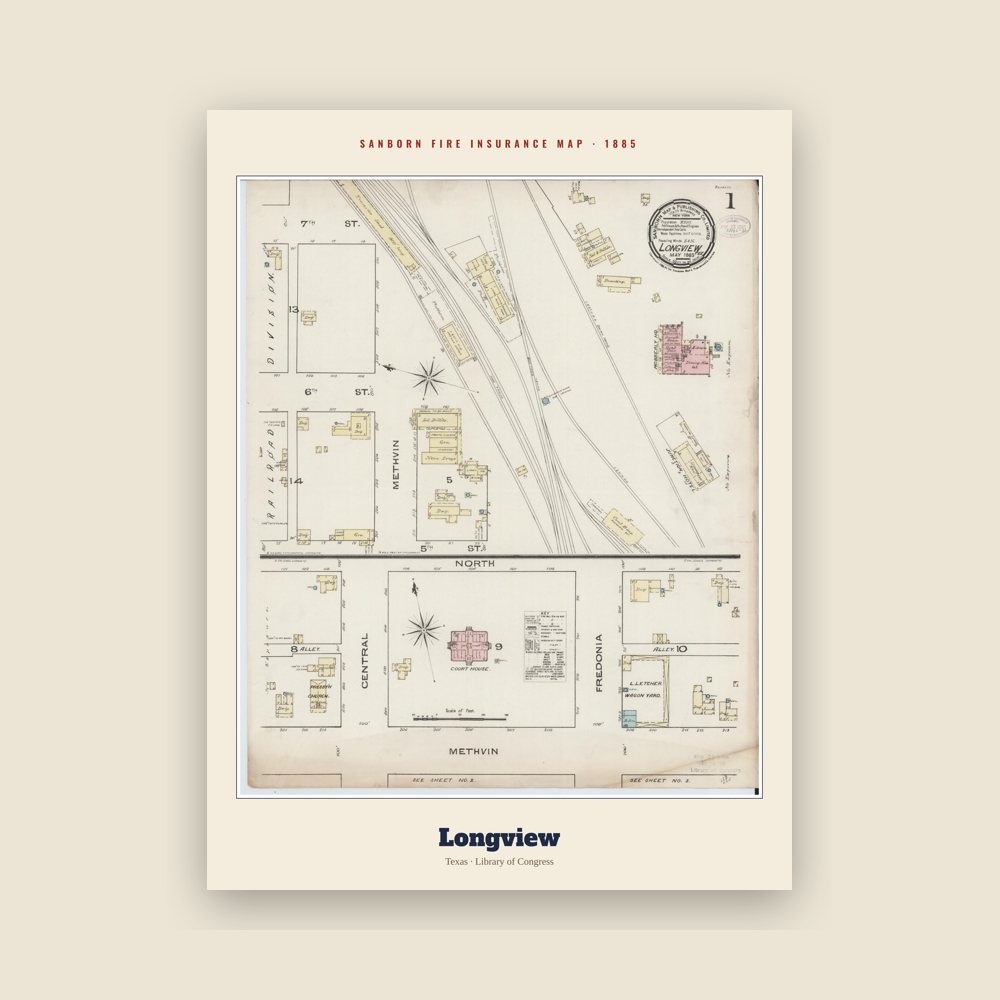
 A view of Longview
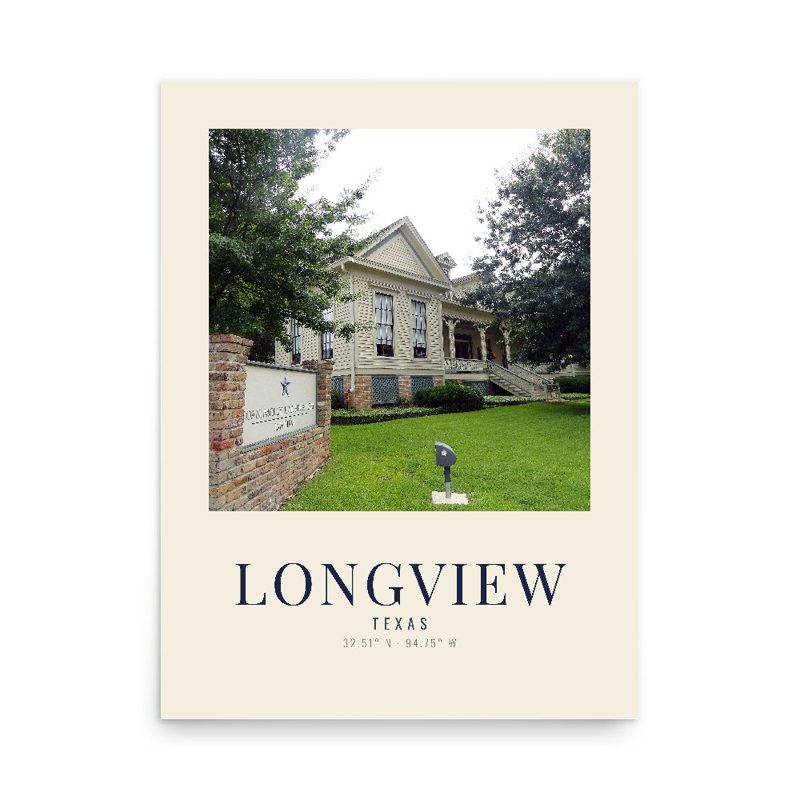
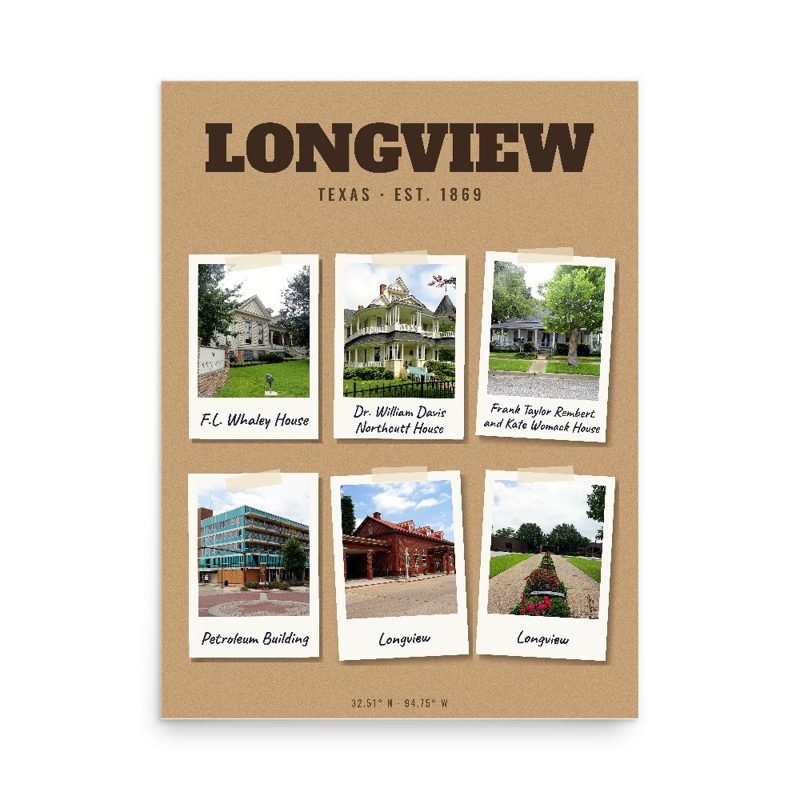
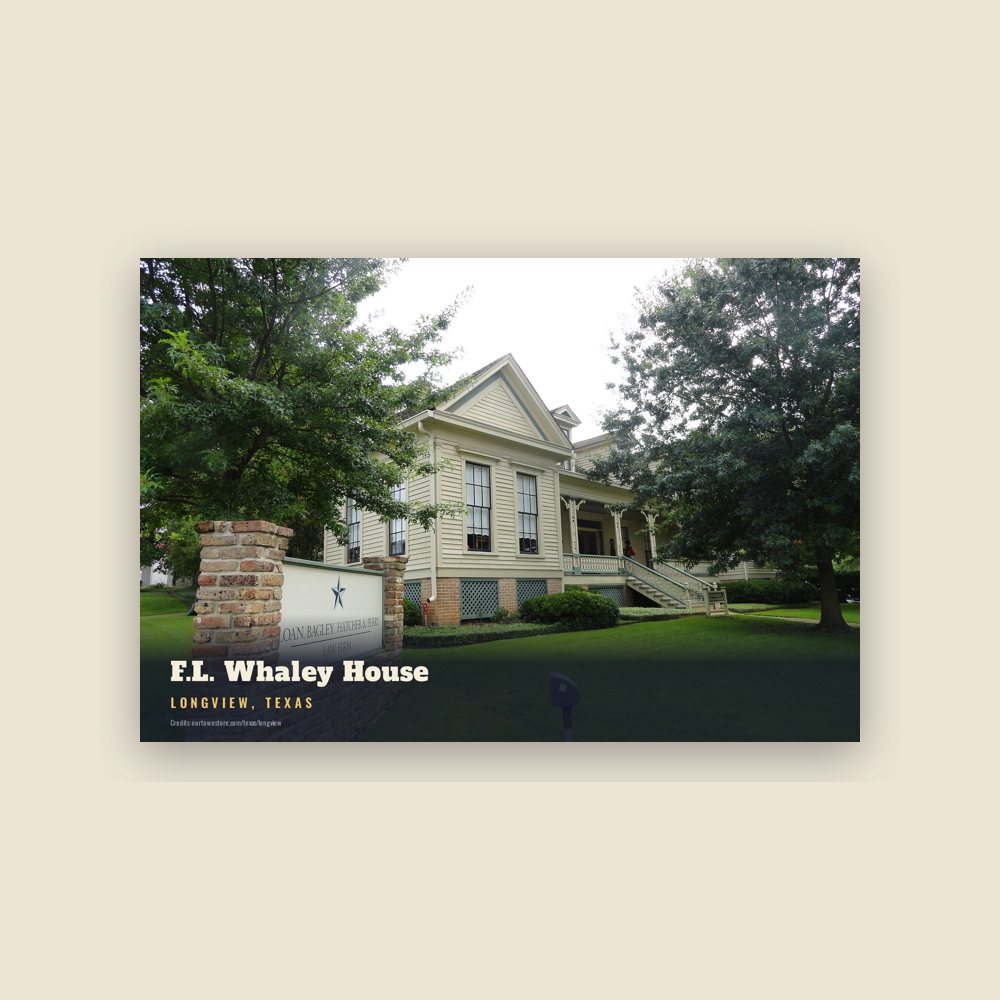
 F.L. Whaley House
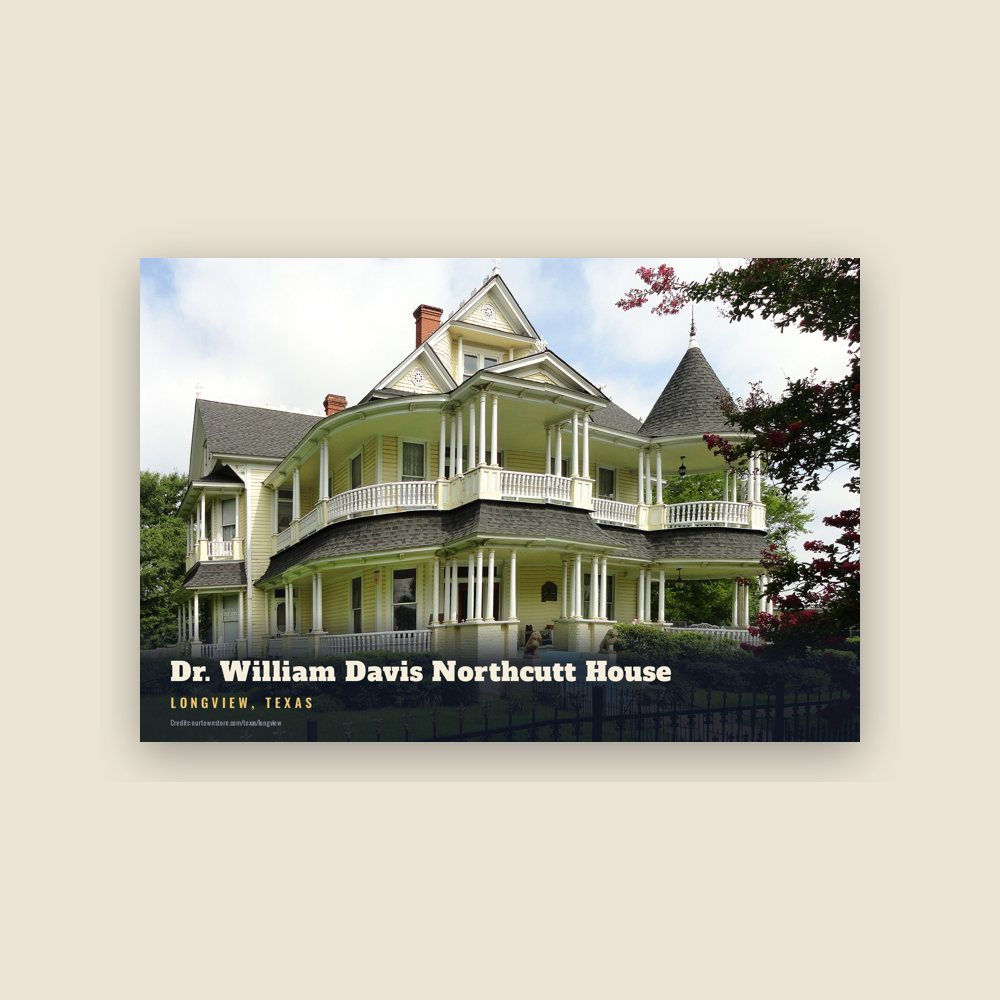
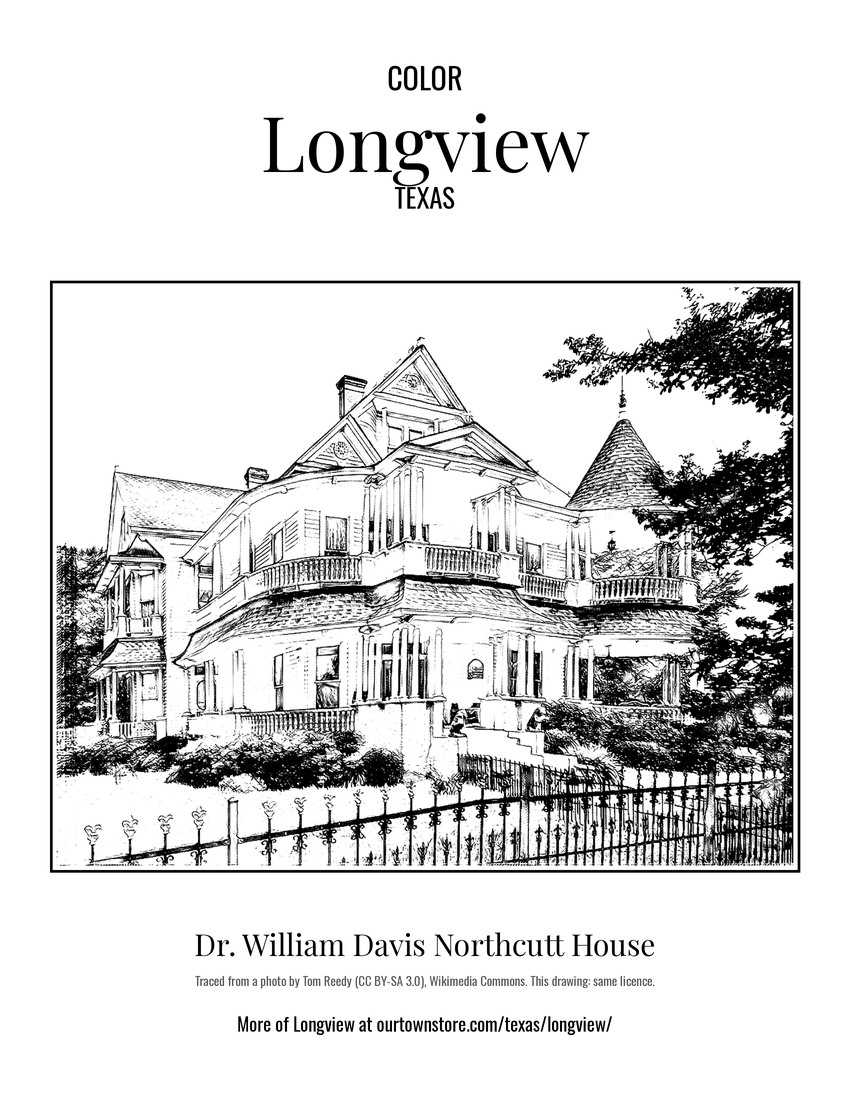 Dr. William Davis Northcutt House
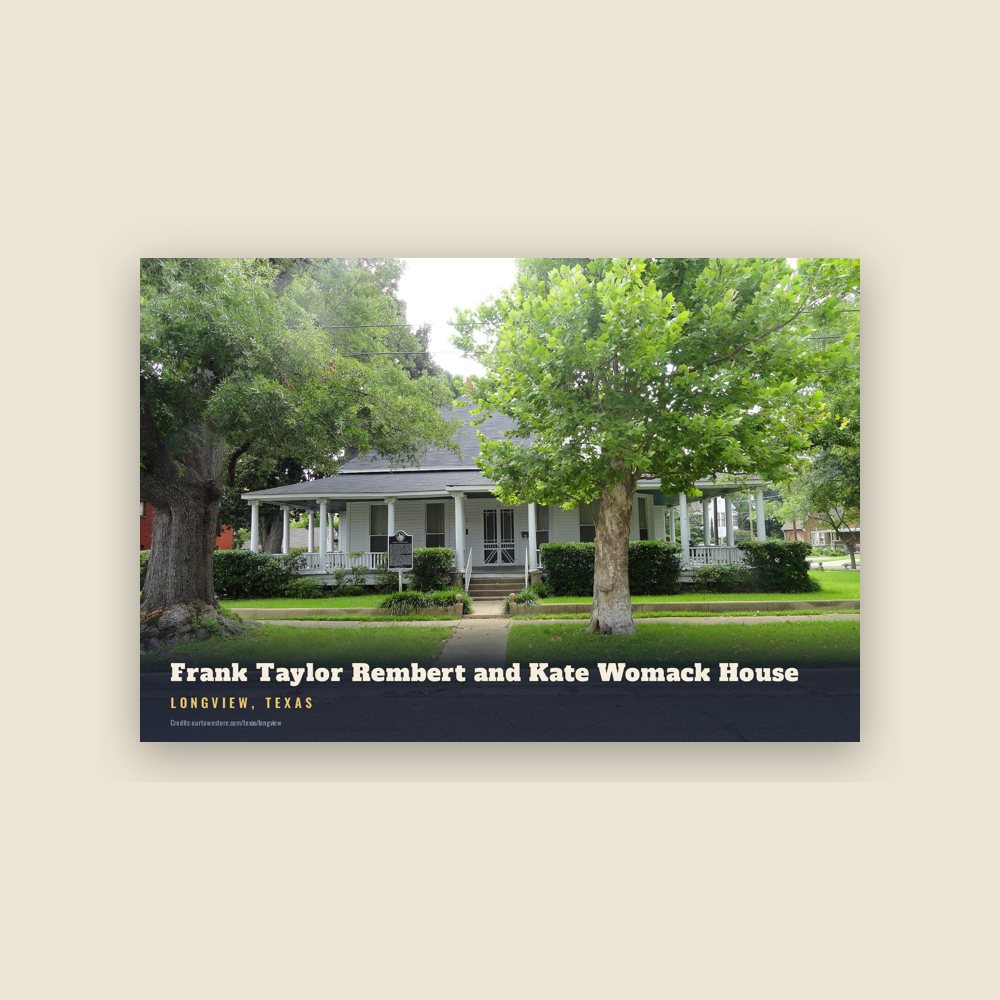
 Frank Taylor Rembert and Kate Womack House