Before its development, Jamaica Beach was a burial ground of the Karankawa people.
- CountyGalveston County
- Population1,078 (2020 U.S. Census)
Jamaica Beach, Texas gifts and souvenirs: 18 designs made from Jamaica Beach's own map, landmarks and history, from $16 to $95. Printed to order and shipped free in the USA.
| Popular | Price |
|---|---|
| Jamaica Beach Hometown Ornament | $23 |
| Jamaica Beach Vintage Travel Poster | from $40 |
| Jamaica Beach Varsity Crewneck | from $57 |
| Jamaica Beach Est. Tee | from $33 |
| Jamaica Beach Town Line Mug | from $26 |
| Jamaica Beach Market Tote | $37 |
Ceramic keepsake, gold ribbon
Its landmark photo in a classic travel-poster layout
A local landmark photo as a gallery print
Heavy-blend fleece, street map printed on the back
Soft Bella+Canvas jersey
Kids' Bella+Canvas jersey, youth sizes
Bella+Canvas toddler jersey
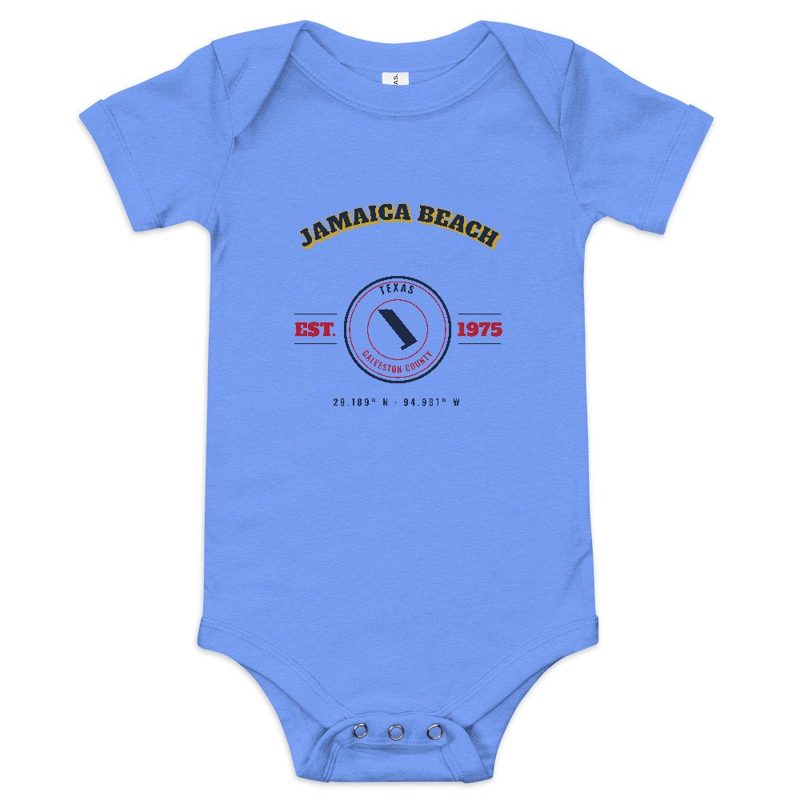
Bella+Canvas baby bodysuit
Glossy ceramic, dishwasher safe
Weatherproof, for the front walk
24″×16″, printed coir-look fibers, rubber back
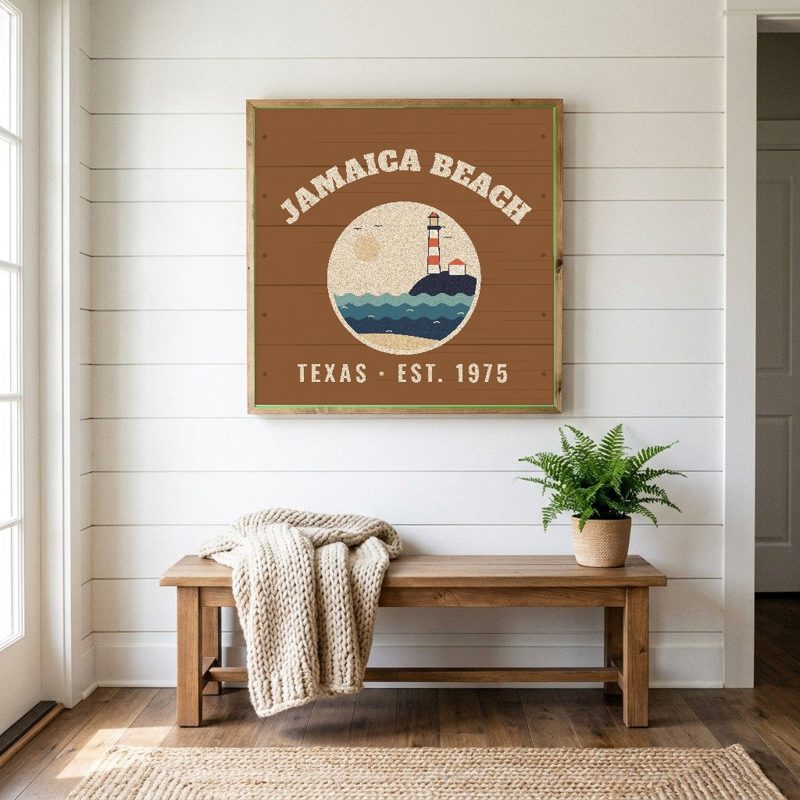
12″×12″ printed wood, ready to hang
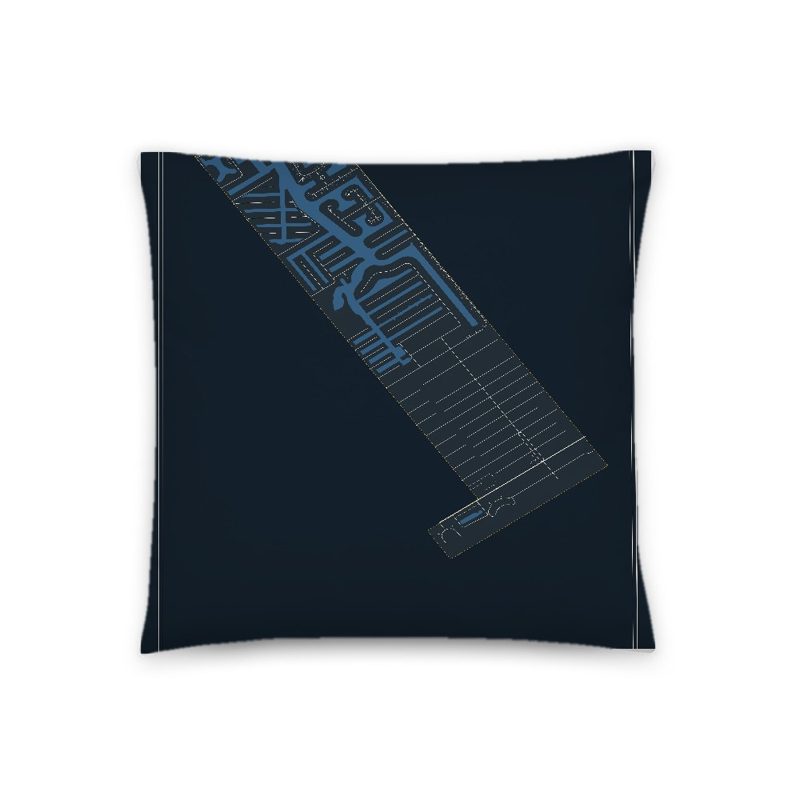
Soft-touch, zip cover
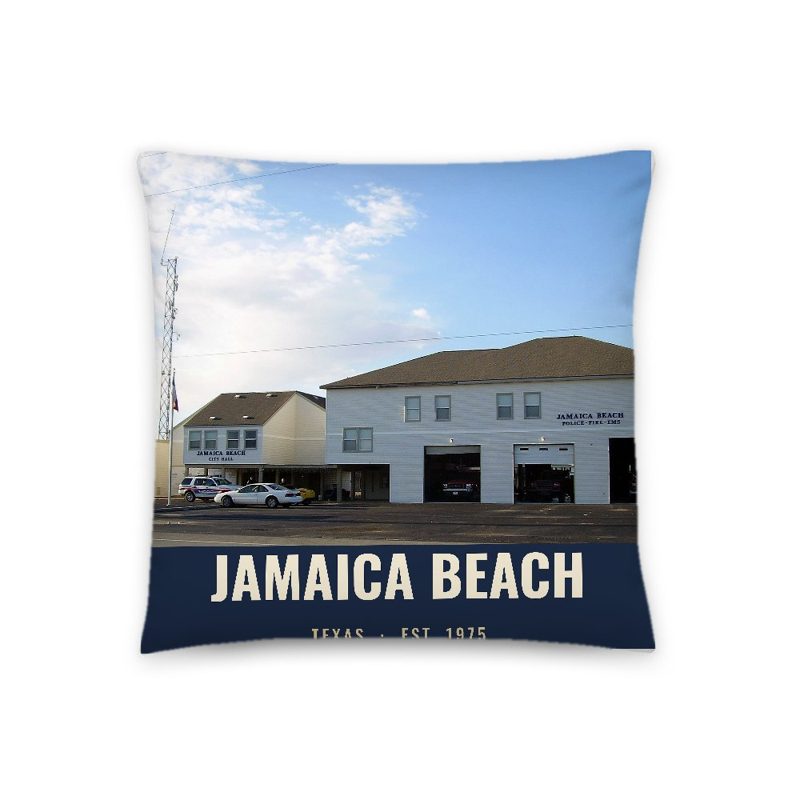
A local landmark photo with the town name, 18″×18″
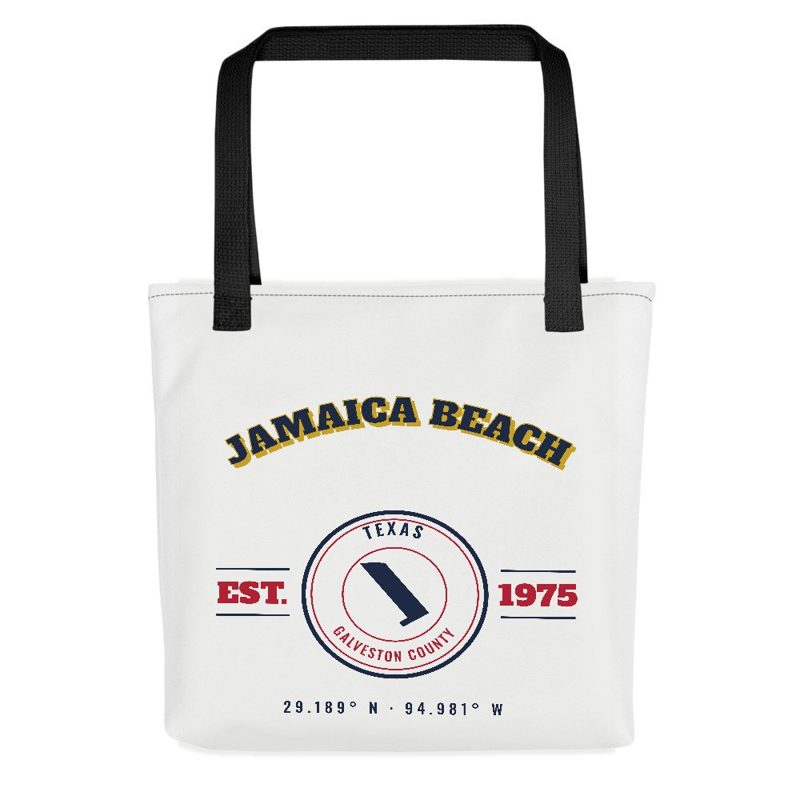
Sturdy all-over-print tote
Glossy top, cork back
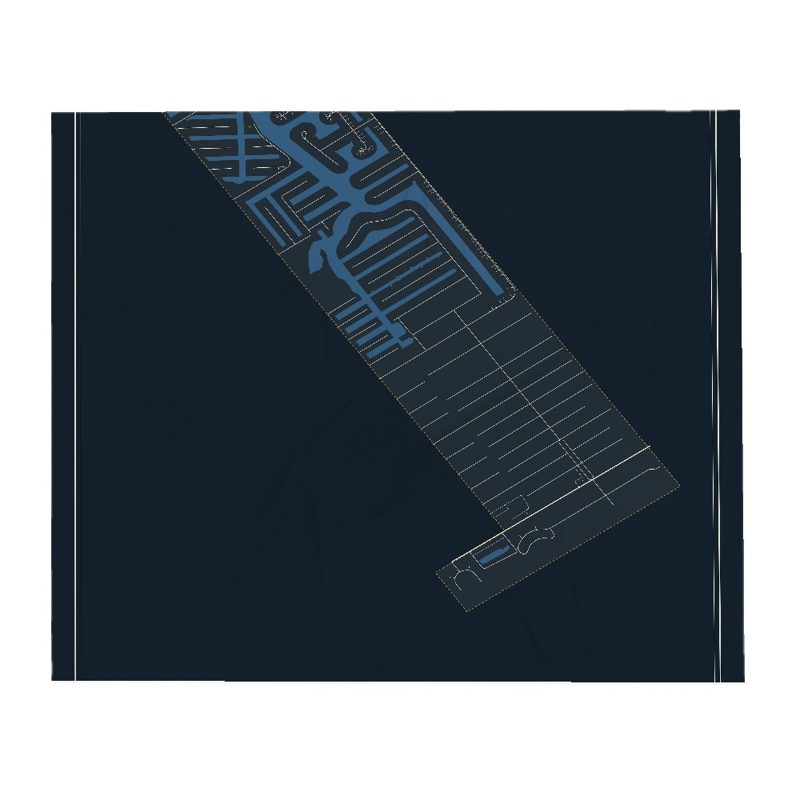
Soft fleece, 50″×60″
20 oz, double-wall stainless
Before its development, Jamaica Beach was a burial ground of the Karankawa people.
Before its development, Jamaica Beach was a burial ground of the Karankawa people. Johnny Goyen and Earl Galceran of the Jamaica Corporation developed Jamaica Beach as a 2,000-lot resort subdivision close to a marina. The individuals who were a part of the development effort were Goyen, Galceran, brothers Jack and Welcome Wilson, Bill Sherrill, and Jack Valenti. They acquired an area of 320 acres (130 ha) that was owned by the Moody family. An oil businessperson named R.E. "Bob" Smith decided not to be a partner in the development, but he purchased the Moody land and sold it to the developers. He did not ask for any down payments and he guaranteed a $250,000 bank loan. Initially, the beachfront lots, each 90 feet (27 m), were sold for $3,500 apiece. The "second-row" houses sold at a quick pace. As the subsequent rows of houses opened for sale, the sales figures decreased slowly because while wealthy people were easily able to acquire second houses, middle-class homebuyers were unable to get a mortgage, and needed to pay for the homebuilding with cash.
In the 1960s, the discovery of a skull and that it was connected to a Karankawa Native American burial ground led to an increase in public exposure and visitors. Welcome Wilson said that no additional sales were generated by the publicity. With the growth of the second house market, almost all of the lots on Jamaica Beach had been sold by the 1970s. Due to a decline in the United States economy, the developer closed its doors. The city incorporated on May 12, 1975. By 1978, 141 residents lived in Jamaica Beach. By 1988, the city had 446 residents and no businesses. By 1990, the city had 624 residents.
Jamaica Beach was affected by Hurricane Alicia in August 1983. In September 2008, the city was affected by Hurricane Ike.
On Saturday August 9, 2008, Jamaica Beach celebrated the 50th anniversary of its groundbreaking. At the ceremony, Welcome Wilson donated boxes of news articles, brochures, and promotional materials in order to build a collection for a museum located at the city hall. In addition, the five children of Welcome Wilson donated $10,000 to the new museum.
Adapted (trimmed) from the Wikipedia article Jamaica Beach, Texas, revision 1382952748 by its contributors, licensed CC BY-SA 4.0.
We share a part of every Jamaica Beach sale with local partners, and we'd love to print from your collection. Old photographs, maps and postcards make the best keepsakes.
Partner with usA favorite landmark, your street, a school or team, an anniversary gift, a different product. Tell us and we'll get back to you by email.
1 free coloring page of Jamaica Beach, each traced from a photo of a local landmark. Print them at home, at school or for story hour.
Jamaica Beach's population was 1,078 in the 2020 U.S. Census, up from 983 in 2010.
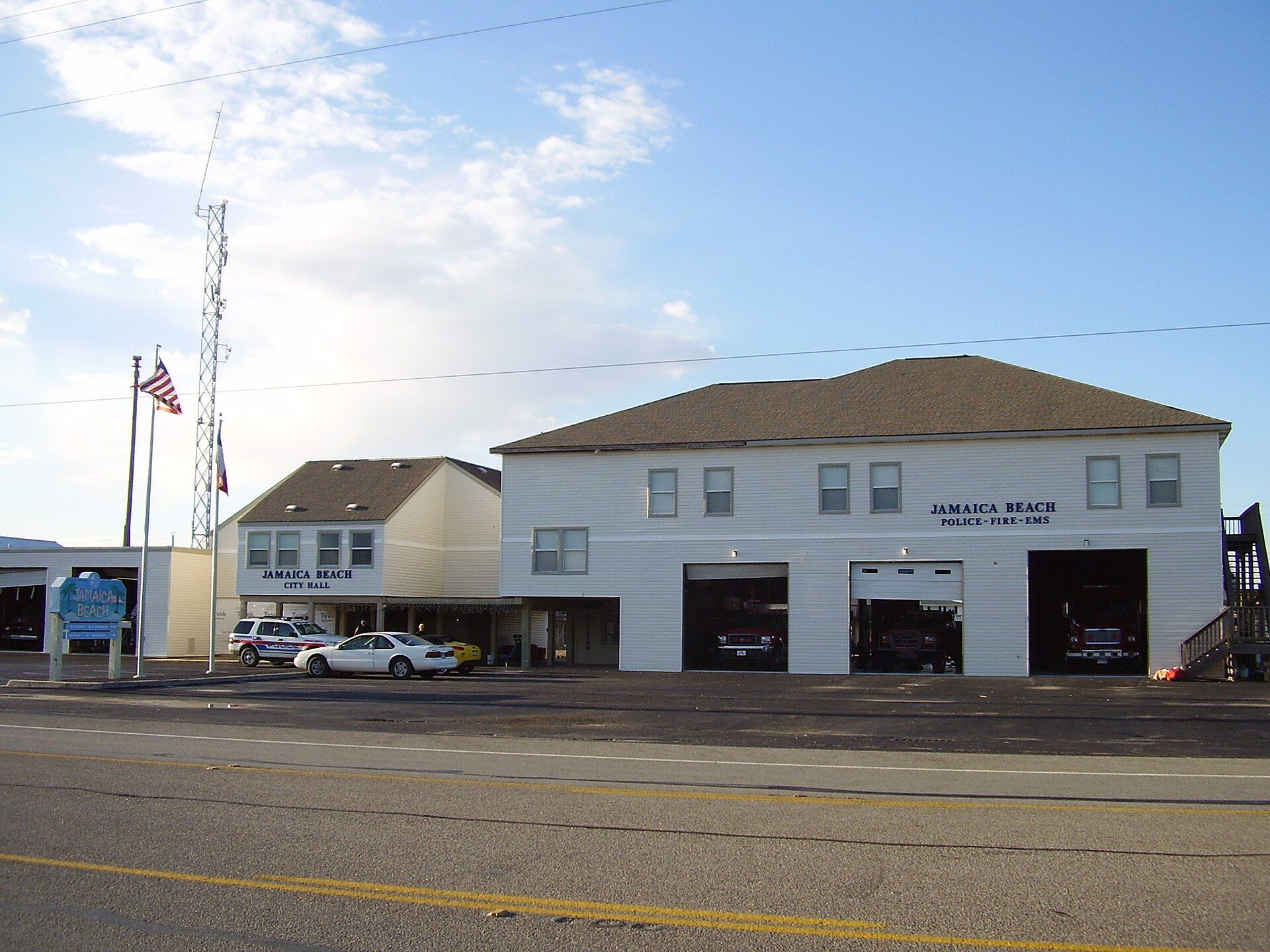
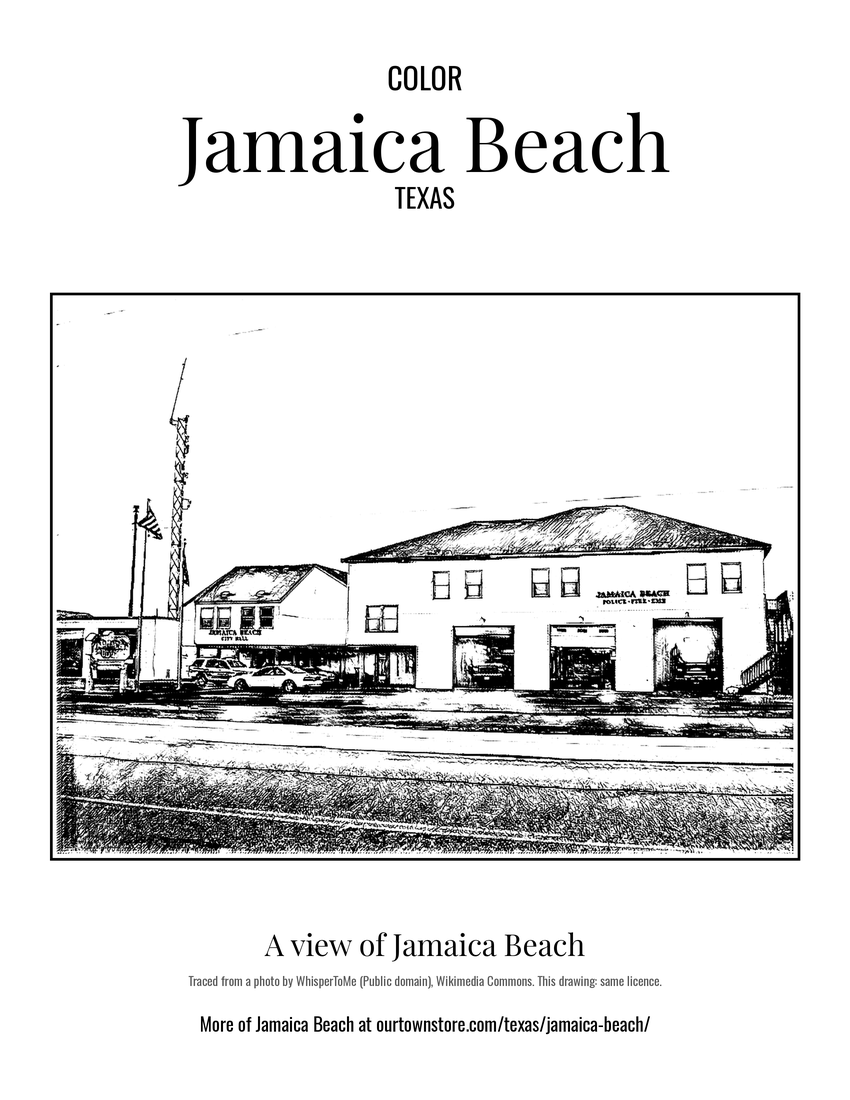 A view of Jamaica Beach