A short history of Graham
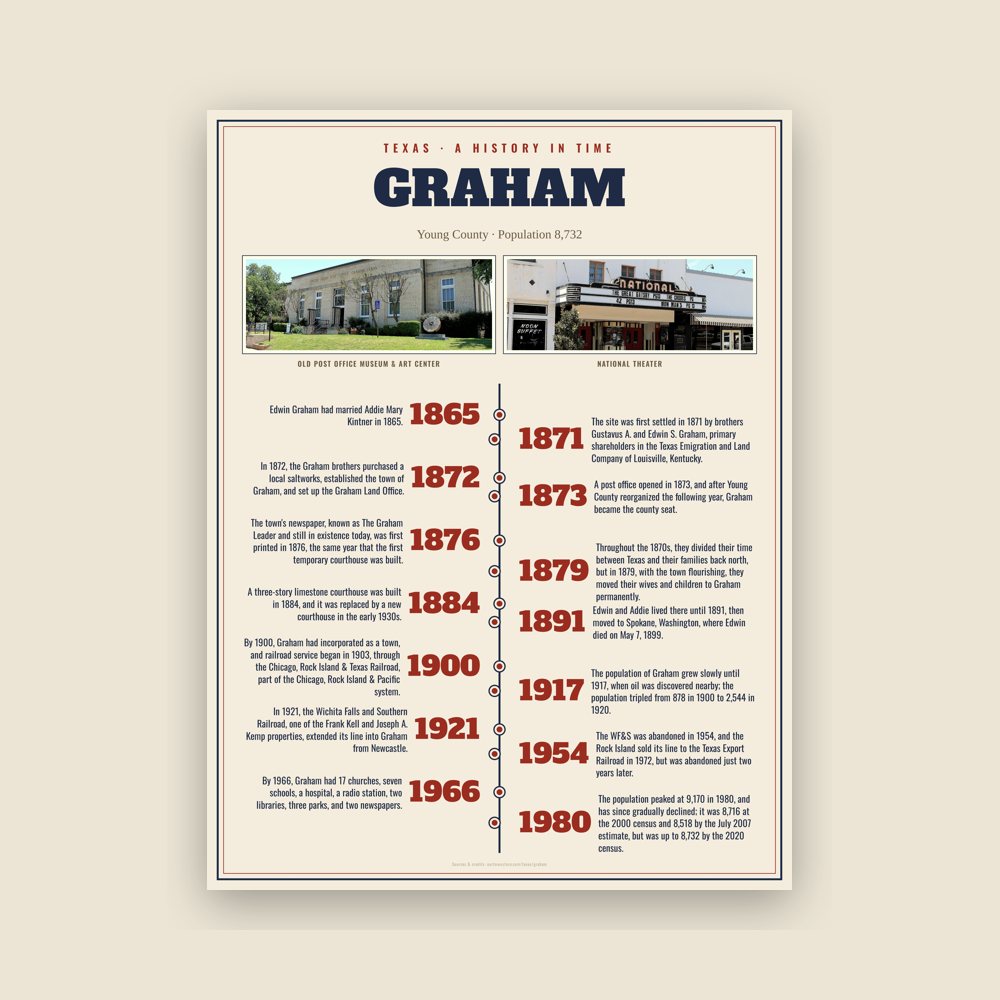
The site was first settled in 1871 by brothers Gustavus A. and Edwin S. Graham, primary shareholders in the Texas Emigration and Land Company of Louisville, Kentucky. The brothers moved to Texas after the Civil War, and after buying 125,000 acres (510 km2) in then-vast Young County, helped to revitalize the area, the population of which had become badly depleted during the war. During that same year as when Graham was settled, the Warren Wagon Train raid occurred about 12 miles north of the city. In 1872, the Graham brothers purchased a local saltworks, established the town of Graham, and set up the Graham Land Office. The saltworks were not a profitable venture, as the salt was too expensive to ship, and were closed in a few years.
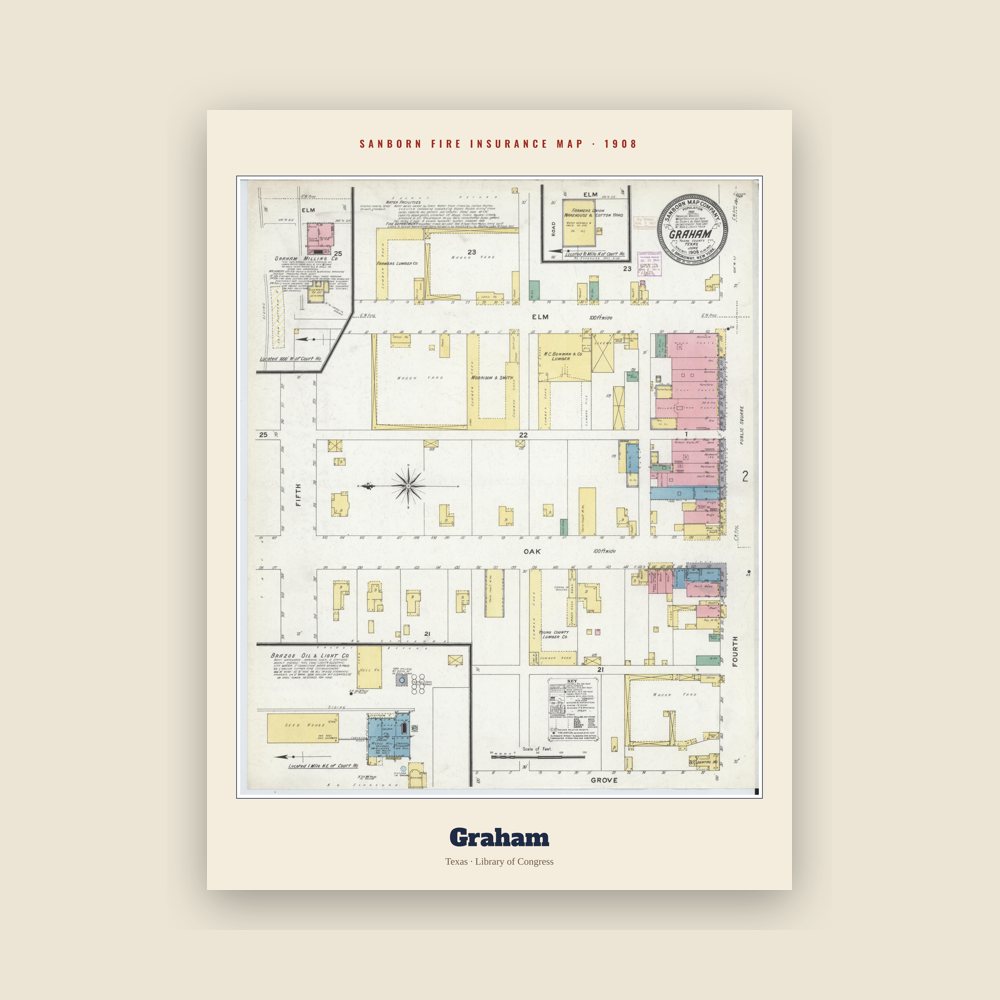
New families started to arrive, and the brothers began promoting the sale of homesites and doing civic improvements. A post office opened in 1873, and after Young County reorganized the following year, Graham became the county seat. The town's newspaper, known as The Graham Leader and still in existence today, was first printed in 1876, the same year that the first temporary courthouse was built. Other businesses from these early years included a gristmill, sawmill, cotton gin, and brick kiln, two hotels, and several stores.
On February 15, 1877, the city was the site of the organizational meeting of the group that became the Texas and Southwestern Cattle Raisers Association, created to police ranching and put a stop to cattle rustling. Founding officers included pioneer ranchers James C. Loving (son of Oliver Loving), Col. C. L. (Kit) Carter, and C.C. Slaughter. A three-story limestone courthouse was built in 1884, and it was replaced by a new courthouse in the early 1930s. The 1884 structure's east door still stands on the courthouse square. From 1879 to 1896, Graham was the seat of a federal district court overseen by Judge A.P. McCormick; his jurisdiction extended over all of Texas north and west to New Mexico.
Edwin Graham had married Addie Mary Kintner in 1865. They had five children. Throughout the 1870s, they divided their time between Texas and their families back north, but in 1879, with the town flourishing, they moved their wives and children to Graham permanently. Edwin and Addie lived there until 1891, then moved to Spokane, Washington, where Edwin died on May 7, 1899. His body was brought back to Graham for burial. Addie moved back to Graham and became a leading civic booster and philanthropist. In 1921, with her son Malcolm, she set up the Graham Foundation as a continuing fund for the city's growth and improvement. Addie died in 1929; she was responsible for the establishment of the Eden Home for the aged.
By 1900, Graham had incorporated as a town, and railroad service began in 1903, through the Chicago, Rock Island & Texas Railroad, part of the Chicago, Rock Island & Pacific system. In 1921, the Wichita Falls and Southern Railroad, one of the Frank Kell and Joseph A. Kemp properties, extended its line into Graham from Newcastle. The WF&S was abandoned in 1954, and the Rock Island sold its line to the Texas Export Railroad in 1972, but was abandoned just two years later.
The population of Graham grew slowly until 1917, when oil was discovered nearby; the population tripled from 878 in 1900 to 2,544 in 1920. By 1966, Graham had 17 churches, seven schools, a hospital, a radio station, two libraries, three parks, and two newspapers. The population peaked at 9,170 in 1980, and has since gradually declined; it was 8,716 at the 2000 census and 8,518 by the July 2007 estimate, but was up to 8,732 by the 2020 census.
Adapted (trimmed) from the Wikipedia article Graham, Texas, revision 1374419415 by its contributors, licensed CC BY-SA 4.0.
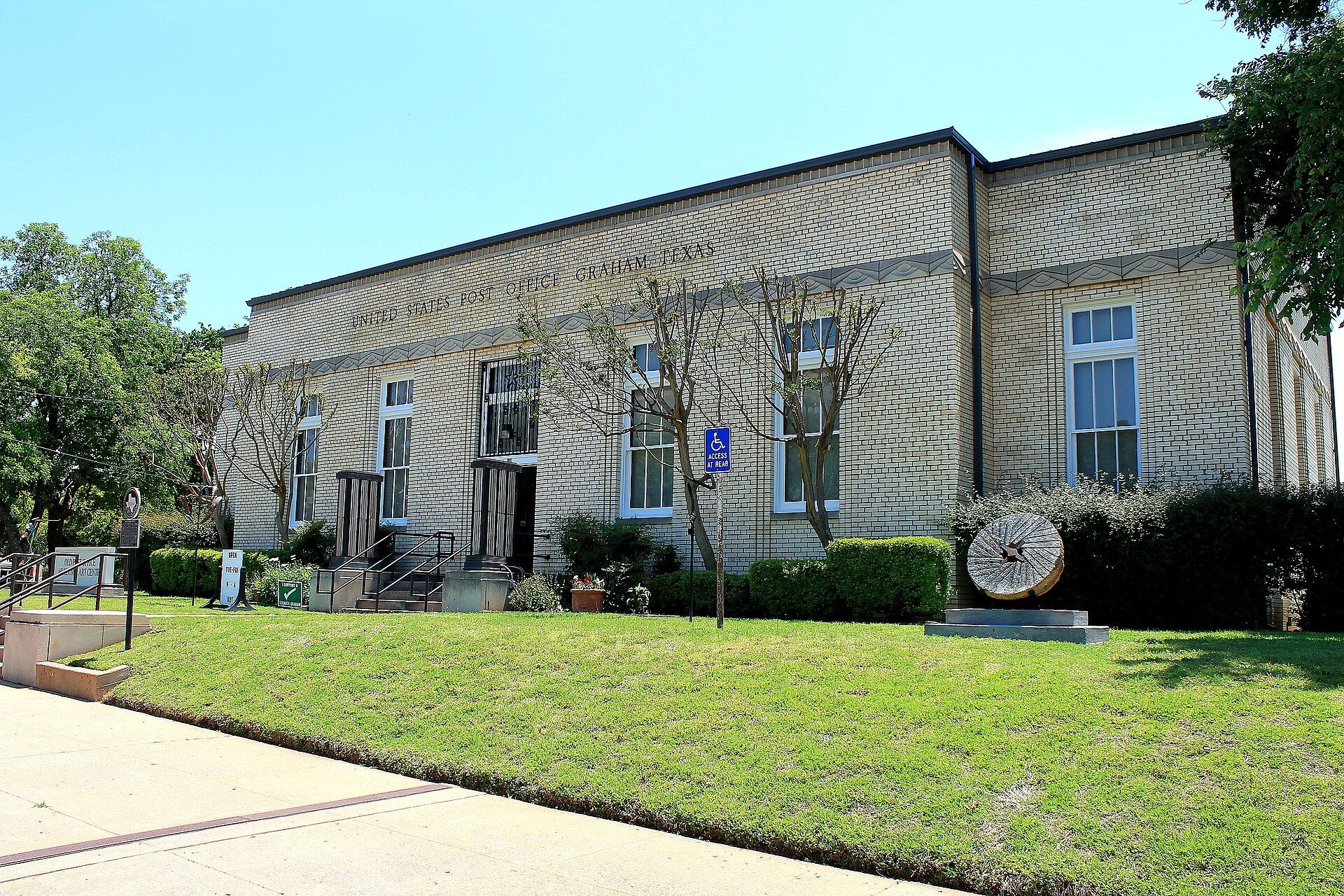

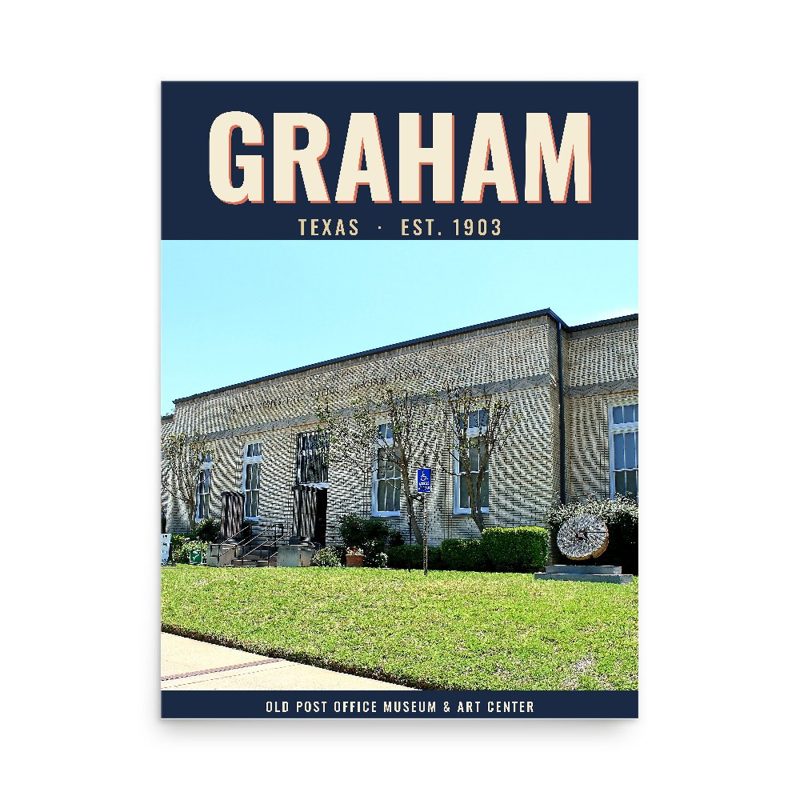





















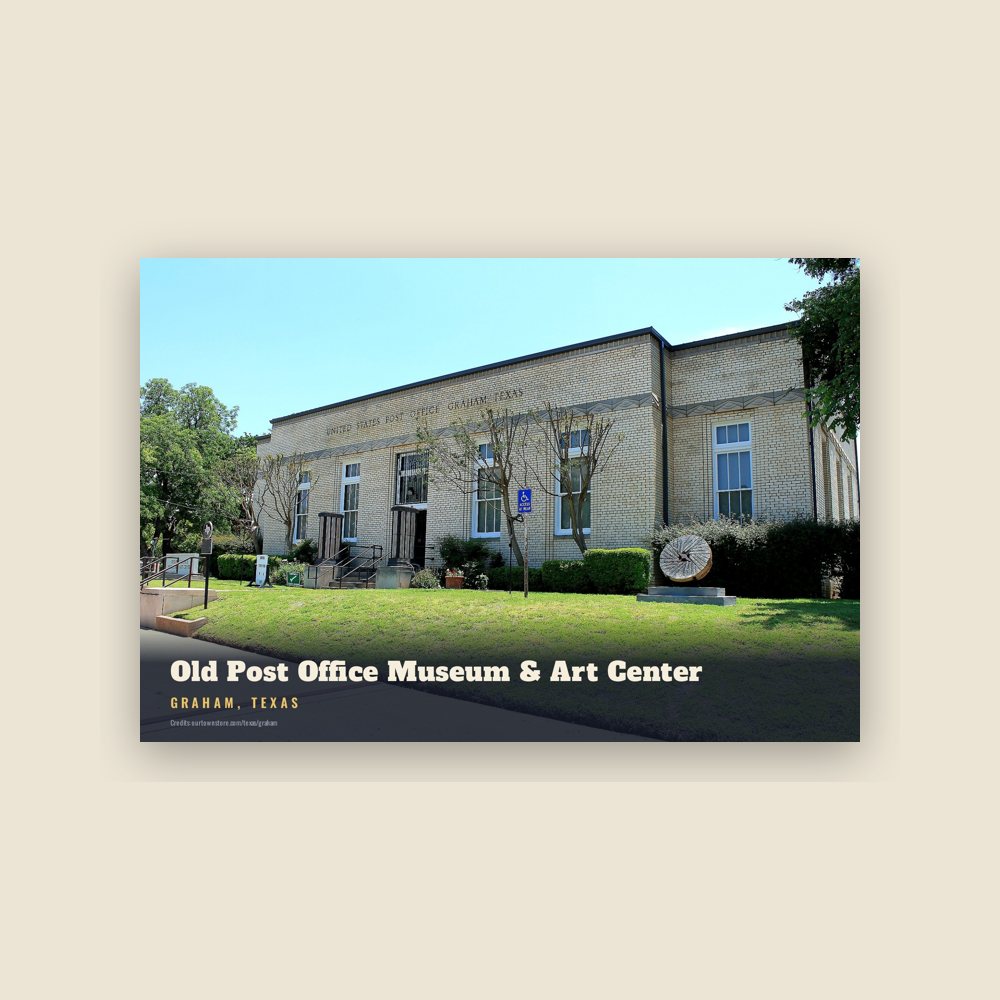

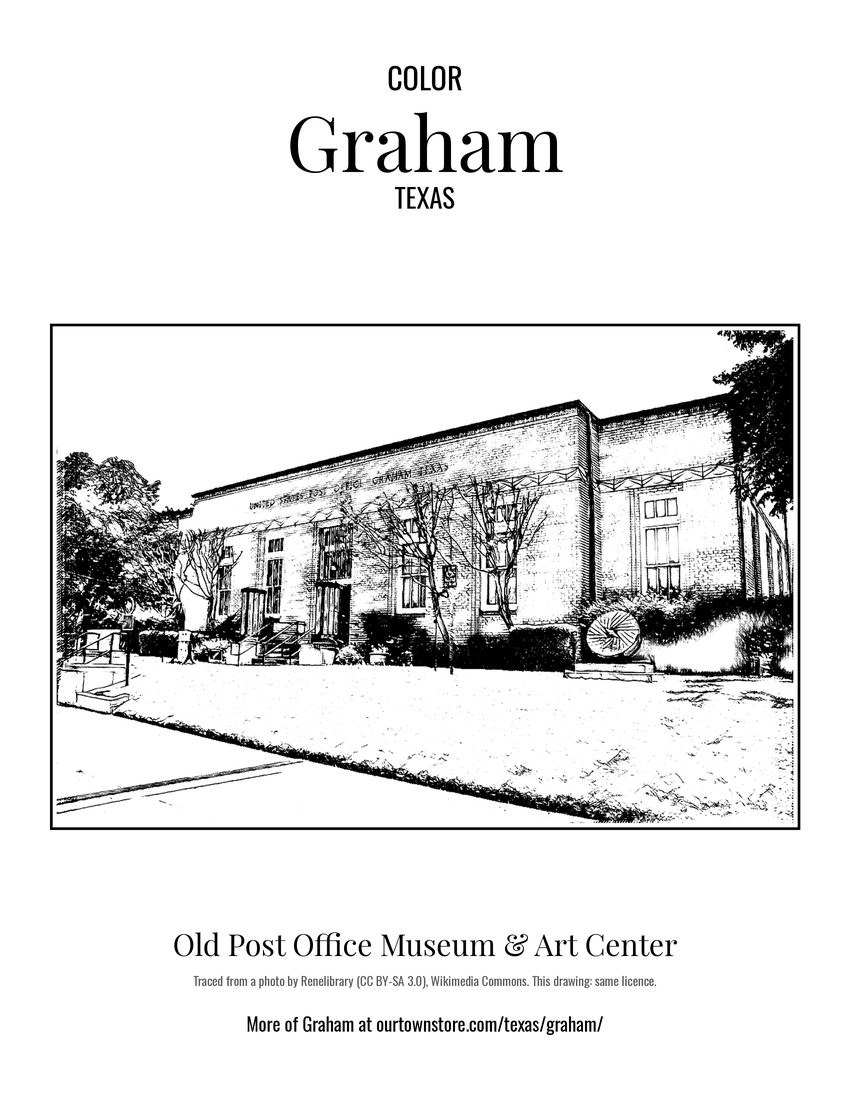 Old Post Office Museum & Art Center
 National Theater
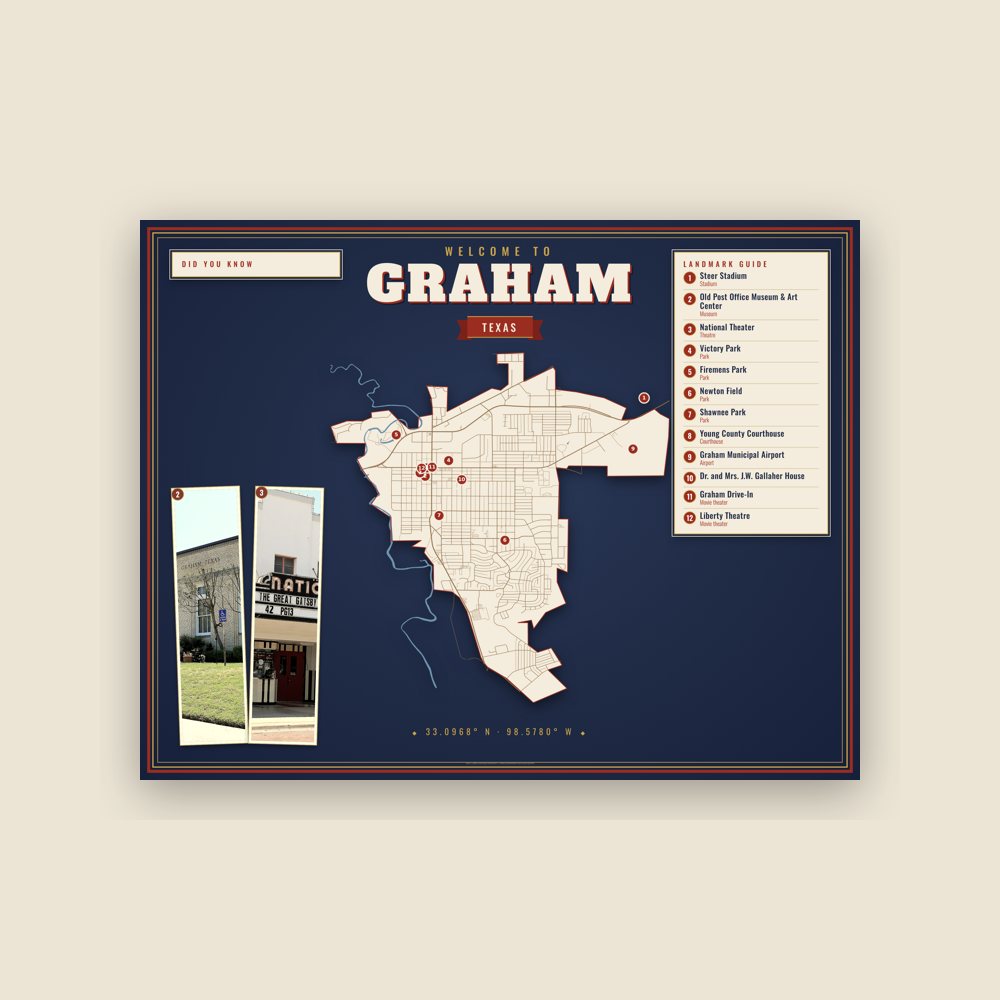
 A view of Graham