Farwell began as a cow camp for the XIT Ranch, a huge ranch that was established in 1880. Landmarks include KIJN and Parmer County Courthouse.
- CountyParmer County
- Population1,425 (2020 U.S. Census)
- Historic places1 on the National Register
Farwell, Texas gifts and souvenirs: 27 designs made from Farwell's own map, landmarks and history, from $10 to $99. Printed to order and shipped free in the USA.
| Popular | Price |
|---|---|
| Farwell Hometown Ornament | $23 |
| Farwell Vintage Travel Poster | from $40 |
| Farwell Varsity Crewneck | from $57 |
| Farwell Est. Tee | from $33 |
| Farwell Town Line Mug | from $26 |
| Farwell Market Tote | $37 |
Ceramic keepsake, gold ribbon
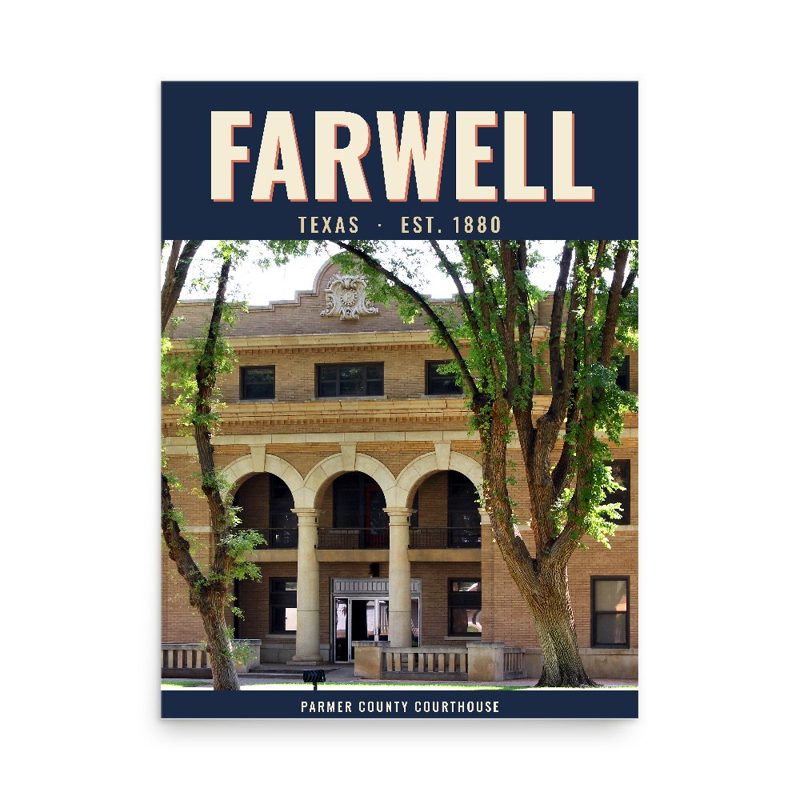
Its landmark photo in a classic travel-poster layout
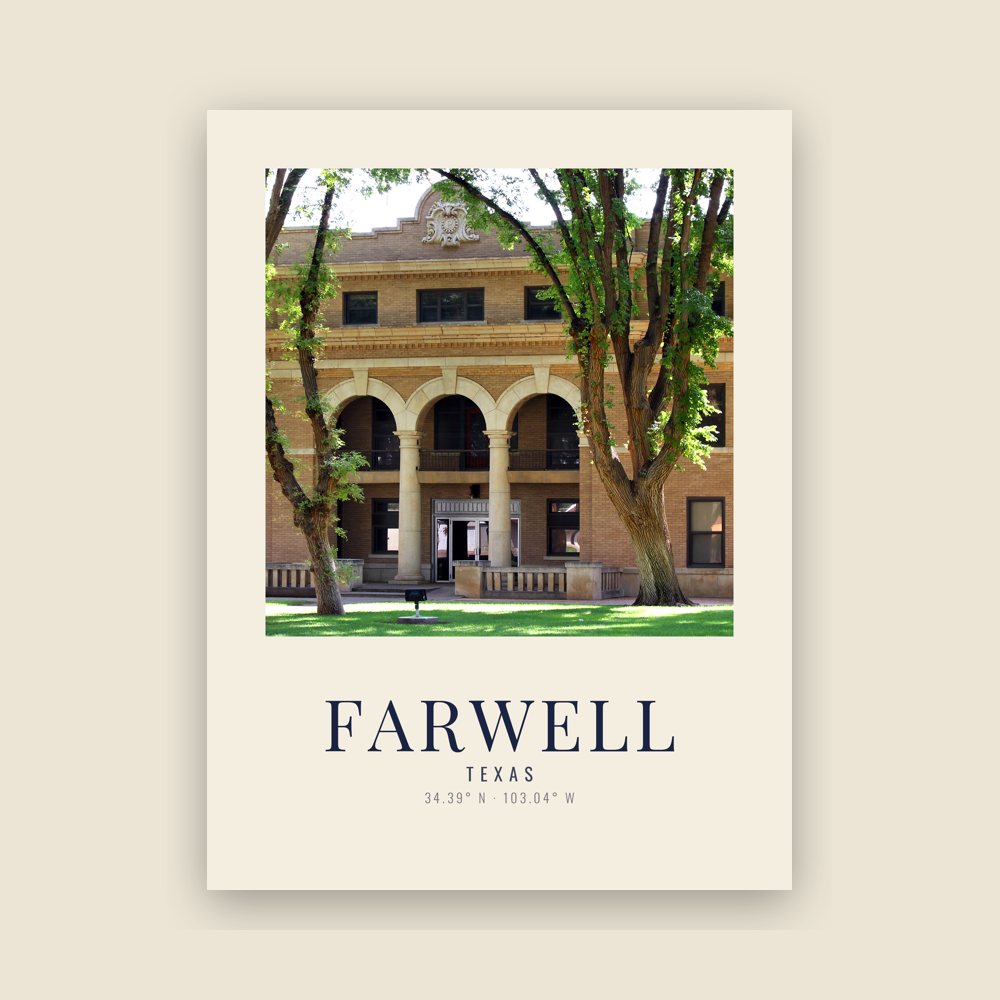
A local landmark photo as a gallery print
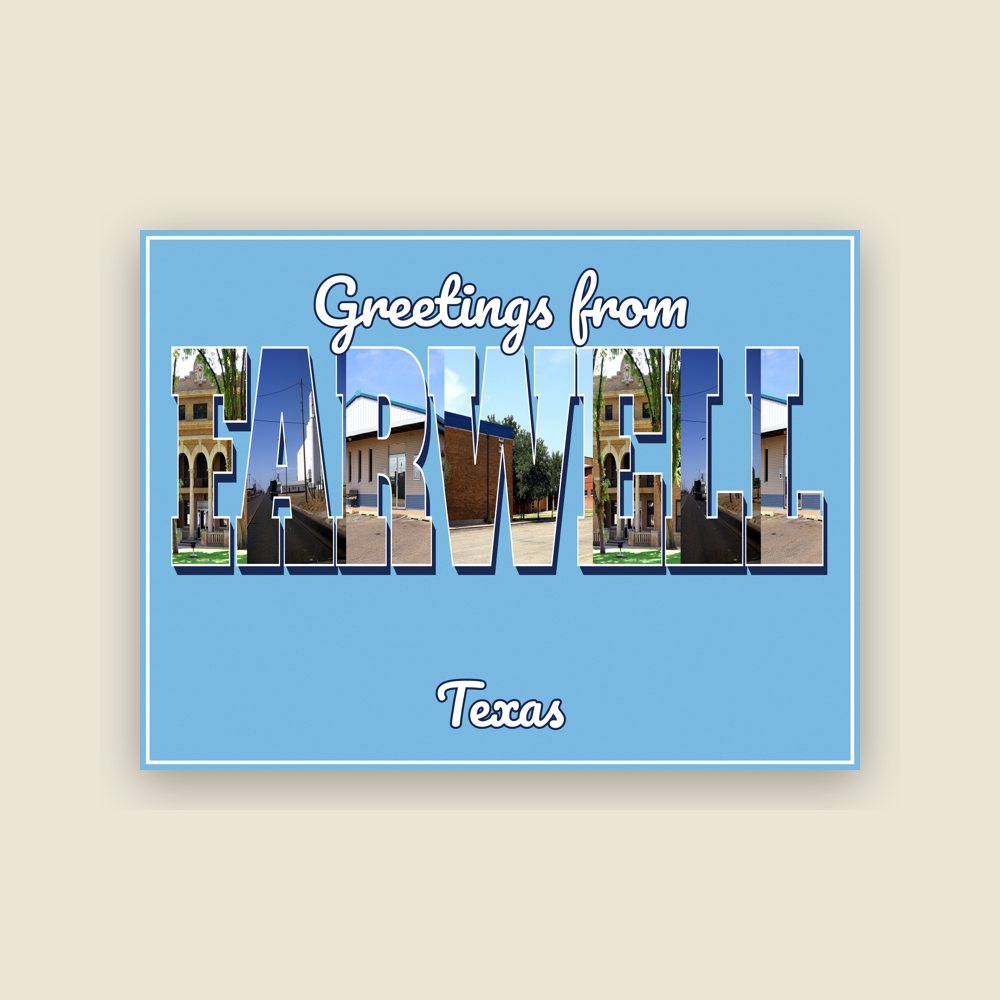
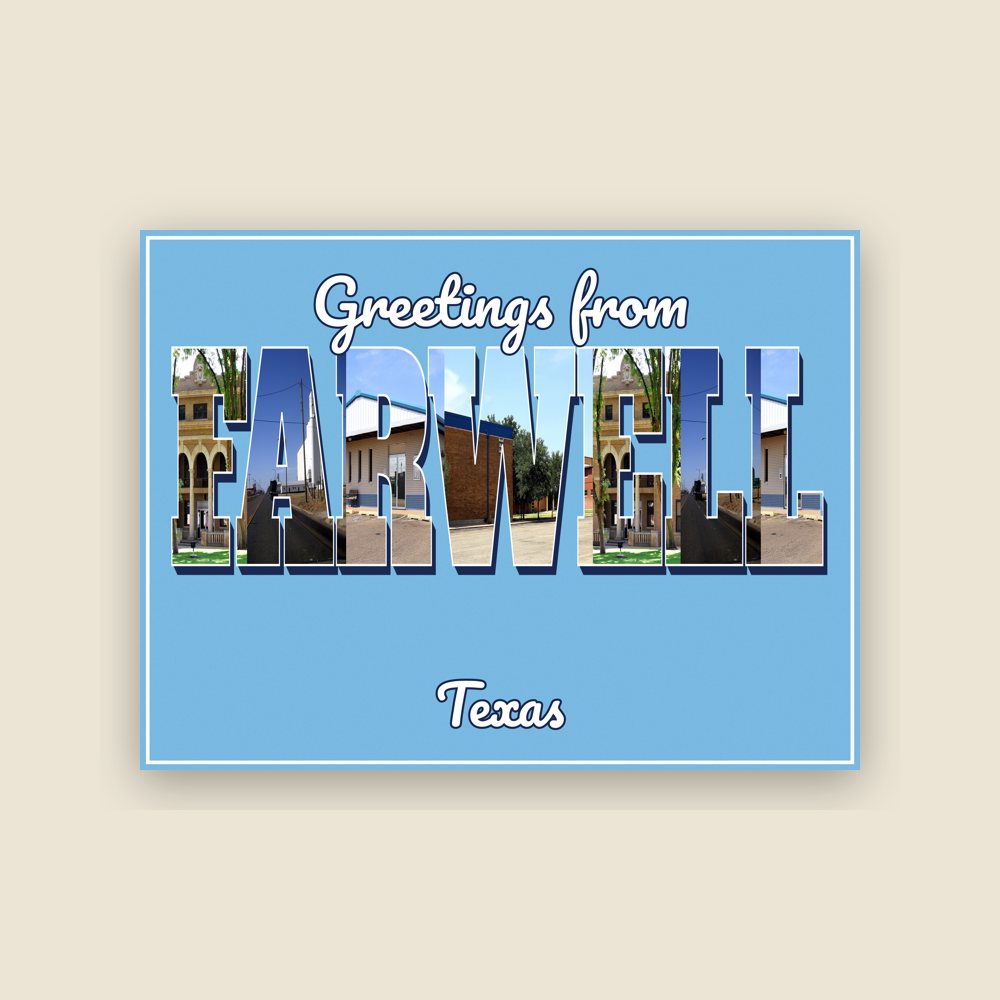
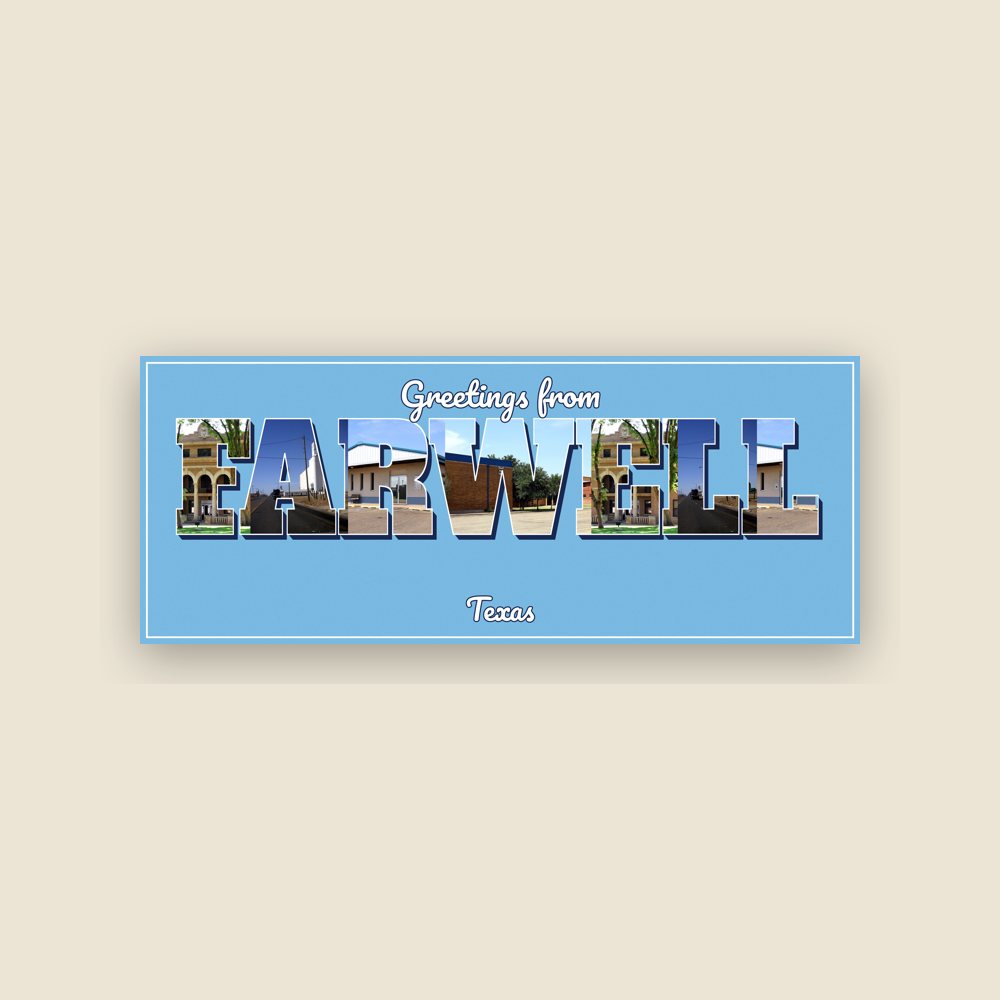
Classic large-letter postcard art, filled with local photos
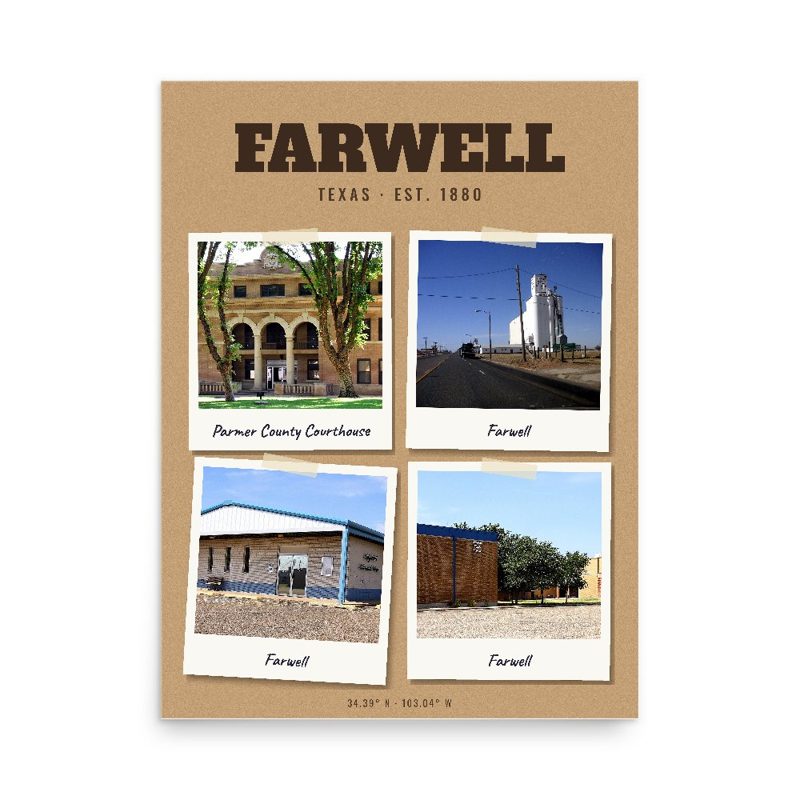
Six local landmarks as instant photos on kraft paper
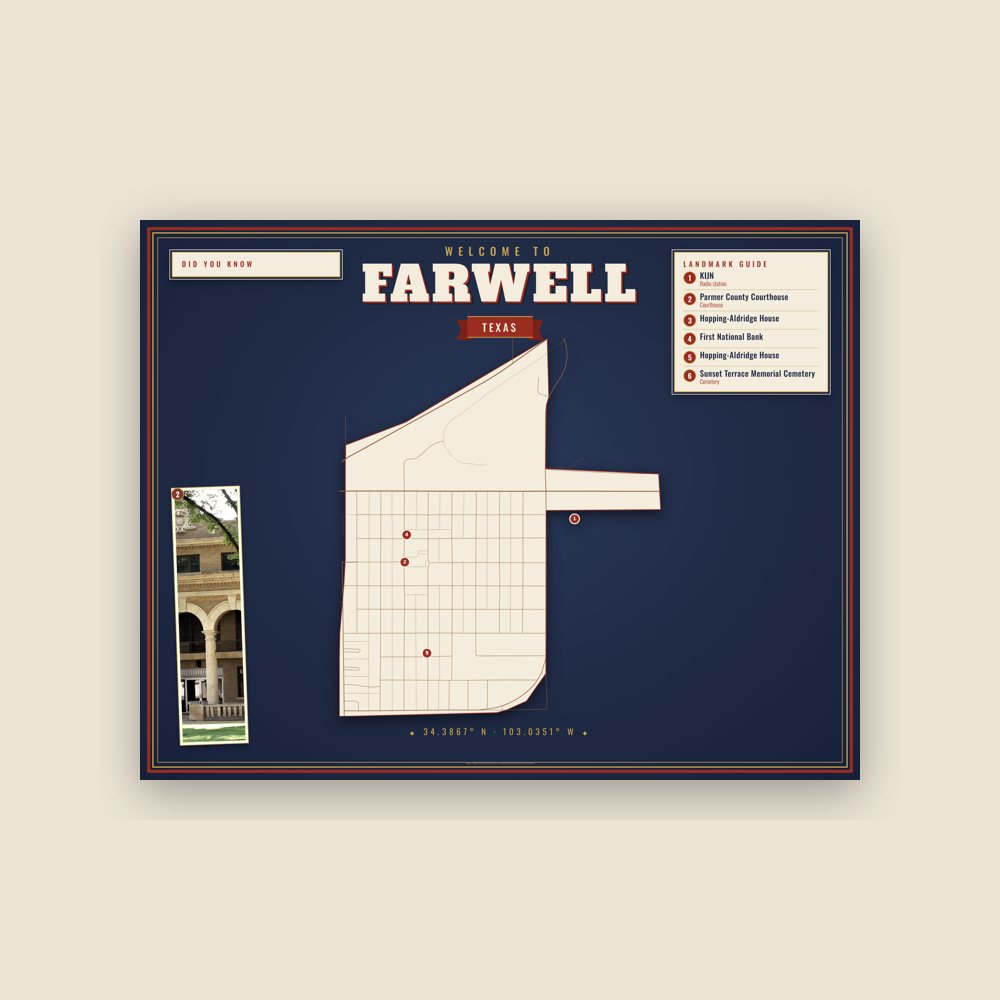
Map of local landmarks, washable fabric
Heavy-blend fleece, street map printed on the back
Soft Bella+Canvas jersey
Kids' Bella+Canvas jersey, youth sizes
Bella+Canvas toddler jersey
Bella+Canvas baby bodysuit
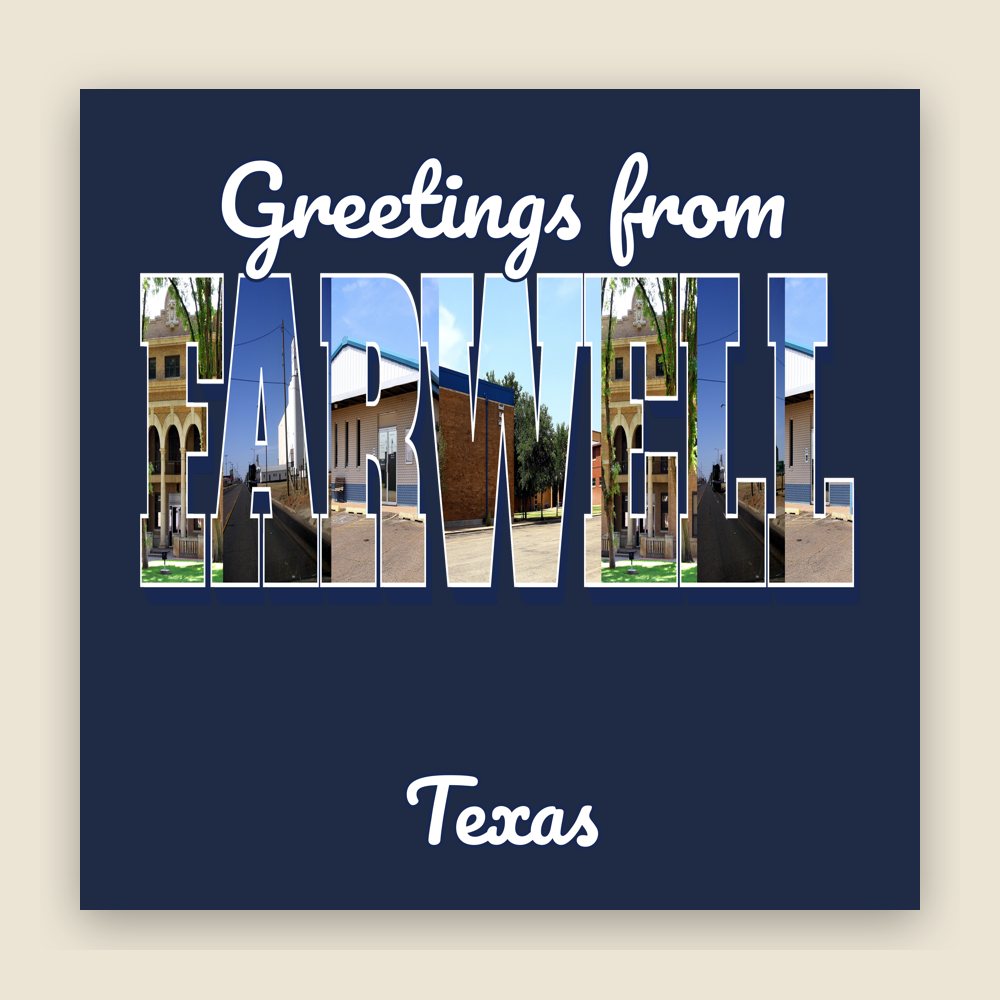
Large-letter postcard art filled with local photos
Glossy ceramic, dishwasher safe
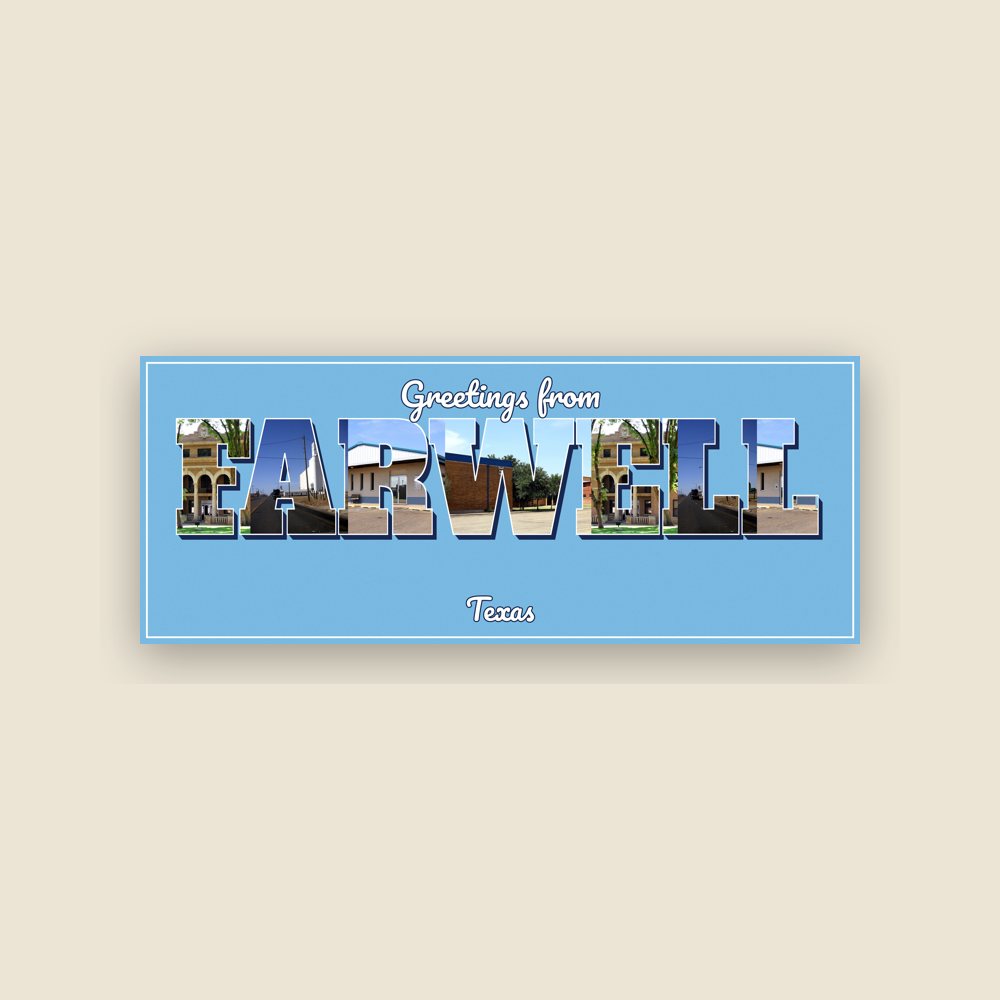
Large-letter postcard art filled with local photos, 11 oz ceramic
Weatherproof, for the front walk
24″×16″, printed coir-look fibers, rubber back
12″×12″ printed wood, ready to hang
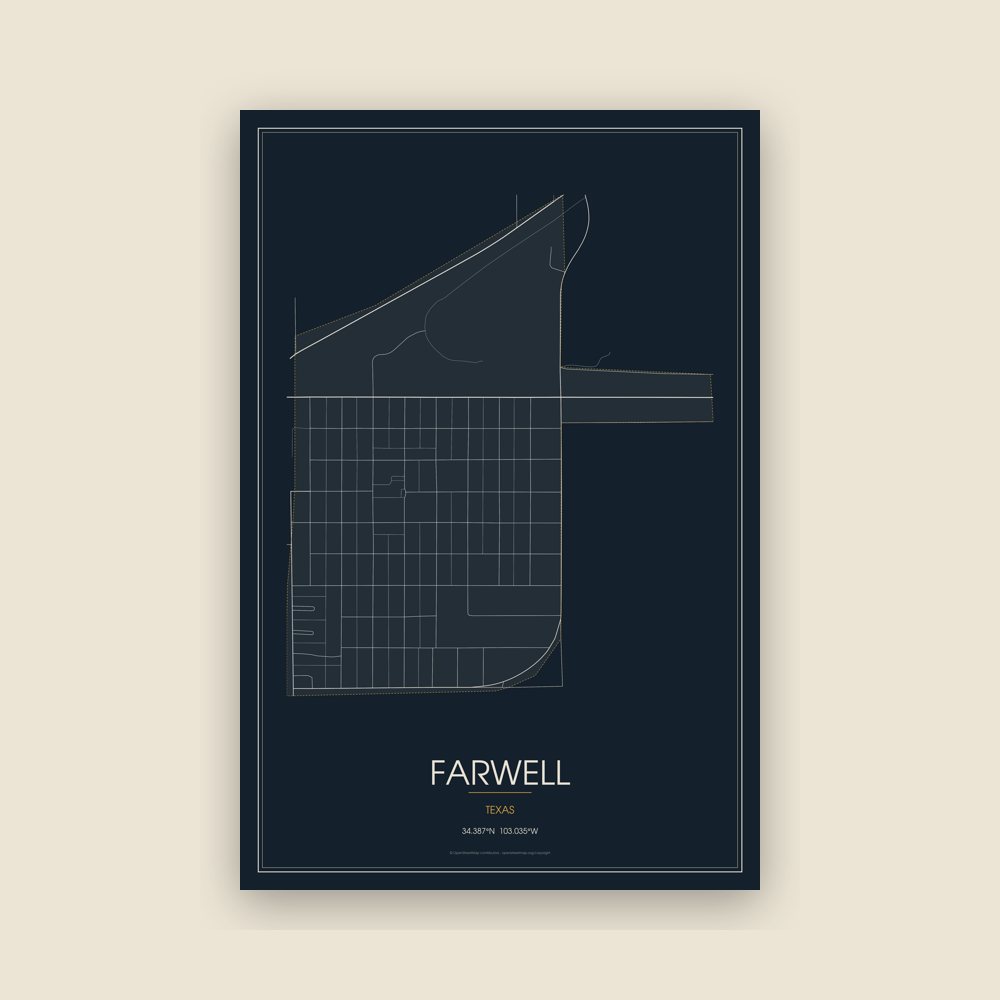
Soft-touch, zip cover
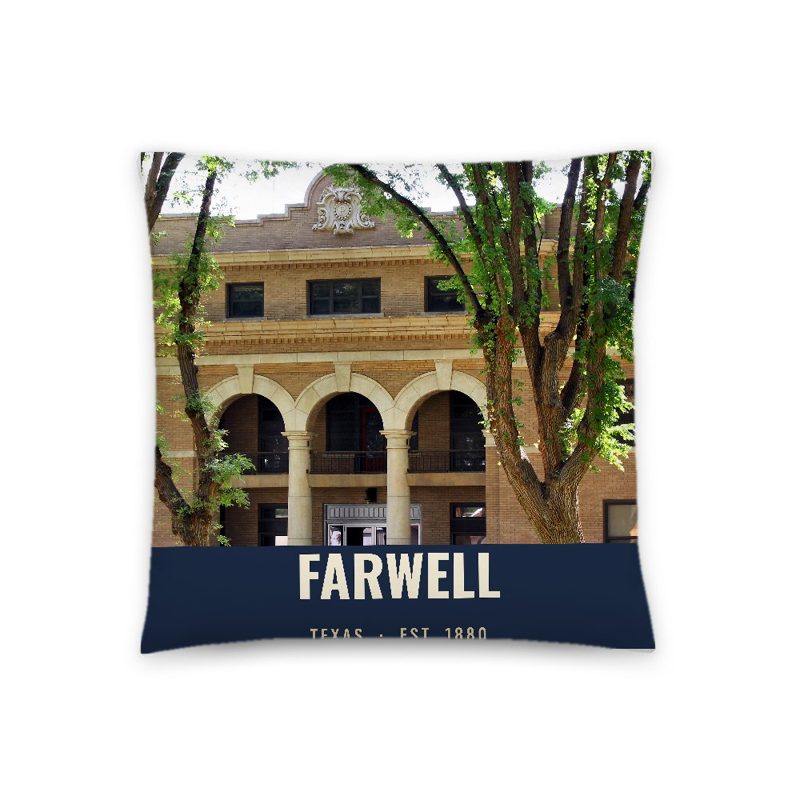
A local landmark photo with the town name, 18″×18″
Sturdy all-over-print tote
Large-letter postcard art on a sturdy tote
Foam-front trucker, printed (not embroidered) with local photos
Glossy top, cork back
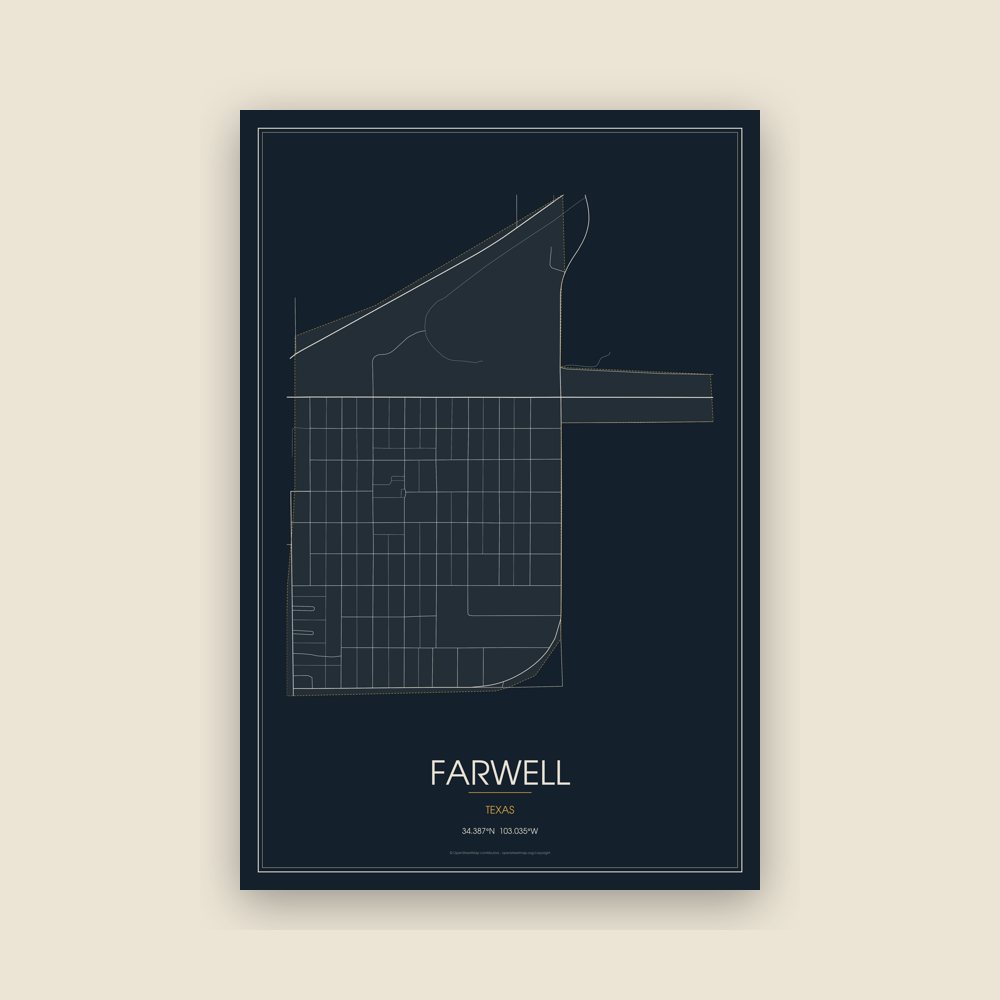
Soft fleece, 50″×60″
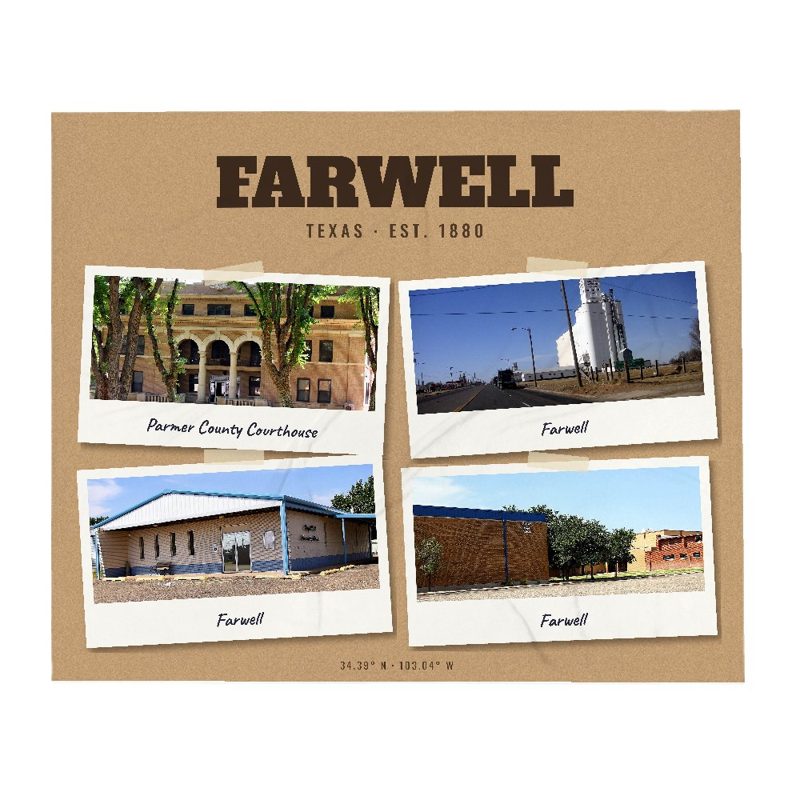
Six local landmarks as instant photos, soft fleece 50″×60″
20 oz, double-wall stainless
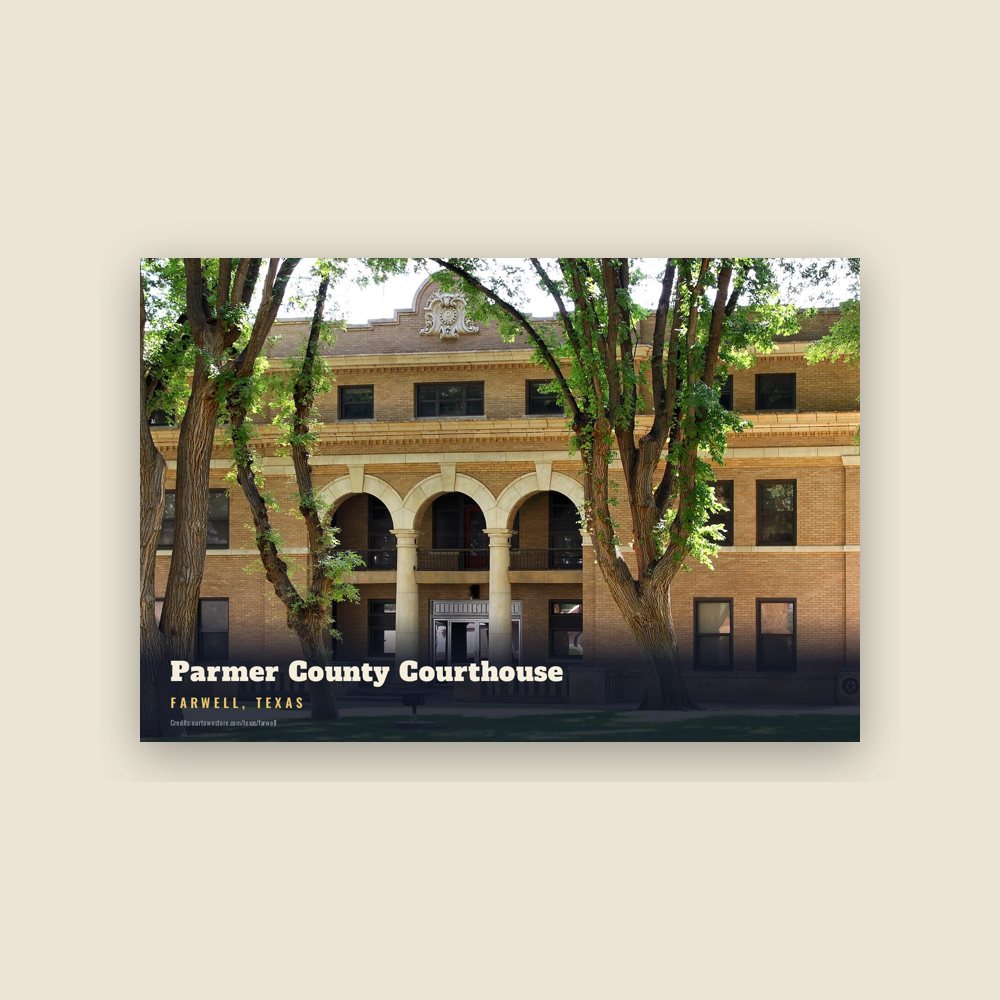
6″×4″ postcard, glossy front
Farwell began as a cow camp for the XIT Ranch, a huge ranch that was established in 1880. Landmarks include KIJN and Parmer County Courthouse.
Population 2010: 1,363 → 2020: 1,425
From Wikidata (CC0).
Farwell began as a cow camp for the XIT Ranch, a huge ranch that was established in 1880. Farwell was named for brothers Charles B. and John V. Farwell of Lake Forest, Illinois, who built the Texas State Capitol building in exchange for 3,050,000 acres (12,300 km2) of ranchland. That region of Texas had been controlled by the Comanche from about 1725, when they defeated the Apache and forced them to migrate to the [Sierra Blanca range] in New Mexico and to other regions [the southernmost point of the Rockies is near Santa Fe]. The Red River War of 1874–1875—the biggest military operation the U.S. had between the Civil War and World War One—had five armies converge on that part of the High Plains, ultimately defeating the main Comanche force in Palo Duro Canyon (80 mi northeast of Farwell) by driving off and slaughtering the Comanches' horses.
The Farwell brothers established the XIT on their new land, ultimately employing 800 cowboys, stringing over 6,000 miles of barbed wire, and hiring former Texas Rangers to defeat the hundreds of cattle rustlers operating across the state line in the New Mexico territory. Many researchers hold that the XIT ultimately failed because of that massive rustling operation, ultimately persuading stockholders to begin selling off the ranch to families who came to that part of the High Plains drawn by the cheap price of land. When the cow camp that would become Farwell was established is not documented, but when Parmer County was created in 1907 (previously part of Deaf Smith County to its north), the election was held for county seat in a contest among Farwell, Bovina, Parmerton, and Friona, all to Farwell's northeast, all which had started as cow camps, but had varying success thus far in attracting settlers who ran saloons, stores, stables, and other services for the cowboys. Parmerton was initially voted county seat that year, and a one-story courthouse was built there.
The election was hotly contested by politicians in the other towns, so a new vote was scheduled. Cowboys, who were the largest demographic, lived in their saddles and sleeping bags most of the time, with no fixed address. A new regulation was established that each man would vote in the place where he did his laundry. Farwell, possessing the only laundry at that time, thus received all the cowboy votes, though Friona was, and remains, about four times the size of Farwell, so Farwell became county seat in the 1908 vote. The Farwell courthouse was erected quickly thereafter. When the decision was made to begin selling off the XIT to settlers, they would arrive in Farwell on the railroad, which had reached there in 1899, linking rail to the east with rail to the west of the Rockies Mountains via the track laid between Farwell and Belen, New Mexico. Families from across America arrived by train, stayed in the four-story Farwell Hotel, and toured the available homestead sites by touring cars.
Many of the families then traveled to Farwell and the rest of the region in covered wagons and established their homes in dugouts in the prairie soil (no stone or trees indigenous to the area were available for construction). Dry-land farming and herding were always risky, but families persevered year by year, often relying entirely on their small windmill pumping enough water for the home, a milk cow, some chickens, a few fruit trees, and vegetable gardens when crops and cattle withered during droughts and wind storms.
Adapted (trimmed) from the Wikipedia article Farwell, Texas, revision 1374412317 by its contributors, licensed CC BY-SA 4.0.
We share a part of every Farwell sale with local partners, and we'd love to print from your collection. Old photographs, maps and postcards make the best keepsakes.
Partner with usA favorite landmark, your street, a school or team, an anniversary gift, a different product. Tell us and we'll get back to you by email.
4 free coloring pages of Farwell, each traced from a photo of a local landmark. Print them at home, at school or for story hour.
Farwell's population was 1,425 in the 2020 U.S. Census, up from 1,363 in 2010.
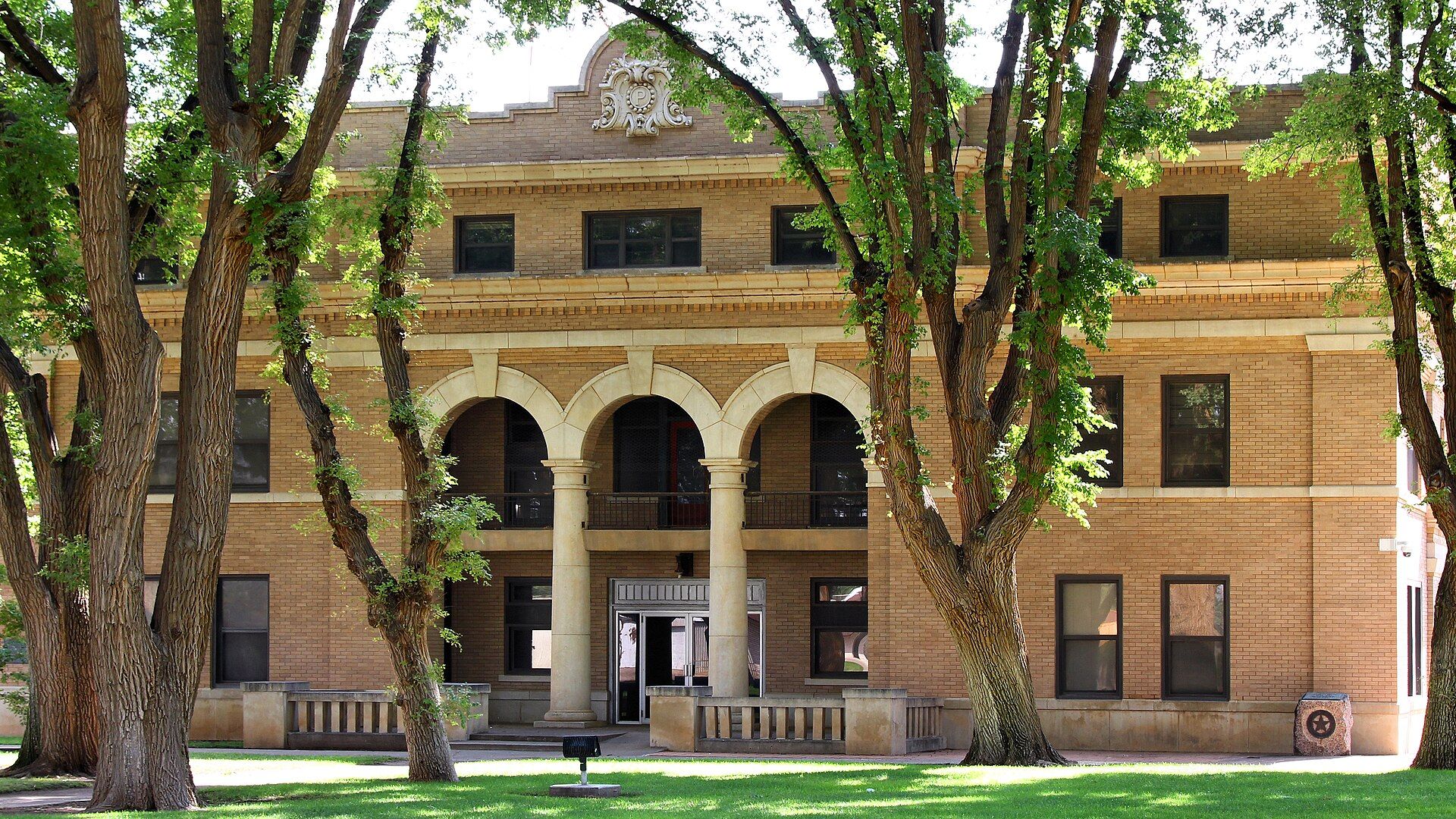
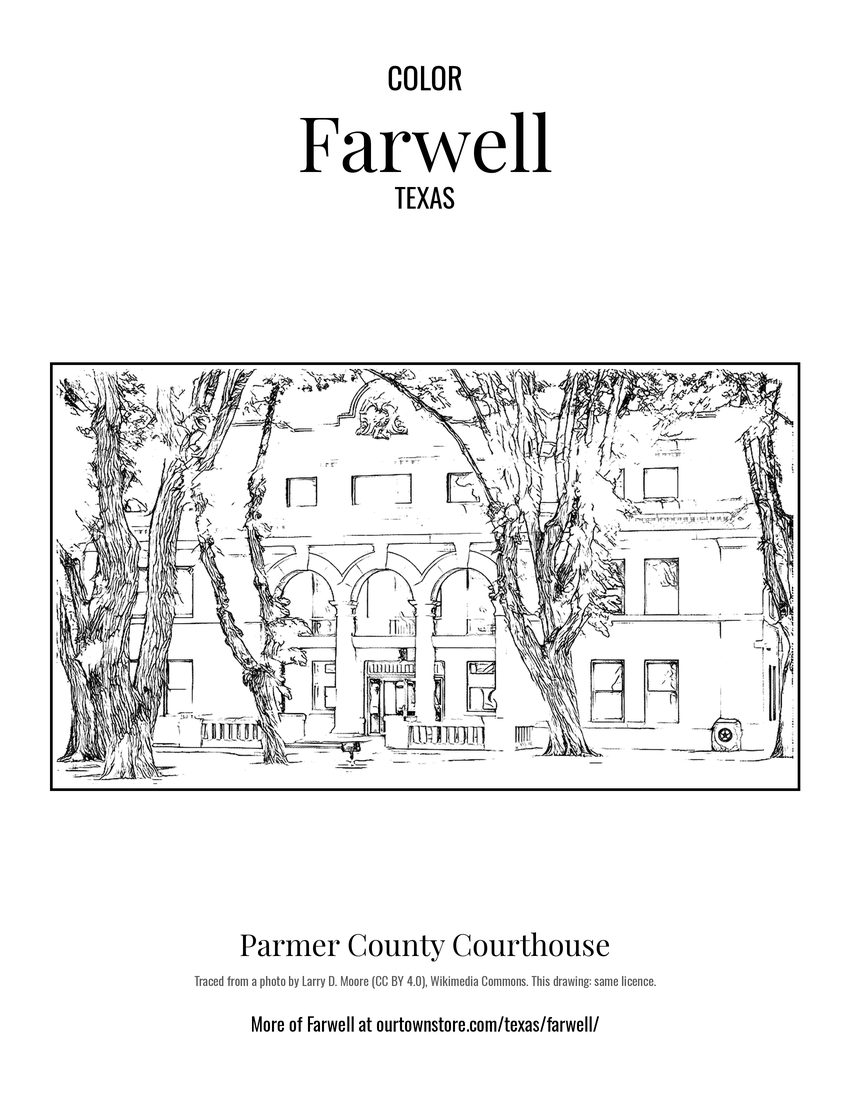 Parmer County Courthouse
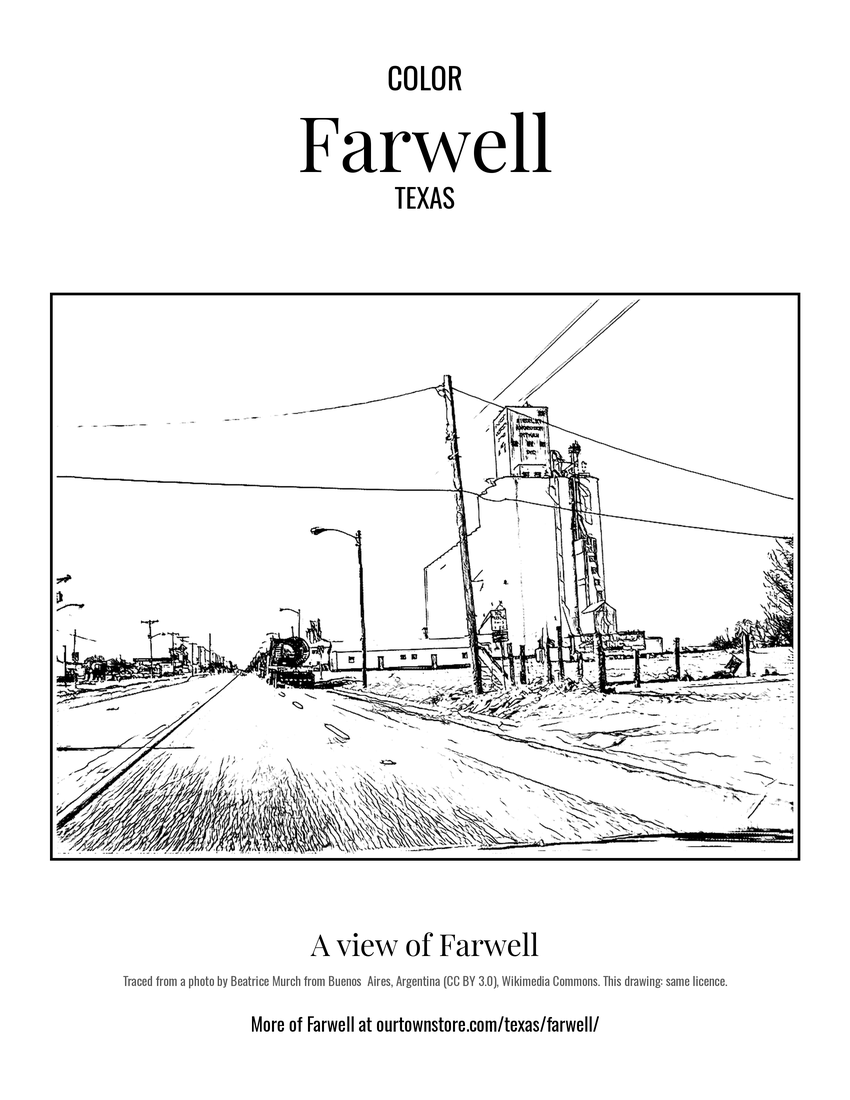 A view of Farwell
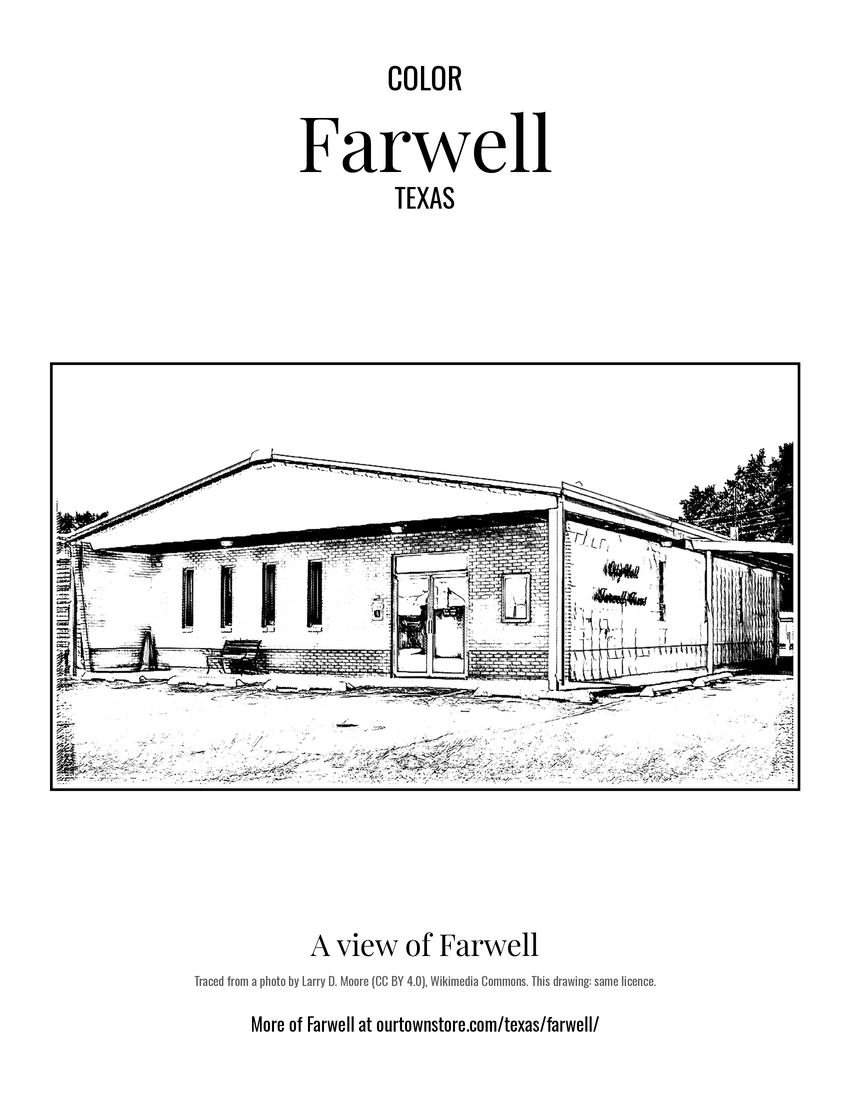 A view of Farwell
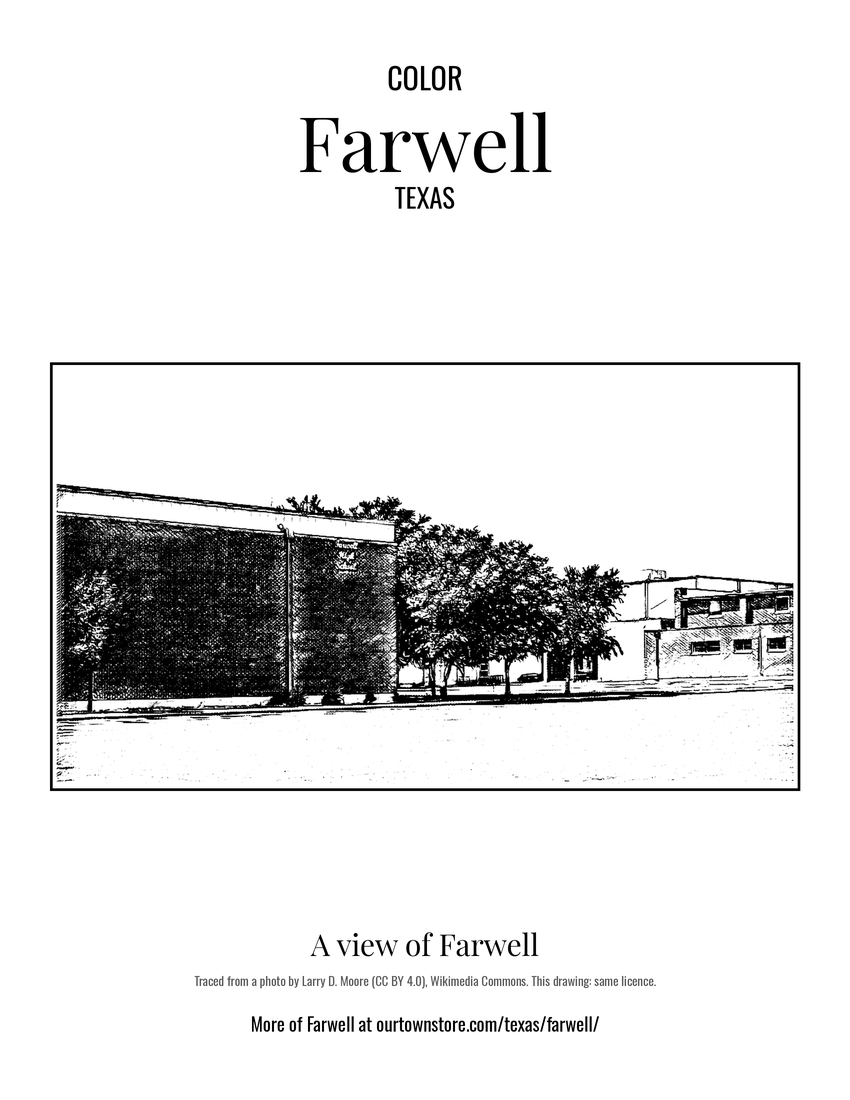 A view of Farwell