A short history of Denton
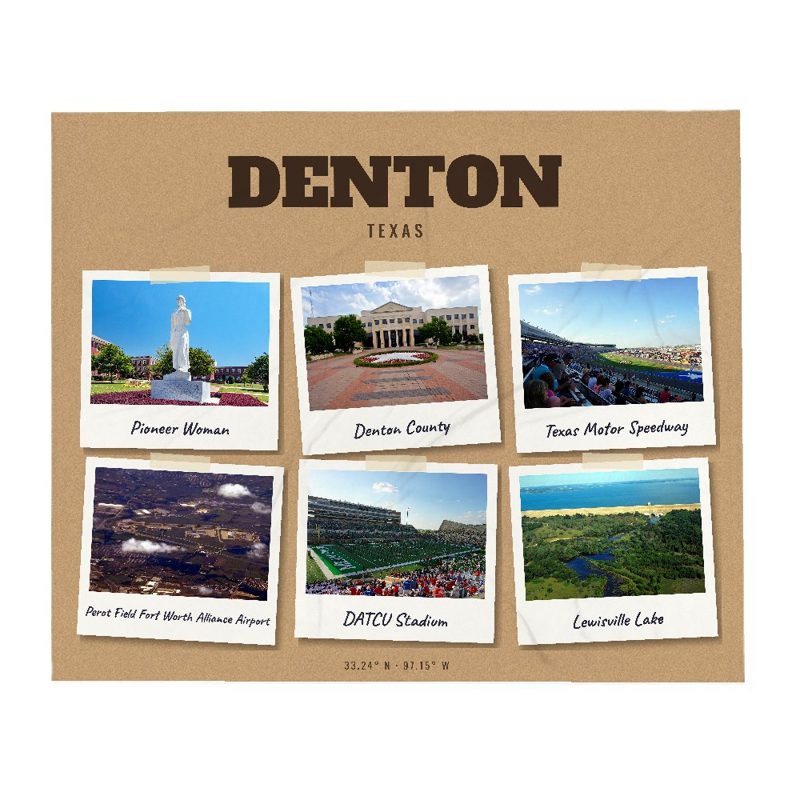
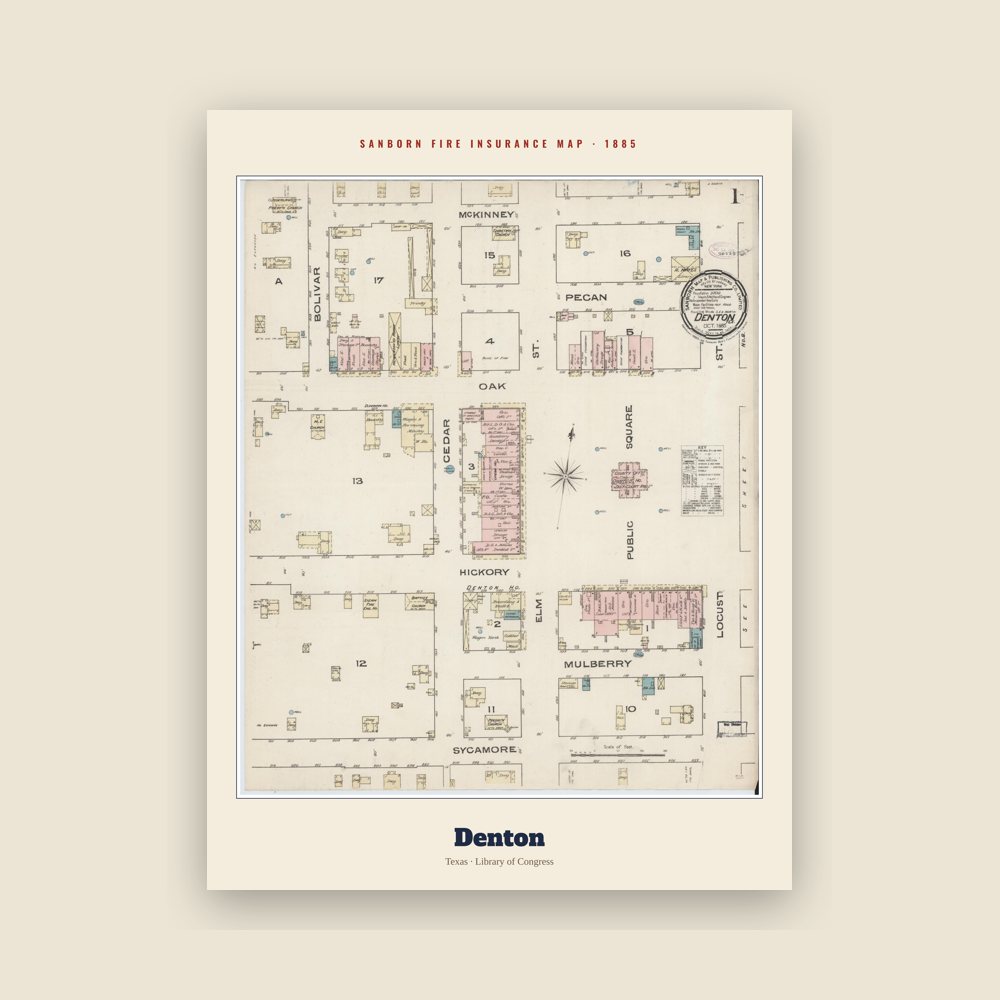
Denton's formation is closely tied to that of Denton County. White settlement of the area began in the mid-1800s when William S. Peters of Kentucky obtained a land grant from the Texas Congress and named it Peters Colony. After initial settlement in the southeast part of the county in 1843, the Texas Legislature voted to form Denton County in 1846. Both the county and the town were named for John B. Denton, a preacher and lawyer who was killed in 1841 during a skirmish with the Kichai people in what is now Tarrant County. Pickneyville and Alton were selected as the county seat before Denton was named the seat in 1857. That year, a commission laid out the city and named the first streets.
On July 8, 1860, approximately half of the downtown Square burned down in what was later called the "Texas Troubles". Fires occurred in ten Texas communities that day, including Dallas and Pilot Point, and were quickly attributed to a slave insurrection. By the end of July, vigilante justice took hold and "[r]egularly constituted law-enforcement agencies stepped aside to allow the vigilantes to do their work. Although no hard evidence was ever adduced to prove the guilt of a single alleged black arsonist or white abolitionist, many unfortunates of both classes were nevertheless hanged for their alleged crimes."
Read the full history
Segregation and Jim Crow era
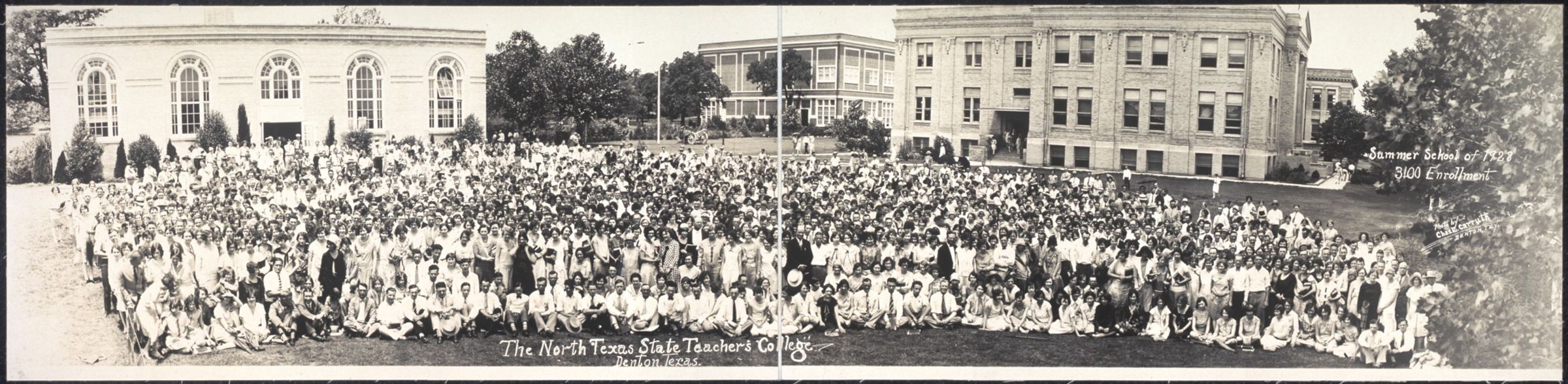
After the Civil War, "Freedmen Settlements" were started throughout the South. One Freedman Settlement, Quakertown, thrived just south of what is now Texas Woman's University until around 1920, when the city government forcibly removed the residents to make way for a park. Quakertown's Black children were served separately from white children by the Frederick Douglass School. Originally scheduled to open in September 1913, it was mysteriously burned down the night before its scheduled opening. It was rebuilt and in 1949 renamed the "Fred Moore School".
Postwar growth
Denton's population grew from 26,844 in 1960 to 48,063 in 1980. Its connection to the Dallas–Fort Worth metroplex via I-35E and I-35W played a major role in the growth, and the opening of Dallas/Fort Worth International Airport in 1974 led to a population increase. In the 1980s, heavy manufacturing companies like Victor Equipment Company and Peterbilt joined older manufacturing firms such as Moore Business Forms and Morrison Milling Company in Denton. The population rose from 66,270 in 1990 to 80,537 in 2000. In May 2006, Houston-based real estate company United Equities purchased the 100-block of Fry Street and announced that several of the historic buildings would be demolished and the businesses displaced to accommodate a new mixed-use commercial center. Some residents, who sought to preserve the area as a historic and cultural icon, opposed the proposal. The Denton City Council approved a new proposal for the area from Dinerstein Cos in 2010.
Timeline
Adapted (trimmed) from the Wikipedia article Denton, Texas, revision 1383156812 by its contributors, licensed CC BY-SA 4.0.

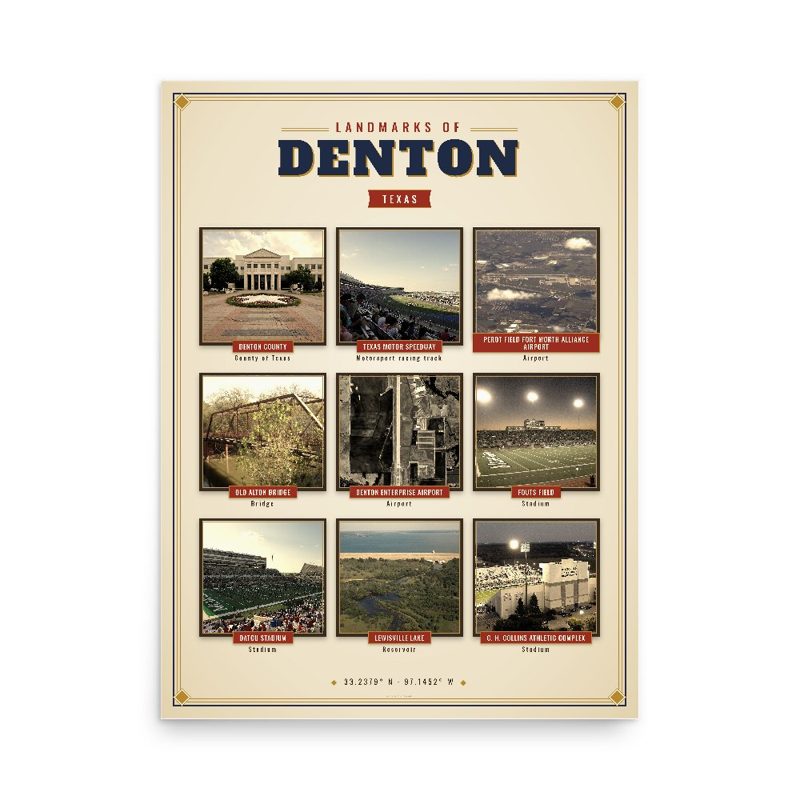
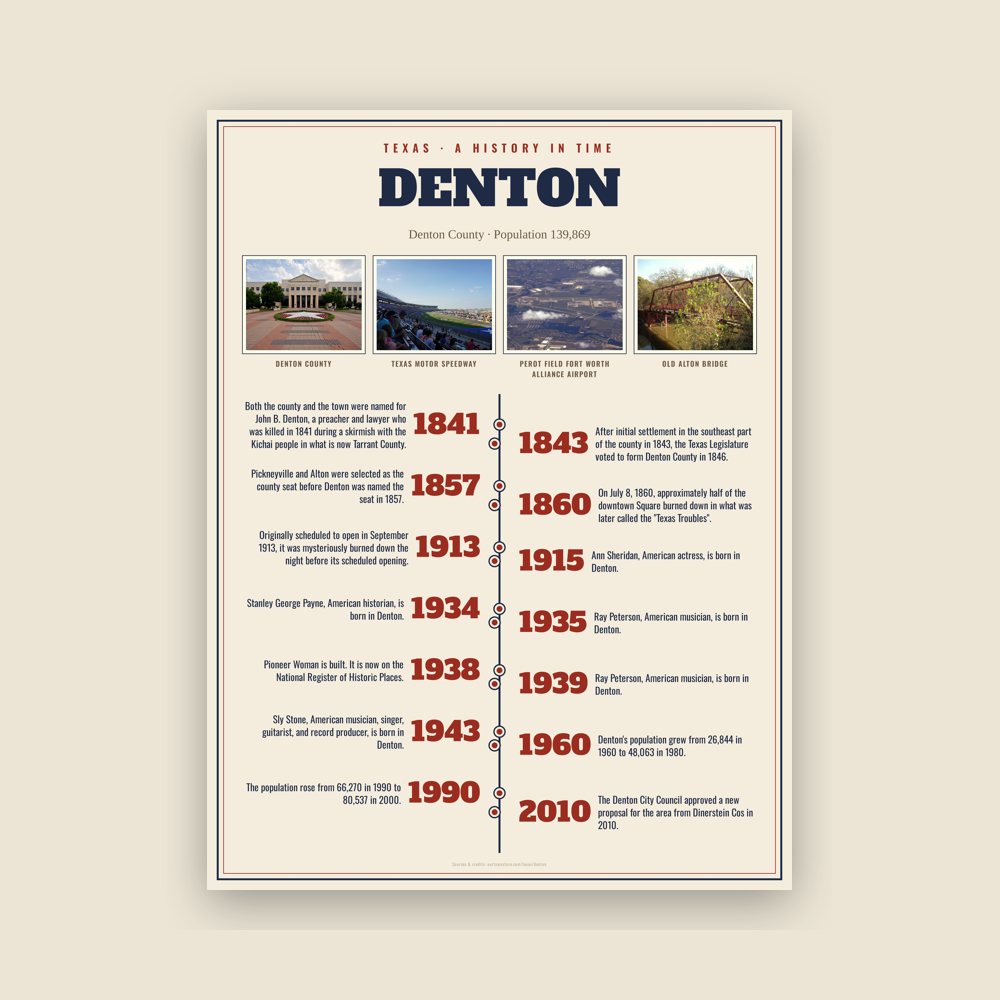
















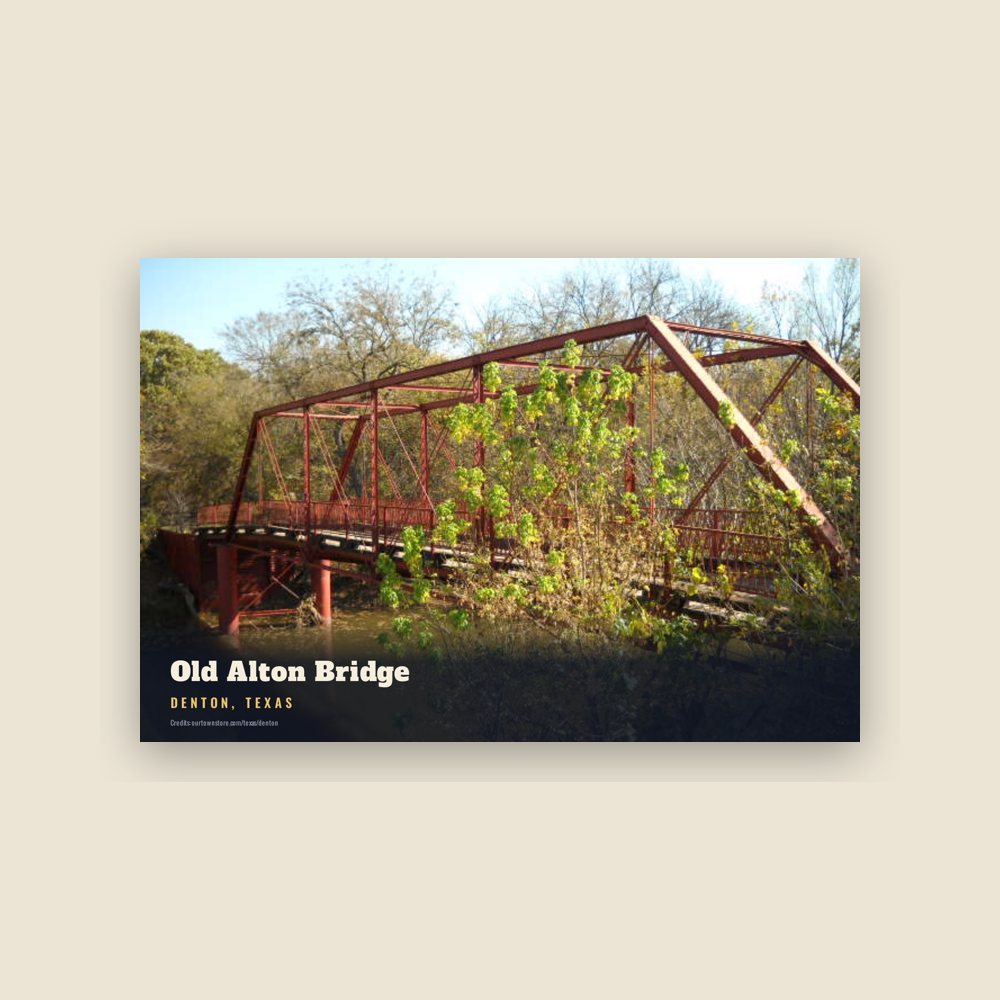
 Old Alton Bridge
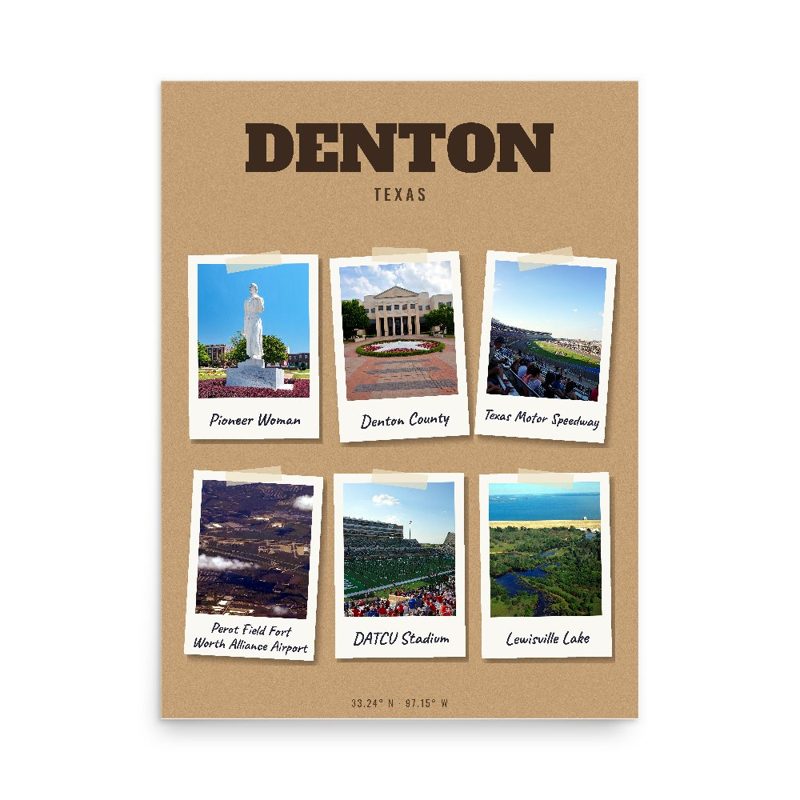
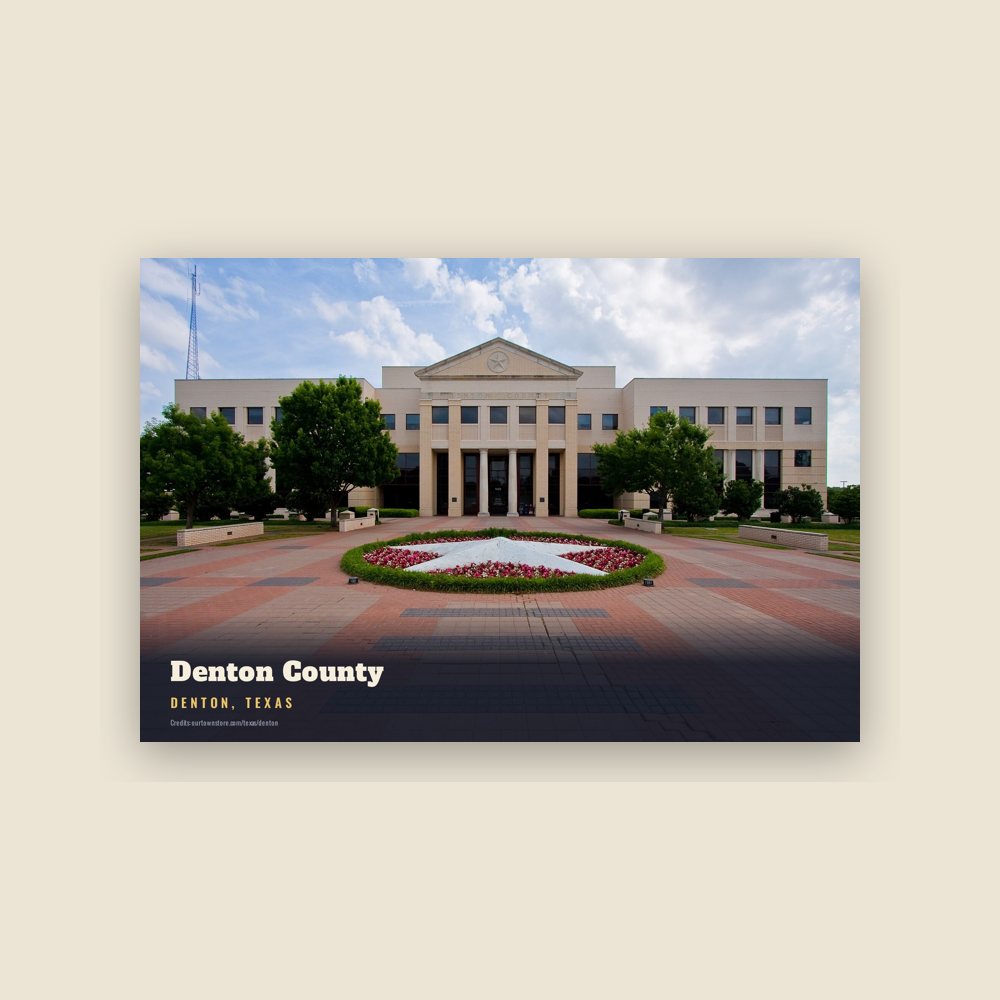
 Denton County
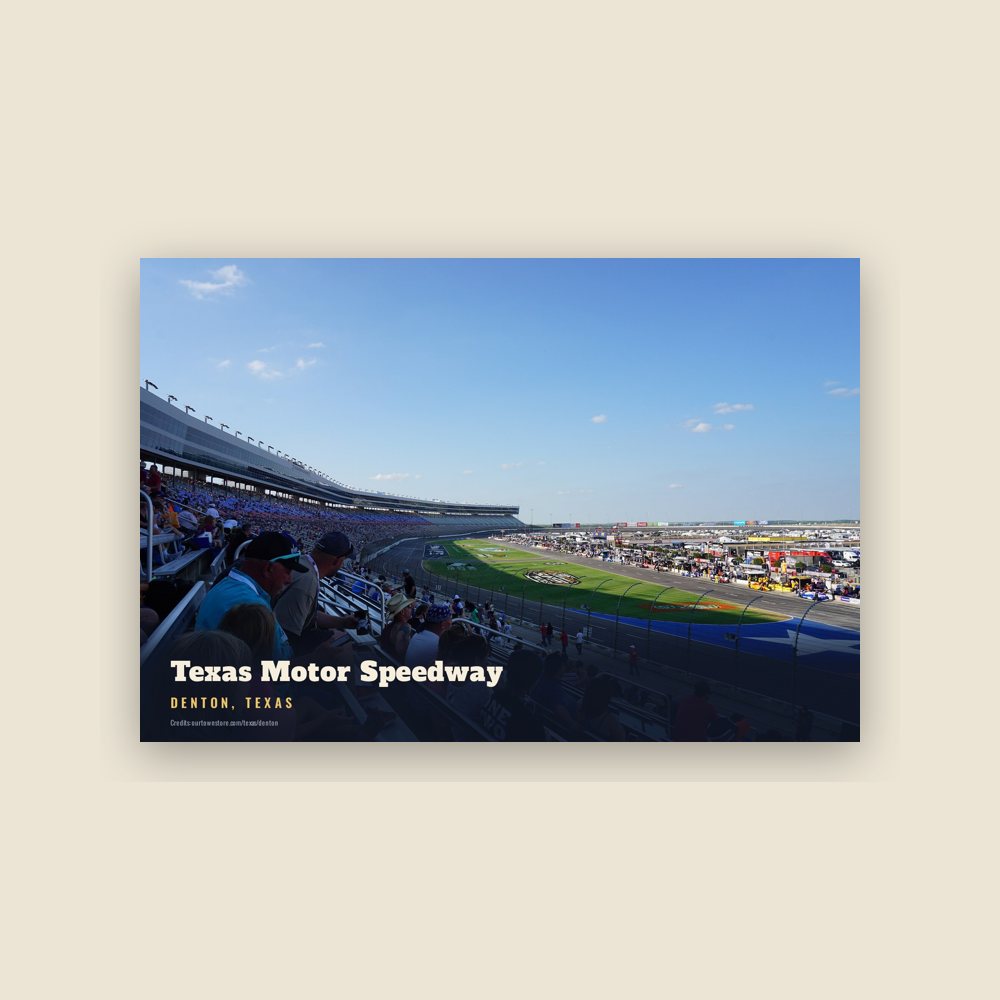
 Texas Motor Speedway
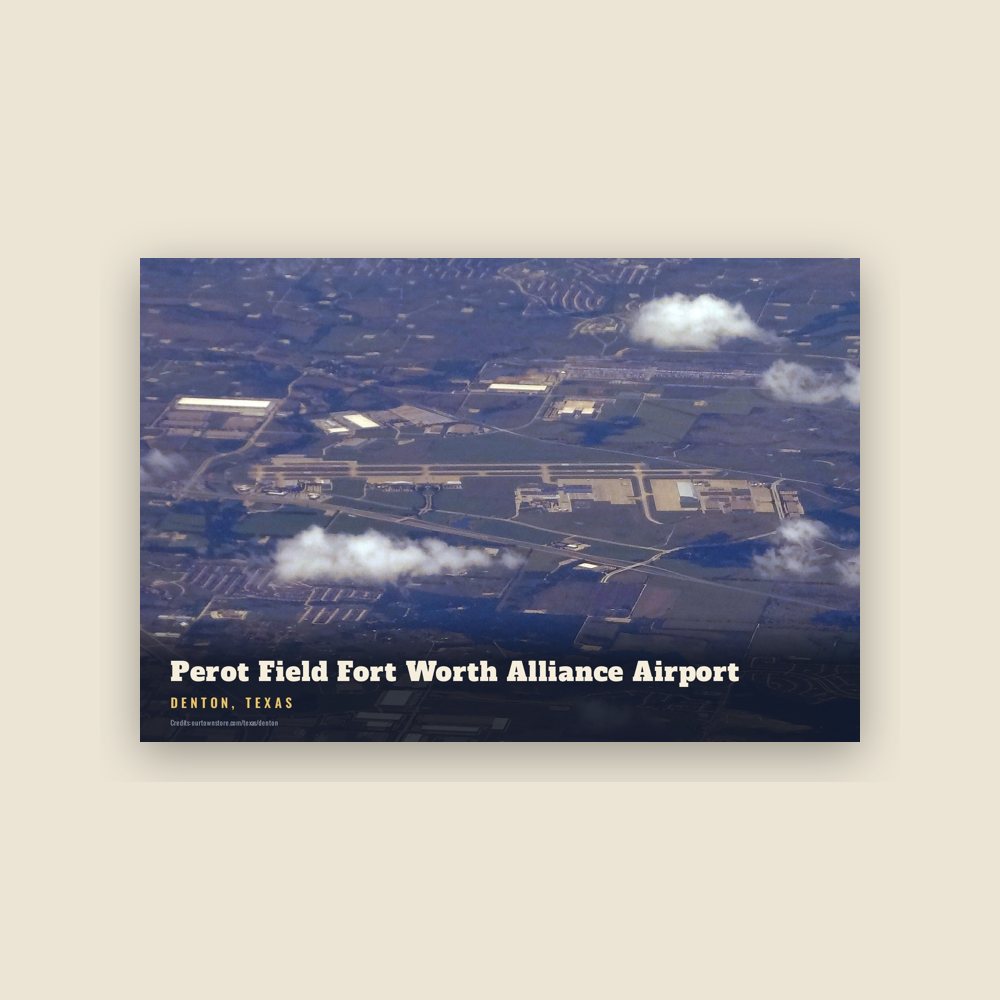
 Perot Field Fort Worth Alliance Airport