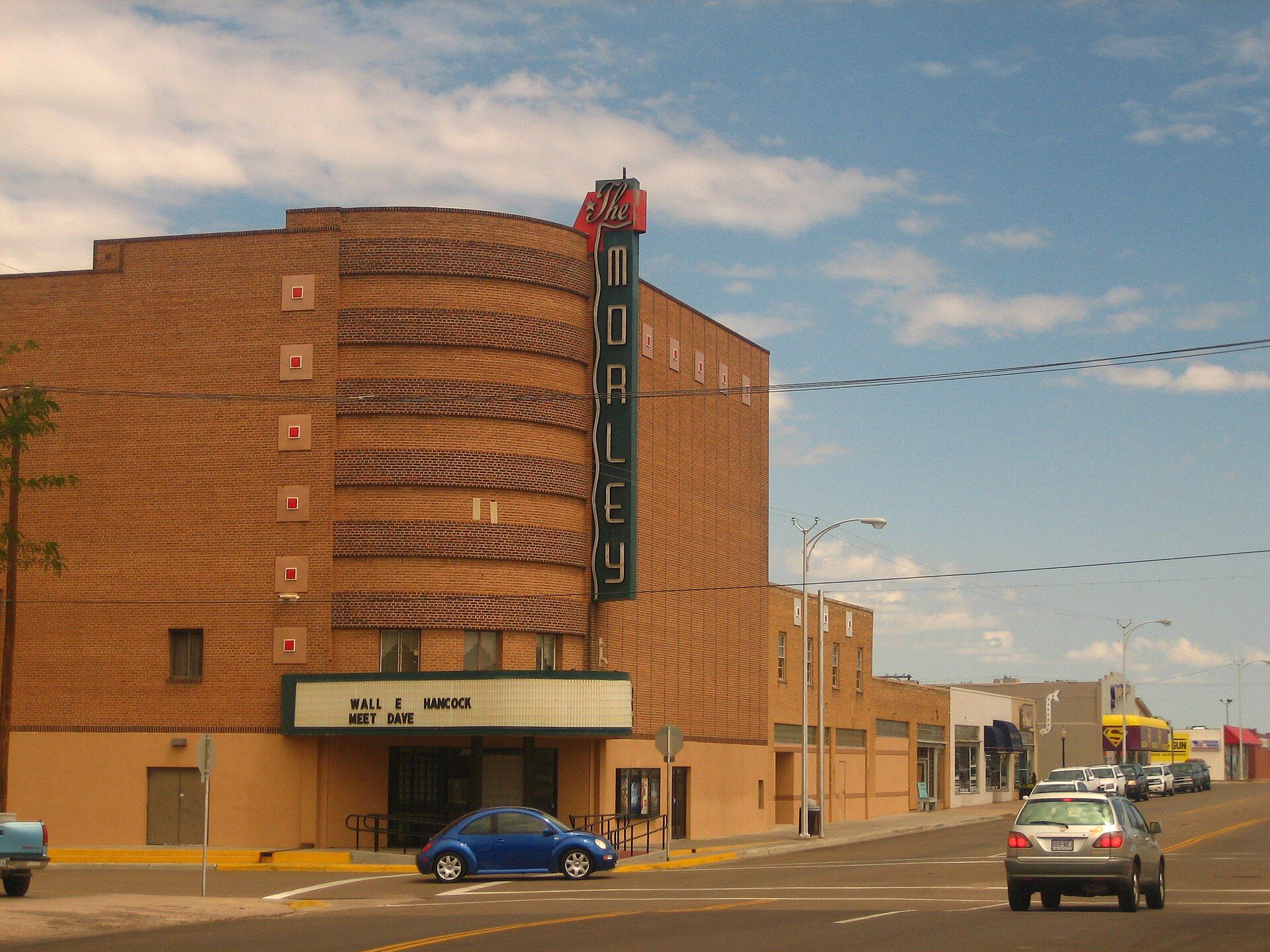
Borger is the largest city in Hutchinson County, Texas, United States. Landmarks include KQTY-FM, KQTY (AM) and Morley Theatre. Borger is the birthplace of Darlene Cates, actress.
- CountyHutchinson County
- Population12,551 (2020 U.S. Census)
Borger, Texas gifts and souvenirs: 26 designs made from Borger's own map, landmarks and history, from $10 to $95. Printed to order and shipped free in the USA.
| Popular | Price |
|---|---|
| Borger Hometown Ornament | $23 |
| Borger Vintage Travel Poster | from $40 |
| Borger Varsity Crewneck | from $57 |
| Borger Est. Tee | from $33 |
| Borger Town Line Mug | from $26 |
| Borger Market Tote | $37 |
Ceramic keepsake, gold ribbon
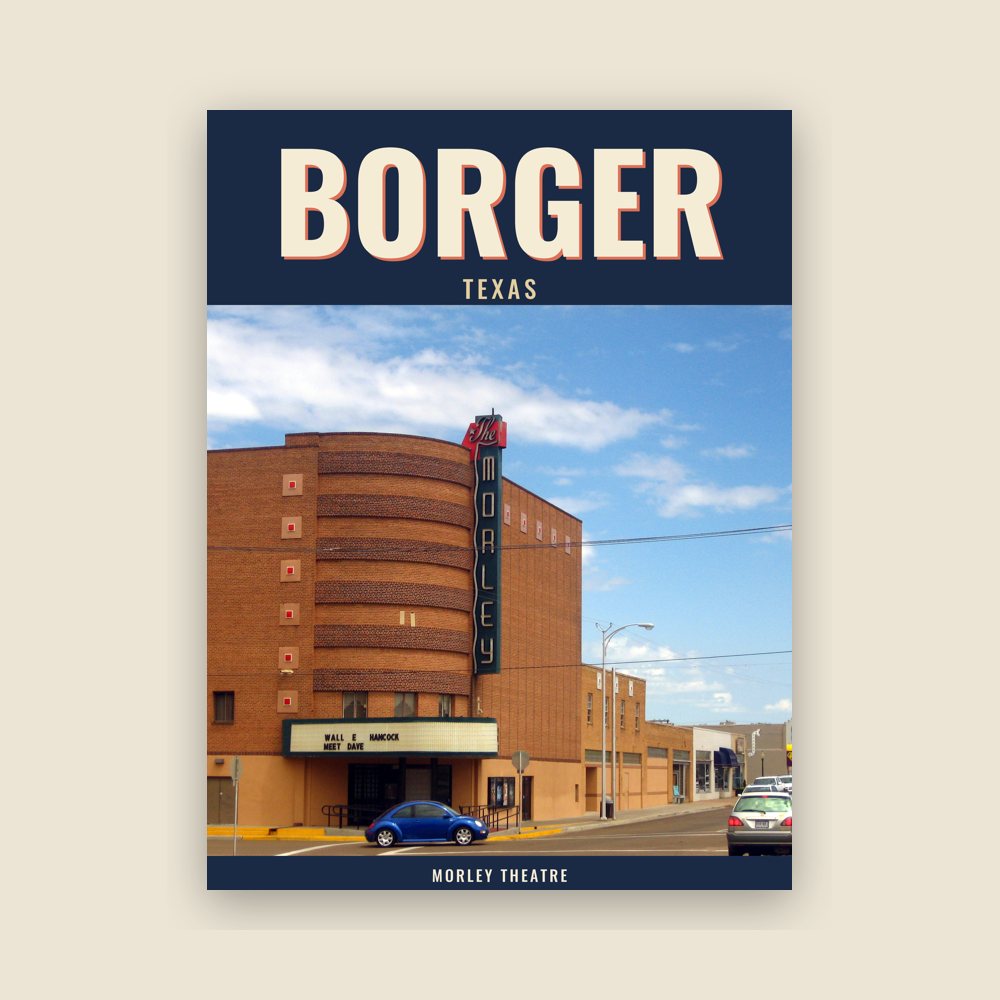
Its landmark photo in a classic travel-poster layout
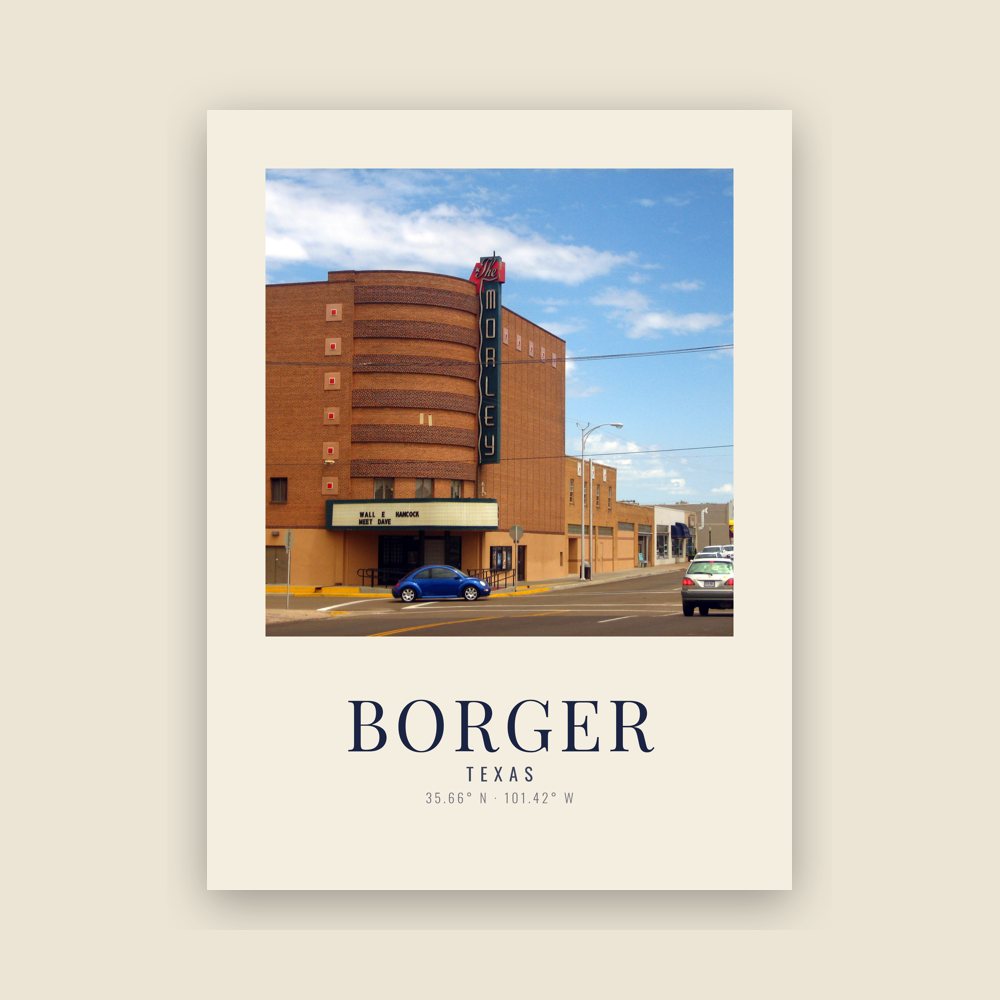
A local landmark photo as a gallery print
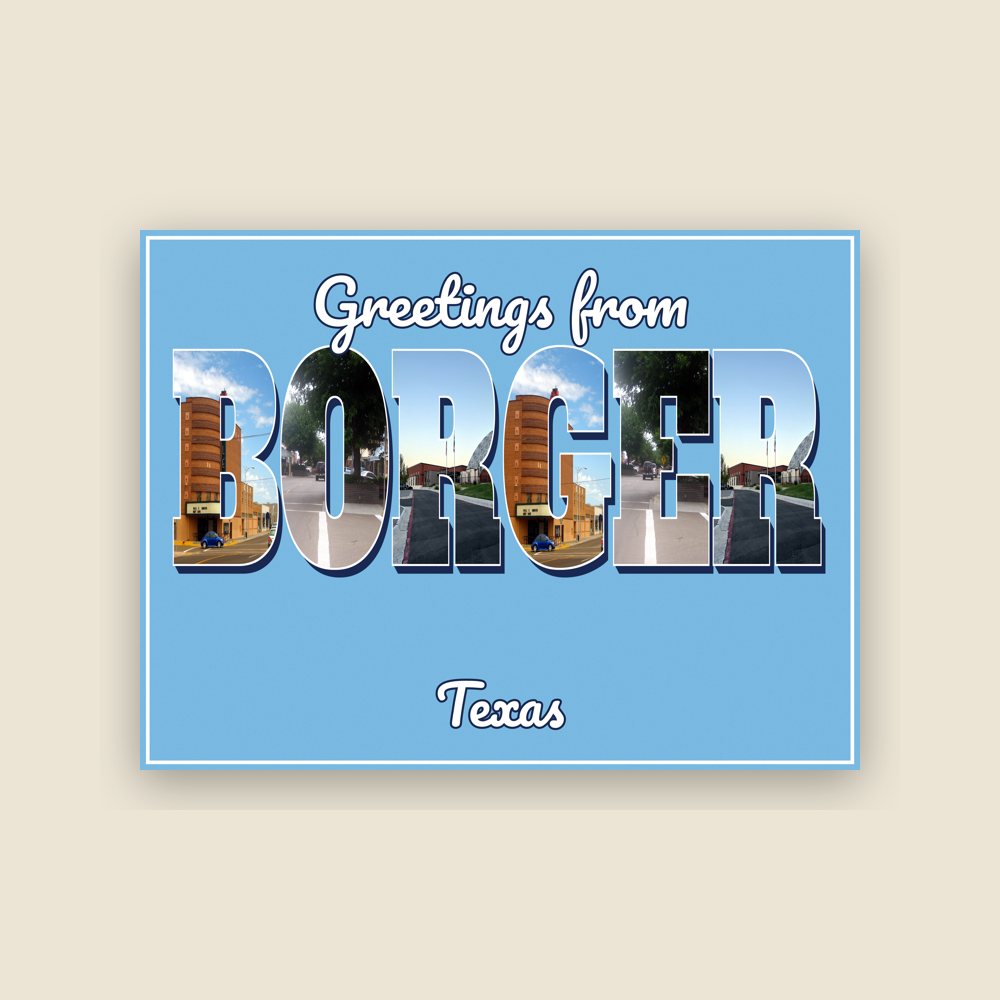
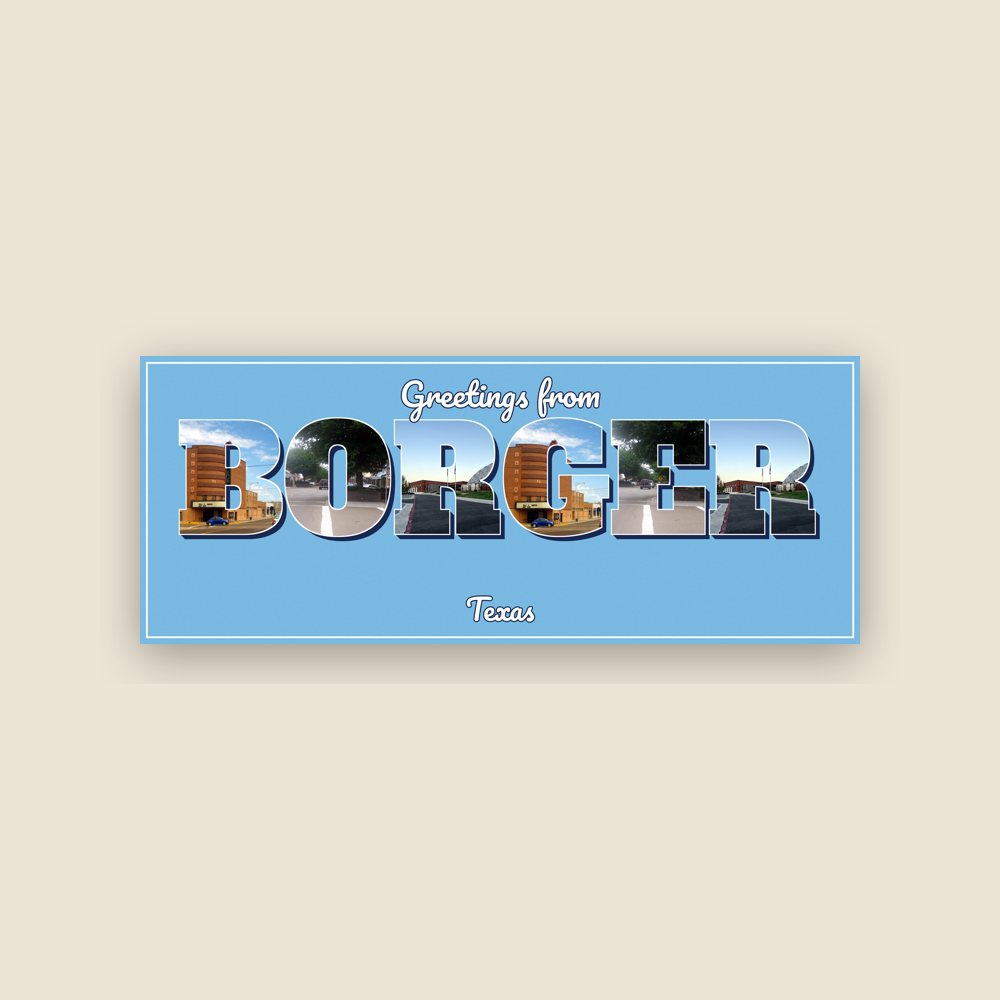
Classic large-letter postcard art, filled with local photos
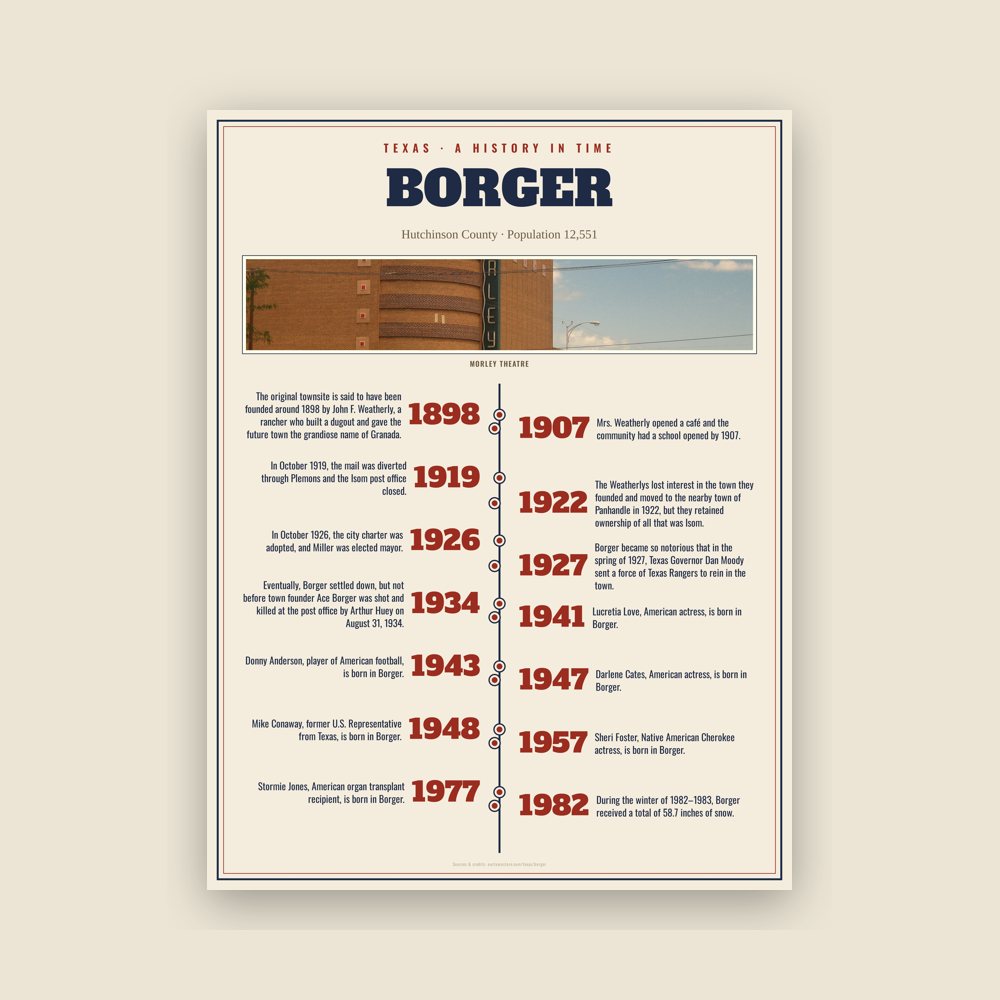
The town's story in dates, from its own records, for home or classroom
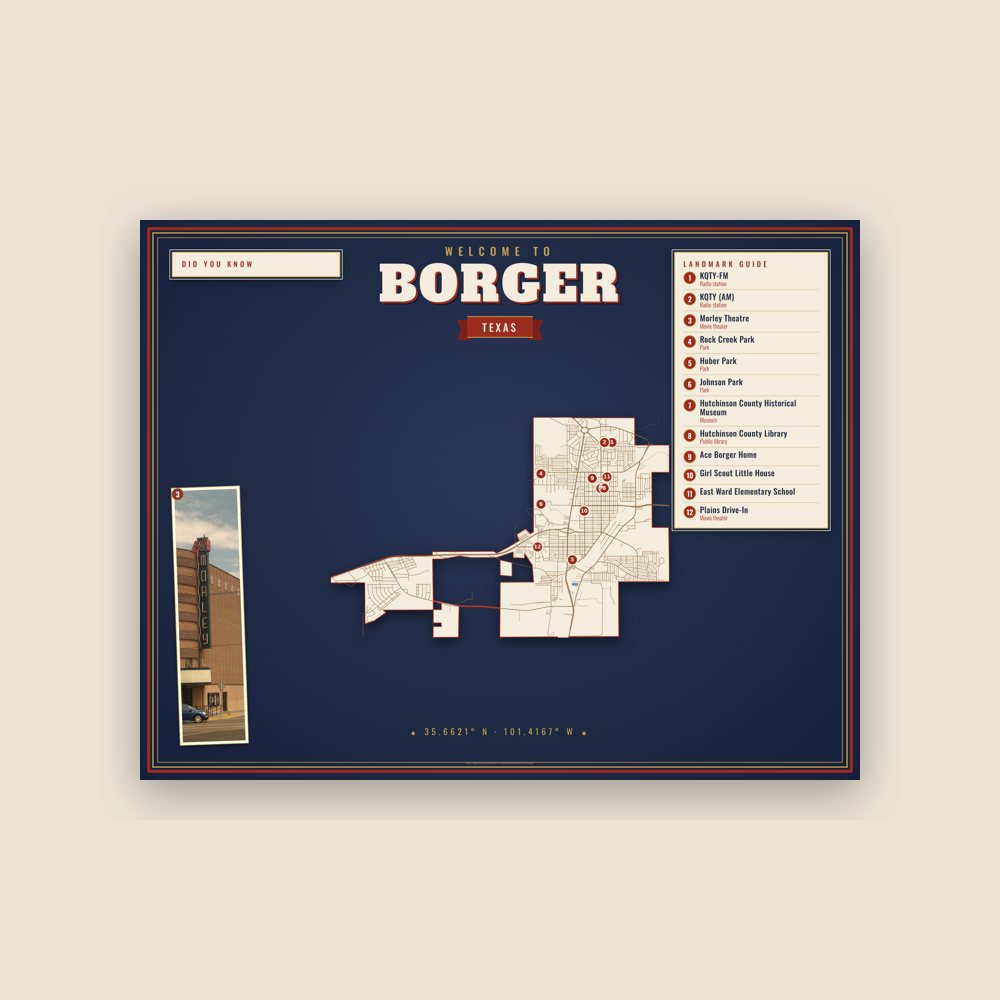
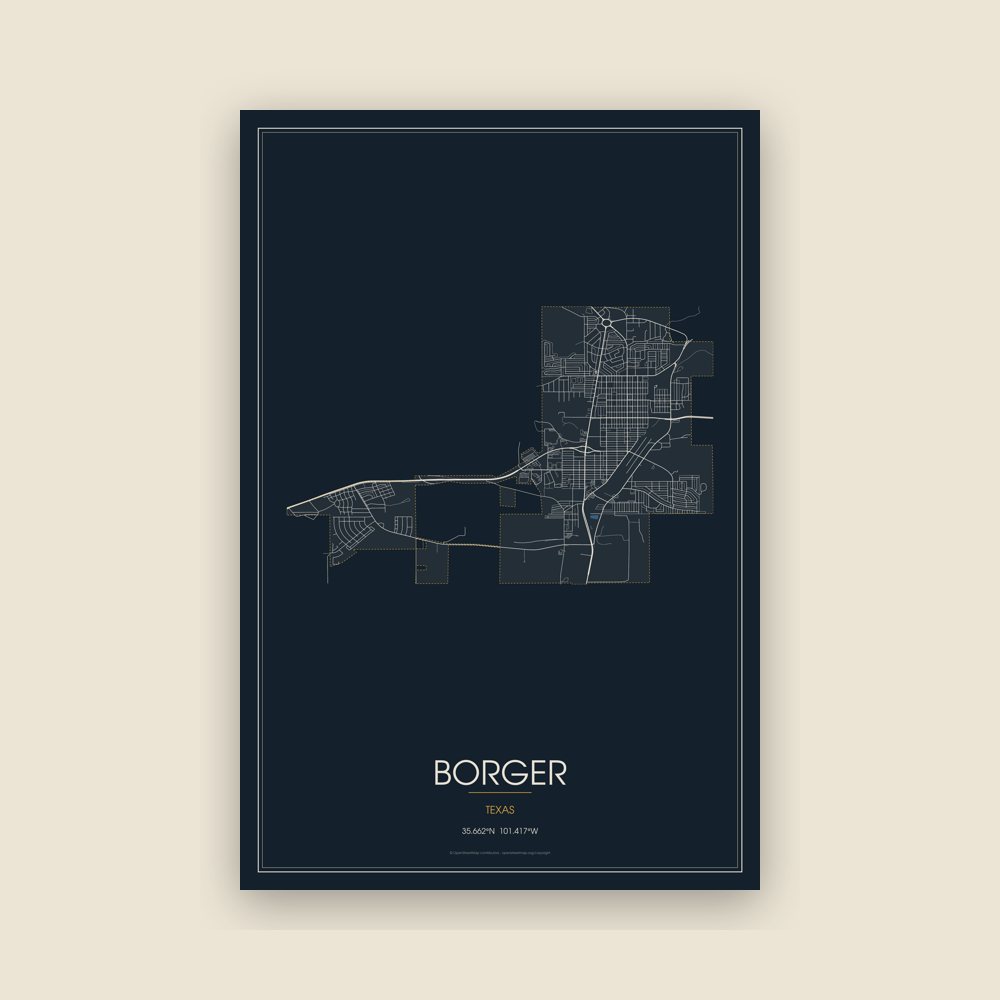
Map of local landmarks, washable fabric
Heavy-blend fleece, street map printed on the back
Soft Bella+Canvas jersey
Kids' Bella+Canvas jersey, youth sizes

Bella+Canvas toddler jersey
Bella+Canvas baby bodysuit
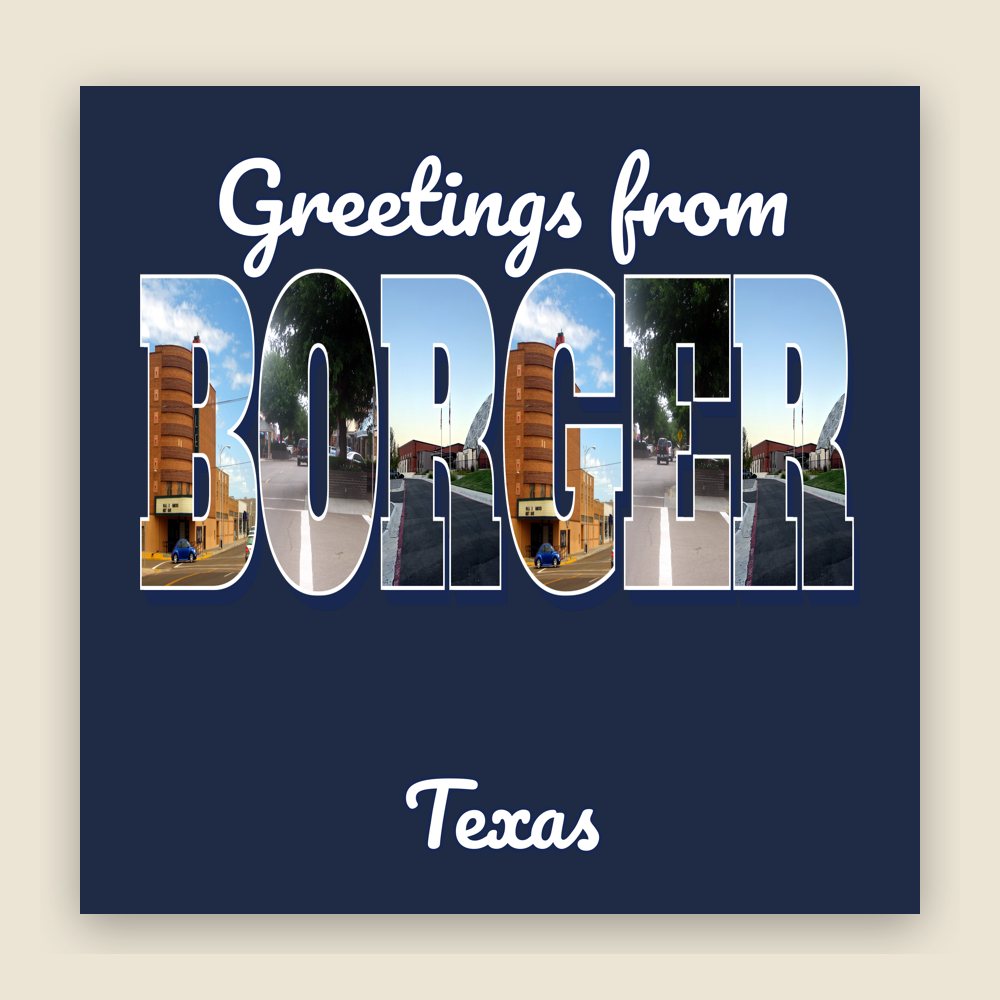
Large-letter postcard art filled with local photos
Glossy ceramic, dishwasher safe
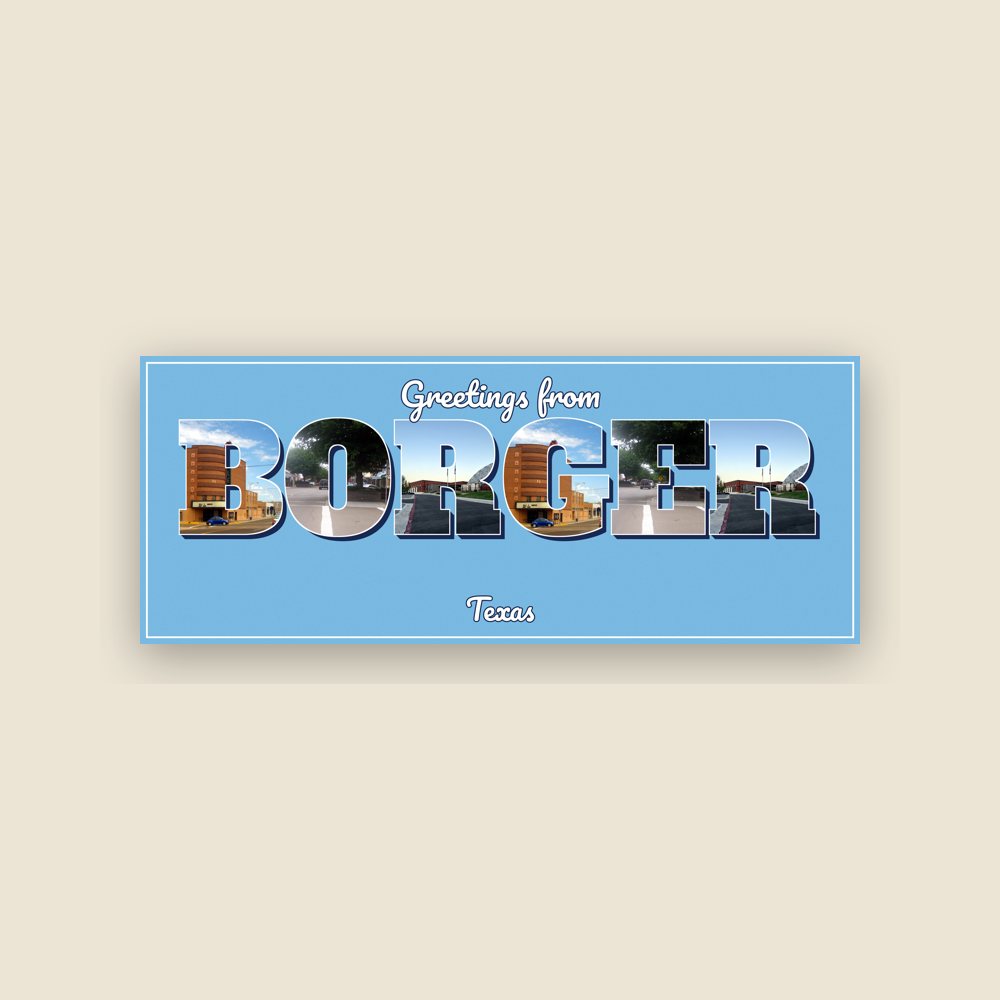
Large-letter postcard art filled with local photos, 11 oz ceramic
Weatherproof, for the front walk
24″×16″, printed coir-look fibers, rubber back
12″×12″ printed wood, ready to hang
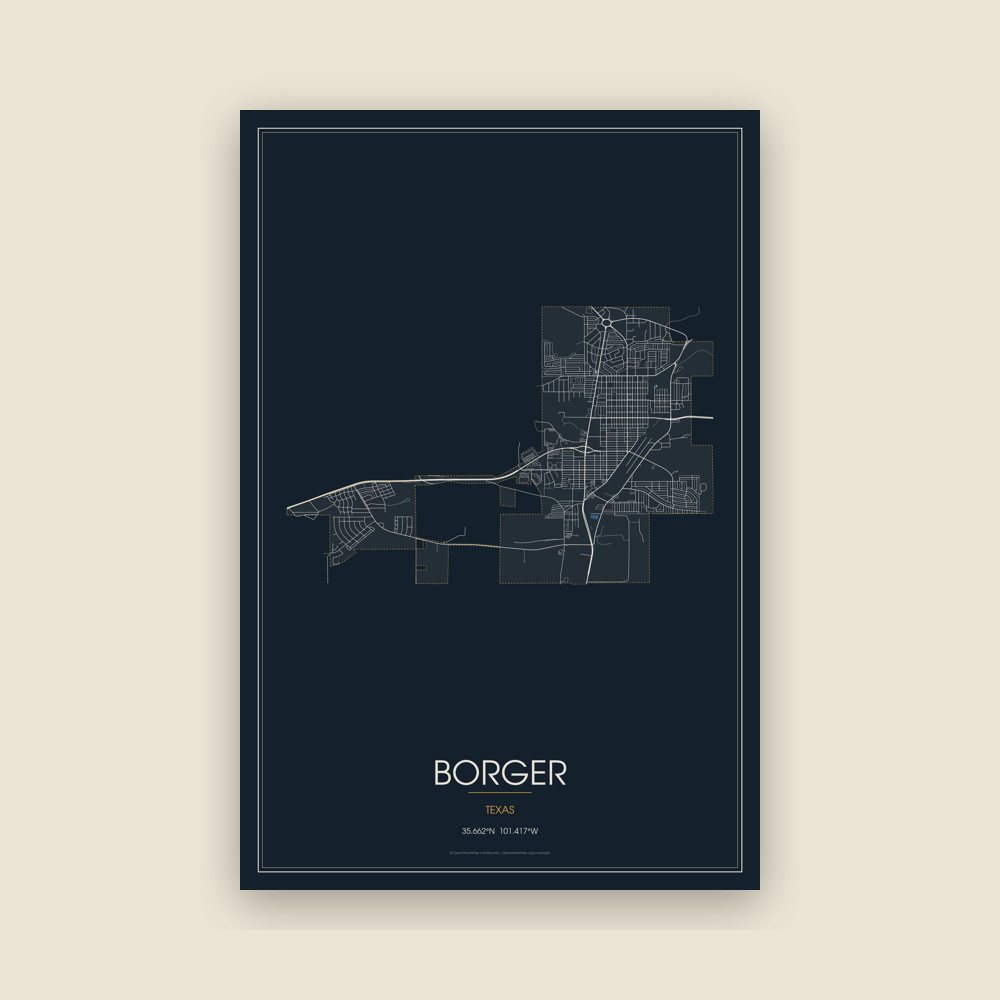
Soft-touch, zip cover
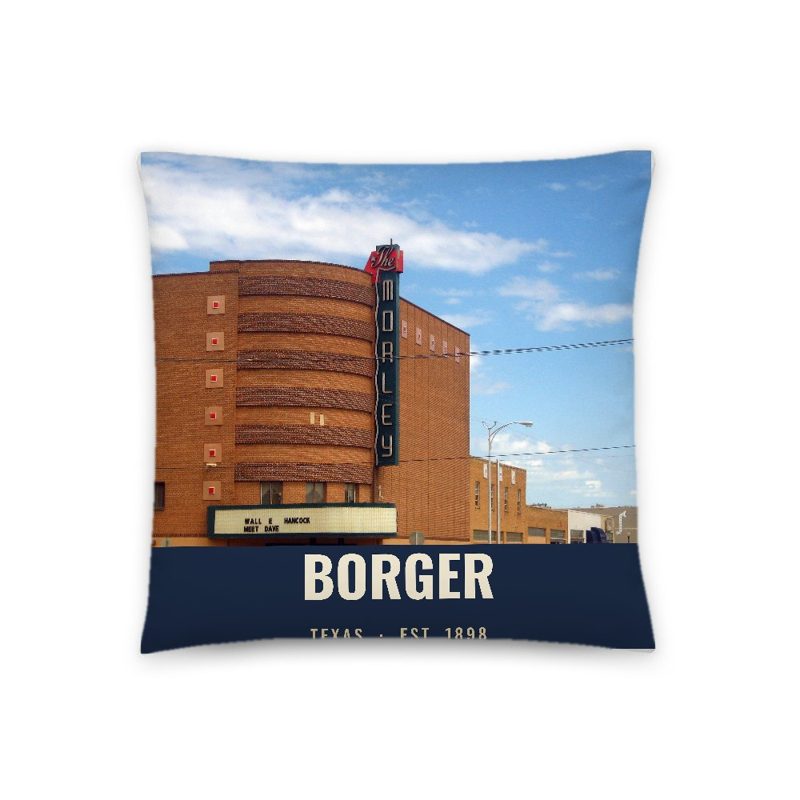
A local landmark photo with the town name, 18″×18″

Sturdy all-over-print tote
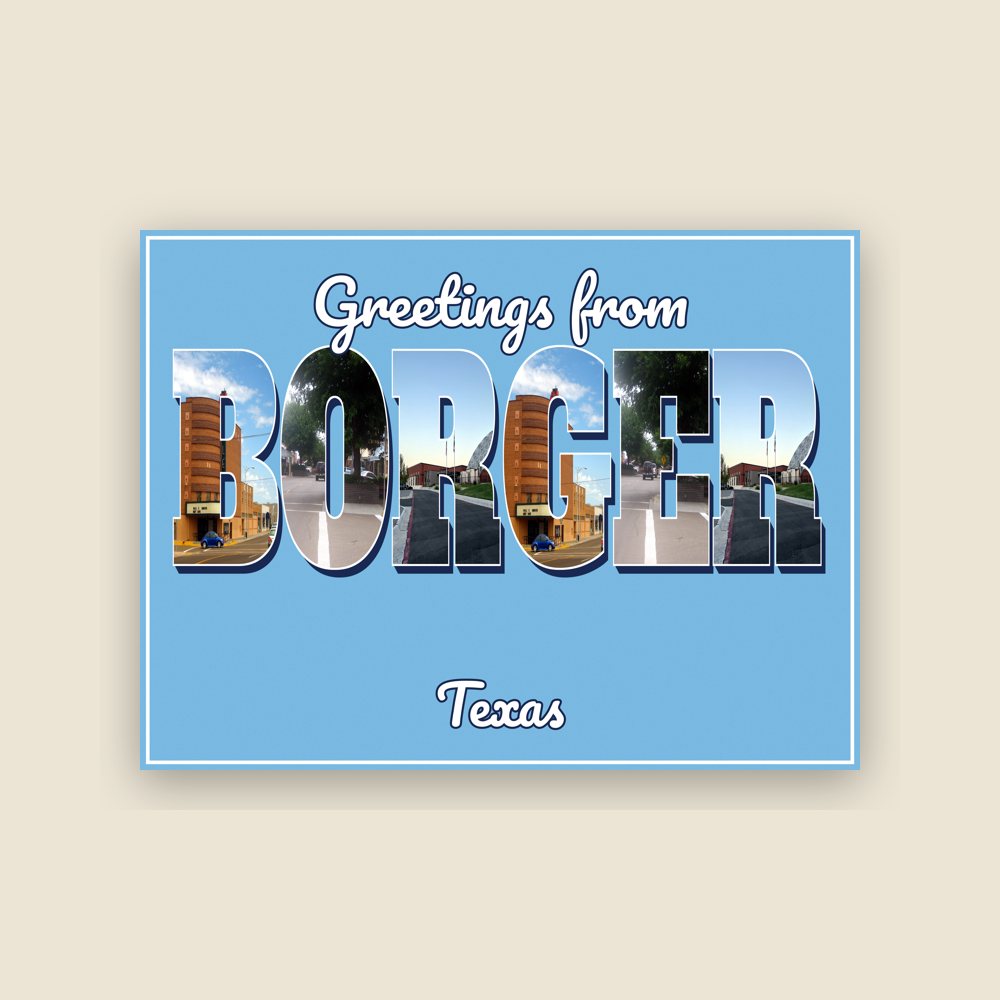
Large-letter postcard art on a sturdy tote
Foam-front trucker, printed (not embroidered) with local photos
Glossy top, cork back
Soft fleece, 50″×60″
20 oz, double-wall stainless
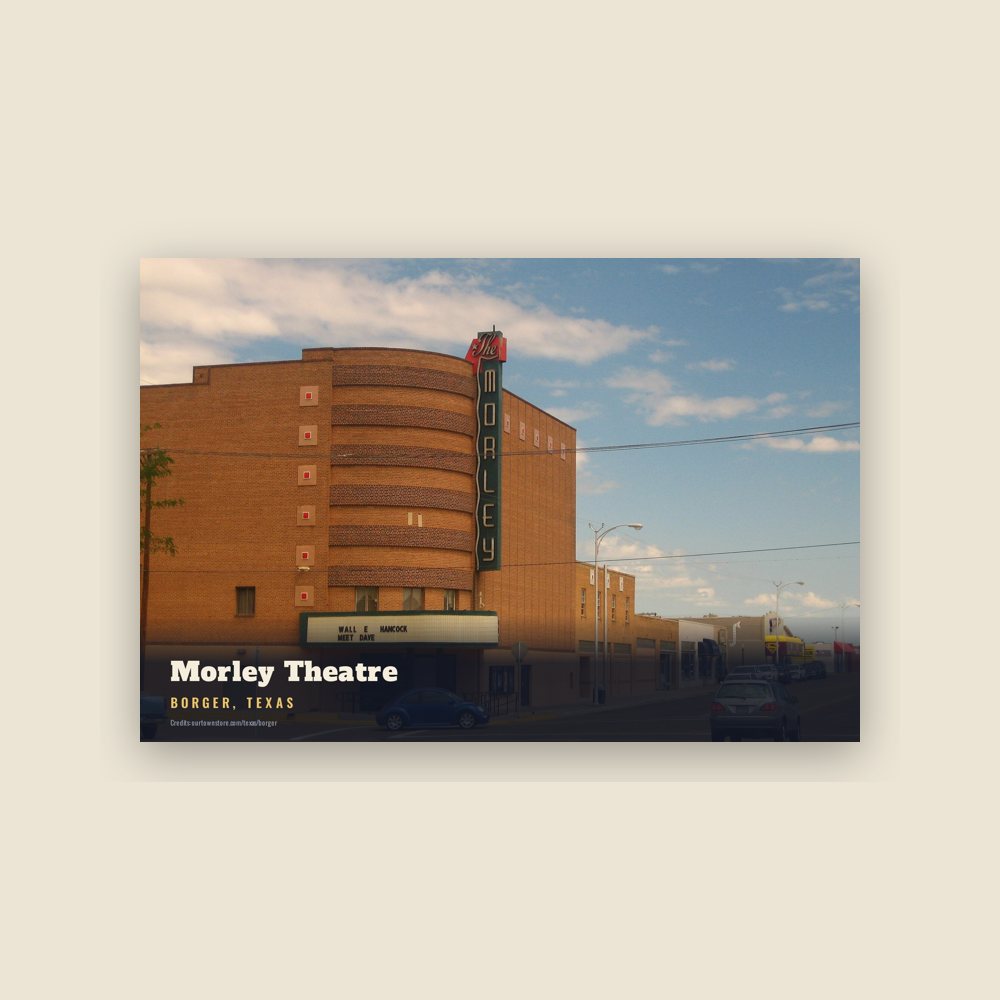
6″×4″ postcard, glossy front
Borger is the largest city in Hutchinson County, Texas, United States. Landmarks include KQTY-FM, KQTY (AM) and Morley Theatre. Borger is the birthplace of Darlene Cates, actress.
Population 2010: 13,251 → 2020: 12,551
From Wikidata (CC0).
Ace Borger and his business partner John R. Miller purchased a 240-acre (0.97 km2) townsite near the Canadian River in March 1926 after the discovery of oil in the vicinity. Within a few months, the boomtown had swollen to a population of 45,000, most lured by sensational advertising and "black gold". In October 1926, the city charter was adopted, and Miller was elected mayor. By this time, the Panhandle & Santa Fe Railway had completed the spur line to Borger, a post office had opened, and a school district was established. The boomtown of Borger soon had steam-generated electricity, telephone service, a hotel, and a jail. Regionalist artist Thomas Hart Benton depicted this period of Borger in his large painting Boomtown.
In the months that followed, oilmen, roughnecks, prospectors, panhandlers, and fortune seekers were joined by cardsharks, prostitutes, bootleggers, and drug dealers. The city became known as "Booger Town", as it attracted criminals and fugitives from the law. The town government soon fell under control of an organized crime syndicate led by Mayor Miller's shady associate, "Two-Gun Dick" Herwig. Dixon Street (now Tenth Street) was the "red-light" district, housing brothels, dance halls, speakeasies, and gambling dens. Murder and robbery became an everyday occurrence, and illegal moonshining and home brewing flourished under the fatherly watch of Herwig and his henchmen, including W. J. (Shine) Popejoy, the king of the Texas bootleggers. Borger became so notorious that in the spring of 1927, Texas Governor Dan Moody sent a force of Texas Rangers to rein in the town. The Texas Rangers were led by Captains Frank Hamer and Thomas R. Hickman. (Hamer would go on to later fame and even infamy as the man who killed Bonnie and Clyde.)
The Rangers did have a stabilizing effect. However, Borger still struggled with lawlessness and violence into the 1930s, which climaxed with the murder of District Attorney John A. Holmes by an assassin on September 18, 1929. This event caused Governor Moody to impose martial law for a month and send in state troops to help rid the town of its criminal element. Eventually, Borger settled down, but not before town founder Ace Borger was shot and killed at the post office by Arthur Huey on August 31, 1934. Huey was county treasurer and was irked at Ace Borger for not bailing him out of jail on an embezzlement charge. Huey shot Borger five times with a Colt .45 pistol, even pulling Borger's own pistol out of his clothing and shooting him again, along with others there in the post office.
By the late 1930s, Borger was pushed from one era to another by the Great Depression. Phillips Petroleum and others profited from the oil fields in the area, but during this time, the price of oil and gas dropped, ending the "boom" and the rapid growth of Borger. Carbon black plants added black soot to the Dust Bowl storms, covering the town in layers of dark grime. "Okie" migrants forced off their foreclosed farms back in Oklahoma found work in Borger plants and refineries. The Works Project Administration provided the town with new red-brick streets as the ramshackle shacks throughout town were replaced by more permanent buildings. During World War II, synthetic rubber and other petroleum products became important in the Borger area. By the 1960s, the Borger area was one of the largest producers of oil, carbon black, and petrochemicals and supplies in the state. The creation of nearby Lake Meredith also added to the town's economy as an important recreational area.
Today, Borger remains an important shipping point for agricultural produce, as well as for the petroleum products produced there. It is the home of the world's largest inland petrochemical complexes. Chevron-Phillips Chemical Company produces specialty chemicals. Solvay produces RYTON PPS plastics. Phillips 66 Petroleum Company processes crude oil and natural gas liquids. Agrium manufactures nitrogen fertilizer in its Borger plant. Borger also has Sid Richardson Carbon Company, which produces rubber-grade carbon black used to strengthen rubber tires, and Orion Engineered Carbons, Inc., which produces a variety of carbon blacks at its Borger facility. The original townsite is said to have been founded around 1898 by John F. Weatherly, a rancher who built a dugout and gave the future town the grandiose name of Granada. Weatherly's wife wanted it named after her former home—a town in West Virginia called Isom.
In 1900, Weatherly opened a store in his ranchhouse, which also became the first post office. Mrs. Weatherly opened a café and the community had a school opened by 1907. In October 1919, the mail was diverted through Plemons and the Isom post office closed.
The Weatherlys lost interest in the town they founded and moved to the nearby town of Panhandle in 1922, but they retained ownership of all that was Isom. When oil was discovered in early 1926, Weatherly returned and moved the town to the oilfield spur of the railroad near Borger.
Isom was platted with all lots south of First Street being Isom, Texas, and all streets north in Borger. From June to December 1926, the towns were rivals.
Although the town had a railroad depot, several oil-well supply warehouses, and no shortage of would-be citizens, a petition signed by 1,200 residents in early December declared Borger the winner. Isom's school merged with Borger's schools, driving the last stake into Isom.
During the winter of 1982–1983, Borger received a total of 58.7 inches of snow. This is the most snow that any Texas town has ever received during a winter season.
Adapted (trimmed) from the Wikipedia article Borger, Texas, revision 1379260727 by its contributors, licensed CC BY-SA 4.0.
We share a part of every Borger sale with local partners, and we'd love to print from your collection. Old photographs, maps and postcards make the best keepsakes.
Partner with usA favorite landmark, your street, a school or team, an anniversary gift, a different product. Tell us and we'll get back to you by email.
3 free coloring pages of Borger, each traced from a photo of a local landmark. Print them at home, at school or for story hour.
Borger's population was 12,551 in the 2020 U.S. Census, down from 13,251 in 2010.
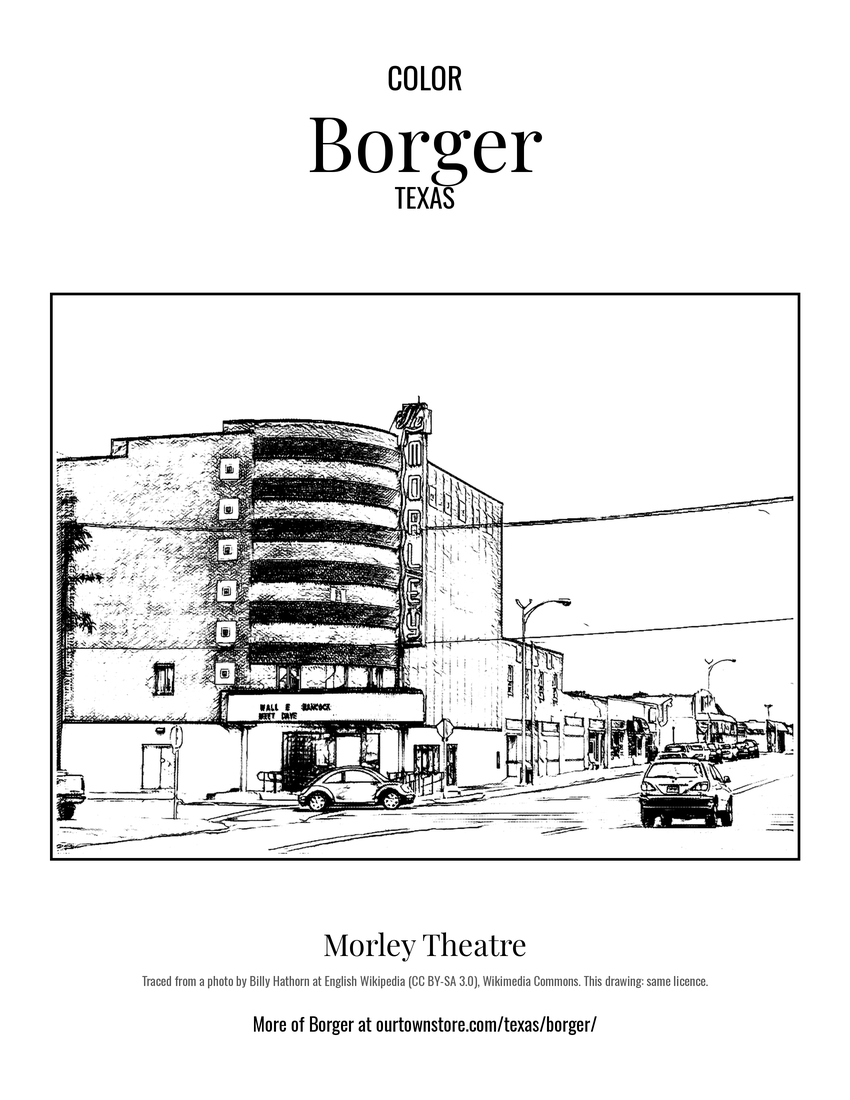 Morley Theatre
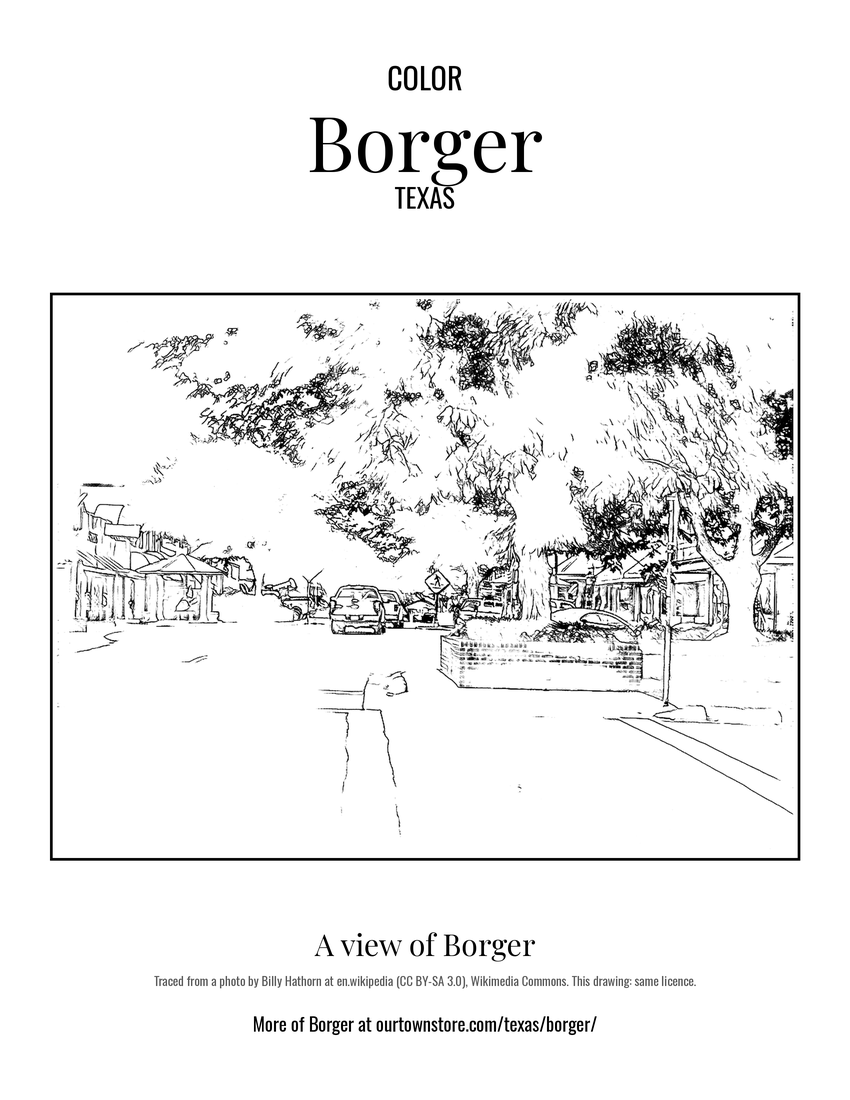 A view of Borger
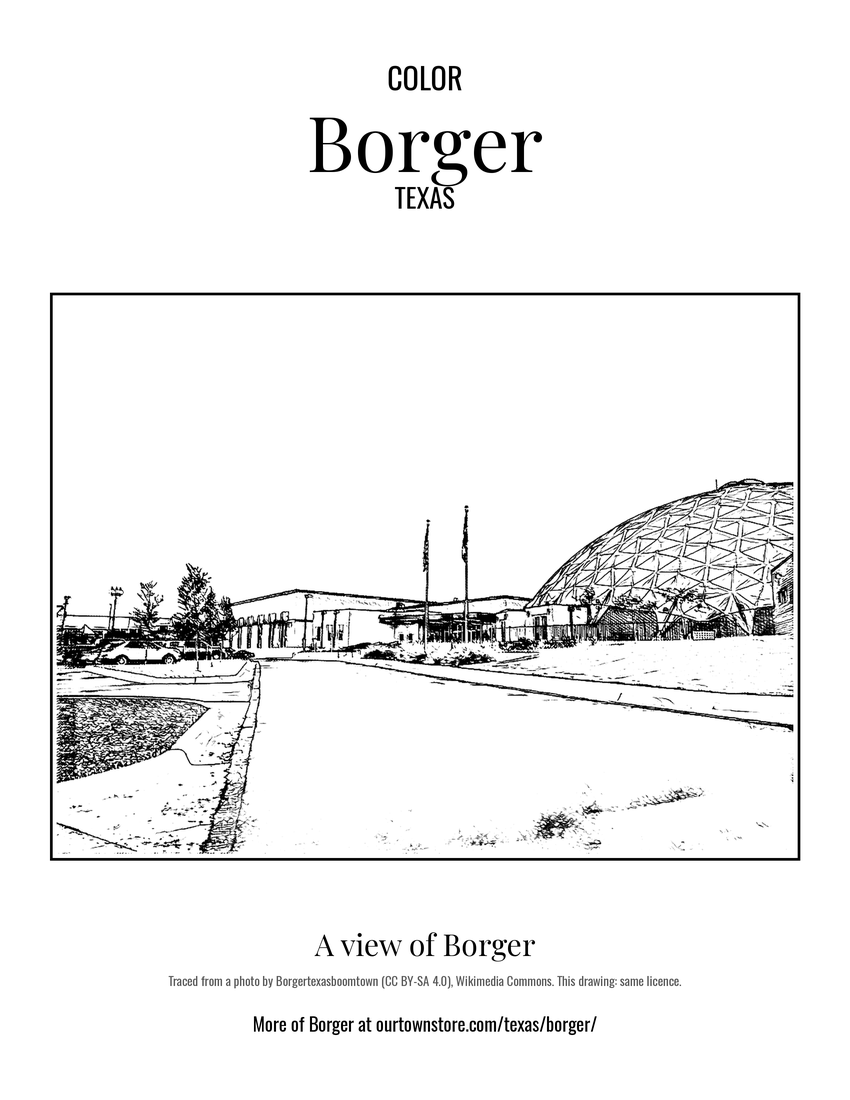 A view of Borger