A short history of Amarillo
During April 1887, John T. Berry, from Abilene, Texas, established a site for a town, choosing a well-watered section along the right-of-way of the Fort Worth and Denver City Railway that was building across the Texas Panhandle. Berry and merchants from Colorado City, Texas wanted to make his new townsite the region's main trading center. On August 30, 1887, the site won the election for a county seat to be established for Potter County. Availability of the railroad's freight service made the town a fast-growing cattle-marketing center.
The settlement originally was called Oneida; it later changed its name to Amarillo (the Spanish word for the color yellow). This probably had been suggested by yellow wildflowers that were plentiful during the spring and summer, or the nearby Amarillo Lake and Amarillo Creek, named in turn for the yellow soil along their banks and shores. Early residents originally pronounced the city's name more similar to the Spanish pronunciation ah-mə-REE-yoh, but it later was supplanted by the current pronunciation.
On June 19, 1888, Henry B. Sanborn, who is given credit as the "Father of Amarillo", and his business partner Joseph F. Glidden began buying land to move Amarillo to the east after arguing that Berry's site was on low ground and would flood during rainstorms. Sanborn offered to trade lots in the new location to businesses in the original city's site and help with the expense of moving to new buildings. His incentives gradually won over some people who moved their businesses to Polk Street in the new commercial district. Heavy rains almost flooded Berry's part of the town in 1889, prompting even more people to move to Sanborn's location. This eventually led to another county-seat election, which made Sanborn's site the new county seat in 1893.
By the late 1890s, Amarillo had emerged as one of the world's busiest cattle-shipping points, and its population grew significantly. The city became a grain elevator, milling, and feed-manufacturing center after an increase in wheat and small grains production during the early 1900s. Discovery of natural gas in 1918 and oil three years later brought oil and gas companies to the Amarillo area.
The United States government bought the Cliffside Gas Field with high helium content in 1927 and the Federal Bureau of Mines began operating the Amarillo Helium plant two years later. The plant was the sole producer of commercial helium in the world for many years. The U.S. National Helium Reserve is stored in the Bush Dome Reservoir at the Cliffside facility.
World War II led the establishment of Amarillo Army Air Field in east Amarillo and the nearby Pantex Army Ordnance Plant, which produced bombs and ammunition. After the end of the war, both of the facilities were closed. The Pantex Plant was reopened in 1950 and produced nuclear weapons throughout the Cold War.
In 1951, the army air base was reactivated as Amarillo Air Force Base and expanded to accommodate a Strategic Air Command B-52 Stratofortress wing. The arrival of servicemen and their families ended the city's depression. Between 1950 and 1960, Amarillo's population grew from 74,443 to 137,969. However, the closure of Amarillo Air Force Base on December 31, 1968, contributed to a decrease in population to 127,010 by 1970. In 1970, the U.S. Census Bureau reported Amarillo's population as 6.1% Hispanic and 88.5% non-Hispanic white.
In the 1980s, ASARCO, Iowa Beef Processors (present-day Tyson Foods), Owens-Corning, and Weyerhaeuser built plants at Amarillo. The Eastridge neighborhood houses many immigrants from countries such as Vietnam, Laos, and Burma, many finding employment at the nearby Iowa Beef Processors plant. The following decade, Amarillo's city limits encompassed 60 square miles (155 km2) in Potter and Randall Counties.
Following the lead of the Fort Worth and Denver City Railway, predecessors of the Atchison, Topeka and Santa Fe Railway and Chicago, Rock Island and Pacific Railroad had established services to and from Amarillo. These three carriers maintained substantial freight and passenger depots and repair facilities in the city through most of the 20th century and were major employers within the community.
U.S. Routes 60, 87, 287, and 66 intersected at Amarillo, making it a major tourist stop with numerous motels, restaurants, and curio shops.
Adapted (trimmed) from the Wikipedia article Amarillo, Texas, revision 1384019914 by its contributors, licensed CC BY-SA 4.0.
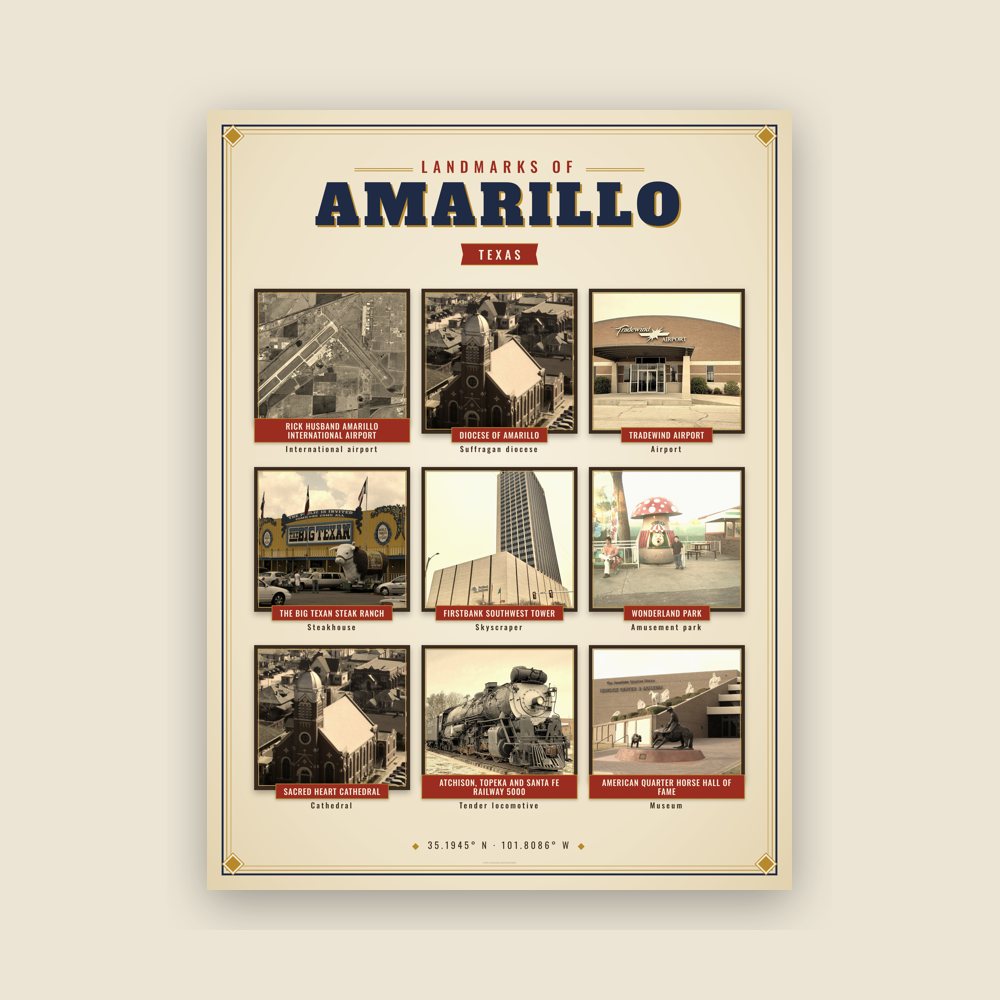
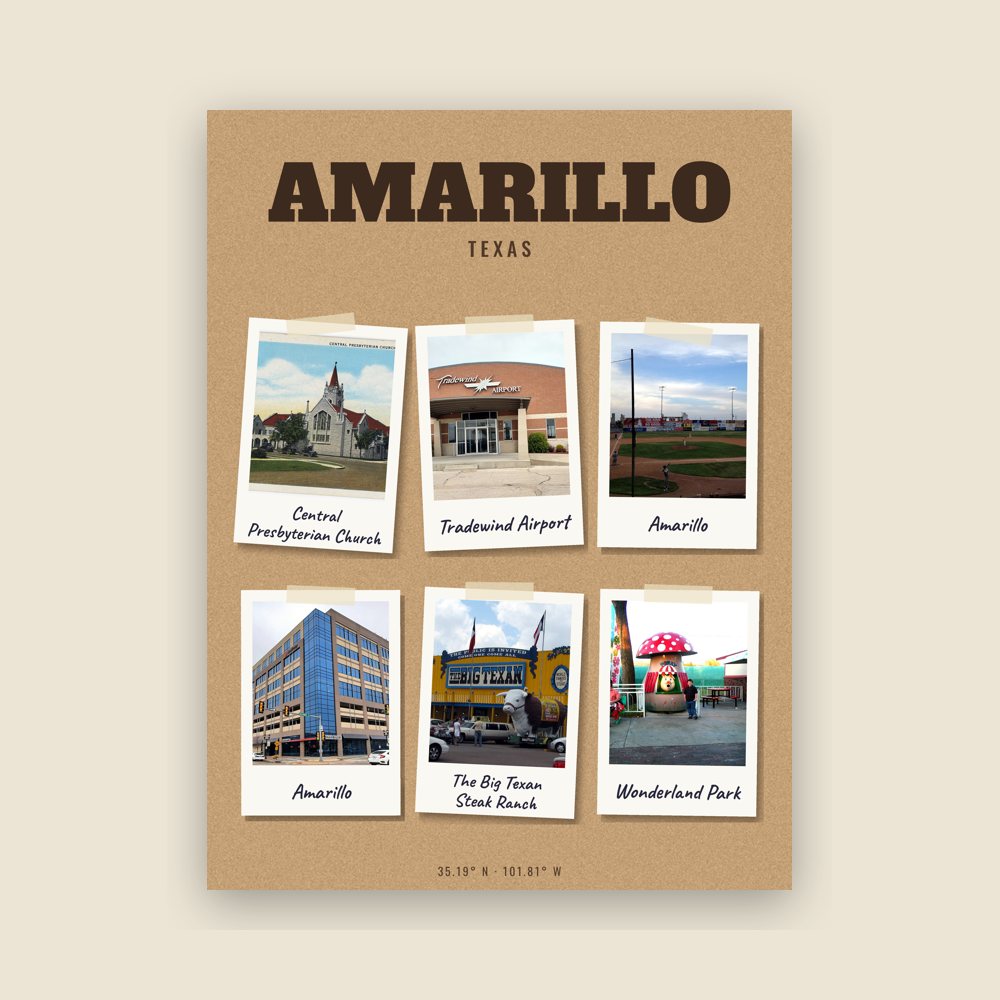
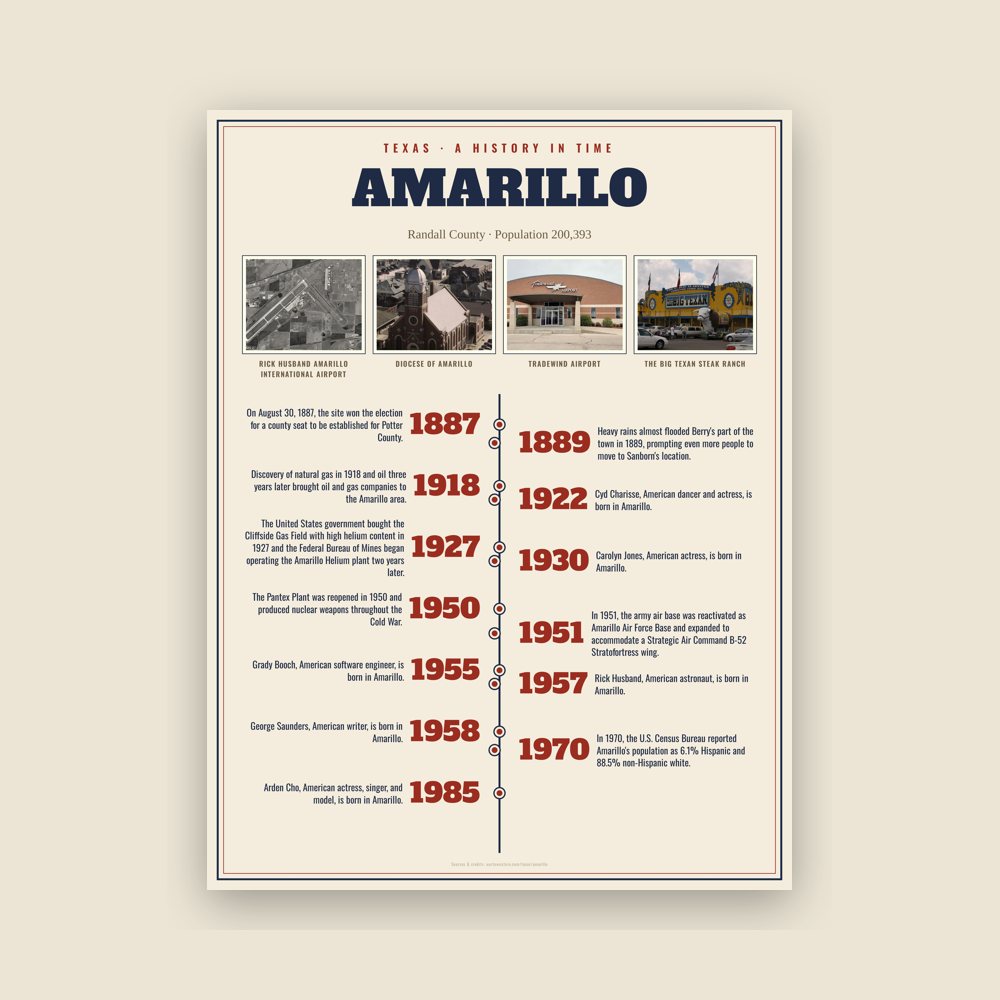
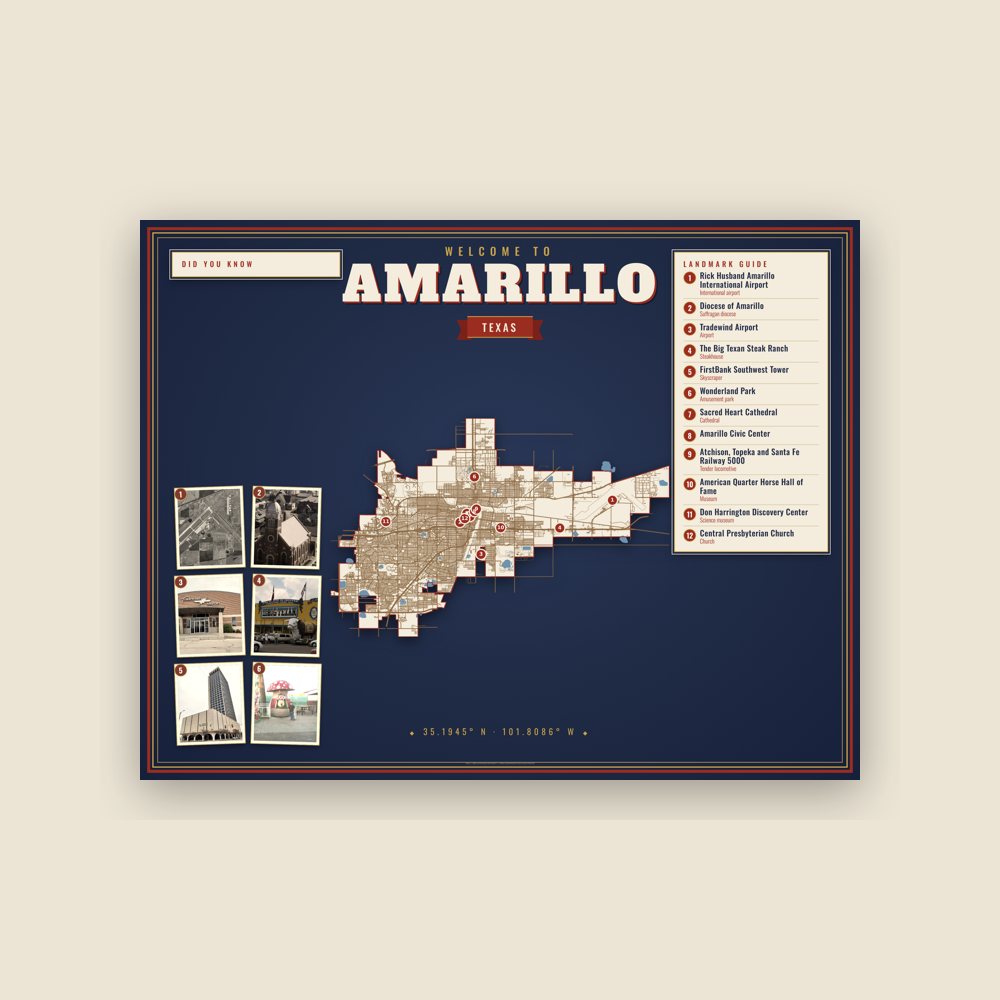



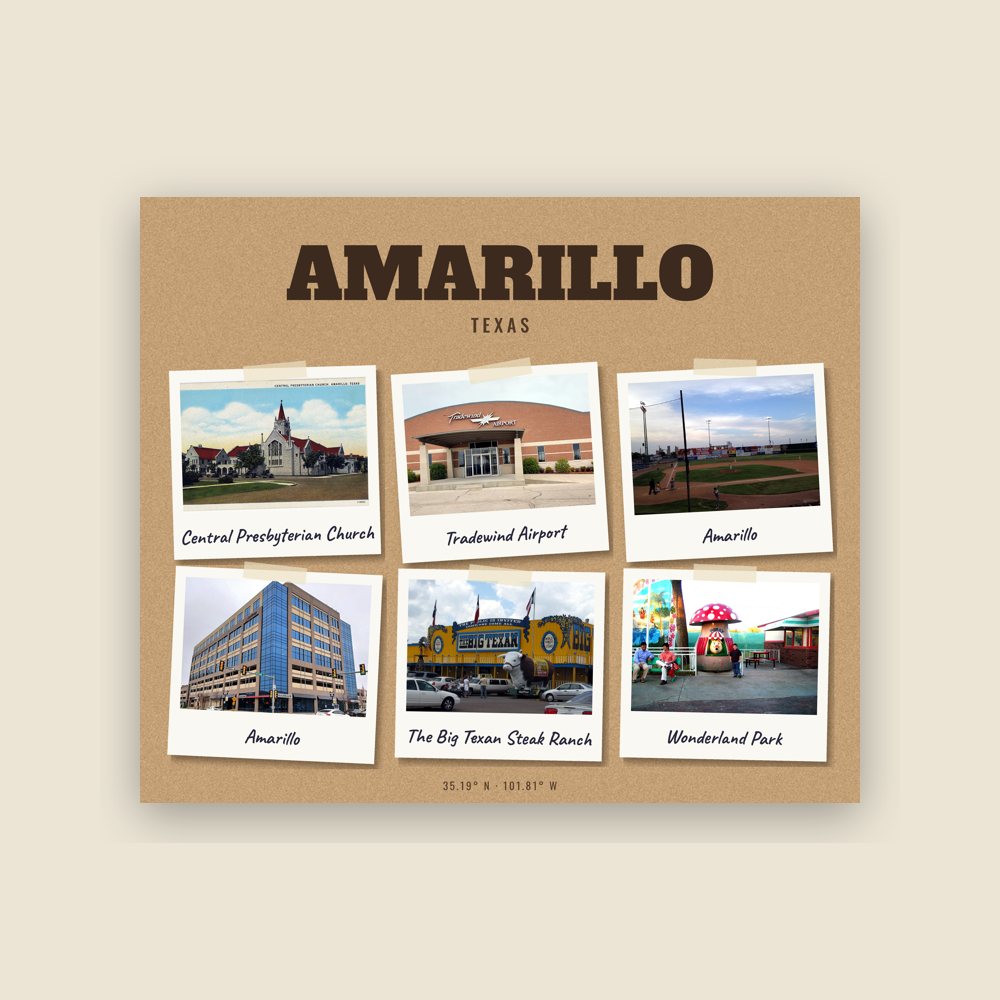

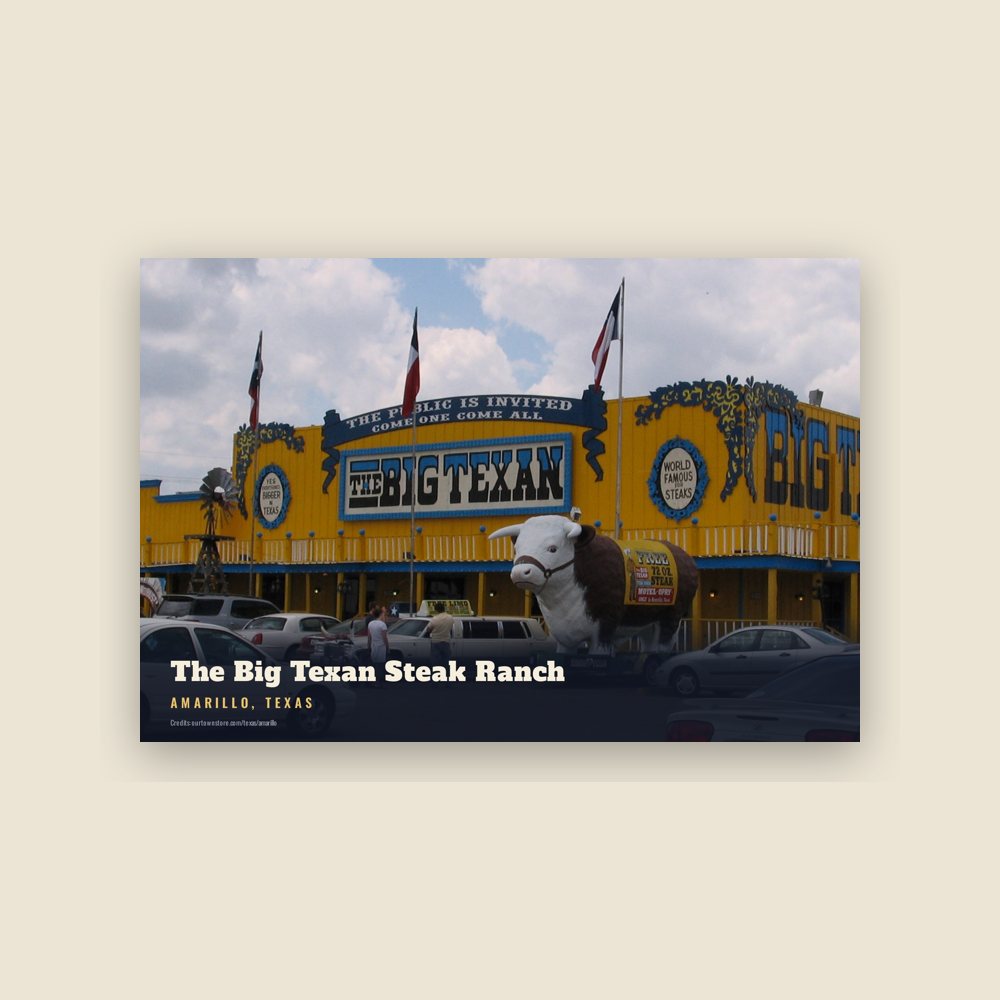

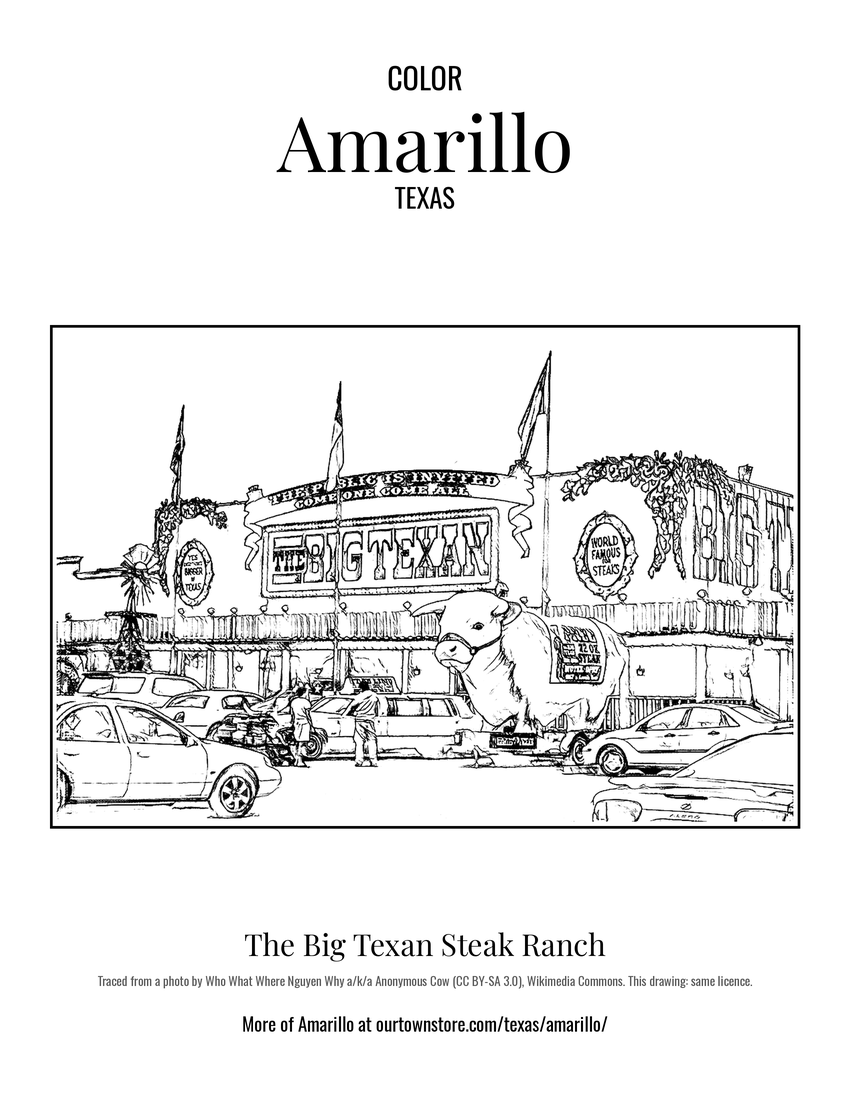 The Big Texan Steak Ranch
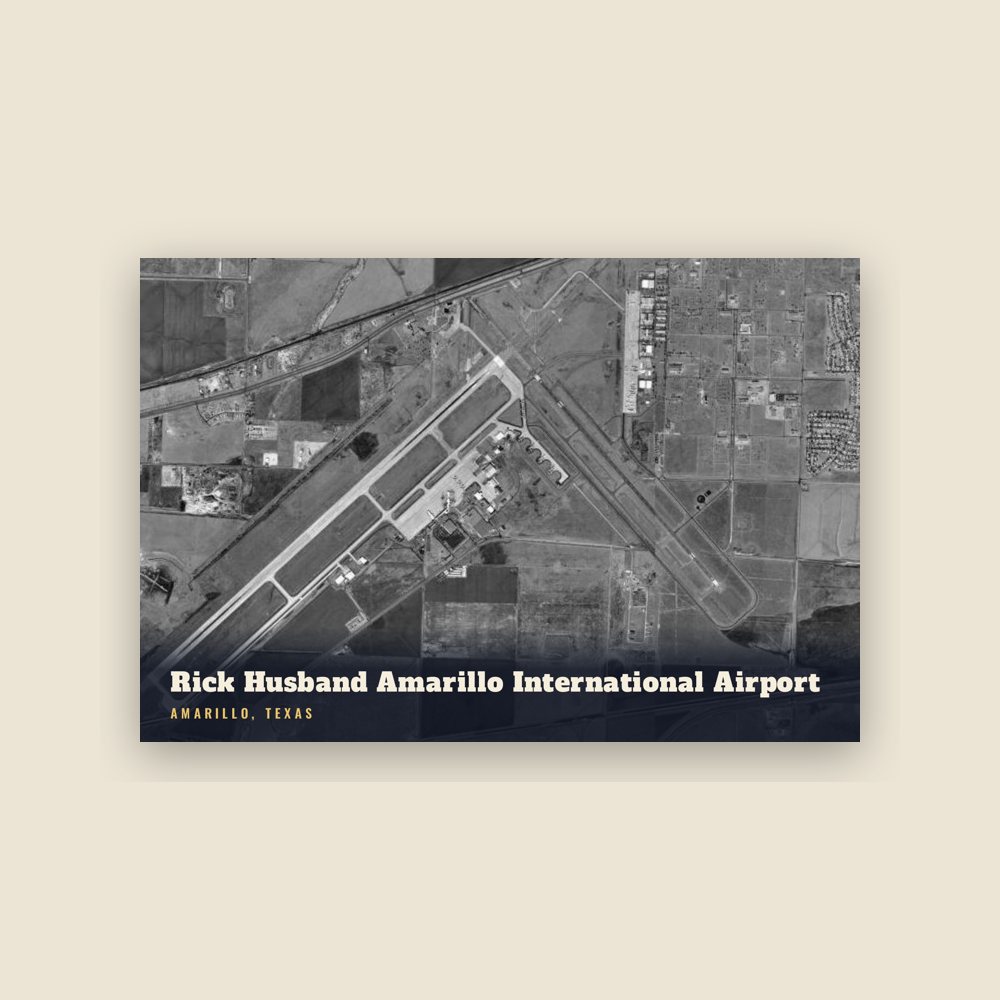
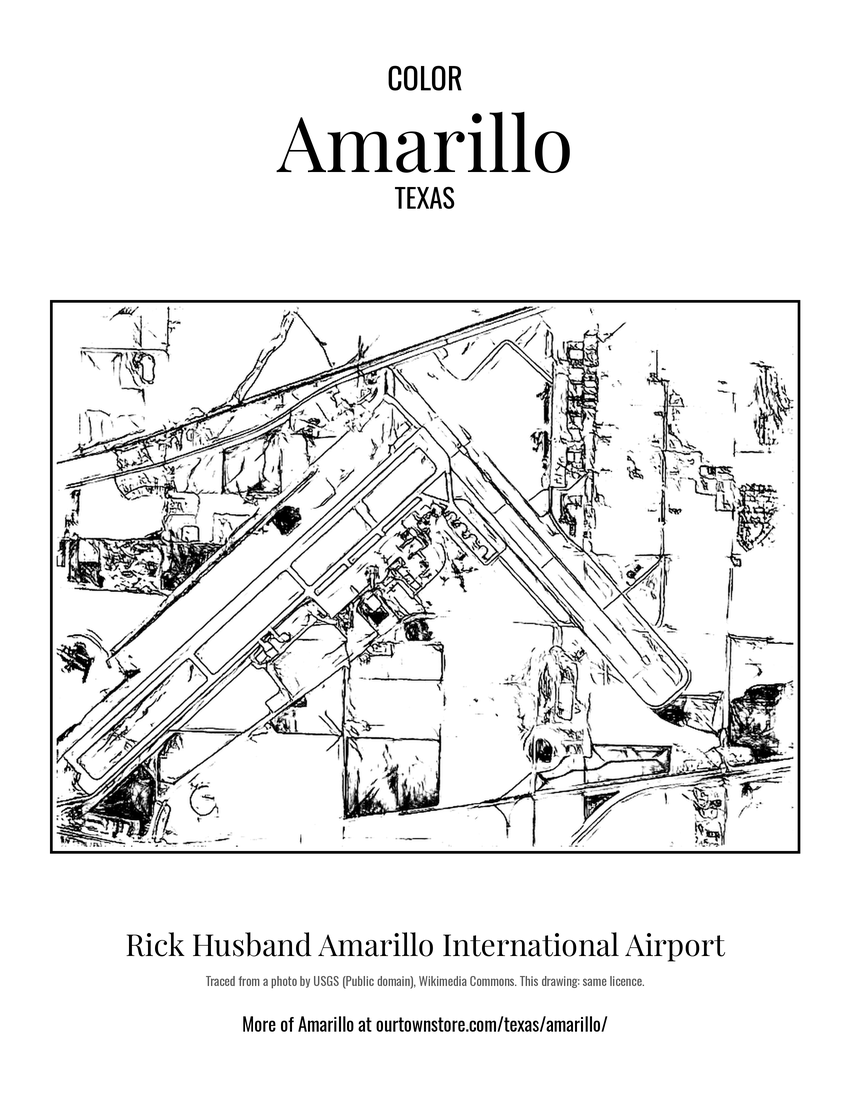 Rick Husband Amarillo International Airport
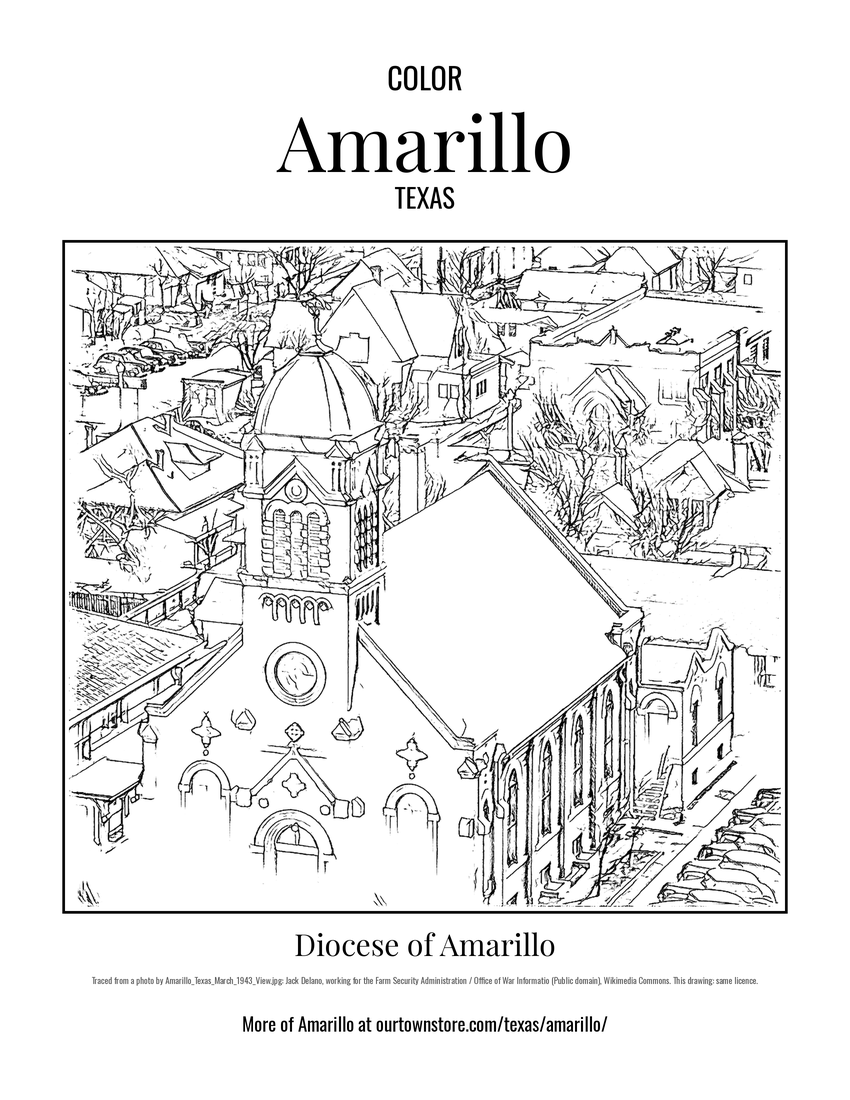 Diocese of Amarillo
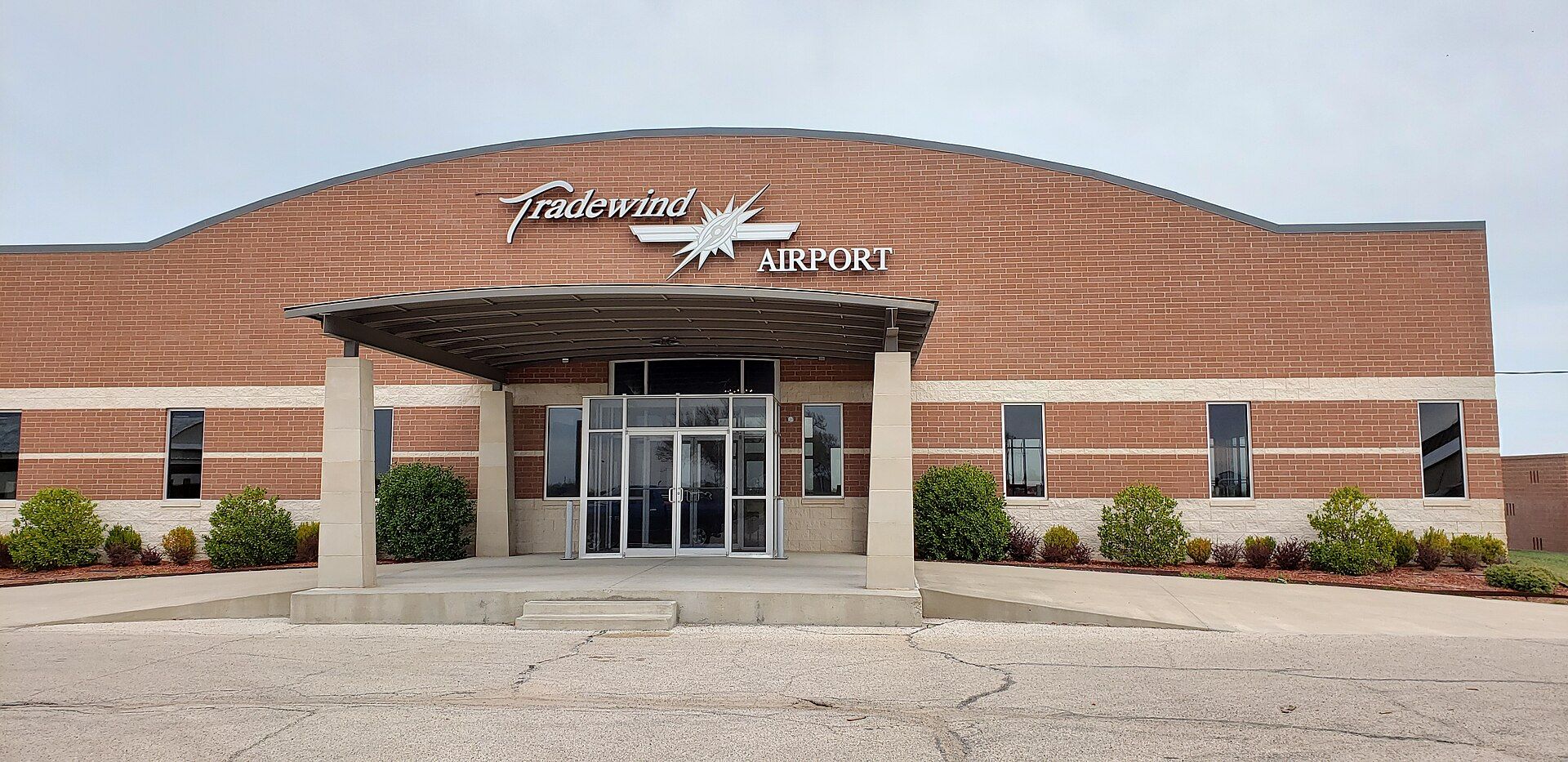
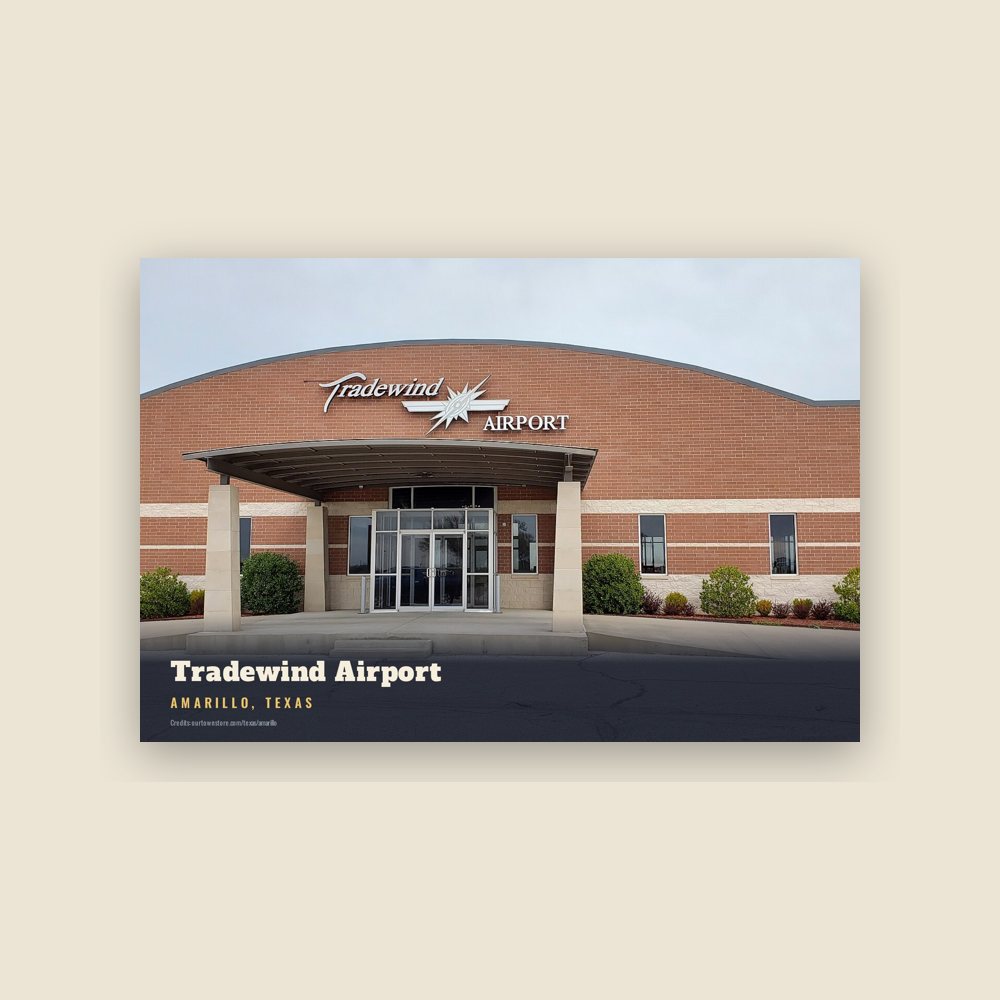
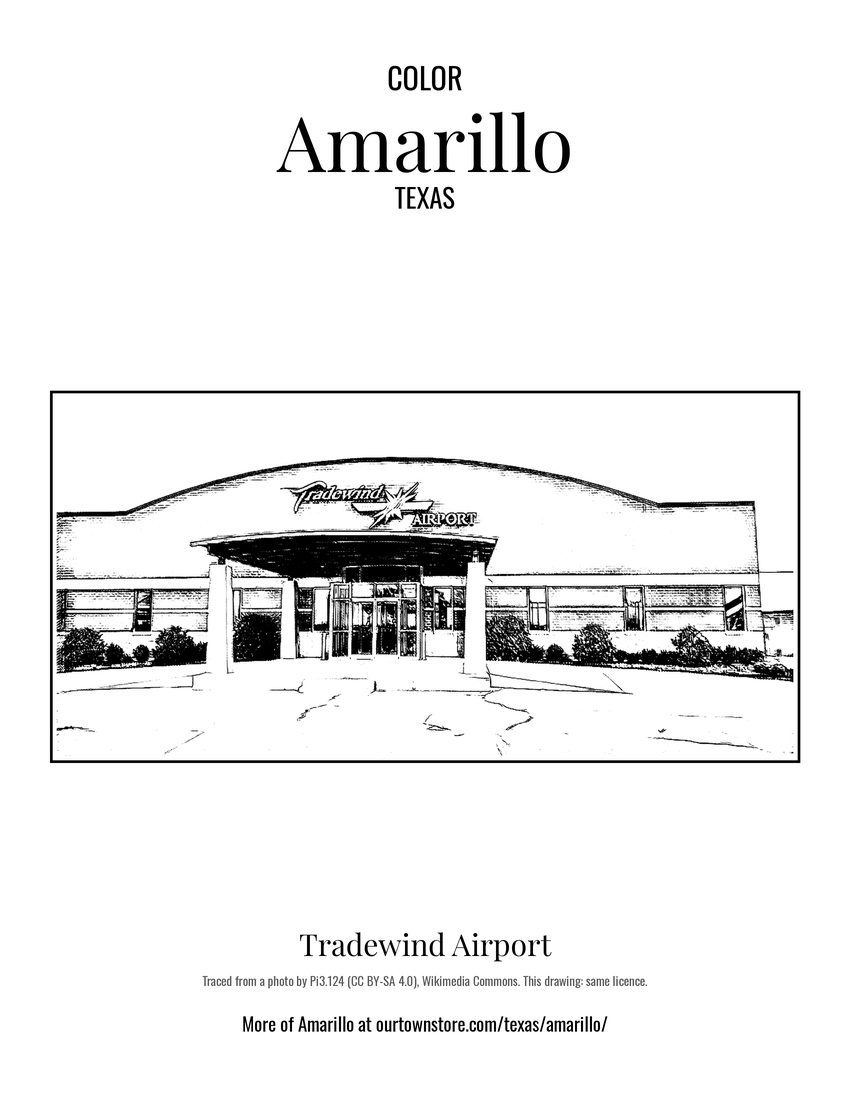 Tradewind Airport