Spencer is a town in Van Buren County, Tennessee, United States. Landmarks include WZYZ.
- CountyVan Buren County
- Population1,462 (2020 U.S. Census)
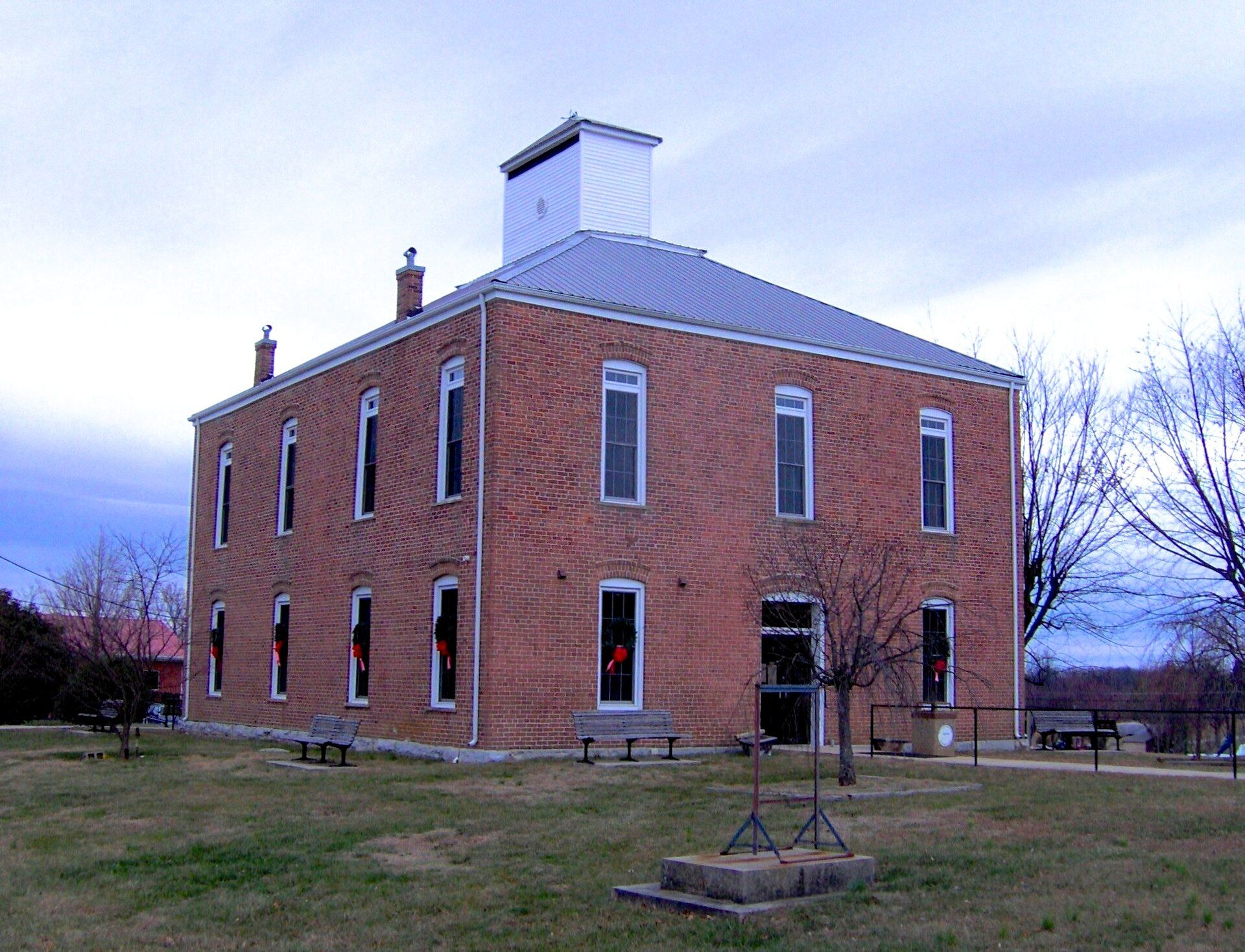
Spencer, Tennessee gifts and souvenirs: 20 designs made from Spencer's own map, landmarks and history, from $16 to $95. Printed to order and shipped free in the USA.
| Popular | Price |
|---|---|
| Spencer Hometown Ornament | $23 |
| Spencer Vintage Travel Poster | from $40 |
| Spencer Varsity Crewneck | from $57 |
| Spencer Est. Tee | from $33 |
| Spencer Town Line Mug | from $26 |
| Spencer Market Tote | $37 |

Ceramic keepsake, gold ribbon
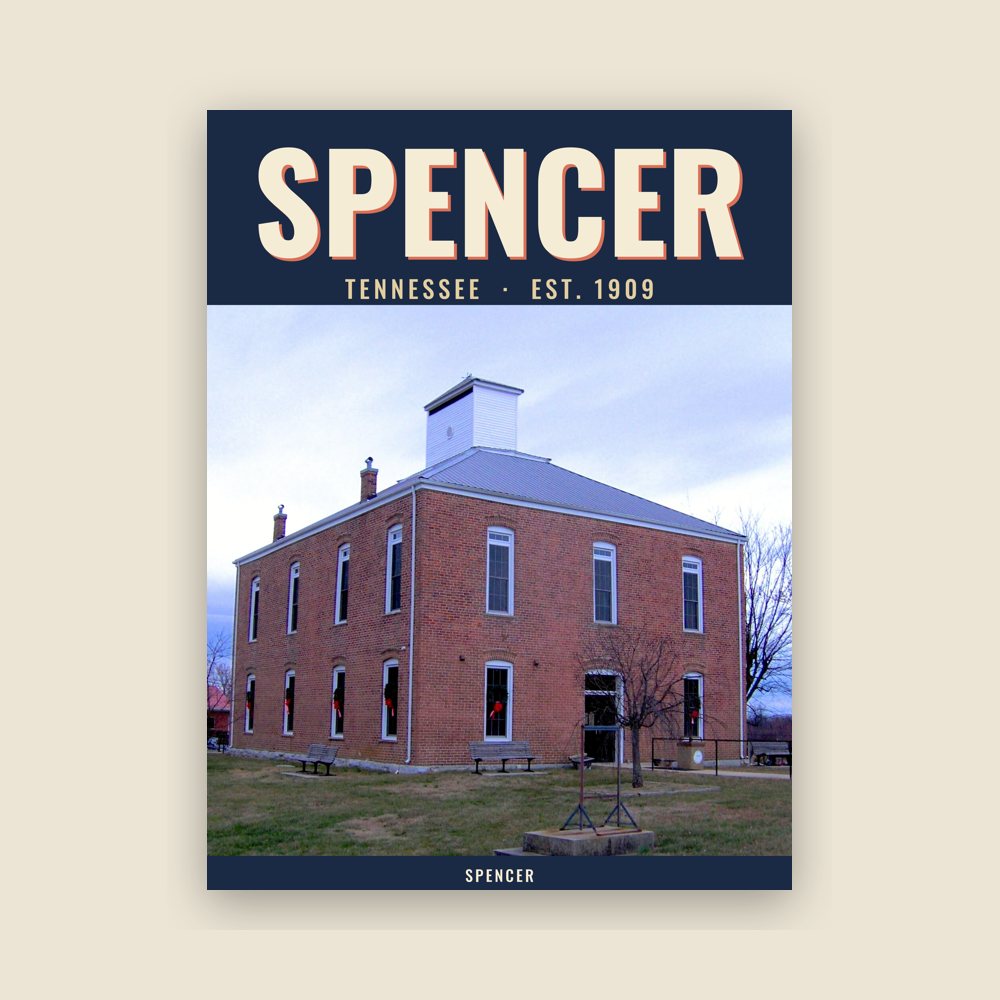
Its landmark photo in a classic travel-poster layout
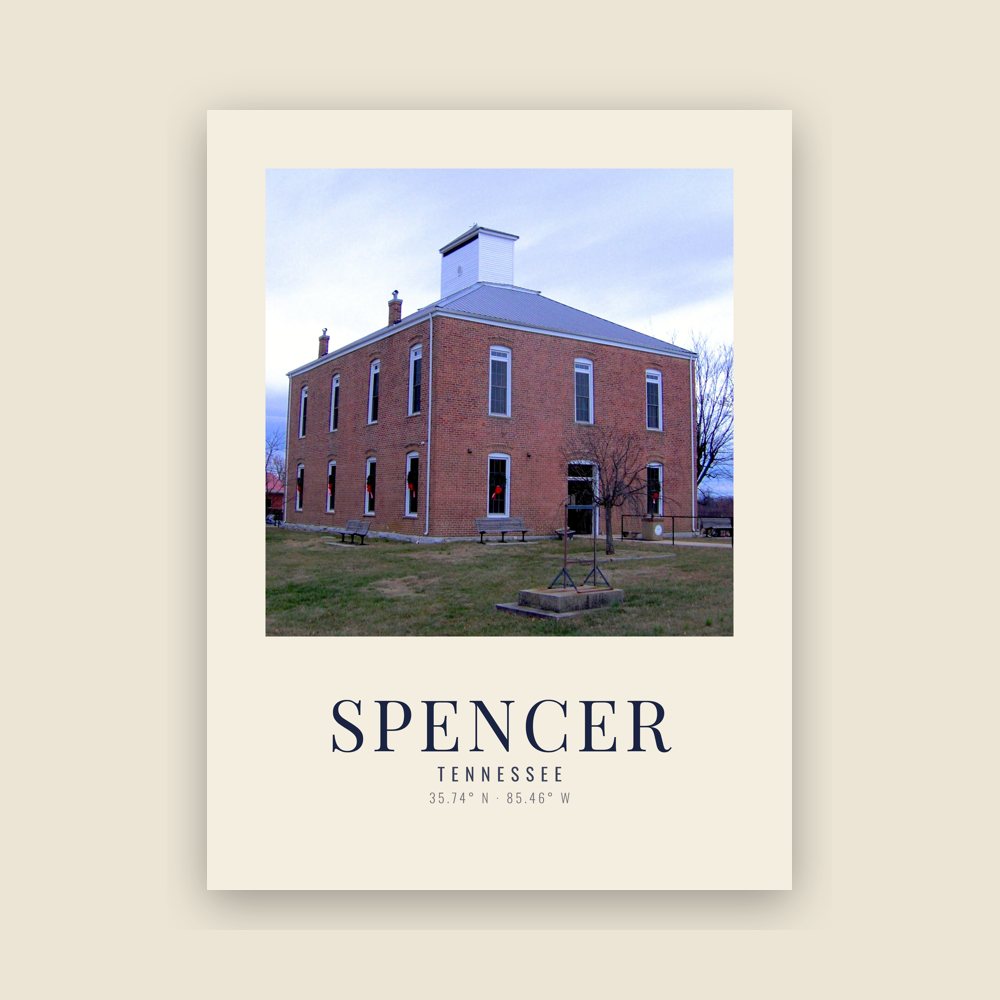
A local landmark photo as a gallery print
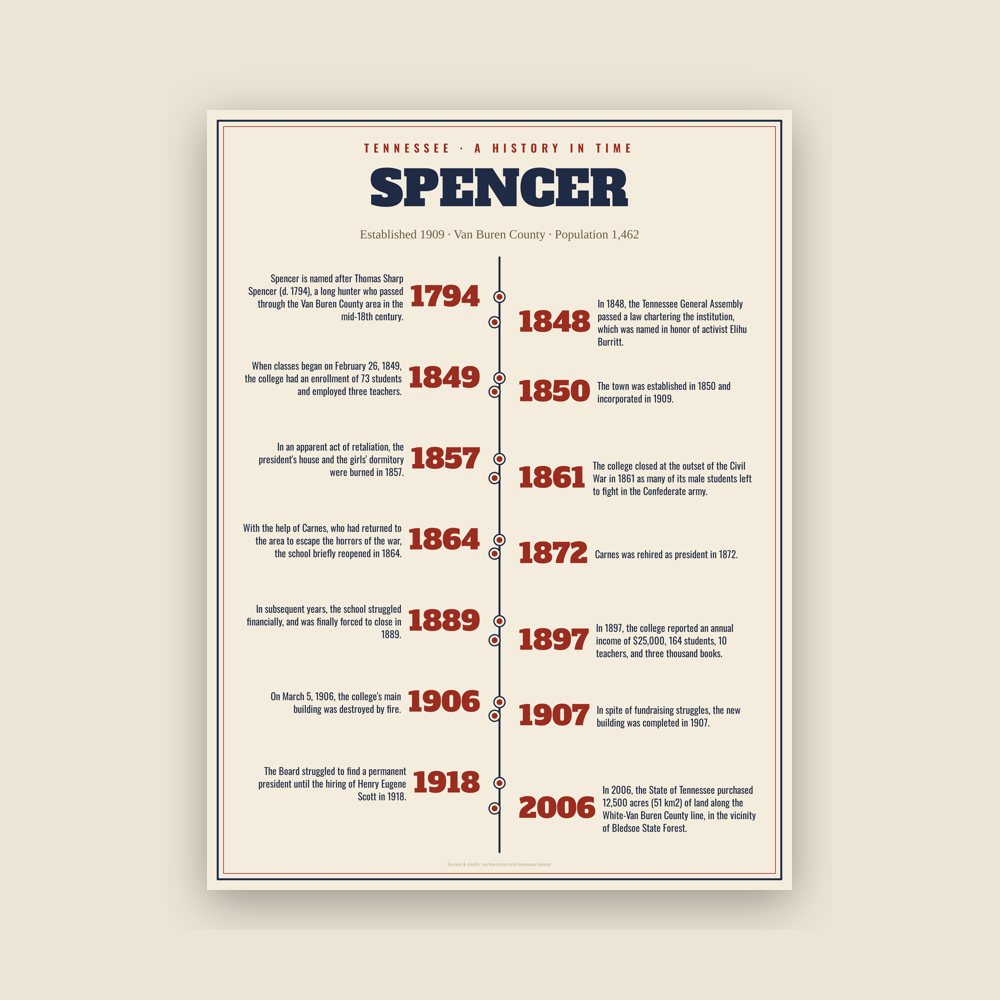
The town's story in dates, from its own records, for home or classroom
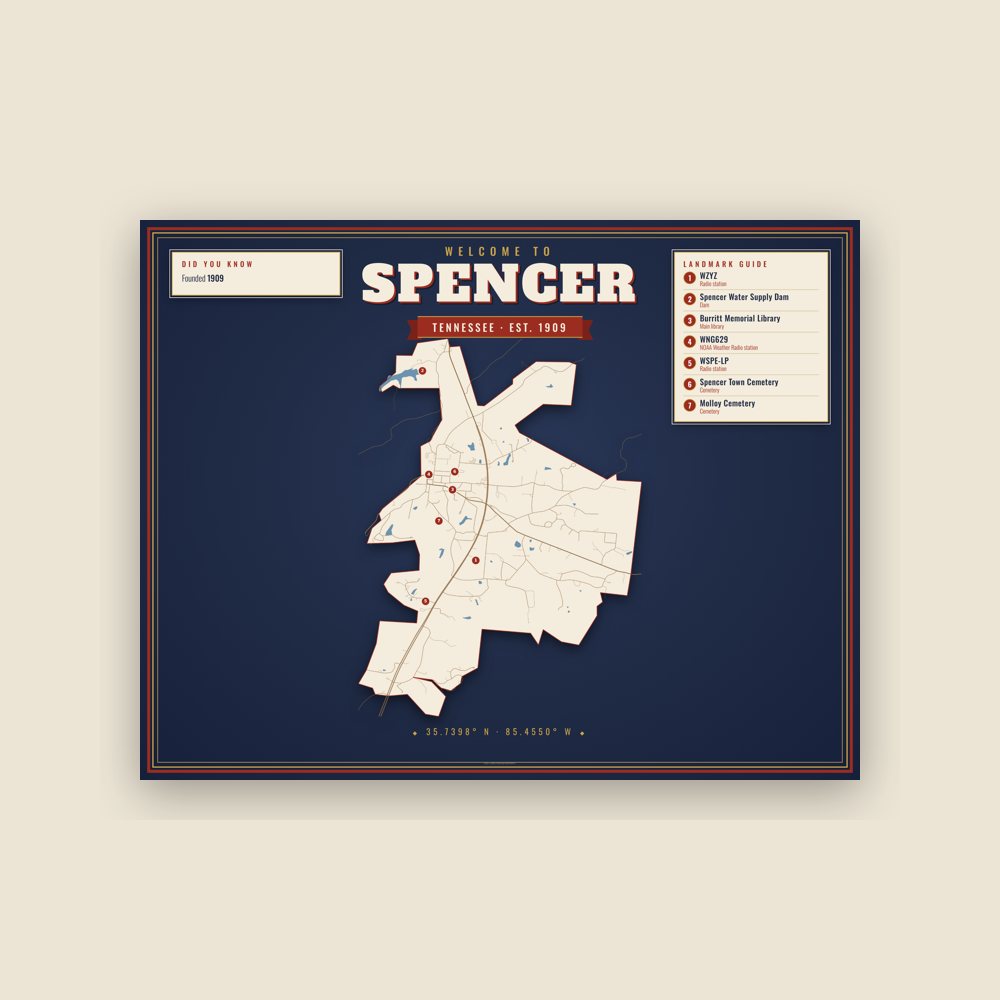
Map of local landmarks, washable fabric

Heavy-blend fleece, street map printed on the back

Soft Bella+Canvas jersey

Kids' Bella+Canvas jersey, youth sizes

Bella+Canvas toddler jersey

Bella+Canvas baby bodysuit
Glossy ceramic, dishwasher safe
Weatherproof, for the front walk
24″×16″, printed coir-look fibers, rubber back

12″×12″ printed wood, ready to hang
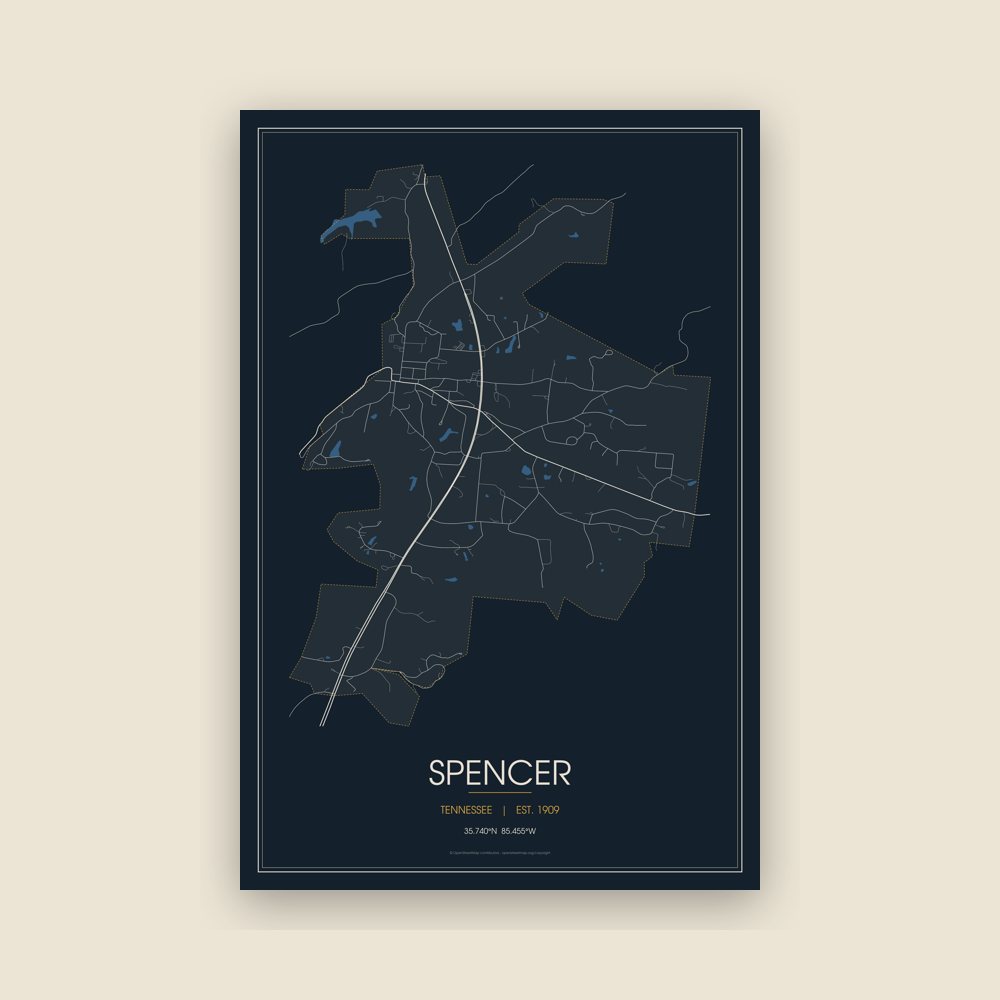
Soft-touch, zip cover
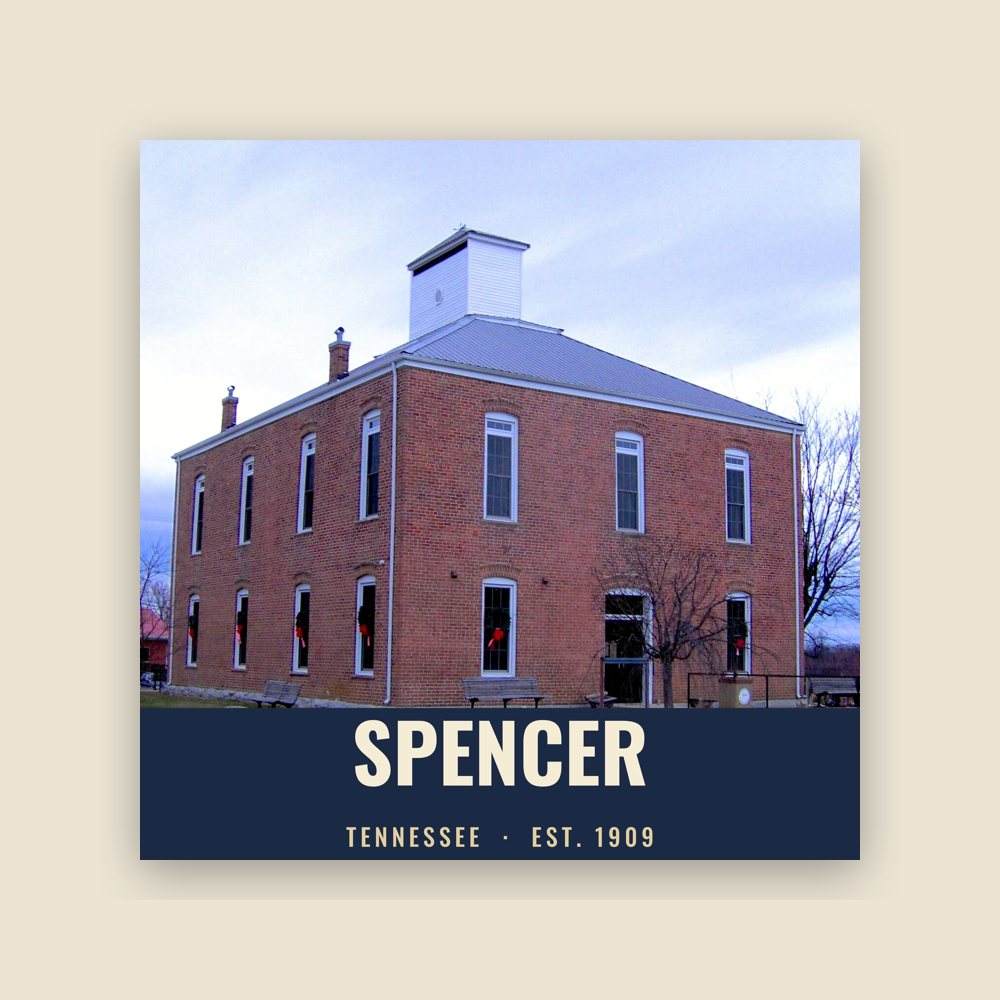
A local landmark photo with the town name, 18″×18″

Sturdy all-over-print tote
Glossy top, cork back
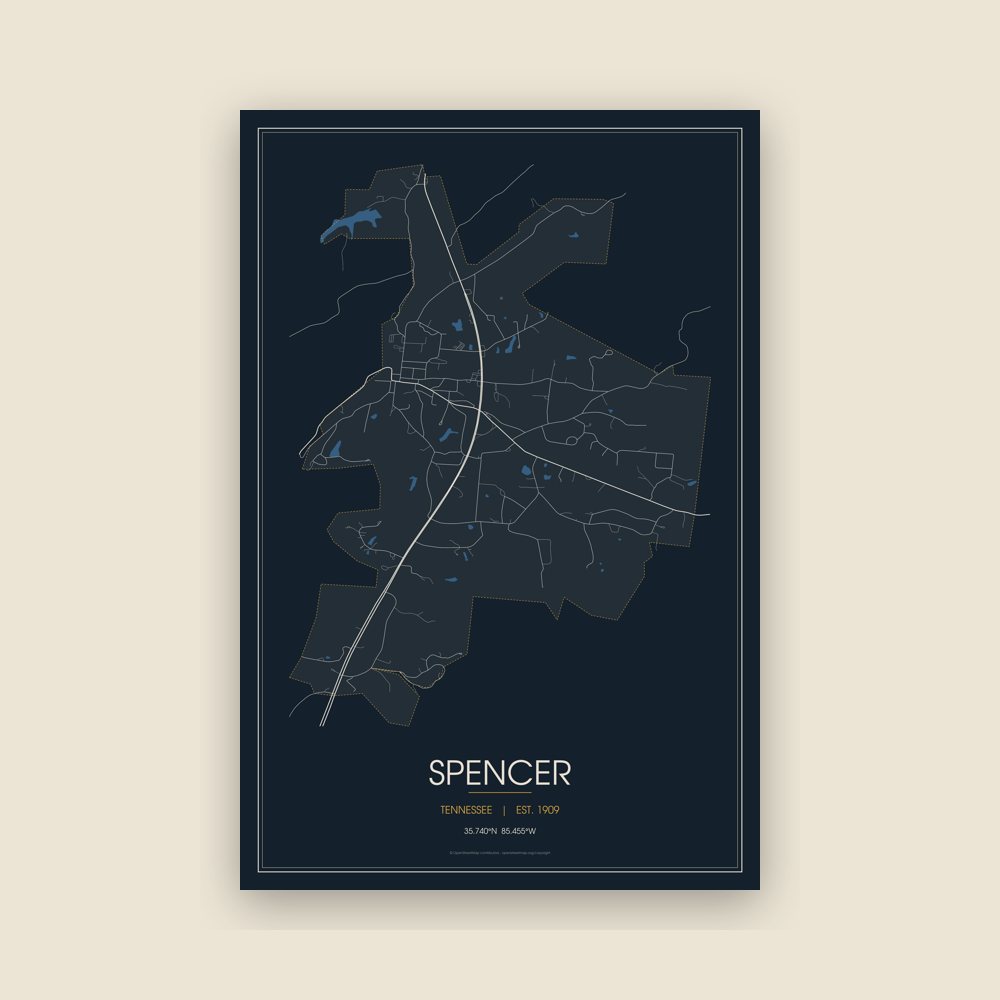
Soft fleece, 50″×60″

20 oz, double-wall stainless
Spencer is a town in Van Buren County, Tennessee, United States. Landmarks include WZYZ.
Spencer is named after Thomas Sharp Spencer (d. 1794), a long hunter who passed through the Van Buren County area in the mid-18th century. The town was established in 1850 and incorporated in 1909.
In 1937, the U.S. government began purchasing the badly eroded land around Fall Creek Falls. The following year, the Works Progress Administration and the Civilian Conservation Corps began the work of restoring the forest and constructing park facilities. The National Park Service transferred ownership of the park to the State of Tennessee in 1944.
Millikan's Overlook is named after Glenn Millikan, who was head of the Department of Physiology at Vanderbilt University School of Medicine and son of Nobel Laureate Robert A. Millikan. Millikan was killed by a falling rock on May 25, 1947, while rock climbing "Buzzard's Roost," the cliff beneath the overlook.
In 2006, the State of Tennessee purchased 12,500 acres (51 km2) of land along the White-Van Buren County line, in the vicinity of Bledsoe State Forest. The purchase was part of an effort to create an unbroken corridor of publicly owned land between Fall Creek Falls State Park and Scott's Gulf, a few miles to the north in White County.
The Fall Creek Falls Inn and Conference Center offered 144 guest rooms and over 5,000 square feet (460 m2) of banquet space in five conference rooms, which accommodated up to 400 people. The buildings were designed with a brutalist architecture, having a combination of dark brick, and gray concrete with an exposed aggregate of smooth white, beige, tan, and brownish river stones. Built in the 1960s, with a rooms-only annex in the 1970s, they were closed in early April 2018 and demolished later that year, after Tennessee Governor Bill Haslam pushed for privatization and potential concessionaires refused to bid on serving the older facilities at the state's resort parks.
Cost overruns and underestimates, and a tight labor market in such a rural area, led to a need for more money from the Tennessee General Assembly in 2019, in turn allowing construction to resume in the autumn. It is expected to finally reopen in late summer or early autumn of 2021, with only 75 to 95 guest rooms, at a cost of slightly over $40 million (up from $29 million originally). It is currently unknown how much nightly room rates will be increased.
Both counties objected to the long-term closure of the inn due to the significant loss of lodging taxes and sales taxes, as well as employees who would be left without a job or forced to relocate or commute long distances to other state parks, even when the closure and reconstruction were expected to be far shorter. Proposals to build on the opposite side of the lake before closing the original inn were declined, largely due to the lack of sufficient sewerage facilities there.
The idea for a school in Spencer was first proposed by Nathan Trogdon, a brick mason who had built the second Van Buren County Courthouse in the town. By the late 1840s, a 12-member board of trustees had been formed with Charles Gillentine as president. In 1848, the Tennessee General Assembly passed a law chartering the institution, which was named in honor of activist Elihu Burritt. Funds for the school were raised from among the residents of White, Warren, and Van Buren counties. When classes began on February 26, 1849, the college had an enrollment of 73 students and employed three teachers.
The first president of the college, Isaac Newton Jones, was a graduate of Irving College in nearby McMinnville. He established the college's curriculum, but left after only one year. His successor, William Davis Carnes, played a critical role in shaping the college's policies, most notably introducing coeducation in 1850 and instituting a strict moral and religious code. The policy allowing coeducation met staunch opposition at first, but Carnes defended it, stating, "It is God's law that the young of the opposite sexes should exert a healthful influence in the formation of each other's characters, and no place is better suited to this purpose than the classroom and lecture room." To alleviate fears, Carnes modified the school's code to bar all communication between the sexes outside classrooms or other supervised events.
Carnes' moral code barred swearing, gambling, smoking and drinking. He struggled to curtail drinking, however, in spite of introducing increasingly stringent measures, including the expulsion of anyone caught in possession of alcoholic beverages. He finally turned to local law enforcement, pleading with them to hunt down moonshiners operating in the Spencer area, and destroy their stills. In an apparent act of retaliation, the president's house and the girls' dormitory were burned in 1857. Disgusted, Carnes resigned to become president at East Tennessee University (the modern University of Tennessee). He was succeeded by John Powell, who had been president of the Central Female Institute in McMinnville.
The college closed at the outset of the Civil War in 1861 as many of its male students left to fight in the Confederate army. The college's relative isolation protected it during the first half of the war, though it was eventually occupied by Union troops. With the help of Carnes, who had returned to the area to escape the horrors of the war, the school briefly reopened in 1864. It was forced to close by the Union Army, however, due to concerns over Confederate guerrilla activity in the area. The Union Army occupants used the main hall as a barracks, and dormitories were converted into stables. The campus grounds were trampled and damaged, and the buildings were left in a state of ruin. At the end of the war, the college's trustees sold part of its campus to raise funds for repairs. With Carnes' help, the school managed to reopen shortly after the close of the war. Martin White, a Burritt graduate remembered by students for having walked the entire distance from his home in North Carolina to Spencer to enroll at the school, was hired as president. Carnes was rehired as president in 1872.
During the 1870s, Thomas Wesley Brents, a physician who had recently relocated to Spencer, offered his assistance to Burritt, and began raising money for the college. With his help, the campus more than doubled in size, and a new administration building was constructed. However, Brents demanded he be made president. This angered Carnes, who resigned in 1878, allowing Brents to take over. During his four-year tenure, Brents increased the college's enrollment and overhauled its curriculum. By the time he had resigned in 1882, however, enrollment had started to decline. In subsequent years, the school struggled financially, and was finally forced to close in 1889. The Board of Trustees considered selling the college's campus, but ultimately decided to reopen the school.
In hopes of reviving the college, the Board hired a Burritt graduate, William Newton Billingsley, as president. Billingsley stabilized the college's finances, and managed to increase enrollment to over two hundred students by the end of the decade. In 1897, the college reported an annual income of $25,000, 164 students, 10 teachers, and three thousand books. The early 1900s were among the most prosperous in the school's history, as enrollment never dipped below 200 during this period.
On March 5, 1906, the college's main building was destroyed by fire. At a meeting the following day, the college's administrators and students agreed to finish the year and make plans to rebuild. Classes were held at the campus church and in private residences until the end of the term. The college was closed for several months while a new building was constructed. In spite of fundraising struggles, the new building was completed in 1907.
Burritt again suffered with enrollment issues following the departure of Billingsley in 1911, due in part to the opening of two state normal schools in the region: Middle Tennessee State in Murfreesboro and Tennessee Polytechnic Institute (modern Tennessee Tech) in Cookeville. The Board struggled to find a permanent president until the hiring of Henry Eugene Scott in 1918. During the 1920s, Scott overhauled the curriculum to bring it more in line with that of a typical preparatory school and junior college, offering courses in agriculture, typing, bookkeeping, and teacher training, as well as high school courses. By the 1930s, Burritt had become dependent on the Van Buren County school board for much of its funding. When the school board decided to build a county high school in 1936, Burritt was no longer able to compete for students. It finally closed in 1939.
Adapted (trimmed) from the Wikipedia article Spencer, Tennessee, revision 1373519700 by its contributors, licensed CC BY-SA 4.0.
We share a part of every Spencer sale with local partners, and we'd love to print from your collection. Old photographs, maps and postcards make the best keepsakes.
Partner with usA favorite landmark, your street, a school or team, an anniversary gift, a different product. Tell us and we'll get back to you by email.
Spencer's population was 1,462 in the 2020 U.S. Census, down from 1,601 in 2010.