A short history of Loretto
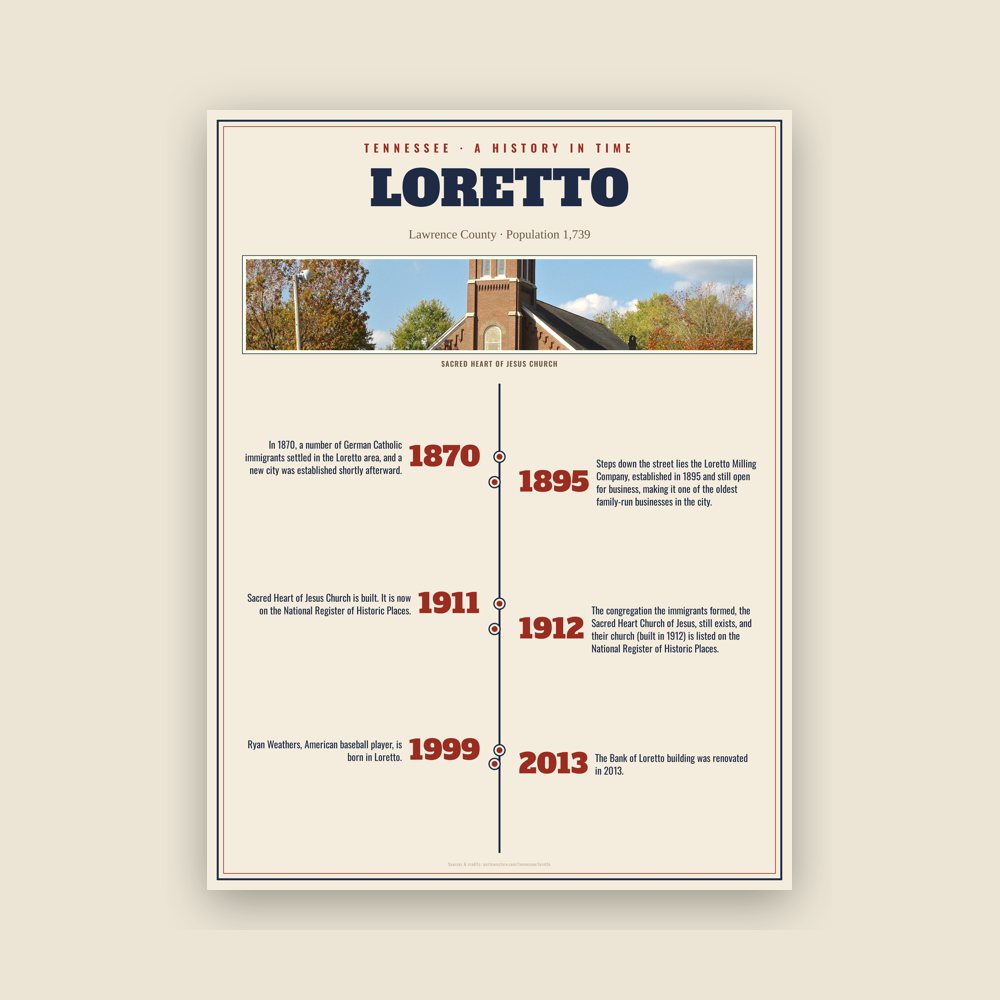
Loretto began as a stagecoach station known as "Glen Rock" in the early 19th century. In 1870, a number of German Catholic immigrants settled in the Loretto area, and a new city was established shortly afterward. Some sources suggest the name "Loretto" was inspired by the Loreto region in Italy, while others say the city was named for a sainted nun. The congregation the immigrants formed, the Sacred Heart Church of Jesus, still exists, and their church (built in 1912) is listed on the National Register of Historic Places. With the arrival of the railroad in the 1880s, Loretto thrived as a lumber town.
Other historic buildings include the Bank of Loretto building, which was built in the 1920s. The Bank of Loretto building was renovated in 2013. Next door to the old Loretto bank building was Weathers Store and Myers Store. They sold general merchandise to generations of families. Steps down the street lies the Loretto Milling Company, established in 1895 and still open for business, making it one of the oldest family-run businesses in the city. Other businesses located in this district included a doctor's office, cobbler's shop, cafes, hotels, and a funeral home. There was also a stage coach stop, and then later on a bus depot. The historic downtown area began to decline following the construction of U.S. Route 43 to the east of the district in the 1940s, when its commercial activity shifted to the new highway. Like many Southern towns, Loretto is applying for grants to help revive the older historic district.
Adapted (trimmed) from the Wikipedia article Loretto, Tennessee, revision 1374533133 by its contributors, licensed CC BY-SA 4.0.
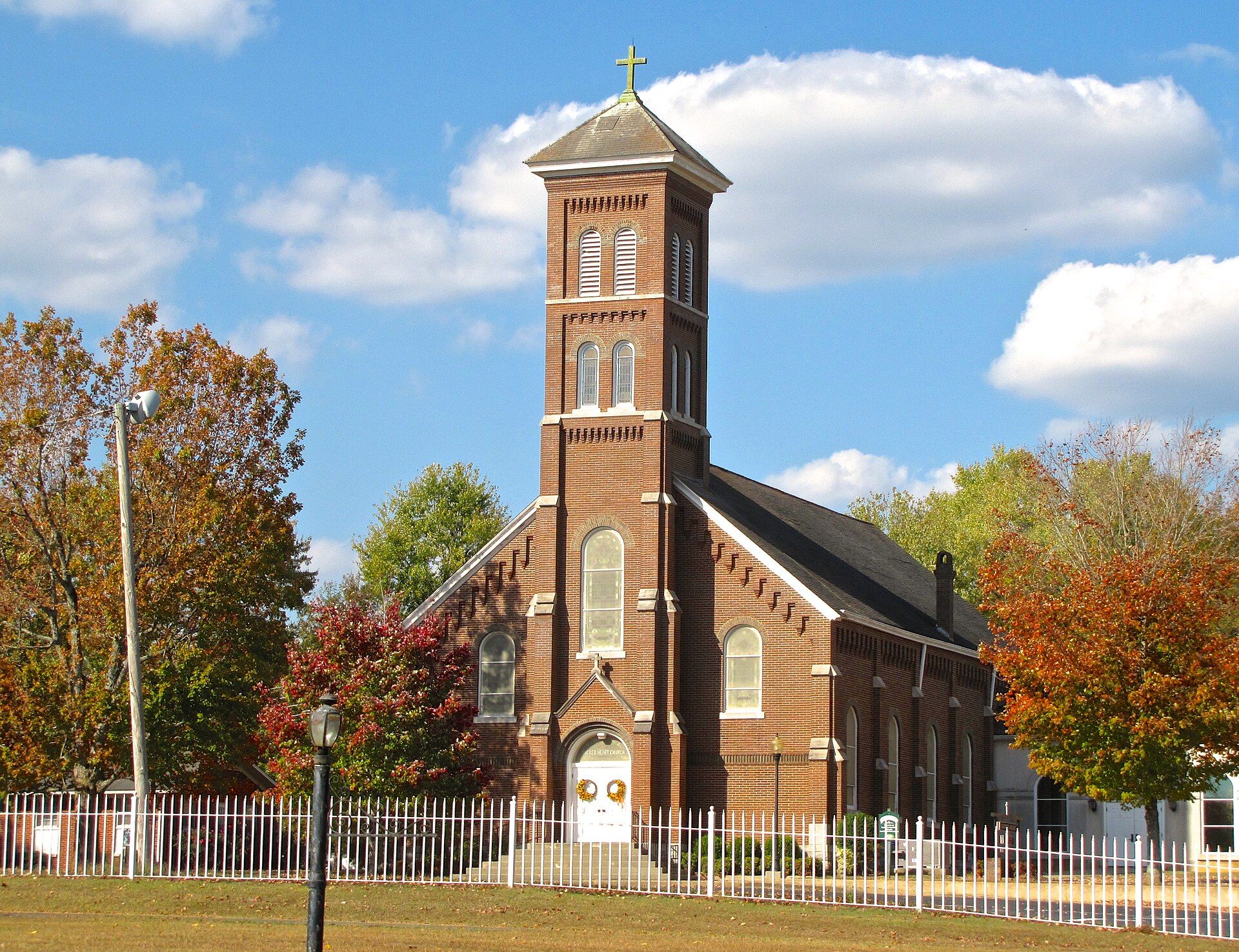

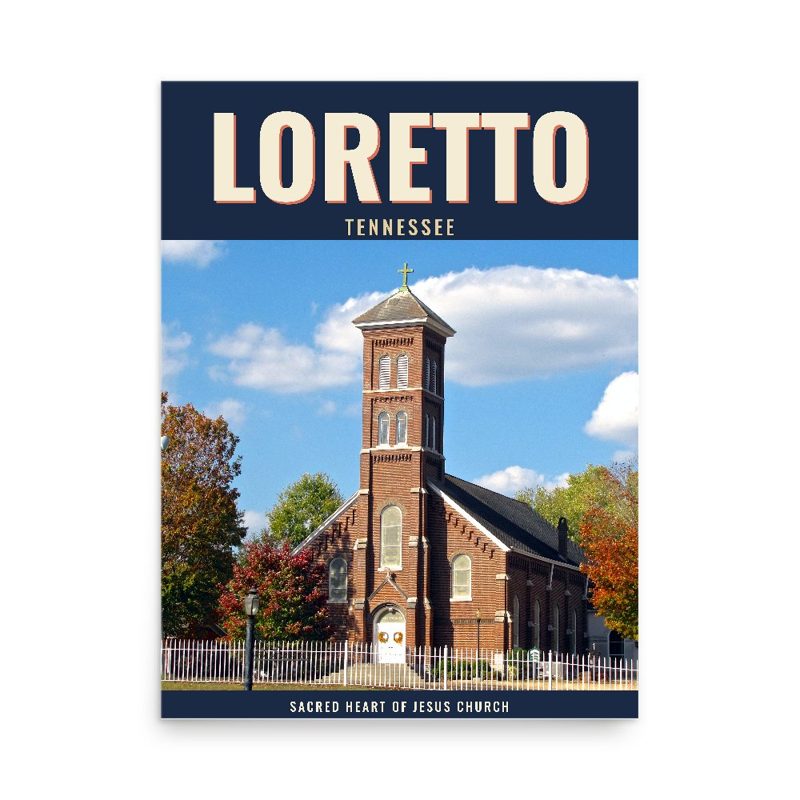
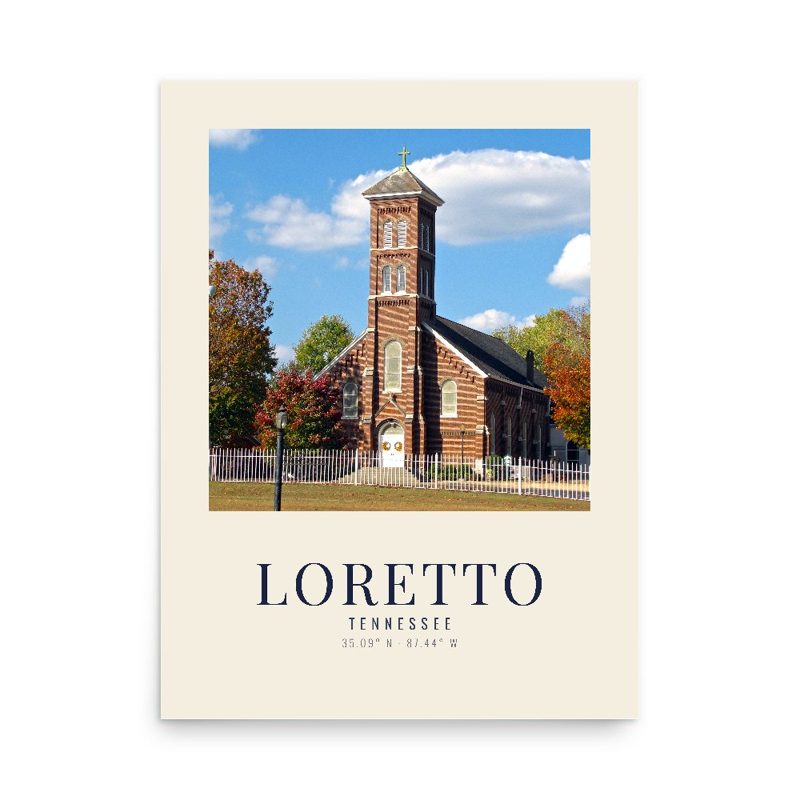
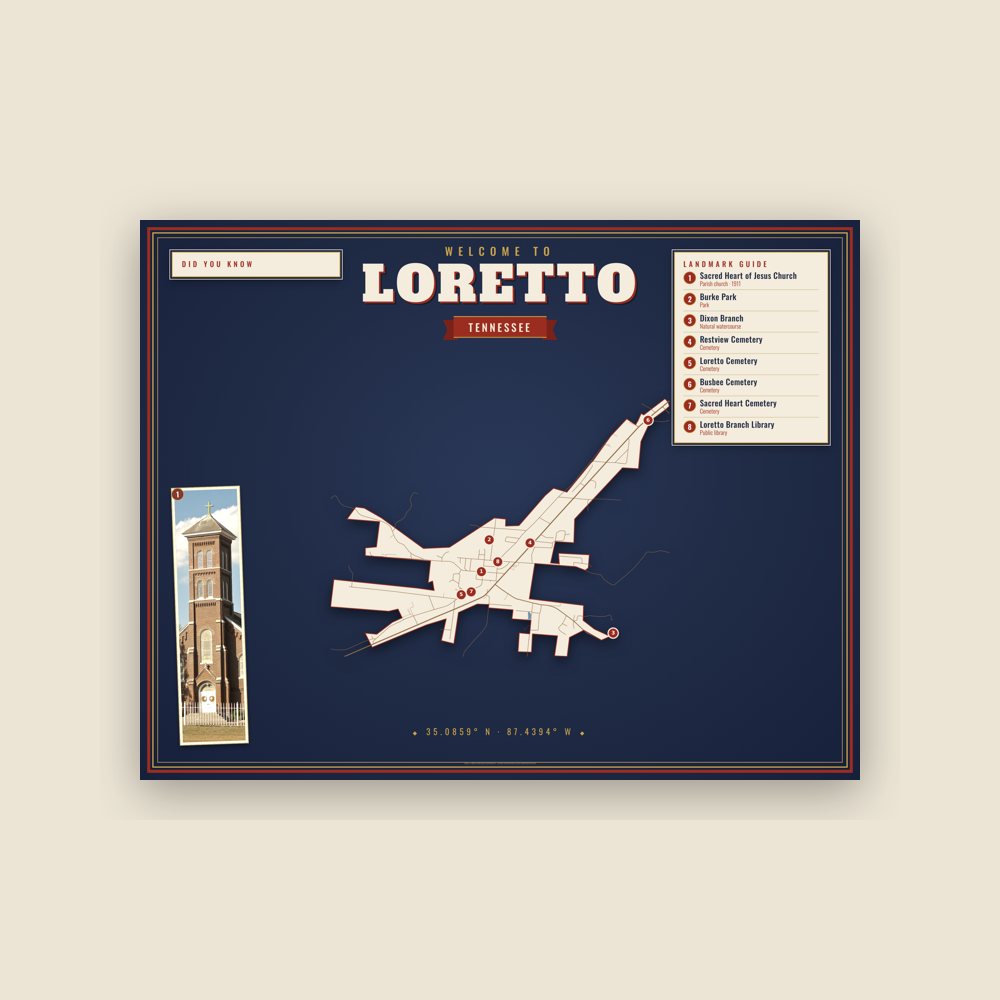








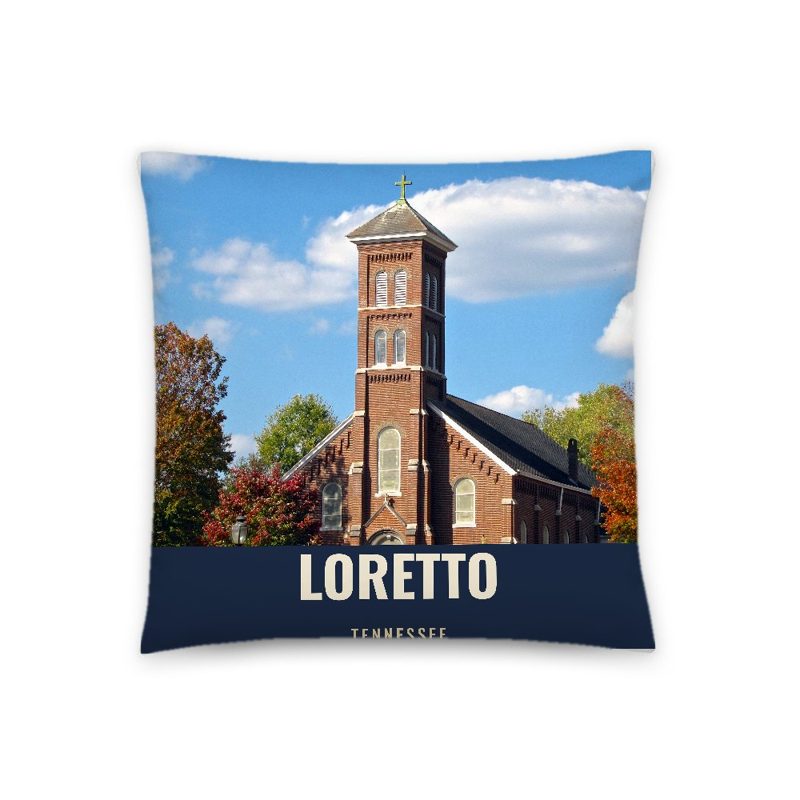



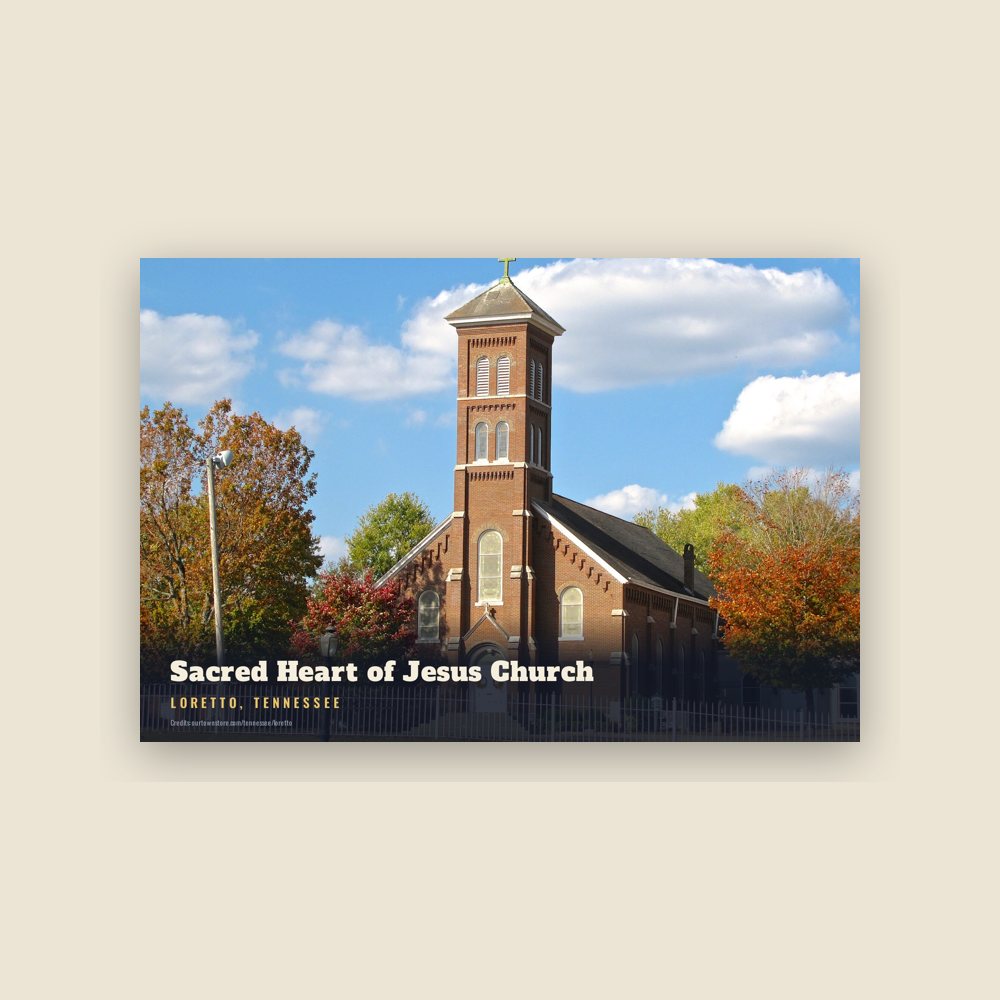
 Sacred Heart of Jesus Church
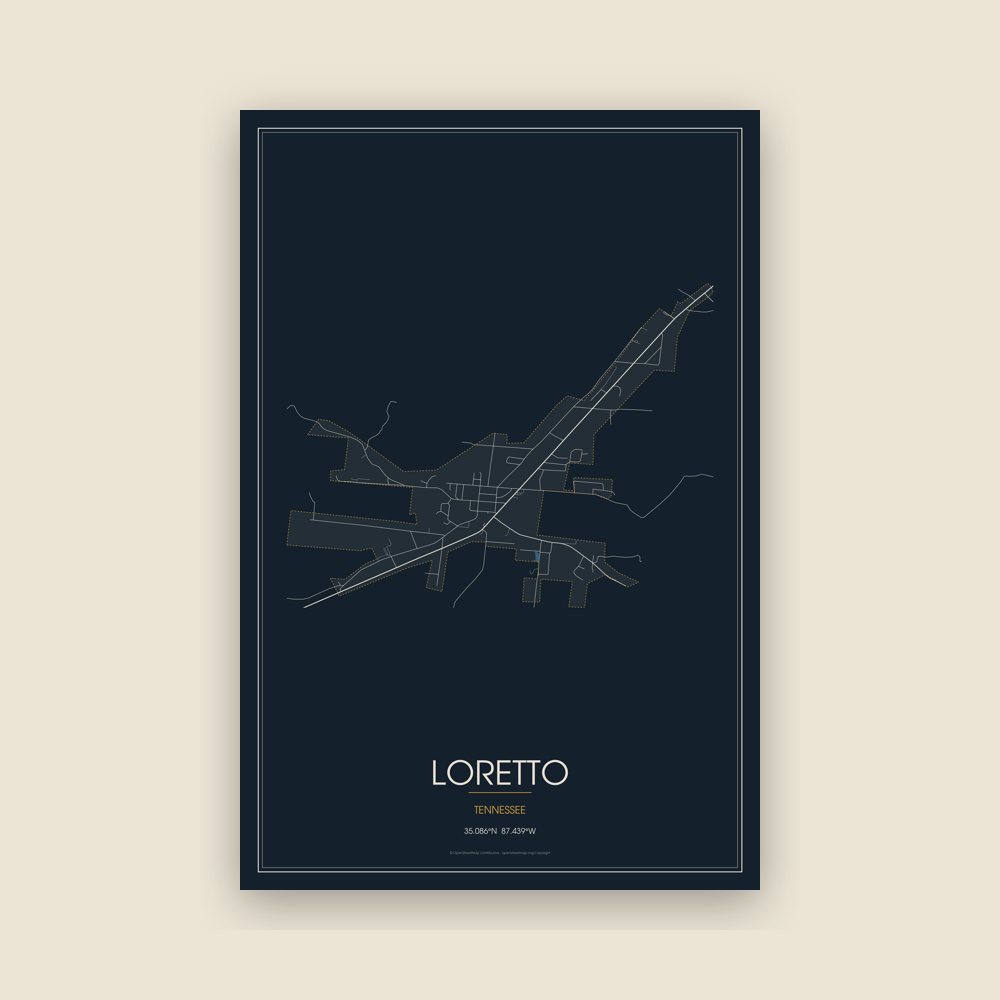
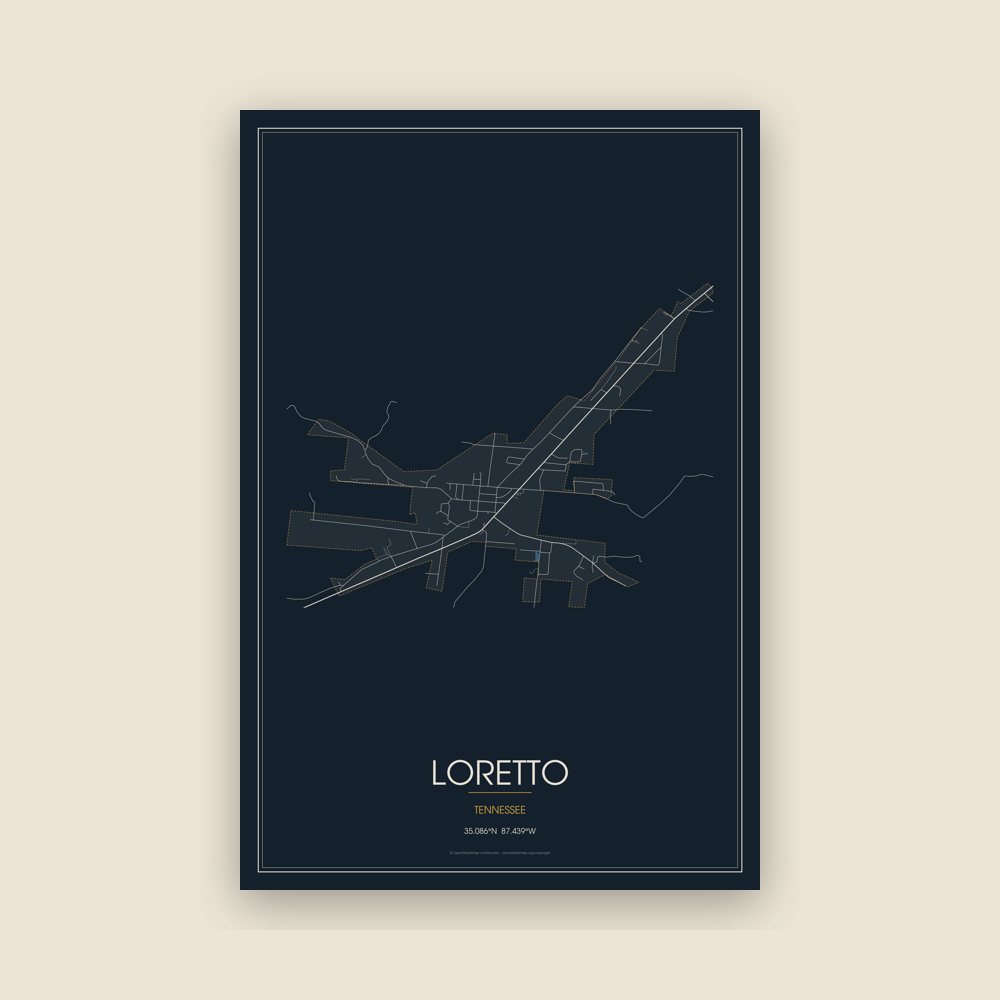
 A view of Loretto