A short history of Huron
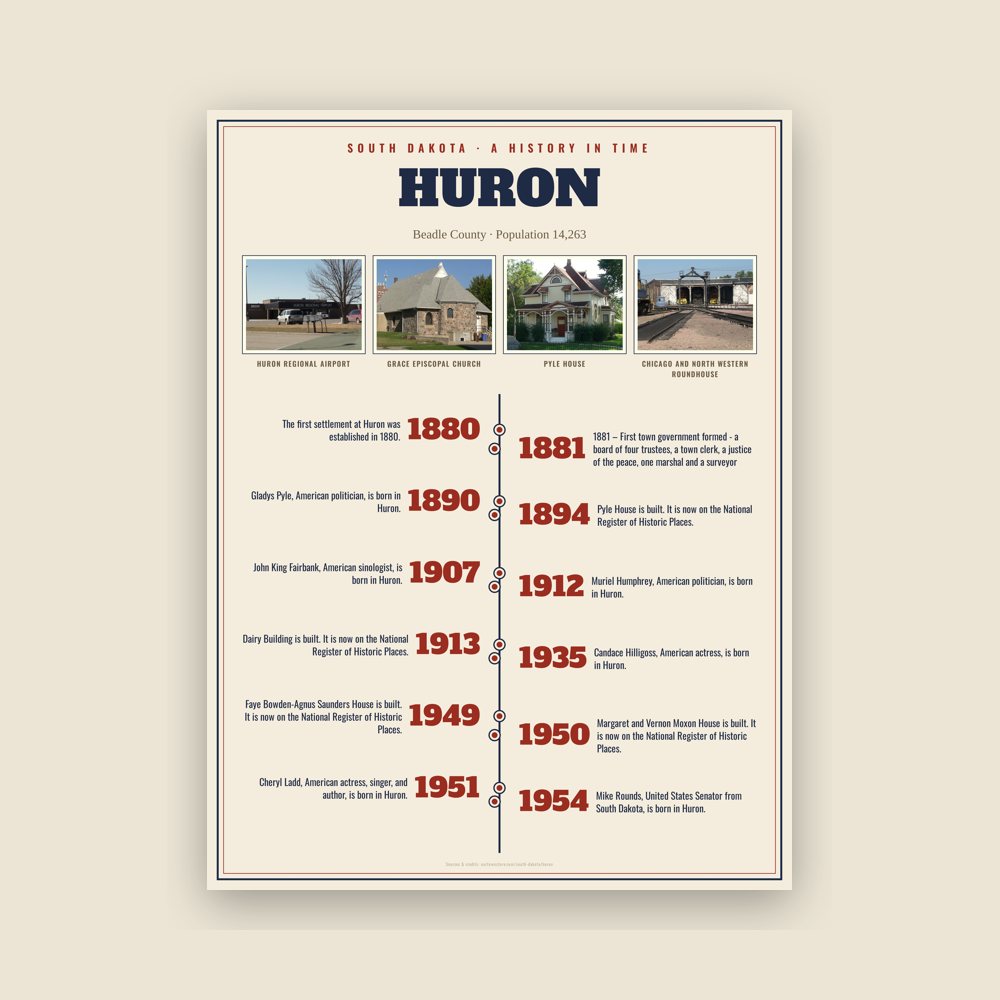
The first settlement at Huron was established in 1880. Huron is the site of the South Dakota State Fair and of a statue called the World's Largest Pheasant.
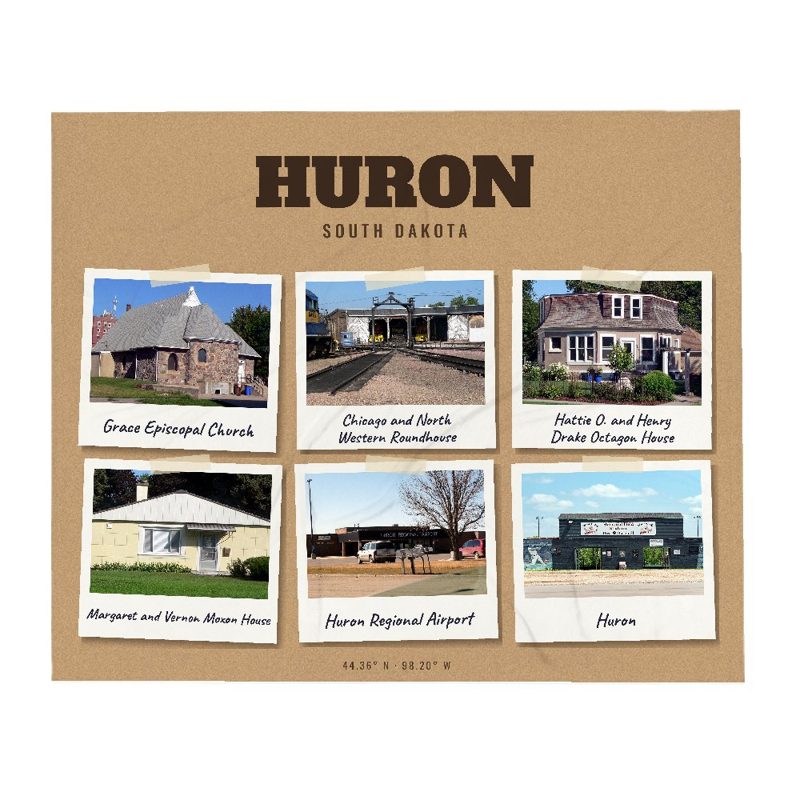
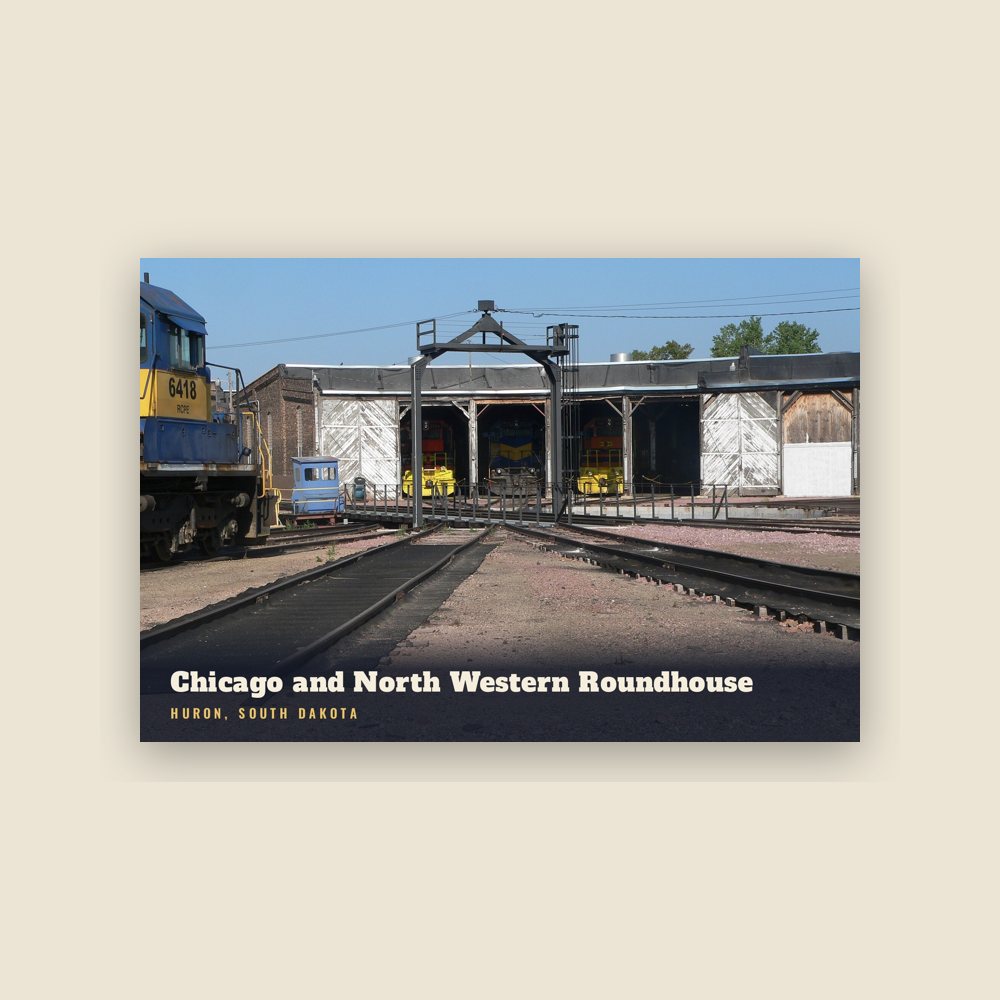
Huron was founded during railroad and land booms in the 1880s. The early history of the town is closely linked with the Chicago and Northwestern Railway. At the direction of Marvin Hughitt, general manager of the railroad, the west bank of the James River was selected as the railway's division headquarters. The company gained title to 880 acres (3.6 km2) of land at that location. Huron was named for the Huron Indians.
The original plat covered 11 blocks, and Huron's first settler was John Cain, a practical printer from Troy, New York. He learned in Chicago, from the railroad people, that they would have their chief town and operating headquarters at their James River crossing.
Beginning in 1880, Huron and Pierre vied to be selected as the state capital, until Pierre was chosen in 1904. Campbell Park and Winter Park in Huron were previously designated as properties for the capital grounds, and a city block of land between the parks with Victorian houses was originally slated for the capitol building.
Adapted (trimmed) from the Wikipedia article Huron, South Dakota, revision 1378136717 by its contributors, licensed CC BY-SA 4.0.