Since 1945
A short history of Hill City
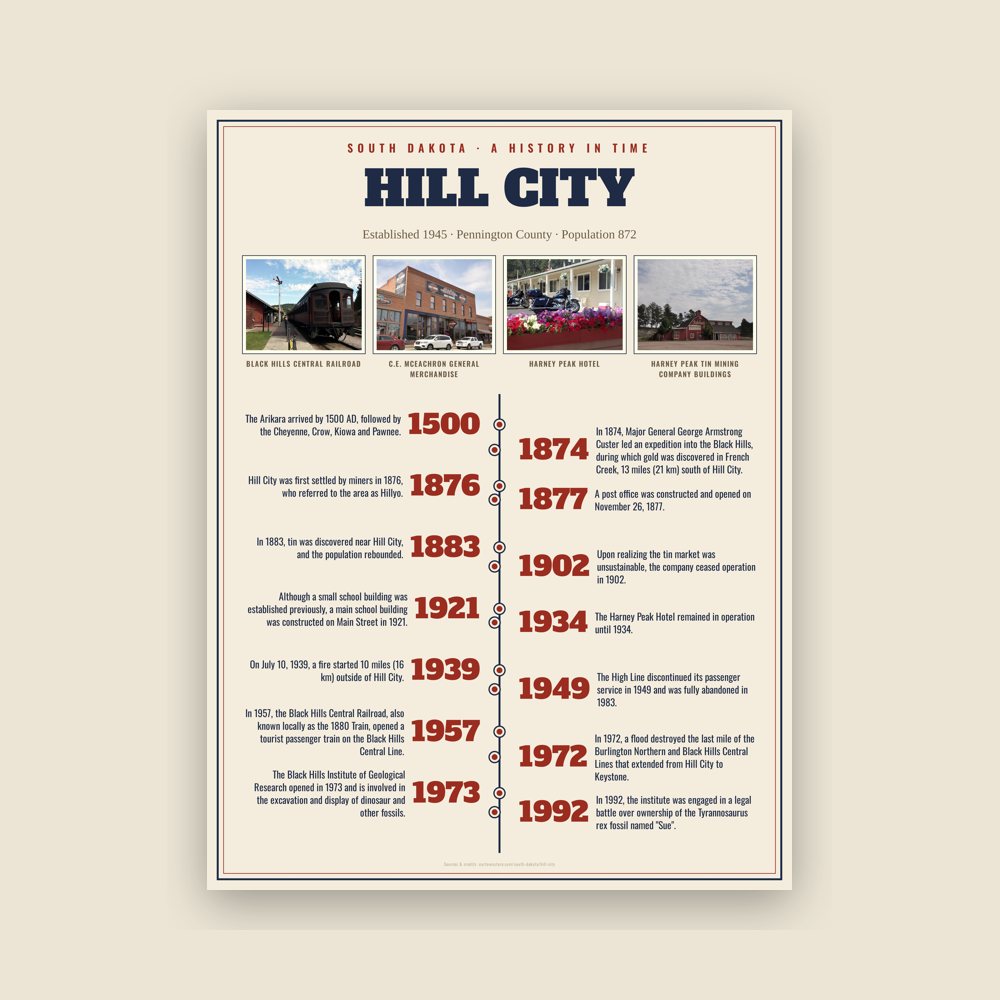
Human history in the area that became Hill City, and the greater Black Hills in particular, started by at least 7000 BC. The Arikara arrived by 1500 AD, followed by the Cheyenne, Crow, Kiowa and Pawnee. In the 19th century, the Lakota Sioux claimed the land, calling it Paha Sapa. In 1874, Major General George Armstrong Custer led an expedition into the Black Hills, during which gold was discovered in French Creek, 13 miles (21 km) south of Hill City. The discovery of gold opened the Black Hills, and the Hill City area, to mining. Hill City was first settled by miners in 1876, who referred to the area as Hillyo. This was the second American settlement in the Black Hills. Hill City is the oldest city still in existence in Pennington County. A post office was constructed and opened on November 26, 1877. The city almost became a ghost town when miners relocated to the northern Black Hills after the discovery of gold there.
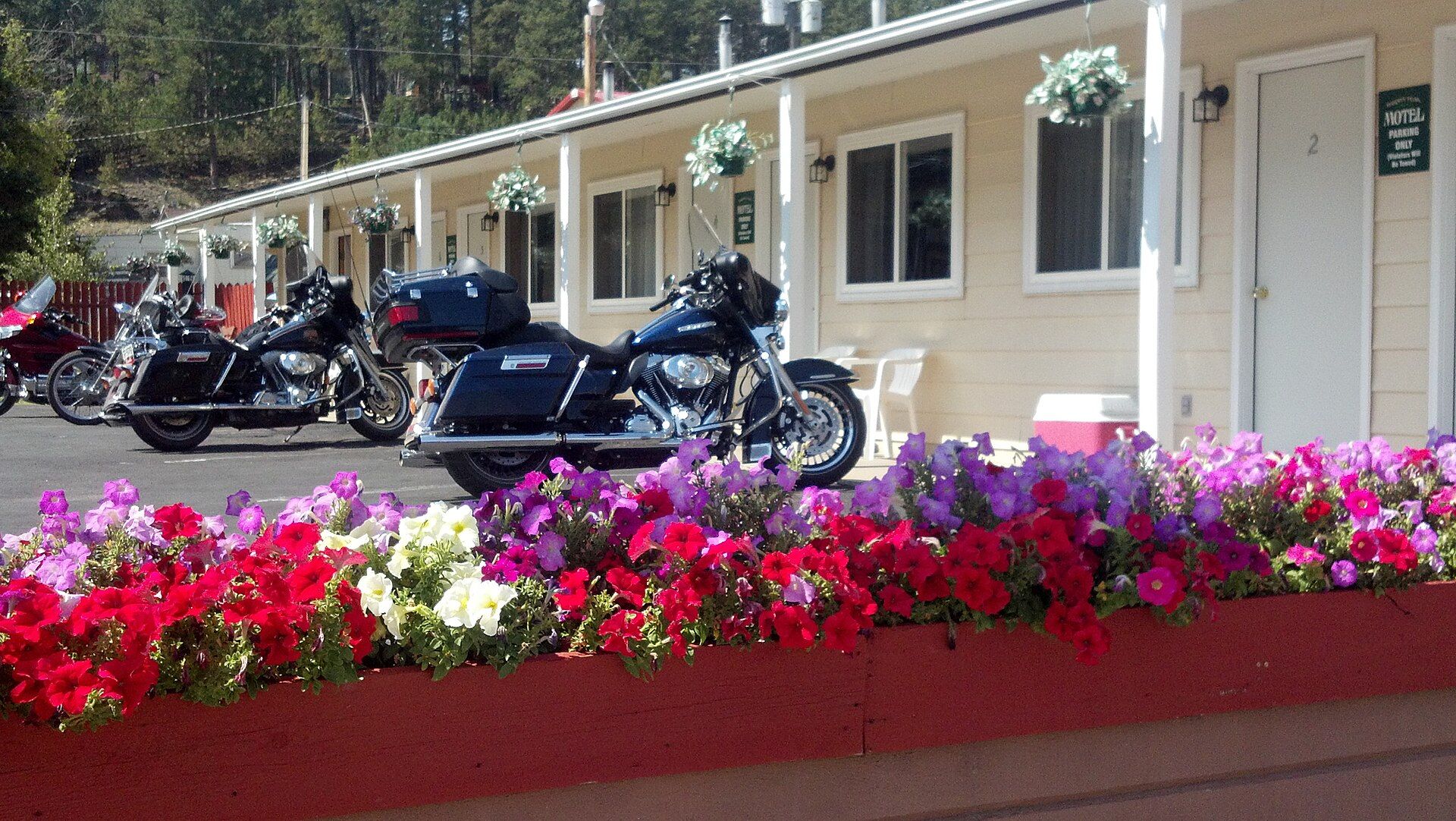
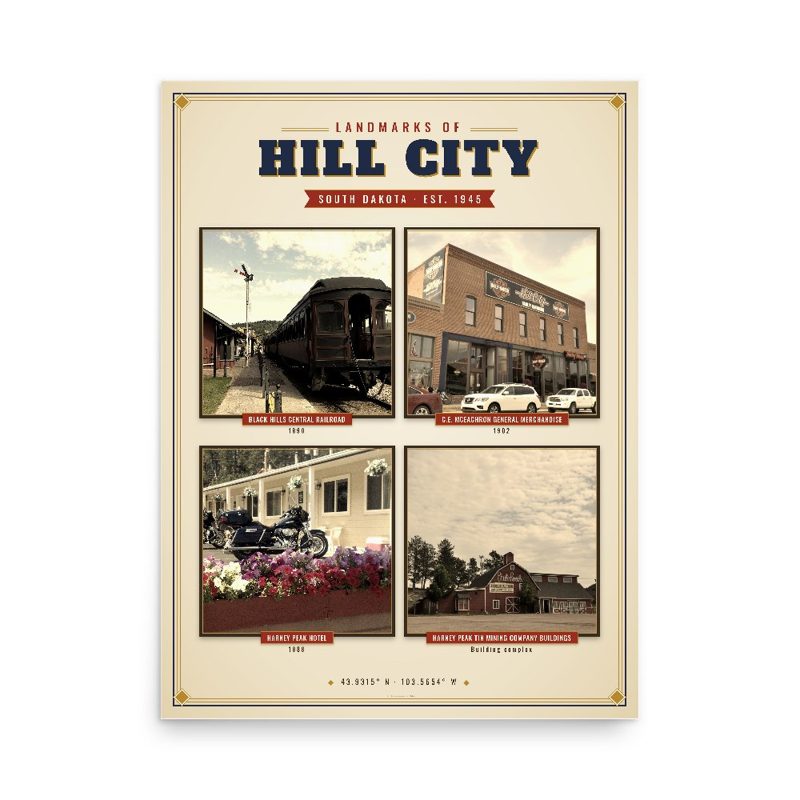
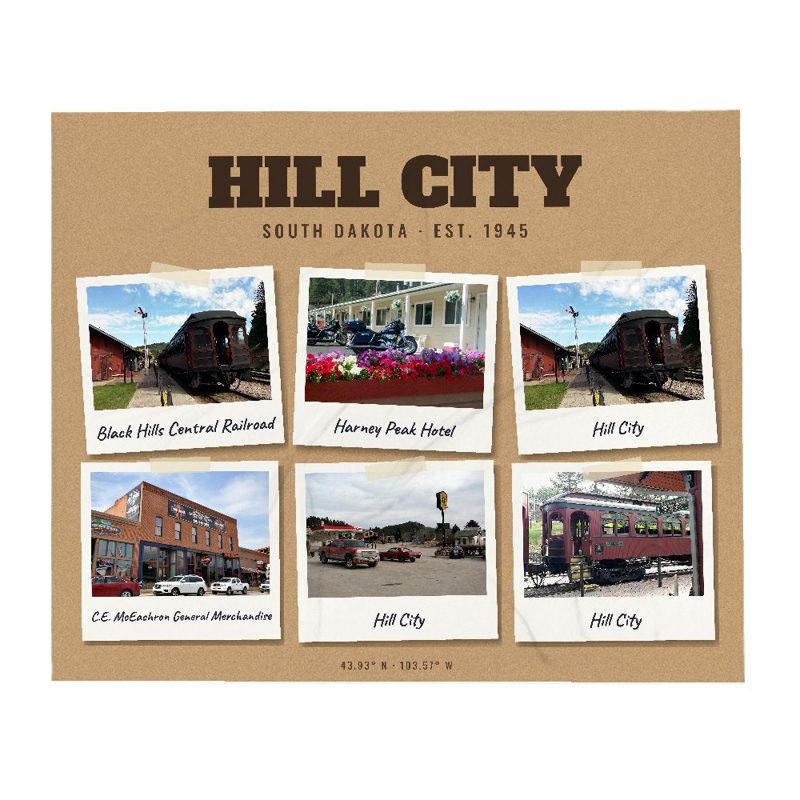
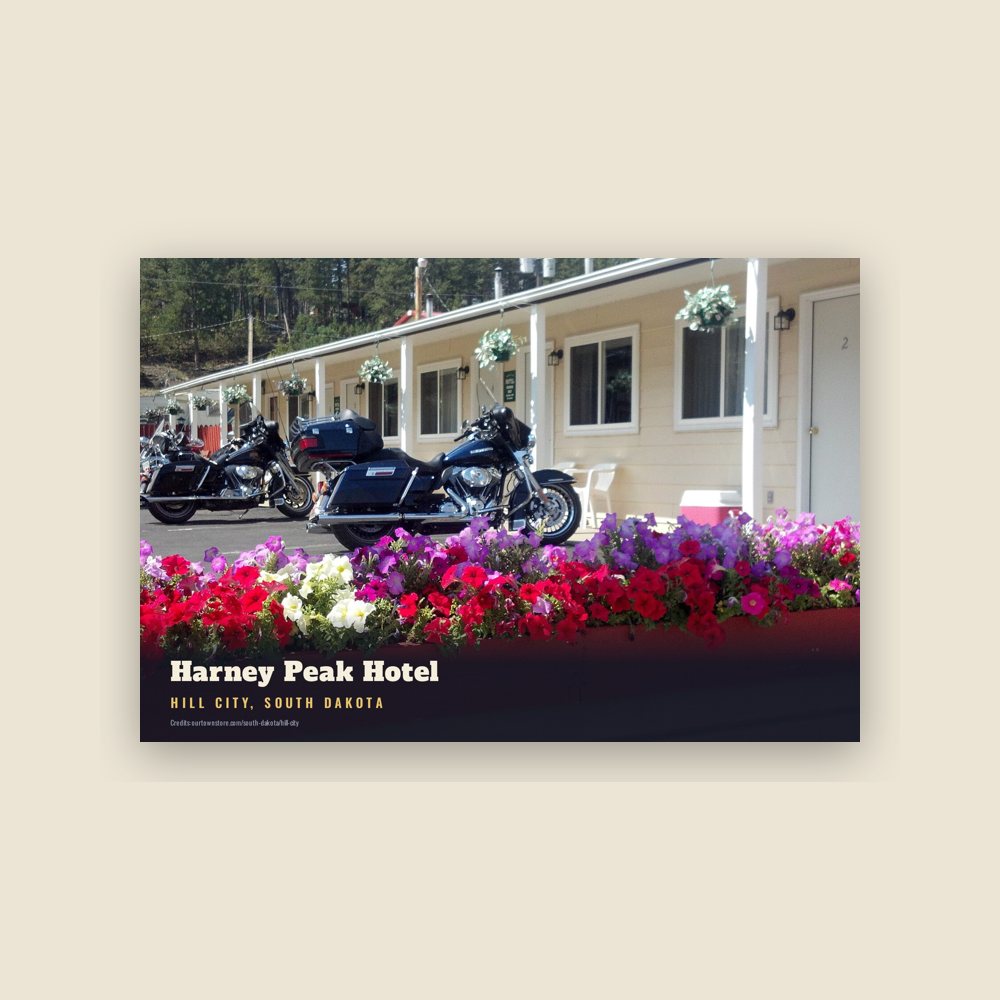
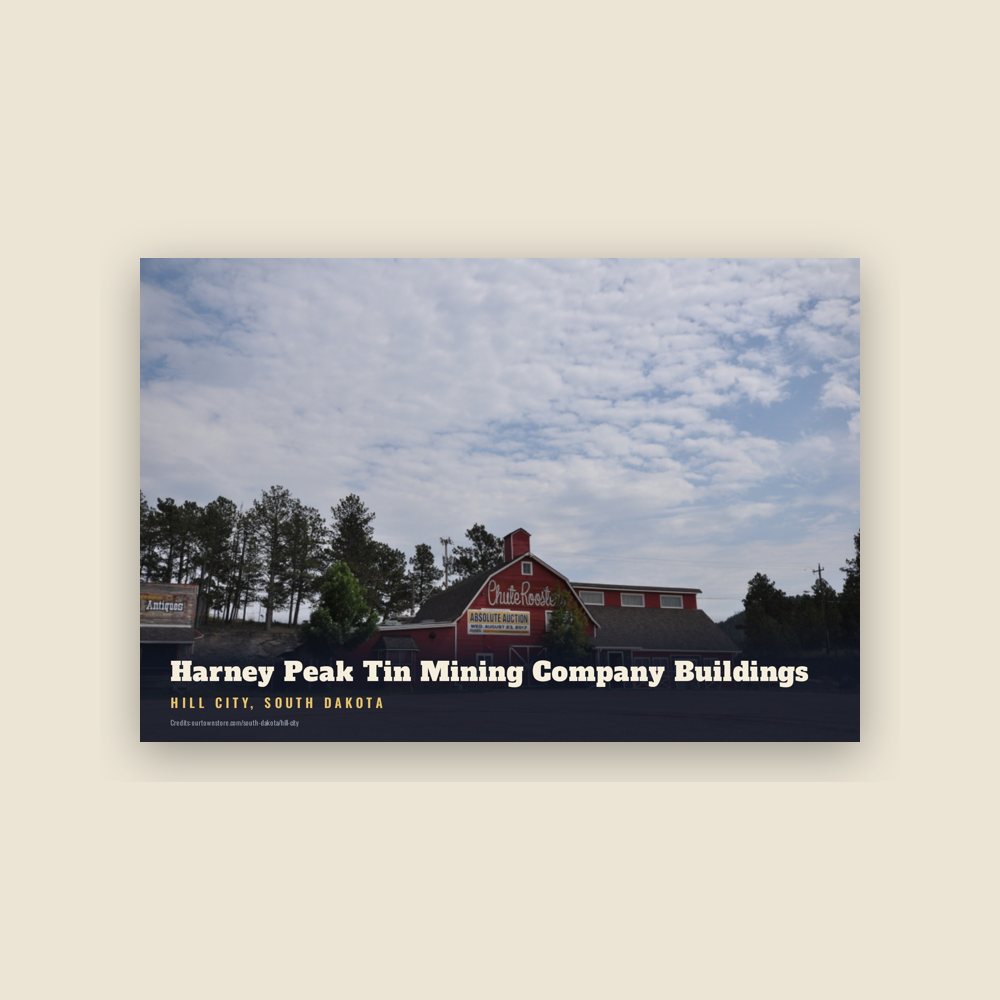
In 1883, tin was discovered near Hill City, and the population rebounded. The Harney Peak Tin Mining, Milling, and Manufacturing Company made its headquarters on Main Street. The company was backed by English financiers and bought 1,100 prospecting sites around the area. As mining grew, the city became known for its wild living and was once referred to as "a town with a church on each end and a mile of Hell in between." At one time, 15 saloons were located on Main Street. The company built the Harney Peak Hotel on Main Street to entertain its management and executives. Upon realizing the tin market was unsustainable, the company ceased operation in 1902.
Although a small school building was established previously, a main school building was constructed on Main Street in 1921. This school building was replaced in 2001 with the current high school. On July 10, 1939, a fire started 10 miles (16 km) outside of Hill City. Among those who battled the blaze was Hill City High School's entire basketball squad, as well as several teachers and administrators. The United States Forest Service named the school boys one of the best crews who fought the fire. The school team name thus became the Hill City Rangers and was privileged as the only school district in the United States allowed to use Smokey Bear as its official mascot. Hill City was incorporated on March 21, 1945. The Harney Peak Hotel remained in operation until 1934. The building has been restored and is the current location of the Alpine Inn. This building is on the List of Registered Historic Places in South Dakota. The Black Hills Institute of Geological Research opened in 1973 and is involved in the excavation and display of dinosaur and other fossils. In 1992, the institute was engaged in a legal battle over ownership of the Tyrannosaurus rex fossil named "Sue".
Read the full history
Railroad
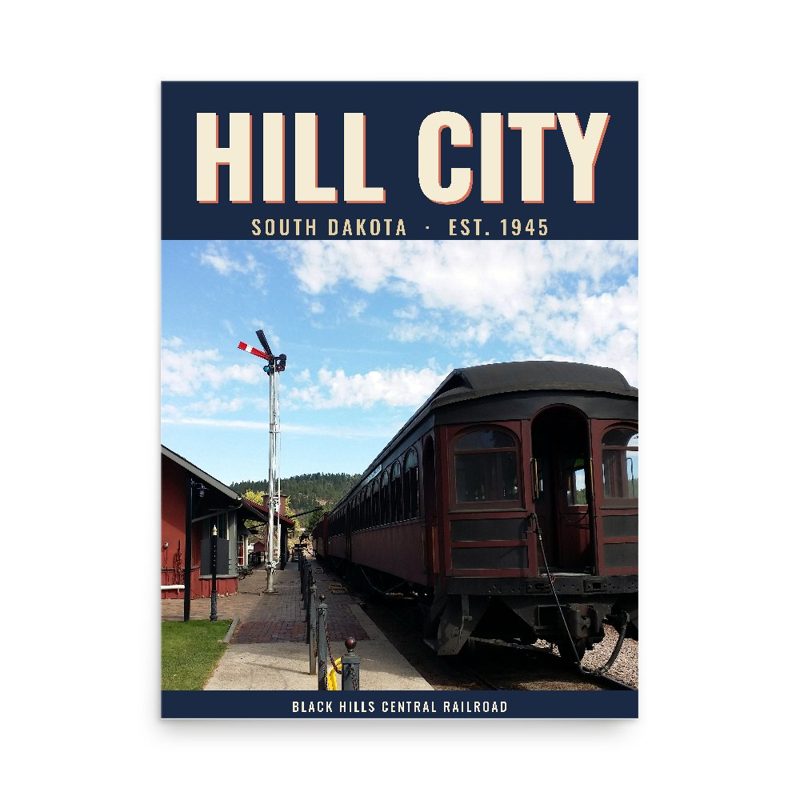
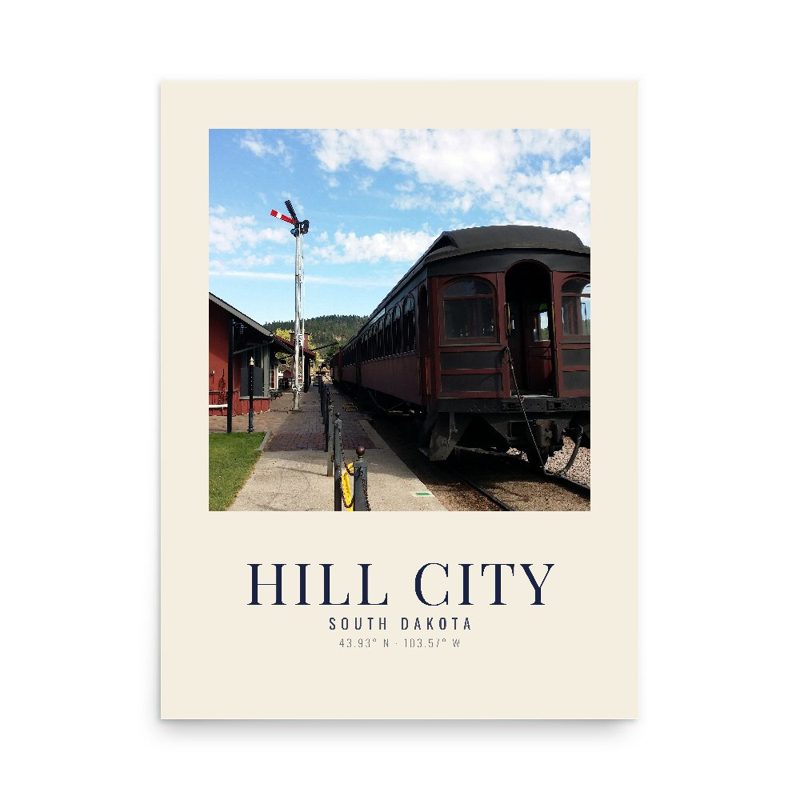
The main railroad lines that intersected Hill City were the Burlington Northern Line (also called the High Line), previously the Grand Island and Wyoming Central, operated by the Chicago, Burlington and Quincy Railroad Company; and the Black Hills Central Line, a spur that extended from Hill City to Keystone. The High Line extended from Edgemont north through Hill City and terminated in Deadwood. This line reached Hill City in 1893, and the Black Hills Central Line was extended and reached Keystone on January 20, 1900. Narrow gauge trolley cars were operated at 45-minute intervals during the day on the High Line. The High Line discontinued its passenger service in 1949 and was fully abandoned in 1983. It is now the George S. Mickelson Trail, after being converted to a bike trail during the 1990s.
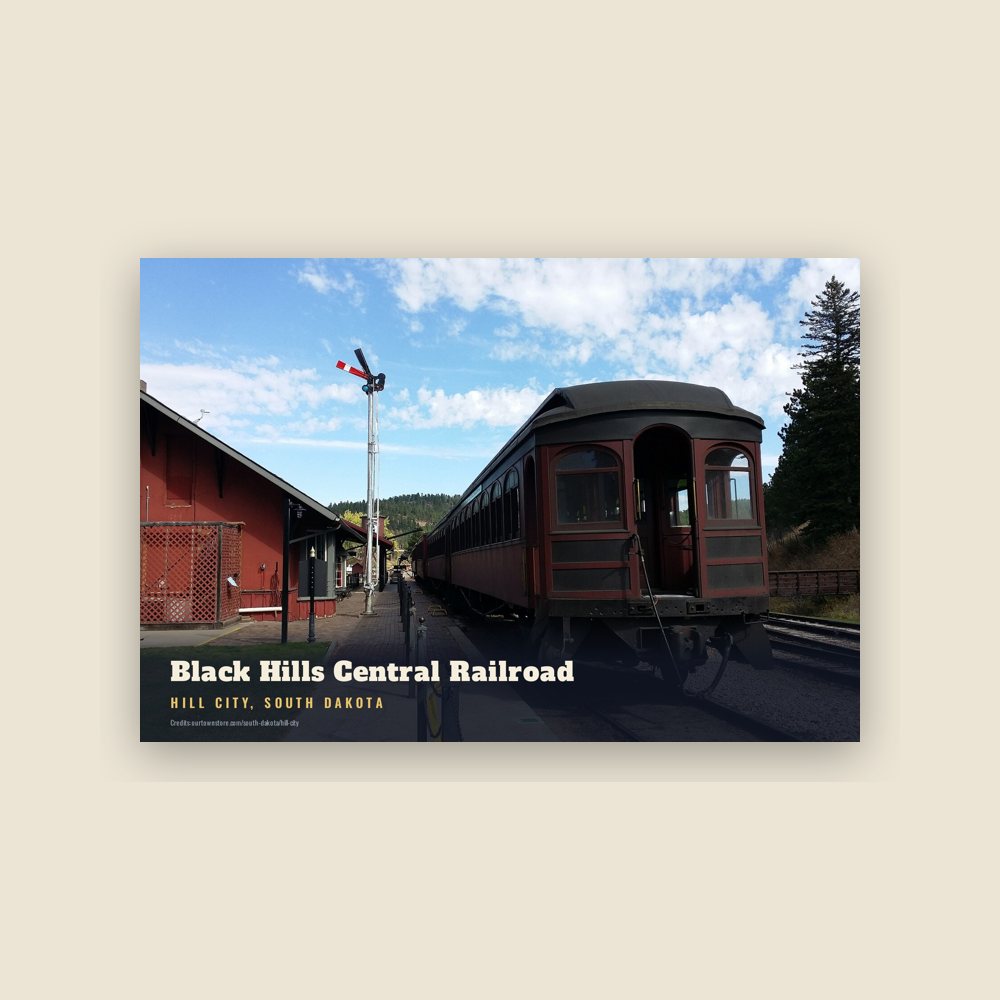
In 1957, the Black Hills Central Railroad, also known locally as the 1880 Train, opened a tourist passenger train on the Black Hills Central Line. In 1972, a flood destroyed the last mile of the Burlington Northern and Black Hills Central Lines that extended from Hill City to Keystone. This final mile was restored in 2001. The Black Hills Central Railroad restores era-style locomotives and train cars. It has been featured on television shows such as the Gunsmoke episode "Snow Train", General Hospital, and the TNT mini-series Into the West. The railroad also made an appearance in the movie Orphan Train.
Sue controversy
On August 12, 1990, Sue Hendrickson, a volunteer for the Black Hills Institute of Geological Research discovered the fossil of what would become the most complete skeleton of a Tyrannosaurus rex ever discovered. The fossil was named "Sue" after the woman who discovered it. After discovery, excavation, and transport to the institute's facilities in Hill City, controversy arose as to who the rightful owners of the fossil were. The parties in dispute were the land owner, Maurice Williams; the tribe, and thus the federal government; and the Black Hills Institute. On May 12, 1992, FBI agents seized Sue from the institute over the course of three days. The fossil was shipped to South Dakota School of Mines and Technology. Through the ongoing court battle, it was finally decided that Maurice Williams was the owner of the fossil. The federal government later brought a 39-count, 153-charge indictment against the institute and several of its members, which was related to this case and other fossils. This case turned into the longest criminal trial in South Dakota state history. Peter Larson, the president of the institute, was convicted on two counts of customs violations, for which he served two years in federal prison. Sue was finally auctioned off by Sotheby's auction house and sold by Maurice Williams to the Field Museum in Chicago, Illinois for $8.36 million.
Adapted (trimmed) from the Wikipedia article Hill City, South Dakota, revision 1377789105 by its contributors, licensed CC BY-SA 4.0.