The area that would become Pacolet was seldom occupied for thousands of years, only occasionally passed through by American Indians. The local Catawba and Cherokee would almost exclusively use the land as hunting grounds, with the exception of soapstone quarries around the Pacolet River established approximately 3,000 to 5,000 years ago. The soapstone mined in the area would be used to make storage vessels and tools. It is believed that one of the quarries in the Pacolet area was the largest American Indian soapstone quarry in the United States.
Read the full history
Early European Settlement
In 1567, the first European explorers passed through the Pacolet area with the arrival of Spanish explorer Juan Pardo and his small party of explorers. No further European explorers or settlers would come to the area until around the mid-1700s. It was at this time that many second- and third-generation Scotch-Irish Americans moved from Pennsylvania, Virginia, and North Carolina to the Upcountry of South Carolina. They first settled largely around Grindal Shoals, named after John Grindal, who received a charter for the land in 1743. Eventually, settlements would begin at Easterwood Ford, Hurricane Shoals, and Trough Shoals.
During the American Revolutionary War, General Daniel Morgan of the Continental Army would establish a camp at Grindal Shoals in December 1780 in preparation for the upcoming Battle of Cowpens, breaking camp on January 15, 1781. British Army Colonel Banastre Tarleton would cross the Pacolet River at Easterwood Ford, where they would be defeated in one of the most crucial battles of the Revolution.
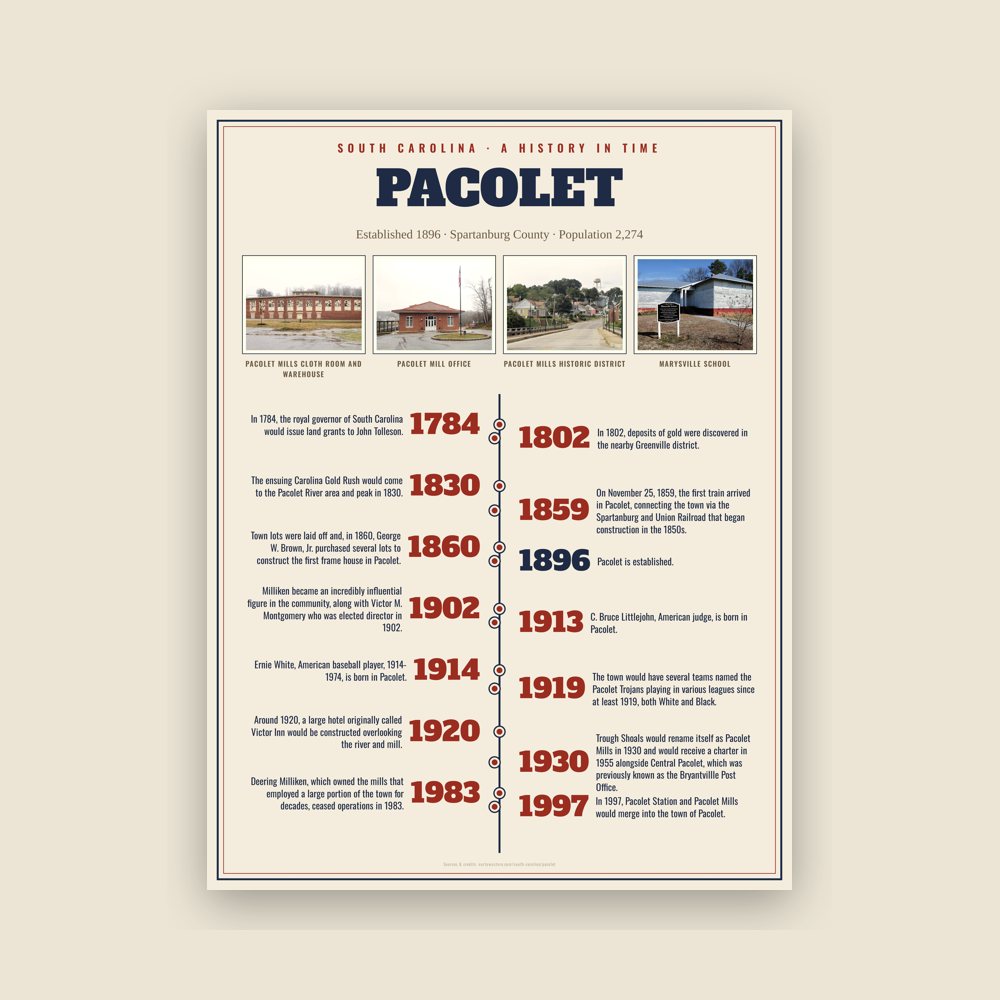
In 1784, the royal governor of South Carolina would issue land grants to John Tolleson. Tolleson built a tavern on a stagecoach road that ran from Columbia to Spartanburg in the area that would become Pacolet Station. He would later open a general store which served as the voting precinct of the area until 1816. Tolleson's bar would cause the community to gain a reputation for drinking, fighting, and horse racing. It is possible that the prevalence of cockfighting earned the area the name Buzzard's Roost.
Nineteenth Century
In 1802, deposits of gold were discovered in the nearby Greenville district. The ensuing Carolina Gold Rush would come to the Pacolet River area and peak in 1830. Various mines were constructed, and equipment for mining was visible in Pacolet until the 1950s.
On November 25, 1859, the first train arrived in Pacolet, connecting the town via the Spartanburg and Union Railroad that began construction in the 1850s. Town lots were laid off and, in 1860, George W. Brown, Jr. purchased several lots to construct the first frame house in Pacolet. More lots would be sold for the construction of more houses, stores, and churches. During the American Civil War, many Confederate soldiers from Pacolet would be assigned to Company M of the 1st Regiment of Palmetto Sharpshooters, nicknamed the "Pacolet Guards." They would be present in many battles across the Eastern theater, including General Robert E. Lee's surrender at Appomattox Courthouse. On May 6, 1896, Pacolet Station became incorporated.
Like most of the Southeastern United States, Pacolet and the surrounding area was economically dominated by the agricultural industry, particularly cotton. According to The History of Pacolet, “In 1881, the firm of Walker and Fleming bought several hundred acres of land on both sides of the Pacolet River at Trough Shoals and the next year Pacolet Manufacturing was born. Pacolet Mill was a unit of Pacolet Manufacturing Company from 1882 until Pacolet Manufacturing Company was merged with other textile corporations to form Pacolet Industries, Inc. in 1962.” Seth Milliken, a senior member of Deering Milliken & Company from New York, became director of Pacolet Manufacturing Company in 1899. The owners of the mill would construct housing, stores, and other services for the employees of their mills, turning Pacolet into a mill town. Milliken became an incredibly influential figure in the community, along with Victor M. Montgomery who was elected director in 1902.
Twentieth Century
It would be under their guidance that Pacolet and its mills would be rebuilt after, on June 6, 1903, a storm in the mountains north of Spartanburg caused the Pacolet River to overflow and flood the town and mills. Mills No. 1 and 2 were completely swept by the river, with extreme damage to No. 3. No flood insurance was available at the time, leading to a major financial loss for Pacolet Manufacturing Company. Montgomery, who was inexperienced in finance, traveled to New York to ask the advice of Milliken who guided him through the recovery process.
Trough Shoals would rename itself as Pacolet Mills in 1930 and would receive a charter in 1955 alongside Central Pacolet, which was previously known as the Bryantvillle Post Office. By the 1940s and 50s, the town had its own skating rink, pool hall, a company store, drug store, swimming pool, and movie theater. In the early half of the twentieth century, textile baseball became a popular pastime in the town. The town would have several teams named the Pacolet Trojans playing in various leagues since at least 1919, both White and Black. Teams often played at the community ballpark. A commemorative statue honoring the Trojans would later be erected and placed beside the bridge in Pacolet Mills, becoming a roadside attraction and symbol of Pacolet. Around 1920, a large hotel originally called Victor Inn would be constructed overlooking the river and mill. It was this building that gave the hill its name Hotel Hill. It would be demolished in the 1960s.
Present
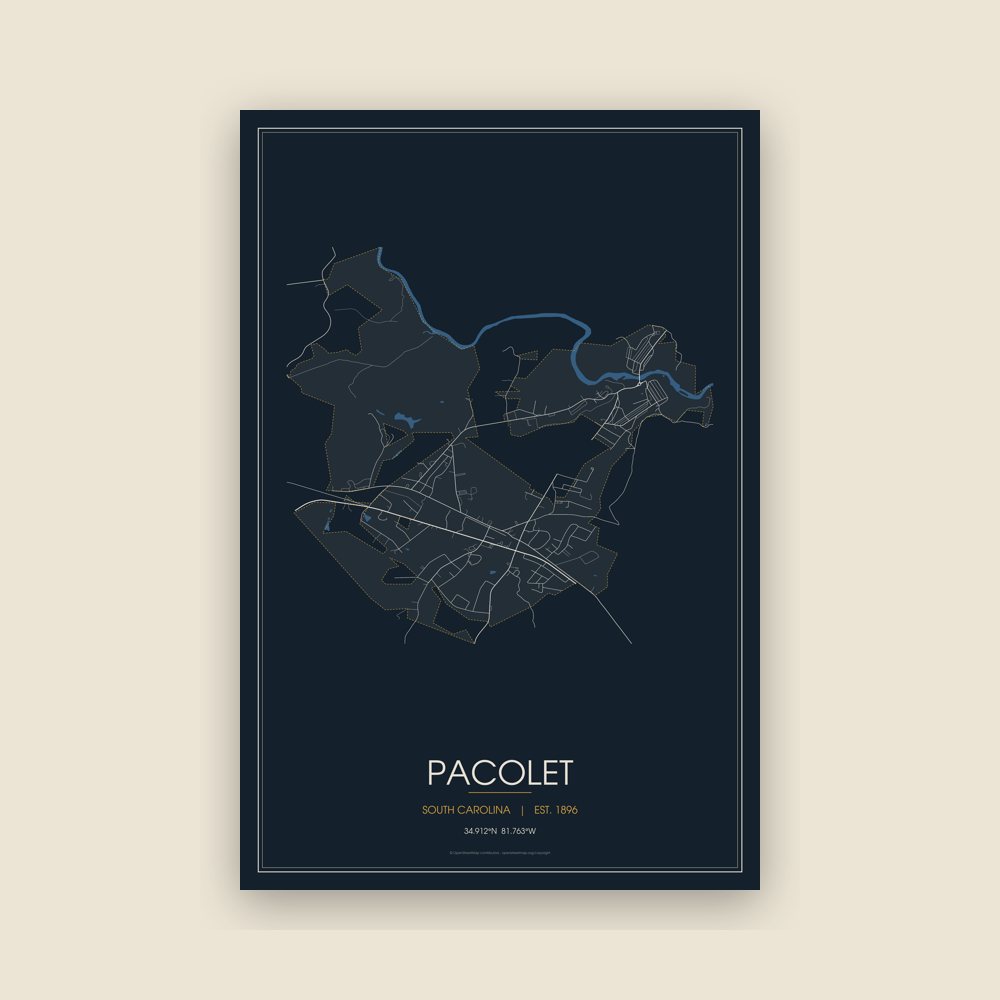
Deering Milliken, which owned the mills that employed a large portion of the town for decades, ceased operations in 1983. In 1997, Pacolet Station and Pacolet Mills would merge into the town of Pacolet. Alongside Central Pacolet (which is its own legally distinct town), the three incorporated towns which made up the Three Pacolets are now known as Pacolet.
Historic sites
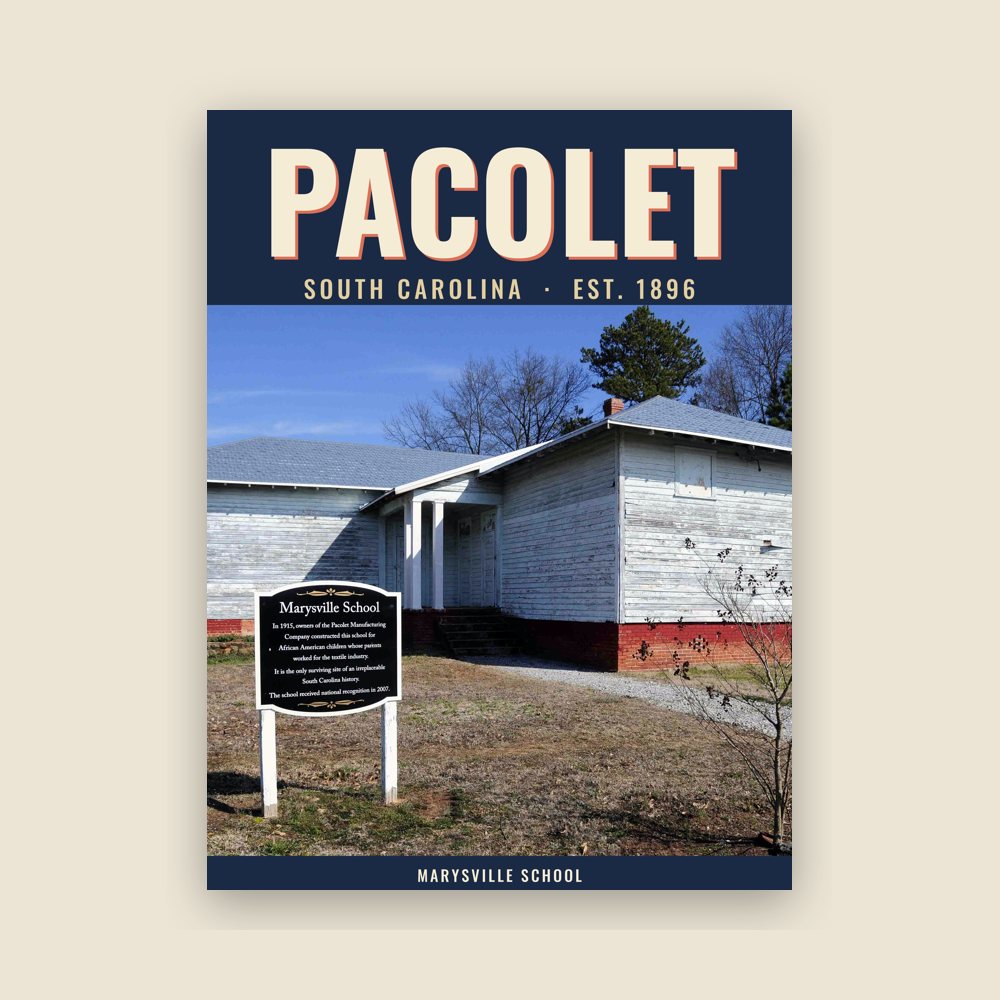
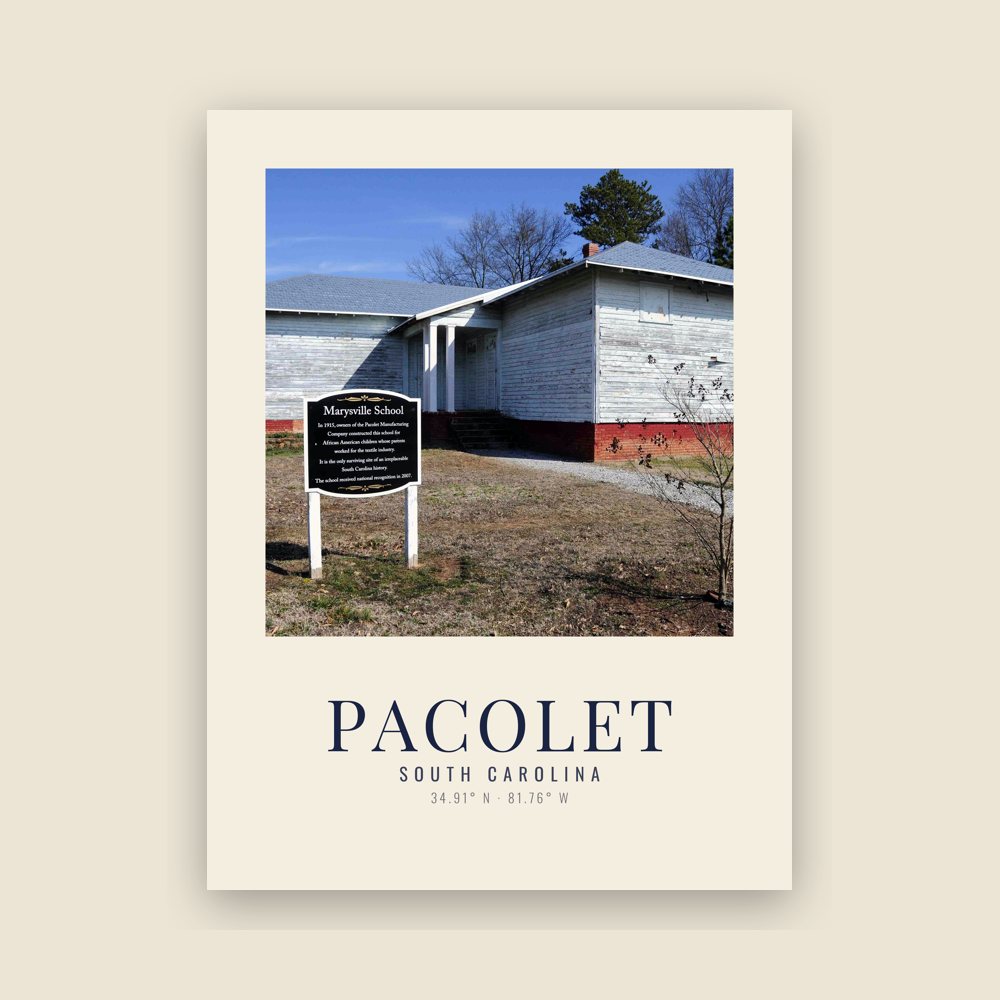
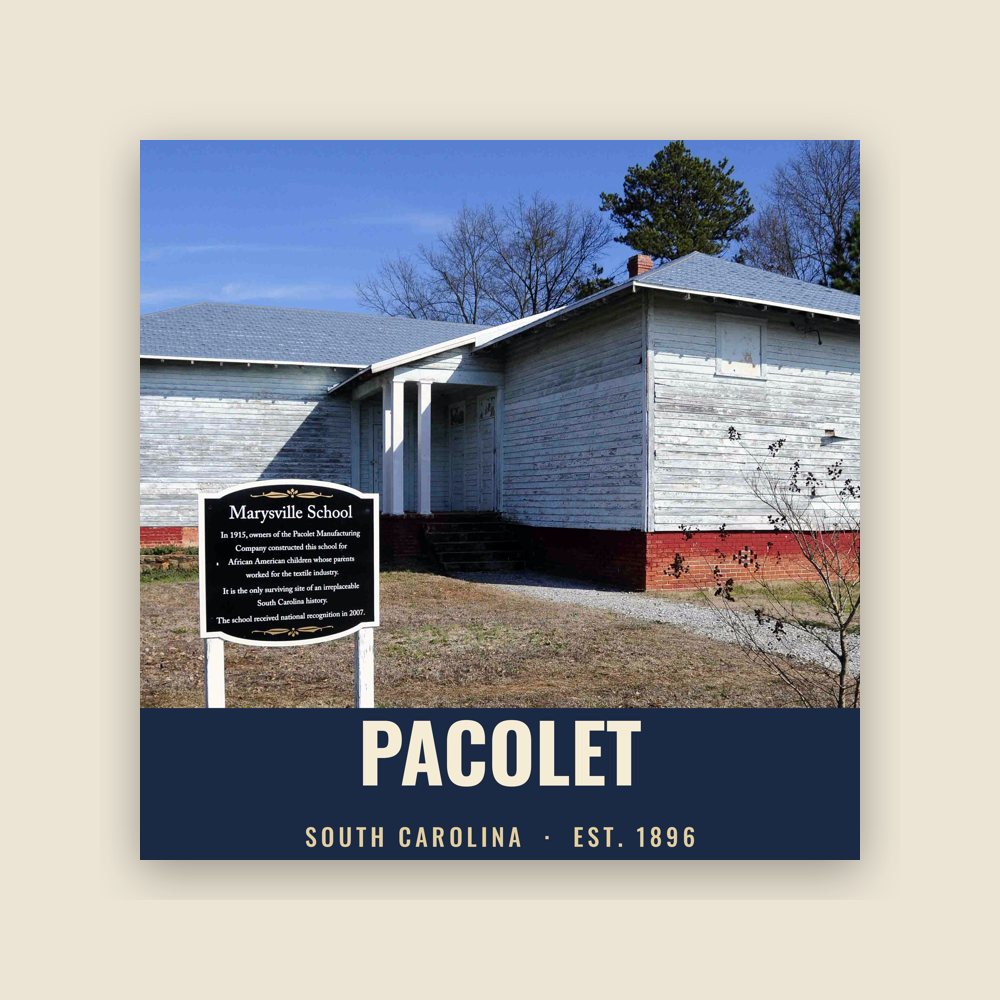
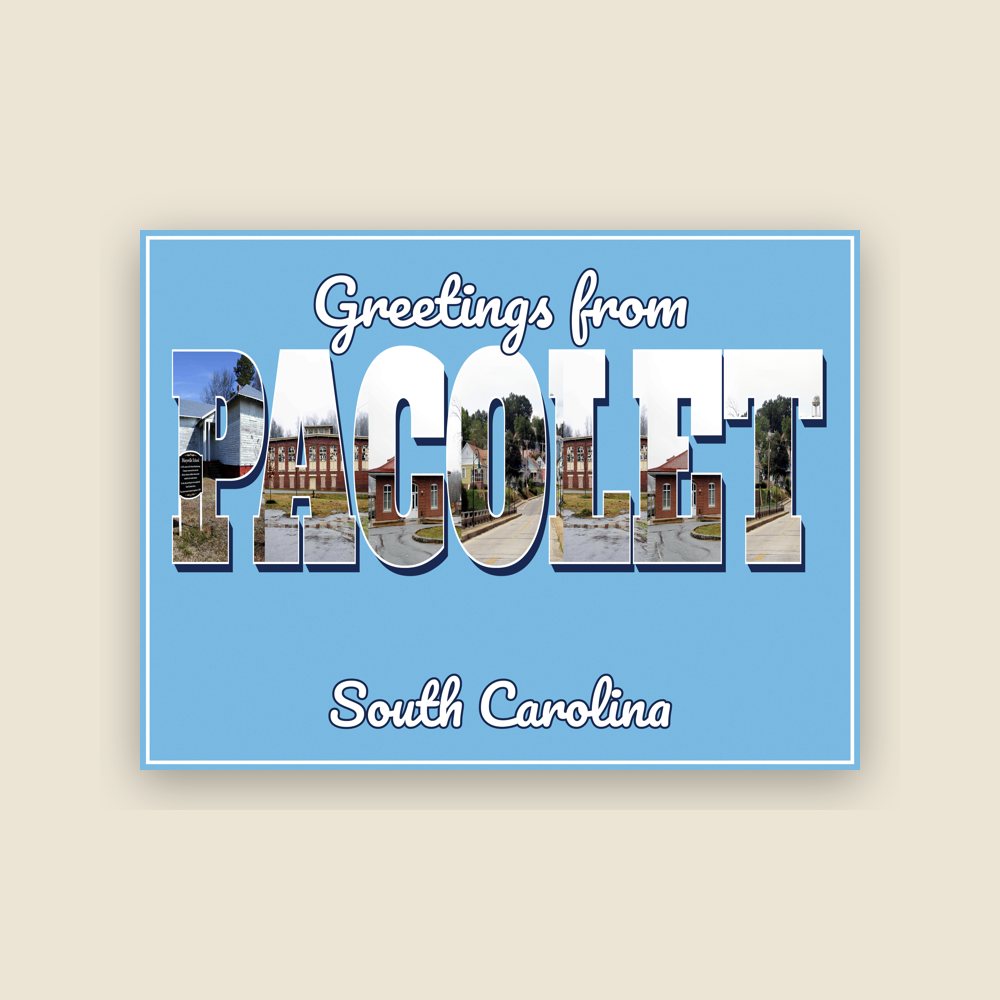
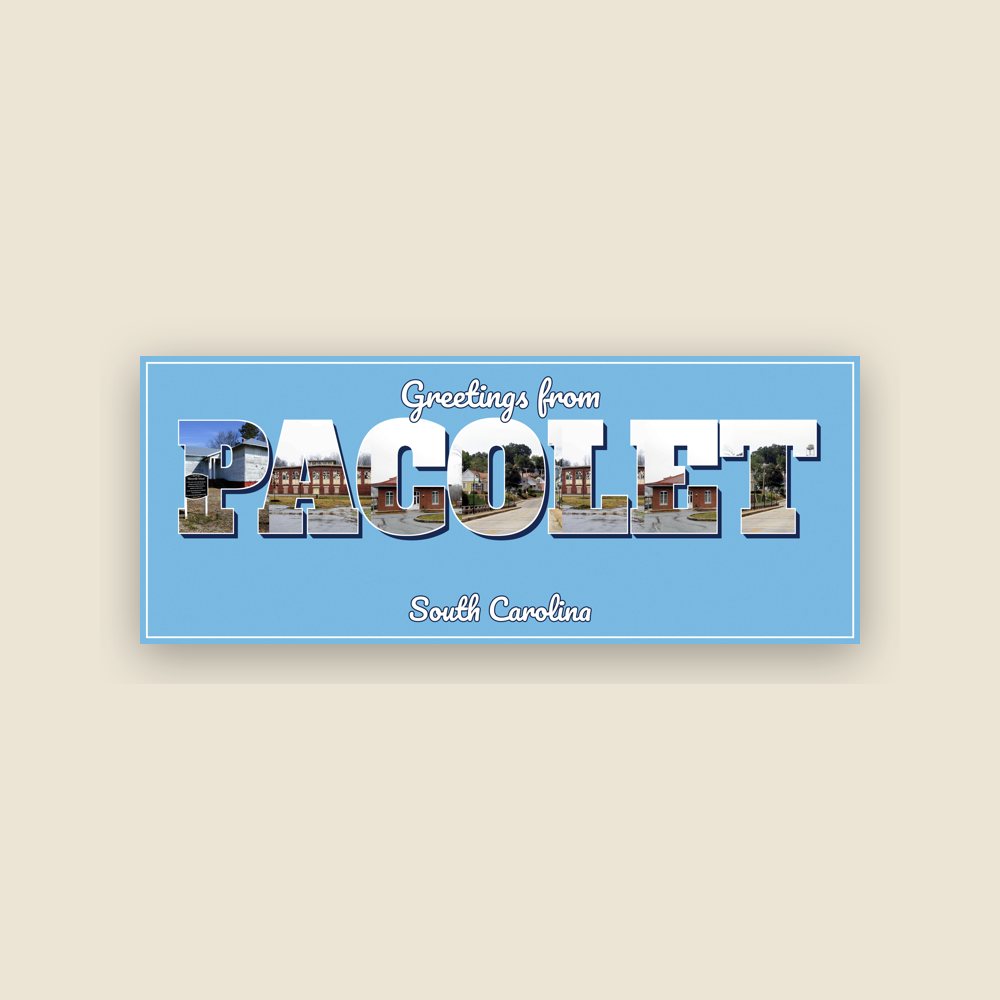
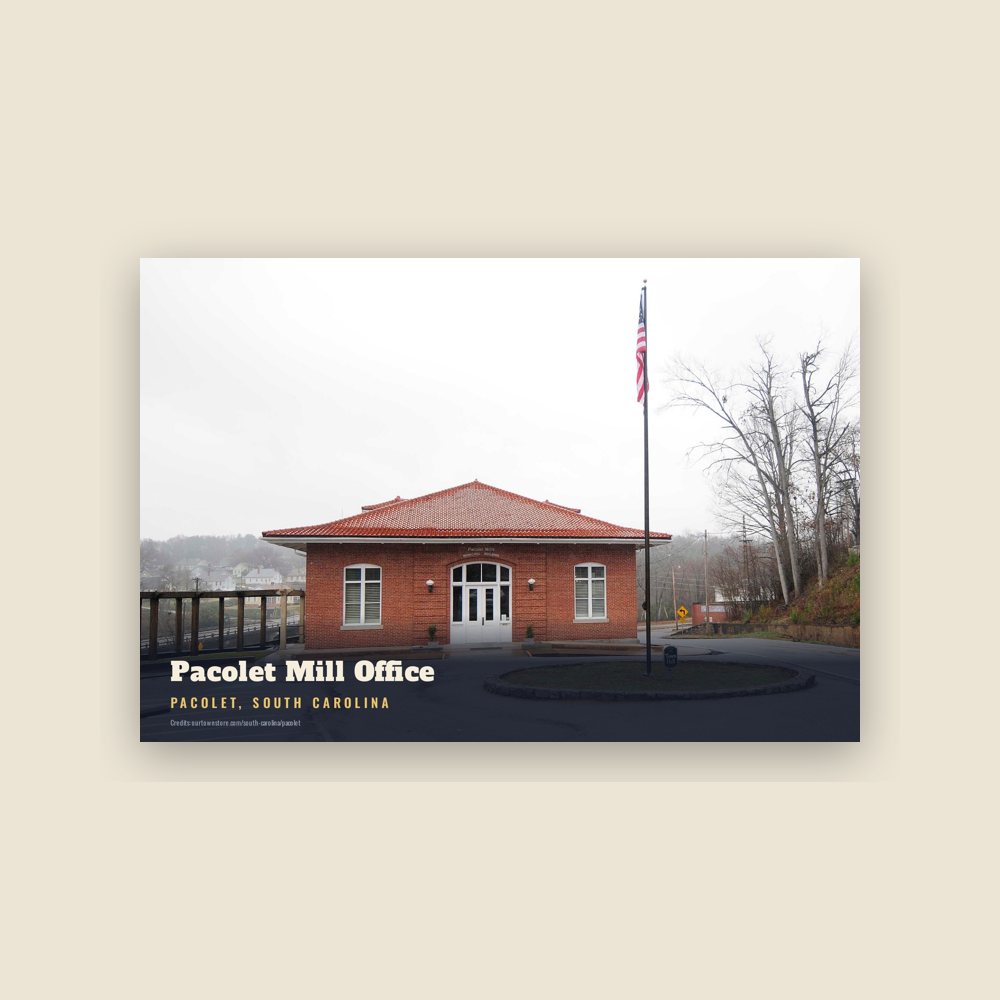
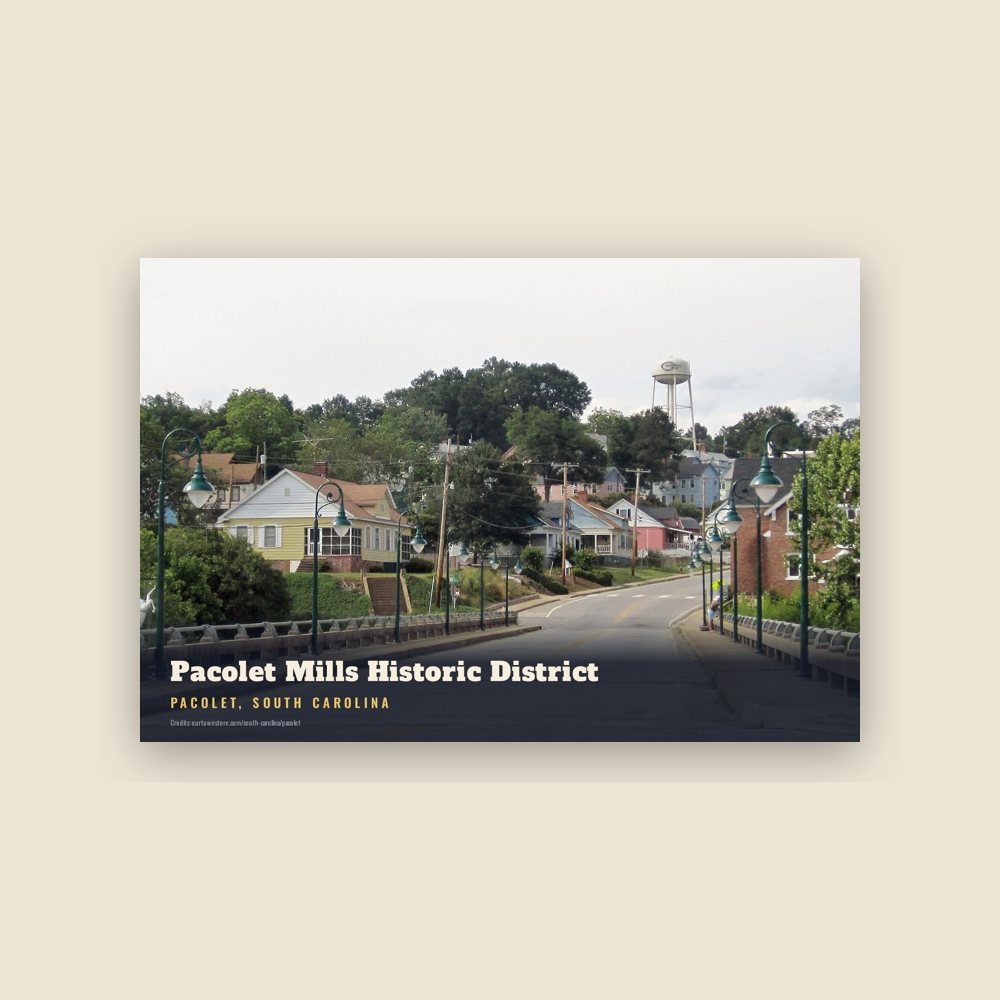
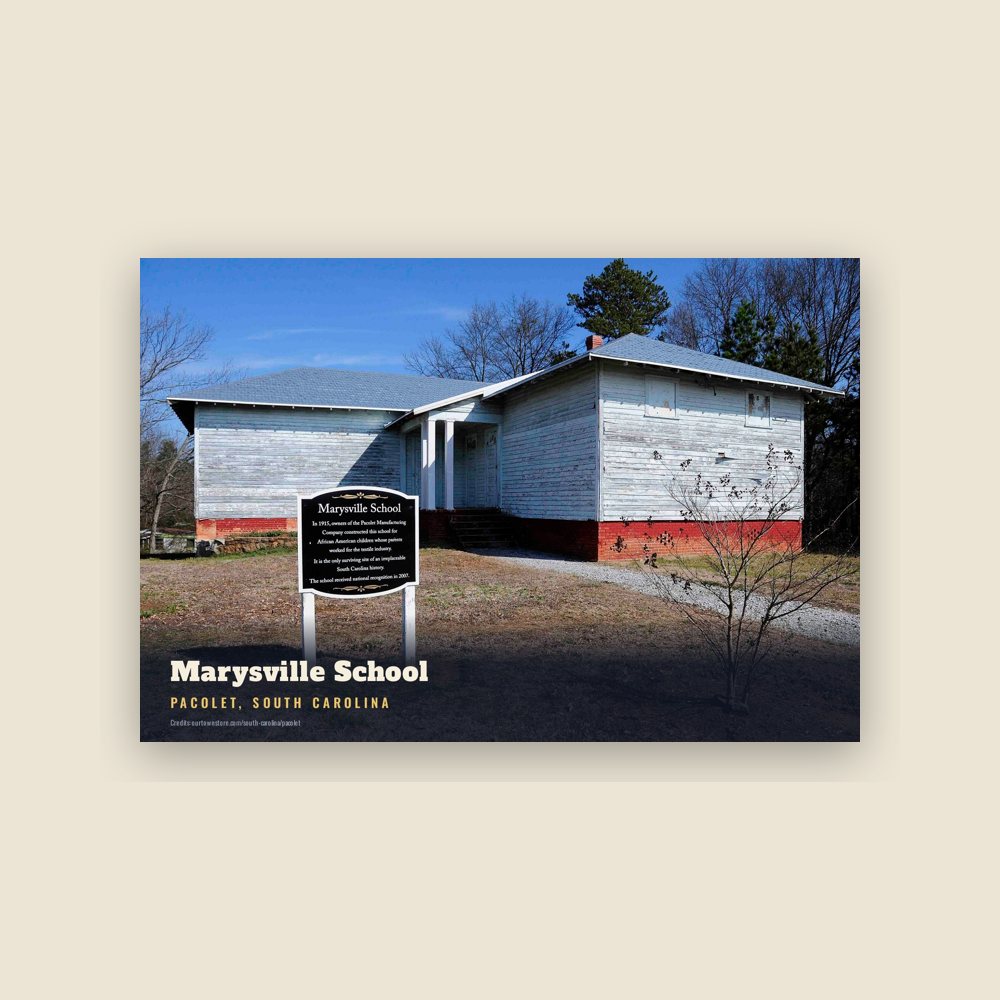
The Marysville School, Mulberry Chapel Methodist Church, Nuckolls-Jefferies House, Pacolet Mill Office, Pacolet Mills Cloth Room and Warehouse, Pacolet Mills Historic District, and Pacolet Soapstone Quarries are listed on the National Register of Historic Places.
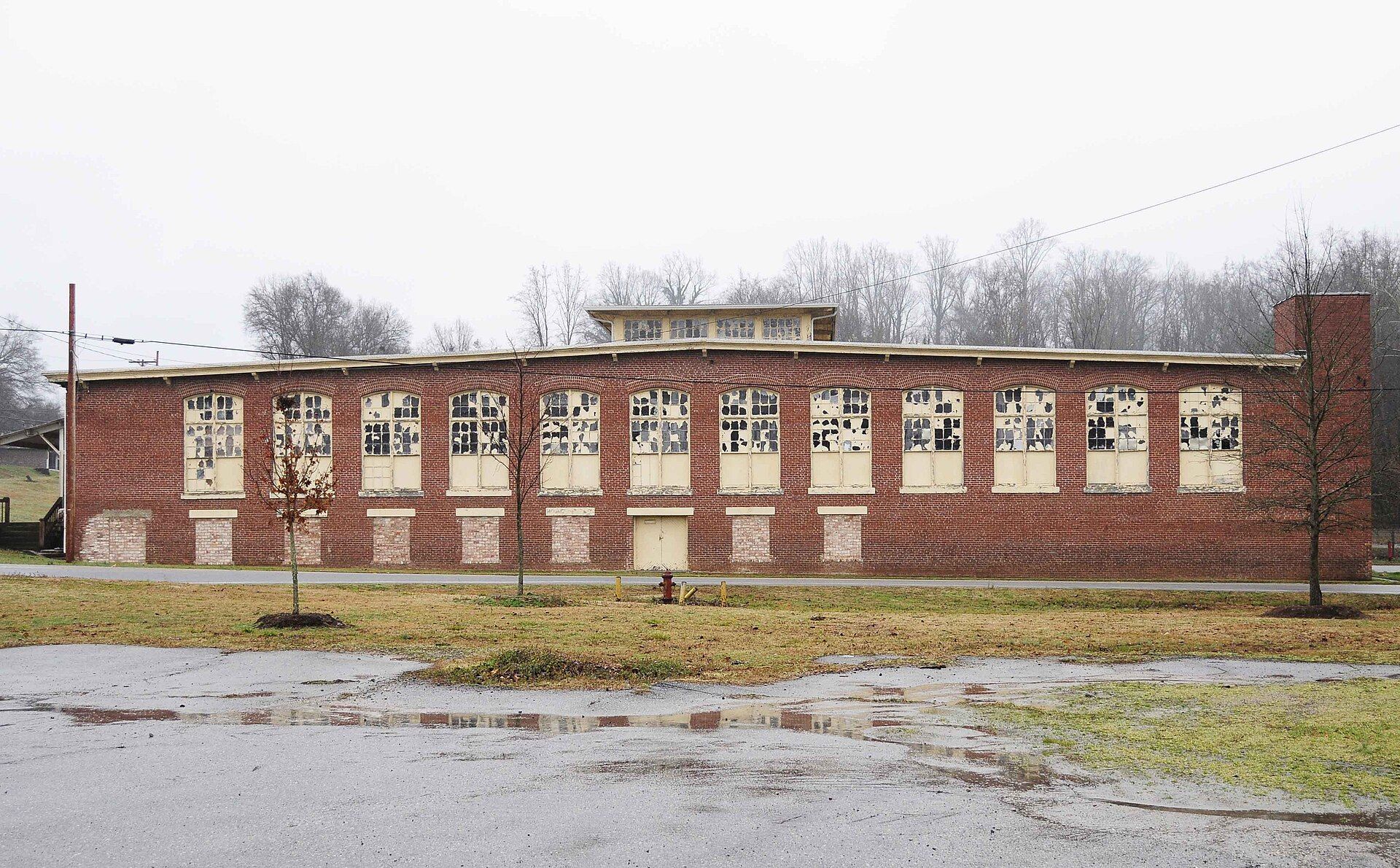
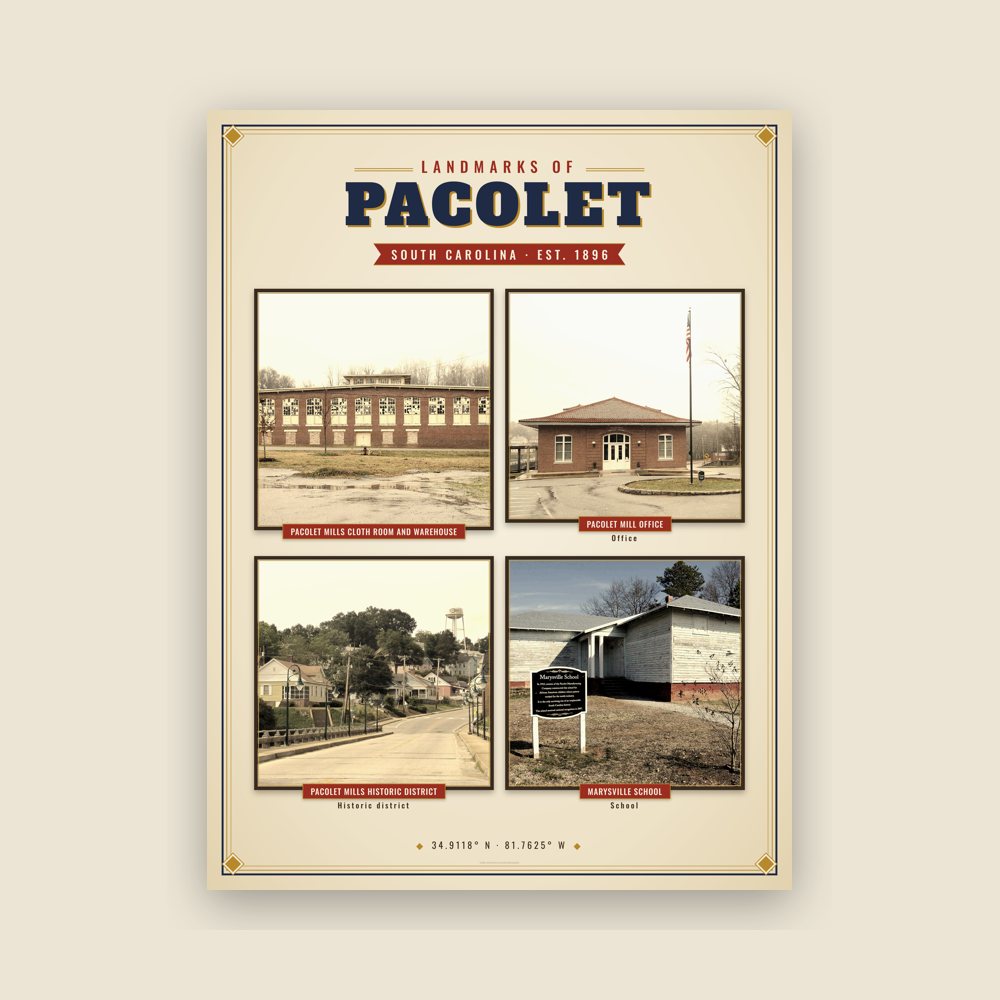
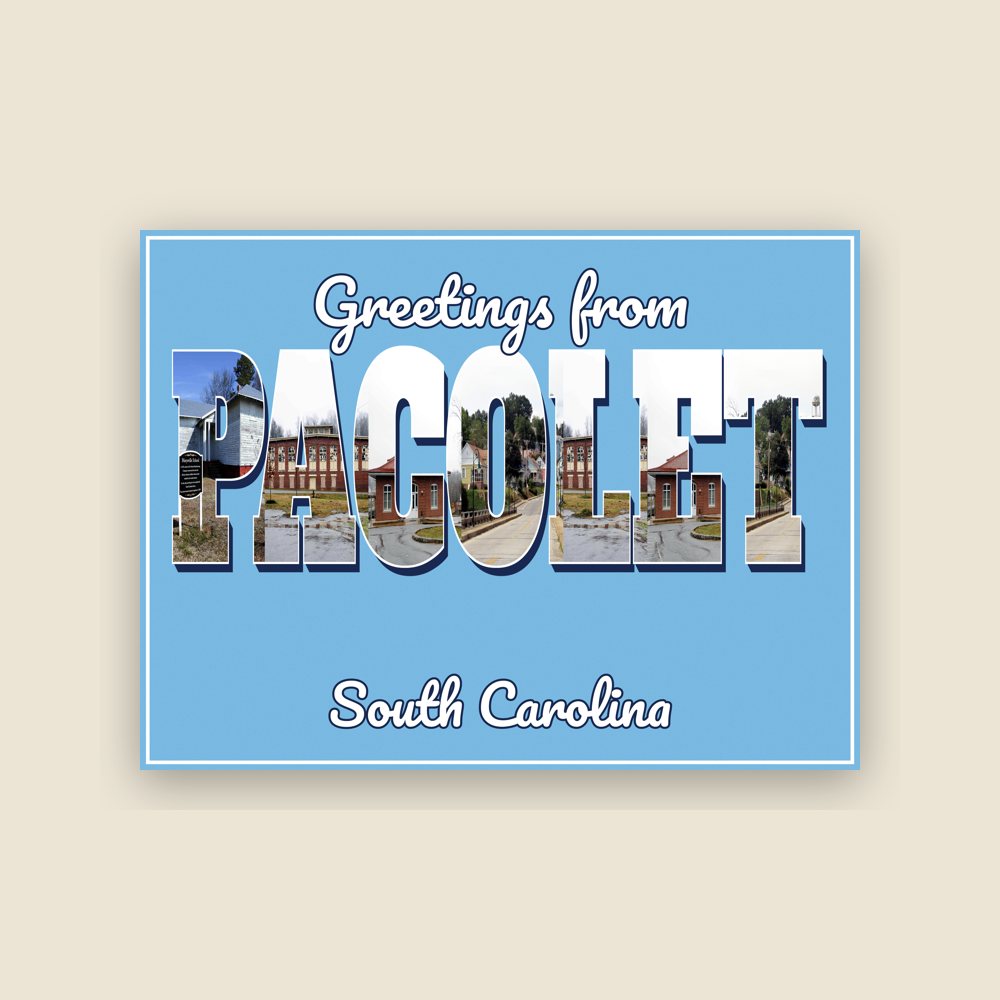
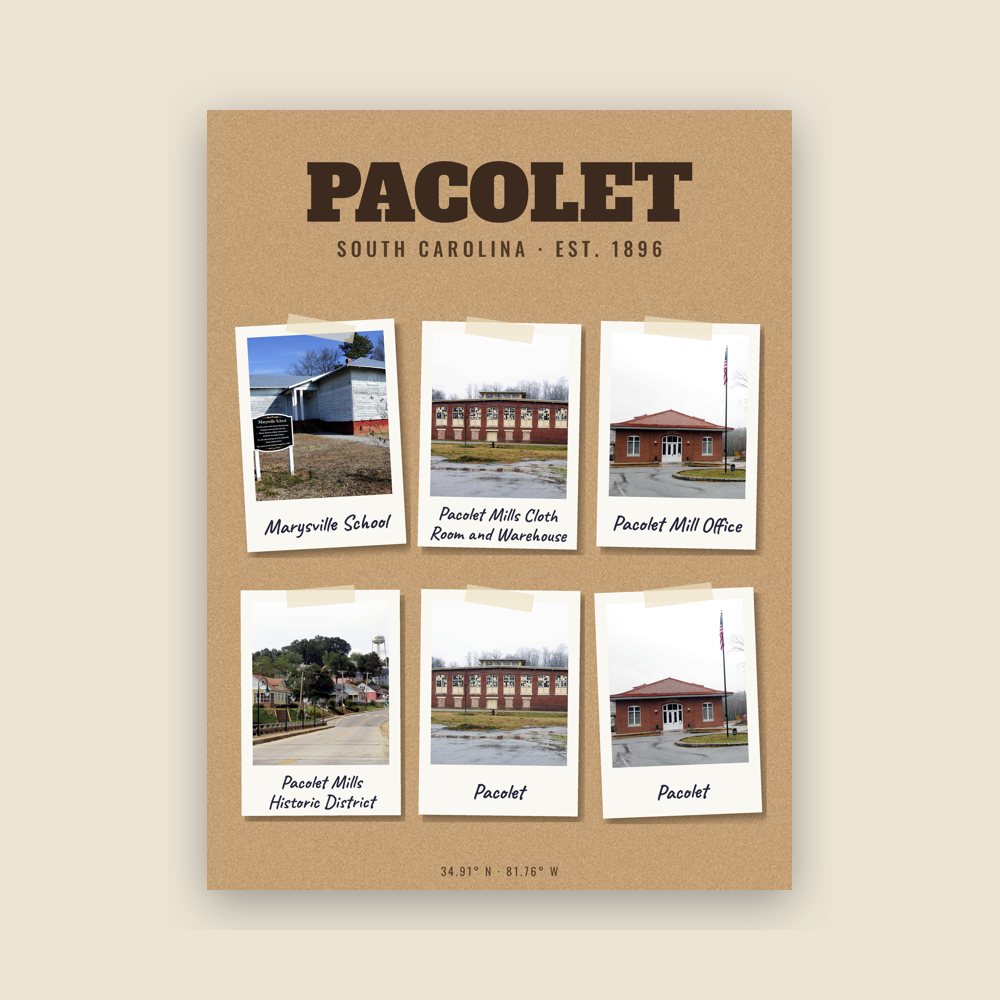
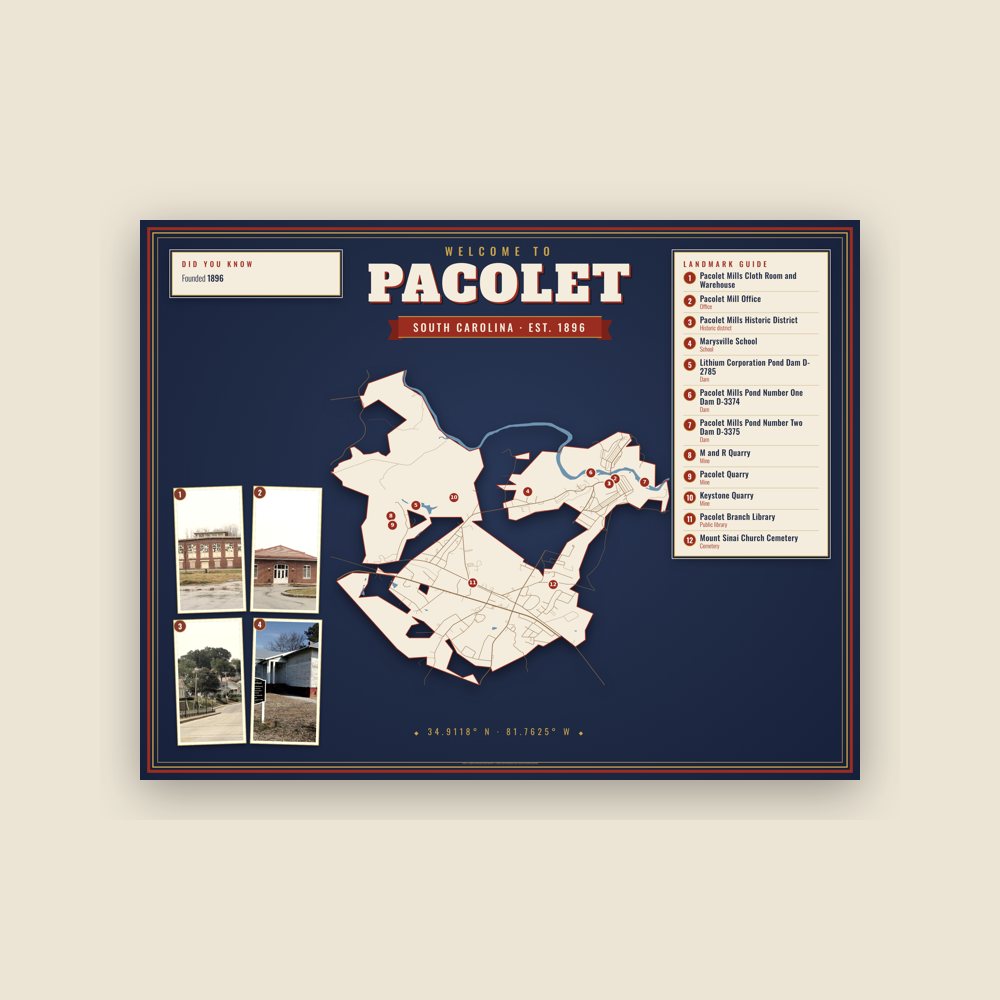
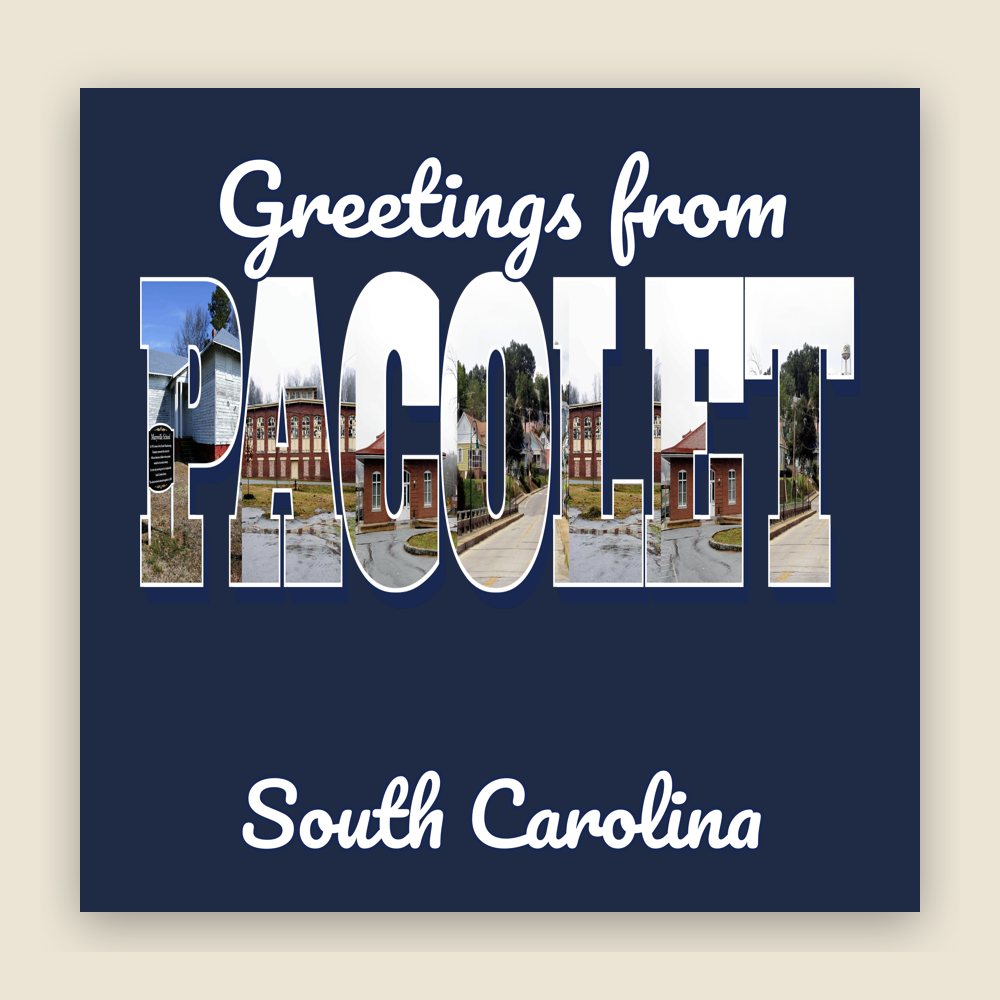
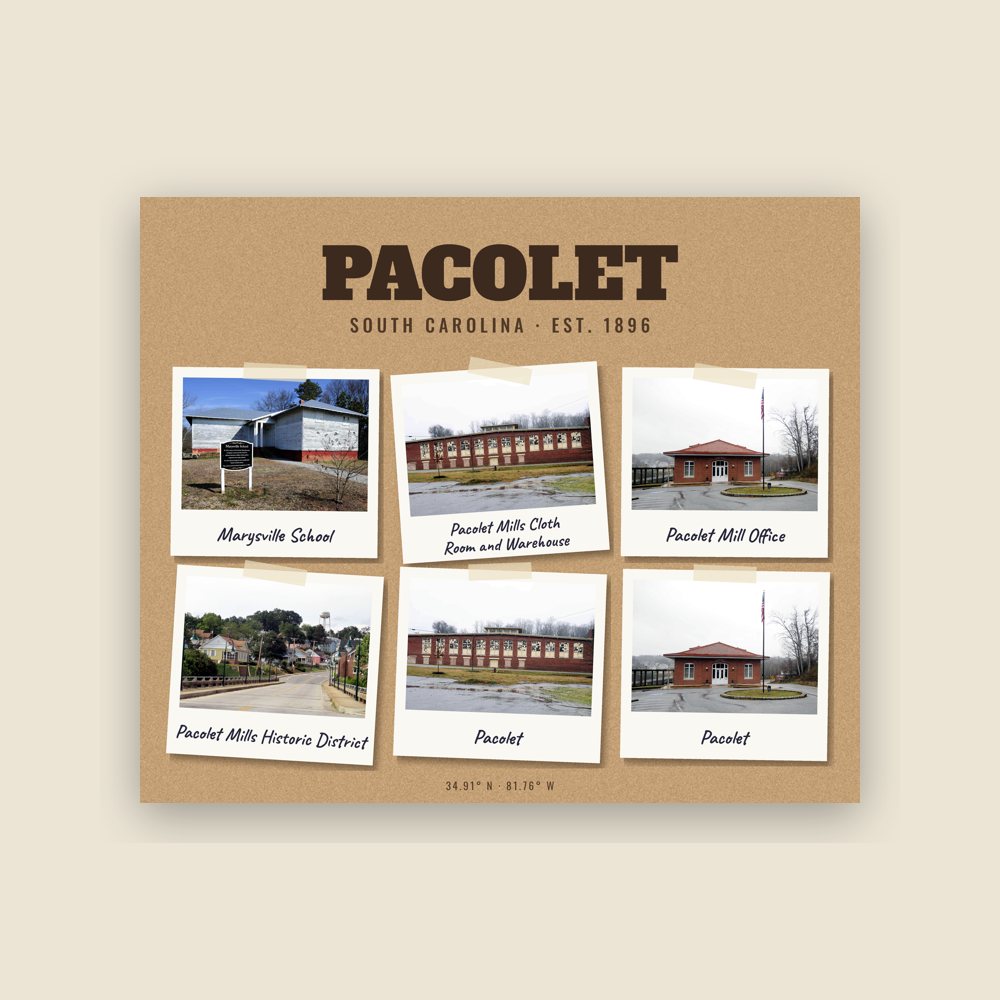
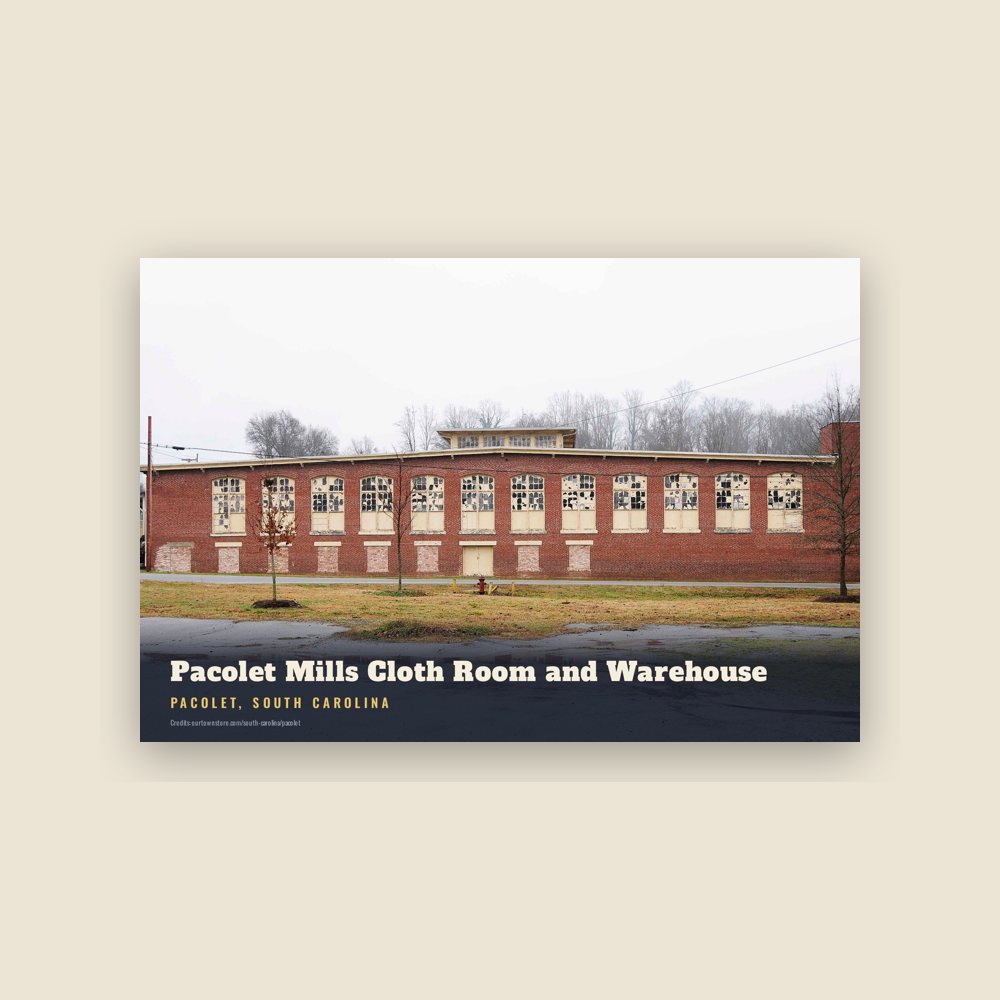
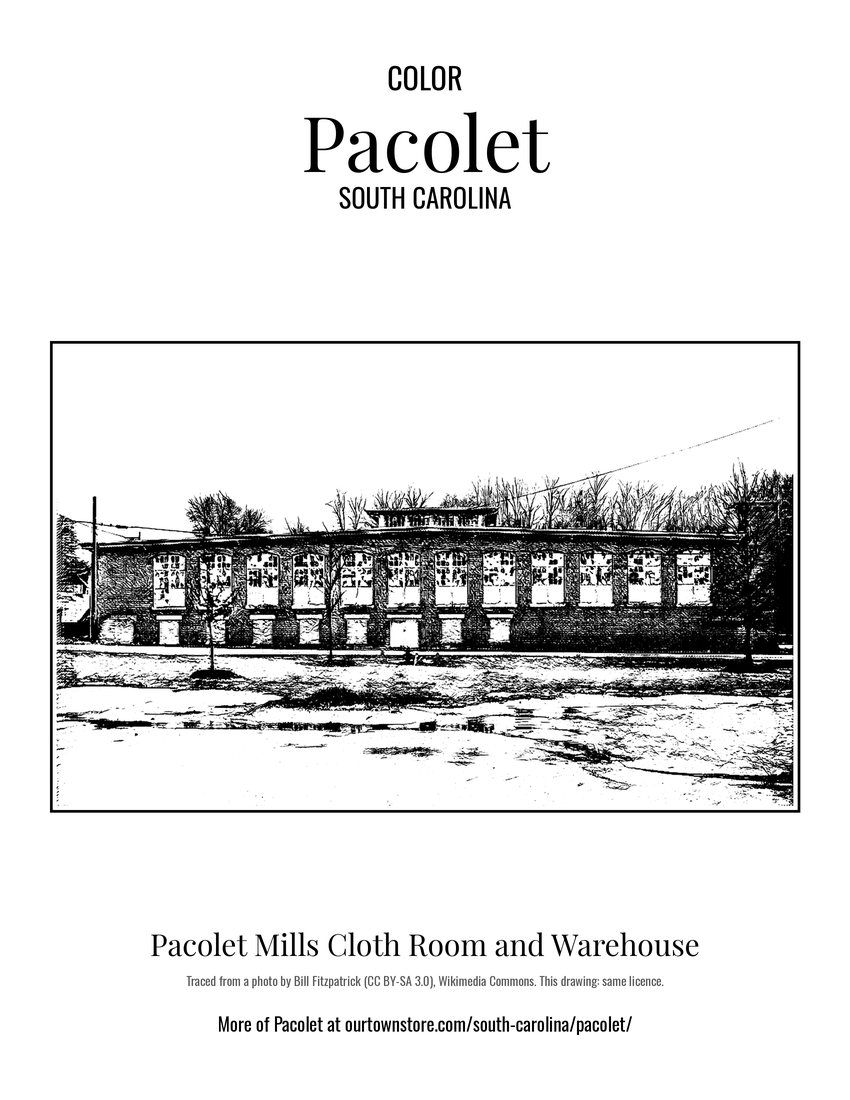 Pacolet Mills Cloth Room and Warehouse
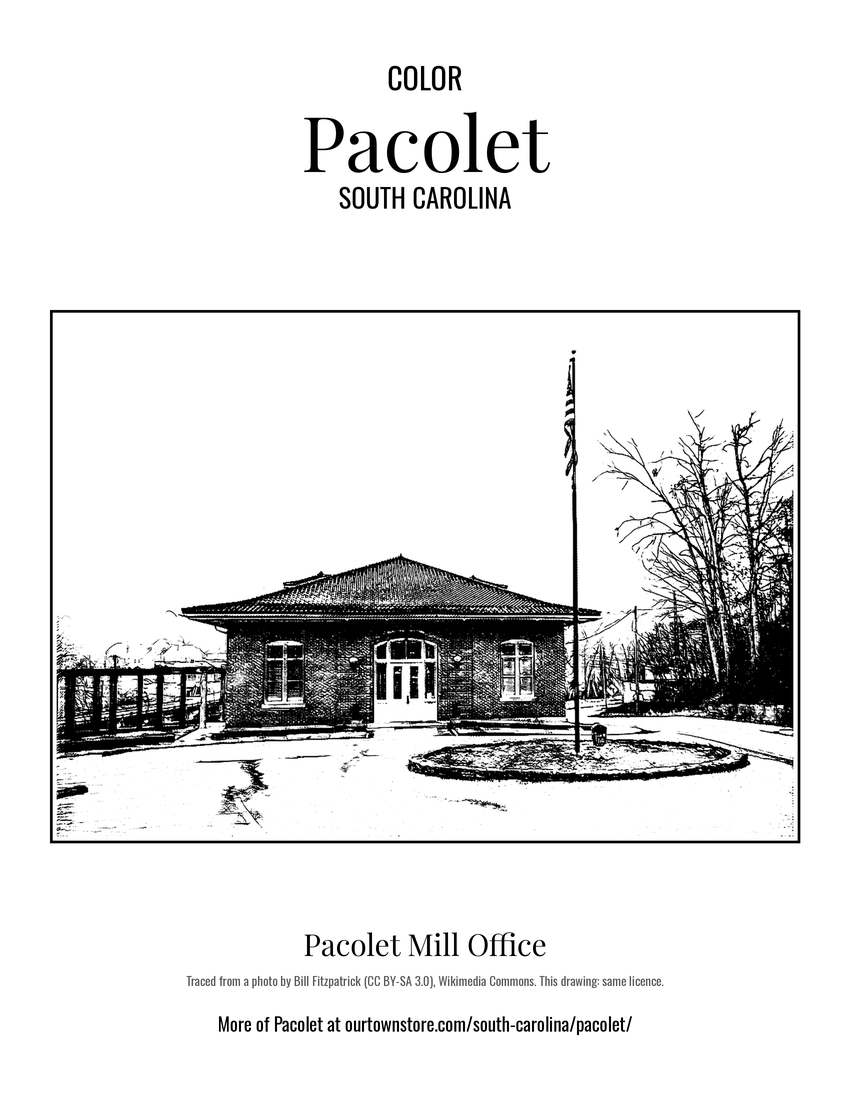 Pacolet Mill Office
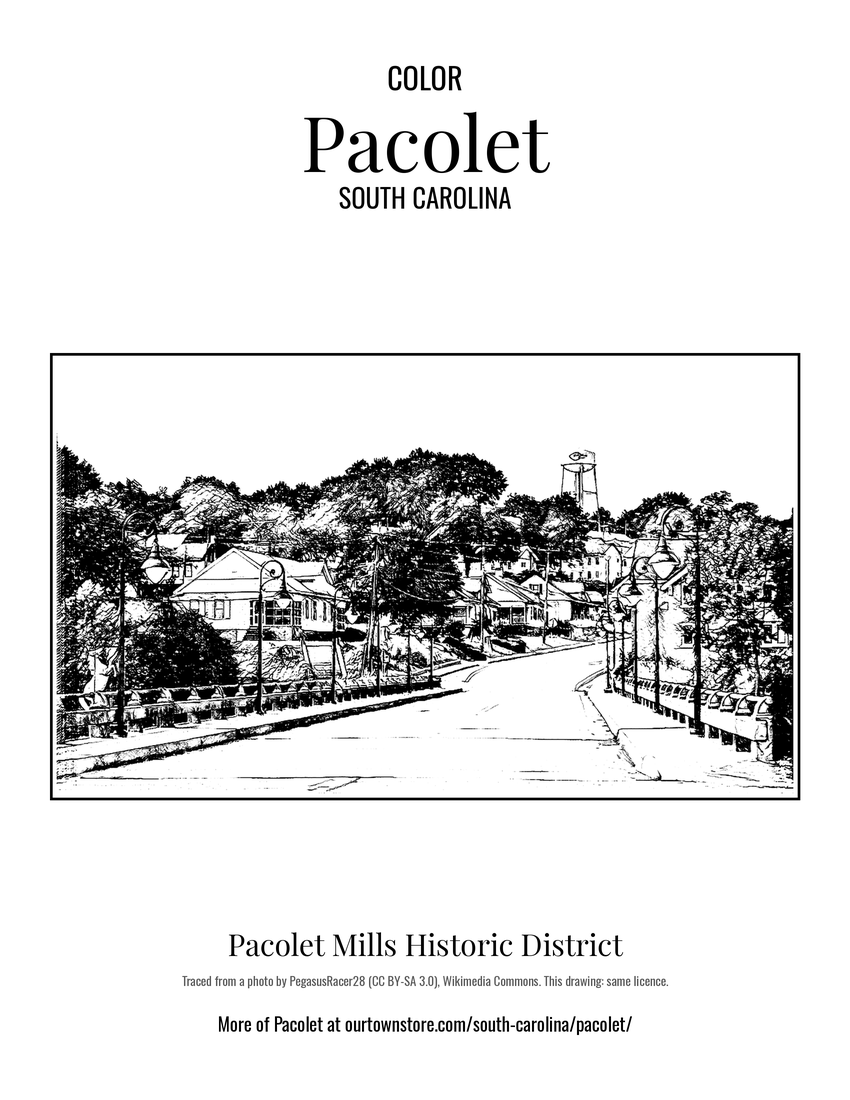 Pacolet Mills Historic District
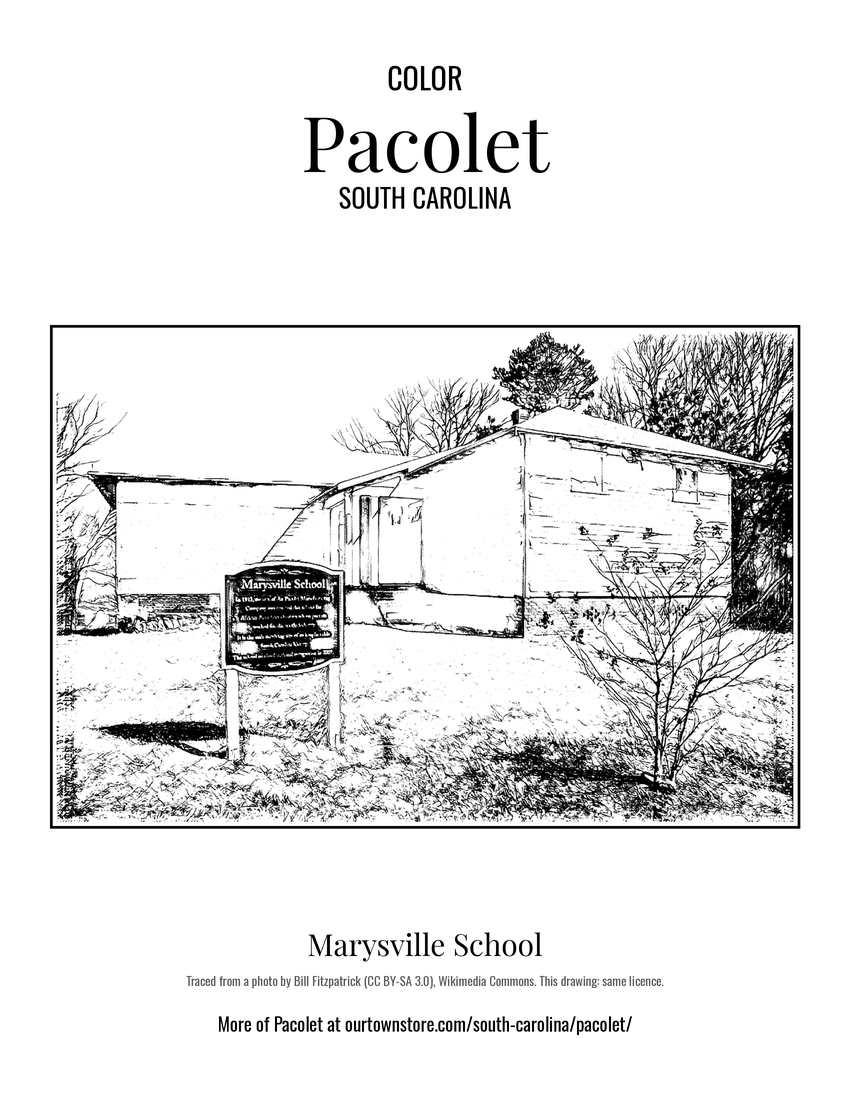 Marysville School