A short history of Mullins
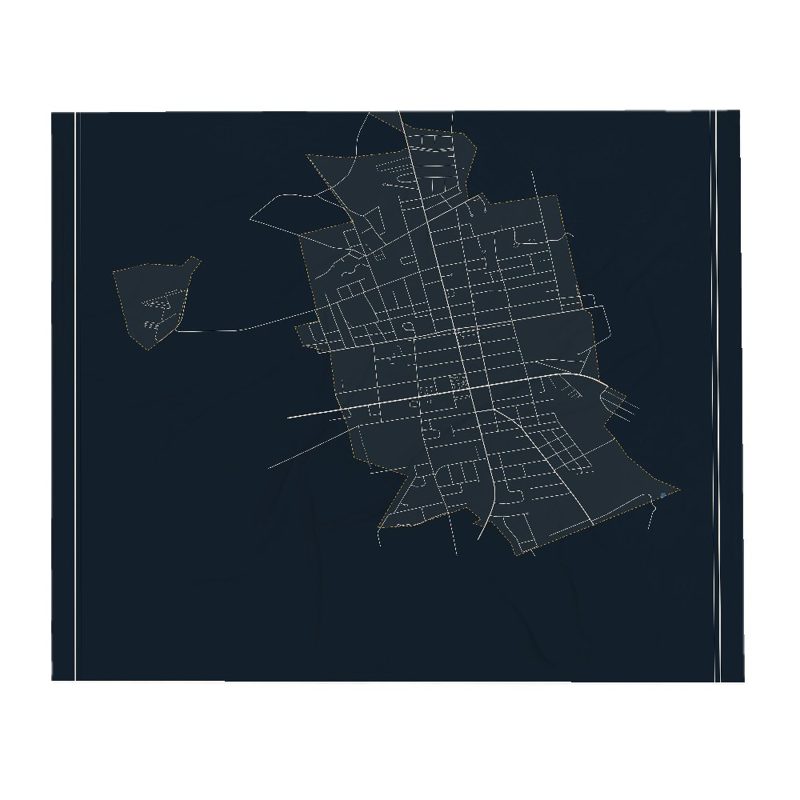
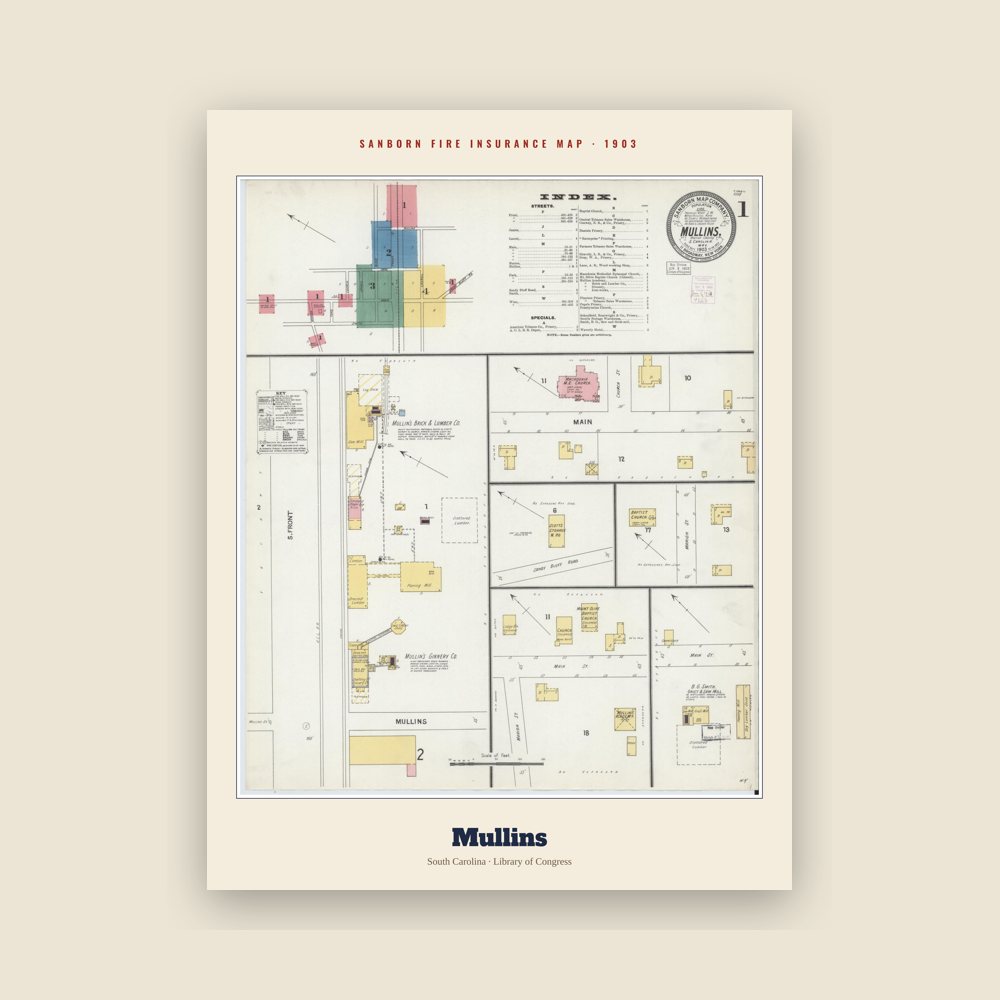
On March 4, 1872, the charter was approved for the town of Mullins.The same year the Macedonia Methodist church was established, the first church within city limits. By 1878, the city of Mullins had a population of 75 people, a total of 12 families. There were only three stores and four unpaved streets: Railroad, Main, Smith, and Gapway Streets. Gapway Road was designed from 76 Hwy in 1933.
In 1894, the growth and sale of tobacco sparked the further development of the city of Mullins. At one time, the town was the largest tobacco producing/marketing industry in the United States. Mullins became the largest distributor of tobacco in the country, known as "South Carolina's Largest, The world's best tobacco market." In the late 1920s the tobacco festival was started and is still celebrated today. The tobacco festival is known as the 'Golden Leaf Festival."
Mullins' first school was established in 1872, which was attended by boys and girls from the town, nearby rural areas, and neighboring counties. The first schoolhouse was built in 1904; a brick, two-story building on Academy Street. A second schoolhouse was built in 1913, on the corner of Main and Academy streets. Mullins High School was built in 1923 on North Park Street where it stood until burning in 1976. It was rebuilt close to the old Marion highway, outside of the city limits. McCormick Elementary School was built on Sandy Bluff Road in 1956. The original Palmetto School for Negroes (High and Elementary) was built on Cypress Street in 1919 and around 1956 was split up. The Palmetto Elementary School was built on Broad Street. The Palmetto High School was built on O'Neal Street with 1970 being the last graduating class. It became Palmetto Middle School as it remains today. In 1970 all schools were combined into a fully integrated school system.
In 1910, the public library was established. The current library, located at the corner of N. Main and Wine Streets, was built in 1940.
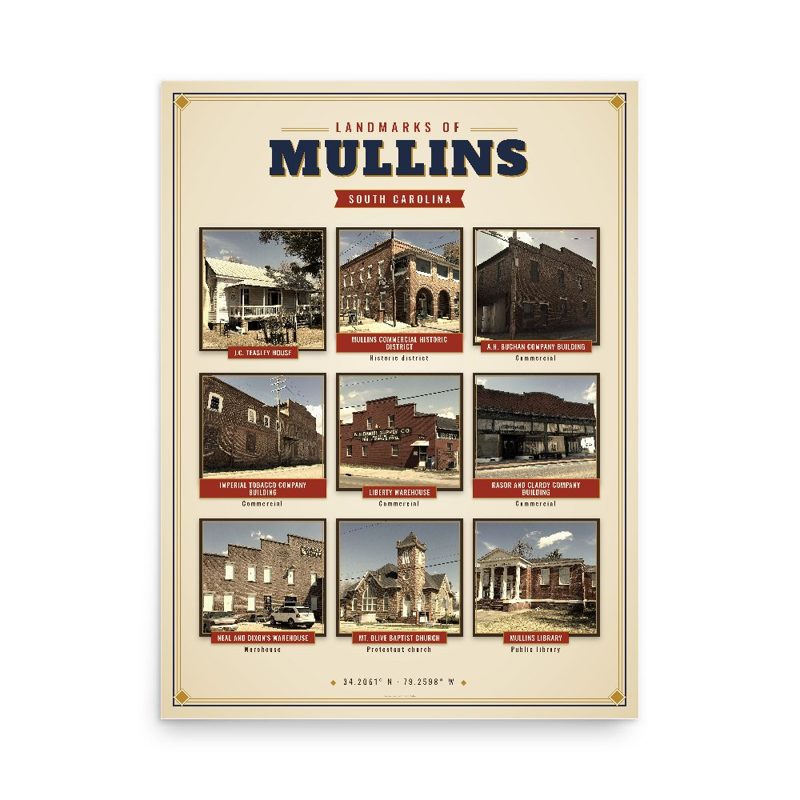
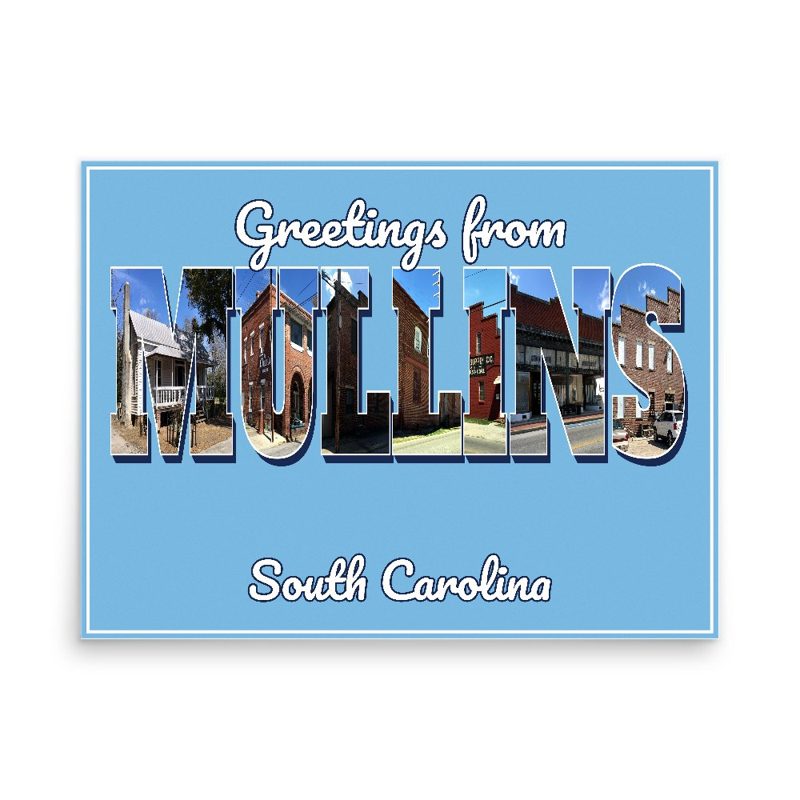
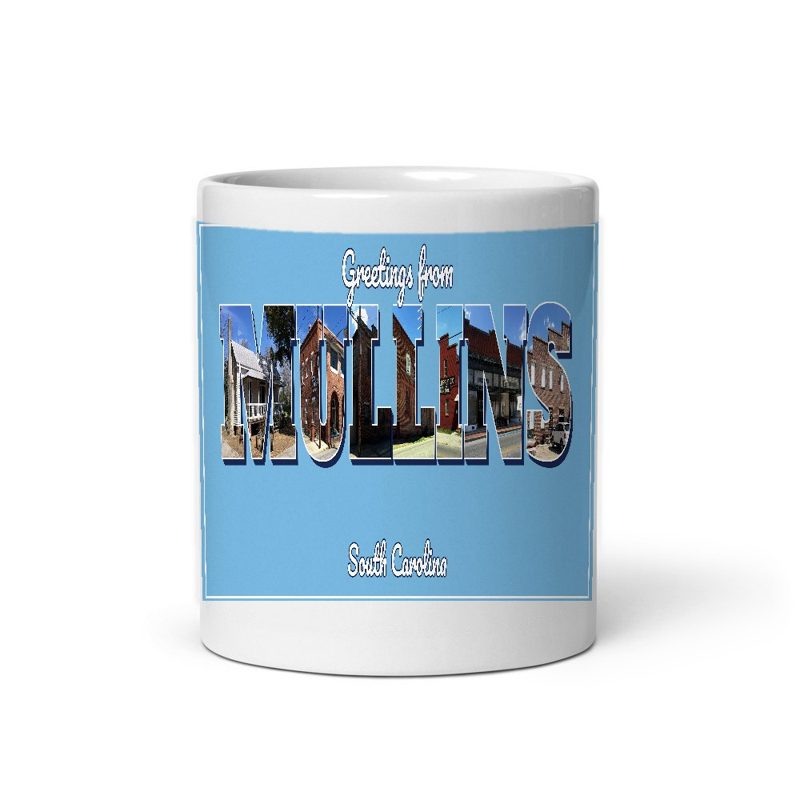
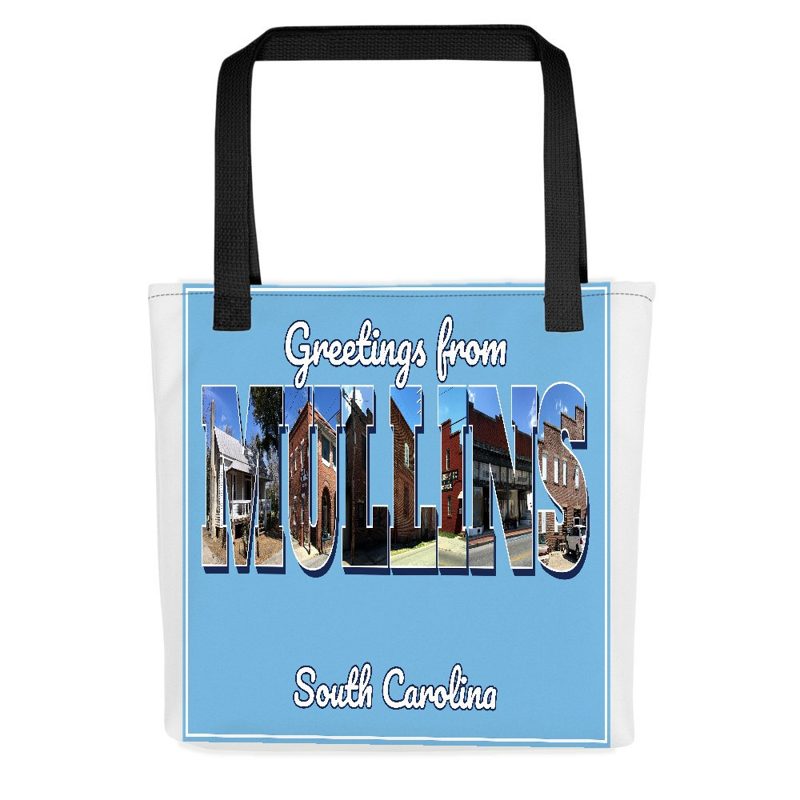
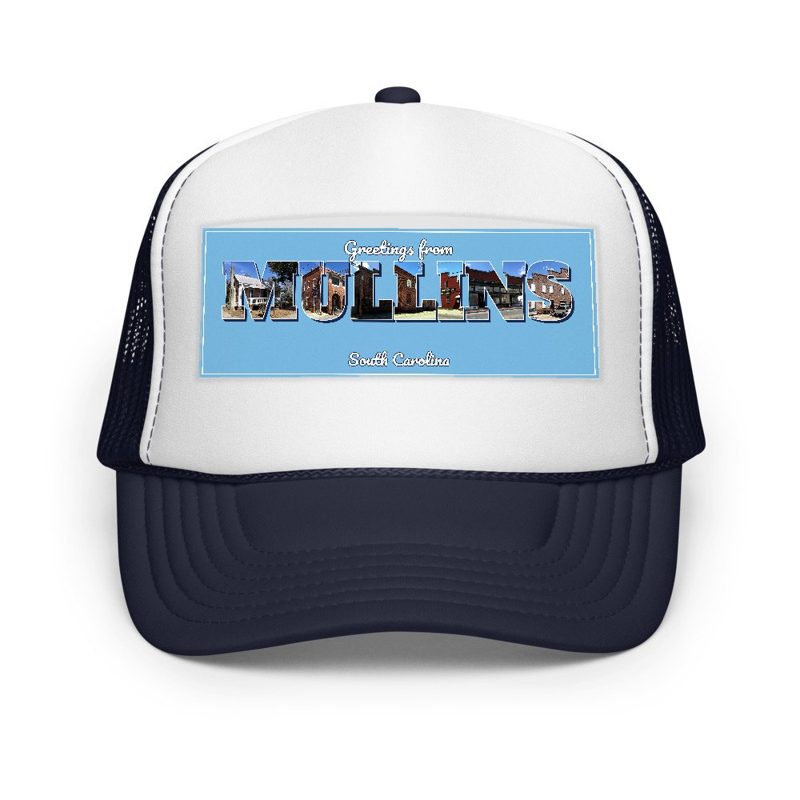
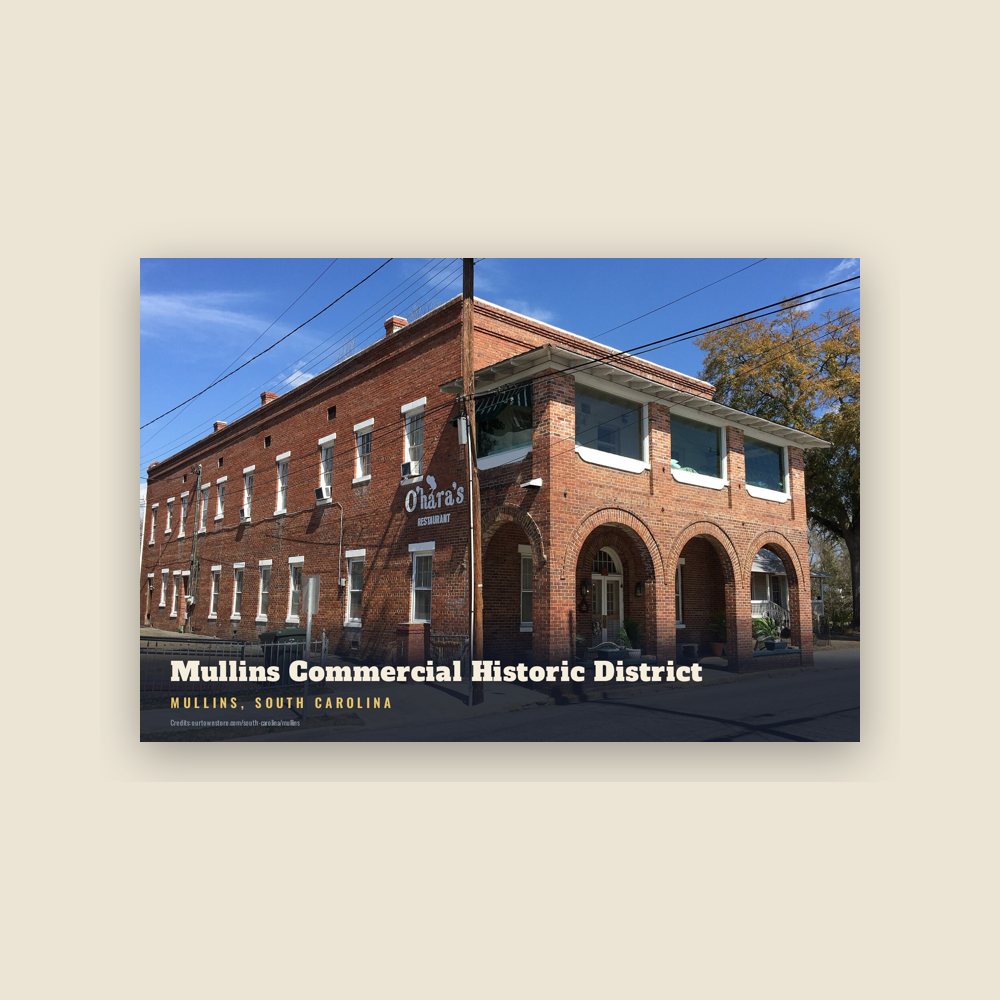
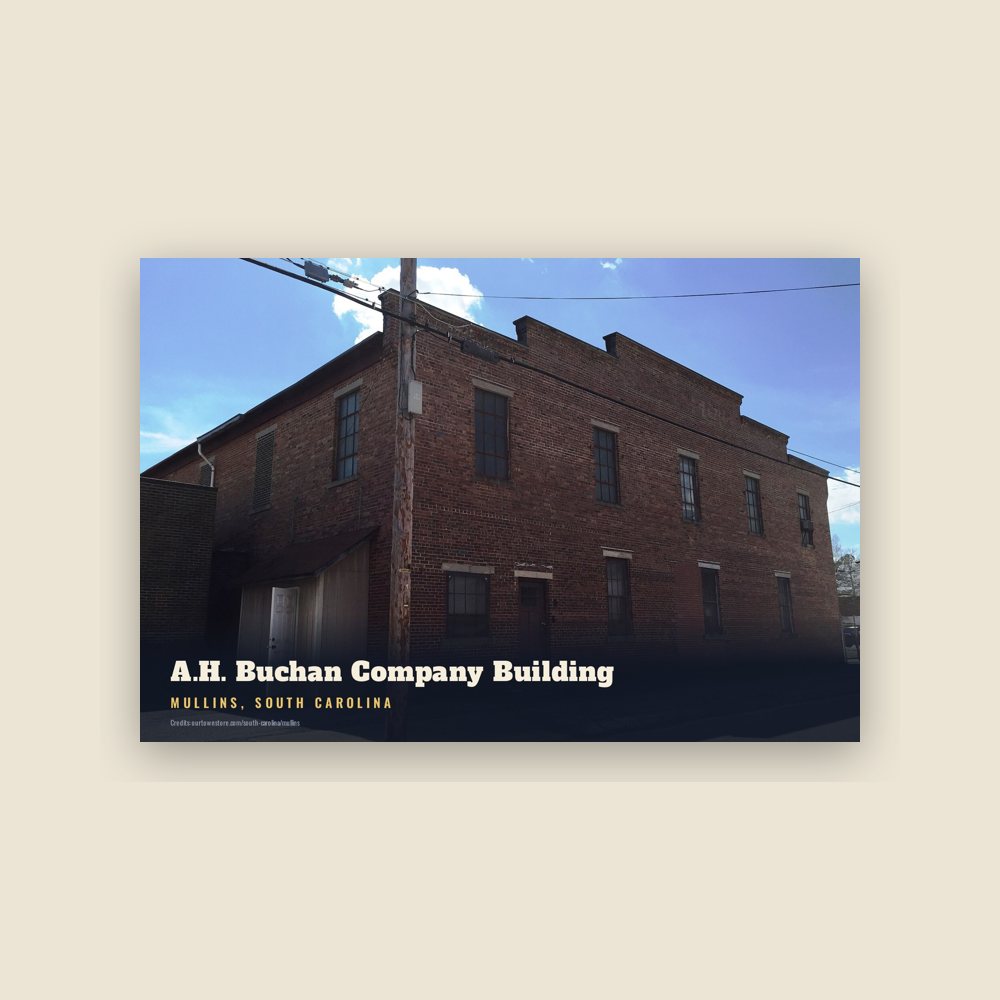
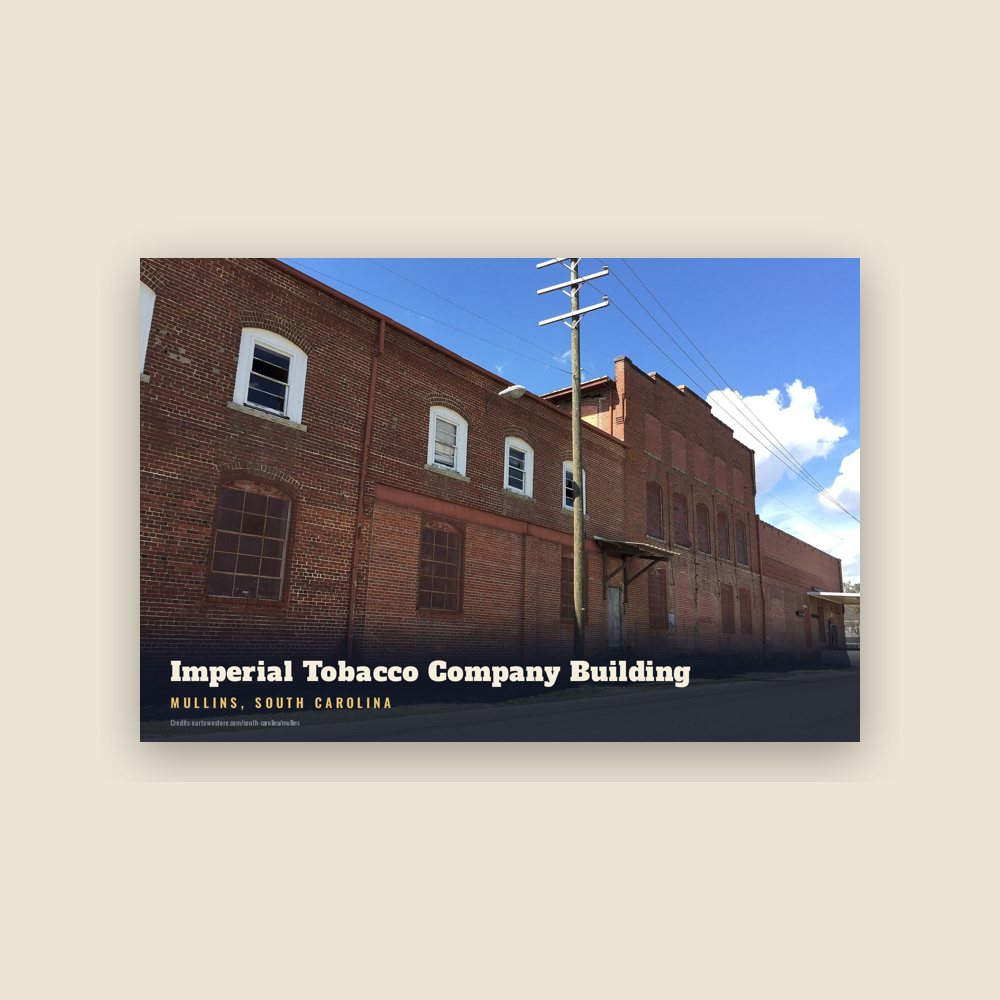
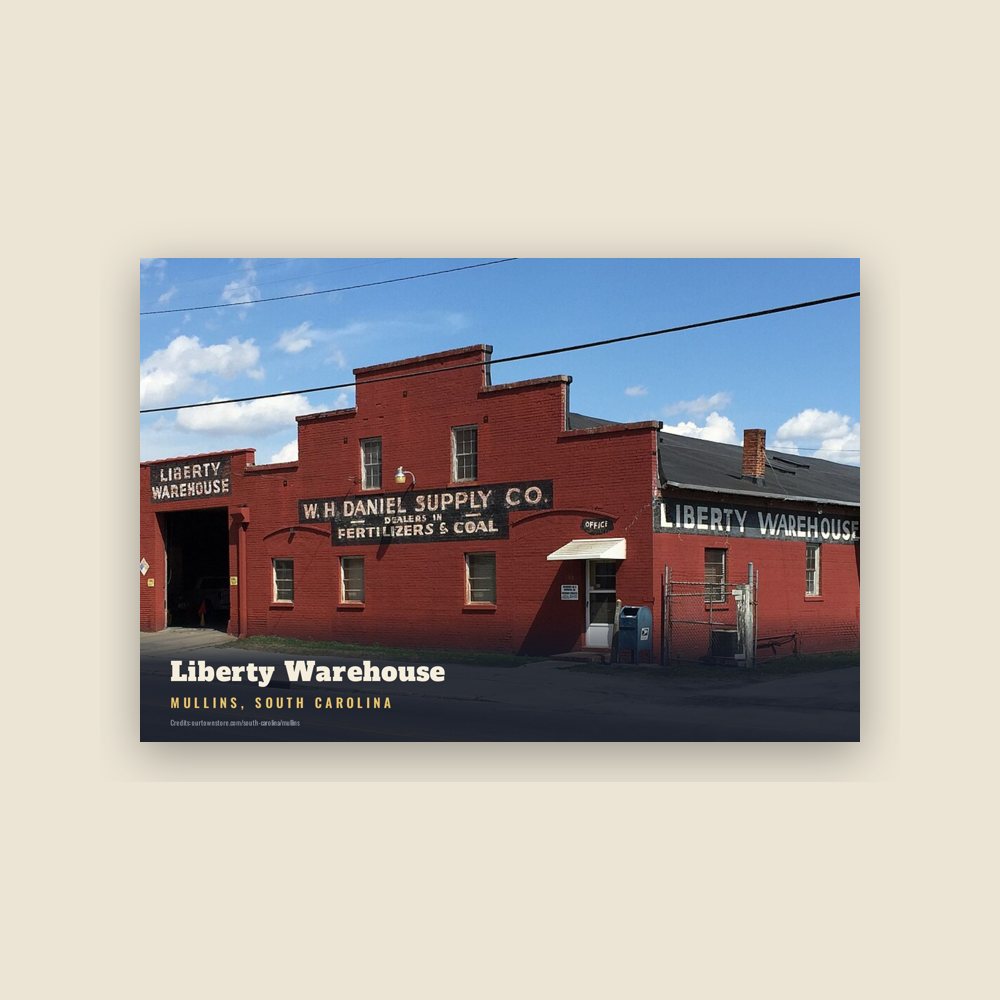
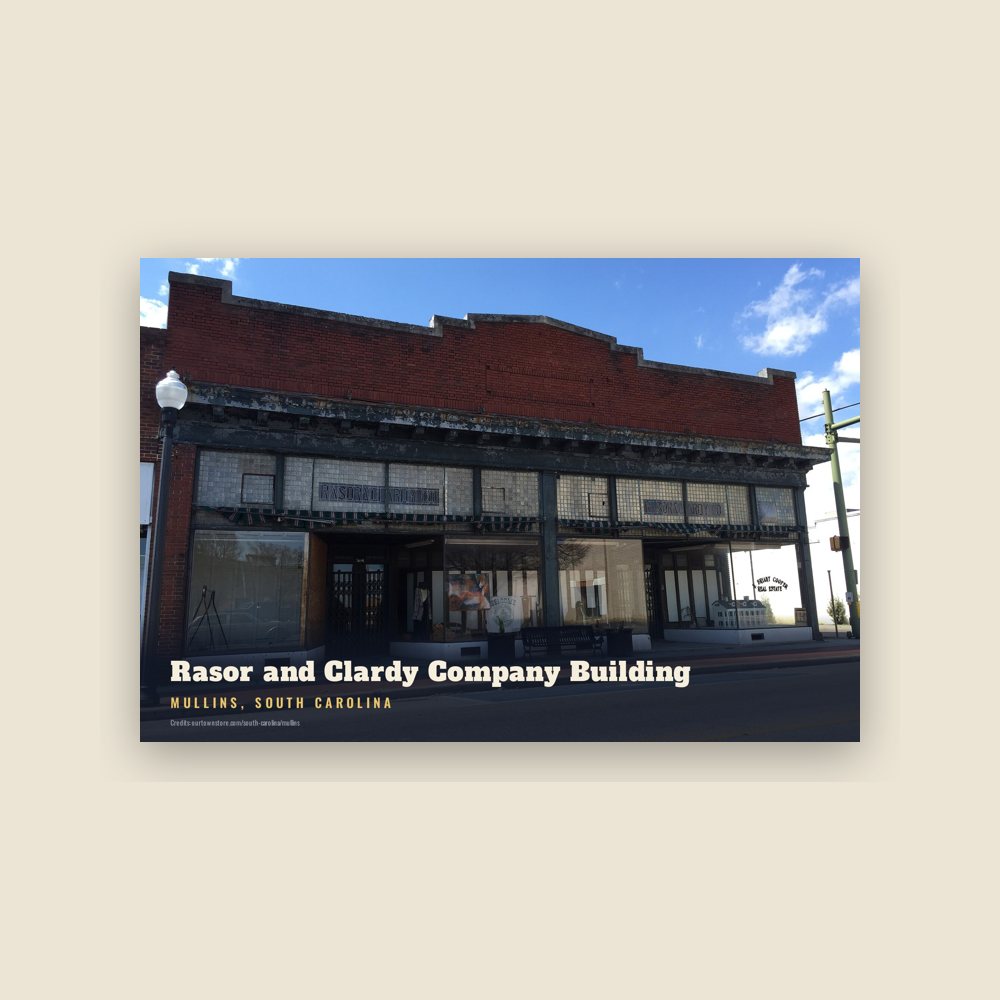
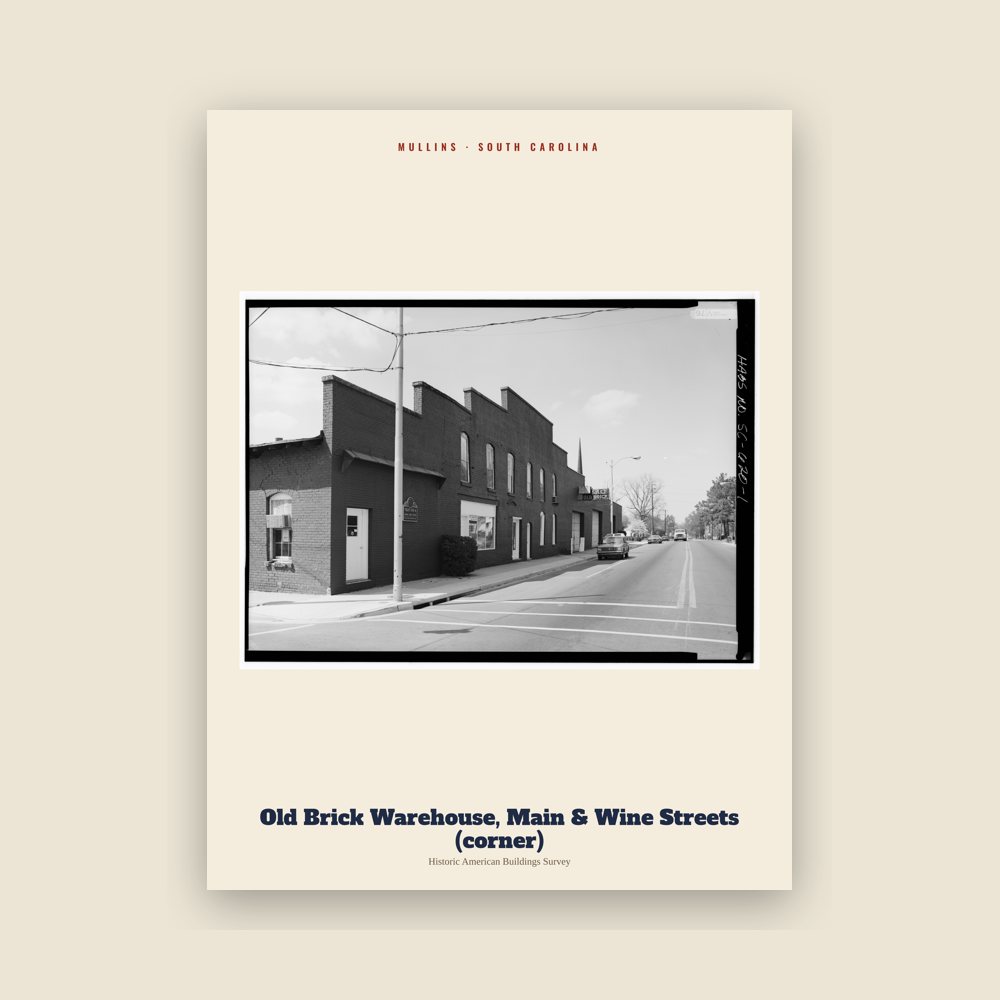
The A.H. Buchan Company Building, Dillard Barn, Imperial Tobacco Company Building, Liberty Warehouse, Mt. Olive Baptist Church, Mullins Commercial Historic District, Neal and Dixon's Warehouse, Old Brick Warehouse, Rasor and Clardy Company Building, and J.C. Teasley House are listed on the National Register of Historic Places.
Adapted (trimmed) from the Wikipedia article Mullins, South Carolina, revision 1379528714 by its contributors, licensed CC BY-SA 4.0.
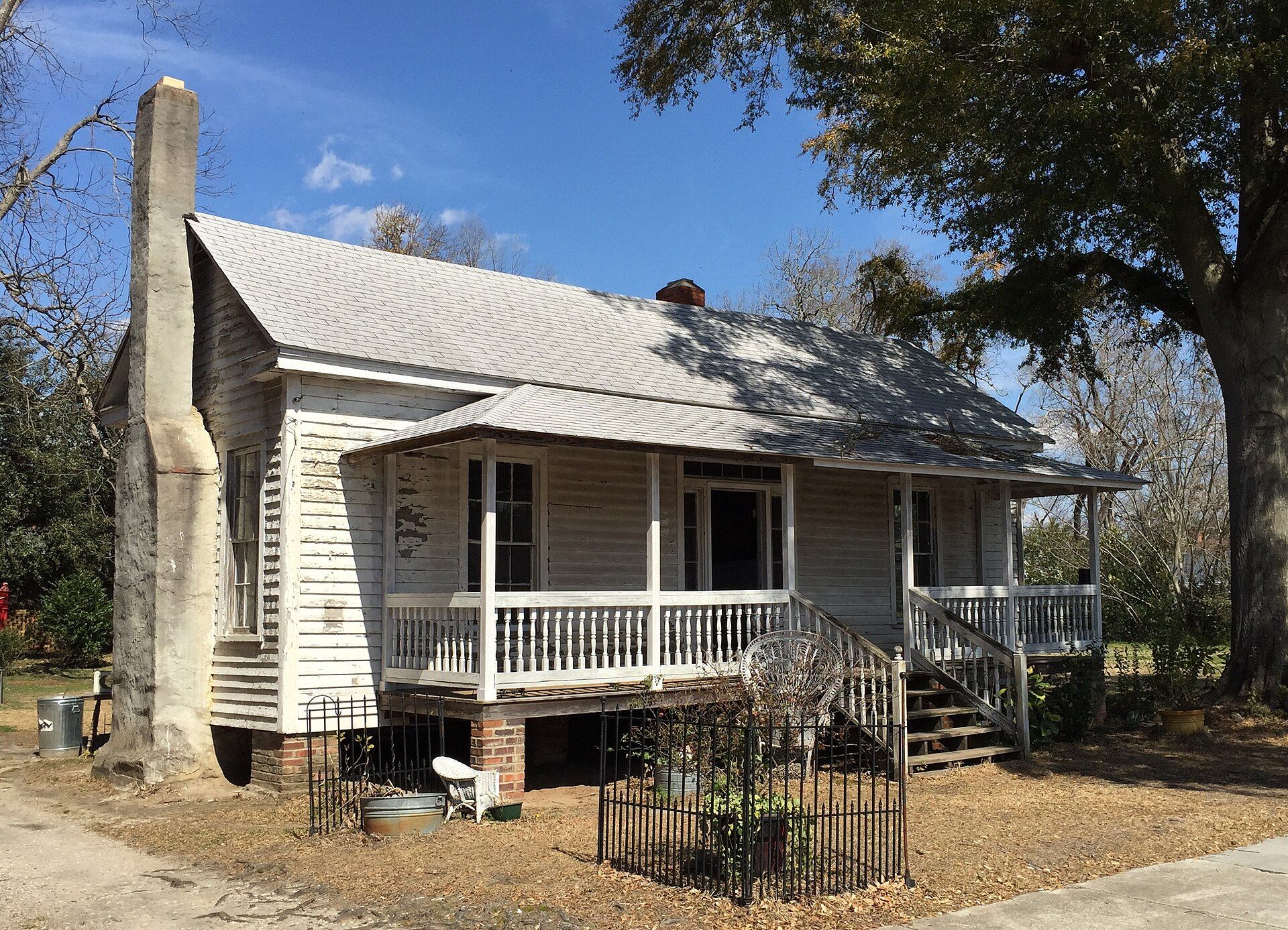
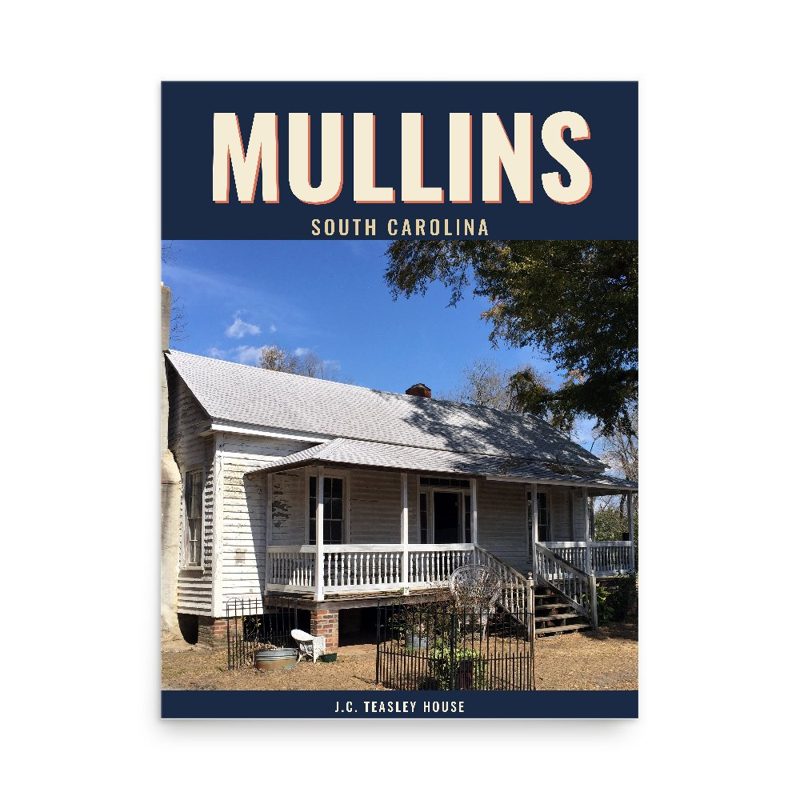
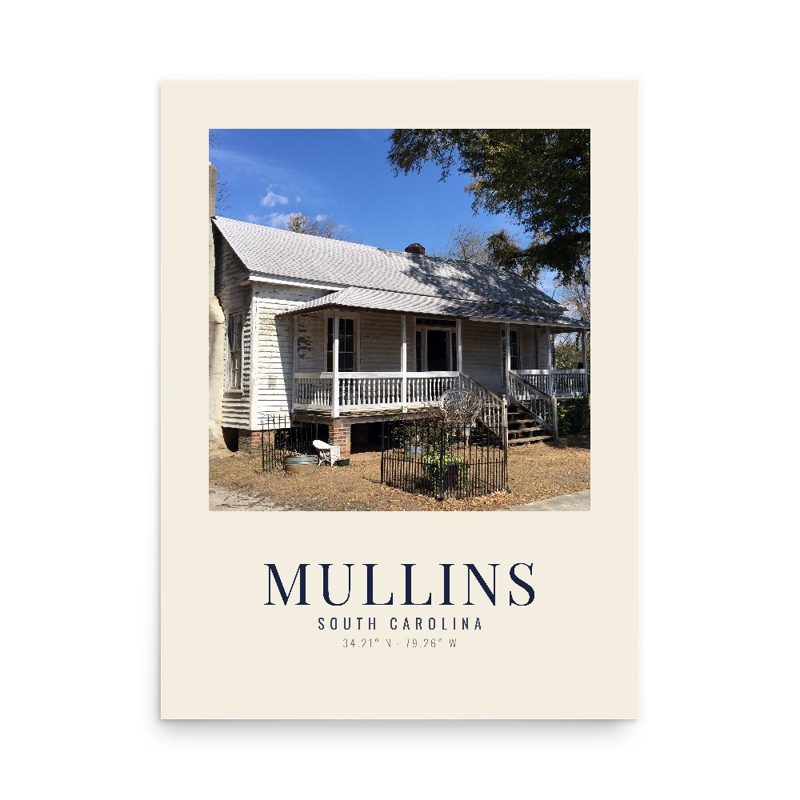
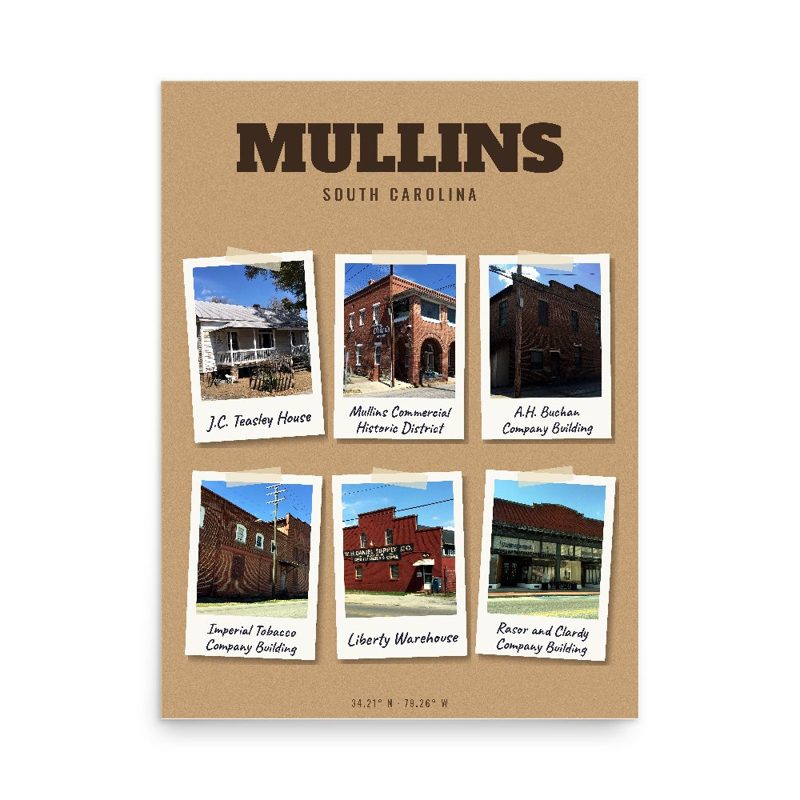
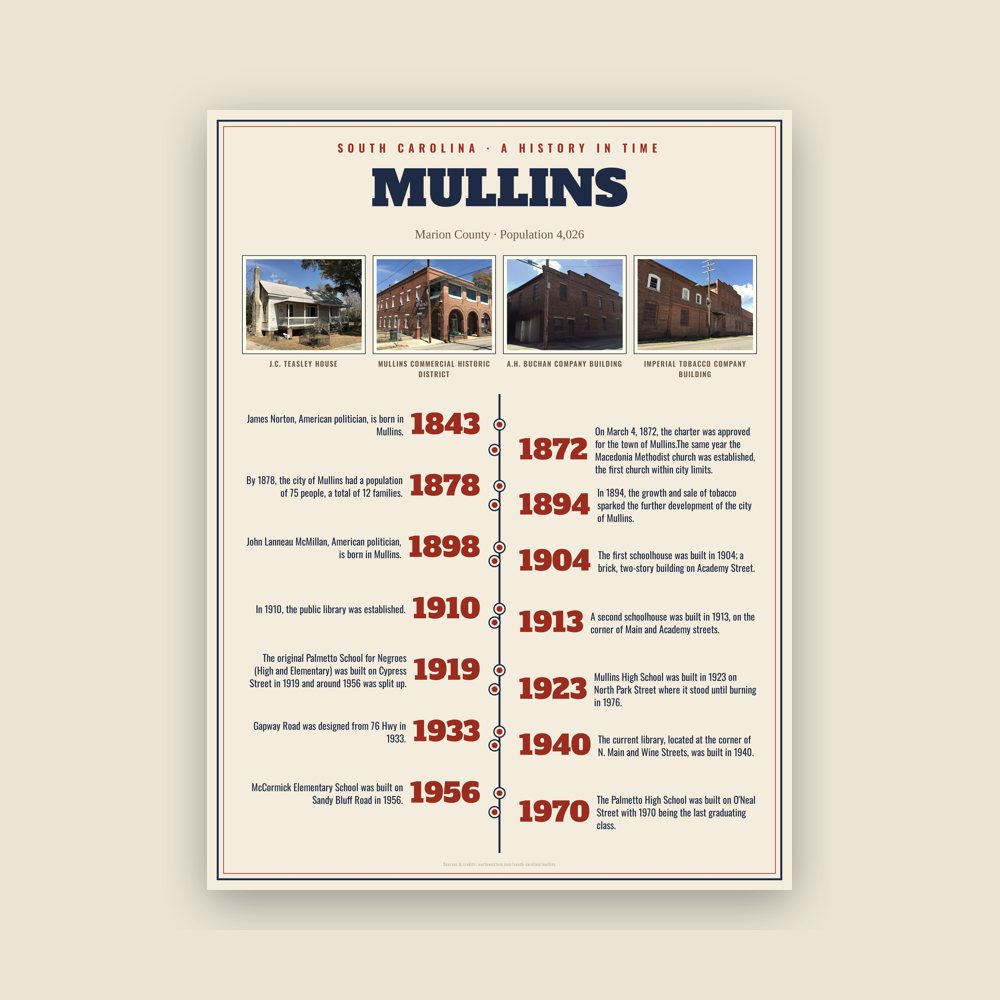
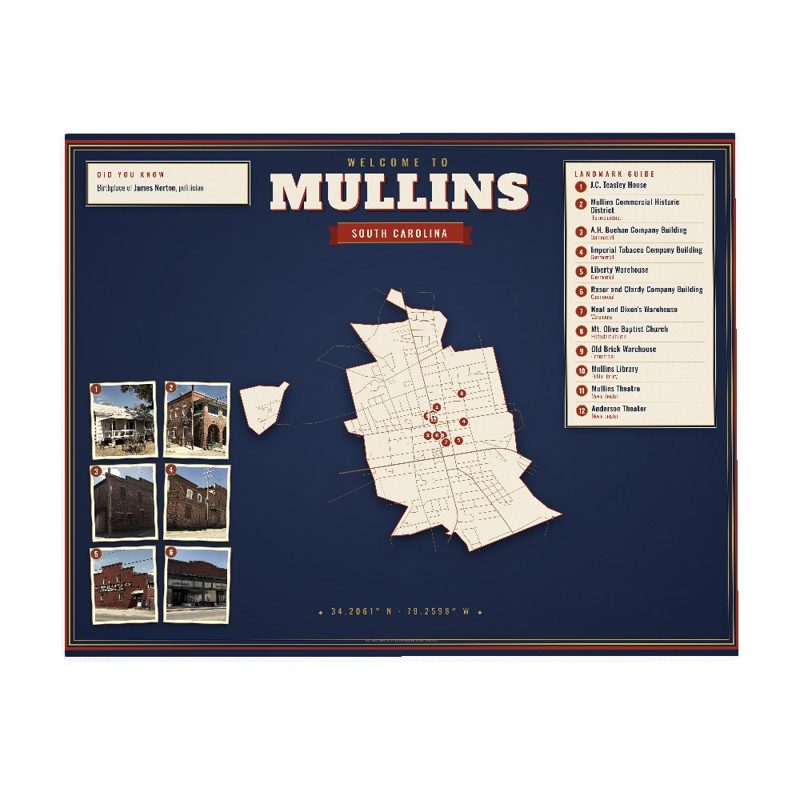
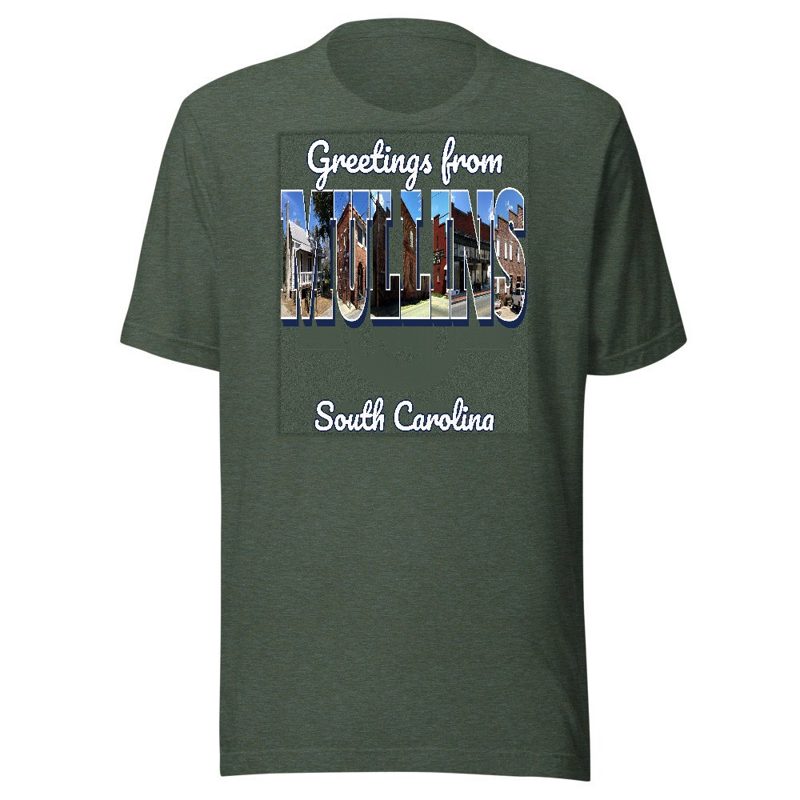
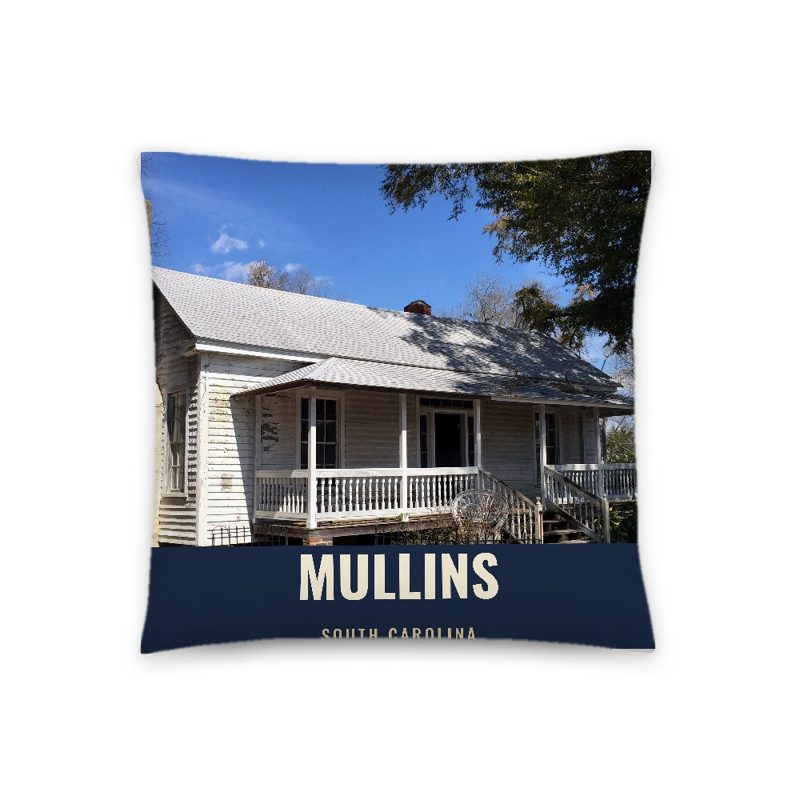
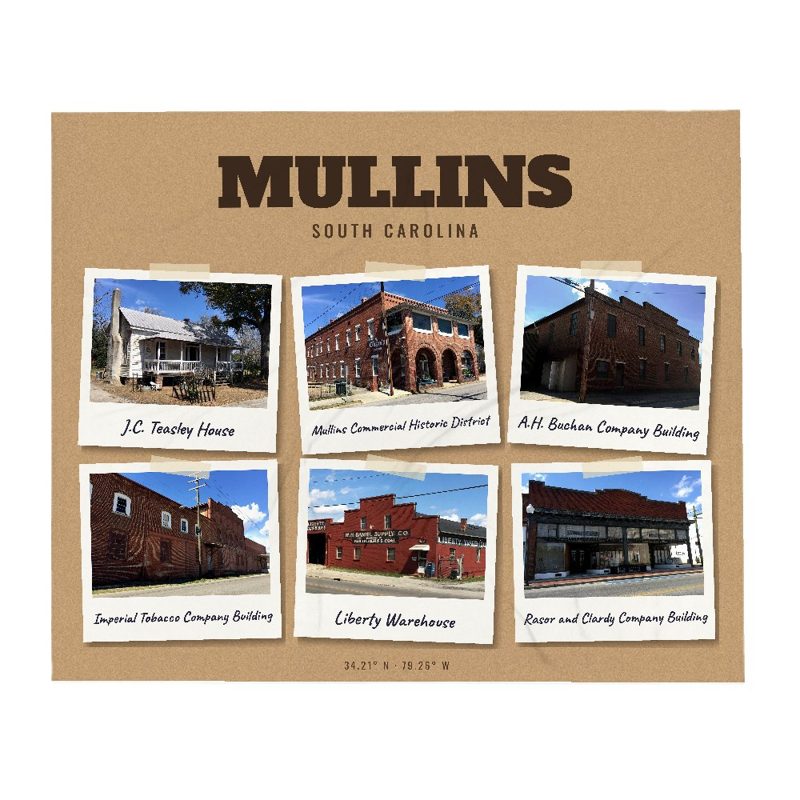
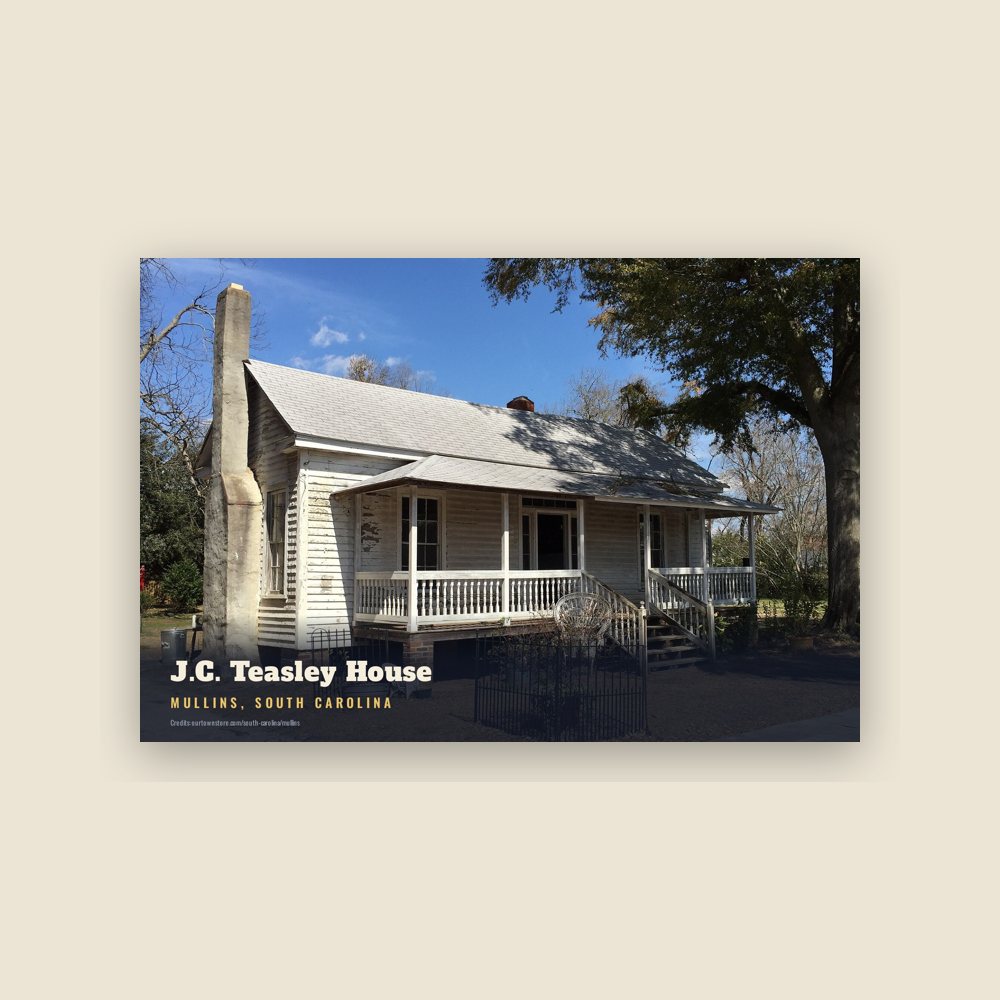
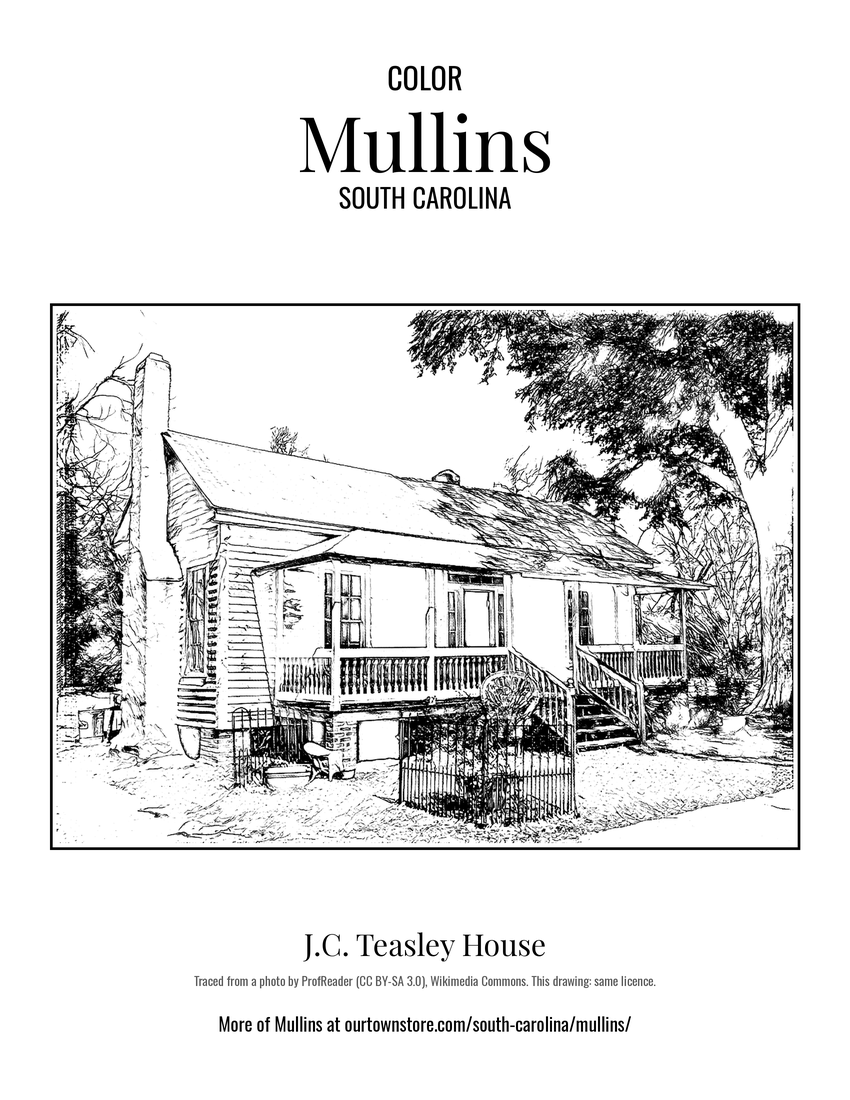 J.C. Teasley House
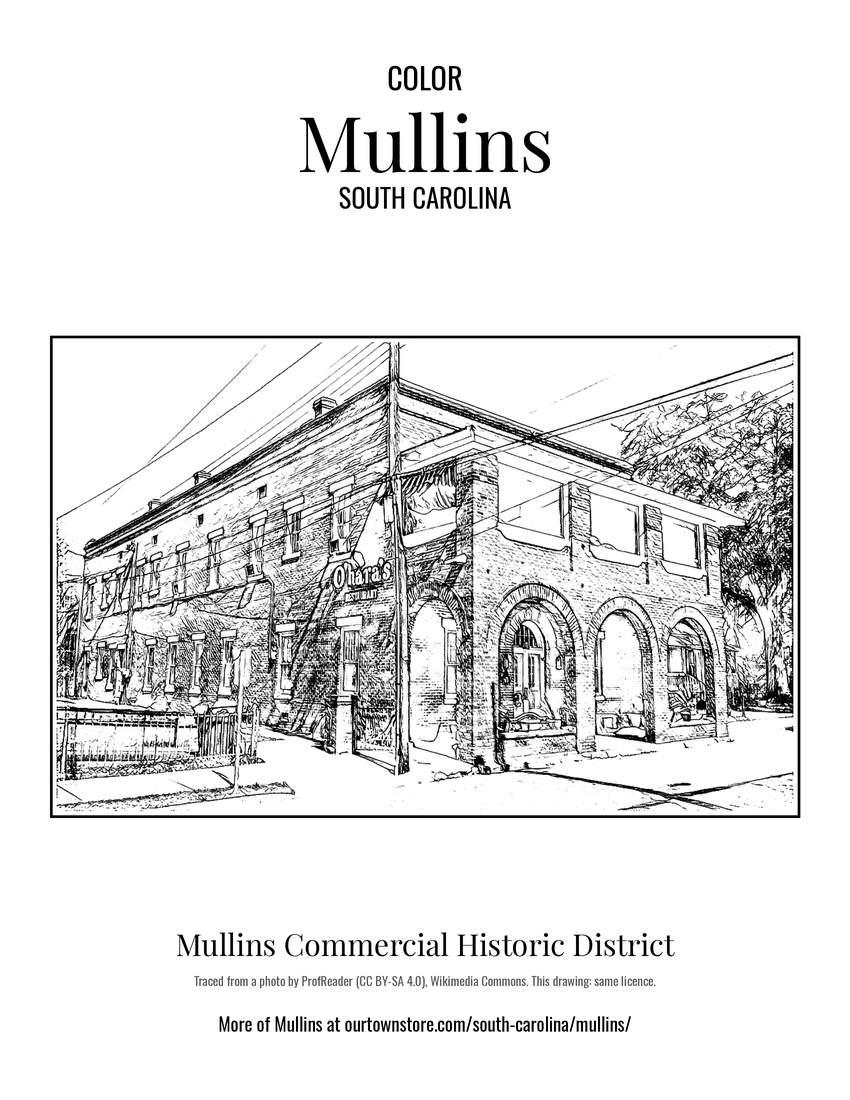 Mullins Commercial Historic District
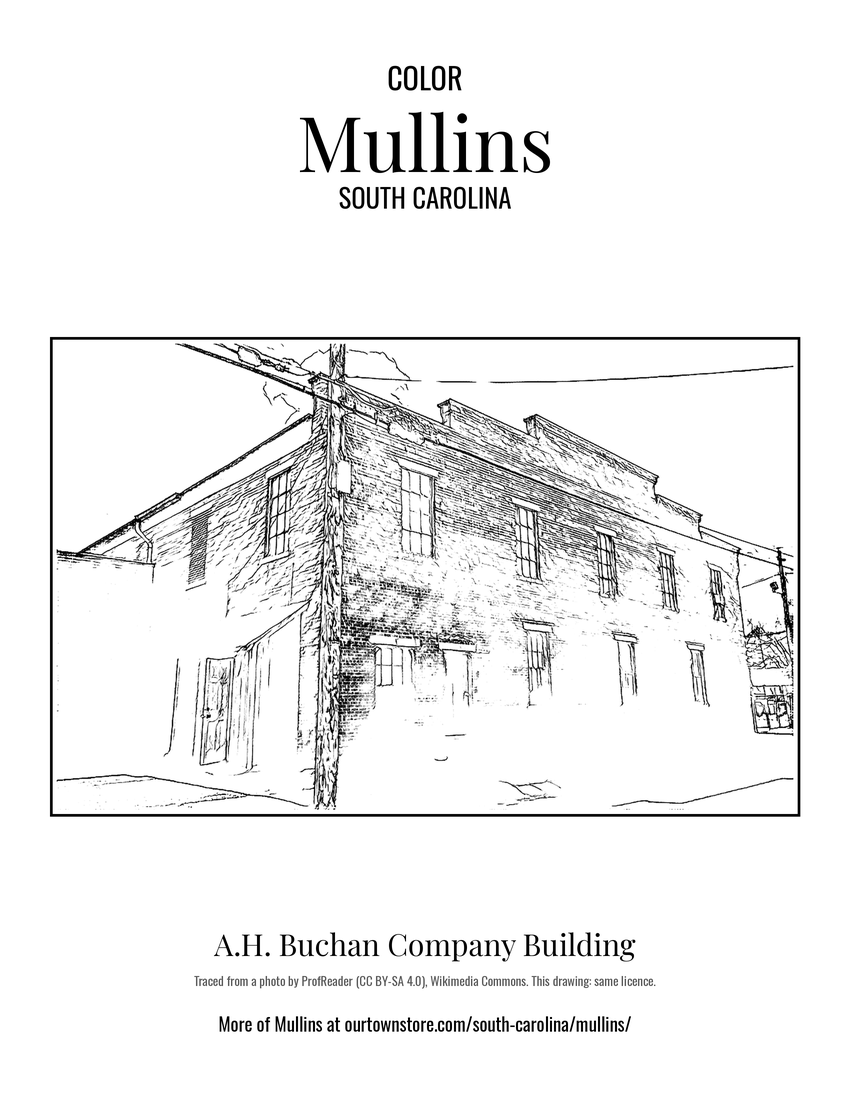 A.H. Buchan Company Building
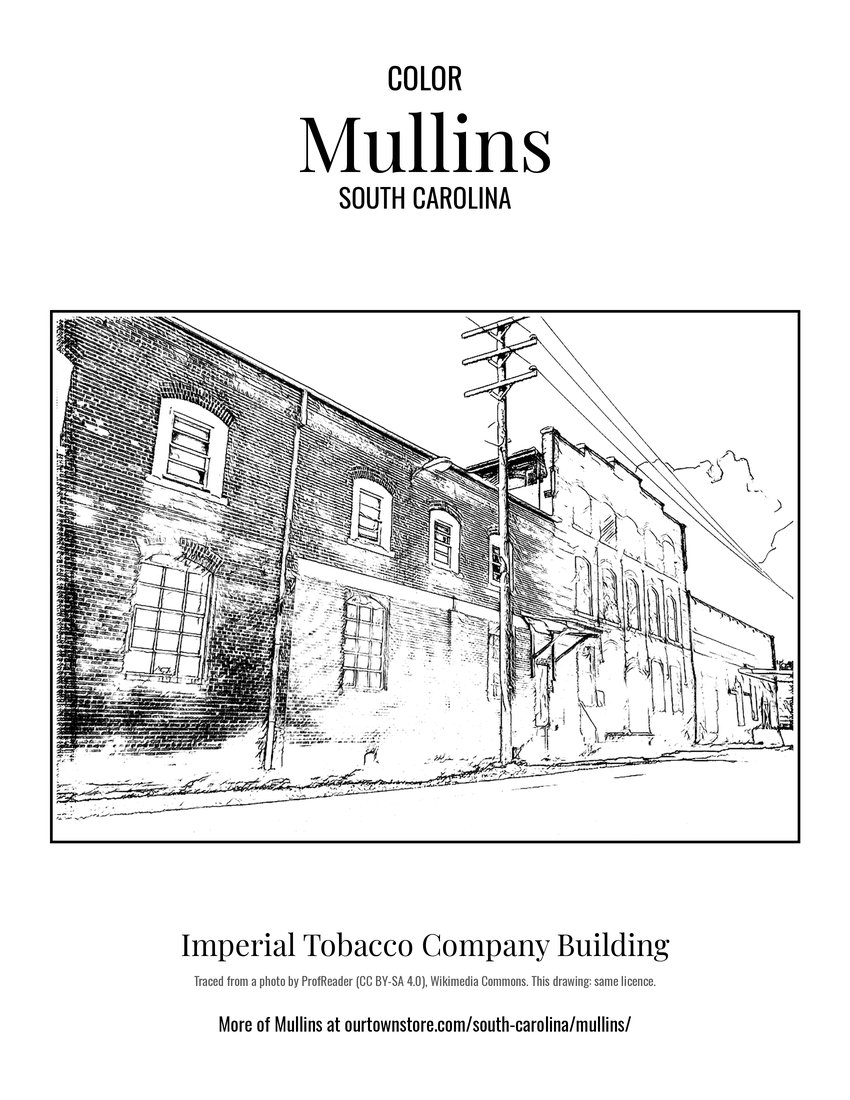 Imperial Tobacco Company Building