A short history of Fort Mill
The town of Fort Mill was established in 1873, getting its name from its location between two points, the first, a fort constructed by British in colonial times to protect the Catawba Indians from marauding tribes to the north, and the second point of Webb's Mill. The Catawba Indians made their home in present-day Fort Mill for many years. Scots-Irish settlers began arriving in the 1750s and 1760s and a small settlement soon developed. Fort Mill grew rapidly in the late 19th century as textile mills were established. After many textile mill shut-downs the town continued to grow rapidly and became a major suburb of Charlotte.
In the mid-18th century, William Spratt and his wife Elizabeth were traveling through upper South Carolina in their wagon. They spent a night among the friendly Catawba Indians and were invited to stay and live in the area on a large tract of land given to them. They became the first white settlers in the Fort Mill area and their descendants still reside there. Their descendant, John Spratt, represented the area in the U.S. House of Representatives from 1983 to 2011.
The town of Fort Mill was the site of the last Confederate Government Cabinet meeting (1865). Jefferson Davis and the Confederate Cabinet passed through the area during their flight from Richmond in 1865. The last meeting of the full Confederate Cabinet was held at the White Homestead in Fort Mill. Fort Mill's Confederate Park contains the nation's only monument to slaves laboring on the Confederate side of the American Civil War.
In the 1970s and 1980s, Fort Mill was the home to TV evangelist Jim Bakker's now defunct Heritage USA (now reopened as Heritage International Ministries).
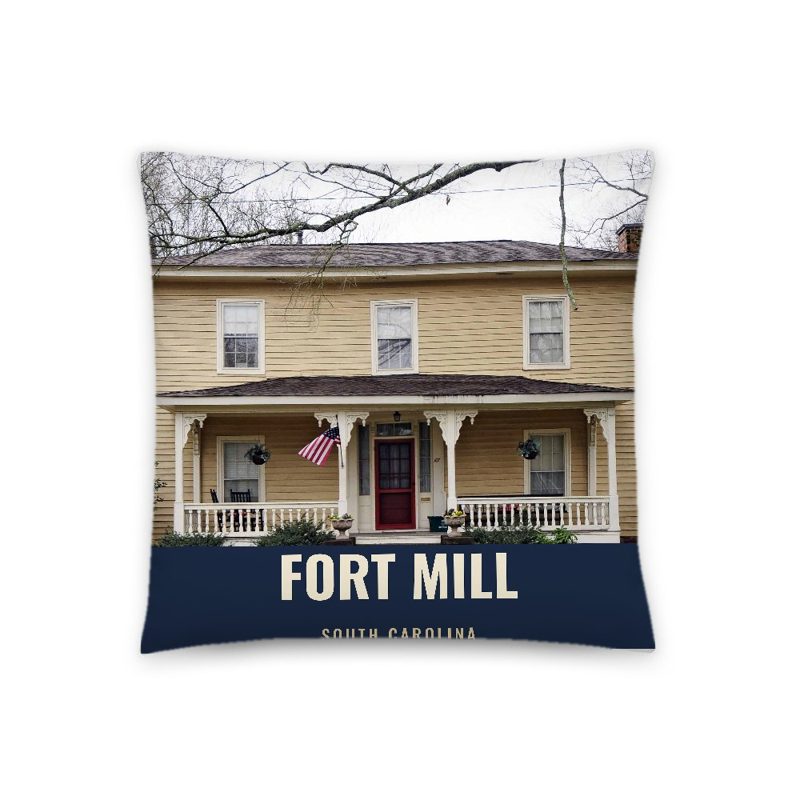
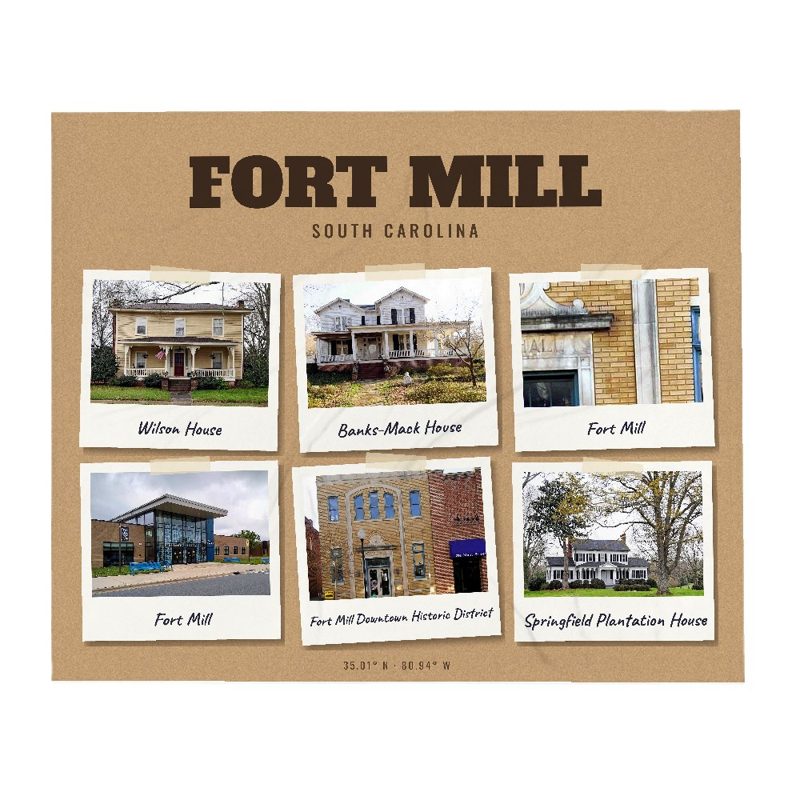
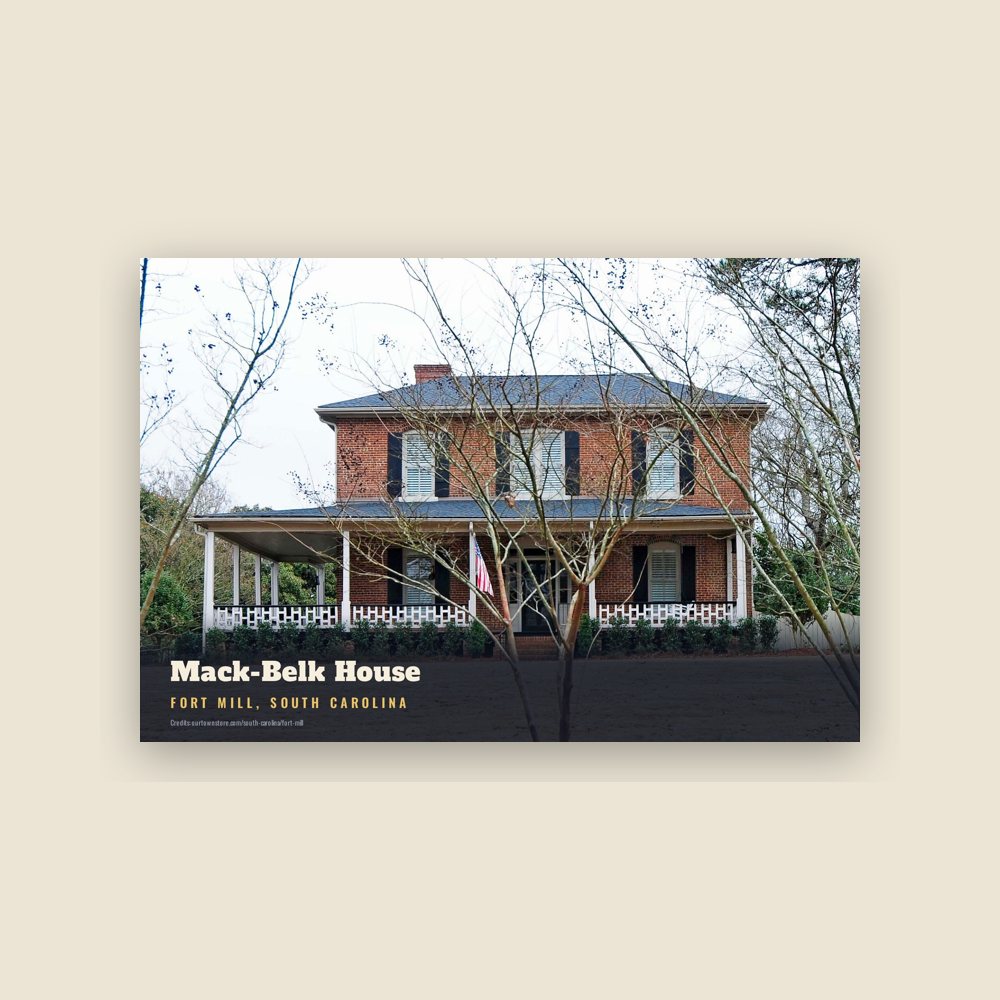
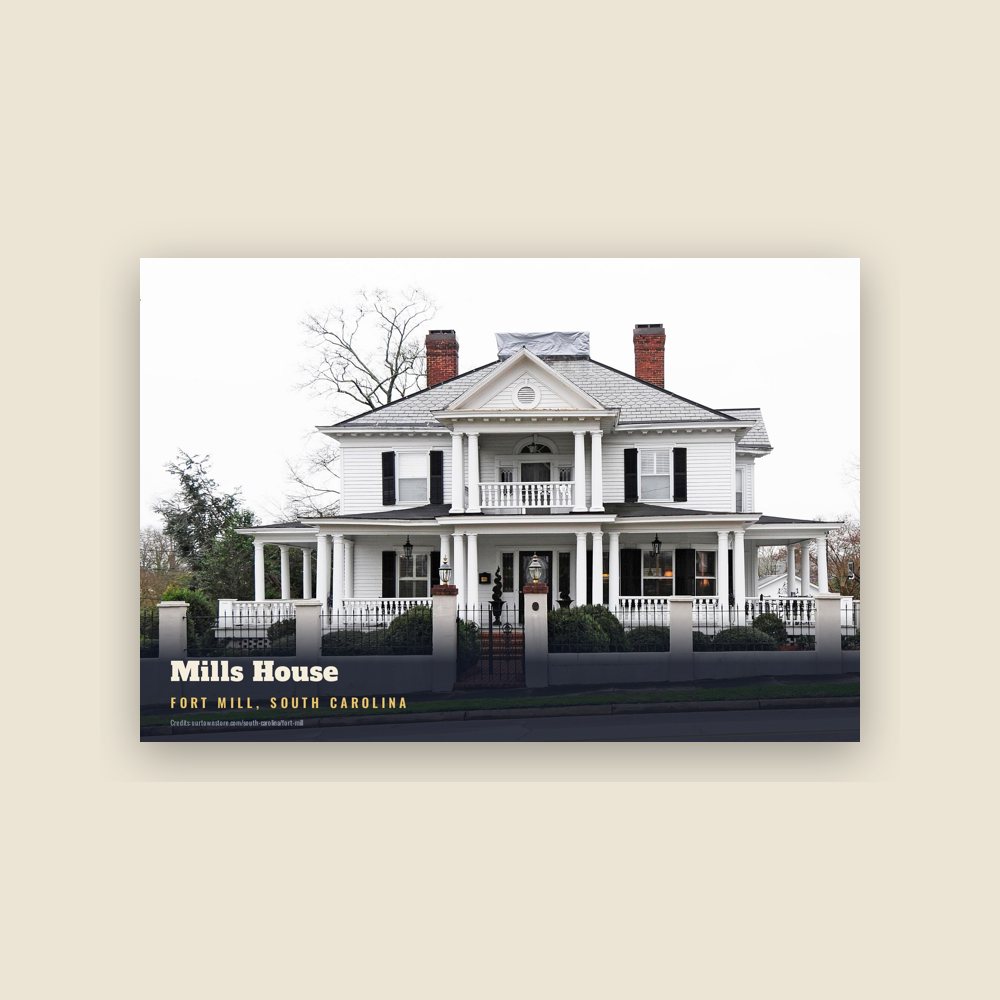
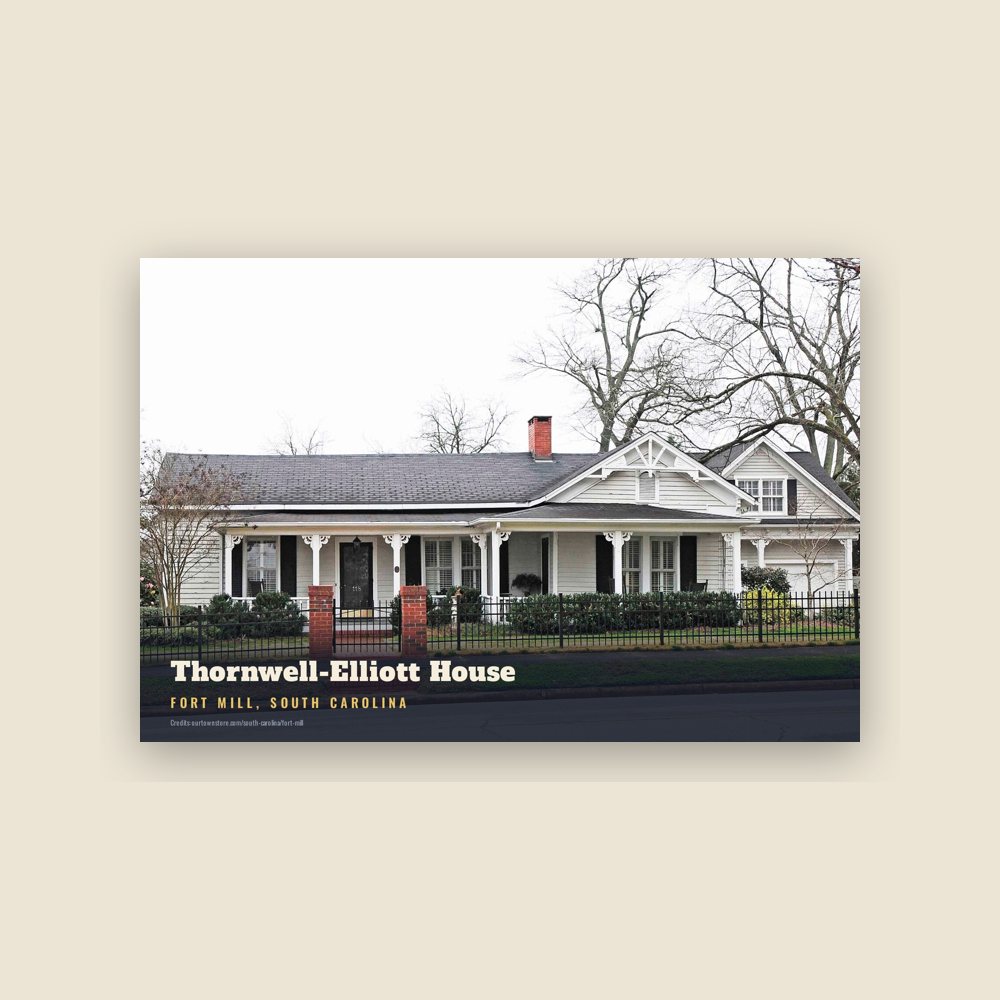
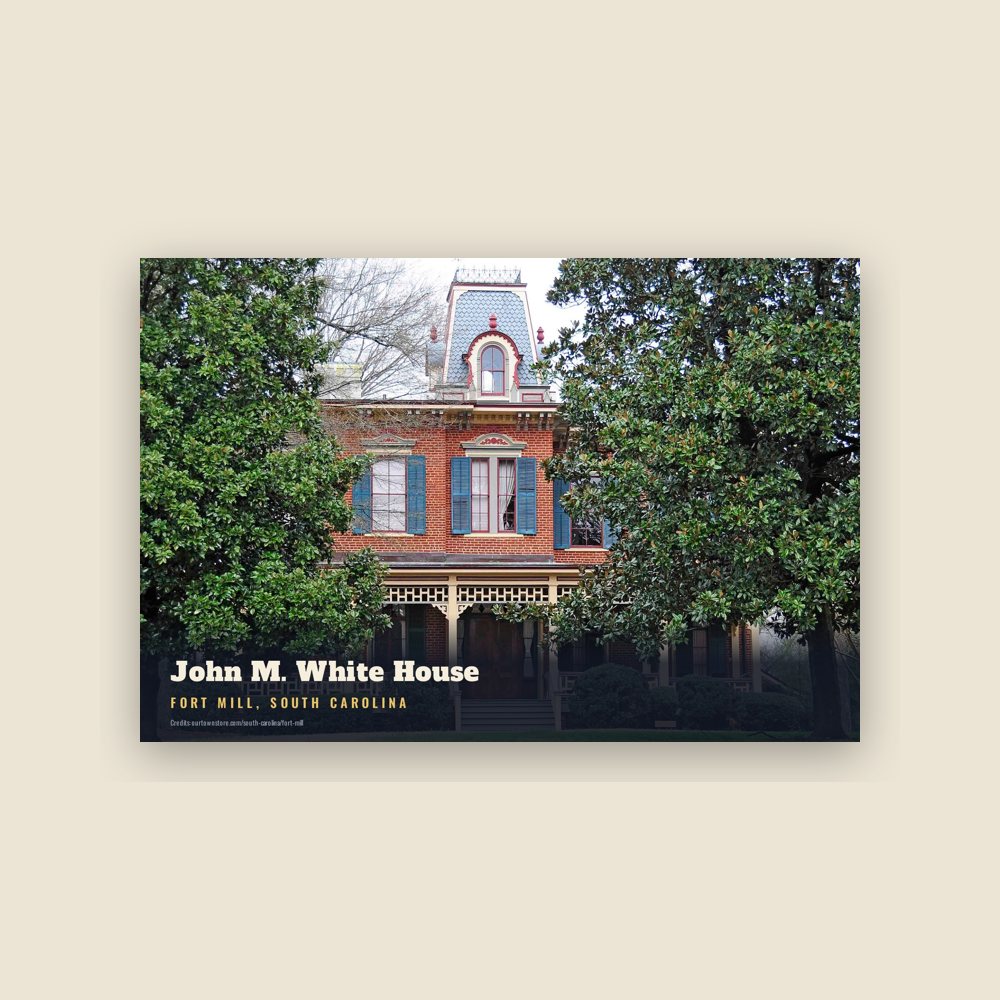
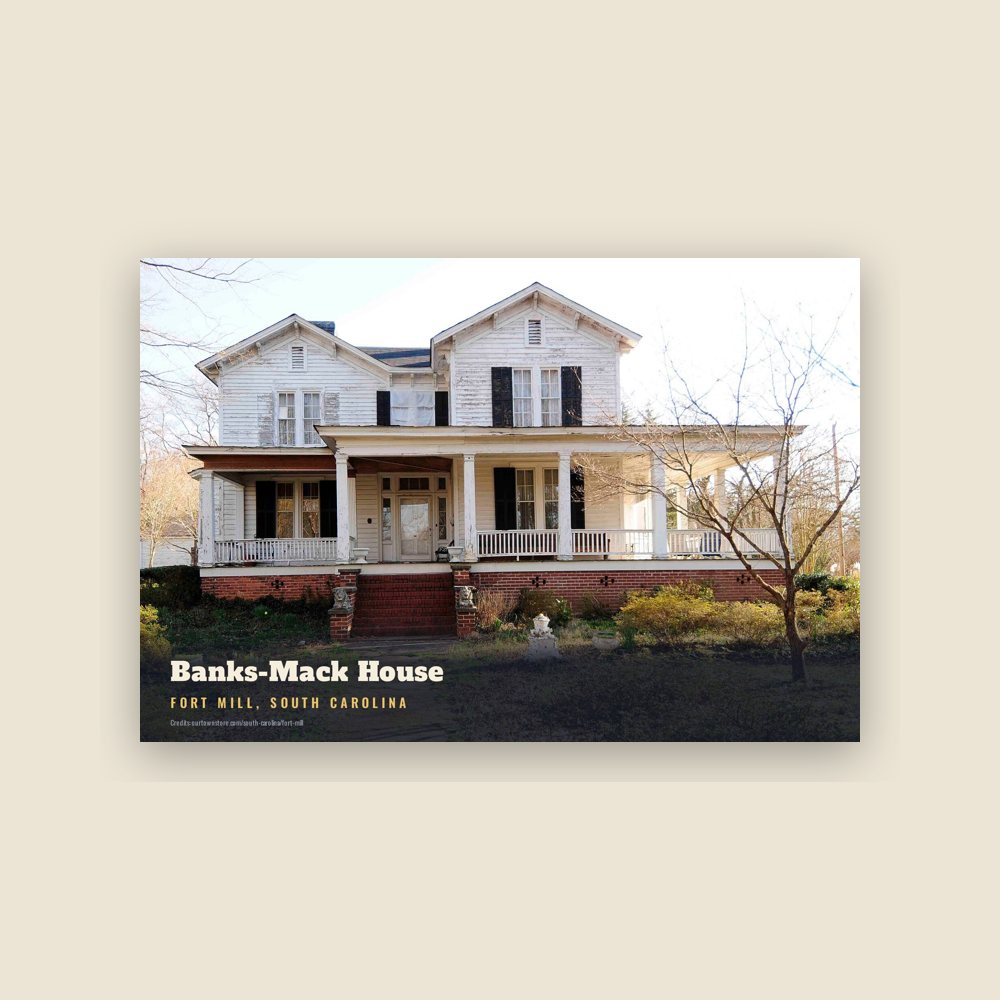
The Banks-Mack House, Fort Mill Downtown Historic District, Mack-Belk House, Mills House, Nation Ford Road, National Guard Armory, Spratt Cemetery, Springfield Plantation House, Thornwell-Elliott House, Unity Presbyterian Church Complex, John M. White House, William Elliott White House, and Wilson House are listed on the National Register of Historic Places.
Adapted (trimmed) from the Wikipedia article Fort Mill, South Carolina, revision 1380167784 by its contributors, licensed CC BY-SA 4.0.
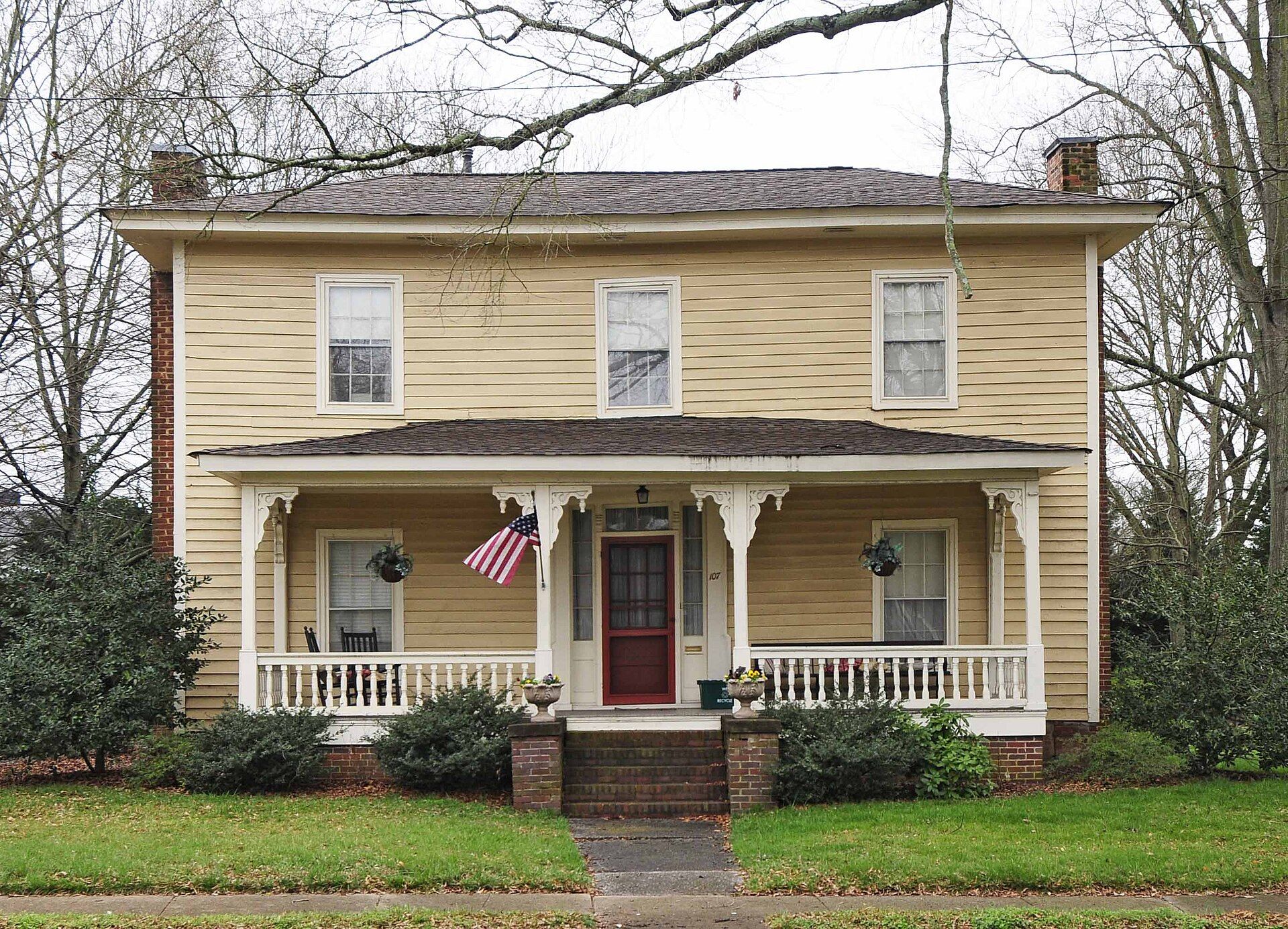
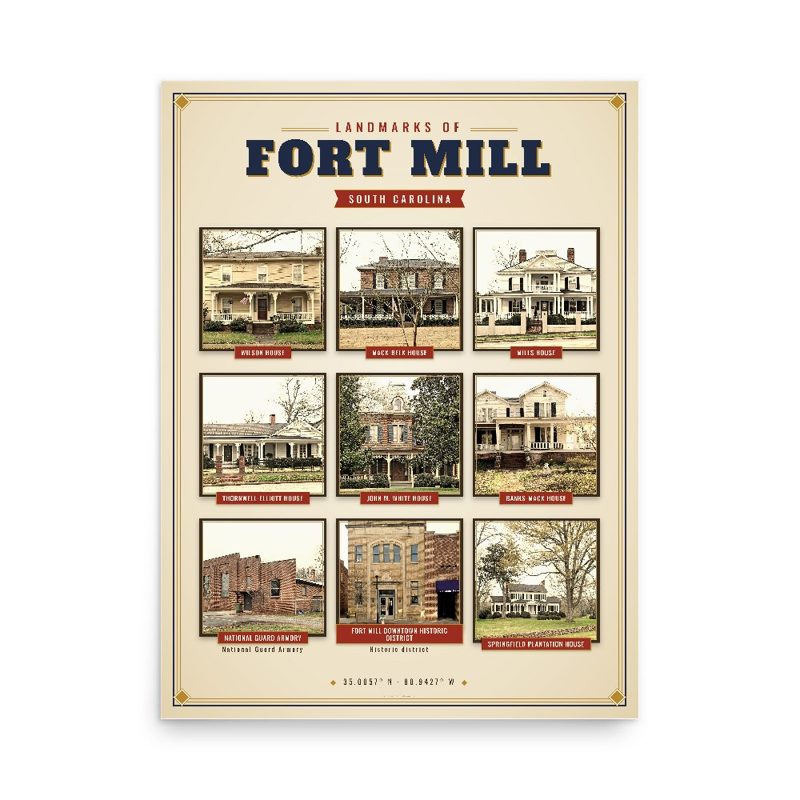
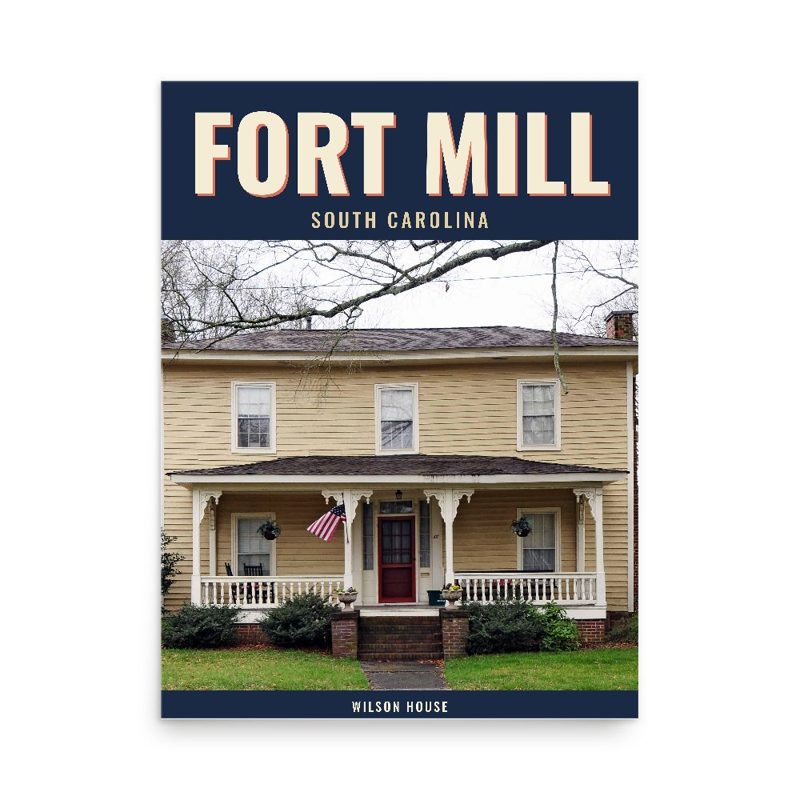
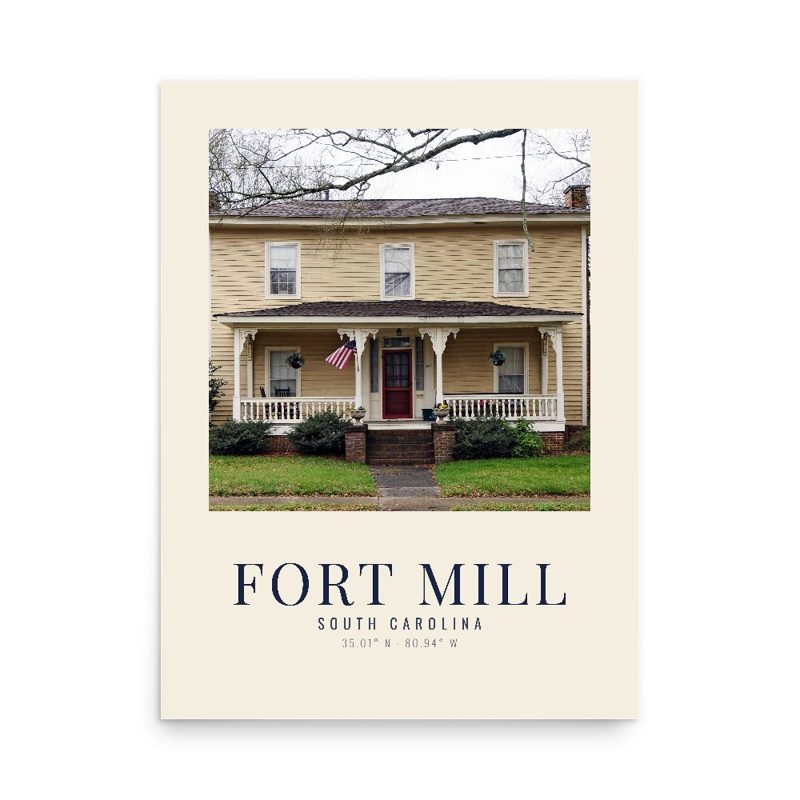
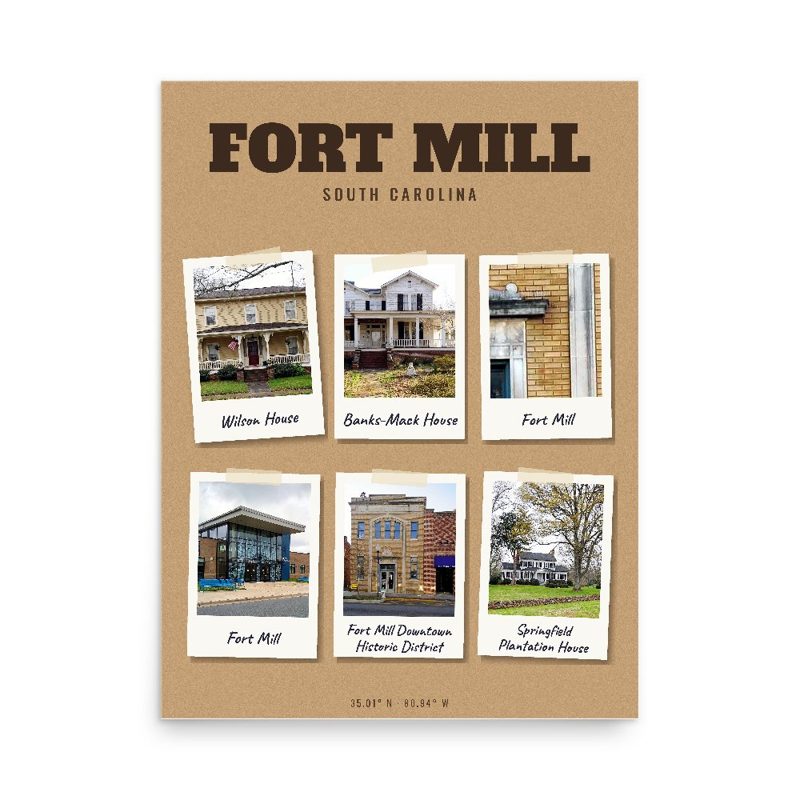
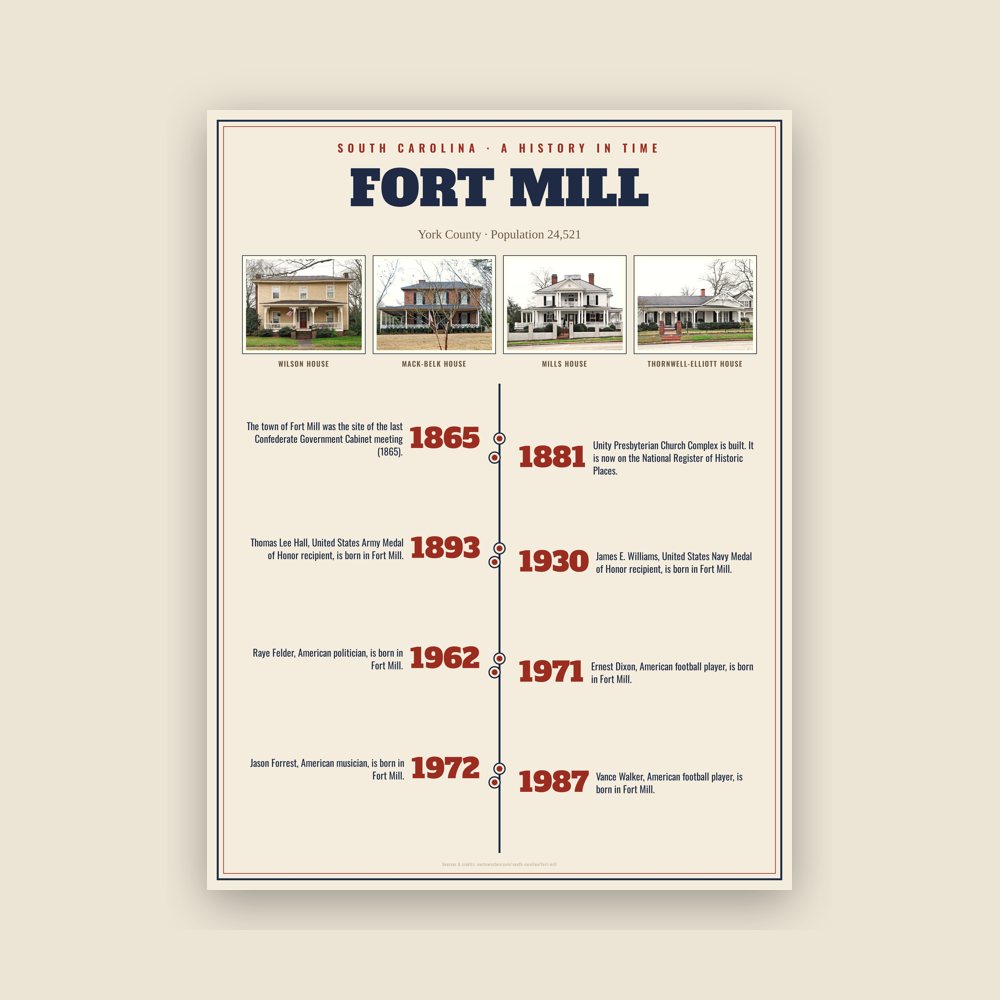
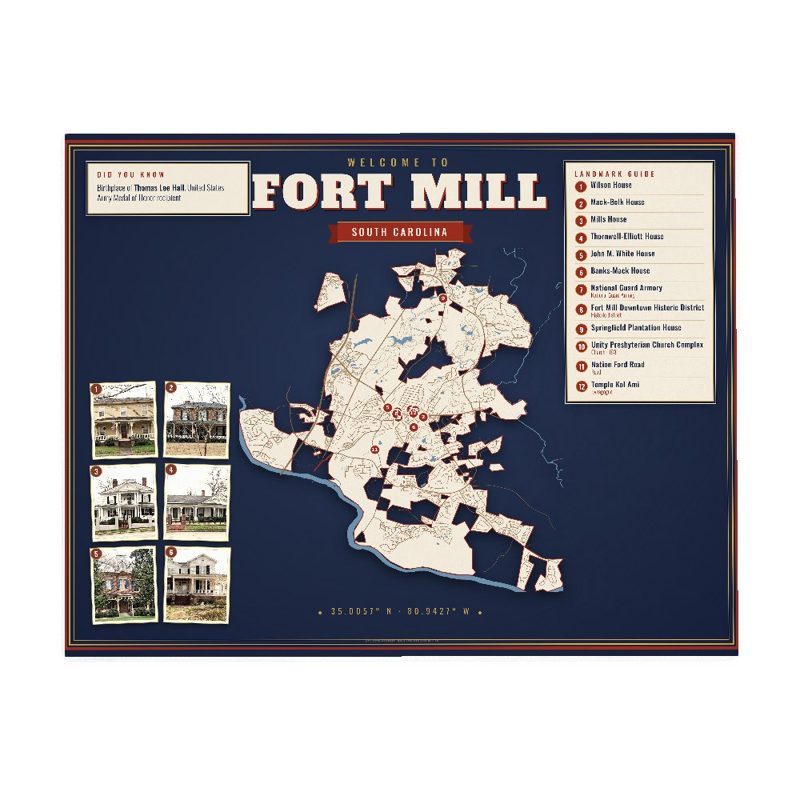

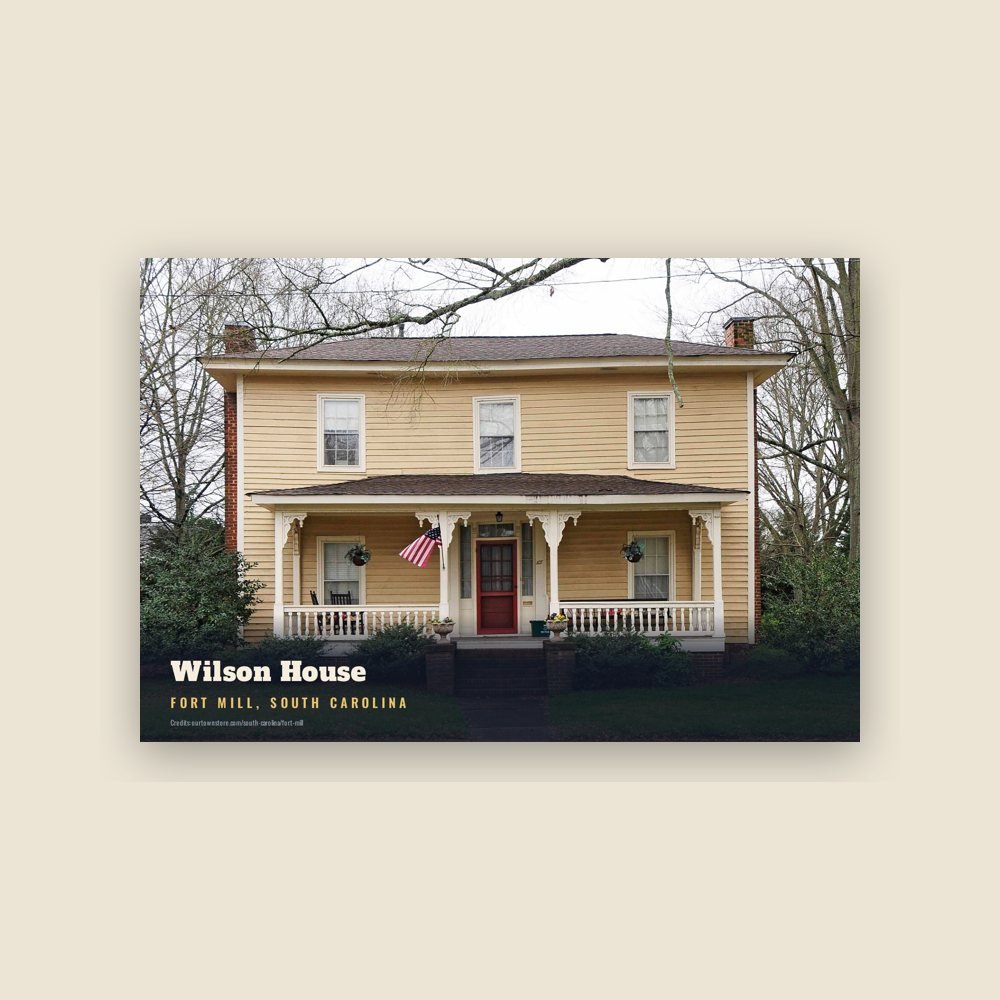
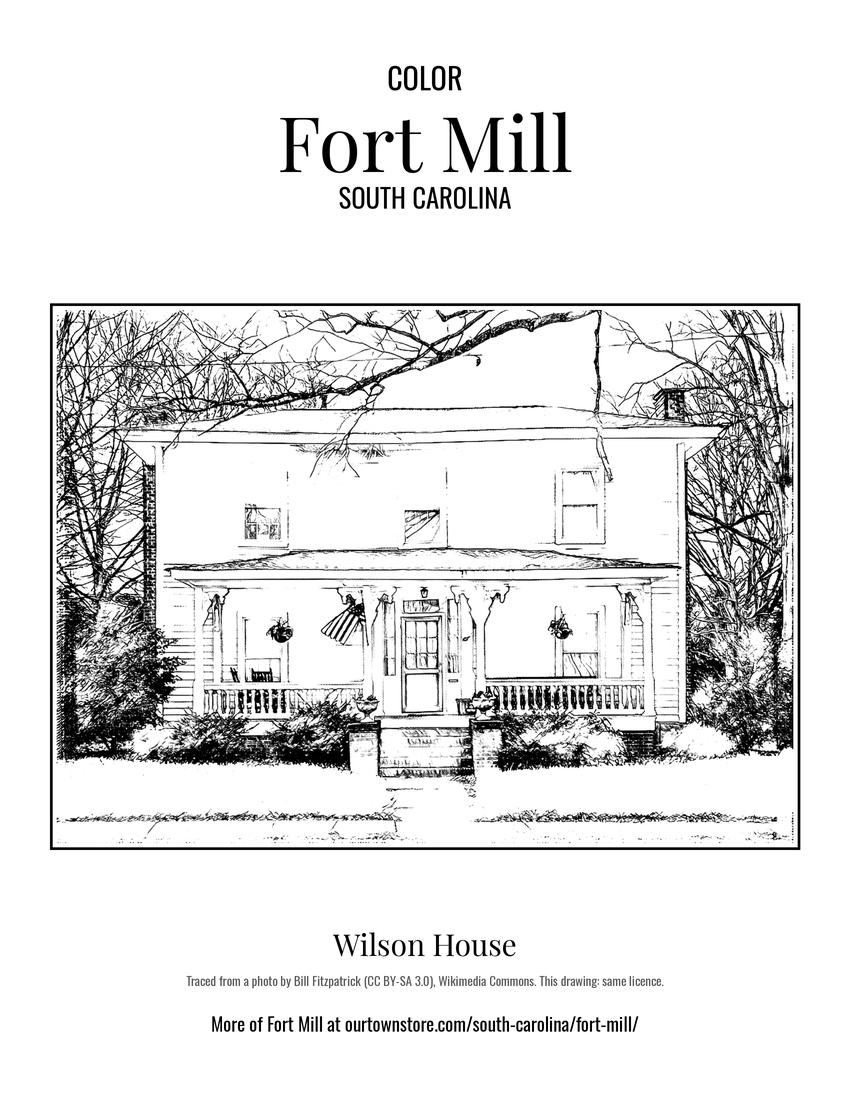 Wilson House
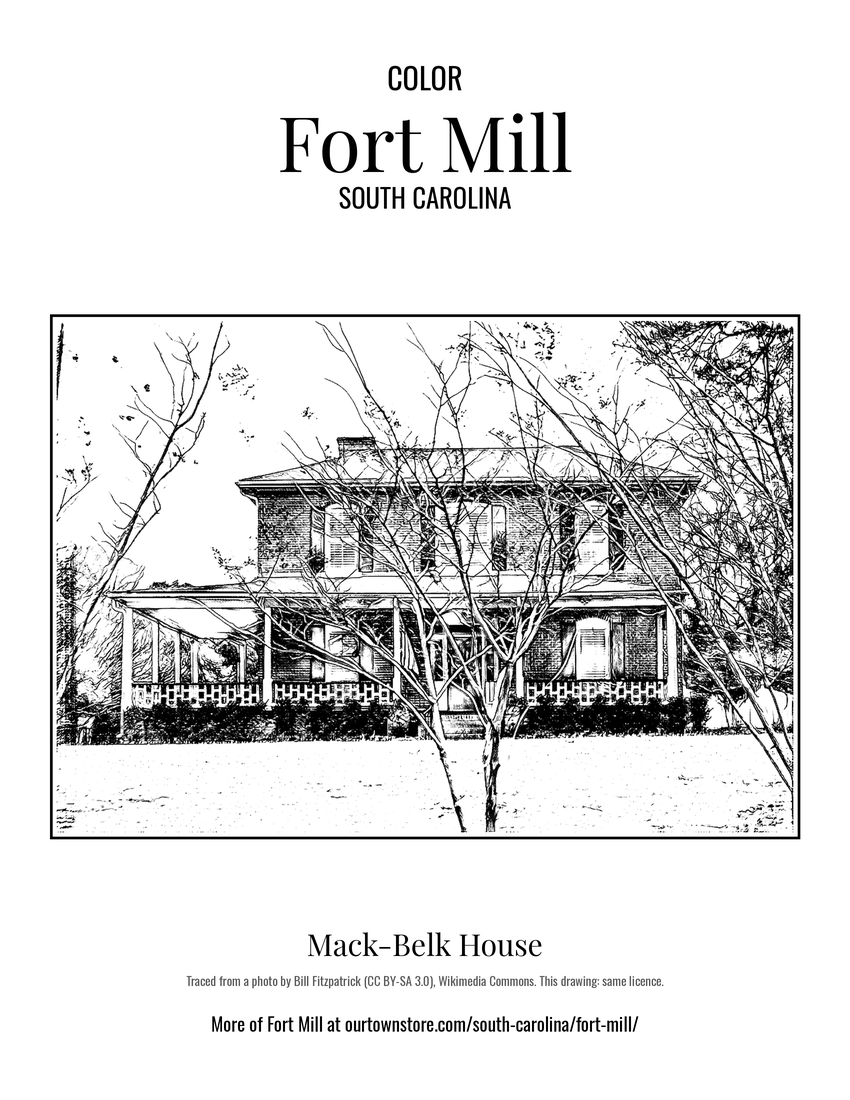 Mack-Belk House
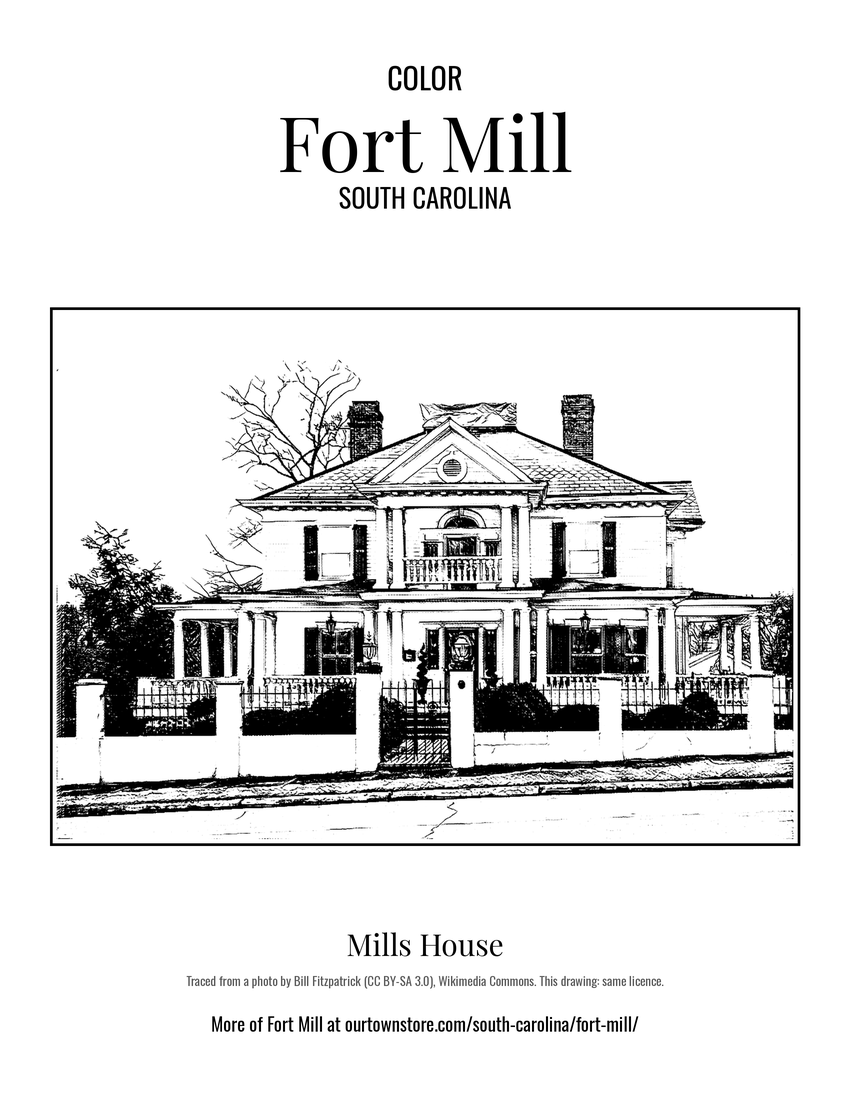 Mills House
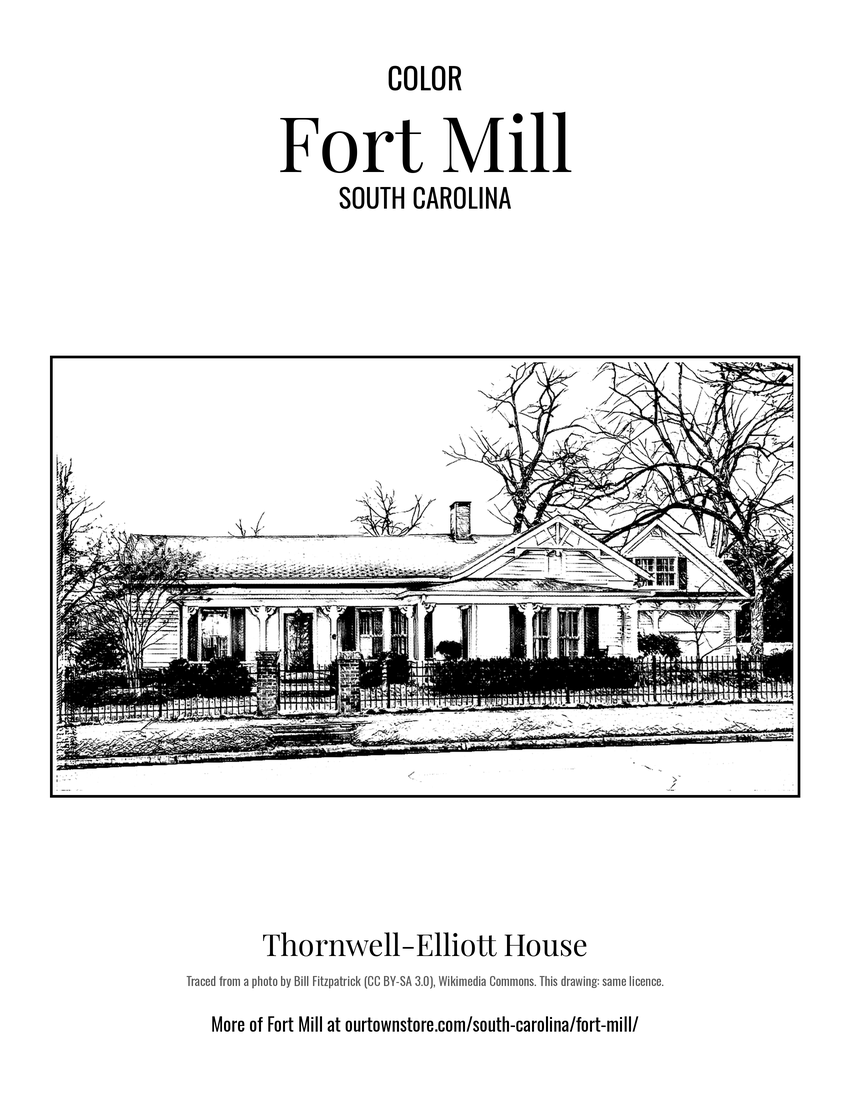 Thornwell-Elliott House