A short history of Duncan
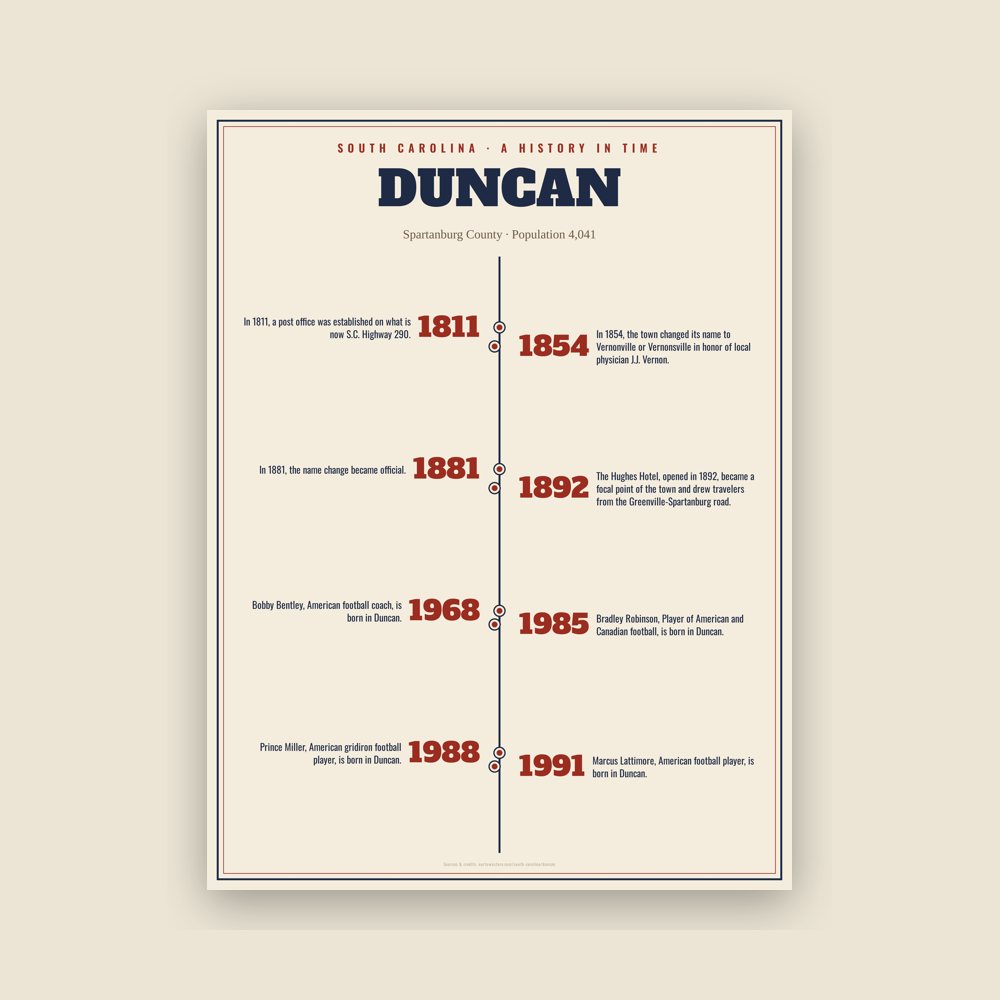
In 1811, a post office was established on what is now S.C. Highway 290. A tiny settlement formed around it, and both the post office and community were named New Hope. In 1854, the town changed its name to Vernonville or Vernonsville in honor of local physician J.J. Vernon.
In the mid-1850s, plans were under way to put a railroad line through Duncan, but the impending Civil War disrupted them. It was not until 1873 that the Atlanta and Richmond Railroad laid a line through the town.
Shortly after the Civil War, Leroy Duncan came to town and bought land. During celebrations for the new railroad line, he promised townspeople he would provide land for city streets if they would agree to rename the town after him. In 1881, the name change became official.
Duncan became the site of a footnote in Spartanburg County's African-American history when the Rock Hill Negro School opened in Duncan in 1881.
Within two years of its name change, Duncan had a population of 200, along with several general stores, saw and flour mills and a cotton gin. The town received its charter in 1889.
The Hughes Hotel, opened in 1892, became a focal point of the town and drew travelers from the Greenville-Spartanburg road.
Adapted (trimmed) from the Wikipedia article Duncan, South Carolina, revision 1378772360 by its contributors, licensed CC BY-SA 4.0.