Chapin was named after Martin Chapin in 1889. Chapin is the birthplace of Iron & Wine, musician.
- CountyLexington County
- Population1,809 (2020 U.S. Census)
- Historic places1 on the National Register
Chapin, South Carolina gifts and souvenirs: 28 designs made from Chapin's own map, landmarks and history, from $10 to $99. Printed to order and shipped free in the USA.
| Popular | Price |
|---|---|
| Chapin Hometown Ornament | $23 |
| Chapin Vintage Travel Poster | from $40 |
| Chapin Varsity Crewneck | from $57 |
| Chapin Est. Tee | from $33 |
| Chapin Town Line Mug | from $26 |
| Chapin Market Tote | $37 |
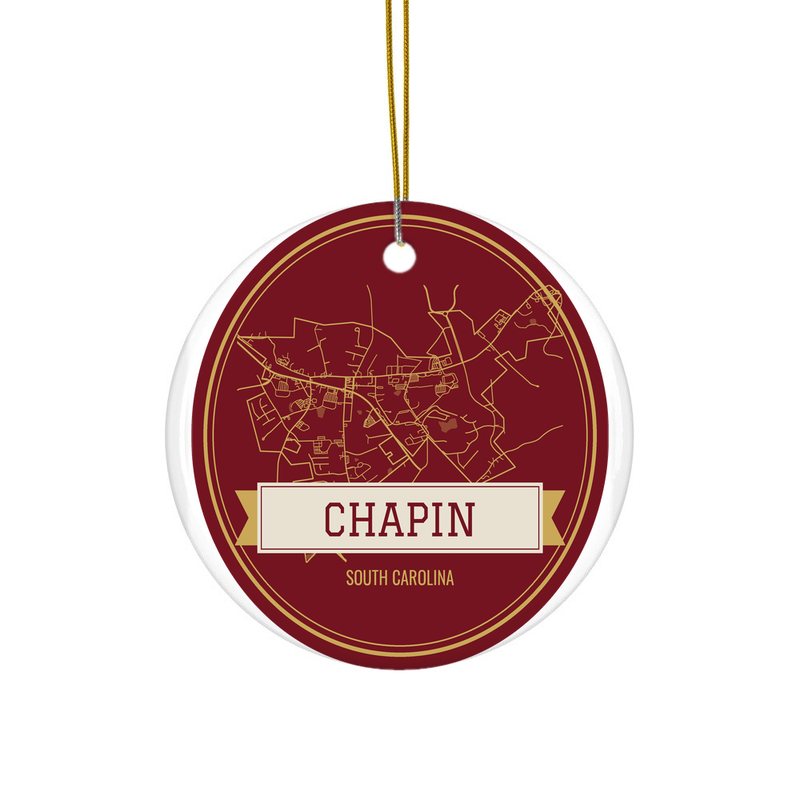
Ceramic keepsake, gold ribbon
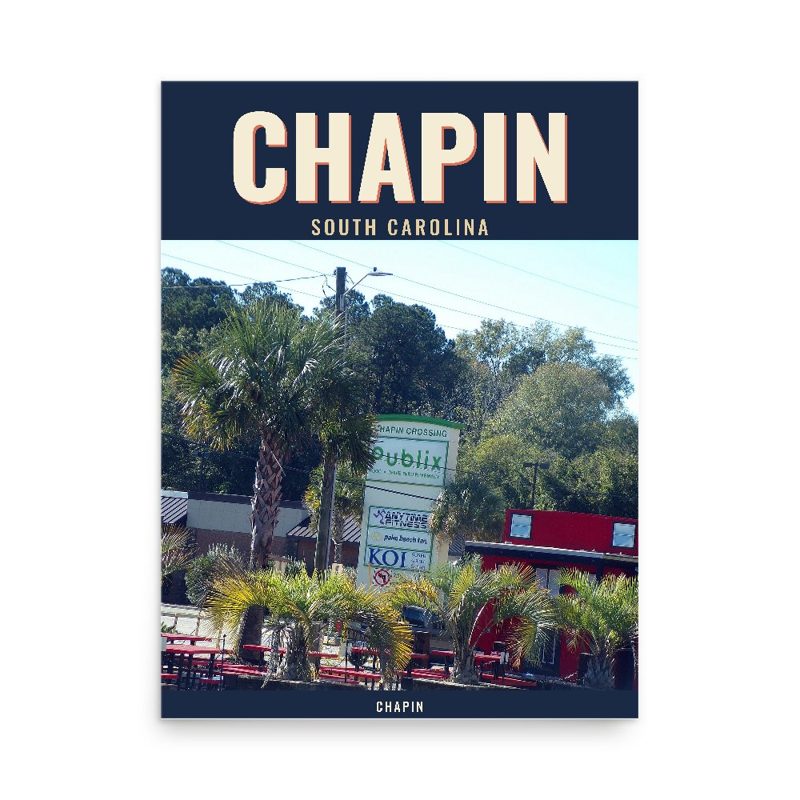
Its landmark photo in a classic travel-poster layout
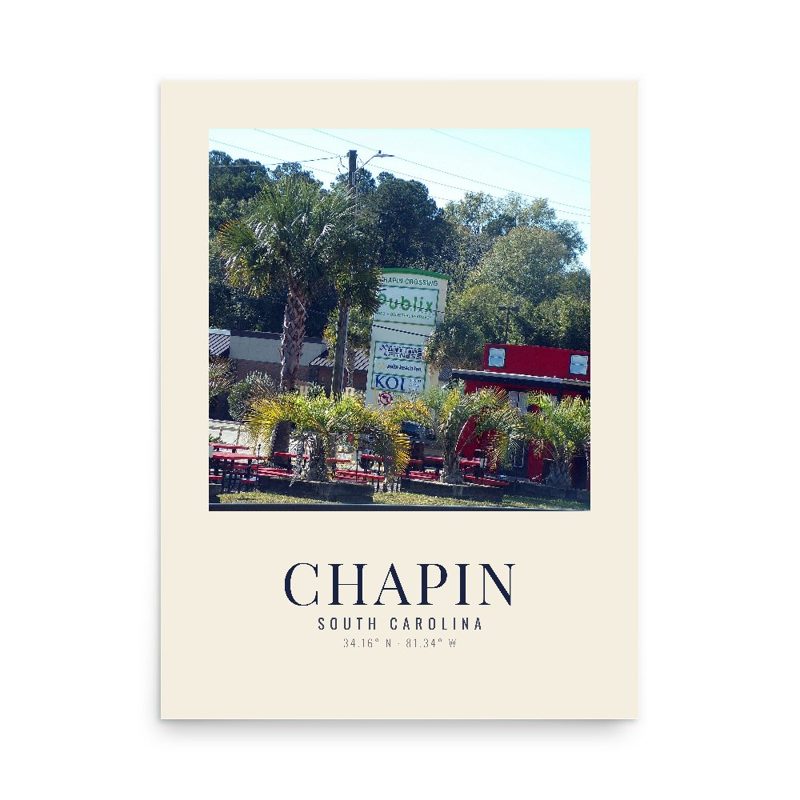
A local landmark photo as a gallery print
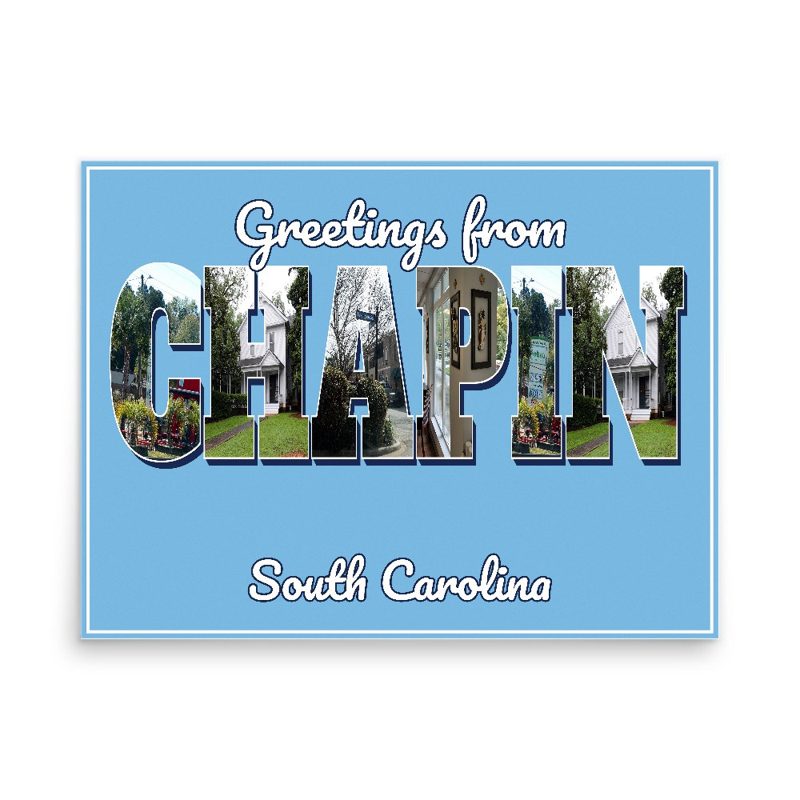
Classic large-letter postcard art, filled with local photos
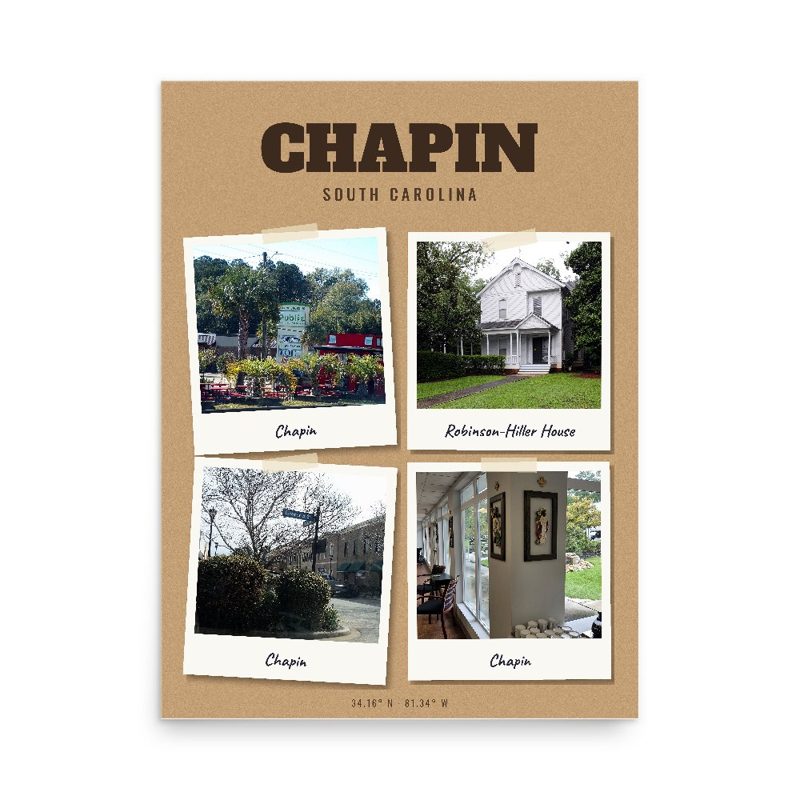
Six local landmarks as instant photos on kraft paper
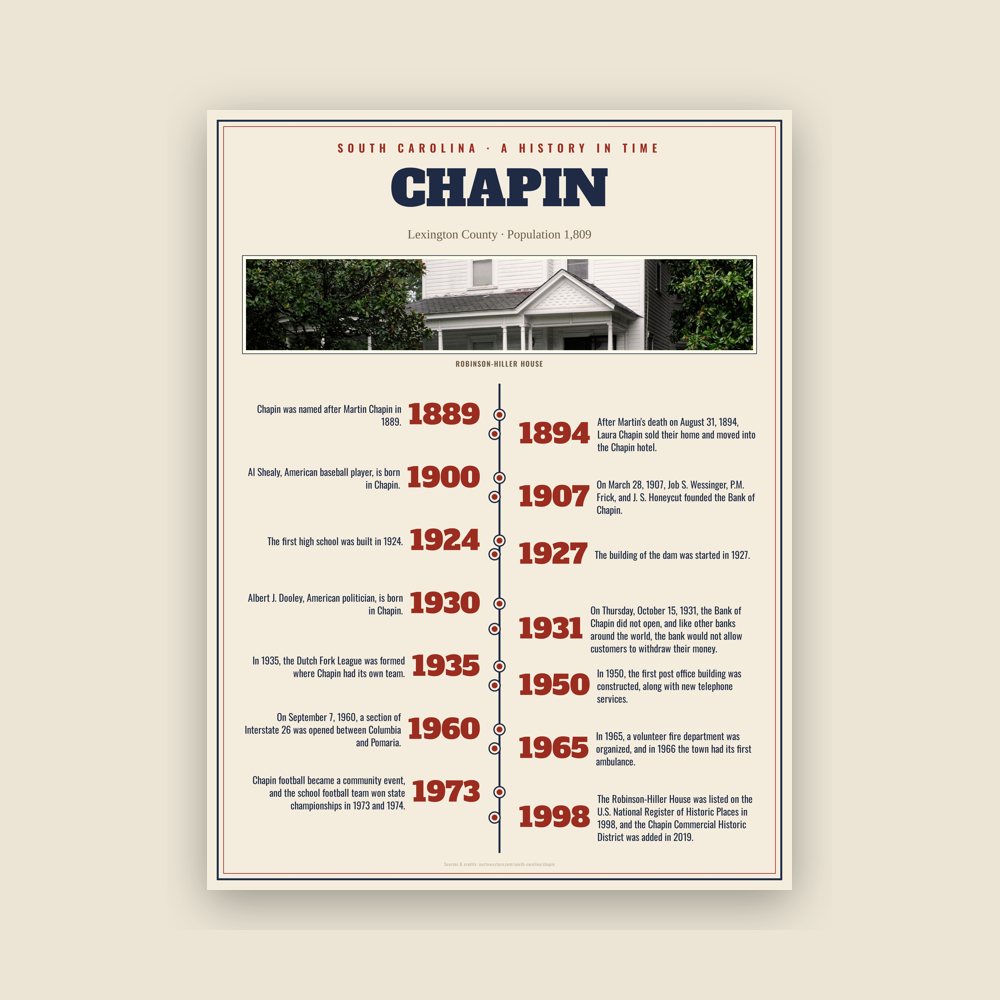
The town's story in dates, from its own records, for home or classroom
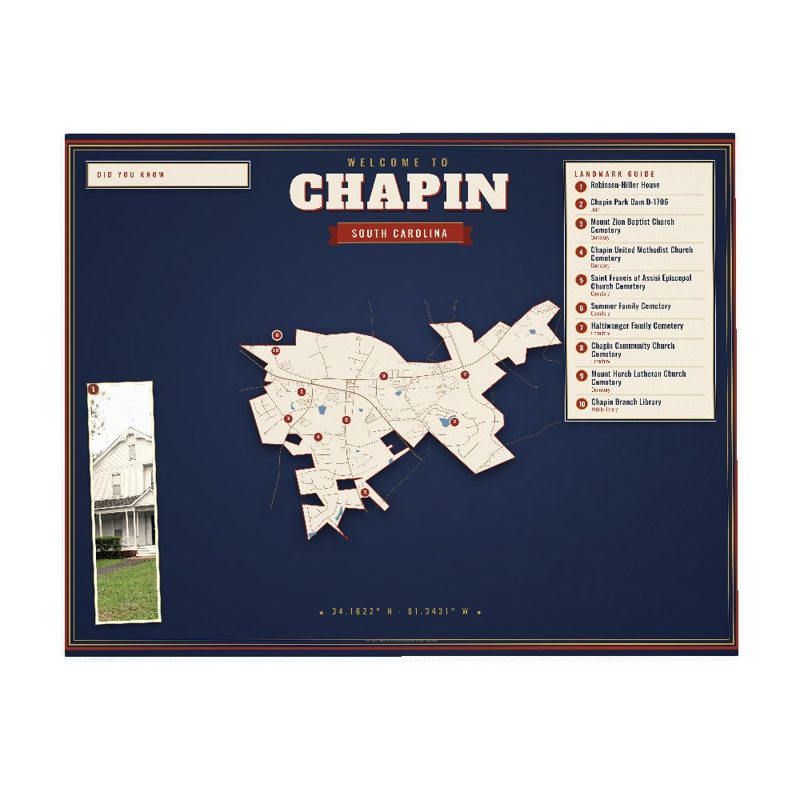
Map of local landmarks, washable fabric

Heavy-blend fleece, street map printed on the back
Soft Bella+Canvas jersey
Kids' Bella+Canvas jersey, youth sizes

Bella+Canvas toddler jersey
Bella+Canvas baby bodysuit

Large-letter postcard art filled with local photos
Glossy ceramic, dishwasher safe

Large-letter postcard art filled with local photos, 11 oz ceramic
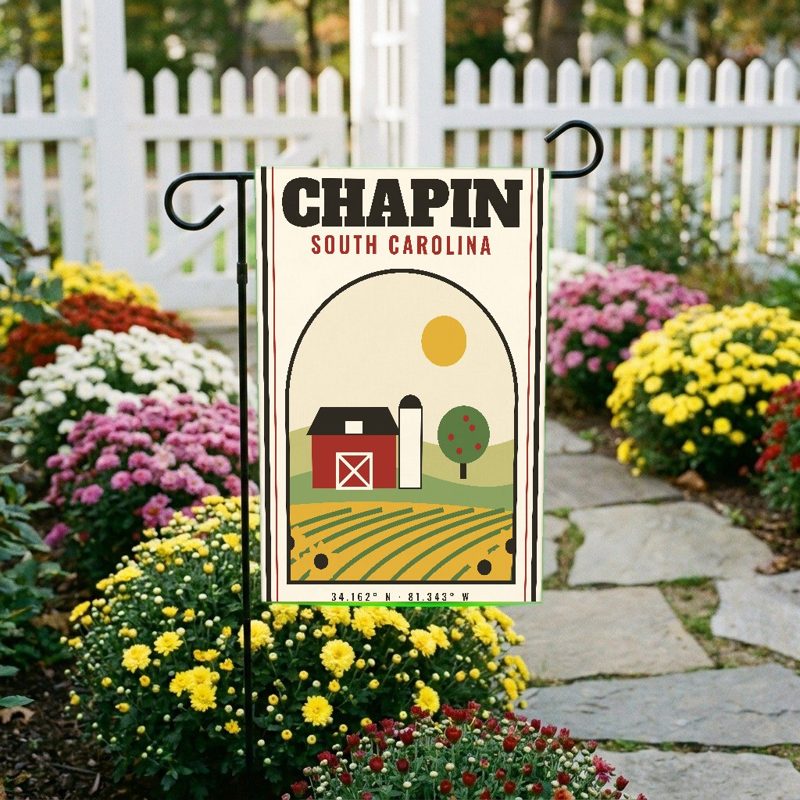
Weatherproof, for the front walk
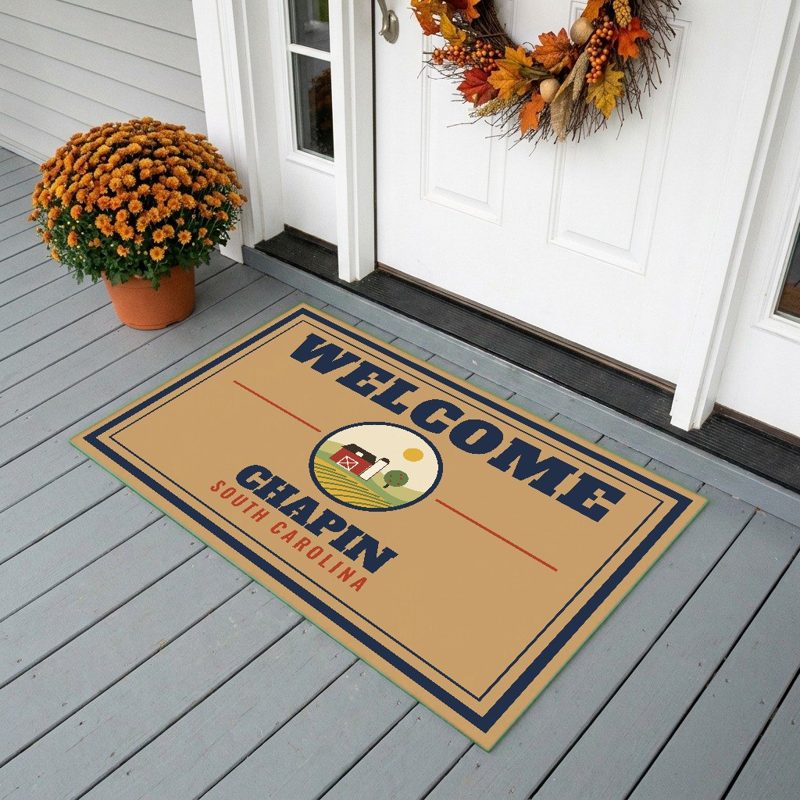
24″×16″, printed coir-look fibers, rubber back
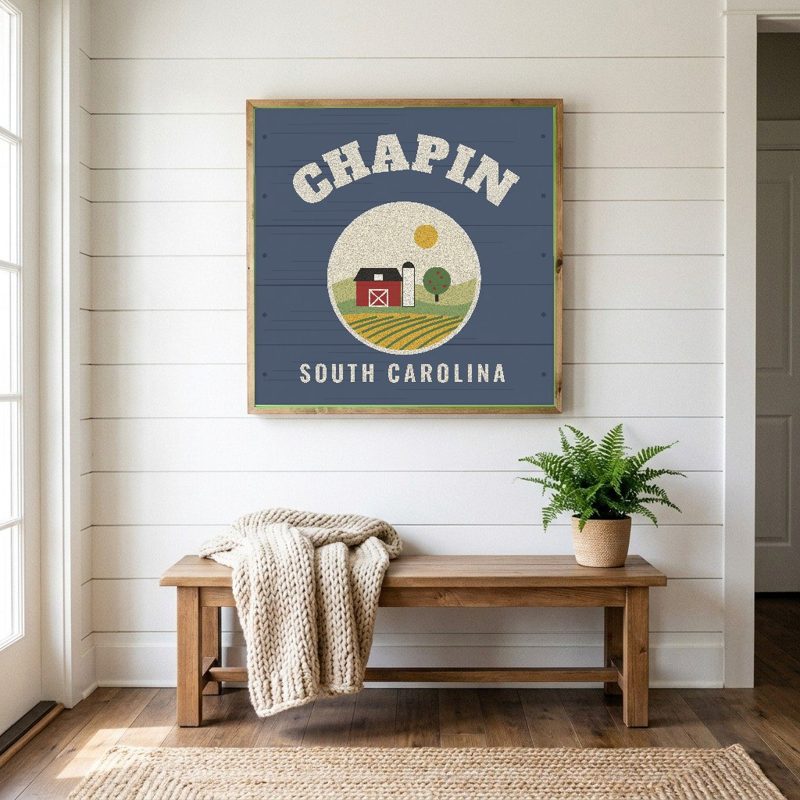
12″×12″ printed wood, ready to hang
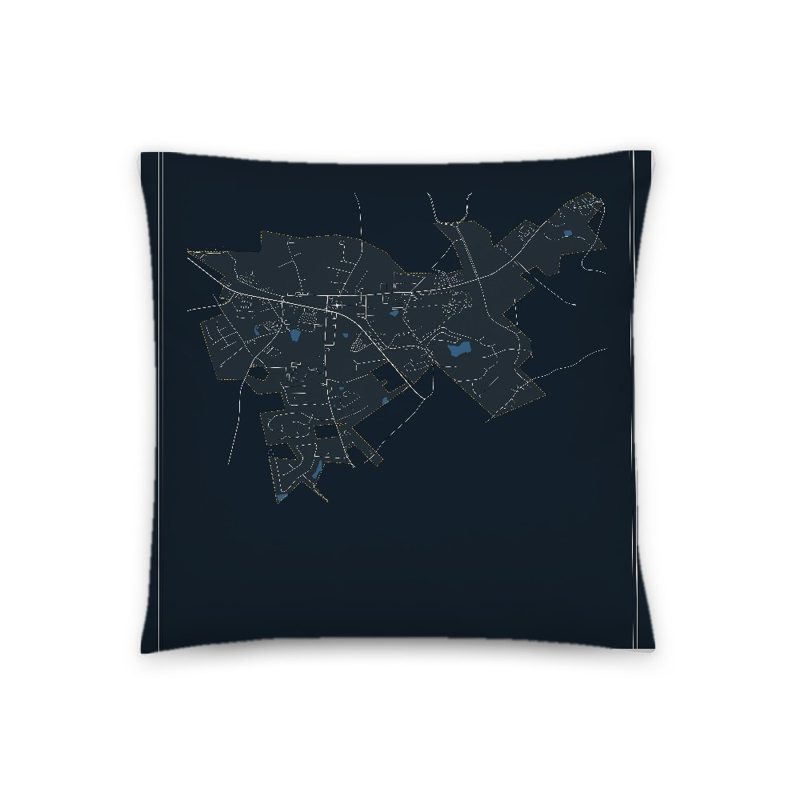
Soft-touch, zip cover
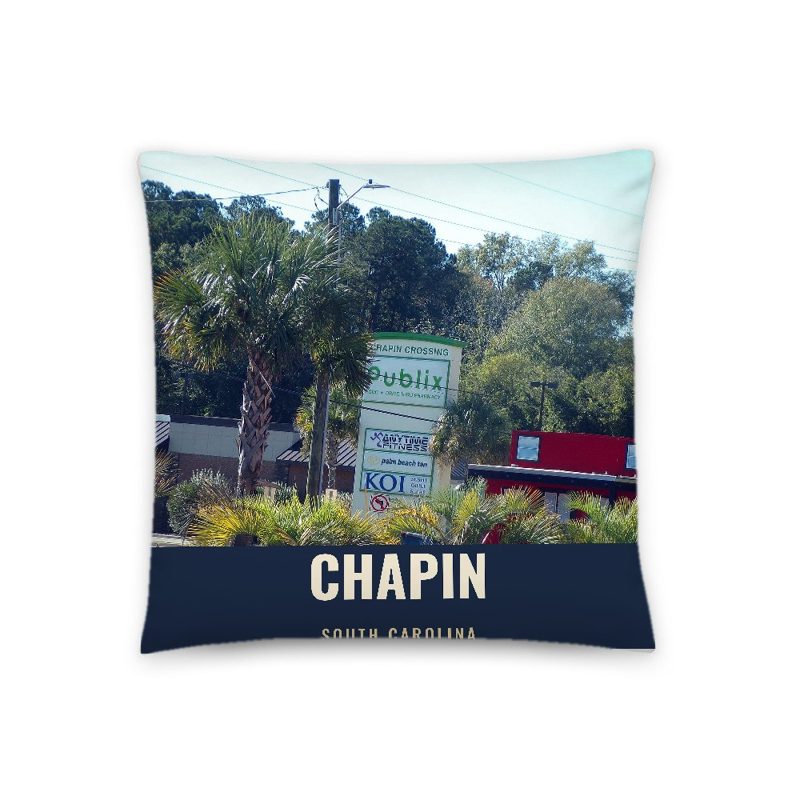
A local landmark photo with the town name, 18″×18″
Sturdy all-over-print tote

Large-letter postcard art on a sturdy tote

Foam-front trucker, printed (not embroidered) with local photos
Glossy top, cork back
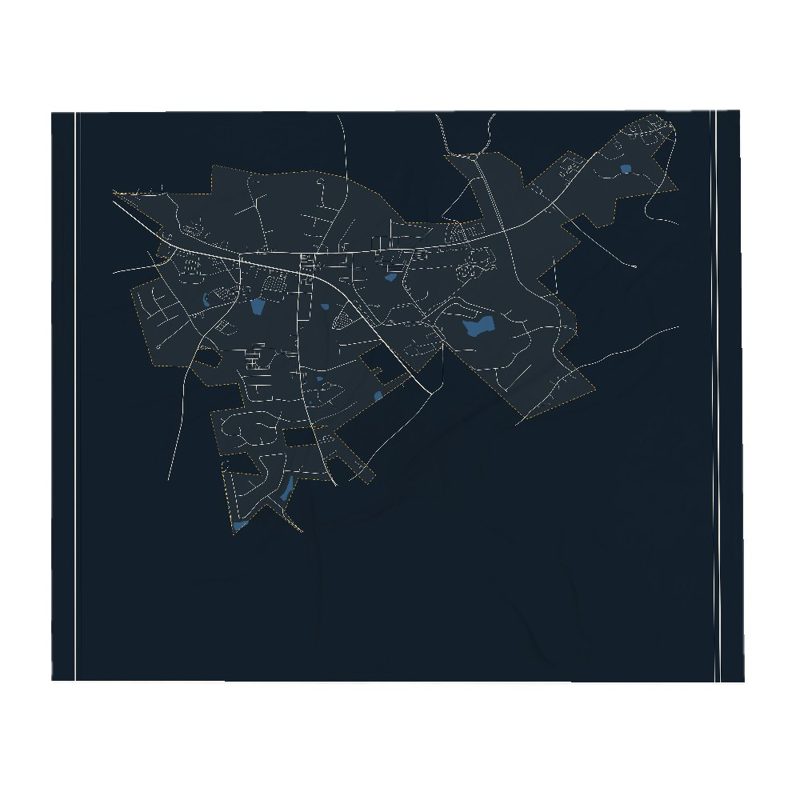
Soft fleece, 50″×60″
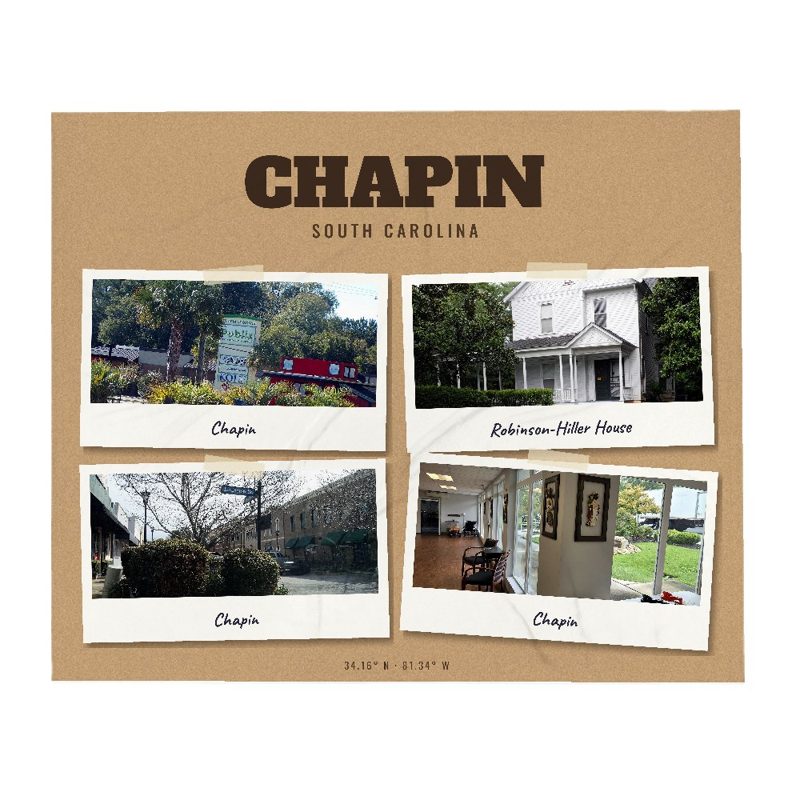
Six local landmarks as instant photos, soft fleece 50″×60″
20 oz, double-wall stainless
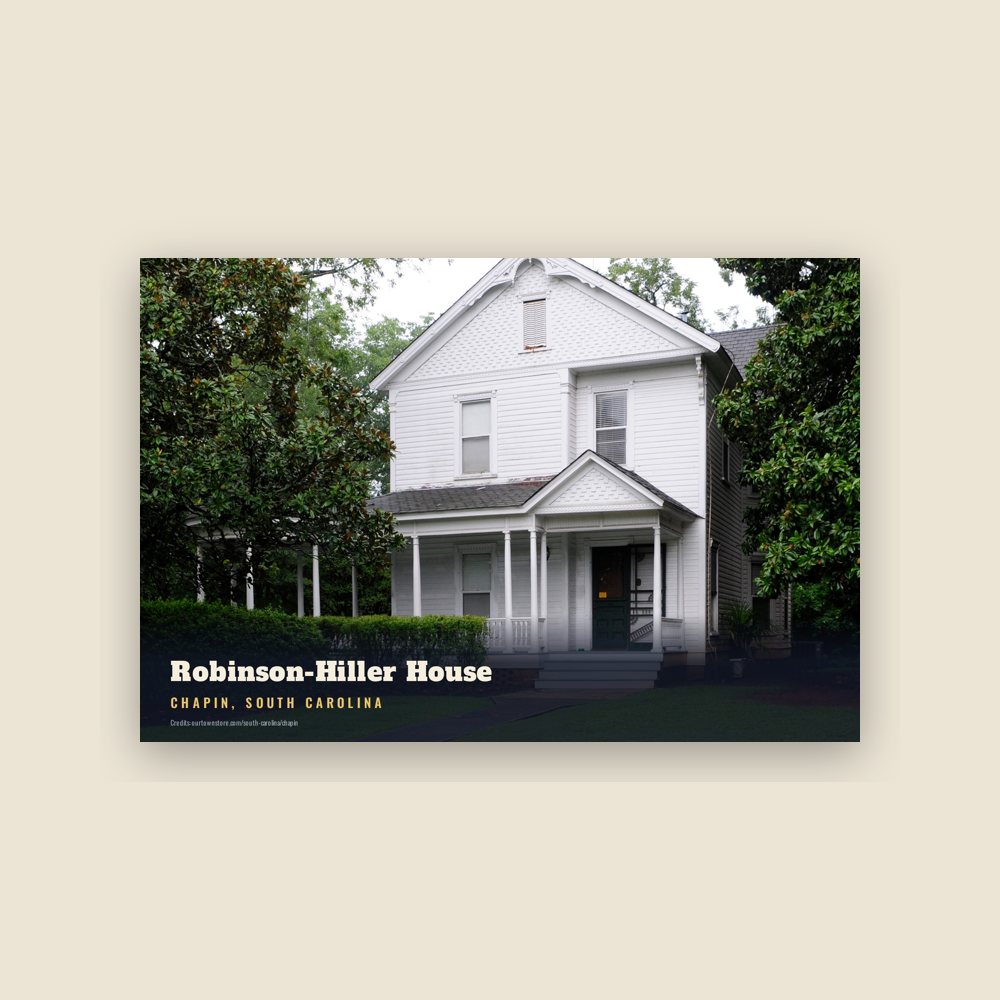
6″×4″ postcard, glossy front
Chapin was named after Martin Chapin in 1889. Chapin is the birthplace of Iron & Wine, musician.
Population 2010: 1,445 → 2020: 1,809
From Wikidata (CC0).
Chapin was named after Martin Chapin in 1889. After he and Laura Anne Benjamin were married on June 16, 1850, the couple moved down South because of Martin's health (a lung condition). The Chapins were living in Columbia when Martin's doctor suggested he to move to the Piney Woods area. Over the years, Chapin bought 4,218 acres (1,707 ha) of land in this area. He built a home in Piney Woods, and later a hotel in the 1880s along the new rail line that ran from Columbia to Laurens, the Columbia, Newberry and Laurens Railroad. The railroad provided a way to trade and transport goods to the capital city. Cotton and the lumber industry were flourishing with the railroad providing transportation. After Martin's death on August 31, 1894, Laura Chapin sold their home and moved into the Chapin hotel.
On March 28, 1907, Job S. Wessinger, P.M. Frick, and J. S. Honeycut founded the Bank of Chapin. One year later, the building for the bank was built. The bank prospered with help from the railroad.
During World War I, Chapin was doing well economically. The price of cotton had risen and the farmers were making plenty of money. As a result, the Bank of Chapin was also thriving during this time. The first high school was built in 1924.
Slowly the businesses in Chapin were starting to experience hard times nearing the 1930s. On Thursday, October 15, 1931, the Bank of Chapin did not open, and like other banks around the world, the bank would not allow customers to withdraw their money. Anybody who had money saved in the bank lost that money due to the crash of the stock market, later known as the start of the Great Depression. Another disaster to hit Chapin was the building of the dam on the Saluda River that would result in the building of a lake. This lake would take over most of the Chapin families’ farms and homesteads. The building of the dam was started in 1927.
In the midst of the Great Depression Chapin started a recreational team sport of baseball. In 1935, the Dutch Fork League was formed where Chapin had its own team. The team helped the unemployed men occupy their time during these difficult times. The games attracted thousands of people.
During the 1940s Chapin grew through improvements to the school and opening new businesses. One new business that came to Chapin were filling stations. The next business was a cabinet shop called E. A. Frick and Son. Chapin also built paved roads and a baseball field, and established the public library. In 1950, the first post office building was constructed, along with new telephone services.
The 1960s were about new and better services. Garbage collection was an issue in the '60s, so the town government bought land and built a landfill. Transportation was the next service provided by access to an interstate highway. On September 7, 1960, a section of Interstate 26 was opened between Columbia and Pomaria. The interstate made Chapin more accessible. Streets in town were also improved. Another improvement of the '60s was the new water system. In 1965, a volunteer fire department was organized, and in 1966 the town had its first ambulance. Chapin also started growing in population as more people moved to the town in the 1960s.
During the 1970s, new schools were built. Chapin football became a community event, and the school football team won state championships in 1973 and 1974. Also in the '70s, the number of churches in Chapin increased, with the establishment of Chapin Baptist Church, St. Francis of Assisi Episcopal Church, Our Lady of the Lake Catholic Church, and Lake Murray Presbyterian Church.
The Robinson-Hiller House was listed on the U.S. National Register of Historic Places in 1998, and the Chapin Commercial Historic District was added in 2019.
Adapted (trimmed) from the Wikipedia article Chapin, South Carolina, revision 1383861680 by its contributors, licensed CC BY-SA 4.0.
We share a part of every Chapin sale with local partners, and we'd love to print from your collection. Old photographs, maps and postcards make the best keepsakes.
Partner with usA favorite landmark, your street, a school or team, an anniversary gift, a different product. Tell us and we'll get back to you by email.
4 free coloring pages of Chapin, each traced from a photo of a local landmark. Print them at home, at school or for story hour.
Chapin's population was 1,809 in the 2020 U.S. Census, up from 1,445 in 2010.
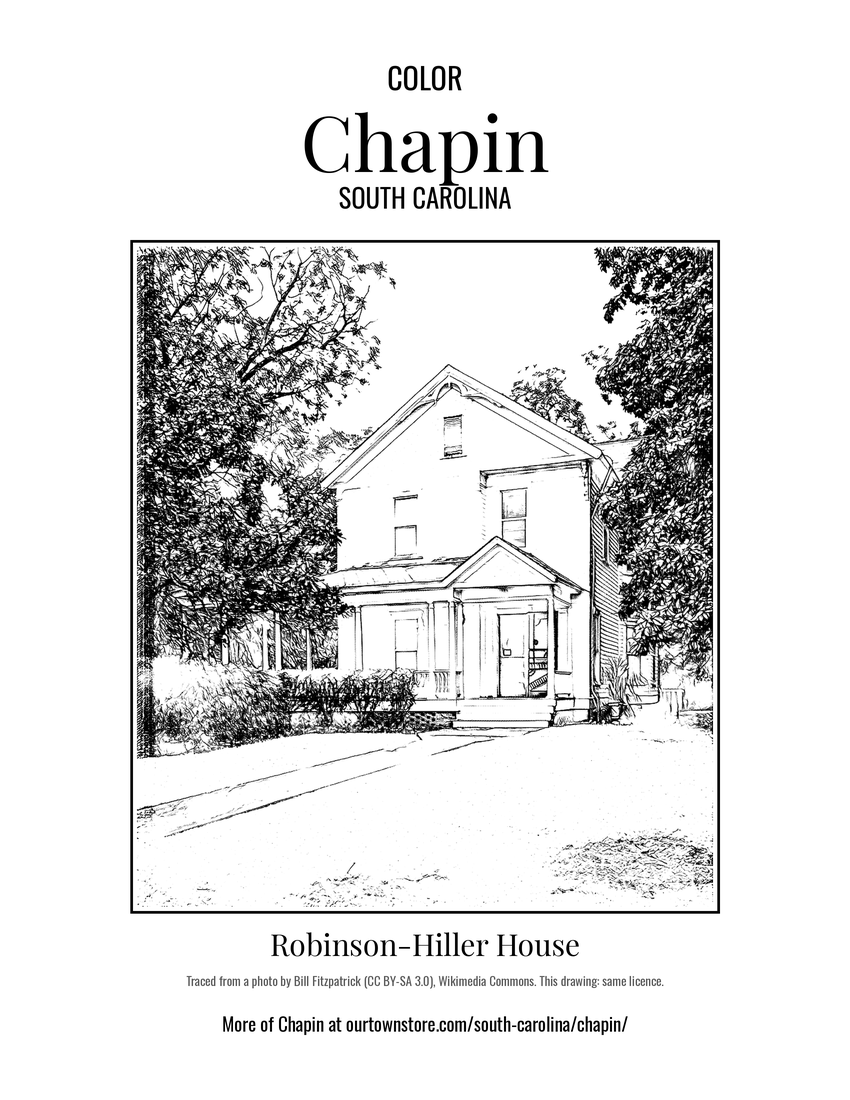 Robinson-Hiller House
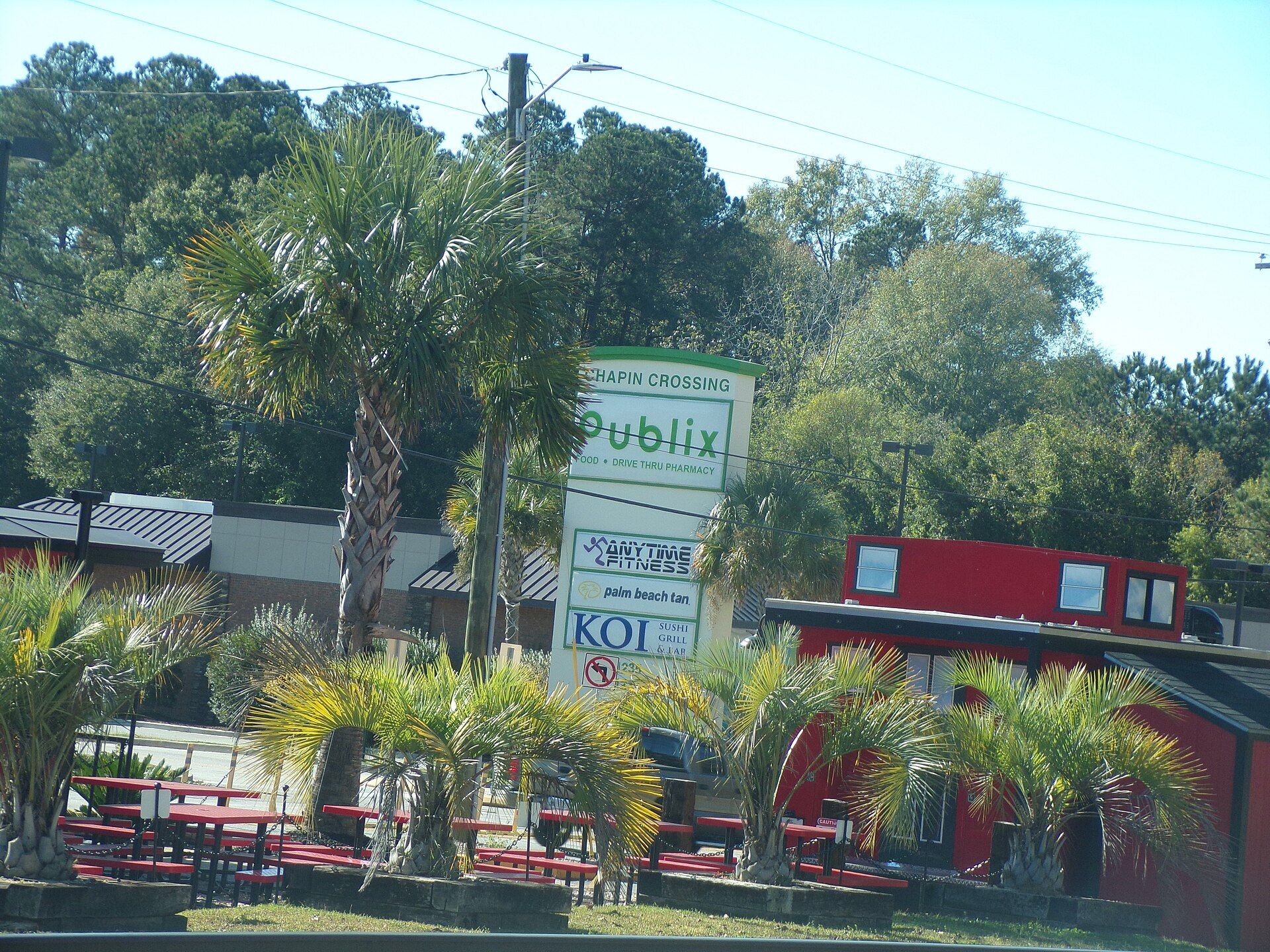
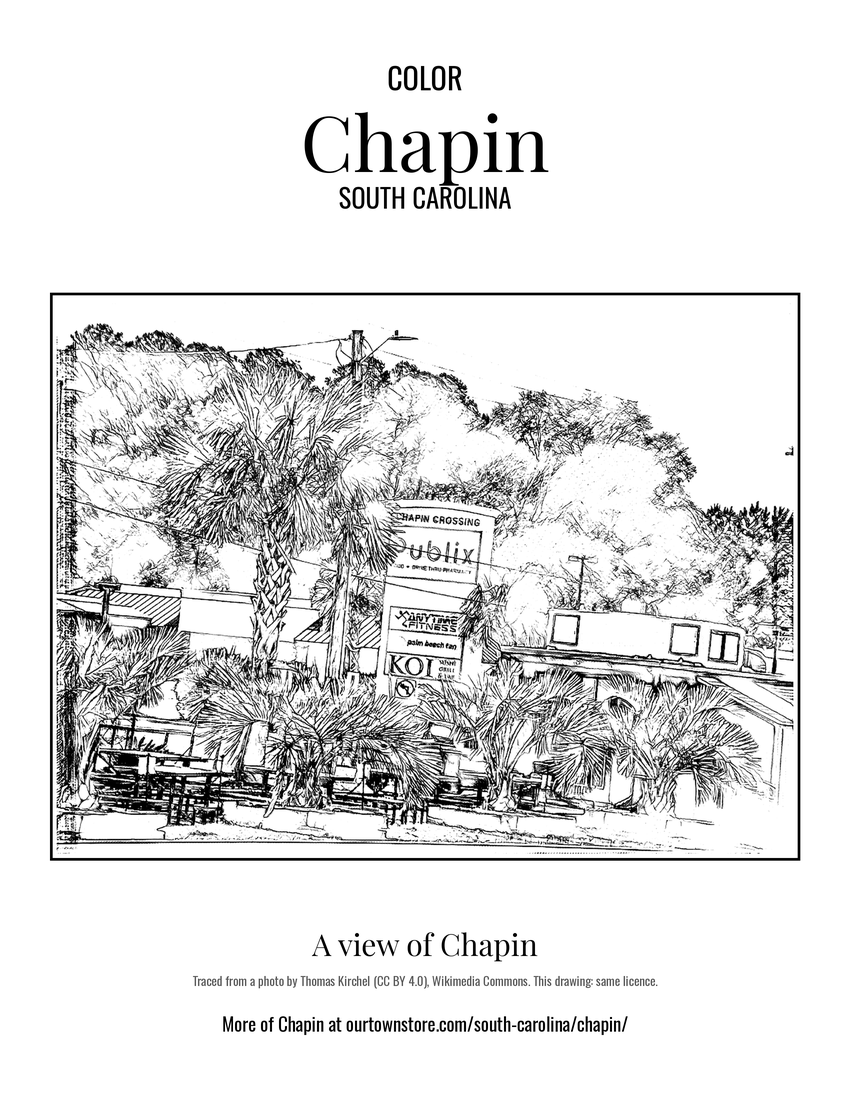 A view of Chapin
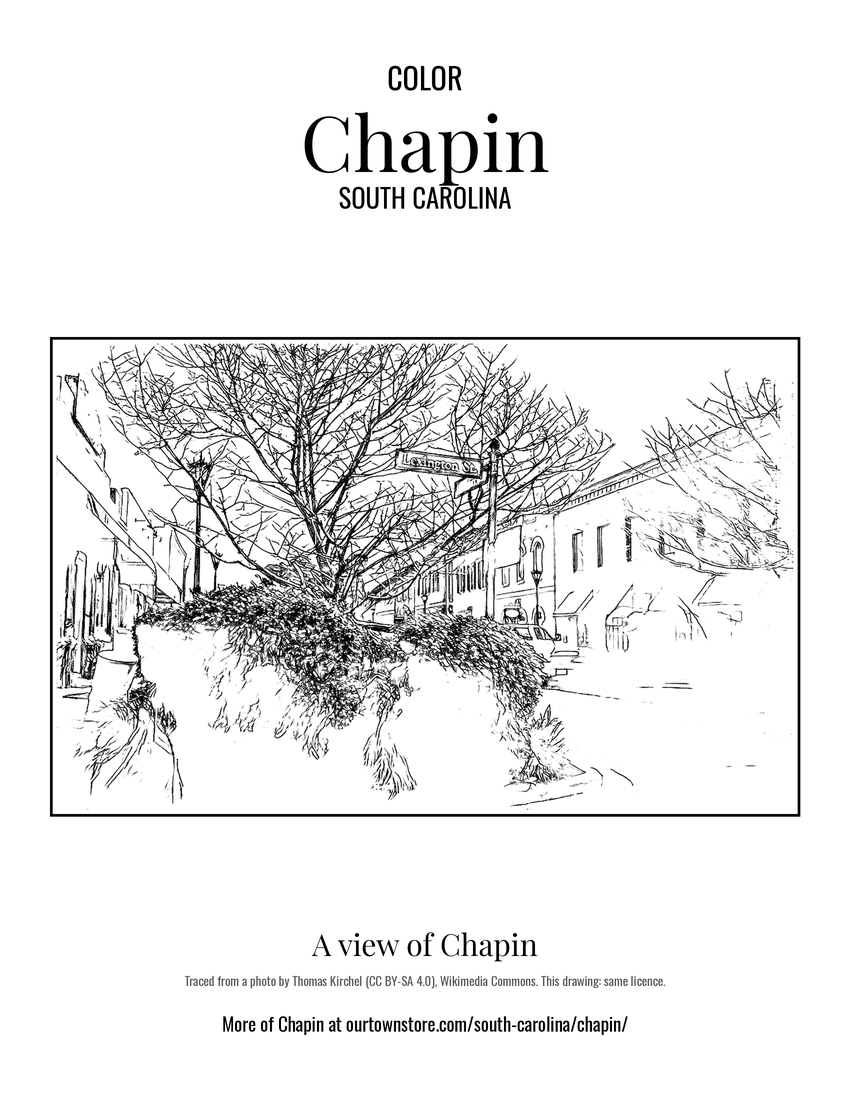 A view of Chapin
 A view of Chapin