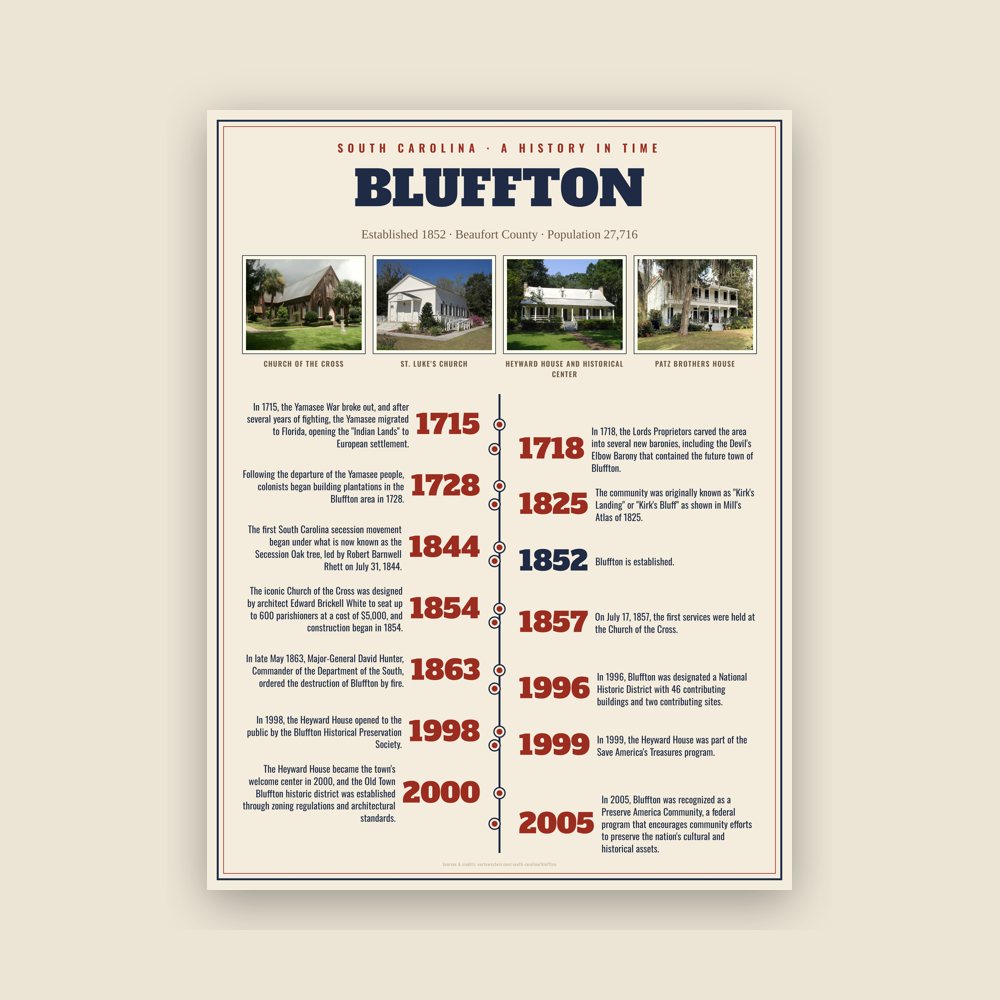
During the 17th and the 18th centuries, the area comprising southern Beaufort County was known as Granville County of St. Luke's Parish. The Yamasee people were invited to settle in the area by Lord Cardoss, leader of the nearby Scottish settlement in Beaufort. The Yamasee established ten towns with over 1,200 inhabitants in the area. In 1715, the Yamasee War broke out, and after several years of fighting, the Yamasee migrated to Florida, opening the "Indian Lands" to European settlement. In 1718, the Lords Proprietors carved the area into several new baronies, including the Devil's Elbow Barony that contained the future town of Bluffton. The first titled owner of the land was the Barbadian planter Sir John Colleton. Following the departure of the Yamasee people, colonists began building plantations in the Bluffton area in 1728. The Colletons prospered by growing cotton, corn and indigo.
Read the full history
American Revolution (1776–1785)
Before his death in 1776, Sir John Colleton (grandson of the original owner) developed plantations near Victoria Bluff - Foot Point areas and later disposed of much of his barony, much of it bought by the Rose and Kirk families. These plantations were destroyed by the British under General Prevost in 1779. During the 18th century, much of the land south of the May River (now known as Palmetto Bluff) was covered with rice fields. Rice became a lucrative crop and a part of lowcountry culture until the early 20th century when it was disrupted by a series of devastating storms.
Antebellum era (1785–1861)
The town of Bluffton was eventually built on two adjoining parcels in the Devil's Elbow Barony purchased by Benjamin Walls and James Kirk. The first homes were constructed during the early 1800s by area plantation owners seeking the high ground and cool river breezes as an escape from the unhealthy conditions present on Lowcountry rice and cotton plantations. Easy access by water provided more incentive for expansion, and the many tidal coves afforded excellent locations for residences. The community was originally known as "Kirk's Landing" or "Kirk's Bluff" as shown in Mill's Atlas of 1825. The first streets were formally laid out during the 1830s and the name of Bluffton decided upon in the early 1840s as a compromise between the Kirk and Pope families.
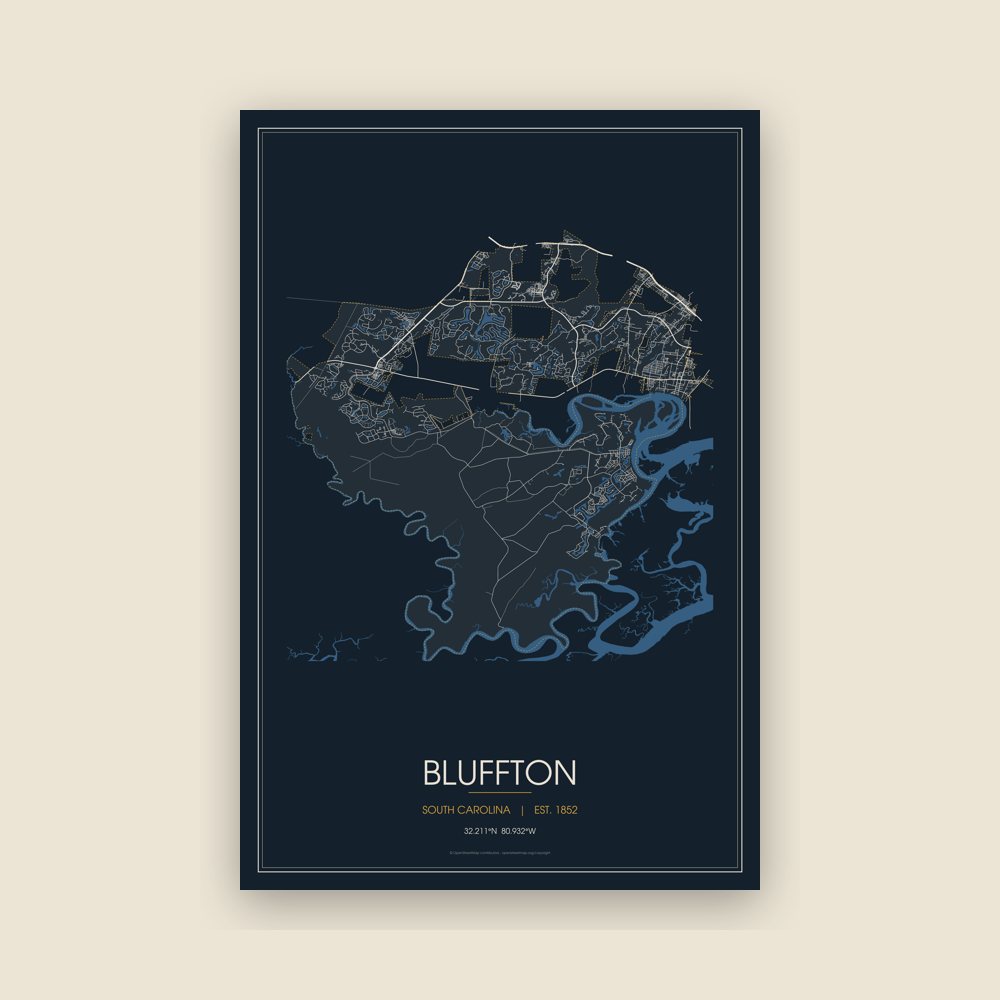
The first South Carolina secession movement began under what is now known as the Secession Oak tree, led by Robert Barnwell Rhett on July 31, 1844. In the 1850s, a steamboat landing was built at the end of Calhoun Street, and Bluffton became the commercial center of southern Beaufort County as a stopover for travelers between Savannah and Beaufort. In 1852, the town was officially incorporated by an act of the South Carolina General Assembly and comprised approximately one square mile. The iconic Church of the Cross was designed by architect Edward Brickell White to seat up to 600 parishioners at a cost of $5,000, and construction began in 1854. On July 17, 1857, the first services were held at the Church of the Cross.
Civil War and postbellum era (1861–1945)
After a Union victory at the Battle of Port Royal on November 7, 1861, Confederate Brigadier-General Thomas F. Drayton directed the evacuation of rebel forces from Hilton Head Island to the Bluffton mainland. Occupying Port Royal Harbor, the Union's South Atlantic Blockading Squadron could then be monitored from rebel lookouts dispersed from Bluffton's substantial picket headquarters. Bluffton's location resulted in it being the only strategic position on the East Coast at which the Confederates could gather direct intelligence on the Union squadron that was conducting crucial blockade operations along the southern coastline. In late May 1863, Major-General David Hunter, Commander of the Department of the South, ordered the destruction of Bluffton by fire. The Union "Expedition against Bluffton" was carried out on June 4, 1863, destroying approximately two thirds of the town's estimated 60 structures. Only the town's two churches and fifteen residences remained standing after the attack. Eight antebellum homes and two churches still exist in Old Town and highlight the town's nationally popular registered historic district.
Rebuilding came slowly, as few local landowners could still afford the luxury of a summer home in Bluffton. The town did not experience a true rebuilding until the 1880s, when it emerged as a commercial center for Beaufort County.
Contemporary era (1945–present)
Bluffton remained a commercial center until Coastal Highway (US 17) and the bridge at Port Wentworth over the Savannah River were completed, which made riverboat trade and travel less attractive. The Great Depression began shortly thereafter and brought the closure of the town's prosperity and commercial importance. The popularity of Bluffton as a vacation spot remained even after its loss of commercial stature.
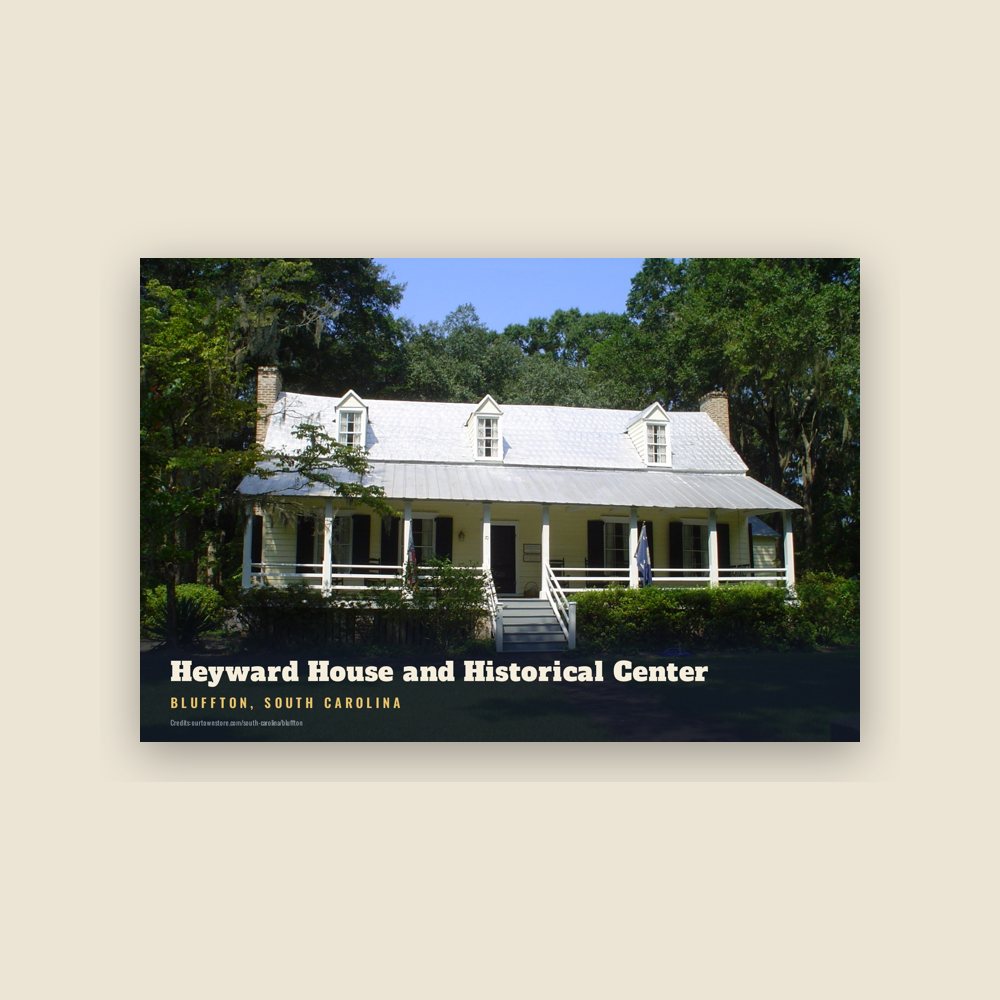
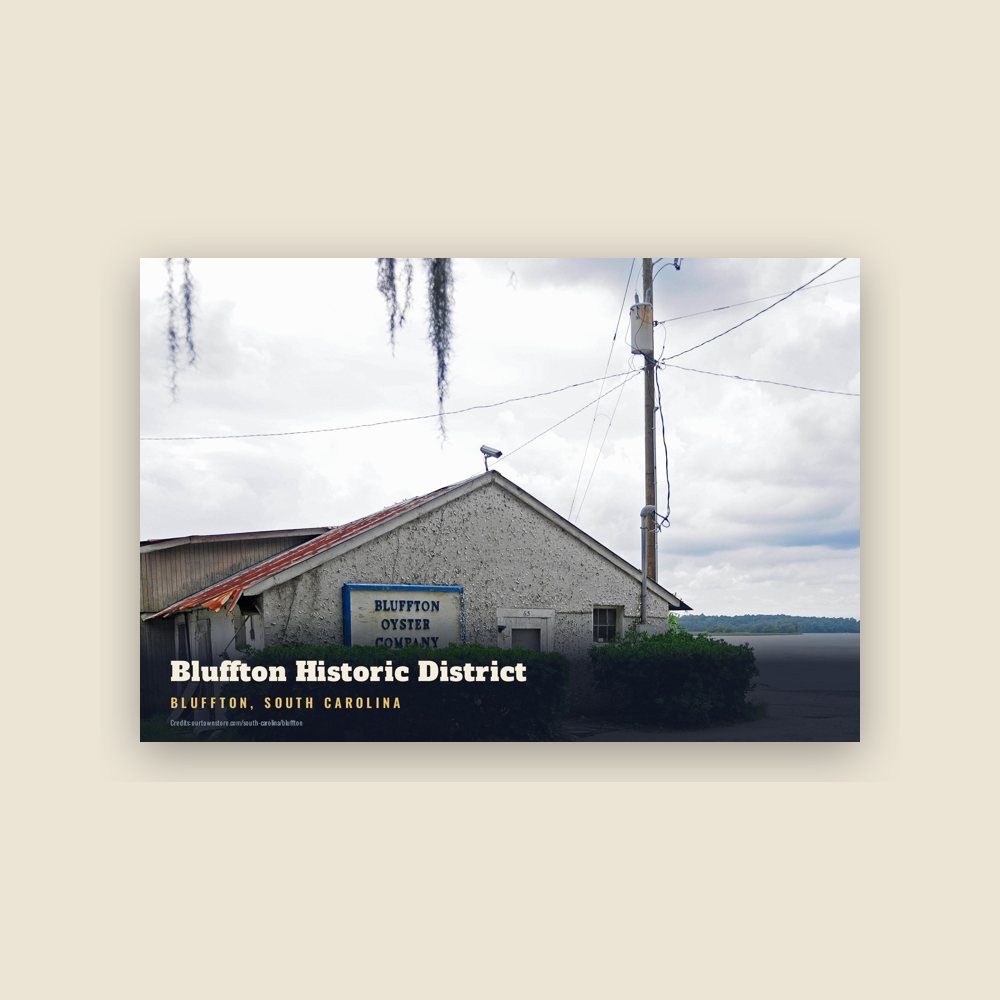
The development of Hilton Head Island, nearby Sun City and the related development in the 1990s caused a resurgence of commercial activity in the town. In 1996, Bluffton was designated a National Historic District with 46 contributing buildings and two contributing sites. In 1998, the Heyward House opened to the public by the Bluffton Historical Preservation Society. In 1999, the Heyward House was part of the Save America's Treasures program. The Heyward House became the town's welcome center in 2000, and the Old Town Bluffton historic district was established through zoning regulations and architectural standards. In 2005, Bluffton was recognized as a Preserve America Community, a federal program that encourages community efforts to preserve the nation's cultural and historical assets.
Altamaha Town, Bluffton Historic District, Church of the Cross, and Rose Hill Plantation House are listed on the National Register of Historic Places.
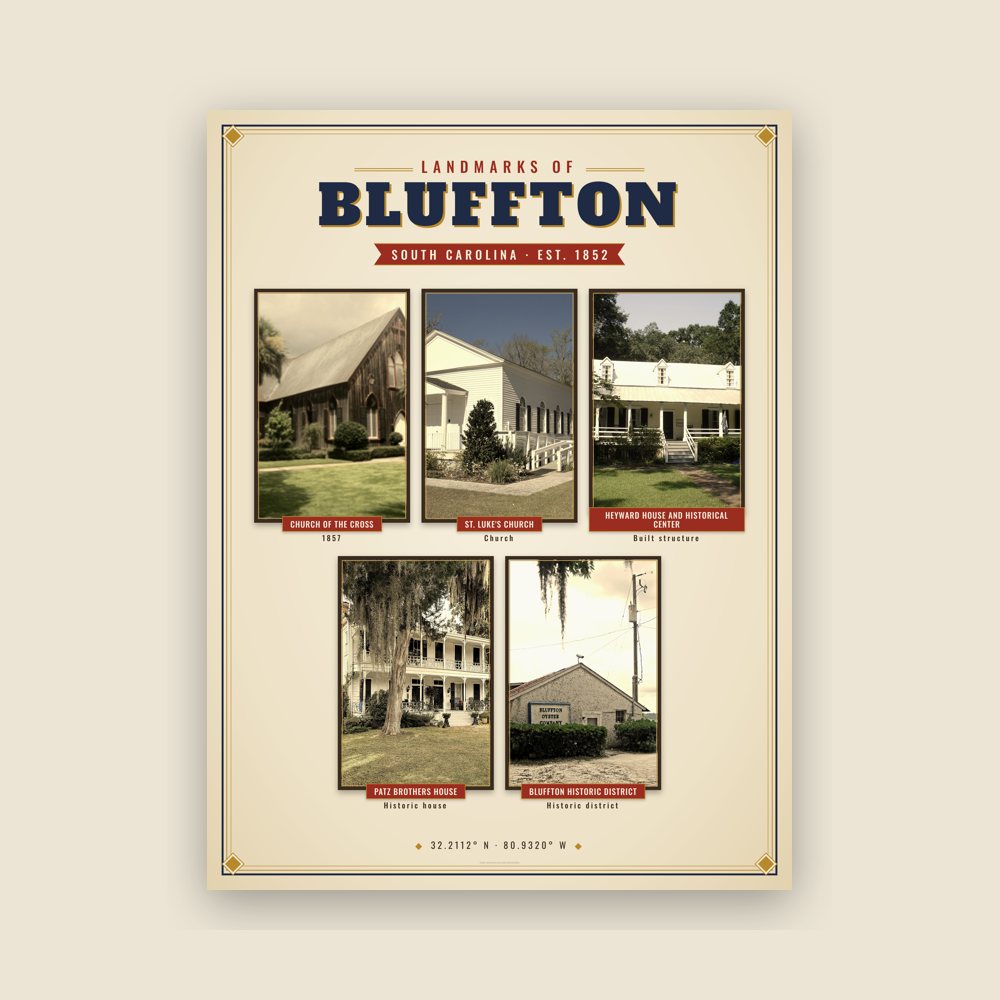
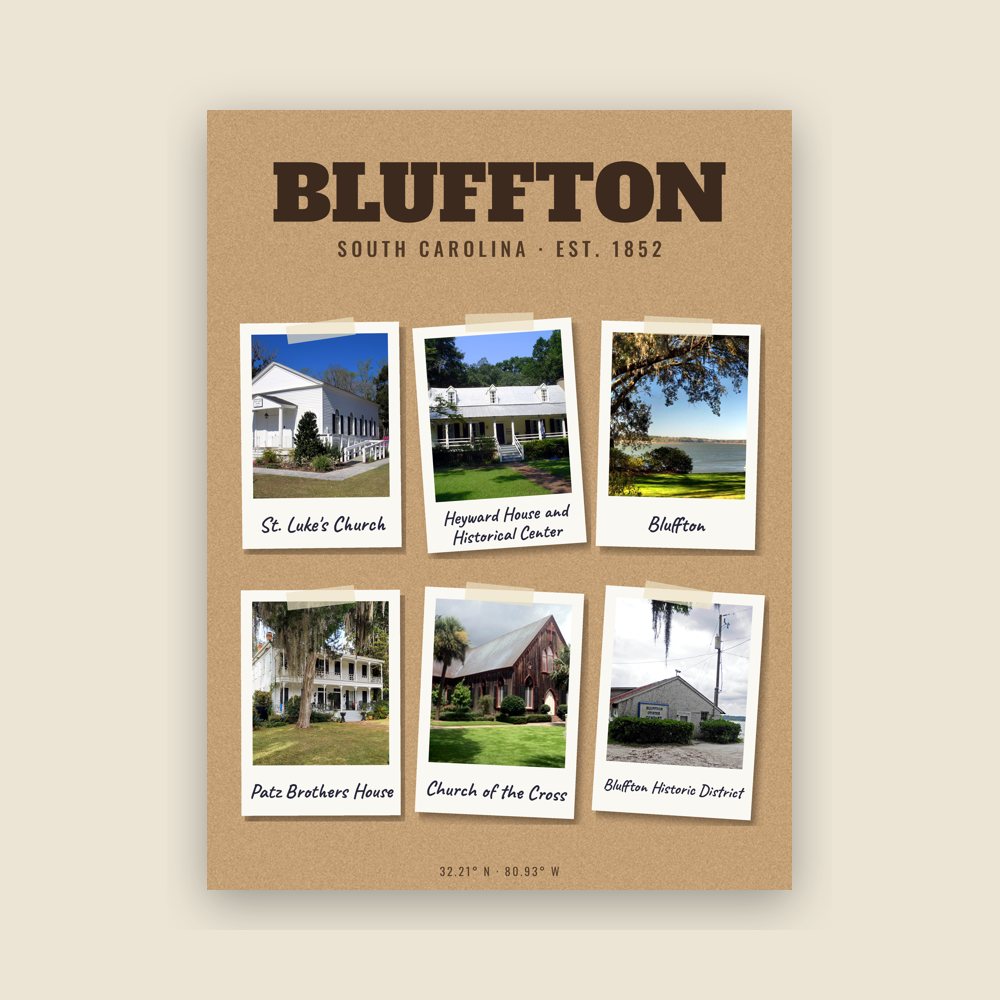
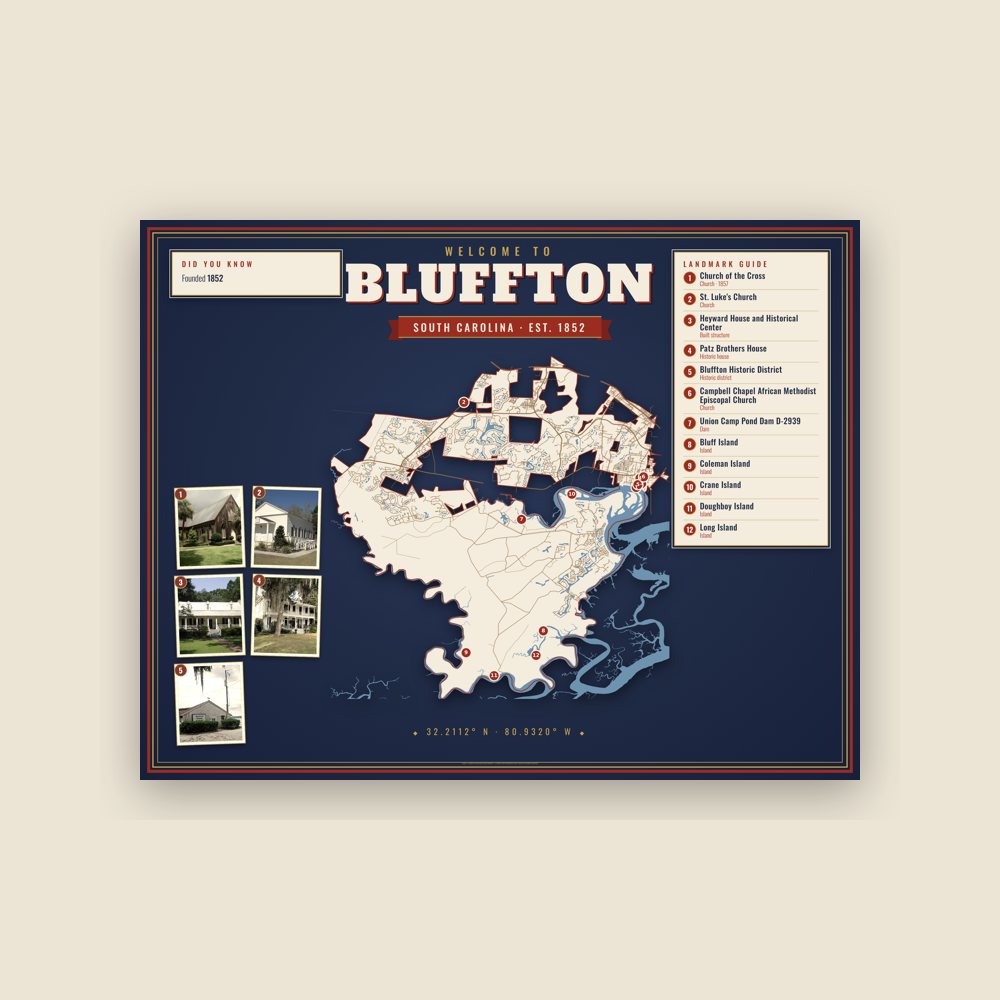


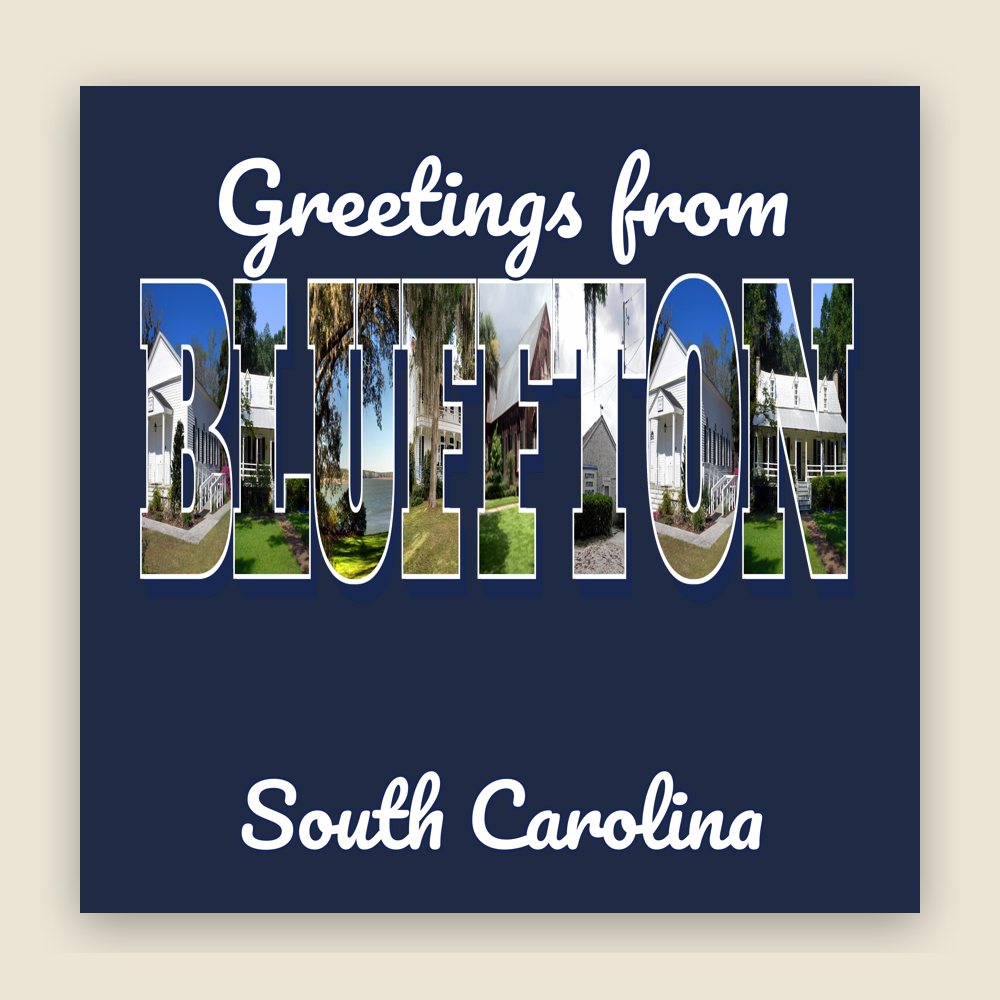
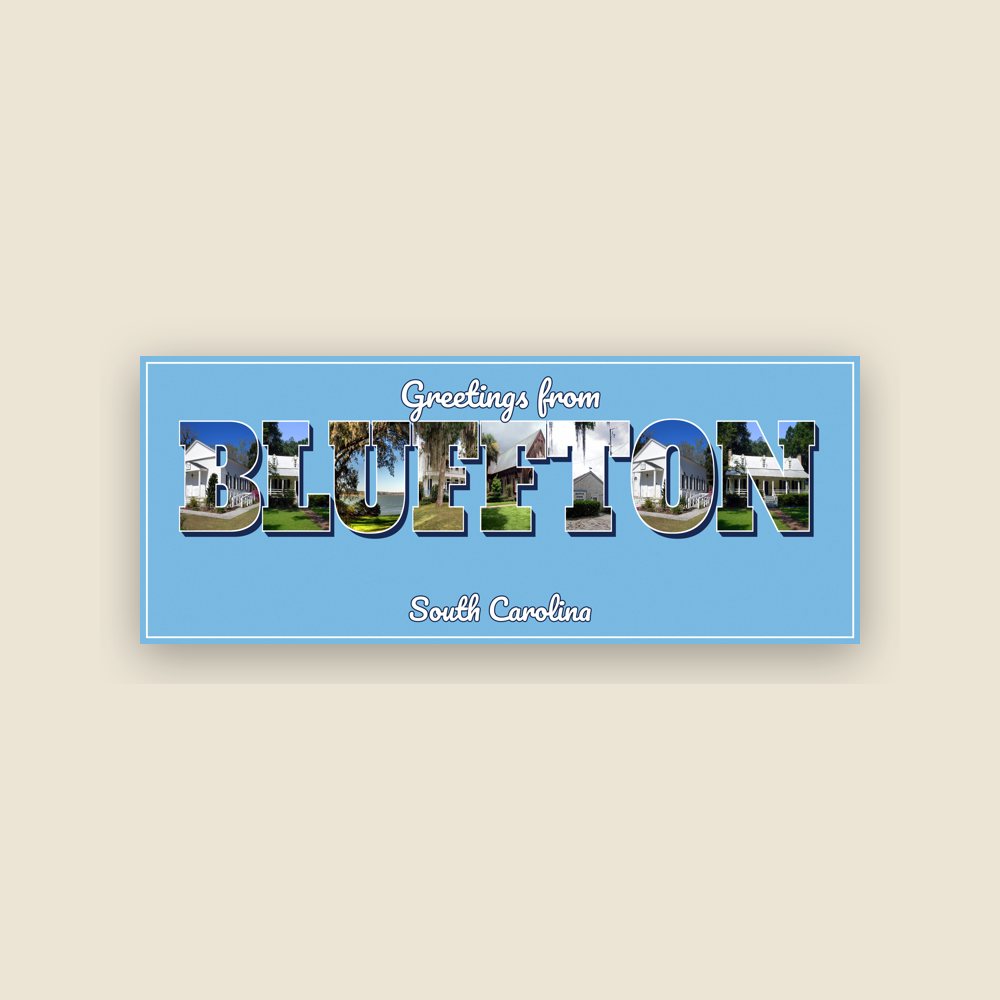

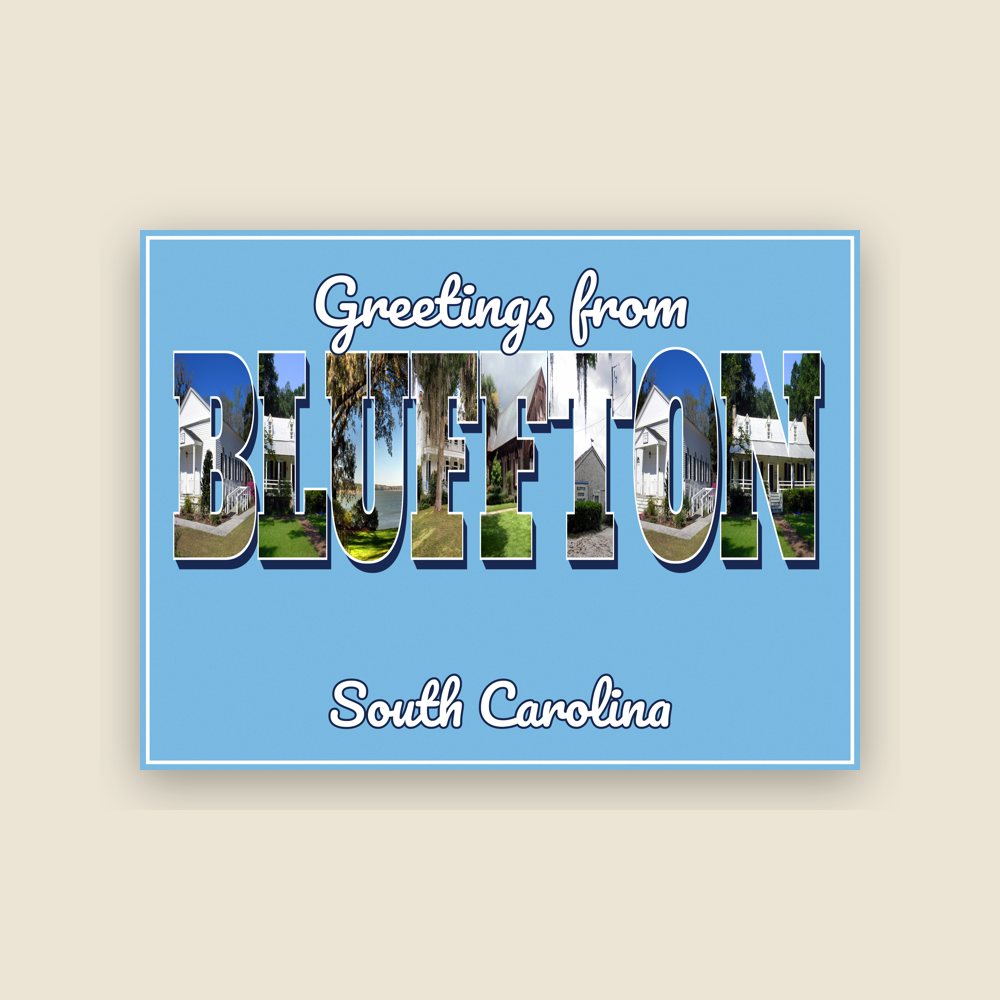
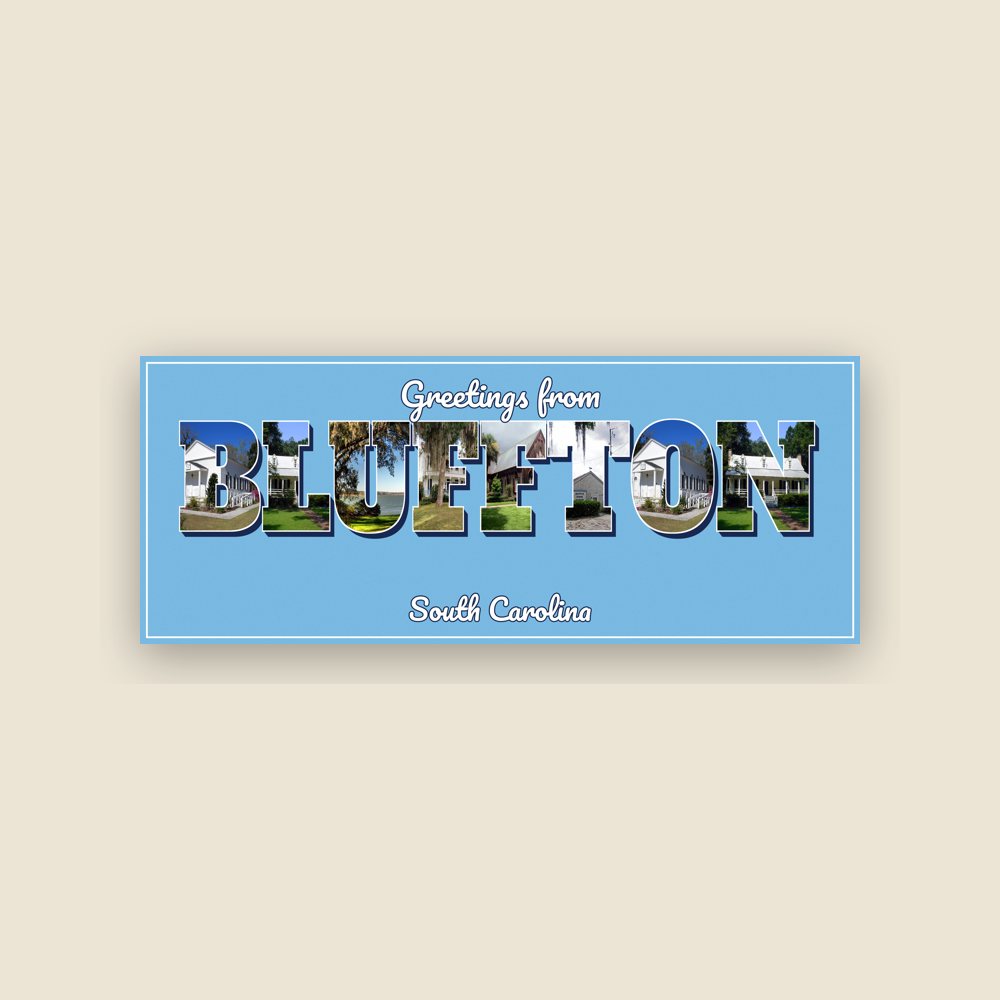
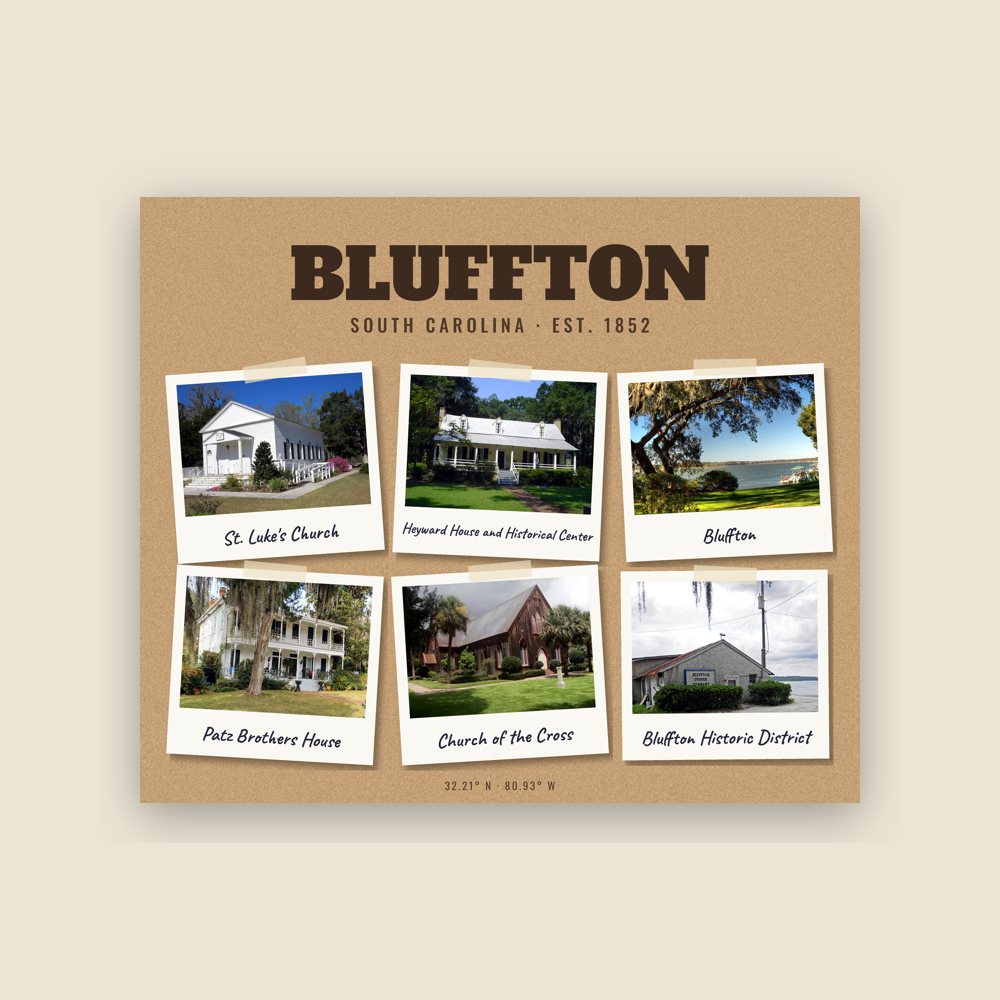
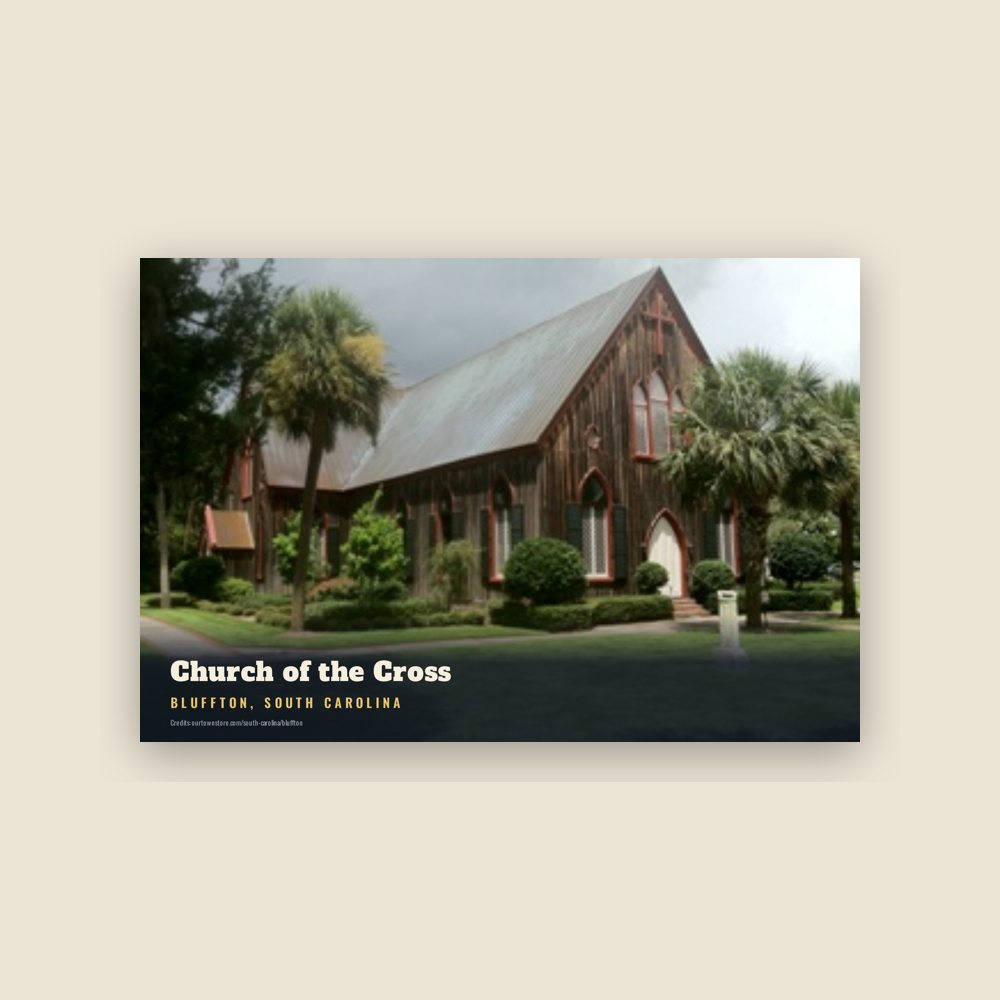
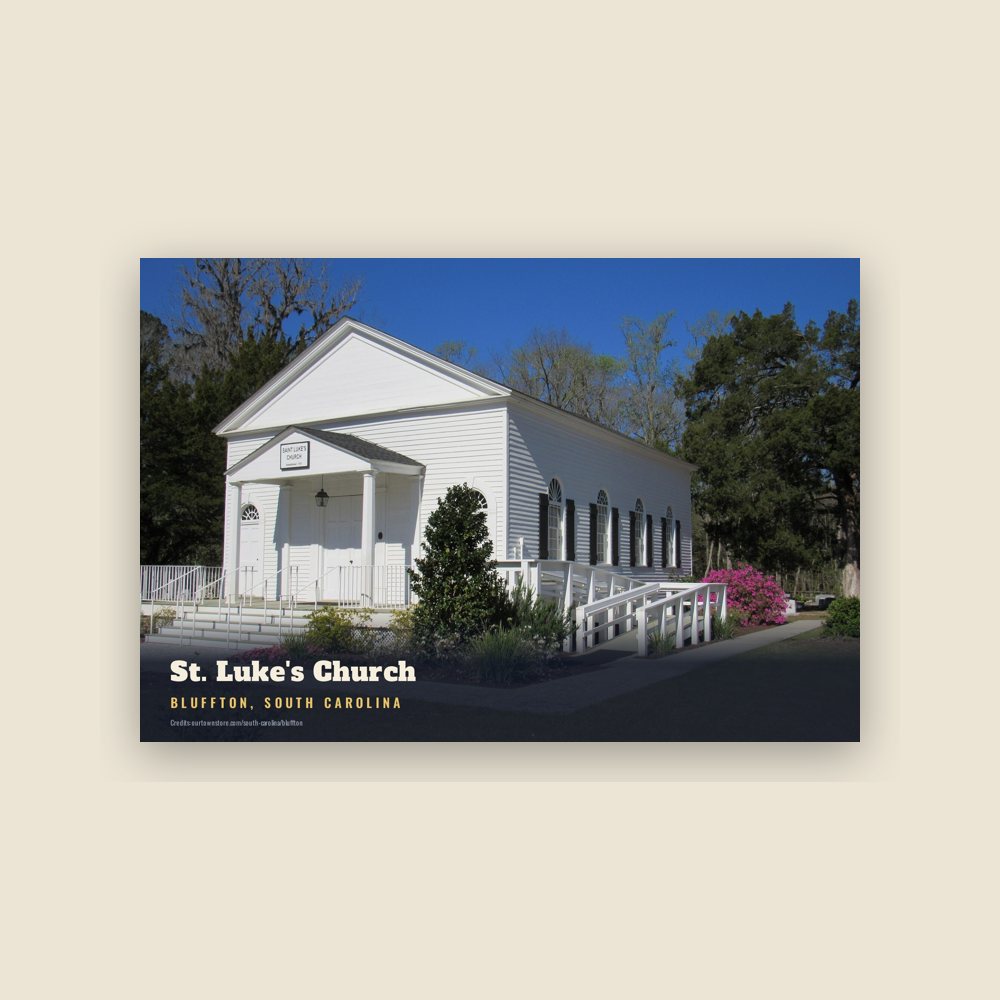
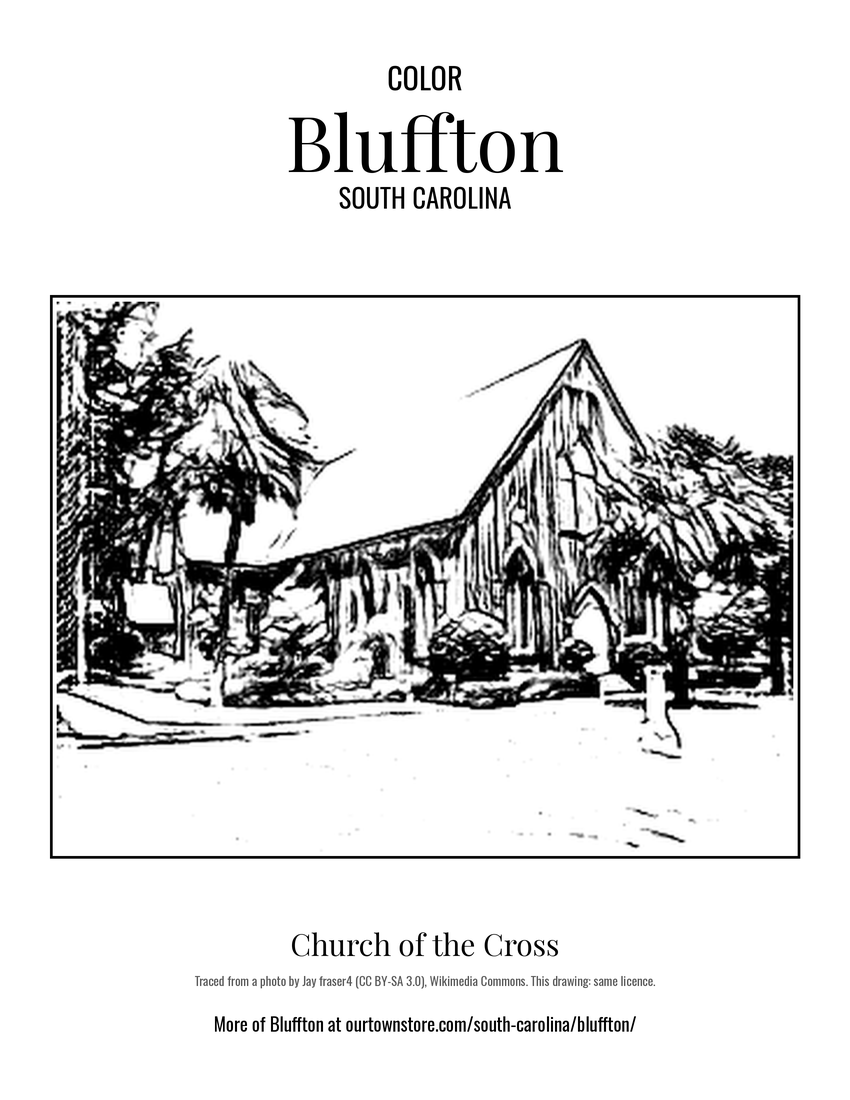 Church of the Cross
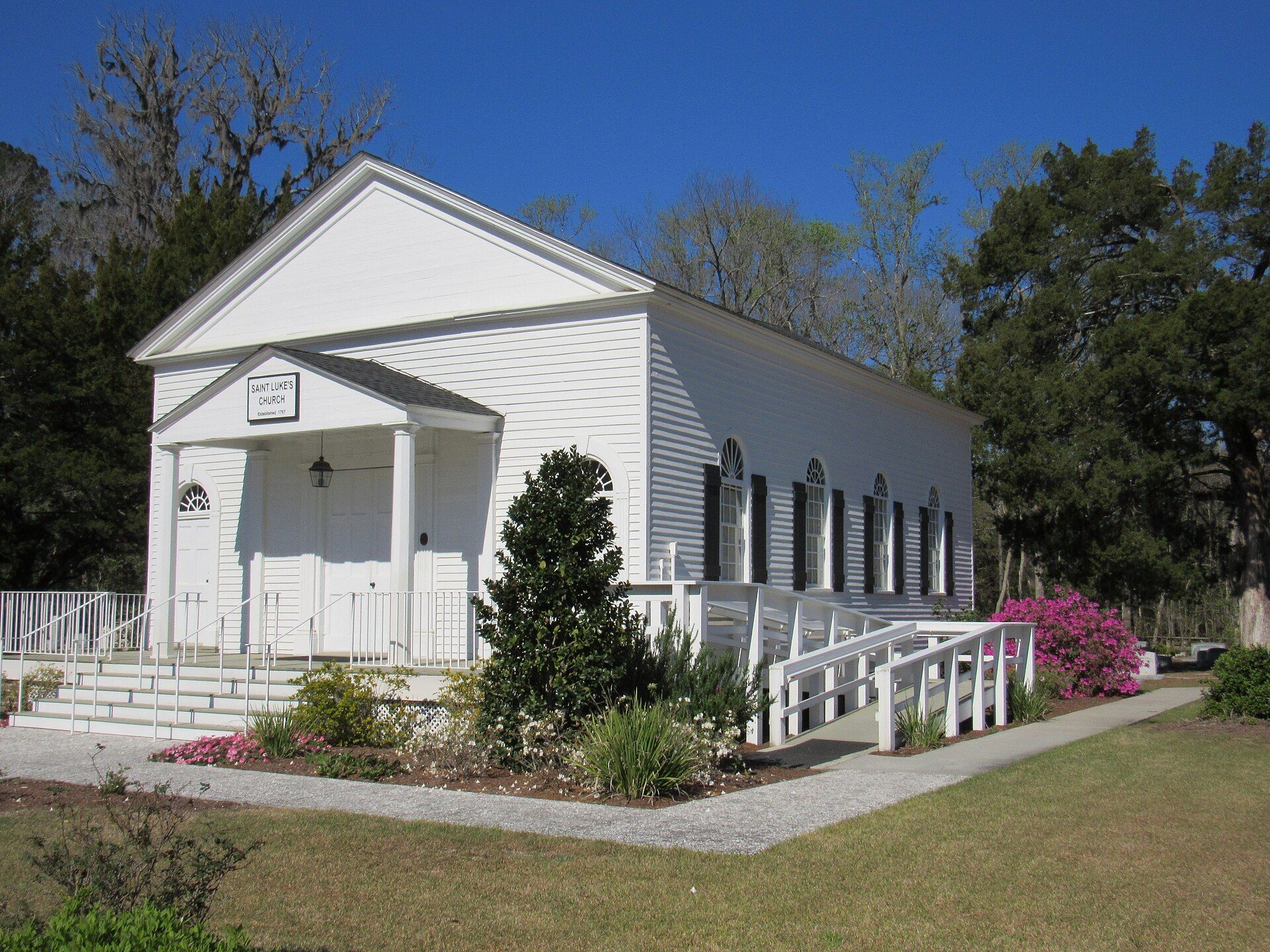
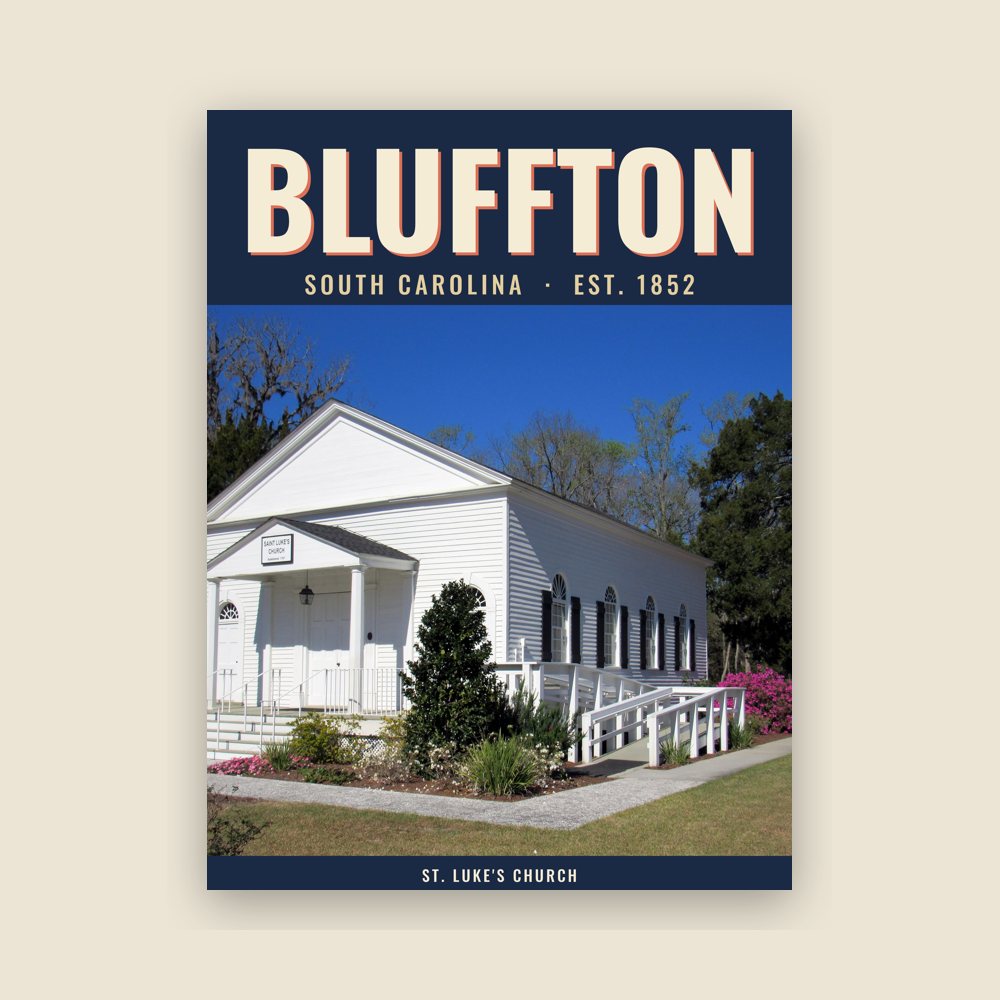
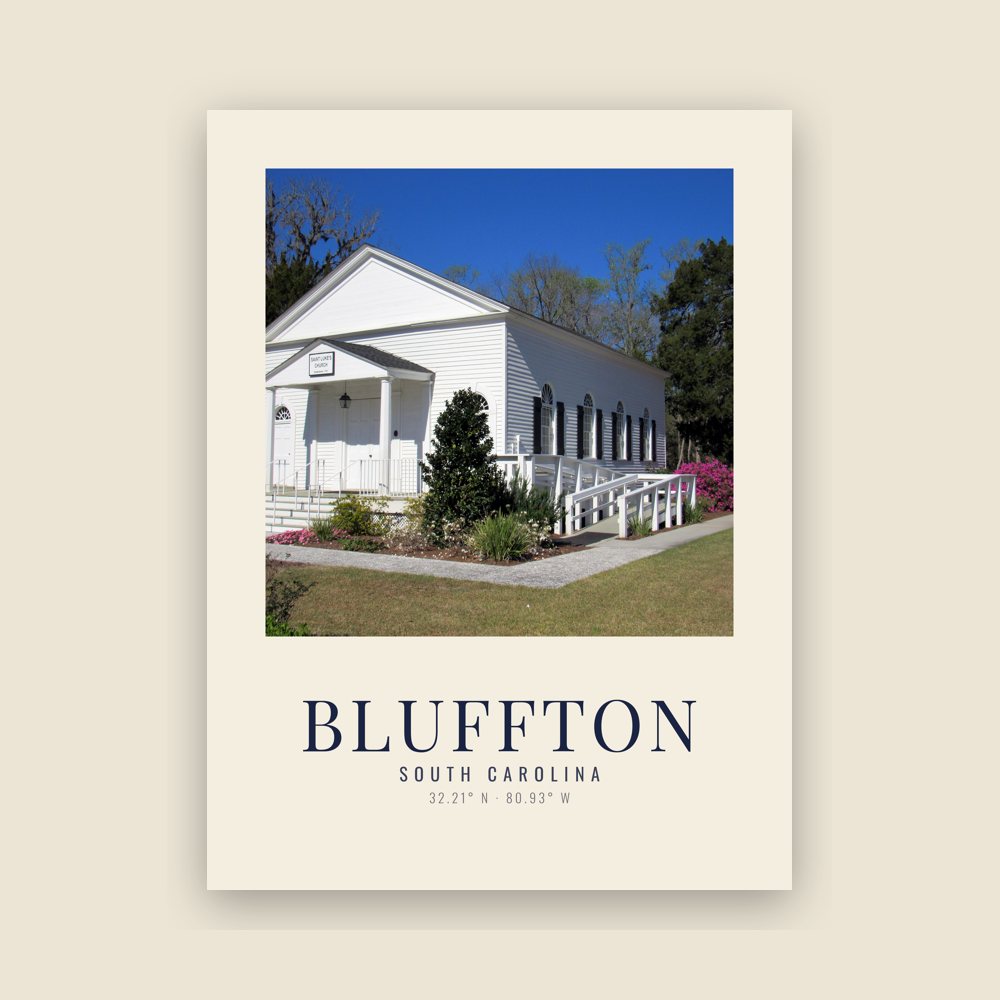
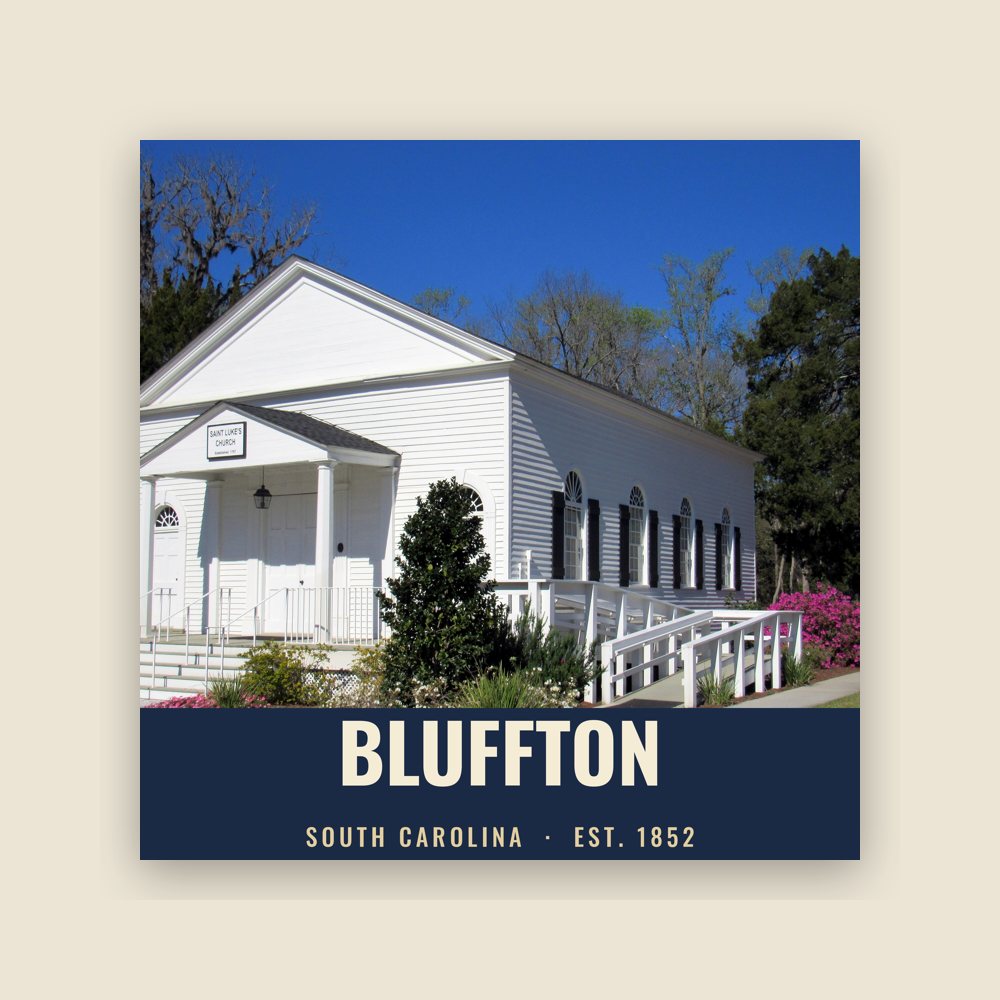
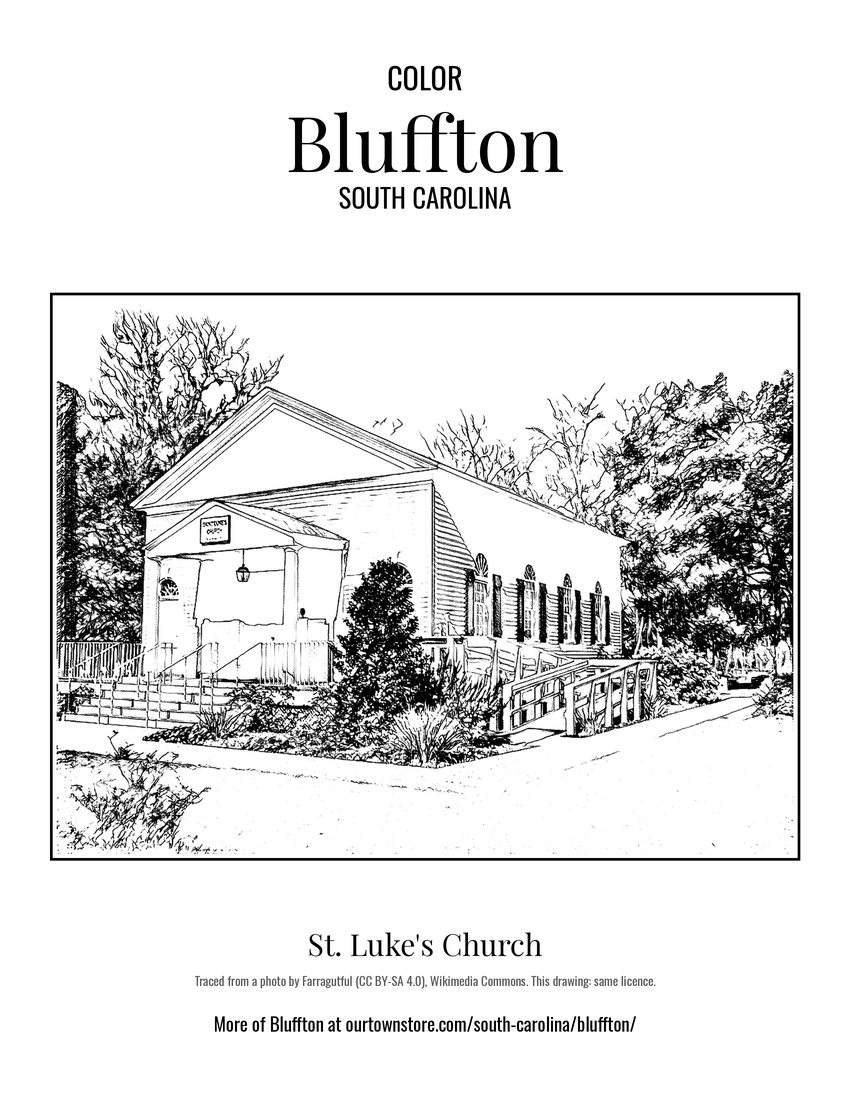 St. Luke's Church
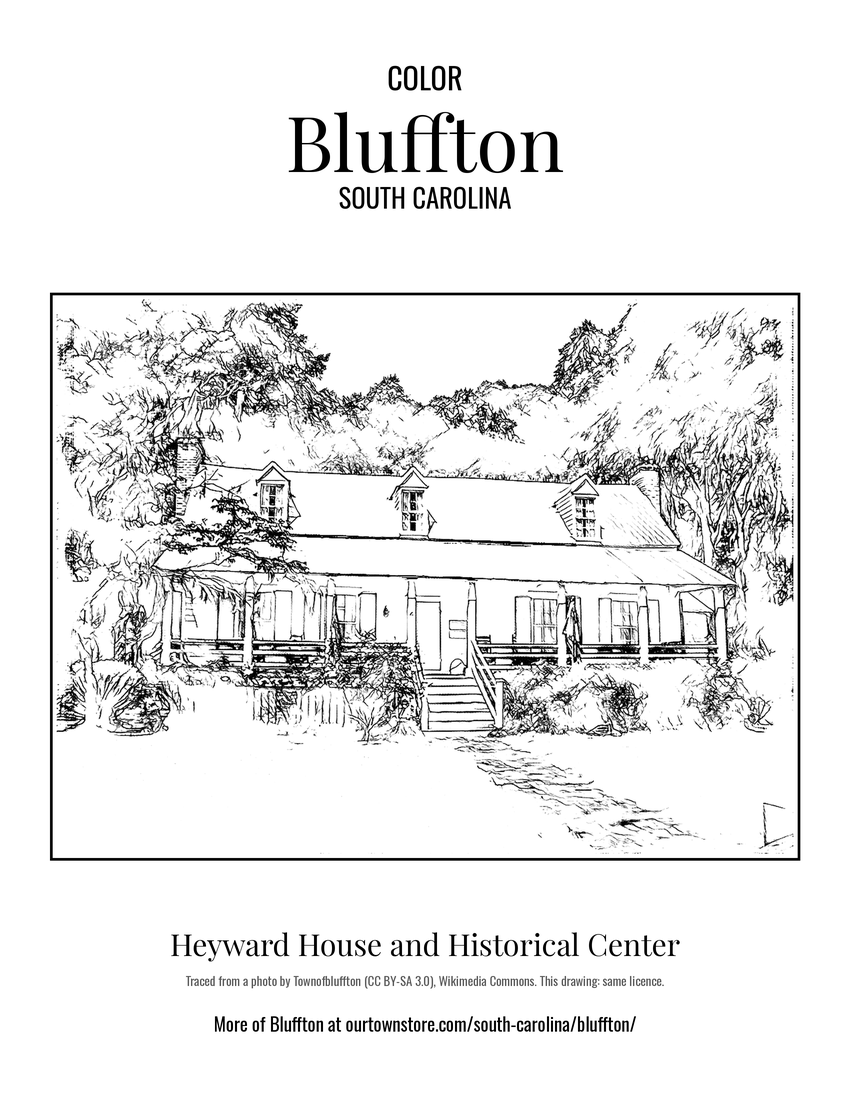 Heyward House and Historical Center
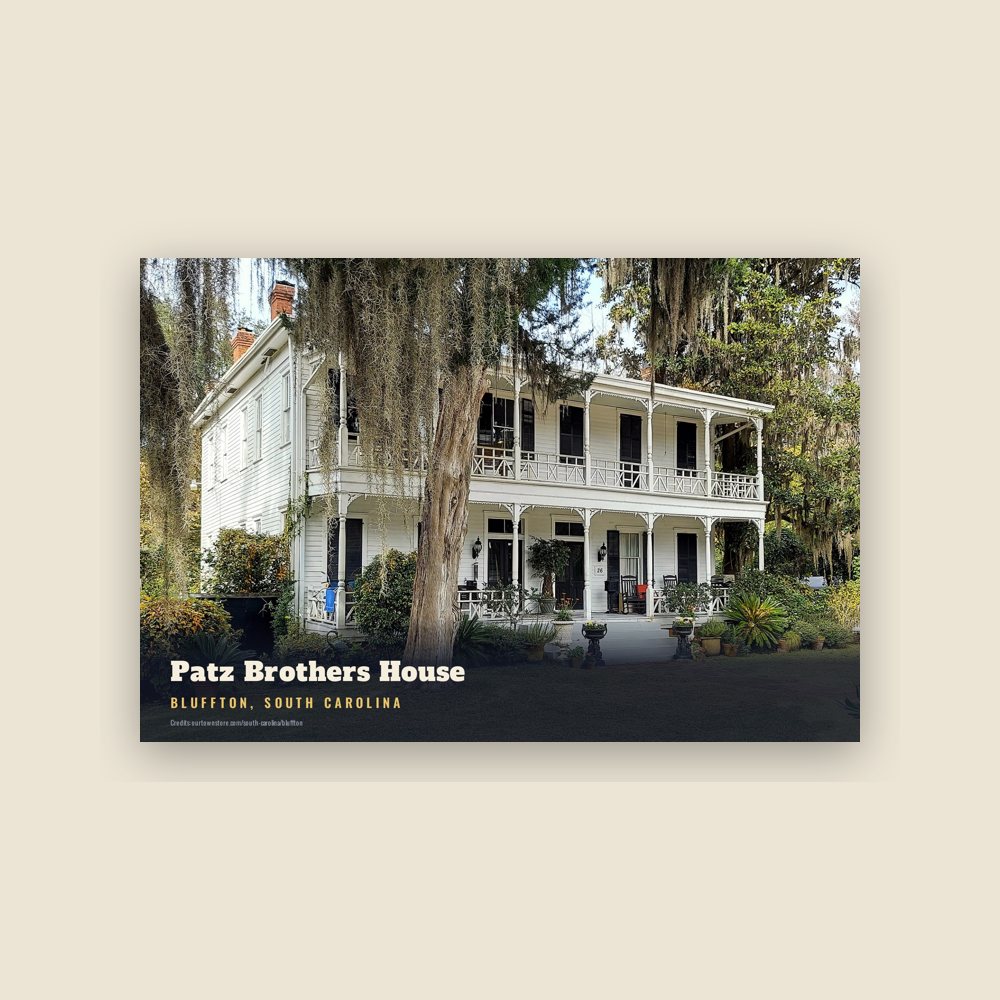
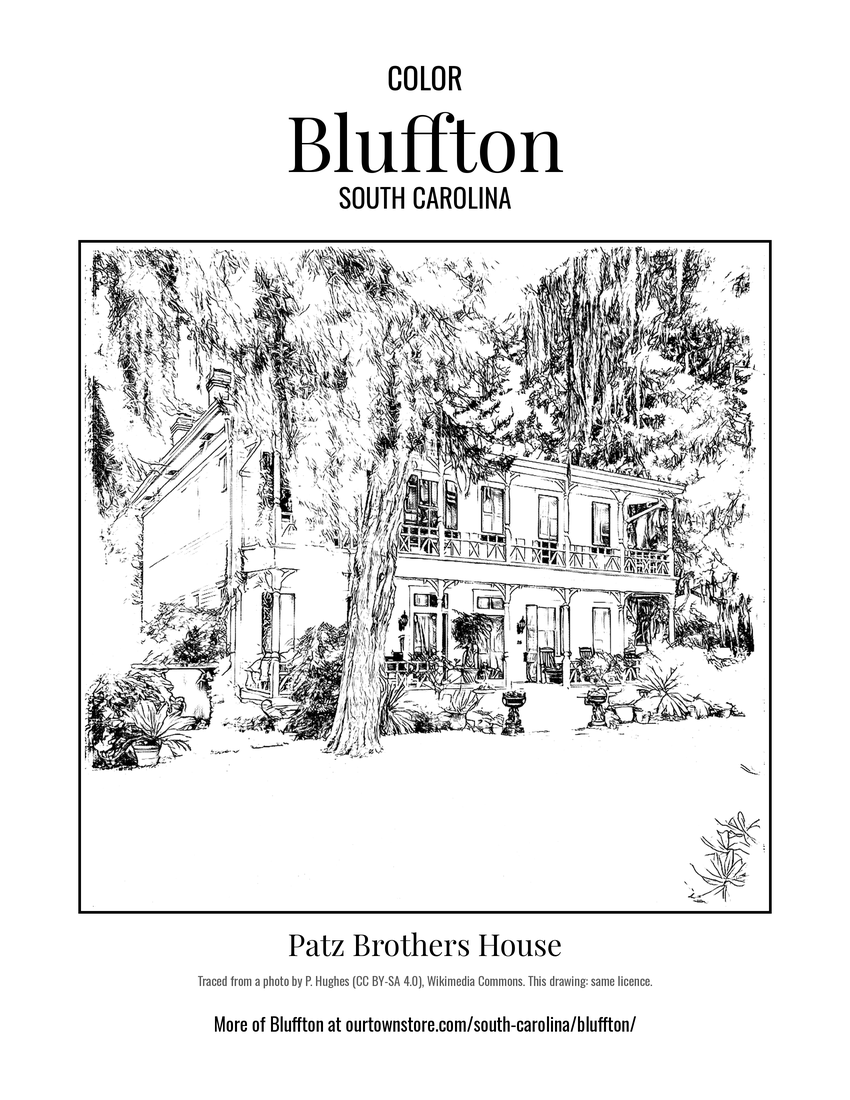 Patz Brothers House