Since 1833
A short history of Anderson
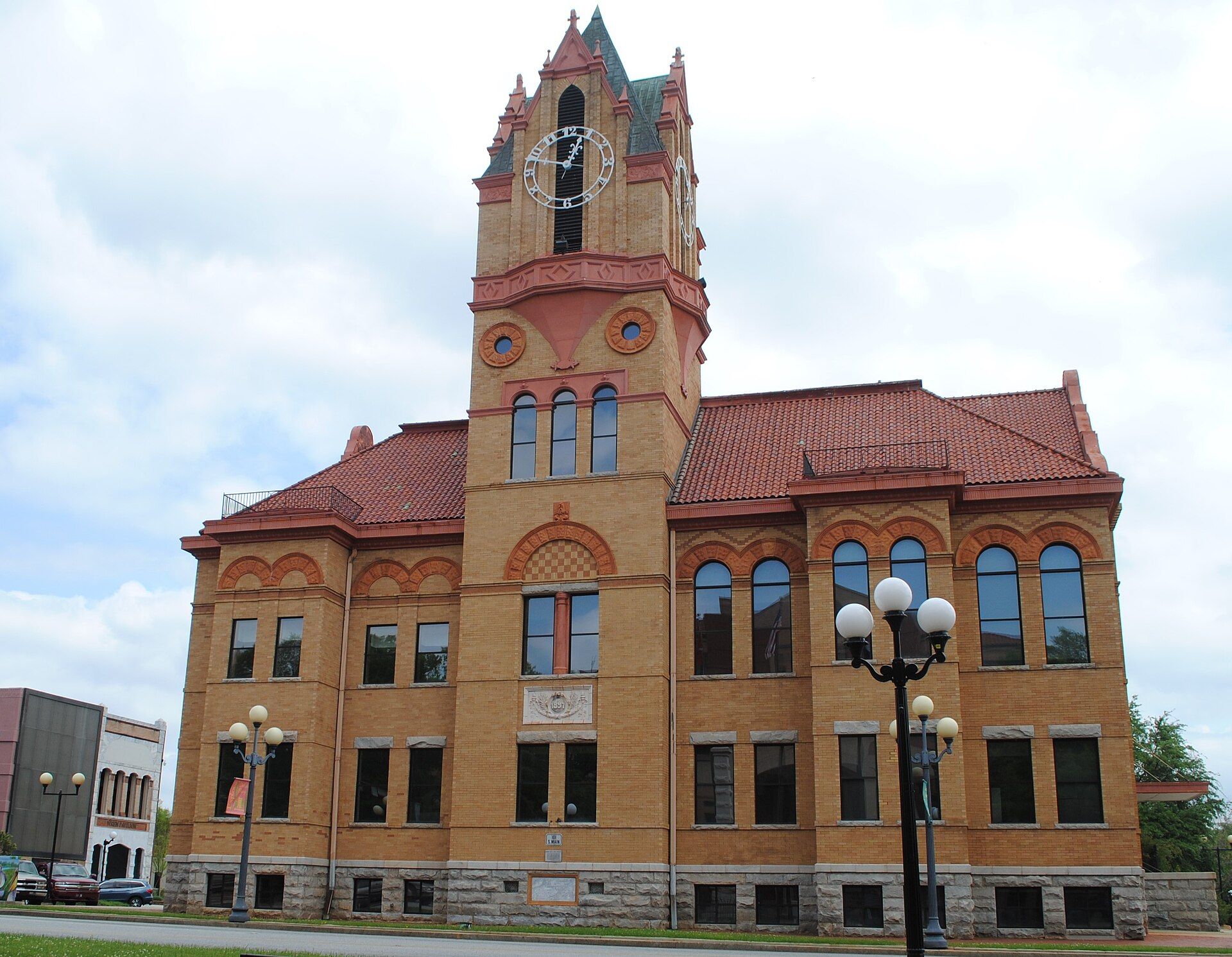
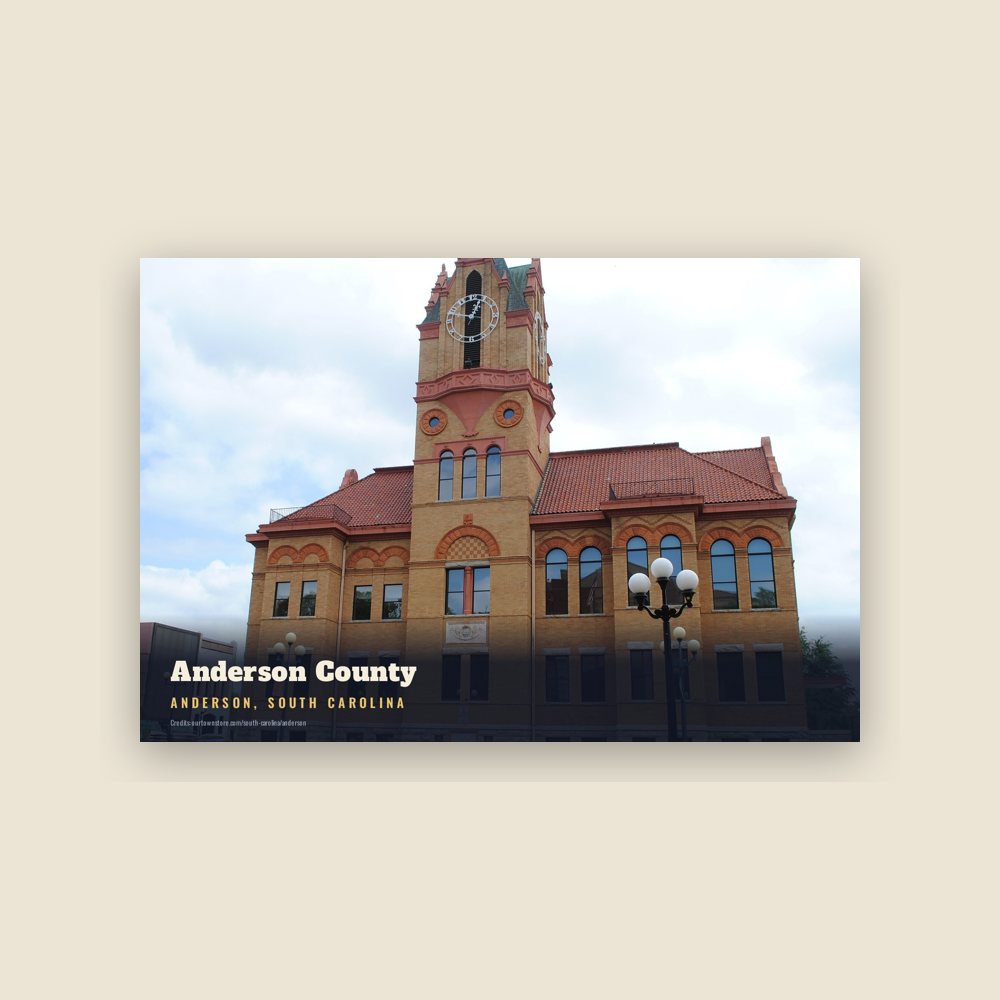
Anderson Court House
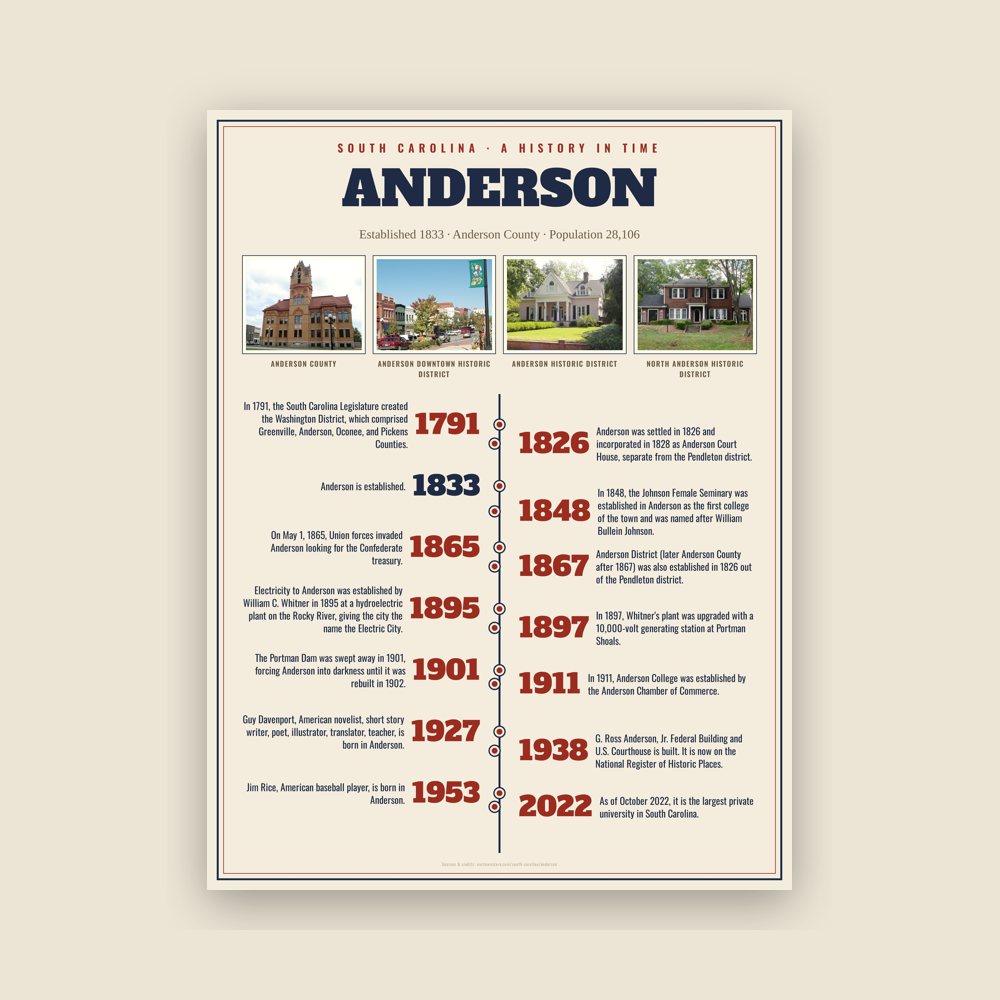
Cherokee first settled the area of what is today the city of Anderson. During the American Revolution, the Cherokee sided with the British. After the American Revolutionary War, the Cherokee's land was acquired as war reparations and colonized. In 1791, the South Carolina Legislature created the Washington District, which comprised Greenville, Anderson, Oconee, and Pickens Counties. The Washington District was then divided into Greenville and Pendleton districts. Anderson, Pickens, and Oconee comprised the newly created Pendleton district. Anderson was settled in 1826 and incorporated in 1828 as Anderson Court House, separate from the Pendleton district. The name Anderson is in honor of Robert Anderson, who fought in the American Revolutionary War and also explored the Anderson region in the mid-18th century. Anderson District (later Anderson County after 1867) was also established in 1826 out of the Pendleton district.
In 1848, the Johnson Female Seminary was established in Anderson as the first college of the town and was named after William Bullein Johnson. One year later, the seminary was renamed Johnson University. During the American Civil War, Johnson University was closed and converted into a Confederate treasury. On May 1, 1865, Union forces invaded Anderson looking for the Confederate treasury. The treasury office of Anderson was ransacked by Union forces, and the main building of Johnson University was used as a Union headquarters. A minor skirmish erupted at the Battle of Anderson, leading to two Union casualties. After the war, a Union garrison was stationed in Anderson.
Read the full history
The Electric City
Anderson became one of the first cities in the Southeastern United States to have electricity. Electricity to Anderson was established by William C. Whitner in 1895 at a hydroelectric plant on the Rocky River, giving the city the name the Electric City. Anderson also became the first city in the world to supply a cotton gin by electricity. In 1895, Anderson Court House was renamed to Anderson. In 1897, Whitner's plant was upgraded with a 10,000-volt generating station at Portman Shoals. Whitner's power plant at Portman Shoals became the first hydroelectric plant in the United States to generate high voltage without step-up transformers . The Portman Dam was swept away in 1901, forcing Anderson into darkness until it was rebuilt in 1902.
Anderson University
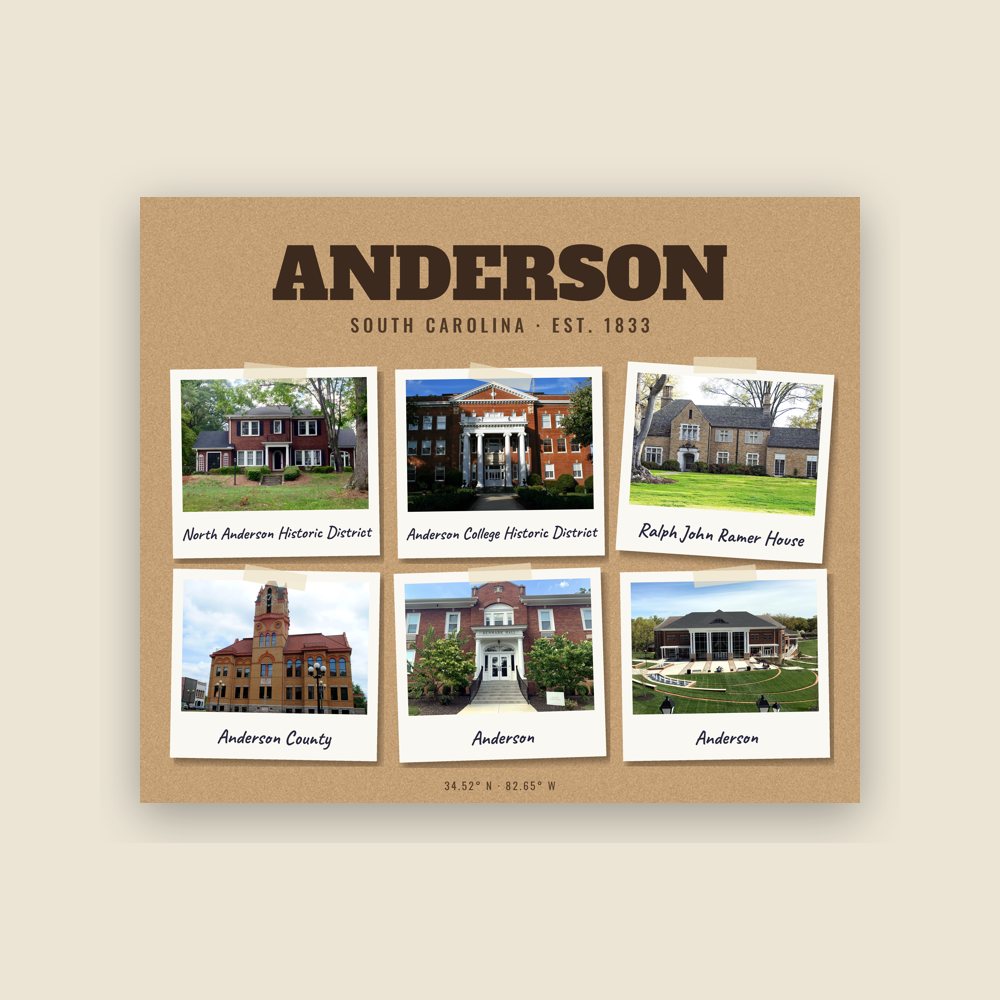
In 1911, Anderson College was established by the Anderson Chamber of Commerce. Anderson College was the successor to Johnson University and is affiliated with the South Carolina Baptist Convention. Anderson College became Anderson University. It is accredited as a Level VI institution (offers bachelors, masters, Ph.D. degrees) by the Southern Association of Colleges and Schools Commission on Colleges. As of October 2022, it is the largest private university in South Carolina.
Adapted (trimmed) from the Wikipedia article Anderson, South Carolina, revision 1378692597 by its contributors, licensed CC BY-SA 4.0.
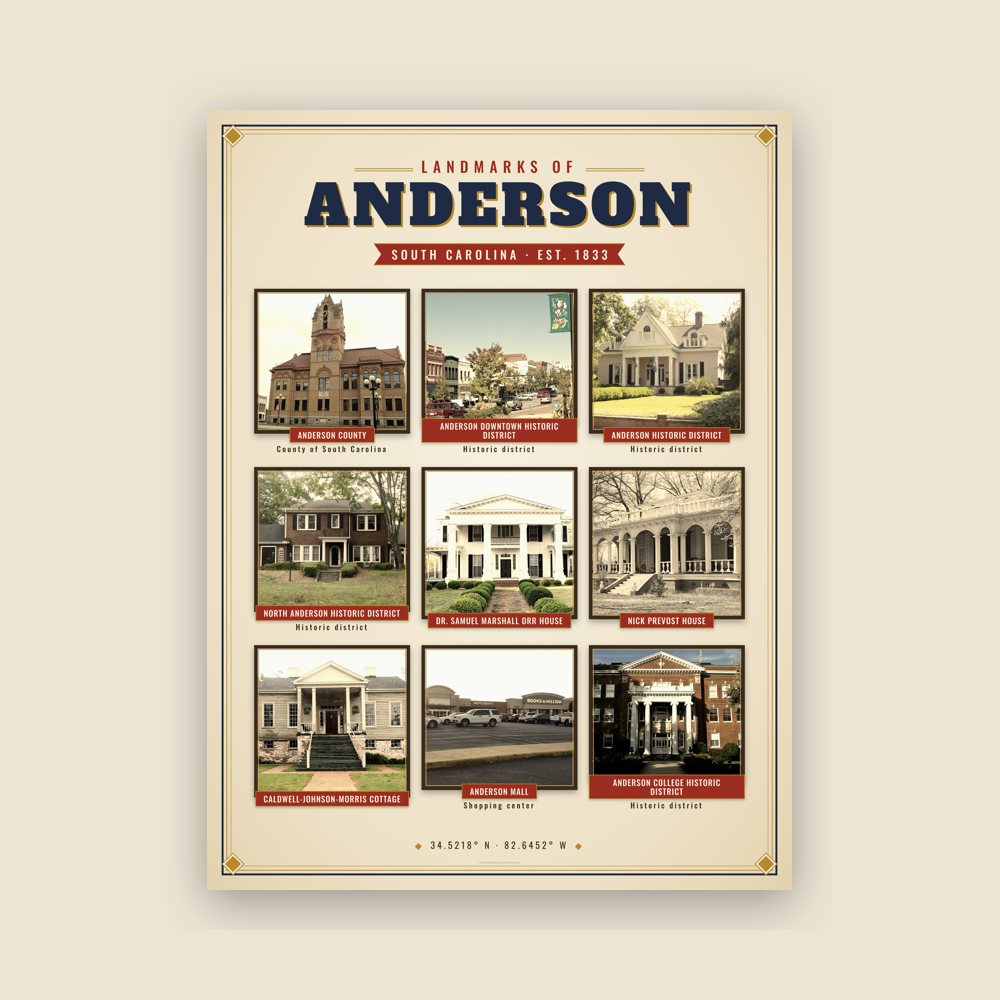

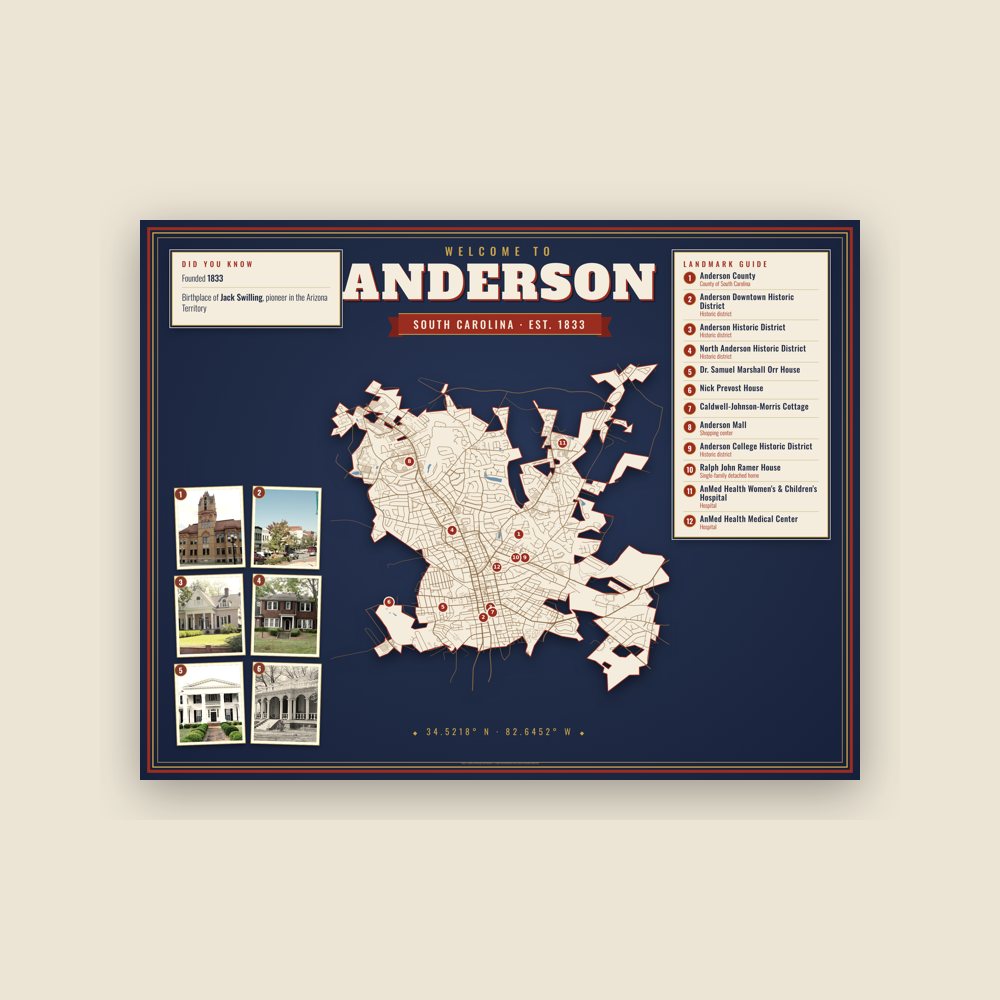
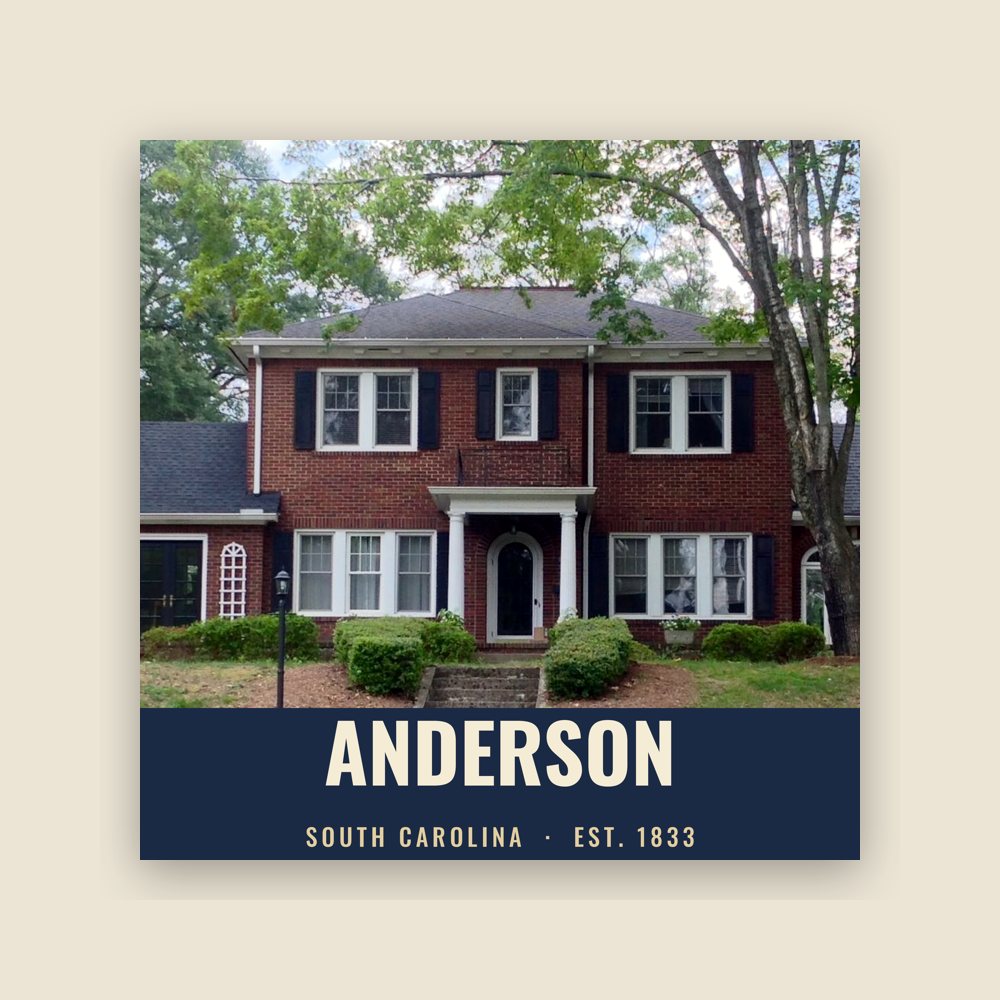
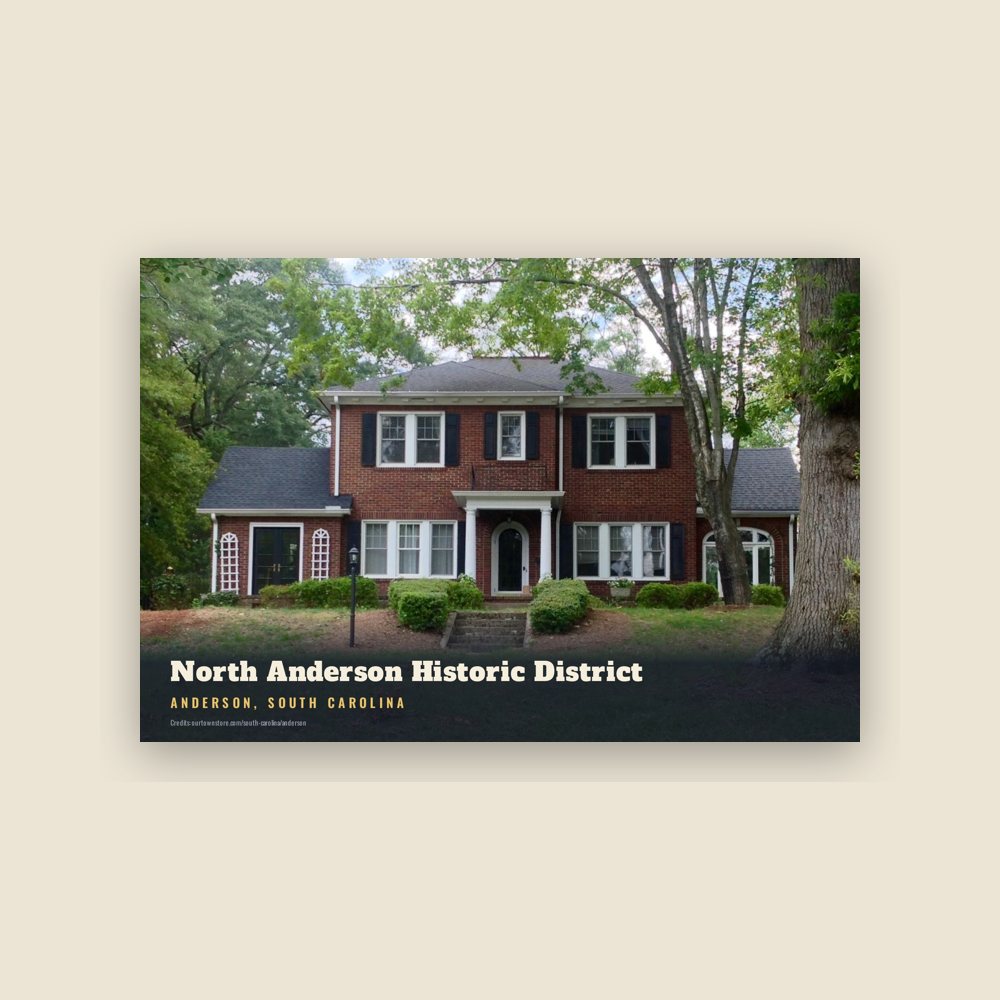
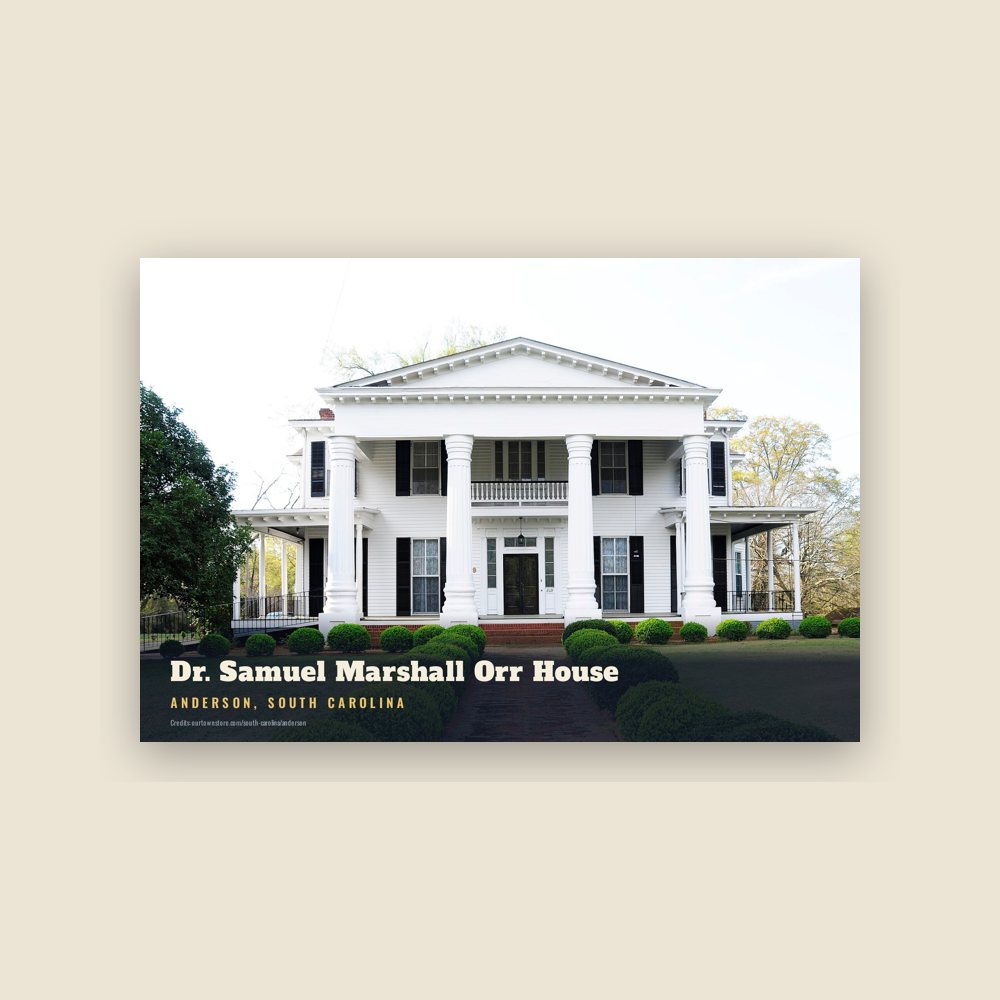
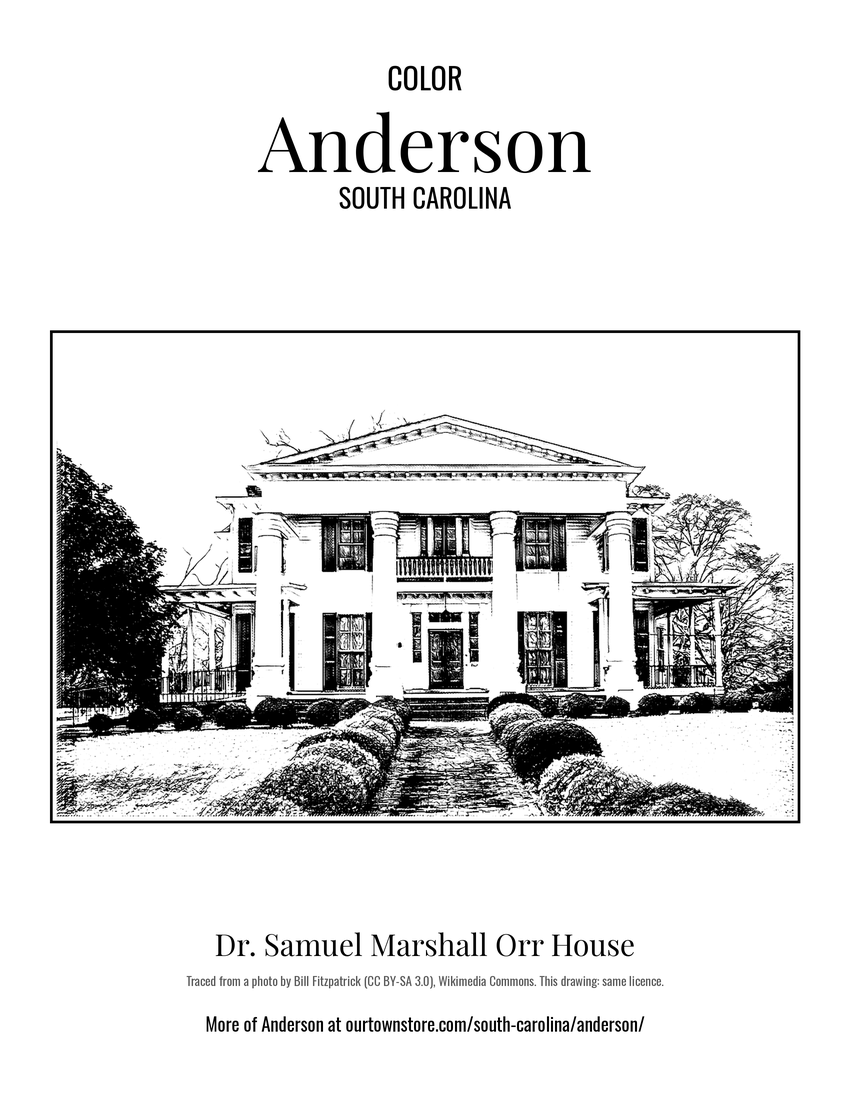 Dr. Samuel Marshall Orr House
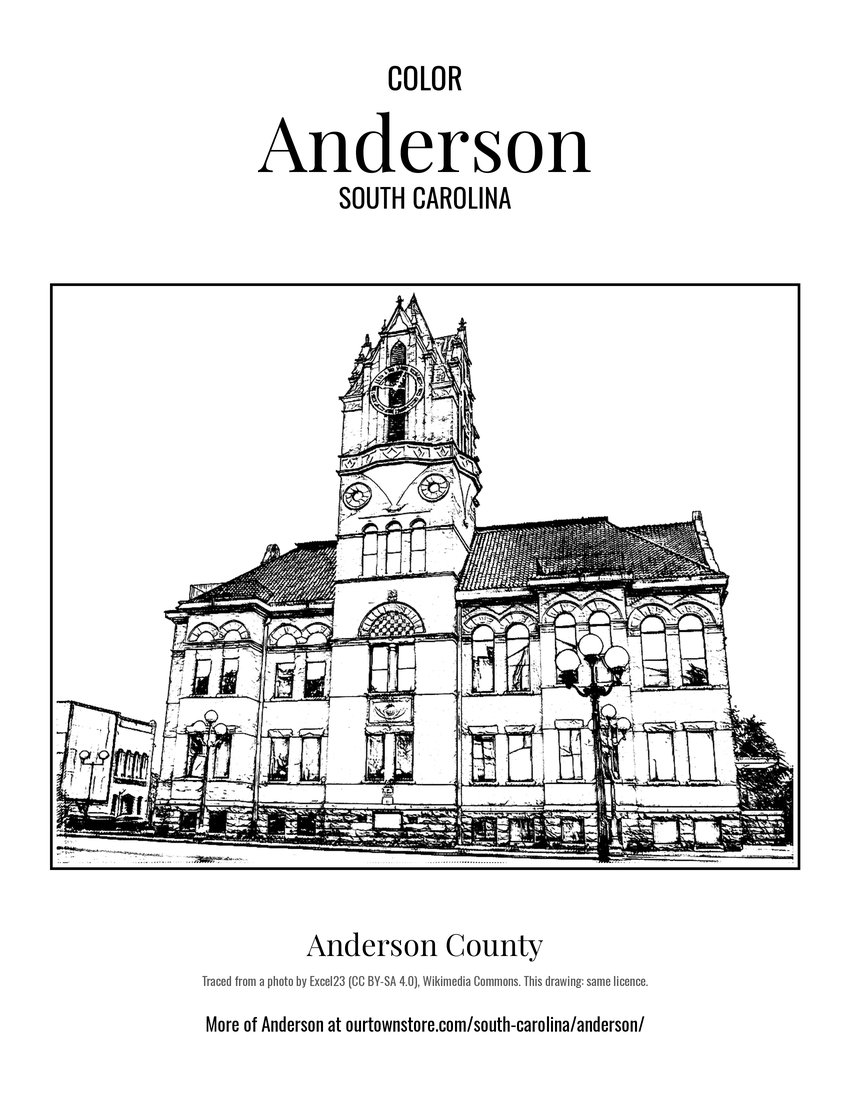 Anderson County
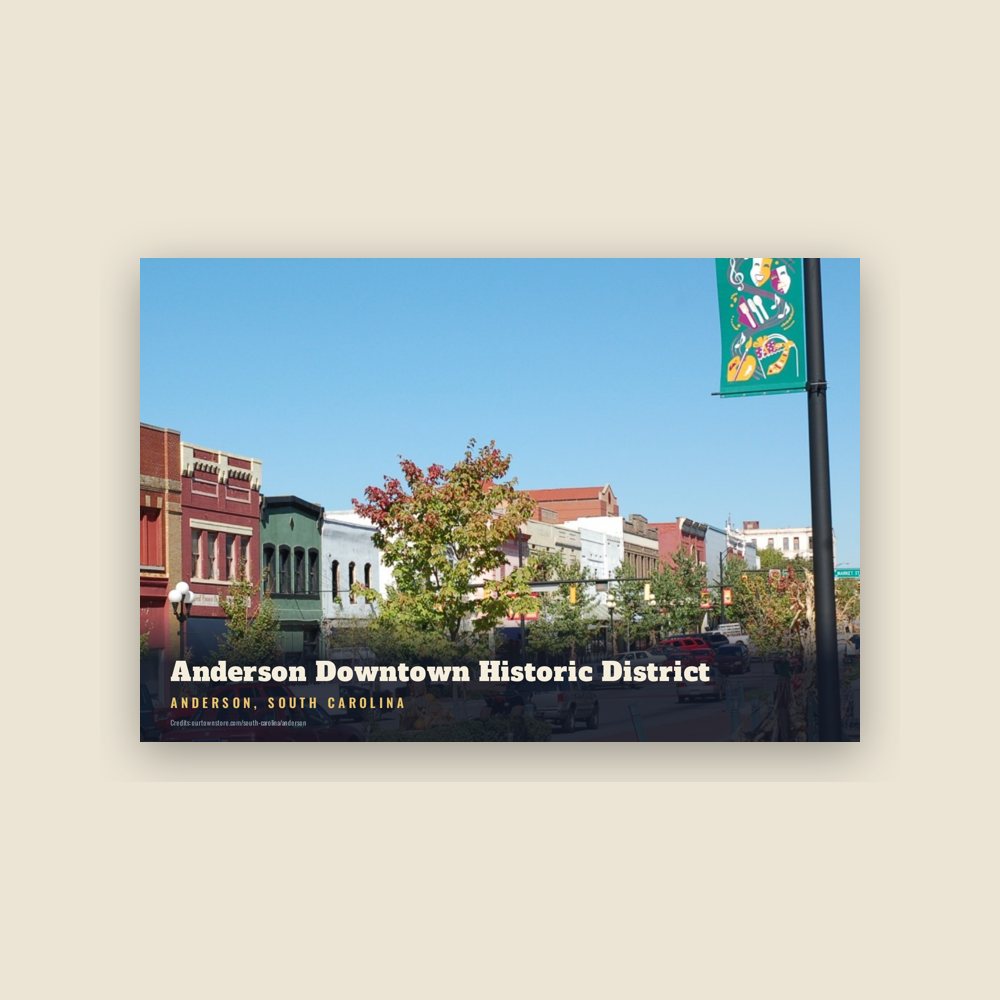
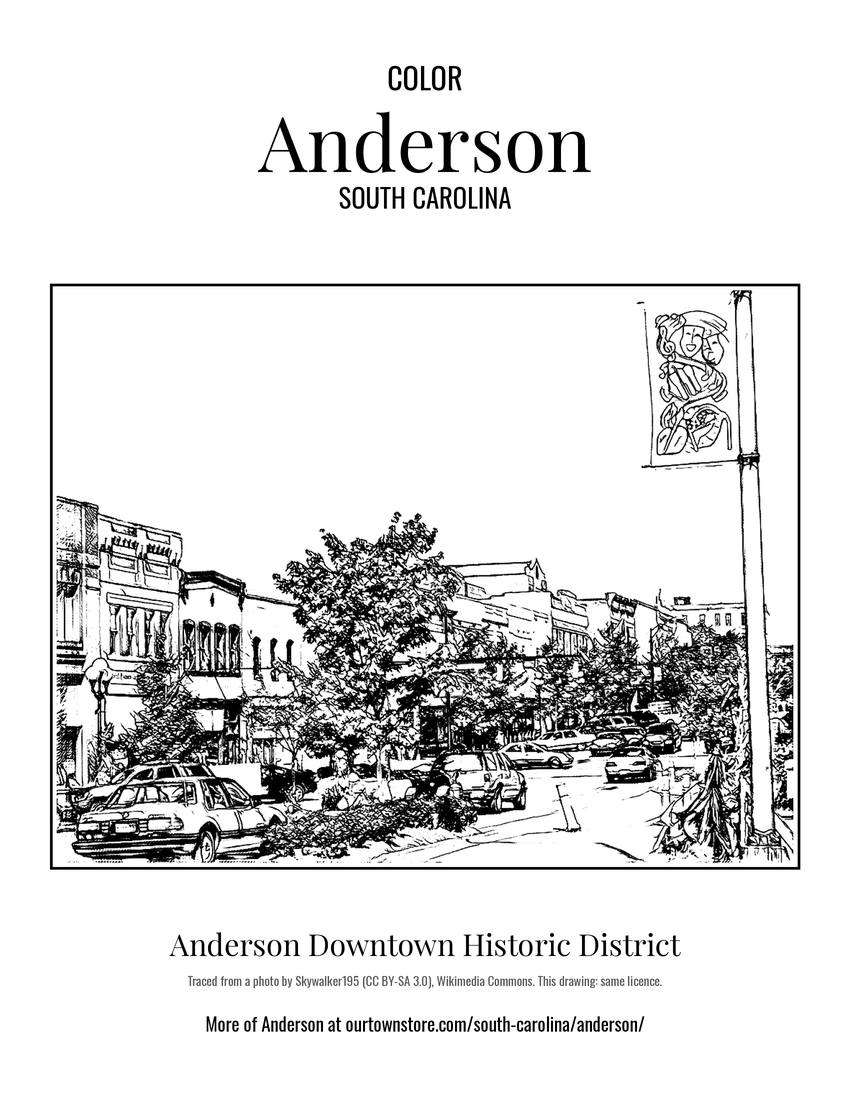 Anderson Downtown Historic District
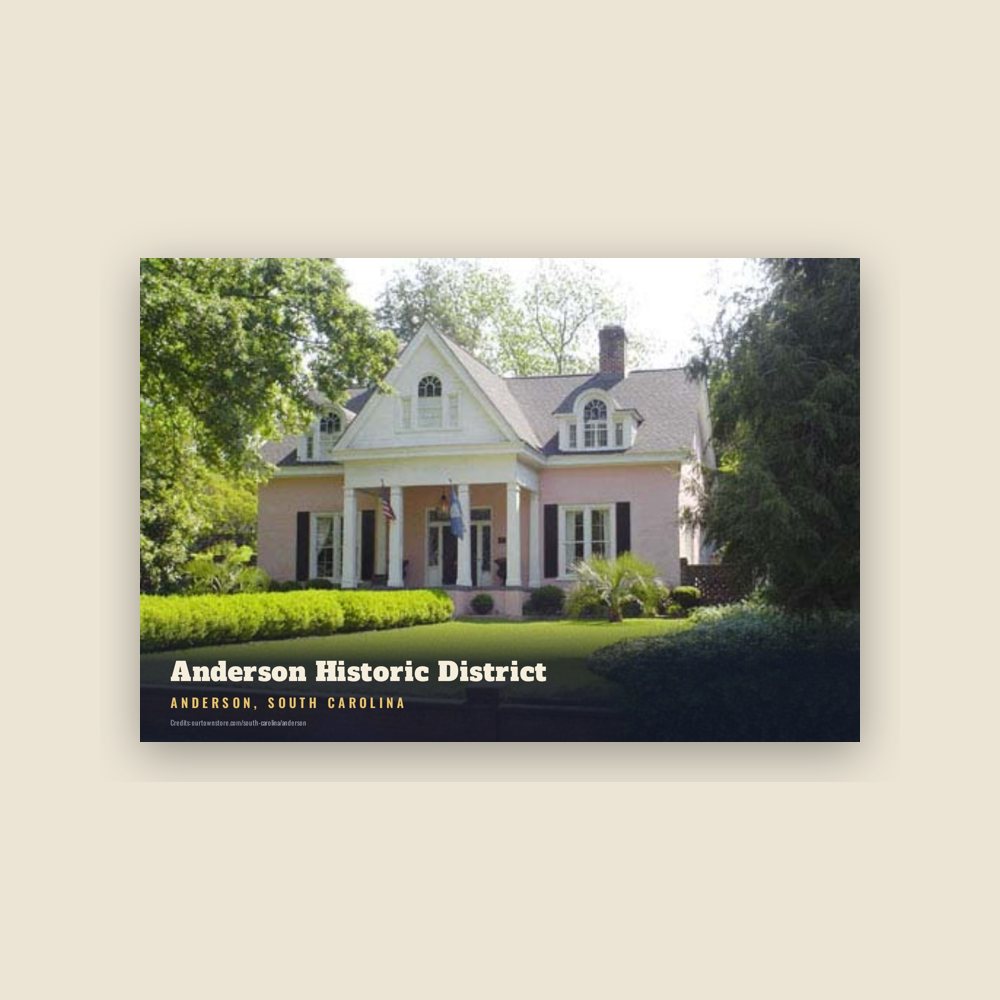
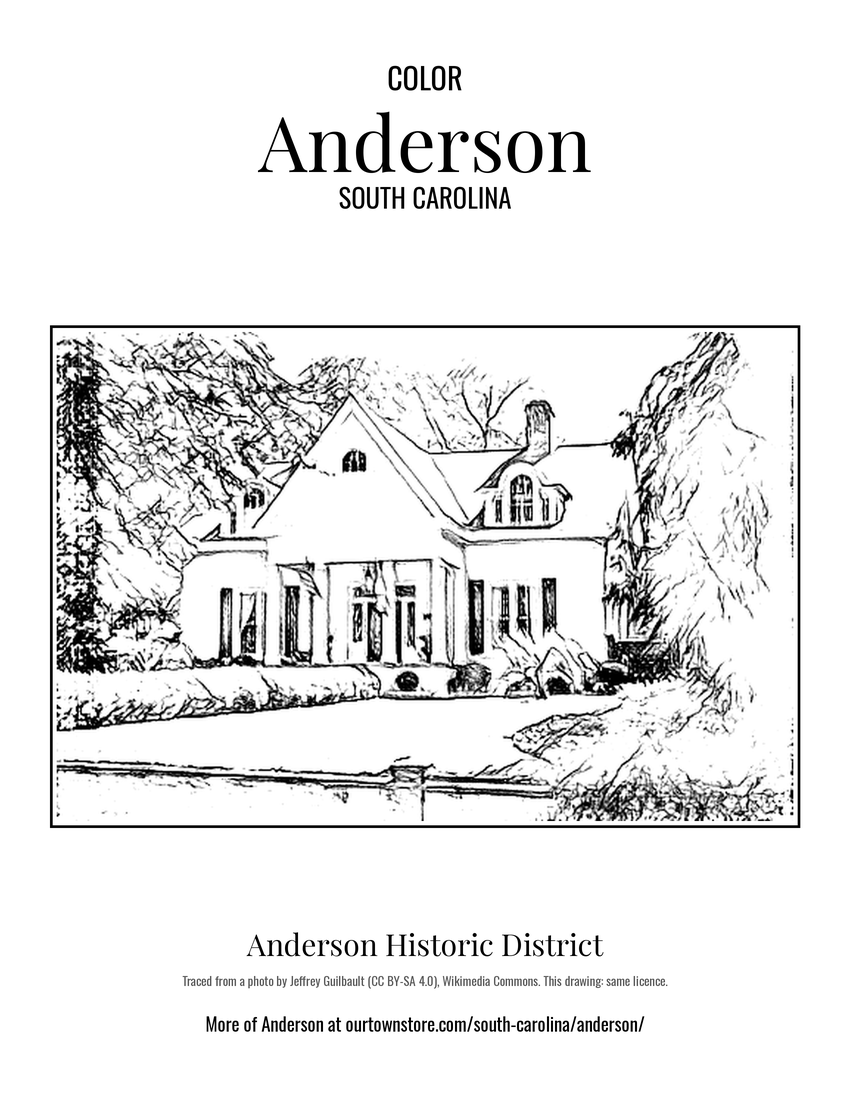 Anderson Historic District