A short history of Aiken
The municipality of Aiken was incorporated on December 19, 1835. The community formed around the terminus of the South Carolina Canal and Railroad Company, a rail line from Charleston to the Savannah River, and was named for William Aiken, the railroad's first president.
During Sherman's March to the Sea in the American Civil War Sherman ordered Hugh Judson Kilpatrick and the cavalry corps he commanded to march through South Carolina. By February 5, they had reached Aiken County. While there, Kilpatrick fought Joseph Wheeler and his cavalry corps. This battle, called the Battle of Aiken, was a Confederate victory.
Originally, it was in the Edgefield District. With population increases by 1871, Aiken County was organized, made up from parts of neighboring counties. Among its founding commissioners were three African-American legislators: Prince Rivers; Samuel J. Lee, speaker of the state House and the first black man admitted to the South Carolina Bar; and Charles D. Hayne, a free man of color from one of Charleston's elite families.
Aiken was a planned town, and many of the streets in the historic district are named for other cities and counties in South Carolina, including Abbeville, Barnwell, Beaufort, Chesterfield, Colleton, Columbia, Dillon, Edgefield, Edisto, Fairfield, Florence, Greenville, Hampton, Horry, Jasper, Kershaw, Lancaster, Laurens, Marion, Marlboro, McCormick, Newberry, Orangeburg, Pendleton, Pickens, Richland, Sumter, Union, Williamsburg, and York.
Between 1890 and the 1920s, many Jewish immigrants, many from Eastern Europe, including Russia and Poland (especially Knyszyn), settled in Aiken. In 1905, a group of Russian-Jewish socialists from New York founded a farming colony in Aiken County that was known as "Happyville". Adath (Adas) Yeshurun (Congregation of Israel) Synagogue was chartered in Aiken in 1921, and the cornerstone was laid in 1925. A historical marker was added to the synagogue in 2014, sponsored by the Jewish Historical Society of South Carolina. In 1903, the Jewish-American peddler Abraham Surasky was the victim of an antisemitic murder that occurred near Aiken.
Aiken was the subject of a series of broadcasts by Orson Welles in July and August 1946 regarding the blinding and severe beating of Sergeant Isaac Woodard, a black World War II veteran.
Read the full history
Savannah River Plant
The United States Atomic Energy Commission's selection of a site near Aiken for a plant to produce fuel for thermonuclear weapons was announced on November 30, 1950. Residences and businesses at Ellenton, South Carolina, were bought for use for the plant site. Residents were moved to New Ellenton, which was constructed about 8 mi (13 km) north, or to neighboring towns.
The site was named the Savannah River Plant and renamed the Savannah River Site in 1989. The facility contains five production reactors, fuel fabrication facilities, a research laboratory, heavy water-production facilities, two fuel-reprocessing facilities, and tritium recovery facilities.
Adapted (trimmed) from the Wikipedia article Aiken, South Carolina, revision 1382480401 by its contributors, licensed CC BY-SA 4.0.

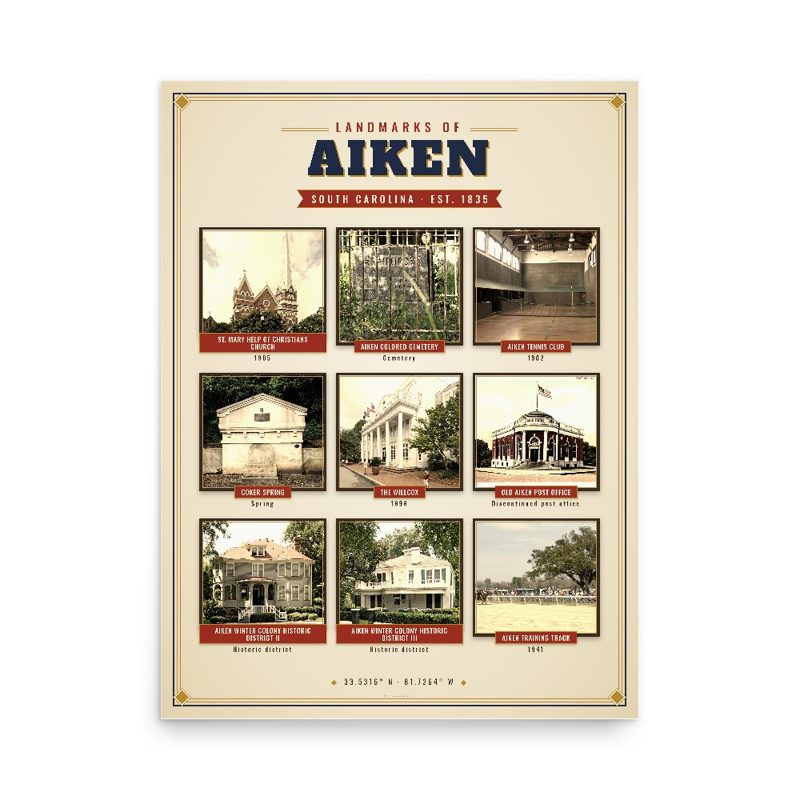
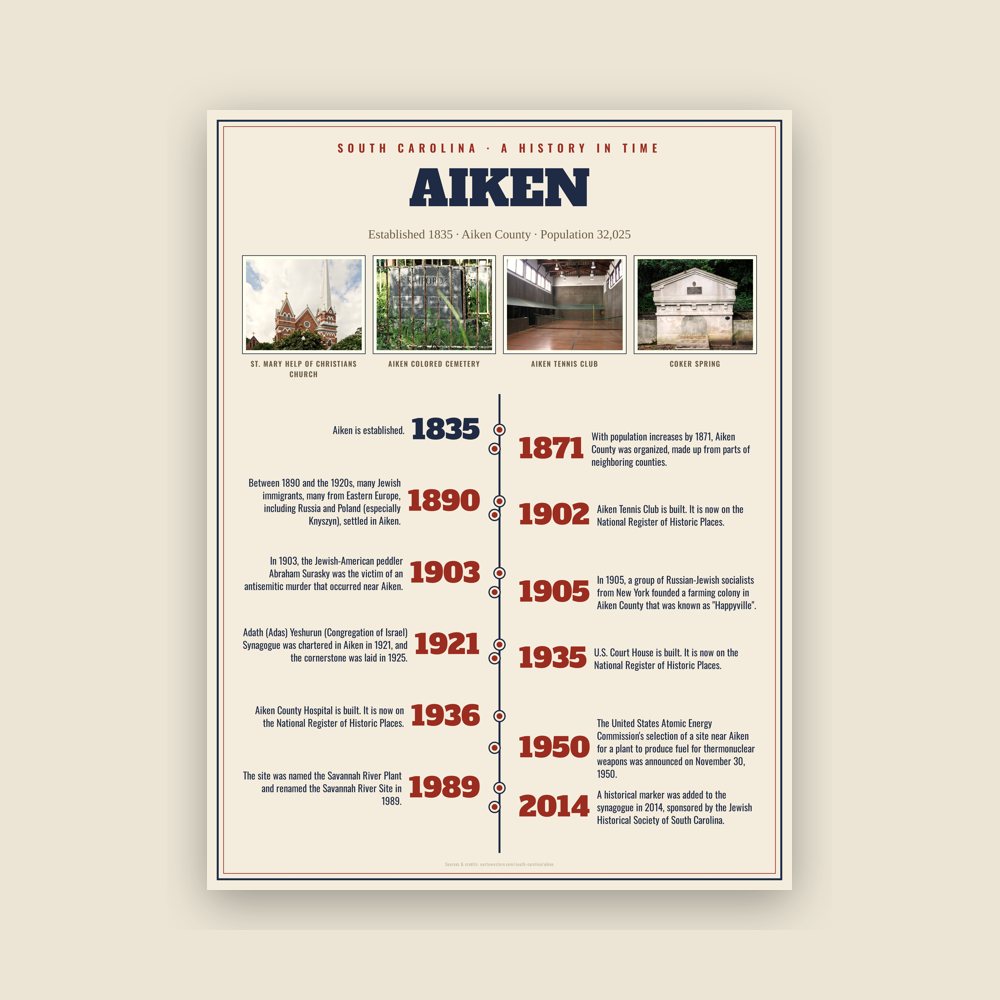
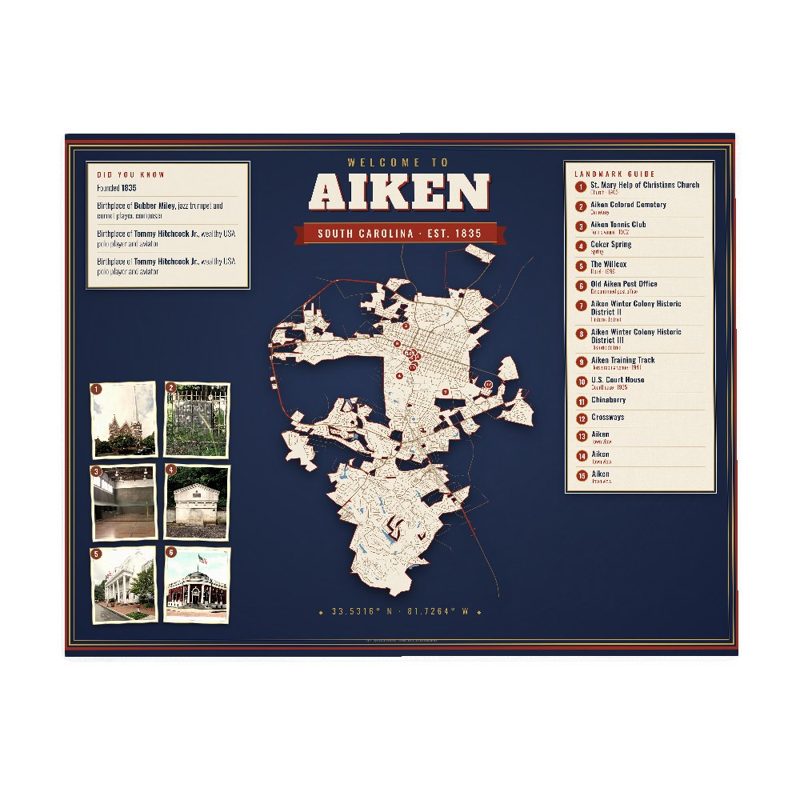














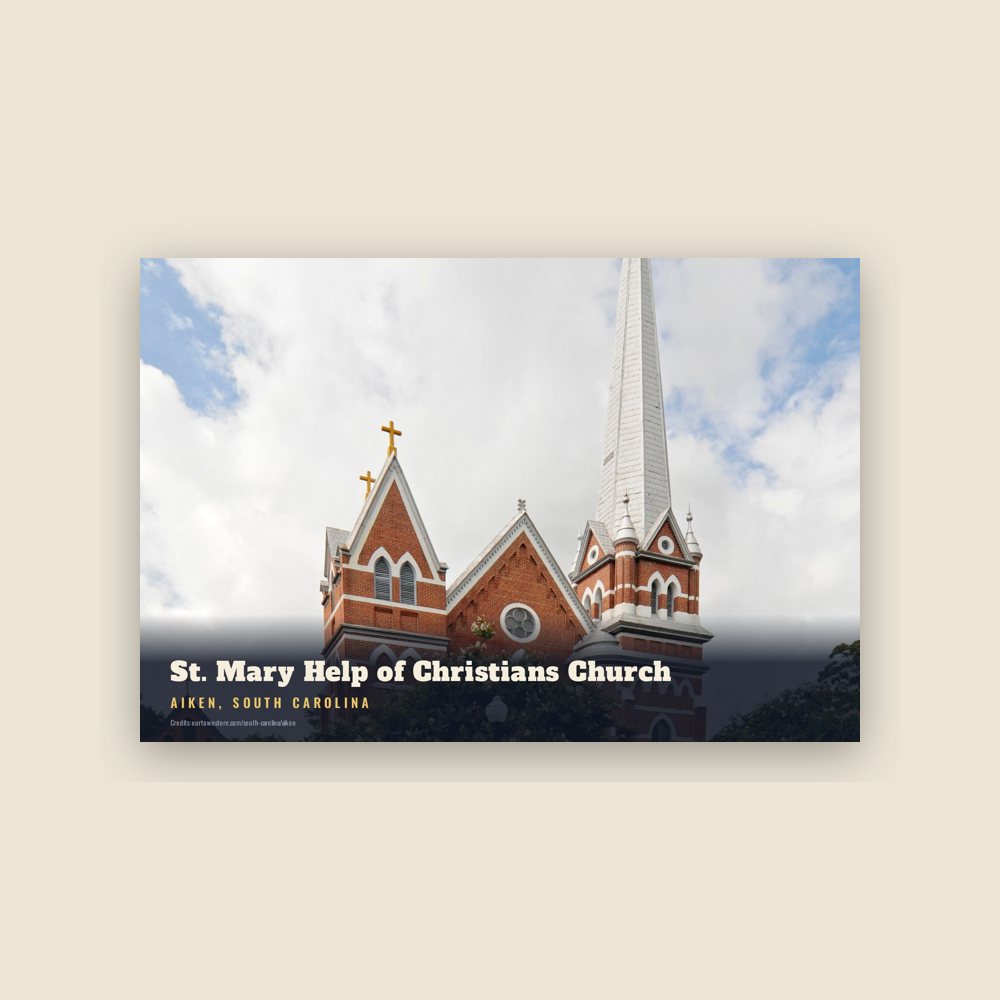

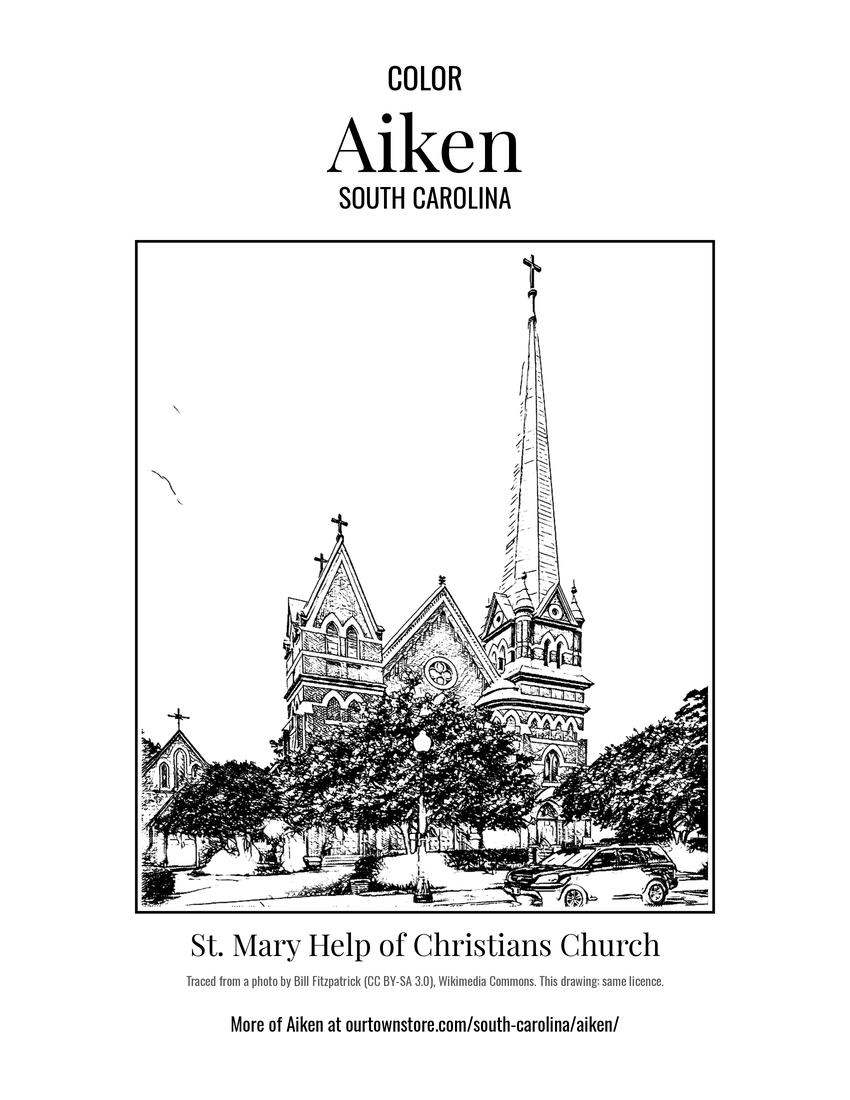 St. Mary Help of Christians Church
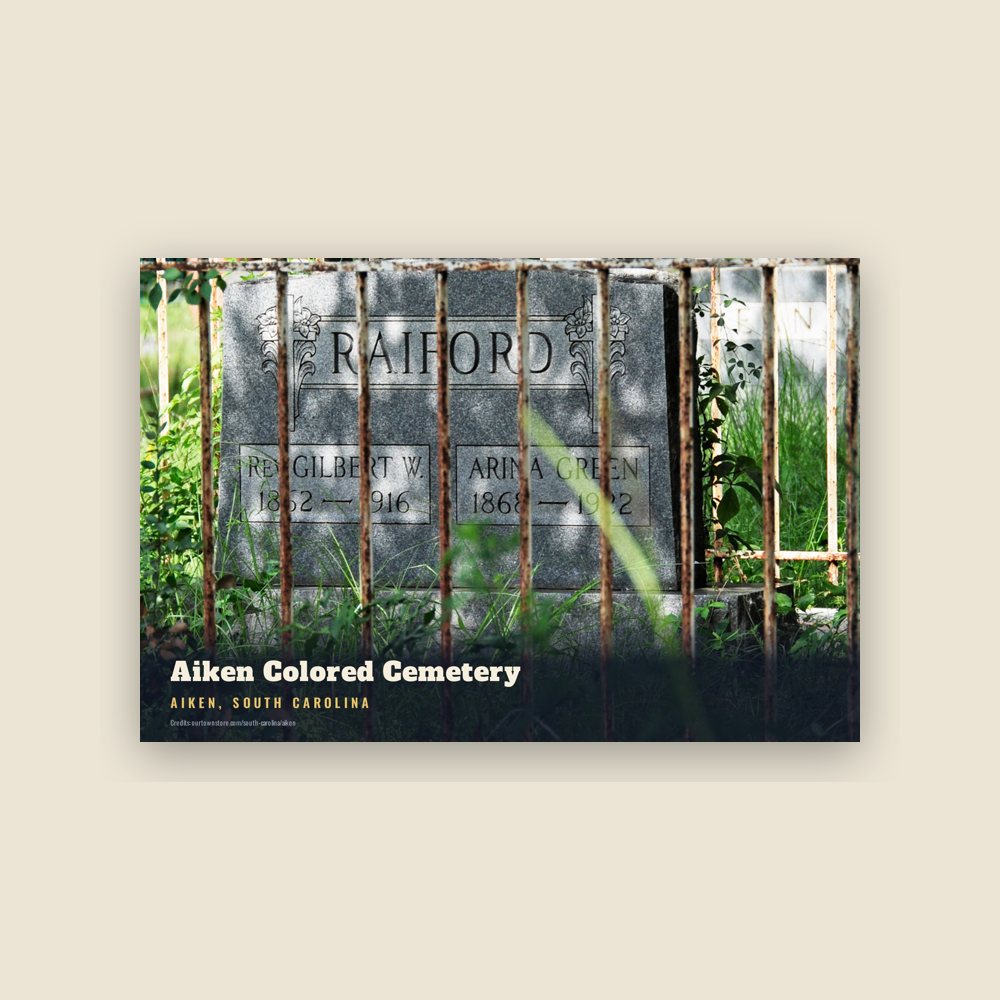
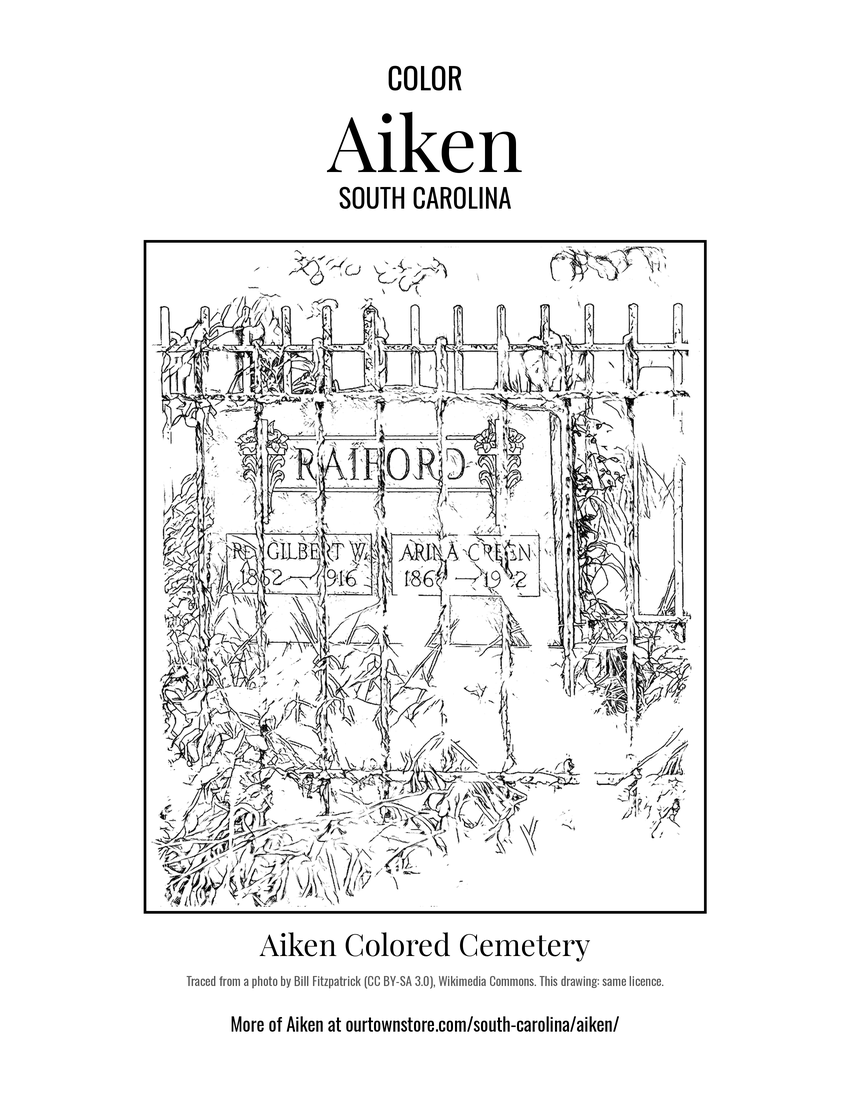 Aiken Colored Cemetery
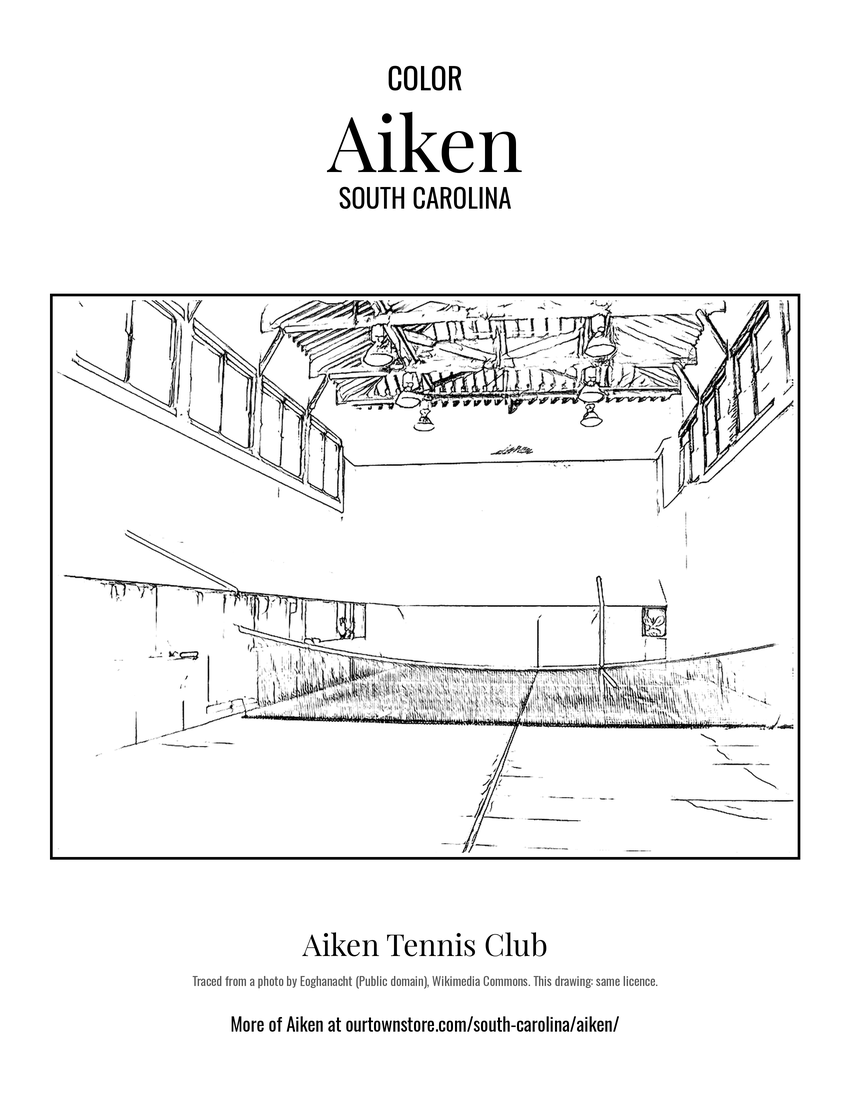 Aiken Tennis Club
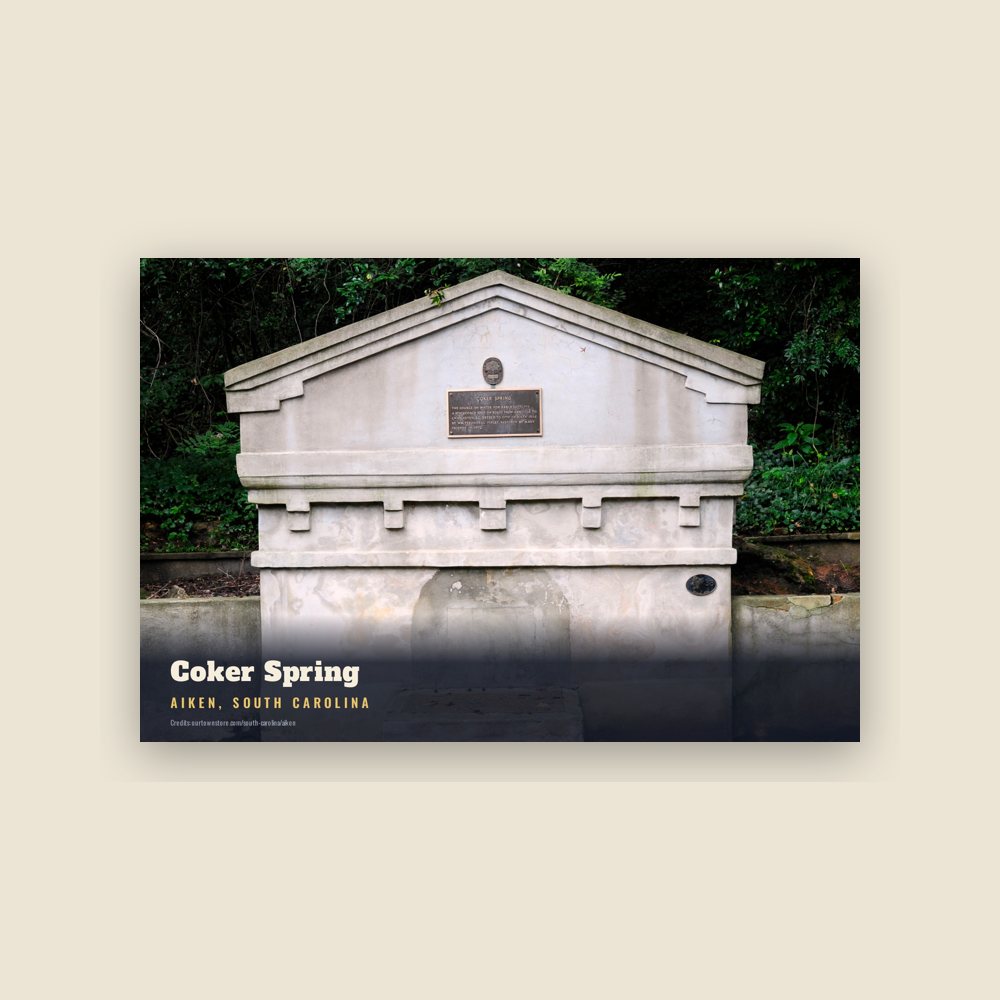
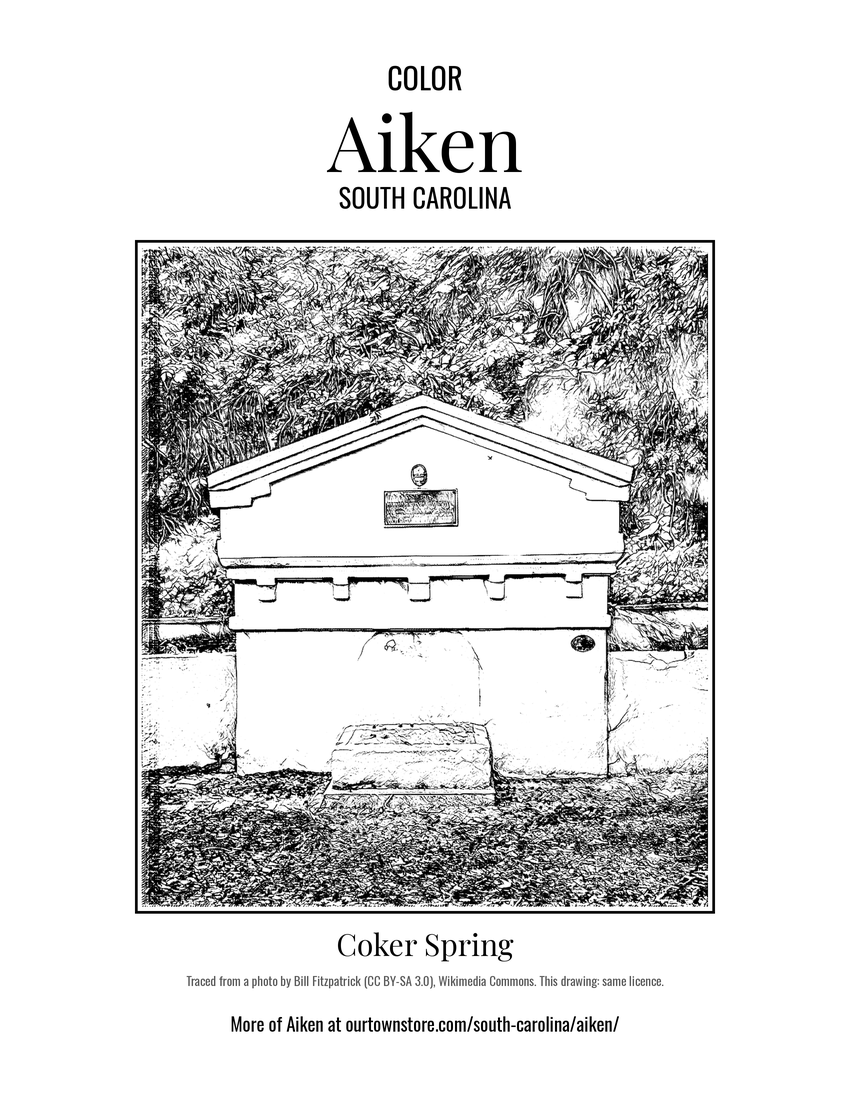 Coker Spring