The earliest inhabitants of Marcus Hook were members of the Lenape Native American tribe and their indigenous ancestors, whose succeeding cultures occupied present-day Marcus Hook and surrounding areas for thousands of years.
Read the full history
17th century
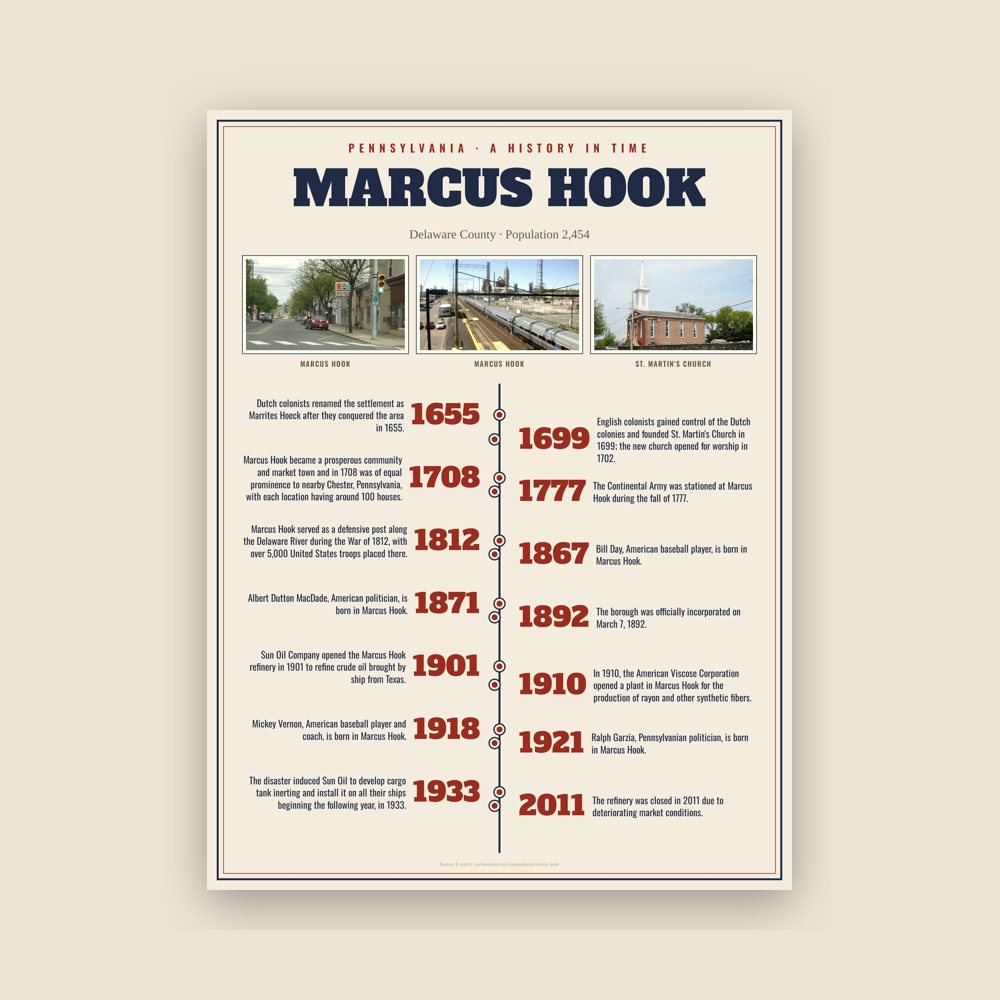
The Lenape had a major settlement in Marcus Hook; New Sweden colonists established a trading post here in the 1640s. The village, called Chammassungh, or "Finland" by the Swedes, was located on the west side of the Delaware River, between Marcus Hook Creek and Naamans Creek. Dutch colonists renamed the settlement as Marrites Hoeck after they conquered the area in 1655. The name is derived from the word Hook, meaning promontory, or point of land projecting into the water and Marcus, a corruption of the name of the Indian chief, called Maarte by the Dutch, who lived at the Hook.
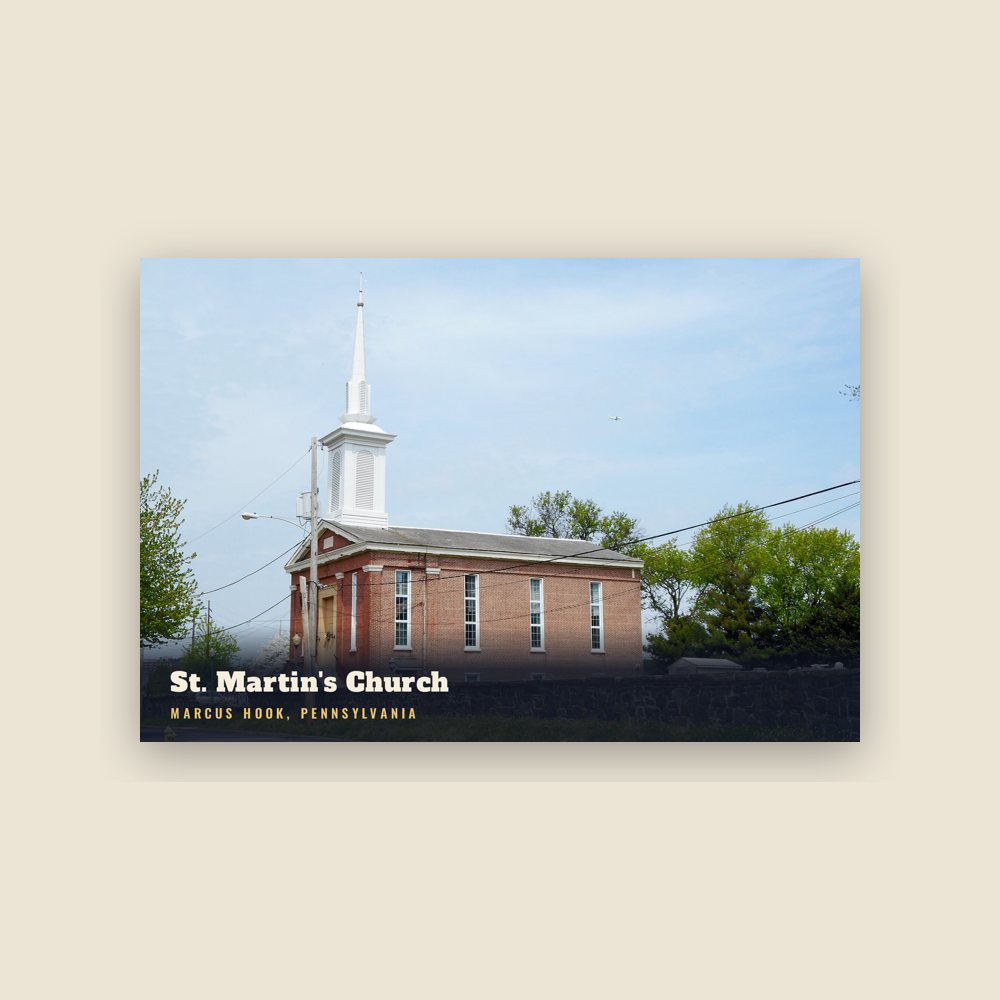
English colonists gained control of the Dutch colonies and founded St. Martin's Church in 1699; the new church opened for worship in 1702. Walter Martin of Upper Chichester founded this church as an alternative place of worship and burial for Christian non-Quakers.
18th century
Marcus Hook became a prosperous community and market town and in 1708 was of equal prominence to nearby Chester, Pennsylvania, with each location having around 100 houses.
In the early 1700s, Marcus Hook was a haven for pirates who plagued the lower Delaware River. The market at Marcus Hook provided the pirates a place to sell plundered goods and resupply away from the authorities and customs officials in Philadelphia. Early maps of Marcus Hook show the current Second Street was originally named "Discord Lane", since it was the location of the pirates' revelry when they were in town.
By the mid-18th century, Marcus Hook became a major regional center for the building of wooden sailing ships and remained so until the late 19th century. By that time, larger tonnage ships became more popular than the sloops and schooners built in Marcus Hook.
During the American Revolutionary War, two tiers of underwater chevaux-de-frise obstacles were placed across the Delaware River at Marcus Hook to provide a first line of defense of Philadelphia against British naval forces. Marcus Hook also served as a training center for the Pennsylvania militia. The Continental Army was stationed at Marcus Hook during the fall of 1777. As the town was bombarded by British warships, very few pre-Revolutionary houses remain in Marcus Hook.
19th century
Marcus Hook served as a defensive post along the Delaware River during the War of 1812, with over 5,000 United States troops placed there.
The borough was officially incorporated on March 7, 1892. The convergence of rail, roads, a deep-water port, and the nation's growing thirst for petroleum gave rise to the refineries that became the borough's dominant industry.
20th century
Sun Oil Company opened the Marcus Hook refinery in 1901 to refine crude oil brought by ship from Texas. It was the first of seven major refineries that made up the largest fuel-manufacturing center in the Northeast. The refinery was closed in 2011 due to deteriorating market conditions. The refinery was reopened as Marcus Hook Industrial Complex operated by Energy Transfer Partners. Processing Marcellus Shale gas transferred via the Mariner East and Mariner XL Pipelines.
In 1910, the American Viscose Corporation opened a plant in Marcus Hook for the production of rayon and other synthetic fibers. The company also built an "Industrial Village" to house some of its workers.
On February 4, 1932, the MS Bidwell, a motor tanker belonging to Sun Oil, exploded and burned at the Sinclair Dock while tanks were being cleaned of residual crude oil in preparation for loading of gasoline. The first explosion occurred at 12:20 am and was followed by three more explosions within 25 minutes, resulting in 17 or 18 dead, including the entire crew and captain, and four were injured. The disaster induced Sun Oil to develop cargo tank inerting and install it on all their ships beginning the following year, in 1933.
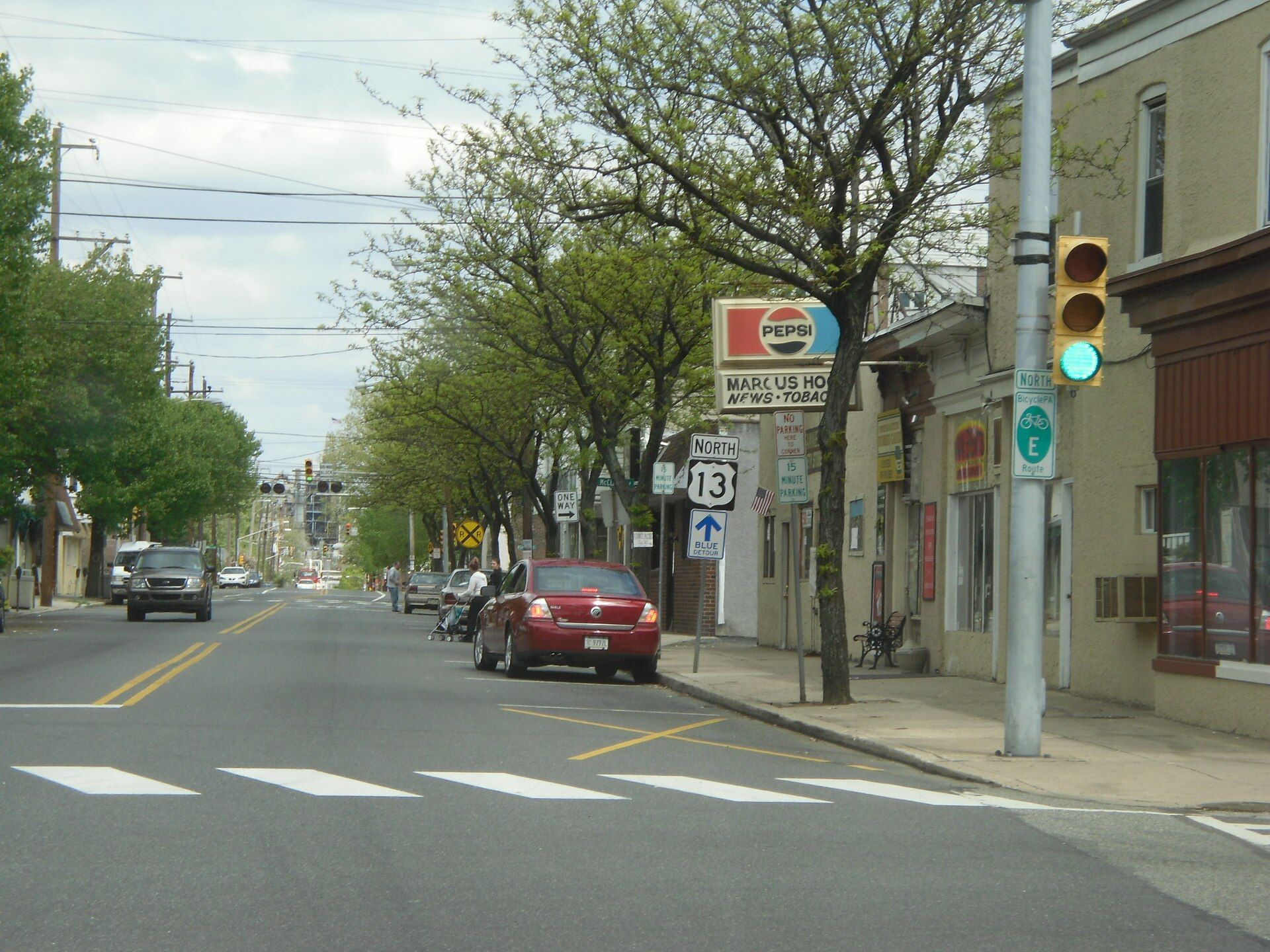
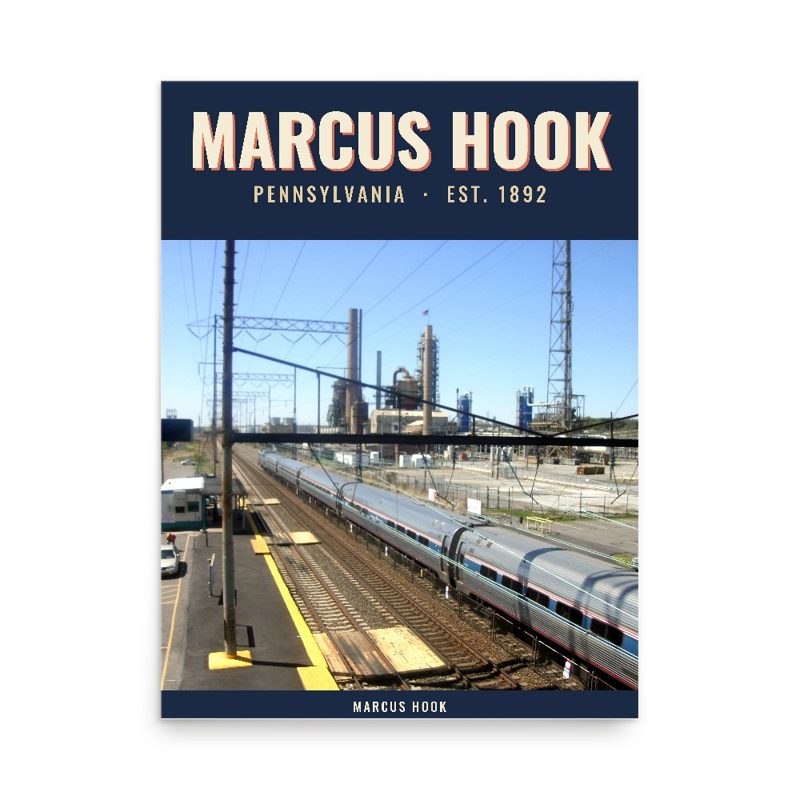
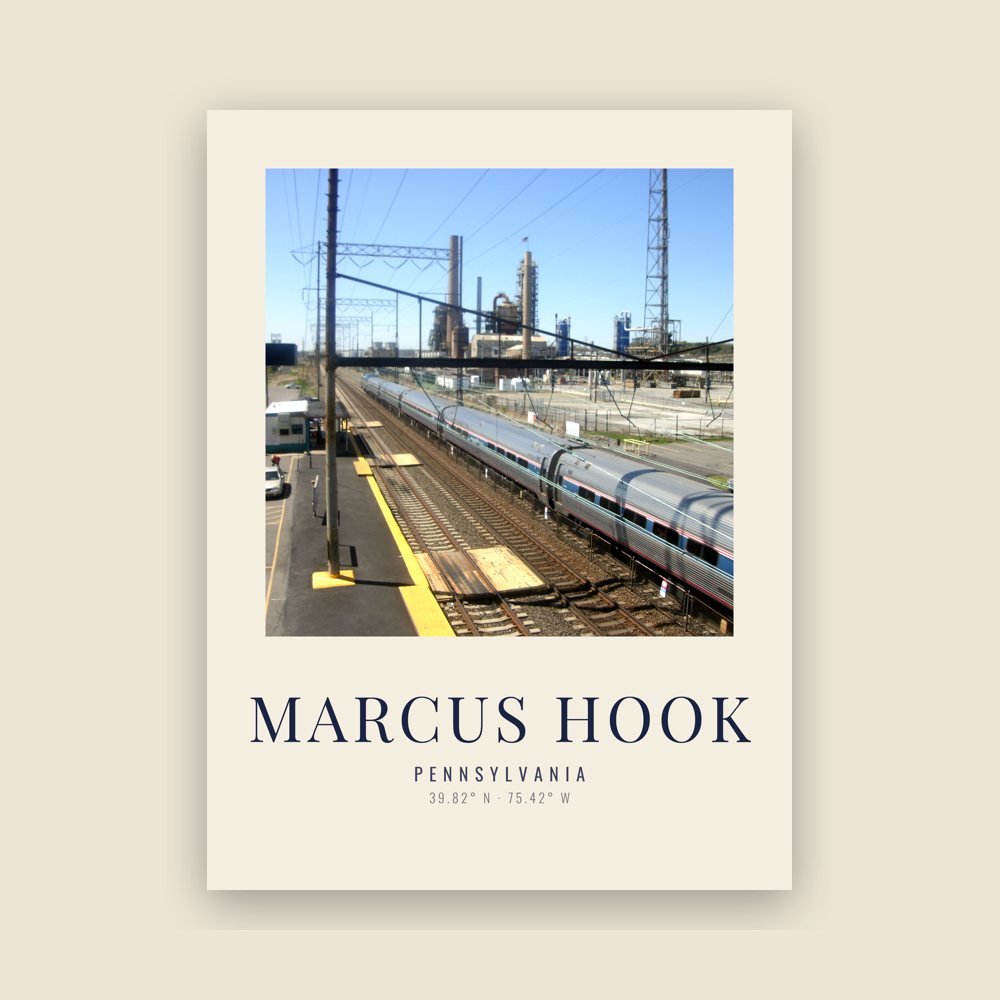
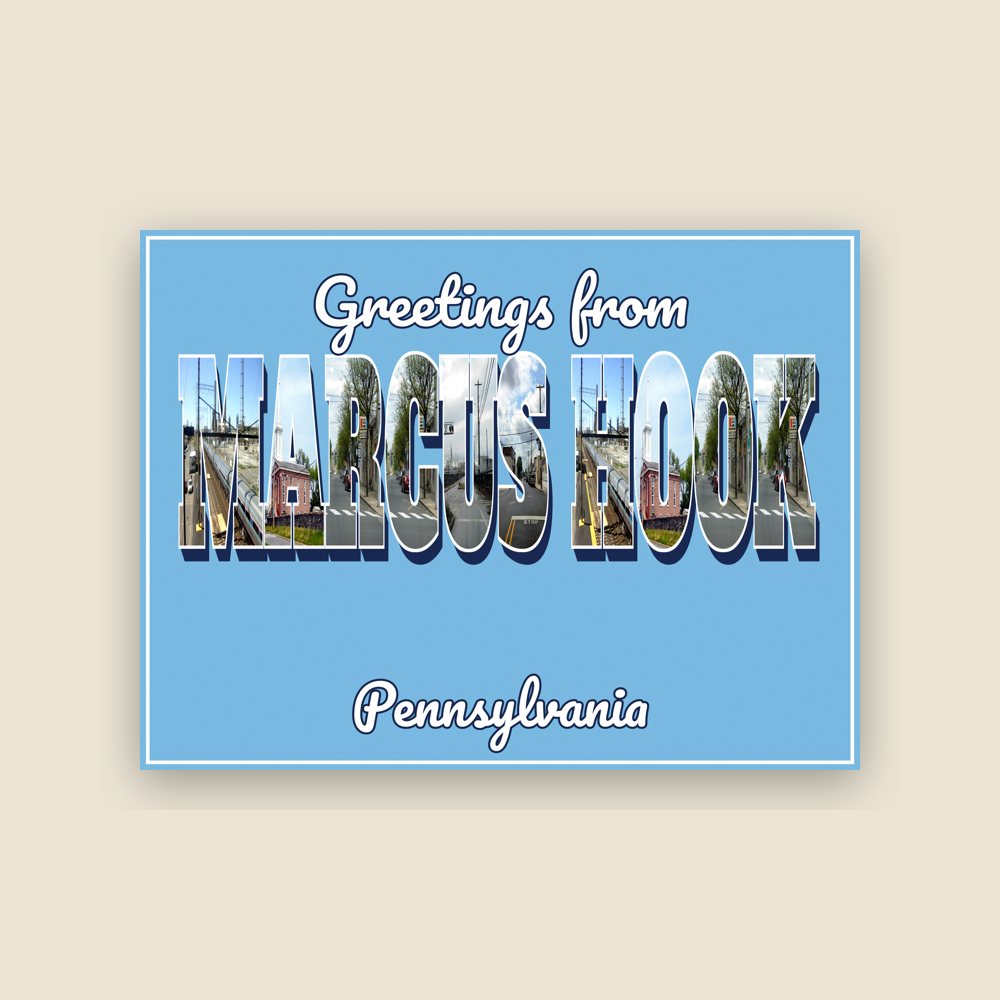
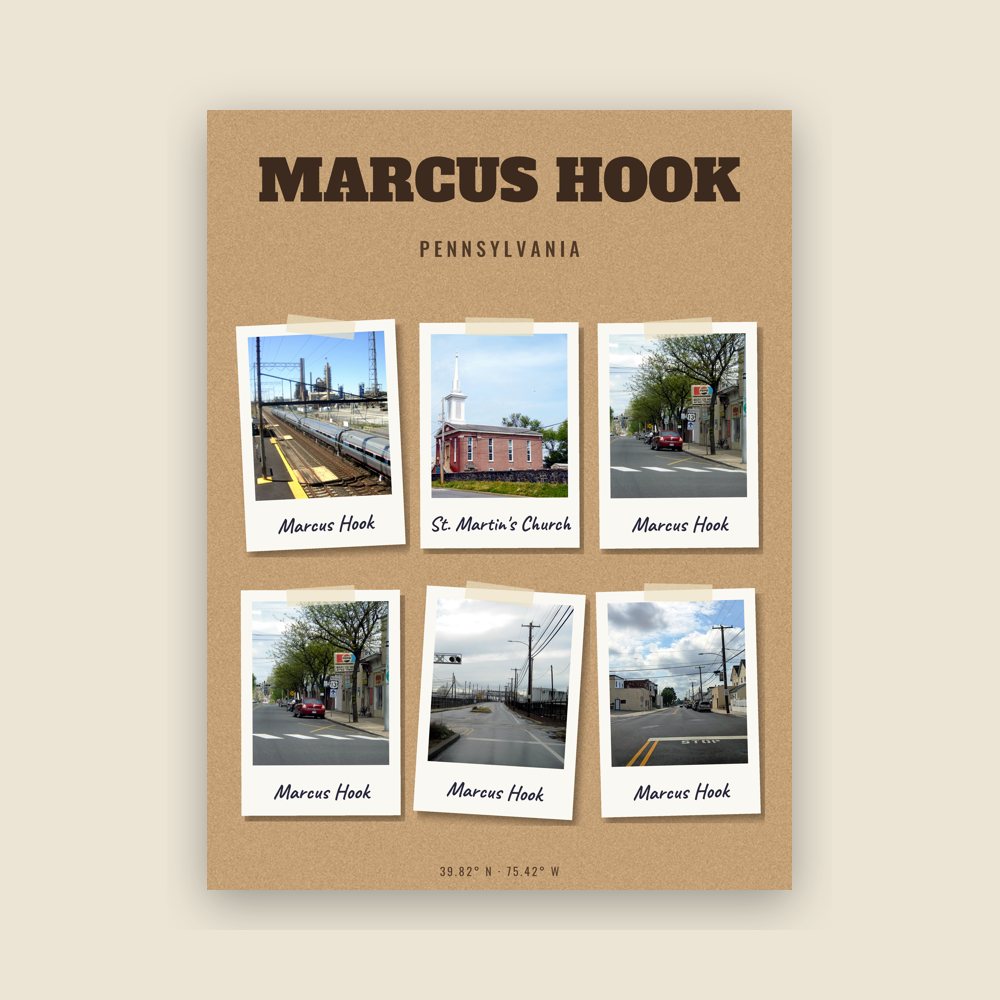
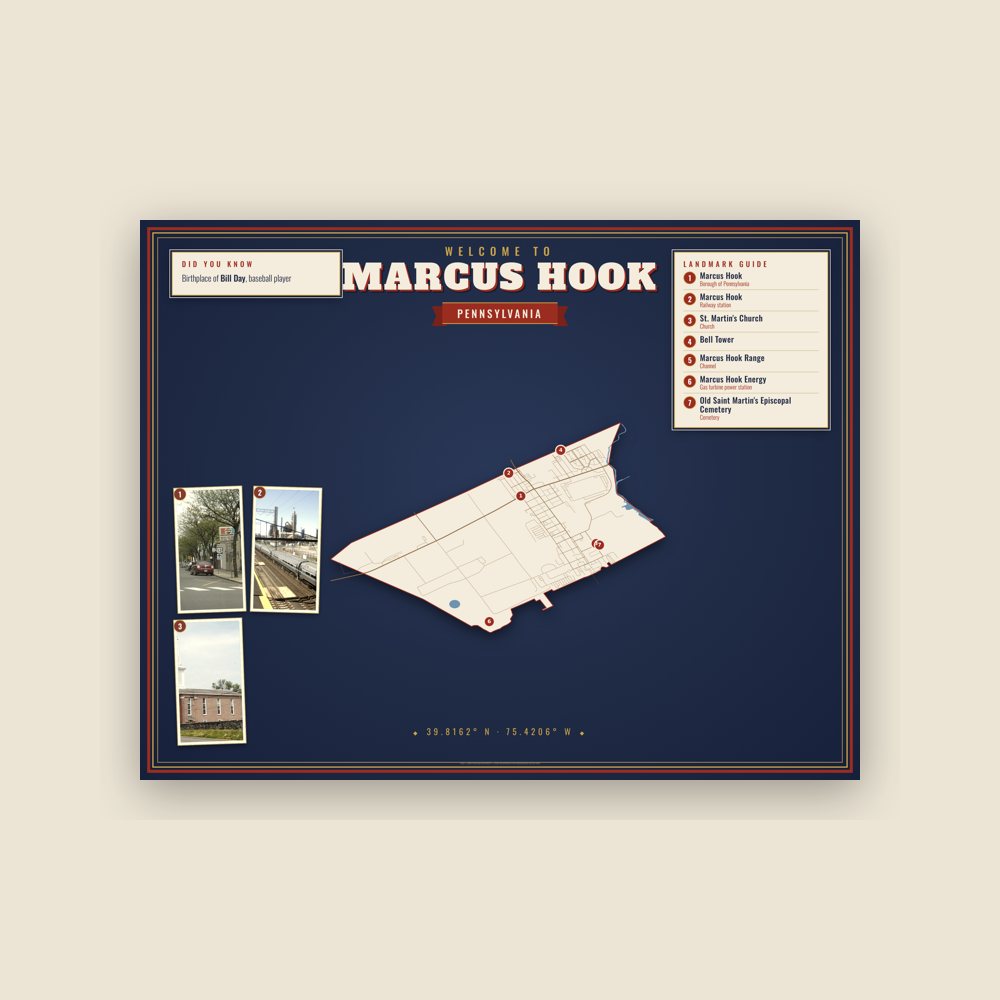


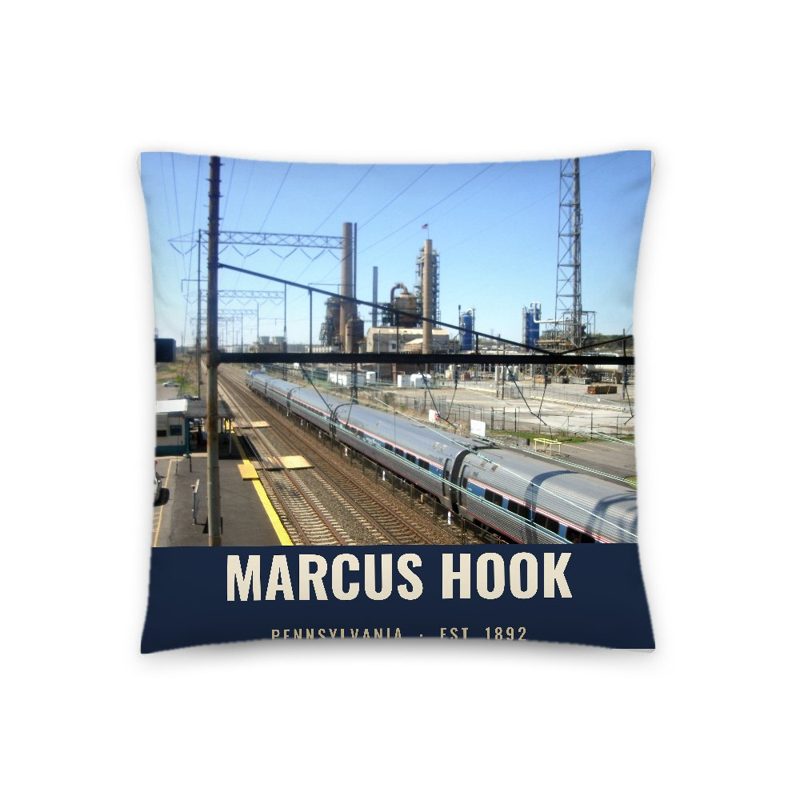

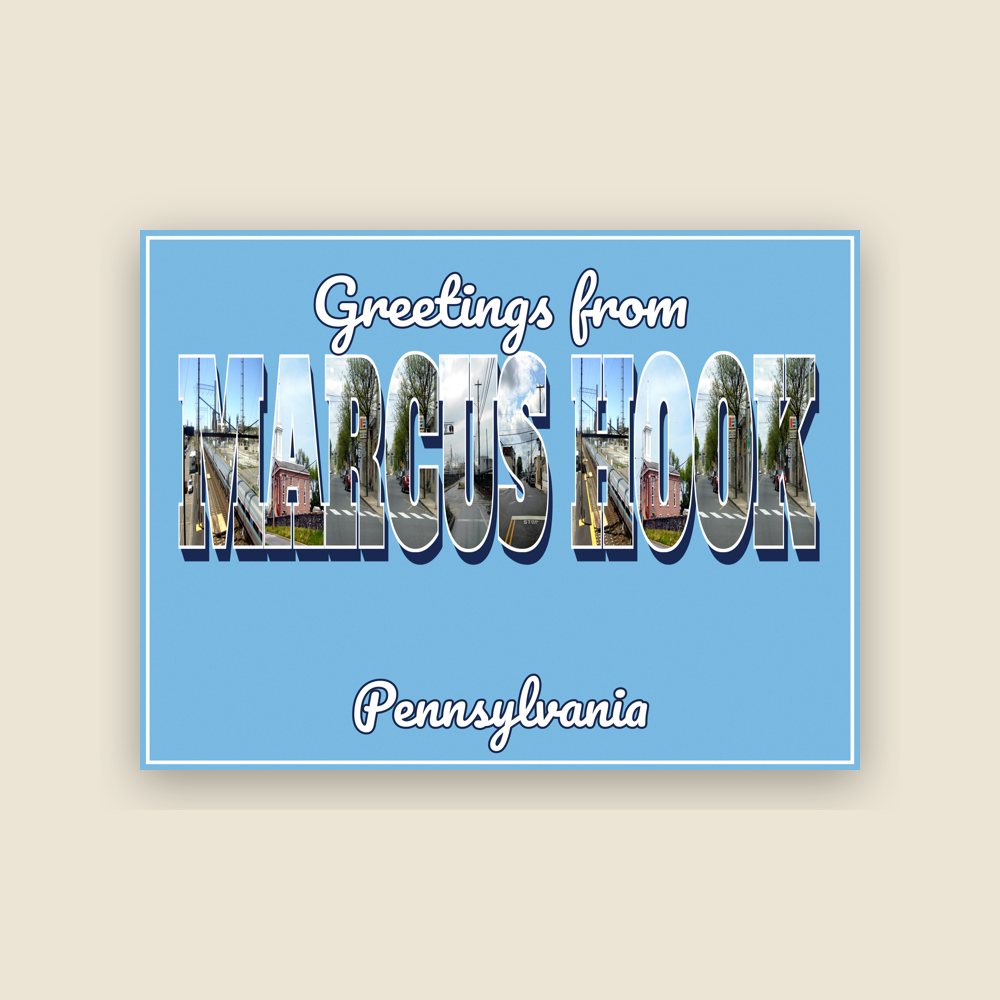

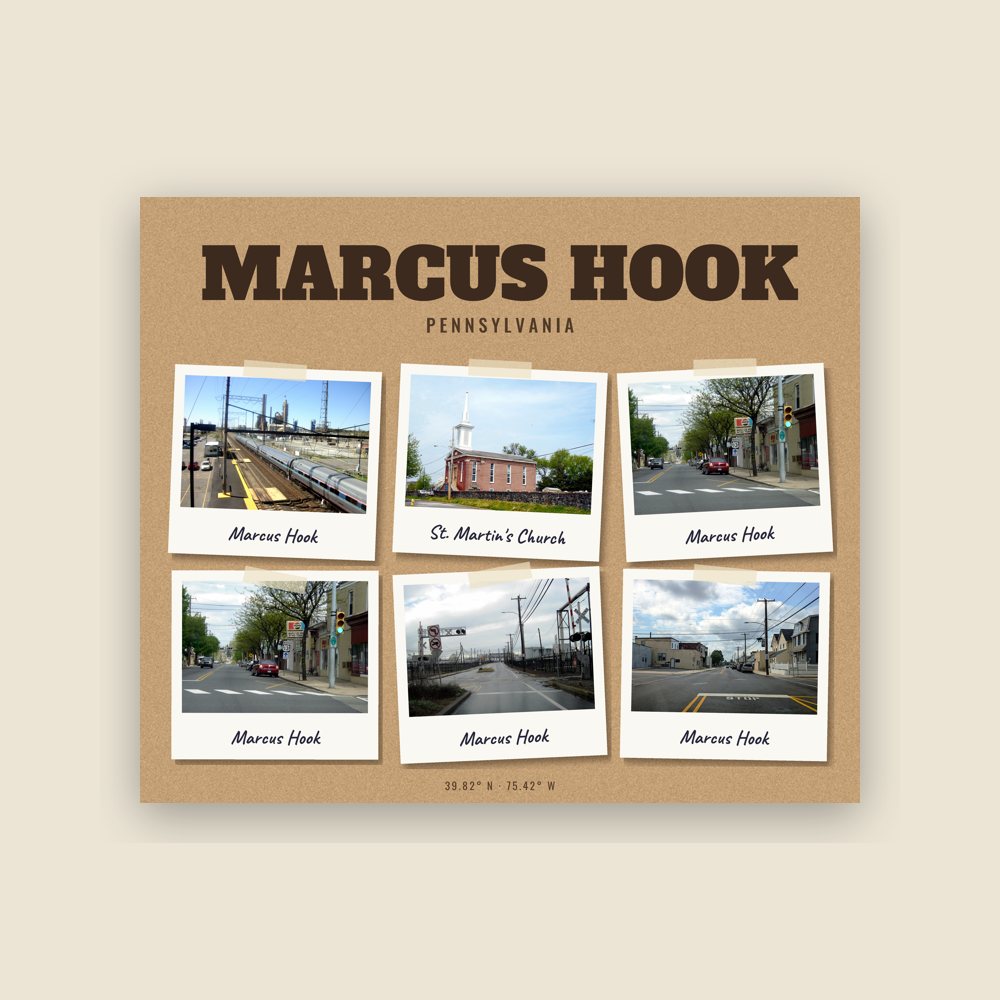
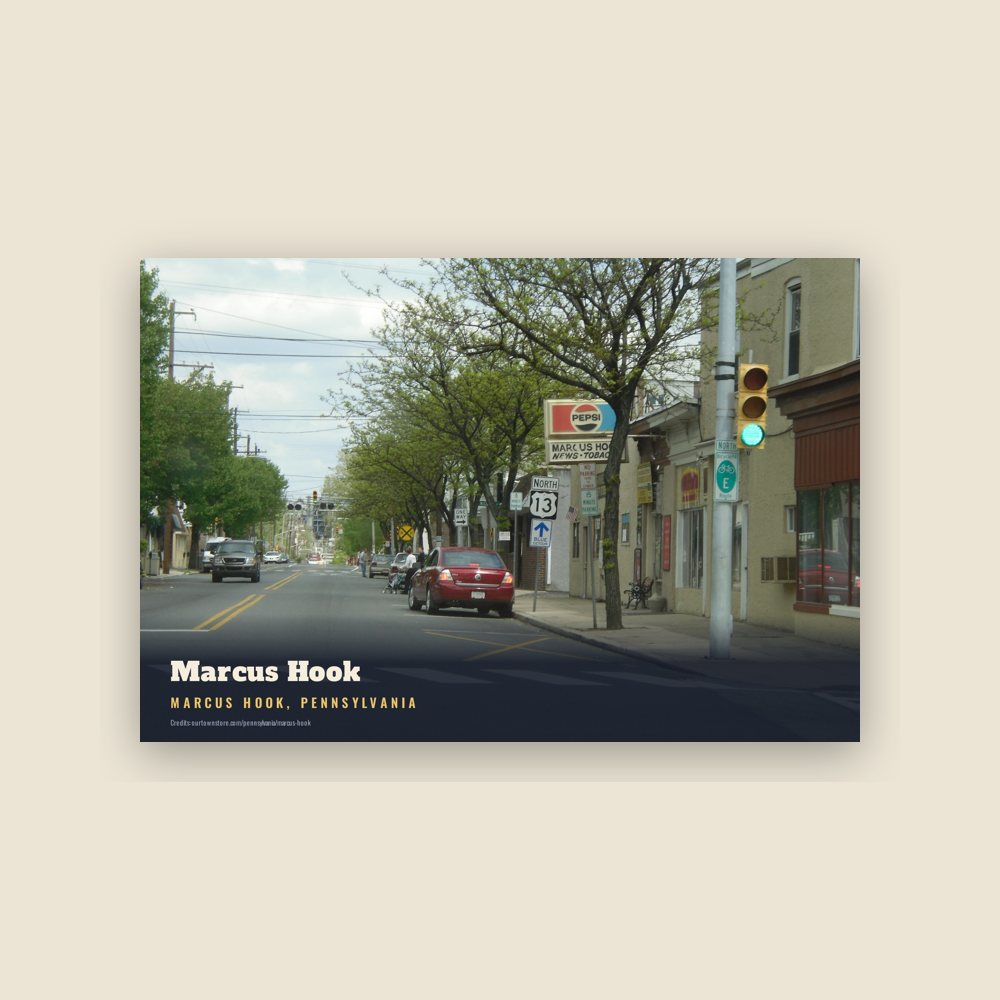
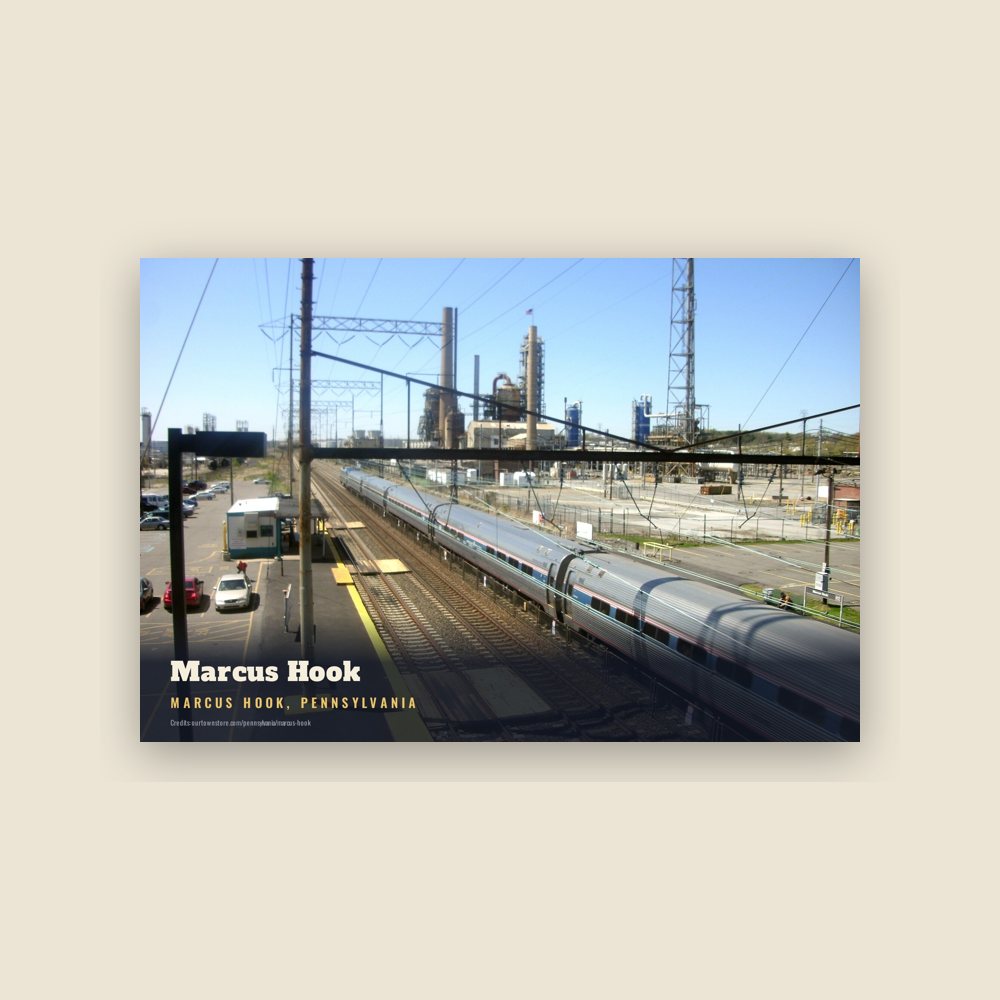
 A view of Marcus Hook
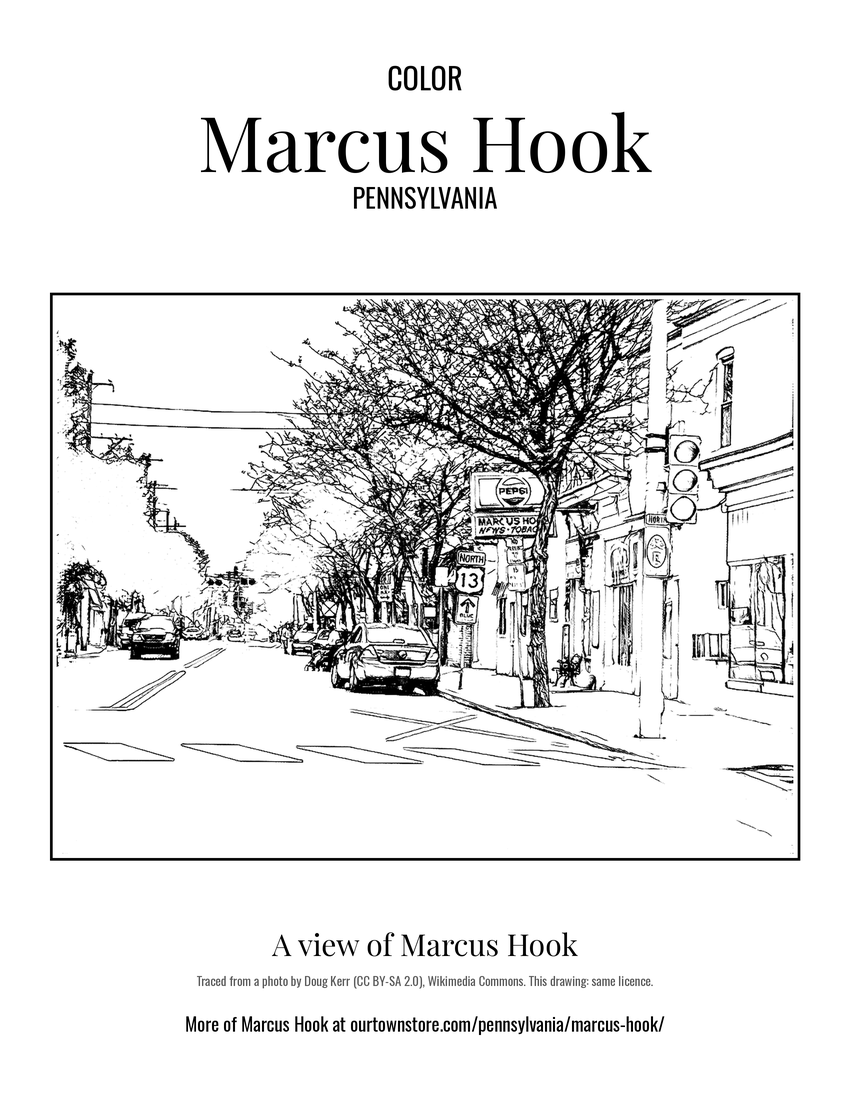 A view of Marcus Hook
 St. Martin's Church
 A view of Marcus Hook