During the early years of European colonization in the Americas, the area which today makes up the city of Hazleton sat at the intersection of two Native American trails.
The Nanticoke path was used by the Nanticoke people during their migration to and settlement of the Wyoming Valley, east of Wilkes-Barre.
The Nescopeck path ran from the forks of the Delaware River, to the Nescopeck Creek. It was used by traders and missionaries, Delaware war parties, and settlers.
Read the full history
Jacob Drumheller
In the late 18th and early 19th centuries, the Warrior's Trail was revamped and widened. It was renamed the Lausanne-Nescopeck Turnpike. Later, a road was built to connect Wilkes-Barre to McKeansburg. This road intersected with the Berwick Turnpike. An entrepreneur named Jacob Drumheller decided that this intersection was the perfect location for a rest stop, so in 1809, he built the first building in what would later be known as Hazleton. Though a few buildings and houses were erected nearby, the area remained a dense wilderness for nearly 20 years. At the time, the area offered little more than small-scale logging. Jacob Drumheller is buried at Conyngham Union Cemetery.
Discovery of coal
In 1818, anthracite coal deposits were discovered in nearby Beaver Meadows by prospectors Nathaniel Beach and Tench Coxe. This caught the attention of railroad developers in Philadelphia. A young engineer from New York named Ariovistus "Ario" Pardee was hired to survey the topography of Beaver Meadows and report the practicality of extending a railroad from the Lehigh Canal in Jim Thorpe to Beaver Meadows. Knowing that the area of Beaver Meadows was already controlled by Coxe and Beach, Pardee bought many acres of the land in present-day Hazleton. The investment proved to be lucrative. The land contained part of a massive anthracite coal field. Pardee is known as the founding father of Hazleton because of these contributions and initially laying out the patch town that eventually became Hazleton.
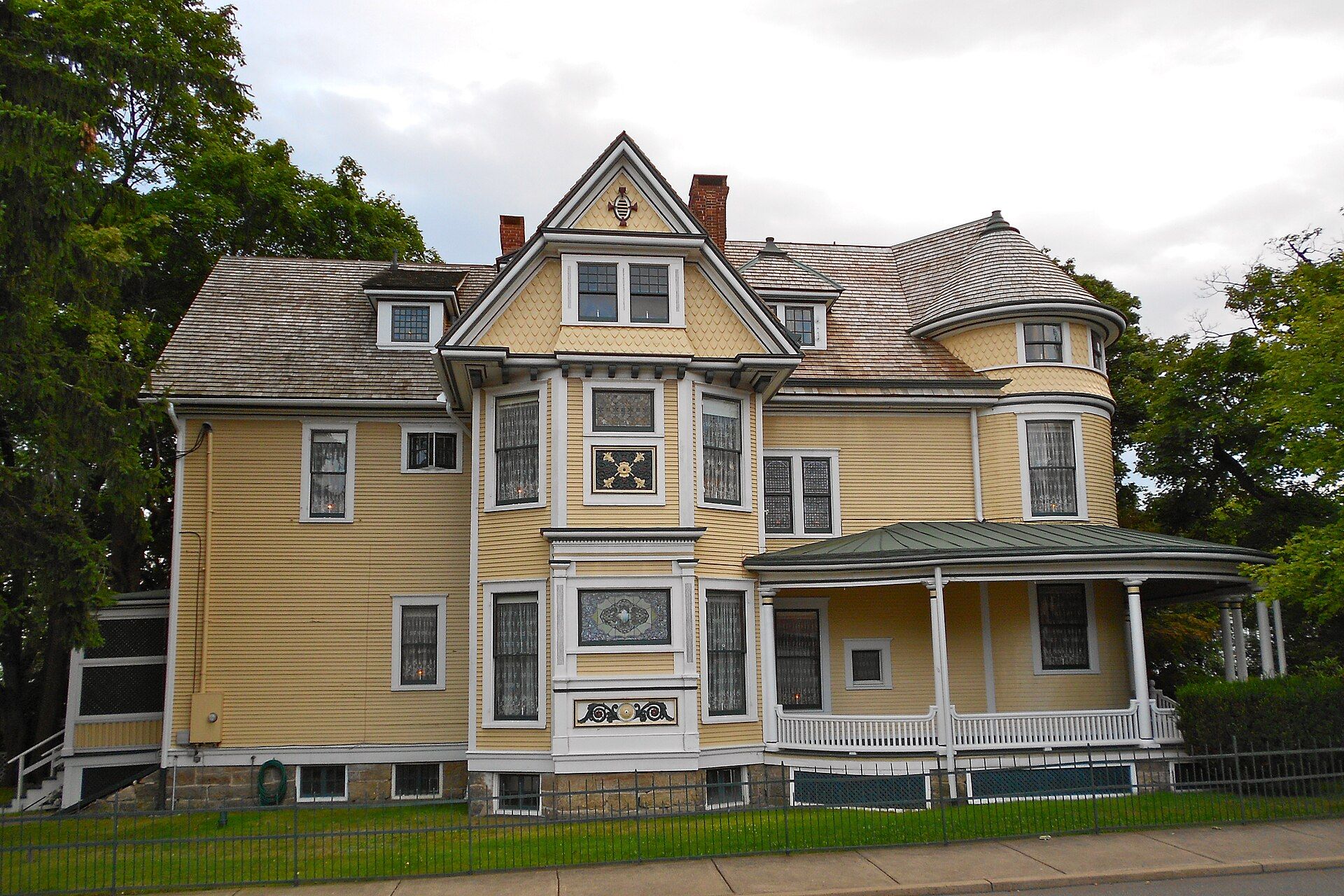
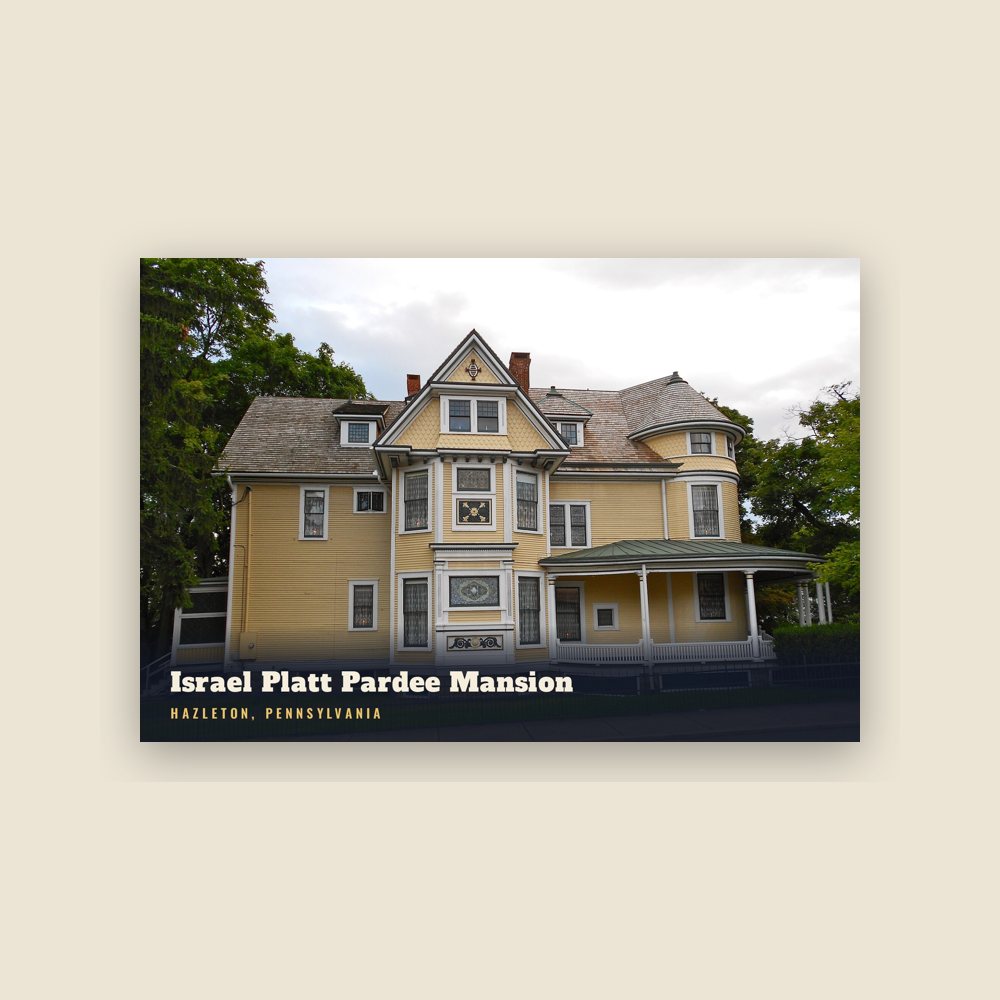
Pardee incorporated the Hazleton Coal Company in 1836, the same year the rail link to the Lehigh Valley market was on the brink of being completed. Hazleton Coal Company built the first school on Church Street, where Hazleton City Hall is now located. Pardee also built the first church in Hazleton, located at the intersection of Church and Broad Streets, and the first private school in Hazleton, located on the south side of Broad Street between Wyoming and Laurel Streets. Pardee died in 1892. The following year, in 1893, his son, Israel Platt Pardee, built a three-story, 19-room mansion in Hazleton; it was added to the National Register of Historic Places in 1984.
The anthracite coal industry attracted many immigrants for labor. The first wave, in the 1840s and 1850s, consisted mostly of German and Irish immigrants. The second wave, from the 1860s to the 1920s, consisted mostly of Italian, Polish, Russian, Lithuanian, Slovak, and Montenegrin immigrants. The coal mined in Hazleton helped establish the United States as a world industrial power, including fueling the massive blast furnaces at Bethlehem Steel.
Incorporation
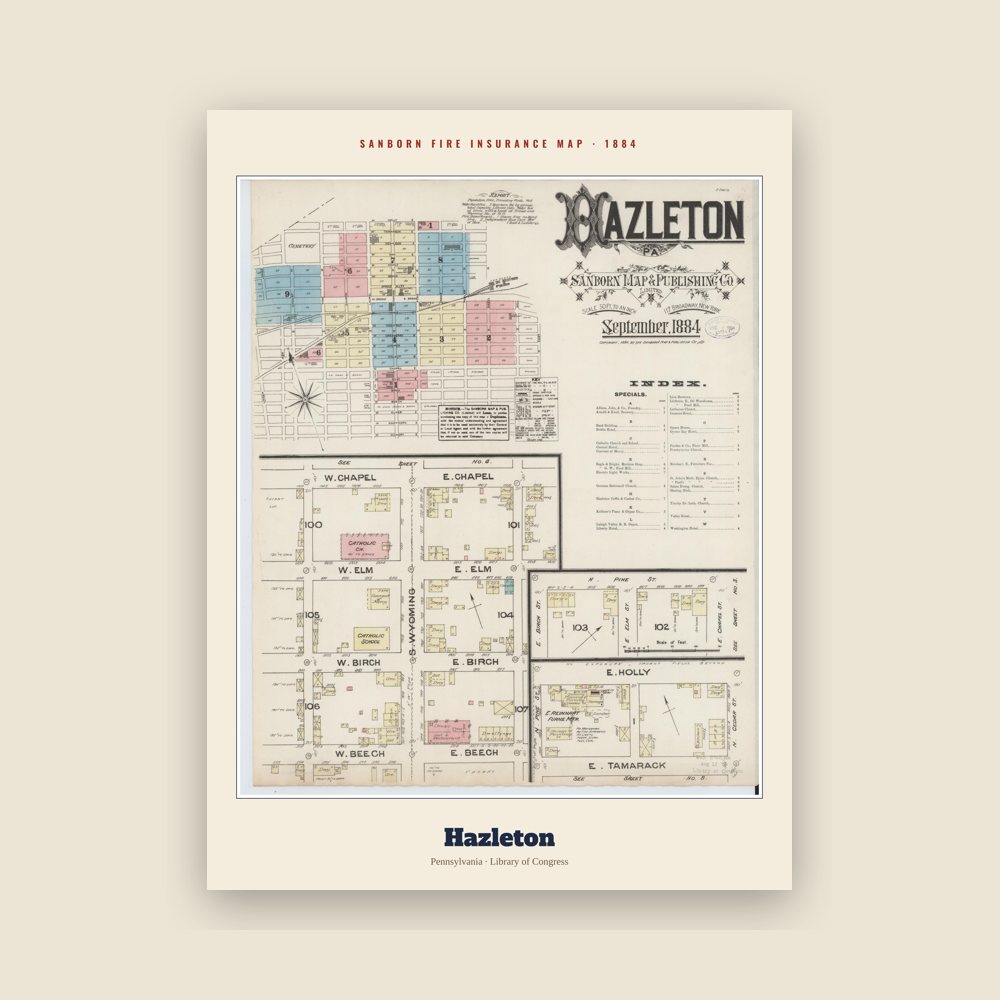
Hazleton was incorporated as a borough on January 5, 1857. A persistent story purporting that the borough's name was intended to be "Hazelton" but was misspelled by a clerk during its incorporation is most likely an urban legend. The name was spelled with "le" rather than "el" in the earliest references to the Hazleton Coal Co. (1836) and to the town itself. Perhaps the earliest map showing Hazleton (with the "le" spelling) was published in 1843 by Sydney E. Morse & Co. The borough's first fire company, the Pioneer Fire Company, was organized in 1867 by soldiers returning home from the American Civil War.
Prosperity and tragedy
As industry and commerce developed, so did the footprint of organized labor. Nineteenth century attempts by the United Mine Workers of America (UMWA) to organize in the anthracite region were largely unsuccessful.
On September 10, 1897, after several weeks of escalating walkouts and strikes at surrounding mines, the Lattimer Massacre occurred when 300-400 strikers near Hazleton marched to the Lattimer Mine to support a newly formed UMW local. Nineteen unarmed striking miners, mostly of Polish, Slovak, Lithuanian, and German ethnicity, were shot and killed in a confrontation with the Luzerne County sheriff's posse. Scores more were wounded. The massacre was a turning point in the history of the UMW, with over 10,000 new members signing cards in its aftermath. However, the UMW would not be able to capitalize on this momentum and obtain union recognition in the Leigh Valley until the 20th century.
Hazleton was also struck by several mining disasters. Notable among these were the cave-ins at Sheppton, Jeanesville, and Stockton.
Mining disasters were not the only tragedies. In October 1888, a train crash killed 66 people near Mud Run when one passenger train crashed into the rear of another train on their way to White Haven. It was one of the worst train wrecks recorded in United States history.
In 1891, Hazleton became the third city in the United States to establish a citywide electric grid. Hazleton was incorporated as a city on December 4, 1891. At the time, the population was estimated to be around 14,000 people.
In the second half of the 19th century, middle class professionals whose industries serviced the mining economy led an effort to diversify the economy in Hazleton and attract large scale manufacturing employers, who could hire from the area's large pool of unemployed women. The local improvement associations who led this initiative were successful in attracting a number of firms, including several mills and a brewery. The Duplan Silk Corporation opened in Hazleton in 1899, with financial support from local banks, the Lehigh Valley Railroad, and $10,000 from a fundraising drive.
20th and 21st centuries
Leading into the 20th century, Hazleton's population drastically changed. The "boom period" in population was 1885 to 1920. In 1860, there were only about one thousand people in Hazleton, but by 1880, there were nearly seven thousand people, which quickly became thirty-two thousand by 1920. After the 1900 and 1902 anthracite coal strikes, mine workers won some improvements to their working conditions, which they were able to build upon in ensuing contracts. The diversification of the city's economy stabilized the population by allowing miners to establish families in the area, with women and children often working in silk or shirt manufacturing for supplemental wages.
The Duplan Silk Mill was expanded in 1908 and became one of the largest and most productive silk mills in the country, employing between 1,800 and 2,000 area residents and with an annual payroll of $5 million. The mill produced about 25 million yards of cloth per year. In 1913, 1,200 silk workers, mostly young women, went on strike at the Duplan silk mill and voted to join the Industrial Workers of the World. The strike was overshadowed by the contemporaneous Patterson Silk Strike, and failed to achieve momentum.
The first Hazleton Public Library opened in 1907. In 1912, a new library opened on Church and Green streets. This building was donated by independent coal operator John Markle and is still in use today as the Hazleton Area Public Library's children's department.
Coal production began to decline in the late 1920s, but the mining industry still employed nearly 20,000 men at that time. In 1926, 900 miners at the Jeddo-Highland Coal Company initiated a wildcat strike over a pay dispute. They were ordered back to work by the District 7 president of the UMWA, who insisted that they negotiate the dispute through the Anthracite Board of Conciliation as outlined in their contract.
The population peaked in 1940 at 38,000. With increased population came increased business, from downtown storefronts to large campuses like Penn State Hazleton.
In 1941, UMWA President John L. Lewis revoked the charter of the UMWA's District 7 local in response to a 27-day work stoppage by 20,000 miners in protest of dues increases and other union policies. The local was administered by a provisional government for some time and had its constitution suspended.
One of the 14 games between I.A. Horowitz and Samuel Reshevsky during the 1941 US Chess Championship was held in Hazleton. The result was a draw. The remaining games were held in Brooklyn, Philadelphia, Lakewood, New Jersey and Binghamton, New York.
In 1946, local milk producers initiated a capital strike, closing facilities and halting the delivery of milk to 100,000 residents in the region in protest of Office of Price Administration policy.
Before World War II, anthracite coal flourished as a major provider of fuel for the nation. After the war, the demand for coal began to decline as natural gas and electricity became preferred power sources; coal became a less needed commodity. Deep mining, the predominant method of coal extraction in the region, also proved costly and vulnerable to flooding. In 1947, 22 consecutive days of rain flooded many Hazleton area mines and reduced year-to-date anthracite production by up to 35% below normal levels.
Hurricanes Hazel and Diane, in 1954 and 1955, also devastated the local mining industry. They flooded the mines and brought an end to Hazleton's deep mining. Unemployment soared, reaching 25-30%. The population began to emigrate at a rate of 1,000 per year. While most of the region's deep mines never reopened, strip mining would continue as long as it was economically advantageous. A new era was about to be born: the era of business and industry.
In 1947, Autolite Corporation was looking to expand operations in the East and had been looking into Hazleton. Officials from Autolite came to the area and surveyed the land. In their report, they noted that Hazleton was a "mountain wilderness" with no major water route, rail route, trucking route, or airport.
Local leaders sought to address these deficiencies by soliciting donations from the public to subsidize the establishment of the $3,500,000 Autolite plant. They promised the Autolite Corporation $500,000 and were able to raise $659,000. The initiative was supported by local businessmen, service clubs, and the UMWA. The Hazleton Industrial Development Corporation also took out loans totaling $700,000 to fund the construction of the plant.
In 1959, a fire at the Gary Hotel killed six people. The hotel, built in 1884, burned down costing around $200,000 in damages.
Public investment in attracting businesses and diversifying the economy continued throughout the 20th century. CAN DO (Community Area New Development Organization) was formally organized in 1956 by founder Dr. Edgar L. Dessen. CAN DO raised money through their "Dime A Week" campaign, in which area residents were encouraged to put a dime on their sidewalk each week to be collected by CAN DO. They also solicited donations from businesses and utilities and sold municipal bonds. The company raised over $250,000 and was able to purchase over 500 acres (2.0 km2) of land, which was converted into an industrial park on the western edge of the city.
Because of CAN-DO's efforts, Hazleton was given the All-America City Award in 1964. Hazleton's economy is now based largely on manufacturing and shipping, facilitated by the relative closeness to Interstates 80 and 81. Five Pennsylvania highways also pass through the Hazleton area: Pennsylvania Route 309, Pennsylvania Route 93, Pennsylvania Route 924, Pennsylvania Route 424, and Pennsylvania Route 940.
The Hazleton Area Public Library opened a new building at Church and Maple Streets in 1969, where it remains to this day.
In 1997, the IWW returned to the Hazleton area in an effort to organize student workers at the Keystone Job Corps Center, but they found little success.
An article published in December 2002 by U.S. News & World Report, "Letter from Pennsylvania: A town in need of a tomorrow", reported on Hazleton's shortcomings. It was criticized by local politicians and business leaders.
On September 11, 2004, the Hazleton campaign hall of the Socialist Workers Party was firebombed, damaging the front of the building and burning campaign literature. The building's books were destroyed by smoke damage. A rally held in response to the attack was attended by the Pennsylvania Governor's Advisory Commission on Latino Affairs as well as local religious leaders and the Spanish-language media. An executive from the IBEW local 1319 in Wilkes-Barre visited the hall and made a contribution to the rebuilding effort.
Second immigration wave
The city experienced a demographic shift in the first years of the 21st century with the arrival of new immigrants; mostly from the Dominican Republic.
The demographic shift was not well received by all residents. In 2004, a wave of attacks against apartments where immigrant workers were living was condemned by the Pennsylvania Governor's Advisory Commission on Latino Affairs.
In 2006, Hazleton gained national attention as Republican Mayor Lou Barletta and council members passed the Illegal Immigration Relief Act. This ordinance was instituted to discourage hiring or renting to illegal immigrants. Initially, the ordinance levied an administrative fine of $100.00 per illegal immigrant rented to and a loss of permits for non-compliance. Another act passed concurrently made English the official language of Hazleton.
Mayor Barletta estimated that "as many as half" of the estimated 10,000 Hispanics who were living in Hazleton left the city when the ordinance was passed. The issue was covered by the television program 60 Minutes in 2006 and the Fox News show The O'Reilly Factor in March 2007.
The ordinance was criticized as illegal and unconstitutional. A number of residents (landlords, business owners, lawful aliens defined as illegal under the act, and unlawful aliens) filed suit to strike down the law, claiming it violates the Supremacy Clause of the U.S. Constitution as well as the First and Fourteenth Amendments to the Constitution. After a trial and several appeals (including a remand from the Supreme Court), the Third Circuit found the ordinance invalid due to federal preemption.
As of 2015, nearly 40 percent of Hazleton's population was of Hispanic or Latino descent. In 2012, Amilcar Arroyo, a Hazleton Integration Project board member, estimated that 80% of Hazleton's Hispanics and Latinos were of Dominican origin, and that many of them had ancestry from San José de Ocoa. Hazleton has the highest percentage of Dominicans in Pennsylvania and the fourth highest in the nation. Many Dominicans had moved to Hazleton from portions of New York City, including The Bronx and Brooklyn) and parts of North Jersey, such as Newark and Paterson. Many of these migrants had families that were relatively large.
Many Hispanic and Latino businesses are on Wyoming Street, the linguistic landscape of which Spier and Ruano (2021) investigated in light of Barletta's aforementioned comments. In 2016, The Philadelphia Inquirer reported that the Wyoming Street corridor was revived from a moribund state. Also, in 2016, the Hispanic and Latino population became the majority, at 52%, with White residents, many descended from Irish, Italian, and German immigrants, comprising 44% of the population.
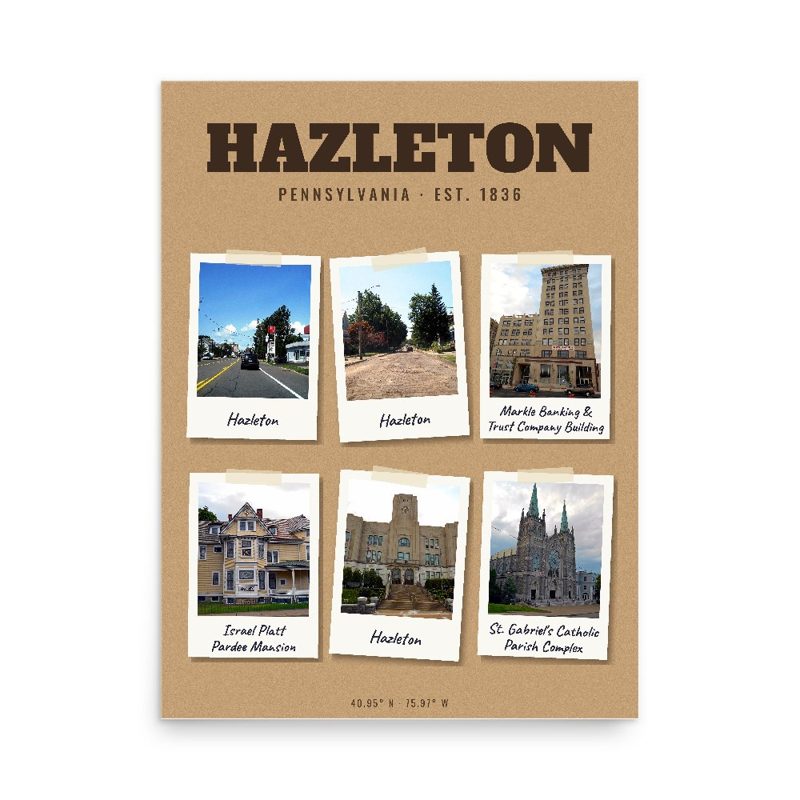
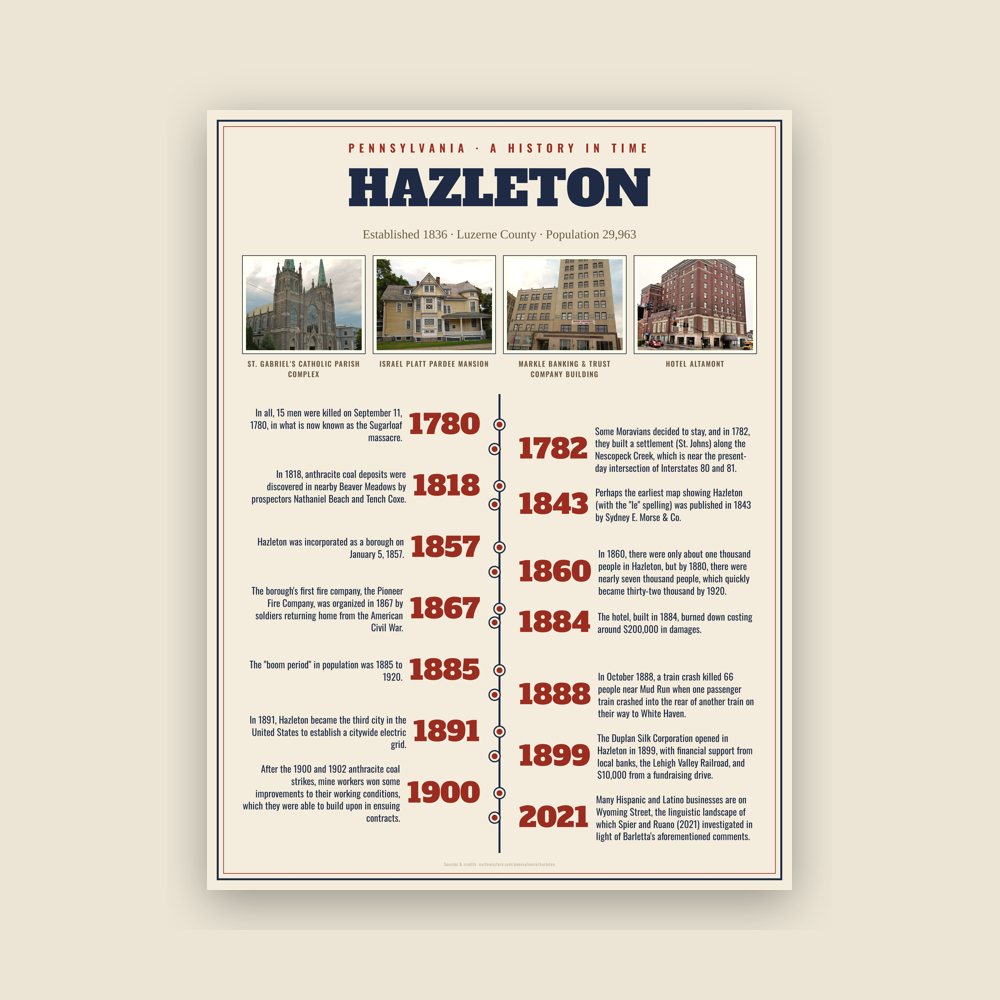
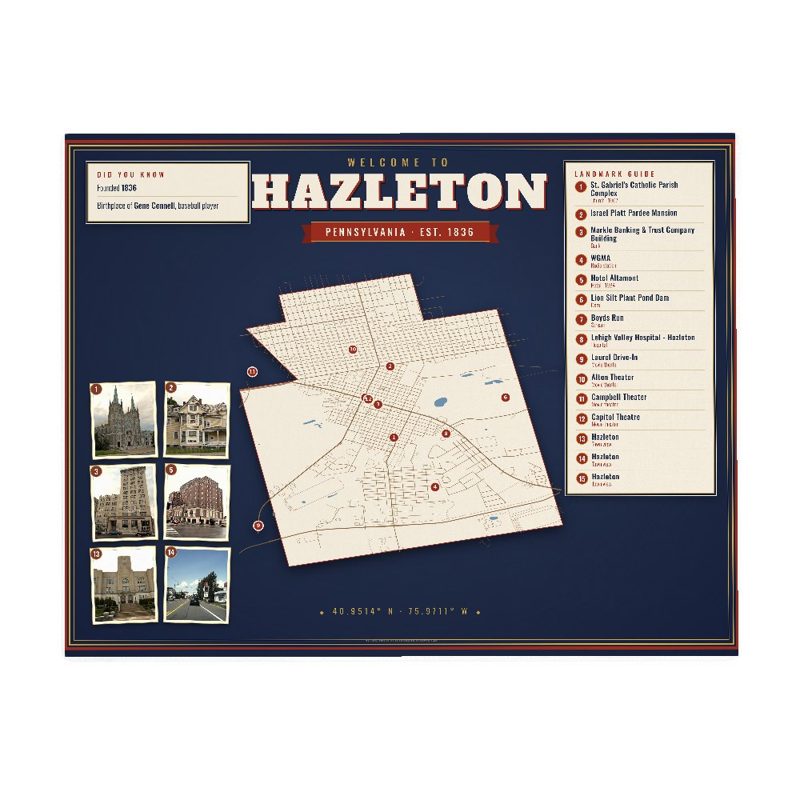



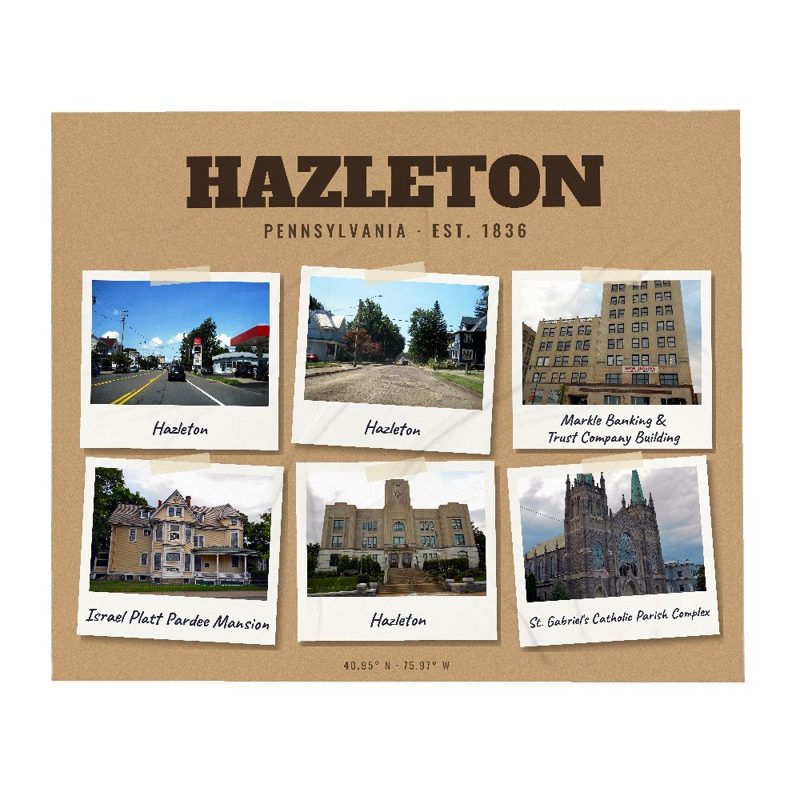
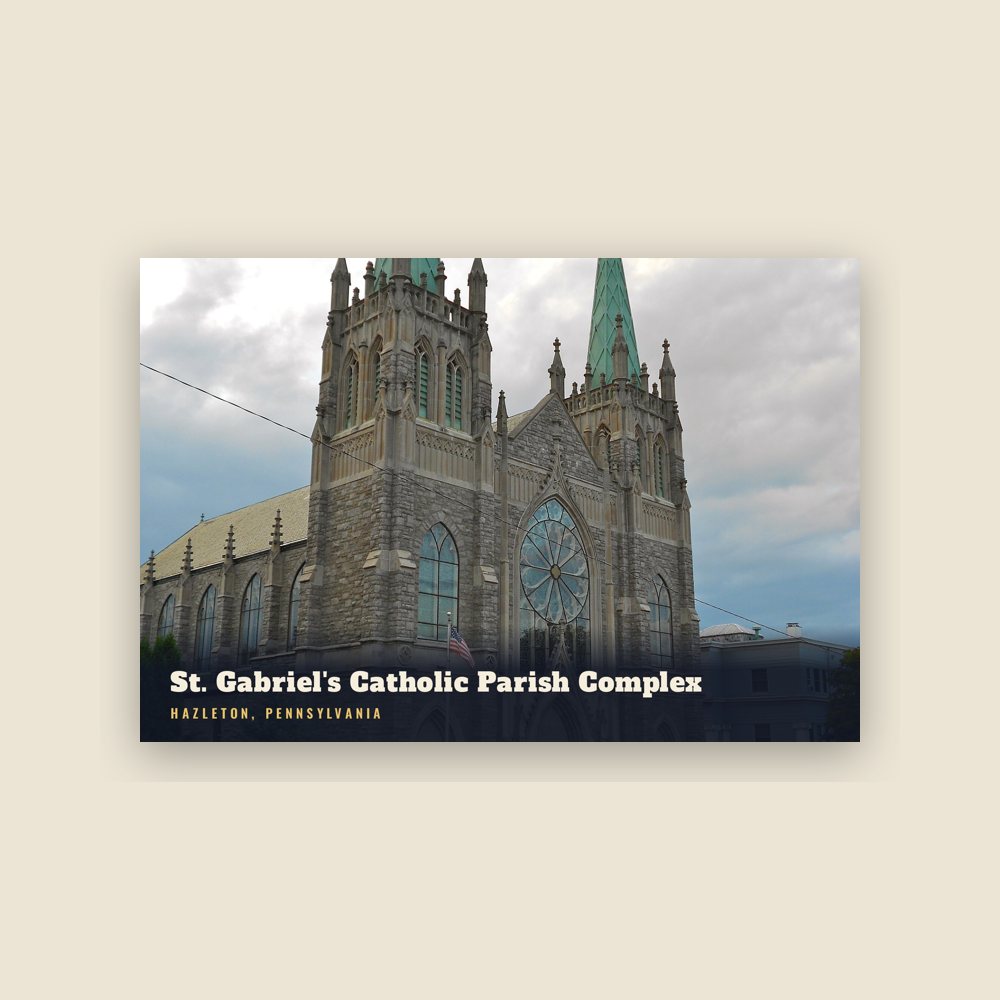
 St. Gabriel's Catholic Parish Complex
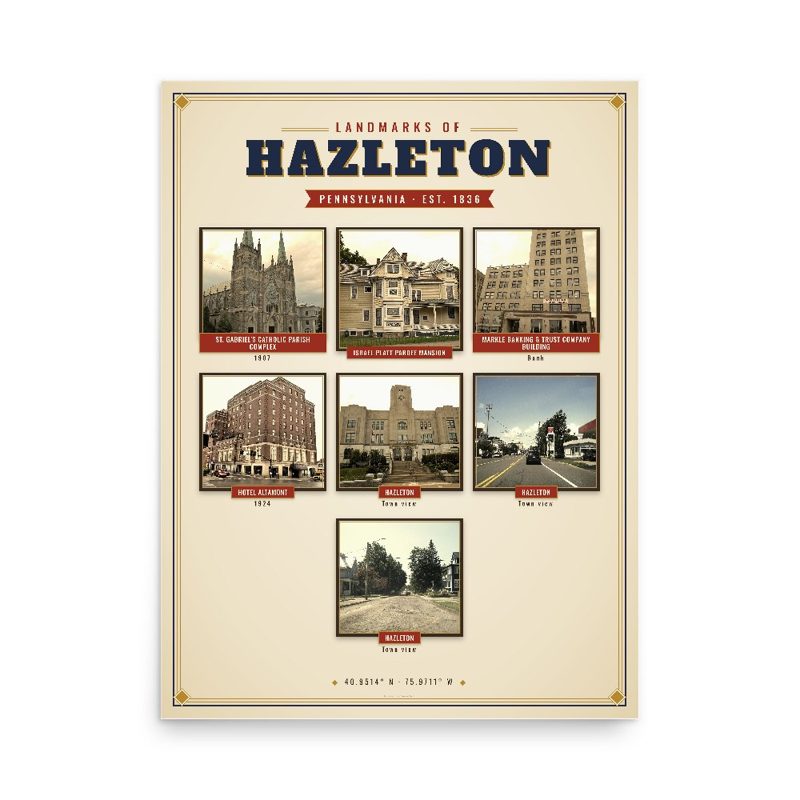
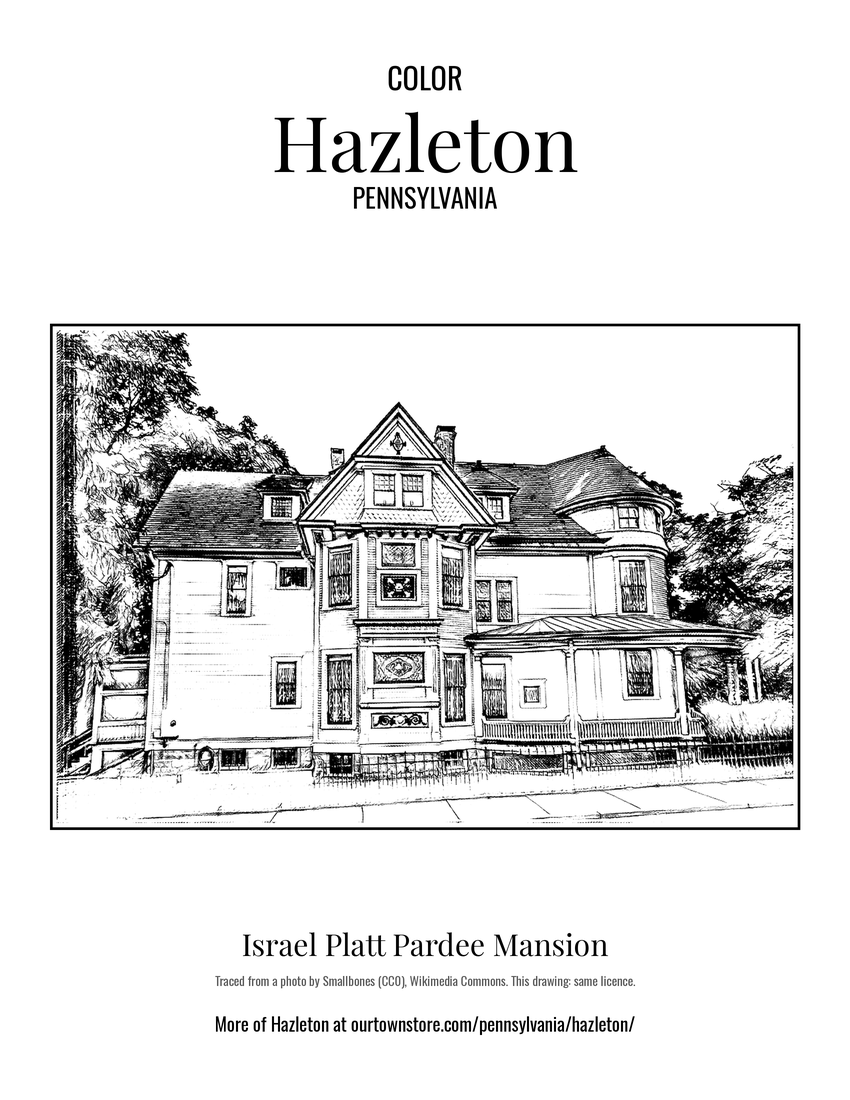 Israel Platt Pardee Mansion
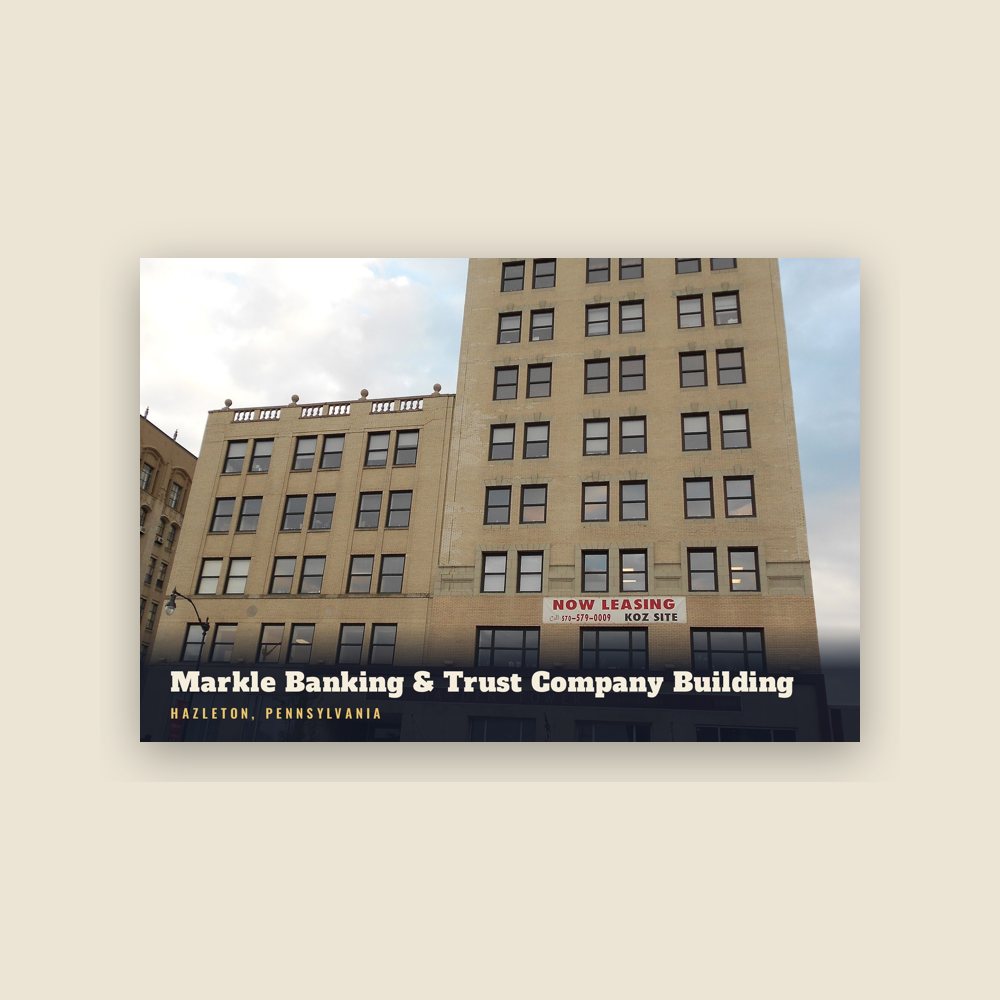
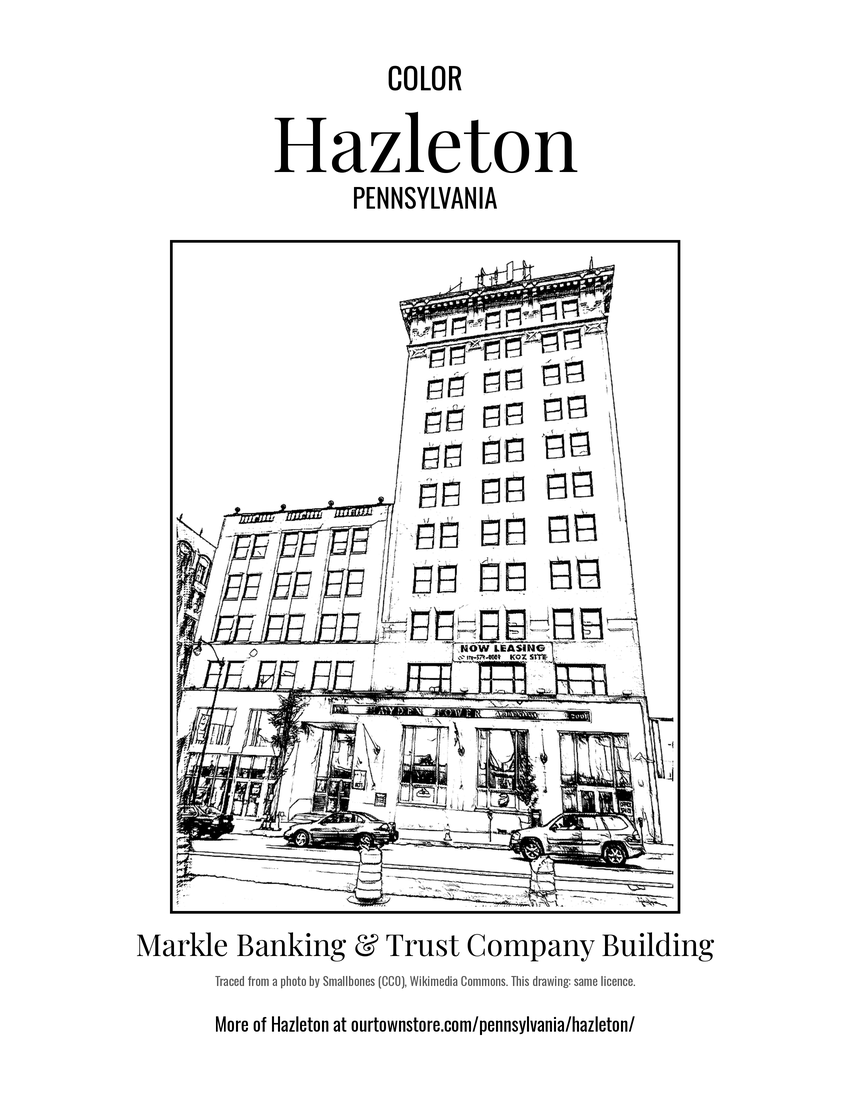 Markle Banking & Trust Company Building
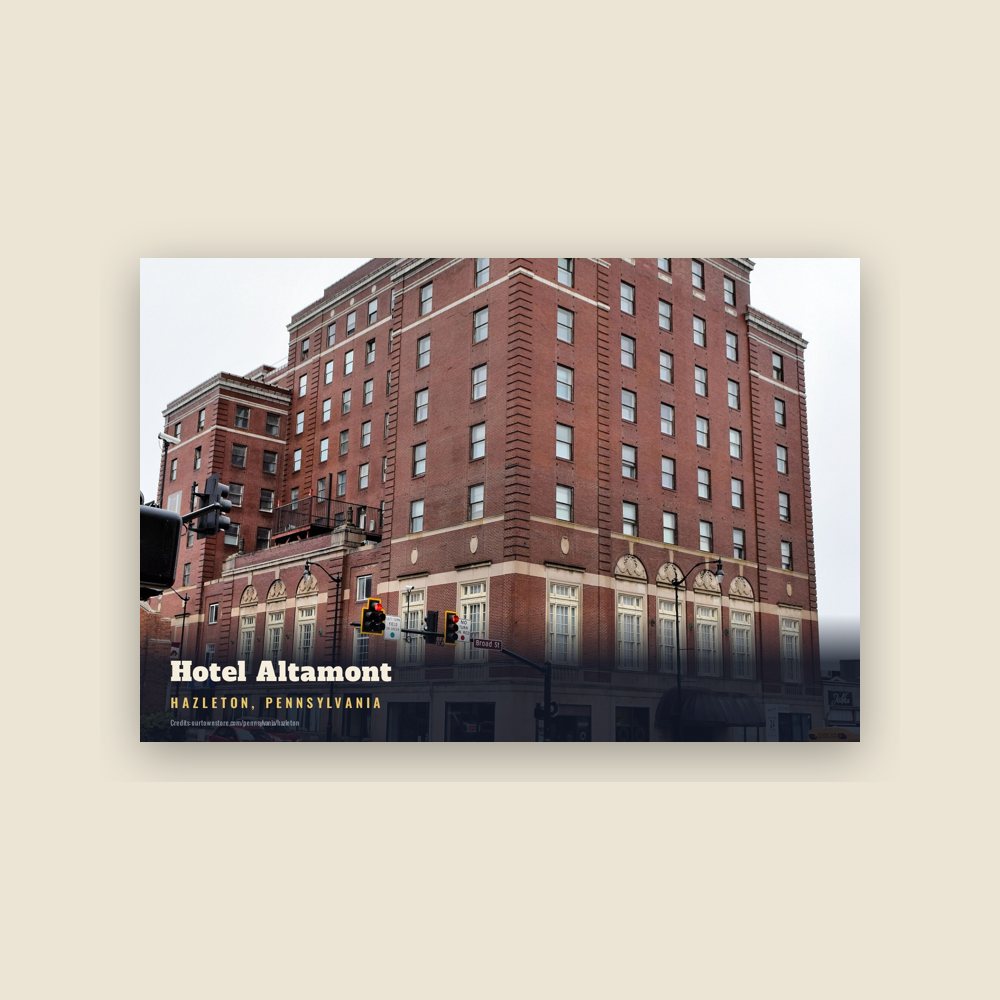
 Hotel Altamont