A short history of Greenville
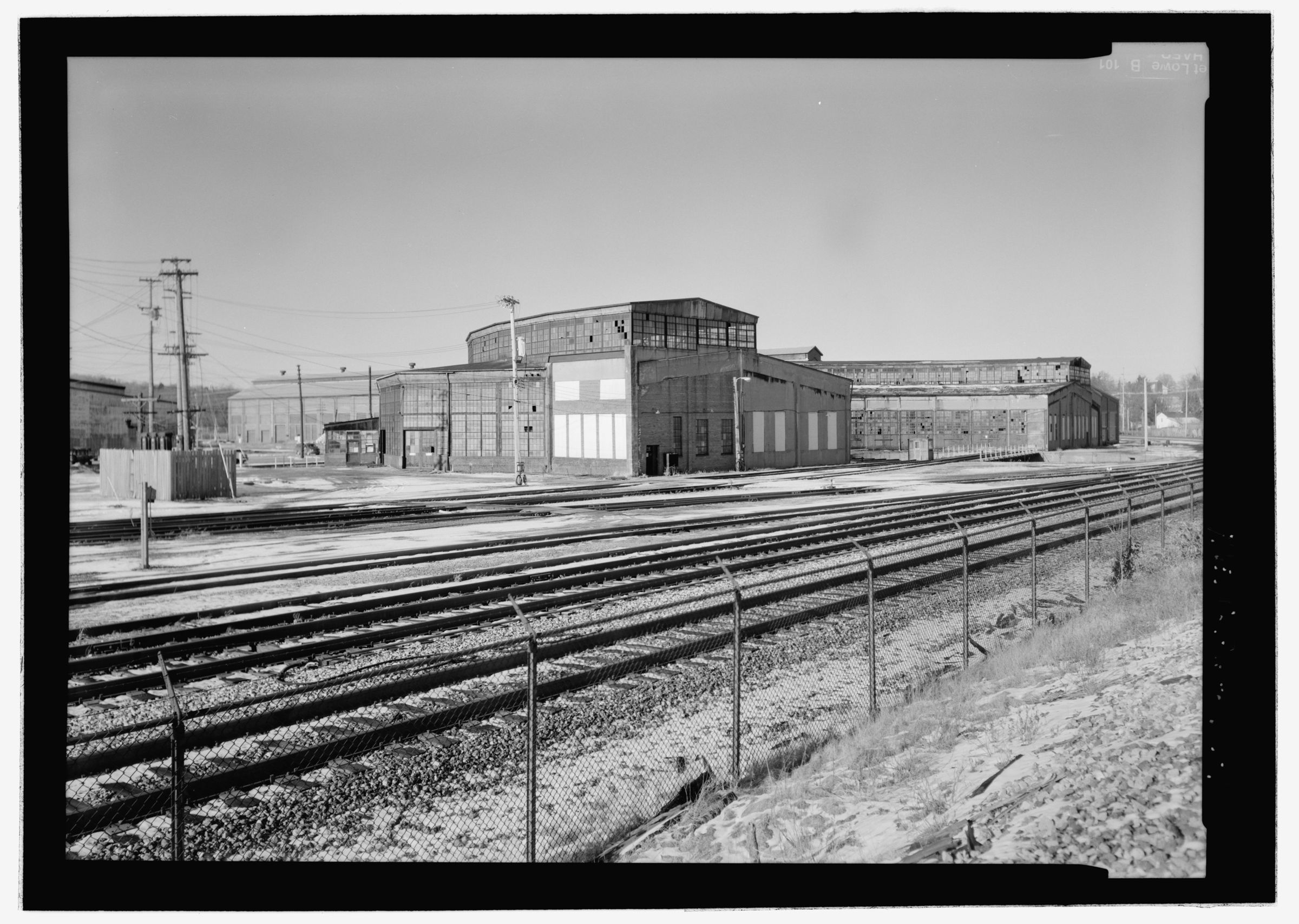
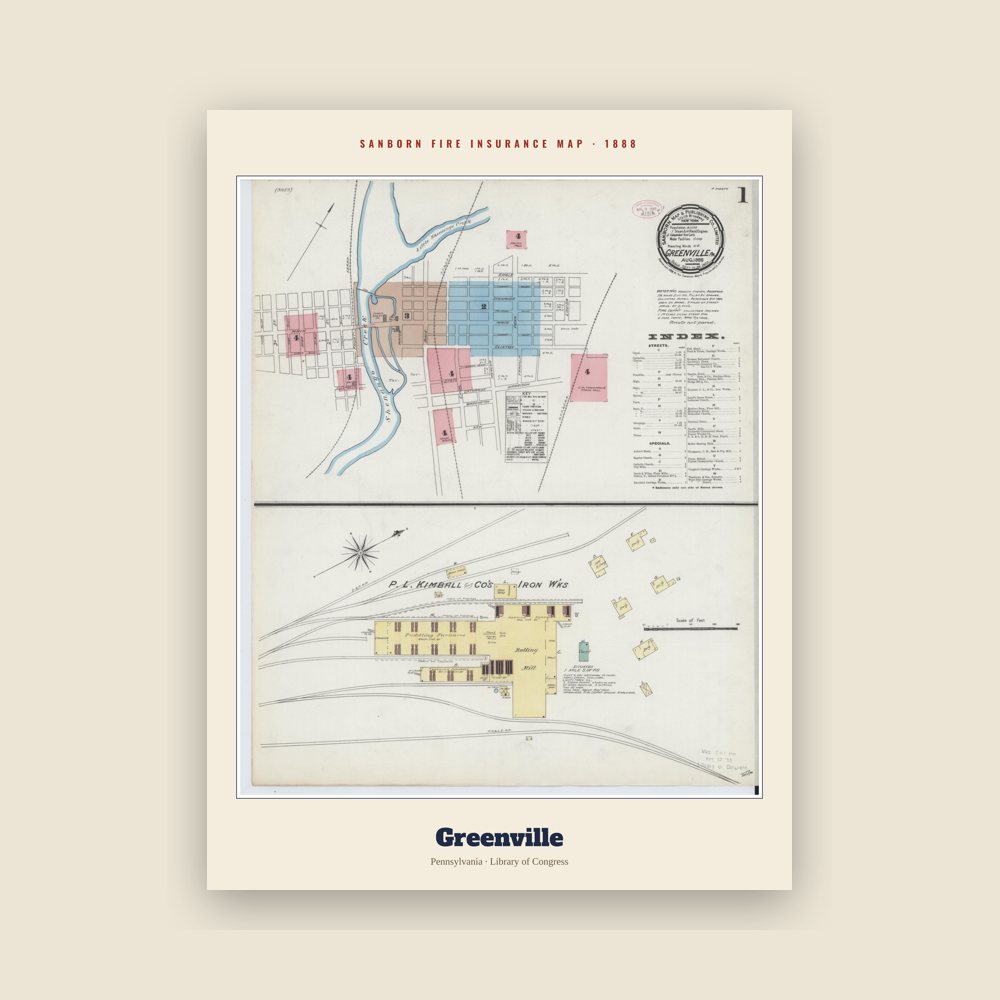
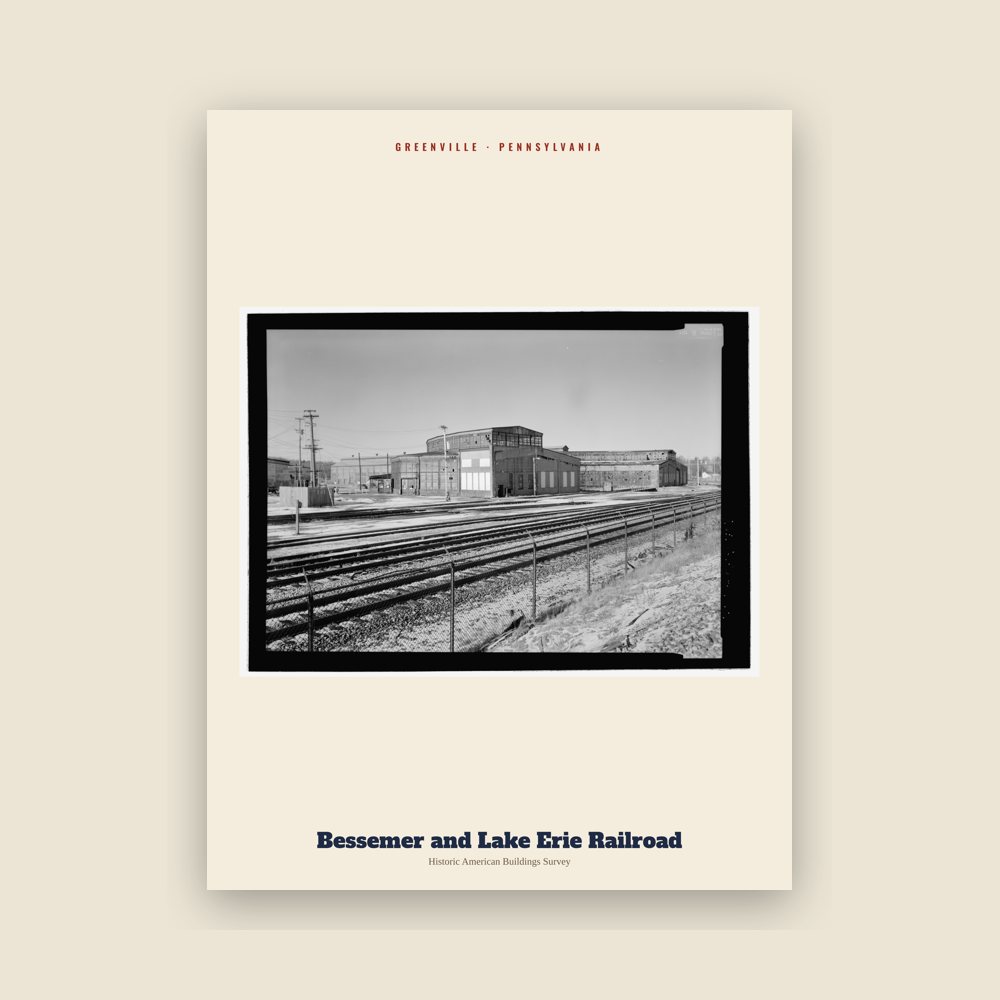
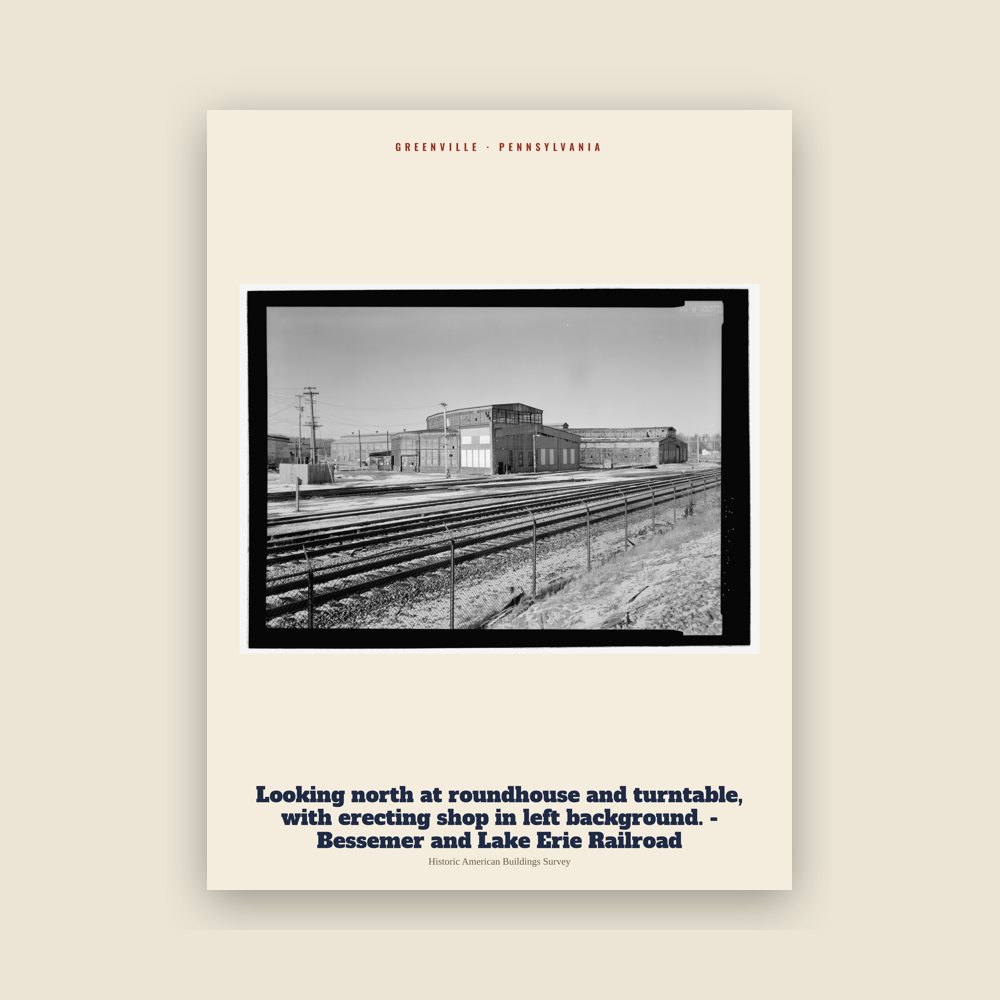
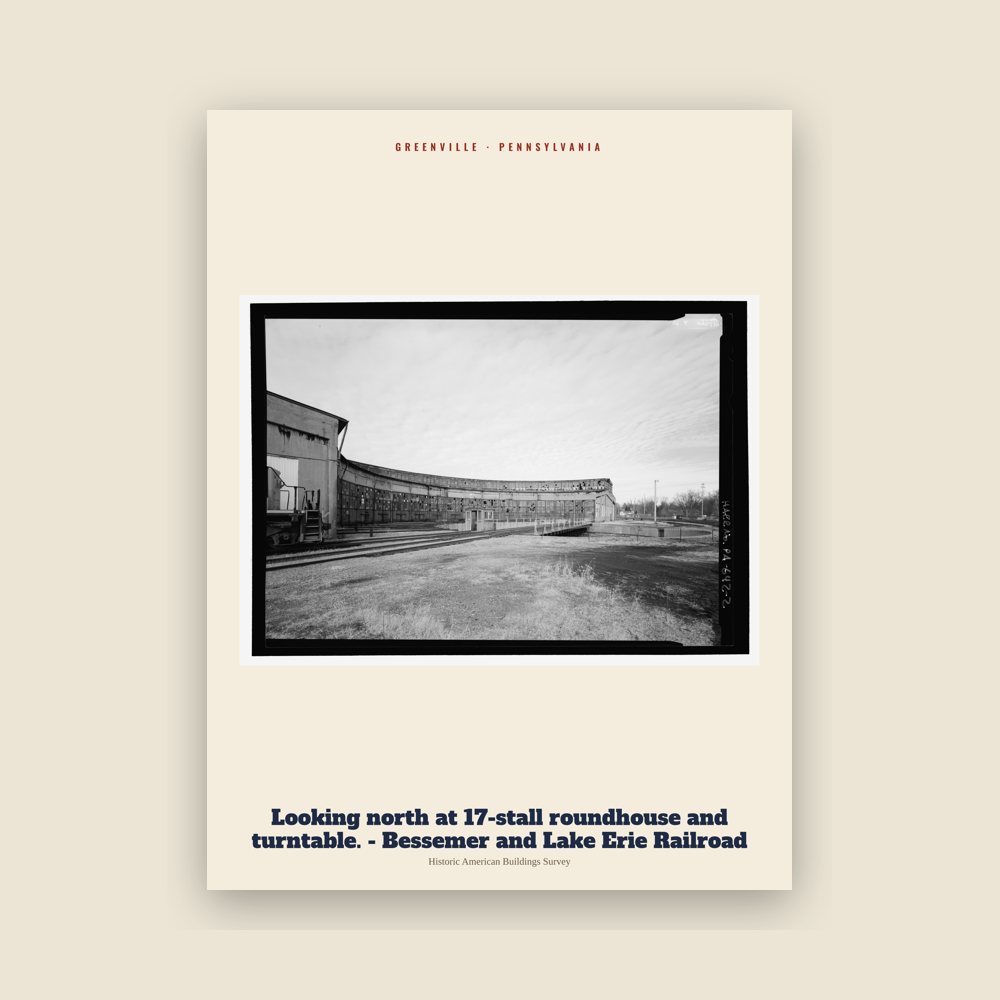
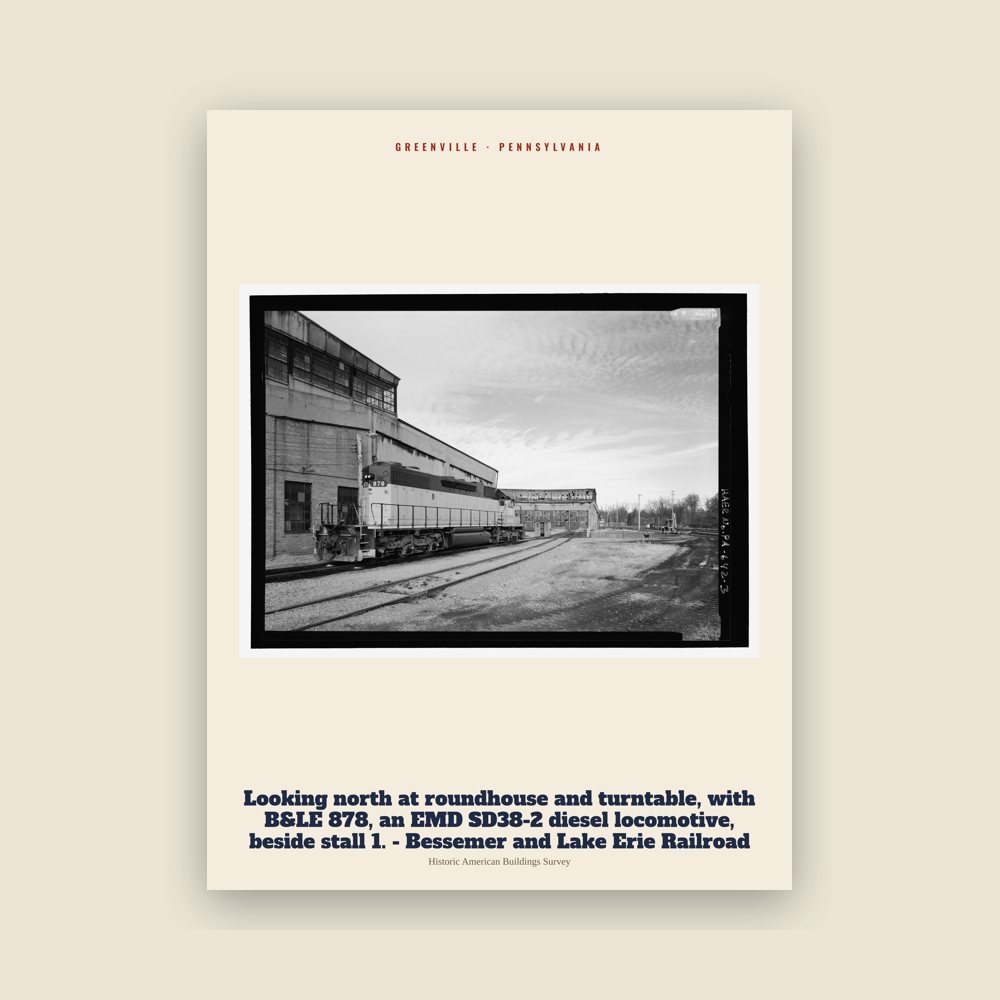
Greenville was known for its manufacturing interests, including railroad shops, bridge works, gristmills, a cement-block plant, an automobile factory, foundries and machine shops, saw and planing mills, steelworks, a railroad-car manufacturer, and flour mills. Water power was supplied by the Shenango River.
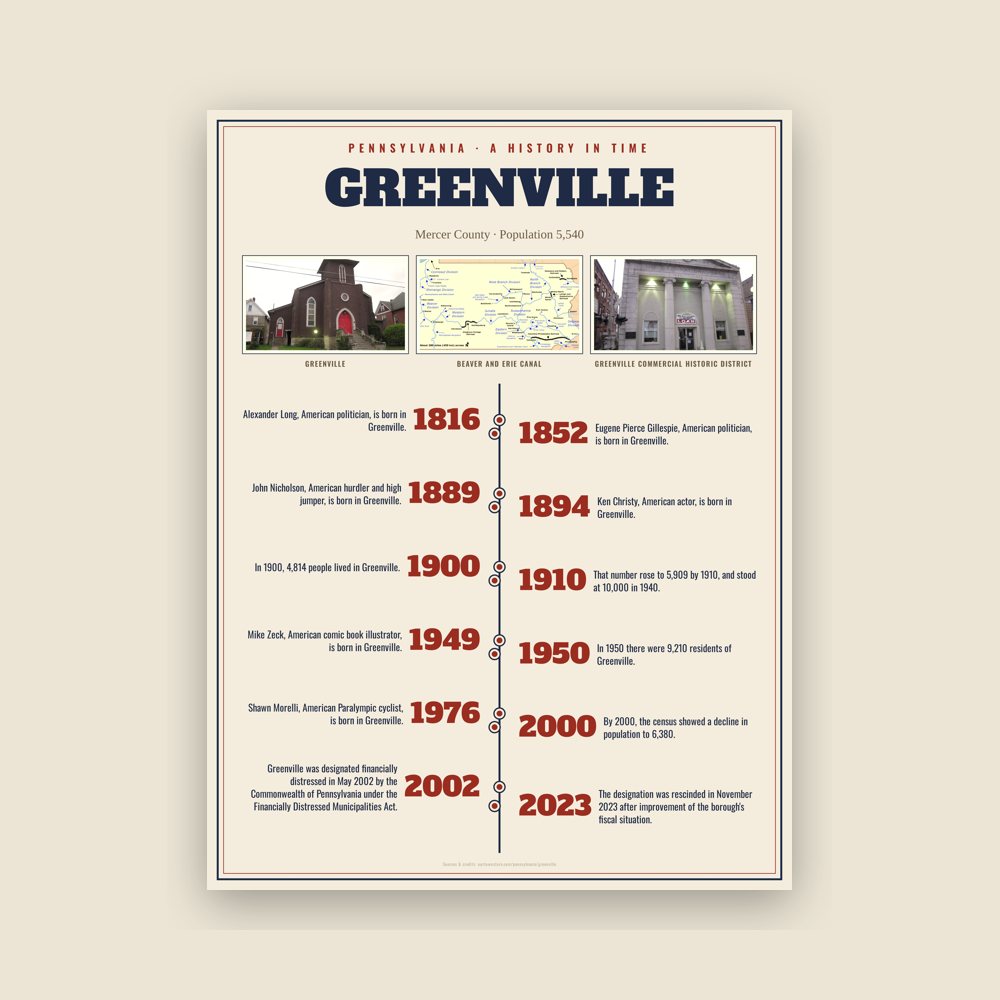
In 1900, 4,814 people lived in Greenville. That number rose to 5,909 by 1910, and stood at 10,000 in 1940. In 1950 there were 9,210 residents of Greenville. By 2000, the census showed a decline in population to 6,380.
Greenville was designated financially distressed in May 2002 by the Commonwealth of Pennsylvania under the Financially Distressed Municipalities Act. The designation was rescinded in November 2023 after improvement of the borough's fiscal situation.
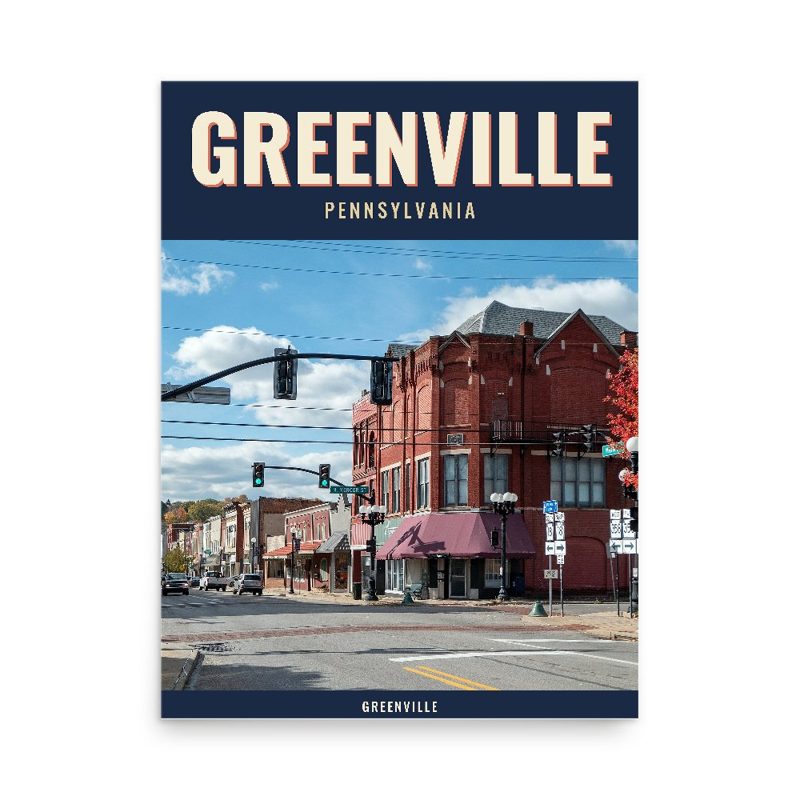
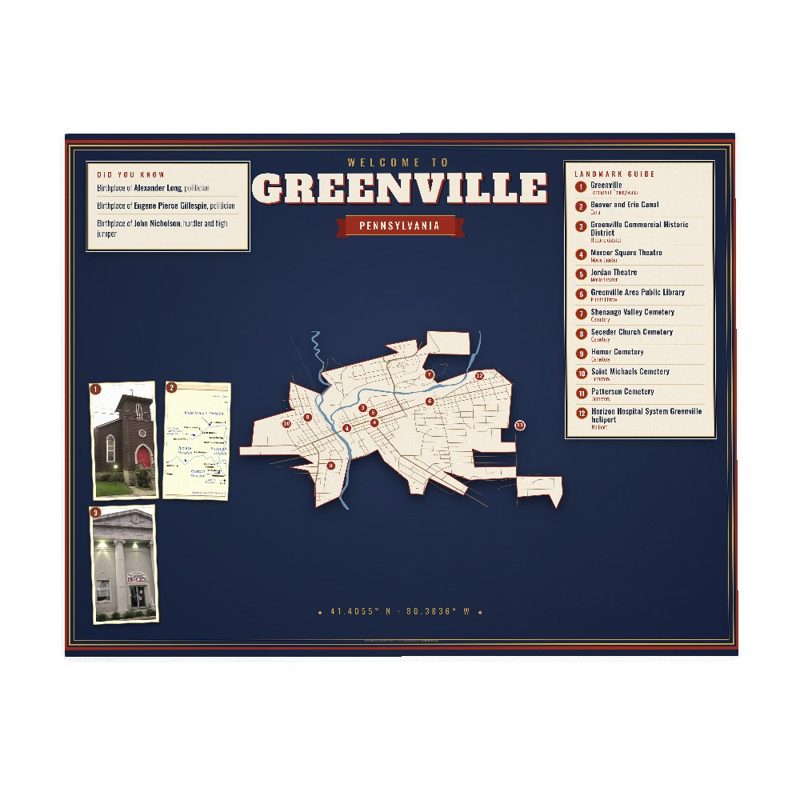
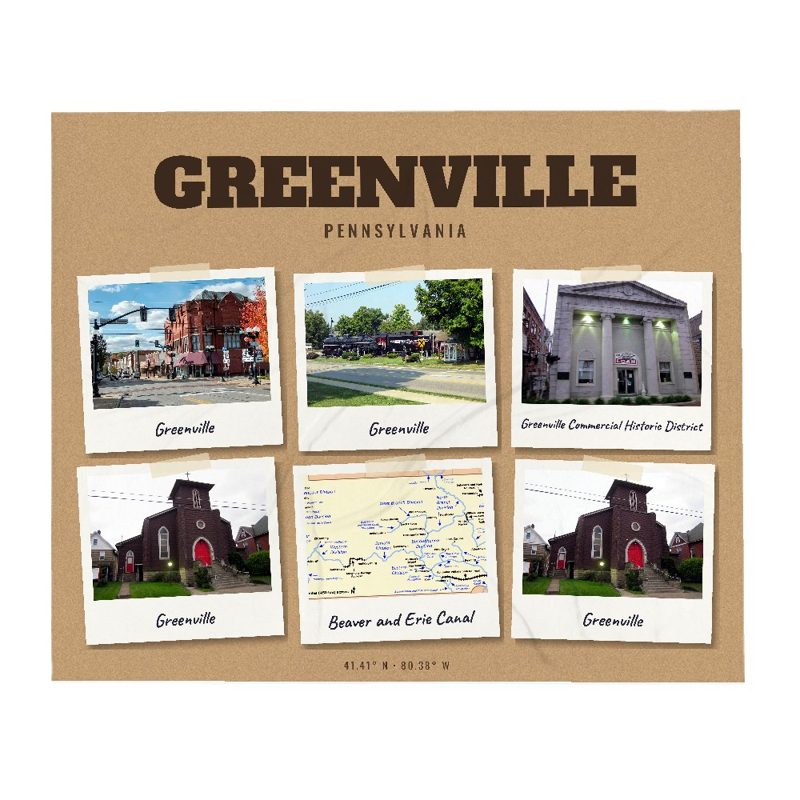
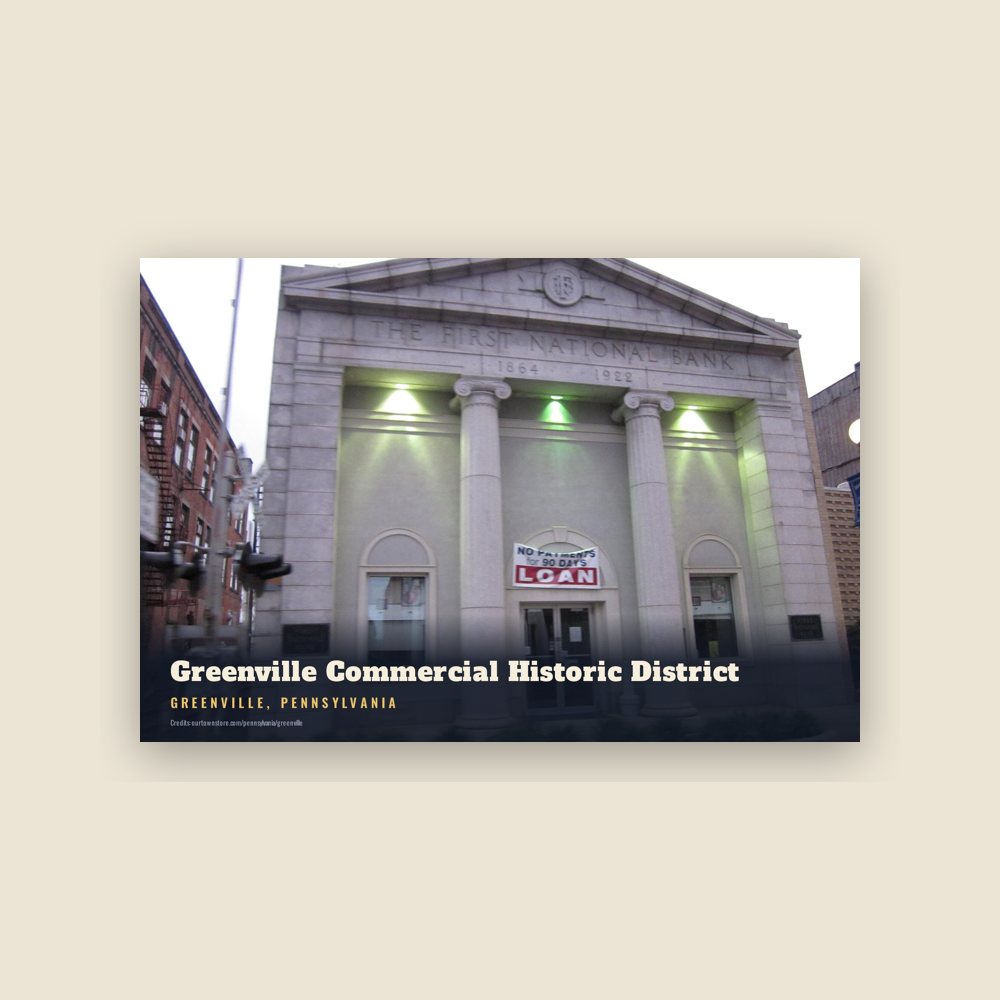
The Greenville Commercial Historic District and Alexander P. and James S. Waugh House are listed on the National Register of Historic Places.
Adapted (trimmed) from the Wikipedia article Greenville, Pennsylvania, revision 1371085483 by its contributors, licensed CC BY-SA 4.0.
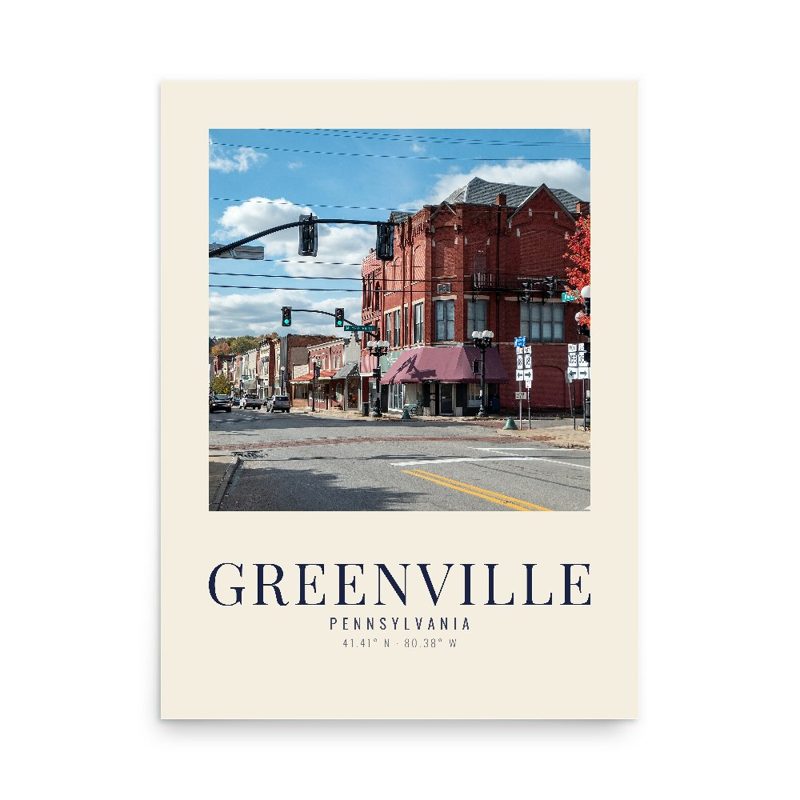
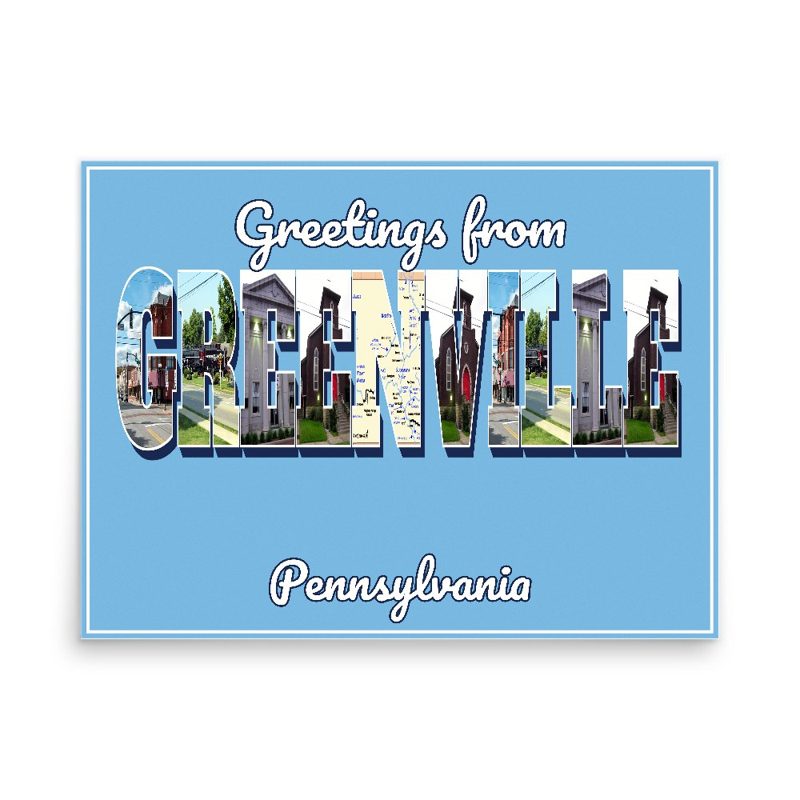
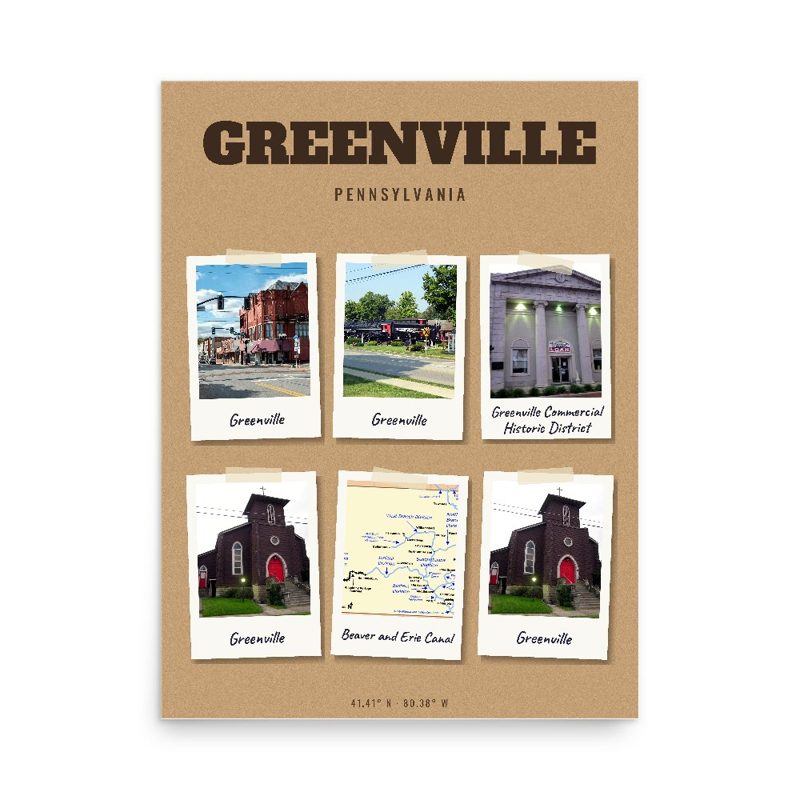




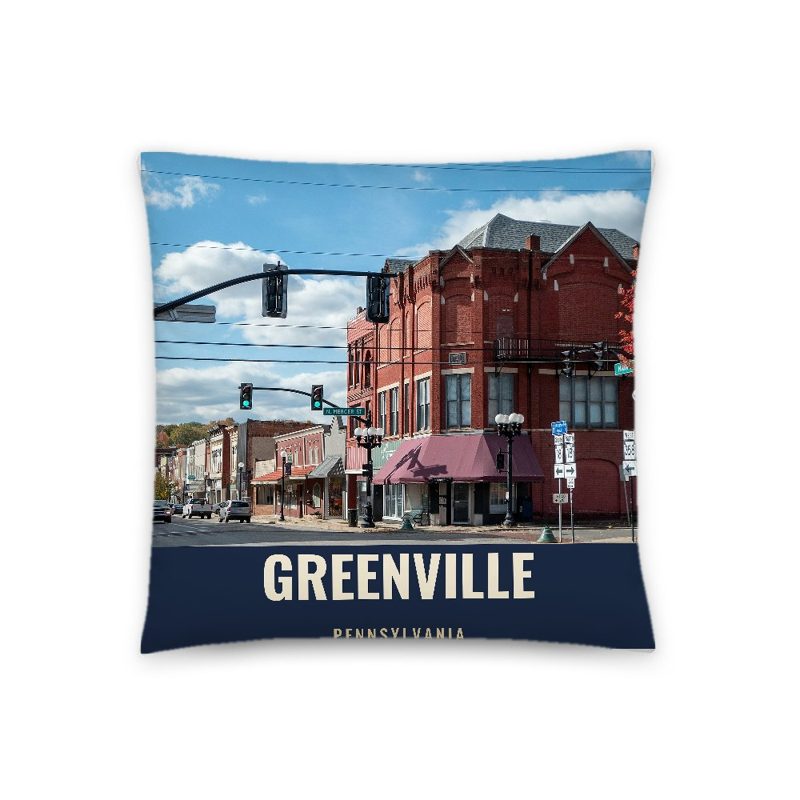

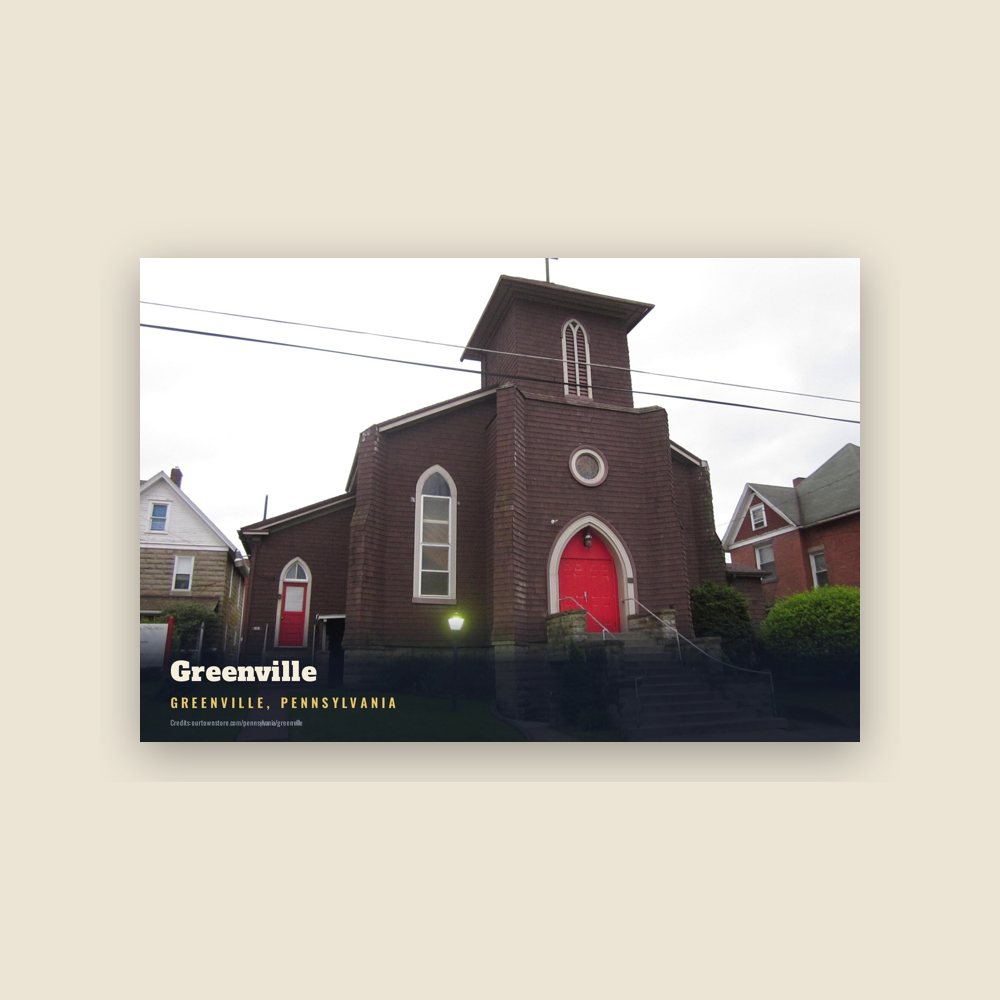
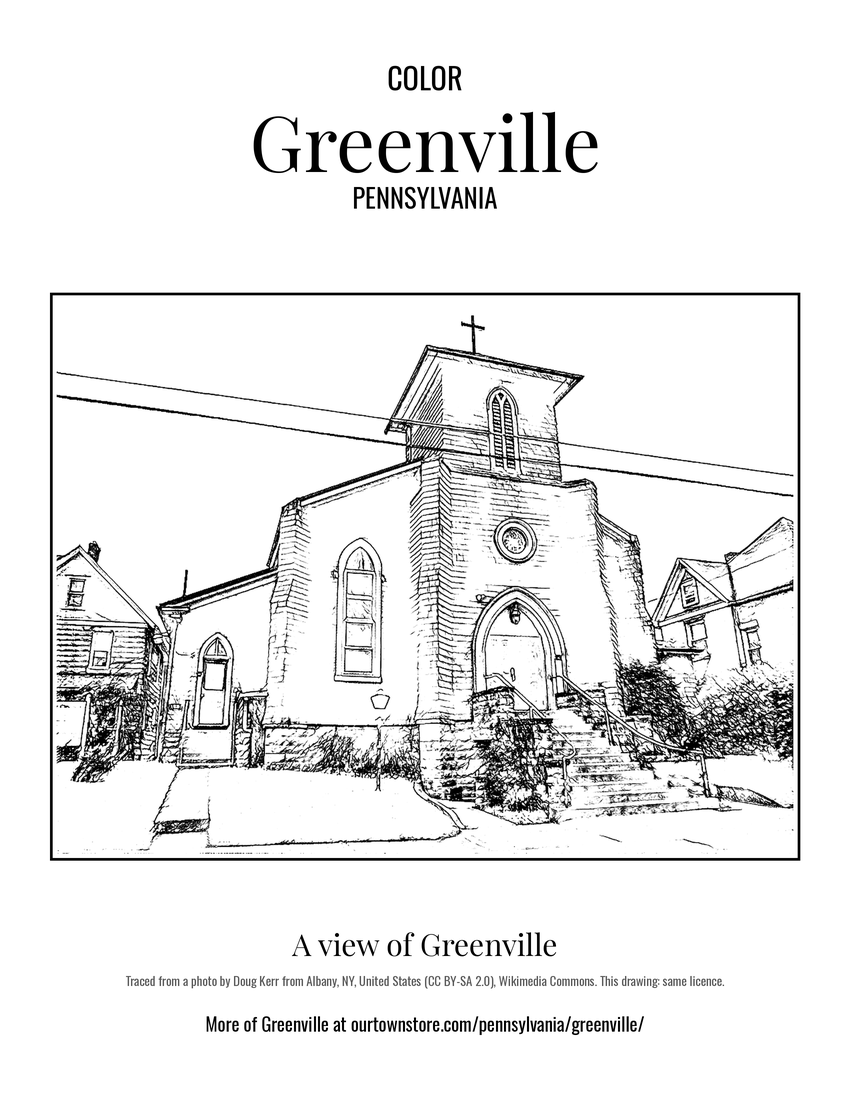 A view of Greenville
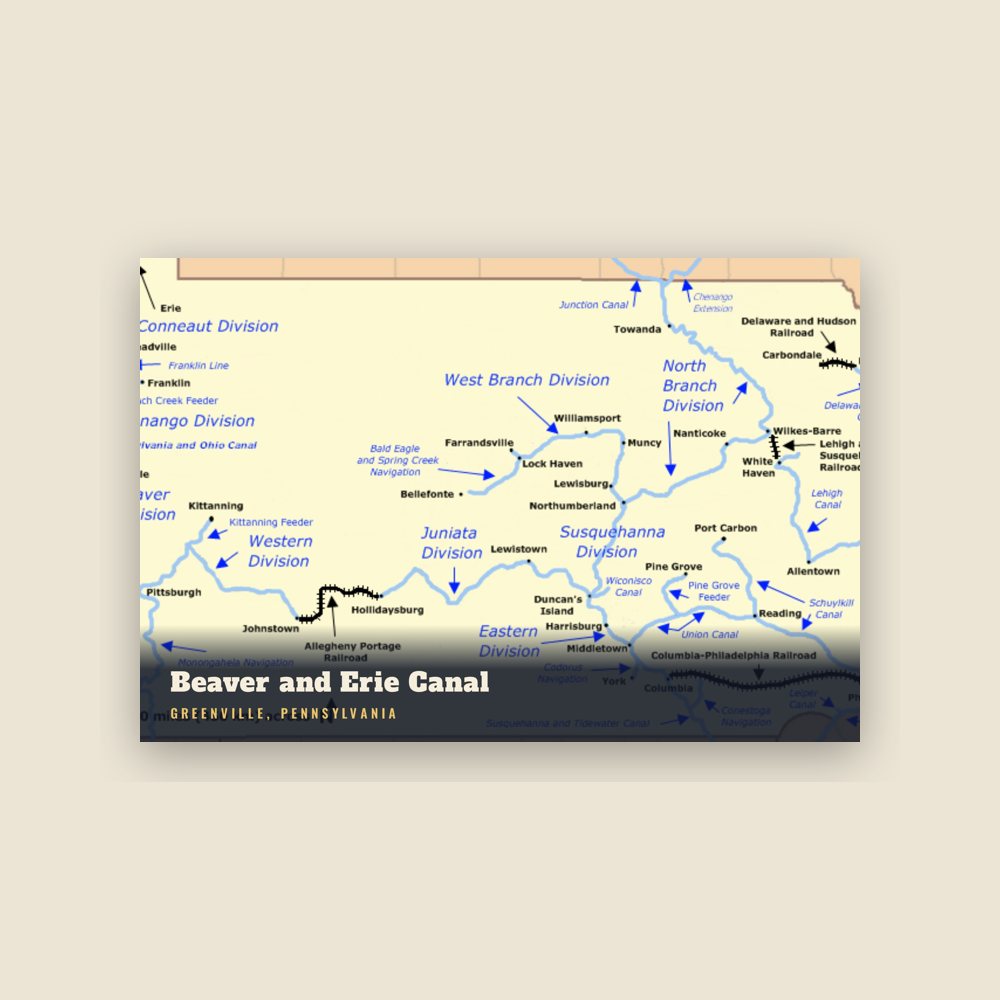
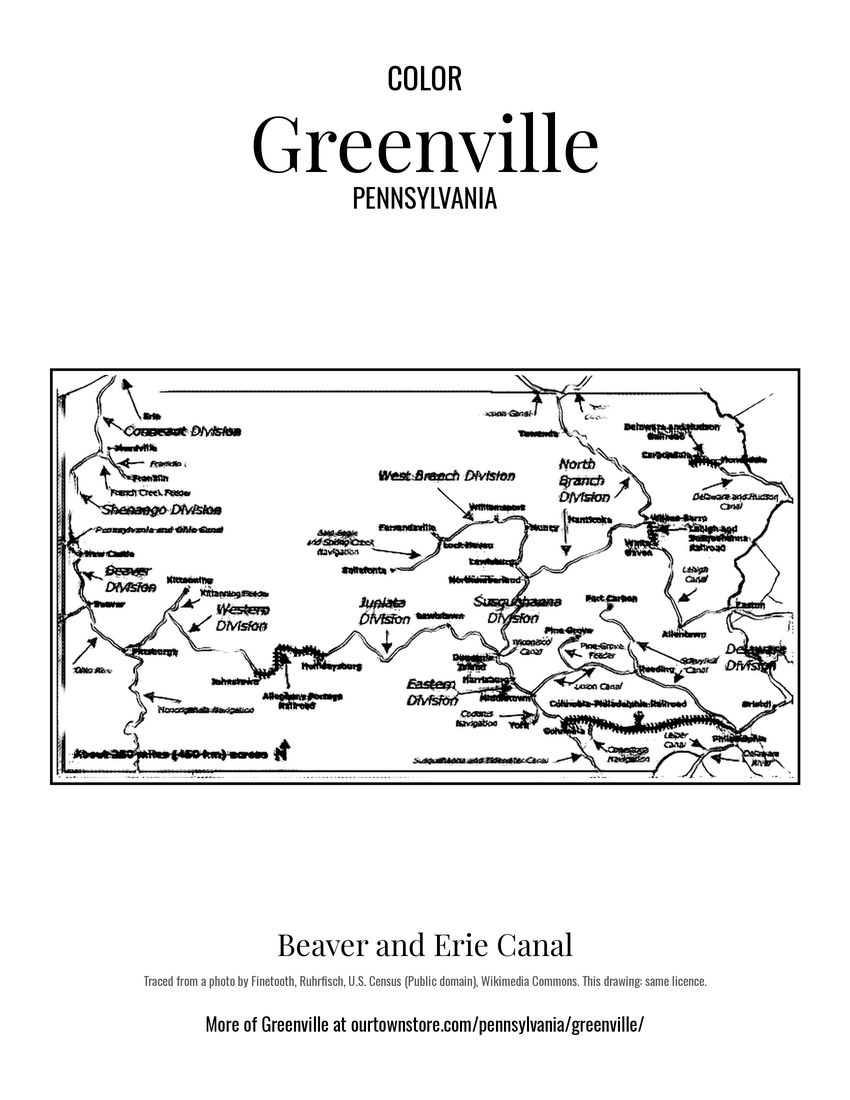 Beaver and Erie Canal
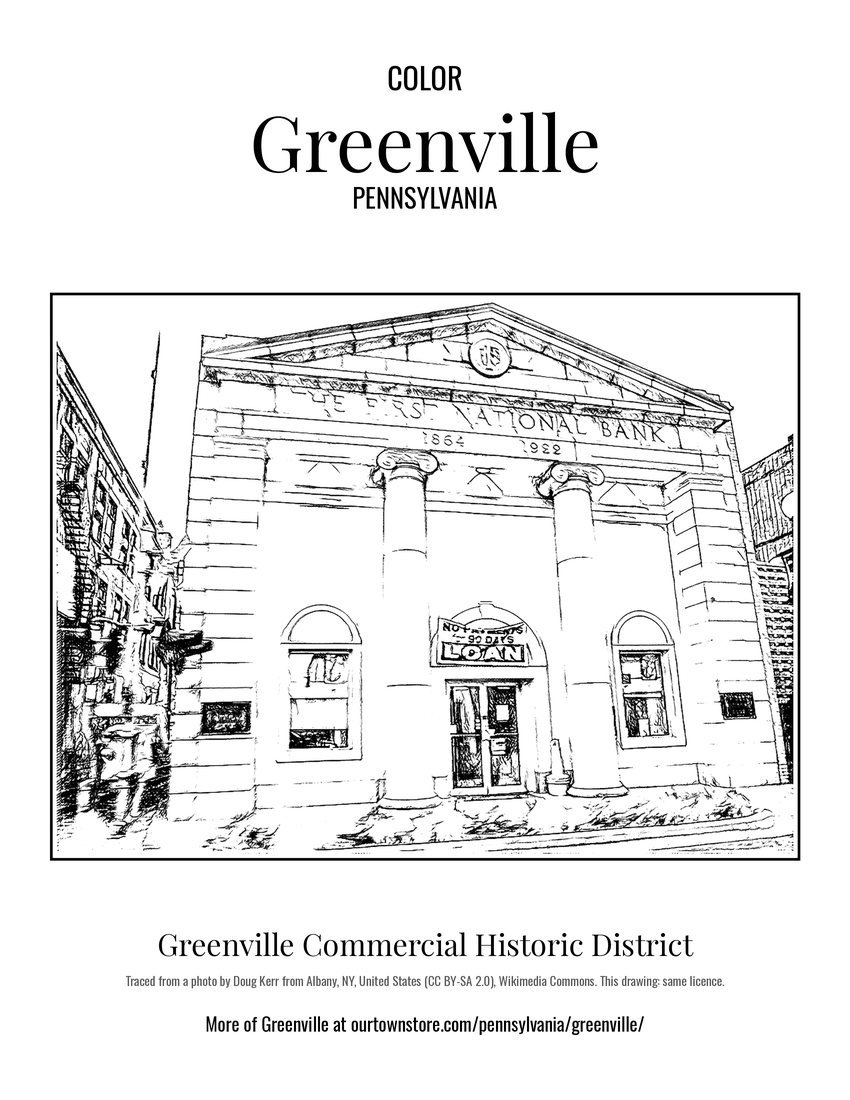 Greenville Commercial Historic District
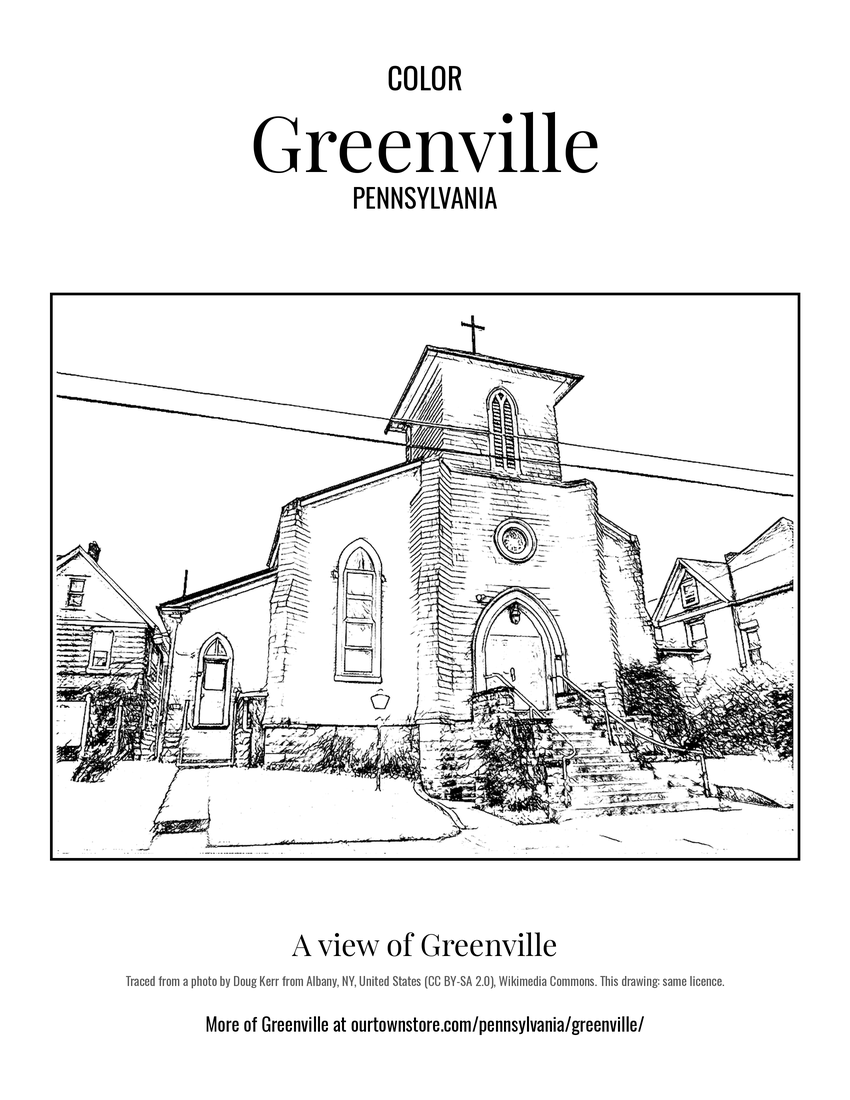 A view of Greenville