A short history of Sheridan
Absolem B. Faulconer laid out the plat for what became the city of Sheridan in the mid-1860s. This plat was recorded with the county on December 13, 1866. He had settled in the area in 1847. The Sheridan post office was established on April 4, 1866, with Absolem's brother Thomas serving as postmaster. By 1871, the town had grown to include two blacksmith shops, one church, one school, one hotel, one wagon shop, and two general stores. In October 1878, the Dayton, Sheridan and Grand Ronde Railroad, a narrow-gauge railway, reached the community.
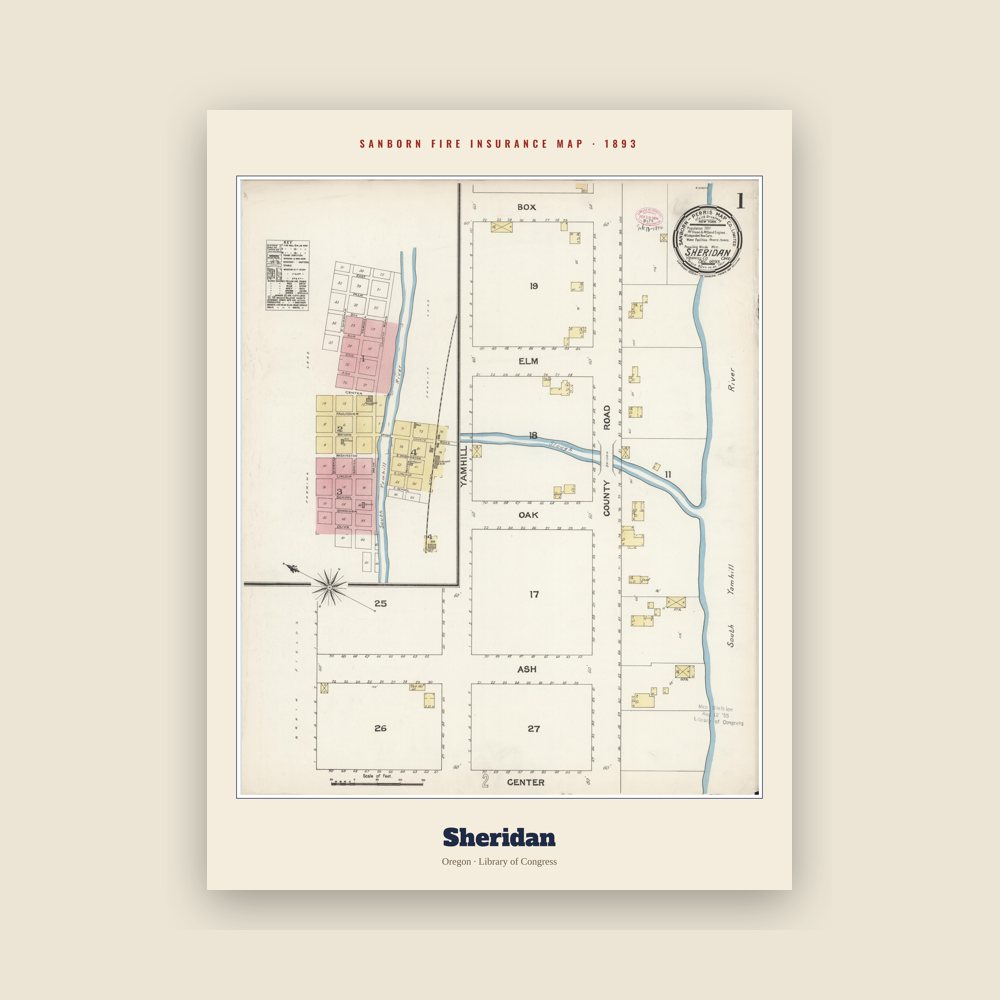
Sheridan, a timber and farming community southwest of Portland and northwest of Salem, was incorporated in 1880. Sheridan was named for General Philip Sheridan, who was posted to Yamhill County and Fort Yamhill in the latter half of the 1850s to monitor the Native Americans at what is now the Grand Ronde Reservation west of the city. By 1894, Sheridan had grown to 400 residents, one bank, two hotels, three churches, and a flouring mill. At that time there was a daily train to the city as well as daily stage coach service from McMinnville, and a single wooden bridge over the river.
Agriculture was the main industry in Sheridan's early years. Around 1910, the main crops included hops, clover-seed, hay, potatoes, onions, and a variety of fruits including apples, prunes, and pears. In March 1910, 150 workers at a lumber yard owned by the Sheridan Lumber Company went on strike for higher wages. The strike was supported by Portland members of the Industrial Workers of the World who picketed employment agencies in Portland to prevent the company from hiring strikebreakers. The action was successful and the workers won a pay increase of twenty-five cents per day, equivalent to $8.64 in 2025.
On July 18, 1913, a fire that destroyed most of the commercial district caused $300,000 in damage. Most of the buildings were rebuilt with brick within six months. On October 30, 1930, the Jesuits purchased an 891-acre (361 ha) farm on a hill overlooking the city. There they started St. Francis Xavier's Novitiate, a school for training priests for the order. Opening in a new building and several existing farm buildings in 1931, St. Francis Xavier's added more buildings over the next several decades.
In 1932, the state built a highway through Sheridan from McMinnville to the Oregon Coast, which became Oregon Route 18 or the Salmon River Highway. With funds received through the Works Progress Administration, the current steel bridge across the South Yamhill River was built and opened in 1939. By 1940, agriculture was still a major industry, and the timber industry was growing in importance to the local economy. At that time the city had grown to a population of 1,008 people.
The state built a bypass around Sheridan and Willamina that opened in 1957 to carry Oregon Route 18 on the south end of the city. The old alignment through the center of town became Oregon Route 18 Business. Sheridan had its largest flooding in history on December 22, 1964. The South Yamhill overflowed its banks and isolated the town for two days. The Jesuits sold their training school in 1974 to the Delphian Foundation, who then opened The Delphian School at the site in 1976.
In 1989, a federal minimum and medium security prison called the Federal Correctional Institution opened on the south side of Sheridan. At that time, Sheridan had a population of around 2,500 people. Sheridan moved its city hall into the old railroad station in January 1993, and expanded the renovated building in 1995. The U.S. Census Bureau erroneously listed Sheridan's population as 3,570 in the 2000 Census after mis-listing the prison's population in the wrong census tract. This error of about 2000 people was enough to throw off the state legislative districts beyond their margin of acceptance and the Oregon Supreme Court ruled the Secretary of State must re-draw the boundary lines to match the correct data. Sheridan also counts the prison population as part of the city's official population. In December 2008, a two-alarm fire gutted the 1875 United Methodist Church in the city.
Adapted (trimmed) from the Wikipedia article Sheridan, Oregon, revision 1382758742 by its contributors, licensed CC BY-SA 4.0.
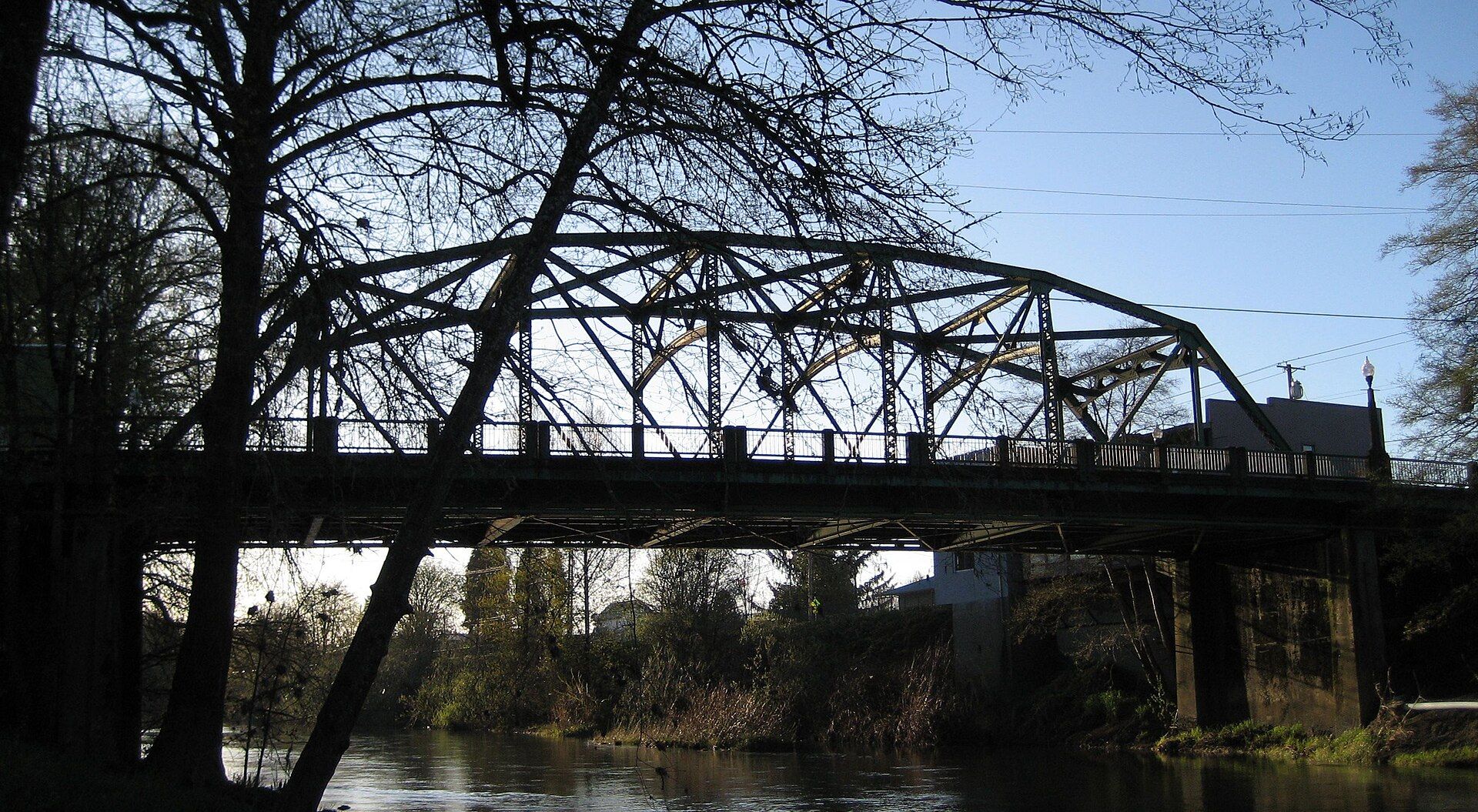





























 Sheridan Bridge
 Federal Correctional Institution, Sheridan
 Travelers Home
 A view of Sheridan