A short history of North Bend
Before Europeans visited the Oregon coast, Native American tribes claimed the Coos Bay region as their homeland for thousands of years. Members of the Coos, Lower Umpqua, Siuslaw and Coquille tribes lived, fished, hunted and gathered along Coos Bay and its estuaries, along rivers, and in meadows and forests.
Approximately 400 years ago, British and Spanish explorers first approached the South Coast. In 1579, Sir Francis Drake is purported to have sought shelter for his ship, the Golden Hinde, around Cape Arago. Trader and explorer Jedediah Smith was in the region seeking furs and the Hudson's Bay Company sent Alexander Roderick McLeod to search for an inland passage.
The 1852 stranding of the schooner Captain Lincoln on the North Spit and the survivors' encampment and rescue brought attention to gold prospectors who came to mine placer from area beaches. In 1853, the Coos Bay Commercial Company arrived from the Rogue Valley and created routes for settlers.
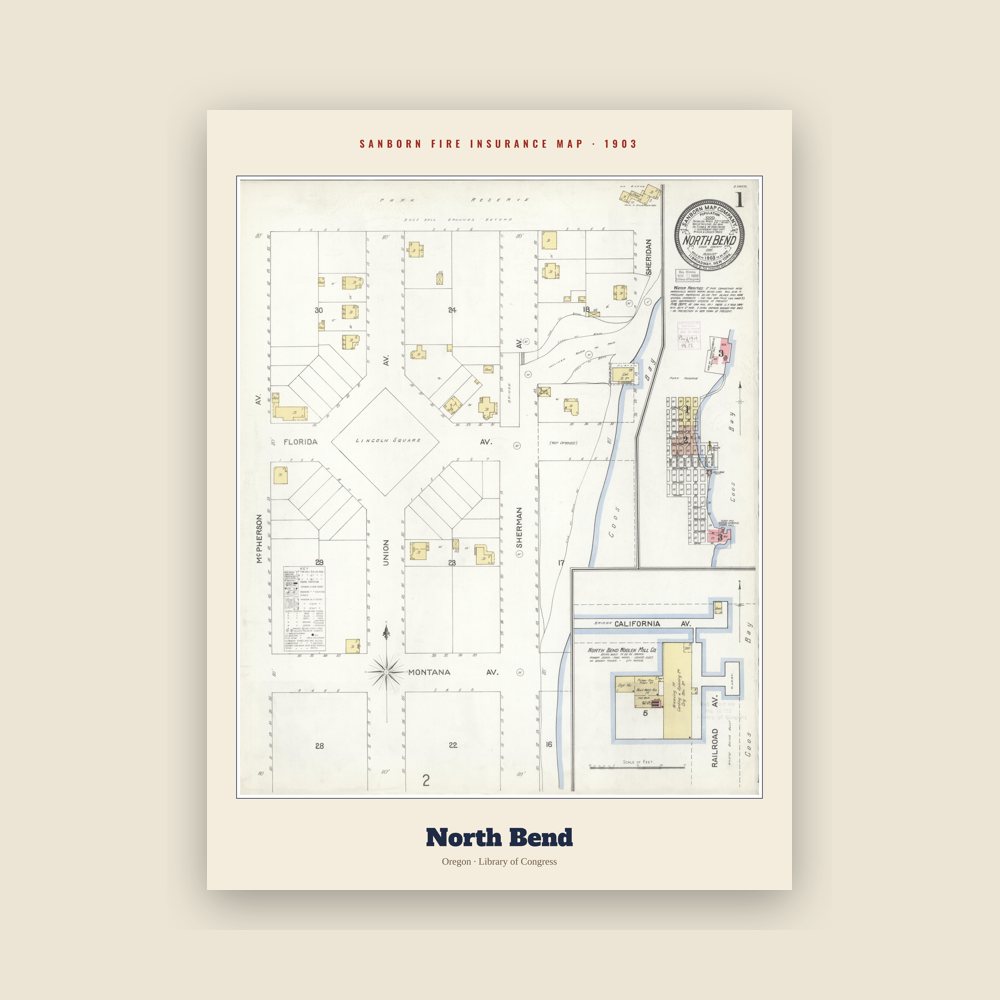
Thomas Symons founded Yarrow in 1863. Louis J. Simpson bought it in 1902. Simpson brought Yarrow and his father Asa Meade Simpson's sawmill site in Old Town together in 1903 under the name North Bend.
Empire City was established and was the county seat of government until 1896. Entrepreneurs were drawn to the area's ample natural resources, and sawmills and shipyards at Old Town North Bend and Empire City spurred economic development and attracted workers. Rivers and sloughs provided a means to transport people, forest, agricultural and coal products, and towns provided hubs for inland transportation. Some of the early industries in the area included timber harvesting, shipbuilding, farming, coal mining and salmon canning.
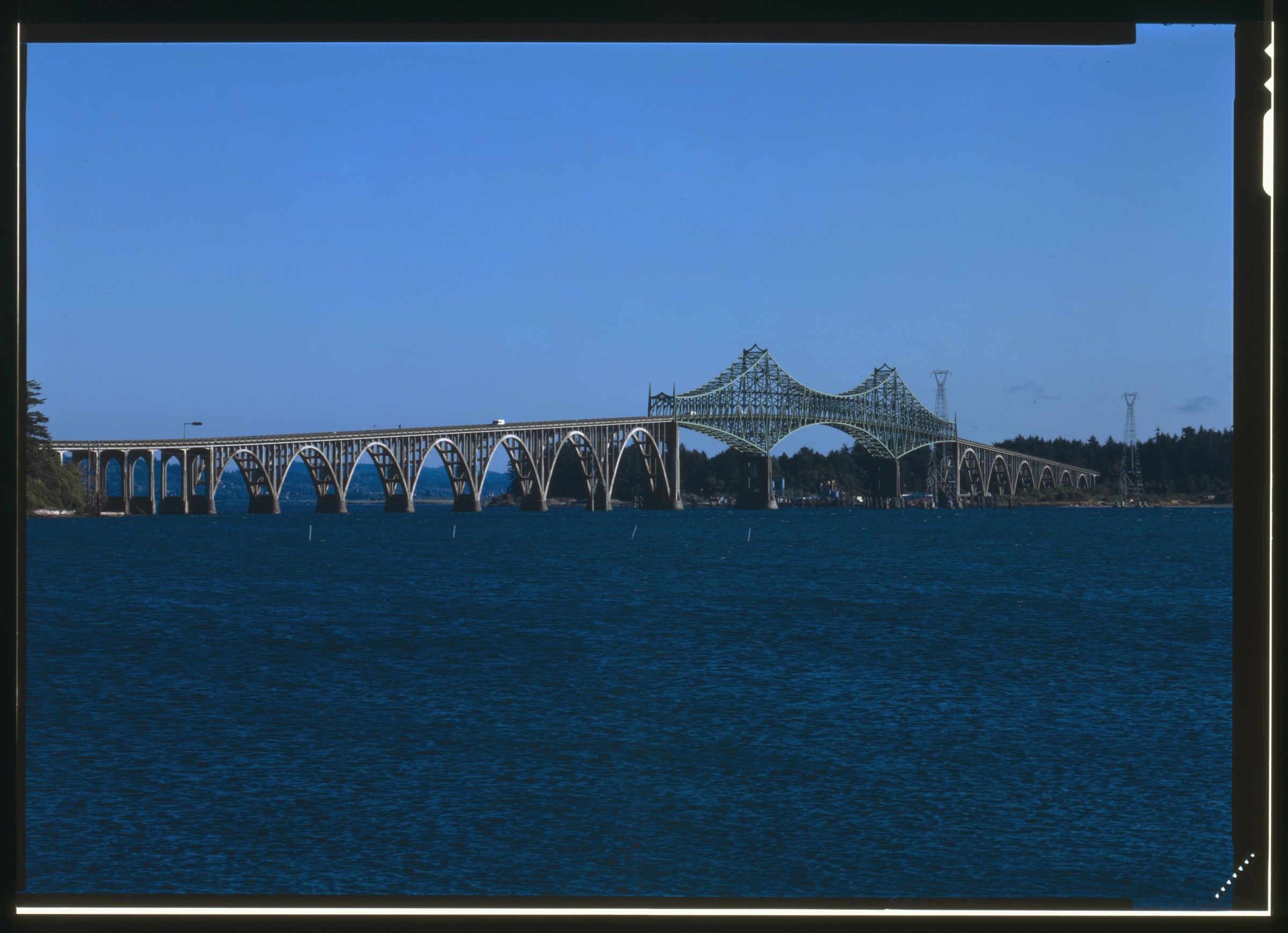
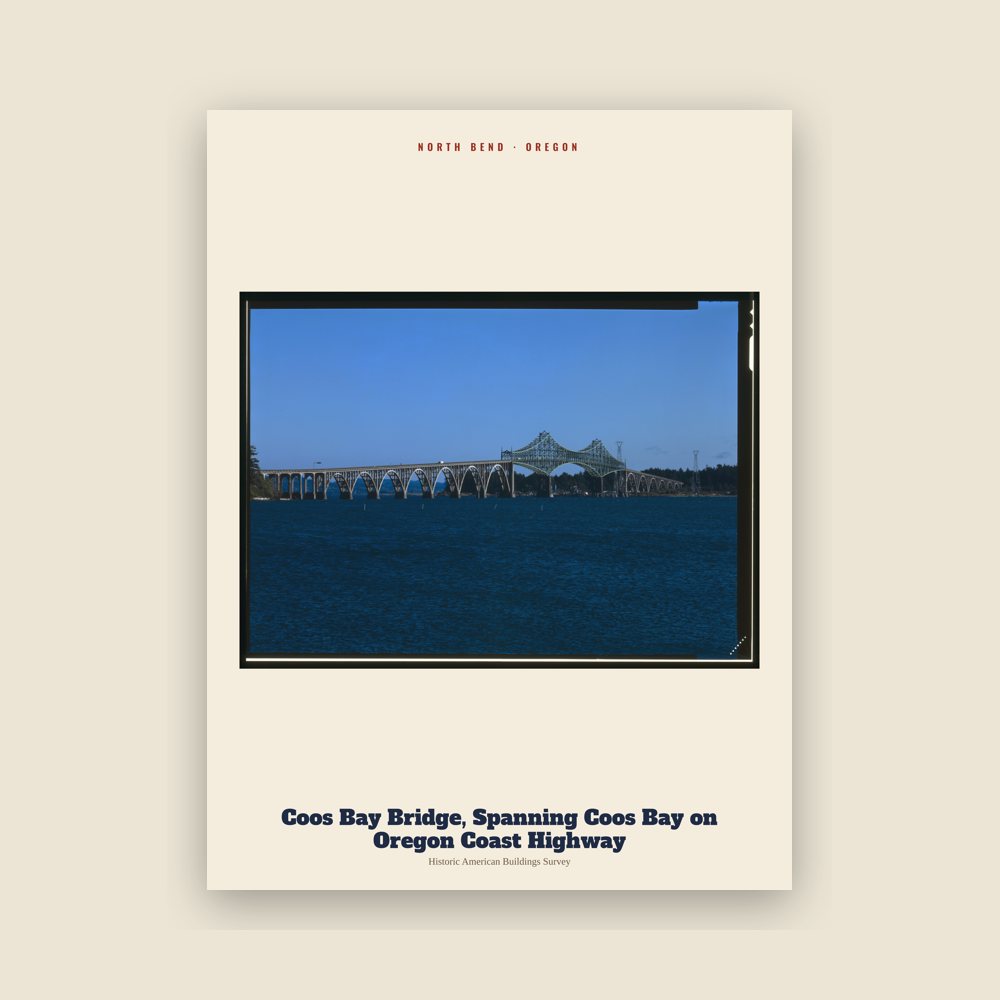
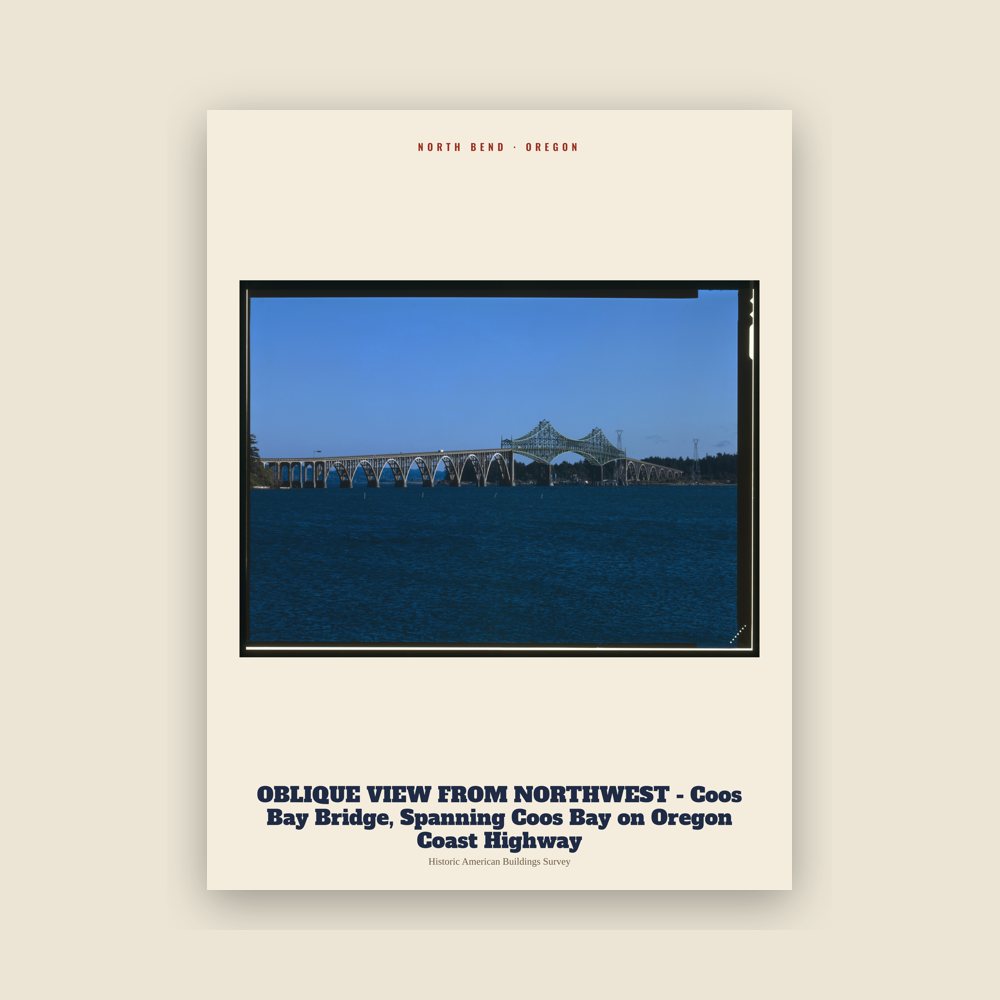
Shipyards contracted with the U.S. Government to build minesweepers and rescue tugs for World War II defense purposes. Large national lumber companies set up operations and expanded significantly for the next two decades. Jetty improvements, commercial fishing and crabbing shaped the development of Charleston. The completion of the North Bend Bridge (now Conde McCullough Memorial Bridge) in 1936 and the Roosevelt Highway significantly improved modern transportation connections and provided the final link in opening the Coos region to the outside world. The formerly remote district known as the Coos Bay country had come of age.
During the interregnum of despair between Franklin Roosevelt's election and his inauguration, the only bank in North Bend, the First National, was forced to temporarily close its doors, precipitating a cash-flow crisis for the City of North Bend. The city solved this problem by minting currency using myrtlewood discs printed on a newspaper press. These coins, in denominations from 25 cents to $10, were used to make payroll and the city promised to redeem them for cash as soon as it became available.
However, when the bank reopened and the city appealed for people to bring their myrtlewood money in to redeem it, many opted to keep their tokens as collector's items. After several appeals, the city gave up and announced that the tokens would remain legal tender in the city of North Bend in perpetuity. Until the 1960s, people occasionally did cash in their tokens, but the remaining pieces have become very valuable through scarcity and historical interest. Fewer than 10 full sets are believed to exist.
Adapted (trimmed) from the Wikipedia article North Bend, Oregon, revision 1377791192 by its contributors, licensed CC BY-SA 4.0.
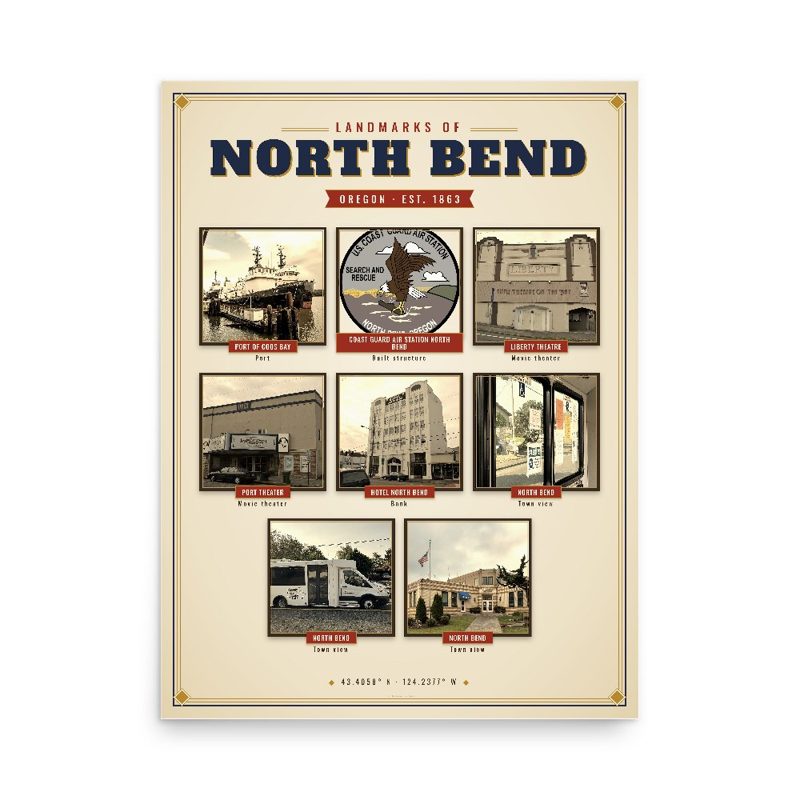
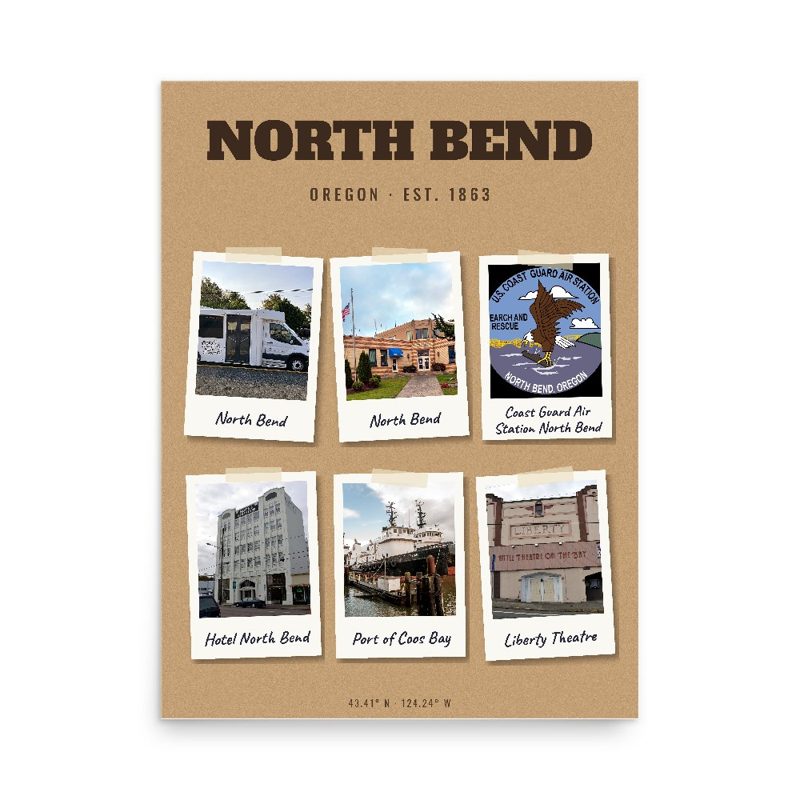
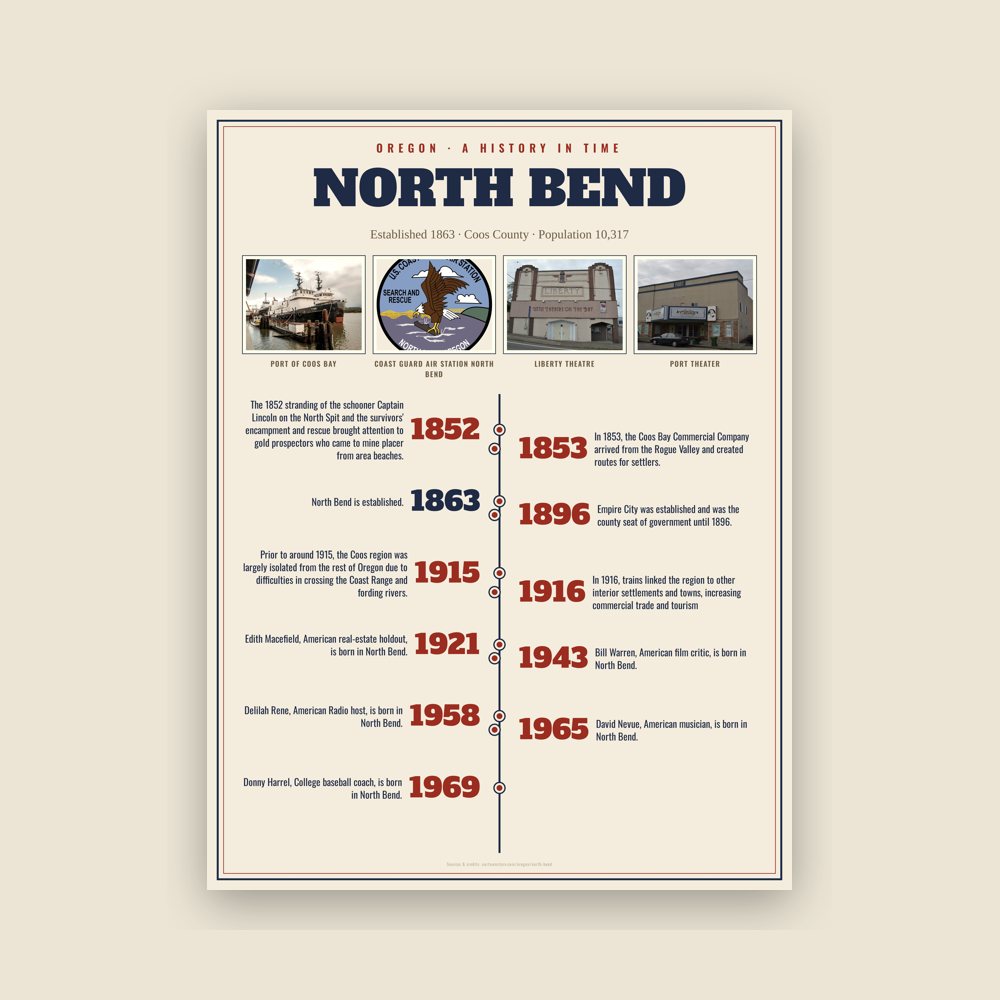
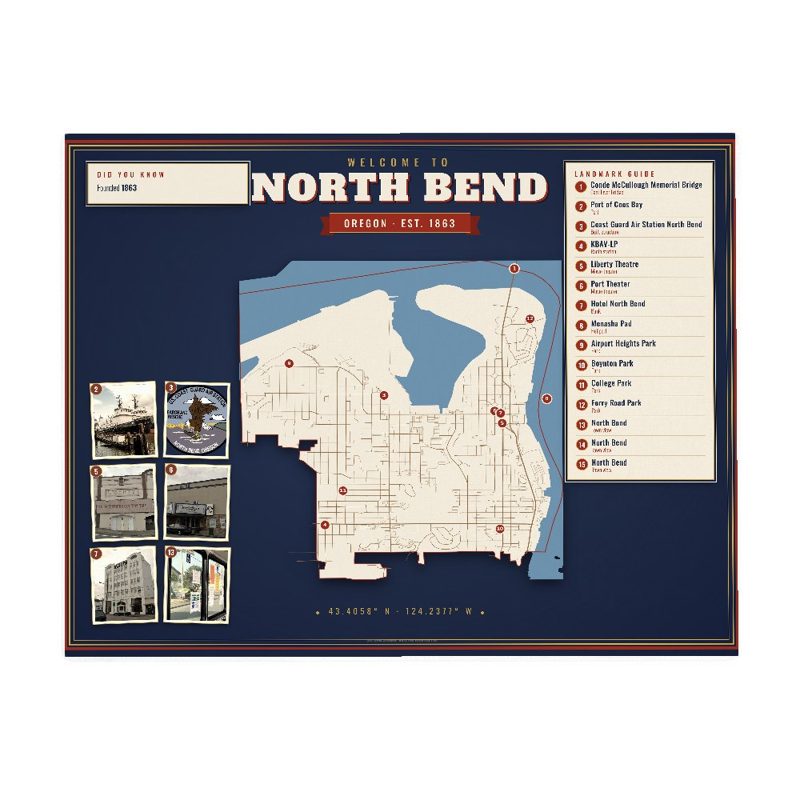
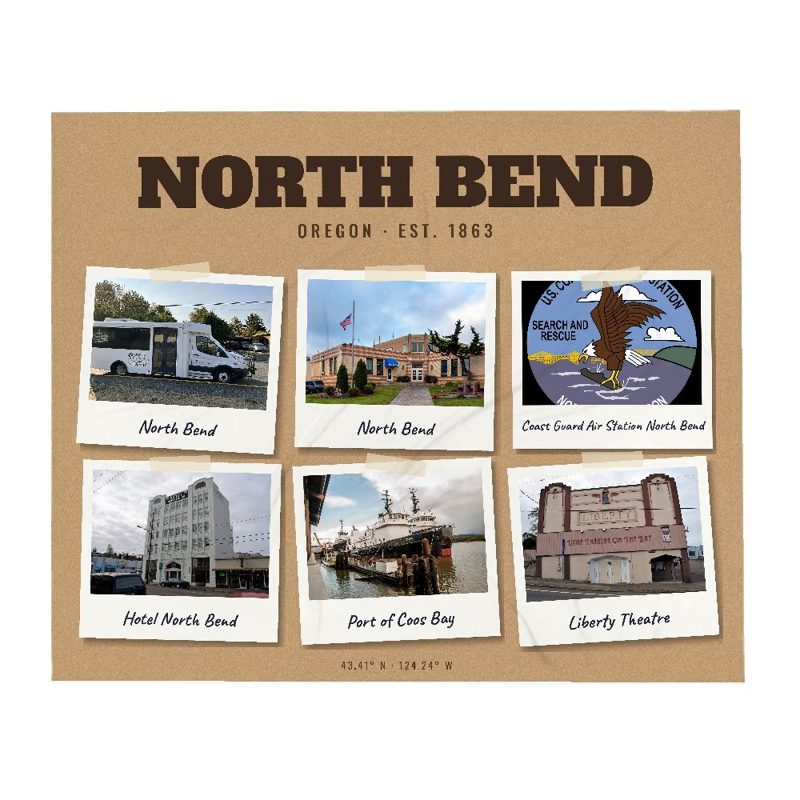
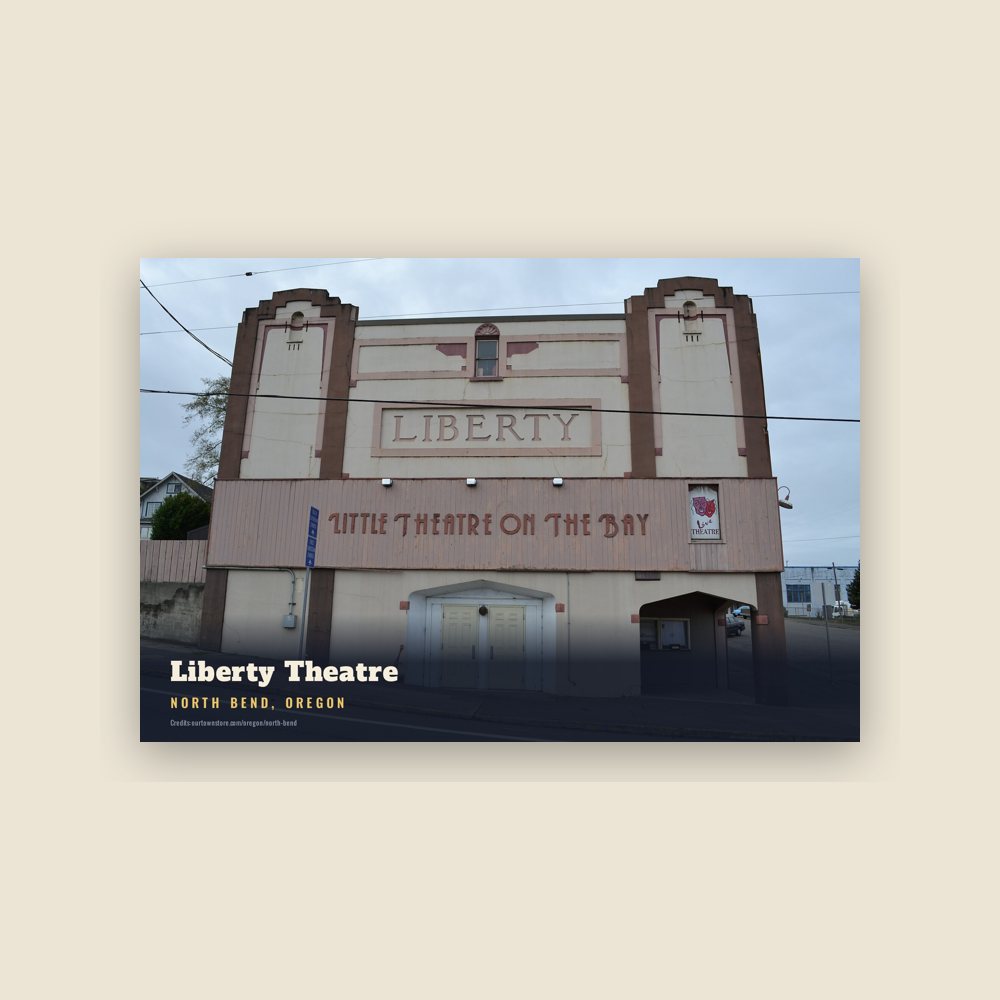
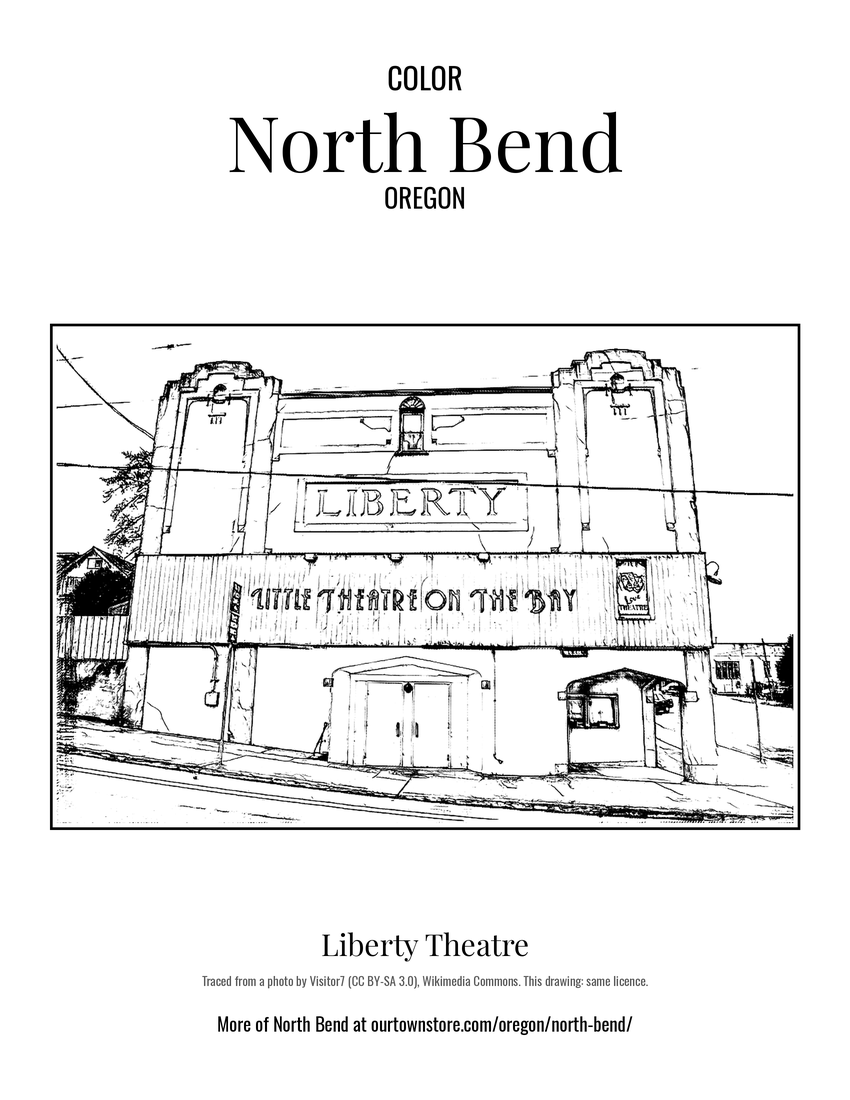 Liberty Theatre
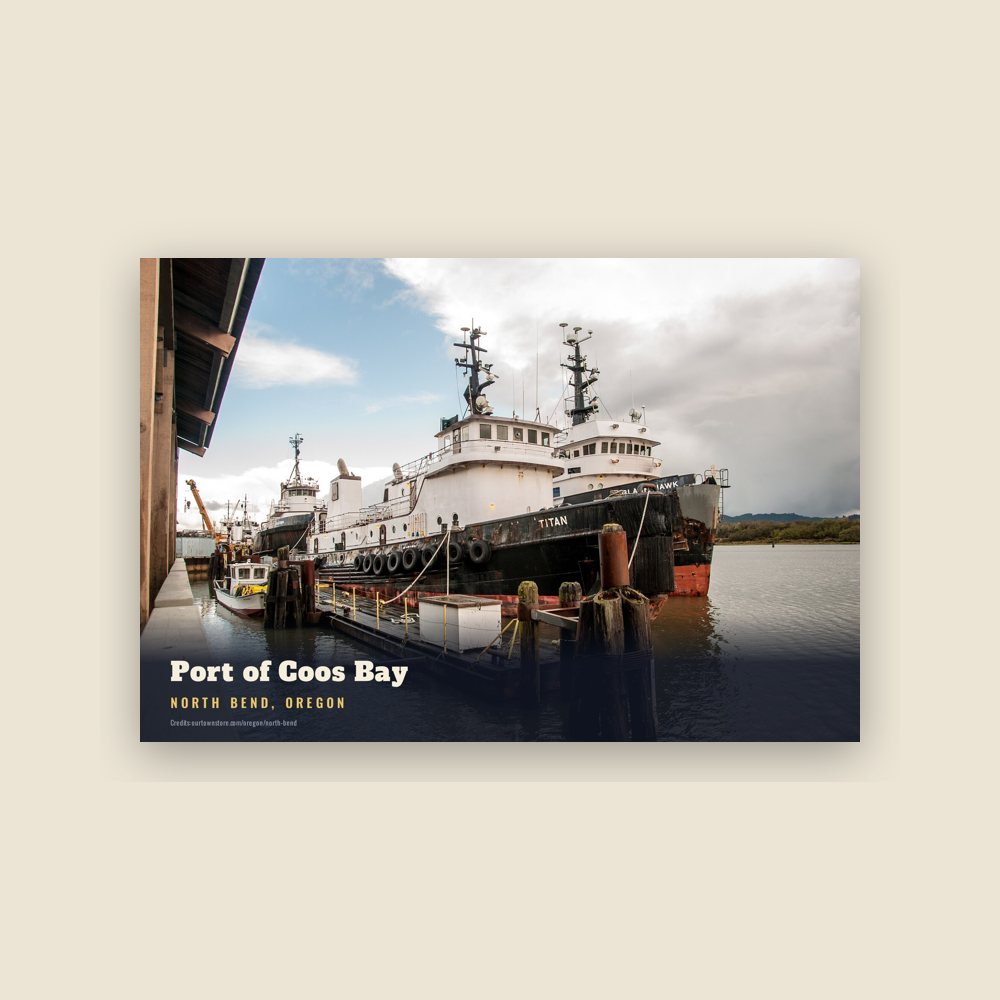
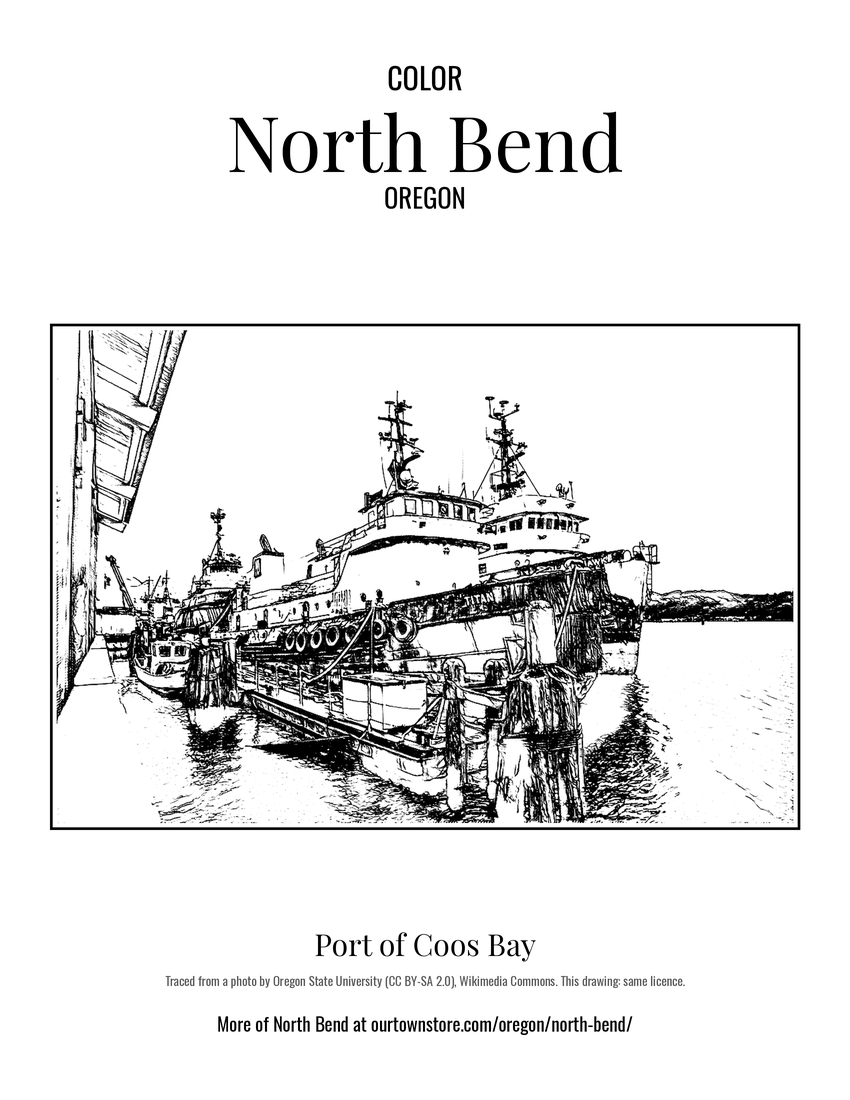 Port of Coos Bay
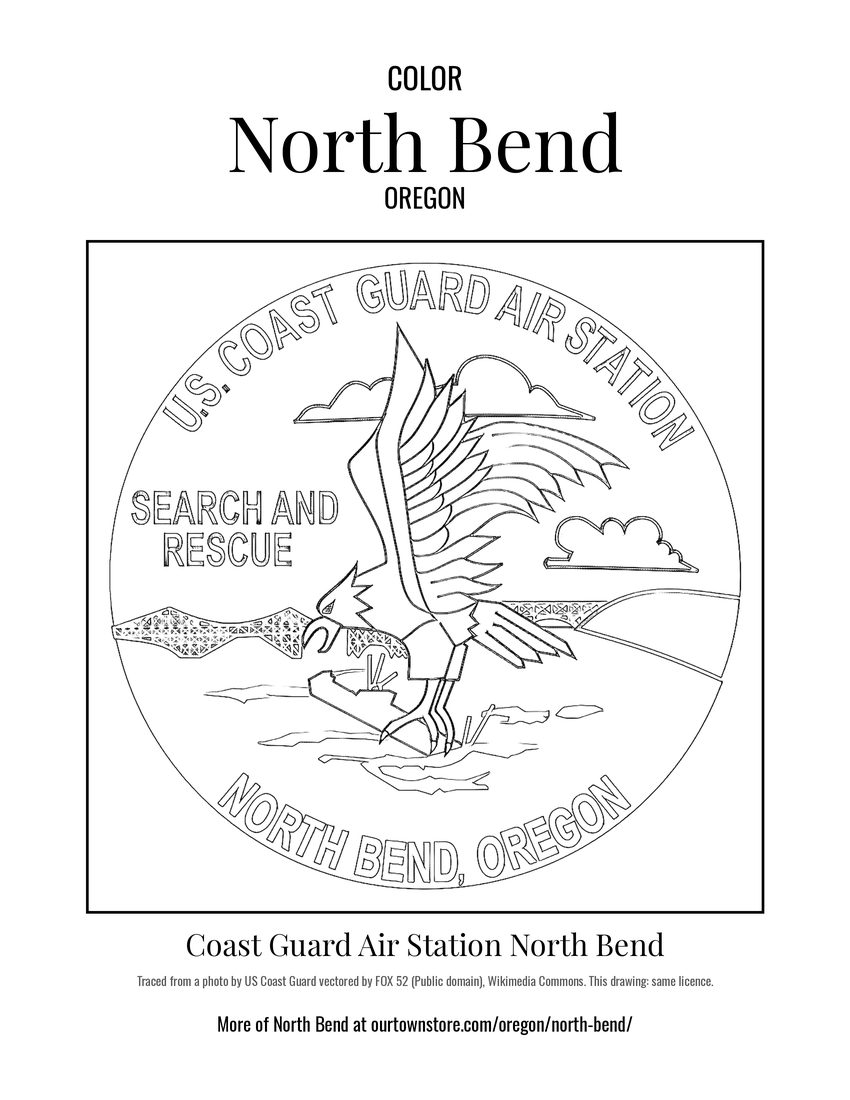 Coast Guard Air Station North Bend
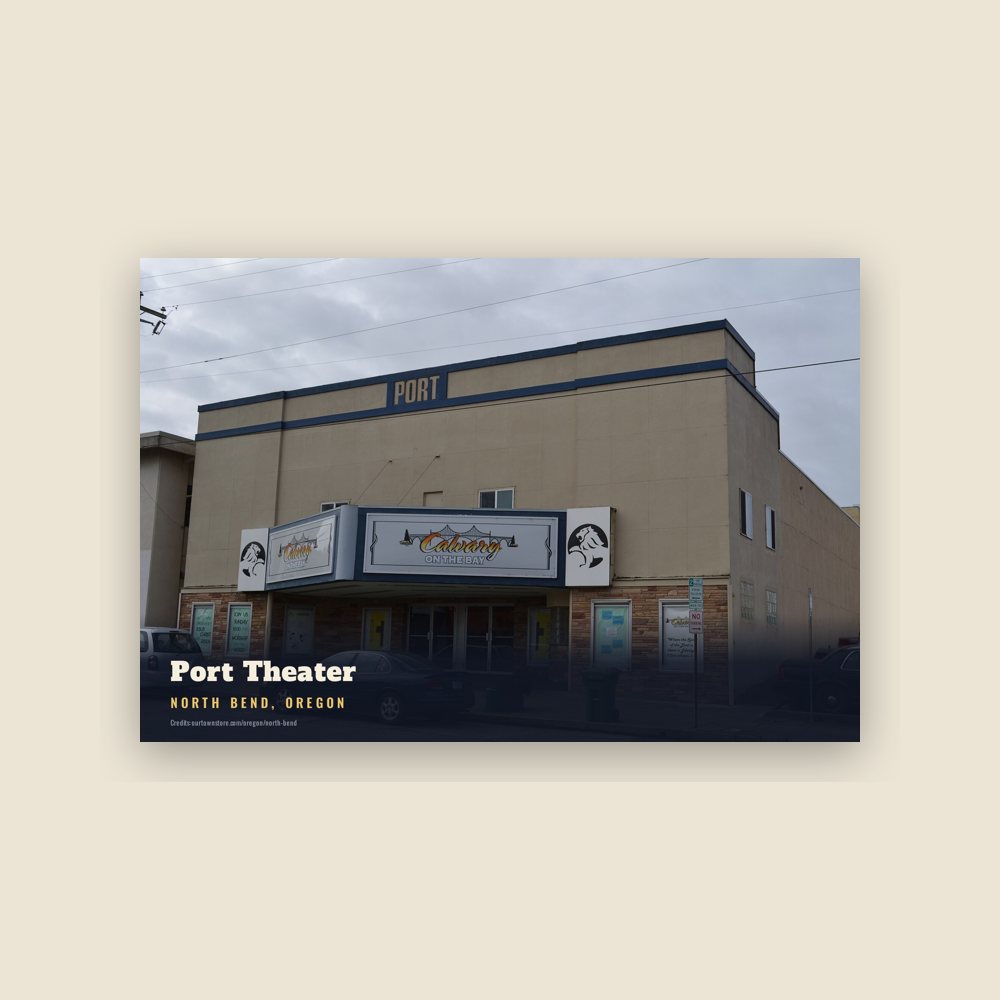
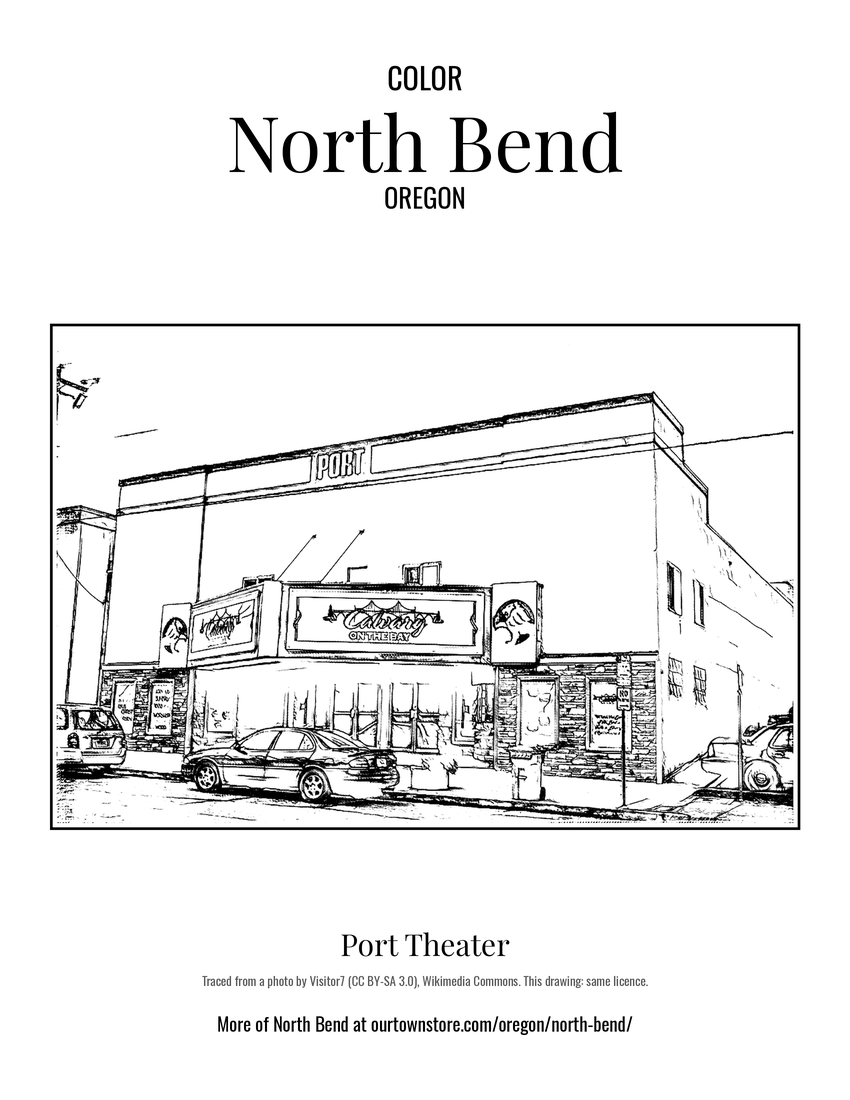 Port Theater