Read the full history
19th century
The Lewis and Clark Expedition spent the winter of 1805–1806 at Fort Clatsop, a small log structure southwest of modern-day Astoria. The expedition had hoped a ship would come by that could take them back east, but instead, they endured a torturous winter of rain and cold. They later returned overland and by internal rivers, the way they had traveled west. During archeological excavations in Astoria and Fort Clatsop in 2012, trading items from American settlers with Native Americans were found, including Austrian glass beads and falconry bells. Today, the fort has been recreated and is part of Lewis and Clark National Historical Park.
In 1811, British explorer David Thompson, the first person of European ancestry known to have navigated the entire length of the Columbia River, reached the partially constructed Fort Astoria near the mouth of the river. He arrived two months after the Pacific Fur Company's ship, the Tonquin. The fort constructed by the Tonquin party established Astoria as a U.S., rather than a British, settlement and became a vital post for American exploration of the continent. It was later used as an American claim in the Oregon boundary dispute with European nations.
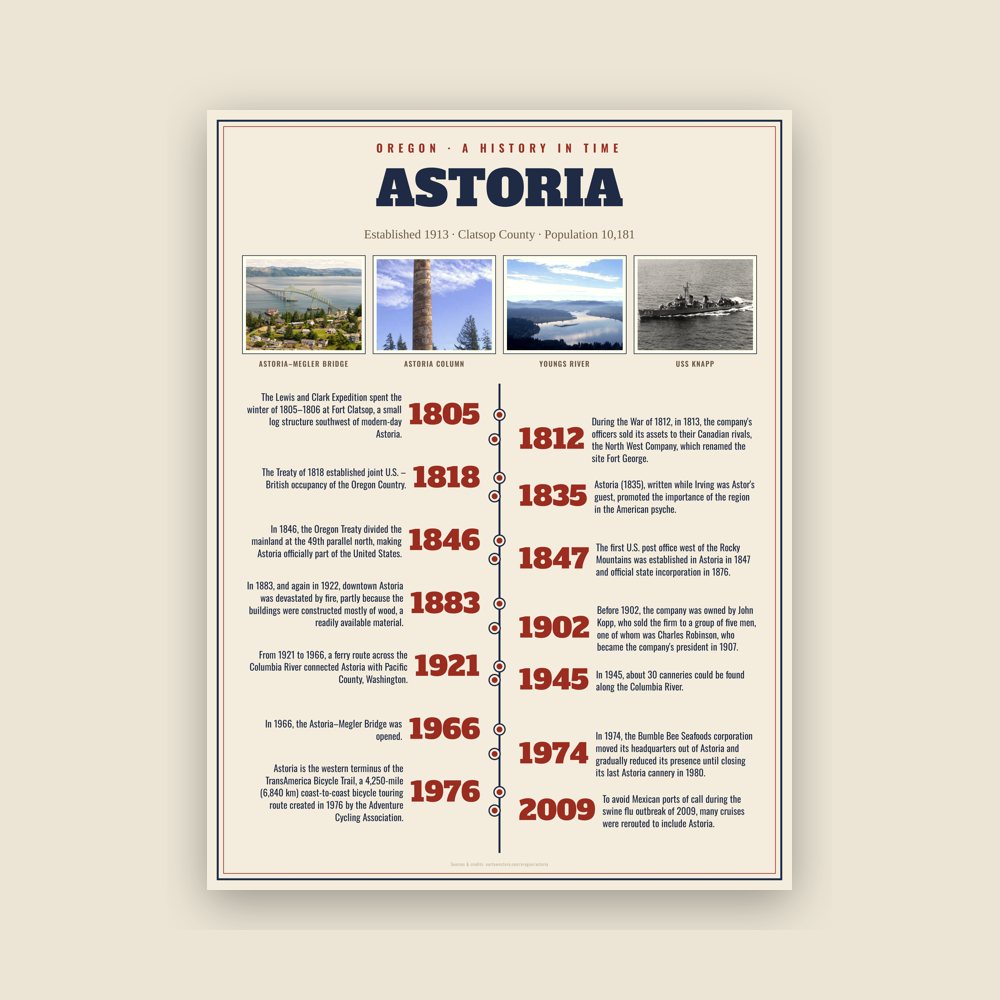
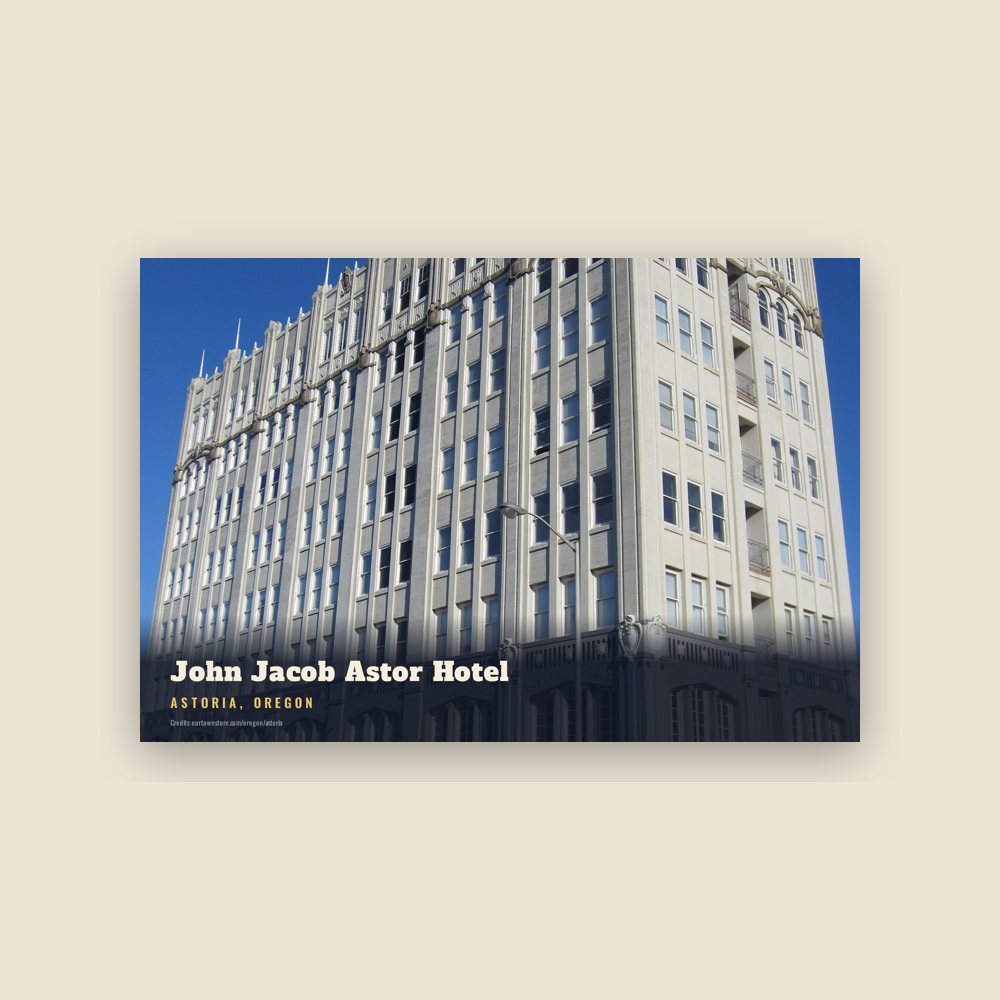
The Pacific Fur Company, a subsidiary of John Jacob Astor's American Fur Company, was created to begin fur trading in the Oregon Country. During the War of 1812, in 1813, the company's officers sold its assets to their Canadian rivals, the North West Company, which renamed the site Fort George. The fur trade remained under British control until U.S. pioneers following the Oregon Trail began filtering into the town in the mid-1840s. The Treaty of 1818 established joint U.S. – British occupancy of the Oregon Country.
Washington Irving, a prominent American writer with a European reputation, was approached by John Jacob Astor to mythologize the three-year reign of his Pacific Fur Company. Astoria (1835), written while Irving was Astor's guest, promoted the importance of the region in the American psyche. In Irving's words, the fur traders were "Sinbads of the wilderness", and their venture was a staging point for the spread of American economic power into both the continental interior and outward in Pacific trade.
In 1846, the Oregon Treaty divided the mainland at the 49th parallel north, making Astoria officially part of the United States.
As the Oregon Territory grew and became increasingly more colonized by Americans, Astoria likewise grew as a port city near the mouth of the great river that provided the easiest access to the interior. The first U.S. post office west of the Rocky Mountains was established in Astoria in 1847 and official state incorporation in 1876.
Astoria attracted a host of immigrants beginning in the late 19th century: Nordic settlers, primarily Swedes, Swedish-speaking Finns, and Chinese soon became larger parts of the population. The Nordic settlers mostly lived in Uniontown, near the present-day end of the Astoria–Megler Bridge, and took fishing jobs; the Chinese tended to do cannery work, and usually lived either downtown or in bunkhouses near the canneries. By the late 1800s, 22% of Astoria's population was Chinese. Astoria also had a significant population of Indians, especially Sikhs from Punjab; the Ghadar Party, a political movement among Indians on the West Coast of the U.S. and Canada to overthrow British rule in India, was officially founded on July 15, 1913, in Astoria.
20th and 21st centuries
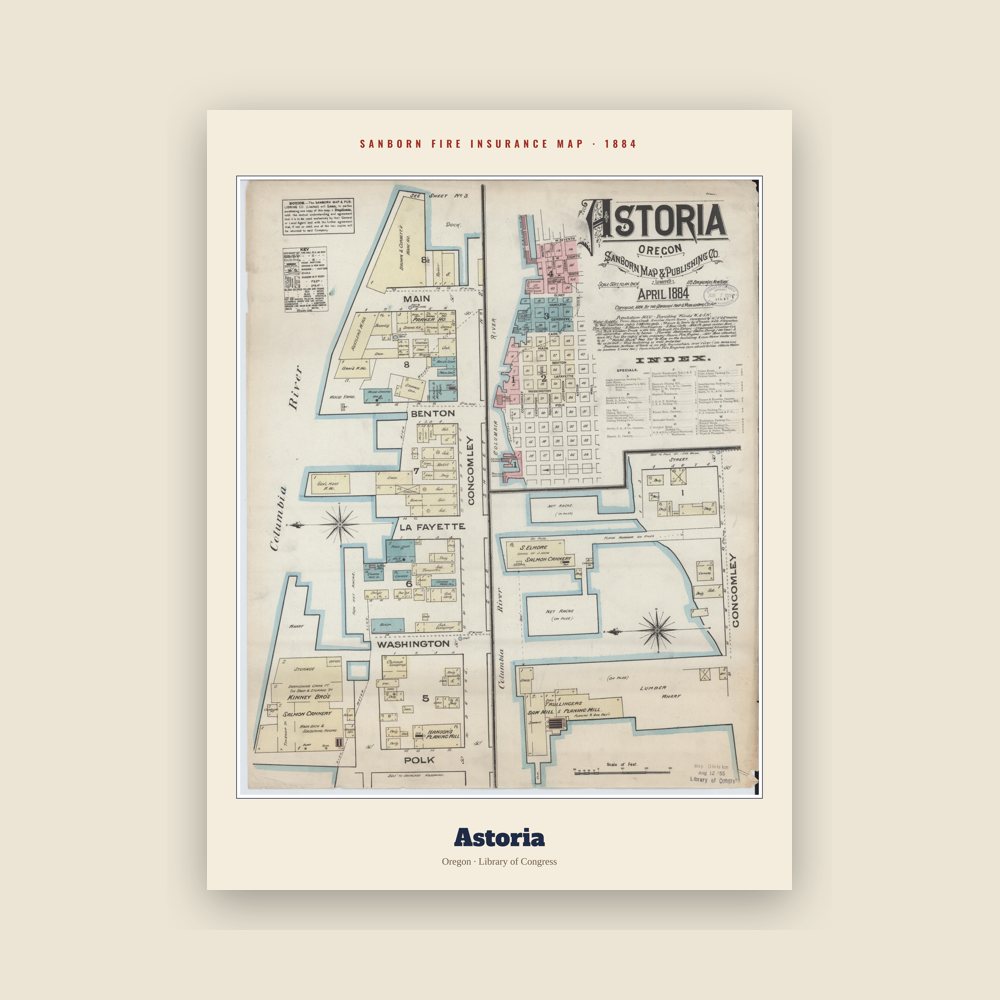
In 1883, and again in 1922, downtown Astoria was devastated by fire, partly because the buildings were constructed mostly of wood, a readily available material. The buildings were entirely raised off the marshy ground on wooden pilings. Even after the first fire, the same building format was used. In the second fire, flames spread quickly again, and the collapsing streets took out the water system. Frantic citizens resorted to dynamite, blowing up entire buildings to create fire stops.
Astoria has served as a port of entry for over a century and remains the trading center for the lower Columbia basin. In the early 1900s, the Callendar Navigation Company was an important transportation and maritime concern based in the city. It has long since been eclipsed in importance by Portland, Oregon, and Seattle, Washington, as economic hubs on the coast of the Pacific Northwest. Astoria's economy centered on fishing, fish processing, and lumber. In 1945, about 30 canneries could be found along the Columbia River.
In the early 20th century, the North Pacific Brewing Company contributed substantially to the economic well-being of the town. Before 1902, the company was owned by John Kopp, who sold the firm to a group of five men, one of whom was Charles Robinson, who became the company's president in 1907. The main plant for the brewery was located on East Exchange Street.
As the Pacific salmon resource diminished, canneries were closed. In 1974, the Bumble Bee Seafoods corporation moved its headquarters out of Astoria and gradually reduced its presence until closing its last Astoria cannery in 1980. The lumber industry likewise declined in the late 20th century. Astoria Plywood Mill, the city's largest employer, closed in 1989. The Burlington Northern and Santa Fe Railway discontinued service to Astoria in 1996, as it did not provide a large enough market.
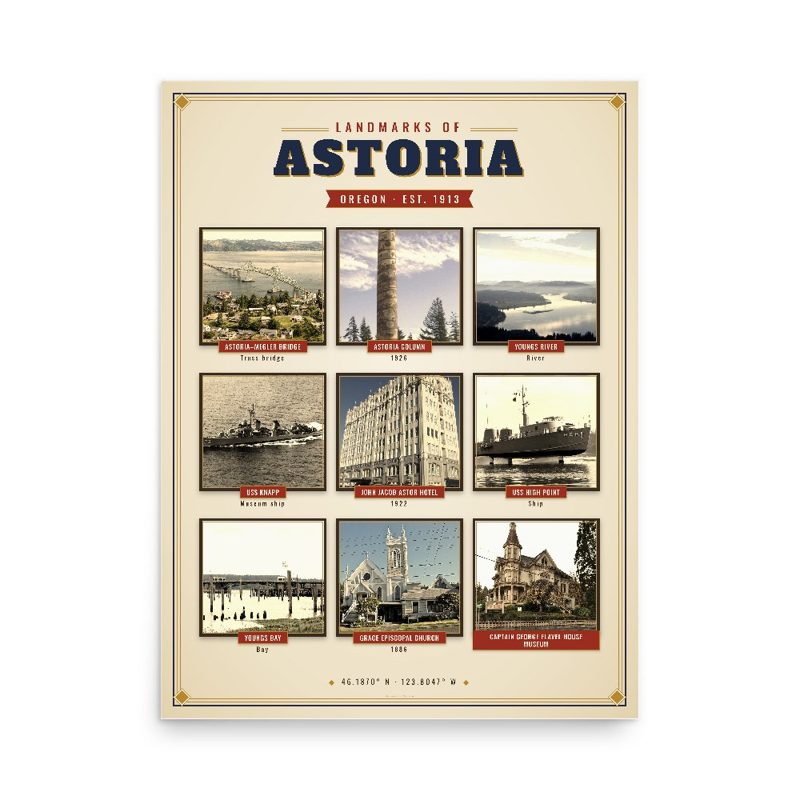
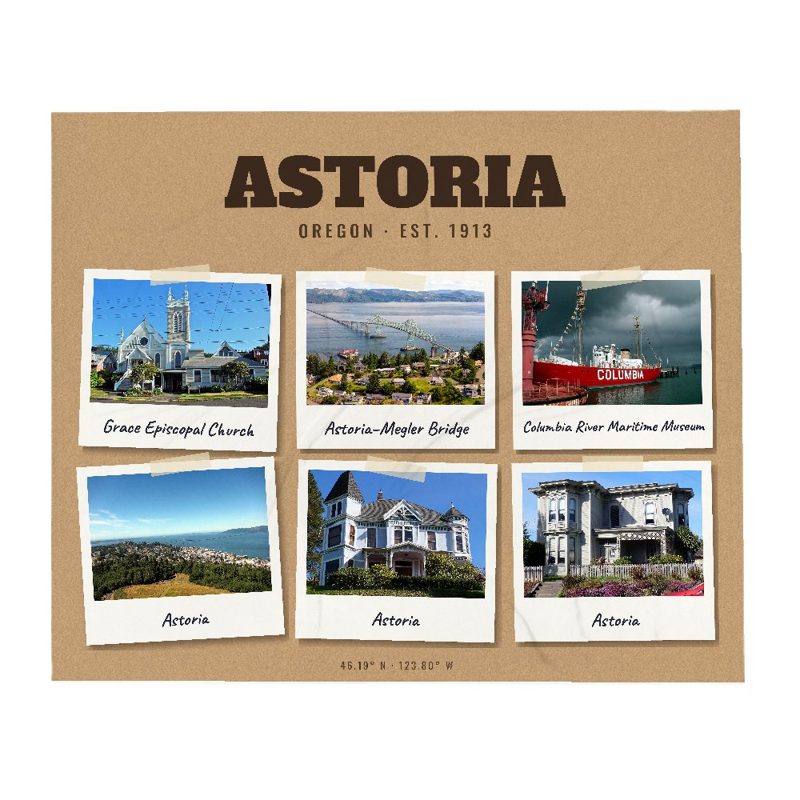
From 1921 to 1966, a ferry route across the Columbia River connected Astoria with Pacific County, Washington. In 1966, the Astoria–Megler Bridge was opened. The bridge completed U.S. Route 101 and linked Astoria with Washington on the opposite shore of the Columbia, replacing the ferry service.
Today, tourism, Astoria's growing art scene, and light manufacturing are the main economic activities of the city. Logging and fishing persist, but at a fraction of their former levels. Since 1982 it has been a port of call for cruise ships, after the city and port authority spent $10 million in pier improvements to accommodate these larger ships.
To avoid Mexican ports of call during the swine flu outbreak of 2009, many cruises were rerouted to include Astoria. The floating residential community MS The World visited Astoria in June 2009.
The town's seasonal sport fishing tourism has been active for several decades. Visitors attracted by heritage tourism and the historic elements of the city have supplanted fishing in the economy. Since the early 21st century, the microbrewery/brewpub scene and a weekly street market have helped popularize the area as a destination.
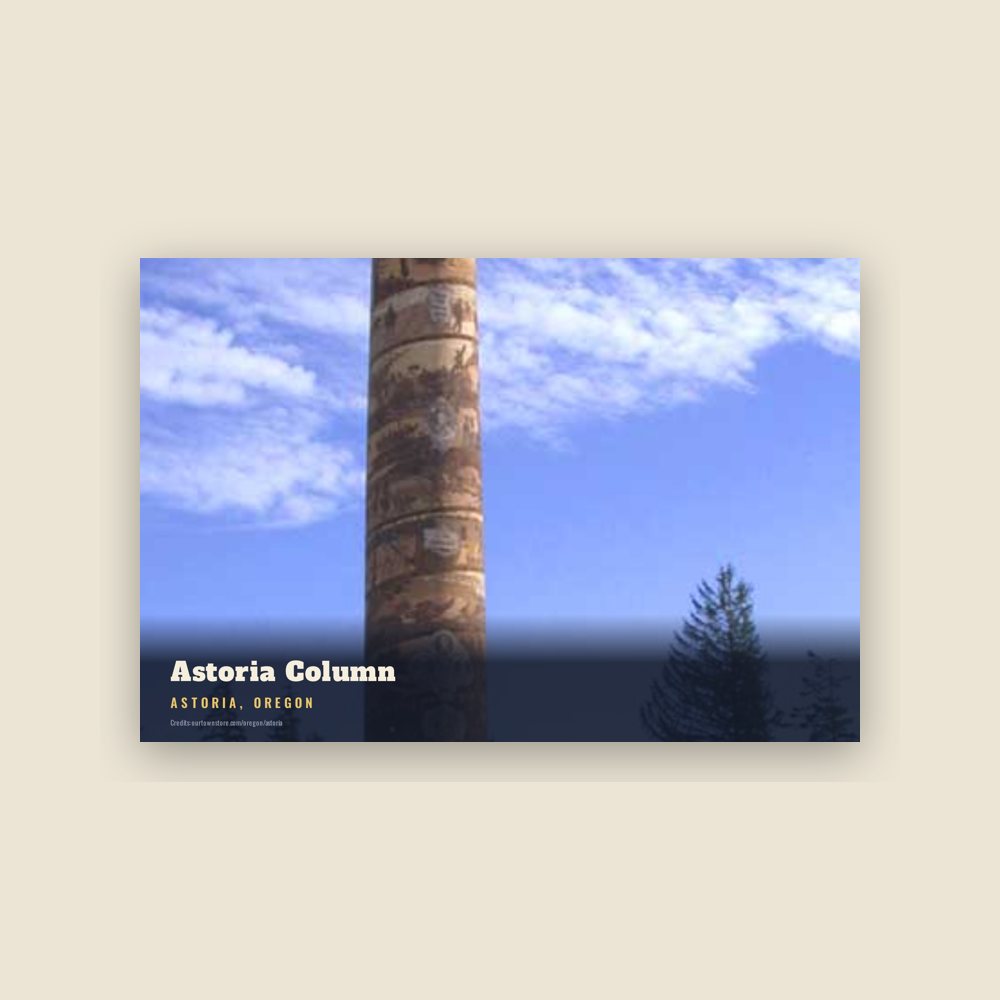
In addition to the replicated Fort Clatsop, another point of interest is the Astoria Column, a tower 125 feet (38 m) high, built atop Coxcomb Hill above the town. Its inner circular staircase allows visitors to climb to see a panoramic view of the town, the surrounding lands, and the Columbia flowing into the Pacific. The tower was built in 1926. Financing was provided by the Great Northern Railway and Vincent Astor, a great-grandson of John Jacob Astor.
Since 1998, artistically inclined fishermen and women from Alaska and the Pacific Northwest have traveled to Astoria for the Fisher Poets Gathering, where poets and singers tell their tales to honor the fishing industry and lifestyle.
Another popular annual event is the Dark Arts Festival, which features music, art, dance, and demonstrations of craft such as blacksmithing and glassblowing, in combination with offerings of a large array of dark craft brews. Dark Arts Festival began as a small gathering at a community arts space. Now Fort George Brewery hosts the event, which draws hundreds of visitors and tour buses from Seattle.
Astoria is the western terminus of the TransAmerica Bicycle Trail, a 4,250-mile (6,840 km) coast-to-coast bicycle touring route created in 1976 by the Adventure Cycling Association.
At least two United States Coast Guard cutters are homeported in Astoria, including fast response cutter David Duren and buoy tender Elm.

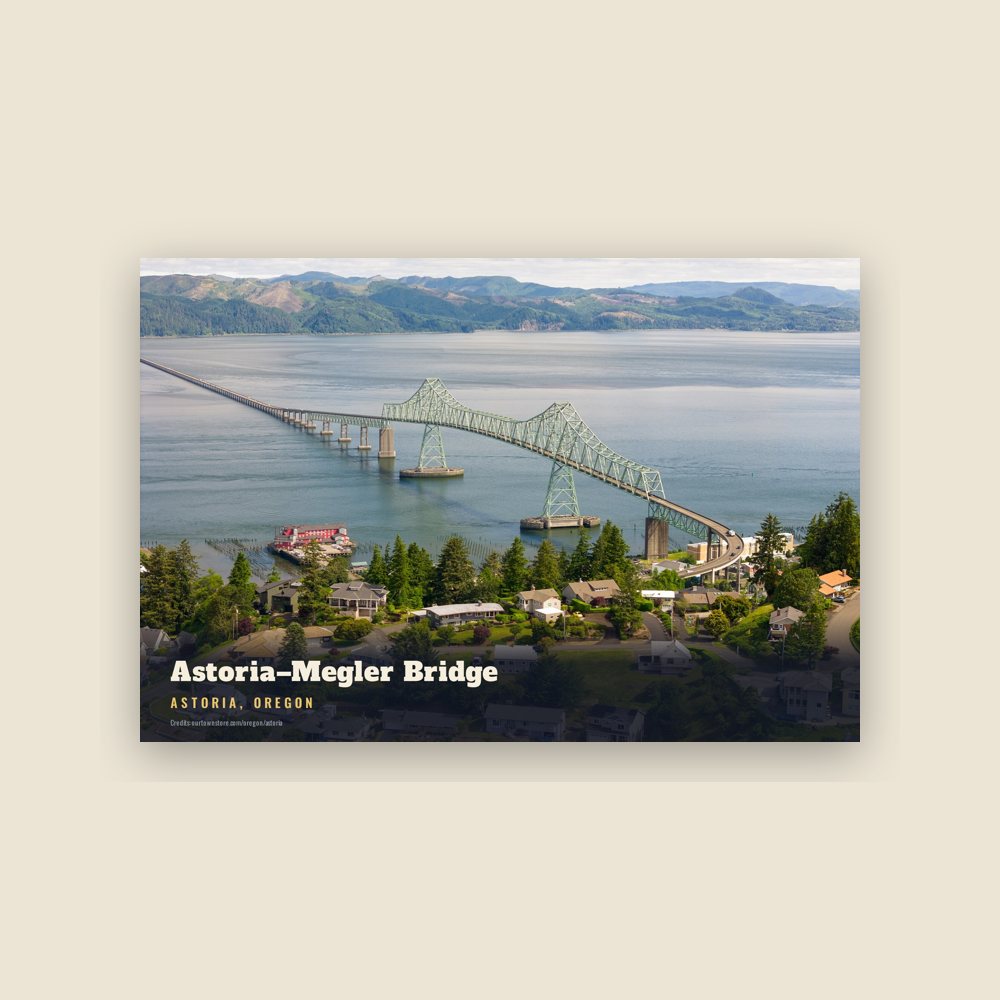
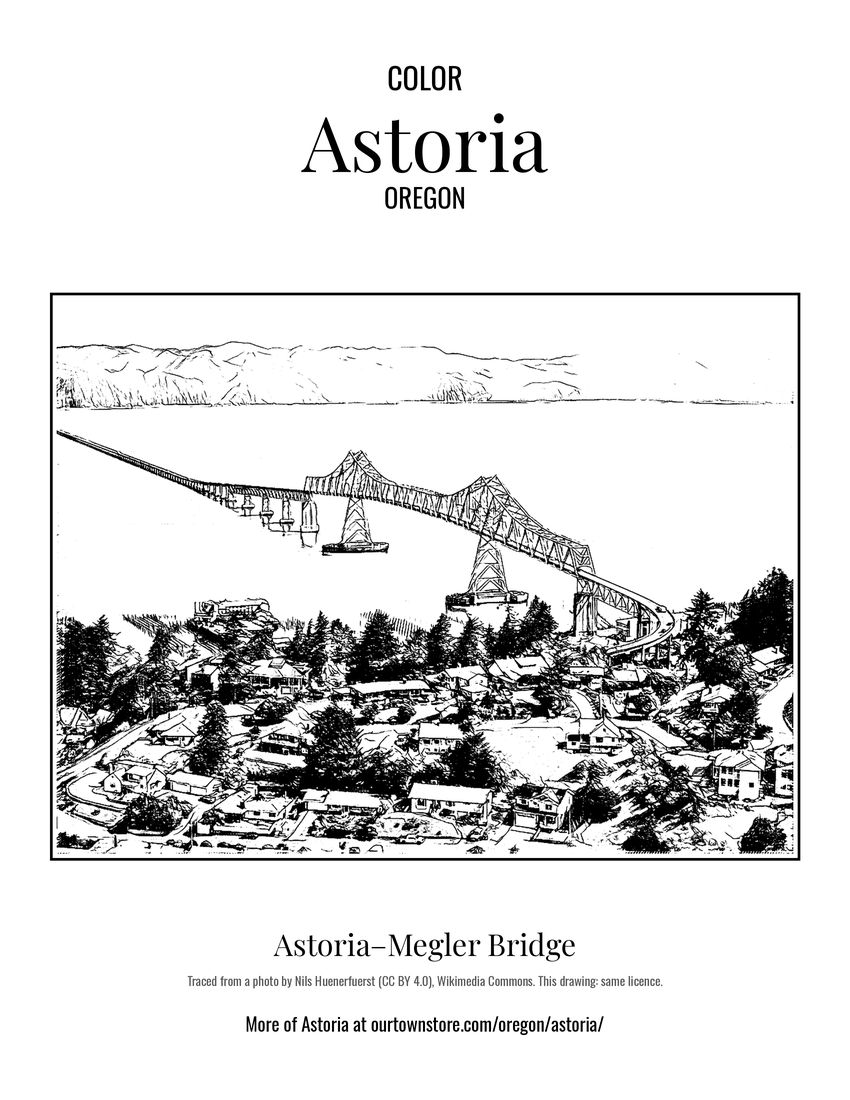 Astoria–Megler Bridge
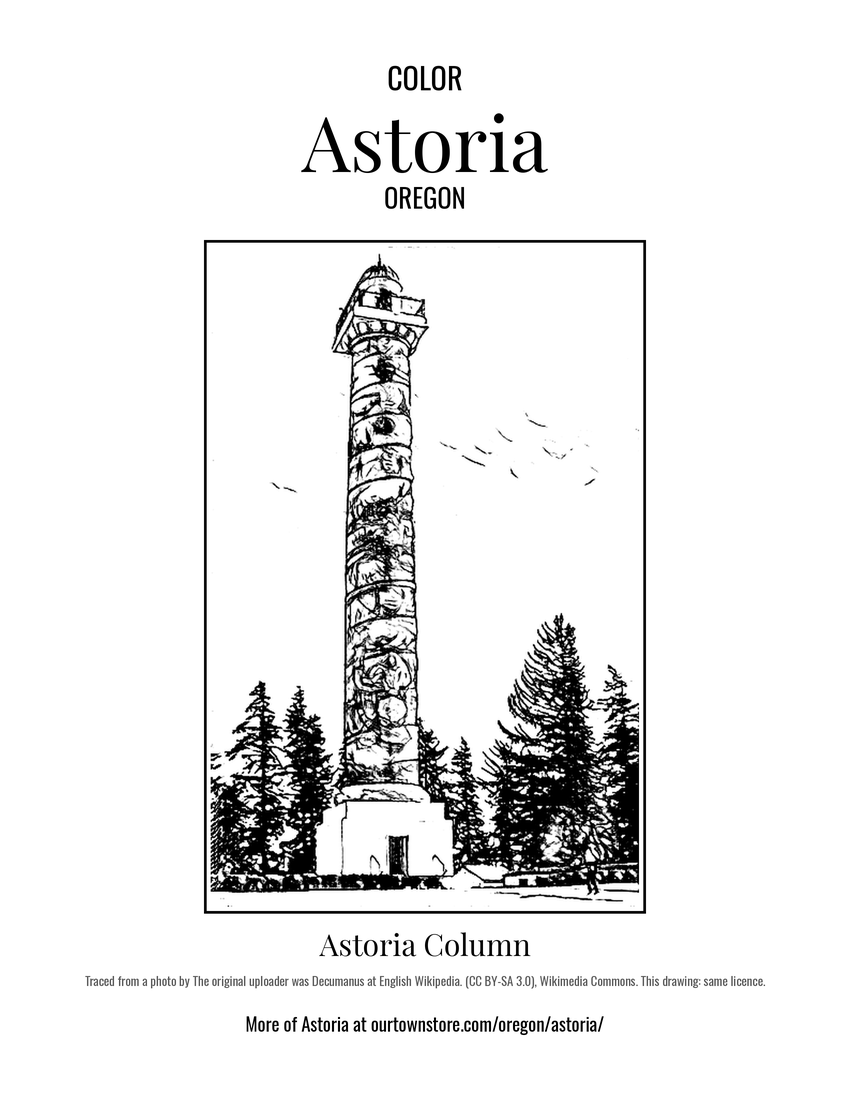 Astoria Column
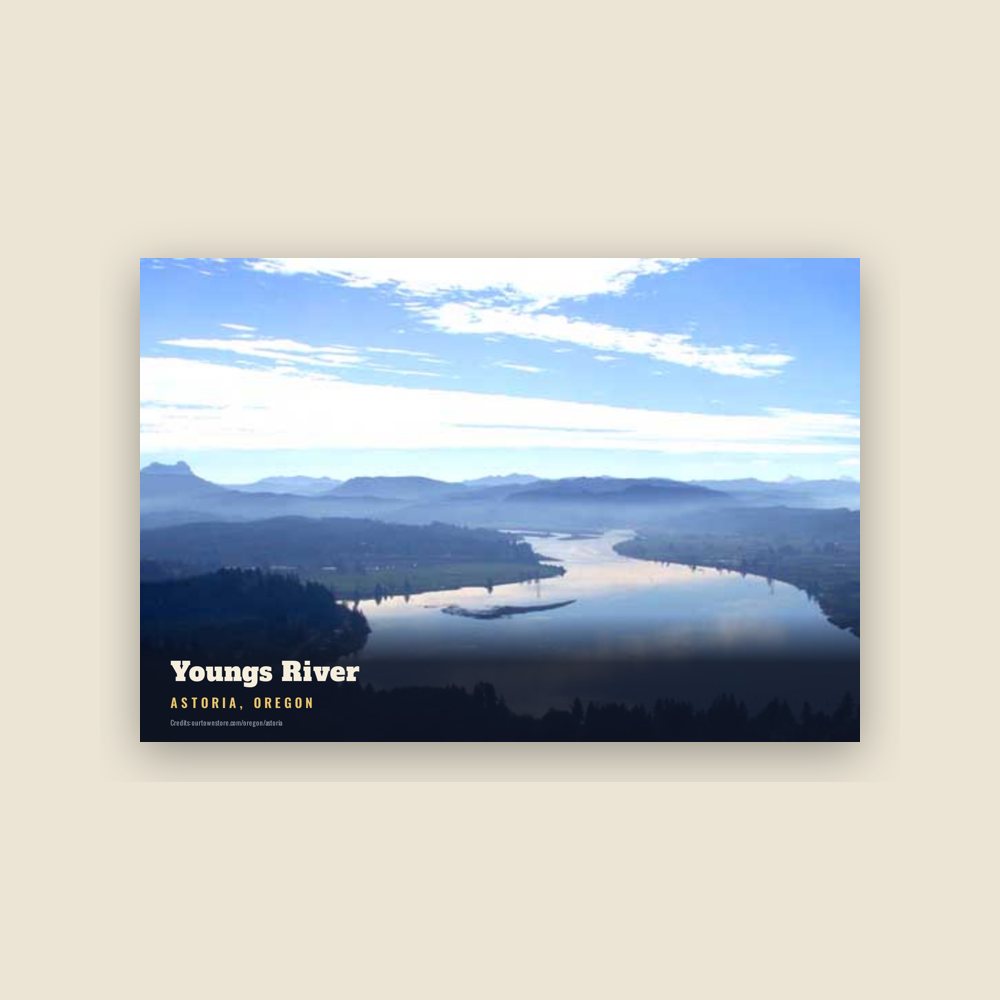
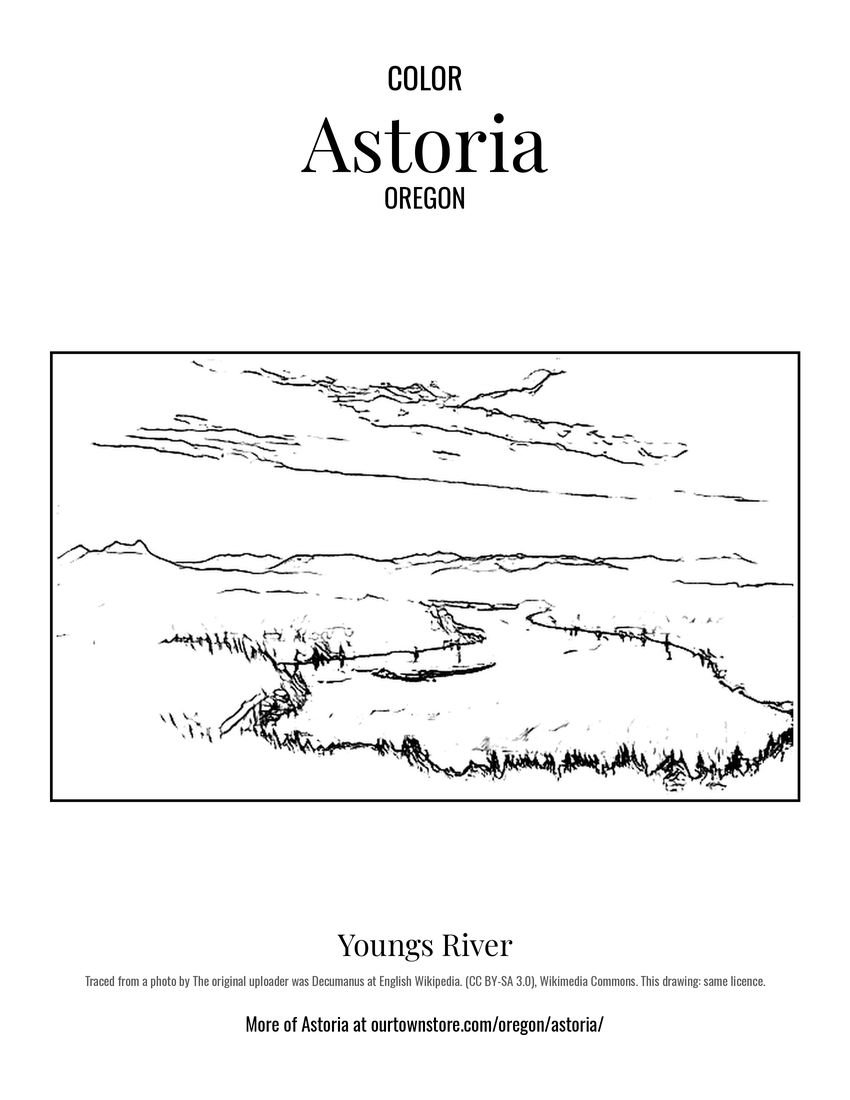 Youngs River
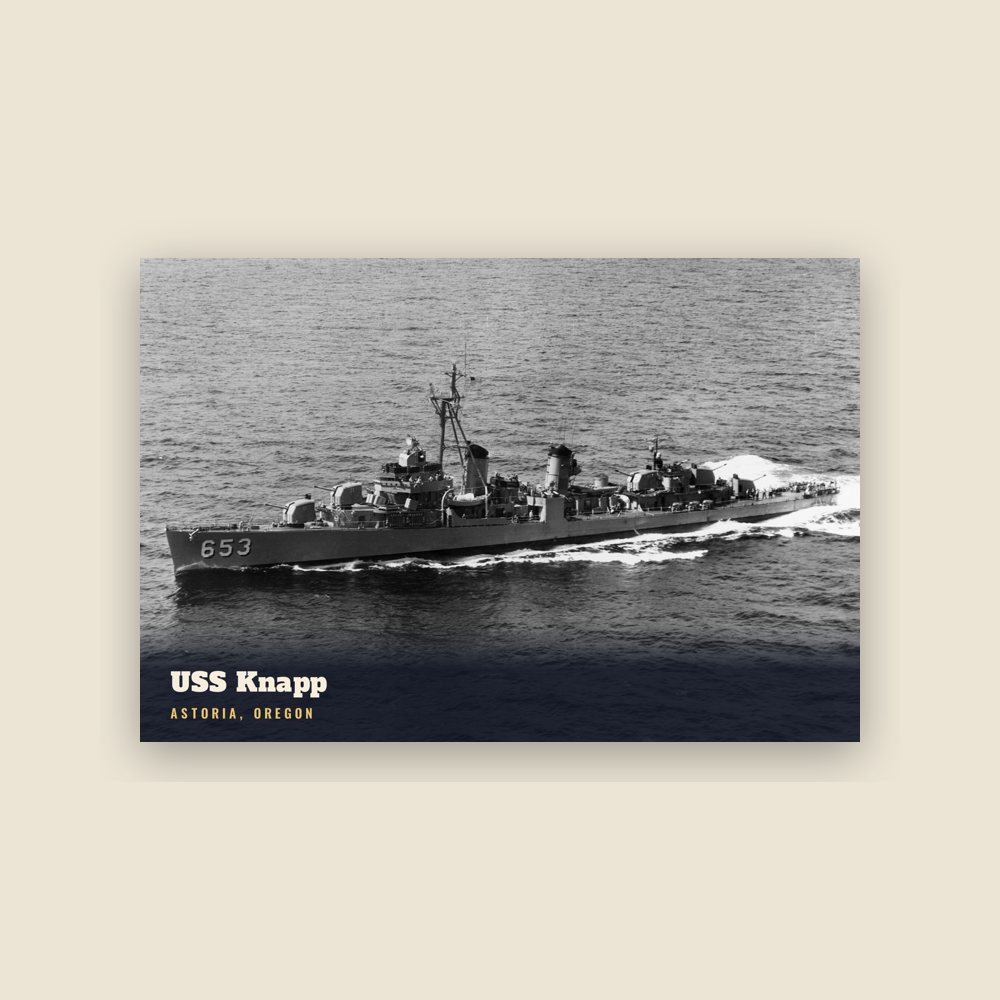
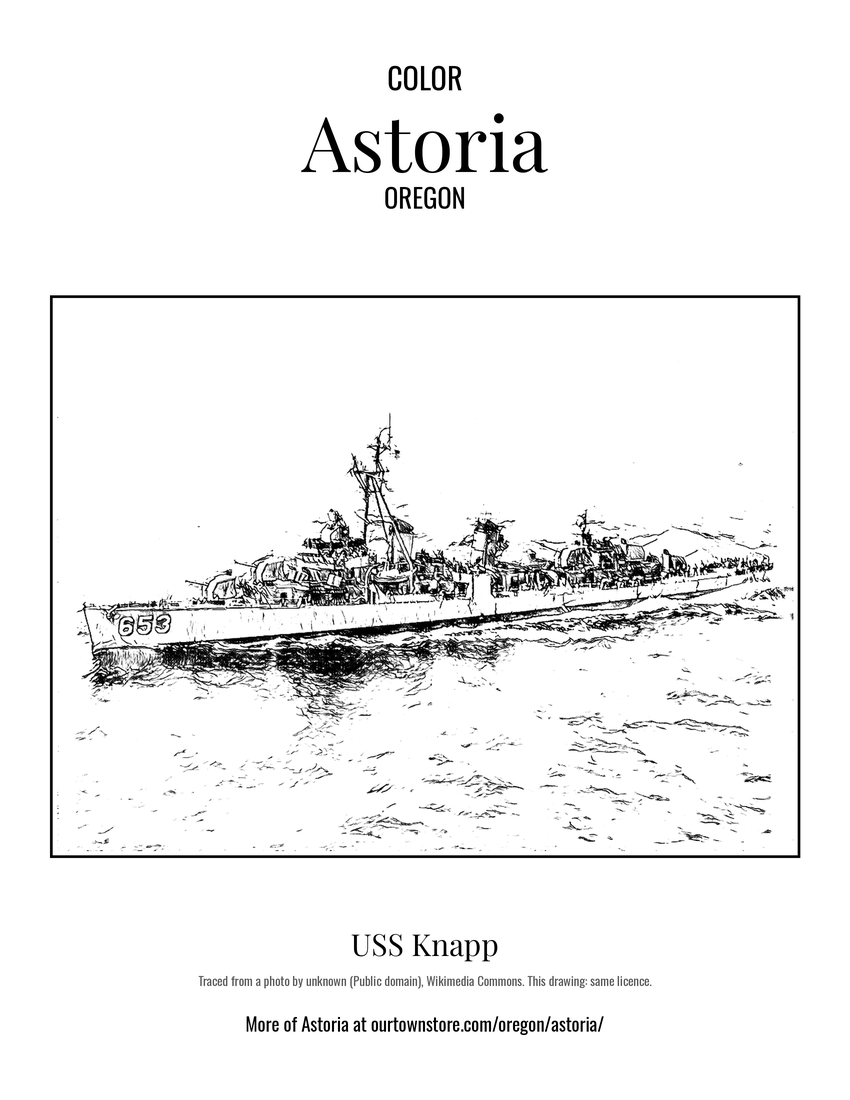 USS Knapp