A short history of Stilwell
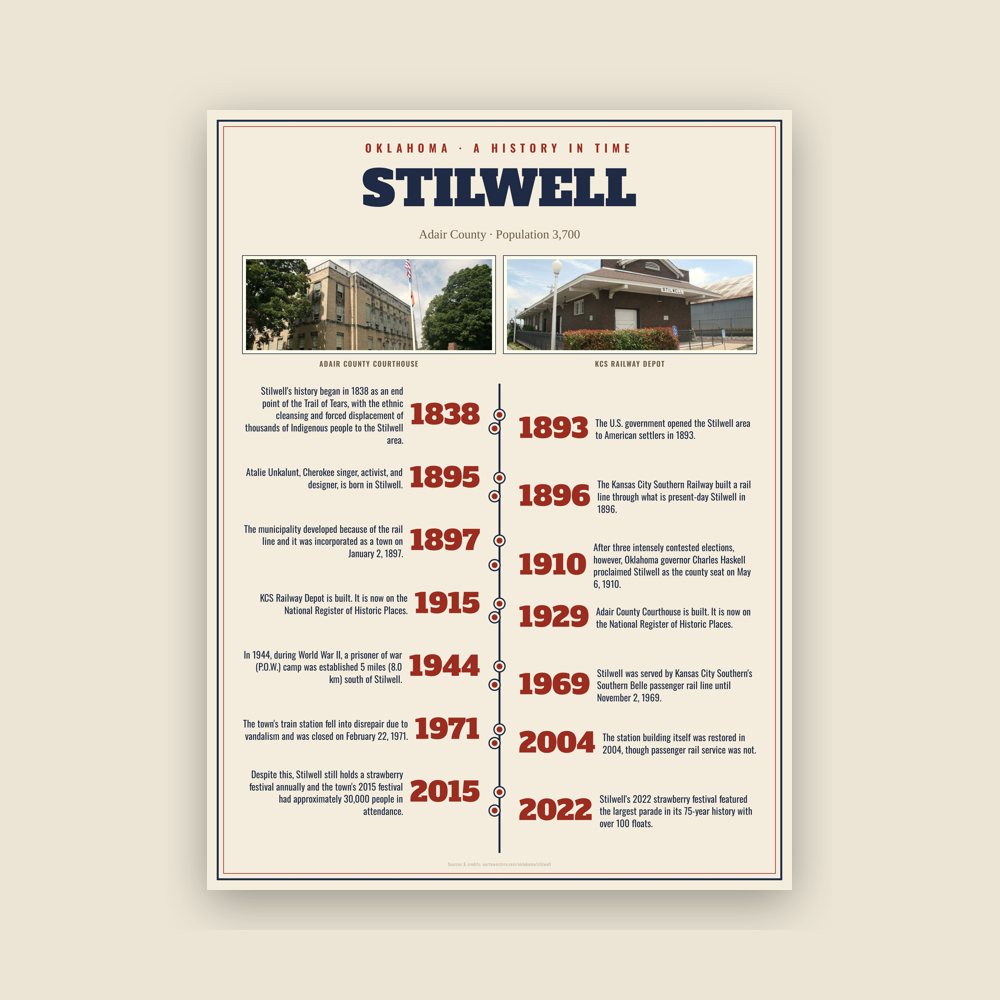
Stilwell's history began in 1838 as an end point of the Trail of Tears, with the ethnic cleansing and forced displacement of thousands of Indigenous people to the Stilwell area. The trail was called nu na da ul tsun yi in Cherokee language, or "the place where they cried". The U.S. federal government set up a “disbandment depot” outside what is present-day Stilwell in the early months of 1839 to distribute food and supplies to the newly arrived Indigenous people. Those with resources quickly left to settle across the rest of Indian Territory, but the sickest and poorest stayed in the Stilwell area, close to the safety of the depot.
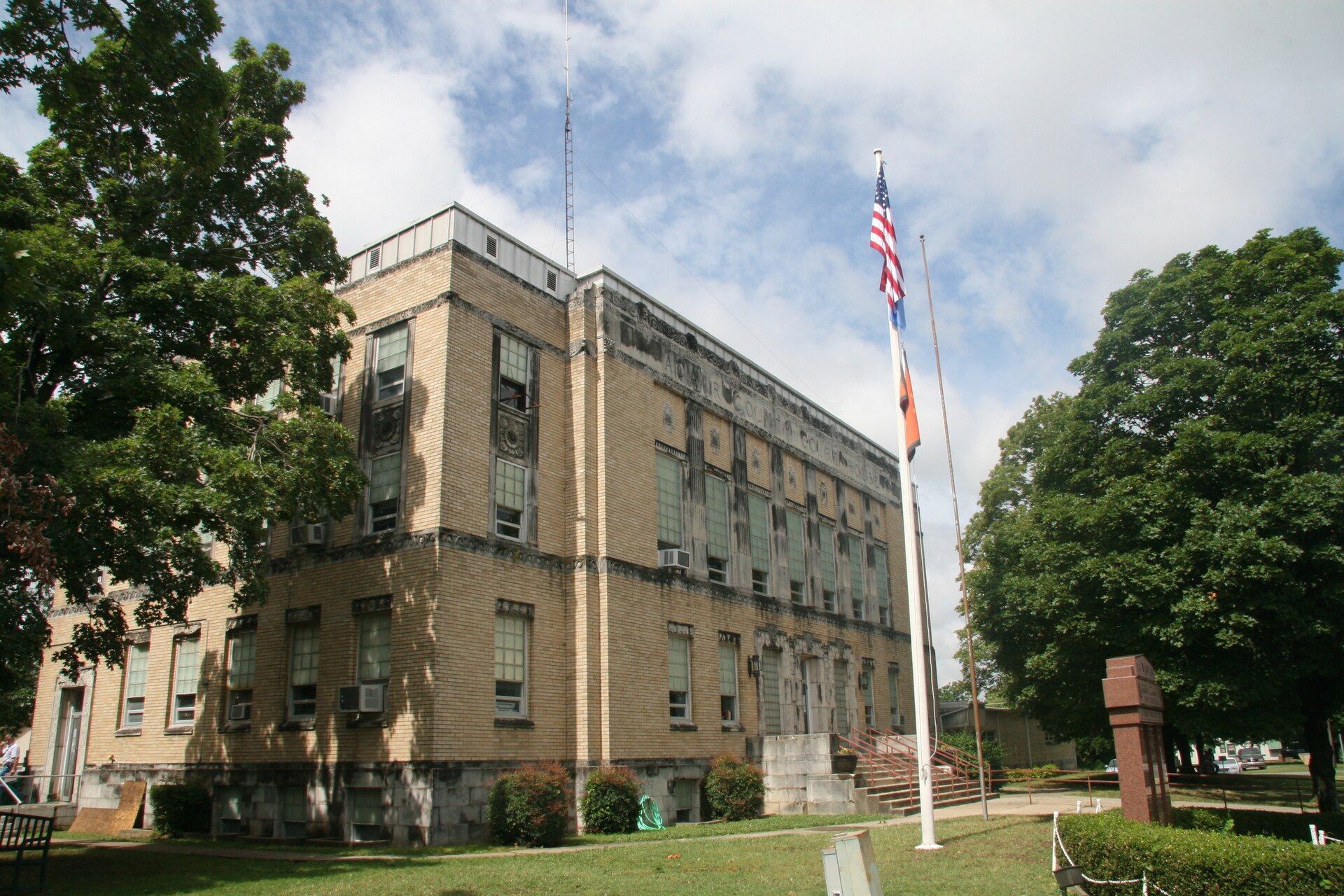
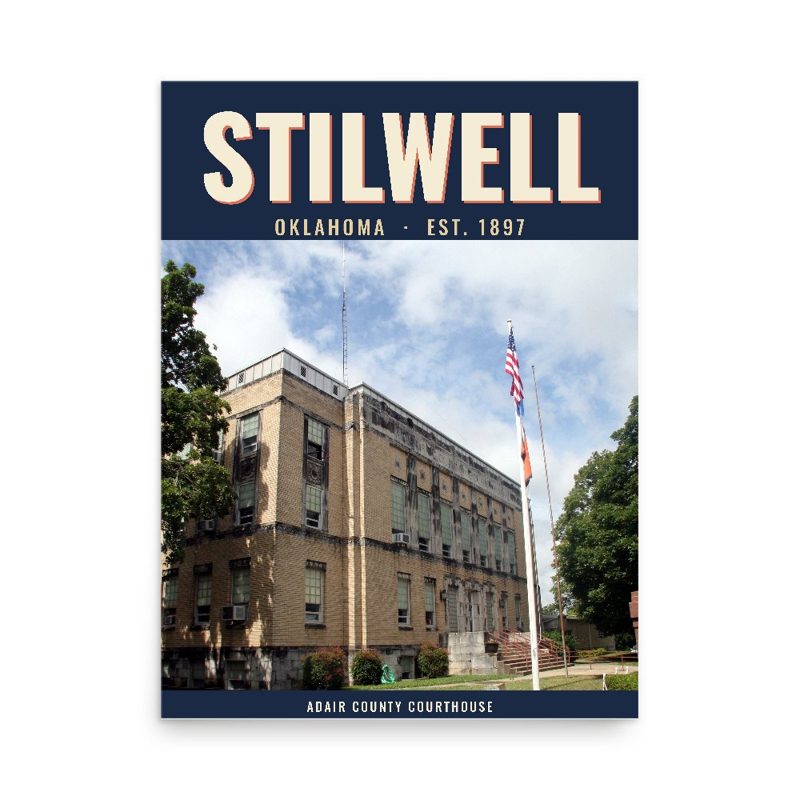
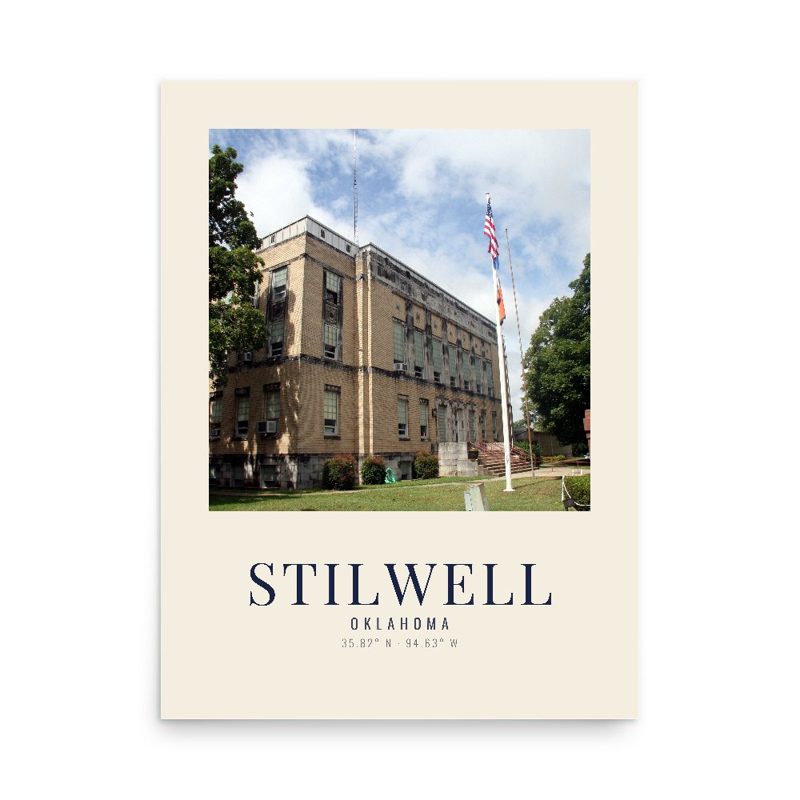
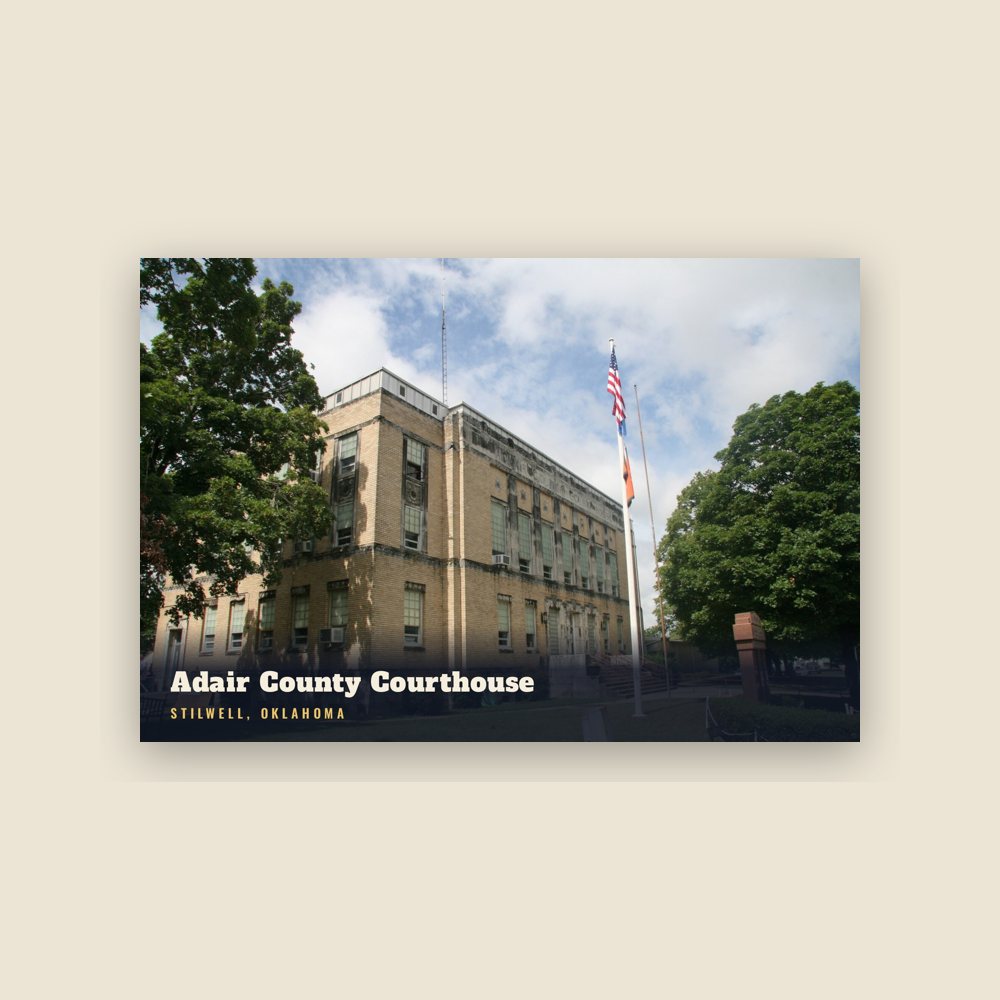
The U.S. government opened the Stilwell area to American settlers in 1893. The Kansas City Southern Railway built a rail line through what is present-day Stilwell in 1896. The municipality developed because of the rail line and it was incorporated as a town on January 2, 1897. The town was named after Arthur Stilwell, founder of the Kansas City Southern Railway. By the turn of the twentieth century, white settlers outnumbered the Cherokee people.As early as 1901, Stilwell and Westville, in anticipation of Oklahoma statehood, vied for the role of county seat. When Adair County was formed in 1907, Westville was identified as the county seat, due partly to its location at the intersection of two major railroads: the Kansas City Southern Railway and the St. Louis–San Francisco Railway. After three intensely contested elections, however, Oklahoma governor Charles Haskell proclaimed Stilwell as the county seat on May 6, 1910.
In 1944, during World War II, a prisoner of war (P.O.W.) camp was established 5 miles (8.0 km) south of Stilwell. The camp housed 200 axis soldiers.
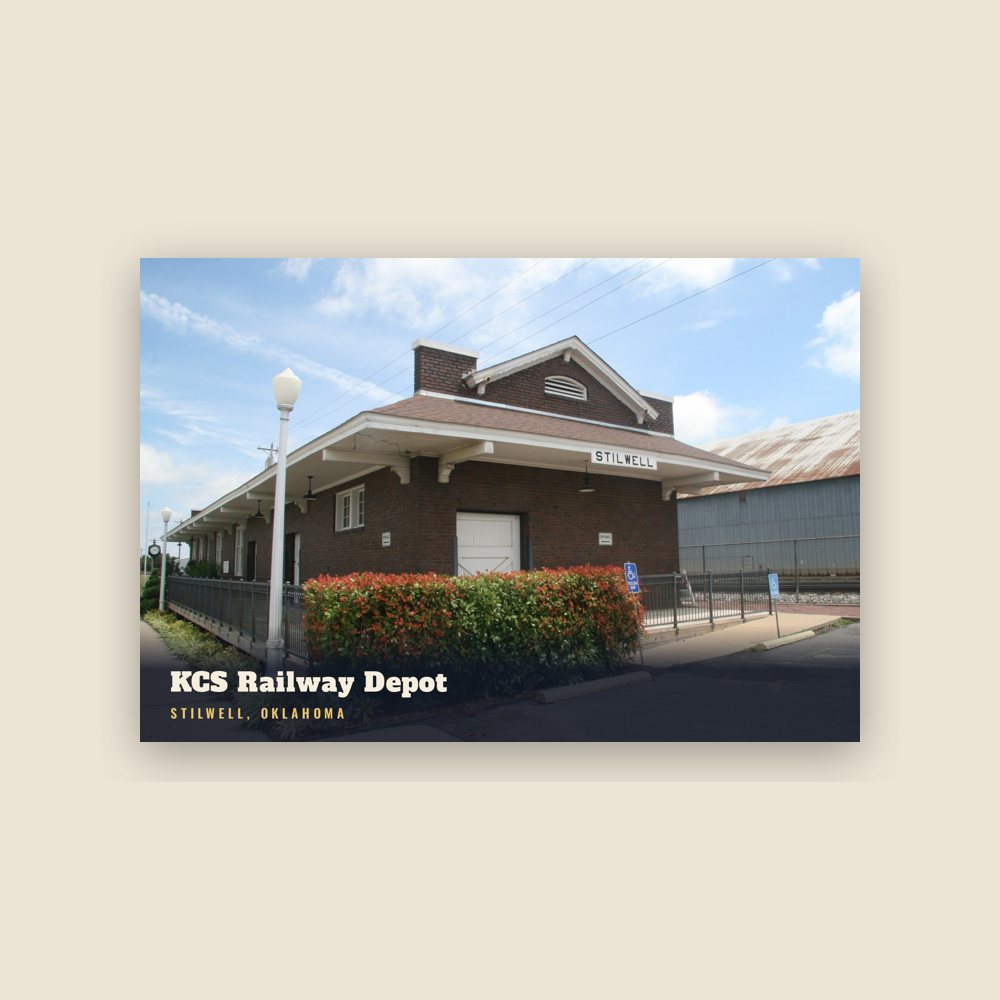
Stilwell was served by Kansas City Southern's Southern Belle passenger rail line until November 2, 1969. The rail line connected Stilwell with daily trains to New Orleans and Kansas City, with stops in Northwest Arkansas, Joplin, Shreveport, Baton Rouge and many other cities in-between. A second passenger line, The Flying Crow, also stopped in the town. The town's train station fell into disrepair due to vandalism and was closed on February 22, 1971. The station building itself was restored in 2004, though passenger rail service was not.
During the Great Depression, strawberries emerged a major crop and cornerstone of the local economy. In 1948, a strawberry festival was organized, and in 1949, the state governor and legislature proclaimed Stilwell as "Strawberry Capital of the World." Stilwell's strawberry festival became an annual event. Over time, the strawberry industry weakened, cultivated acreage decreased and the role of strawberries in the local economy dissipated. Despite this, Stilwell still holds a strawberry festival annually and the town's 2015 festival had approximately 30,000 people in attendance. Stilwell's 2022 strawberry festival featured the largest parade in its 75-year history with over 100 floats.
Adapted (trimmed) from the Wikipedia article Stilwell, Oklahoma, revision 1379404358 by its contributors, licensed CC BY-SA 4.0.