A short history of Norman
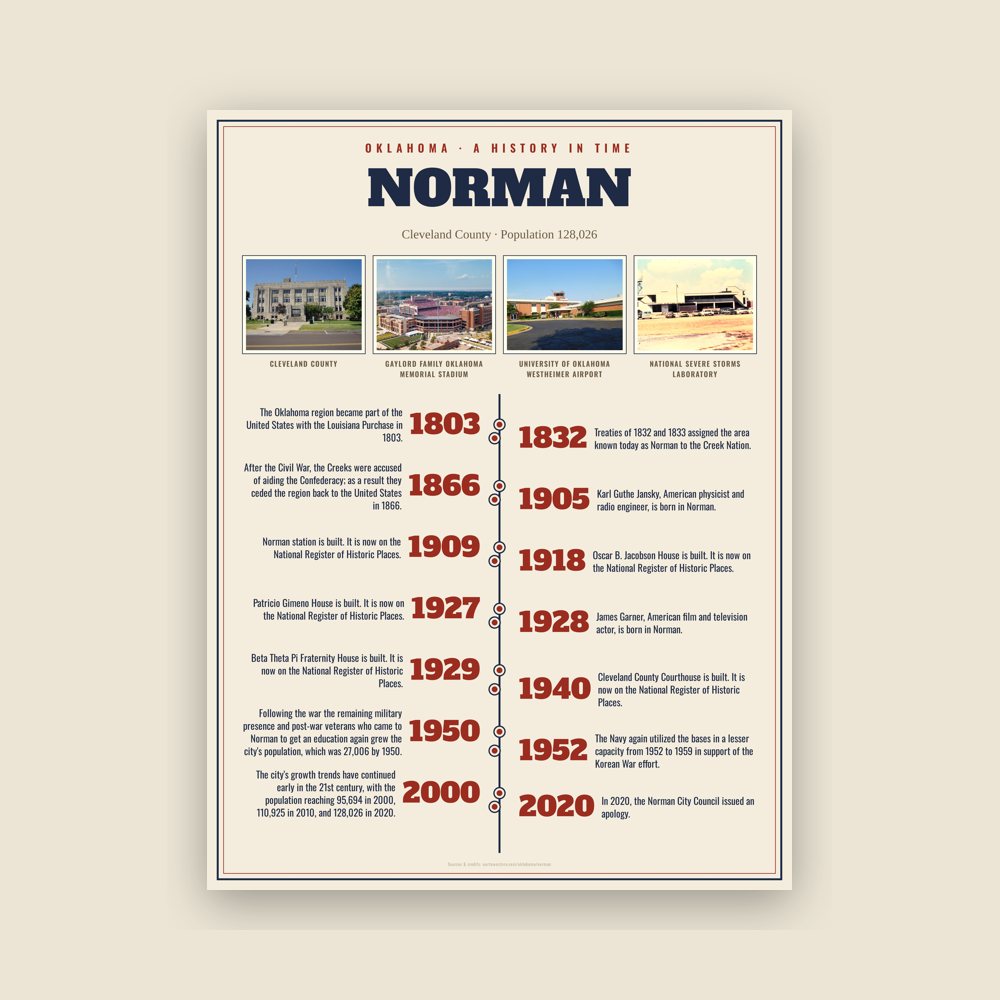
The Oklahoma region became part of the United States with the Louisiana Purchase in 1803. Before the American Civil War, the U.S. government began relocating the Five Civilized Tribes—the five Native American tribes that the United States officially recognized via treaty—to Oklahoma. Treaties of 1832 and 1833 assigned the area known today as Norman to the Creek Nation.
After the Civil War, the Creeks were accused of aiding the Confederacy; as a result they ceded the region back to the United States in 1866. In the early 1870s, the federal government undertook a survey of these unassigned lands. Abner Ernest Norman, a 23-year-old surveyor from Kentucky, was hired to oversee part of this project. Norman's work crew set up camp near what is today the corner of Classen Boulevard and Lindsey Street; it was there that the men, perhaps jokingly, carved a sign on an elm tree that read "Norman's Camp," in honor of their young boss. In 1887, the Atchison, Topeka and Santa Fe Railway began service to the area, which was later opened to settlement as part of the Land Run of 1889; early settlers decided to keep the name "Norman."
On April 22, 1889, that first Land Run in what would become the state of Oklahoma saw the founding of Norman, with at least 150 residents spending the night in makeshift campsites, and by the next morning a downtown was already being constructed. Almost immediately two prominent Norman businessmen, former Purcell railroad freight agent Delbert Larsh and railroad station chief cashier Thomas Waggoner, began lobbying for the territorial government to locate its first university in Norman. The two were interested in growing the city and had reasoned that, rather than try to influence territorial lawmakers to locate the heavily contested territory capital in Norman, it made sense to attempt to secure the state's first university instead (a move that would be far less controversial). On December 19, 1890, Larsh and Waggoner were successful with the passage of Territorial Council Bill 114, establishing the University of Oklahoma in Norman about 17 years before Oklahoma statehood.
The new Norman was a sundown town. African Americans were not allowed to live within the city limits or stay overnight until the early 1960s, nor could they study at the University of Oklahoma. In 2020, the Norman City Council issued an apology.
Norman has grown throughout the decades. By 1902 the downtown district contained two banks, two hotels, a flour mill, and other businesses; by 1913 over 3,700 people lived in Norman when the Oklahoma Railway Company decided to extend its interurban streetcar running from Oklahoma City to Moore into Norman, spurring additional population growth. The rail lines eventually transitioned to freight during the 1940s as the United States Numbered Highway system developed. The population reached 11,429 in 1940.
With the completion of Interstate 35 in June 1959, Norman found its role as a bedroom community to Oklahoma City increasing rapidly; in 1960 Norman's population was 33,412 but by the end of the decade had grown to 52,117. Throughout the 1960s Norman's land mass increased by 174 sq mi (450 km2) by annexing surrounding areas. The city's growth trends have continued early in the 21st century, with the population reaching 95,694 in 2000, 110,925 in 2010, and 128,026 in 2020.
Read the full history
Military in Norman
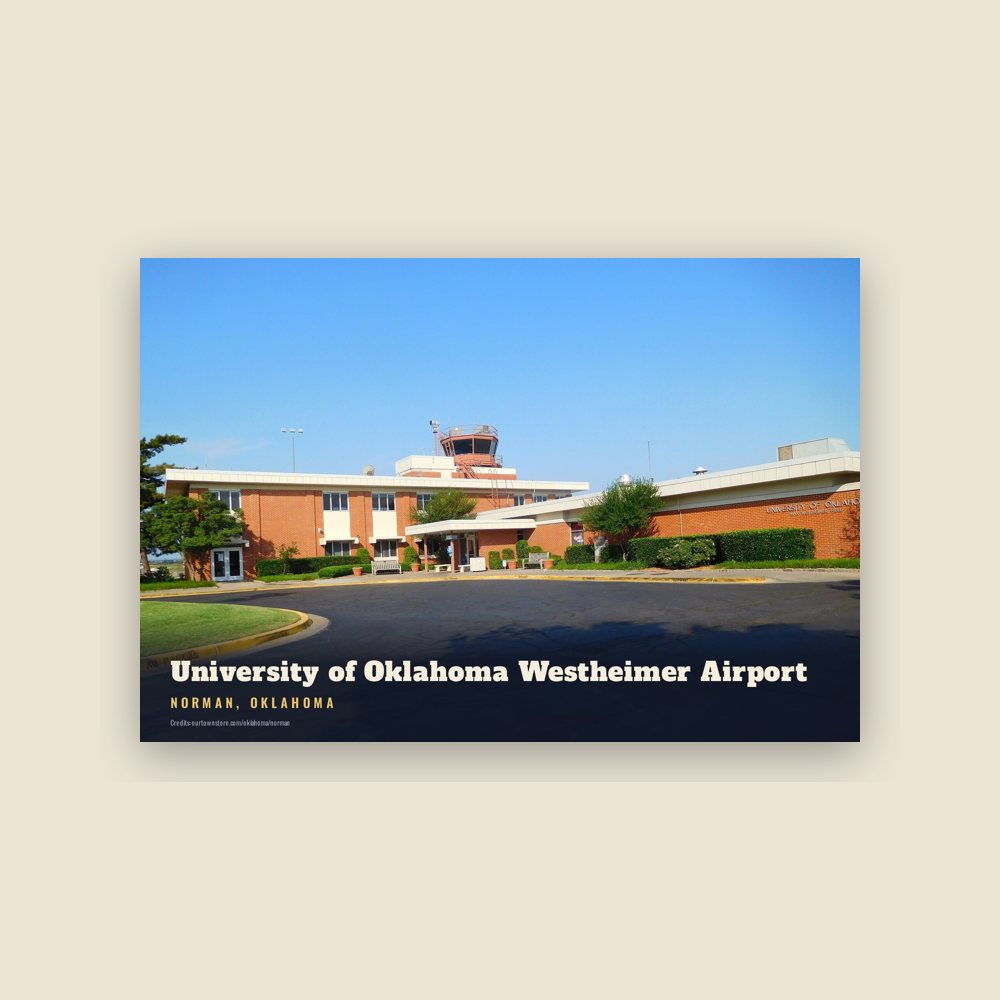
In 1941, the University of Oklahoma and Norman city officials established Max Westheimer Field, a university airstrip, and then leased it to the U.S. Navy as a Naval Flight Training Center in 1942. It became the Naval Air Station Norman, and it was used for training combat pilots during World War II. A second training center, known as Naval Air Technical Training Center, and a naval hospital were later established to the south. In the years following World War II the airstrip was transferred back to the university's control. Today the airstrip is called the University of Oklahoma Westheimer Airport. Following the war the remaining military presence and post-war veterans who came to Norman to get an education again grew the city's population, which was 27,006 by 1950. The Navy again utilized the bases in a lesser capacity from 1952 to 1959 in support of the Korean War effort.
Adapted (trimmed) from the Wikipedia article Norman, Oklahoma, revision 1385307986 by its contributors, licensed CC BY-SA 4.0.
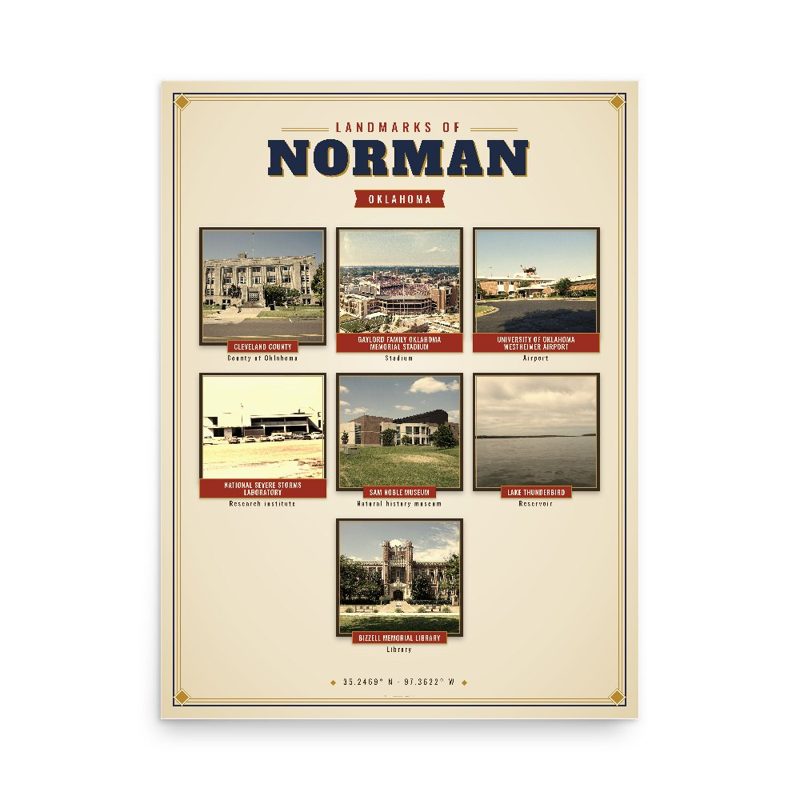
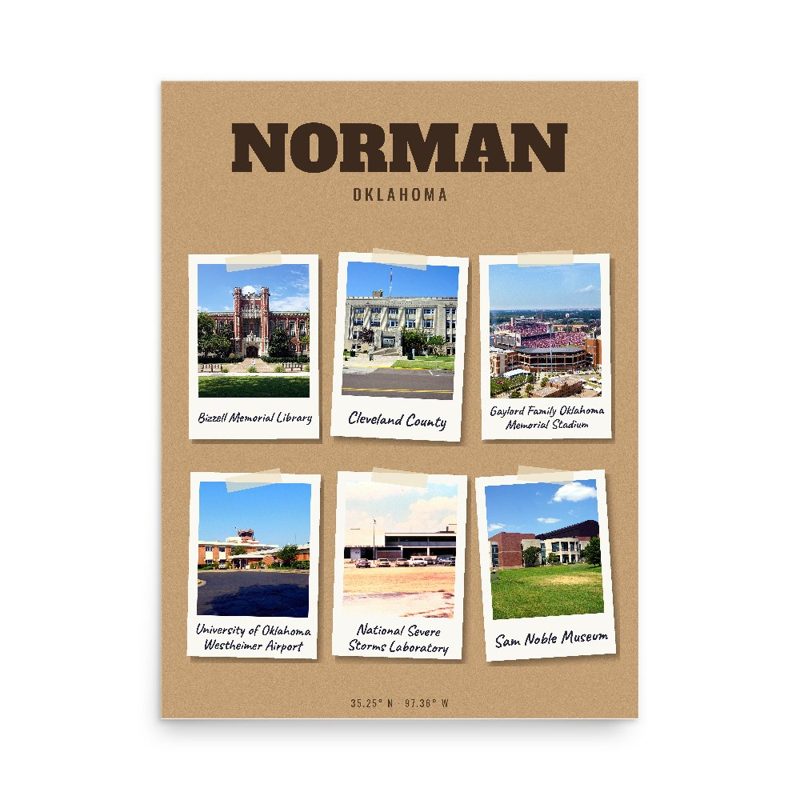
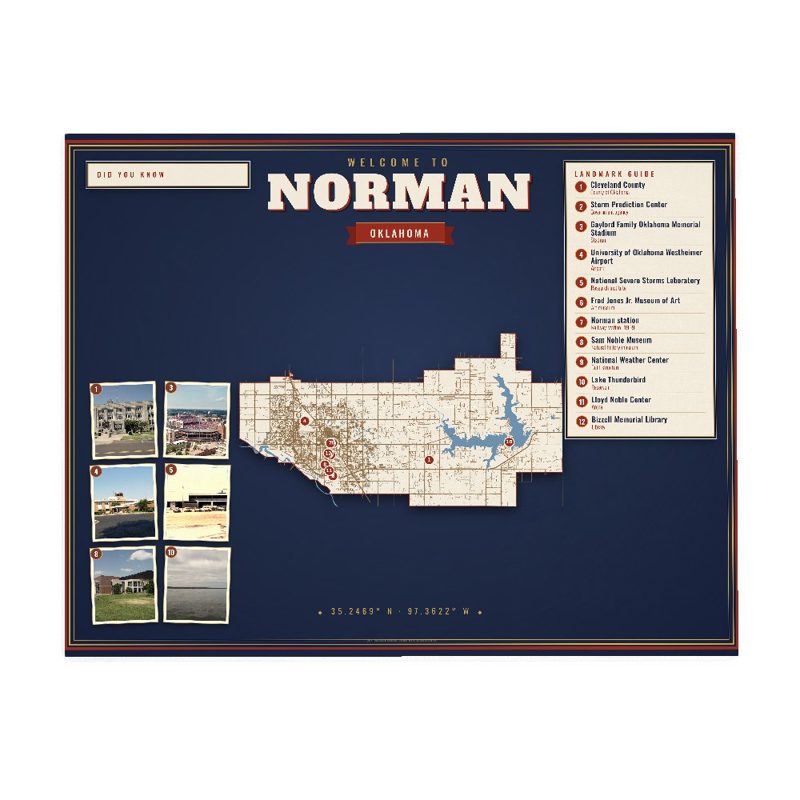

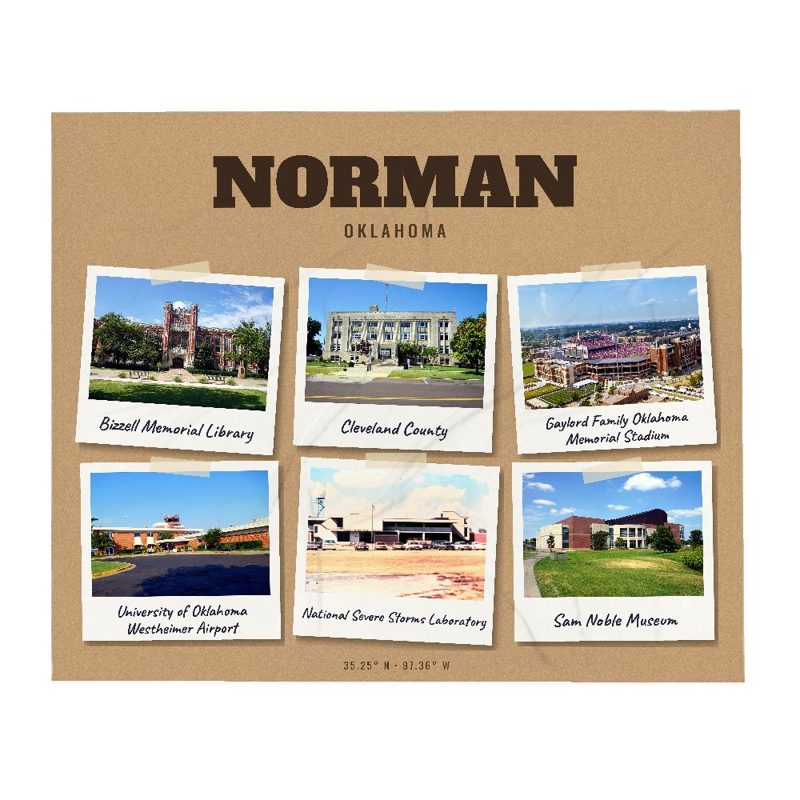
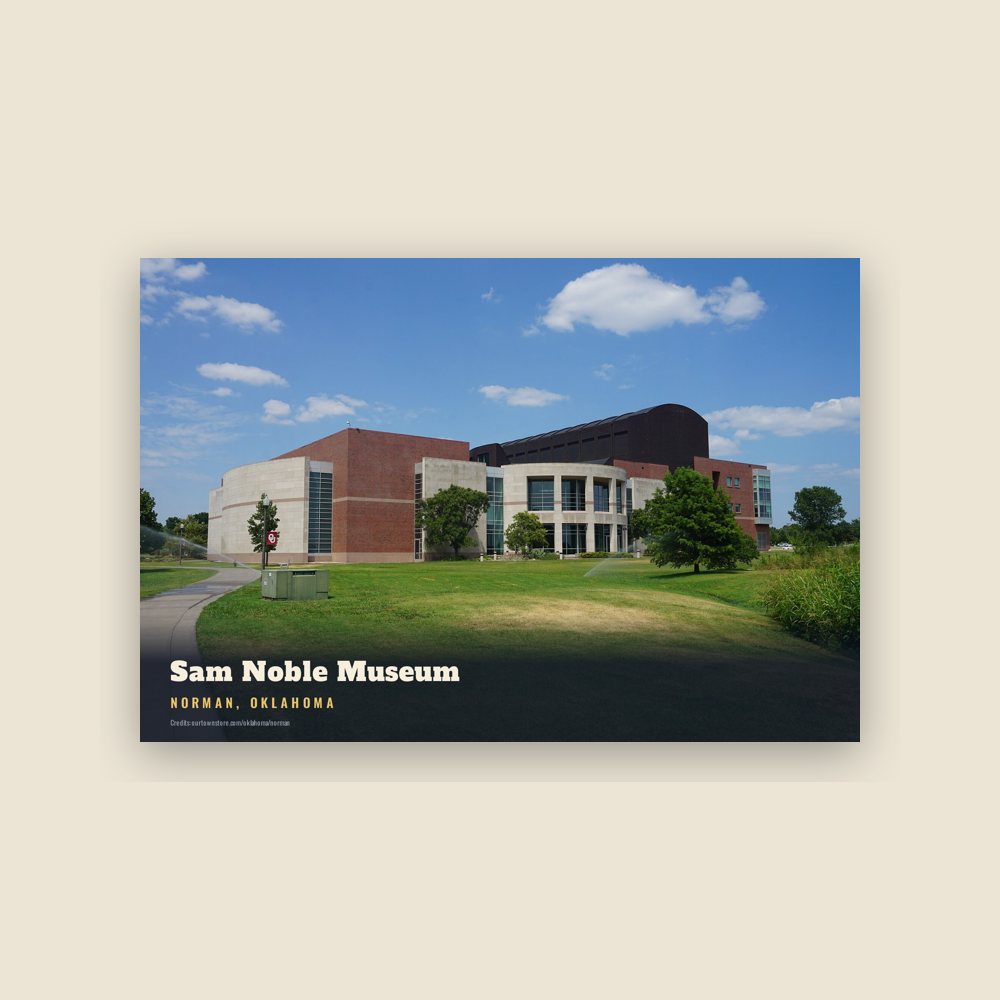
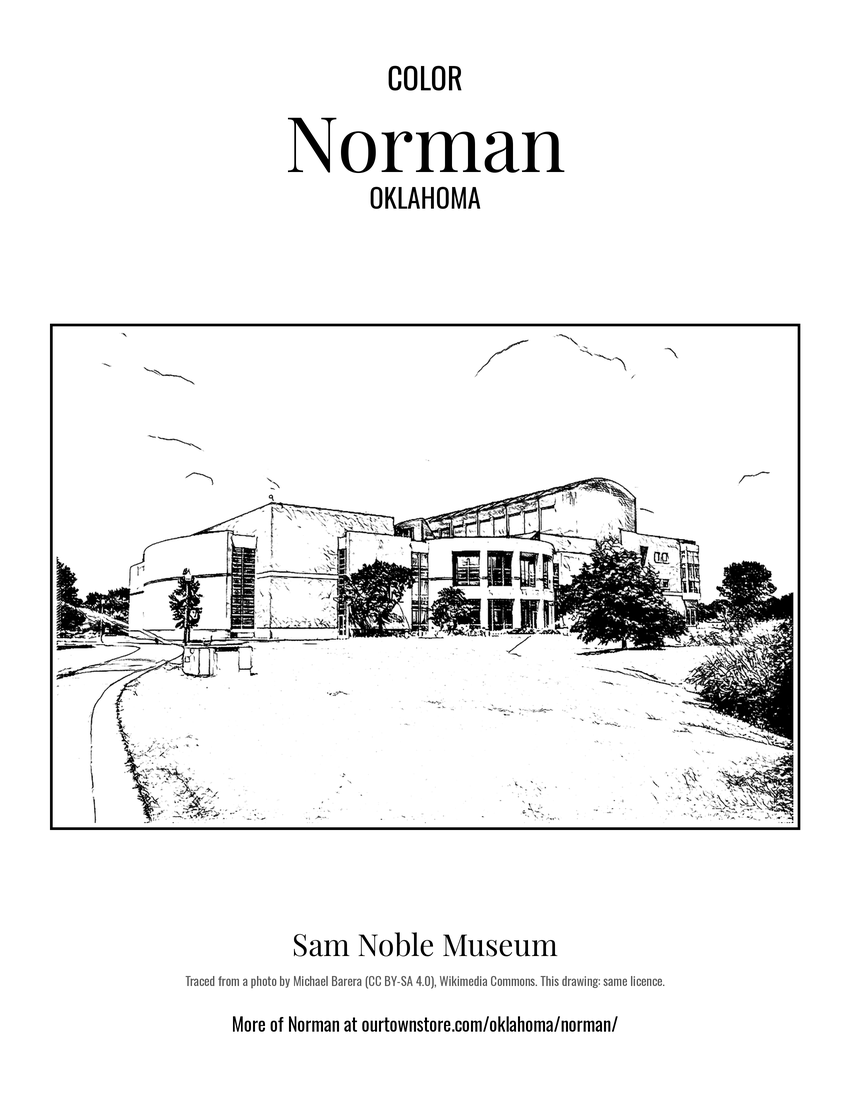 Sam Noble Museum
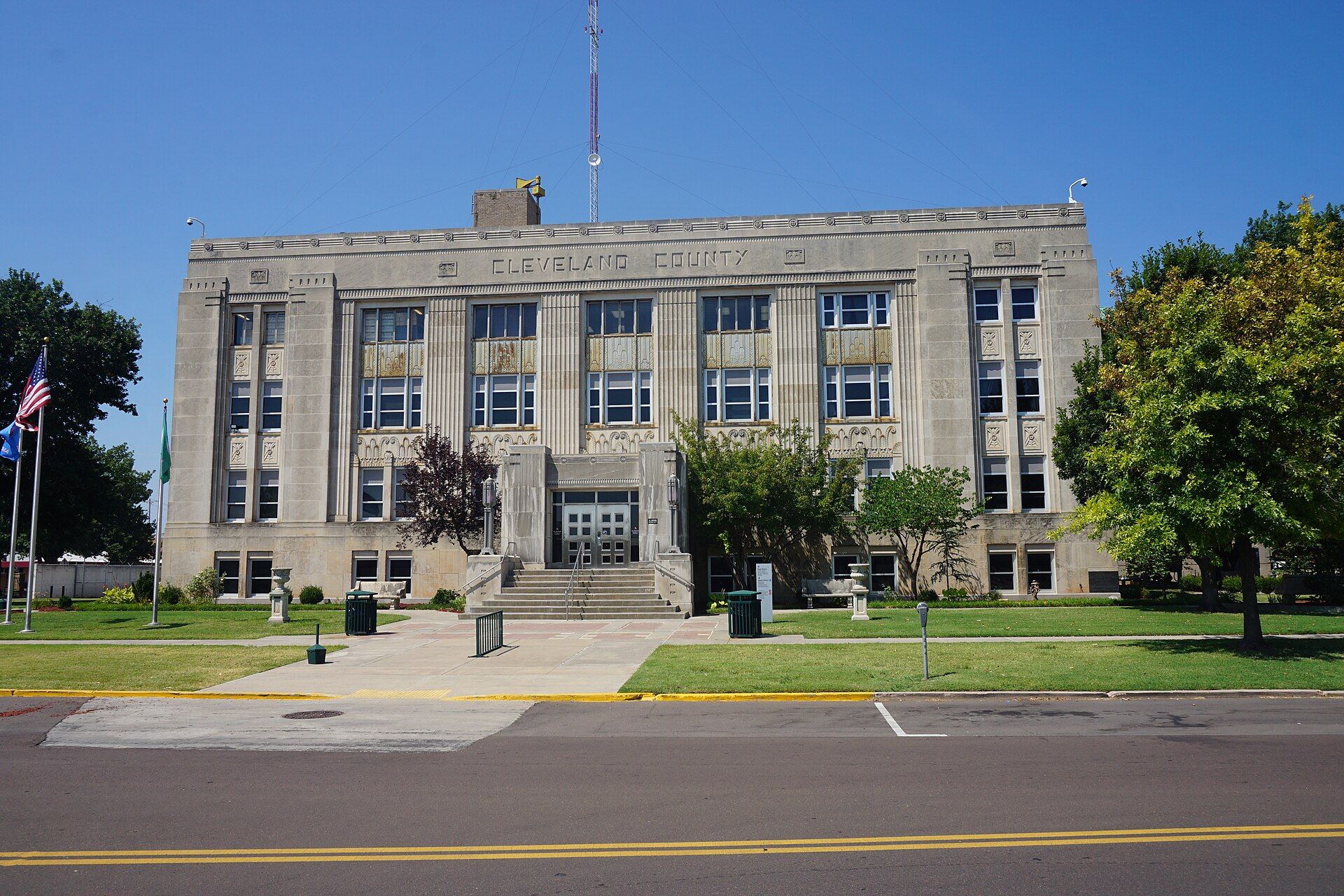
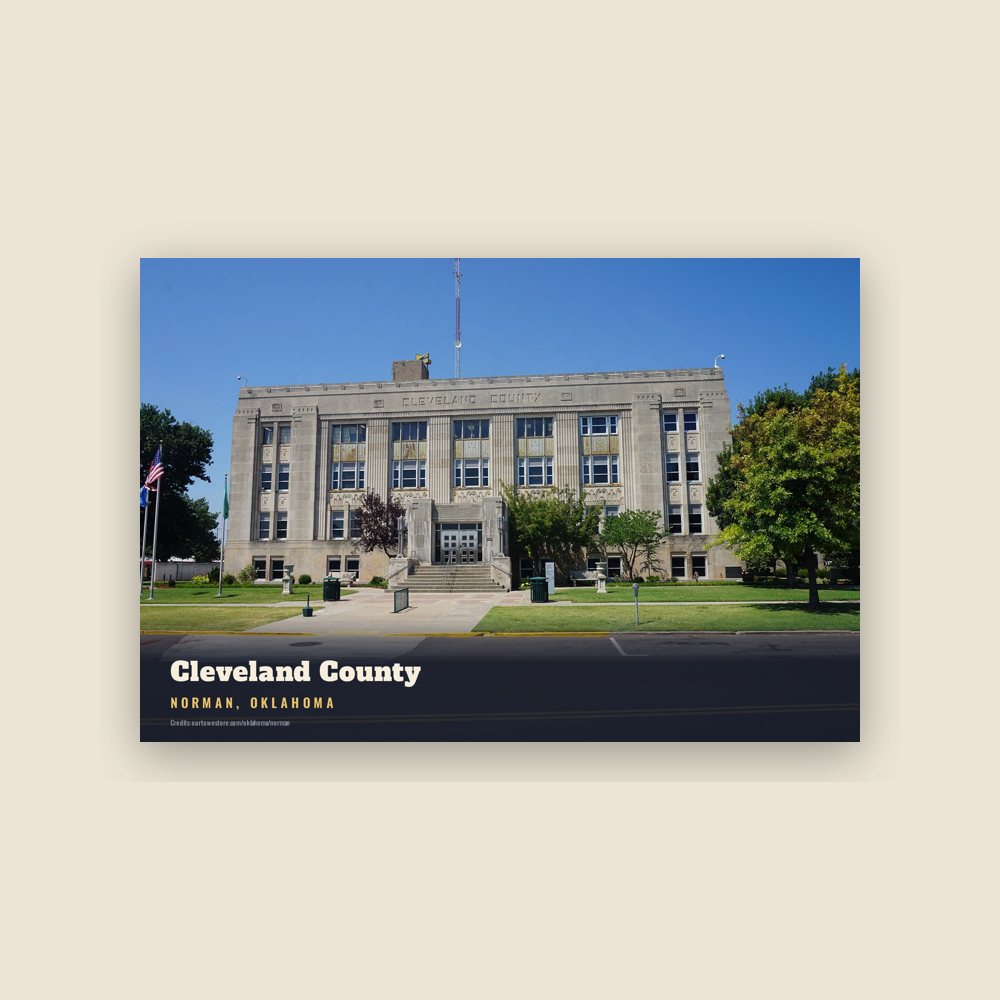
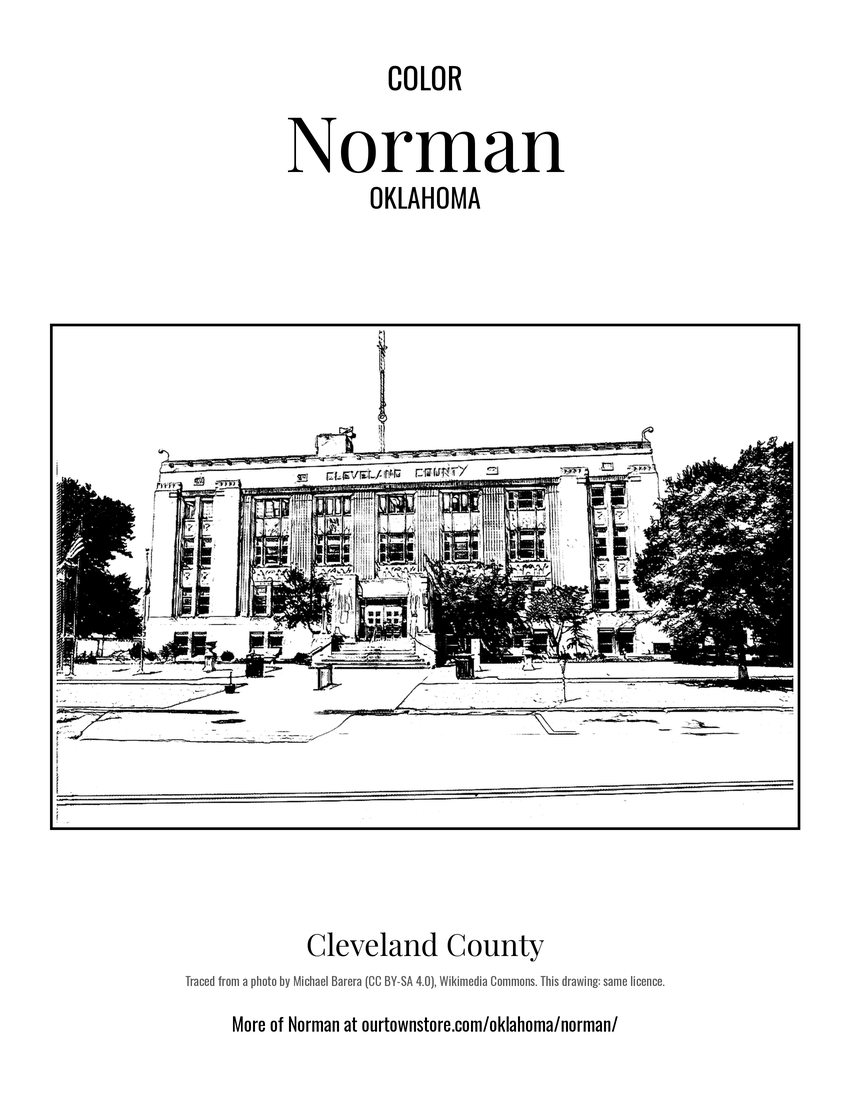 Cleveland County
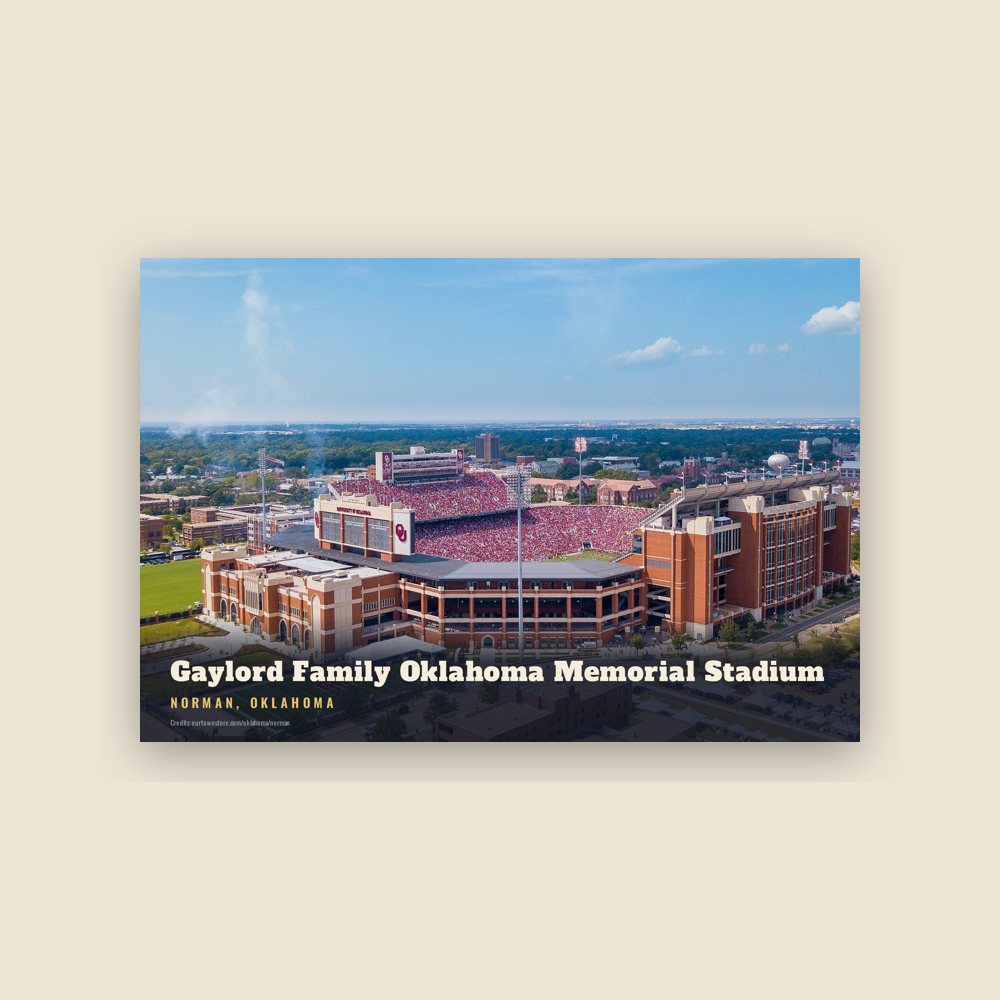
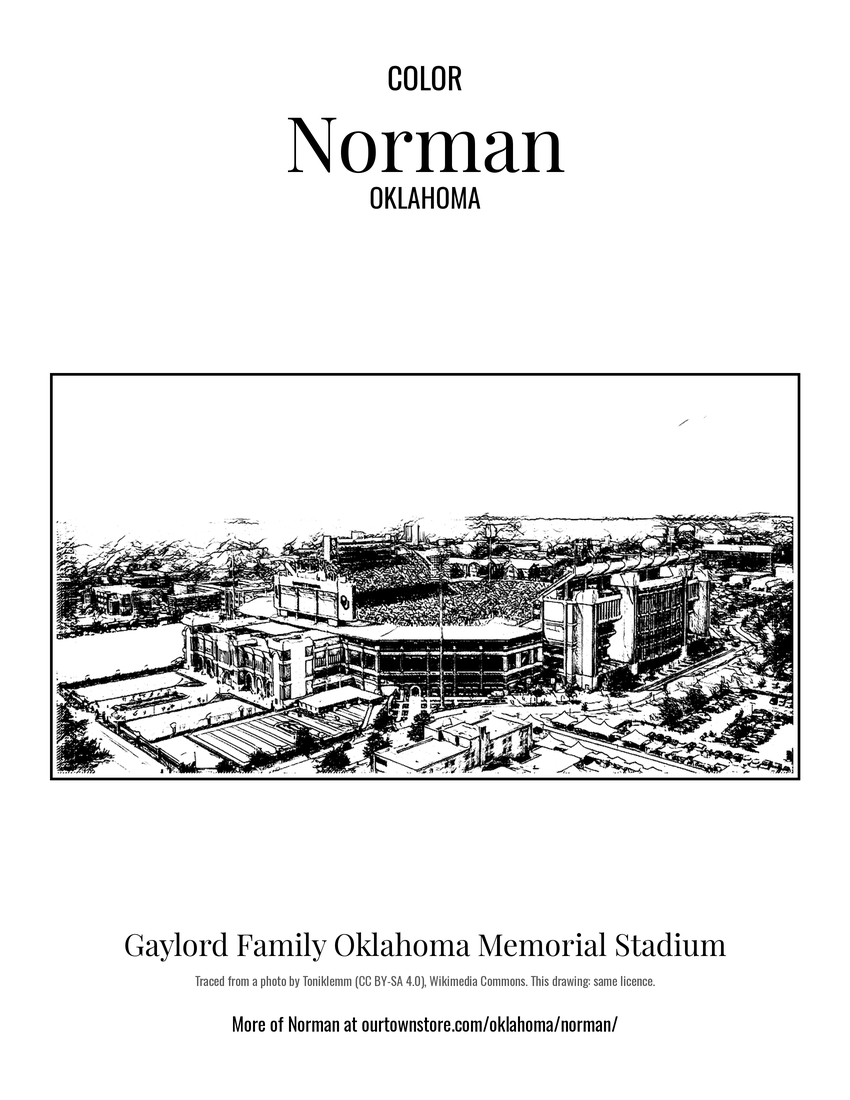 Gaylord Family Oklahoma Memorial Stadium
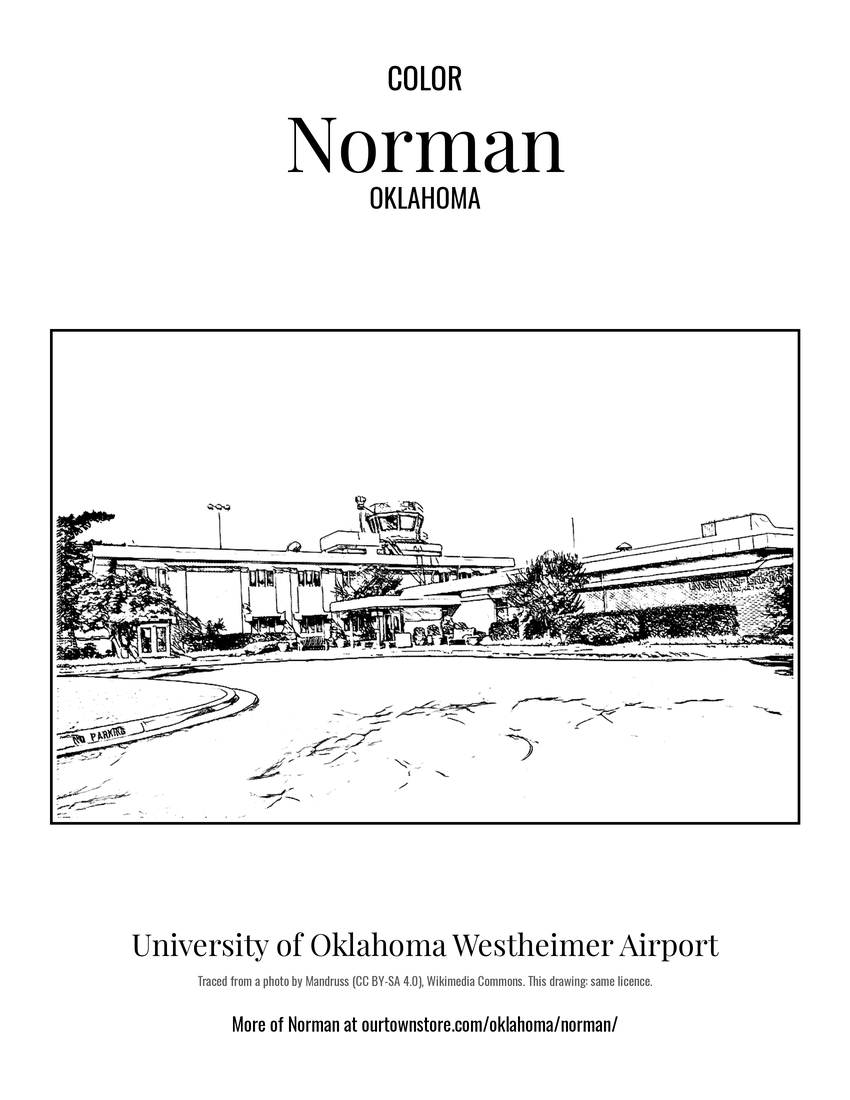 University of Oklahoma Westheimer Airport