A short history of Lehigh
Lehigh began as the first mining camp in what is now Coal County, Oklahoma. At the time of its founding, Lehigh was located in Atoka County, Choctaw Nation. It was originally named Boone, but the name was changed to Lehigh. The new name was taken from Lehigh County, Pennsylvania, a coal-mining region.
A post office opened in Lehigh, Indian Territory, on April 4, 1882, and several railroads built lines to Lehigh, including the Missouri–Kansas–Texas Railroad, the Chicago, Rock Island and Pacific Railway, and the Gulf, Colorado and Santa Fe Railway. In addition to mining, ranching was an important contributor to the local economy. Stockyards were built in 1884 and, even as they neared completion, 23 railroad cars of cattle and seven carloads of hogs awaited shipping.
During the late 19th and early 20th centuries, Lehigh was a growing settlement that greatly profited from the coal mines surrounding it. During the 1910s and 1920s, the demand for coal lessened as railroads switched to oil-powered trains. The mines eventually closed, and in the early 1920s, boll weevils destroyed the cotton crops in the area. Many businesses closed, and people left the town. The Merchants National Bank Building in Lehigh is the only structure that remains from the once-prosperous downtown area.
Adapted (trimmed) from the Wikipedia article Lehigh, Oklahoma, revision 1381031345 by its contributors, licensed CC BY-SA 4.0.
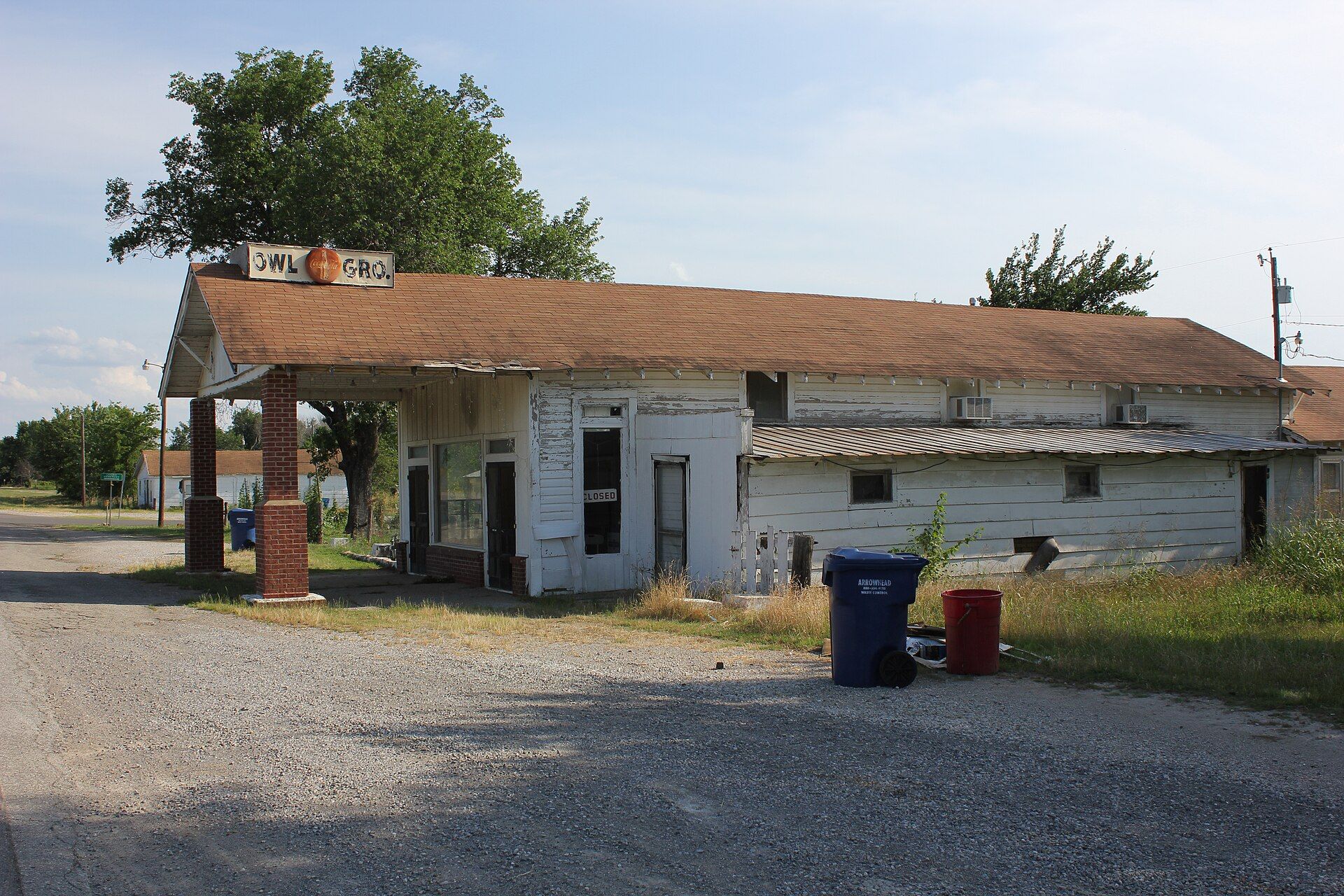



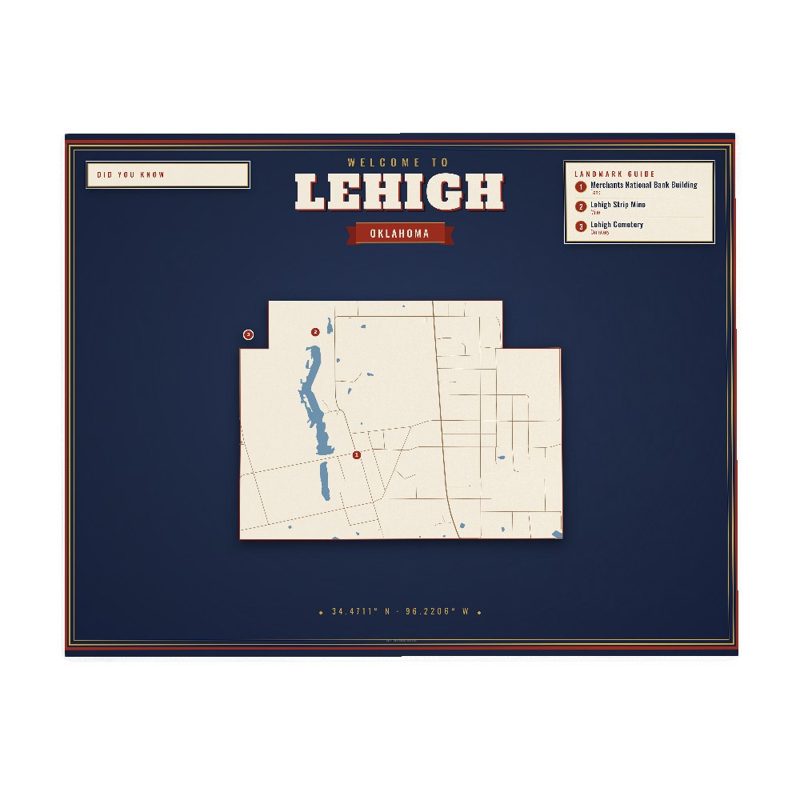








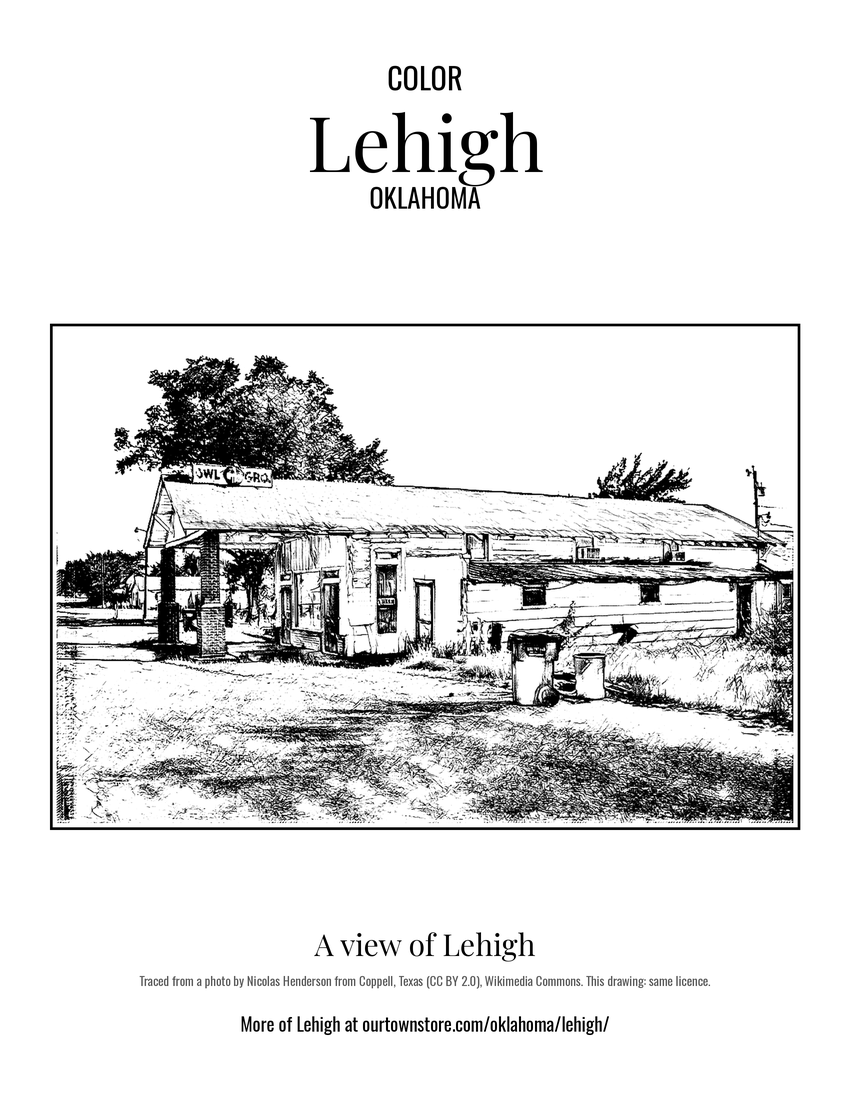 A view of Lehigh