A short history of Hominy
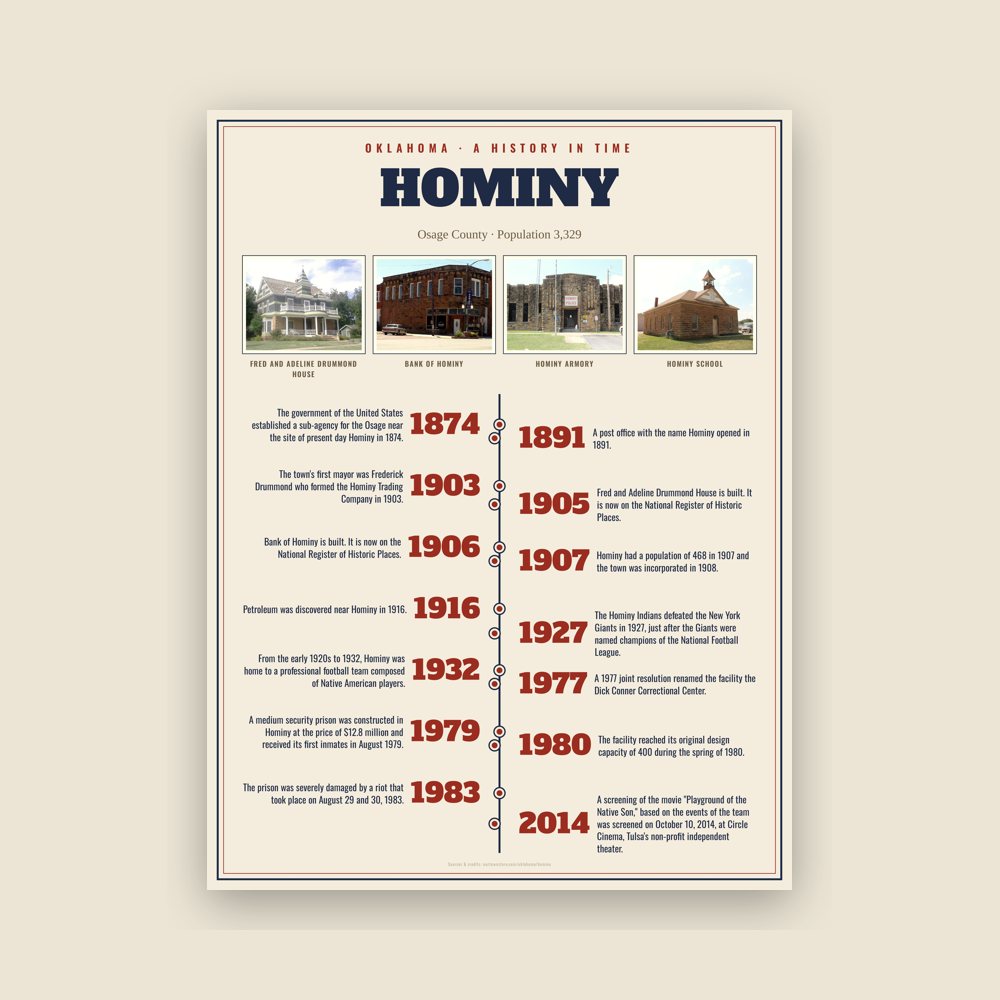
Hominy was first settled by the Osage Indians when they were forced to leave their reservation in Kansas in the early 1870s. The Osage purchased the land of the reservation from the Cherokee. Hominy, named for chieftain Ho'n-Mo'n-I'n, was settled by the Upland Forest People, one of the five divisions of the Osage. The government of the United States established a sub-agency for the Osage near the site of present day Hominy in 1874.
Also, in 1874 a trading post called Hominy Post was established nearby. The trading post was owned by August Capitaine, a French-Osage mixed blood. A post office with the name Hominy opened in 1891. A railroad reached Hominy in 1903. Hominy had a population of 468 in 1907 and the town was incorporated in 1908. Petroleum was discovered near Hominy in 1916. The town's first mayor was Frederick Drummond who formed the Hominy Trading Company in 1903. Drummond founded the Drummond ranch near Hominy which was 433,000 acres (175,000 ha) in size in the 21st century.
From the early 1920s to 1932, Hominy was home to a professional football team composed of Native American players. The Hominy Indians defeated the New York Giants in 1927, just after the Giants were named champions of the National Football League. The team had a 28-game winning streak at one point during its existence, but was disbanded due to the onset of the Great Depression. A screening of the movie "Playground of the Native Son," based on the events of the team was screened on October 10, 2014, at Circle Cinema, Tulsa's non-profit independent theater.
A medium security prison was constructed in Hominy at the price of $12.8 million and received its first inmates in August 1979. It was originally named the Jess Dunn Correctional Center, in honor of Warden Jess Dunn who had been shot and killed in 1941 by prisoners during an escape attempt. A 1977 joint resolution renamed the facility the Dick Conner Correctional Center. The facility reached its original design capacity of 400 during the spring of 1980.
The prison was severely damaged by a riot that took place on August 29 and 30, 1983. A riot proclamation was issued by then Governor George Nigh on August 30. The inmates torched the buildings adjacent to the kitchen and completely destroyed the library, school, and church area. All of this resulted in the death of an inmate and damages of $3 million. The first special session of the 39th Legislature re-appropriated nearly $2.5 million to fund reconstruction of the facility.
Adapted (trimmed) from the Wikipedia article Hominy, Oklahoma, revision 1377382654 by its contributors, licensed CC BY-SA 4.0.
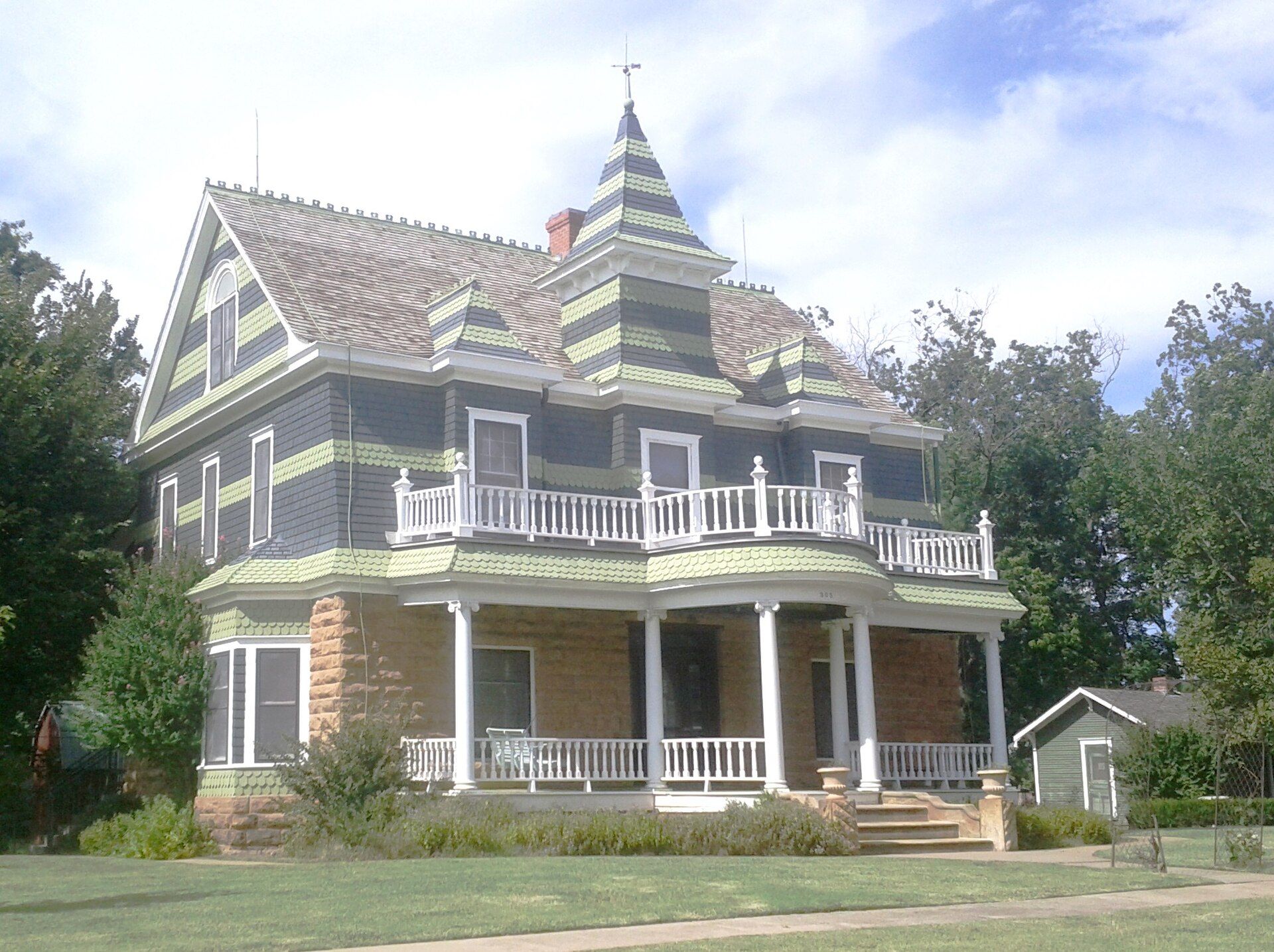
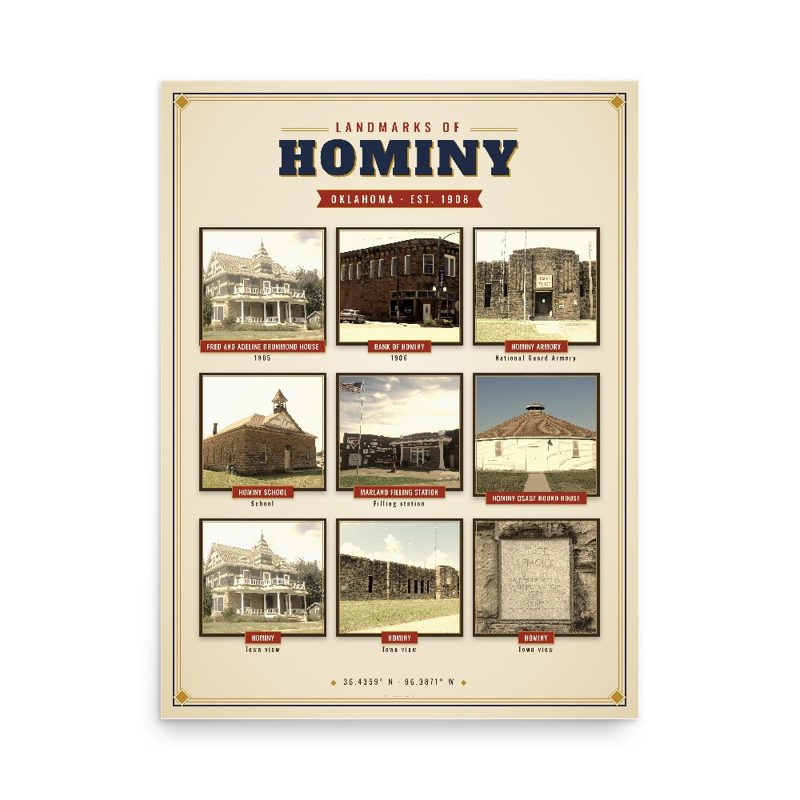
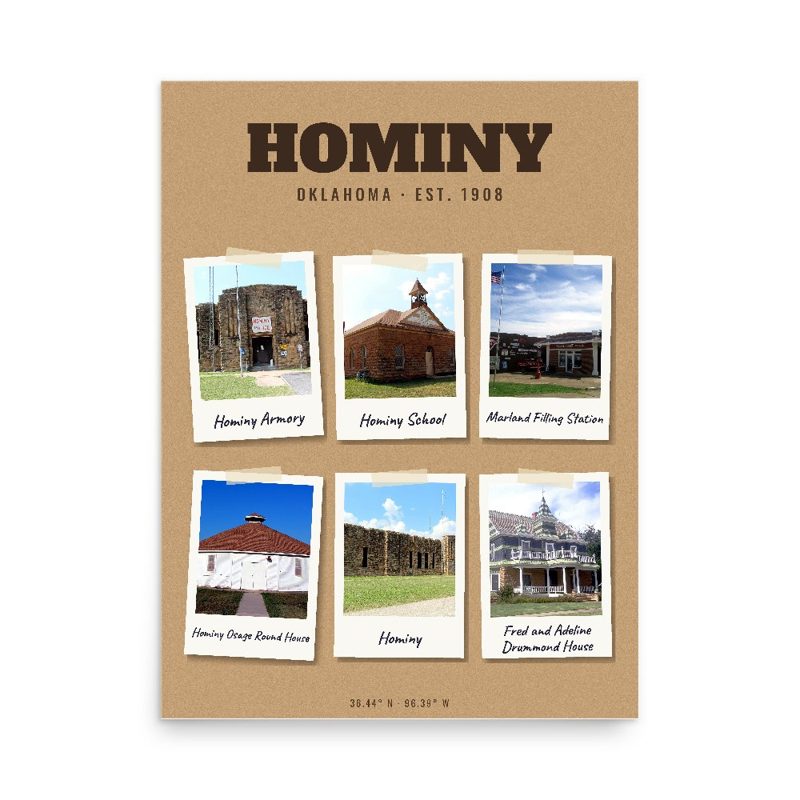
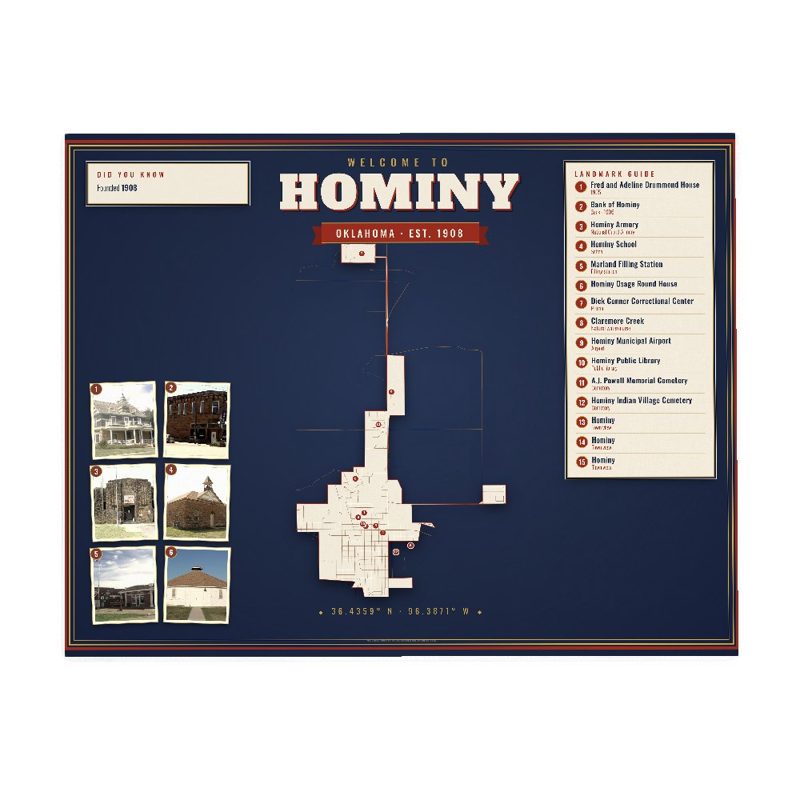






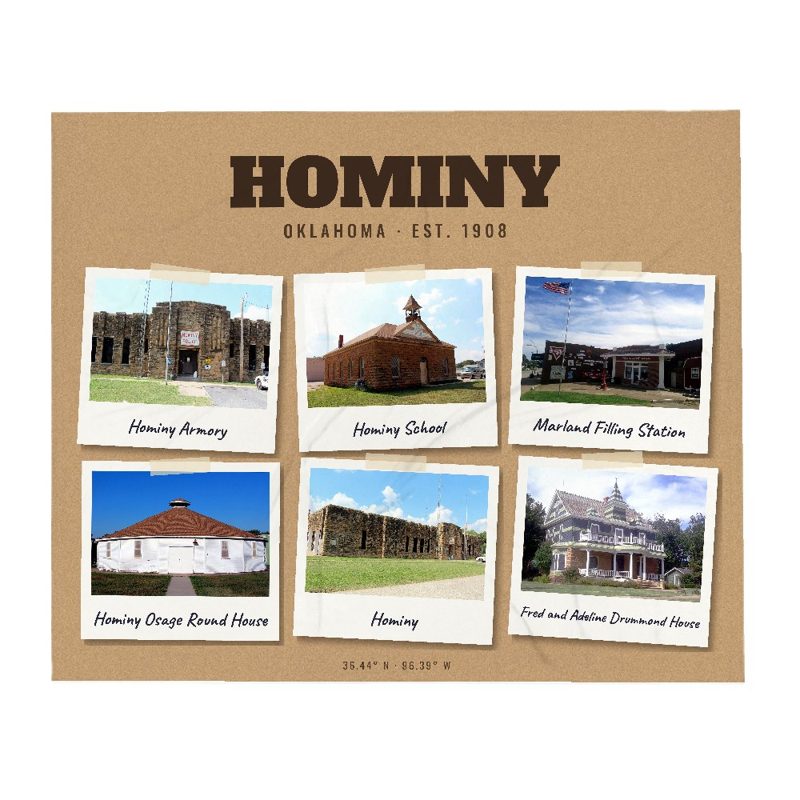
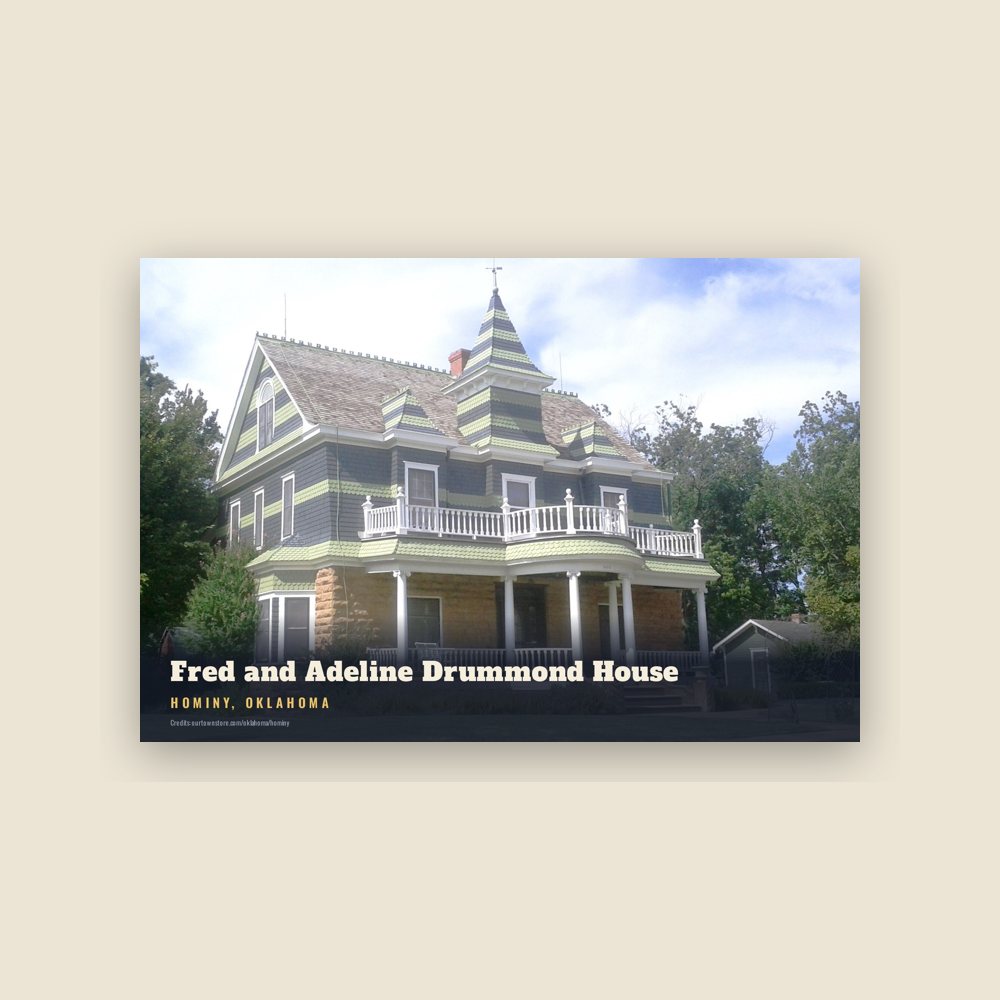
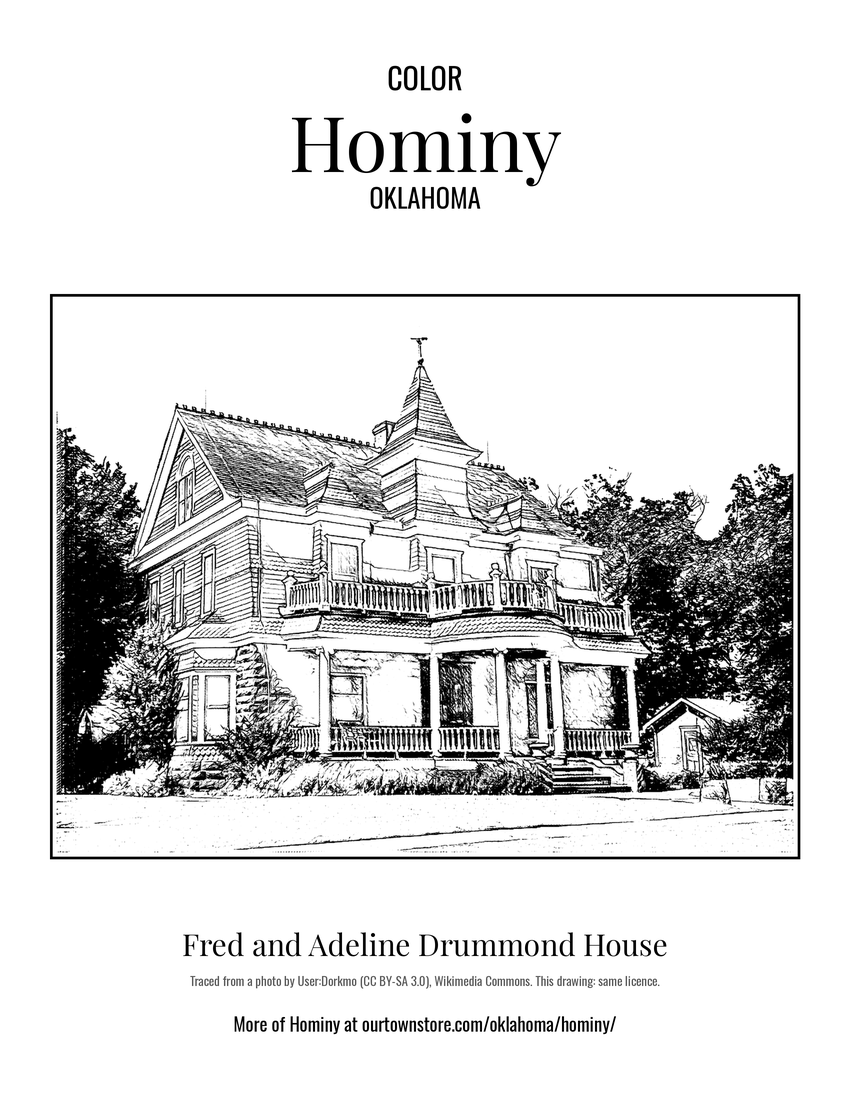 Fred and Adeline Drummond House
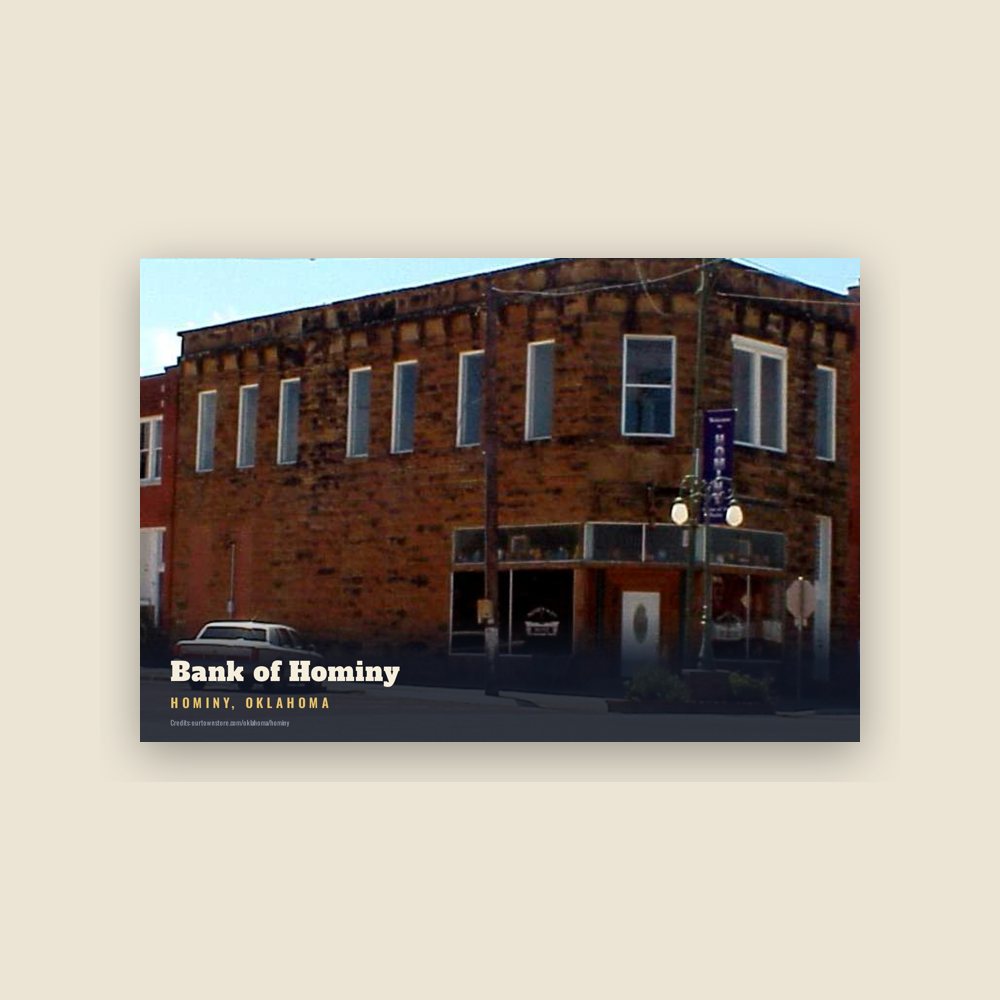
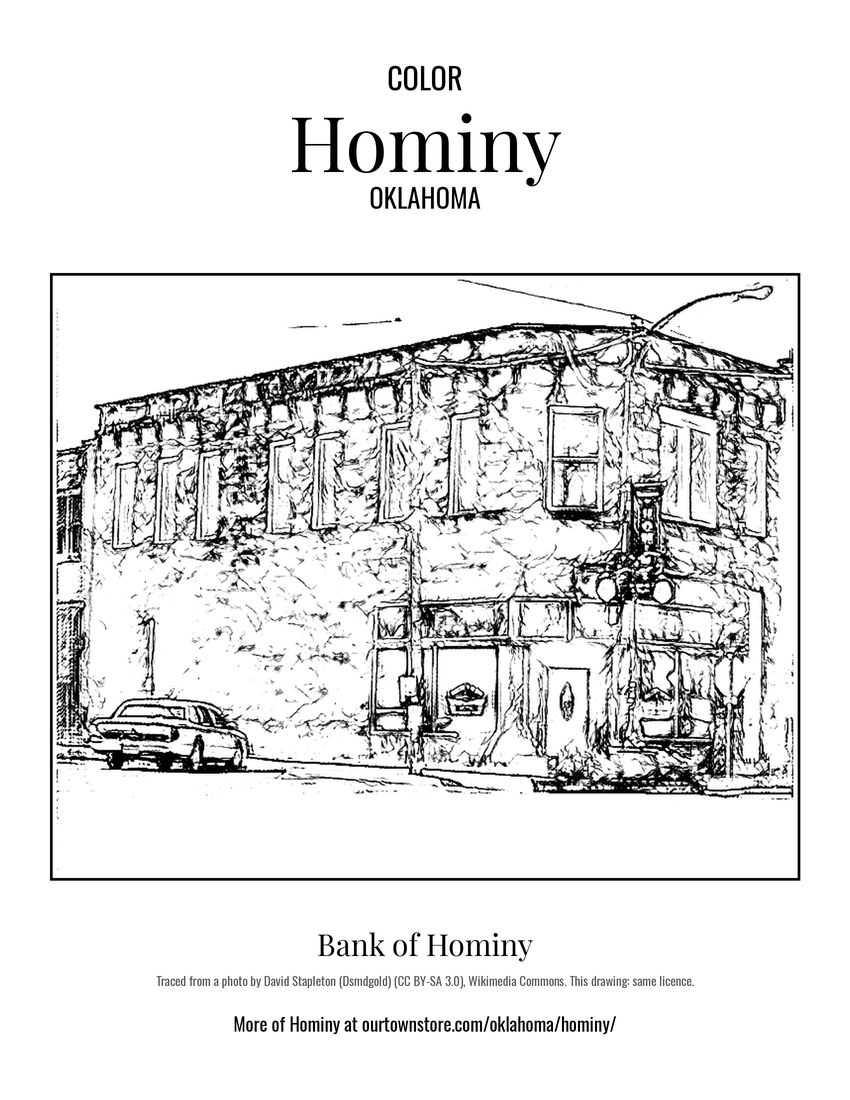 Bank of Hominy
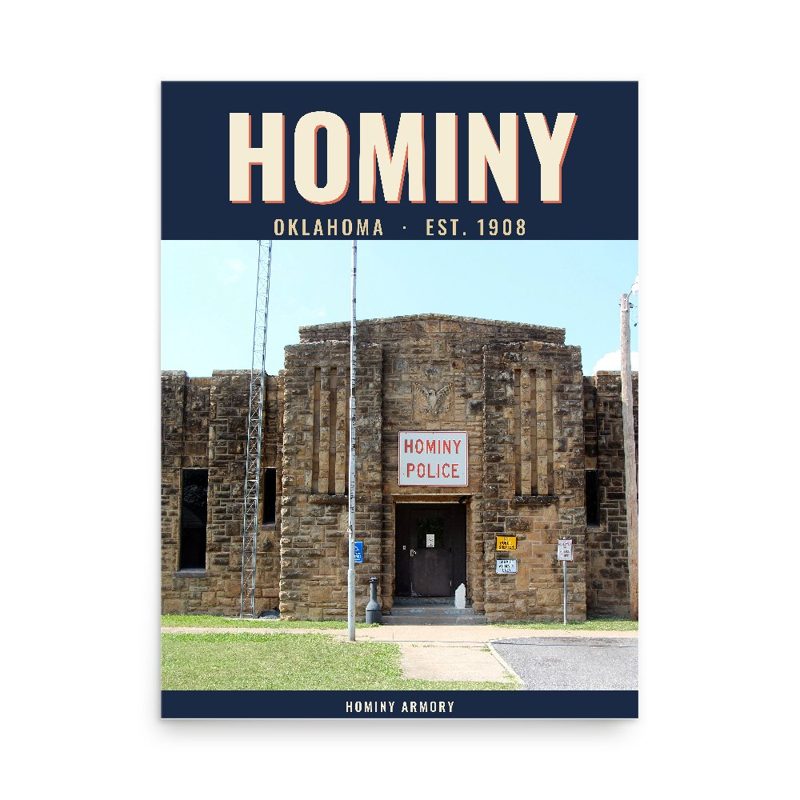
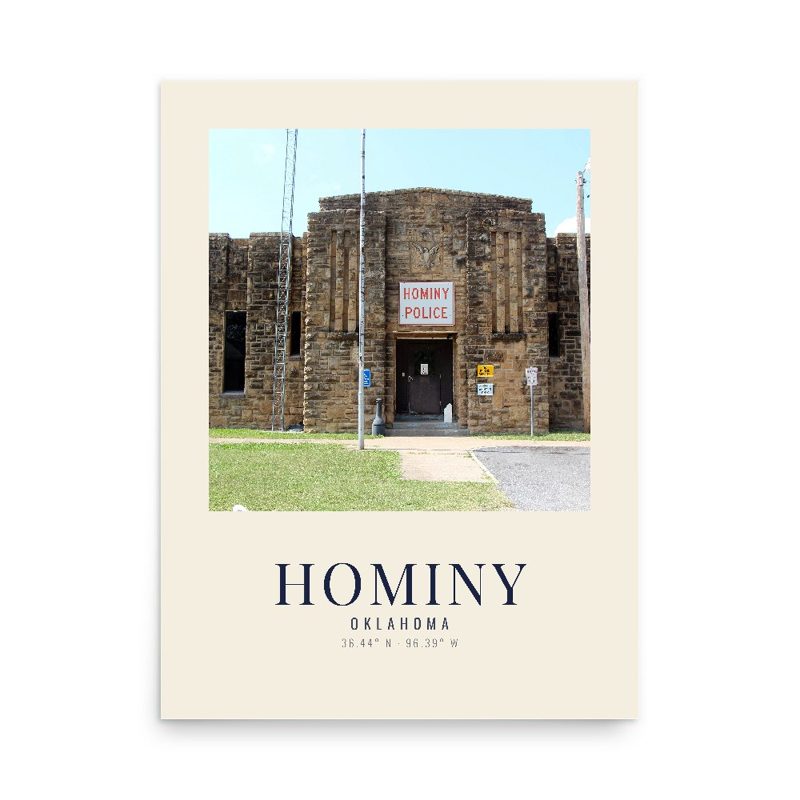
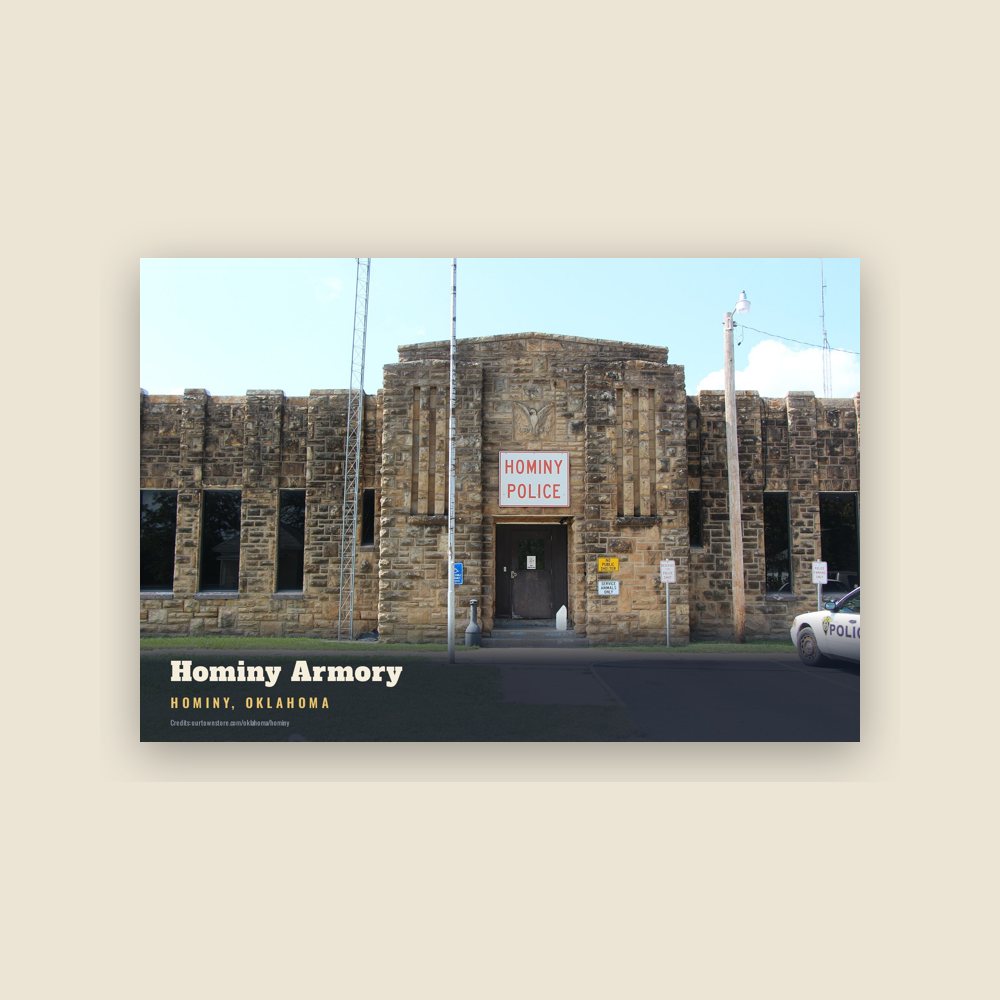
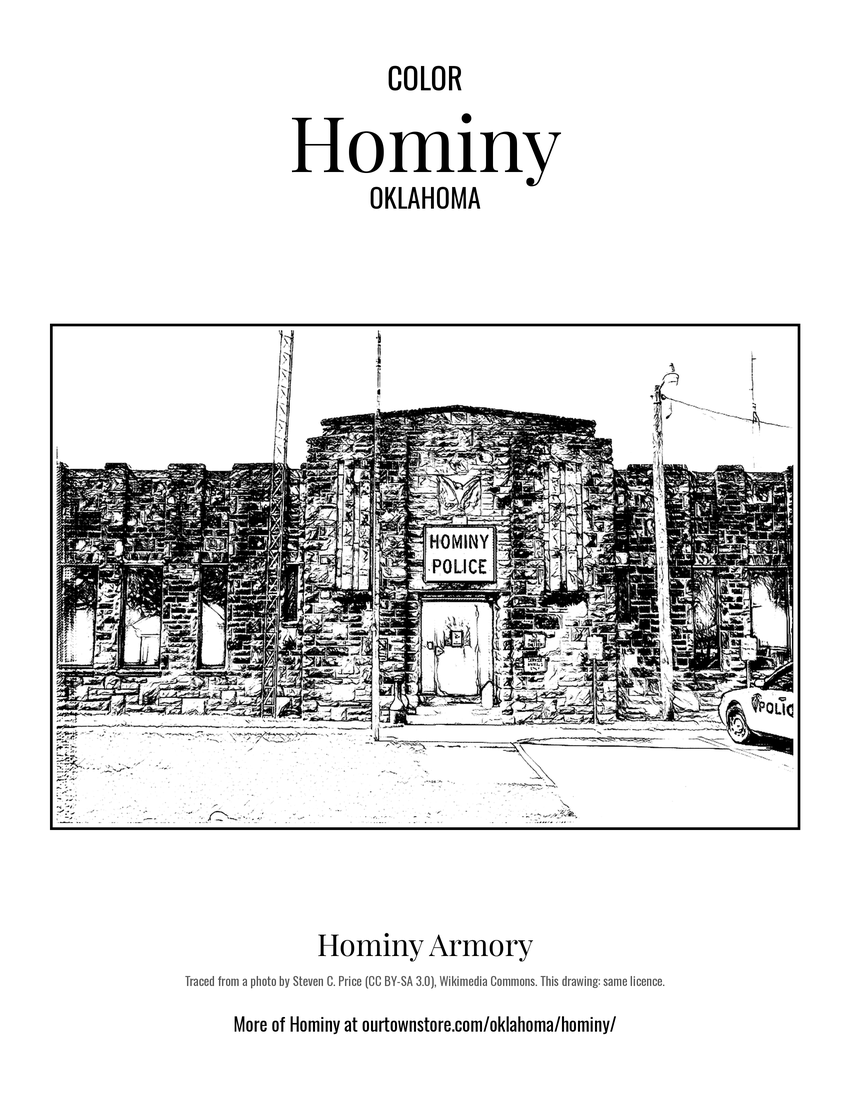 Hominy Armory
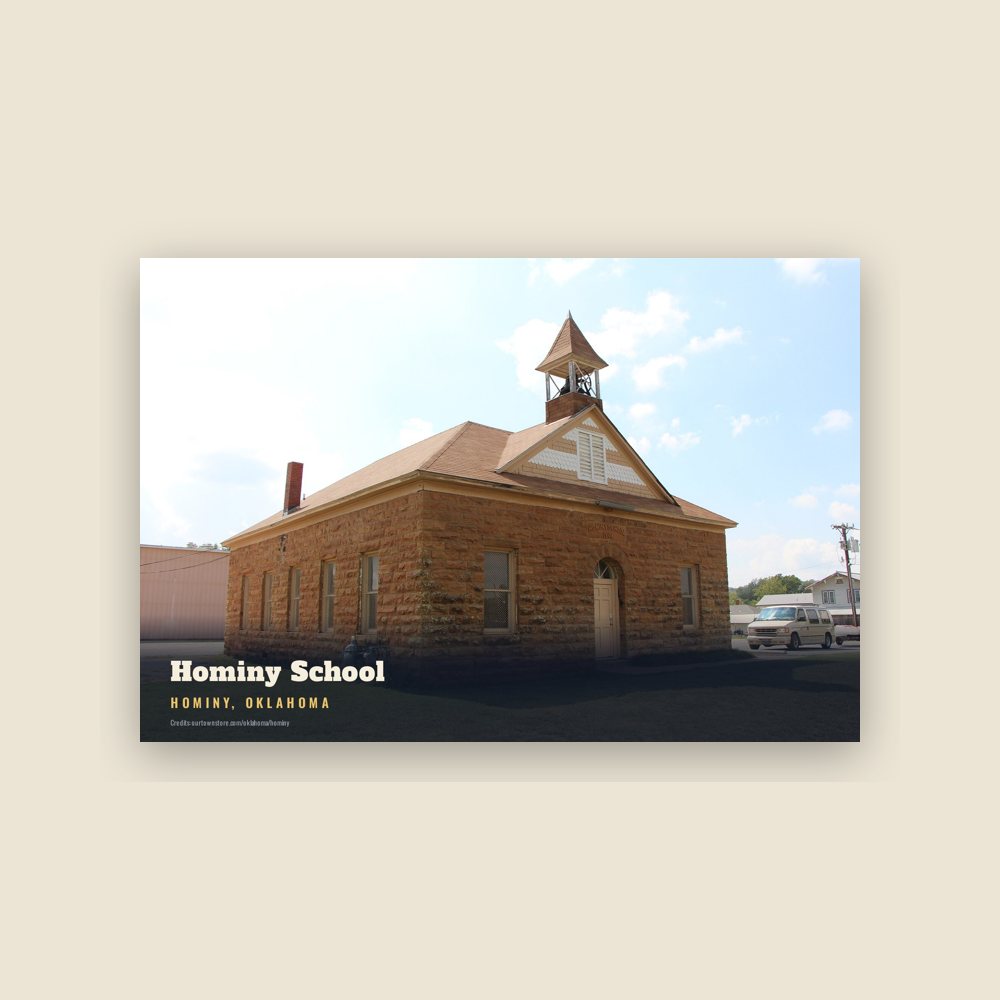
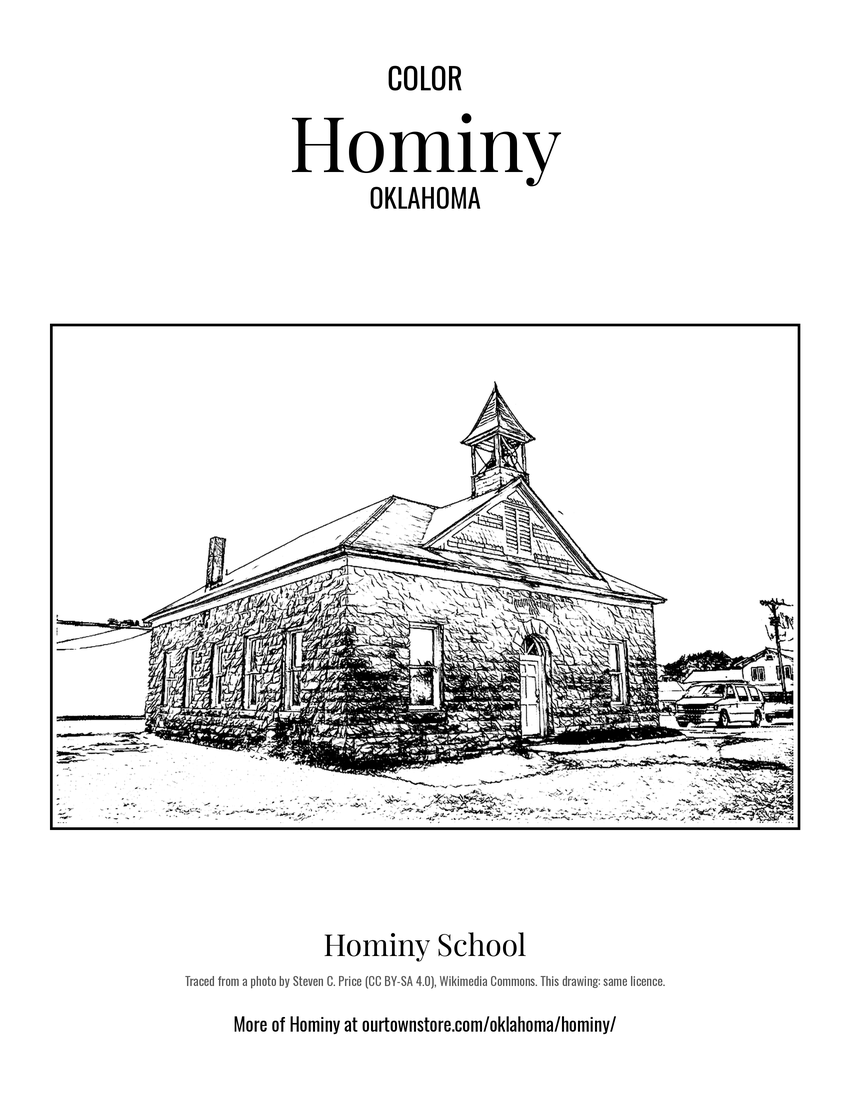 Hominy School